
How God Created the World: Jewish Myths of Creation Beyond Genesis
The Genesis creation account is only the beginning. Rabbinic midrash and kabbalistic tradition vastly expand the story with hidden light, shattered vessels, and worlds destroyed before our own.
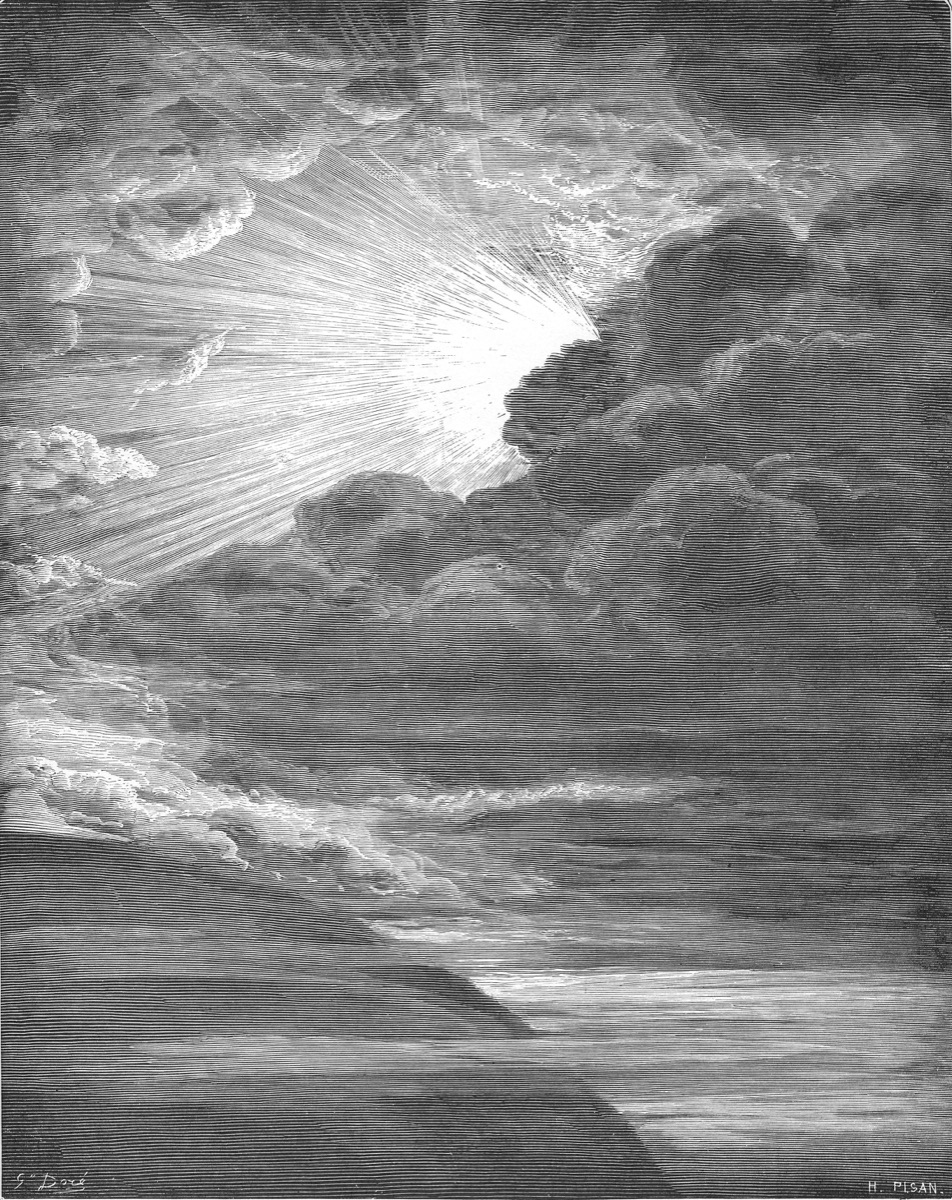
The opening chapter of Genesis fits the creation of the entire universe into 31 verses. For the rabbis of the Talmud and Midrash, that brevity was not a limitation but an invitation. Every word, every silence, every apparent contradiction in the biblical text became the seed of an elaborate mythological tradition that dwarfs the Genesis account in scope and imagination. Our database tags 3,389 texts with the creation theme alone - a measure of just how central this topic is to Jewish mythological thinking.
Jewish creation mythology spans thousands of texts composed over two millennia - from Bereishit Rabbah, compiled c. 5th century CE in Roman Palestine, to the kabbalistic cosmology of 16th-century Safed. The Midrash Rabbah collection alone contributes 2,921 texts to our database, while the Kabbalah collection adds another 3,260. Together, they construct a vision of creation far stranger, more dramatic, and more philosophically ambitious than the familiar seven-day narrative.
God Consulted the Torah Before Creating the World
According to Bereishit Rabbah 1:1, compiled c. 400-500 CE by the rabbinic academies of the Land of Israel, the Torah existed before the creation of the world - not merely as a concept, but as a living blueprint. God looked into the Torah the way an architect consults a plan, and from it drew forth the design of the universe. The teaching is attributed to Rabbi Hoshaya Rabbah (early 3rd century CE, first generation of Palestinian Amoraim), who opened the entire midrashic work with this claim. The Torah was written in black fire upon white fire and had been in God's possession for 974 generations before the world came into being.
The idea that creation unfolded through 10 divine utterances - "Let there be light," "Let there be a firmament," and so on - is formalized in Pirkei Avot 5:1 (compiled c. 200 CE in the Mishnah by Rabbi Yehudah HaNasi). These 10 utterances, the Mishnah teaches, were not a matter of efficiency - God could have created everything with a single word - but were intended to magnify the reward of the righteous who sustain a world created with 10 acts of speech, and the punishment of the wicked who destroy it.
This idea transforms the Torah from a historical document into a cosmic instrument. Creation was not arbitrary or spontaneous. It was a deliberate act of reading, interpretation, and craftsmanship - a divine project executed according to a pre-existing text. The implications are profound: the universe is, at its root, a literary artifact. Explore this theme across our Legends of the Jews collection (2,650 texts), where Louis Ginzberg (1873-1953) gathered creation traditions from over 400 rabbinic sources.
The 974 Generations Before Adam
The Talmud, in Chagigah 13b-14a (Babylonian Talmud, redacted c. 500-600 CE under Rav Ashi and Ravina), records that God created and destroyed 974 generations before finally creating Adam. These were not failed experiments in the modern sense - they were complete worlds with complete histories, each one weighed and found wanting.
Some sources describe these pre-Adamic generations as having existed in a spiritual or proto-physical state, their nature fundamentally different from the world we inhabit. Others suggest they were fully realized civilizations that could not sustain themselves because the Torah had not yet been given. The number 974 is derived from (Psalm 105:8) - "the word which He commanded to a thousand generations" - with the 26 generations from Adam to Moses subtracted from 1,000. The calculation appears explicitly in Shabbat 88b, where Rabbi Yehoshua ben Levi (early 3rd century CE) explains that the Torah's 974 pre-creation generations were eventually "planted" across the subsequent generations of Israel.
This teaching also appears in Bereishit Rabbah 28:4, where the destroyed generations are linked to the generation of the Flood - suggesting that the pattern of divine creation and destruction did not end with the primordial era but continued into human history itself.
Worlds Created and Destroyed
Bereishit Rabbah 3:7 preserves a striking teaching: God created worlds and destroyed them, saying, "This one pleases me; those did not please me." The teaching is attributed to Rabbi Abbahu of Caesarea (c. 279-320 CE), a third-generation Palestinian Amora known for his public debates and rhetorical skill. Rabbi Abbahu taught that the phrase "and there was evening and there was morning" implies a time-order that existed before the current creation - remnants of previous worlds that God had built and dismantled.
This is a remarkable theological claim. It means the universe we inhabit is not God's first attempt but rather the culmination of a process of divine trial and revision. The destroyed worlds are sometimes identified with the forces of tohu (chaos) and bohu (void) mentioned in (Genesis 1:2). In kabbalistic thought, these destroyed worlds become the Olamot HaTohu - the Worlds of Chaos - whose shattered remnants still exert influence on our reality. The Zohar (composed c. 1280-1286 CE in Castile, Spain, by Rabbi Moshe de Leon) expands this into a full cosmological system in its commentary on Parashat Bereishit, identifying 7 destroyed worlds corresponding to the 7 lower sefirot that could not sustain divine light without the balancing presence of the upper 3.
The Ten Utterances and the 22 Letters of Creation
The Sefer Yetzirah (Book of Formation), one of the earliest kabbalistic texts - dated by scholars to between the 2nd and 6th centuries CE - teaches that God created the world using the 22 letters of the Hebrew alphabet and 10 sefirot (here meaning primordial numbers or depths), for a total of 32 mystical paths of wisdom. Each Hebrew letter carries creative power: the letter bet begins the Torah ("Bereishit"), and according to Bereishit Rabbah 1:10, each of the 22 letters petitioned God to begin creation with it. God chose bet because it is the first letter of berakhah (blessing).
The Sefer Yetzirah organizes the 22 letters into 3 "mother" letters (alef, mem, shin), 7 "double" letters, and 12 "simple" letters - mapped onto the 3 elements (fire, water, air), 7 planets, and 12 zodiac signs. This framework makes the Hebrew alphabet itself a map of creation's structure. The text was studied and commented upon by major thinkers including Saadia Gaon (882-942 CE) in his Arabic commentary, Rabbi Yehudah HaLevi (c. 1075-1141 CE) in the Kuzari, and the Vilna Gaon (1720-1797 CE) in his own commentary. Our Kabbalah collection (3,260 texts) includes numerous passages drawing on Sefer Yetzirah traditions.
Adam: Formed from the Dust of All Four Corners
The creation of Adam receives extraordinary elaboration in rabbinic literature. According to Sanhedrin 38a (Babylonian Talmud, c. 500-600 CE), God did not simply scoop up a handful of local dirt. He gathered dust from the 4 corners of the earth - red, black, white, and green dust - so that no nation could ever claim that Adam was made from their soil alone, and no land could refuse to accept Adam's body for burial. The teaching is attributed to Rabbi Meir (c. 130-160 CE), a fourth-generation Tanna and student of Rabbi Akiva.
Other traditions describe Adam's original stature as cosmic in scale. Chagigah 12a states that Adam originally stretched from the earth to the firmament, and from one end of the world to the other, until God placed His hand upon him and diminished him. Pirkei DeRabbi Eliezer (composed c. 8th-9th century CE, attributed pseudepigraphically to Rabbi Eliezer ben Hyrcanus), chapter 11, adds that Adam's body was assembled from dust taken from the site of the future Temple in Jerusalem - linking the first human to the holiest place on earth.
Sanhedrin 38b further provides a remarkable hour-by-hour timeline of Adam's first day: in the 1st hour God gathered dust, in the 2nd He formed a shapeless mass, in the 3rd He stretched out Adam's limbs, in the 4th He breathed a soul into him, in the 5th Adam stood on his feet, in the 6th he named the animals, in the 7th Eve was created, and by the 12th hour Adam and Eve were expelled from the Garden. Explore these traditions further in our 1,969 texts about Adam.
The Hidden Light: Or HaGanuz
(Genesis 1:3) records God's first creative utterance: "Let there be light." But the sun, moon, and stars were not created until the fourth day (Genesis 1:14-19). The rabbis asked the obvious question: what was the light of the first day? The discussion appears in Chagigah 12a, where Rabbi Eleazar (3rd century CE) teaches that by the primordial light, Adam could see from one end of the world to the other.
The answer became one of the most beautiful ideas in Jewish mythology. The light of the first day was a primordial, spiritual light - infinitely more powerful than sunlight - by which Adam could see from one end of the universe to the other. When God foresaw that wicked generations would arise, He hid this light away, storing it for the righteous in the World to Come. This is the Or HaGanuz, the Hidden Light. The idea is traced through Bereishit Rabbah 3:6 and Bereishit Rabbah 11:2, both compiled c. 5th century CE.
According to some traditions, the Hidden Light was stored within the Torah itself, and those who study Torah with pure intention can catch glimpses of it. The Zohar (c. 1280-1286 CE) teaches that the light shone for exactly 36 hours before being concealed - connecting it to the 36 candles of Hanukkah lit over 8 nights, and to the tradition of the 36 hidden righteous people (Lamed-Vav Tzaddikim) in every generation who carry fragments of this primordial radiance. Rabbi Moshe Cordovero (1522-1570 CE, Safed) elaborated in his Pardes Rimonim that the Hidden Light corresponds to the sefirah of Chokhmah (Wisdom), the first flash of divine illumination before it is shaped into structured creation.
Kabbalistic Creation: Tzimtzum and the Shattering of the Vessels
The most radical reimagining of creation comes from the Kabbalah - specifically the Lurianic system developed by Rabbi Isaac Luria (1534-1572 CE, known as the Ari, "the Holy Lion") in Safed, Upper Galilee. Luria himself wrote almost nothing; his teachings were recorded by his primary disciple Rabbi Chaim Vital (1542-1620 CE) in the monumental Etz Chaim (Tree of Life) and the 8-volume Shemonah She'arim (Eight Gates). Luria asked a question that the Midrash had left unanswered: if God is infinite and fills all reality, where is there room for a finite world to exist?
His answer was tzimtzum - divine contraction. Before creation, God withdrew His infinite light from a central point, creating a vacated space (chalal hapanui) within which the finite universe could emerge. This act of self-limitation was the first and most fundamental act of creation - God making room for something that is not God. The concept was debated for centuries: Rabbi Immanuel Chai Ricchi (1688-1743 CE) and the Vilna Gaon (1720-1797 CE) argued that the tzimtzum was literal, while Rabbi Shneur Zalman of Liadi (1745-1812 CE), founder of Chabad Hasidism, argued in his Tanya (published 1797) that it was metaphorical - an apparent withdrawal that did not diminish God's actual presence.
Into this vacated space, God projected a ray of divine light, which formed itself into vessels (kelim) meant to contain the 10 sefirot - the divine attributes through which God interacts with creation. But the light was too intense for the vessels to hold. The lower 7 vessels shattered in a catastrophic event called Shevirat HaKelim - the Shattering of the Vessels - while the upper 3 (Keter, Chokhmah, Binah) cracked but survived.
The shards of the broken vessels fell into the vacated space, carrying with them 288 sparks of divine light (the number derived by the Ari from the gematria of the phrase "ruach Elohim" in (Genesis 1:2)). These sparks became trapped in the material world, scattered throughout all of creation. The purpose of human existence, in the Lurianic system, is tikkun - the repair of the shattered vessels by gathering and elevating the fallen sparks through prayer, study, and the performance of the 613 mitzvot. Browse our Kabbalah collection of 3,260 texts for extensive passages exploring these ideas.
The Ten Sefirot and Divine Emanation
Underlying all kabbalistic creation theology is the doctrine of the sefirot - 10 divine attributes or emanations through which the infinite God (Ein Sof) manifests in the finite world. The system was first articulated in the Sefer Yetzirah (2nd-6th century CE), elaborated by Rabbi Isaac the Blind (c. 1160-1235 CE, Provence) and his student Rabbi Azriel of Gerona (c. 1160-1238 CE), and given its classical formulation in the Zohar (c. 1280-1286 CE). They range from Keter (Crown) - the most hidden and elevated - down through Chokhmah (Wisdom), Binah (Understanding), Chesed (Lovingkindness), Gevurah (Judgment), Tiferet (Beauty), Netzach (Eternity), Hod (Glory), Yesod (Foundation), and finally Malkhut (Sovereignty).
The sefirot are not separate gods - they are aspects of the one God, like colors refracted through a prism. Creation unfolds through their interaction: Chesed pours forth abundance while Gevurah constrains it; Tiferet harmonizes the two. The Zohar maps every detail of the biblical creation narrative onto this sefirotic framework, revealing hidden layers of meaning in each of the 7 days of creation. Rabbi Moshe Cordovero (1522-1570 CE) systematized this in his Pardes Rimonim (Garden of Pomegranates, published 1548), identifying 613 specific channels of light connecting the 10 sefirot - matching the traditional count of 613 commandments in the Torah.
The Ramchal, Rabbi Moshe Chaim Luzzatto (1707-1746 CE, Padua and Amsterdam), further refined sefirotic creation theology in his Derech Hashem (The Way of God, written c. 1730s) and Klach Pitchei Chokhmah (138 Openings of Wisdom). He argued that the sefirot are not emanations in a Greek Neoplatonic sense but deliberate divine choices - each one a specific modality through which God chose to relate to creation. Our Kabbalah collection includes extensive passages from the Ramchal's works.
Creation as an Ongoing Act
Perhaps the most striking claim in Jewish creation mythology is that creation is not a past event. The daily liturgy, formalized in the Siddur (prayer book) by the Geonim of Babylon (c. 6th-11th century CE), declares in the Yotzer Or blessing that God "renews each day, perpetually, the work of creation." This liturgical formula draws on (Isaiah 45:7) - "I form the light and create darkness" - using the present tense to signal continuous action.
The Baal Shem Tov (Rabbi Israel ben Eliezer, c. 1698-1760 CE), founder of Hasidism in Podolia (modern Ukraine), taught that if God were to withdraw His creative energy for even an instant, the entire universe would cease to exist and return to absolute nothingness. This teaching, preserved by his disciple Rabbi Yaakov Yosef of Polonne in Toldot Yaakov Yosef (published 1780), draws on a passage in Bereishit Rabbah 10:6 and on Sha'ar HaYichud VeHaEmunah (Gate of Unity and Faith) in the Tanya by Rabbi Shneur Zalman of Liadi (1745-1812 CE).
Creation, in this view, is not something that happened once at the beginning of time. It is happening now, at every moment, sustained by continuous divine will. The Genesis narrative is not just history - it is a description of what is always occurring, an eternal present tense hidden beneath the surface of ordinary reality. The Hasidic master Rabbi Nachman of Breslov (1772-1810 CE, great-grandson of the Baal Shem Tov) extended this into his concept of hitbodedut - solitary prayer in nature - arguing that creation's ongoing renewal can be directly perceived by one who speaks to God amid fields and forests.
Explore the Texts
Our database contains 3,389 texts tagged with the creation theme, spanning rabbinic midrash to kabbalistic cosmology. Search for creation texts, explore the Midrash Rabbah collection (2,921 texts) for the earliest rabbinic expansions, or dive into the Kabbalah collection (3,260 texts) for mystical cosmology. The Midrash Aggadah collection (3,763 texts) includes major creation sources from Pirkei DeRabbi Eliezer, Tanchuma, and Avot DeRabbi Natan. You can also browse texts about Adam to see how the first human figures into these grand mythological narratives.