
The Book of Enoch: Fallen Angels, Heavenly Journeys, and the Origins of Evil
The Book of Enoch is one of the most important apocryphal Jewish texts ever written - a sweeping vision of fallen angels, cosmic journeys, and divine judgment that shaped Jewish thought for centuries.
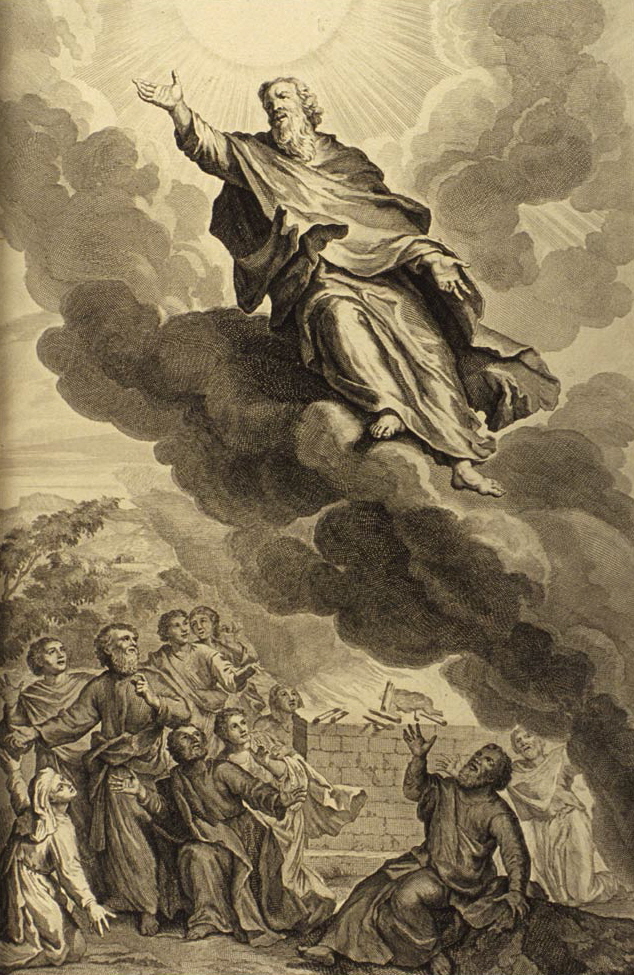
The Book of Enoch is the most influential Jewish text that most people have never read. Known formally as 1 Enoch, this sprawling work of 108 chapters was composed in stages between approximately 300 BCE and 100 BCE, making it one of the oldest pieces of Jewish literature outside the Hebrew Bible. It shaped Jewish angelology, demonology, and apocalyptic thought more profoundly than almost any other work, and its ideas ripple through the Talmud, the Midrash, and the Kabbalah to this day.
Named after Enoch, the great-grandfather of Noah, the book expands on a cryptic passage in (Genesis 5:24): "And Enoch walked with God: and he was not; for God took him." That single verse - suggesting Enoch was taken directly to heaven without dying - launched one of the most elaborate mythological traditions in all of Judaism. Alongside 1 Enoch, two later works continue the tradition: 2 Enoch (also called Slavonic Enoch or the Book of the Secrets of Enoch), composed c. 1st century CE, and 3 Enoch (also called Sefer Hekhalot), composed c. 5th-6th century CE. Together, these three books span nearly a millennium of Jewish mythological imagination.
What is the Book of Enoch?
The Book of Enoch, also called 1 Enoch or Ethiopic Enoch, is not a single work but a composite of five distinct books written over roughly two centuries during the Second Temple period (516 BCE - 70 CE). Each section addresses different aspects of heavenly secrets, angelic rebellion, and divine justice. The text was widely read in Second Temple Judaism, and its importance was dramatically confirmed in 1948 when 11 Aramaic manuscripts of 1 Enoch were discovered among the Dead Sea Scrolls at Qumran, Caves 1, 2, 4, and 7. These fragments, dating from the 3rd century BCE to the 1st century CE, represent every section of the book except the Parables (chapters 37-71), making 1 Enoch one of the most frequently copied texts at Qumran after the Psalms and Deuteronomy.
Though it was never included in the rabbinic biblical canon, the Book of Enoch left deep marks on Jewish literature. Its ideas about angels, demons, and the structure of heaven echo through the Talmud, the Midrash, and later kabbalistic works. The figure of Enoch himself evolved over centuries into Metatron, the greatest of all angels in Jewish mysticism. Our database includes over 30 texts directly related to Enoch and Metatron, drawn from sources spanning Legends of the Jews, the Zohar and Tikkunei Zohar, Tree of Souls, and the Hekhalot literature.
The Book of the Watchers (1 Enoch 1-36)
The oldest and most famous section, composed c. 300-250 BCE, tells the story of the Watchers - a group of 200 angels who descended to Mount Hermon and made a pact to take human wives. Their leader, Semjaza (also spelled Shemhazai), led the rebellion along with 19 other named chieftains, though the angel Azazel bears particular blame for teaching humanity forbidden knowledge: the making of swords, shields, and breastplates; the art of cosmetics and the dyeing of fabrics; and the secrets of sorcery and astrology (1 Enoch 8:1-3).
The union of angels and women produced the Nephilim - giants standing 3,000 ells tall (1 Enoch 7:2) who devoured the earth's resources, drank blood, and spread violence across the land. The corruption grew so severe that the cries of humanity reached heaven, prompting God to send the four archangels - Michael, Gabriel, Raphael, and Uriel - to intervene. Raphael bound Azazel hand and foot and cast him into a pit of jagged rocks in the desert of Dudael (1 Enoch 10:4-5). Michael imprisoned Semjaza and the other Watchers in valleys of the earth for 70 generations until the day of judgment. The great flood was sent to cleanse the earth of the Nephilim's destruction.
This narrative does far more than tell a dramatic story. It provides an origin for evil itself - explaining how sin, violence, and forbidden knowledge entered the human world not through human failing alone, but through angelic transgression. The tradition is preserved in multiple sources in our database, including The Punishment of the Fallen Angels from Ginzberg's Legends of the Jews and Enoch and the Angels.
Enoch's heavenly journeys
After the Watchers narrative, 1 Enoch chapters 17-36 describe Enoch being taken on guided tours of the cosmos by the archangels. He travels to the ends of the earth and beyond, witnessing seven mountains of precious stones (1 Enoch 18:6-7), the storehouses of wind, rain, and snow, and the cornerstone of the earth. He sees the prison where the fallen angels are held in a chaotic, terrible place of fire until the day of judgment. He visits Sheol, the realm of the dead, which he describes as divided into four separate hollow chambers carved from rock - for the righteous, for sinners who were not punished in life, for those who were murdered, and for the wicked (1 Enoch 22:1-13).
Most significantly, Enoch ascends to the throne of God itself. In a vision that would influence Jewish mystical tradition for millennia, he describes a great house built of crystal with walls and floor of crystal, a ceiling like the path of stars, and a lofty throne at its center. The throne was surrounded by rivers of burning fire, and a glory so bright that none of the angels could enter or look upon God's face (1 Enoch 14:8-23). This throne vision became foundational to the Merkavah (chariot) mysticism that later flourished in rabbinic circles - the same mystical tradition that produced the Hekhalot Rabbati and other palace-ascent texts. Explore Enoch's Vision of God in our database.
The five books within 1 Enoch
The complete text of 1 Enoch contains 108 chapters organized into five major sections, each with its own character, date of composition, and theological concerns:
- The Book of the Watchers (chapters 1-36) - The fallen angels narrative and Enoch's cosmic journeys. Composed c. 300-250 BCE, this is the oldest portion. Aramaic fragments from Qumran (4QEna-g) confirm its early date.
- The Parables of Enoch (chapters 37-71) - Three extended parables describing visions of a messianic figure called the "Son of Man" and the "Elect One" who will execute divine judgment, overthrow kings, and vindicate the righteous. Composed c. 100 BCE - 1st century CE. Notably absent from the Qumran fragments, suggesting it may be the latest section.
- The Astronomical Book (chapters 72-82) - A detailed solar calendar of 364 days divided into four seasons of 91 days each, revealing the movements of the sun through 6 gates of rising and 6 gates of setting, plus lunar cycles of 354 days. This calendar differed from the rabbinic lunar calendar and was followed by the Qumran community. Fragments from Qumran (4QEnastr) suggest this may be the earliest section, possibly predating the Watchers.
- The Book of Dream Visions (chapters 83-90) - Two symbolic visions covering all human history from Adam to the messianic age. The "Animal Apocalypse" (chapters 85-90) tells history through animal allegory: Adam is a white bull, Israel are sheep, their oppressors are lions, leopards, wolves, and eagles, and the 70 angelic shepherds appointed over Israel represent the 70 nations. Composed c. 165-160 BCE during the Maccabean revolt.
- The Epistle of Enoch (chapters 91-108) - Enoch's final instructions to his son Methuselah and descendants, including the "Apocalypse of Weeks" (93:1-10, 91:11-17) that divides all of history into ten "weeks" of varying length, from creation through the final judgment. The seventh week marks the current era of apostasy; the tenth brings a new heaven. Composed c. 170 BCE.
Enoch becomes Metatron
The transformation of Enoch did not end with 1 Enoch. In 2 Enoch (Slavonic Enoch), composed c. 1st century CE and preserved in Old Church Slavonic manuscripts, Enoch ascends through seven heavens, each with its own wonders: the first heaven holds the 200 angels who govern the stars; the second holds the imprisoned Watchers weeping in darkness; the third contains both paradise and a place of punishment; and the seventh heaven is where Enoch stands before God's face. God instructs the archangel Michael to strip Enoch of his earthly garments, anoint him with shining oil, and dress him in garments of glory (2 Enoch 22:8-10), transforming him into a being "like one of the glorious ones, and there was no difference" (2 Enoch 22:10).
In 3 Enoch (Sefer Hekhalot), composed c. 5th-6th century CE, Enoch's transformation reaches its ultimate conclusion. Attributed to Rabbi Ishmael's heavenly ascent, this text describes how Enoch was elevated into the angel Metatron, the "Prince of the Countenance" (Sar ha-Panim) who stands beside God's throne. According to 3 Enoch 9:1-5, God enlarged Enoch's body to cosmic proportions equal to the length and breadth of the world, gave him 36 pairs of wings (72 wings total) and 365,000 eyes, each as bright as the sun. God crowned him with a radiant crown inscribed with the letters by which heaven and earth were created. He became the heavenly scribe, recording the deeds of all humanity, and was granted authority over all 72 princes of kingdoms and the angelic hosts. Our database preserves this tradition across multiple texts, including The Primordial Metatron, A Vision of Metatron, Throne of Glory and Metatron, and Metatron in Heaven and Higher from the Tikkunei Zohar.
This idea - that a human being could be elevated to the highest angelic rank - was both celebrated and controversial in rabbinic Judaism. The Talmud (Chagigah 15a) records the famous episode of Elisha ben Abuya (Aher) who saw Metatron seated in heaven and mistakenly concluded there were "two powers in heaven" - a heresy that led to his permanent excommunication.
The Book of Enoch's legacy in Jewish thought
The influence of Enochic literature on Judaism is vast and traceable across more than two millennia. The fallen angel mythology shaped how Jews understood the origin of evil and demonic forces for centuries. The Watchers narrative is retold and elaborated in Jubilees (c. 160-150 BCE), the Genesis Apocryphon found at Qumran, and the Testament of Reuben from the Testaments of the Twelve Patriarchs. The throne visions of 1 Enoch 14 fed directly into Merkavah mysticism and ultimately into the Kabbalah - the 3,260 kabbalistic texts in our database frequently echo Enochic imagery of divine fire, heavenly palaces, and angelic hierarchies. The solar calendar of the Astronomical Book influenced the Qumran community's ritual calendar and generated sectarian conflict with the Pharisaic lunar tradition.
Even texts that do not cite Enoch directly show its fingerprints. The elaborate angelic hierarchies in midrashic literature (3,763 texts in our collection), the detailed descriptions of heavenly palaces in the Hekhalot texts, and the cosmic scope of kabbalistic mythology all owe debts to the Enochic tradition. Louis Ginzberg's Legends of the Jews (2,650 texts in our database) preserves numerous Enoch traditions drawn from hundreds of rabbinic and medieval sources, including Enoch, Ruler and Teacher, The Ascension of Enoch, Enoch and the Angels, and Enoch at the Dawn of Creation.
Explore the Enochic texts
Our database contains over 15,000 ancient Jewish texts, including dozens directly related to Enoch and the traditions he inspired. The Apocrypha collection alone holds 1,329 texts from works like 1 Enoch, Jubilees, the Testaments of the Twelve Patriarchs, and other Second Temple writings that never made it into the rabbinic canon but profoundly shaped Jewish mythology. Start with Enoch Walked With God, then explore all Enoch-related texts, or browse the full Apocrypha collection to discover the vast body of ancient Jewish literature preserved in our database.