Balaam Fell Flat When the Angel Appeared
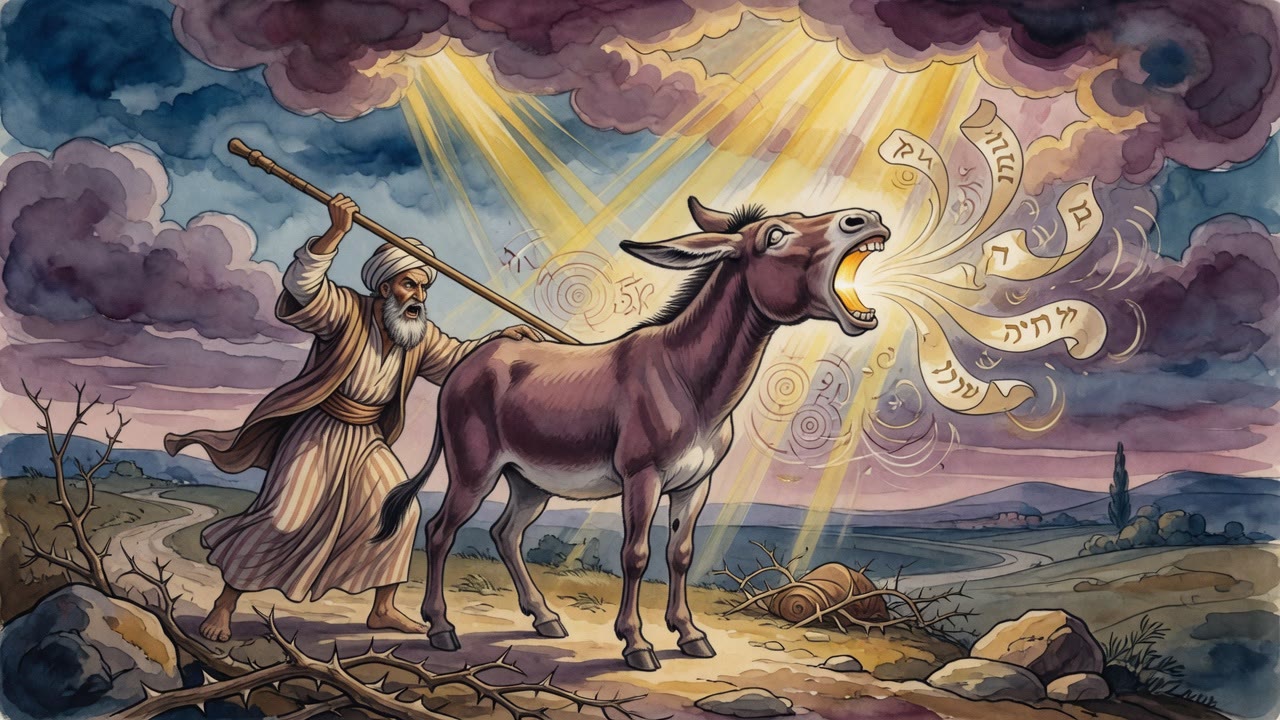
When God finally let Balaam see the angel blocking his road, Balaam fell on his face. He could not stand. His donkey remained upright.
Table of Contents
 Click for full size
The Donkey Stood and the Prophet Lay Flat
The donkey had been right three times. She had turned into a field when the angel first blocked the road. She had crushed Balaam's foot against a stone wall when the angel appeared in the vineyard. She had sat down entirely when the angel stood in the narrow pass and there was nowhere left to turn. Each time, Balaam had beaten her. Each time, she had known more than he did about what was in front of them.
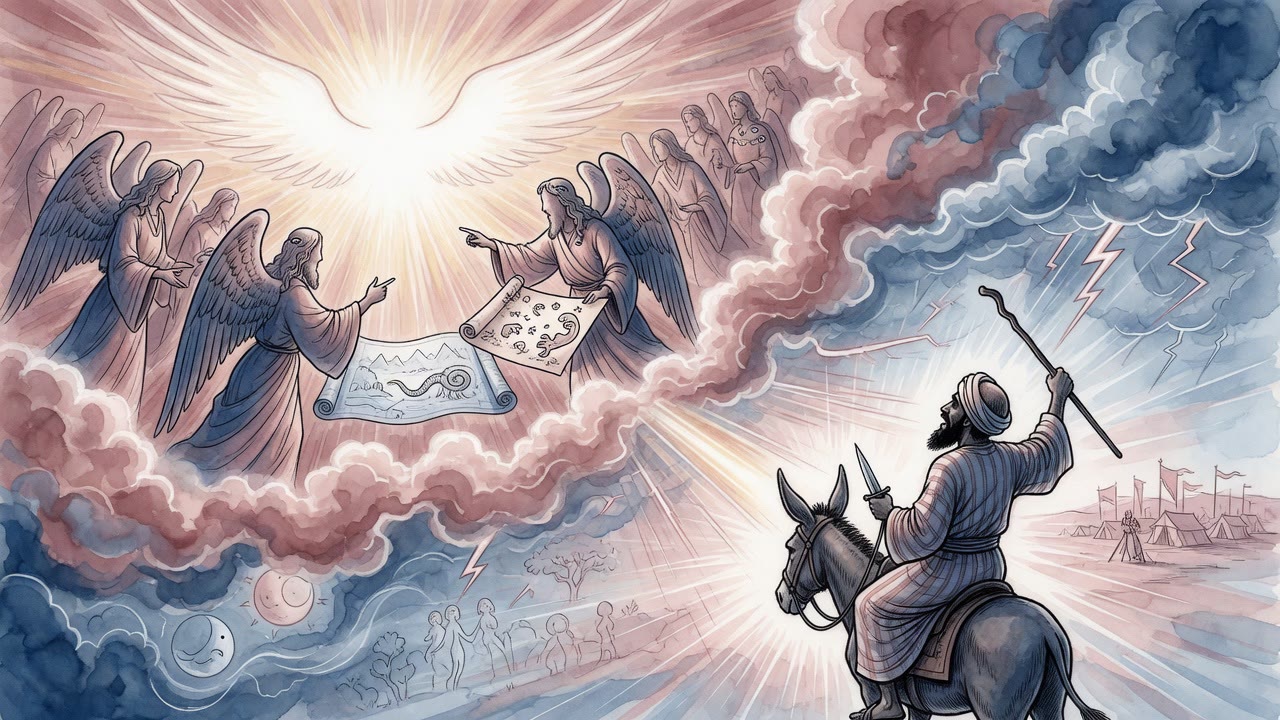
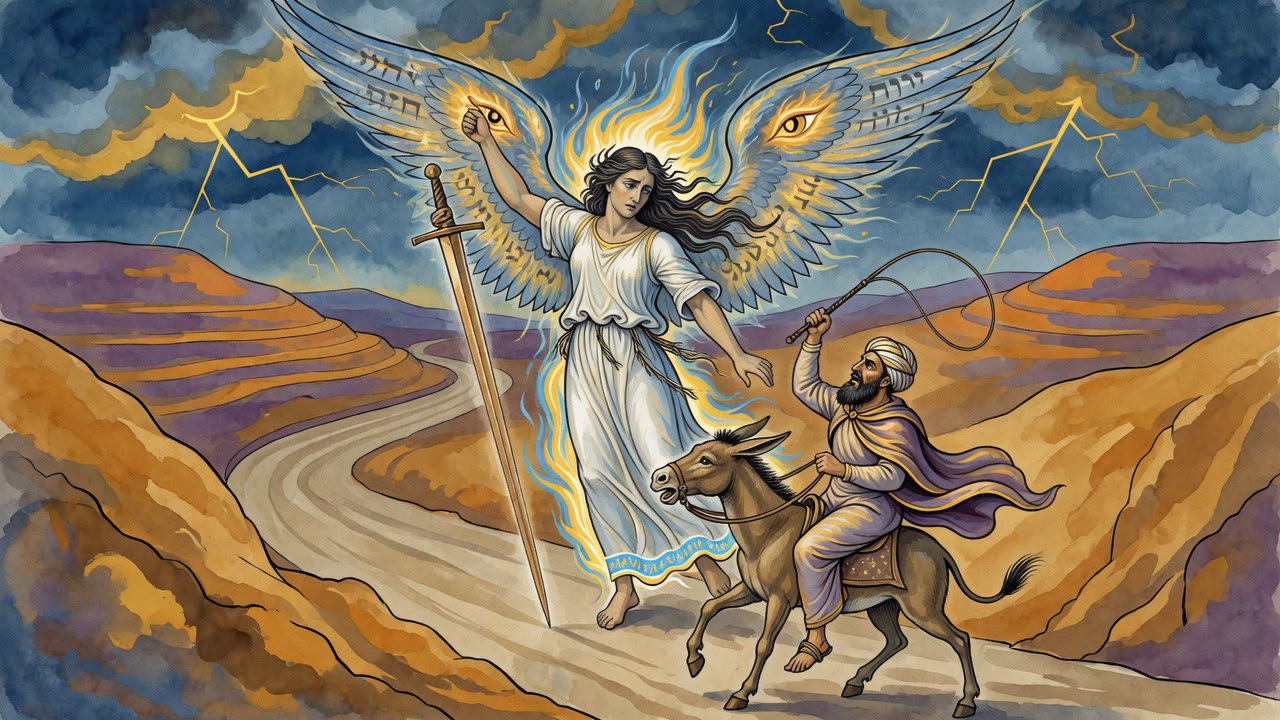
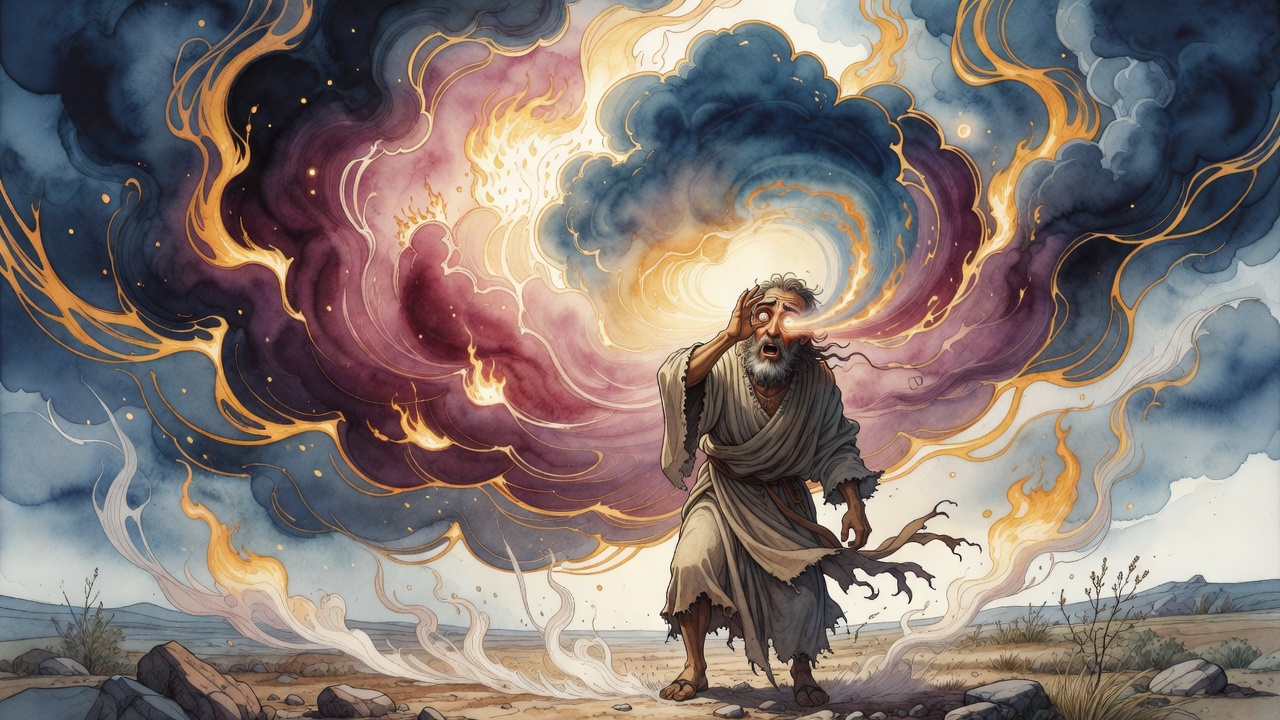
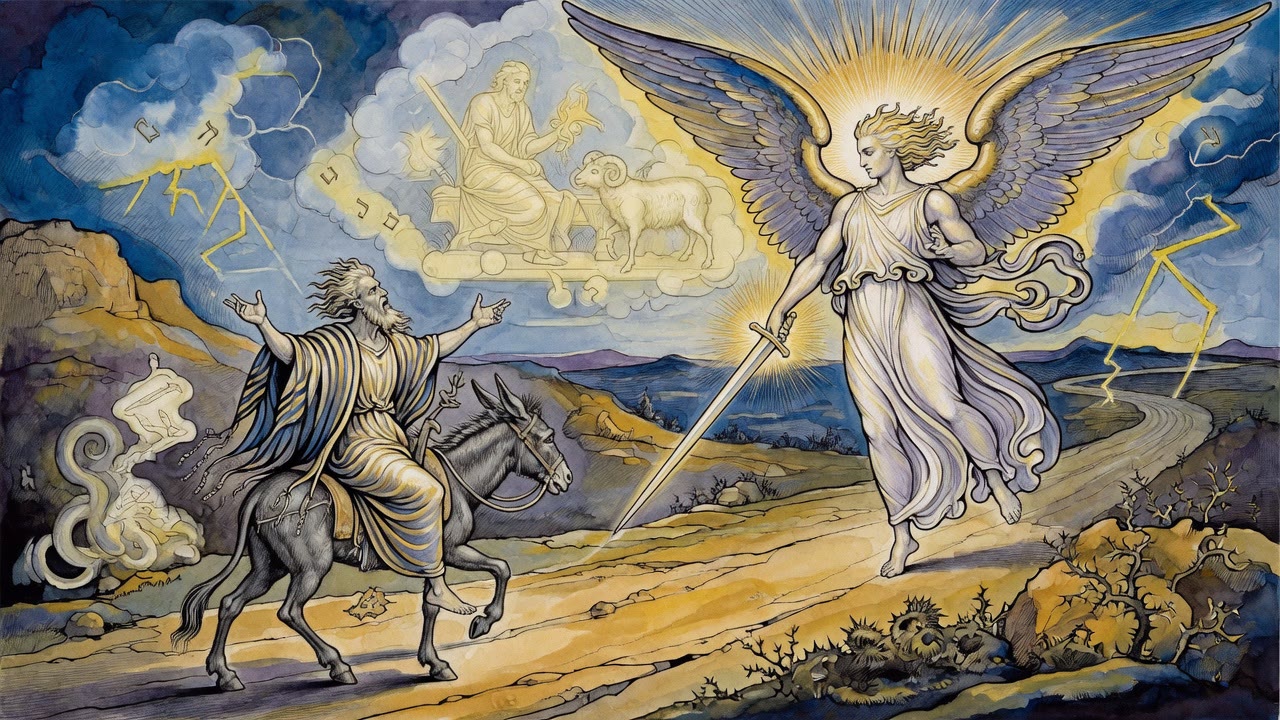
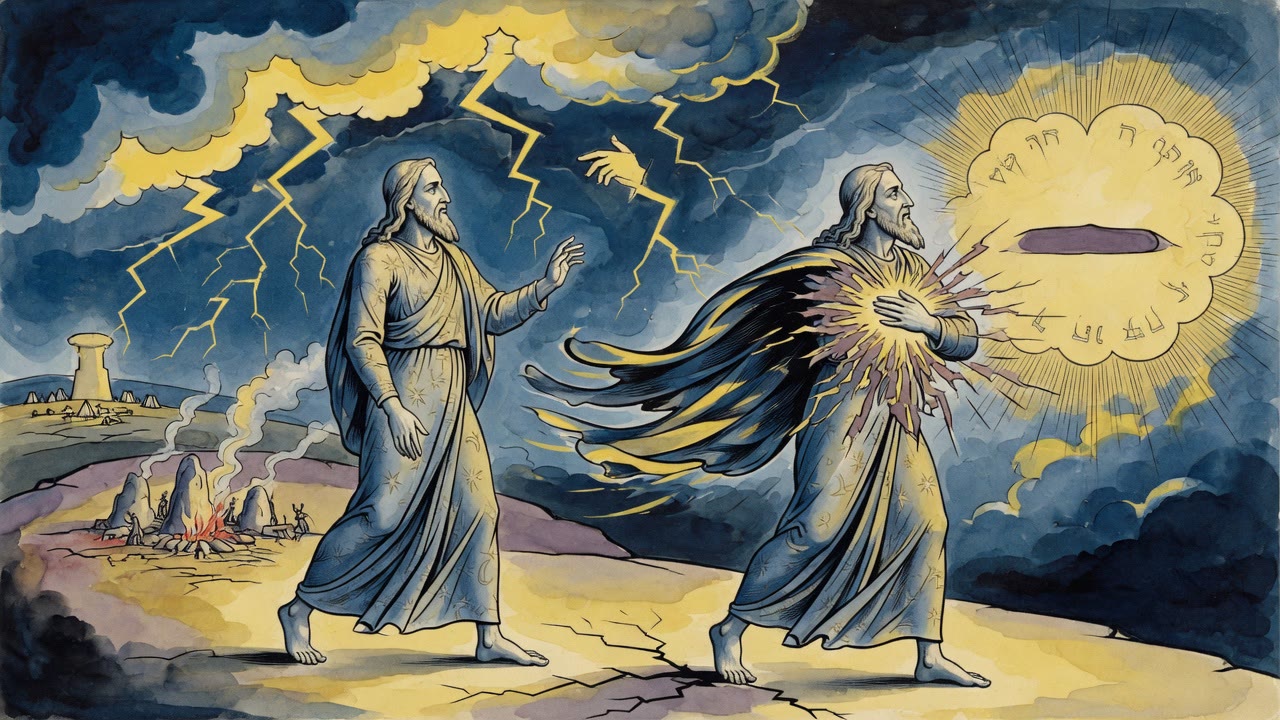
Then God opened Balaam's eyes, and he saw the angel standing in the road with a drawn sword in its hand, and he fell prostrate on the ground. Not in reverence. Not in formal obeisance. He fell because he could not stand. The tradition preserved in the aggadic literature, collected and organized by Louis Ginzberg in his Legends of the Jews (1909-1938), explains the specific reason: Balaam was uncircumcised, and because he was uncircumcised, he lacked the physical and spiritual capacity to receive divine revelation in the upright posture that the occasion required. He lay in the dirt of the road while his donkey, an animal with no covenant obligations whatsoever, remained on her feet.
The Rebuke in Three Parts
The angel spoke. The message came in three movements, each one sharpening the last. First: you have beaten this animal three times, but she saved your life. If she had not turned away, I would have killed you and let her live. The prophet's value in this exchange was lower than the donkey's, not as a general judgment but as a specific accounting of who had been responding correctly to divine reality on this road that afternoon.
Second: you are perverse. The word the angel used was the word for a road that bends wrong, that curves back on itself, that takes you away from where you intended to go while you believe you are still heading straight. Balaam's way was like that. He believed he was moving toward a legitimate purpose, that his journey to Balak was within the boundaries of the permission God had granted. The angel said: your way is bent.
Third: I have come as your adversary. The Hebrew is ha-satan, the blocking force, the opposer, the one stationed in the road to prevent passage. The angel was performing the satan function not because Balaam was condemned but because Balaam was in danger, running toward something that would destroy him if he was not stopped. The adversary was a guard, not an executioner.
What the Delusional Belief Actually Looked Like
To understand what the angel was guarding against, you need to understand what Balaam actually believed. The sources are unambiguous on this point. He was not a reluctant hireling. He had a deep, personal hatred of Israel, a hatred the tradition traces back through his history as a counselor to Pharaoh, and he had for years cherished the conviction that he would eventually find a way to obtain God's consent to curse them. When God had told him not to go with Balak's first messengers, he understood this as a negotiating position rather than a prohibition. When God then allowed him to go with the second group under specific conditions, he understood this as the first of those conditions yielding. He was on his way to Moab in the happy expectation, the tradition says precisely, that he would succeed in getting God to agree with him.
He was wrong about this in every possible direction. He had misread the first prohibition. He had misread the conditional permission. He had been riding his donkey in a state of complete blindness to the supernatural reality surrounding him while his animal navigated it correctly. And now he lay in the dust of the road with an angel standing over him and his delusional confidence finally colliding with something it could not talk its way around.
The Moment the Hierarchy Inverted
The image the tradition holds is stark in its symmetry. A prophet who cannot stand. An animal who can. A man with genuine prophetic power, recognized even by his enemies as one of the great seers of the ancient world, lying face down in the dirt of a Moabite road because his body made him unfit for the divine presence he had ridden toward. The donkey, who had no prophetic gifts at all, who had only open eyes and the instinct to move away from danger, stood upright beside him.
This was the condition in which Balaam began his journey to curse Israel. Prostrate. Corrected by an animal. Warned by an angel that his way was bent. He would continue to Moab. He would stand on three high places and open his mouth. And every time he opened it, blessings would pour out instead of the curses he had come to deliver. The angel had told him the direction things were going. He had not believed it yet.
← All myths