Balak Built a Golden Mechanical Bird That Whispered Secrets to Him
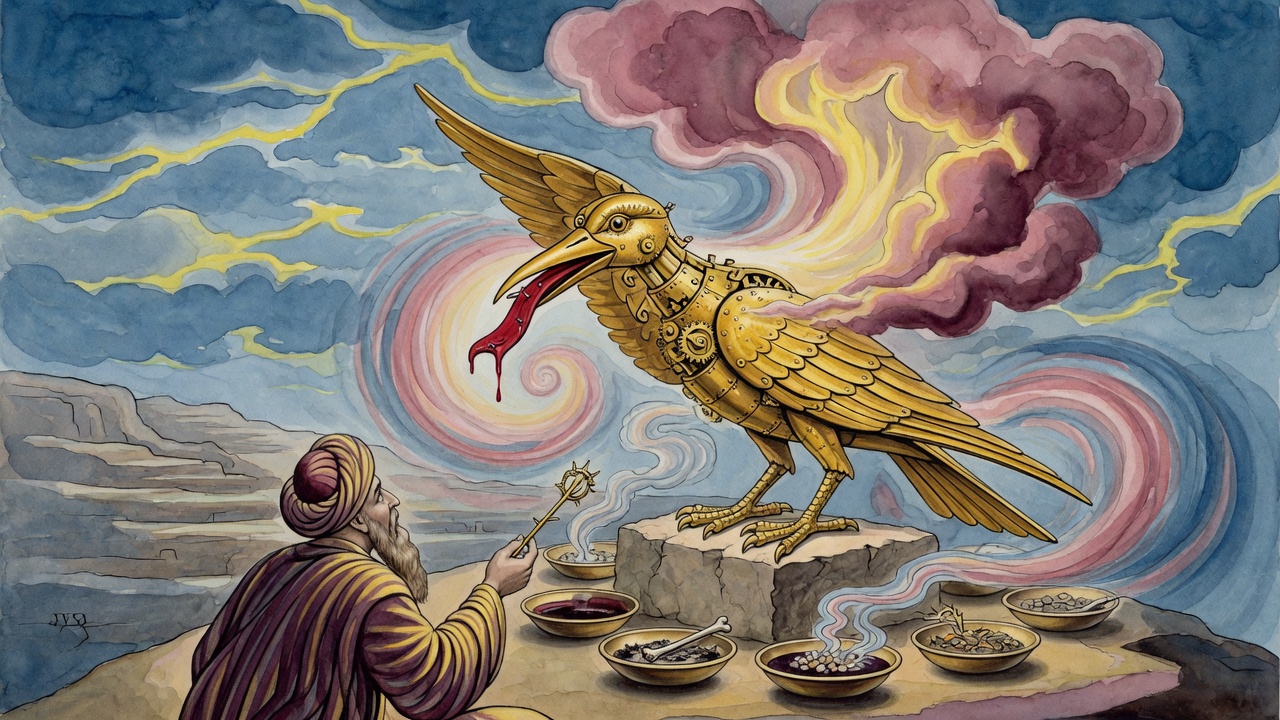
Before Balak hired Balaam he had his own oracle. A golden bird fitted with a rare tongue. Seven days of offerings, one prick, and it spoke.
Table of Contents
 Click for full size
Before He Called Himself Balak
His name before the epithet was Zur. The name Balak, meaning destroyer, came later, from what he did. Before the title and the kingdom, before the negotiations with Balaam and the altars on the hilltops, he was a man who moved through the world with the speed and cunning of a bird in flight. The tradition takes his patronymic seriously: son of Zippor, son of the bird. Not because his father kept birds. Because Balak operated like one, always positioned ahead of his adversaries, reading the wind before it shifted, moving before the target understood it was being hunted.
He had an instrument.
The Golden Bird
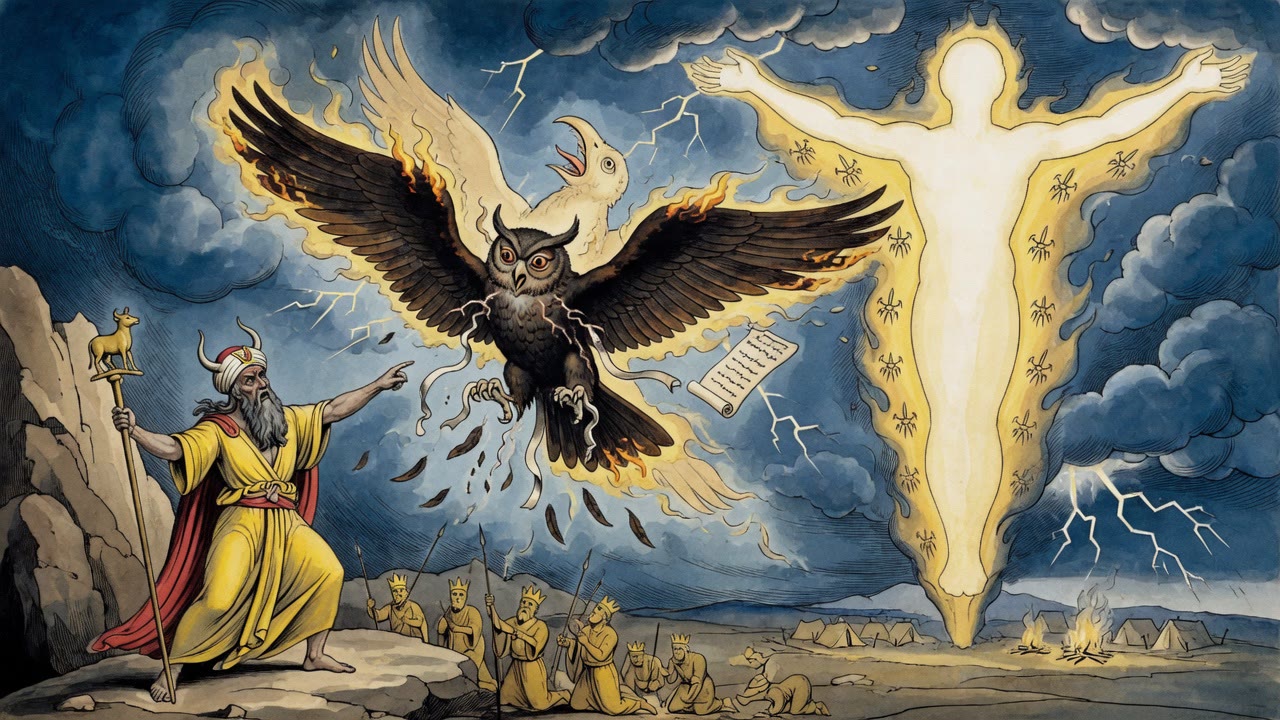
The body was cast in gold. The wings were hammered from bronze. The beak was shaped from silver, fitted carefully to a specific functional purpose. Into the throat of the golden bird, a craftsman had installed the tongue of a creature called the Yadu'a, a rare bird whose tongue had oracular properties when properly activated and maintained. The tradition describes the tongue as the single element that made the whole mechanism work. The gold and the bronze and the silver were housing and display. The tongue was the instrument.
Balak fed the bird for seven days before using it. The offerings he provided during those seven days were not random. They were calibrated to prepare the tongue for consultation, to bring the oracle into the state where it could receive and transmit. Seven days was the required preparation period for a query of significance. After seven days, he pricked the tongue with a specific implement, and the golden bird whispered its answer to him.
What He Learned and What He Could Not Know
The tradition does not preserve the full content of what the golden bird told Balak over the years of his rise. What it does preserve is the limit of what the bird could give him. He could learn things. He could receive intelligence that normal human means would not produce. He could position himself ahead of events that others would not see coming. But the bird gave him information, not understanding. It told him what. It could not always tell him how.
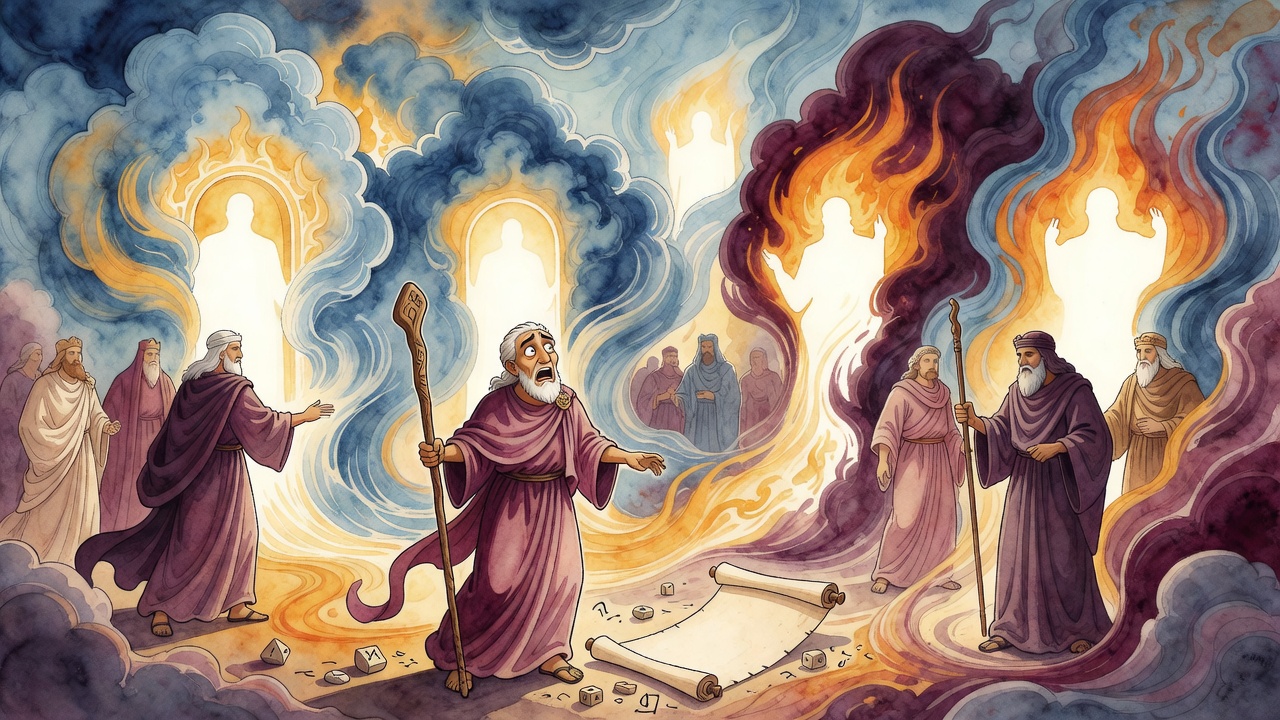
When Sihon fell to Israel and then Og fell to Israel, and when Balak's sorcery showed him the number twenty-four thousand, the count of Israelites who would die because of him, the gap between what he could see and what he could use became the problem he needed Balaam to solve. The golden bird was a receiver. Balaam was an interpreter.
A King Who Built Markets to Flatter a Prophet
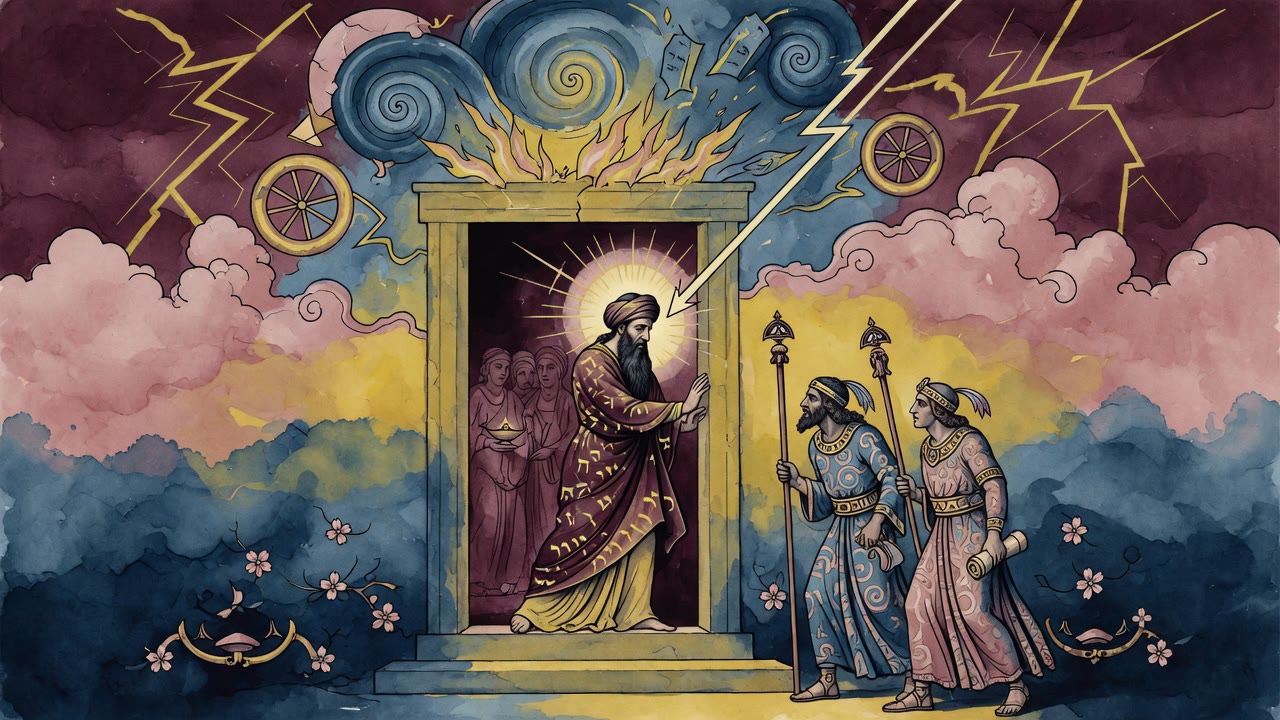
The tradition notes that when Balak sent for Balaam, he did not simply send messengers with payment. He built markets along the route from Midian to Moab so that Balaam's journey would be comfortable, well-supplied, full of the commercial activity that signals wealth and welcome. He built altars in positions designed to impress a man accustomed to conducting his oracles on high places with the right sight lines. He arranged everything to communicate, before Balaam arrived, that this king understood what the prophet's work required and had provided for it in advance.
This was not generosity. It was operational intelligence. Balak had spent his rise reading people the way the golden bird read the future: looking for the tongue that moved, for the vulnerable point that a targeted action could open. He knew from his oracle what the outcome should be. He needed Balaam to find the mechanism. He prepared the road and the altars and the markets because a prophet who arrives comfortable and impressed is a prophet already disposed to be useful.
← All myths