Esau Swore Away the Birthright and His Sons Paid in Blood
The stew was still hot. Esau sold the firstborn's portion for a mouthful and walked out. His sons later took Seir the same way.
Table of Contents
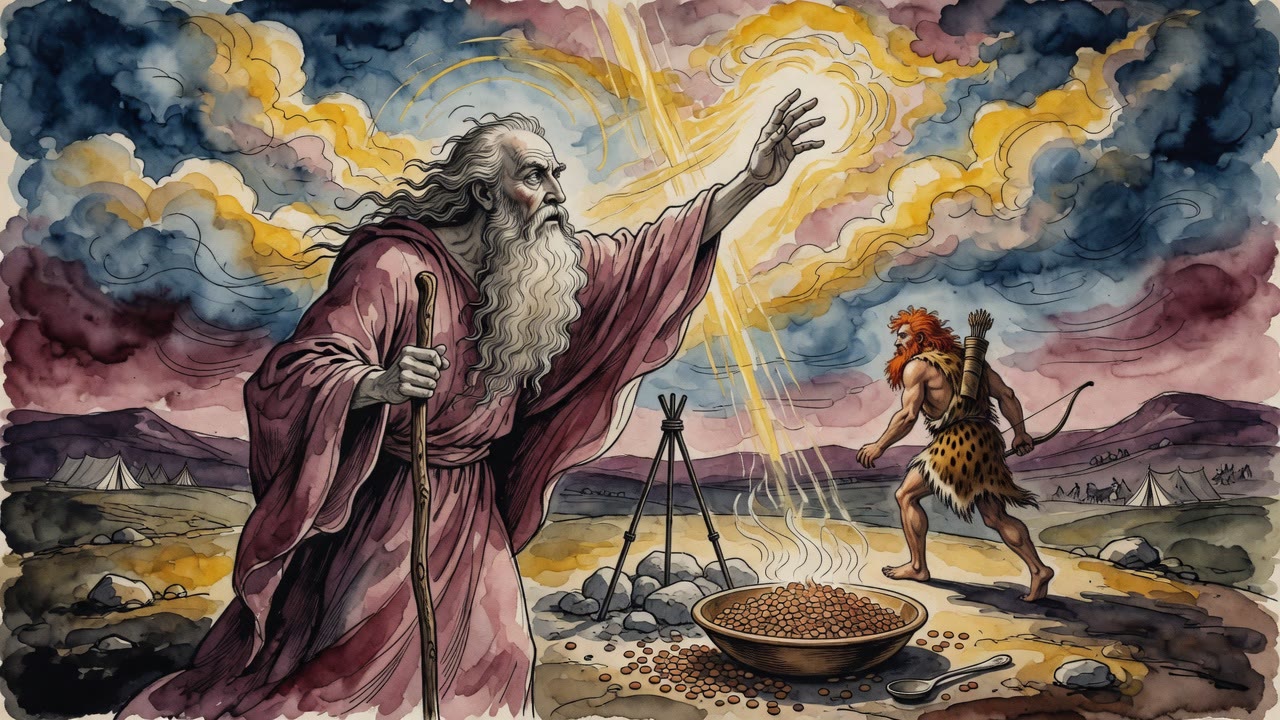
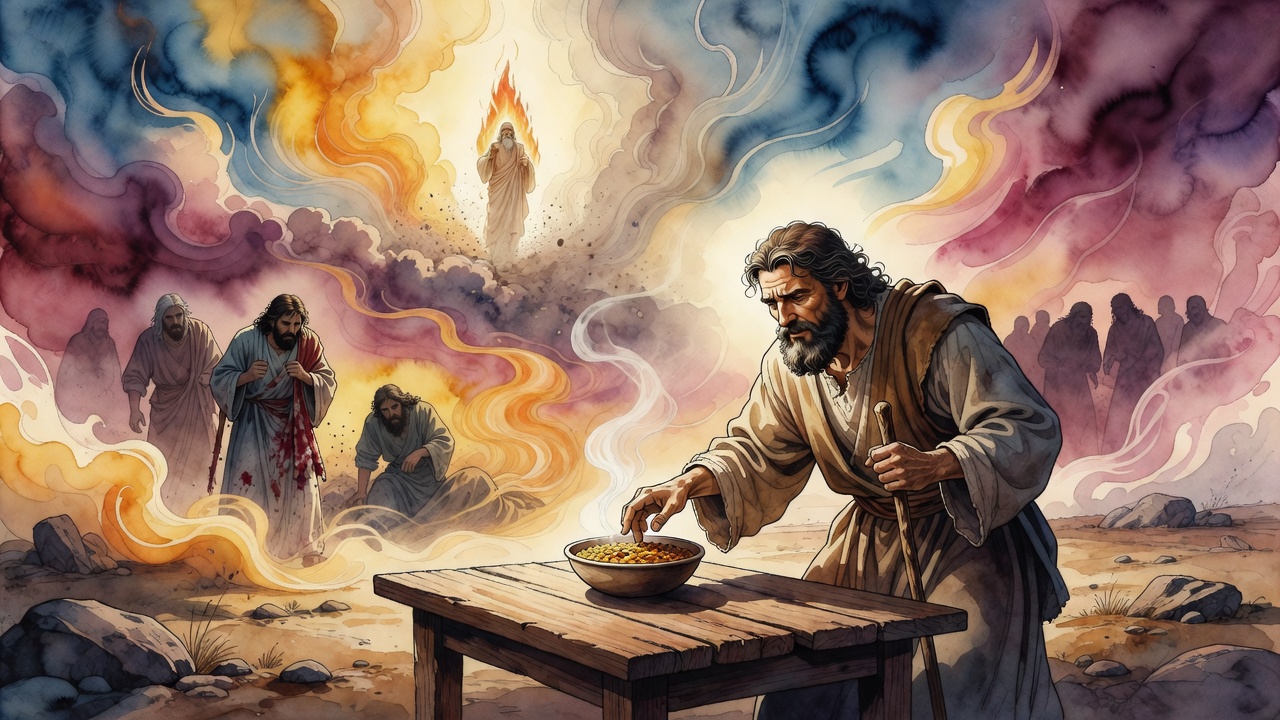
The smell of lentils met him at the tent flap. Esau came in from the field empty, and the thought in his head was death. Not a figure of speech. Heat had taken the strength out of him, and he had decided, between the field and the door, that without food now he would not live to inherit anything.
 Click for full size
Jacob was stirring a red stew.
The Oath Before He Ate
"Give me some of that red," Esau said.
Jacob waited a beat. Then he named his price. Sell me your birthright, this day. Esau repeated the logic he had already talked himself into. "I am about to die. What profit is a birthright to me?" Jacob pressed. "Swear to me this day." He wanted it witnessed. Binding. Esau swore. He ate the bread and the lentil stew, drank water, stood up, and walked out (Genesis 25:33-34).
The stew was still hot. The oath was already older than the meal. They called him Edom after that, red, so the name itself would keep the bowl in view. Jacob became the elder. Esau was brought down from his dignity in the time it took to empty a dish.
Isaac Had a Sword Left
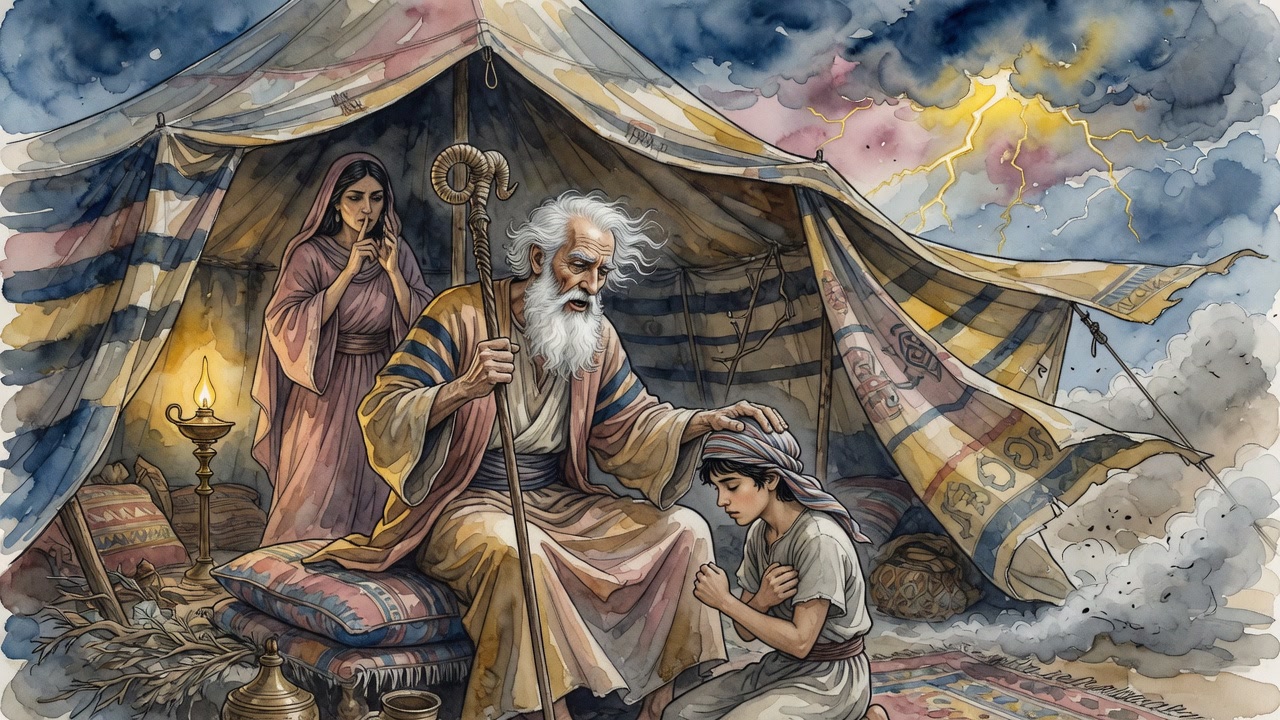
Years later Isaac lay blind and dying and called Esau in to give him the blessing of the firstborn. He did not know the field had already finished that business. The blessing meant for Esau went to Jacob by disguise. Isaac could not unsay it. Esau screamed a cry that filled the tent (Genesis 27:34).
Isaac opened his mouth to give his older son something anyway. What came out was not the covenant. "By thy sword shalt thou live" (Genesis 27:40). Fatness of the earth. Service to his brother. A chance, one day, to throw the yoke off his neck. A weapon, not a promise. Isaac was not inventing a curse. He was describing the man standing in front of him.
The Goods and the Cave
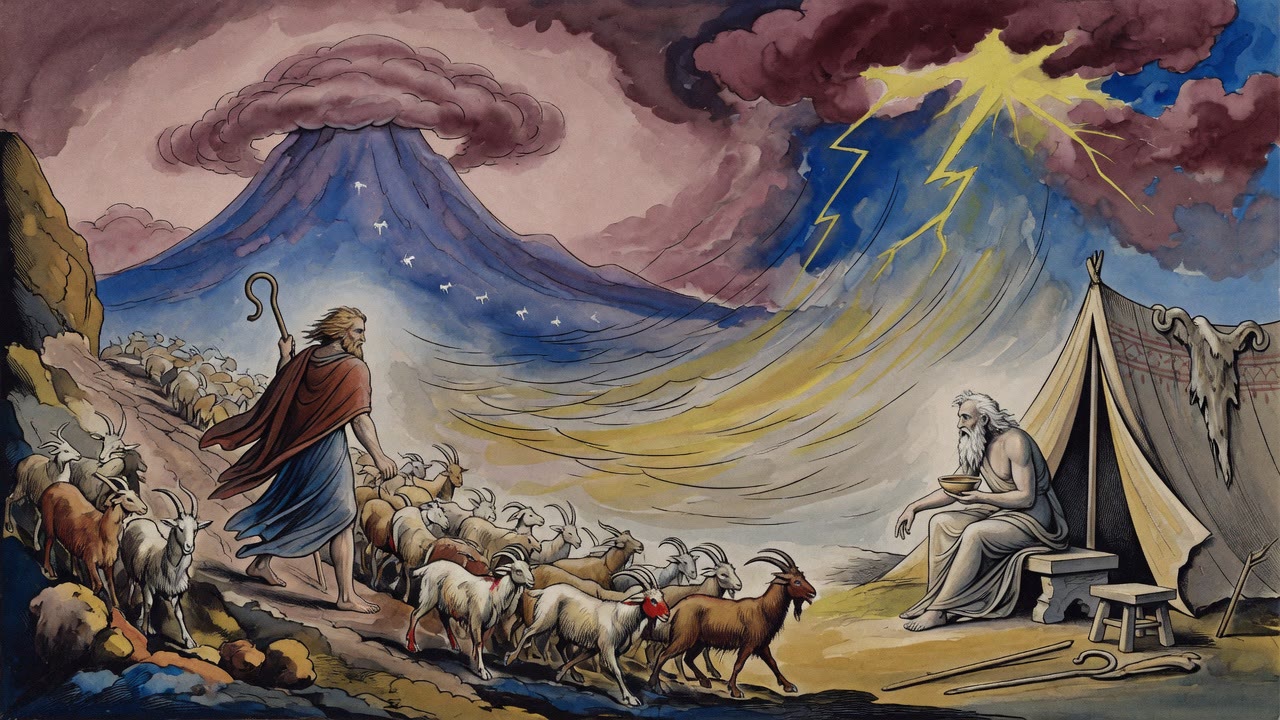
When Isaac's days were almost gone he told his sons to bury him in the Cave of Machpelah, the place he had prepared with his own hands beside Abraham and Sarah. He divided what he owned. Esau, at the end, said the thing the stew had already said. "I sold my birthright to Jacob, and I ceded it to him, and it belongs unto him." Isaac closed his eyes.
The funeral passed. Then the estate had to be split in daylight. Esau wanted to choose first, as the elder. Jacob set out two portions. One was every animal, every coin, every object a hand can hold. The other was Isaac's claim to the land, and the cave itself. Esau took the goods without pausing. Jacob took the cave and the title to the ground. A document was written. Jacob told Esau to leave. Esau gathered his wives, his children, and everything he had chosen, and went to Mount Seir.
The Horite Houses
Seir already had people. The Horites lived in those houses. Esau's sons needed the land. They did not make a clean war of it. They moved through the population until almost no one was left who had not been absorbed or killed. They enslaved the lads. They took the maidens as wives. They divided the possessions and the ground among themselves.
When the dust settled they needed a king, and they could not pick one from their own ranks. The slaughter had left so much hatred among them that no son of Esau would sit over another. They crowned a stranger, Bela son of Beor, a warrior sent by King Agnias, because he was not one of them. They built him a palace, filled it with silver and gold, and let him reign thirty years. He died later in a war against Joseph and Joseph's brothers. The line that had taken Seir by the sword could not even govern Seir by blood.
The Yoke and the Blade
Isaac had told Esau the truth in the tent. You will live by your sword. The man who sold the firstborn's portion for a meal spent the rest of his life taking what he wanted by force, and his sons did the same on a larger scale, and the taking did not hold. They had a land that was not theirs by covenant. They had a king who was not theirs by birth. They had goods in their hands and a cave they had walked away from.
Jacob kept the ground. Esau kept the blade. The stew had been one afternoon. The sword lasted.
← All myths