Ham Took the Wrong Land and His Son Paid the Price for Centuries
The lots assigned the holy land to Shem. Ham's son Canaan crossed the border anyway, defying an oath sealed before angels, and refused to leave.
Table of Contents
 Click for full size
The Lot That Fell to Ham
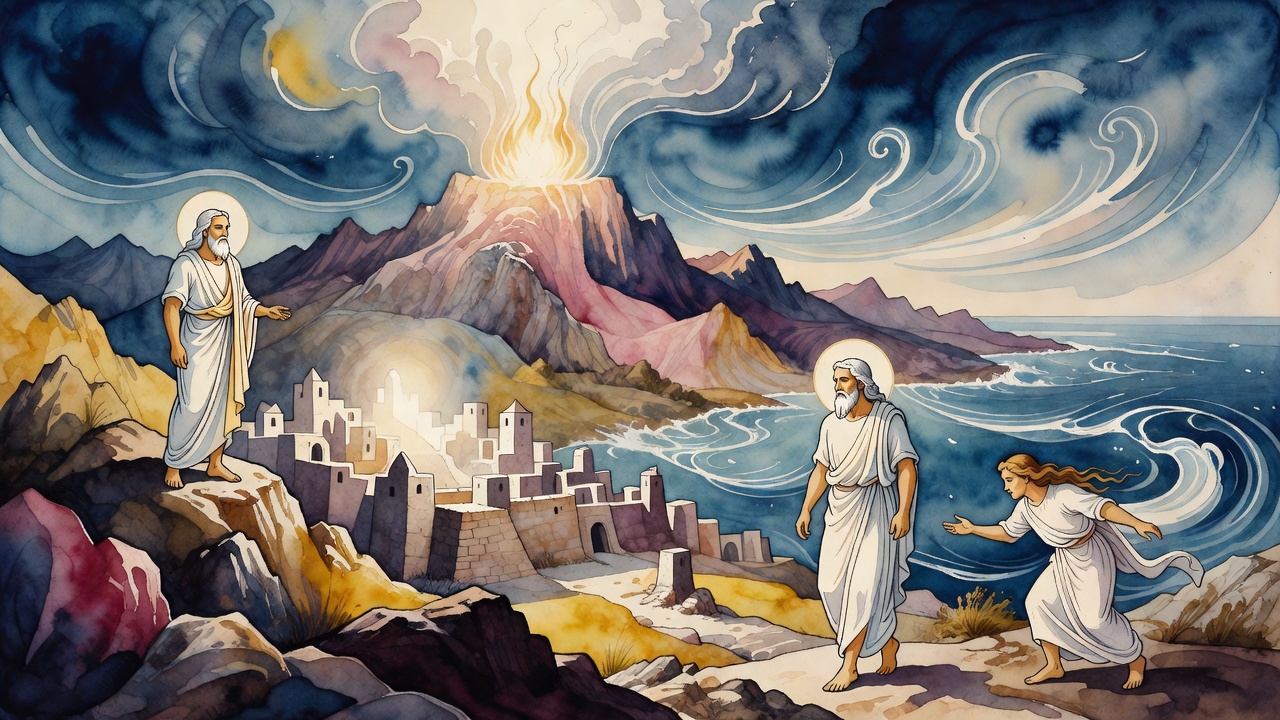
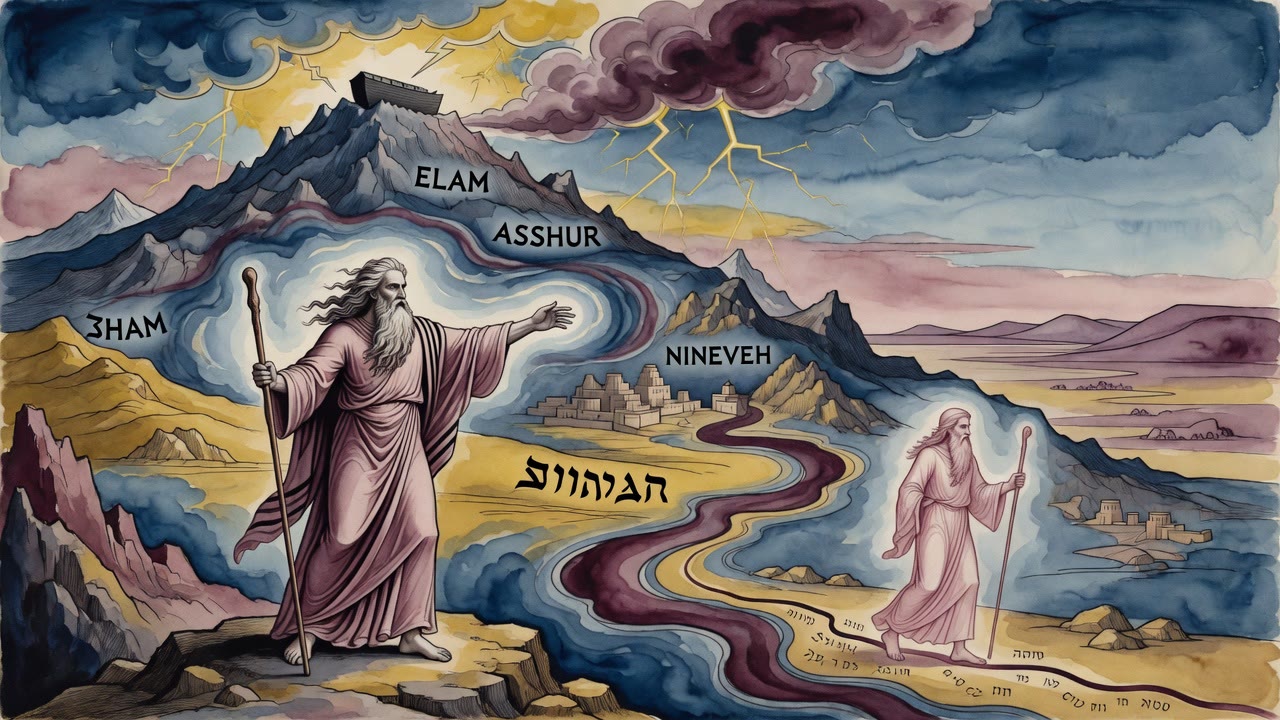
Ham got the heat. Noah drew the lots on the mountain with angels standing as witnesses, and the south came out in Ham's name: everything beyond the Gihon and to the right of the Garden, running down through the mountains of fire, then west to the sea of Atel and on to the sea of Mauk, which is the sea into which everything not destroyed goes down. It was an enormous country. It had no Garden in it.
Shem's lot did. His border ran from the mouth of the river Tina in the north to the mountain called Rafa in the south, and inside those lines lay the Garden of Eden, and Mount Sinai in the middle of the desert, and Mount Zion at the navel of the earth, three holy places set facing one another. Japheth drew the north, beyond the mountains of Asshur, spacious and blessed, and everything in it very good. Ham drew the burning mountains and the sea that swallows.
Noah was so pleased with the way Shem's lot came out that he said the old blessing over it again while the writing was still being done. "Blessed be the Lord God of Shem, and may the Lord dwell in the dwelling of Shem." Ham stood close enough to hear every word, and he said nothing, because the drawing had been fair and he had sworn to abide by it before a single lot came out.
The Oath Ran Down to the Grandchildren
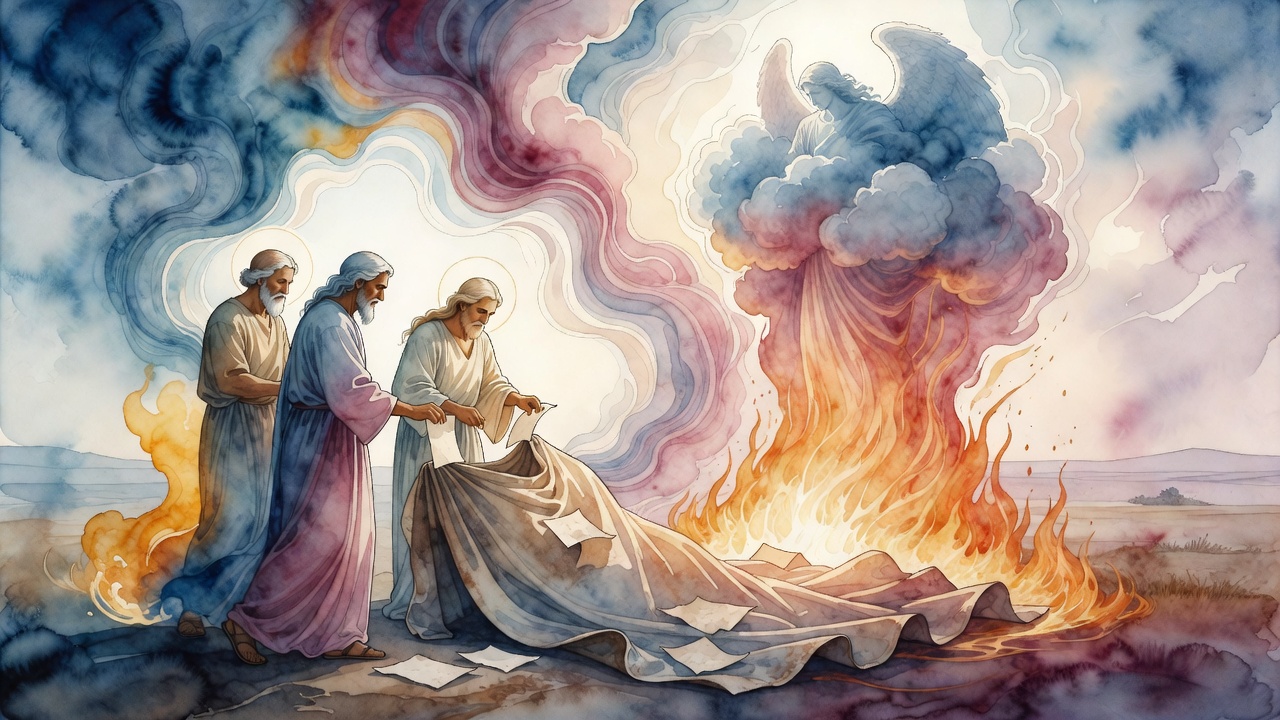
The oath did not stop with the three sons. Each of them swore for the sons he did not have yet, and the swearing was done in front of the holy judge, and what was said there went onto the heavenly tablets. So a boy born forty years later in a tent in the south was bound by a sentence he had never heard anyone speak.
There was still a way to move. When Madai looked at the land of the sea that had fallen to him it did not please him at all, so he went to Elam and to Asshur and to Arpachshad, his wife's brother, and begged a portion from them, and they gave him one. He asked, and he got it, and no curse followed him out of the room. Anyone in that family who hated his lot had the same door.
Canaan Looked North
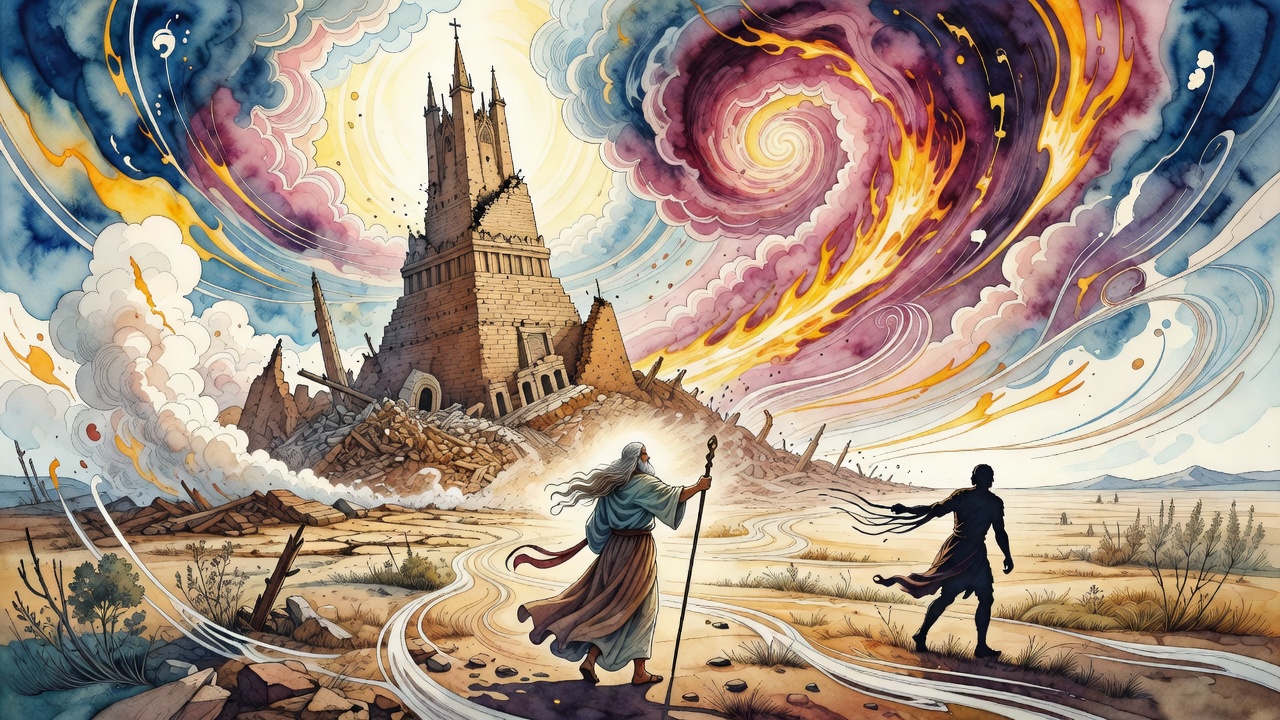
Canaan grew up in the south with the rock throwing heat back at him all afternoon, and when he was old enough to travel he walked to the top edge of his father's country and stood there looking across. Lebanon lay in front of him, the whole run of it from Hamath down to the entering of Egypt, and he saw that it was very good.
West and south of where he was standing lay the land that was actually his. He did not go that way. He brought his household up over the line into Lebanon and pitched there, and once the tents were up he did not take them down again.
His Brothers Said the Curse Out Loud
His brothers came up after him and their father came with them. They did not argue about whether the land was good, since it was good and anyone with eyes could see it was good. They told him he had settled in a country that was not his, and then they put the oath in front of him, the one they had all bound themselves to in the presence of the holy judge and in the presence of Noah their father, and then they said the rest of it to his face. Cursed art thou, and cursed shalt thou be beyond all the sons of Noah.
Ham stood there while his own sons said it to another of his sons. He had drawn the burning mountains and the swallowing sea without asking for better, because the lots had been fair, and now the boy was being cursed in front of him for wanting exactly what Ham had wanted and had not taken. He could open his mouth against the oath, or he could keep the oath and lose the boy. His mouth stayed shut, and the silence was the whole of his answer.
Canaan did not answer either. He did not hearken to them, and he did not pack, and when they went back down the road he was still standing in Lebanon with his sons around him.
Ham Went Back Down to the Heat
The family split along the line the lots had drawn. Japheth and his sons had already gone toward the sea and settled in the land of their portion without any of this, since the north was blessed and spacious and nobody had to be told twice to take it. Shem held the middle with the Garden inside it. The one house that had a hole in it was Ham's.
Canaan took Lebanon and kept it, he and his sons, and the country began to answer to his name, so that a man asking whose land he was crossing would be told the name of the grandson who had refused to leave it. His children inherited a curse spoken by their uncles and a title that came from nowhere legal.
Ham went back down past the Gihon into his own portion, where the mountains burn and the western sea takes in everything that is not destroyed, and he lived out his years in the country he had accepted, one son short.
← All myths