Moses Mistook the Giant Og for a New Wall Around Edrei
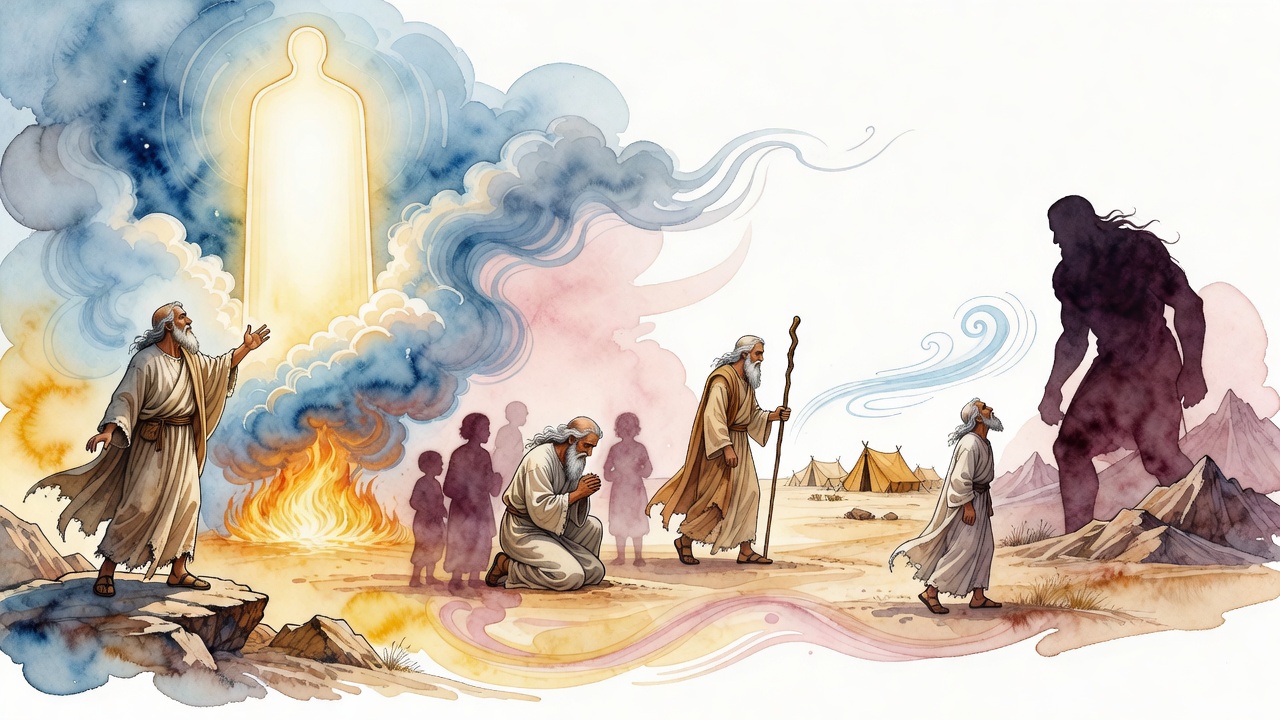
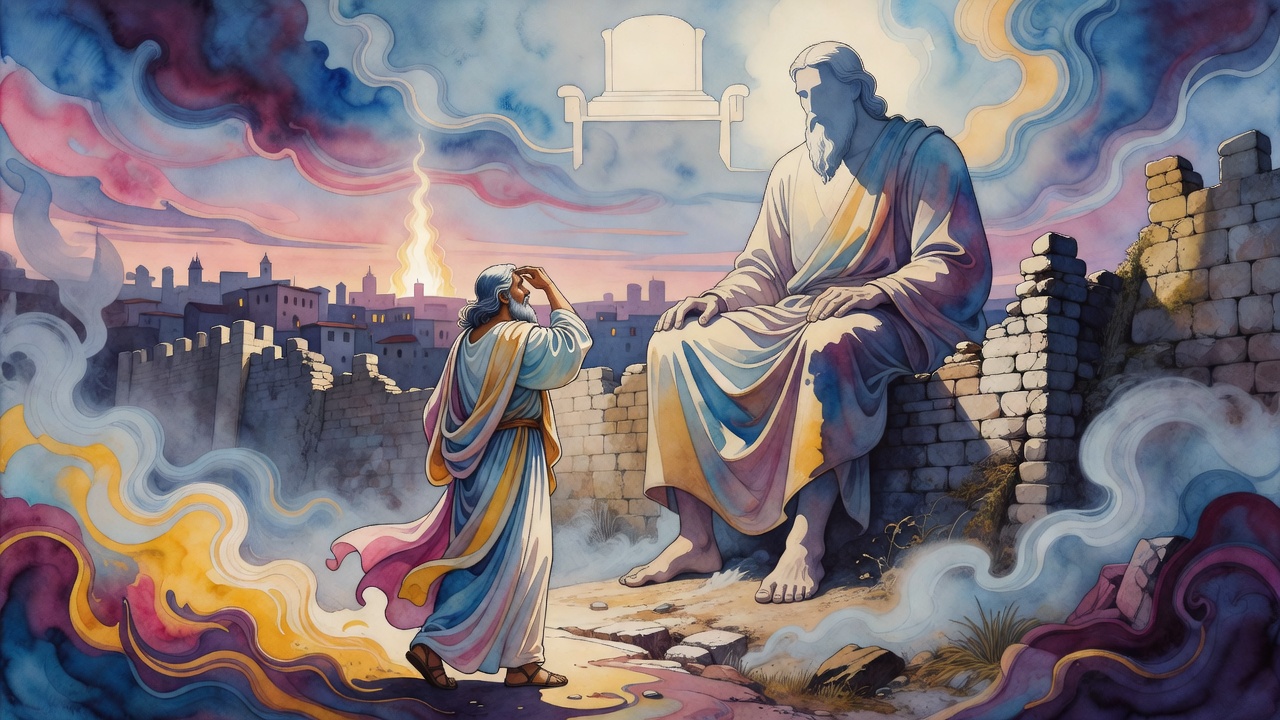
Before dawn Moses looked at Edrei and saw a new wall around the city. There was no wall. It was a man seated on the old one, feet on the ground.
Table of Contents
 Click for full size
Something Wrong With Edrei
Moses woke before the camp stirred and looked toward Edrei in the grey before sunrise. Something had happened to the city overnight. A massive new wall had appeared around the entire perimeter, rising so high that it changed the silhouette of the city against the pre-dawn sky. In all his years of military campaigns across the wilderness, in all the approaches to fortified positions he had overseen, Moses had never seen fortifications go up in a single night. He looked at the wall and felt the cold that comes before fear.
There was no new wall.
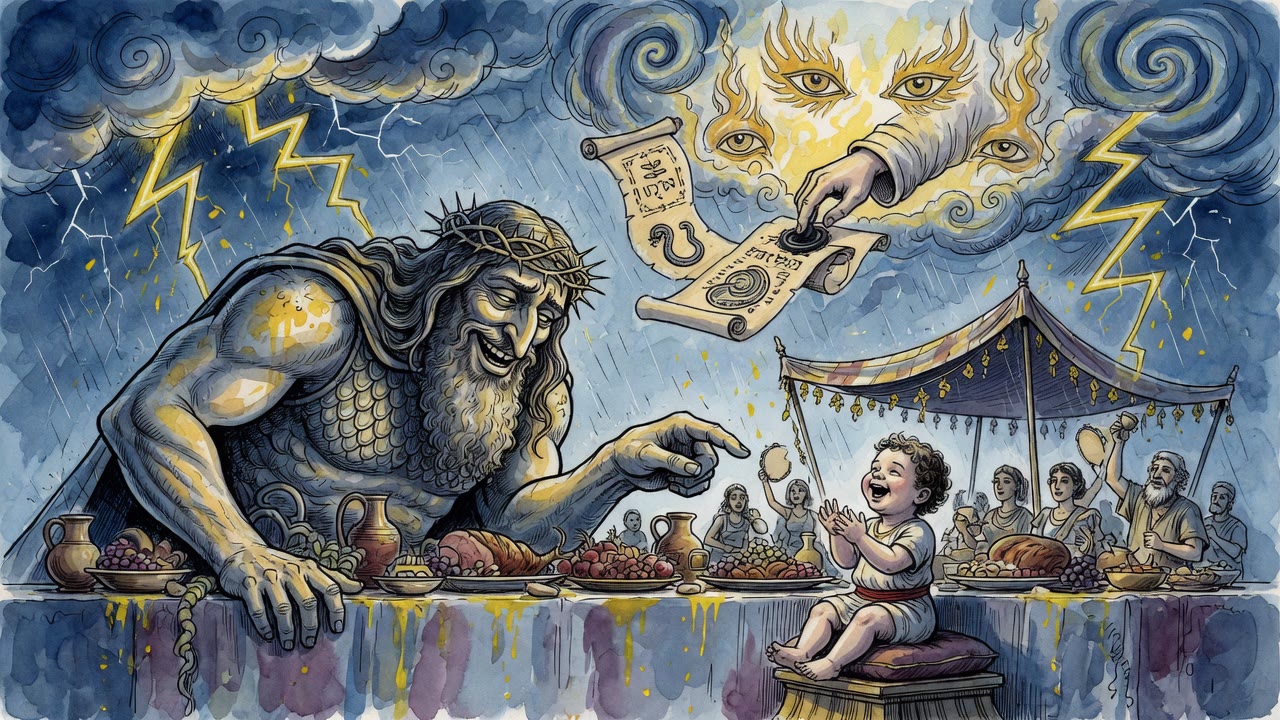
What Moses was looking at was Og, king of Bashan, seated on top of Edrei's existing wall with his feet resting flat on the ground below. The man's legs were the perceived ramparts. His torso was the perceived parapet. His head extended into the sky where a watchtower would have been. Moses had been looking at a man and reading him as architecture because the scale of the man made architecture the first and most reasonable interpretation of what the eyes were reporting.
A King Who Survived the Flood
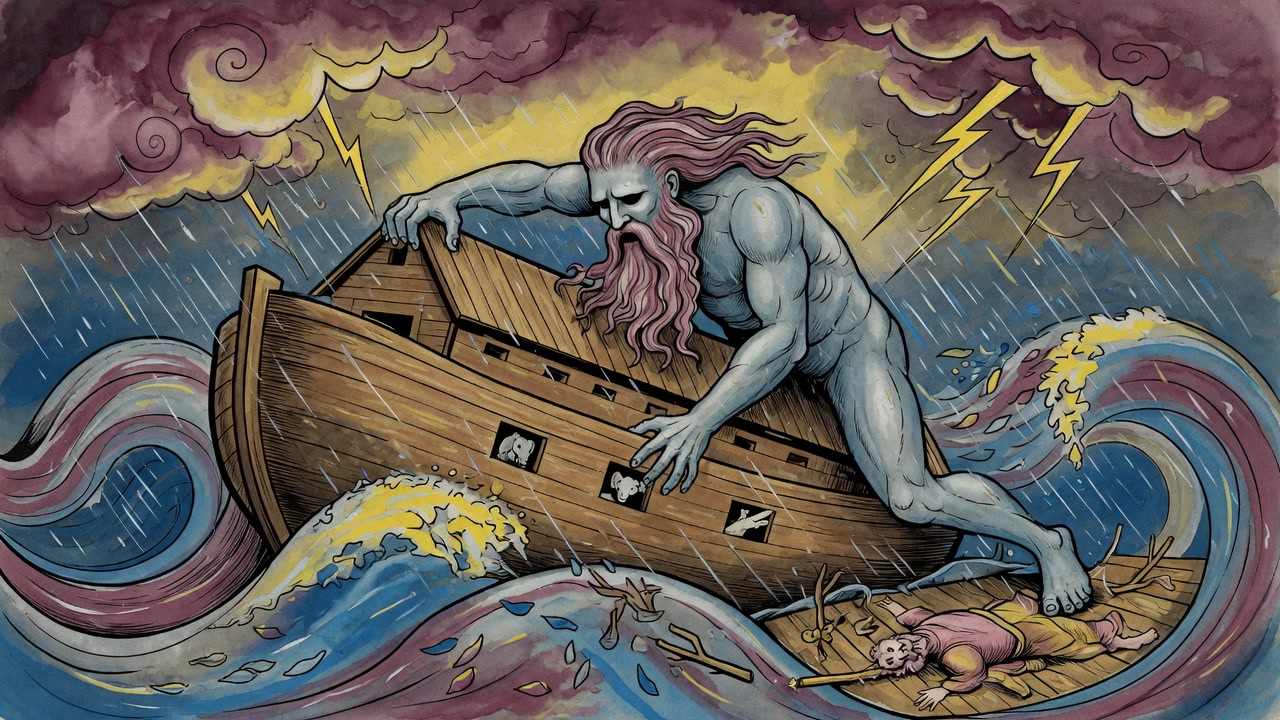
Og was not merely large. He was a different order of creature. The tradition places him among the Rephaim, the giants who had walked the earth in the generations before the flood. He had survived the flood itself, clinging to the side of the ark, hanging on to a rail or a ledge, fed daily by Noah, alive when the waters receded while every other living thing above the waterline had drowned. He was already ancient when Abraham fought the kings in the valley, already ancient when Sihon and Og carved out their kingdoms in Transjordan.
The tradition gives his dimensions: his bed was nine cubits long and four cubits wide. By the standard cubit this places it at roughly thirteen feet by six feet. By the largest cubit calculation his bed was considerably longer. His iron bedstead became famous enough that Deuteronomy mentions it still existed in Rabbath Ammon as a tourist object by the time of Moses's death. The bed outlasted the man. The man's scale outlasted normal measurement.
Moses Was Afraid
The tradition does not soften this. Moses, who had faced Pharaoh and the sea and forty years of wilderness complaints and the deaths of his own generation, was afraid of Og. God had to tell him directly: do not fear him. The instruction implies that fear was the natural response and Moses was experiencing it. A man who looked like a city wall when seated would look like something else entirely when standing and moving toward you.
God's reassurance came with a specific strategy. Moses was told to throw a stone at Og's ankle, which would kill him. The logistics of this required Moses himself to be supernaturally enlarged for the purpose, because otherwise the ankle was too far above him to reach effectively. The tradition describes Moses jumping from the ground, adding height to his throw, still not reaching high enough, and requiring divine assistance to bridge the gap between Moses's natural reach and the ankle of a creature who had walked the earth since before the flood.
The Giant Who Tried to Bury the Camp
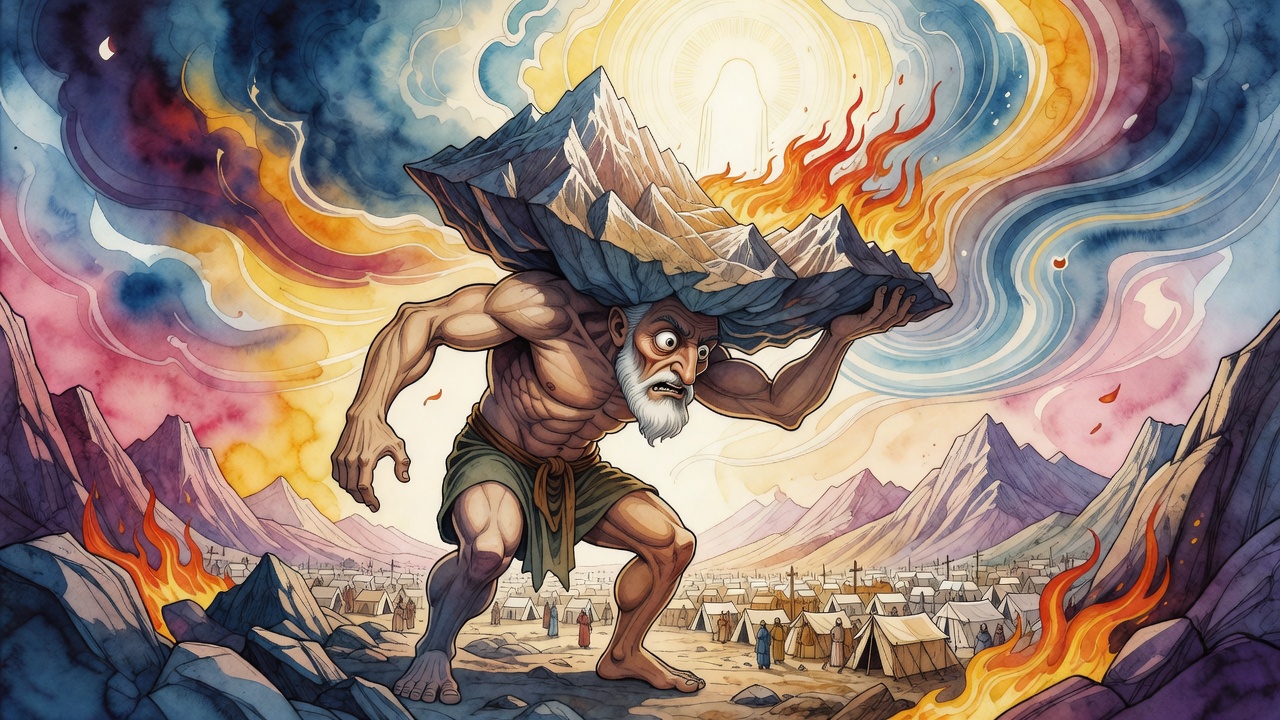
Before Moses threw the stone, Og had his own plan. He uprooted a mountain. The account describes him tearing a peak from the ground and carrying it over his head to drop on the Israelite camp, intending to bury the entire people under rock. He was holding the mountain above his head when God sent ants into the stone, which bored through the rock until it crumbled around Og's neck like a collar, trapping his arms. The stone that was supposed to bury Israel had become a stone collar that locked Og's arms above his head and left him standing there, immobilized, when Moses jumped and threw and struck the ankle.
← All myths