Rabbah Walked Among the Dead of the Desert
Rabbah cut a blue thread from a giant's fringe and the camel stopped. The guide said the dead keep what is theirs.
Table of Contents
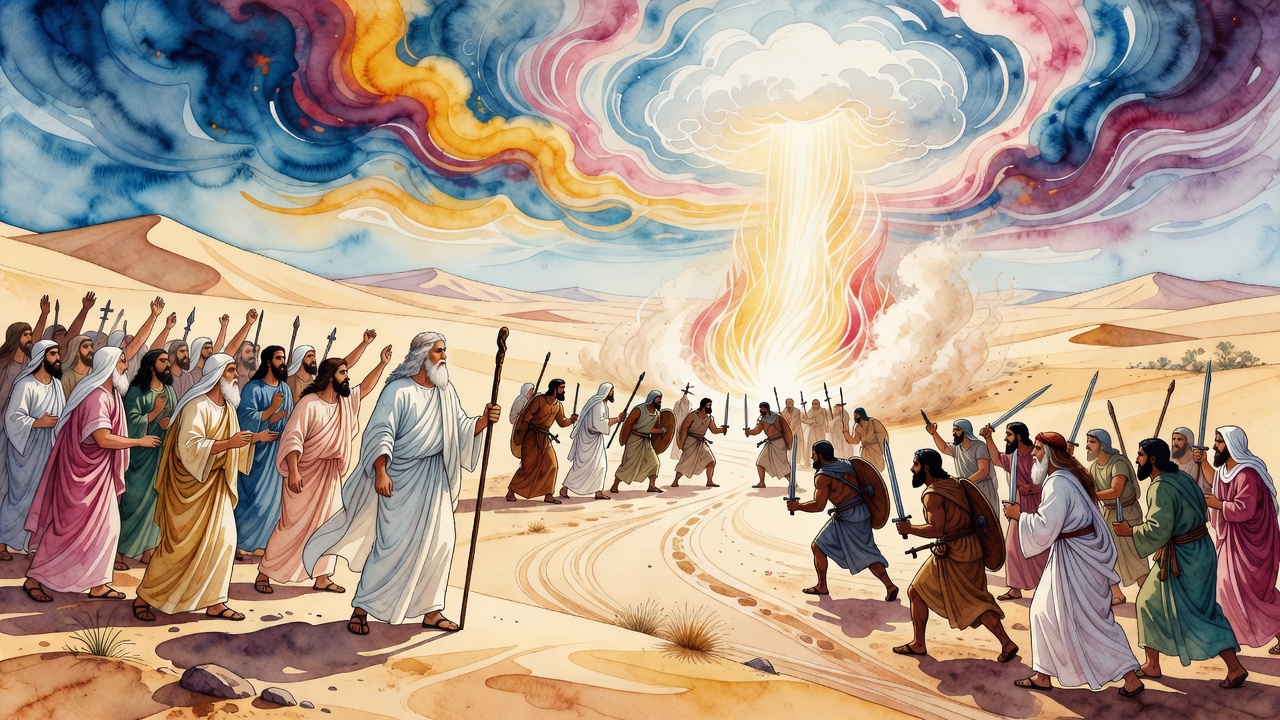
Rabbah bar Bar Hannah was traveling in the desert when his guide stopped, crouched low, and pressed a handful of dust to his face. The man could smell the road. He could tell east from west by what the sand carried. When Rabbah tried to confuse him by swapping the dust from different directions, the guide was not fooled.
 Click for full size
Rabbah was not an expert here. He was a passenger. The man who led him belonged to this landscape the way a shepherd belongs to his hills.
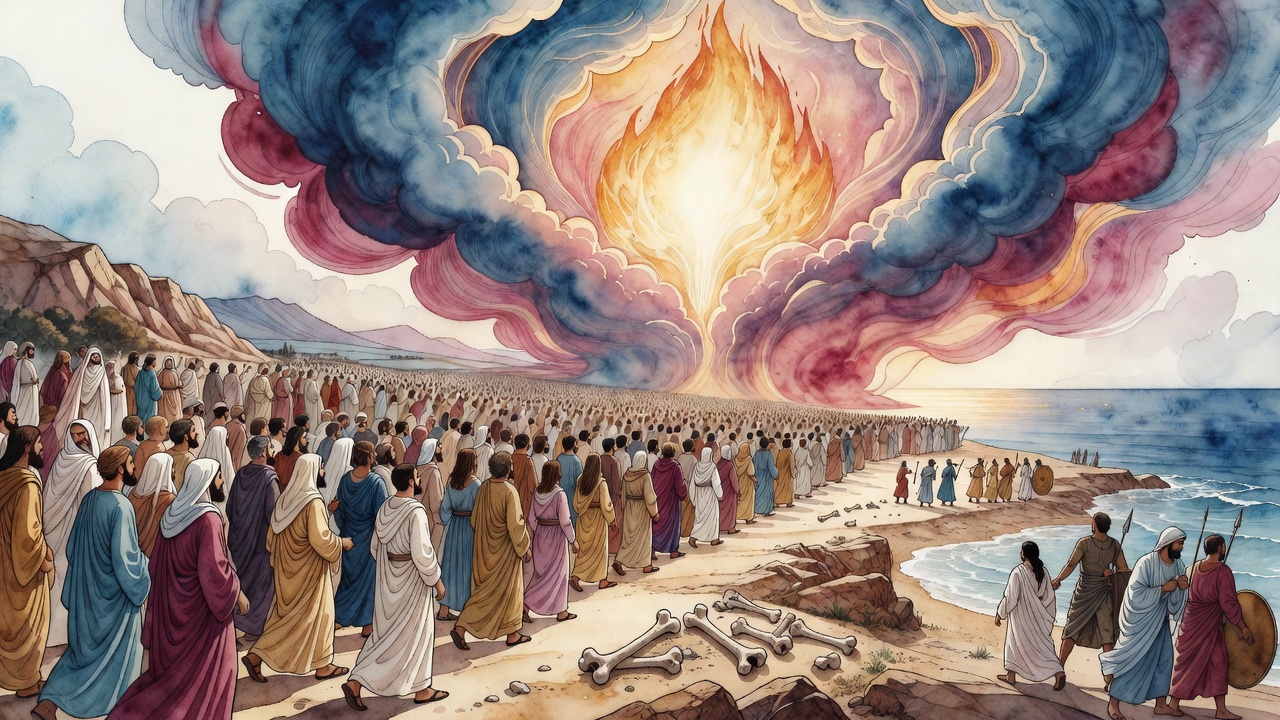
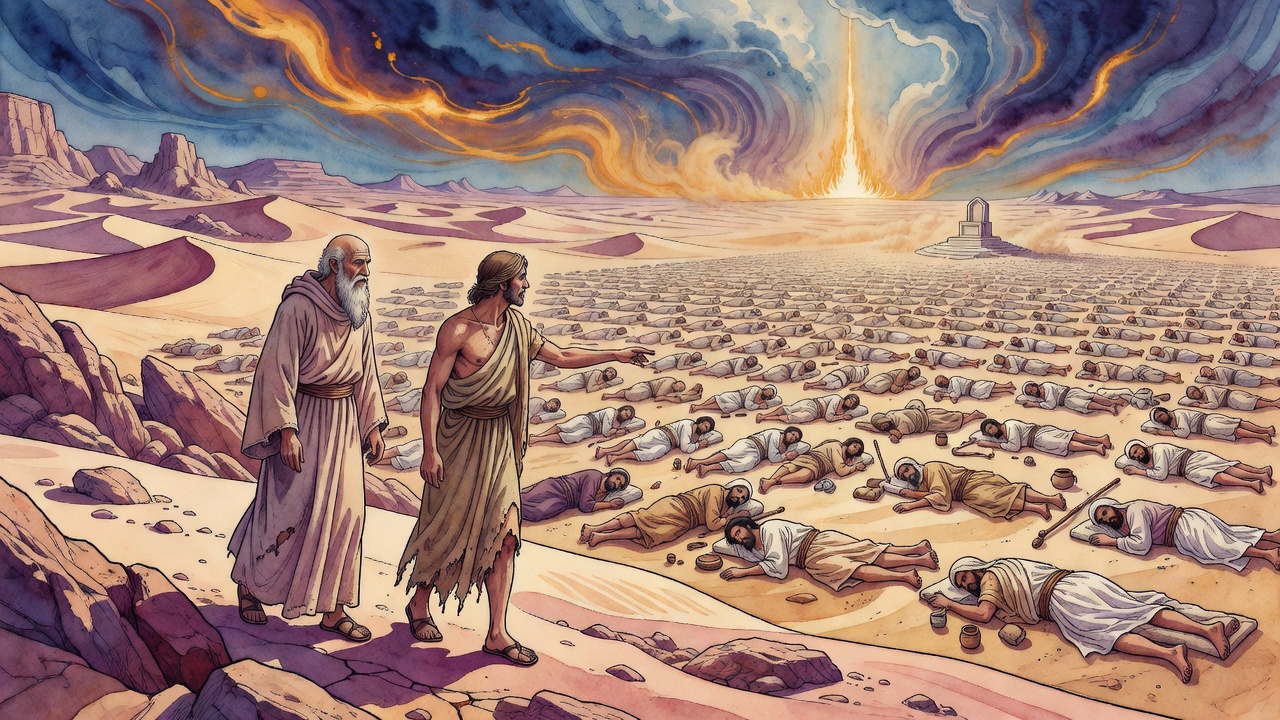
The guide offered to show him something. He said he could take him to the dead of the wilderness: the Israelites who left Egypt, who survived the sea and the giving of Torah, and who then died during the forty years because of the sin of the spies. They never entered the land. The Torah sealed their fate. The guide said they were still there.
The Dead Still Wore Their Fringes
They were lying on their backs, enormous. A rider on a camel could pass beneath the knee of one of the dead while holding a spear upright without the spear touching either the knee above or the ground below. The bodies were intact. Mouths were closed. Fringes were still on their garments.
Rabbah could not help himself. He leaned from his camel and cut a corner thread, the tekhelet (תכלת), the blue thread, from one of the garments.
He was immediately unable to move. The camel stopped. He could not go forward. The guide told him to return the thread. The dead do not belong to the living as specimens or souvenirs. They are sealed in the wilderness, preserved in their punishment and their holiness both.
Rabbah put the thread back. The road opened again. The camel stepped.
The Pit That Still Breathed
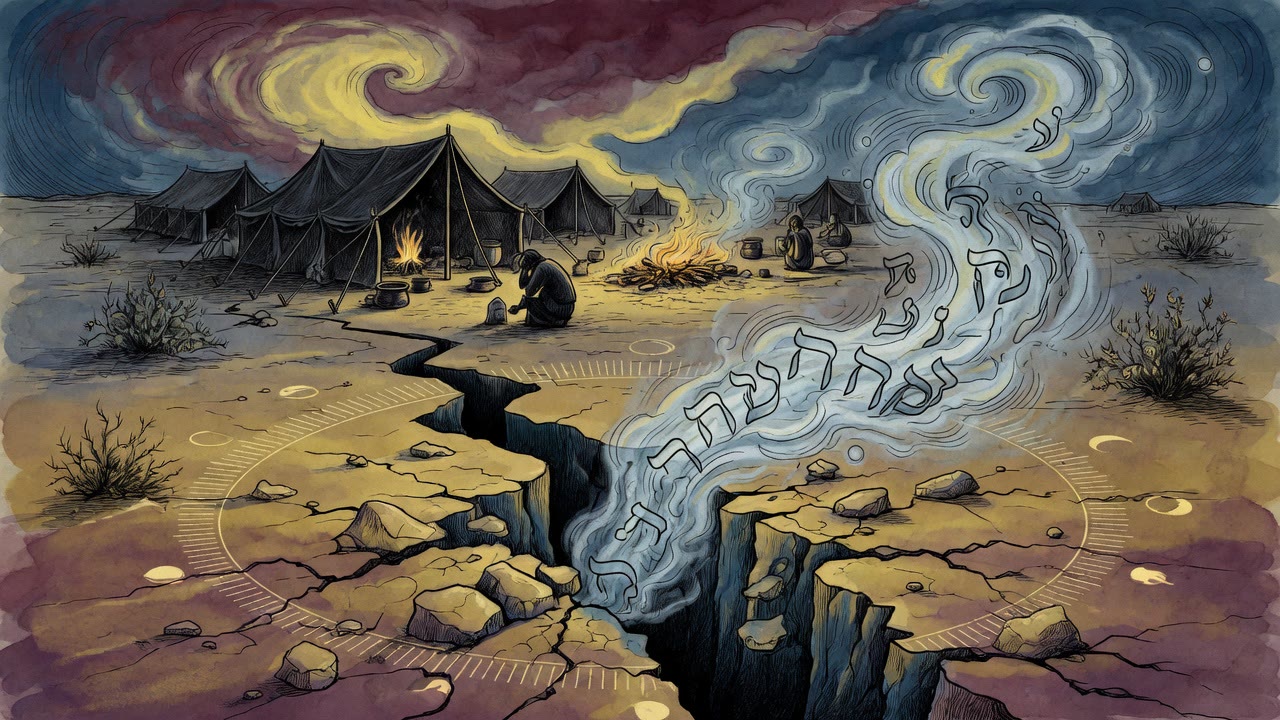
Later the guide showed him Korah's ground. Two cracks ran across the desert floor like old burns. Smoke curled from the gaps. Rabbah took a bundle of wool, soaked it in water, and tied it to a spear. He thrust the spear into one of the cracks. When he pulled it out, the wool was scorched.
The guide told him to put his ear to the gap. Voices came up from underneath. "Moses and his Torah are true, and we are liars."
Every thirty days, the guide said, Gehenna turns them like burning coal in a grate, and the voices cry out again: "Moses and his Torah are true, and we are liars." The confession does not free them. It only marks the cycle. Punishment and testimony have become the same motion.
A Basket in the Sky's Window
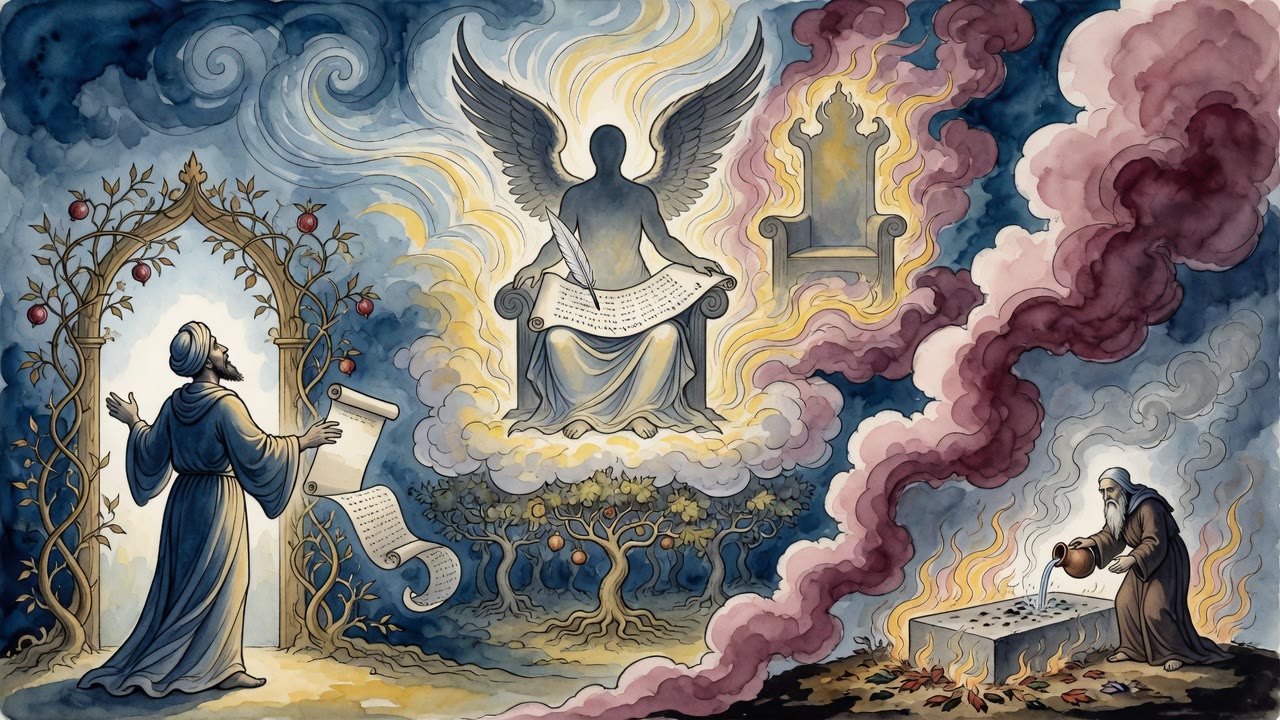
Near the edge of the world, the guide showed him the place where the sky leans down to meet the earth. The wheel of heaven turned there, full of windows. Rabbah lifted a flap the way a person lifts a tent flap, then took his bread basket and set it in one of the windows.
He stood and prayed the afternoon prayer. When he looked for the basket, it was gone. The sphere had turned. The guide pulled him back before he could climb after it. "Wait," the man said. "The wheel is moving." They waited. In the morning the window came around again, and the basket was there.
The border between worlds is not a place to keep what a visitor sets down. A person can look, briefly, through the gap. A person cannot walk through it and return unchanged. Without the guide, Rabbah would have kept the blue thread and been stranded beside the dead, or stepped through the sky gate and never come back.
On another voyage a wave lifted his ship so high he saw the resting place of the smallest star, a field large enough to sow forty measures of mustard. A little higher and the heat would have burned them. He came down. He kept coming down. Looking was allowed. Crossing was not.
The Vow He Did Not Break
The guide took him to Sinai. From the mountain a voice called out of heaven, thick with grief. "Woe to Me that I have vowed that the Jews must go into exile. Now that I have vowed, who will annul My vow?"
God had torn a garment for the Temple. The voice still cried for the glory taken from the Jews. The vow stood, and the One who had spoken it asked who would release it.
Rabbah heard. He did not speak. He went down the mountain and told the other rabbis what the voice had said. Their answer was sharp. "Fool! You should have said, Mufar lakh (מופר לך), your vow is void!"
The formula sat in his mouth too late. A person with authority can annul a vow. God had opened a door and waited. Rabbah, caught in the size of the moment, missed it. The thread had gone back. The basket had come around. The vow did not. Exile stayed bound because a traveler who had taken a souvenir from the dead could not, when it counted, give Heaven the one sentence it asked for.
He walked back into the ordinary world with dust on his clothes and a speech he had not made. The dead still lay in the wilderness with their fringes intact. Korah's pit still breathed its confession on a thirty-day turn. The sky still turned its windows. The vow still held.
← All myths