Rabbi Ishmael Risked the Seals of the Heavenly Palaces
Nehunya sat on a bench with his eyes open and nothing behind them. His students needed the names of the two seals before more men died.
Table of Contents
 Click for full size
They Asked Ishmael to Pull Him Out of the Chariot
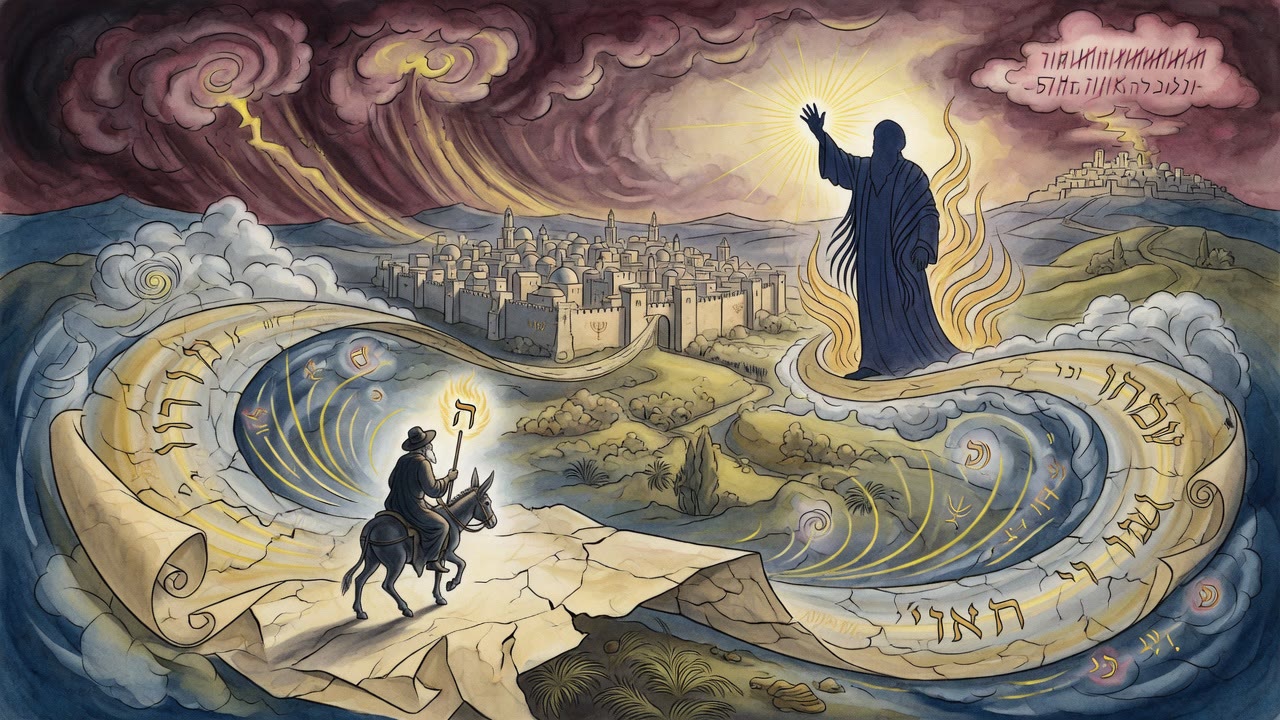
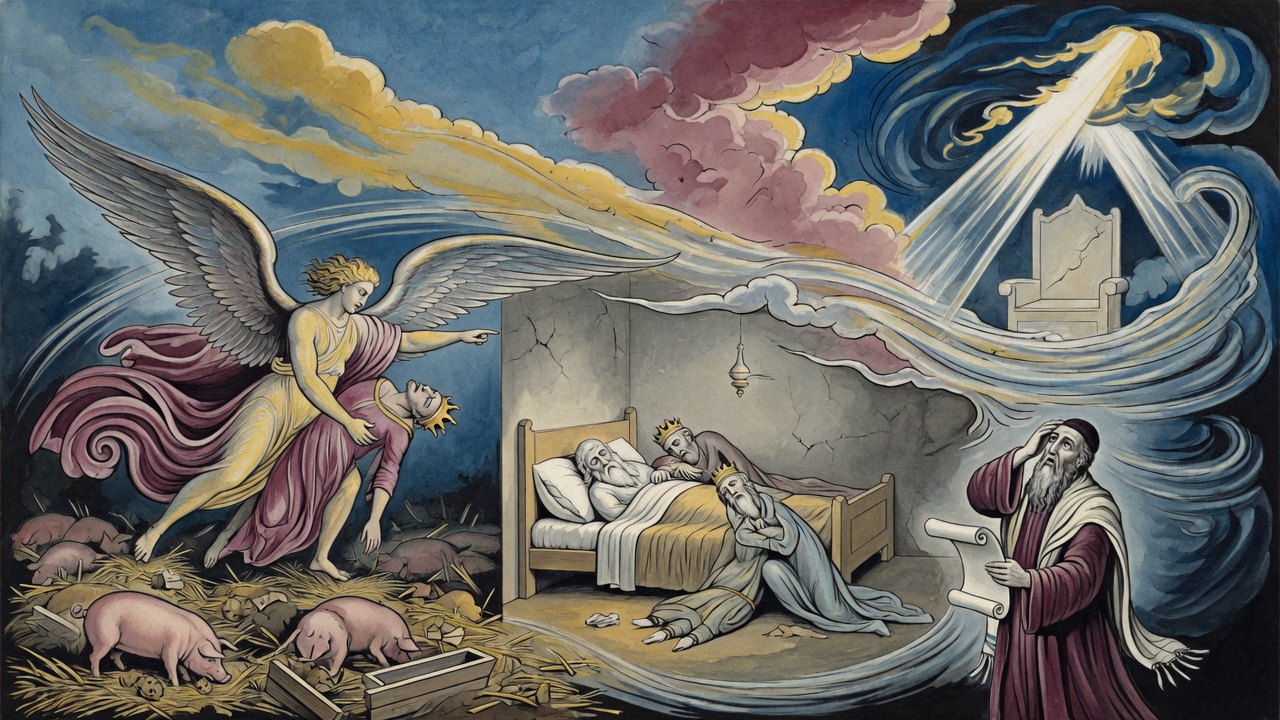
Rabbi Nehunya ben Hakkanah sat upright on a bench with his eyes open and nothing behind them. He had gone down to the Merkavah (מרכבה), the chariot. His body stayed where the students had last seen it, breathing, warm, no use to anyone in the room.
They stood around him and did not dare touch him. Then one of them turned to Rabbi Ishmael.
"Bring him back," he said. "Bring him back and sit him down with us."
They had a question that would not keep. Men they knew had gone up into the heavenly palaces. Some walked through the door of the sixth palace and were never touched. Others, no less learned, no less careful, were set upon at that same door by the guards and destroyed. Nobody could say in advance which kind of man he was.
"Ask him who it is that descends and does not descend," they said. "Ask him what the door-keepers of the sixth palace see, that they go for one man and never lay a hand on the other."
Ishmael understood what he was being asked to do. Bringing a man out of the chariot is not shaking a sleeper awake. He risked it anyway. The old teacher came back into his own face, looked around at them, and began to answer like a man giving directions to a house.
Two Seals and Eight Princes
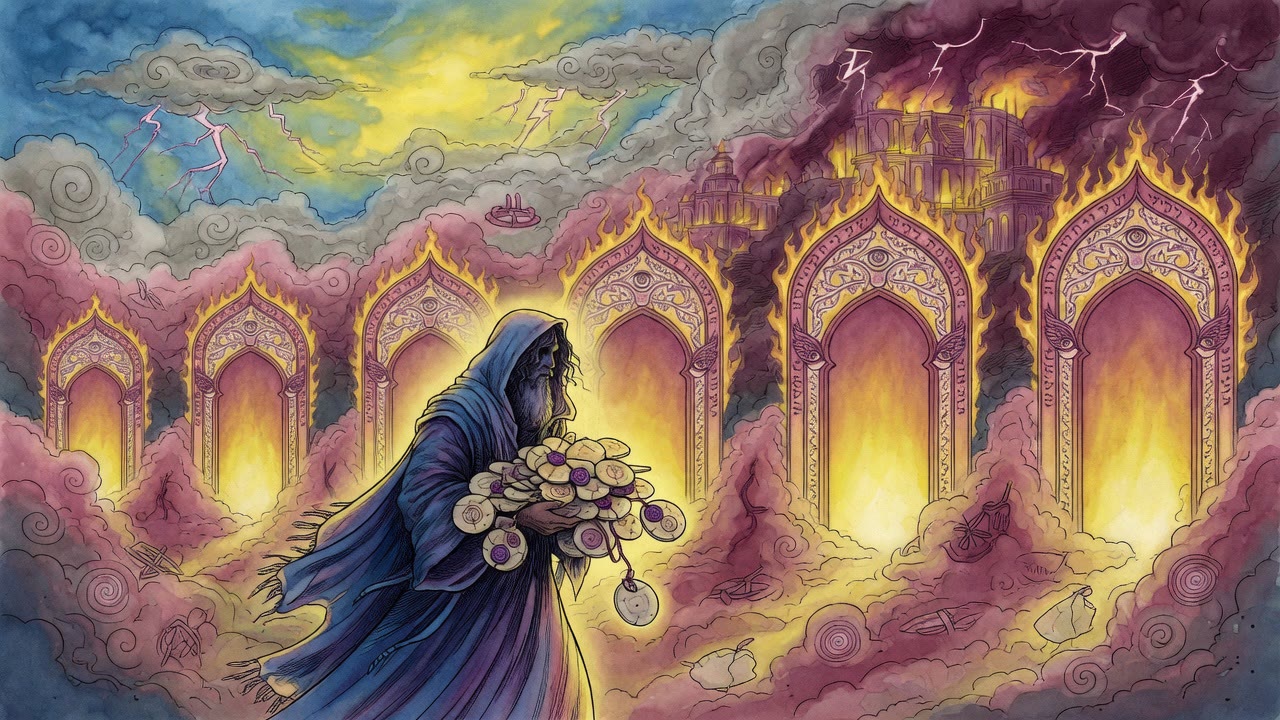
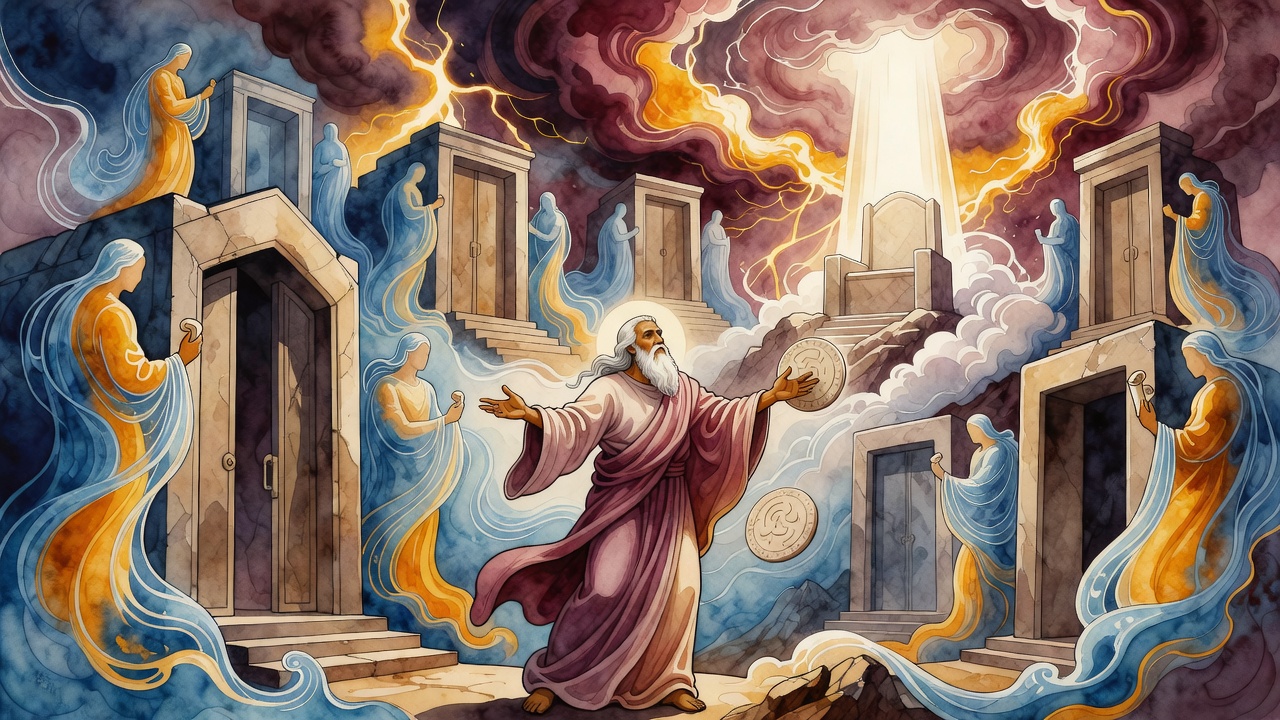
"Carry two seals," he said. "One belongs to Totrakhiel the Lord. One belongs to Zehaphtariai, the Prince of the Presence. At the sixth door, show Totrakhiel's seal to the ones standing on the right and Zehaphtariai's to the ones standing on the left. Both. At once."
Then they seize the man who showed them.
Not open the door. Seize him. Three princes take up position in front of him and three behind and one at either side, eight of them around one man, and they carry him through. A traveler with the correct seals does not walk into the palace beyond. He is delivered into it under guard. Ishmael learned the names in the order a man would need them, while Nehunya's mouth was still dry from the vision.
The Marble That Looks Like Water
The sixth palace kills more men than any other, and it kills them over a mistake anyone would make.
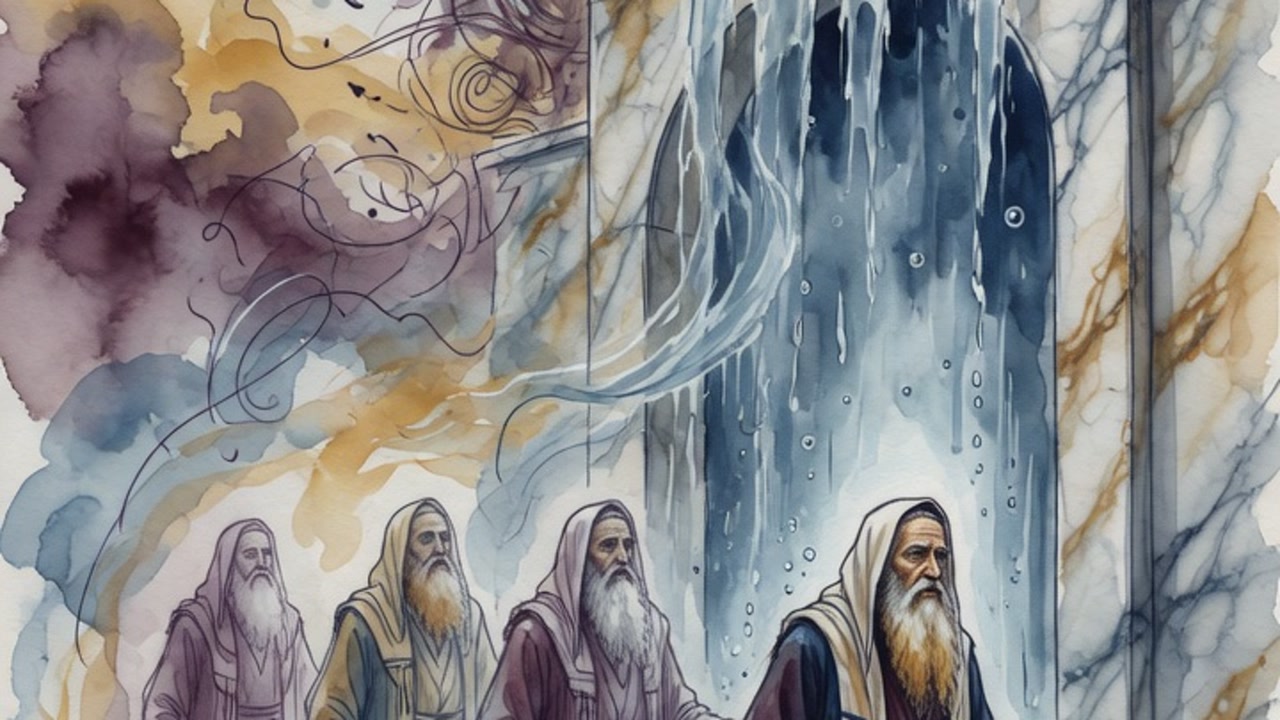
Its floor is laid in slabs of pure marble. Light comes down off the throne and moves across the stone, and it moves the way light moves on open water. The eye reports water. The ear fills in the sound of water. A man standing at that threshold sees a flooded room and no way over.
So he opens his mouth. He says water. He asks the guards how a person is supposed to cross, or he begs them to hold it back, and the instant that word leaves him they have their answer, because a man who came with permission and with training does not say water in the sixth palace. He steps out onto the shine, and the stone takes his weight.
The stone always took it. There was never any sea. The whole test was whether a man would trust what he had been taught over what his own eyes were screaming at him.
Heaven Burned the Guards and They Came Back the Same
Then Nehunya told them the part they had not asked for.
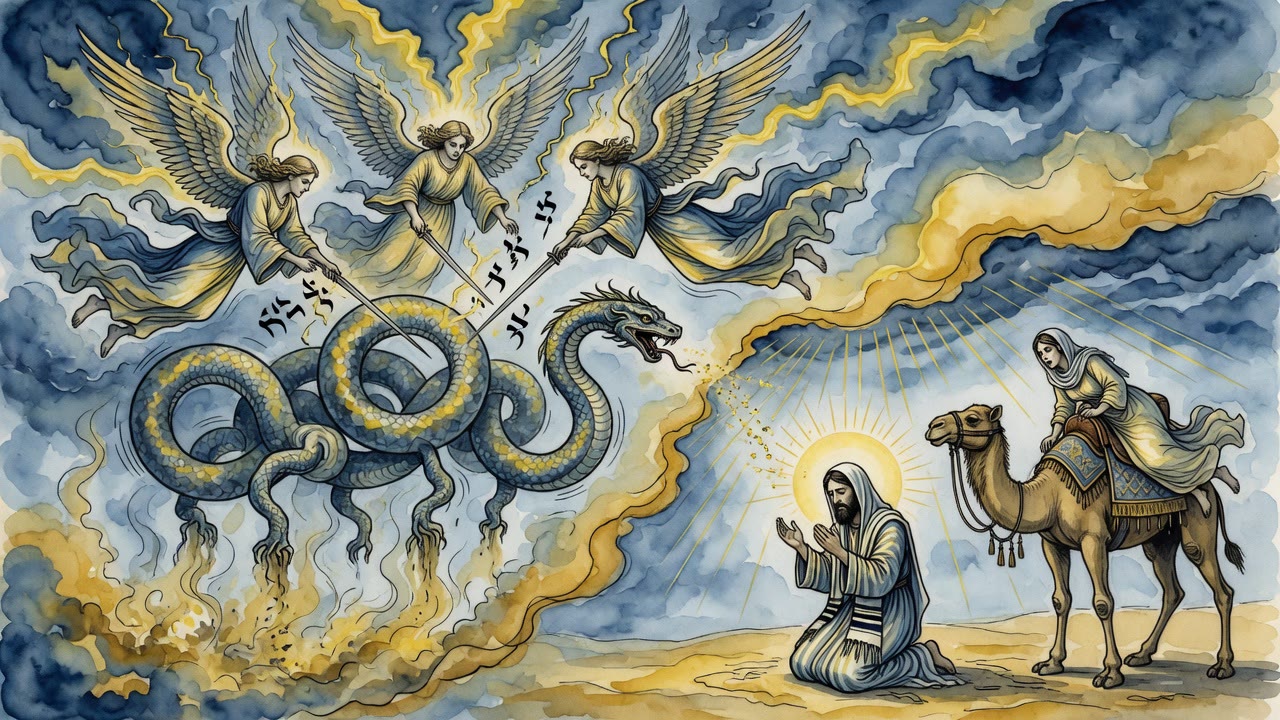
The powers above the sixth palace know what those door-keepers do. They know men are being destroyed at that threshold who had every right to pass. They have come down on the guards for it. They have beaten them and burned them and torn them out of their posts and set new ones in their place.
And the new ones behave exactly the same.
They are not defiant. They are not frightened either. Asked about it they say, why should we be burned, and what pleasure is there in it for us, that we should destroy the ones who go down and do not go down to the chariot without permission. They say it, and they go back to the door, and they keep doing it. That is still the way of the door-keepers of the sixth palace.
The Voice Sent Him Down with an Errand
Past them it is loud.
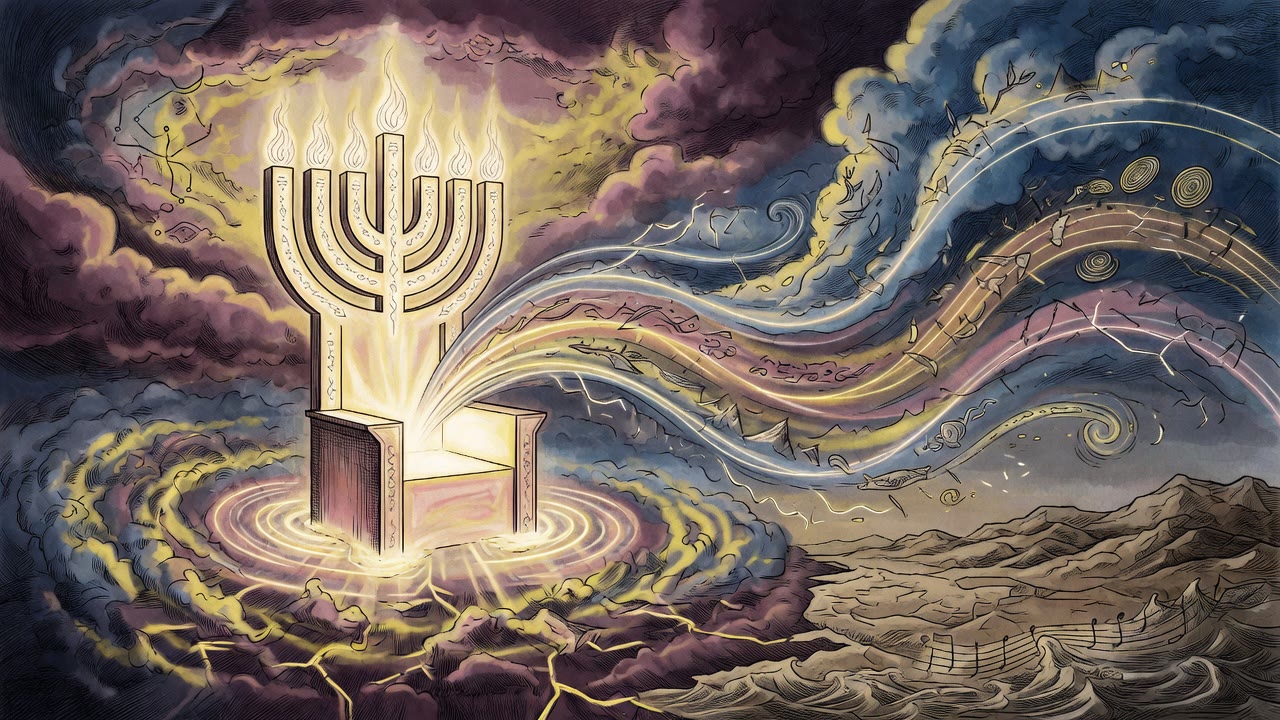
The sound at the seventh palace is the sound of seas, and of rivers in flood, and of the waves of Tarshish when the south wind troubles them. Beneath all of it the throne of glory is making its own music and praising the splendid King. Over the music a multitude open their mouths, not to be heard, but to hold the throne up, to aid it and strengthen it while it plays. Holy, holy, holy.
Out of that noise a voice comes, and it does not congratulate the man who survived the climb. It hands him an errand. "Blessed are you to the heavens and to the earth, you who go down to the chariot, if you will go and tell My children what I do, at morning prayer and at noon and at evening, in every hour that Israel says Holy before Me. Teach them, and say to them: lift your eyes to the firmament over your house of prayer at the moment you say it."
That is what a man carries back down after the seals and the escort and the floor that was never water. An instruction about where to point his eyes during morning prayer. Ishmael sat Nehunya on the bench among them, and the old man's eyes were his own again, and the names of the two seals were in the room, and more men would still have to decide, at a marble floor, whether to say the word that would kill them.
← All myths