Phinehas Was the Only Man in the Camp Whose Hands Were Clean
A plague was killing thousands. Zimri stood in the open with a Midianite woman. Every tribal leader was compromised. Only one man had clean hands.
Table of Contents
 Click for full size
What Zimri Did in Front of Everyone
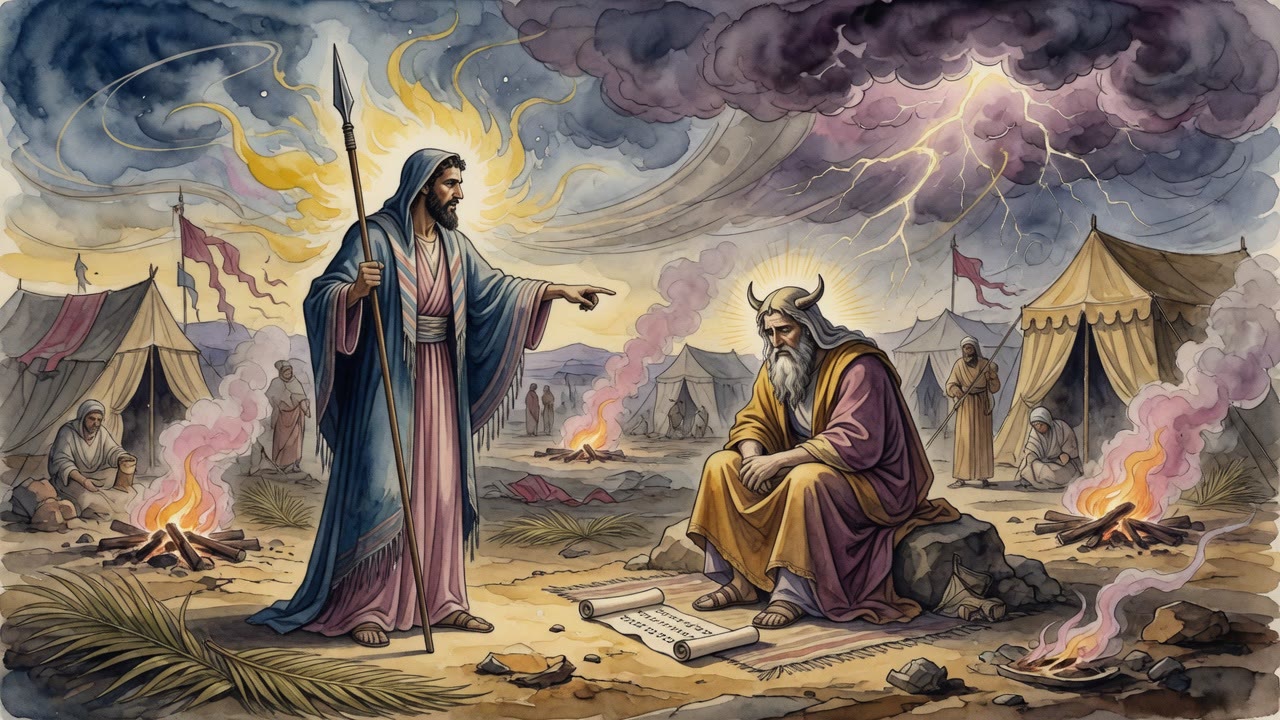
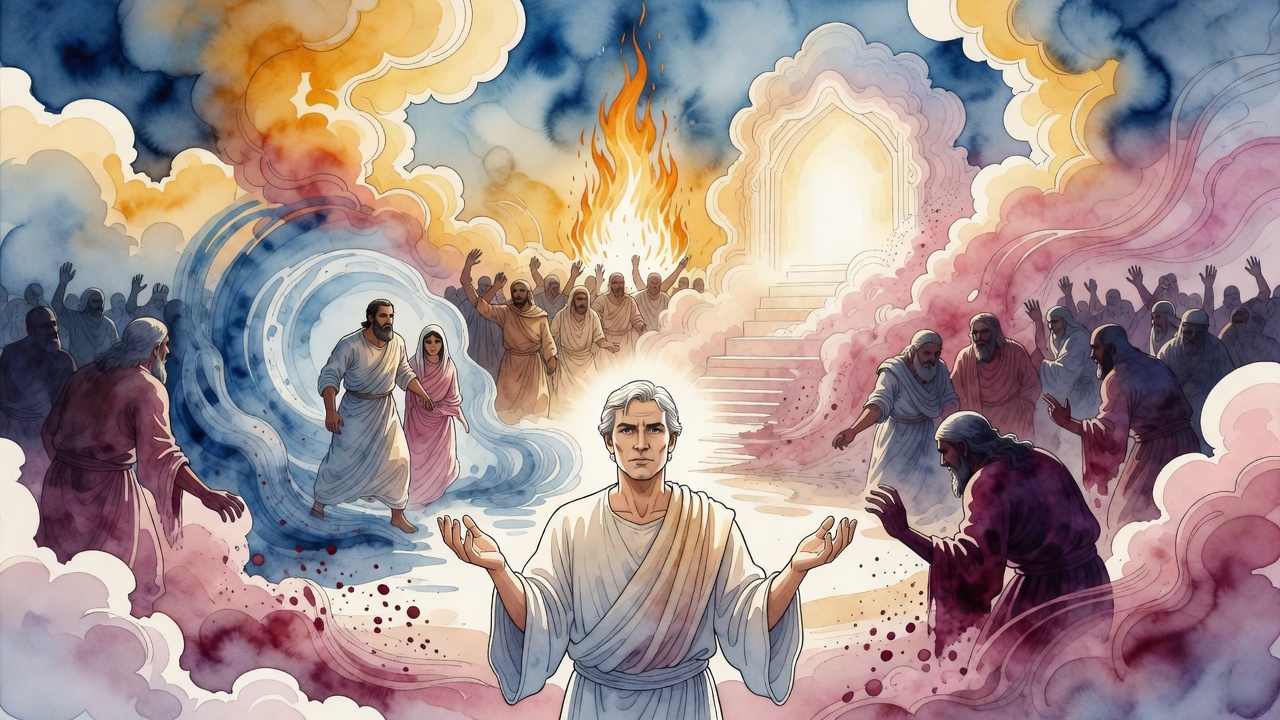
The plague had already taken twenty-four thousand lives. The dying was still ongoing. And into the suspended, paralyzed silence of the camp walked Zimri ben Salu, prince of the tribe of Simeon, escorting a Midianite woman named Cozbi bat Zur in full public view, past the entrance of the Tabernacle, past Moses and the gathered elders who sat weeping at the threshold. He did not try to conceal what he was doing. He did it in front of the leadership of Israel as an act of deliberate defiance, challenging them to respond.
The challenge was effective. Moses and the elders sat and wept. They did not respond. The question Phinehas had to answer was not whether Zimri's act was transgressive, everyone present understood it was. The question was whether any man in the camp had the standing to respond. Whether any man's hands were clean enough to prosecute the sin he was witnessing.
Counting Down the Camp of Compromise
Phinehas surveyed the camp. The Legends of the Jews, Louis Ginzberg's compilation published between 1909 and 1938, drawing from midrashic sources including Numbers Rabbah (5th-century Palestine), preserves his reasoning in detail. He went through the tribal leadership one by one.
The descendants of Reuben were tainted by Reuben's own unchastity with Bilhah, Jacob's concubine. Reuben had acted; the family bore the mark of it. The descendants of Simeon were presently following their prince Zimri into the transgression that needed stopping, they were the perpetrators, not the prosecutors. The descendants of Judah carried the memory of Judah and Tamar, of the patriarch who had slept with his daughter-in-law while mistaking her for a prostitute. Levi's descendants had clean hands by lineage but faced their own complications.
And Moses. Moses had married a Midianite woman. Zipporah was the daughter of Jethro, priest of Midian. For Moses to call out Zimri's sin with a Midianite woman would require Moses to first condemn his own marriage, his own household, his own sons. The greatest leader Israel had ever known could not be the prosecutor of this particular transgression without publicly indicting himself. Moses sat at the entrance to the Tabernacle and wept, and the weeping was also an acknowledgment.
What Phinehas Remembered
Phinehas was the son of Eleazar, son of Aaron the High Priest. His mother's lineage ran through Joseph and through Jethro, a Midianite connection that his enemies would later use against him. But his paternal lineage ran clean to Aaron and from Aaron to Levi and from Levi to Jacob. He carried no prior unchastity in his priestly line on the side that mattered for the halachic question he was trying to answer.
He went to Moses. He reminded his great-uncle of a ruling Moses himself had taught: when someone commits a public act of forbidden relations, a zealot may strike the offender without waiting for formal judicial process. Moses confirmed that he had taught this. And then, Ginzberg records, Moses wept again. He wept because he remembered the ruling and had forgotten it in the moment when it needed to be acted on. The sight of Zimri walking past the Tabernacle with Cozbi had paralyzed him in a way that the ruling he himself had taught should have prevented. He had known the law. He had sat and wept instead of applying it. Phinehas was going to do what Moses could not.
Why God Did Not Simply Act
The tradition in Numbers Rabbah and in the Ginzberg compilation addresses a question that the plain text does not ask: why, if God was already sending a plague to stop the sin at Shittim, did God not simply strike down Zimri as well? Why did the act of stopping the sin require a human hand at all?
The answer the tradition implies through the entire structure of the story is this: the sin that Zimri was committing was a sin of public defiance, a sin performed in front of the leadership of Israel as a challenge to their authority and their capacity for self-governance. A plague from heaven would have answered the theological question, yes, sin has consequences, but it would not have answered the political and moral question Zimri was asking: is there anyone here who will hold this standard? Is anyone's hands clean enough to enforce it? A divine plague bypasses the human community. A human hand, holding a lance, walking into a tent, answers the challenge directly.
← All myths