
Who Is Samael? The Poison of God in Jewish Mythology
Samael is the angel who rode the serpent into Eden, the being whose name means 'Poison of God,' and the Angel of Death who carries a sword with a single drop of venom. His story spans the Talmud, Midrash, and Kabbalah.
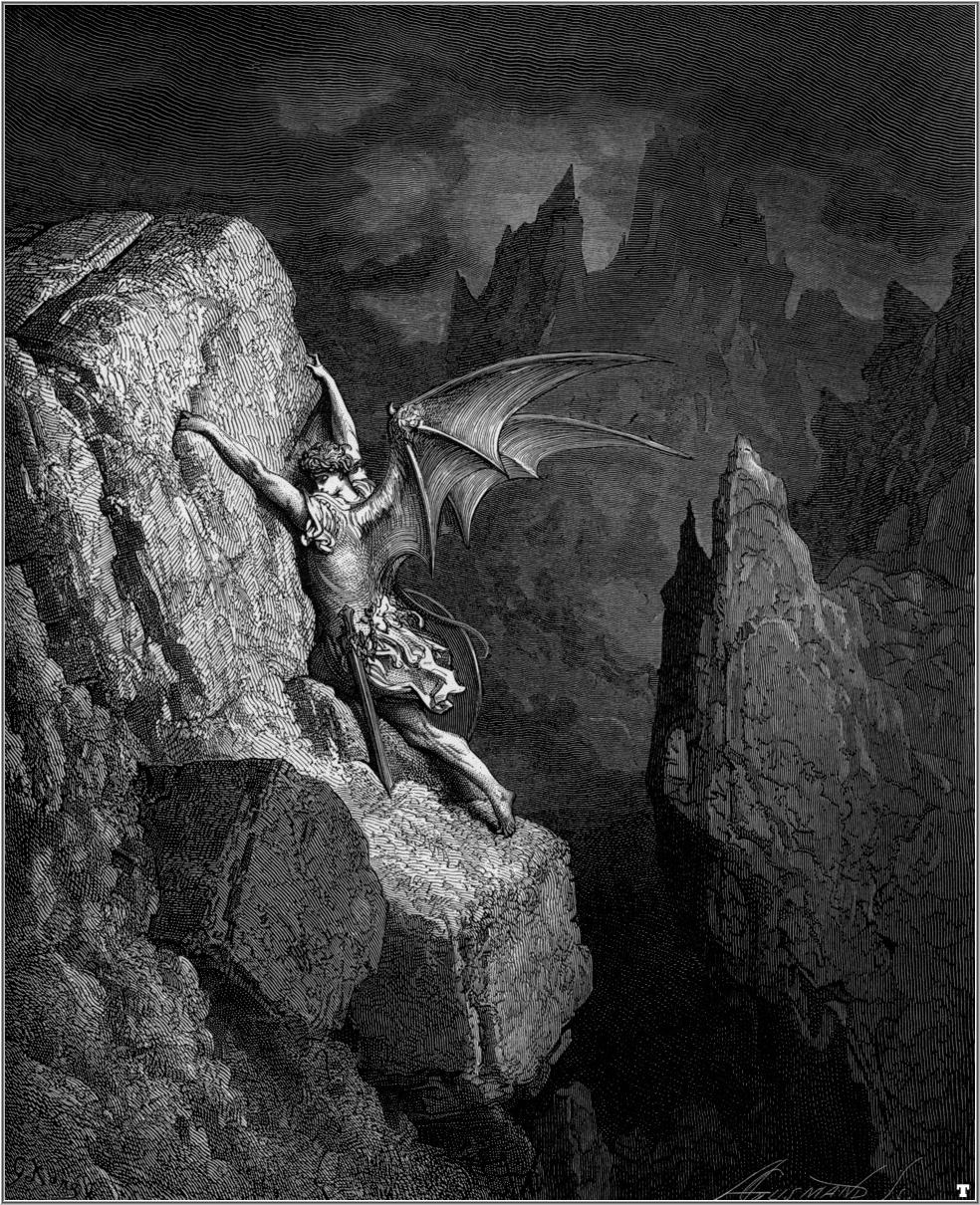
His name breaks down into two Hebrew words: sam (poison) and El (God). Samael. The Poison of God. He is not a minor figure in Jewish mythology. He is the angel who rode the serpent into Eden, the accuser who tested Abraham, the celestial prince of Rome, the consort of Lilith, and the Angel of Death. Across 86 texts in our database, drawn from the Talmud, the Zohar and Tikkunei Zohar, Legends of the Jews, and Tree of Souls, Samael is the single most complex adversarial figure in all of Jewish tradition.
He is not Satan in the way most people think of Satan. The Jewish Samael is something stranger and more unsettling. He serves God. He has a job. And he is terrifyingly good at it.
The Angel Who Rode the Serpent
The most vivid origin story for Samael comes from Pirkei DeRabbi Eliezer, chapter 13, a midrashic work composed c. 8th-9th century CE and attributed pseudepigraphically to Rabbi Eliezer ben Hyrcanus (c. 80-120 CE). According to this text, Samael was the "great prince in heaven" who looked down at the creatures of the earth and found that none was "so skilled to do evil as the serpent." The serpent at this point in the story walked upright, could speak, and was the most beautiful creature in the Garden. Its appearance, the text says, was "something like that of the camel."
Samael mounted the serpent and rode it into Eden like a horse. He hid himself inside the creature and approached Eve. Every word the serpent spoke to her was Samael talking. The deception worked. Eve took the fruit. And everything that followed, the expulsion, the curse, the entrance of death into the world, traces back to this moment. God punished the serpent by taking its legs and cursing it to crawl on its belly (Genesis 3:14). But Samael? He got exactly what he wanted. Death entered the world, and he became its angel. Read the full tradition in How Samael Entered the Heart of Man and How Cain Was Conceived.
How Does the Angel of Death Kill?
The Talmud, in Avodah Zarah 20b (Babylonian Talmud, redacted c. 500-600 CE), describes the Angel of Death as a being covered head to toe in eyes. Thousands of them. He stands at the head of a dying person holding a drawn sword, and from the tip of that sword hangs a single drop of bitter poison. When the dying person sees him, this being made entirely of eyes, they open their mouth in terror. The drop falls in. That is what kills them.
The image is specific and horrifying in a way that abstract theology rarely is. Death doesn't come from the sword. It doesn't come from the angel. It comes from fear. The rabbis say Samael has thousands of eyes because no one can hide from death. He sees every corner, every shadow, every heartbeat. The Talmud further records that he has been at this work since the Garden of Eden, making him the longest-serving angel in the heavenly court. The Legends of the Jews (2,650 texts in our database) preserves 26 separate passages involving Samael, many of them elaborating on his methods and encounters with the dying.
Samael and Lilith
In the Zohar (composed c. 1280-1286 CE in Castile, Spain, by Rabbi Moshe de Leon) and the broader kabbalistic tradition (3,298 texts in our database), Samael takes on an additional role: consort of Lilith. This is one of the more disturbing pairings in Jewish mythology. Lilith, Adam's first wife who fled Eden and became a demon queen, joins with Samael to form a dark mirror of the divine union between God and the Shekhinah (the feminine aspect of God's presence).
Together, Samael and Lilith rule the sitra achra, the "other side," the domain of impurity and evil in kabbalistic cosmology. The Zohar describes them as locked in a parasitic embrace, drawing their power from the sparks of holiness trapped in the material world after the Shattering of the Vessels. Their union produces demons. Their influence extends over every act of cruelty, deception, and spiritual corruption in the human world. The Tikkunei Zohar alone contains 29 passages dealing with Samael, many of them describing the cosmic mechanics of his partnership with Lilith. Explore Samael and Lilith and Story of Samael in our database.
The Seed of Cain
One of the most provocative traditions about Samael concerns the conception of Cain. According to Pirkei DeRabbi Eliezer and elaborated in the Zohar, when Samael rode the serpent and approached Eve, the encounter was not merely verbal. The serpent, inhabited by Samael, "injected filth" into Eve (the Talmudic phrase appears in Shabbat 146a and Yevamot 103b). Some traditions take this literally: Cain was not Adam's son at all, but the offspring of Samael and Eve.
This reading explains why Cain became the first murderer. It wasn't just bad parenting. It was bad blood. The violence in Cain was inherited from an angelic being whose very name means poison. The Seed of Cain from Howard Schwartz's Tree of Souls (645 texts in our database) traces this tradition across multiple sources, including The Birth of Cain from Louis Ginzberg's Legends of the Jews. The idea that humanity carries a trace of angelic contamination from the Garden is one of the more radical claims in rabbinic literature, and it starts with Samael.
Samael and the Binding of Isaac
Samael appears again at one of the most dramatic moments in the Torah: the binding of Isaac (Genesis 22). According to Bereishit Rabbah 56 (compiled c. 5th century CE) and Sanhedrin 89b, it was Samael who provoked the test in the first place. He stood before God and accused Abraham of never having offered a proper sacrifice. God responded by commanding Abraham to sacrifice Isaac.
Then Samael tried to sabotage his own test. He appeared to Abraham on the road to Mount Moriah, disguised as an old man, and tried to talk him out of it. "Are you out of your mind? You're going to slaughter the son God gave you in your old age?" When Abraham wouldn't listen, Samael appeared to Isaac and tried the same thing. When that failed too, he turned himself into a raging river blocking their path. Abraham walked in up to his neck and kept going. Samael is both the accuser who sets the trap and the tempter who tries to prevent it from working. He operates on both sides of every test. The Legends of the Jews preserves extensive versions of this tradition, including The Ascension of Moses, where Samael confronts Moses at the moment of death.
Not Evil. Employed.
The strangest thing about Samael is that he isn't a rebel. He's not a fallen angel who defied God and was cast out. He has a job. Multiple jobs. He accuses. He tests. He kills. And God lets him. The Legend of Samael from the Tikkunei Zohar describes him as operating within the divine system, not outside it. Even his role as the prince of the sitra achra exists because God permits the existence of an "other side" as a necessary counterbalance to holiness.
This makes Samael more unsettling than a straightforward villain. A villain can be defeated. Samael can't be, because he reports to the same God the righteous pray to. The Talmud records that at the end of days, God will finally slaughter the Angel of Death (Moed Katan 28a), but until that moment, Samael is doing exactly what he was made to do. He is the poison, and God is the one who named him.
Explore the Samael Texts
Our database contains 86 texts mentioning Samael across every major source collection. The Kabbalah collection (3,298 texts) holds 31 Samael-related passages, primarily from the Zohar and Tikkunei Zohar. The Legends of the Jews (2,650 texts) preserves 32 passages drawing from hundreds of rabbinic sources. Tree of Souls (645 texts) contributes 16 entries, including Samael and Lilith, How Samael Entered the Heart of Man, and How Cain Was Conceived. Search for all Samael texts to trace his appearances from the Garden of Eden through the end of days.