1,809 texts · Page 1 of 38
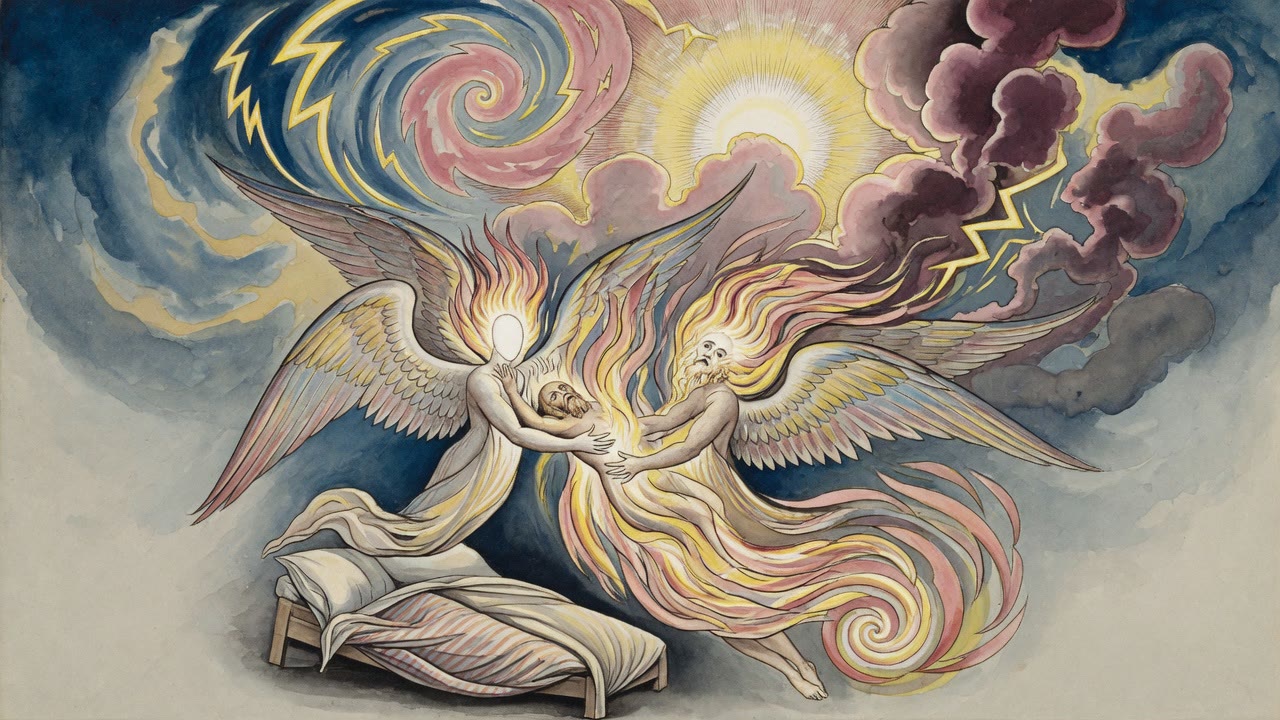
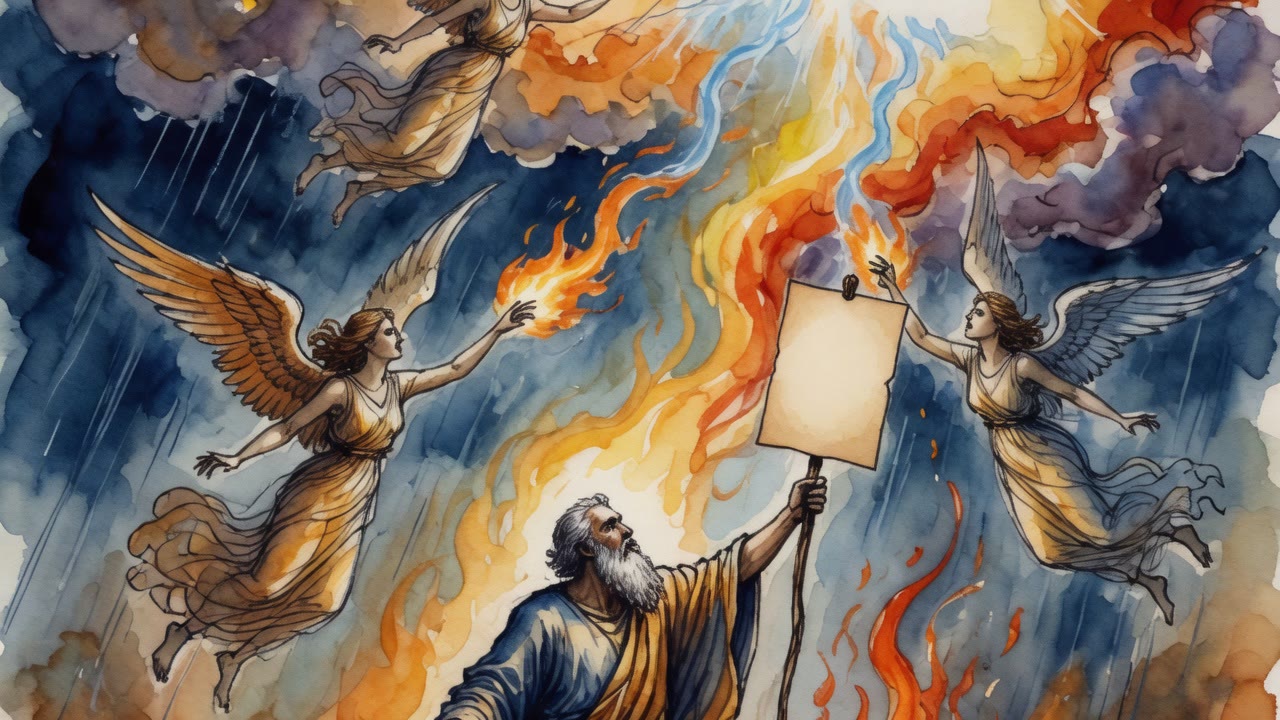
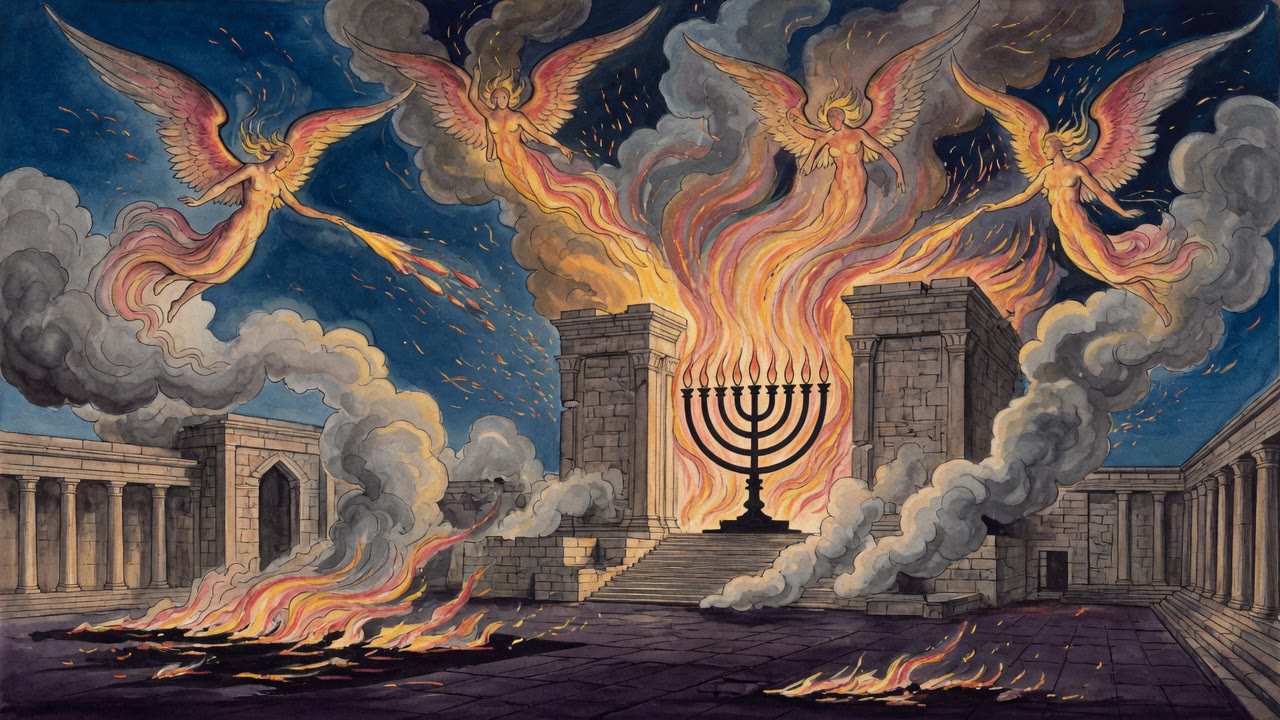
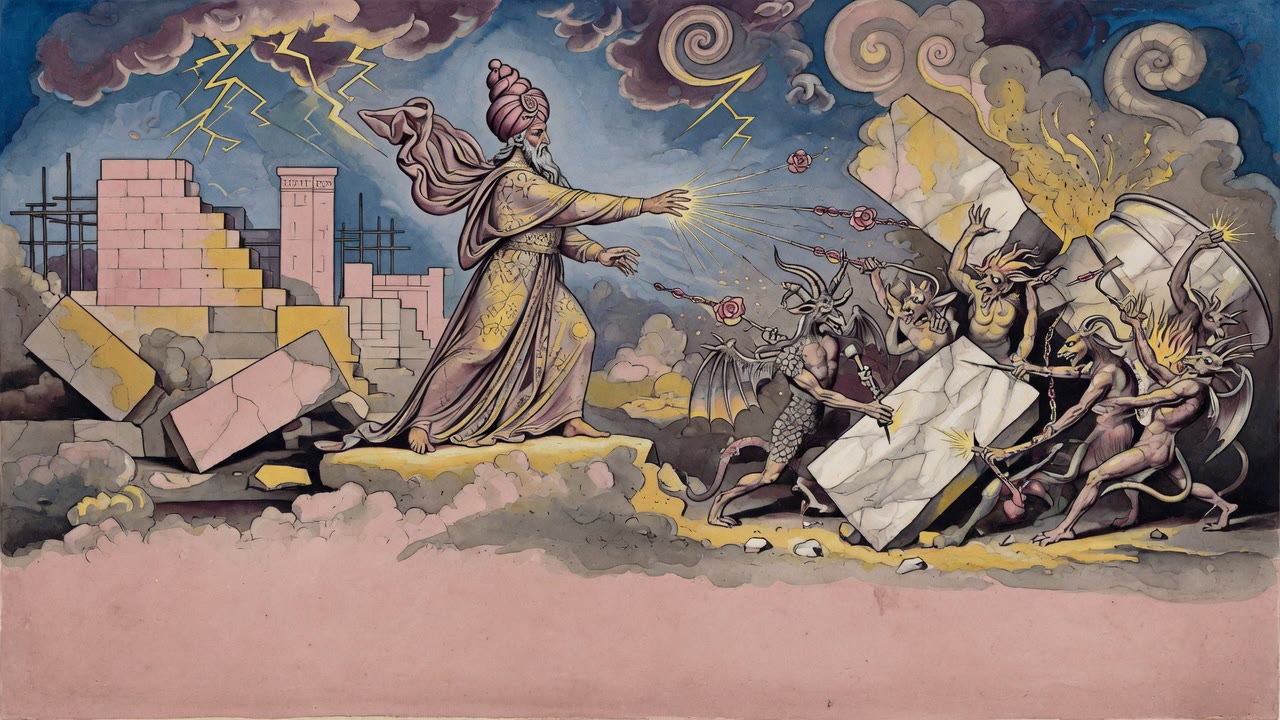
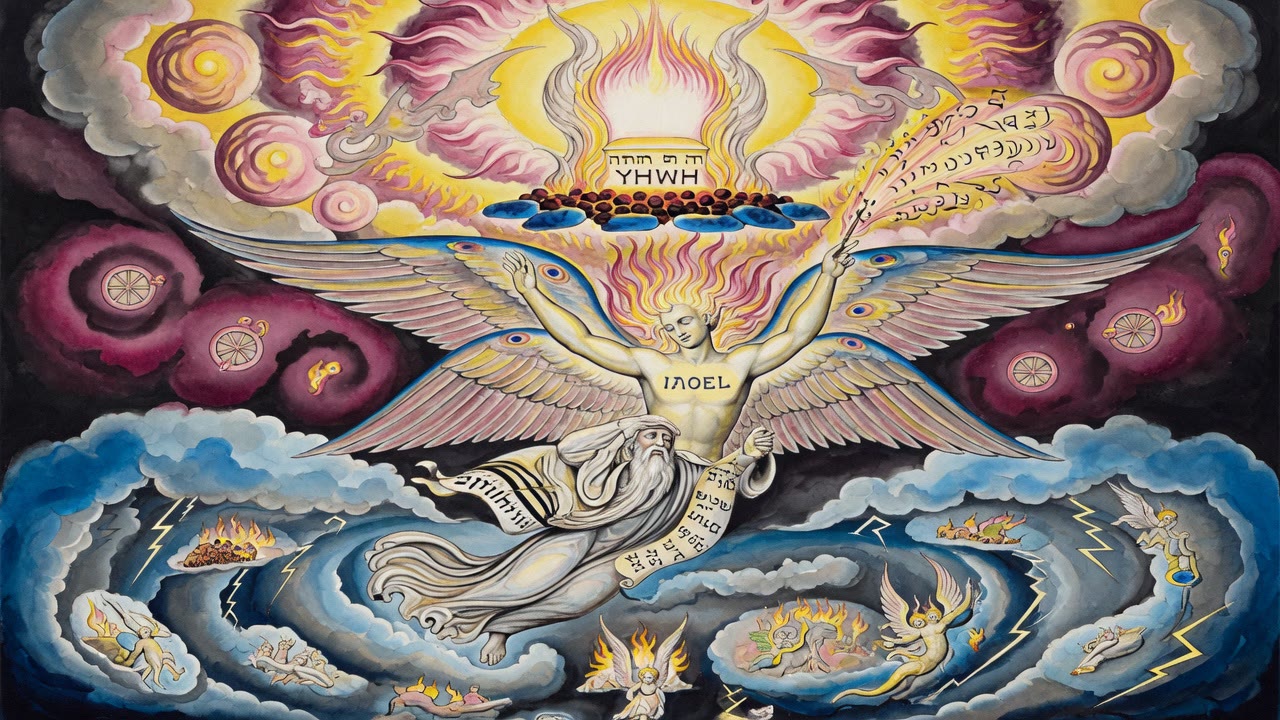
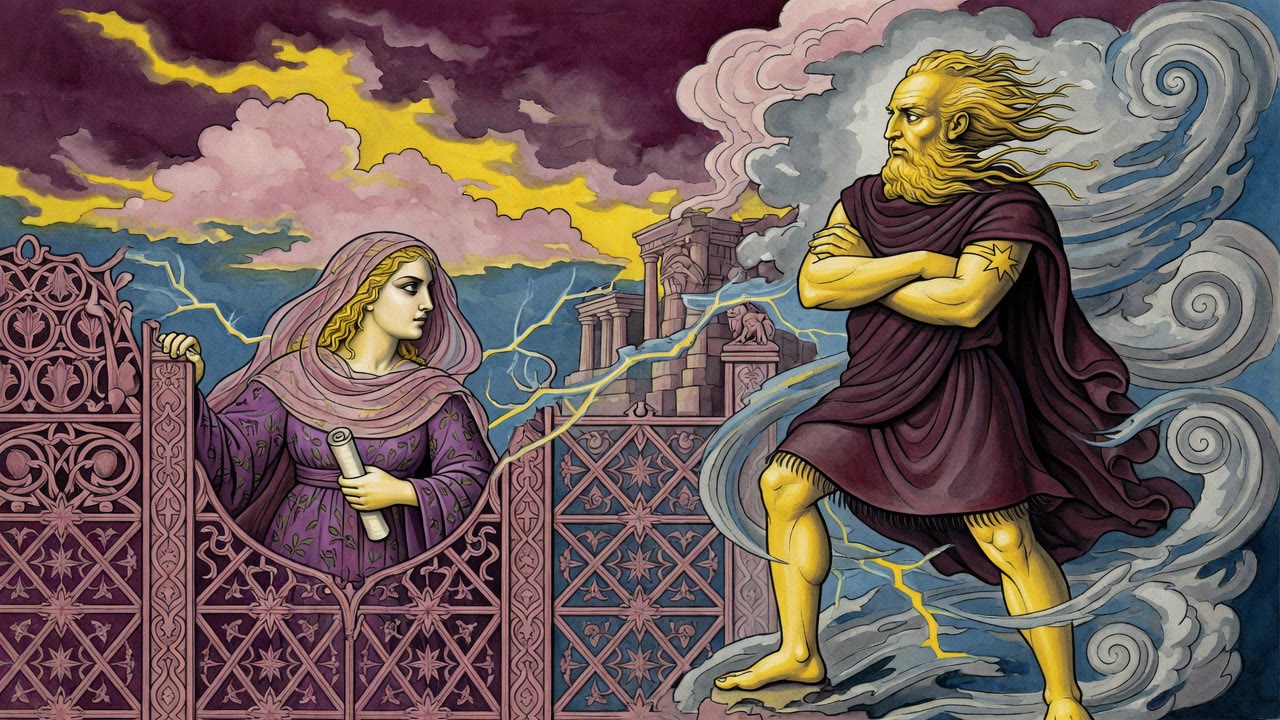
This one’s half fire, half ice. Quite the contrast. According to 3 Enoch 32:1, when God opens this extraordinary book, something incredible happens. Avenging angels are unleashed. ...
We read the first chapter of Genesis and it feels so…orderly. But there are other stories, wilder tales, that offer a glimpse into creation’s messy, mysterious birth. Let's journey...
It offers a rather…unique take on the second day of Creation. We all know the story: God creates the rakia, the firmament, on the second day. He separates the waters above from the...
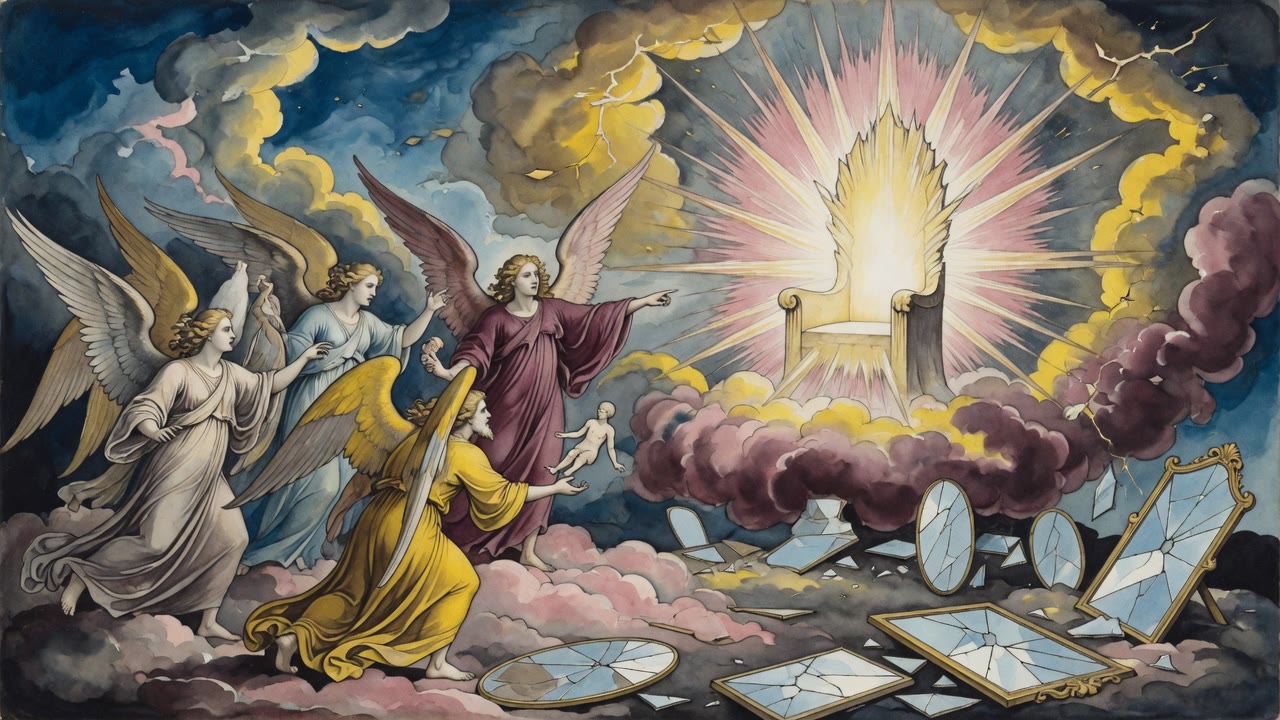
One figure looms large in this discussion: Satanael. In the ancient text of 2 Enoch, this was the name of the highest angel, and the story surrounding him is… complicated, especial...
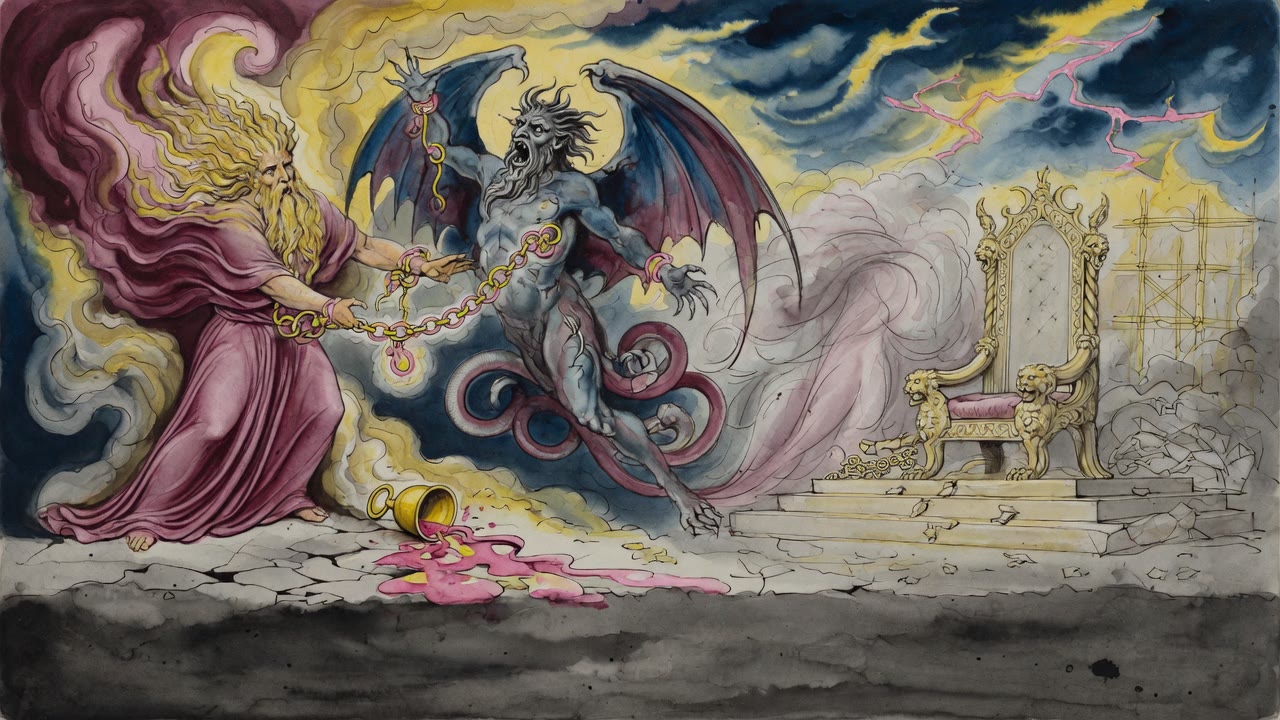
Jewish tradition offers some pretty fascinating, and sometimes unsettling, answers. Take the story of Satan's fall from grace. It's not just a simple tale of rebellion; it's a comp...
Let’s talk about Anafiel. Now, Anafiel isn't exactly a household name, even in circles that discuss angels. But, according to some ancient texts, this angel is a big deal. Tree of ...
We often think of Adam as simply the first man, made of dust. But some ancient traditions paint a far more…celestial picture. A picture of Adam as an angel. Now, before you picture...
We often think of him in the Garden of Eden, or perhaps being expelled from it. But Jewish tradition holds some truly fascinating ideas about his ultimate fate. One such idea, foun...
We often picture God directly shaping him from dust, but some fascinating traditions tell a slightly different story, involving heavenly helpers. The story goes that when the time ...
The ancient texts offer tantalizing, awe-inspiring visions, and one of the most vivid comes from the story of Enoch. Enoch, as we learn from 1 Enoch, wasn't just any man. He was ri...
One such story, preserved in Vita Adae et Evae (The Life of Adam and Eve), tells of a remarkable vision. It's a bit obscure, not as well-known as other heavenly journeys like Enoch...
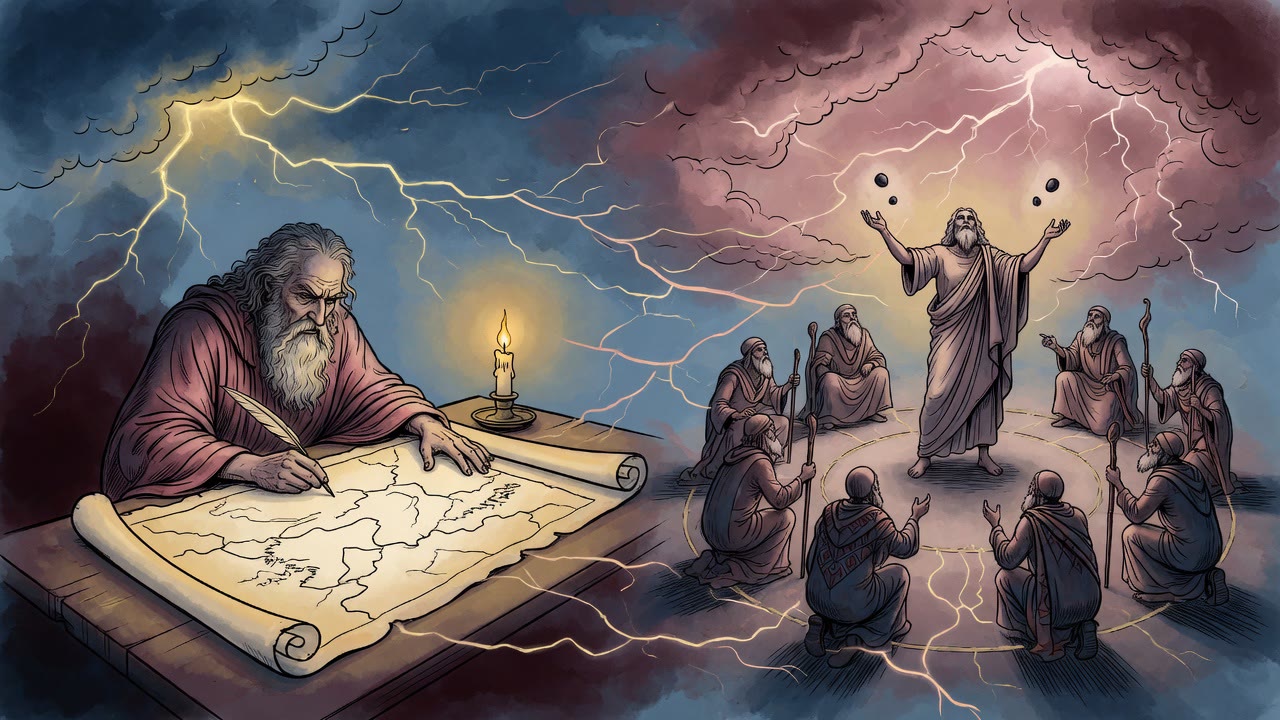
Jewish tradition is filled with stories of those who dared to try. One of the most famous of these accounts involves four prominent sages who, according to the Talmud (Hagigah 14b)...
Jewish tradition certainly sees more. There's a place, called the "Place of the Stars." And it’s far more wondrous than any observatory. Imagine a realm where the stars aren't just...
What we see here is just a reflection of something far grander: the rainbow of the Shekhinah (the Divine Presence). The Shekhinah, often translated as "Divine Presence," is the asp...
This is the journey of Enoch, a figure shrouded in mystery and legend. Led by the angel Michael, Enoch climbs through the heavens until he reaches the highest of them all: Aravot. ...
He’s not exactly a household name, even in well-versed Jewish circles, but this heavenly prince has a pretty important job. He's the Keeper of the Book of Records. Think of it as t...
It speaks of a place far, far removed from the familiar landscapes of heaven and earth. A sort of cosmic timeout corner. Imagine this: You’re at the very edge of everything, where ...
We often think of Mashiach – the Messiah – as a future figure, the one who will usher in an era of peace and redemption. But what about now? Where is he? What’s he doing? Jewish tr...
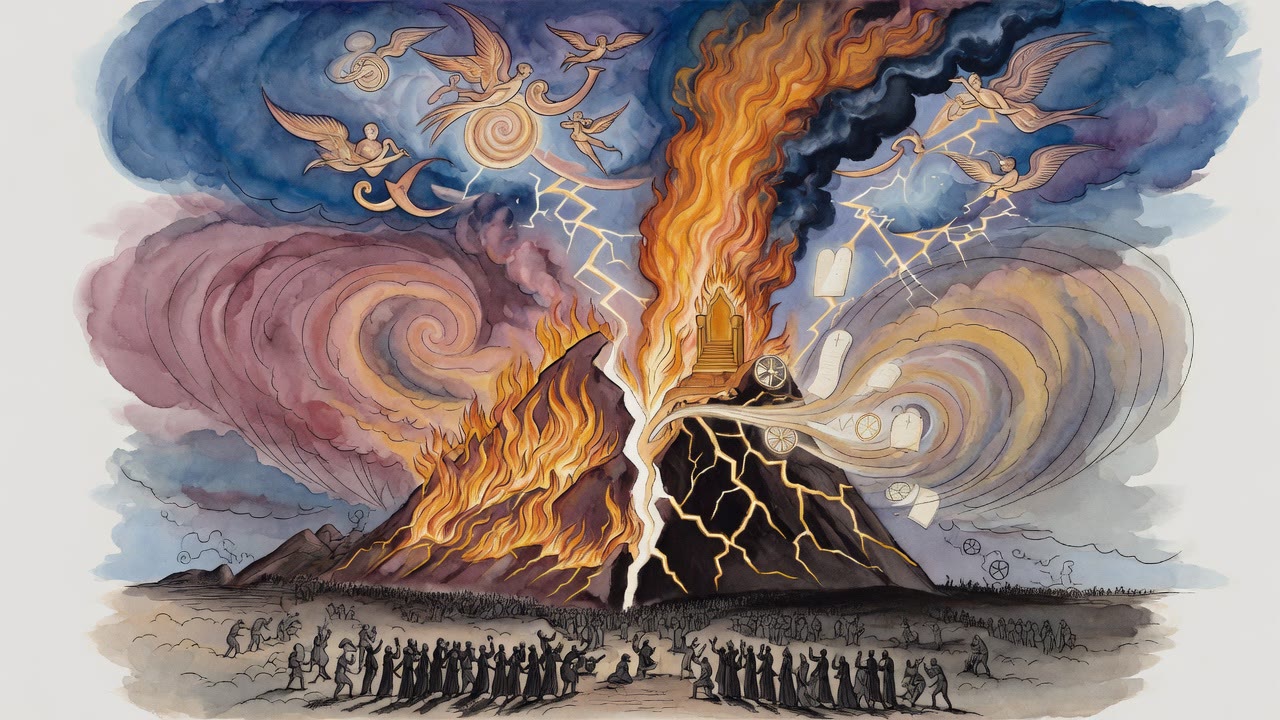
We often picture Moses on Mount Sinai, receiving the divine word directly from God. Forty days and forty nights of dictation. But what if I told you there's another story, a fascin...
In fact, the Sabbath isn't just a terrestrial observance; it's a celestial one, too. Imagine this: right after creating the Sabbath, God gathers all the angels – the angels of the ...
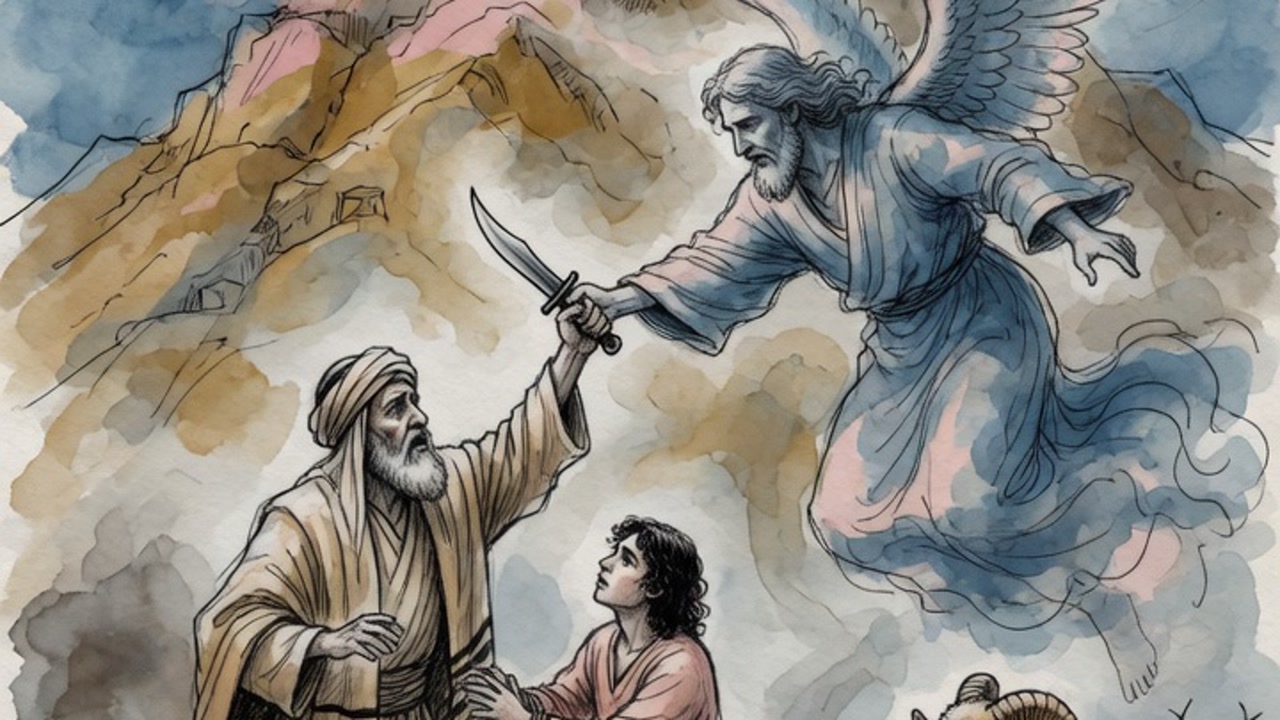
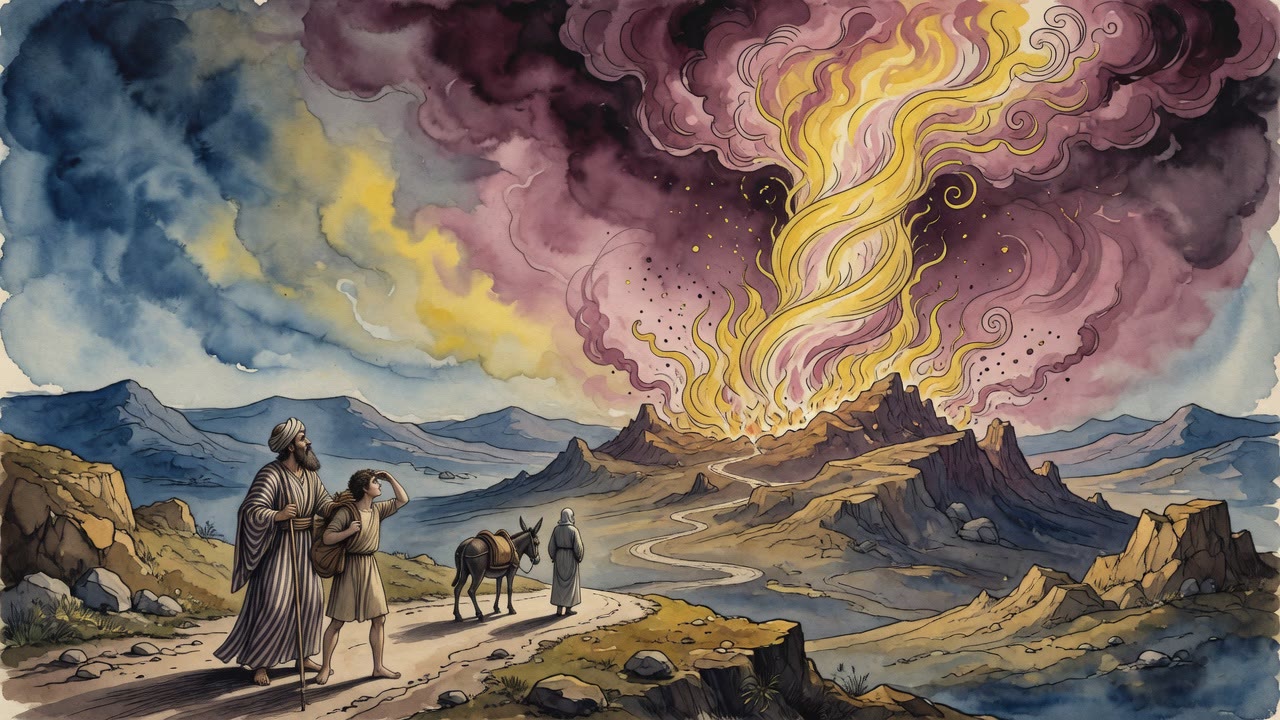
I'm talking about the Akedah, the binding of Isaac. We all know the story: Abraham, tested to the absolute limit, raises his knife to sacrifice his son Isaac. It's a scene that chi...
Jewish tradition is rich with stories of dreams and visions, and the power they hold. One particularly striking tale, found in Tree of Souls by Howard Schwartz, tells of a dream th...
When the time came for Abraham to leave this world, God didn't send just any messenger. He summoned the Angel of Death himself. But God, in His infinite compassion, knew that Abrah...
Was Jacob, the patriarch, just an ordinary man? Tradition whispers secrets, suggesting his story is far grander than we might imagine. Some even say his true name was Israel, and t...
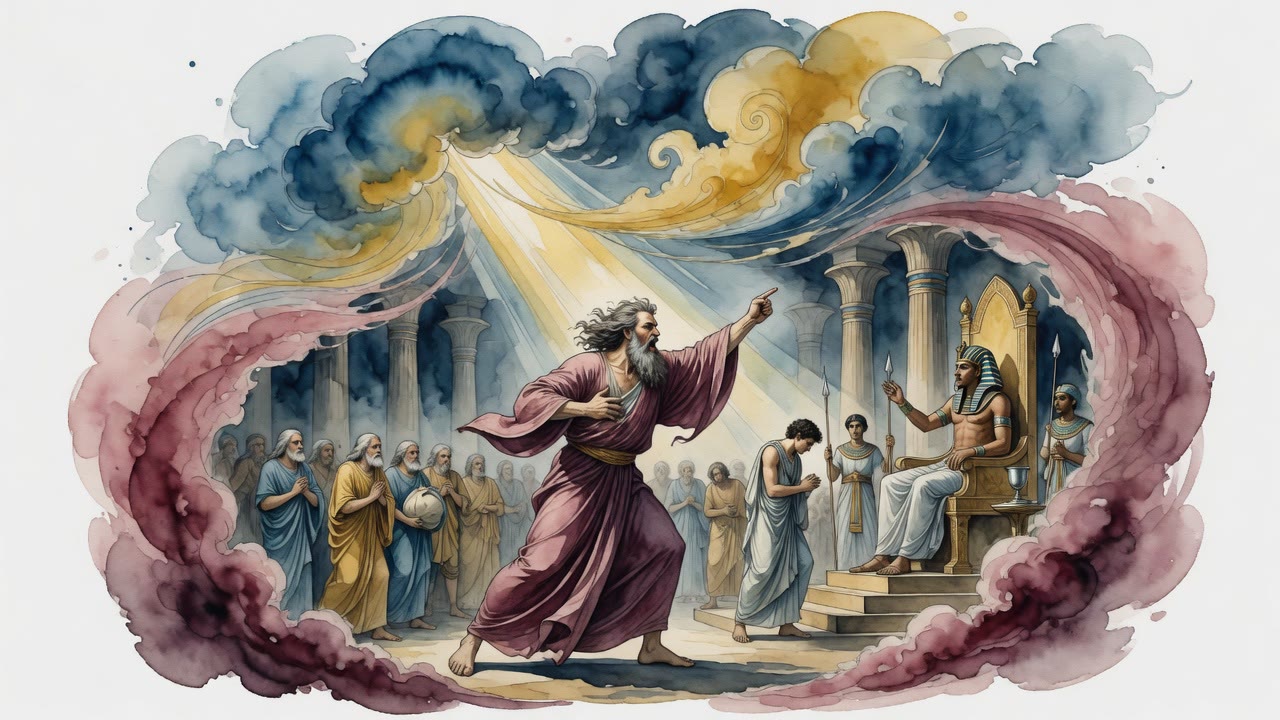
After Pharaoh's daughter discovered the infant Moses nestled among the bulrushes, she brought him back to the palace. She presented him to her father, claiming that the Nile itself...
Jewish tradition offers some powerful and moving images of what happens to the souls of the righteous after death. And some of these images paint a picture of them continuing to fi...
The bite taken. The realization dawning. But what happened next? We often skip ahead to the consequences, the exile, the shame. But let's linger for a moment on God's arrival. Acco...
We don't often get to hear Adam's side of the story directly. But Jewish tradition, in its beautiful, layered way, offers us glimpses. One fascinating account, preserved in Howard ...
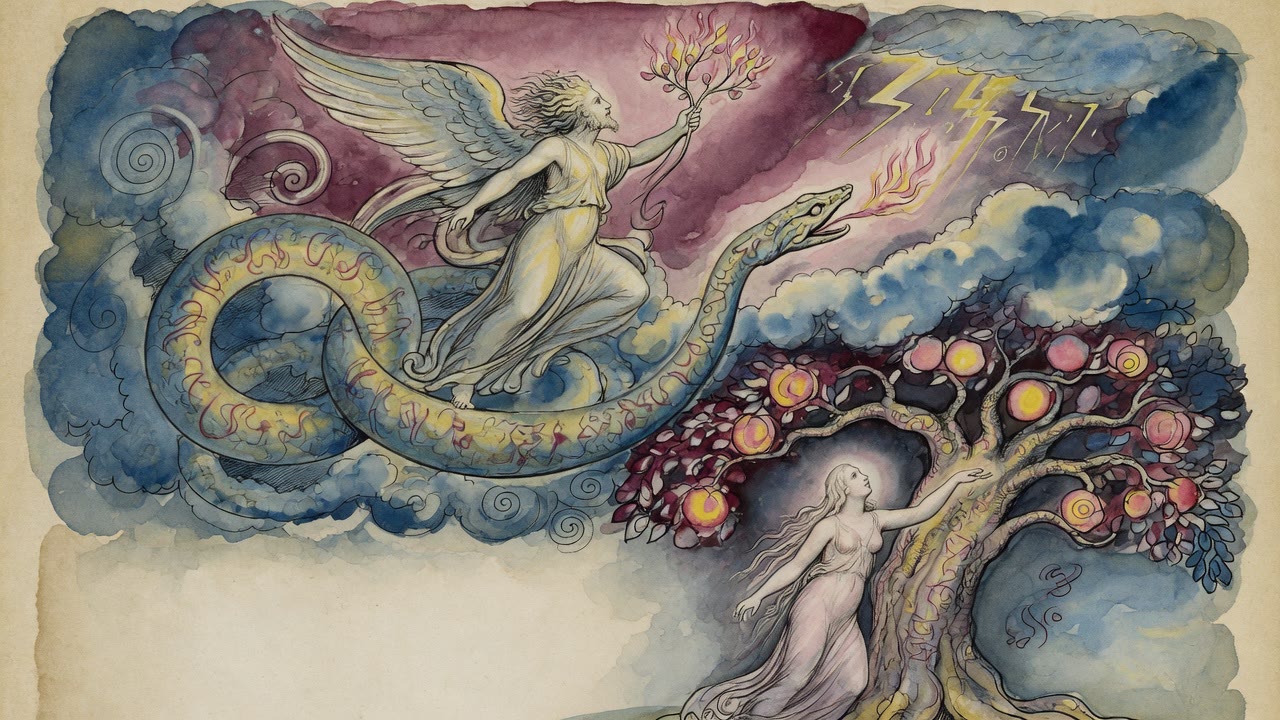
Jewish tradition sometimes paints a more complex picture, one where the serpent is more of a… well, a puppet. to a fascinating version of the story, retold in Tree of Souls and dra...
The very first family facing the ultimate crisis. Adam, the first man, is nearing his end. Can you even fathom the weight of that moment? The realization that mortality, this thing...
We read about death all the time, but imagine being the first person… ever… to face it. Well, Jewish tradition has a lot to say about the death of Adam, the first human. And it's n...
Can you imagine the fear, the uncertainty? There were no books, no doctors, no one to ask for advice. It was just her and Adam, facing the unknown. The text Penitence of Adam (20:3...
The story goes that one night, long after leaving Eden when Cain and Abel were young men, Eve was shaken awake by a horrific vision. As The Penitence of Adam (22:2:1-23:3:2) tells ...
It involves fallen angels, forbidden knowledge, and a whole lot of trouble. This isn't just a story of two rogue angels, Shemhazai and Azazel. According to some accounts, like the ...
(Genesis 6:4) mentions the Nefilim. That word, Nefilim, generally understood to mean “giants.” But who were they, really? And where did they come from? The Torah just kind of drops...
Jewish tradition has some pretty fascinating, and sometimes terrifying, answers. to the story of Azazel, a fallen angel whose lair is the source of some seriously dark magic. The s...
Jewish tradition has some pretty ideas about it. One vision, described in Tree of Souls, paints a picture so vivid, so intense, it’s hard to ignore. Imagine this: in the very gener...
The Book of Jubilees, a fascinating ancient text excluded from the standard biblical canon but considered scripture by some, speaks to this very human struggle. It offers a powerfu...
That's the scene set for us right at the beginning of Jubilees. God commands Moses, "Write down for thyself all these words which I declare unto thee on this mountain, the first an...
Our story begins not just at the beginning of time, but with the very blueprint for it. We’re talking about the Book of Jubilees, a text that, while not part of the canonical Hebre...
This ancient Jewish text, considered scripture by some but excluded from the standard biblical canon, paints a sweeping picture of history and destiny. And within its pages, we fin...
The Book of Jubilees, a text not included in the canonical Hebrew Bible but cherished by some, gives us glimpses into just that. It's like peeking behind the curtain of Genesis, of...
The Book of Jubilees, an ancient Jewish text, offers us a glimpse into his extraordinary life. This book, considered scripture by some, expands on the biblical narrative, filling i...
Something went terribly wrong in the early days of the world. According to the Book of Jubilees, a group of ancient texts dated to approximately 160-150 BCE, the children of men mu...
To a fascinating, if troubling, passage from the Book of Jubilees. Now, the Book of Jubilees isn't part of the standard Jewish biblical canon, the Tanakh. But it's a hugely importa...
The ancient texts resonate with that feeling too. Take the Book of Jubilees, for instance. It paints a stark picture of a world gone wrong, a world that’s deeply, fundamentally…cor...
There’s this fascinating ancient text, the Book of Jubilees, a work that retells the stories of Genesis and Exodus but with a very particular slant. It’s not part of the Hebrew Bib...
Hagar knew that feeling intimately. We find her story, or at least a piece of it, echoed in the Book of Jubilees, an ancient Jewish text that retells and expands upon stories from ...
Enoch walked with God and vanished. Centuries later, Jewish mystics said he came back as Metatron, the second most powerful being in heaven.
Samael is the angel who rode the serpent into Eden, the being whose name means 'Poison of God,' and the Angel of Death who carries a sword with a single drop...
Adam's first wife did not storm out of Paradise. She pronounced the Secret Name of God, lifted off the ground, and bargained with angels at the edge of the sea.
The first woman in Eden refused to lie beneath Adam. Then she did something no human had ever done, and the garden could not hold her.
On the first Friday, the angels wanted Adam dead before sundown. The day of Shabbat walked into the throne room and argued for his life.
When the baby came out radiating light, Lamech did the math and walked back to his wife. He wanted to know if the child was actually his.
The Akeidah has a hidden layer. As Abraham walked toward Moriah with Isaac, Ha-Satan tried three times to sabotage the journey — and lost every round.
The Torah gives the Akedah nineteen quiet verses. The Rabbis filled the silence with angel tears, Satan in the road, and a son who volunteered to die.
Before God created humanity, the angels argued about whether it was a good idea. Mercy said yes. Truth said no. Peace said no.
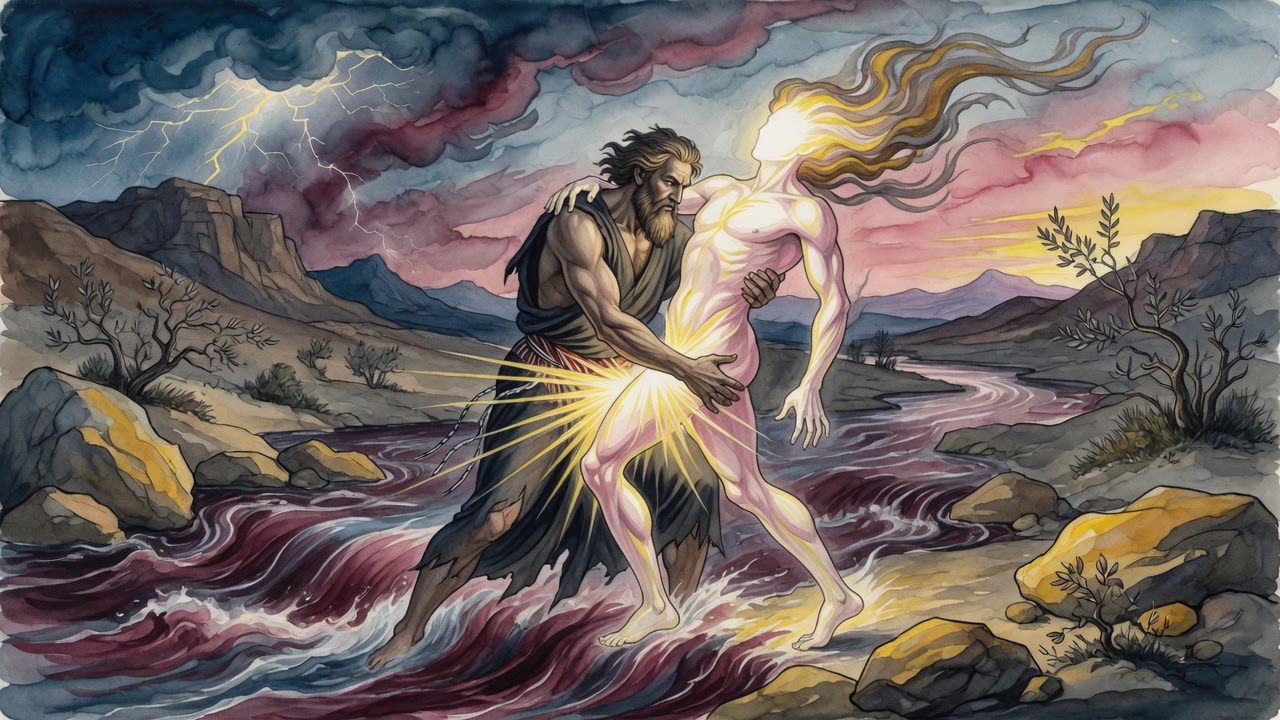
Alone by the Jabbok, Jacob grabs a stranger in the dark and refuses to release him until dawn. He walks away limping with a new name and a nation.
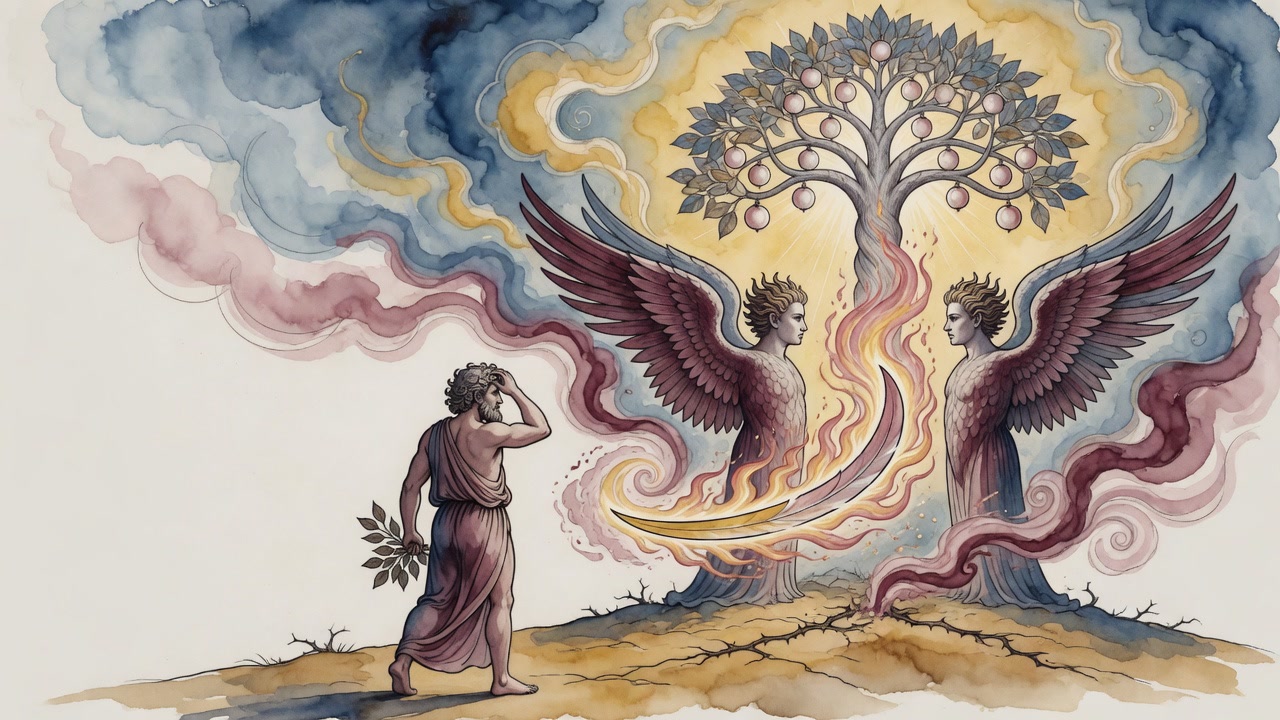
Most people read Genesis 3:24 as a locked gate. The rabbis saw something stranger. The cherubim were holding the way to the tree of life open.
The three men who appeared at Abraham's tent were angels — but they were not there as a group. Each had been sent from heaven on a separate assignment, and their missions were in direct conflict with each other.
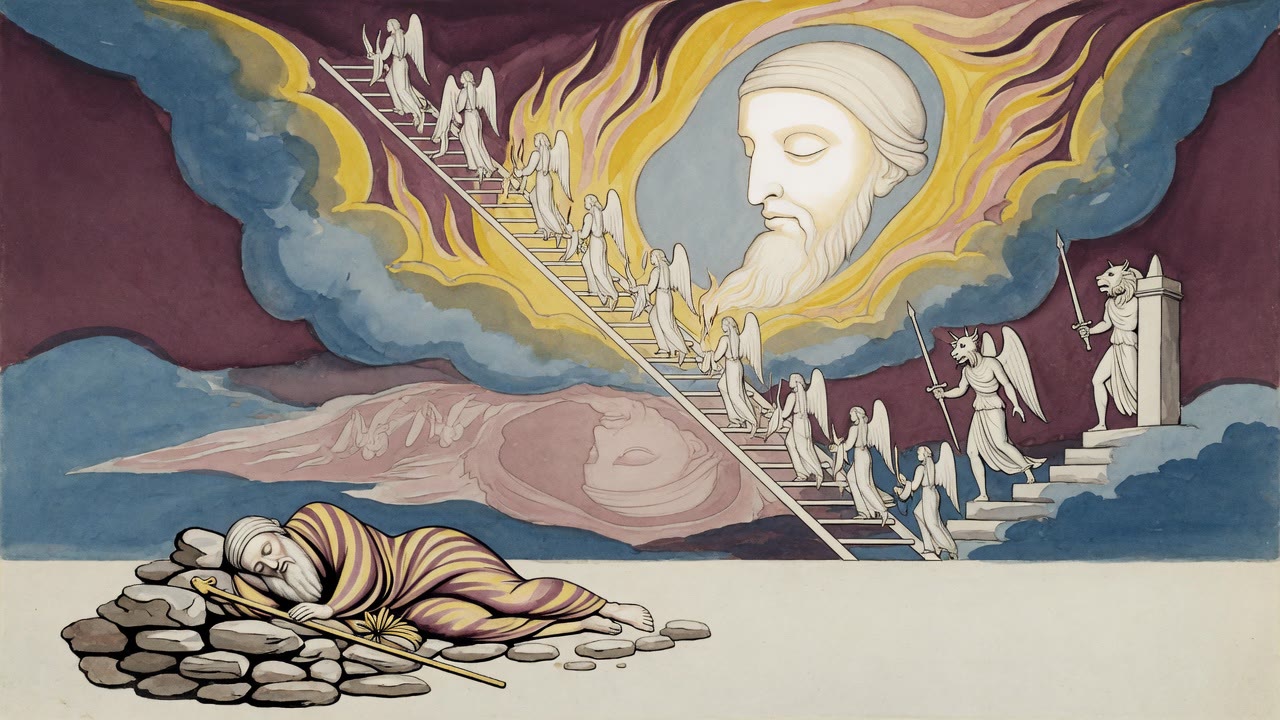
Jacob saw angels going up and coming down his ladder. The rabbis noticed that the order was backwards — the angels going up should have been there first. The explanation reveals a cosmic administrative system that governed every step of Jacob's journey.
The Torah ends Adam's story with a death notice. A first-century Jewish text fills in the rest, and it is much stranger than anyone remembers.
Abraham had endured ten trials before he climbed toward Moriah. The ancient midrashim reveal how he recognized the mountain — and why news of a birth reached him at the summit.
Lot chose Sodom not despite its wickedness but because of it — and the Midrash tracks every moment of his unraveling, from the gaze that started it all to the hesitation that almost cost him his life.
The Apocalypse of Abraham, composed c. 1st–2nd century CE, records what happened when the patriarch was escorted to heaven by a luminous angel — how he sang a celestial hymn in midair, stood before the divine chariot, and witnessed what the Merkabah mystics would spend centuries trying to reach.
From the pit his brothers threw him into to the prison of Potiphar's house, the angel Gabriel walked beside Joseph — and the rabbis traced every turn in the story to that invisible presence.
The Kabbalists read Jacob's wrestling match at the Jabbok as a lesson in prayer — the angel was not an opponent. He was an answer.
Genesis spends eight words on Enoch before he vanishes. The rabbis spent centuries arguing what those words meant — and the answer was staggering.
God did not destroy Sodom without warning. The rabbis say the word "rain" in the destruction verse proves He offered the city a chance to repent. Sodom refused and chose the fire.
When the fallen Watcher Azazel tried to stop Abraham's ascent to heaven, God gave Abraham the one weapon Azazel could not overcome — silence.
Before the Flood, an angel named Azazel descended to earth and taught humanity secrets that nearly destroyed it. What God commanded next has never been forgotten.
When Esau rode out with four hundred armed men to meet Jacob, he didn't know what was riding ahead of him. The Book of Jasher says God sent four angel armies first.
The angel of death has dominion over every living creature — with exactly nine exceptions. The Alphabet of Ben Sira names them and explains why each one escaped.
God consulted the angels before creating Adam — and two groups burned for their arrogance. Then the Earth itself refused to give up its dust.
Two angels told God they could do better than humans. He let them try. What followed brought on the Flood — and haunted the heavens long after.
Abraham said Sarah was his sister. Pharaoh took her. Then an angel appeared with a rod and would not strike without Sarah's permission.
Enoch walked with God — but not before Methuselah was born. The rabbis asked: what was Enoch doing in those first 65 years?
Gabriel fed the abandoned infant Abraham from his own finger — then decades later carried him on his shoulder into the heart of Nimrod's empire.
God sent Michael to inform Abraham that his time had come. But Michael had met Abraham, and he couldn't do it — so he pleaded with God for a way out.
The Torah gives Enoch one sentence. 2 Enoch gives him seven heavens, 366 books, and a departure witnessed by two thousand people who looked up and watched him vanish.
Jacob's famous wrestling match was no roadside ambush. His opponent was Michael, commander of the heavenly host — and God had to intervene to stop the fight.
Three angels arrived at Abraham tent, one announced a birth, two left for Sodom. What Abraham said next became the founding act of Jewish moral courage.
On the night Adam lay dying, Eve prayed the most desperate prayer in history. Every Friday night since, two angels stand at the door to see who is ready.
After Simeon and Levi destroyed Shechem, Jacob braced for annihilation. What happened next turned terror into theology.
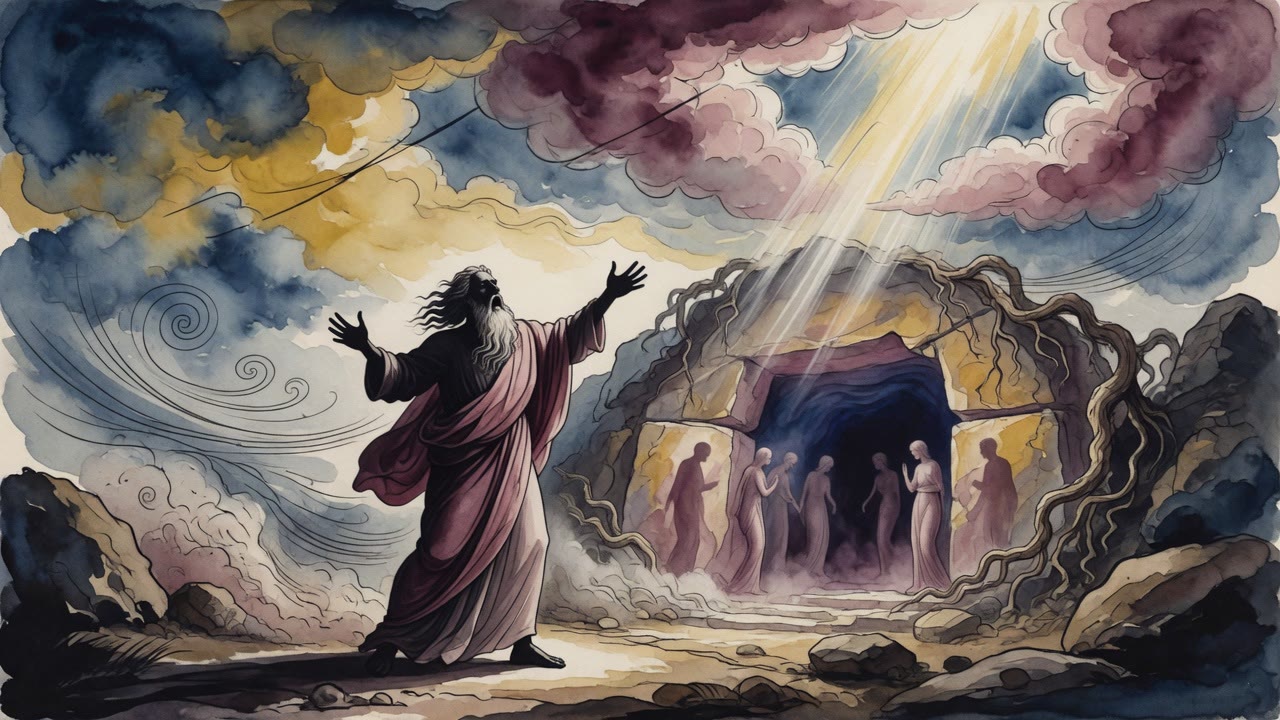
When Enoch's angelic guides abandoned him at the threshold of God's presence, he collapsed in terror. What happened next changed him forever.
God arrives in Eden on a chariot drawn by cherubim, trumpet blazing. Adam and Eve are hiding in the trees. The question He asks is for all of us.
When Eve died, an archangel descended to teach her son how to bury her. The instructions he gave were meant for every human who would ever grieve.
Every nation has an angelic representative who can accuse it before God. When those angels turn on Israel, two archangels stand up to argue the other side.
Adam was dying from seventy-two afflictions. Eve and Seth walked to the gates of Eden begging for mercy. They returned with a prophecy, not oil.
Ha-Satan did not rebel against God. He was expelled because of Adam. Eve's deathbed confession reveals the full story of a grudge older than creation itself.
The first human death cracked the sky open. Seven heavens opened, the sun and moon went dark, and God himself descended to bury Adam alongside his son Abel.
The Torah says Adam begot Seth in his own likeness. The rabbis noticed who was missing from that sentence, and why it mattered.
Aggadat Bereshit links Jacob's ladder dream to Doeg the informer, asking what both men share. The answer is about words that cannot be taken back.
Isaiah 63 contains one of the strangest verses in all of prophecy. The Aggadat Bereshit reads it as a covenant condition God bound himself to keep.
The rabbis found something extraordinary hidden in the destruction of Sodom: the two daughters of Lot carried the seed of King David out of the fire.
Samael, the heavenly Accuser, confronted Abraham on the road to Mount Moriah. When that failed, he tried Isaac. He failed at that too.
Before Abraham entered Egypt, he dreamed of a cedar and a palm standing together, and the palm tree spoke to save them both.
Adam entered the Garden on the eighth hour of the first day and was expelled by the twelfth. Four hours of paradise, and a debt the world is still paying.
One ancient text says Jacob did not merely wrestle an angel at the Jabbok. He wrestled one because he was one, and had forgotten it.
Jacob's image is said to be carved into the divine throne. What does it mean that the most flawed patriarch was chosen for this honor?
When dawn came at the Jabbok, the angel begged to be released. Not asked. Begged. The rabbis explained exactly why he was terrified of being held.
The angels watched from heaven as Abraham raised the knife over his son. They wept. Then the manna that fell in the wilderness turned out to be their tears.
The angels nearly worshipped Adam by mistake. God sang the wedding blessings at his marriage. When he died, a sacred book vanished with him into a hidden cave.
Jubilees says an angel brought Jacob seven tablets with his entire future inside. The Midrash says Israel was briefly immortal at Sinai, then lost it.
When Eve went into labor with the first child ever born, she had never seen a birth before. The apocrypha records what happened when Adam prayed.
The Torah gives Enoch five verses and says God took him. The Book of Jasher and the Legends of the Jews say he ruled the earth and rose to heaven as a witness.
Ishmael was named by an angel before his birth, blessed with his own covenant, and still sent away — and the rabbis held both truths at once.
Abraham prayed for a pagan king, and the angels demanded God remember Sarah in return — Isaac was born on the Day of Remembrance itself.
Ha-Satan blocked the road to Moriah three times — as an old man, a young man, and a flood. Abraham walked through him every time.
From the scorpion pit to the Egyptian dungeon, the rabbis saw an angel beside Joseph in every place he was thrown, waiting for the moment.
From preparing Adam for burial to counting bricks in Egypt, Michael appears in every crisis in Israel's history, watching and interceding.
When Joseph revealed himself to his brothers, the angels of heaven recognized him too. A gold amulet had been tracking him since before his birth.
Eden was not a garden planted when Adam arrived. The rabbis say it existed before the world — a city of nine palaces waiting for the righteous.
The Torah gives Enoch five words and then he vanished. The rabbis filled centuries of commentary into that silence, and what they found was extraordinary.
The archangel Michael carried Levi to heaven while he was still a young man. What God said there determined the fate of every Levite priest who came after.
After the expulsion, Eve stood in the Jordan River for forty days of penance. Then came the voice she had heard before, but this time she recognized it too late.
He is called the chief of all accusers, the angel of death, the patron of Rome. But Samael does not fight God. He works for God. That distinction changes everything.
Jacob's famous dream showed a ladder between earth and heaven. What he saw climbing it were angels banished for 138 years, and the future kingdoms that would crush his children.
Sodom didn't fall because its people were cruel. It fell because they turned cruelty into law and enforced it with civic pride.
The ram that replaced Isaac at the Akeidah was created before the world. Nothing of it was wasted across all of Jewish history.
On the night before Joseph appeared before Pharaoh, the angel Gabriel taught him all seventy languages in the world. By morning, he needed them all.
At the river Yabbok, Jacob was attacked by something the Torah only calls a man. The midrash names it. The name changes everything about what that night cost.
Noah asked God how he was supposed to gather every species onto the ark. The answer, according to Pirkei DeRabbi Eliezer, was that he was not supposed to....
The Book of Jubilees says Ishmael was excluded from the covenant but also records the angel who found him dying in the desert and saved his life.
Abraham bargained with God for Sodom's survival and stopped at ten. Jubilees records why Lot was saved anyway, and what the destruction meant for the land.
His brothers hated him before he said a word. He died asking to be carried home. Moses spent three days searching for his coffin so Israel could leave.
Esau sold the birthright for a meal, with witnesses and a signed document. Years later, forty thousand angelic warriors attacked him on the road to meet Jacob.
The archangel Michael harmed God's firstborn son. His punishment was to become Israel's eternal guardian. The sentence and the gift were the same thing.
When Jacob wrestled an angel until dawn, the texts reveal what the angel was really fighting for, and why he had waited since the first day of creation.
Abraham hid Isaac before building the altar. When he raised the knife, his tears fell into Isaac's eyes and the angels above wept quoting Isaiah.
Before the flood, angels descended to earth to instruct humanity. The one student who mastered every lesson was Enoch, son of Jared.
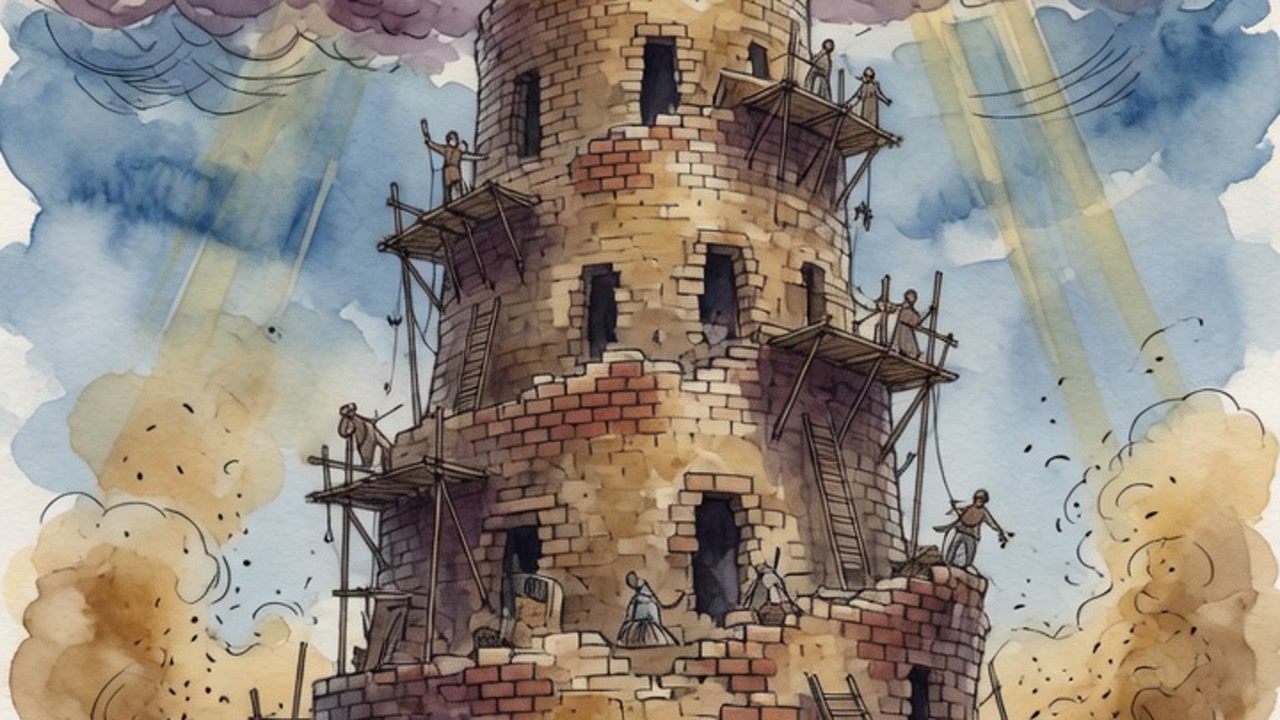
When God descended to Babel, the angels came with Him. The builders scattered into seventy languages that would never again speak as one.
Jacob fell asleep on a stone and woke up knowing he had been spoken to. The Book of Jubilees preserves what happened between the dream and the dawn.
Tobit prayed for death in Nineveh. Sarah prayed for death in Media. Both prayers reached the throne of glory at once, and one angel answered them both.
When Reuel of Ecbatana sent his only daughter away with Tobias, the blessing he spoke held everything a father could give and nothing he could keep.
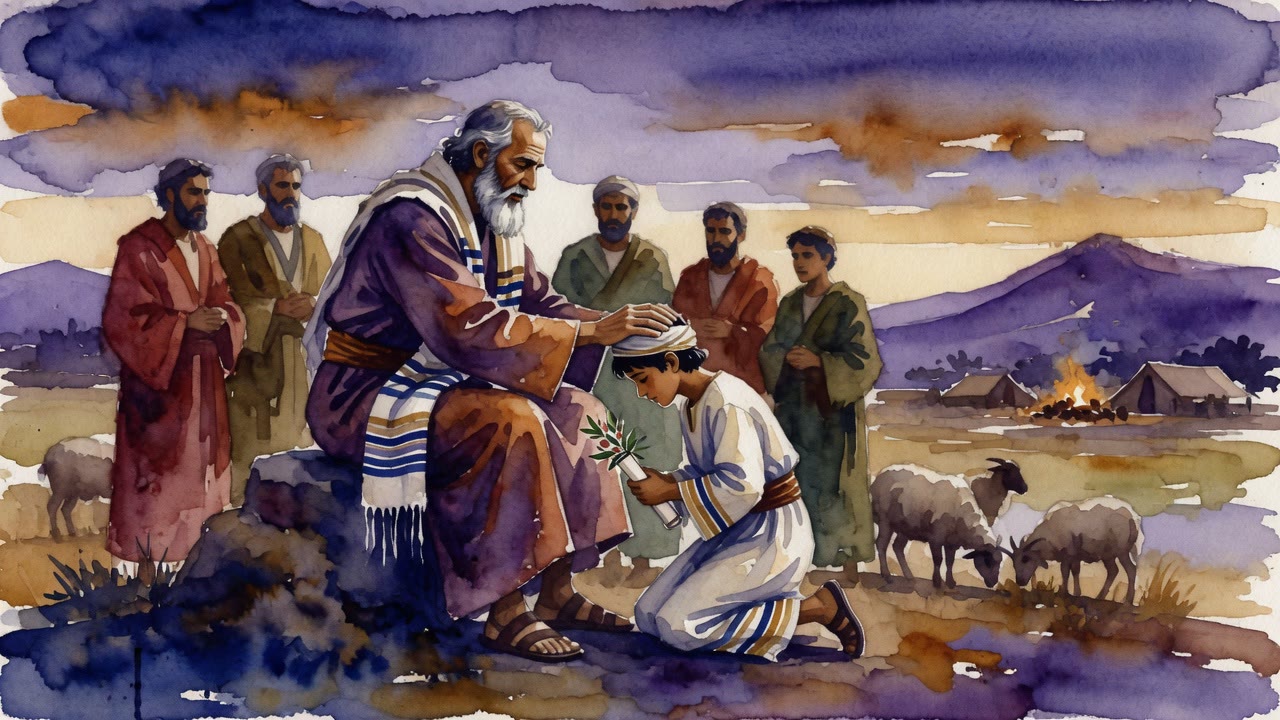
Before Sinai existed, angels anointed Levi in the heavens and sent him back as a priest. The Dead Sea Scrolls preserve the ceremony.
After Enoch ascended, Methuselah ruled the earth. His first task was the demons, Adam's children by Lilith. He solved it with a sword engraved with God's name.
When Noah was born, his eyes shone like the sun and lit up the room. His father Lamech fled to Methuselah, convinced the child could not possibly be his.
On the road to Moriah, Satan appeared three times to block Abraham and Isaac. He became an old man, a young man, and a river. None of it worked.
Satan went to Sarah while Abraham was at Moriah and told her Isaac was dead. Her grief killed her. When she learned he was alive, the joy killed her too.
Eliezer went to Haran with two angels and a deed for Isaac. Rebekah stood at a well where water rose to meet her. He returned home in three hours.
Laban searched the camp for his stolen idols. Jacob swore the thief would not live. He did not know Rachel had hidden them. She died giving birth to Benjamin.
Ha-Satan did not approach Eve directly in Eden. He sang angelic praises from the garden wall, then used the serpent as his mouthpiece to extract her oath.
In year 1569 after creation, Noah's sons reached into their father's robe before an angel. Each drew a slip. The world was divided and given away forever.
While Pharaoh questioned Sarah in his palace, an angel stood in the room that only she could see. The texts give him a name and a message.
The sin of Sodom was not one catastrophic crime. It was a system, built law by law, designed to punish anyone who showed kindness to a stranger.
Abraham defeated four kings and 800,000 soldiers with 318 men. The texts say he did not do it alone -- the stars themselves joined the battle.
Lot was rescued from Sodom twice -- once in battle, once from fire. Both times he went back. The texts explain why, and what it cost him.
Sodom's courts had judges, laws, and fines. Those laws were designed to punish anyone who showed kindness to a stranger. Cruelty was the law, not the exception.
The angels sent to destroy Sodom walked slowly. They were angels of mercy who lingered on the road, hoping God would reverse the verdict before they arrived.
When the angels came to Sodom, only one man stood to greet them. Lot had learned to recognize mercy from Abraham. He had forgotten to practice it in the open.
Four cities of the plain burned at dawn. The fifth was spared because it was fifty-one years old. In divine justice, accumulated sin is always weighed.
The fire that destroyed Sodom fell when both the sun and moon were visible. God arranged it so no worshipper of either could claim their god had been absent.
When Hagar and Ishmael ran out of water in the desert, Hagar turned to the idols of her youth. Ishmael turned to God. The tradition records what he said.
When Abraham released Isaac from the altar, Isaac stood up and said a blessing. The Akedah was not only Abraham's test. The tradition says it was Isaac's.
When Rebekah first saw Isaac, an angel walked beside him. The holy spirit struck her with a vision of the son she would bear. And she fell.
After Isaac blessed Jacob and before he sent him away to Laban, Rebekah spoke her own blessing, one that came from the holy spirit, not from her.
When Jacob fled Esau's wrath, something extraordinary happened at the threshold of his father's tent. He never even knew it.
Esau chased Jacob all the way to a boiling spring and sealed every exit. What happened next is one of the strangest rescue stories in all of midrash.
Leah wept so hard over her promised fate that her eyelashes fell out. What she feared, what she got instead, and what she gave the world.
When Jacob left Laban's house and crossed back into the Holy Land, a second army of angels came to meet him. He recognized both hosts and named the place.
Joseph lost his way searching for his brothers near Shechem. The angel Gabriel appeared and told him the Egyptian bondage was beginning that very day.
Judah walked right past Tamar without stopping. It took divine intervention -- a specific angel appointed over passion -- to turn him back. The rabbis ask why.
With the fire already prepared, Tamar could have named Judah and saved herself. She refused. She put her trust in God to turn his heart -- and God did.
Levi was pasturing his father's flocks when the spirit of understanding came upon him. What he saw in that vision shaped everything he did afterward.
Levi massacred a city, yet angels attended him and Jacob gave him the priesthood. The tradition's answer to why changes everything about how holiness works.
Jacob saw a vision of Joseph numbered among celestial beings, before Egypt, before the pit. He understood at once this greatness would cost Israel everything.
When Israel and the angels both wanted to sing God's praises at the sea, God stopped the angels. His children had earned the first word.
Three companies of angels escort the righteous soul at the moment of death. What comes next is more astonishing than any map of heaven has captured.
When Lilith fled Eden, God sent three angels after her. She refused to return. What followed was a negotiation, and the terms of that deal still bind her today.
When Abraham spotted three travelers near his tent at Mamre, he ran to greet them though he was recovering from circumcision. The rabbis say his eagerness to welcome strangers became a founding act of Jewish law.
When Abraham set out for Mount Moriah, the heavenly Accuser tried every trick available to make him turn back. The midrash records three separate confrontations, each more desperate than the last.
At the moment Abraham raised the knife at Mount Moriah, Isaac saw what his father could not: the angels of heaven weeping above the altar. The Talmud records that his soul actually departed and was returned by divine decree.
The Talmud records that Alexander the Great followed a magical stream to the gates of the Garden of Eden. An angel with a flaming sword sent him home with a piece of skull and a lesson no philosopher had taught him.
Adam knew the entire Torah before Sinai. He taught it to Seth, his true heir. Seth passed it down through the generations that preceded the flood, and from Seth's line, Noah carried the tradition into the world that came after.
The serpent in Genesis is not just a serpent. Pirkei DeRabbi Eliezer and related midrashic texts reveal the figure behind it: Sammael, the heavenly accuser, who used the serpent as a vehicle and whose entry into Eden set in motion consequences that outlasted the Garden itself.
The mysterious 'sons of God' who married human women in Genesis 6 were not acting on random desire. Pirkei DeRabbi Eliezer identifies the cause: the daughters of Cain's line had learned to make themselves irresistible, and their appearance on earth was enough to pull celestial beings out of the sky.
The destruction of Sodom in Genesis is familiar. Less familiar is the specific legal process Pirkei DeRabbi Eliezer describes: God's own descent to assess the evidence, the angels who were blinded protecting Lot's guests, and the theological principle that divine judgment requires direct investigation before any sentence is carried out.
Jacob feared Esau not because of his physical strength but because of the most dangerous thing in the world: a powerful man with no moral restraint. The midrash on Esau's confrontation with Jacob is a study in what it means to live without fear of heaven, and why that quality terrifies the righteous more than any army.
The Binding of Isaac is usually told as Abraham's test. Targum Jonathan, the ancient Aramaic translation composed in first-century Palestine, reveals that Isaac was no passive child at Moriah. He was thirty-seven years old, and he asked for it.
The ladder in Jacob's dream was not a ladder. It was a catalog of everything that would ever happen to Israel, from Sinai to the Temple's destruction, shown to one man asleep on a stone.
Before Adam existed, the angels debated whether humans were worth making. Kindness and Truth could not agree. God broke the deadlock by burying Truth in the ground.
Eden was not created on day three alongside the plants. The rabbis said it was made before the world began, and sixty myriads of angels have been tending it ever since.
When Joseph revealed himself to his brothers in Egypt, the rabbis say the matriarchs were watching from the world above. His rise from the pit was not only an earthly triumph but a heavenly vindication.
The mysterious stranger who found Joseph wandering in a field and redirected him toward Dothan is identified in different traditions as Gabriel, Metatron, and three angels at once. All versions agree: the encounter was not accidental.
When Jacob blessed his son Dan on his deathbed, he compared him to Judah. That comparison terrified the other tribes. The rabbis knew why.
Enoch walked with God and was taken. What he became is the most powerful angel in the celestial court, the one who bears God's name, runs the divine palace, and escorted Moses through the seven heavens.
When the Angel of Death came for Abraham, the patriarch refused. God sent Archangel Michael instead, who showed Abraham the celestial judgment hall before he could bring himself to accept his end.
Noah's birth terrified his father. His skin shone white as snow, his eyes lit up the room, and his grandfather Methuselah suspected he was the son of an angel. After the flood, the demons came back.
When the angels came for Lot, they were not merely rescuing him from a burning city. According to the Zohar and the Midrash, they pulled him back from the gate of Gehinnom itself, a gate that had been placed inside Sodom since before the world was made.
The two angels sent to destroy Sodom were not angels of wrath. Jewish tradition insists they were angels of mercy, which is exactly why the city's final crime against them sealed its fate beyond any appeal.
When Abraham left Ur for Canaan, he did not enter a cleaned-up world — he entered the same one that had been filled with demons since the first moments of creation, and the traditions tell us how he navigated it.
The Prayer of Joseph preserves a startling claim: Jacob was not a man who became a patriarch. He was an archangel who descended to earth, forgot his divine identity, and had to be reminded of it by a rival who attacked him in the dark.
Benjamin was the only patriarch born in the land of Canaan, the only one whose mother died giving him life. The Testament of Benjamin reveals what that origin cost him and what it gave him.
When Jacob dreamed of a ladder at Bethel, the rabbis insisted he was seeing the future of Israel across all of history. Four empires would rise and fall on that ladder. The question the tradition never stops asking is what waits at the top.
The great mystic Rabbi Ishmael did not merely teach about the heavenly palaces. He visited them. What he saw there, he was commanded to bring back to a world on the edge of catastrophe.
When Abraham lifted the blade over Isaac on Mount Moriah, every eye in heaven was on him -- and the angels were not all rooting for the same outcome.
Reuben lay dying and confessed what he had kept hidden for decades — and what he described about the forces that had driven him became one of the earliest Jewish maps of the human soul.
When Joseph revealed himself to his brothers in Egypt, Benjamin already knew. The Testament of Benjamin records a private meeting between the two brothers that happened before the great revelation, a moment no one else saw and that Benjamin was sworn to keep.
When Judah threatened Joseph in Egypt and demanded Benjamin's release, the rabbis said his voice was so powerful it shook the foundations of creation. The Midrash Tehillim traces that voice back to his confrontation with Esau, where Judah first discovered what he was capable of.
After wrestling with the angel at Peniel, Jacob had a second vision: an angel descended with seven tablets containing the complete future of his descendants. The Book of Jubilees records that Jacob read them, wept, and then the angel took them back.
Abraham received the promise and Isaac confirmed it -- but Jacob was the hinge on which all of it turned. Texts from Jubilees, Legends of the Jews, and the Prayer of Joseph reveal how Jacob's destiny was encoded before the patriarchs themselves were born.
When Jacob wrestled through the night and received the name Israel, something more than a renaming happened. Ancient texts from the Prayer of Joseph, 3 Enoch, and the Zohar reveal that Jacob's soul was the vessel in which the entire people of Israel pre-existed, waiting to be born.
When angels appeared to Abraham as men at Mamre, he prostrated himself before them. A medieval Kabbalistic text uses this to draw the exact line between honor and worship.
Abraham smashed idols his whole life, yet he prostrated himself before three strangers. The distinction he drew tells us everything about Jewish worship.
Most people think the cherubim were placed at Eden's gate to keep Adam and Eve out. Philo of Alexandria says they guard something far older.
Abraham smashed idols his whole life, yet he prostrated himself before three strangers. The distinction he drew tells us everything about Jewish worship.
The Targum Pseudo-Jonathan gave the nameless angel of Exodus 3 a name — Zagnugael — and in doing so reshaped how Jewish tradition reads the voice in the flame.
The angels owned the Torah for 974 generations before the world existed. Then Moses arrived to take it. One argument silenced all of heaven.
While Israel sang and the angels rejoiced at Sinai, God alone wept. He could already see the Golden Calf forty days away.
Five angels of wrath were on their way to destroy Israel. Moses ran to Hebron and begged the dead to stand up and intercede with him.
God rejoiced at the Tabernacle's dedication as deeply as at the creation of the world. The rabbis understood exactly why that was.
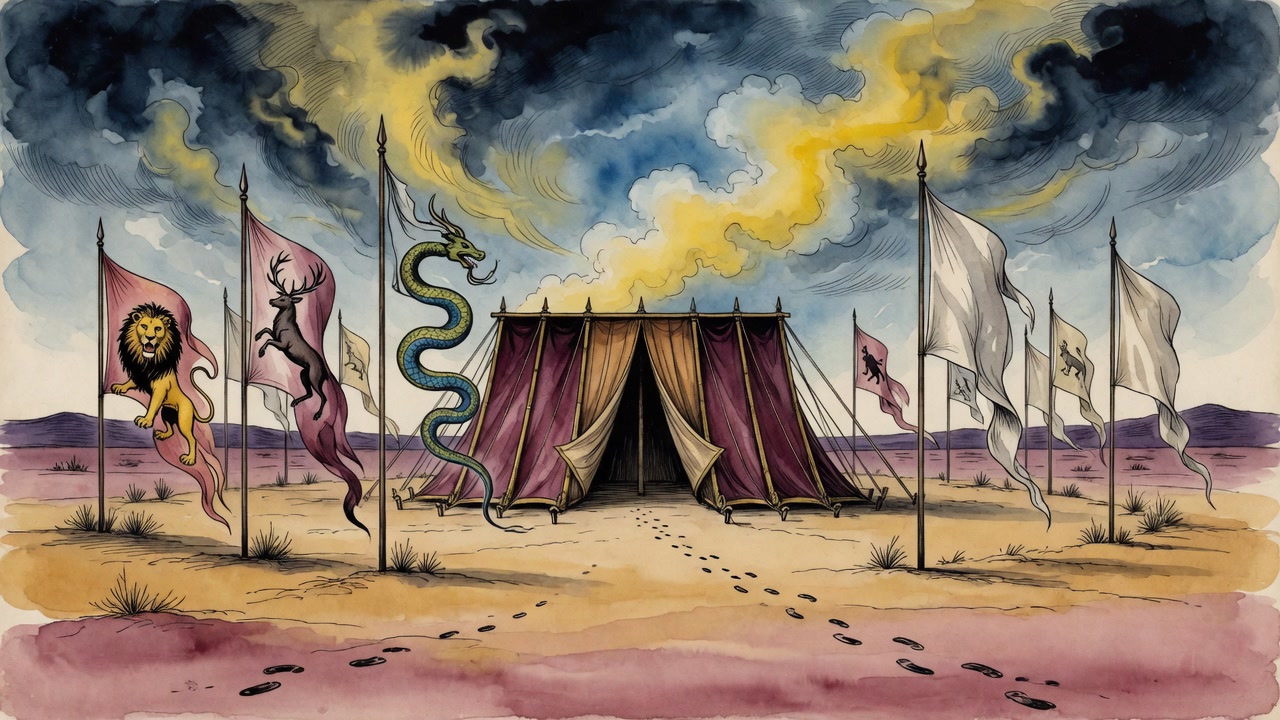
God arranged two million Israelites in a precise square around the Tabernacle in the Sinai desert. East, West, North, South — three tribes per side. The kabbalists said the layout was copied from God's heavenly throne room. What did they mean?
When Egypt's army drowned, the angels started singing. God stopped them. The Talmud records His exact words. They reframe what victory is allowed to look like.
Accept the Torah, or find your grave underneath. The rabbis did not soften the threat. They said it out loud and argued about it for centuries.
Moses didn't quietly accept his call at the burning bush. He argued, and one of his arguments compares his mission to the rescue of Lot.
When Israel stood trapped at the sea, a second threat loomed in heaven. Samael the Accuser was charging them before God, and God's answer was Job.
When Moses was sentenced to death in Egypt, a sword struck his neck ten times and could not cut it. Then God sent an angel dressed as the executioner.
When Pharaoh's court voted on whether to execute a toddler, one of the advisors at the table was an archangel. What the angel did next marked Moses for life.
In Exodus the divine messenger is called the angel of God, not the angel of the Lord. Rabbi Shimon ben Yochai explained what that change means, and it is not reassuring.
The manna was not ordinary food. The rabbis taught it merged completely with the body, leaving no waste, no residue, nothing expelled.
Every word God spoke at Sinai killed the Israelites. They had to be revived each time. The Talmud records what it felt like to receive the Torah.
After Moses came down from Sinai, Ha-Satan searched the earth, the sea, and the depths for the Torah. He could not find it. Moses wouldn't admit he had it.
Moses, Aaron, and seventy elders climbed Sinai and saw God. That is what the Torah says. Onkelos and the rabbis spent centuries explaining why that cannot mean what it appears to mean.
A sorcerer foresaw Moses before he was born. Angels of fire waited for him in the seventh heaven. God told him to stop praying and move.
Moses did not stand on a mountain and shout the commandments down. He taught the Torah in four concentric rounds so no one could claim it had been distorted.
Moses entered the cloud at Sinai, but the midrash says he kept going - through seven heavens, past angels of fire and ice, to the throne.
When God told Moses his time had come, Moses drew a circle on the ground and refused to move. What happened next shook creation itself.
When Moses ascended to receive the Torah, thirty thousand angels escorted him. That sounds like an honor. It was not. It was crowd control.
An angel guided baby Moses's hand onto a burning coal. The speech impediment that followed was not an accident. It was the making of a prophet.
God taught Moses the Ineffable Name. When the angels understood what a human being now possessed, they were seized with terror and turned on him. Moses used...
Before the burning bush, Moses had already commanded armies, grabbed Pharaoh's crown off his head as a toddler, and survived a test that should have killed him.
Moses ascended to receive the Torah and found God still decorating it. What he witnessed in heaven changed his understanding of his own place in history.
Moses told God to blot his name from the Torah if He would not forgive the golden calf. God refused the deal, but something in Moses's name disappeared anyway.
From Egypt to the Golden Calf to Moses on Mount Nebo, the angels protecting Israel kept withdrawing. The rabbis knew exactly why.
Moses ruled a kingdom in Cush before he ever reached the burning bush. Then he fought angels to seize the Torah. Then God buried him personally.
Pharaoh did not drown with his army. The rabbis preserved a stranger ending — and a prayer that Israel cried out at the sea that reframes the whole confrontation.
The plagues came through Aaron's staff. He never asked for the credit. When God called him to the mountain, he went willingly, and the angels wept.
Three moments from Aaron's life reveal a priest who spent his entire career standing between catastrophe and the people he served. even when it cost him...
When Moses pleaded for a sinful Israel, the angels looked on in silence. The tradition says they had already learned that Moses's arguments had a way of...
Moses spent forty days in heaven without eating. The angels challenged his right to be there. God told Moses to answer them himself.
Before the plagues, God held a trial in heaven with Pharaoh's angel as the accused. Meanwhile, Balaam advised Pharaoh to stop Moses by drowning every Hebrew newborn.
The day Pharaoh's daughter opened the reed ark, heaven and earth were both in motion. Plagues, angels, and a princess converged at once.
Gabriel pushed Moses' hand toward a burning coal and saved his life. That burn left him slow of speech and began the path to prophecy.
When plague struck Israel after Korah's rebellion, Moses sent Aaron running with incense. The remedy came from a secret learned in heaven.
At Sinai, sixty myriads of angels clothed every Israelite with divine names. After the golden calf, those same angels came back for their gifts.
When God's voice sounded at Sinai, all of Israel fell dead. The Torah interceded. God sent the dew of rebirth. Moses received 49 of the 50 gates of wisdom.
When Israel said 'we will do and we will listen,' angels brought two crowns each. When the Golden Calf fell, twice as many angels came to take them back.
When the second commandment rang out at Sinai, Israel died. Each of God's words then circulated the camp, kissing every Israelite back to life.
Pharaoh's council debated whether to execute baby Moses. One advisor, secretly an angel, proposed the test that decided everything.
When Gabriel led Moses toward Paradise, two angels met him at the gate and said something no gatekeeper had ever said to a living visitor before.
On the night of the Exodus, an angel flew a newborn lost in Egypt's clay all the way to heaven and placed it as a footstool before God's throne.
When Pharaoh pursued Israel to the Red Sea, he didn't go alone. Samael contributed six hundred supernatural chariots to lead the Egyptian pursuit.
God sent Gabriel, then Michael, then Zagzagel to collect Moses's soul. All three refused. Then Samael volunteered.
After his famous act at Shittim, Phinehas did not retire. He was sent to a mountain to wait, fed by eagles, until the clouds needed him.
The Talmud preserves an extraordinary account of Moses ascending to heaven to receive the Torah and finding the angels furious at the intrusion. They demanded God keep the Torah in heaven, where it belonged. Moses answered them.
When Israel built the golden calf, five destructive angels materialized before Moses in the heavenly realms, each embodying a different aspect of divine fury. Midrash Tehillim names them one by one and records how Moses stopped three with the merit of the patriarchs and the remaining two by invoking Phinehas and Aaron, preventing the annihilation of the Jewish people.
When God's voice thundered across Sinai, it did not merely deliver commandments. According to Pirkei DeRabbi Eliezer, it transformed every person who heard it into something resembling the ministering angels themselves, immune to decay, untouched by death's usual instruments.
Moses did not accept his death quietly. Sifrei Devarim records a sustained argument in which Moses marshaled case after case against God's verdict, and the tradition preserves every counter-argument he made, along with the one comfort that finally moved him.
When Moses demanded Israel's freedom, Pharaoh did not simply refuse out of arrogance. He consulted a divine registry of every known supernatural being and declared that Israel's God was nowhere in it.
Moses climbed into heaven to receive the Torah and the angels were furious. They wanted to incinerate him. God had to answer for bringing a mortal into the highest realm.
When Moses ascended to receive the Torah, the angels were furious. They demanded God explain why a mortal made of flesh and dust had been given what belonged to heaven. Moses had to argue for his own worthiness with 30,000 angelic guards watching.
When Moses ascended to receive the Torah, he did not simply arrive at a mountain peak and wait. He traveled through all seven heavens, and in the highest one, he saw the creatures that support the throne of God.
On the second day of creation, God made the firmament, fire, and the angels — and built into the fabric of the cosmos the mountain where the Torah would one day be given. The rabbis read the architecture of heaven backward from Sinai.
Most accounts say God spoke the Torah to Moses directly. The Book of Jubilees tells a different story: an angel called the Prince of the Presence sat beside Moses on Sinai and dictated everything, from creation to the messianic age, in one unbroken transmission.
Two angels argued God shouldn't have made humans. God agreed to let them prove they could do better. They lasted less than a day before pursuing women.
Before dying, Levi told his children how a dream took him through the heavens, where angels dressed him in priestly garments and God appointed him to the altar.
Shemhazai came to earth for a woman who tricked him into revealing the Ineffable Name and rose to God. She became the Pleiades. He hangs between worlds still.
When Balaam boasted about his seven altars before the heavenly host, God silenced him by sending an angel to seal his mouth from the inside.
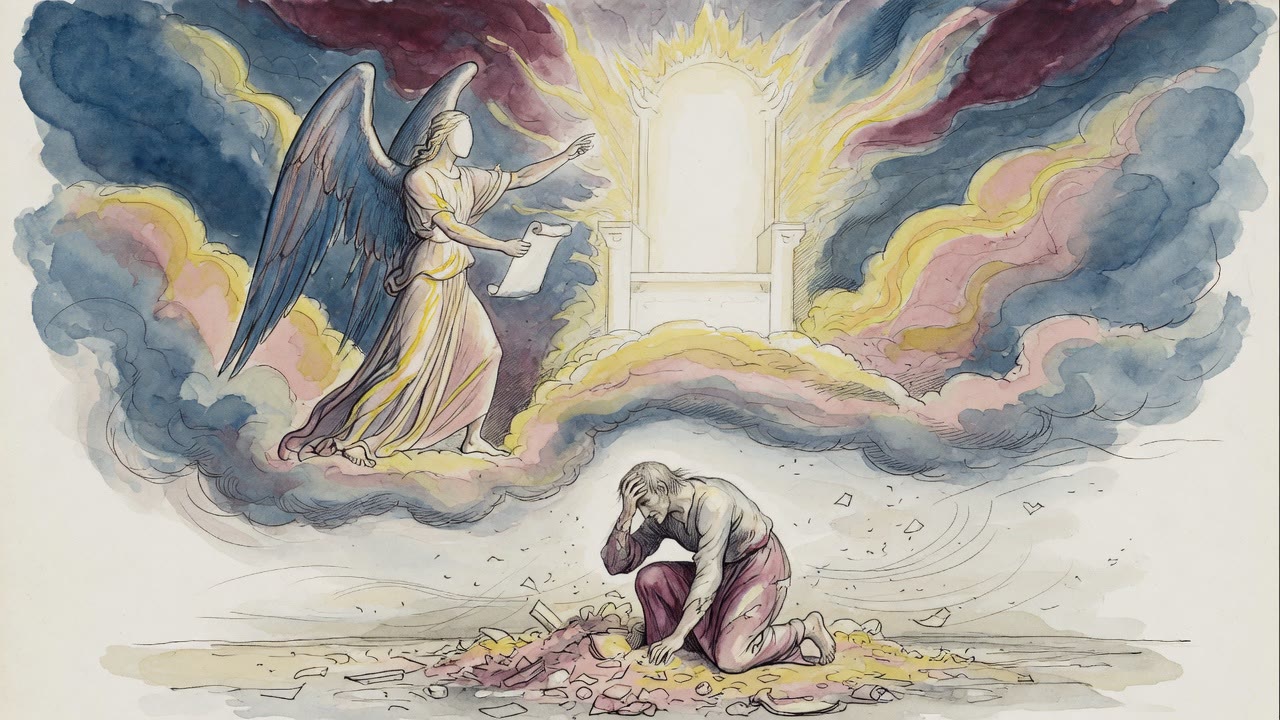
When Israel was exiled to Babylon, the high priest Joshua stood before the heavenly court in filthy garments and Ha-Satan brought charges against him. What happened next became the foundation of Yom Kippur's central image.
The angels of the nations line up to prosecute Israel in the heavenly court. Vayikra Rabbah reveals why the Accuser goes silent on exactly one day, and what that silence costs.
The angels of the nations prosecute Israel before God 364 days a year. Vayikra Rabbah reveals why the Accuser goes silent on exactly one day.
Each Israelite tribe carried a unique banner matching their gemstone on Aaron's breastplate. The camp formation mirrored the angels around God's throne.
After Balaam's eyes were opened, the angel asked him why he had beaten his donkey three times. The answer revealed how God protects even the creatures of the wicked.
Moses faced Sihon the giant king and was sorely afraid — not of the man but of the guardian angel behind him. The rabbis reveal what God did first.
Balaam told Balak that sorcery could not touch Israel: they used the Urim and Tummim. And one day, angels would come to Israel to learn Torah.
Phinehas charged into a tent with a single lance against two people. Twelve miracles happened in sequence to keep him alive, successful, and ritually pure.
The two giant kings who blocked Israel's path through the wilderness were not simply obstacles to be cleared. The rabbis of Midrash Tehillim saw in their destruction a revelation of divine mercy so total it encompassed even those being destroyed.
When Aaron died on Mount Hor, the heavens grieved before Moses could. The tradition records that the Angel of Death approached Aaron gently, and that Moses wept not only for his brother but for himself.
When the plague swept through the camp, Aaron ran into the gap between the dead and the living and held it open with incense. The sages say he was doing what angels do.
According to Ginzberg, Balaam had prophetic vision that reached back to the moment God consulted the angels before making the world. He saw everything. He chose destruction anyway.
Three times every day, according to 3 Enoch, the souls of Abraham, Isaac, and Jacob ascend from their graves to stand before God and demand the redemption of their children. This is not passive ancestral merit. It is active intercession.
Moses had argued to the angels in heaven that only humans need the Torah because only humans can sin and repent. Years later, standing at the rock he struck in anger, he lived out exactly the argument he had made. The tradition asks whether God's verdict was just.
When Samael came to claim Moses, he did not find a dying man. He found someone writing the Name of God — and fled in terror.
With one hour left to live, Moses petitioned the earth, the heavens, the stars, the seas, and his own successor. Every one of them said no.
When Samael the angel of death came to take Moses on the mountain, he arrived armed and gleeful. What happened next baffled heaven. Moses refused, argued, and by some accounts, the angel wept.
The Accuser came for Moses at the end of his life and expected an easy victory. Moses answered every accusation with a verse of Torah. The confrontation lasted until God intervened personally.
Joshua sent two spies to Jericho who traveled with demons, deceived a king, and found a woman who had been waiting forty years for them.
The angel who appeared to Joshua had first been rejected by Moses. Bereshit Rabbah preserved the exchange. Joshua's humility proved the deciding difference.
When Israel finally entered the promised land under Joshua, they brought something with them that had waited four hundred years in Egypt. The bones of Joseph. The rabbis asked why the sea split for those bones.
Abimelech took Sarah into his palace the same way Pharaoh had, but the story ended differently. The difference came down to one thing: Abimelech feared God.
Metatron rules over every angel in heaven, yet they call him Na'ar, the Youth. The reason goes back to the Flood, a boy named Enoch, and a complaint filed against God.
David spent years running from Saul's armies with no army of his own. The rabbis were not satisfied with luck as an explanation. They looked for the mechanism. They found angels.
A Hekhalot vision places David first in the fourth heaven, crowned most brilliantly. A midrash shows his enemies retreating while angels fight from above.
In the seventh heaven David received God's own crown and sang psalms no one had heard. Back on earth, he put the Ark on a wagon and someone died for it.
When Tobiyyah left for Media, Hannah wept and could not stop. Tobit said an angel walked with the boy. She wept yet more. Both responses belong in the story.
David was destined for three hours of life. Adam saw this and gave him seventy years from his own lifespan. Metatron witnessed the deed.
The stone and the sling are only part of the story. Jewish tradition preserves a far stranger, more layered account of what happened that day.
Esther froze with fear in the fourth chamber of the Persian palace. Haman's sons were already dividing her jewels. Then three angels arrived.
In the Zohar's reading of Samuel, the mysterious 'Watchers' of heaven are not guardians but enforcers, angels deputized to carry out divine judgments against those who have fallen out of favor above.
When David prayed, he wasn't begging. He was arguing. The Midrash Tehillim preserves a remarkable teaching where David invokes his royal status to demand that God judge him personally, as one king addresses another.
At the altar, David posed a question that should have been unanswerable: which beings once held dominion that God later took away? The Midrash Tehillim's answer runs from biblical villains to celestial powers, and the list is stranger than anyone expected.
The rabbis of Midrash Tehillim found an unlikely figure standing as evidence of God's mercy: Saul, the first king of Israel, who failed, disobeyed, and lost his kingdom. What they saw in his story turns the standard reading of failure upside down.
When Moses demanded that Pharaoh release Israel, Pharaoh did not simply refuse out of arrogance. According to Targum Jonathan, he first consulted a divine registry of all angelic powers, searched it carefully, and announced that God's name was simply not in it.
At the covenant ceremony at Sinai, the seventy elders saw something beneath God's footstool that no architectural blueprint could account for: a memorial brick made from Egyptian slavery, carried up to heaven by the angel Gabriel and kept there permanently.
David was not merely a poet who wrote about God. According to the ancient rabbis, his prayers had structural power: they could physically alter the heavenly realm, summon angelic intervention, and turn the tide of battle.
Most people think Solomon hired masons. A first-century Jewish text says he dragged the demons into court, bound them by name, and put them on the crew.
To build the Temple without iron, Solomon needed the shamir — a worm that cut stone. He got it by tricking a bird who had sworn an oath to an angel to guard it.
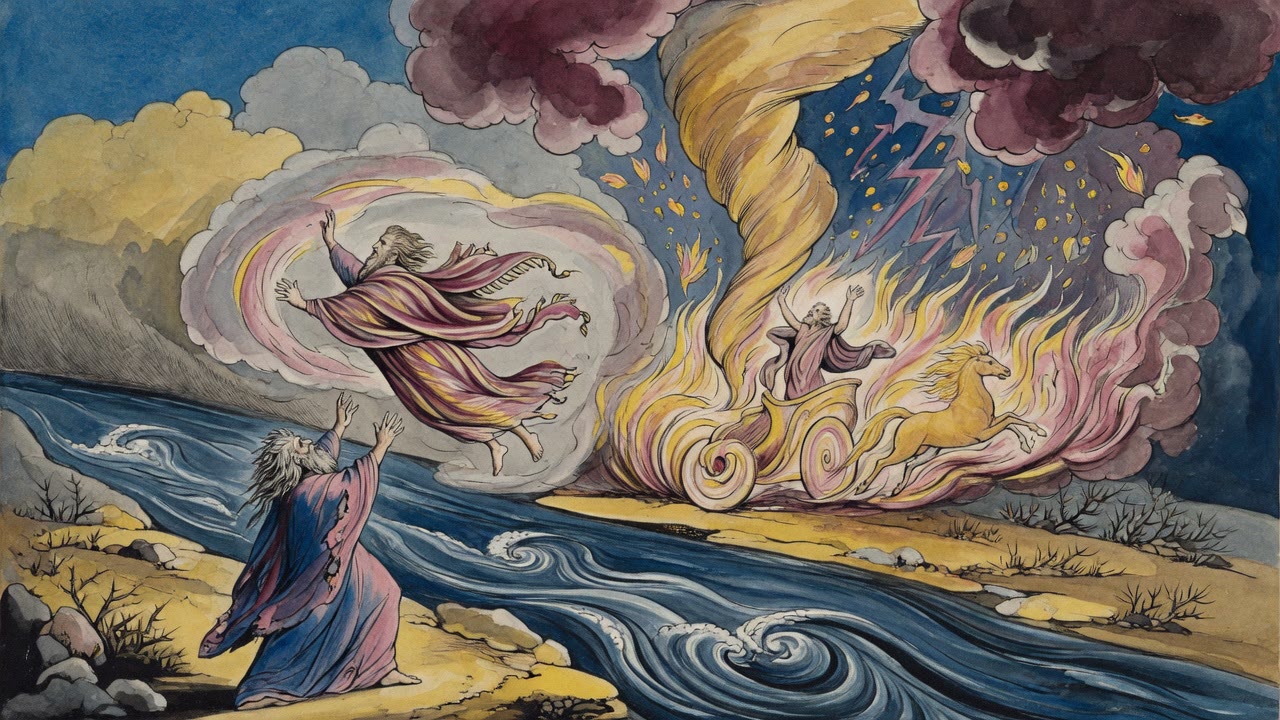
When the time came for Elijah to ascend to heaven, an angel was sent to retrieve him. But Elijah and Elisha were so deep in study that the angel had to turn back empty-handed.
Solomon bound every demon in creation to build God's Temple. Then a single woman asked him to crush five grasshoppers, and his wisdom left him forever.
The Bible says Elijah was taken to heaven in a fiery chariot. Jewish tradition says that was not the end of the story. It was a transformation.
Elijah never died. He kept coming back in disguise, building palaces overnight and outwitting the Angel of Death, then vanishing before anyone could thank him.
The Testament of Solomon records how the king built a catalog of 36 demons, their powers, and their weaknesses — turning interrogation into holy armor.
Most people know Elijah as a fiery prophet. The ancient sources say he was something far stranger: an angel who volunteered to be born.
After his fiery ascent, Elijah took on two tasks at once: recording every human deed until the end of days, and guiding souls through the gates of paradise....
Who was born but never died? Four men survived a furnace. Two died inside a sanctuary. The rabbis hid their deepest theology inside riddles like these.
Elijah revealed two strange secrets: why women are essential to men, and why God refuses to destroy even the most useless creatures on earth.
The seven-branched menorah had twenty-six pearls on each branch. Solomon's golden tables outshone the sun. A Levite hid them in a Baghdad tower before Babylon.
Elijah never died. He was taken to heaven in a whirlwind, and the Tikkunei Zohar says he has been moving between worlds ever since, appearing at every Passover seder, every circumcision, every moment when the boundary between the human and the divine grows thin.
When Elijah was taken to heaven in a fiery chariot, his disciple Elisha refused to look away, and that refusal earned him a double inheritance of the prophetic spirit. The mantle Elijah dropped became the instrument of Elisha's first miracle, and the model for every heavenly journey that came after.
A curious detail in Midrash Tehillim on Psalm 103 records that Rabbi Yannai resumed wearing tefillin in the afternoon after recovering from illness, following a tradition connected to Elisha. This small ritual act turns out to open a window onto how angels interact with human devotion.
When the fiery chariot carried Elijah into heaven, he did not stop being Elijah. He became Sandalphon, one of the mightiest angels, while remaining the prophet who descends whenever someone needs him. The rabbis connected this transformation directly to what Adam and Eve lost.
The widow of Zarephath fed the prophet Elijah from her last flour and oil. When her son died, she demanded his life back. What happened next became the foundation of a Jewish teaching about charity, resurrection, and the connection between the two.
The king of demons agreed to help build the Temple, then stole Solomon's throne. This is how a fish and a ring undid the greatest heist in heavenly history.
The Legends of the Jews preserves a startling claim: Elijah was not born into history. He was made in the twilight between the sixth day and the Sabbath — one of ten miraculous things woven into creation before human time began.
The Temple in Jerusalem was built with slave labor -- but not the kind you learned about in school. Solomon bound demons with a magic ring and put them to work hauling stone.
Beyond the prescribed furnishings, Solomon added something extraordinary to the Temple: golden trees that bore golden fruit. According to the Legends of the Jews, they continued bearing fruit throughout the Temple's existence and withered the moment Nebuchadnezzar crossed the gate.
Judaism's angelic hierarchy is vast and ancient - from the fiery Seraphim around God's throne to the archangels Michael and Gabriel, these cosmic forces...
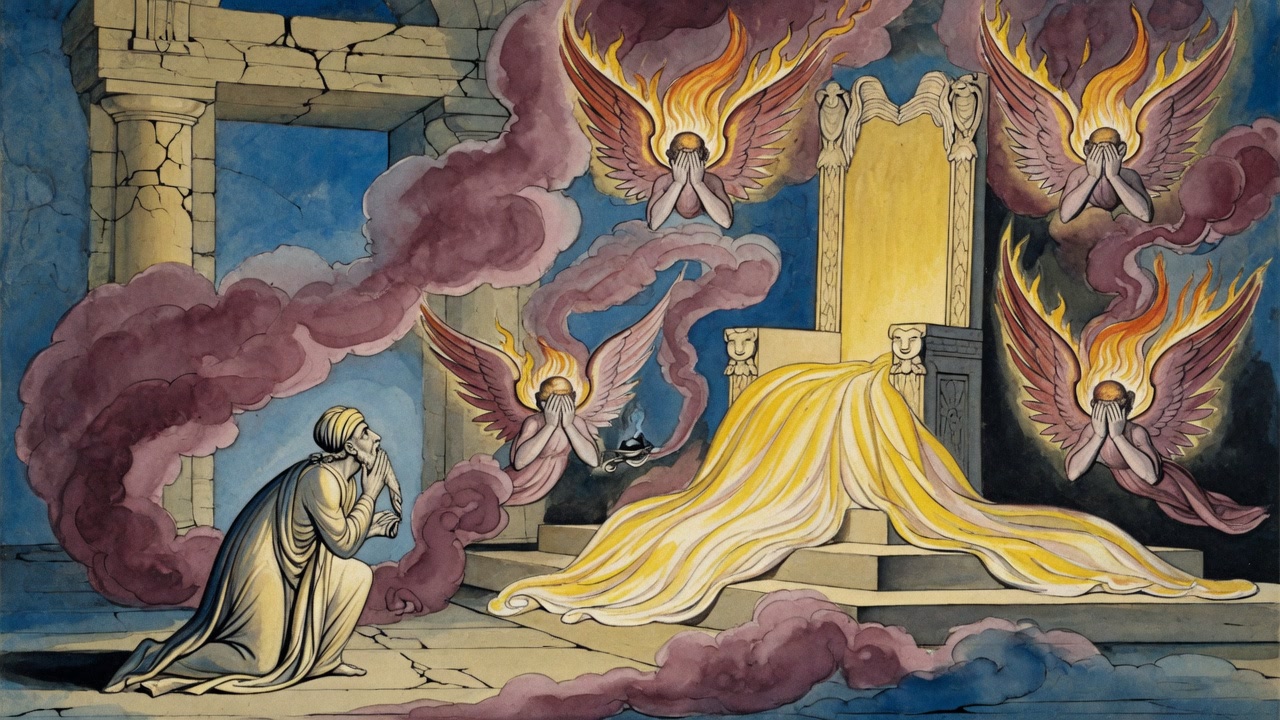
Isaiah's vision in the Temple wasn't peaceful. Six-winged seraphim were screaming in call-and-response at a volume that shook the walls and filled the chamber with smoke.
Isaiah's call narrative is one of the most personal in the Hebrew Bible — a man who walked into what he believed was the earthly Temple and found himself in the divine court, unqualified to be there, told to deliver a message people would not receive.
The prophet Isaiah's vision in the Temple is six verses long and has generated more mystical commentary than almost any other passage in the Hebrew Bible — because what he saw broke the categories of language itself.
Isaiah saw burning angels surrounding a throne and cried out that he was undone. The rabbis asked what those angels were actually doing up there, and the answer reveals something unexpected about divine patience.
When Isaiah stood before God's throne and fell silent while the angels sang, he was watching something the patriarchs had only glimpsed in dreams.
When Isaiah stood before the divine throne and the seraphim burst into song, he fell silent -- and that silence nearly cost him everything. Two ancient traditions reveal how music and prophecy became inseparable in Israel's greatest prophet.
Jerusalem did not fall because Babylon was stronger. It fell the moment Jeremiah left the city. An angel appeared on the wall and invited the enemy to enter.
A river of liquid fire flows continuously beneath the divine throne. New angels are born from it every day, sing one song of praise, and are immediately consumed.
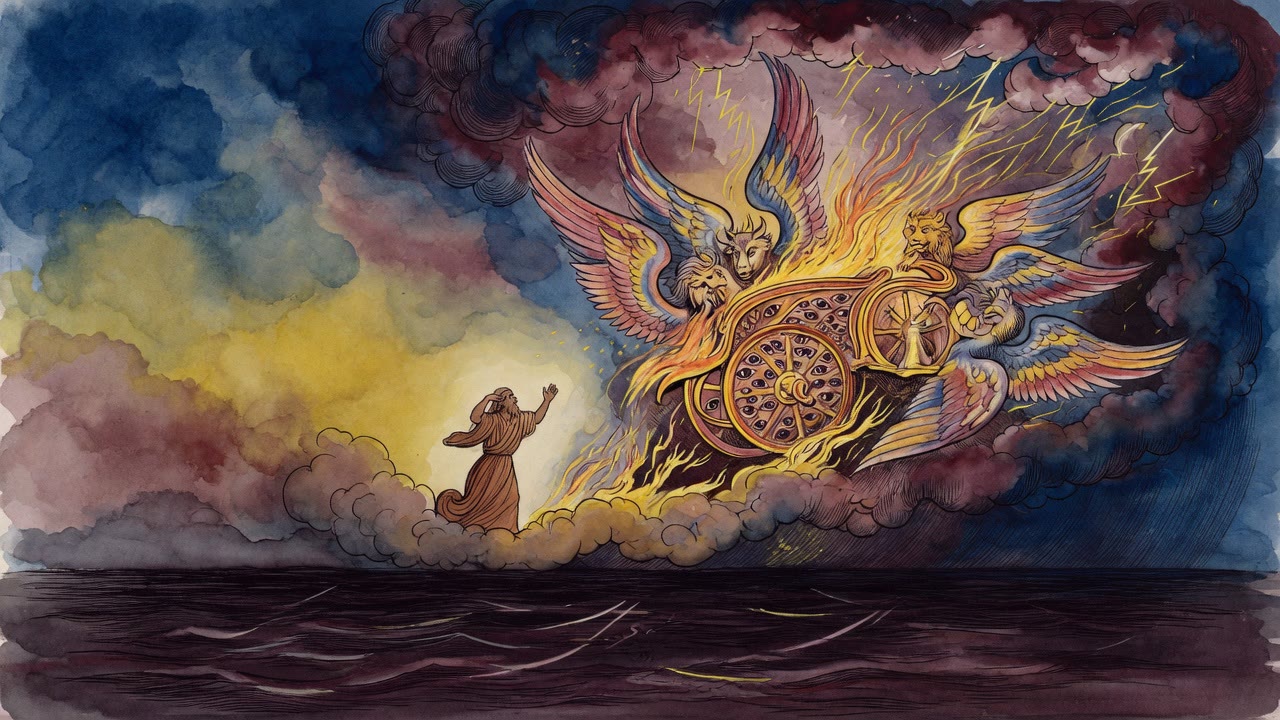
The most dangerous passage in the Hebrew Bible was a chariot. Not a weapon, not a battle — a description of what God rides, so dangerous the rabbis debated whether anyone under 30 should read it.
When Israel recites the Shema, the angels go quiet. Bereshit Rabbah and the Tikkunei Zohar reveal why Jacob's voice carries the weight of the entire cosmos.
Metatron is called the Youth, the Prince of the Presence, and the keeper of the divine chariot. The Zohar maps exactly what that means.
Before Ezekiel, before Enoch, before any mystic, Adam saw the divine chariot in a vision near the end of his life. He begged God not to cast him out.
In the first heaven Enoch found a sea larger than any ocean and angels counting stars. In the second he found imprisoned angels begging a mortal man for mercy.
By the Chebar Canal in Babylonian exile, Ezekiel saw the heavens split open. What emerged was fire, wheels covered in eyes, and four impossible creatures.
At the Red Sea, unborn children in the womb sang praises. A slave woman at the crossing saw more of God's glory than Ezekiel in his greatest vision.
Entering God's throne room required the right songs and knowing which angels would try to destroy you. Rabbi Ishmael asked how it was done safely.
Ezekiel described wheels within wheels and creatures with legs both straight and circular. For a thousand years, Kabbalists have asked what these shapes reveal about the structure of divine governance.
Sandalphon stands behind God's throne, so tall his head brushes the highest heaven, gathering every prayer spoken on earth and weaving them into crowns. The Talmud says the angels cannot sing in heaven until Israel sings first. Sandalphon is the hinge between the two worlds.
Genesis describes Jacob's ladder vision at Bethel in a single dramatic night. Targum Jonathan surrounds that night with five miracles that the Hebrew Bible never mentions, and each one reframes what the ladder was actually showing.
God did not call Ezekiel by his name. He called him ben adam -- son of man. Vayikra Rabbah explains why that title carried more weight than any name.
Every prophet God addresses is called by name. Ezekiel alone is called 'son of man.' The rabbis say this was not a diminishment. It was the highest honor God could give.
When Israel was exiled to Babylon, the rabbis had to answer an impossible question: does exile mean God has abandoned his people?
An angel walked the road to Ecbatana as a hired guide and already knew how the journey would end. The young man beside him did not.
Raphael walked with Tobias from the Tigris to Ecbatana and back, ate at the same table, slept under the same roof, and never once touched a single bite of food.
Habakkuk was preparing stew for his field workers. An angel arrived, seized him by the hair, and transported him to Daniel's lion's den.
Every nation has an angelic patron. Israel has none. The Mekhilta explains why direct divine protection is both the greatest privilege and the hardest burden.
Adam broke one rule and lost paradise. The angels broke none — and still faced judgment. Midrash Tehillim asks who, if anyone, is truly exempt.
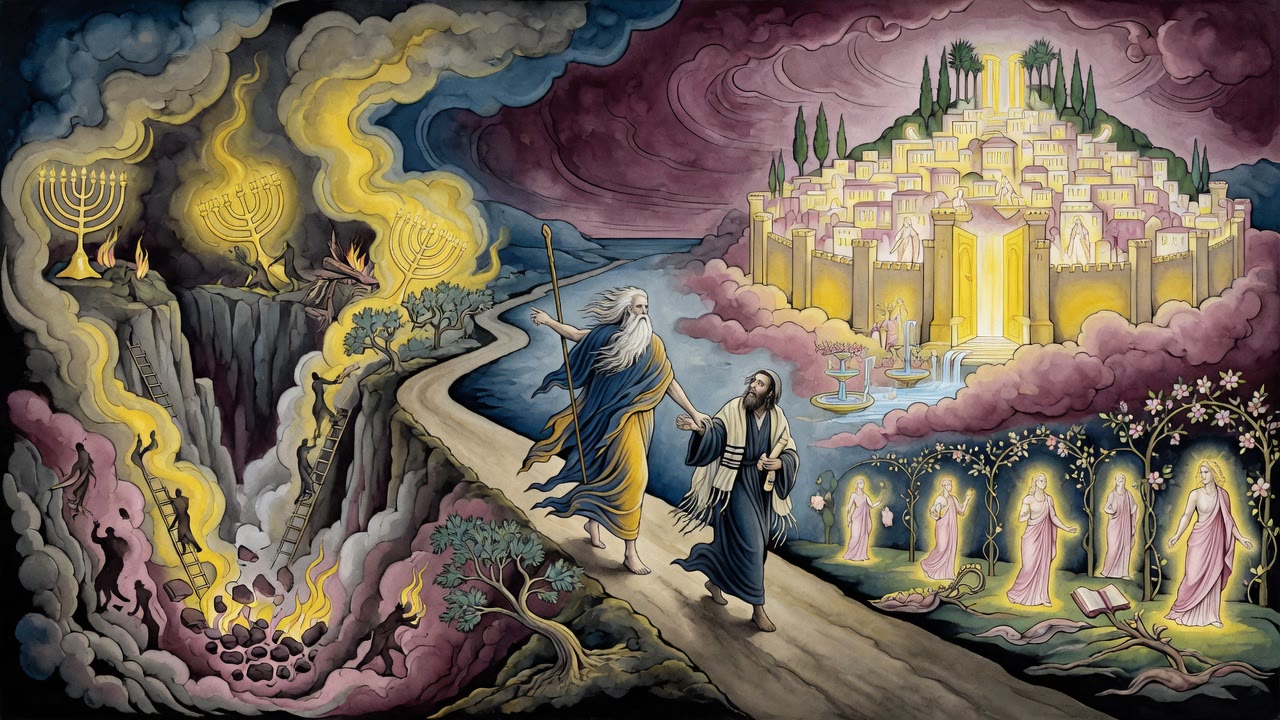
The Book of Gehinnom describes a place with three entrances, five kinds of fire, and angels collecting souls at the gates. Rabbi Yehoshua ben Levi took a tour.
The ancient grief that runs from Noah through David is not a sign that God has abandoned His righteous ones. It is the sign that they have been trusted with a suffering that purifies rather than destroys.
The Midrash on Psalms reveals that David's cries for rescue were not personal pleas — they were cosmic claims, and the angels were sworn by oath to respond to them.
A rabbi famous for his aggadic wisdom is asked what it means for God's righteousness to reach the heavens. His answer turns the entire idea of charity upside down.
The Book of Job opens in the heavenly court. God is praising Job's righteousness when an angelic prosecutor arrives and makes a challenge: the only reason Job is faithful is that his life is easy. Remove the protection and see what happens.
When three strangers appeared at Abraham's tent, the rabbis said each angel carried a single divine assignment. None of them could do more than their one task.
The Torah says three men appeared to Abraham. The ancient Aramaic tradition identifies them as three angels, each with a single assignment, because a ministering angel cannot be sent on more than one mission at a time. This rule from rabbinic theology explains why three were needed instead of one.
In the Tikkunei Zohar, a sandal removed in Bethlehem unlocks one of Kabbalah's deepest teachings about God's hidden name and the angel who bridges heaven and earth.
The Sefer HaBahir, the oldest Kabbalistic text, opens with a strange and unsettling question -- and its answer reveals that God built conflict into the universe on purpose, then appointed angels to manage it.
Esther was seventy-five years old and her name meant "she who conceals." Mordechai was certain she had been placed inside a pagan palace for a divine reason. Together they turned the ancient hatred of Esau against the children of Jacob — and the tables flipped in a single sleepless night.
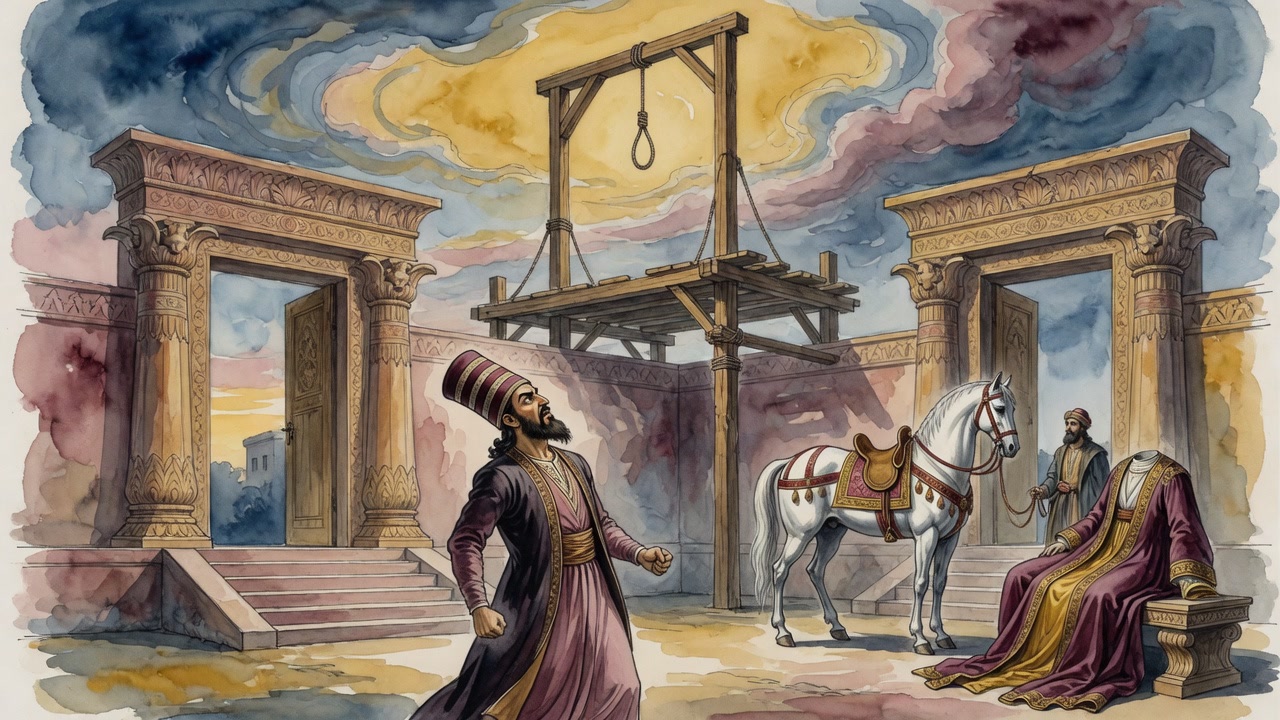
Haman went to the king at dawn to request Mordechai's execution. He left with orders to lead Mordechai through the streets in royal robes. The angels were watching. So was Elijah. And the wood Haman used for the gallows came straight from the Holy Temple.
The rabbis of Esther Rabbah read between the lines of a Persian feast and found something terrifying — the angels of heaven pleading with God to save the priestly rites before a drunken king erased them.
When Haman fell on Esther's couch, it was not an accident. An archangel arranged it, and ten angels in disguise were tearing apart the royal garden.
Esther was too weak from fasting to reach the royal scepter. A midrash says the archangel Michael had to stretch out her arm for her.
Before Haman drove a single nail, God called a cosmic council and asked the trees of creation which one would volunteer as the instrument of his destruction.
Before Esther could save her people, God had to remove the queen who came before her. He sent seven angels to make Ahasuerus act like a fool.
The rabbis asked why Vashti's downfall came on the Sabbath. The answer was that the day she desecrated became the day of her punishment.
When Haman killed their go-between, God sent Michael and Gabriel to carry messages between Mordecai and Esther in the Persian palace.
After his public humiliation leading Mordecai through the streets, Haman's own wife and counselors delivered the cruelest verdict of all.
When Esther raised her hand to accuse Haman before the king, her finger almost landed on Ahasuerus himself. An angel intervened.
When Darius arrested Daniel for the missing Temple vessels, God did not wait for a trial. An angel arrived and the king went blind on the spot.
Daniel saves a condemned woman by cross-examining her false accusers. Then decades later, he faces execution and a prophet flies across the sky to feed him.
A feast in Babylon becomes a tribunal when God's hand writes on the wall. Daniel delivers the verdict. That same night, the king is killed with his own sword.
Before Nebuchadnezzar destroyed Jerusalem, he ran three steps to correct a letter that disrespected God. Gabriel stopped him. Those steps were the reason.
Zerubbabel was shown the future by the archangel Metatron. Then he made one comment about Daniel and the rabbis never let him forget it.
The angel Uriel took Ezra back past creation itself, past silence, past darkness, to show him how the same God who made everything will unmake and remake it.
Thirty years after Babylon burned Jerusalem, Ezra could not sleep. He put God on trial and demanded an answer. The angel who responded refused to give him one.
Ancient Jewish texts describe a divine council where 70 angels serve as the celestial representatives of the world's 70 nations — arguing, fighting, and sometimes falling when their nations fall.
The Babylonians burned the First Temple in 586 BCE — but the midrash says they had help. God's own angels had been waiting for the command, and when it came, they were the ones who lit the match.
No sage in Jewish legend walked as many hidden corridors as Rabbi Joshua ben Levi — guided by the prophet Elijah through the chambers of Gehinnom, the gates of future Jerusalem, and finally into Paradise itself.
Rabbi Ishmael looked like an angel because he was. His mother immersed eight times. Each time a black dog blocked her. The ninth time Gabriel was at her door.
When God told the Angel of Death to grant Rabbi Joshua any wish, the rabbi asked to see paradise. Then he jumped over the wall and grabbed the angel's sword.
Rabbi Shimon bar Yochai needed Rome to rescind its decrees against Israel. His ally was Ashmedai, king of the demons. What happened next went far beyond politics.
Michael is Israel's heavenly protector. He is also the angel who escorted them into exile. The tradition holds both truths, and the tension is the whole story.
Rabbi Akiva gave Rabbi Ishmael a piece of wool and instructions that bordered on impossible. The mystery was not the cloth -- it was what touching it revealed.
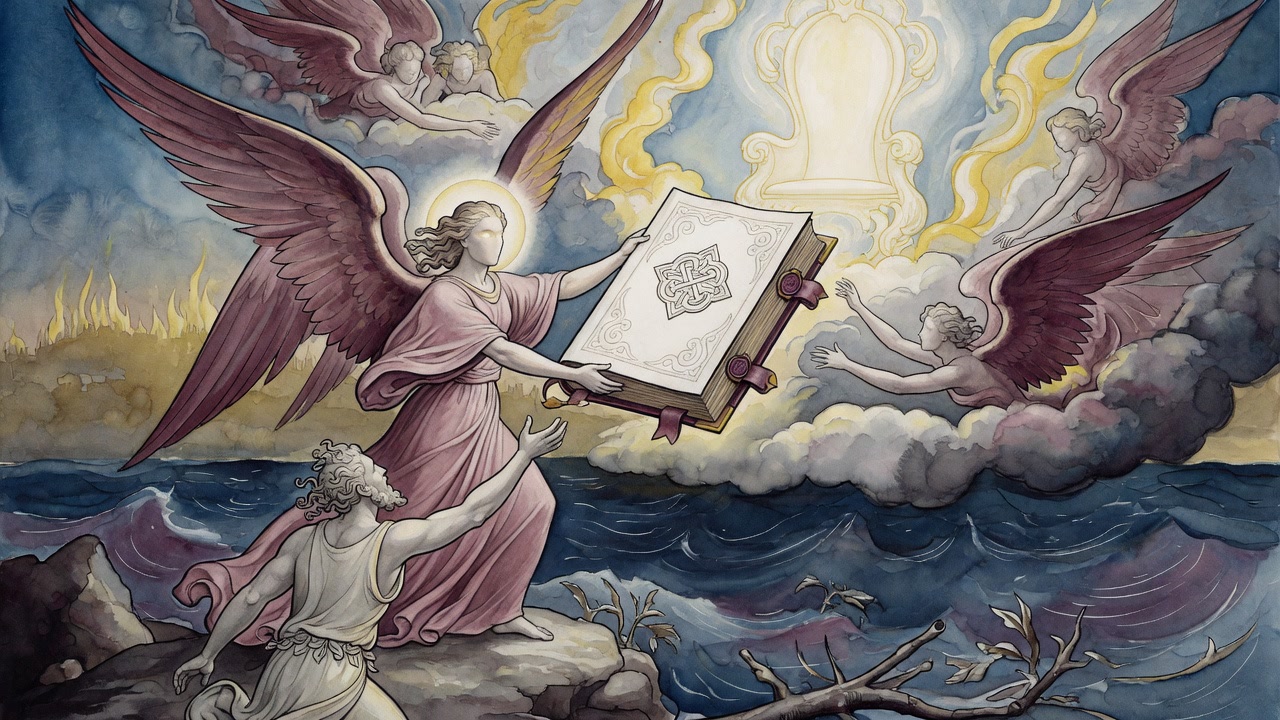
When Adam was cast out of the Garden, he didn't leave empty-handed. According to Jewish legend, the angel Raziel brought him a book containing every secret of the universe.
An angel gave Adam a book of secrets outside Eden. The other angels were furious. What happened to that book is one of the strangest chains in Jewish mysticism.
Most people think Moses came down Sinai with the Torah. A late antique Jewish mystical text says he came down with a second thing and gave it to an angel.
In the fourth heavenly palace, angels gather at Sabbath tables and are watched. Joy is rewarded with protection from the River of Fire. Failure earns something worse.
When God announced He would make a human, the angels said no. He destroyed two entire angelic companies before the third group agreed to comply.
Samael was not just a tempter. The Kabbalists found him woven into creation itself, embedded in the very music of the Torah.
The Heikhalot Rabbati preserves a vision so overwhelming that Rabbi Ishmael's return triggered a feast and a proclamation against Rome.
Everyone knows Metatron was once Enoch, the man who walked with God. But the Zohar preserves an older, stranger claim — Metatron existed before the world.
In the fourth heaven stands the Temple never destroyed. Michael is its high priest. The Sefer HaBahir says God built the whole structure alone, without angels.
When Eve offered the forbidden fruit to every living creature, one bird refused. God heard, and promised that bird eternal life.
Heaven protected Rabbi Hananya by switching his place with the emperor overnight. Rabbi Ishmael also knew what happened to those who ascended unprepared.
In the Tikkunei Zohar, the most feared angel in heaven is not expelled from God's presence. He is given the Torah and told to study.
The Harba de-Moshe, a 7th-century mystical text, records how God gave Moses a weapon made entirely of divine names, transmitted through a chain of angels.
She emerged from the crevice of the deep. She rules Zemargad with fire below her waist. Two traditions reveal the full terror and sovereignty of Lilith.
God gave Adam a book before leaving Eden. Generations later, Noah used it to build the ark. This is how a book of heavenly secrets crossed the flood.
The Tikkunei Zohar uses the image of a bird's nest to explain the role of Metatron, the great angel stationed between the divine throne and the human world, holding the space between heaven and exile.
Most people have never heard of Sandalphon, the angel standing taller than a five-hundred-year journey, whose sole task is to weave human prayers into a crown for God. The Tikkunei Zohar reveals what happens to your words after you speak them.
Before a soul enters a body, the angel Metatron teaches it the entire Torah. The moment of birth is also the moment of forgetting. The Tikkunei Zohar explains what this erasure is meant to accomplish.
Samael did not destroy the Temple. He celebrated the destruction. The Tikkunei Zohar distinguishes between the angel who enables catastrophe and the humans who cause it, and the difference matters enormously.
Jewish tradition maps the cosmos into seven layered heavens, each with its own purpose and its own angelic staff. Michael, prince of the highest heaven, does something no one expects of an archangel: he collects human prayers and brings them before God like an offering.
The rabbis said Metatron's name is like that of his Master. This baffling claim sits at the center of the most dangerous question in all of Jewish mysticism.
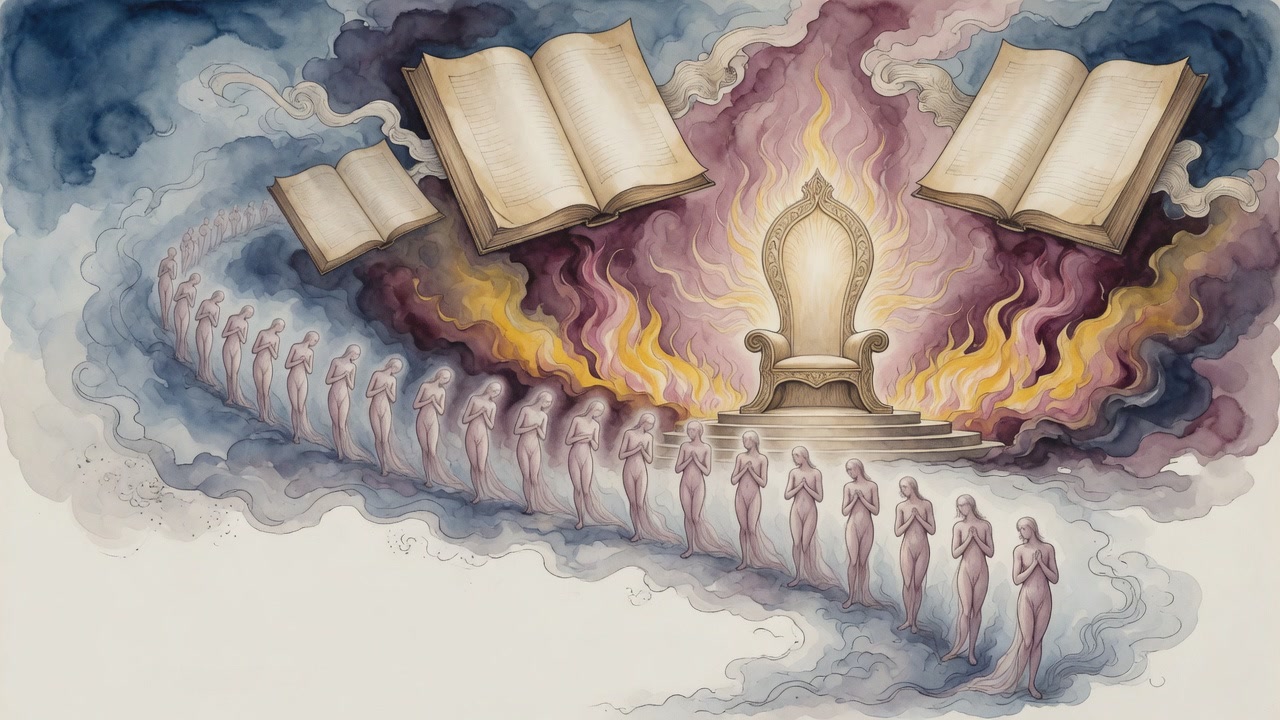
The Jewish New Year is not a celebration of another year — it is the day all of humanity passes before God's throne one by one, like sheep counted before a shepherd.
For 243 years Enoch reigned over 130 kings and taught wisdom. A divine voice then summoned him. Eight hundred thousand men followed. Only he did not return.