Sodom Built an Economy of Cruelty Against Strangers
A girl in Admah hid bread for a stranger. The city smeared her with honey and hung her on the wall. Her cry reached heaven before she did.
Table of Contents
The stone hit Eliezer in the forehead and opened him. Blood ran into his eye. The man who had thrown it did not run. He sued.
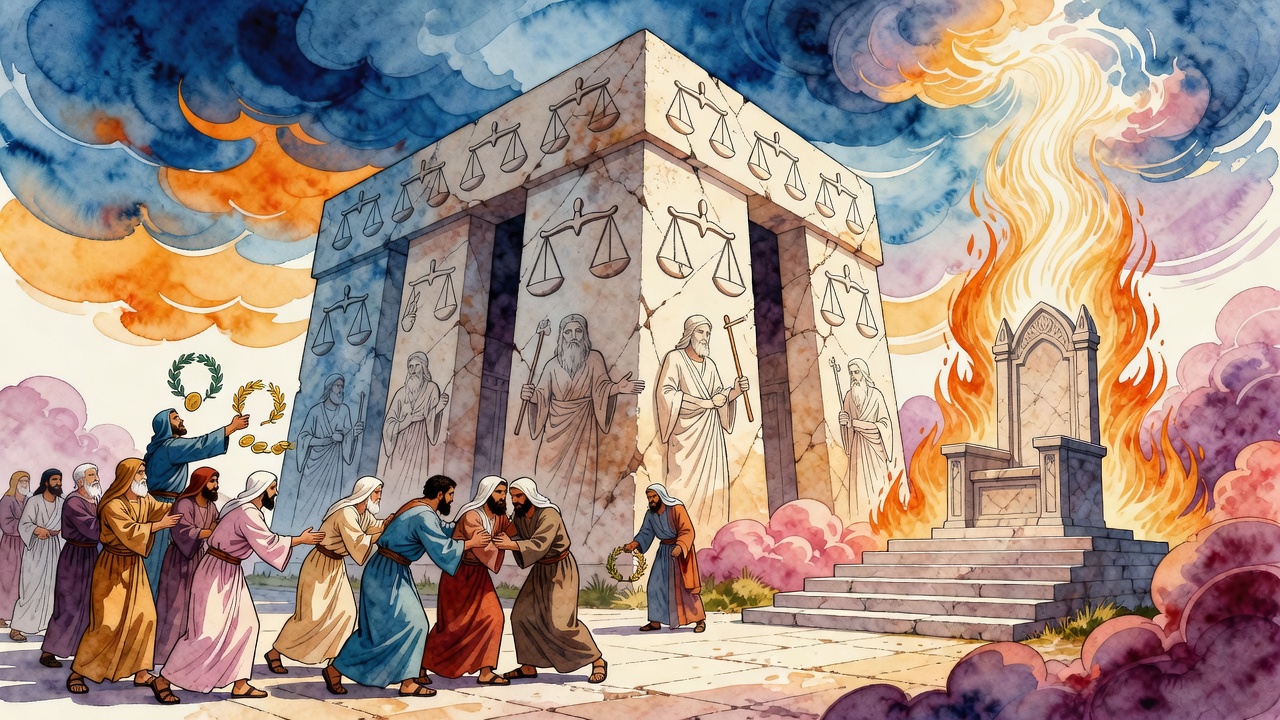 Click for full size
In Sodom a wound was a bill. The striker claimed the physician's fee for blood-letting. The court agreed. Kindness toward a stranger was the crime. Injury to a stranger was a service, and services were paid.
The Judges Had Names
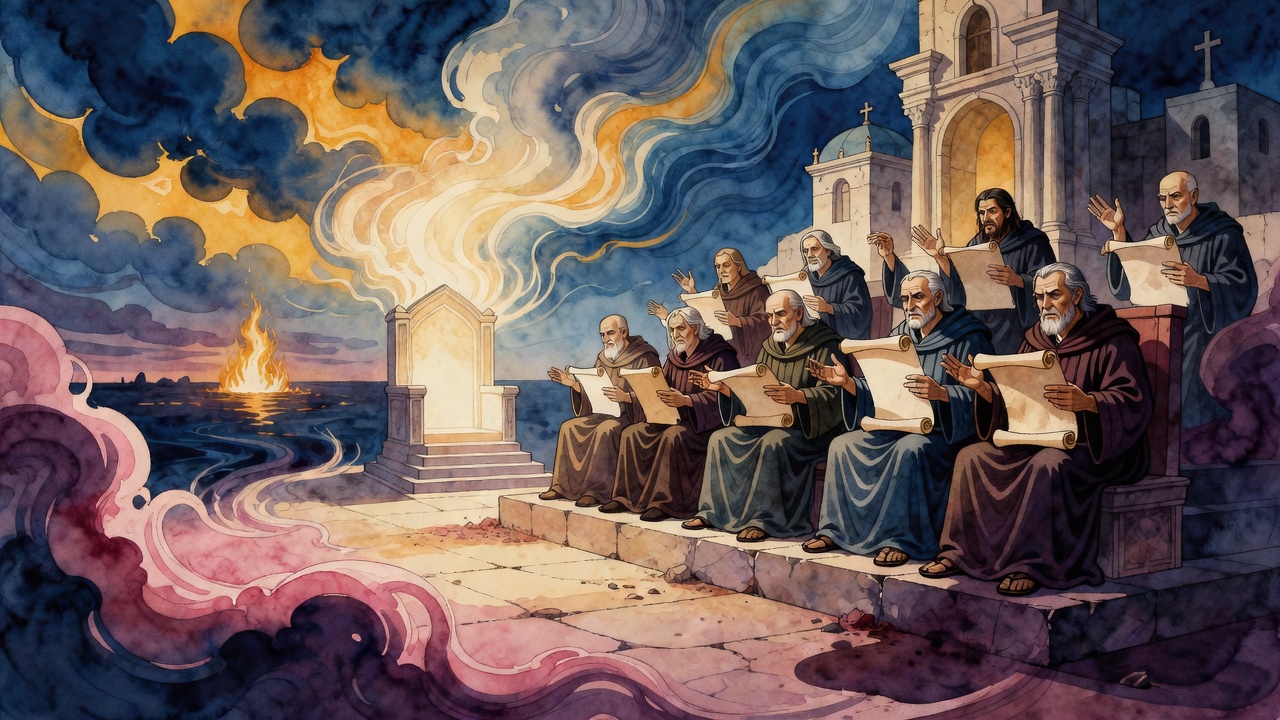
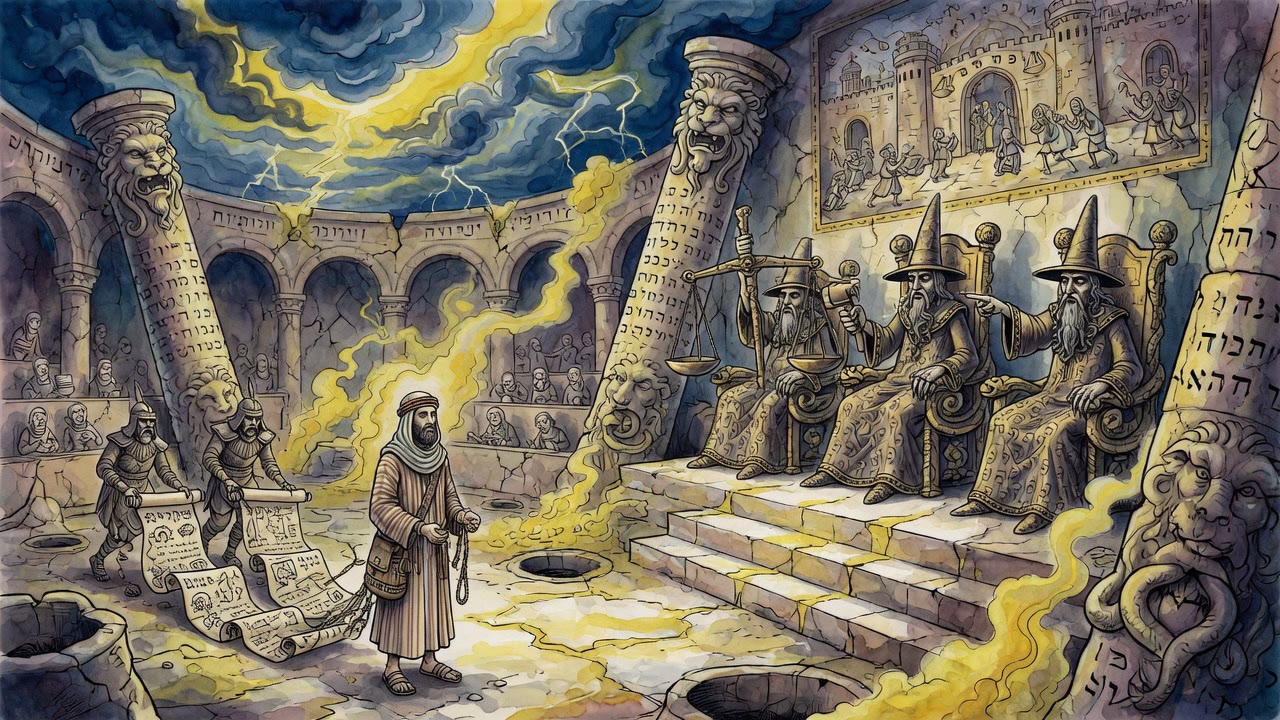
Sodom did not collapse into cruelty by accident. It administered cruelty. Four judges ran the city-federation. Serak sat in Sodom proper, Sharkad in Gomorrah, Zabnac in Admah, Menon in Zeboiim.
Eliezer, servant of Abraham, renamed each one as he met them. Shakra: Liar. Shakrura: Habitual Liar. Kezobim: Deceiver. Matzlodin: Wanderer-in-Falsehood. He did not need a sermon. He had looked at the officials.
Sarah had sent him to check on Lot. He walked in expecting a nephew's house. He found a legal system built to punish anyone who arrived hungry.
Coins That Could Not Buy Bread
On the street a traveler still stood, coins in both hands, rocking on his feet. The coins were marked with the names of the men who had given them. The giving had been public, warm, almost festive. Then a proclamation had gone through the city: sell this man nothing. No bread. No water.
Eliezer watched the man sit down. The law required only patience. When he died, the citizens would come back, reclaim their marked coins, and argue over the clothes. The marked money always came home.
Farther on, six men were working a public bed. A stranger had been laid on it and measured. He was too short. They stretched his limbs toward the posts. He screamed. The judges offered the same words they offered every time: "This is our hospitality to those who come into our land."
If a man was too long, they folded the sides in, or cut what did not fit. Word had spread. Strangers stopped coming of their own will, which suited the city perfectly.
Admah Hung a Girl for a Loaf
In Admah, one of the federated cities, a young woman of a wealthy household gave bread and water to a wandering stranger. The townspeople found out. They brought her before the judge. She was condemned to death.
The method was public and slow. They coated her in honey and hung her at the city wall for the bees and the flies, so that every resident would understand what charity cost in Admah.
She cried. The cry went up. God heard it. That sound tipped the verdict from deliberation into finality.
Eliezer Paid the Judge in Kind
Eliezer found the single weakness in a court designed to harm strangers. It could be used on its authors.
When the Sodomite who had struck him sued for the physician's fee, Eliezer listened to the verdict. Then he picked up a stone, opened a wound on the judge's forehead, and asked the Sodomite to collect from the judge what he was owed for that service.
The judge could not answer. The law had been turned against its own mouth with complete precision.
Eliezer did not stay to enjoy it. He was a visitor. He went home. The courts of Sodom went on functioning exactly as they had been designed to function.
The Sky Opened on the Sixteenth of Nisan
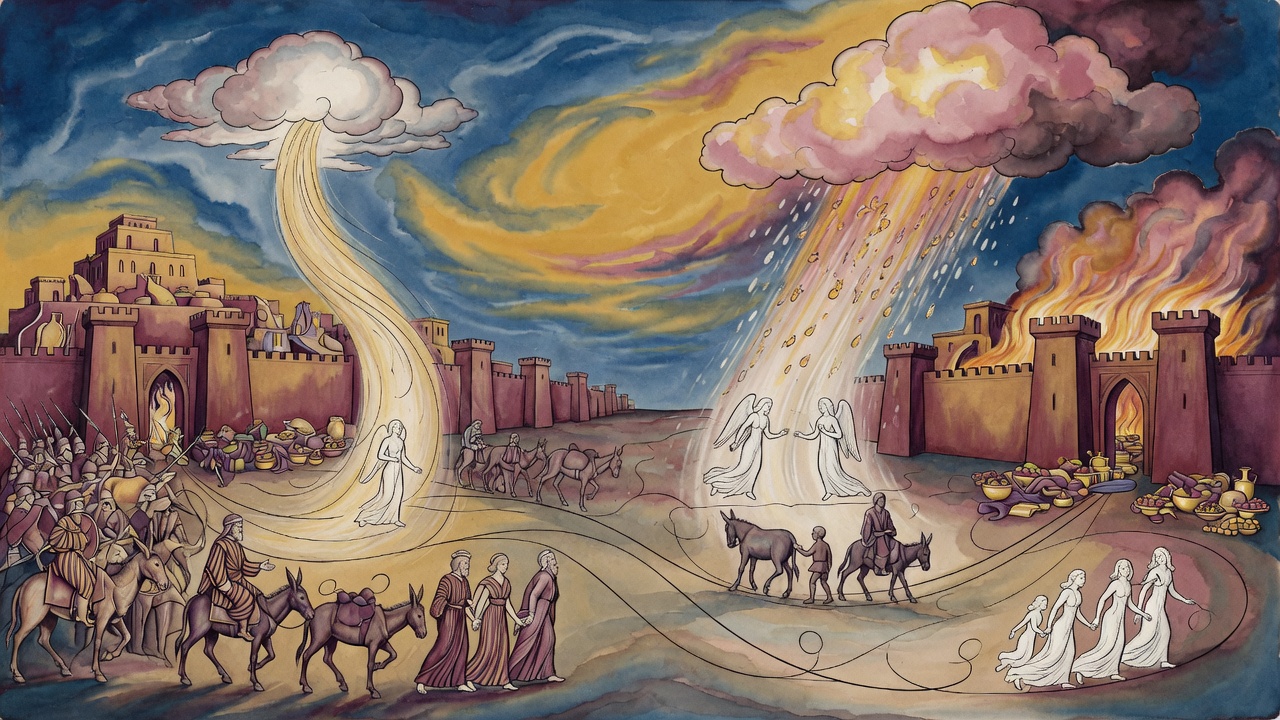
They went on functioning until the morning of the sixteenth of Nisan, when fire fell on every city that had built those courts.
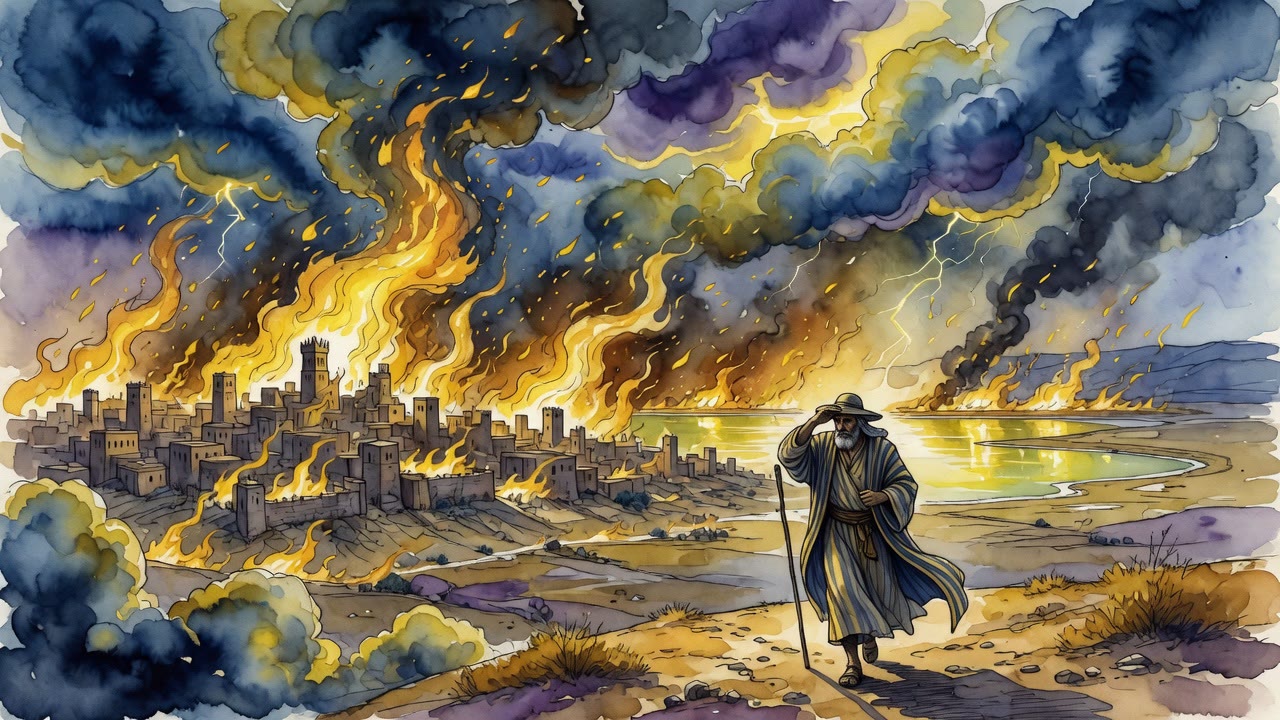
God burned them with fire and brimstone and destroyed them until this day. The girl on the wall was already gone when the sky opened. Her cry was not. Lot got out. The cities of the plain did not.
The marked coins melted. The iron beds warped. The judges' names lasted only as insults Eliezer had given them on his way through.
← All myths