Ishmael Was Cast Out and an Angel Found Him Dying
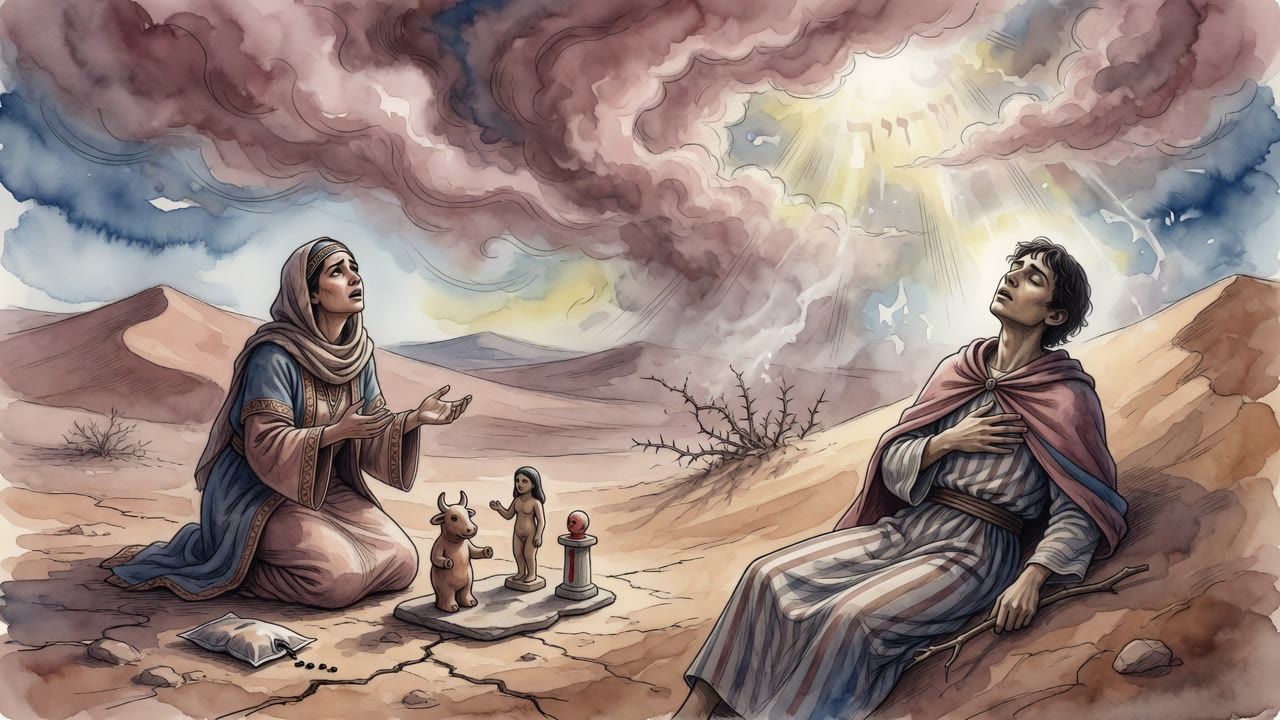
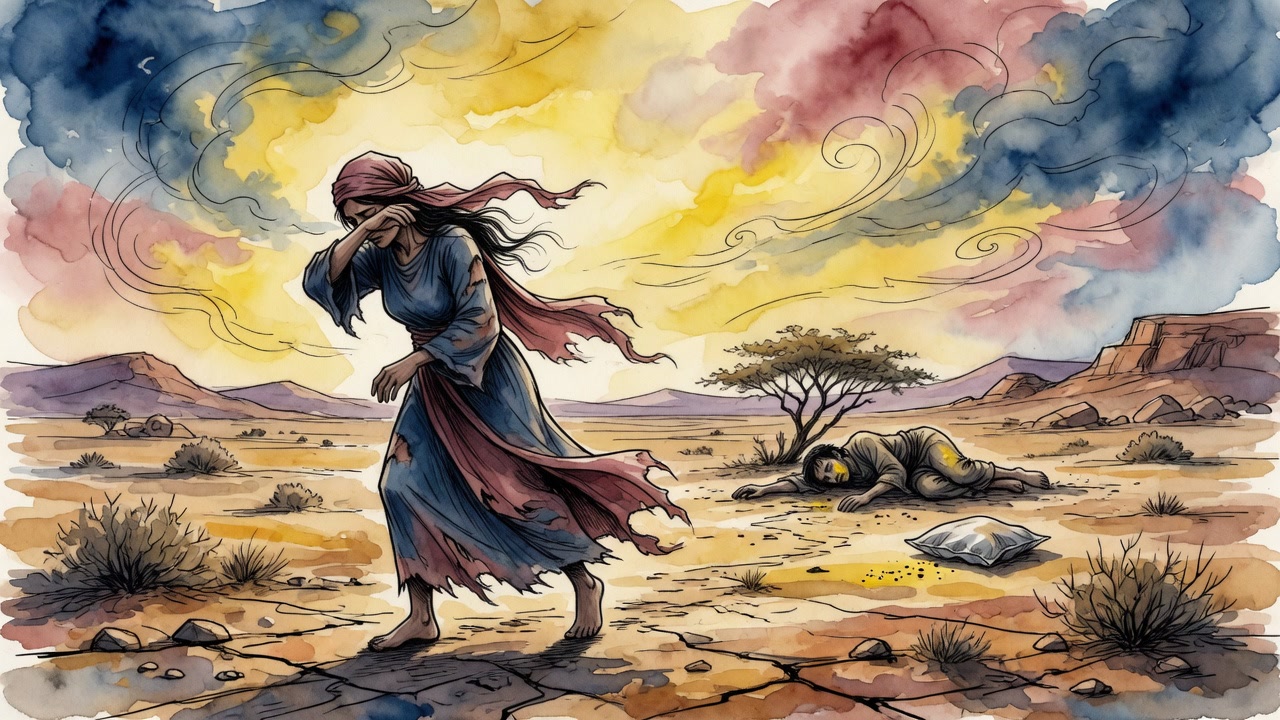
The skin was empty. Hagar put Ishmael under a shrub so she would not watch him die. He was still crying when the angel called her name.
Table of Contents
 Click for full size
She Walked a Bowshot Away
Sarah said it in the camp, after she saw the older boy laughing at the feast for Isaac. "Cast out this bondwoman and her son, for the son of this bondwoman shall not be heir with my son, with Isaac" (Genesis 21:10). God told Abraham to listen to her. Abraham rose early the next morning, as if speed could make the thing kinder.
He took bread and a skin of water and laid them on Hagar's shoulder. He put the boy in her arms. He sent them out. He did not walk with them past the last tent.
The skin lasted into the heat and then it did not. Hagar set Ishmael under a shrub in the desert of Beersheba and measured a bowshot with her feet. Far enough that she would not have to watch him die. Close enough that the dark heap of him was still a shape on the sand. She sat down with her back to the shrub. She covered her face. She wept because she was a mother, and because the water was gone, and because this was the second time the household had put her on the road.
The first time she had been pregnant, running toward Shur. An angel found her at a spring and told her to go back, and to name the son she still carried. This time no one turned her around. She had the named son, an empty skin, and a shrub.
The Boy Who Would Not Be Quiet
She thought he had gone silent. He had not. Ishmael cried out to God. Not a recited prayer. A child's voice, raw, thrown at the sky as if the sky were a person who might still answer. His lips were cracked. He had not agreed that this was the end of him.
The tents behind them had already chosen. Isaac stayed. Ishmael walked. God knew this boy. God had named him before his birth. God had not gathered him. For Ishmael and his sons and his brothers and Esau, the Lord did not cause to approach Him, and He chose them not. They were Abraham's children. He knew them. He set Israel apart from among the children of men. The cry went up from under the shrub anyway.
An Angel Called Her by Name
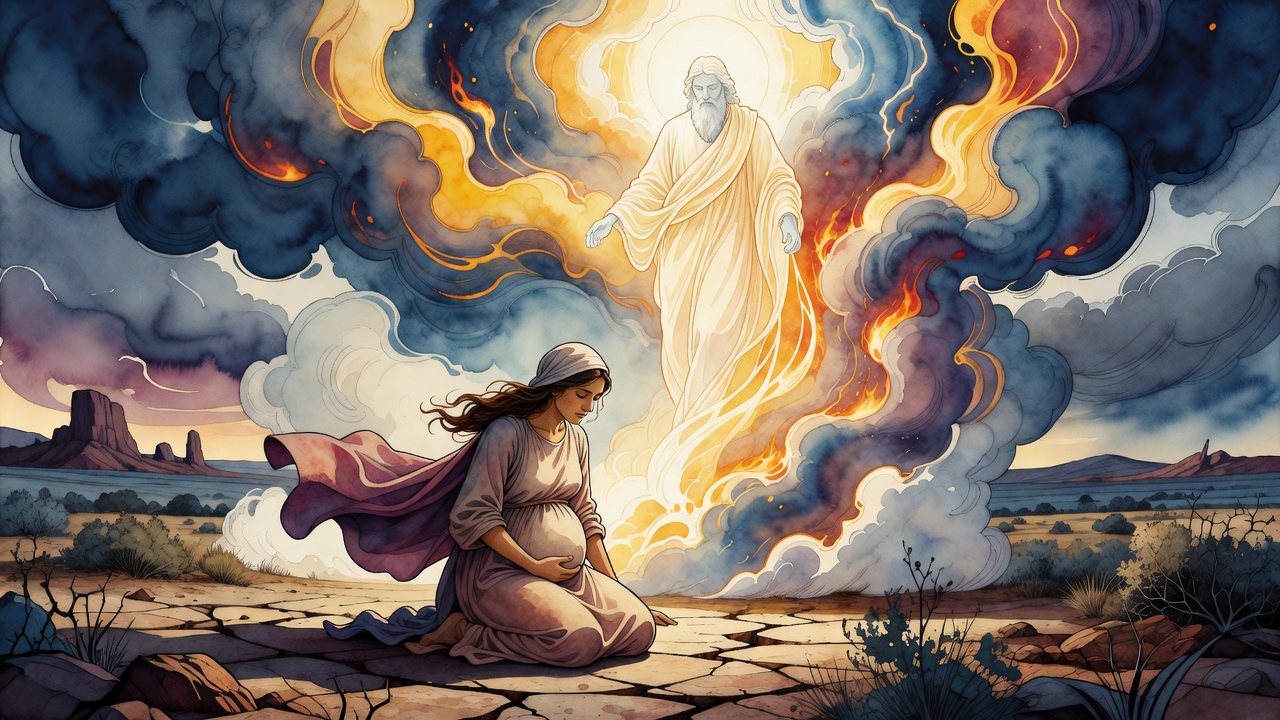
An angel of God, one of the holy ones, stood over Hagar and said, "Why weepest thou, Hagar?"
He used her name. The sand had not erased it. She was still Hagar, still a person heaven could locate in a waste with no road.
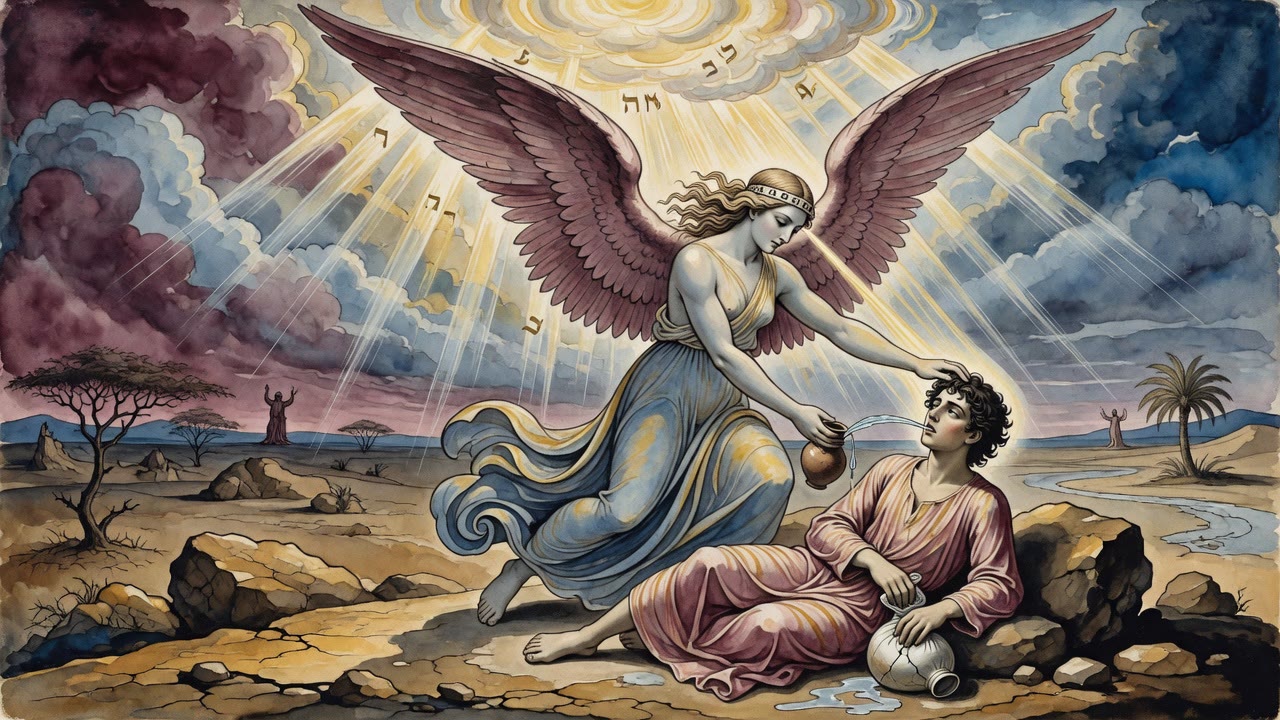
"Arise, take the child, and hold him in your hand, for God has heard your voice and has seen the child."
Ishmael means God hears. The name had been waiting since the spring on the road to Shur. It did its work now. God heard a mother. God saw a boy under a shrub. The angel did not reopen the covenant. The angel told her to pick her son up.
The Well Was Already There
God opened her eyes. A well of water sat in reach. It had been sitting there while she walked a bowshot away so she would not have to watch him die. She had not seen it. The angel did not dig. The angel did not call water out of dry ground. He turned her face toward what grief had made invisible.
She filled the skin. She went back to the shrub. She lifted Ishmael's head and gave him drink. Color came back into his mouth. He swallowed. He lived.
She held him the way the angel had ordered, in her hand, as if a child heaven had just noticed might still slip if she loosened her fingers.
Twelve Sons in Paran
They walked toward the wilderness of Paran. Ishmael grew there. He learned the bow until a man could hear the string from a long way off. God was with him in that waste, the same God who had not caused him to approach. An Egyptian woman became his wife. She bore him a son, and he called the boy Nebaioth, because she said, "The Lord was nigh to me when I called upon him."
More sons followed. Twelve princes. They had names, camps, flocks, a map of their own. They were not brought near. They were not empty. The boy who had been laid under a shrub to die became a man whose mother could say, without lying, that God had been near when she called.
The tents of Isaac remained the tents of the covenant. The well in Beersheba remained a well. Both stayed where they were.
← All myths