438 texts · Page 1 of 10
Ben Sira, also known as Ecclesiasticus, is a book of wisdom literature, a treasure trove of insights into Jewish thought and practice, though it's not included in the Hebrew Bible'...
We're going to delve into a text that's both familiar and strangely… different. A book that whispers of secrets given directly to Moses on Mount Sinai. I'm talking about the Book o...
It’s a question that echoes through millennia, a yearning woven into the very fabric of Jewish tradition. And it’s a theme that resonates powerfully in the Book of Jubilees. Imagin...
The Book of Jubilees, a fascinating ancient text excluded from the standard biblical canon but considered scripture by some, speaks to this very human struggle. It offers a powerfu...
Where does that come from, really? We find a fascinating glimpse into its ancient roots in the Book of Jubilees. Now, the Book of Jubilees is a fascinating text, considered part of...
The Book of Jubilees, treasured as scripture by some ancient Jewish communities like the Essenes of Qumran, retells the Torah with a storyteller's eye for detail — and chapter 6 li...
It’s a question that’s sparked imaginations for millennia. And while the Torah gives us broad strokes, some ancient texts offer a surprisingly detailed picture. One of those texts ...
There are moments in the Torah where the sky seems to split open and a promise falls through. Chapter 15 of Genesis is one of them. In it, God binds Himself to Abraham with a coven...
It's explored in fascinating detail in texts like the Book of Jubilees. Now, the Book of Jubilees, for those unfamiliar, is an ancient Jewish text that retells the stories from Gen...
It's easy to skim over those verses in Genesis, but the Book of Jubilees gives us a peek into his immediate reaction. The text tells us, “And Abraham fell on his face, and rejoiced...
We're in the aftermath of a huge moment: God’s promise to Abraham. But it's not just any promise; it's a covenant. A sacred agreement. God tells Abraham, "My covenant shall I estab...
Let’s talk about brit milah, circumcision, and a fascinating text called the Book of Jubilees. This ancient Jewish work, considered scripture by some but not included in the standa...
The Book of Jubilees, a fascinating text from around the second century BCE, offers a glimpse into just that. It paints a picture of a world teeming with angels, a world where the ...
This particular section, chapter 15, speaks of a profound covenant between God and the children of Israel, a covenant sealed with the act of circumcision – in Hebrew, brit milah. T...
We often read the stories of the Torah, of the Hebrew Bible, as one continuous flow, but sometimes pausing to consider when things happened adds a whole new layer of meaning. Take ...
That feeling resonates deep within a fascinating text called the Book of Jubilees. The Book of Jubilees, also known as Lesser Genesis, was widely read during the Second Temple peri...
In this ancient text, which some consider to be part of the broader Jewish apocrypha, we find a pivotal moment concerning Abraham, his wife Sarah, and a promise that reshapes the d...
Jubilees, considered scripture by some and an important historical text by others, paints a picture of Abraham's unwavering faith in the face of, let’s just say, a lot of challenge...
He said, "Because thou hast obeyed My voice, and hast not withheld thy son, thy first-born, but hast offered him up to Me, in order that I might make a great nation of thee, and (b...
The story of Abraham and the binding of Isaac, the Akeidah, is one of the most powerful and unsettling narratives in the Hebrew Bible. But the story doesn't end there. The Book of ...
It's one that the Book of Jubilees tackles head-on. Jubilees, for those unfamiliar, is an ancient Jewish text that retells the stories of Genesis and Exodus, but with a distinct pe...
More specifically, it's the year Abraham passed away. And where are his sons, Isaac and Ishmael? They’re making a journey. The Book of Jubilees, a text considered canonical by the ...
It’s a beautiful, almost intimate, scene from the life of Jacob, the patriarch who would become known as Israel. Specifically, we are looking at Chapter 22. Imagine old Jacob, his ...
Isaac, son of Abraham, certainly knew that feeling. Our story picks up with him journeying towards Gerar, a Philistine territory, seeking refuge with King Abimelech. (Jubilees 24)....
Our focus today is on Jacob, later to be named Israel, and a very specific moment in his journey. The text places him at the "Well of the Oath" – Beersheba in Hebrew – in a very pa...
The Book of Jubilees, an ancient Jewish text expanding on the Torah, speaks to just that feeling. It tells a story of wells, oaths, and the sometimes-difficult path to peace. We pi...
Sibling rivalry at its absolute worst. Well, the Book of Jubilees gives us a glimpse into the immediate aftermath, offering a comforting, if brief, look at Jacob's state of mind, a...
Let's take a little trip to the mountain of Gilead. We know it as the place where Jacob and Laban made their famous oath. We read in Genesis that they swore to each other they woul...
The story of Isaac and Esau, as told in the Book of Jubilees, definitely gives you that vibe. We pick up the story with Isaac, son of Abraham, having just returned from Beersheba, ...
Take the story of Jacob's sons and the city of Shechem. It's a brutal tale, full of moral complexities. And it's found not just in Genesis, but also amplified in other ancient Jewi...
That’s kind of where Isaac finds himself in the Book of Jubilees. really worried about his son, Esau. The text opens with a stark assessment: "…all his ways are unrighteousness and...
Some say it's gravity, others dark energy. But what about love? What about a mother's love, strong enough to bind even the most volatile relationships? The Book of Jubilees, an anc...
This ancient Jewish text, considered scripture by some, though not part of the standard Hebrew Bible, offers a fascinating expansion on the stories we know from Genesis. And in it,...
The Book of Jubilees, an ancient Jewish text expanding on Genesis, dives deep into such a betrayal, a family feud that echoes through generations. We find ourselves in the middle o...
That’s where Jacob found himself when he heard the news – unbelievable news – that his beloved son, Joseph, was not only alive but thriving in Egypt. Can you imagine the scene? His...
That feeling, that tension, is right at the heart of the story we find in the Book of Jubilees as Jacob, now also known as Israel, prepares to leave the familiar for the unknown. T...
You might find inspiration in the story of Judith. But before Judith herself takes center stage, there's a moment of divine imperative, a command echoing through the ages, setting ...
The people are desperate, their water supply dwindling, and their faith is being tested. The city leaders, Uzziah, Chabris, and Charmis, have made a desperate gamble: they've vowed...
Judith. She steps forward, a woman of courage and faith, and changes everything. And in Chapter 14, we witness the aftershocks of her incredible act. "Blessed are you in all the te...
That's the scene painted for us in the Letter of Aristeas, a fascinating text that purports to describe the translation of the Hebrew Bible into Greek, resulting in the Septuagint....
This is the world Megillat Antiochus throws us into. The story begins with a chilling proposition, whispered amongst the advisors of King Antiochus. "Come now," they urged, "let us...
Antiochus, king of the Seleucid Empire, knew that feeling all too well. Imagine this: you're a powerful ruler, used to getting your way. Then you hear the news: your viceroy, Nican...
That’s how I feel whenever I delve into Megillat Antiochus (Scroll of Antiochus). It's not part of the biblical canon, but it's a powerful, albeit brief, account of a dark chapter ...
This one, from Megillat Antiochus – the Scroll of Antiochus – is definitely one of those. It's a tale of unwavering faith and heartbreaking sacrifice, a testament to the strength o...
Our tale begins in the year 137 of the Greek kingdom. Now, this wasn't just any kingdom; it was the sprawling empire that Alexander the Great had forged, now fractured and ruled by...
That's the world the Maccabees faced. The Book of Maccabees I, a historical text from the Second Temple period not included in the Tanakh, paints a vivid picture. It throws us righ...
The story of Hanukkah, the festival of lights, isn't just about oil lasting for eight nights. It's a story etched in blood, faith, and unwavering defiance. Let's turn the clock bac...
We find ourselves in a time of great upheaval. The story unfolds in the First Book of Maccabees (I Maccabees 2), a historical account, not part of the Hebrew Bible itself, but deep...
God could have built the Ark instantly. Instead, according to the rabbis, Noah was commanded to build it slowly, publicly, and conspicuously — so that everyone watching would have time to ask why.
When God made the first covenant with Abraham, it involved a smoking furnace passing through dismembered animal carcasses at night. The rabbis describe what Abraham saw in that darkness — and it wasn't reassuring.
The negotiation over Sodom is the only moment in the Hebrew Bible where a human being openly haggles with God — arguing, lowering the threshold, and pressing for more. The rabbis asked why Abraham stopped at ten.
Joseph had Benjamin. He had all the power. He had his brothers exactly where he wanted them. Then Judah spoke — and what he said in that throne room made a viceroy weep.
Jacob called Judah a lion's cub and promised that the scepter would not leave his tribe until the final redemption. Two thousand years of Jewish history have not cancelled that promise.
A prophecy in Zechariah says two thirds of the earth will be cut off. The rabbis read it not as extinction but as a furnace the first murder began to heat.
Abraham grew old and was blessed in everything. David grew old and could not get warm. The midrash reads both endings as one long sentence.
In a country full of idols, Joseph's brothers identified themselves by a single sentence. The rabbis said the sentence was the covenant itself.
A tenth-century homily reads Job 36 as a portrait of Abraham. In the reading, the patriarch becomes the field hand who tells the landlord what is growing.
In the Apocalypse of Abraham, the Covenant Between the Pieces becomes a cosmic ascent. Abraham ends up in the seventh heaven looking down at the end of history.
Benjamin was the last son Jacob could bear to lose — but when famine pressed hard enough, even a broken father had to open his hands.
When Isaac brought Rebecca into his mother's tent, the cloud that had lifted at Sarah's death returned. The miracle of one woman passed to another.
Abraham had endured ten trials before he climbed toward Moriah. The ancient midrashim reveal how he recognized the mountain — and why news of a birth reached him at the summit.
The rabbis noticed that Abraham and Joseph share uncanny parallels — descent into Egypt, false accusations, emergence as righteous men — and wove these likenesses into a single theological argument about what it means to carry the patriarchal inheritance.
The rabbis of Bereshit Rabbah asked why the Torah describes Noah as walking with God while Abraham was told to walk before Him -- and their answer transforms two similar phrases into a map of two entirely different relationships with the divine.
Sarah's barrenness was not an accident and Hagar's flight was not a betrayal — the Midrash reads both women's choices as mirrors of the soul's encounter with something it cannot yet bear to face.
They gathered at their father's last feast as grown men who had inherited the same memory and drawn opposite conclusions from it — and the argument they had about circumcision ended in a prophecy neither expected.
From the Chronicles of Jerahmeel to Philo's Midrash to Bamidbar Rabbah, ancient sources draw a continuous thread between Adam's first cultivation of the earth and Noah's second — two men given the same task in two broken worlds.
The Apocalypse of Abraham, composed c. 1st–2nd century CE, records what happened when the patriarch was escorted to heaven by a luminous angel — how he sang a celestial hymn in midair, stood before the divine chariot, and witnessed what the Merkabah mystics would spend centuries trying to reach.
The night before the Binding of Isaac, Sarah dressed her son in her finest garments and wept until dawn — and the rabbis say she never recovered from what followed.
On the same stone where Adam first offered sacrifice, Abraham bound his son — and when Abraham later walked into a cave at Hebron, he discovered where the story had begun.
One ancient donkey carried Isaac to his binding on Mount Moriah, Moses toward Egypt to free a nation — and will carry the Messiah at the end of days. Three missions, one miraculous animal, one unbroken thread through Jewish history.
The Kabbalists read Jacob's wrestling match at the Jabbok as a lesson in prayer — the angel was not an opponent. He was an answer.
After Abraham's victory in battle, the two greatest men alive were afraid of each other. Their meeting transmitted the sacred knowledge of the Jewish calendar.
After the destruction of Shechem, seven Amorite kings march on Jacob's camp. It is Judah who finds the words his terrified father cannot.
Rebekah died while Jacob was away and Isaac was blind. The family buried her in secret, fearing what Esau's presence at the funeral would provoke.
Reuben forfeited everything through one act of dishonor. His final gift to his children was to point them toward the brother who would carry what he could not.
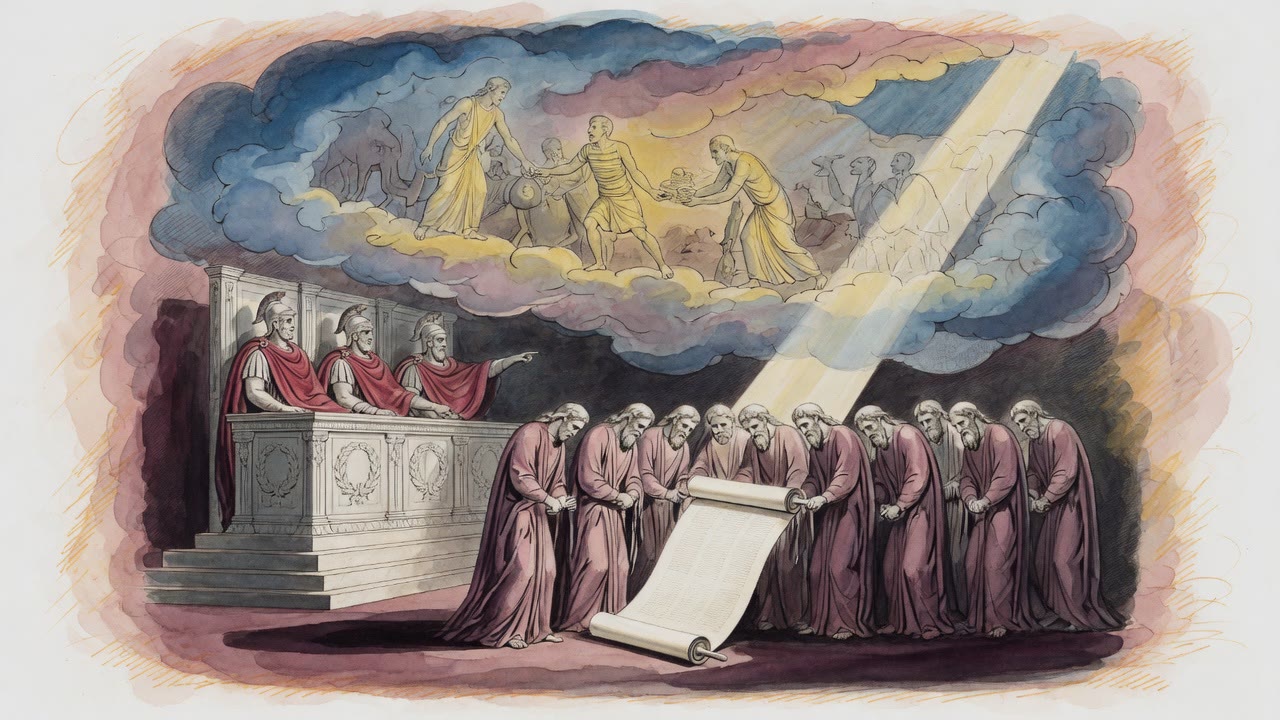
In Genesis 15, God hid a promise inside a single extra word. The rabbis found it in Bereshit Rabbah. Daniel lived inside the very empires that promise addressed.
Abraham didn't just choose an heir. He chose two people — Rebecca and Jacob — and wove their destinies together in a single act of prophecy.
Leah named her son Reuben — 'behold, a normal son' — but the rabbis heard something deeper: a prophecy threaded through every son of Israel.
When Isaac blessed Jacob at Beersheba, he was doing something older than Abraham — repeating the first blessing God ever spoke over a human being.
Three ancient sources — Midrash Tehillim, Sifrei Devarim, and Shir HaShirim Rabbah — agree on one thing: everything that came after Abraham traces back to him.
Methuselah asked his father what he wanted before departing. Enoch had seen all ten heavens, and his final words were about keeping your promises.
Esau married Judith from the family of Ham the moment he came back from hunting. Jacob was sixty-two and still unmarried, waiting for the right woman.
When Leah named her eighth child Asher, meaning praise, she was making a claim about herself no one had asked her to make. The rabbis thought she was right.
Two tribes, born the same night from the same tent, divided the world in two. One took the Torah, one took the sea. Together they kept both alive.
Pharaoh sent wagons to carry Jacob into Egypt. The wagons were decorated with idols. Judah burned them before his father ever laid eyes on them.
When Levi and Judah walked toward Isaac, the darkness over his eyes lifted. What he saw made him prophesy over them both, splitting the future of Israel in two.
Noah saw a rainbow and called it a promise. Solomon saw the same symbol and called it a doorway. The Tikkunei Zohar says they were both right.
The Tikkunei Zohar makes a startling claim: Jonah the prophet and the dove Noah sent from the ark are the same soul, reappearing across centuries to deliver the same message.
God could have commanded Abraham's circumcision at age twenty. He waited until ninety-nine. The Mekhilta says this was not about Abraham -- it was about every convert who would ever come after him.
God called Israel His firstborn son even as they multiplied into millions. The rabbis said the math of love does not work like ordinary arithmetic.
Israel in exile tried to blame everyone but themselves. The tradition said the way back home started with two words: I have sinned.
Abraham was 99 years old and afraid. The rabbis say God solved the problem by doing something no one expected: He reached down and held the knife with him.
The robes Jacob put on to deceive his father were not just old clothes. They were the priestly garments worn since Adam, passed down through every patriarch.
Most people think the patriarchs were servants. Aggadat Bereshit says something stranger: Abraham earned a seat beside God at the throne, as a counselor sits beside a king.
Why did God tell Abraham what He was about to do to Sodom? Not out of courtesy. Because Abraham had earned the seat of a trusted counselor beside the divine throne.
Abraham had stationed himself near Sodom for a reason. When God destroyed it, he didn't stay out of grief. He left because the reason he'd come was gone.
When Jacob counted Esau's royal line and despaired, God turned him around. What he saw behind him changed everything about how he understood his own place in history.
Abraham was born while Noah was still alive. The Book of Jubilees says he lived long enough to be the exception to everything that killed everyone else.
Noah had ten generations of descendants worthy of notice. God skipped all of them. The rabbis asked why, and the answer is stranger than you expect.
When Israel stood terrified at the Red Sea, the rabbis asked what finally moved God to split it. The answer was a promise made centuries earlier.
The Torah says God 'found' Abraham in a desert land. The rabbis asked: was Abraham lost? Their answer is stranger and more beautiful than the question.
After the Flood, Noah became the first teacher of a moral code. The covenant sealed with him was the same one passed to Abraham generations later.
Jacob refused to remarry after Rachel died, bound by an oath he believed extended beyond death. He carried that loyalty all the way to his grave in Machpelah.
God told Abraham about Sodom because the land was his. That made him a party to the verdict. Abraham used the standing he was given to argue for the condemned.
After twenty years of exile, wrestling angels and outmaneuvering his father-in-law, Jacob came home. The Torah uses one word to describe it: shalem. Whole.
Her name was changed from princess of one to princess of all. Her honor was restored by the man who had wronged her. God waited ninety years to keep his word to her.
Isaac never left the land of Canaan. He tithed when others hoarded, dug wells others filled with sand, and turned his enemies into his witnesses.
Jubilees warned that forgetting Shabbat would cost Israel everything. The Zohar said Israel's giving is what holds the cosmos flowing.
Jacob built an altar at Bethel on a new moon, visited Beersheba where his fathers had sworn oaths, and the rabbis saw in every stone a blueprint for the Temple.
Abraham was placed twentieth in human history for structural reasons. Kohelet Rabbah says he needed to arrive after the damage, not before it.
Ishmael was named by an angel before his birth, blessed with his own covenant, and still sent away — and the rabbis held both truths at once.
The rabbis saw the dove carry more than an olive leaf back to Noah — it carried the announcement that light had returned to a drowned world.
Bereshit Rabbah compared God's search for Abraham to a king sifting piles of dust for a lost gem — discovery, not reward, and not without cost.
Bereshit Rabbah and the Midrash of Philo trace Abraham's covenant from the first walk through Canaan to the fire that passed between the pieces.
Ben Sira and the Book of Jubilees describe how Abraham entered a covenant with God centuries before Sinai, sealed in flesh rather than written on stone.
Most people remember Esau as the brother who lost. The rabbis preserved something stranger: his argument that his blessing equaled Jacob's.
Jacob swore by the covenant of circumcision on his deathbed. Generations later, Israel moved so fast through the desert that eleven days became three. They were running toward a promise that started with Jacob's bones.
When God took Abraham outside to count the stars, something stranger happened — Abraham discovered the hidden language that built the universe.
The Book of Jubilees records God's declaration that one nation would be set apart to observe Shabbat. The choice was made at creation, long before Jacob's...
When Abraham arrived in Canaan he found it more beautiful than he had imagined. The Book of Jubilees and Sifrei Devarim together describe a man walking...
At age eighty-six, Abraham celebrated the Feast of First Fruits, blessed God for creating him in his exact generation, and named a festival. The Book of...
The Book of Jubilees says Ishmael was excluded from the covenant but also records the angel who found him dying in the desert and saved his life.
When Abraham arrived in Canaan, he did not know it was his. He built altars, muzzled his camels. The covenant was being lived before it was fully given.
When the flood ended, Noah refused to leave until God swore He would never flood the earth again. He had seen what happened last time.
When God swore by Himself at the altar, Abraham planted his feet and refused to leave until he had listed every unfulfilled promise between them.
After Abraham and Lot parted, God told Abraham to look north, south, east, and west. The land was the promise. The four empires were also the promise.
Isaac blessed Jacob in the dark and did not know what he was doing. God confirmed every phrase through the prophets, word for word, centuries later.
Isaac asked Abraham to bind him tightly so his fear would not ruin the offering. The same man later negotiated an imperfect but real peace with the Philistines.
Long before Sinai, Abraham gave a tenth of everything he owned at the harvest feast. The Book of Jubilees says this quiet act was how the tithe began.
After defeating four kings, Abram refused the spoils and came home to what victory could not fix: he had no son, and every promise felt hollow without one.
Abraham spent an afternoon chasing birds from his sacrifice at Mamre. At sunset in horror, God told him his seed would be slaves for four centuries.
Between the cut animals, a deep sleep fell on Abram. What he saw was not a promise first. It was a nightmare about exile and four crushing kingdoms.
The soup was real. So was the hunger. But Jubilees and the Midrash say Esau traded away his burial place beside the patriarchs along with his inheritance.
While Jacob was in Mesopotamia, Esau moved to Mount Seir and left their aging father behind. Jubilees marks this as the moment Esau sealed his own path.
When famine struck, Isaac planned to go to Egypt. God stopped him. A sacrifice removed from its sanctuary becomes invalid. His consecration bound him to Canaan.
Laban searched the camp for his stolen idols. Jacob swore the thief would not live. He did not know Rachel had hidden them. She died giving birth to Benjamin.
When Noah lay uncovered, Shem moved first to cover him. Japheth followed. Ham did nothing. That difference decided the inheritance of the sacred world.
Sarah offered Hagar to Abraham after ten years of childlessness. The texts reveal a woman acting with precision, not desperation.
Esau was born with a beard, fully formed, blood-red, bearing the mark of a serpent. Every sign at his birth pointed toward what he would become.
When Israel and the angels both wanted to sing God's praises at the sea, God stopped the angels. His children had earned the first word.
The Mekhilta reads the Sabbath commandment in Exodus 31 not as a schedule but as a signature, the sign of the covenant between God and Israel that marks them as distinct from every other nation. Rabbi Nathan's teaching that one Shabbat can purchase a lifetime of observance transforms the theology of the day entirely.
When Abraham spotted three travelers near his tent at Mamre, he ran to greet them though he was recovering from circumcision. The rabbis say his eagerness to welcome strangers became a founding act of Jewish law.
When all of Israel was ready to flee Egypt, Moses spent three days searching for a coffin. A woman named Serah bat Asher, who was older than the Exodus itself, knew exactly where it was.
Jewish tradition insists that the altar at Mount Moriah was not built by Abraham. Adam built it first, then Noah rebuilt it, then Abraham found it waiting. One altar holding three covenants across the span of human history.
The night God renamed Abram as Abraham was not a simple ceremony. It was a transformation that the stars themselves witnessed, and it carried a secret about prophecy that the rabbis preserved for centuries.
Isaac knew what Esau was. He had watched his son sell the birthright, marry foreign women, and abandon every obligation of the covenant. And still, on what the rabbis understood as the last day of his life, Isaac clasped Esau's head in his hands and begged God for his soul. The answer was no.
When God promised Abraham that his descendants would be enslaved in a foreign land, He also set a limit on how long that foreign land's power could last. Pirkei DeRabbi Eliezer preserves a tradition that God places fixed limits on the duration of empires, but only under two specific conditions, and the Egyptian bondage was one of them.
The word 'chosen' sounds like favoritism. The rabbis of Sifrei Devarim knew it wasn't. They traced the same verb from the priesthood to the entire nation and found something far stranger than privilege.
Shemitat kesafim, the sabbatical cancellation of debts, was meant for a society rooted in the land. When the rabbis of Sifrei Devarim extended it to Jews living far from Israel, they were making a claim about Jewish ethics that had nothing to do with geography.
Rachel and Leah were born in Aram, not Israel, and married a patriarch before Sinai. Sifrei Devarim's legal analysis of the matriarchs reveals that the rabbis thought very carefully about what it meant for a woman to join the covenant, and what protections that status created.
When Moses begins his final speech with 'Listen, O heavens,' Sifrei Devarim reads this not as poetry but as legal procedure. Heaven and earth are summoned as witnesses to the covenant, and their testimony will last as long as they exist.
After defeating four kings, Abraham did not celebrate. The ancient Aramaic tradition records that he fell into an existential crisis, convinced that his military victory had exhausted his spiritual account and left nothing for the world to come.
The Torah calls Hagar a maidservant. The ancient Aramaic tradition calls her a daughter of Pharaoh, Egyptian royalty who gave up a palace to serve in Abraham's household, and whose descendants would number more than the stars.
The Torah says Abraham fell on his face when God spoke to him. The ancient Aramaic tradition says he fell because his uncircumcised body lacked the spiritual capacity to remain upright in God's presence. The covenant was not just a sign. It was a transformation.
The Torah says Sarah saw Ishmael playing and demanded he be sent away. The ancient Aramaic tradition says she saw him worshipping an idol, and that her prophetic vision was what drove one of the most painful decisions in Abraham's life.
The Binding of Isaac is usually told as Abraham's test. Targum Jonathan, the ancient Aramaic translation composed in first-century Palestine, reveals that Isaac was no passive child at Moriah. He was thirty-seven years old, and he asked for it.
Genesis says Rachel stole her father's household gods. Targum Jonathan reveals what those gods actually were: a preserved severed head, packed with salt and incantations, that Laban consulted as a necromantic oracle. Rachel took it to protect Jacob.
Genesis 38 already contains one of the Torah's most stunning reversals. Targum Jonathan makes it more stunning still, identifying Tamar as a descendant of Noah's righteous son Shem, explaining why Judah's sons died, and describing how God intervened to save the lost evidence that proved her innocence.
Long before Jacob wrestled any angel, the covenant God made with Abraham had already shaped the terms of his judgment. Every blessing he received came with a verdict attached.
Jacob's deathbed scene was not about blessing or inheritance. It was about one terrifying question a father could not take to his grave unanswered.
Jacob built altars, made vows, and offered sacrifices long before the Temple existed. The rabbis asked why, and the answer turned out to be about what the Torah itself was doing in his hands.
The same land Jacob swore his bones would rest in was the land Elijah fled across in despair centuries later. They were both keeping faith with the same covenant, but on very different days.
When Noah emerged from the ark and planted a vineyard, the rabbis saw something stranger than a man celebrating survival — they saw a prophet encoding a vision of the end of days.
Before Abraham received his divine promise, the descendants of Ham's cursed son Canaan had already occupied the land — and Jewish tradition says they knew they had no right to it.
Before God created the world, the Torah existed as a cosmic blueprint. The Tower of Babel was not merely political arrogance — it was an attempt to rebuild the world on a different set of plans, without the architect's permission.
Noah survived the flood but his covenant did not reach Isaac. Ishmael received circumcision but not the promise sealed with it. Both exclusions were built into creation before the men themselves were born.
Lot chose Sodom when Abraham chose Canaan. He seemed to step out of the patriarchal story entirely. But the rabbis of Bereshit Rabbah show how Lot's descent was built into the covenant from the beginning, carrying something the patriarchs themselves could not carry alone.
The rabbis of Bereshit Rabbah and the Zohar make a stunning claim: Sarah's greatness was not derived from Abraham's. She was named and prepared at creation independently, a prophetess whose vision exceeded her husband's and whose role in the covenant was primary, not secondary.
The Book of Jubilees makes a stark distinction between Ishmael and Isaac — and behind that distinction lies an ancient theology of creation that assigned the sons of Abraham to fundamentally different cosmic roles.
Dinah's story is told in a single chapter of Genesis — but the Book of Jubilees and its heavenly tablets tradition show that what happened at Shechem was not just a family tragedy. It was a test of whether the covenant could survive contact with the world outside it.
Both Noah and Jethro were called righteous before and beyond the Torah's formal boundaries. The tradition asks the uncomfortable question their stories raise: what does righteousness mean for everyone who was never invited in?
God promised Abraham the land of Canaan -- but Abraham never owned more than a burial cave. The promise was real. The fulfillment was three generations away.
The Book of Jubilees reveals that Rebekah's destiny was not chosen by Isaac but written in the heavenly tablets before creation — and what was written there was merciless.
The Book of Jubilees doesn't condemn Esau for selling his birthright for soup — it reveals that Abraham saw the problem decades before the bowl was even on the fire.
When Abraham blessed Jacob in the Book of Jubilees, he wasn't composing something new — he was passing down the original blessings of creation itself, the same words first spoken over Adam in the Garden.
When God renamed Sarai to Sarah, most readers assume it was a formality. The Midrash of Philo argues it was the most transformative act in the entire story of the matriarchs.
God promises Abraham a son through Sarah and uses the phrase 'whom Sarah shall bring forth.' The Midrash of Philo asks why that detail matters, and finds an answer about faith itself.
When God made a covenant with Abraham, Abraham cut the animals and waited. Then the birds descended. Philo of Alexandria saw in those birds something that every human life eventually faces.
Midrash Tanchuma rules that a man should go into debt rather than fail to celebrate a brit milah. The ruling is about Abraham, and the logic is about what covenants cost.
Midrash Tanchuma rules a man should go into debt rather than mark a brit milah cheaply. The logic reaches back to what it cost Abraham to receive the covenant.
When Moses counted Israel in the wilderness, he got exactly 603,550 men. The rabbis refused to believe that number was an accident.
Zebulun traded at sea while Issachar studied Torah. The sages say this partnership was not just practical -- it was sacred.
When Asher's prince made his offering in the wilderness, each detail told the story of Israel among the nations -- and what set Israel apart.
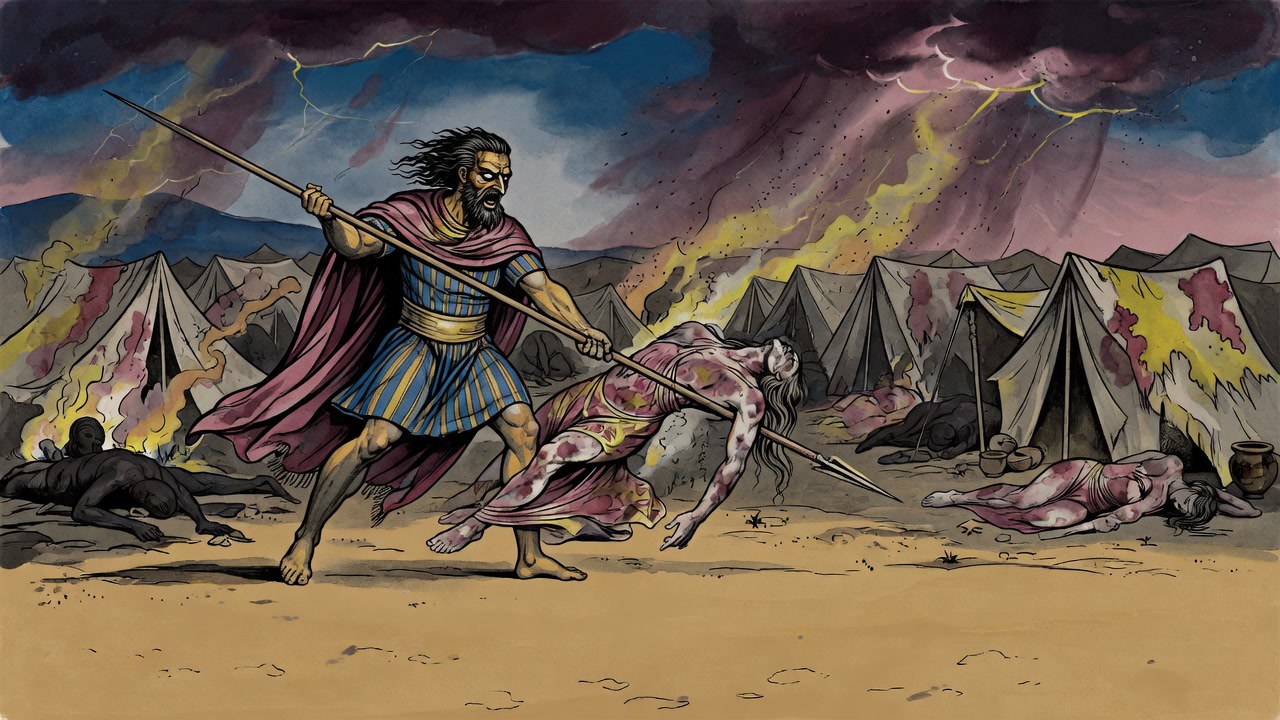
Pinchas grabbed a spear and killed two people in the middle of a plague, and God rewarded him with an eternal covenant of peace. The rabbis who had to explain this found it was one of the most theologically fraught moments in the entire Torah.
At Sinai, Israel uttered three words that rabbis have been debating for two thousand years — 'we will do and we will hear' — in the wrong order.
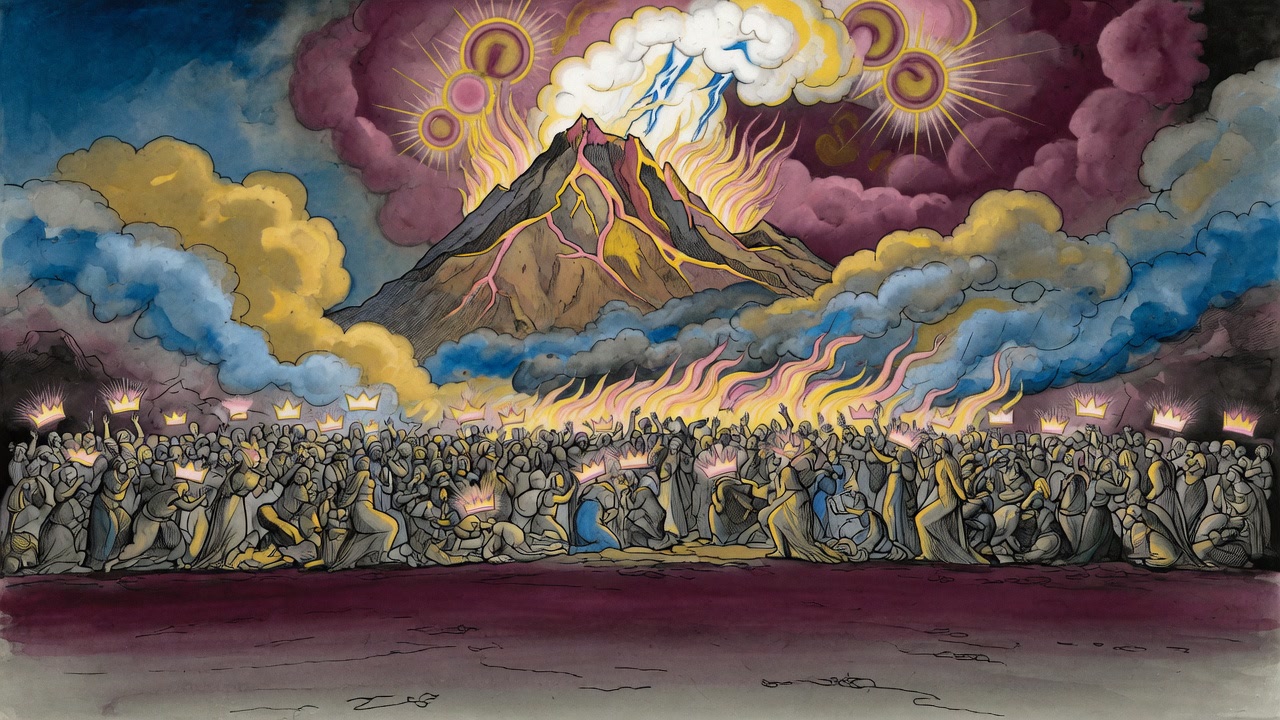
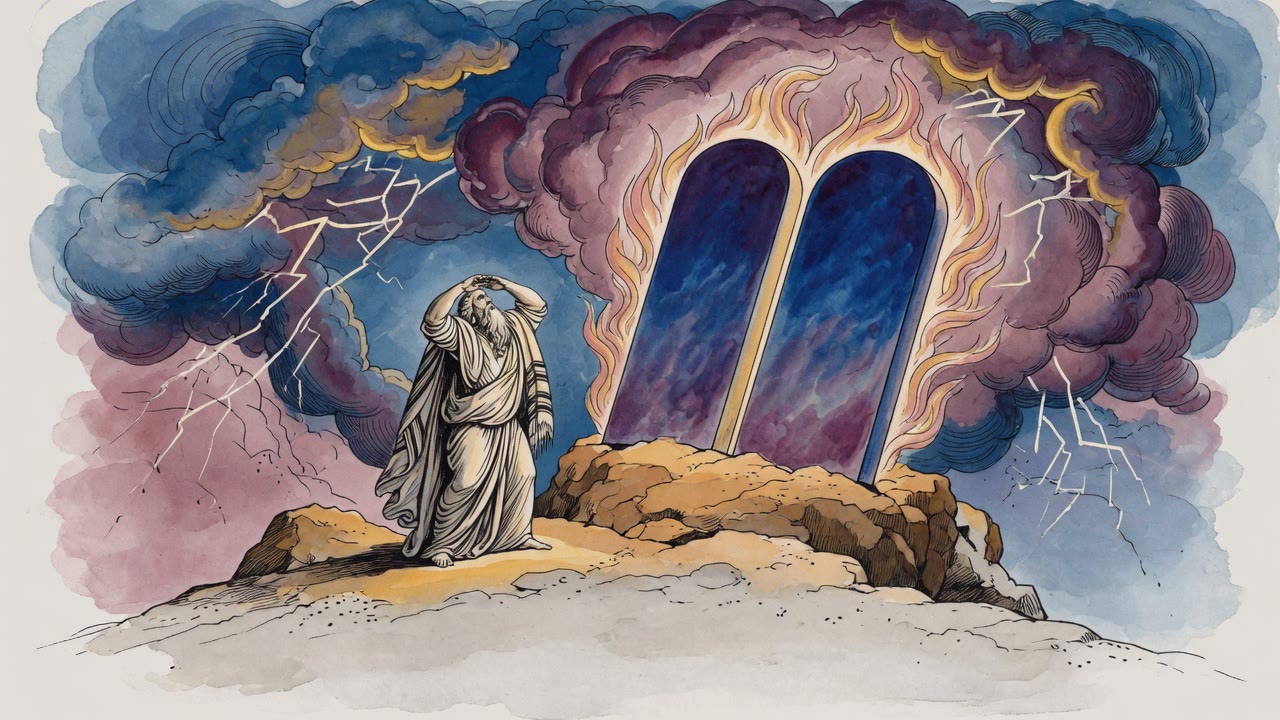
The Torah describes thunder and fire. The rabbis went further — they said the Israelites died at the voice of God, and had to be resurrected to hear the second commandment.
Between the Exodus and the giving of the Torah lie 49 days of counting — the Omer. But why count? And what were the Israelites supposed to become in that time?
Passover gets a week. Sukkot gets detailed rituals. Shavuot gets almost nothing — not a date, not a story, barely a name. The rabbis had to invent its meaning from scratch.
When Moses came down from Sinai with the stone tablets, he carried something more. An entire second Torah — explanations, expansions, and traditions — was transmitted orally. The rabbis called it Torah she-be'al peh, and it was considered just as binding as the written text.
Accept the Torah, or find your grave underneath. The rabbis did not soften the threat. They said it out loud and argued about it for centuries.
When Moses commanded the sea to part, it refused. Twice. The Mekhilta reveals what actually happened at the shore — and why the sea finally fled.
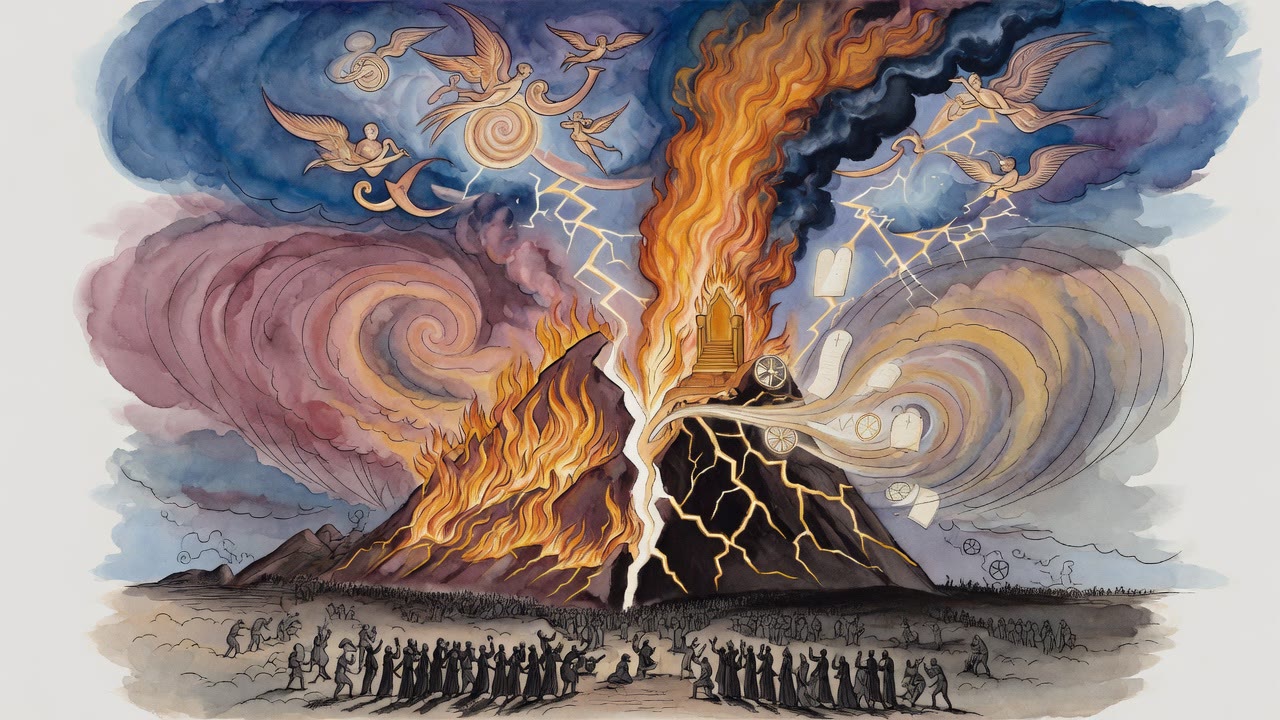
The Mekhilta's verse-by-verse reading of Exodus 19 reveals something extraordinary: Sinai was not a monologue. God gave each commandment, Moses carried the people's answer back, and only with their consent did God speak the next word.
According to the Talmud, God uprooted Mount Sinai and held it over Israel like an upside-down barrel, threatening to bury them if they refused the Torah. But a later judge pointed out the legal problem — a contract signed under coercion is not binding. The Talmud's answer comes from the Book of Esther.
When Israel stood frozen at the water's edge with Egypt at their backs, the tribes argued over who would go first. One prince made the decision for everyone.
God embedded the destination into the instructions for departure. The Mekhilta shows that Passover was never just about leaving Egypt.
The Tikkunei Zohar draws a direct line between Pharaoh ordering Jewish infants drowned and the great fish swallowing Jonah. Both were attacks on the same thing.
Adam tracked time by the sun. God gave Israel the moon. The Mekhilta asks why, and the answer turns out to be about loyalty, not astronomy.
God owns the Torah. Moses received it. So why does Malachi call it the Torah of Moses? The Mekhilta gives a surprising answer about devotion and naming.
Israel calls God their glory. God turns and calls Israel His glory. The Mekhilta sees this exchange as the most remarkable fact in the universe.
The Red Sea split not because Israel cried out, but because God had encoded the promise in a single word spoken to Abraham at Beth-el.
Rabbi Shimon ben Yochai read Jeremiah and found something stunning: the sun rising each morning is testimony that the God who split the sea still rules.
Rabbi Elazar ben Azaryah taught that God freed Israel not for anything they had done, but for a promise made to Abraham centuries before they were born.
The tribes all froze at the water. One man from Judah walked in past his neck, and God told Moses to stop praying and raise his staff.
The Mekhilta teaches that Israel's obedience does not just reduce God's anger. It eliminates it entirely. When Israel walks in God's ways, wrath has no occasion to arise in the universe.
From Abraham's night battle against four kings to the cursed town of Meroz, the Mekhilta tracks a single principle across centuries: whoever touches Israel touches something beyond Israel.
Joseph made his brothers swear an oath, and the Mekhilta reveals why: he wanted to close the circle at the exact place where they broke it.
The Mekhilta lines up every title ever given to Israel -- servant, minister, lover, covenant-keeper -- and shows, verse by verse, that the stranger receives each one too.
The Mekhilta finds four things called acquisitions in Scripture: Israel, heaven and earth, the Temple, and the Torah. The rabbis say they belong together by design.
The Mekhilta describes a hidden rhythm between God and Moses: when one rises, the other falls. It is the mechanism by which Israel survived its worst moments.
On the night of the Exodus, while all of Israel loaded Egyptian treasure, Moses was at the riverbank calling out to a dead man's bones.
Israel packed silver and gold on Exodus night. Moses went to the Nile to find a coffin, keeping a four-century-old promise he had never personally made.
Freed from Egypt, fed by miracles, facing no enemies they could not escape. Israel still found ways to fail. The Midrash tracks every stumble with something...
Bride. Grapevine. Scattered sheep. Strength of the world. The rabbis noticed God could not stop reaching for new language to describe the same beloved people.
Before Israel received the Torah, they underwent the same rites as a convert. The gold given at Sinai was not decoration. It was a wedding gift.
Seven clouds surrounded Israel in the wilderness. Seven kings rose over Rome as Israel suffered. The sevens are not coincidence.
A parable about a king's favorite robe, a camp of thirsty pilgrims who worried about their animals, and what God saw when he looked at Israel in the wilderness.
Every time God announced a verdict on Israel, Moses found a counter-argument. The rabbis tracked these arguments and noticed something: Moses always started ...
The Passover lamb was a public act of defiance. Israel slaughtered Egypt's sacred animal in Egypt, in full view of their neighbors, as a condition of freedom.
When Moses announced he was dying, Joshua wept for Israel's future. His grief named every gift Moses had given that no one else could replace.
The midrash calls Israel a vine that endures trampling in silence but eventually defeats those who crush it. Even in slavery, God said: they are my relatives.
The Sages argued that Aaron's priesthood was decreed before creation and could not be undone -- not even by the Golden Calf.
The Book of Jubilees frames the Exodus plagues not as punishments alone but as fulfillment of a covenant God made with Abraham centuries before Moses was born.
When God came after Moses in the night because his son was uncircumcised, Zipporah understood what was happening and moved without hesitation.
God does not hand sacred roles to those who simply want them. The Levites were tested twice before they were chosen, and both tests were brutal.
After his famous act at Shittim, Phinehas did not retire. He was sent to a mountain to wait, fed by eagles, until the clouds needed him.
Before issuing a single law at Sinai, God asked Israel a question. Their answer determined the entire structure of Jewish law that followed. The Mekhilta preserves this exchange as the founding moment of the covenant.
When Israel built the golden calf at Sinai, one tribe refused. Midrash Tehillim and the Sifrei Devarim record how the tribe of Levi stood apart while the rest worshipped the idol, and how that moment of loyalty cost them land but earned them the priesthood and the privilege of carrying the Torah forever.
Moses stood at the edge of the land he had spent forty years leading Israel toward and prayed to enter it. The rabbis counted his prayers: 515 in total. God heard every one, and refused every one. The question the tradition asked is not why God refused, but what the refusal meant for the greatest prophet who ever lived.
When Phinehas drove a spear through two people in a single thrust, stopping a plague that had killed twenty-four thousand Israelites, he became the most controversial hero in the Torah. The rabbis of Sifrei Bamidbar spent centuries explaining why his reward was greater than his act seemed to deserve.
Moses was not alone at Sinai. Exodus records that seventy elders ascended the mountain and saw the God of Israel. Sifrei Devarim treats this vision as the foundation for the authority of Israel's elder-witnesses across every generation.
Deuteronomy 32 says God found Israel in the wilderness. The Sifrei reads Hosea's parallel image of finding grapes in the desert and builds from it a portrait of Israel as something precious discovered in a desolate place and taught to become what it was always meant to be.
God renewed the covenant with Israel after the golden calf, but the Targum Jonathan added a promise that appears nowhere in the Hebrew Bible, involving a mythic river that rests on the Sabbath.
When Moses read the entire Torah aloud and sealed the covenant in blood, he believed faithfulness would protect him. Then God told him it would not.
The revelation at Sinai killed the entire people of Israel. The revival that followed was not a miracle that happened alongside the giving of the Torah. It was the point.
The Torah existed two thousand years before the world began. The tribe that would carry it through history was already being shaped to receive it before the mountain was chosen.
Moses split the blood of the covenant between the altar and the people -- but nobody agreed on how he knew to do it. Vayikra Rabbah 6:5 records five competing explanations of the most consequential division in Jewish history.
Hananya, Mishael, and Azarya walked out of Nebuchadnezzar's furnace alive. Rabbi Pinchas in Vayikra Rabbah says God remembered the blood of the Sinai covenant at the moment they stood in the fire.
Moses took blood from the sacrifices and split it in two, half on the altar and half on the people. The rabbis debate who told him how to divide it, and whether God or an angel did it instead.
Most people think Sinai was God giving Israel the Torah. The rabbis read it as something far more binding -- a mutual oath sworn in blood and fire.
Every seventh year, the Torah commands the entire agricultural economy of ancient Israel to stop. No planting, no pruning, no harvesting. The land gets a Sabbath. What happened to people who couldn't eat?
Every 50 years, all debts cancel, all slaves go free, and every piece of land returns to the family it started with. The Jubilee was the most radical economic law in the ancient world. Did anyone ever actually follow it?
Leviticus 26 contains 49 blessings and 98 curses — terror, plague, cannibalism, exile. Every year in synagogue it is chanted in a hushed voice. What exactly does it threaten, and why do rabbis insist it is actually a love letter?
The entire covenant in Leviticus 26 is conditional. 'If you follow my statutes.' What happens to a promise that depends on your behavior? The rabbis who survived the Temple's destruction had to answer this directly.
The Torah gave husbands a ritual for testing suspected infidelity. It involved bitter water, an erased divine name, and a God-administered verdict. The rabbis spent centuries making sure it could never be used.
The Urim and Thummim was not a metaphor. It was an object worn in the high priest's breastplate that could be consulted before battles, judicial decisions, and national crises — and it stopped working when the First Temple fell.
If a husband suspected his wife of adultery but had no witnesses, the Torah prescribed a ritual in the Temple involving holy water, dust from the floor, and a scroll dissolved in the water. God would decide the verdict.
The Jubilee year was not a suggestion. Every fifty years, all debts were cancelled, all slaves freed, and all land returned to its original tribal owner. The Torah's most radical economic law was also one of its oldest.
Leviticus 26 contains the harshest threats in the Torah. Buried inside them is a single verse that the rabbis read as God's unconditional promise never to abandon Israel.
After Korach challenged Aaron's right to the altar, God did something unusual: issued a formal written deed. The rabbis explain why God's word alone was not enough.
One act of zeal in the wilderness stopped a plague and earned a covenant of everlasting priesthood. Phinehas did not die. He is still waiting.
Every tribe in Israel received a portion of the Promised Land. The Levites received designated cities. Aaron and his sons received something the Torah describes in a single jarring line: God Himself was their inheritance. The Targum Jonathan unpacks what this meant in practice, and the answer is more concrete and more theological than most readers expect.
The Torah opens Numbers with a census — every male over 20, counted by name. The rabbis asked why an omniscient God would need to count. The answer they gave is one of the most tender passages in all of midrash.
In the wilderness camp, the tribes were not grouped at random. Dan carried a shadow, and its neighbors were chosen to carry light.
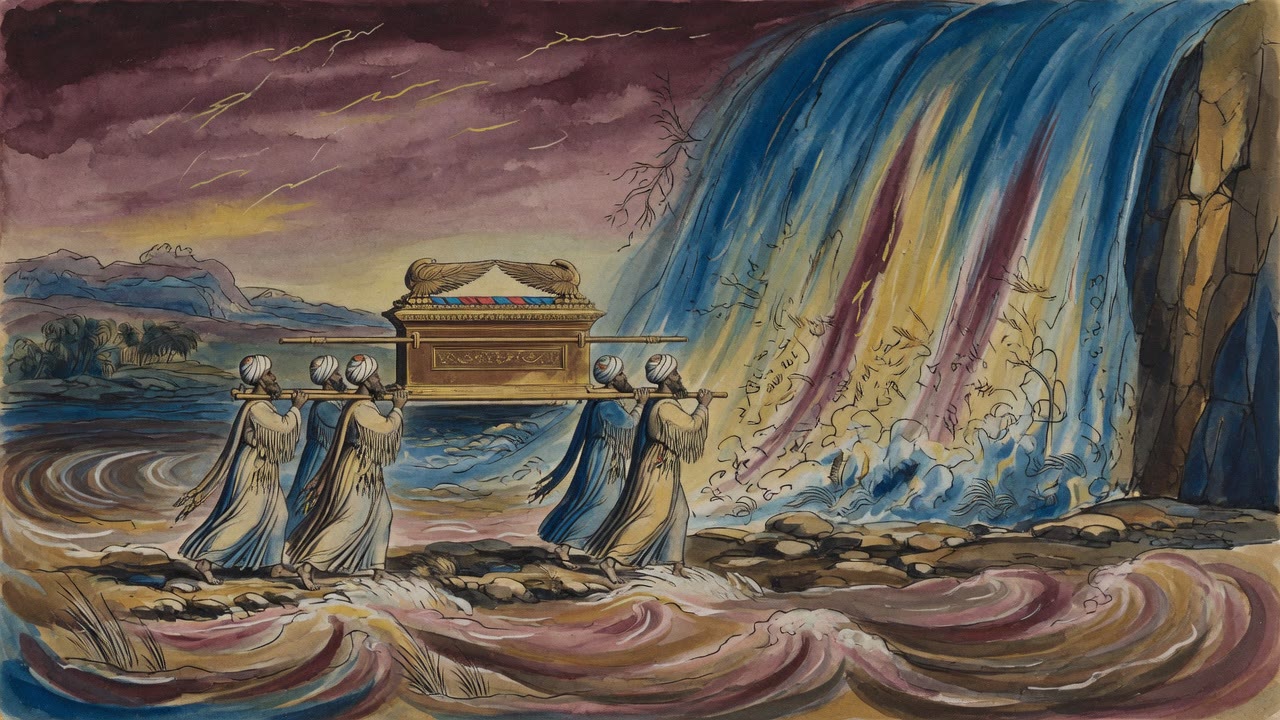
When Israel crossed the Jordan River into Canaan, the water piled up 300 miles upstream. The midrash says the river remembered the Red Sea and asked why it got to split first.
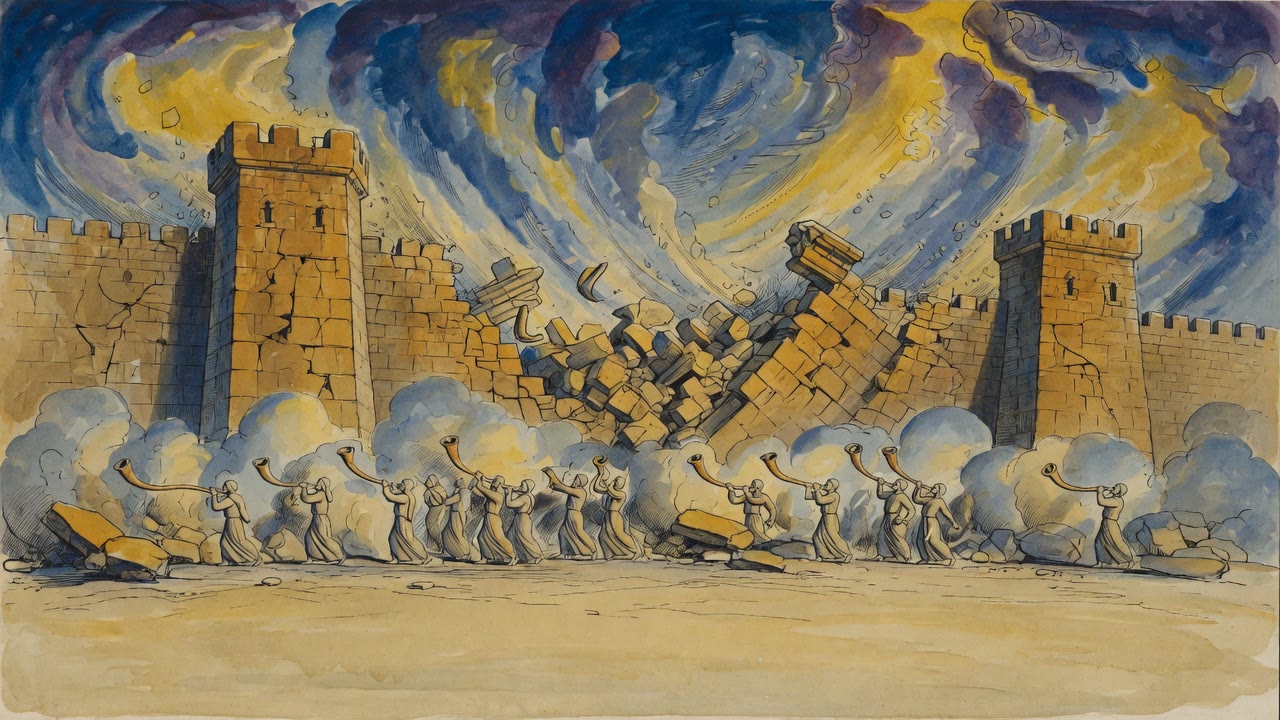
For six days Israel marched around Jericho and said nothing. On the seventh day they circled seven times, and on the final circuit, they shouted — and the walls collapsed. The midrash explains why the silence was the hardest part.
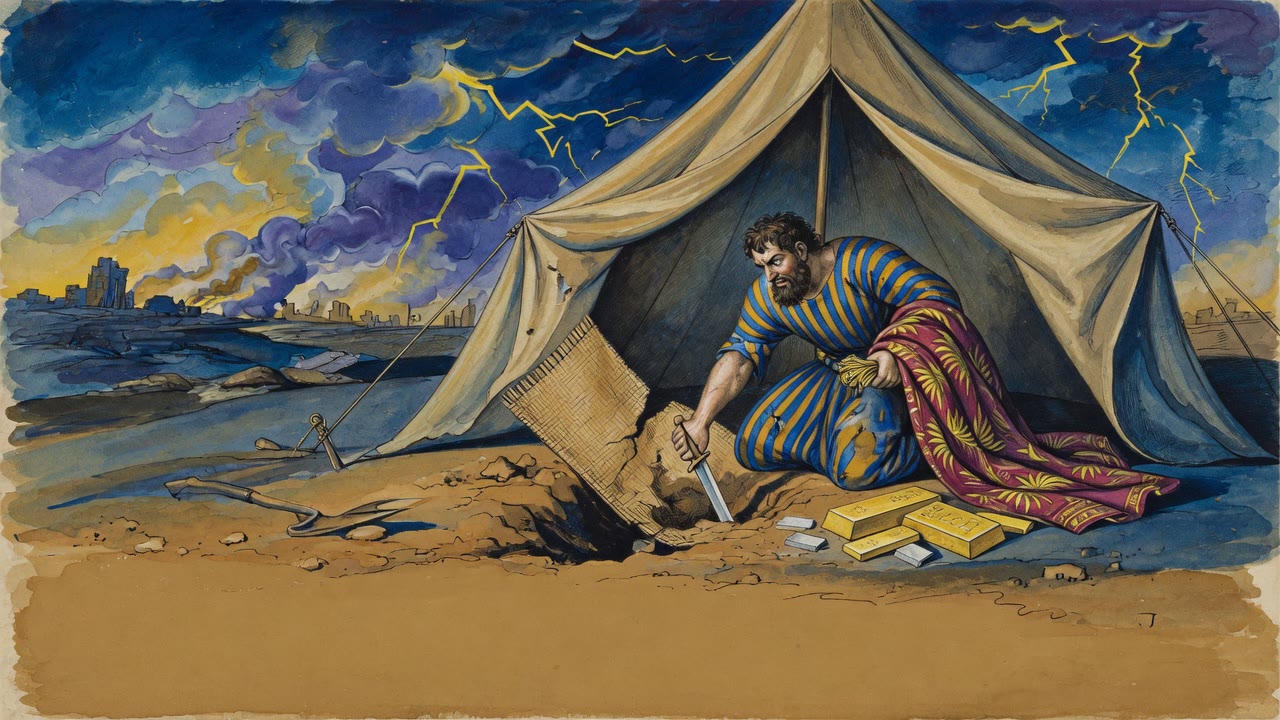
After the miracle of Jericho, Israel attacked the tiny city of Ai and was routed. God told Joshua exactly why — one man had taken forbidden loot. The midrash asks how one person's sin could make an entire nation lose.
The Torah says the commandments were written on both sides of the tablets. The midrash says the writing was miraculous — the letters were cut all the way through, and when you turned a tablet over, the letters read correctly from either direction.
Deep in the Tabernacle stood a small golden altar used only for burning incense. It was never used for animal sacrifice. And according to the rabbis, no priest who entered the inner sanctuary without full authorization ever left alive.
The Torah commanded that the land of Israel lie fallow every seventh year. Israel observed the Sabbatical year for 490 years, then stopped. According to Chronicles, the seventy years of Babylonian exile were the land's revenge — it took its rest by force.
Most people think Aaron was born into the priesthood. A tannaitic midrash says the whole nation used to be priests. One moment narrowed it to a single family.
Balaam rode out at dawn eager to curse Israel — and in the end admitted they could never be uprooted from the earth. The rabbis say the donkey saw what he refused to see.
When 24,000 Israelites were dying, one man acted. Ben Sira remembers Aaron's grandson Phinehas as the man who stood in the gap between Israel and destruction.
Most people think the Torah's curses are ancient warnings. Ki Tavo's 98 curses are so feared that readers whisper them - and Moses trembled delivering them.
The Noahide laws gave humanity a moral foundation but left out Shabbat. When Moses asked God why, the answer changed the meaning of the sacred day forever.
Daniel survived lions. The sea split. Fire could not touch the righteous. The rabbis said all of it depended on a single condition.
Every time Israel proclaims God's oneness, a voice from heaven answers back. The Mekhilta says the Shema is a two-way exchange, not a one-directional cry.
The Book of Judith and the Sifrei Devarim agree on one thing: the Land of Israel is conditional. What holding it required and what letting it go meant is the oldest warning in Jewish scripture.
God's arrows of punishment will run out before Israel does, and Israel's sacred bread cannot truly be consumed by those who seize it wrongly.
Lebanon's name means whiteness -- it bleaches sins like snow. The Euphrates proves greatness by the fruit on its banks. Both are images of silent covenant.
As Moses read the curses of Deuteronomy, the earth trembled and the patriarchs wept from their graves. A heavenly voice promised their merit would never fail.
During a battle, Joshua needed more daylight to finish defeating Israel's enemies. He spoke to the sun and moon and commanded them to stand still. The midrash asks what it means for a human being to command the heavens.
When Rachav told Joshua's spies what she had heard about the Exodus, the Mekhilta saw it as proof that Israel's obedience to God echoes outward until foreign kings tremble.
The Gibeonites posed as travelers from far away to trick Joshua into a covenant. He honored it anyway, to show the world what an oath meant to Israel.
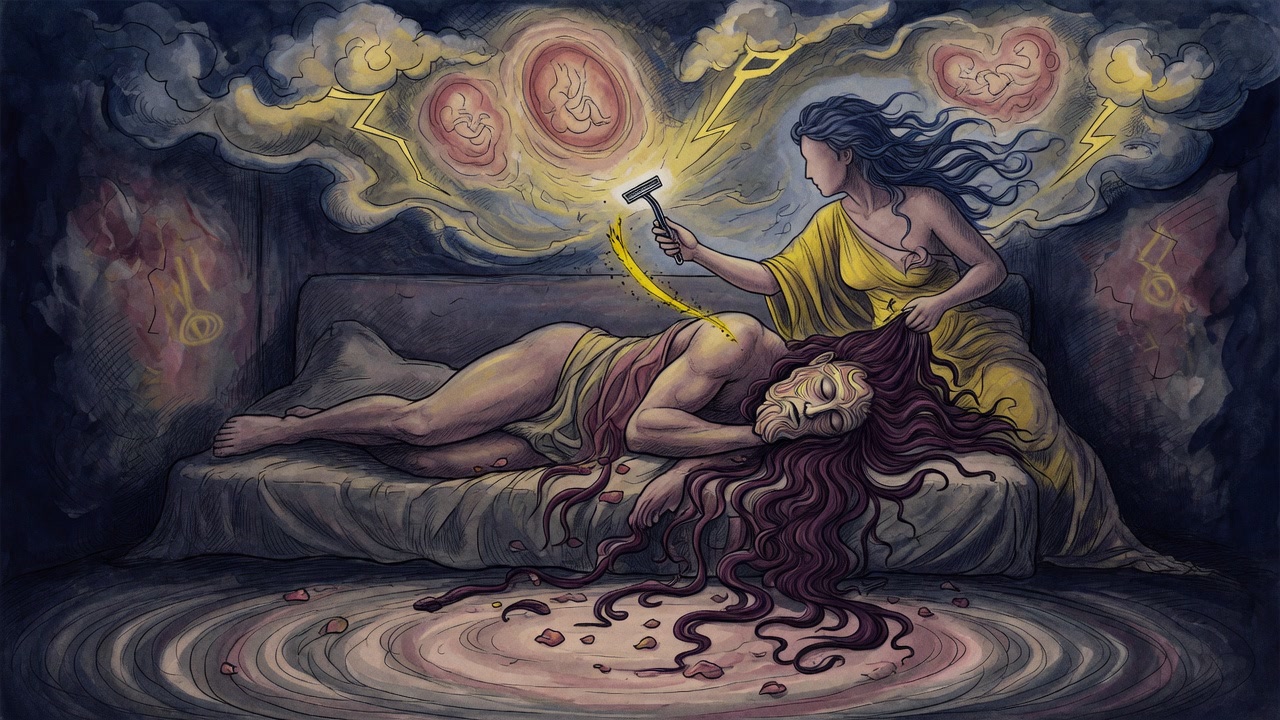
Samson was a Nazirite from birth, designated before conception. When Delilah cut his hair, it wasn't a clever spy's trick. It was the severing of a lifelong sacred vow. The rabbis had a lot to say about what that meant.
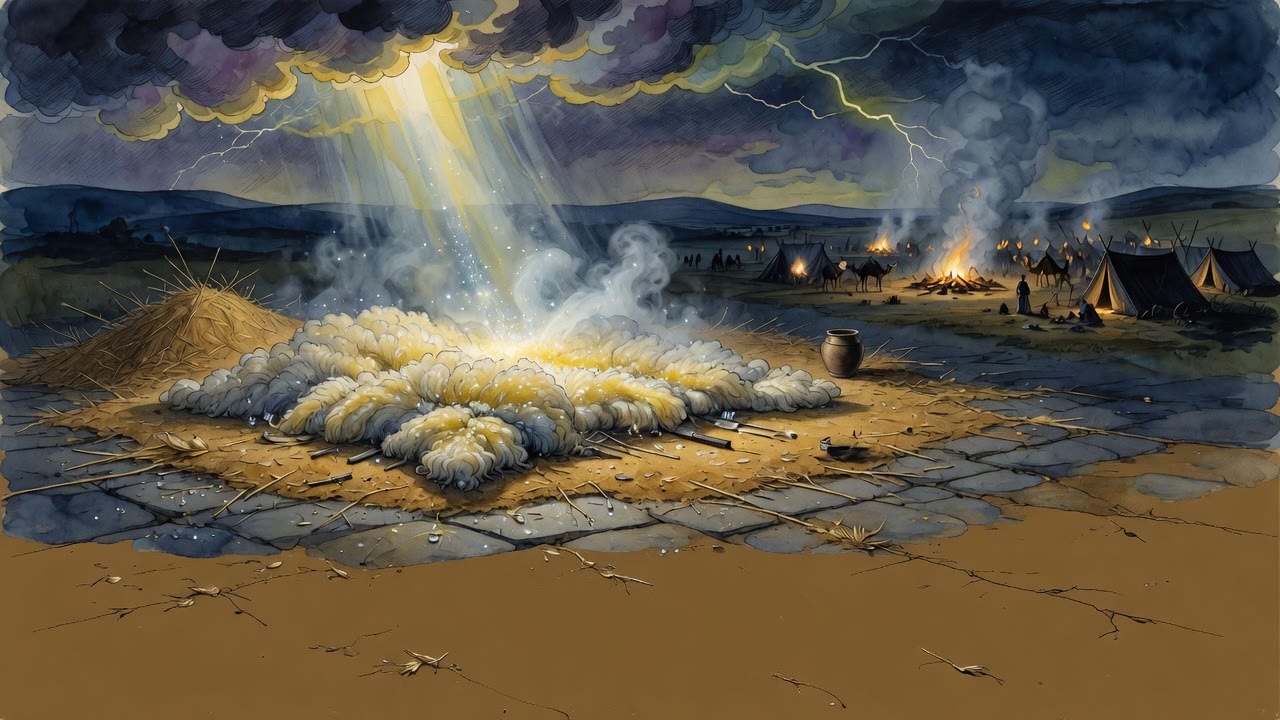
When God commanded Gideon to lead Israel against Midian, Gideon put out a wool fleece and asked for a sign. When God gave it, he asked for the exact opposite sign. The midrash has strong opinions about whether this was faith or doubt.
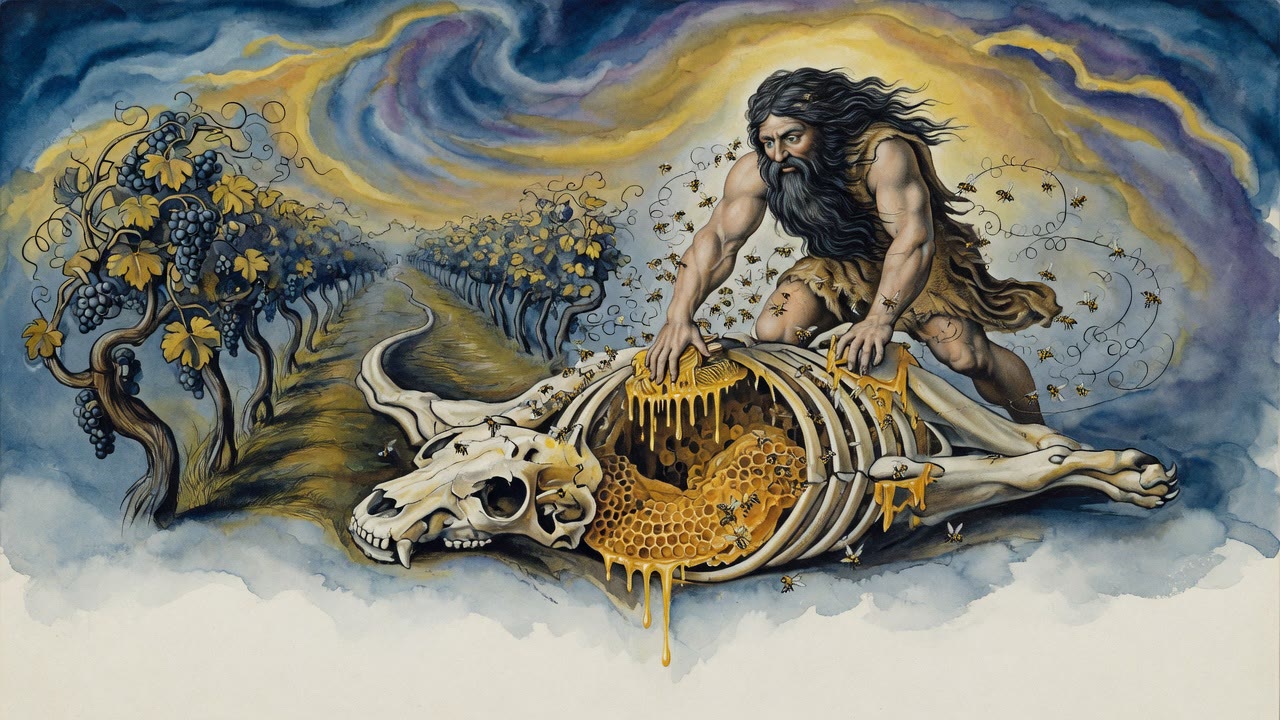
Samson killed a lion with his bare hands, walked away, and later found a beehive living in the carcass. He ate the honey without telling anyone — then turned the whole incident into a riddle at his own wedding.
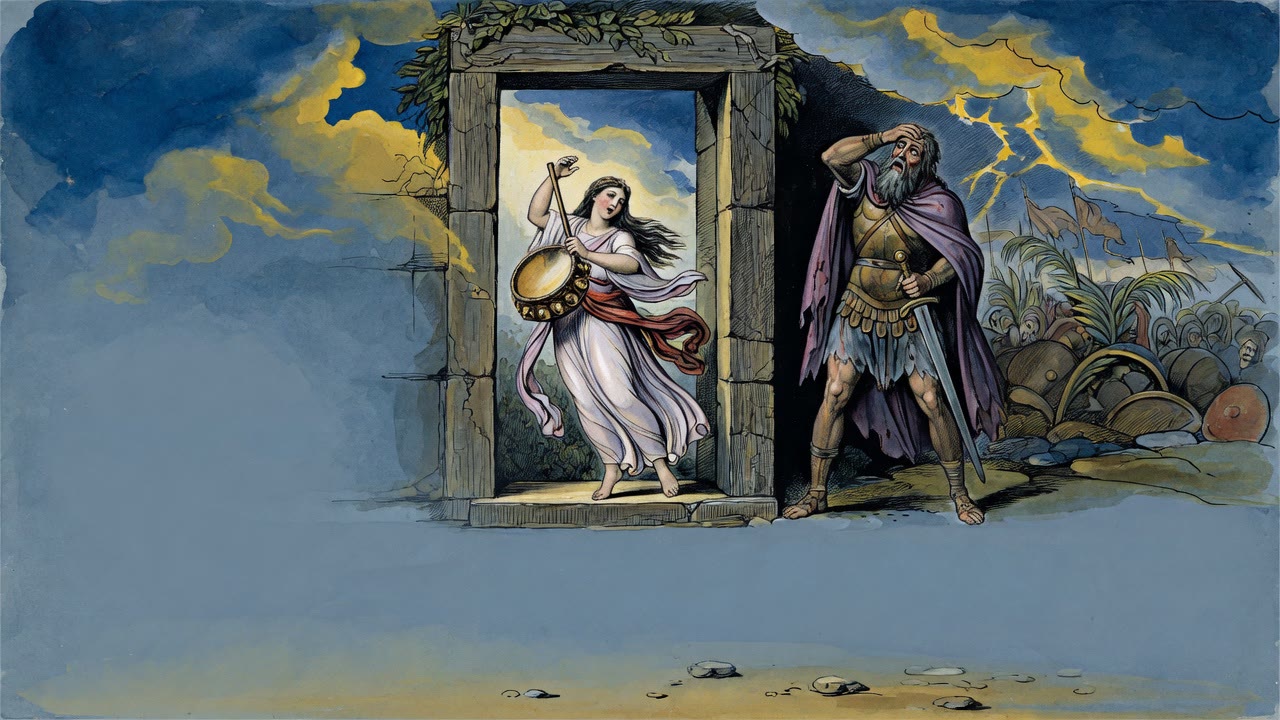
Jephthah promised God that whatever came out of his house first would be a burnt offering. His only child, his daughter, came out dancing. The midrash says she was the one who convinced her father that the vow could not be undone.
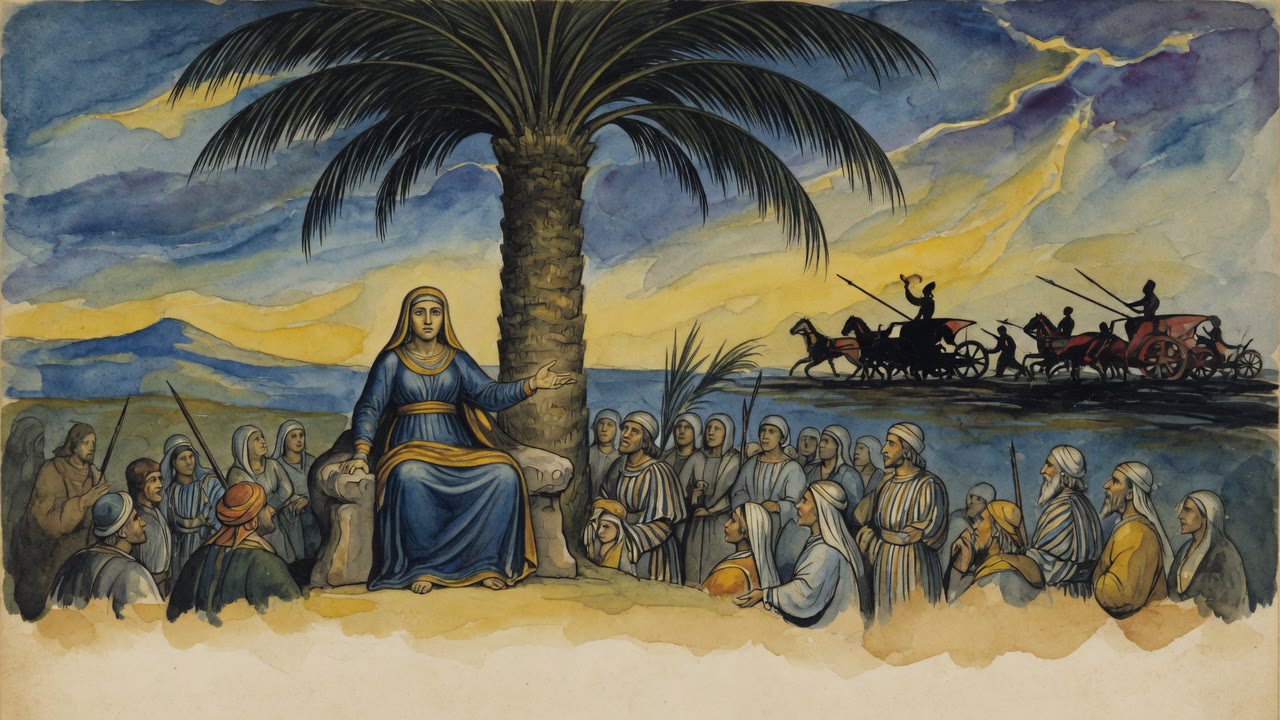
Deborah was a prophet, a judge, and a military commander all at once — and when Barak refused to go to battle without her, she went and predicted that the glory would go to a woman. She was right, but it was not herself she meant.
A Levite's concubine was brutally killed in the city of Gibeah. Her husband sent pieces of her body to all twelve tribes. What followed was a civil war that nearly destroyed Benjamin entirely — and the midrash asks why Israel did not act sooner.
Delilah asked Samson three times where his strength came from and he lied three times. The fourth time, he told her everything. The midrash asks not why she was persuasive but why he finally stopped protecting himself.
Samson's power was not in his hair. His hair was a vow — and his vow was the only thing connecting him to God. When Delilah cut it, she did not weaken his muscles. She severed his covenant.
She made wicks for the Tabernacle, judged Israel under an open sky, and led an army to victory -- the rabbis traced Deborah's prophetic authority to a single act of devotion, and connected her mourning to a grief that had shaken Jacob himself centuries before.
When Abimelech came seeking a covenant, Isaac agreed. But Jubilees records what the Torah omits. That night, Isaac said plainly he had sworn under constraint.
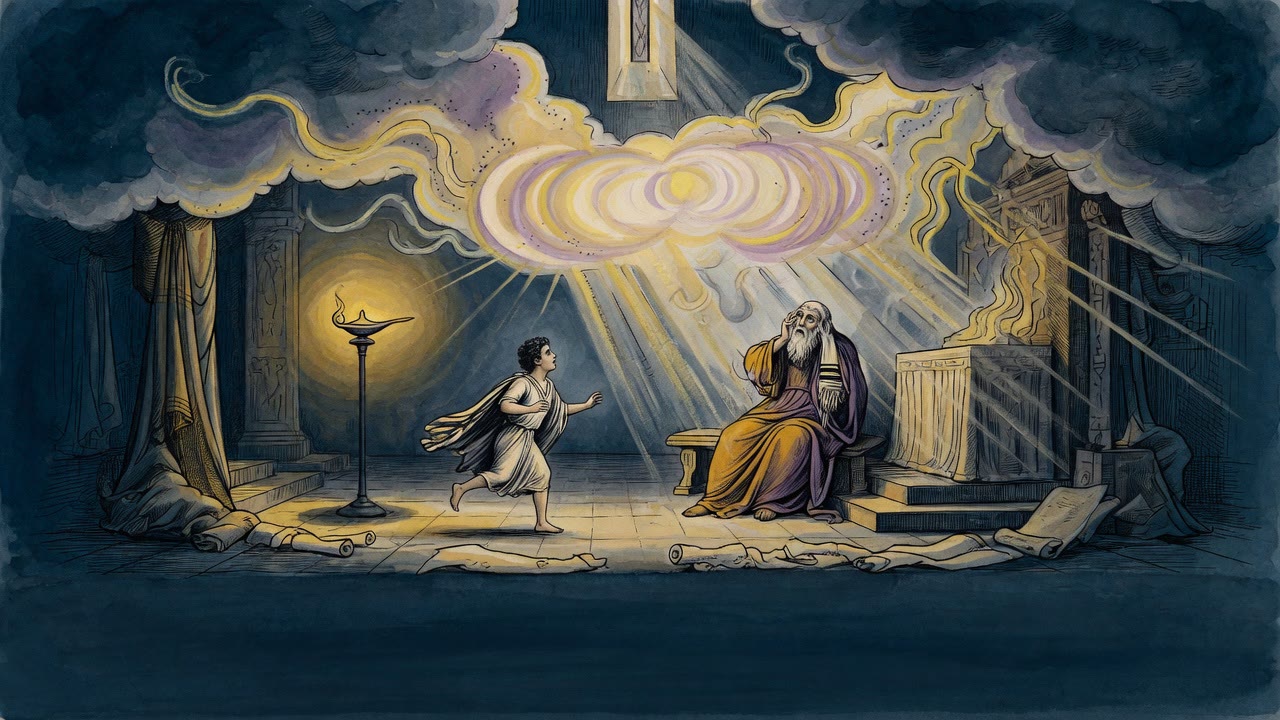
The boy Samuel heard his name called in the night and ran to the priest Eli three times before Eli understood what was happening. The midrash says even Eli's slowness to recognize God's voice was part of the plan.
Samuel told Saul to wait seven days before the battle. On the seventh day, Samuel had not arrived. Saul offered the sacrifice himself. Samuel arrived moments later. That one act of impatience cost Saul his dynasty.
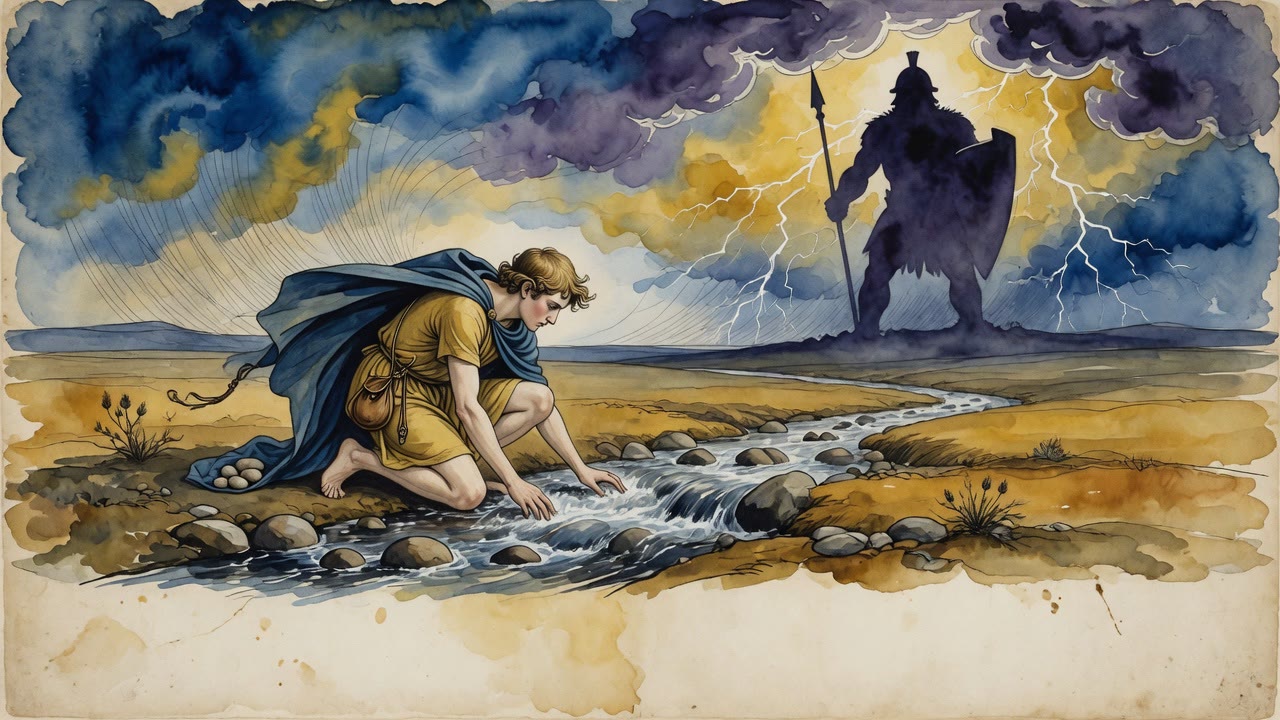
David took five smooth stones from the brook before facing Goliath. The midrash asks why five — and gives an answer that reveals exactly how David understood what kind of battle he was walking into.
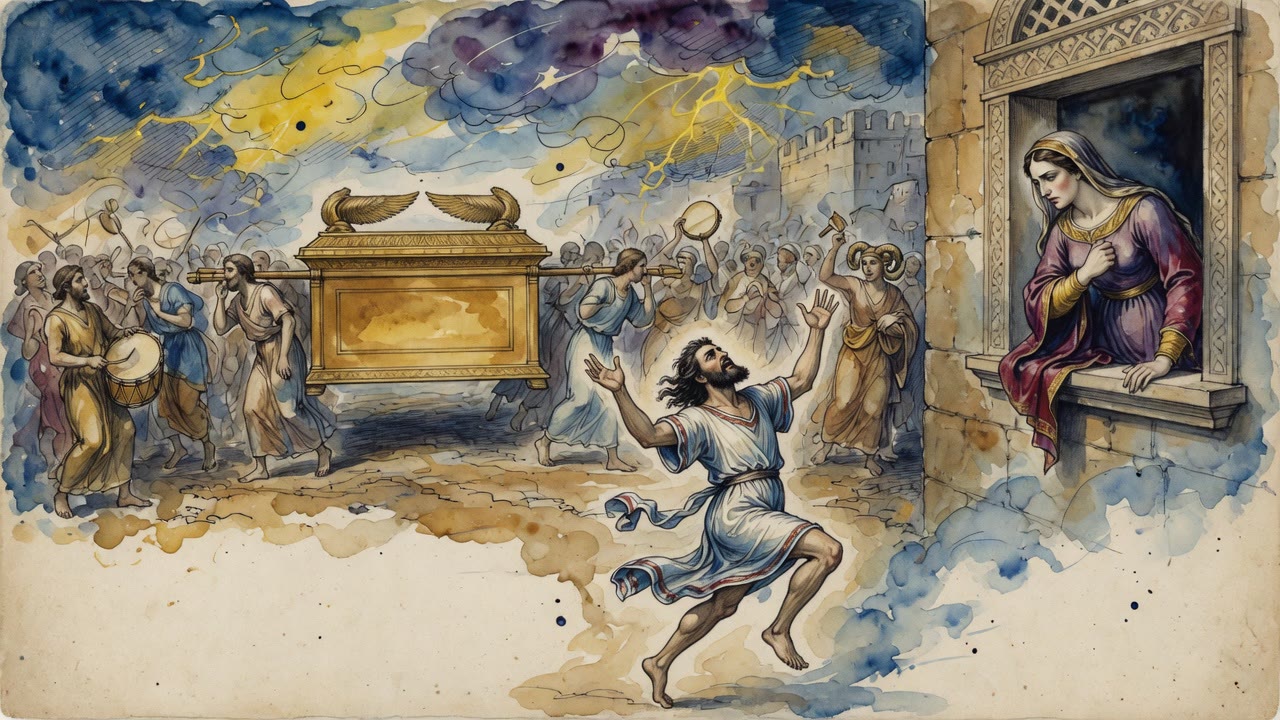
When the Ark of the Covenant was brought into Jerusalem, David danced with such abandon before God that his wife Michal, Saul's daughter, watched from a window and felt contempt. The midrash says the distance between their windows explains everything.
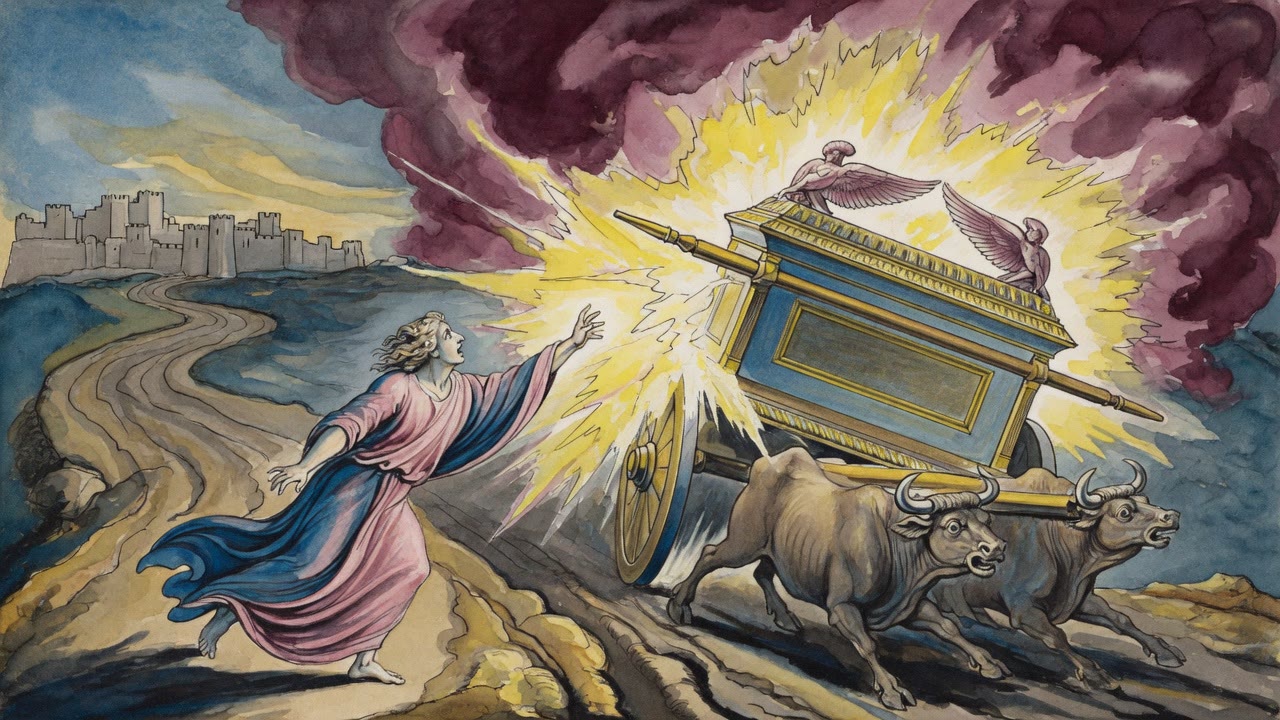
The Ark was slipping from the cart that carried it. Uzzah reached out to steady it with his hand and fell dead on the spot. The midrash spends centuries asking whether he deserved it.
After David's affair with Bathsheba and the killing of her husband Uriah, the prophet Nathan did not accuse David directly. He told him a story. The moment David understood the story, he had already judged himself.
The midrash does not minimize what David did with Bathsheba. But it adds a layer the biblical text does not: Bathsheba was predestined for David from the six days of creation, and David's sin was taking her too soon and in the wrong way.
Psalm 22 begins with the most anguished cry in the Hebrew Bible — 'My God, my God, why have You forsaken me?' — and ends in ecstatic praise. The Midrash says David wrote it about his own life and about every Jewish exile that would ever follow.
David counted his people without the Torah's required ransom offering. Seventy thousand died — and where the plague stopped became the Temple Mount.
When a witch conjured Samuel from the dead, his first act was to find Moses and beg for his testimony. Two prophets — one who received the Torah in fire, one who traveled to every town to hear the poor — bound together by a single question about justice.
Before every battle, David summoned the court and checked the ancient treaties. He would not draw a sword until the legal record was clear.
David's confrontation with Goliath fulfilled an oath Judah made to protect Benjamin, an obligation passed through every generation to a shepherd boy.
The Shema promises rain in Marcheshvan for obedience and drought for idolatry. The Talmud says God multiplied commandments to refine Israel, not to burden them.
How the blue cloth on the Temple showbread table encoded God's promise to David, and why idols blocked the city until David destroyed them.
Jeremiah told Israel to stop boasting about wisdom, strength, and wealth. David had already sung the same warning three centuries earlier. The rabbis found that these two voices, one prophetic and one poetic, were singing the same song.
Every night, David the king rose at midnight to give thanks to God. The rabbis of Pesikta DeRav Kahana asked why, and their answer revealed a compact between king and creator that began before David was born and continues to structure all of Jewish prayer.
Jewish tradition makes a startling claim: the covenant with Aaron the priest outlasted and outranked the covenant with David the king. Sifrei Bamidbar explains why unconditional inheritance beats conditional greatness.
At the covenant ceremony at Sinai, the seventy elders saw something beneath God's footstool that no architectural blueprint could account for: a memorial brick made from Egyptian slavery, carried up to heaven by the angel Gabriel and kept there permanently.
When Phinehas drove his spear through Zimri and Kozbi in a single thrust, the Targum Jonathan records that twelve separate miracles kept him alive long enough to do it. The act that looked like violence was, in the tradition's reading, a precisely engineered divine intervention with Phinehas as the instrument.
The rabbinic tradition traced a hidden thread from Esau's rejected birthright through the patriarchs all the way to King David — arguing that every step of that transmission was opposed by the same angelic adversary.
The Queen of Sheba traveled with 1,000 soldiers and camels loaded with spices, gold, and riddles. The midrash records the riddles she gave Solomon — and the answers that left her with nothing left to ask.
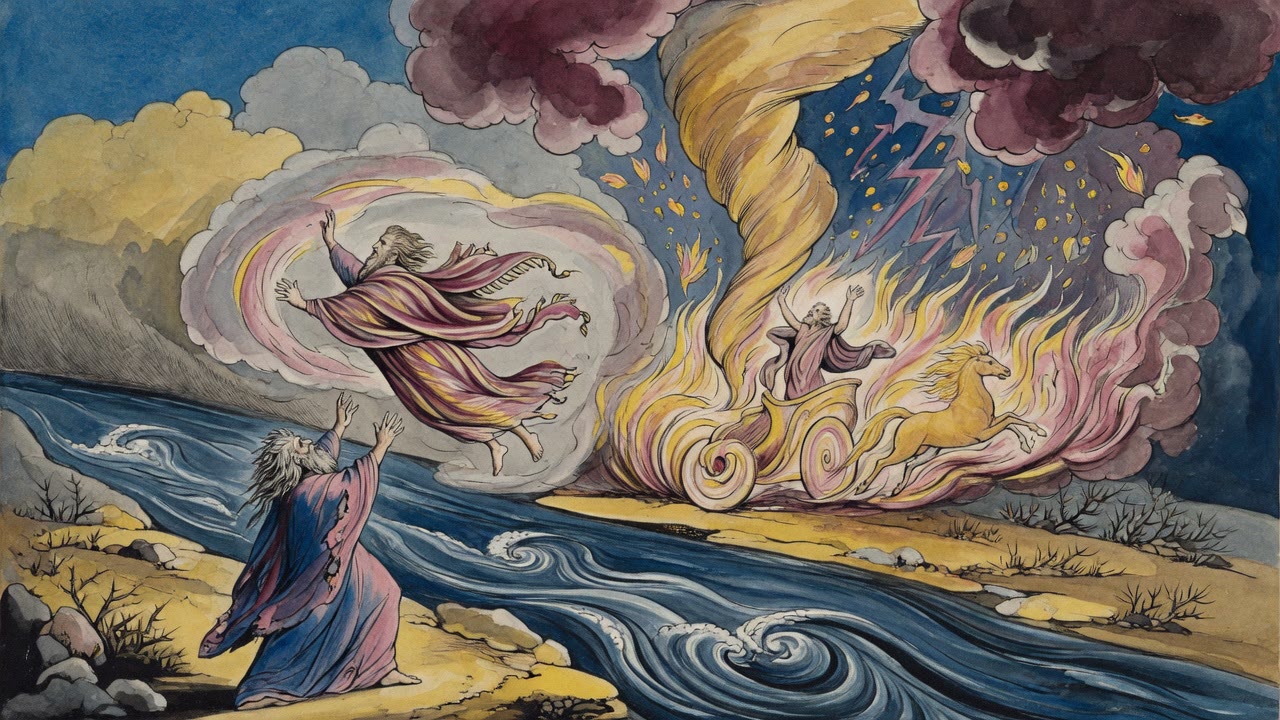
When Elijah was about to be taken to heaven, Elisha refused to leave his side. At the end, he asked for a double portion of Elijah's prophetic spirit. Elijah said: if you see me taken, it will be yours.
The Shunamite woman's son died suddenly on her lap. She laid him on the prophet's bed, saddled her donkey, and rode to find Elisha. When he asked if everything was well, she said: shalom. The midrash says those words were an act of faith.
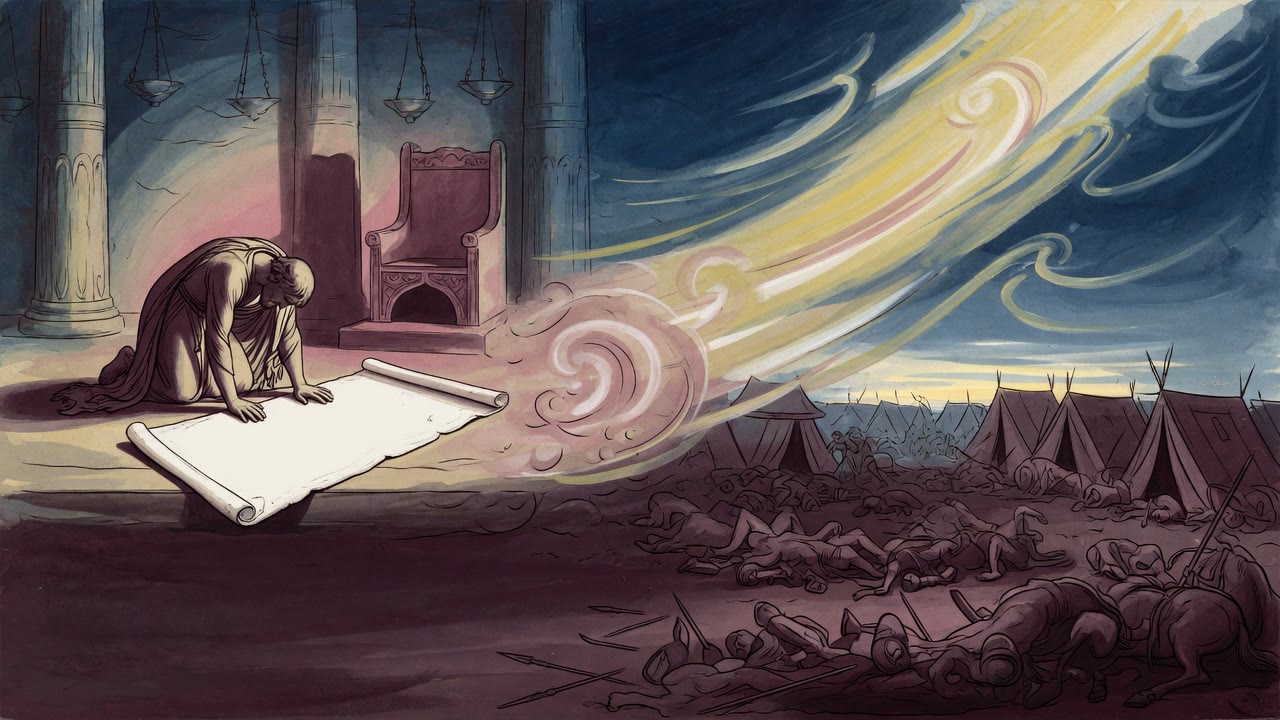
The Assyrian army was the largest military force the ancient Near East had ever seen, and it was camped outside Jerusalem's walls. Hezekiah went to the Temple, spread a threatening letter before God, and prayed. The next morning, 185,000 Assyrian soldiers were dead.
The rabbis paired Joseph and David across centuries to teach a single lesson: the greatest battle is not fought with armies but with the hidden self, in the dark hour when no one is watching.
King Hezekiah was one of the most righteous kings in the Hebrew Bible. Then Babylonian envoys arrived, he opened the Ark of the Covenant, and everything changed.
God tests the righteous like a potter strikes fine vessels — not to break them but to hear them ring. Abraham was struck ten times.
To take Jerusalem, David dismantled a Jebusite trap built on Abraham's covenant, destroyed a monument from Jacob's time, and seized a relic from Isaac's era.
Israel carried two arks through the desert, one with the Torah, one with the broken tablets. They also carried idolatry straight out of Egypt. The rabbis saw both arks and both failures as part of the same story.
Elijah accused all of Israel of abandoning the covenant. God made him the permanent witness at every circumcision -- turning his complaint into obligation.
Elijah ran from Jezebel to the mountain where Moses had met God. What he found there was not comfort but a question he could not answer twice.
Phinehas received an everlasting priesthood. What everlasting actually means is one of the most astonishing claims in all of rabbinic literature.
The Queen of Sheba disguised her attendants in identical clothing. Solomon solved it instantly. For her second test, he called for the Ark of the Covenant.
Isaiah's four 'servant songs' describe a figure who suffers in silence, is rejected, bears the pain of others, and is vindicated. Jewish tradition identifies this figure not as an individual but as the entire people of Israel — and has 2,700 years of argument to back that up.
Isaiah invoked Moses more often than any other prophet. The ancient midrashim reveal why — and what Isaiah understood about Moses that even Moses did not say about himself.
The prophet Isaiah says God gave Egypt, Ethiopia, and Seba as ransom for Israel. A midrash on Israel's covenant name asks a darker question — was Israel even calling on God at all?
When Isaiah summoned the heavens to listen, he was not improvising. He was repeating a summons Moses had issued first — and the witnesses had never been dismissed.
God told Isaiah to write that He was disowning His children. But the rabbis said God was not serious, and the proof was buried in the grammar.
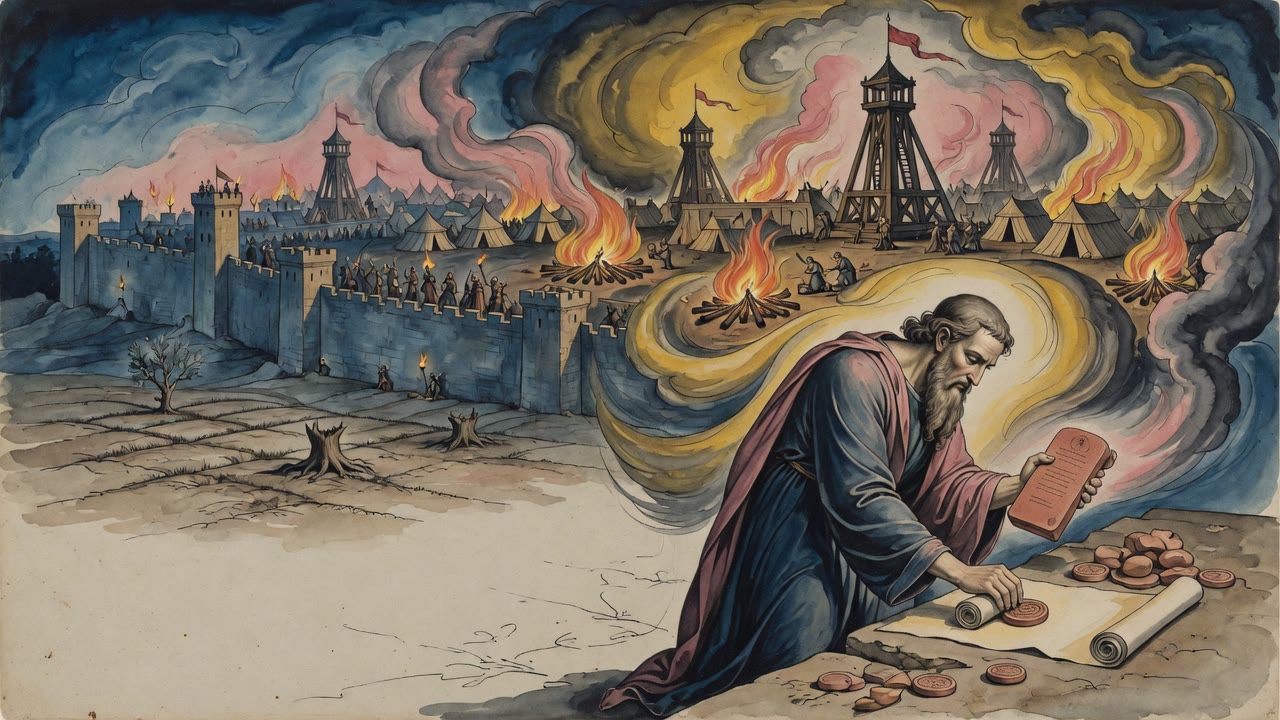
Jerusalem was under siege, Jeremiah was in prison, and God told him to buy a field in Anatoth. He did it — and then asked God what on earth He meant.
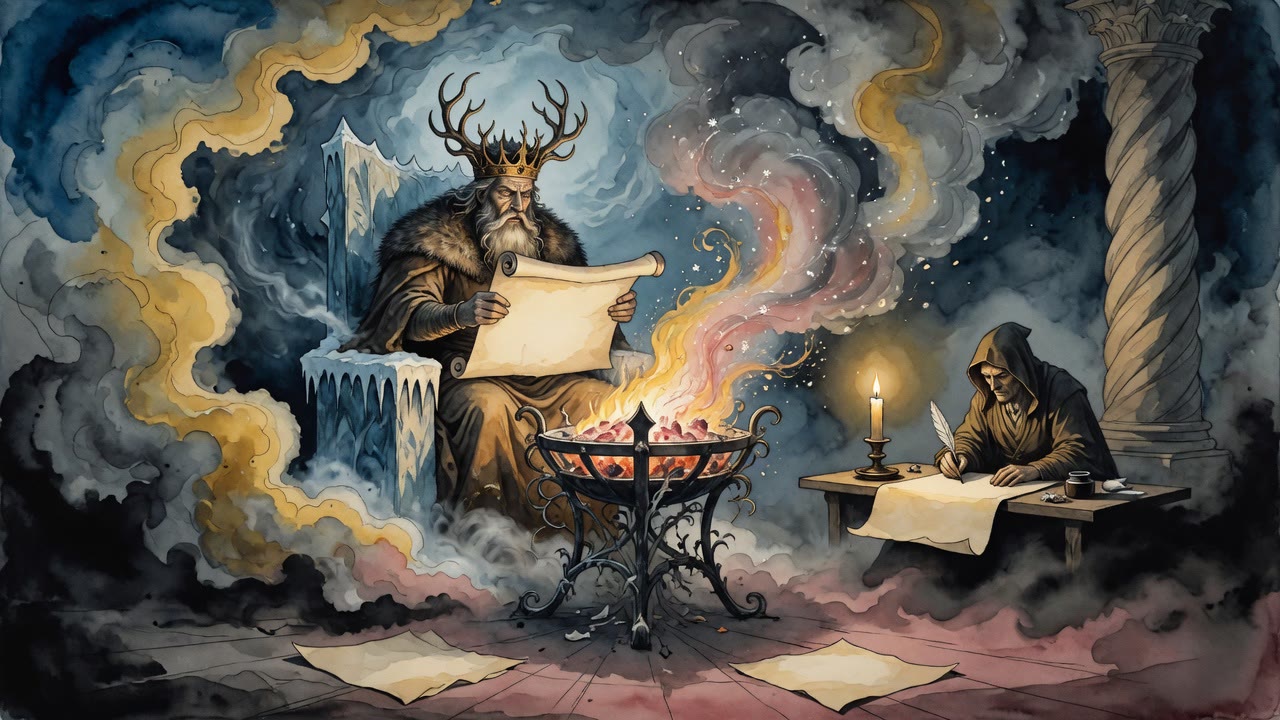
King Jehoiakim sat by a fire and cut Jeremiah's scroll into pieces as it was read to him, throwing each column into the flames. God told Jeremiah to write it all again — and this time, add more.
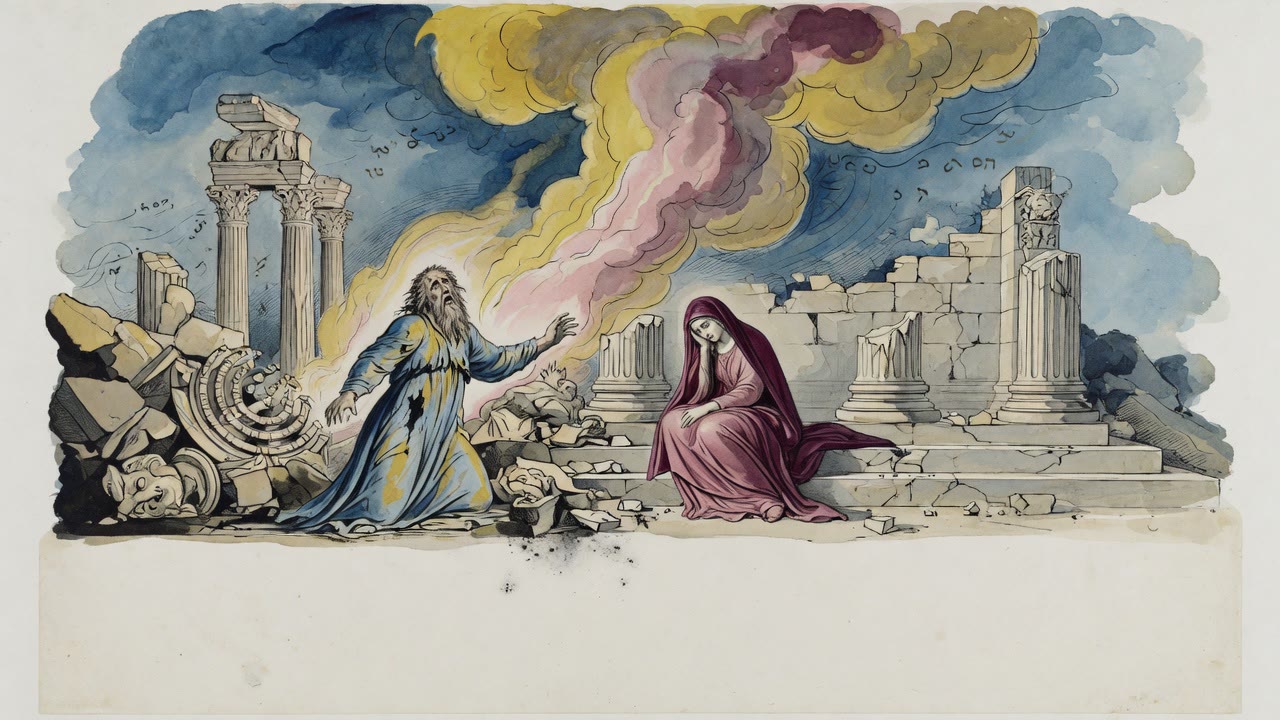
The Book of Lamentations does not argue, explain, or theologize. It sits on the ground with Jerusalem and weeps. The midrash says it was written by Jeremiah while the ashes were still warm.
From the 17th of Tammuz to the 9th of Av, Jewish tradition marks a period of national mourning called the Three Weeks. No weddings. No haircuts. No celebrations. Increasingly restrictive as the ninth of Av approaches.
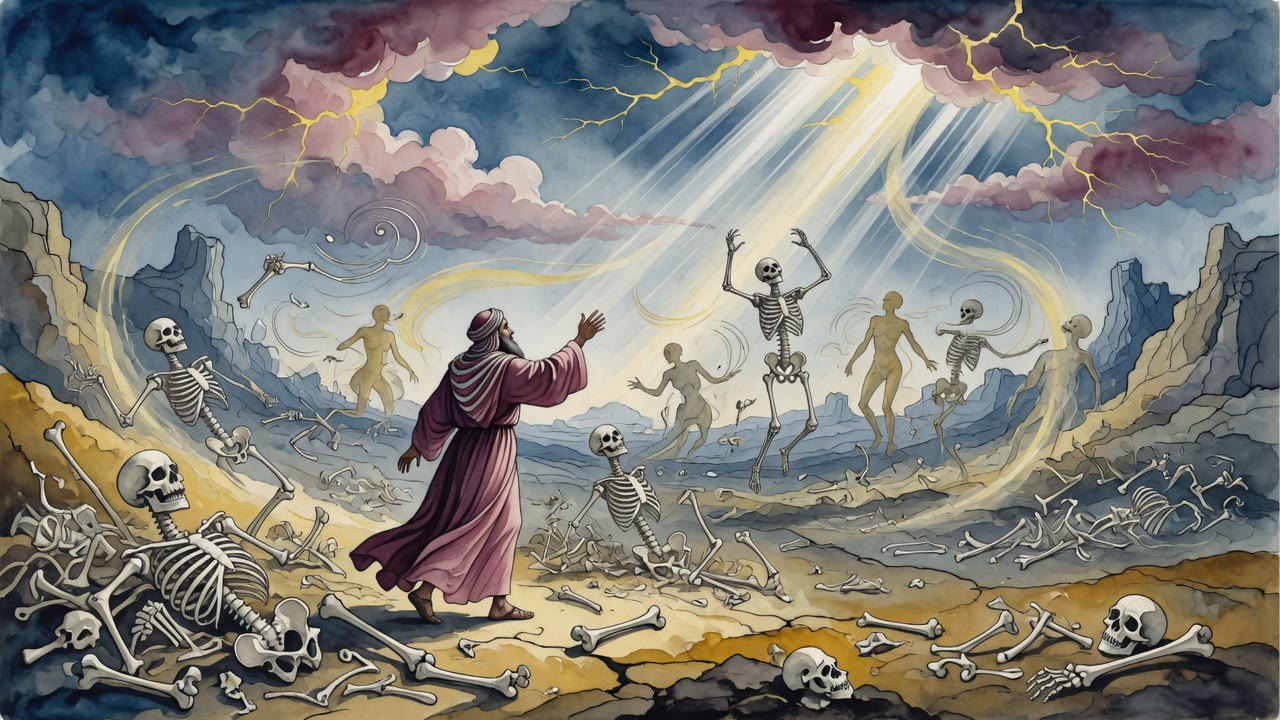
The rabbis refused to read the valley of dry bones as a metaphor. They said it was 600,000 Ephraimites who left Egypt thirty years too early.
When Israel recites the Shema, the angels go quiet. Bereshit Rabbah and the Tikkunei Zohar reveal why Jacob's voice carries the weight of the entire cosmos.
Ezekiel's strange phrase about Egypt's sons triggers a rabbinic debate about circumcision, identity, and what the covenant really means for Abraham's descendants.
Inside the fish's belly, Jonah didn't just pray — he faced Leviathan, toured the foundations of the earth, and made a promise only fulfilled at the end of days.
Abraham named it. David asked who could ascend it. Isaiah said all nations would one day stream toward it. The rabbis of Midrash Tehillim and Yalkut Shimoni traced a single sacred mountain through three voices across a thousand years of Jewish history.
Every nation has an angelic patron. Israel has none. The Mekhilta explains why direct divine protection is both the greatest privilege and the hardest burden.
The Arameans told Joab he was not really a son of Jacob. He had no answer. So he went to the king, and the king convened the court.
When Abraham defeated the four kings to rescue Lot, he was doing something the rabbis found astonishing: he was gathering people back under the wings of the divine presence. Midrash Tehillim on Psalm 110 reads the battle not as a military triumph but as a cosmic act of spiritual recruitment.
The Book of Job opens in the heavenly court. God is praising Job's righteousness when an angelic prosecutor arrives and makes a challenge: the only reason Job is faithful is that his life is easy. Remove the protection and see what happens.
After 37 chapters of Job and his friends arguing about why innocent people suffer, God answered from a whirlwind — and didn't answer the question at all. The rabbis spent centuries explaining why this was the right response.
Eliphaz, Bildad, and Zophar were not bad people. They came to comfort Job, sat with him in silence for seven days, and then proceeded to make everything worse. The Talmud says their mistake was saying true things at the wrong time.
Song of Songs was almost excluded from the Hebrew Bible. Rabbi Akiva saved it by declaring it the holiest book in all of scripture. The entire debate turned on whether its love poetry was literally about lovers — or metaphorically about God and Israel.
A remarkable passage in the Mekhilta reads the Song of Songs as a dialogue between the nations of the world and Israel about whether God can be shared. Israel's answer, drawn from the poem's most intimate verses, is both tender and absolute.
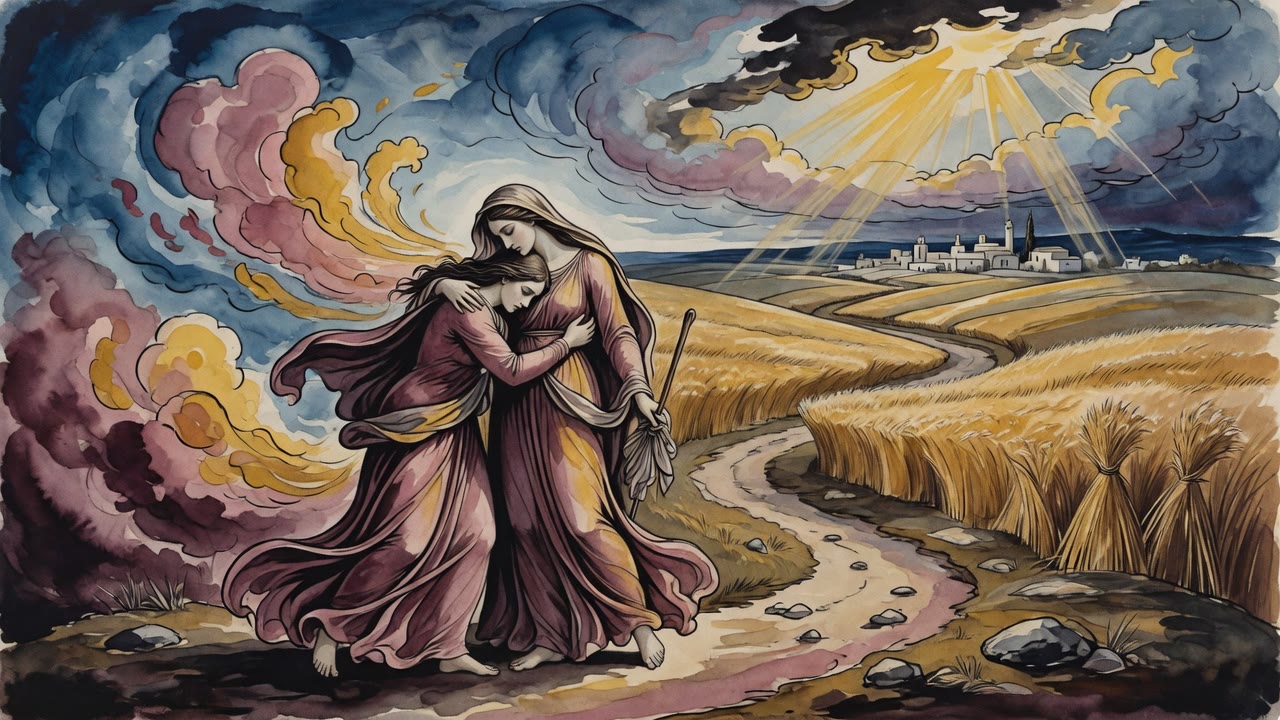
Ruth the Moabite had every right to go home. She was a widow, a foreigner, and her mother-in-law was telling her to leave. She refused — and three words sealed the fate of a dynasty.
The Book of Ruth is read on Shavuot, the holiday celebrating the giving of the Torah. The rabbis chose it deliberately — because Ruth's famous declaration to Naomi is the model for every conversion to Judaism ever performed.
One grammatical detail in Deuteronomy saved Ruth. The masculine-only prohibition let a Moabite woman enter the covenant and become David's ancestor.
Balaam warned his king: if you curse Israel, you touch God. The two are bound together like a man and his garment. Even Lamentations knows this. Even exile cannot cut the cord.
Facing genocide, Esther did not simply ask God for help. She reminded God of the covenant with Abraham and demanded He honor it.
The Tikkunei Zohar hides a map of the entire structure of prayer in a single verse from the Book of Esther. Three movements. One unbroken conversation.
When the decree went out, Mordecai did not only fast. He challenged God directly, invoking the covenant and demanding to know why Israel had been abandoned.
The Tikkunei Zohar reveals that Mordechai's role as Esther's guardian operates through the smallest mark in the Hebrew alphabet: the tip of the letter Dalet in the word Echad, meaning One. This point is the sign of the covenant, and through it the divine brother shields the Shekhinah from Ahasuerus.
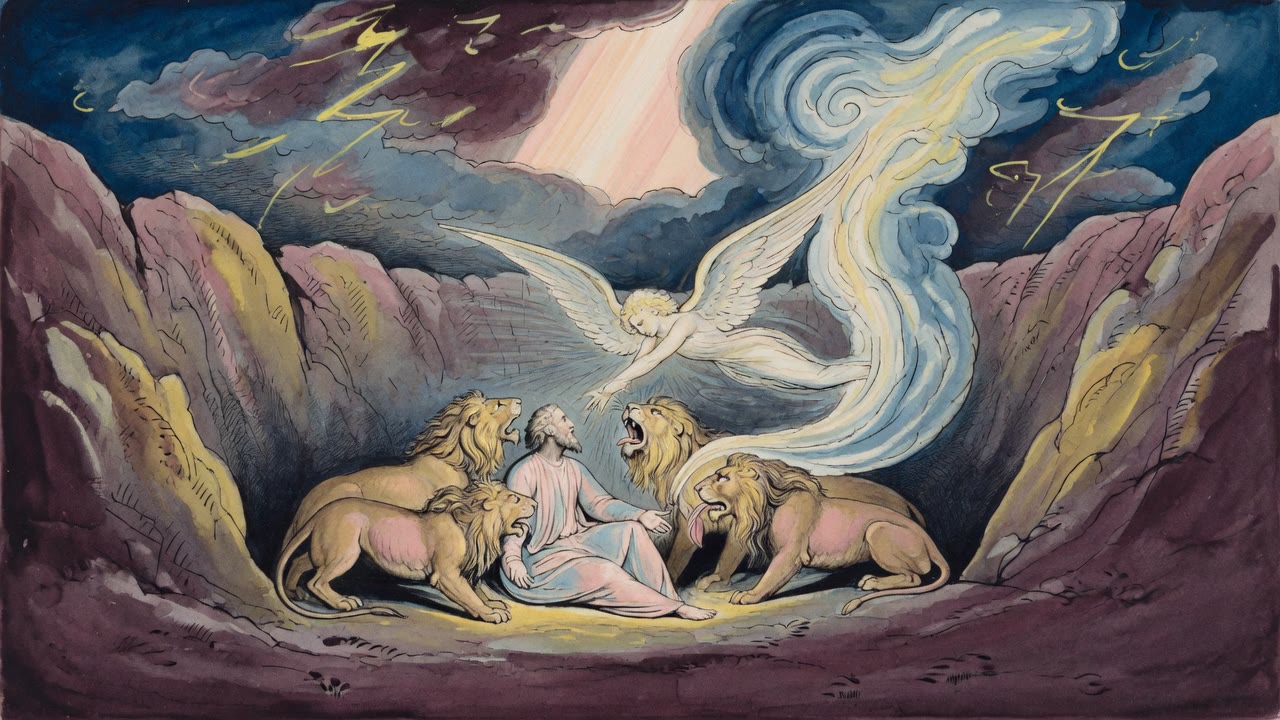
The Bible says Daniel spent a night in a lion's den and emerged unharmed. The midrash asks: were the lions well-fed? The answer is that they had been deliberately starved beforehand — and they still refused to touch him.
Zedekiah dug a secret tunnel from Jerusalem to Jericho. God sent a deer, soldiers chased it, and it led them to the exit just as Zedekiah emerged.
On Hoshana Rabbah, the willow branch — the one plant in the four species with no taste and no fragrance — is beaten against the floor alone, without the others. The rabbis say it represents sinners. And God loves it most.
The Mekhilta's reading of II Chronicles reveals a radical principle: until David was chosen, any Israelite could have been king -- and prophets outside the Land still spoke in the merit of the ancestors.
The same date — the ninth of Av — is when the spies returned with their evil report, when both Temples burned, when the Jews were expelled from Spain, and when World War One began. The Talmud says this is not a coincidence.
Two gold cherubim stood in the inner sanctuary, face to face. When Israel was faithful they faced away. When Israel sinned and enemies entered the Temple, the cherubim were found facing each other, locked in an embrace.
The ten sages executed by Rome were not killed for rebellion or insurrection. According to the tradition, they died for a crime committed by Jacob's ten sons 1,500 years earlier — and the Roman emperor used the Torah's own law to justify it.
The eight-day Sukkot festival ends with a holiday that has almost no laws of its own. Shemini Atzeret exists for one reason only — because God could not bear to say goodbye.
The Sanhedrin was the highest judicial body in ancient Judaism — 71 judges, capital jurisdiction, and procedural rules so strict that a court that executed even one person in seventy years was called bloodthirsty.
Pirkei Avot — Ethics of the Fathers — is six chapters of aphorisms from ancient rabbis. It is the only tractate in the Talmud with no legal content at all. And it is the one Jews read every Shabbat between Passover and Rosh Hashana.
Tractate Bava Metzia opens with two men fighting over a garment and spirals into questions about returning lost objects, honesty in commerce, and the moral obligations of finders. Its first case is one of the most analyzed legal puzzles in all of Jewish law.
In the Talmud, there is a passage where God regrets creating the evil inclination. The rabbis do not treat this as a philosophical problem. They treat it as one of the most important things God ever said.
Most people read the rainbow as God's promise never to flood the world again. The rabbis read it as a weapon God hung up — still loaded, still pointed at humanity — as a constant reminder of what we almost caused.
The Mekhilta's answer is elegant and counterintuitive: one sacred sign cancels the obligation of another. When two covenants overlap, only one may speak at a time.
Pirkei DeRabbi Eliezer uses the fate of rivers as a mirror for the fate of Israel: sweet and life-giving in their course, but bitter when cut off from their source. The rabbis saw in hydrology a complete theology of exile and covenant faithfulness.
A passage in Sifrei Devarim describes what happens to the land of Israel when the people keep the covenant: grain overflows, wine and oil run in abundance, and even nations from the ends of the earth come to taste what God grows there. The midrash reads this not as agricultural fantasy but as a statement about the structure of reality.
When the rabbis read the verse about God's wrath burning against Israel in exile, they added a clarification that changed everything: the wrath was directed inward, not outward. The Babylonians were instruments, not targets. This distinction, preserved in Sifrei Devarim, became the foundation of a theology of exile that refused to cast Israel as victim.
Rabbi Akiva's ruling that a man may divorce his wife for finding a more beautiful woman is the most controversial position in Sifrei Devarim. It becomes coherent only when read alongside Akiva's other teachings, which treat marriage as the closest earthly parallel to the covenant between God and Israel.
Before Rabbi Isaac Luria revolutionized Kabbalah, Elijah appeared at his birth and held the infant during his brit milah. Only the father knew what was happening.
When Potiphar's wife grabbed Joseph's garment, he fled. The Zohar says he was not just resisting temptation — he was protecting a covenant older than the law.
When Israel was exiled to Babylon, Elam, and Edom, the Shekhinah went too. And when the return comes, the tradition says she will not return without her people.
The Tikkunei Zohar reveals that the three colors of the human eye correspond to the three colors of Noah's rainbow, and that when those colors shine, God 'remembers the eternal covenant' of mercy.
God chose one letter of the Hebrew alphabet as the eternal sign of the covenant with Israel. The Tikkunei Zohar reveals why it was Hei, what it means in the structure of the divine world, and why its shape holds the entire history of exile and return.
Kol Nidre is not a prayer. It is a contract annulment — a legal formula recited in court language before a rabbinic tribunal. The melody that makes grown men weep was attached to a cancellation of vows.
The Hallel — Psalms 113 through 118 — has been sung at every Jewish deliverance since the parting of the Red Sea. The Talmud says the Israelites sang it while the sea was still splitting. The rabbis debated why it is not said on every holiday.
The Musaf prayer on Yom Kippur contains a word-for-word description of the high priest's service in the Temple — the goats, the lottery, the blood, the incense, and the prayer in the Holy of Holies. Jews have been reciting this description for two millennia without the ability to perform it.
When the Assyrian general Holofernes assembled his war council, one of his officers gave him intelligence that was really theology: Israel only loses when it sins. He dismissed it. He was wrong.
After seven years of famine, rain returned on one day in Nisan and grain grew in eleven. The miracle was not the speed. It was the promise attached to it.
Holofernes drank more wine that night than in his entire life and never woke up. What Judith did in the dark connects to a covenant older than any army.
Before Enoch was taken for the final time, he told his sons what he learned about time and creation -- and what the 366 books he was leaving them were for.