Every Deer Esau Bound Got Loose and Jacob Took the Blessing
Abraham called Rebecca to his bed and named the grandson to watch. Years later a hunter kept tying deer that would not stay tied.
Table of Contents
 Click for full size
Abraham Called Rebecca to His Bed
Abraham watched his two grandsons grow and made up his mind about them long before their father did. He had seen what Esau did with his days. So he sent for Rebecca, because he knew where her heart already sat, and he gave her an instruction rather than an opinion.
"My daughter, watch over my son Jacob. He will stand in my place on the earth. He will be a blessing among the children of men and the glory of the whole seed of Shem. The Lord is going to take him for a people of his own out of every people on the face of the ground."
Then the old man died, and the instruction sat in a woman's memory for years with nothing to do. Isaac went blind. Isaac went old. Isaac asked for meat, hunted and dressed the way his elder son knew how to do it, and then he would give that son the blessing. Rebecca heard the request and the instruction woke up.
The Deer That Would Not Stay Tied
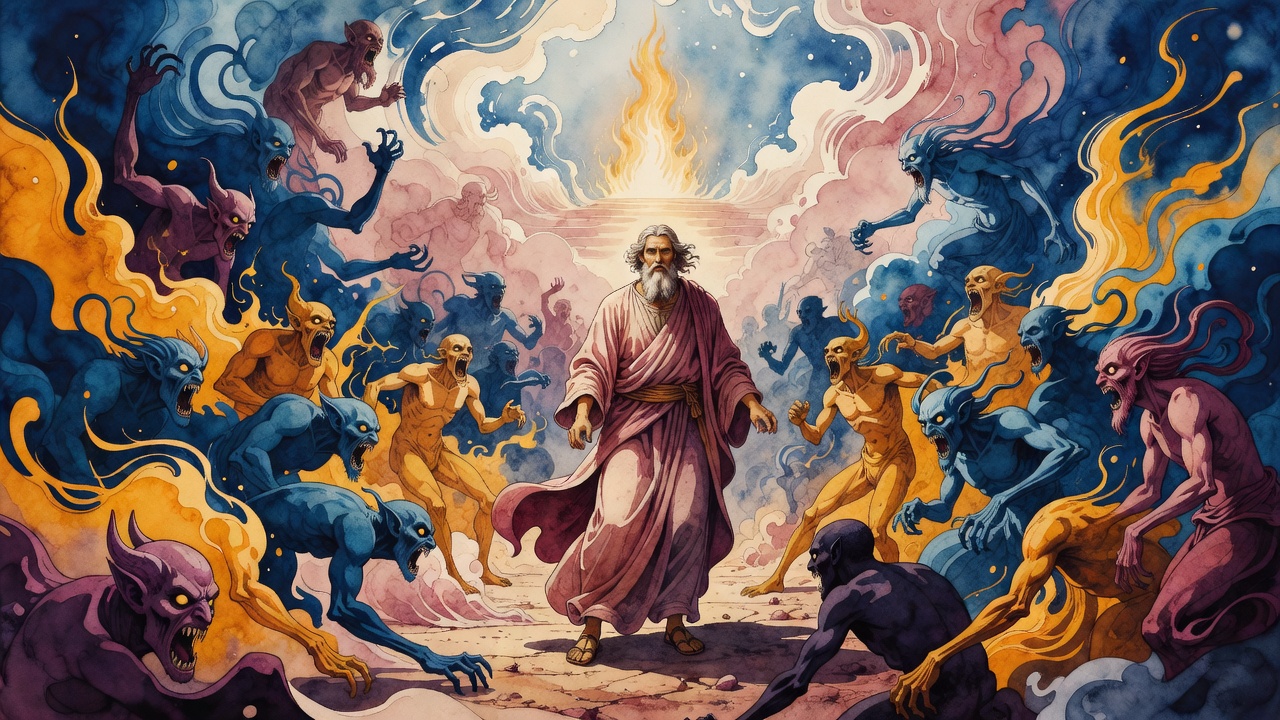
Esau took his bow and went out. He was not careful about where the meat came from, whether he ran it down himself or lifted it off somebody else, but he went out.
God sent Ha-Satan (השטן), the Accuser, out with him. The prosecutor of heaven had one job on that hillside, and it was not to tempt anybody. It was to waste Esau's afternoon.
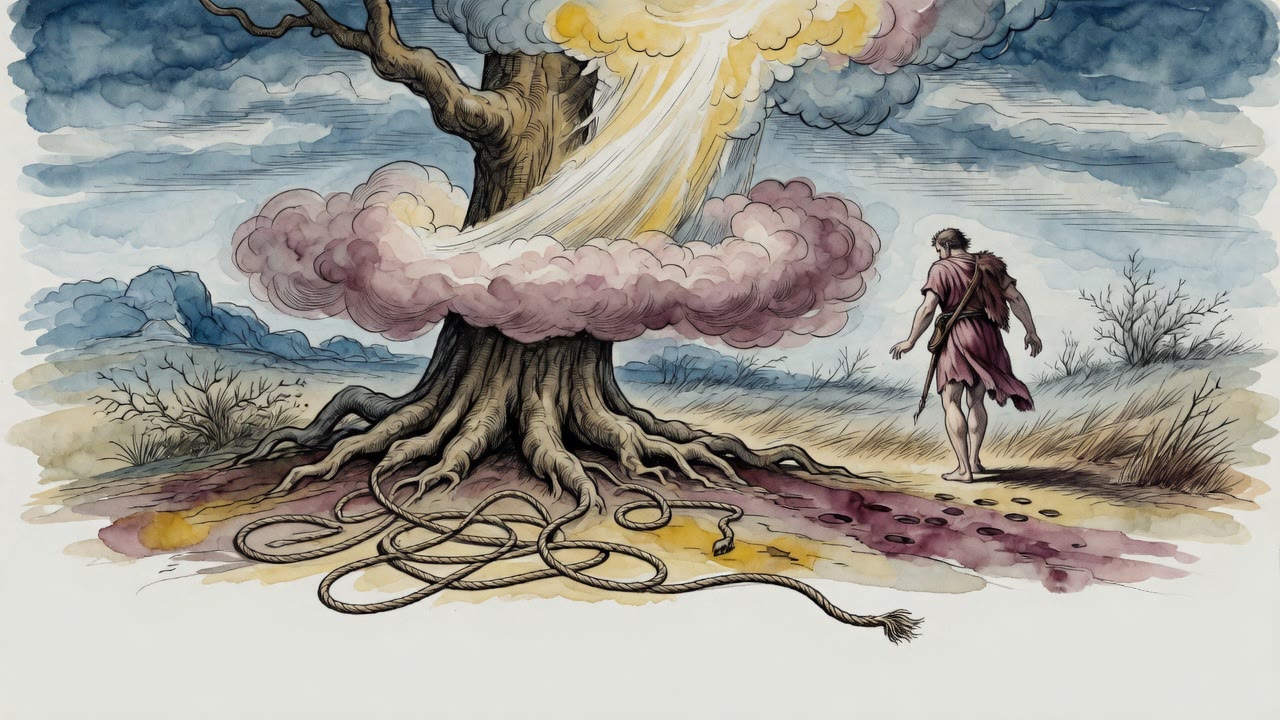
Esau brought a deer down, tied its legs, left it lying in the grass, and went off after a second animal. Behind him Ha-Satan walked up to the deer, untied it, and let it go. Esau came back to an empty patch of flattened grass.
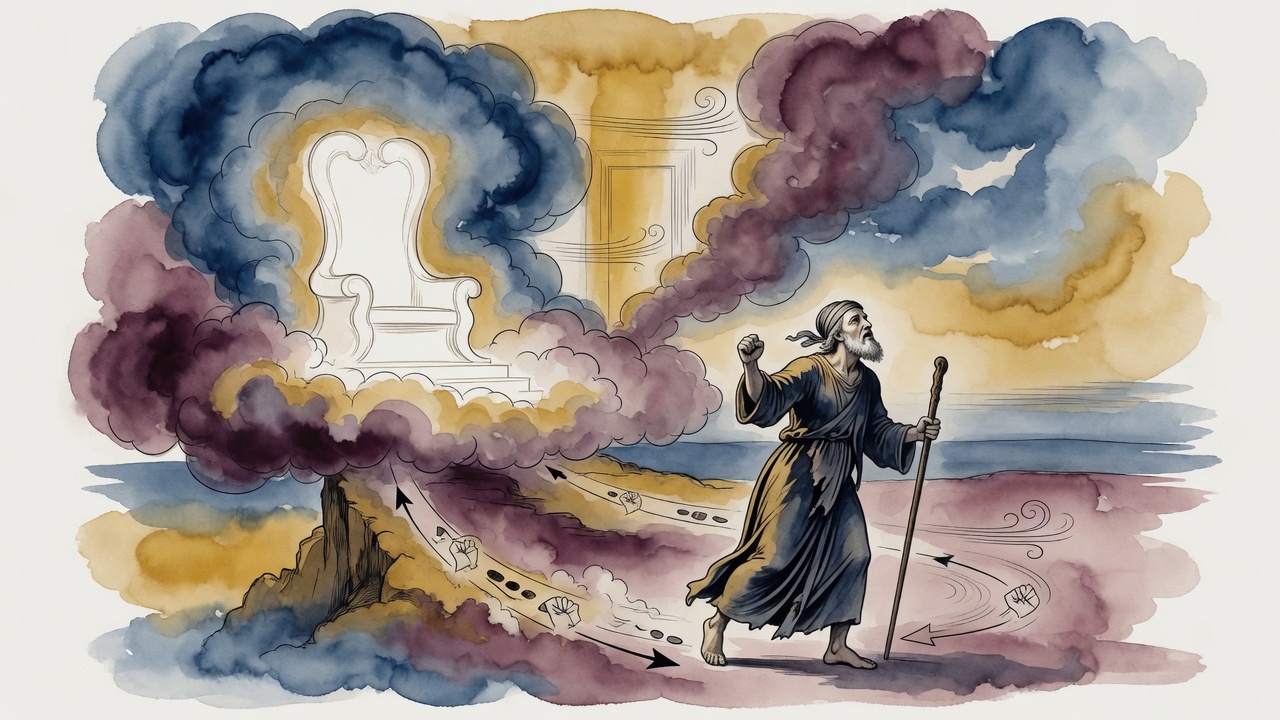
He ran it down again. He tied it again. He left it and went hunting, and it was gone again when he turned around. The sun went across the sky. A man who could outrun anything in those hills kept catching the same kind of animal and kept coming back to bare ground.
Every hour he lost was an hour Rebecca used. She had the goats killed, the stew made, the skins on Jacob's arms and neck, and her younger son standing at his father's bedside with a dish in his hands while his brother was still out there kneeling over a knot that would not hold. By the time Esau got home with his venison the blessing was gone and could not be called back.
The Hand at the Ford
Twenty years later Jacob sent his wives and his children and everything he owned across the ford at Jabbok and stayed on the empty bank alone, because Esau was coming the next morning with four hundred men.
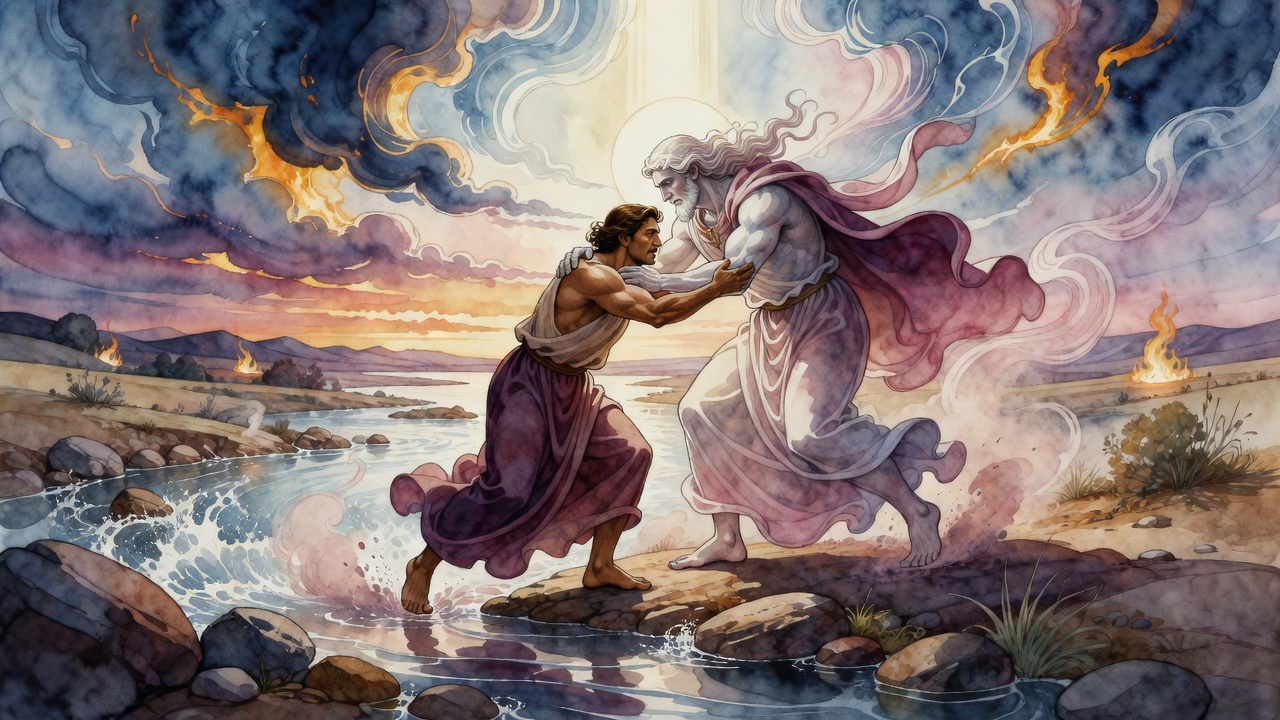
Somebody took hold of him in the dark. It was Samael, the guardian of Esau, and he had not come to kill Jacob. He had come to spend him. A man who wrestles all night is not a man who fights well at noon. So they went at it in the mud by the water, and the angel could not put him down, and near the end he reached in and wrenched the socket of Jacob's hip so the leg would not hold.
Jacob still would not let go.
"Let me go," the angel said. "The day is breaking."
"Not until you bless me."
He was not asking for himself. He was standing on one good leg holding the accuser of his brother's house at the exact moment when that accuser had to be somewhere else, and he made him bless the whole line that would come out of Jacob's body. Whatever heaven would later do for those children, Samael had signed it in the dark by the river and could never stand up and object. The sun came up on Jacob as he crossed over, limping.
Abigail on the Road at Night
Generations down that line, a young man who had been anointed and not yet crowned came down a road at night with four hundred men behind him and murder arranged in his head. Nabal had insulted him. David intended to leave nothing alive in that household by morning.
Abigail met him on the road with the food, and then she did something stranger than bringing food. Her husband's life was hanging on the next few minutes, and she asked David a quiet question about ritual law, as calmly as a student in a study hall.
David would not answer it. "That is a question for daylight," he said. "It cannot be settled at night."
"Then neither can this," Abigail said. "A sentence of death is also passed by day. Even if you are right about my husband, the law makes you wait for morning."
"The man is a rebel," David said. "A rebel gets no trial."
And she said the sentence that stopped him where he stood. "Saul is still alive. You are not king yet, and the world has not called you one."
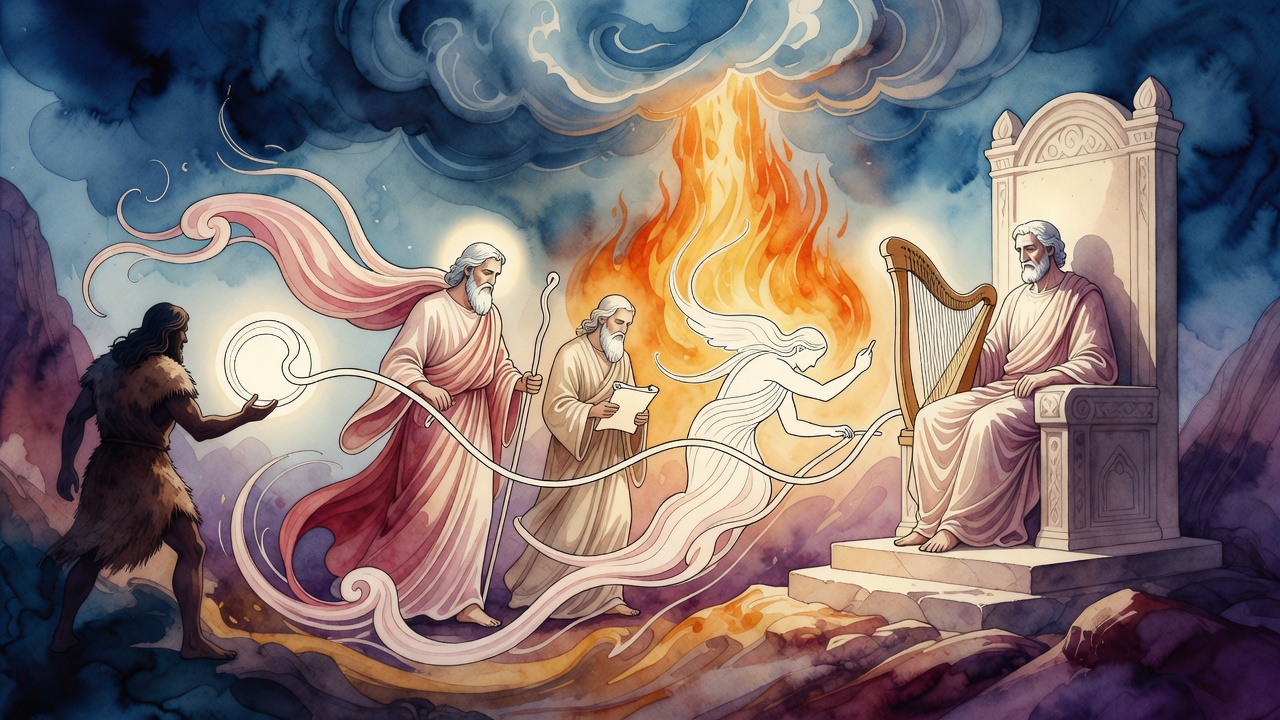
He turned the men around. In the morning Nabal was dead of his own heart and not of David's sword, and the throne came to David later with nothing on it from that night. The line Abraham had named from his bed had been guarded again: first by a knot that would not hold, then by a limp at a river, then by a woman who made a king wait for daylight.
← All myths