4,035 texts · Page 1 of 85
We often think of Adam as simply the first man, made of dust. But some ancient traditions paint a far more…celestial picture. A picture of Adam as an angel. Now, before you picture...
We often think of him in the Garden of Eden, or perhaps being expelled from it. But Jewish tradition holds some truly fascinating ideas about his ultimate fate. One such idea, foun...
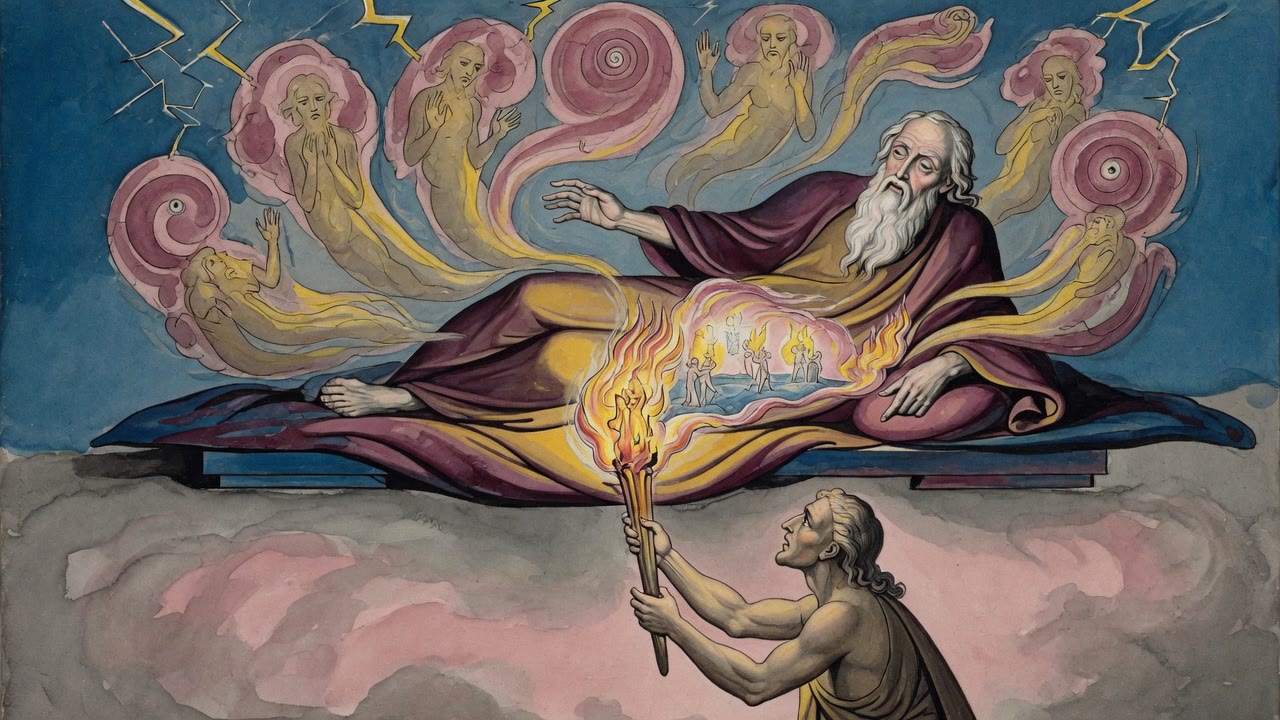
One such story, preserved in Vita Adae et Evae (The Life of Adam and Eve), tells of a remarkable vision. It's a bit obscure, not as well-known as other heavenly journeys like Enoch...
We often think of Mashiach – the Messiah – as a future figure, the one who will usher in an era of peace and redemption. But what about now? Where is he? What’s he doing? Jewish tr...
We often picture Moses on Mount Sinai, receiving the divine word directly from God. Forty days and forty nights of dictation. But what if I told you there's another story, a fascin...
In fact, the Sabbath isn't just a terrestrial observance; it's a celestial one, too. Imagine this: right after creating the Sabbath, God gathers all the angels – the angels of the ...
The land was barren. A terrible famine gripped the region, forcing Abraham and Sarah to seek refuge in Egypt. They first tried Hebron, but the hunger was everywhere. So, they journ...
I'm talking about the Akedah, the binding of Isaac. We all know the story: Abraham, tested to the absolute limit, raises his knife to sacrifice his son Isaac. It's a scene that chi...
Jewish tradition is rich with stories of dreams and visions, and the power they hold. One particularly striking tale, found in Tree of Souls by Howard Schwartz, tells of a dream th...
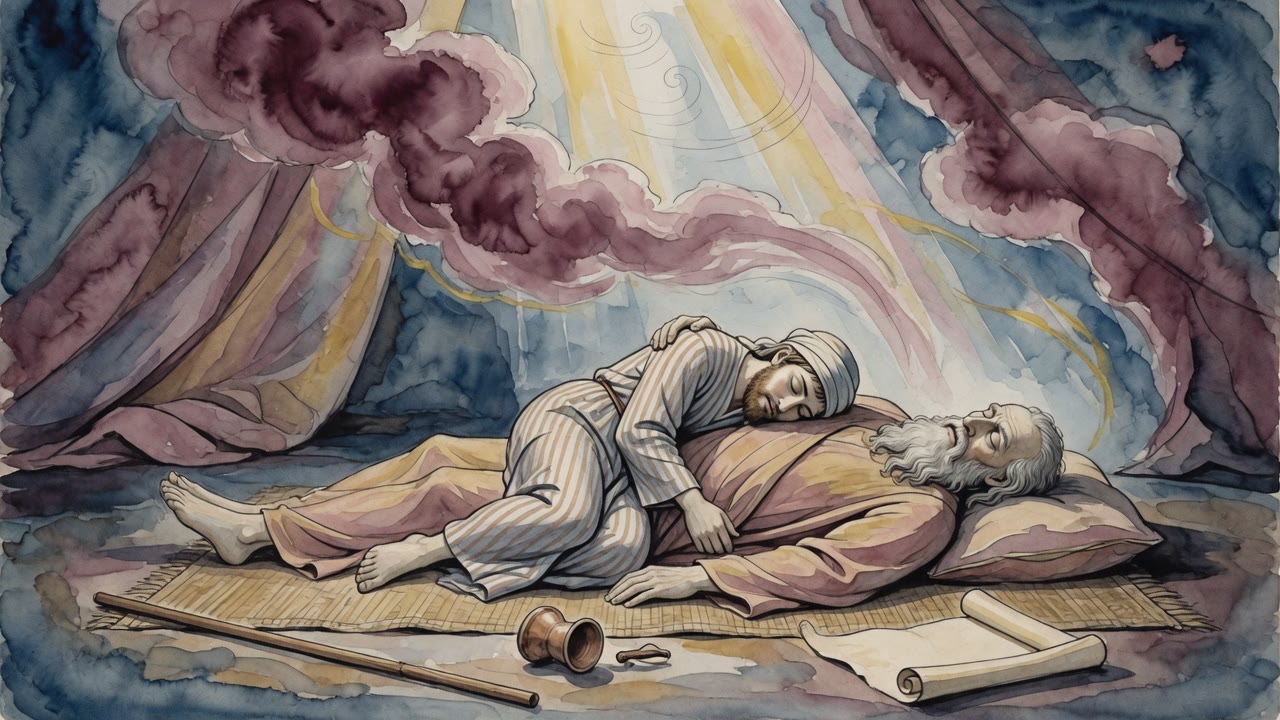
When the time came for Abraham to leave this world, God didn't send just any messenger. He summoned the Angel of Death himself. But God, in His infinite compassion, knew that Abrah...
Was Jacob, the patriarch, just an ordinary man? Tradition whispers secrets, suggesting his story is far grander than we might imagine. Some even say his true name was Israel, and t...
Jewish tradition offers some powerful and moving images of what happens to the souls of the righteous after death. And some of these images paint a picture of them continuing to fi...
It involves fallen angels, forbidden knowledge, and a whole lot of trouble. This isn't just a story of two rogue angels, Shemhazai and Azazel. According to some accounts, like the ...
Jewish tradition has some pretty ideas about it. One vision, described in Tree of Souls, paints a picture so vivid, so intense, it’s hard to ignore. Imagine this: in the very gener...
It pulls no punches in its call for humility and divine justice. Ben Sira, a sage writing in Hebrew around 200 BCE, gives us these powerful words: "Make an end of the head of the p...
It's in those moments that we often turn to something greater, something beyond ourselves. And that's precisely what we find in the words attributed to Ben Sira. This passage, foun...
That’s the feeling I get when I read passages like this one from the Book of Jubilees. The Book of Jubilees, sometimes called Lesser Genesis, is an ancient Jewish religious work. I...
That's the scene set for us right at the beginning of Jubilees. God commands Moses, "Write down for thyself all these words which I declare unto thee on this mountain, the first an...
The Book of Jubilees, also known as Lesser Genesis, is an ancient Jewish religious work of 50 chapters, considered canonical by the Ethiopian Orthodox Church as well as Ethiopian J...
Today, we're diving into a passage from Jubilees that focuses on the Sabbath, that sacred day of rest. The text claims that God said He would teach humankind about the Sabbath, "th...
The Book of Jubilees, an ancient Jewish text that expands on the stories we find in Genesis and Exodus, really emphasizes this point. It paints a picture of creation itself as a mo...
Think of it as a really old "director's cut" of the Bible. Specifically, we're looking at Jubilees 6. The passage is talking about a particular festival. What festival? Well, that’...
That feeling is powerfully captured in the Book of Jubilees, specifically in a poignant moment of Abraham's life. Imagine Abraham, not yet the towering figure we know, but a man wr...
Today, we're diving into the Book of Jubilees, a text not found in the canonical Tanakh, but considered sacred in some Jewish traditions. It retells much of Genesis and Exodus, but...
We find Abraham, or Avram as he's known here, grappling with just that. The story picks up with Lot, Avram’s nephew, deciding to separate from him. Now, Lot wasn't just any relativ...
We catch glimpses of it in the text, but sometimes, we need a little help filling in the blanks. That's where texts like the Book of Jubilees come in. The Book of Jubilees, sometim...
We often hear the story of Abraham, the patriarch, but sometimes we miss the sheer power of the moment his name was transformed. It's not just a name change; it's a cosmic realignm...
There are moments in the Torah where the sky seems to split open and a promise falls through. Chapter 15 of Genesis is one of them. In it, God binds Himself to Abraham with a coven...
It's explored in fascinating detail in texts like the Book of Jubilees. Now, the Book of Jubilees, for those unfamiliar, is an ancient Jewish text that retells the stories from Gen...
It's easy to skim over those verses in Genesis, but the Book of Jubilees gives us a peek into his immediate reaction. The text tells us, “And Abraham fell on his face, and rejoiced...
We're in the aftermath of a huge moment: God’s promise to Abraham. But it's not just any promise; it's a covenant. A sacred agreement. God tells Abraham, "My covenant shall I estab...
Let’s talk about brit milah, circumcision, and a fascinating text called the Book of Jubilees. This ancient Jewish work, considered scripture by some but not included in the standa...
There’s this fascinating ancient text, the Book of Jubilees, a work that retells the stories of Genesis and Exodus but with a very particular slant. It’s not part of the Hebrew Bib...
The Book of Jubilees, a text not found in the Hebrew Bible but considered scripture by some, pulls back the curtain on some pretty intense family drama, and the consequences of not...
The Book of Jubilees, an ancient Jewish text, gives us a glimpse. It’s like a backstage pass to some of the most pivotal moments in the Torah. Imagine the scene: Abraham is visited...
This ancient Jewish text, considered canonical by some but not included in the standard Hebrew Bible, gives us a vivid, almost apocalyptic, picture. It paints a stark image of divi...
There's a whole world of fascinating Jewish texts just beyond the familiar narratives, filled with incredible details and alternative perspectives. Today, let's dip into one of tho...
We often read the stories of the Torah, of the Hebrew Bible, as one continuous flow, but sometimes pausing to consider when things happened adds a whole new layer of meaning. Take ...
That feeling resonates deep within a fascinating text called the Book of Jubilees. The Book of Jubilees, also known as Lesser Genesis, was widely read during the Second Temple peri...
In this ancient text, which some consider to be part of the broader Jewish apocrypha, we find a pivotal moment concerning Abraham, his wife Sarah, and a promise that reshapes the d...
We often think of the Torah as the ultimate source, and of course, it is foundational. But there are other ancient texts, bubbling with stories and traditions, that shed even more ...
We're talking about Abraham, and his son, Isaac. Specifically, when Isaac was weaned. Now, weaning might not seem like cause for a huge shindig today, but in ancient times, it was ...
It's a feeling that pops up in some pretty surprising places, even in our sacred stories. to one of those moments, found in the Book of Jubilees. The Book of Jubilees, for those un...
We find ourselves at a pivotal moment in his life, a moment fraught with emotional turmoil and weighty decisions. It all centers around Sarah, Abraham’s beloved wife, and Hagar, he...
We often think of Abraham as this towering figure of faith, but the Book of Jubilees, an ancient Jewish text from the Second Temple period, gives us a stark look at the consequence...
Hagar knew that feeling intimately. We find her story, or at least a piece of it, echoed in the Book of Jubilees, an ancient Jewish text that retells and expands upon stories from ...
The Book of Jubilees, a text revered by some ancient Jewish communities but not included in the standard biblical canon, gives us a glimpse behind the curtain of one of the most ch...
Jubilees, considered scripture by some and an important historical text by others, paints a picture of Abraham's unwavering faith in the face of, let’s just say, a lot of challenge...
The Targum says the sister deception was not cowardice. It was a survival pact forged the night Abraham broke from his father's idols.
The Torah says Abraham gave Hagar bread and water. The rabbis say he also gave her a legal document that severed her from this world and the next.
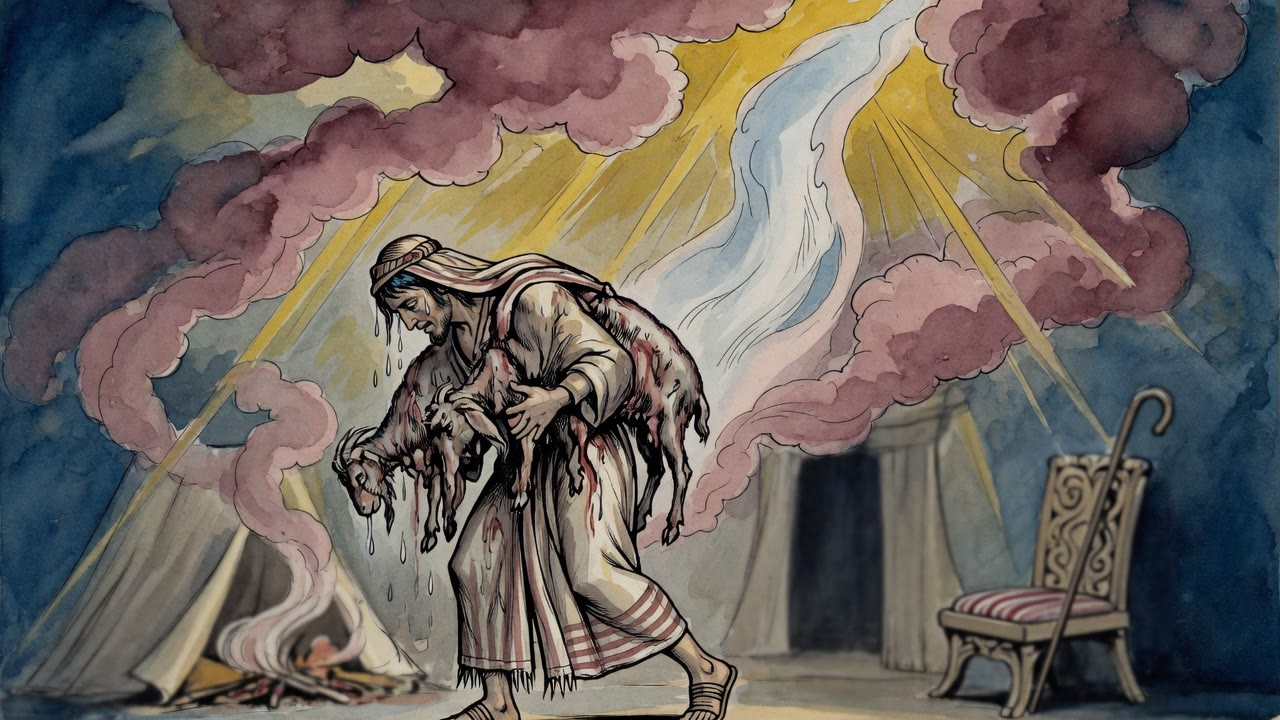
The Torah says Jacob disguised himself and lied. The midrash says his hands were shaking and he cried the whole way through.
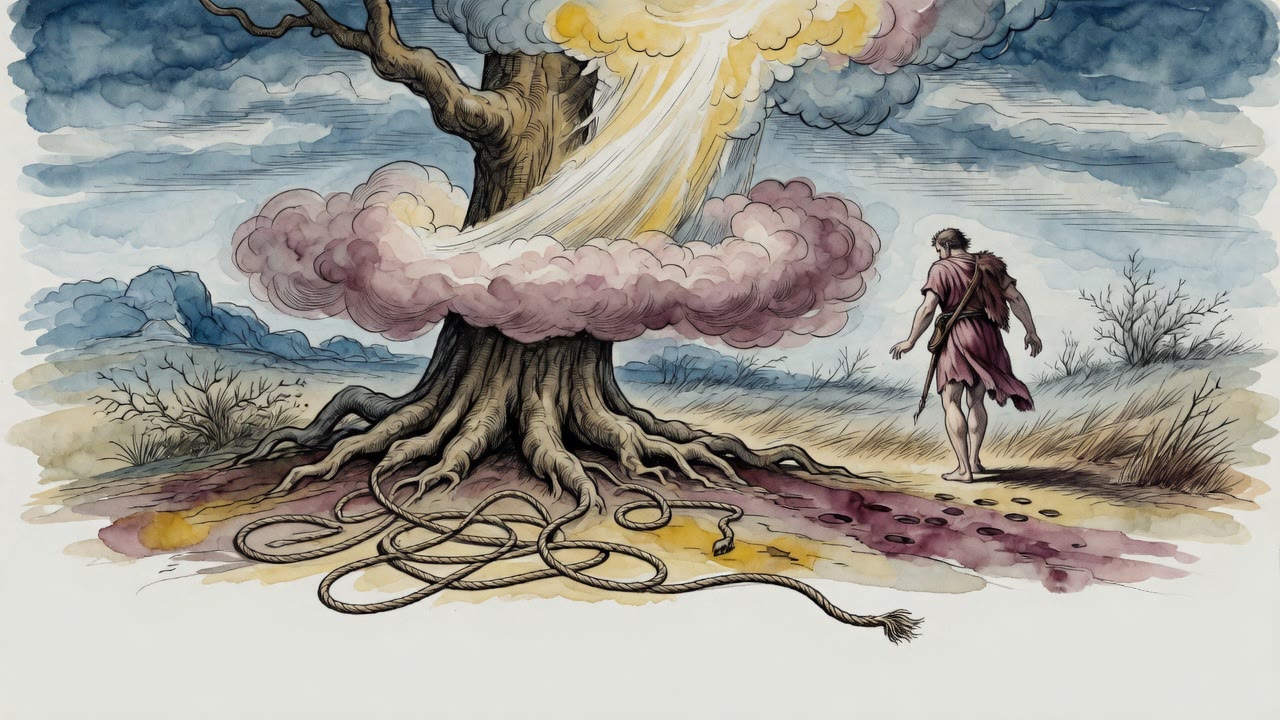
While Esau hunted game to win his father's blessing, Ha-Satan kept slipping the knots. Every deer he caught vanished from the rope.
When Jacob arrived in Haran empty-handed, Laban's welcome embrace was not affection. The midrash says he was frisking his nephew for a hidden fortune.
Centuries before a single Levite ever served in the Tabernacle, Jacob counted his sons at Bethel and picked one out for God. It was not Joseph.
When Joseph asked his youngest brother if he was married, Benjamin listed ten sons. Every name was a coded lament for the brother nobody told him was alive.
For years Jacob secretly blamed Judah for selling Joseph into slavery. Then one day he handed Judah the keys to the family's future.
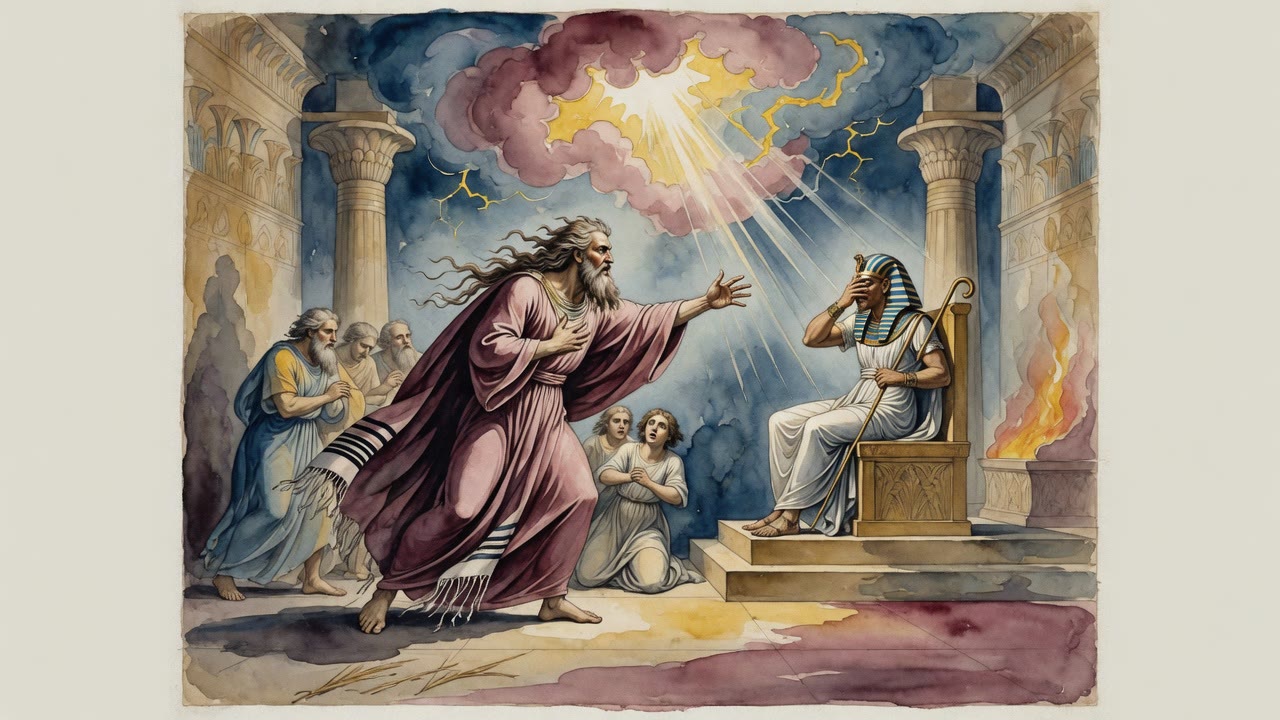
When Pharaoh met Jacob, a giant in the room mistook the old man for Abraham. What happened next was the strangest blessing in the Torah.
Every other mountain was too grand and too tainted. Sinai was chosen because it was humble, pure, and carried a secret the other mountains did not know.
When Jacob blessed his son Judah with the image of a lion, he was encoding a dynasty, a theology, and a mystery into three letters of his name.
Abraham's battle to rescue Lot from four kings took place on the 15th of Nisan, fifteen hundred years before the Exodus, the same night God always chose for miracles.
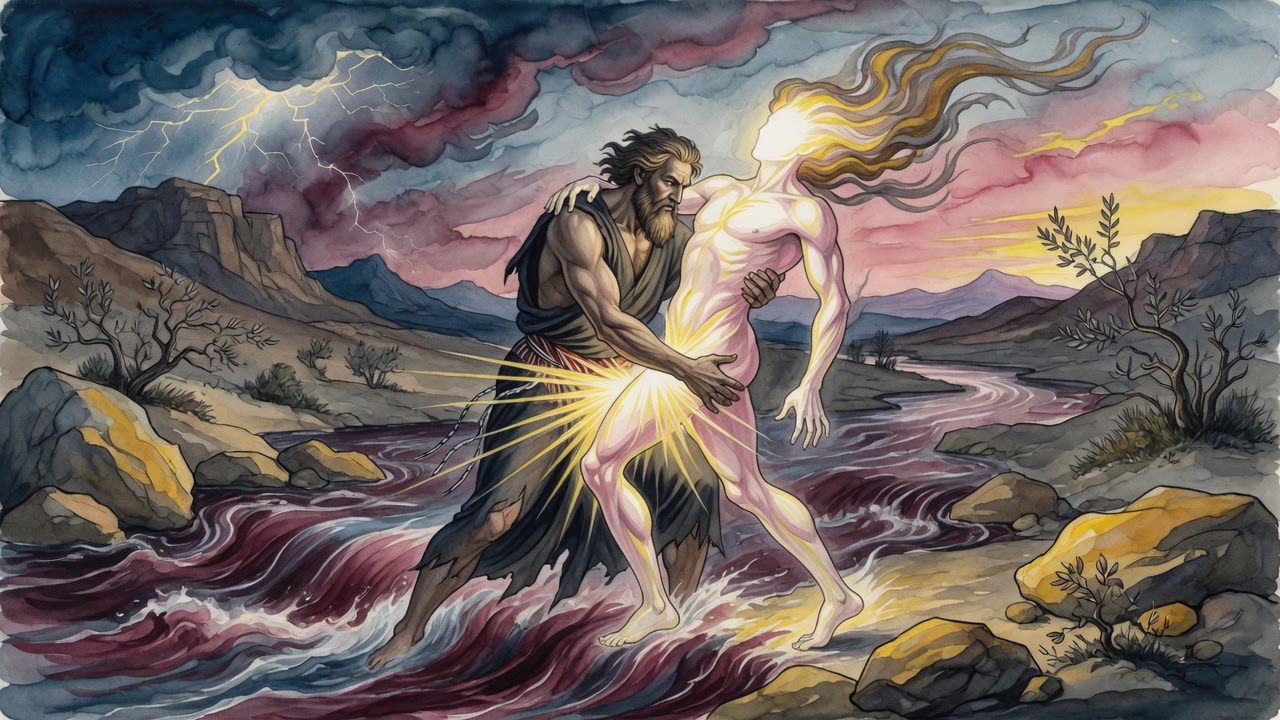
Alone by the Jabbok, Jacob grabs a stranger in the dark and refuses to release him until dawn. He walks away limping with a new name and a nation.
When God made the first covenant with Abraham, it involved a smoking furnace passing through dismembered animal carcasses at night. The rabbis describe what Abraham saw in that darkness — and it wasn't reassuring.
The three men who appeared at Abraham's tent were angels — but they were not there as a group. Each had been sent from heaven on a separate assignment, and their missions were in direct conflict with each other.
The negotiation over Sodom is the only moment in the Hebrew Bible where a human being openly haggles with God — arguing, lowering the threshold, and pressing for more. The rabbis asked why Abraham stopped at ten.
After Sarah died, Abraham married a woman named Keturah and had six more sons. The rabbis argued for centuries about who she really was — and the answer changes the whole story.
When Abraham died, the Torah says Isaac and Ishmael buried him together. The rabbis noticed something remarkable — what that simple detail reveals about the older brother who was cast out.
Abraham had Sarah, Hagar, and Keturah. Jacob had Rachel, Leah, Bilhah, and Zilpah. Isaac had Rebecca — one woman, one marriage, one love the Torah describes with a single remarkable verb.
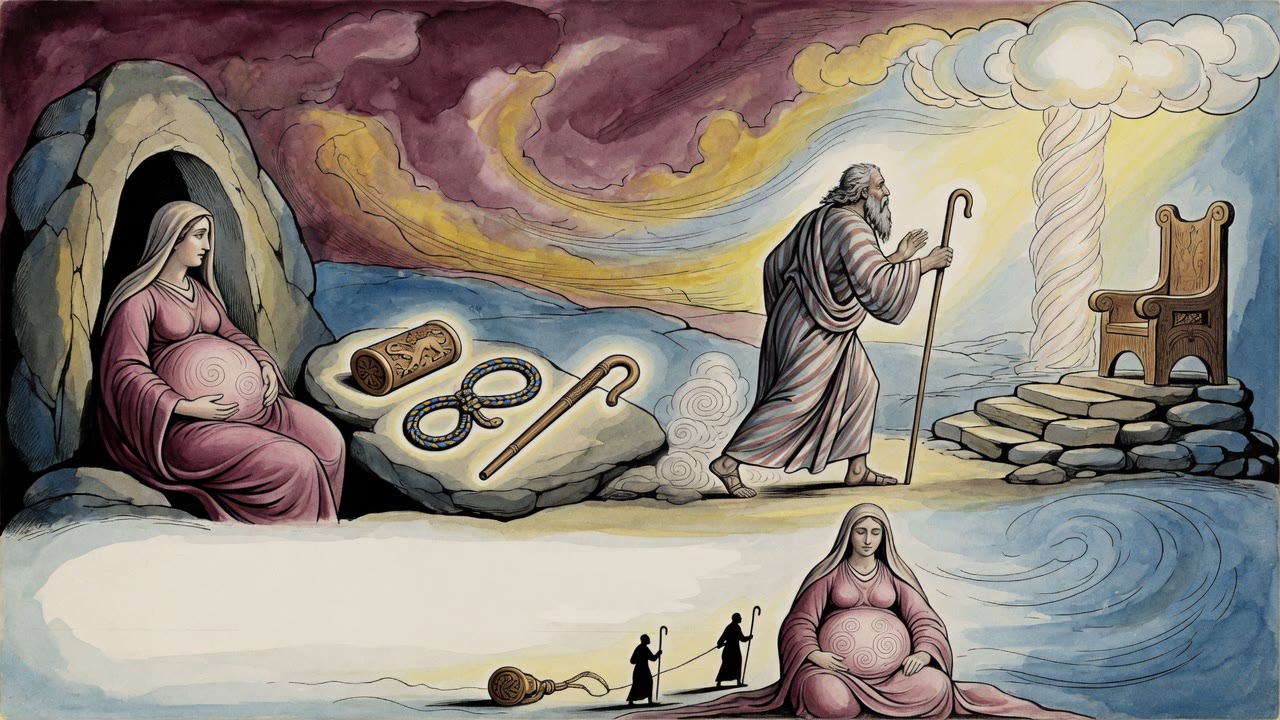
When Rebecca felt her twin sons struggling in her womb, she went to inquire of God — and received an oracle about two nations at war for the rest of history. The rabbis describe what she felt and what God actually told her.
The mandrake incident in Genesis is one of the strangest scenes in the Torah — two sisters negotiating over a fertility herb, using Jacob as the bargaining chip.
Rachel died in childbirth on the road to Bethlehem, and Jacob buried her right there instead of in the family tomb. The rabbis said this was not negligence — it was prophecy.
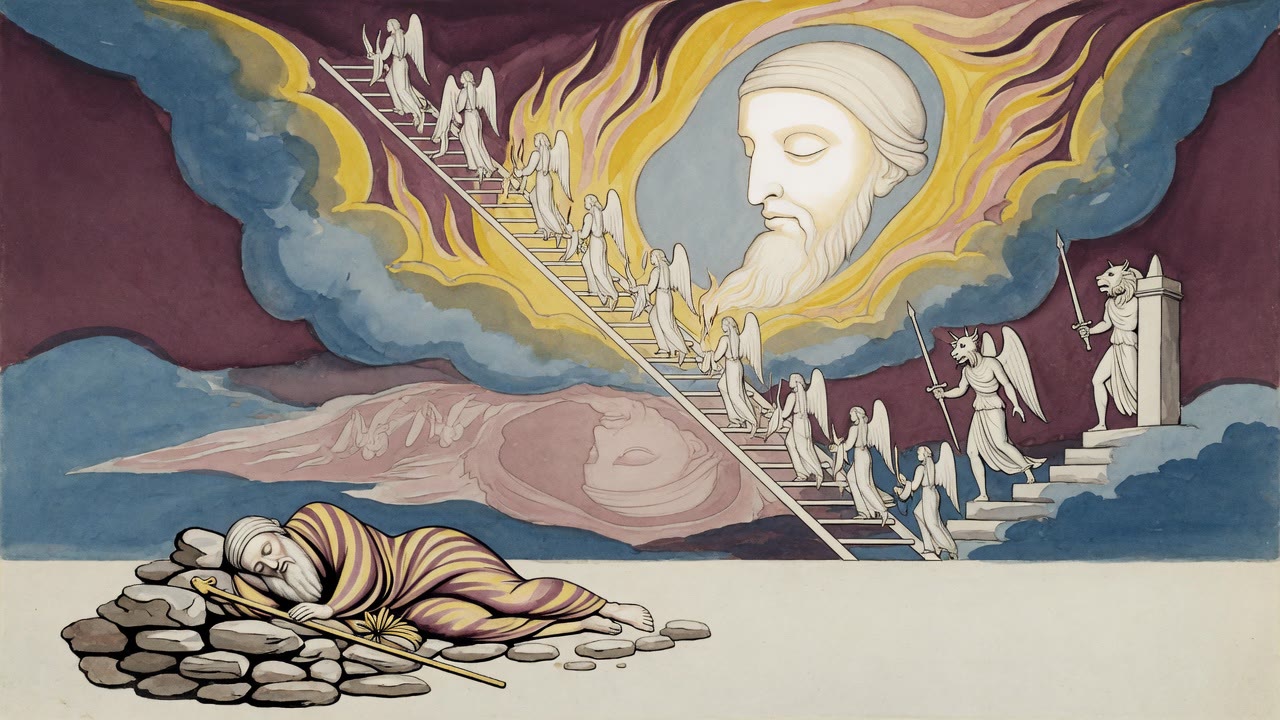
Jacob saw angels going up and coming down his ladder. The rabbis noticed that the order was backwards — the angels going up should have been there first. The explanation reveals a cosmic administrative system that governed every step of Jacob's journey.
Jacob gave Joseph a coat, and the rabbis say that single act of favoritism set in motion a chain of consequences that eventually brought an entire nation into Egyptian slavery.
Tamar was condemned to be burned alive by Judah for harlotry. Then she produced evidence. The patriarch's own words: 'She is more righteous than I.'
Joseph fled. His garment stayed. Potiphar's wife turned a piece of clothing into an accusation that sent an innocent man to prison — and the rabbis found a pattern in every detail.
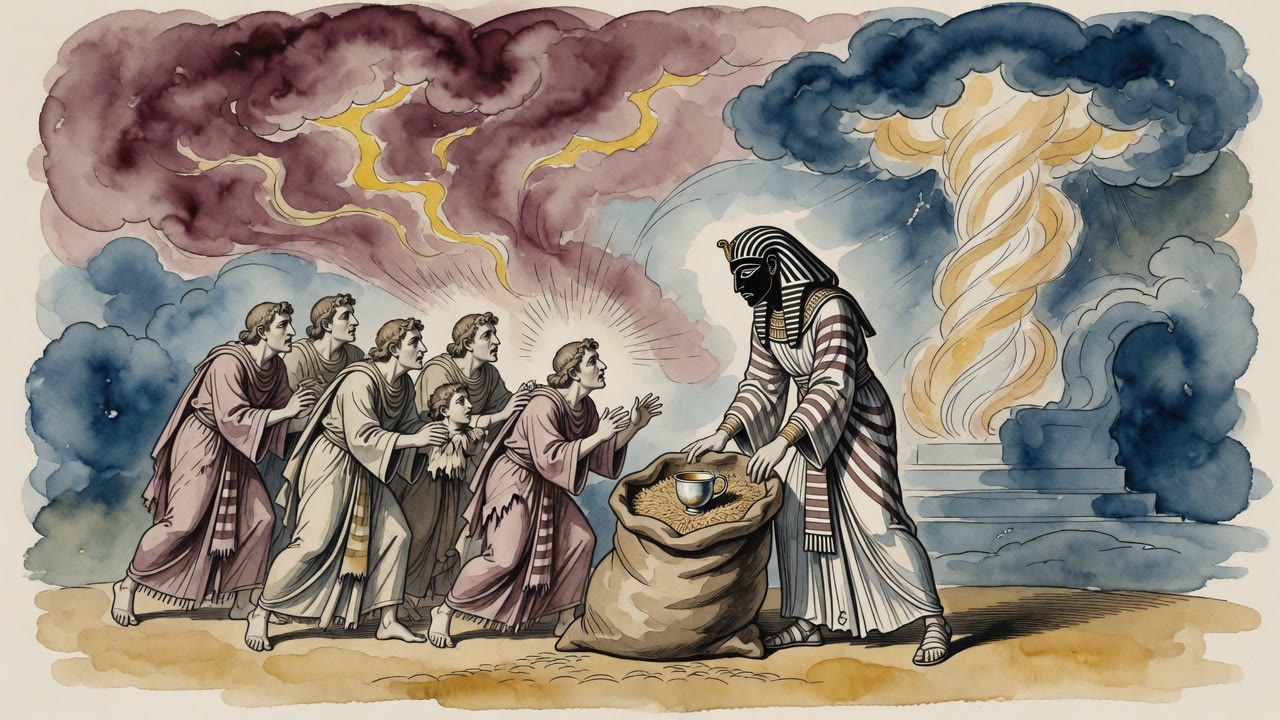
Joseph had all the power. He could have revealed himself immediately. Instead he planted a silver cup in his youngest brother's bag and waited to see what his brothers would do.
Joseph had the power. His brothers were terrified. He could have destroyed them. Instead he cleared the room, wept so loudly Egypt heard him, and said: 'I am Joseph.'
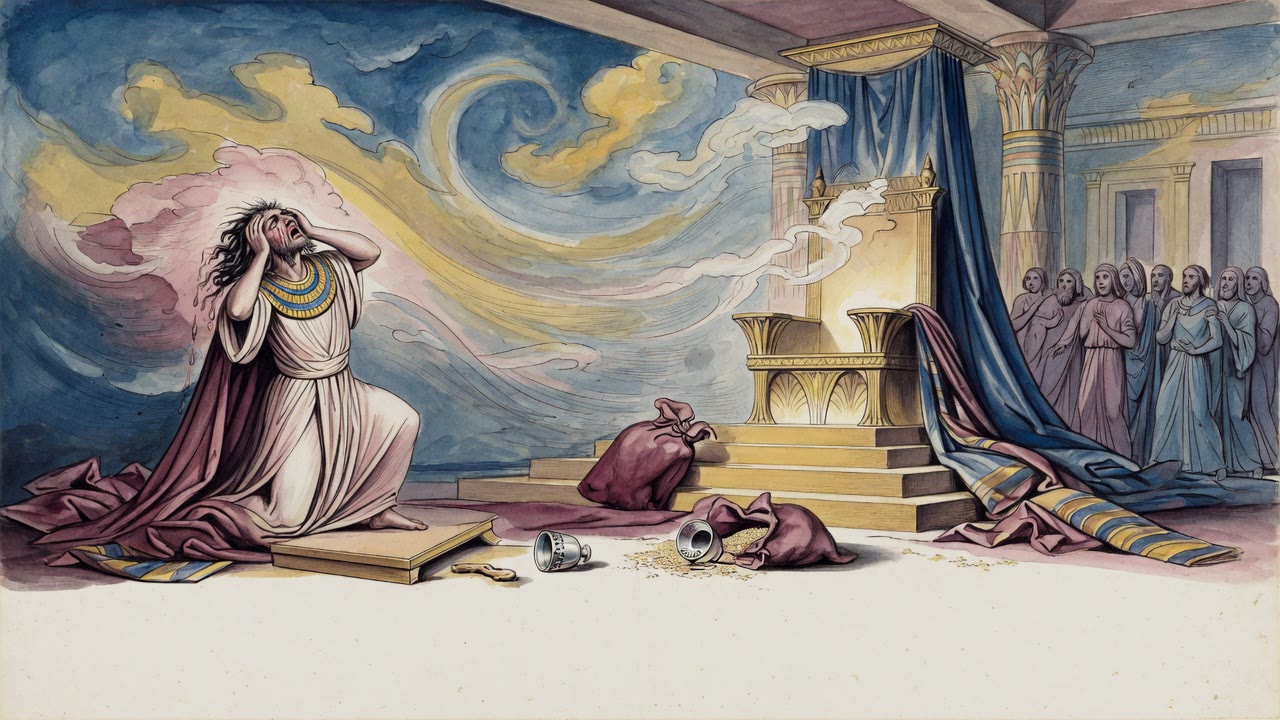
Joseph had Benjamin. He had all the power. He had his brothers exactly where he wanted them. Then Judah spoke — and what he said in that throne room made a viceroy weep.
On his deathbed in Egypt, Jacob called his twelve sons and told each one his destiny. Some heard blessings. Some heard rebukes that echoed for centuries.
Jacob called Judah a lion's cub and promised that the scepter would not leave his tribe until the final redemption. Two thousand years of Jewish history have not cancelled that promise.
Abraham walked three days in silence with the son he thought he was about to kill. The ancient texts fill in what the Torah left unsaid.
Most people remember Jacob stealing the blessing. The Book of Jubilees remembers what happened after, when Esau lifted his voice and wept.
Jacob spent twenty-two years mourning a son who was not dead. The midrash says his spirit did not come back until he saw the wagons.
Jacob gathered his sons to bless them and then spoke a name none of them knew. Four centuries later, that name would walk out of Egypt.
A tenth-century homily reads Job 36 as a portrait of Abraham. In the reading, the patriarch becomes the field hand who tells the landlord what is growing.
The Torah says Abraham died at a good old age. The Book of Jubilees says his grandson was the one who discovered the body, lying across his chest.
Nine hundred thousand people came to watch Abraham burn. The Hebrew Bible never mentions it. The stories behind it are stranger than the silence.
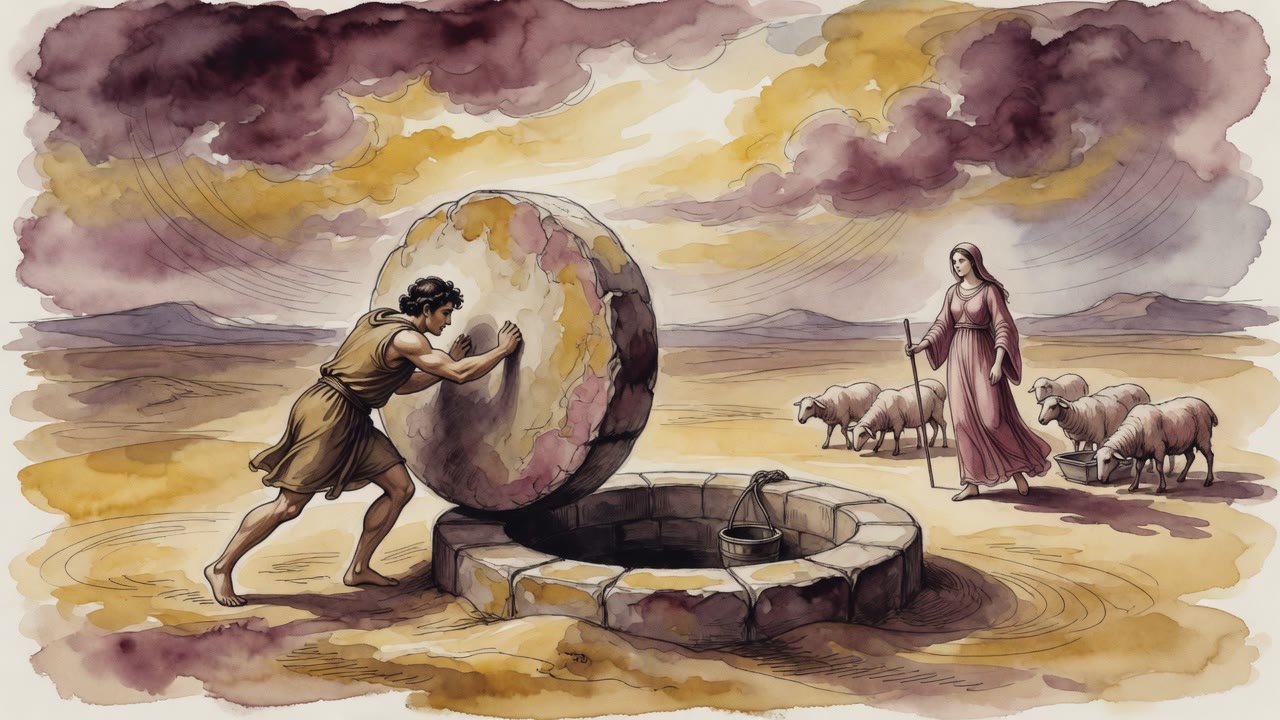
A stone that took a dozen shepherds to move. A seventeen-year-old fugitive. A girl leading her father's sheep. Jacob did it alone, in front of her.
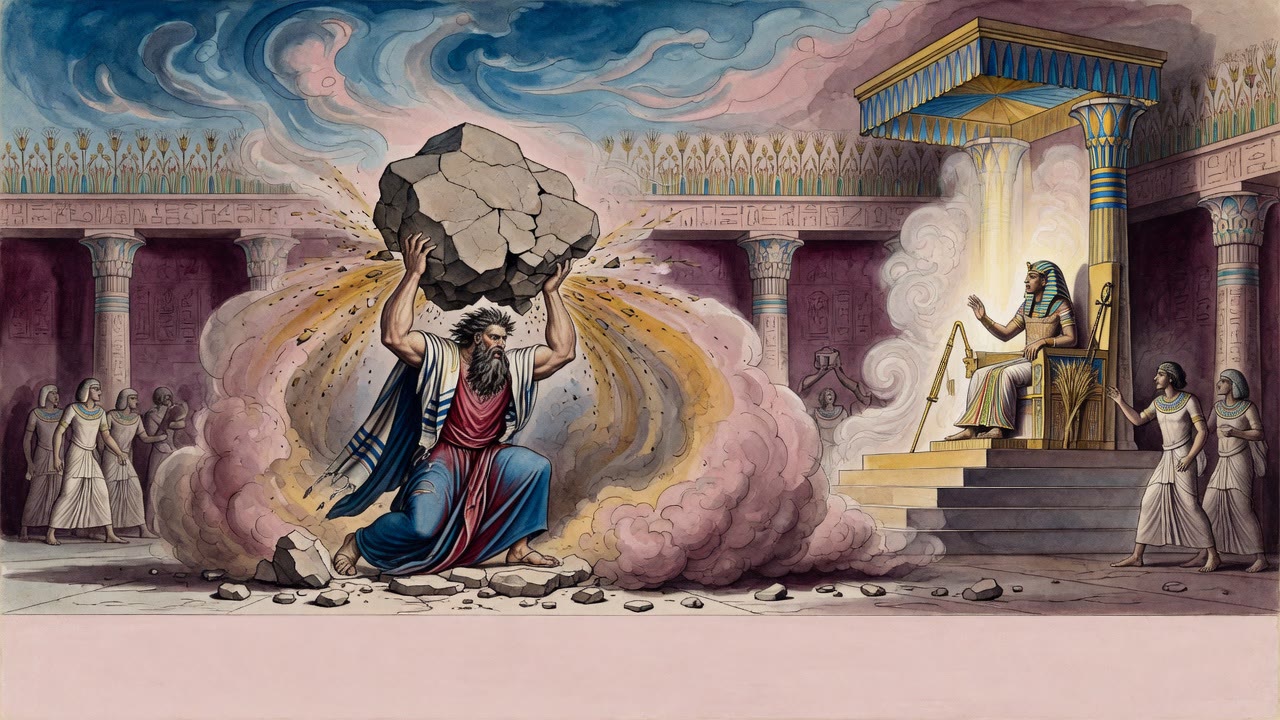
The Torah says Judah made a speech. The old midrash says Judah nearly leveled Egypt. The showdown between the two brothers almost ended everything.
The Torah says Abraham chased four kings with 318 men. The old rabbis said the number was a code. The real answer is much smaller and much stranger.
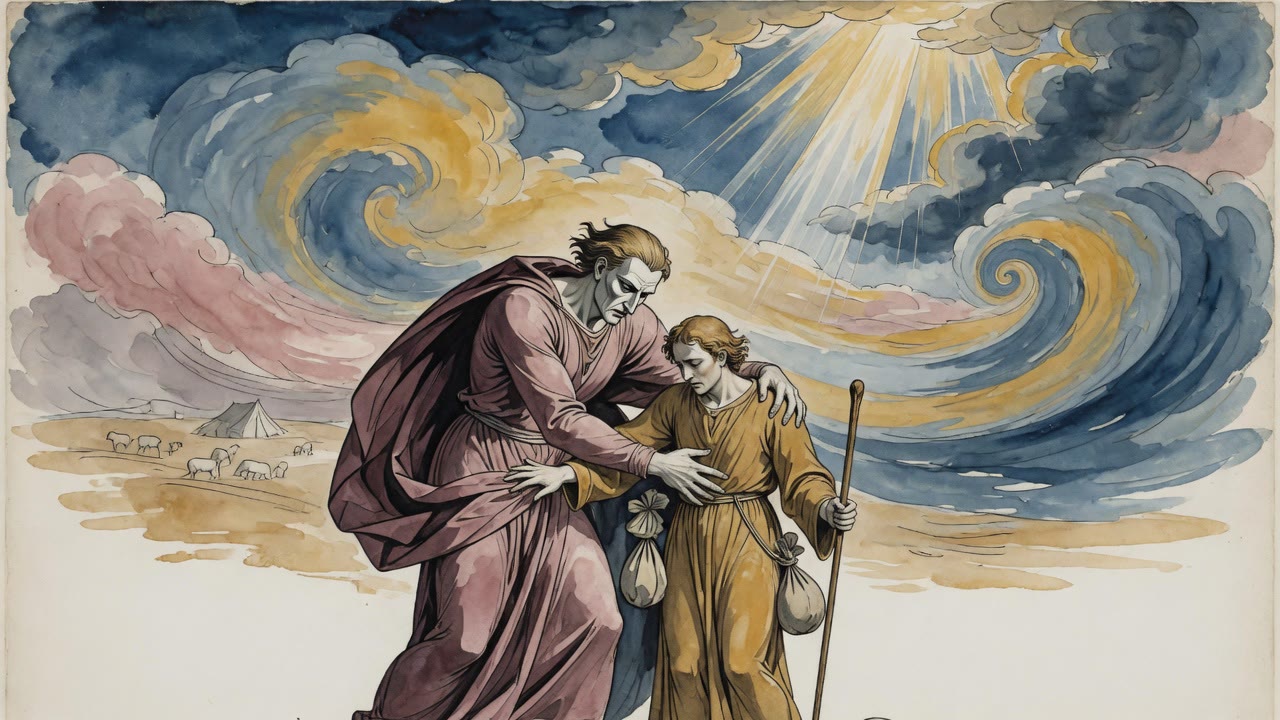
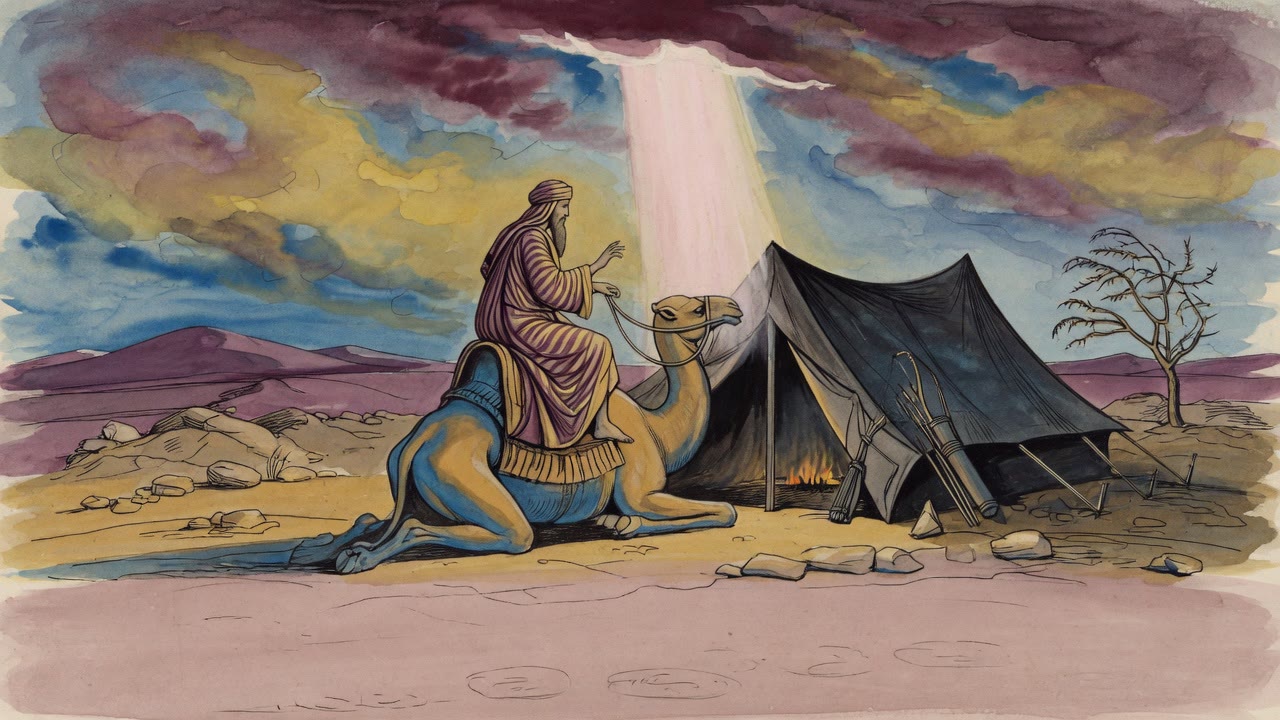
The father who had been forced to send his firstborn into the desert rode out years later to check on him. He did not dismount. He left a coded message.
A mother who had not seen her son in twenty years watched him approach from a window. The old texts say she did not wait for him to reach the gate.
The rabbis said Jacob spent his wedding night calling out for Rachel. Leah answered every time. Her reason broke him in half by morning.
The Torah introduces Abraham as a grown man leaving Haran. Older traditions say his father had already saved his life by swapping him for a slave child.
Benjamin was the last son Jacob could bear to lose — but when famine pressed hard enough, even a broken father had to open his hands.
When Isaac brought Rebecca into his mother's tent, the cloud that had lifted at Sarah's death returned. The miracle of one woman passed to another.
The rabbis noticed that Abraham and Joseph share uncanny parallels — descent into Egypt, false accusations, emergence as righteous men — and wove these likenesses into a single theological argument about what it means to carry the patriarchal inheritance.
The rabbis of Bereshit Rabbah asked why the Torah describes Noah as walking with God while Abraham was told to walk before Him -- and their answer transforms two similar phrases into a map of two entirely different relationships with the divine.
They gathered at their father's last feast as grown men who had inherited the same memory and drawn opposite conclusions from it — and the argument they had about circumcision ended in a prophecy neither expected.
The Book of Jubilees preserves Judah's full confession — how pride led him to sin with his daughter-in-law and how her courage forced him to speak the truth that saved his own lineage.
From the pit his brothers threw him into to the prison of Potiphar's house, the angel Gabriel walked beside Joseph — and the rabbis traced every turn in the story to that invisible presence.
When Joseph accused Benjamin of theft and threatened to make him a slave, Judah erupted into a rage that shook the palace — and the rabbis say that single act of loyalty earned his tribe the kingship forever.
Three ancient sources tell the story of Abraham's journey to Egypt — and together they reveal a patriarch who was as much philosopher and astronomer as wandering herdsman.
The Kabbalists read Jacob's wrestling match at the Jabbok as a lesson in prayer — the angel was not an opponent. He was an answer.
After Abraham's victory in battle, the two greatest men alive were afraid of each other. Their meeting transmitted the sacred knowledge of the Jewish calendar.
Abraham had hundreds of servants. Yet on the morning of the Binding of Isaac he saddled the donkey himself — and the rabbis say this single act echoed across centuries.
On the same day Joseph stood before Pharaoh at age thirty, his grandfather Isaac breathed his last. The Book of Jubilees holds both moments as one.
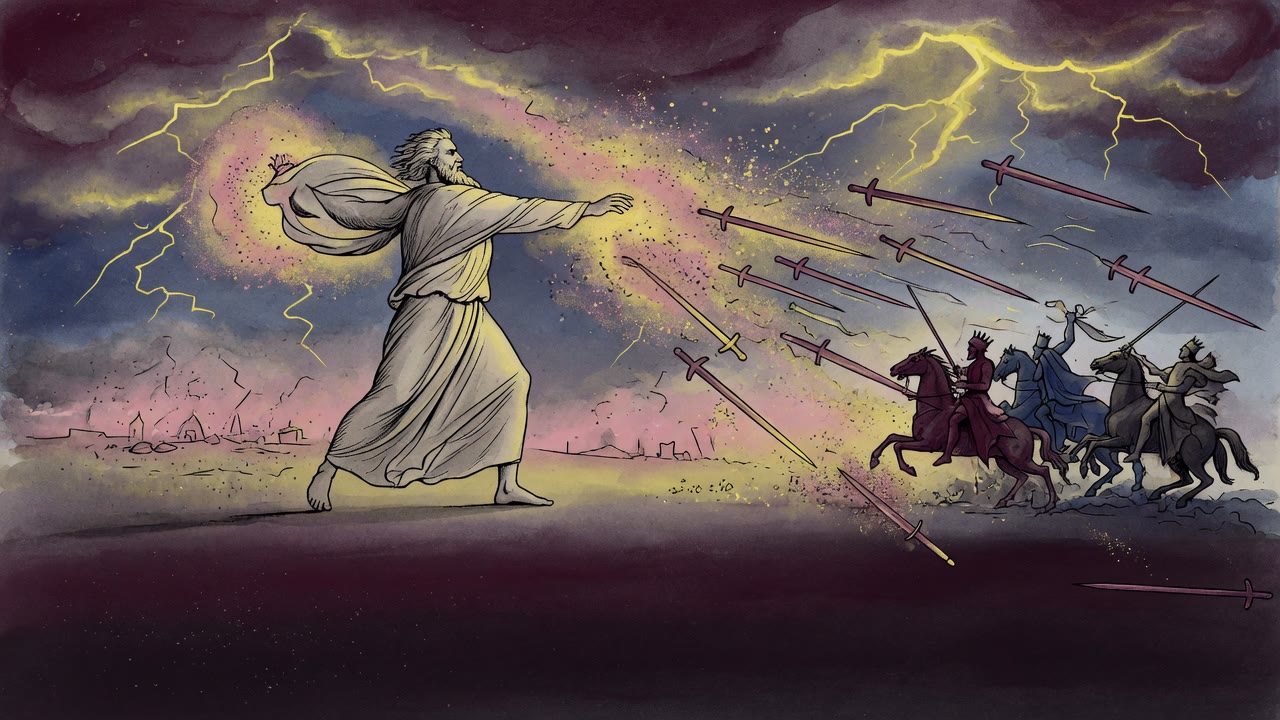
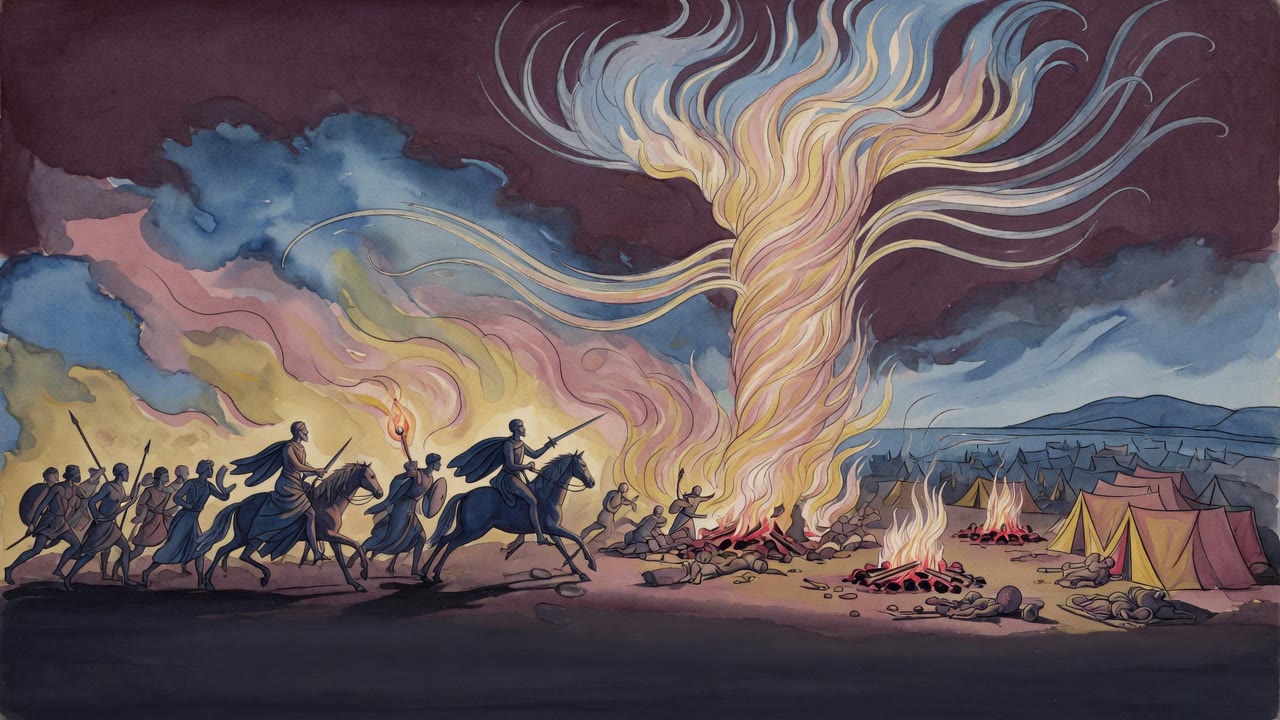
When Esau rode out with four hundred armed men to meet Jacob, he didn't know what was riding ahead of him. The Book of Jasher says God sent four angel armies first.
Rebekah died while Jacob was away and Isaac was blind. The family buried her in secret, fearing what Esau's presence at the funeral would provoke.
Abraham didn't just choose an heir. He chose two people — Rebecca and Jacob — and wove their destinies together in a single act of prophecy.
Jacob set out for Haran and God intervened twice — collapsing the sun at noon and then folding the earth itself to carry him home.
Three ancient sources — Midrash Tehillim, Sifrei Devarim, and Shir HaShirim Rabbah — agree on one thing: everything that came after Abraham traces back to him.
Isaac was named for the laughter his birth provoked. Moments later, Sarah turned that joy into exile, and God told Abraham to obey her.
When Isaac brought Rebekah to his mother's tent, the cloud returned, the Shabbat candle relit itself, and the bread multiplied again. The miracles knew her.
Esau married Judith from the family of Ham the moment he came back from hunting. Jacob was sixty-two and still unmarried, waiting for the right woman.
Before Jacob ever reached Laban, he vanished for fourteen years. Where did he go? Into the house of the last man who remembered the world before the Flood.
Judah could kill a lion with his hands and rout armies alone. Yet he confessed that wine and one woman undid everything his father had blessed him to become.
Among Jacob's twelve sons, Issachar never became a warrior or a priest. He farmed. And his testament claims that simple, undivided life was the one thing that defeated the forces of darkness.
Dan confessed he once planned to kill his brother Joseph. What stopped him was not conscience but coincidence. The lesson he drew from this haunted his entire life.
Gad helped sell Joseph into slavery and spent decades studying what hatred does to a human soul. His deathbed confession is one of the most honest in ancient Jewish literature.
In his final speech, Asher identified the most dangerous form of sin: not the obvious kind, but the one that wears the mask of goodness.
The youngest son of Jacob knew a secret about Joseph that his brothers never learned. Benjamin tells his sons why silence was the greatest mercy.
When Levi and Judah walked toward Isaac, the darkness over his eyes lifted. What he saw made him prophesy over them both, splitting the future of Israel in two.
The Torah says Isaac went out 'lasuach' in the field. One word. The Mekhilta spends three Psalms proving that word means prayer — the quiet, solitary kind no one else can see.
Jacob told Joseph he'd conquered land with 'my sword and my bow.' But Jacob was no warrior. The Mekhilta decodes these weapons — both of them point to prayer.
After twenty-two years of barrenness, Isaac brought Rebecca to Mount Moriah to pray. He returned to the place of his binding because he knew it was where God listened.
When Abraham chased the four kings to the place called Dan, God showed him what would happen there centuries later. What he saw broke him mid-pursuit.
Esau never spoke his plan to kill Jacob and Ishmael aloud. Midrash Tehillim says God quoted it back to him anyway, word for word.
Every tribe had a grievance against Esau. But only one of Jacobs sons could make him fall silent, and the reason goes back to a pit in Dothan.
Abraham was 99 years old and afraid. The rabbis say God solved the problem by doing something no one expected: He reached down and held the knife with him.
Isaac's failing eyesight before blessing Jacob was no accident. The rabbis say God dimmed his eyes on purpose, and they explain exactly why.
The robes Jacob put on to deceive his father were not just old clothes. They were the priestly garments worn since Adam, passed down through every patriarch.
Jacob fled to Aram because Esau wanted to kill him. But the rabbis reveal Esau had an even darker scheme, a conspiracy with Ishmael that nearly erased Israel's future.
She appears in Genesis, then again in Numbers a generation later. The rabbis asked the obvious question: how did she live that long?
When Jacob counted Esau's royal line and despaired, God turned him around. What he saw behind him changed everything about how he understood his own place in history.
Jacob fled Laban with everything he had built in twenty years. Laban chased him down in the mountains with murder in his heart. What happened next the Torah almost forgot to say.
Isaiah 63 contains one of the strangest verses in all of prophecy. The Aggadat Bereshit reads it as a covenant condition God bound himself to keep.
When Elijah built his altar on Mount Carmel from twelve stones, he was invoking a name God had given Jacob centuries before — and a warning God had buried inside it.
When Joseph demanded Benjamin be brought to Egypt, Reuben offered something extraordinary — not his own life, but his sons'. The rabbis found in this a confession about what guilt does to a man.
Most people assume Abraham's idol-worshipping father was lost. Bereshit Rabbah says God told Abraham otherwise, as a secret gift.
The Torah says God spoke to Rebecca directly. The rabbis of Bereshit Rabbah quietly disagreed, and what they said instead is stranger and more beautiful.
The rabbis found something extraordinary hidden in the destruction of Sodom: the two daughters of Lot carried the seed of King David out of the fire.
Samael, the heavenly Accuser, confronted Abraham on the road to Mount Moriah. When that failed, he tried Isaac. He failed at that too.
The Bible says Laban ran to welcome Abraham's servant. Bereshit Rabbah explains what he was actually running toward, and it says everything about who Laban was.
Abraham had no father to guide him, no master to study under. So God installed wisdom directly into his body, teaching him through his own kidneys.
When Nimrod threw Abraham into the fire, God did not save him for his own sake. The rabbis say it was Jacob, not yet conceived, who earned Abraham's rescue.
The Torah never tells us what became of Dinah after Simeon and Levi razed the city. The rabbis searched the text for clues and found a story more complicated than revenge.
Abraham stood before God and said: you cannot have both. A world of perfect justice will not survive. Either choose the world, or choose perfect judgment.
Adam's garments passed from the first man to Nimrod to Esau, making each one terrifying and unstoppable. The midrash traces what those clothes cost every man who wore them.
Before Abraham entered Egypt, he dreamed of a cedar and a palm standing together, and the palm tree spoke to save them both.
Abraham destroyed his father's idols with a hatchet and blamed the biggest one. His father could not refute him, so he handed him to the king.
Abraham was born while Noah was still alive. The Book of Jubilees says he lived long enough to be the exception to everything that killed everyone else.
When Esau ran to embrace Jacob after twenty years apart, the rabbis noticed dots above the Hebrew word for kissed. Dots in a Torah scroll mean look closer.
Before Jacob could return to his father's land, his household was full of foreign gods from Laban's country. He made a bonfire and left nothing.
His name meant he will laugh. future tense. The rabbis said it was a prophecy with four installments, spread across a lifetime and beyond.
Jacob's image is said to be carved into the divine throne. What does it mean that the most flawed patriarch was chosen for this honor?
The rabbis said Abraham guards the entrance to Gehinnom. But not as a warden — as a host who still cannot stop welcoming strangers.
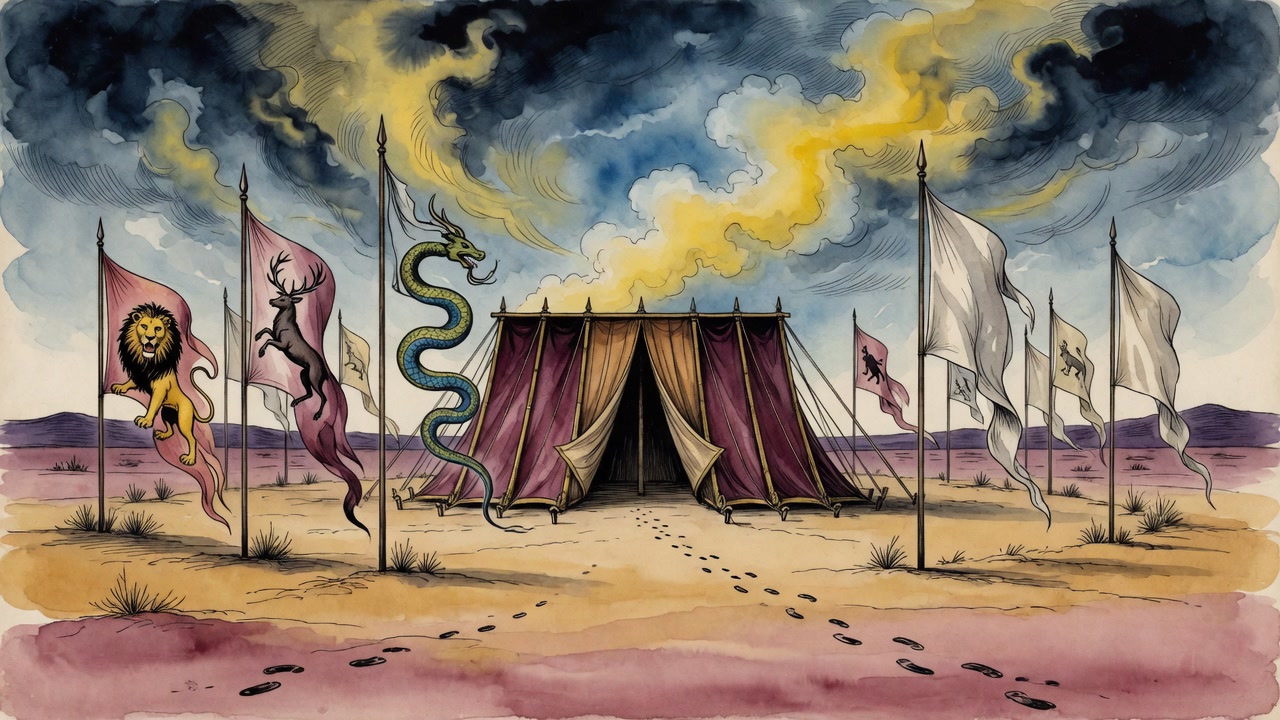
Three miracles marked Sarah's tent: a light that never went out, bread that never molded, a cloud that never moved. They vanished when she died.
When dawn came at the Jabbok, the angel begged to be released. Not asked. Begged. The rabbis explained exactly why he was terrified of being held.
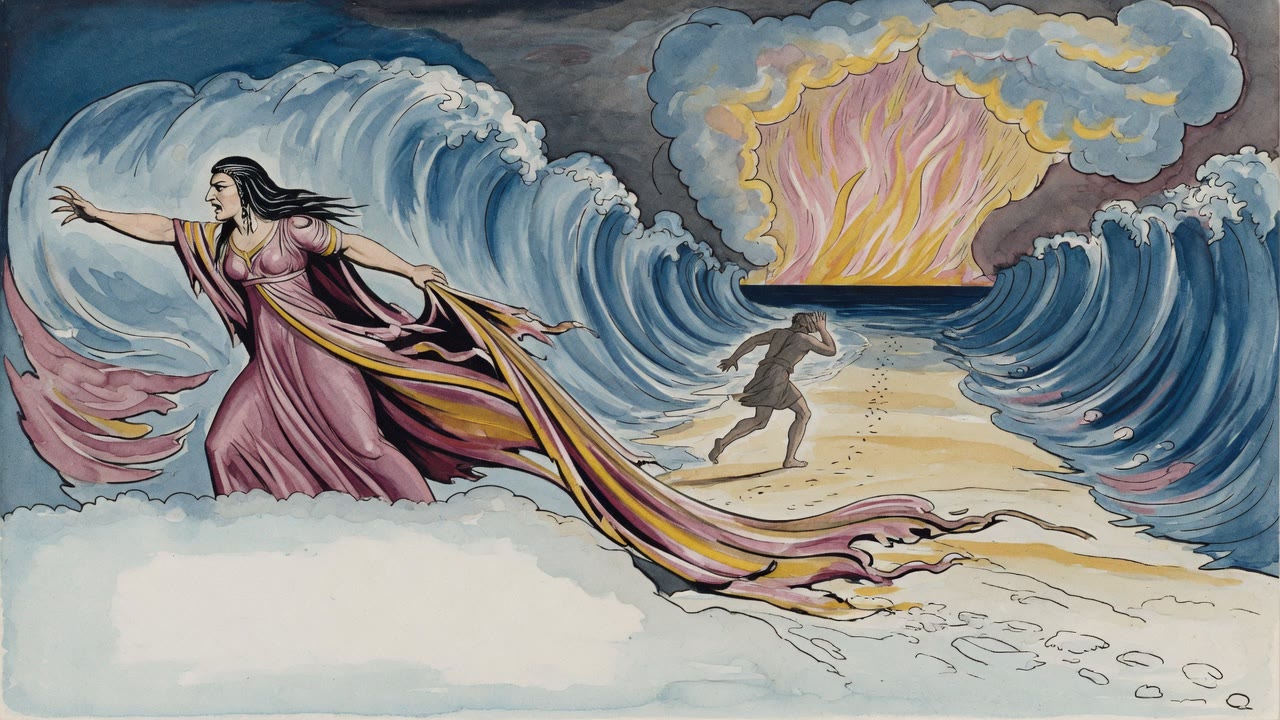
When Israel stood terrified at the Red Sea, the rabbis asked what finally moved God to split it. The answer was a promise made centuries earlier.
Jacob refused to remarry after Rachel died, bound by an oath he believed extended beyond death. He carried that loyalty all the way to his grave in Machpelah.
Abraham promised guests a morsel and served a feast. He prayed for an enemy king. His unborn grandson's future merit saved him from Nimrod's furnace.
Before his awakening, Abraham sold idols at a Syrian inn. The famine that followed was a test. What he did with his cattle after taught him how to live rightly.
A set of clothes passed from Adam to Nimrod to Esau to Jacob traces a hidden thread of blessing and rivalry through the book of Genesis.
Jacob is remembered as a man of peace, but the ancient texts say otherwise. He led six thousand swordsmen into battle, invented a method for tithing...
Abraham's father handed him idols to sell. Abraham turned every sale into a lesson that left buyers questioning whether gods were real.
Isaac never left the land of Canaan. He tithed when others hoarded, dug wells others filled with sand, and turned his enemies into his witnesses.
Abraham kissed Jacob farewell and blessed him into the future. Decades later, Jacob found the Shekhinah waiting at every prayer.
The midrash says water rose for Rebecca at the well before she arrived. Bereshit Rabbah says her righteousness was recognized before she spoke a word.
Leah's eyes were tender from weeping over a fate she'd heard was coming. Then Rachel gave her sister the signs that should have been Rachel's own wedding night.
Abraham was worthy of being created before Adam. Bereshit Rabbah explains why God waited: he was the center beam, placed in history to hold everything in place.
Jacob worked seven years for Rachel and got Leah. Then worked seven more. The Legends of the Jews fills in what kind of man engineers that level of deception.
When Jacob returned to Canaan from Laban's house, the Book of Jubilees records something the Torah omits: a legal ruling that would bind every descendant forever.
Bereshit Rabbah compared God's search for Abraham to a king sifting piles of dust for a lost gem — discovery, not reward, and not without cost.
Everyone knows Abraham's faith at the binding of Isaac. Almost no one knows what Isaac did while his father tied the ropes.
Jacob died in Egypt and was buried in Canaan. The traditions say Gehenna had reason to fear him, and his funeral stopped a war at Machpelah.
When Joseph revealed himself to his brothers, the angels of heaven recognized him too. A gold amulet had been tracking him since before his birth.
Before Abraham discovered God, Adam had already been promised that his glory would return through a descendant. The Midrash Aggadah and Legends of the Jews say that descendant was Abraham.
Isaac observed the Sabbath before Sinai and kept commandments before the Torah, earning direct access to God's heavenly academy through consistency.
Kabbalah says Adam was not just the first human — he was the master pattern of all creation, and when he fell, he took every world down with him.
Isaac was meant to live 185 years. He lived 180. Bereshit Rabbah says Esau's sins were the reason, and God mourned what the patriarchs never received.
Esau was four hours late to claim his blessing. What he found when he arrived. How he tried to undo what was already done reveals the oldest rivalry in scripture.
Before Jacob, no one fell ill before dying. Death came without warning. Jacob asked God to change that, and became the first human to experience what he had requested.
Reuben lost the birthright and tried to save Joseph and arrived too late. The Testaments of the Twelve Patriarchs record what he told his sons before he died.
Judah's plea for Benjamin before the viceroy of Egypt was also a warning backed by family history. Benjamin remembered it until his dying day.
On his deathbed, Simeon traced every act of tribal violence back to a single passion: the hatred he felt when Joseph had more than he did.
Rabbi Yitzchak made a startling claim: the Shekhinah surpasses even Abraham's hospitality, feeding the worthy and the wicked alike without distinction.
Before Jacob fled to Laban, Rebekah made him swear an oath that would shape the next generation of Israel. She meant every word of it.
Jacob fell asleep on a stone and woke up knowing he had been spoken to. The Book of Jubilees preserves what happened between the dream and the dawn.
Laban cheated Jacob with wages, wives, and years. The Book of Jubilees tracks every scheme, and the spotted sheep that would not stop multiplying.
Levi was born at the new moon of the first month. Long before Sinai, his father Jacob dressed him in priestly garments and ordained him in a field.
After fourteen years for two wives, Jacob demanded his freedom. Laban had one more scheme ready. And the spotted sheep had other ideas.
While Jacob was in Mesopotamia, Esau moved to Mount Seir and left their aging father behind. Jubilees marks this as the moment Esau sealed his own path.
The Book of Jubilees records Edom's forgotten dynasty. Eight kings ruled and died before Jacob's descendants ever wore a crown.
Judith addressed her beheading prayer to the God of Simeon. That detail unlocks a much older story about rage, envy, and the defense of a violated woman.
Terah set out for Canaan with Abraham but stopped at Haran and never left. Two ancient texts reveal what was really happening inside that man.
Eleven men accepted the prince's offer to escape Nimrod's fire. Only Abraham refused, saying it was better to die by God's will than survive by cunning.
The Amorite kings assembled to destroy Jacob's family after their return to Shechem. Judah fought seven battles in six days until they came without weapons.
After the sale of Joseph, Jacob's sons had to find their own wives. The women they chose wove the families that would become twelve tribes.
While Pharaoh questioned Sarah in his palace, an angel stood in the room that only she could see. The texts give him a name and a message.
Hagar had watched Pharaoh's plague and Abraham's furnace miracle before she ever conceived. The texts say her contempt came from the wrong lesson.
The cruelest thing Ha-Satan ever did was not the lie he told Sarah about Isaac's death. It was the truth he told her afterward. That one killed her.
Centuries before Moses received the Torah on Sinai, Shem son of Noah ran a house of study in Canaan where the patriarchs learned it first.
Abraham was supposed to live to 180. God took him at 175. The five missing years were mercy. He died before learning what his grandson had become.
When Jacob fled Esau's wrath, something extraordinary happened at the threshold of his father's tent. He never even knew it.
Isaac tried to comfort Esau after Jacob took everything, and God rebuked him for it. The exchange is one of the most startling in all of midrash.
Esau chased Jacob all the way to a boiling spring and sealed every exit. What happened next is one of the strangest rescue stories in all of midrash.
Jacob needed permission before leaving the Holy Land. What he discovered at Beersheba shaped the path of the patriarchs for generations.
Leah wept so hard over her promised fate that her eyelashes fell out. What she feared, what she got instead, and what she gave the world.
Jacob swore that whoever stole Laban's idols would die. He had no idea it was Rachel. The words were already taking effect.
When Jacob left Laban's house and crossed back into the Holy Land, a second army of angels came to meet him. He recognized both hosts and named the place.
When Jacob sent word ahead to Esau, his message was nothing like what you would expect from a man who had stolen his brother's blessing.
The midrash doesn't blame Dinah. It blames the city that watched and said nothing, invoking the laws given to Noah to explain why it had to be destroyed.
Jacob spoke three proud words to Laban, and God remembered them. The Maggid asks: how does one unguarded sentence echo through a family for generations?
Jacob sent twelve servants to retrieve Dinah from Shechem's house. Shechem drove them away, then kissed her in front of them. The defiance was deliberate.
The sages asked why Gehenna waited for Shechem but not for Jacob. The answer they found in the heavenly tablets cuts deeper than punishment.
Seven Amorite kings marched against Jacob's sons with ten thousand soldiers. Before any arrow flew, Judah spoke. What he said determined everything.
Joseph lost his way searching for his brothers near Shechem. The angel Gabriel appeared and told him the Egyptian bondage was beginning that very day.
Reuben planned to rescue Joseph from the pit in secret. He failed. The rabbis say God rewarded him anyway -- because the intention was real.
The moment Joseph disappeared into the caravan, Judah's brothers stripped him of leadership. His road back would take years and cost everything.
When Leah named her fourth son Judah, she gave thanks for something that went beyond motherhood. The rabbis say the land itself was waiting for his birth.
When Tamar was dragged before the judges, her father-in-law Isaac sat on the bench. So did Jacob. So did Judah, who had to condemn or confess.
Reuben had carried his secret sin for years. When he watched Judah stand up in court and tell the truth at mortal risk, something in Reuben finally broke open.
After Shechem seized her, Dinah stayed in his house for months. When she heard the plot against her brothers, she smuggled word out to warn them.
Levi outlived every one of Jacob's sons. His final words alongside Judah's deathbed speech reveal what the two pillars of Israel each carried to their graves.
Judah killed lions bare-handed. Wine and beauty brought him low twice. On his deathbed he named both failures so his children could see the terrain.
Before Levi became the ancestor of priests, he farmed. He gave in strict order -- firstfruits to God, then his father, then himself.
Naphtali claimed 122 years without sin. His children were stunned. The tradition reads this not as arrogance but as a map of what righteousness looks like.
While his brothers sought power, Issachar farmed. His testament reveals why singleness of heart was the most radical choice a patriarch could make.
Dan confessed on his deathbed that he had not just agreed to sell Joseph. He had held a sword with intent to kill. God kept them apart before the blade fell.
Levi massacred a city, yet angels attended him and Jacob gave him the priesthood. The tradition's answer to why changes everything about how holiness works.
At 132, Naphtali told his children he was leaving no silver and no gold. What he left instead was one commandment he called the easiest thing in the world.
Jacob saw a vision of Joseph numbered among celestial beings, before Egypt, before the pit. He understood at once this greatness would cost Israel everything.
Asher taught that you cannot serve good and evil at once, even when they look the same. His most chilling illustration was not a parable. It was Sodom.
Centuries before the Temple was built, a patriarch warned his children: act like Sodom and your sanctuary will fall. He had read it in the tablets of heaven.
When Balak called a war council against Israel, one voice said stop. He cited four generations of history and walked out when no one listened.
Balaam built seven altars to invoke the merit of Adam, Noah, and the patriarchs. God answered him with a single line of Proverbs.
While everyone in Chaldea worshipped the stars, Abraham noticed the heavenly bodies couldn't control their own movements. That observation changed history.
After Shechem violated Dinah, Jacob's sons waited for the perfect tactical moment. They chose the night the city was drunk and celebrating.
Joseph had survived slavery and prison without breaking. But when Judah offered his own freedom to save Benjamin, the governor of Egypt fell apart.
Before he died, Jacob made two Egyptian-born boys into full tribes of Israel, ensuring the son his brothers tried to erase would have double the share.
Rabbi Levi Yitzchak of Berditchev asks why Sarah is the only woman in the Torah whose age is recorded, and his answer reveals that she defeated time itself through the purity of her soul.
The struggle between Jacob and Esau began inside Rebekah's womb, and Rabbi Levi Yitzchak of Berditchev found a complete theology of spiritual inheritance hidden in one seemingly redundant verse about Abraham and Isaac.
When God showed Moses the Promised Land from Mount Nebo, he referred to a region as 'until Dan.' But Dan had not yet settled there. The Mekhilta finds the answer in a promise God made to Abraham centuries before the conquest: the tribal territories were mapped out in the divine plan long before the tribes arrived.
When Abraham spotted three travelers near his tent at Mamre, he ran to greet them though he was recovering from circumcision. The rabbis say his eagerness to welcome strangers became a founding act of Jewish law.
At the moment Abraham raised the knife at Mount Moriah, Isaac saw what his father could not: the angels of heaven weeping above the altar. The Talmud records that his soul actually departed and was returned by divine decree.
When Jacob fled Laban's household, Rachel secretly took her father's household idols. The rabbis of the Midrash debated furiously why a matriarch would do such a thing, and their answers reveal everything about loyalty, idolatry, and the limits of protective love.
Rabbi Hama of Hama found a profound analogy hidden in the most basic priestly requirement: every sacrifice must be salted. His teaching in Midrash Tehillim connects the altar's chemistry to the preservation of the Jewish people across millennia.
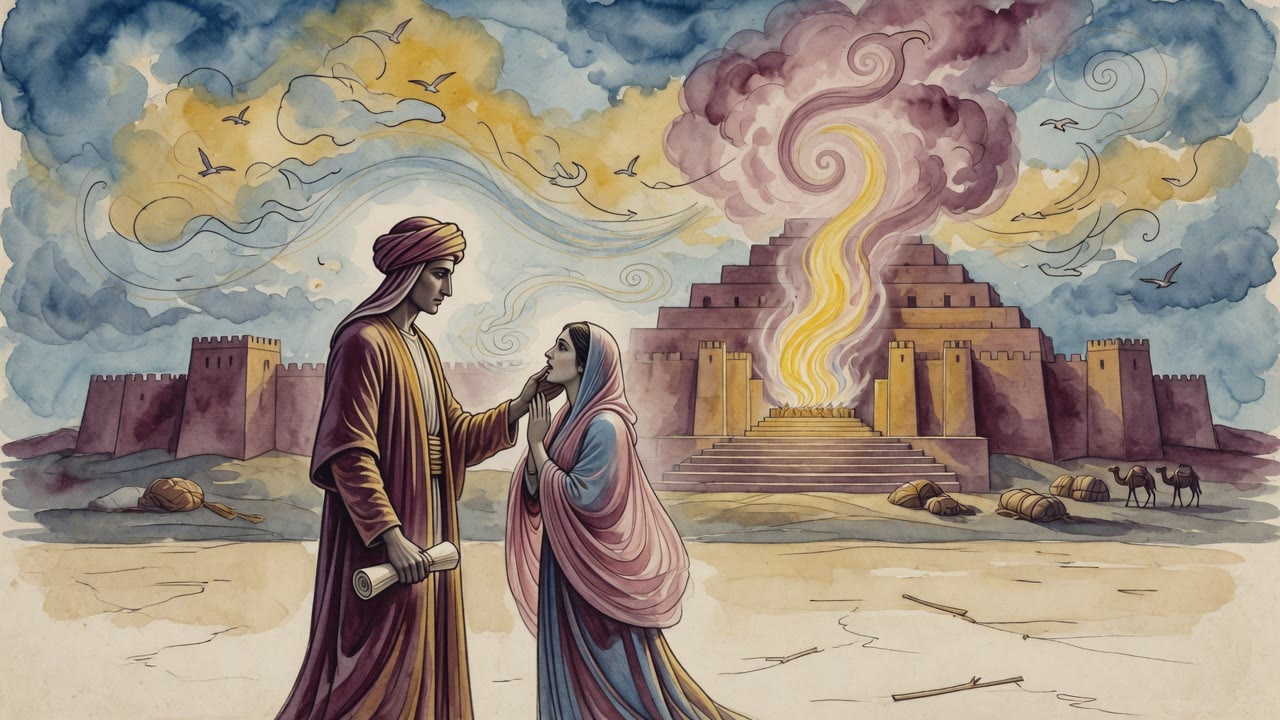
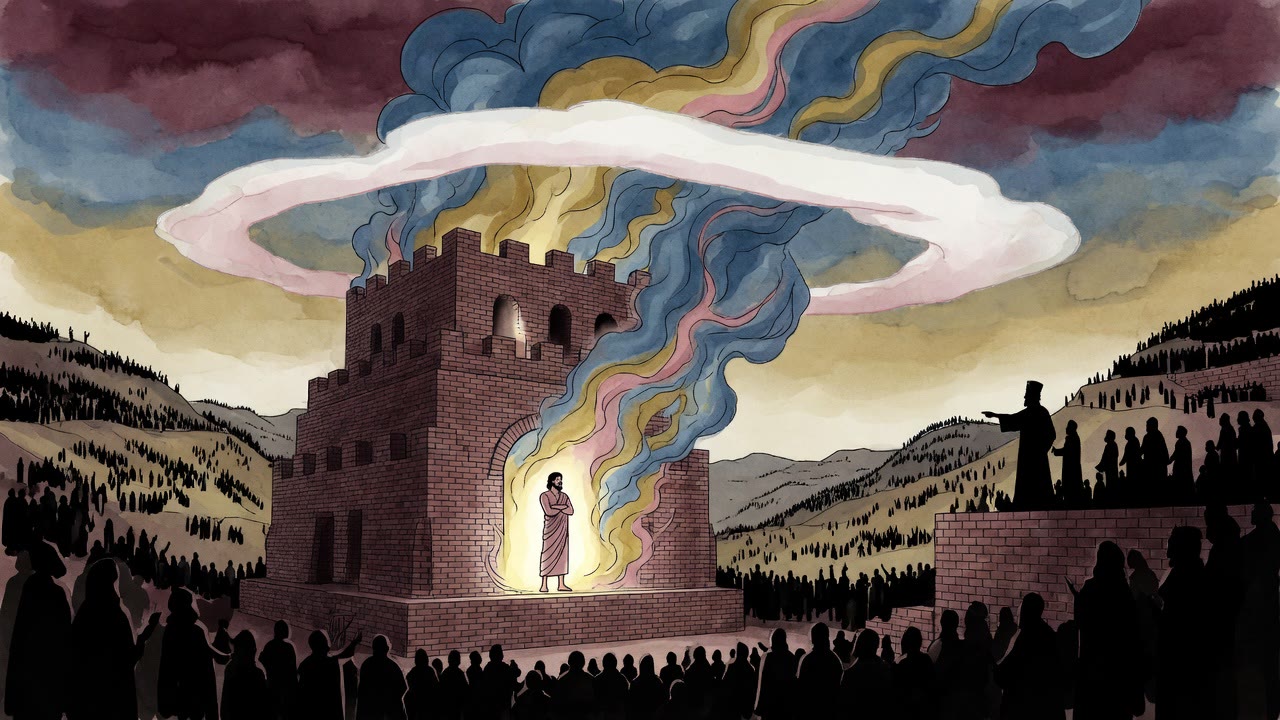
Most retellings of the Tower of Babel skip a detail Pirkei DeRabbi Eliezer preserves: Abraham was there. He walked past the construction site, watched the builders work, and pronounced a curse in the name of his God. The encounter sets the founding story of monotheism against the founding story of human hubris.
When four kings captured Lot and plundered Sodom, Abraham raised an army of 318 men and charged after them. The rabbis saw something in that battle that went far beyond a rescue mission.
The night God renamed Abram as Abraham was not a simple ceremony. It was a transformation that the stars themselves witnessed, and it carried a secret about prophecy that the rabbis preserved for centuries.
Sarah's demand that Abraham divorce Hagar was not just about this life. According to the midrash, she wanted the separation to hold in the world to come as well, and the weight of that demand nearly broke Abraham.
The coat that gave Nimrod his power over animals came from Adam, passed through Noah, and ended up with Esau on the day he sold his birthright. The rabbis saw this as no coincidence.
Laban called Jacob his brother, then worked him for twenty years and tried to cheat him at every turn. The rabbis saw in this relationship not merely a family drama but a pattern, a figure who tested Jacob's character and forged the twelve tribes in the heat of injustice.
Rachel's theft of Laban's household idols was not petty mischief. The teraphim were oracular objects that Laban used to track Jacob, and Rachel's act, the rabbis argued, was a deliberate sabotage of her father's ability to harm her husband. The cost was her life.
Jacob feared Esau not because of his physical strength but because of the most dangerous thing in the world: a powerful man with no moral restraint. The midrash on Esau's confrontation with Jacob is a study in what it means to live without fear of heaven, and why that quality terrifies the righteous more than any army.
Two brothers killed every man in a city to avenge their sister, and their father disowned the act even as he could not undo it. The rabbis saw in the massacre at Shechem not a simple crime but a collision between two legitimate claims on justice, one based on law and one based on zeal.
Reuben planned to rescue Joseph from the pit and return him to their father. He was not there when the Ishmaelite caravan arrived. The midrash traces what he was doing and why his absence was itself a consequence of the transgression that had already defined his life.
Joseph's ascent from a slave's prison to the second seat of power in Egypt took thirteen years and required divine assistance at every stage. The midrash on Joseph's Egyptian career traces Gabriel's hand from the pit in Canaan to the throne room in Memphis, and asks what it means for a Hebrew to hold foreign power.
Isaac knew what Esau was. He had watched his son sell the birthright, marry foreign women, and abandon every obligation of the covenant. And still, on what the rabbis understood as the last day of his life, Isaac clasped Esau's head in his hands and begged God for his soul. The answer was no.
The son of Noah who survived the flood also outlived Abraham and Isaac. Seder Olam Zutta's meticulous genealogical timeline reveals that the man who witnessed the destruction of the world was still alive to see the birth of the third patriarch, a continuity so startling it changes how you read Genesis.
A weary traveler finds a tree that gives everything, fruit and shade and water, and realizes he has nothing to offer it in return. Yalkut Shimoni uses this image to describe Abraham's relationship to Torah, arguing that the patriarch who discovered the entire tradition before it was given at Sinai was like a tree whose saplings are the only fitting blessing.
When Potiphar's wife tried to seduce Joseph, something stopped him at the last moment: a vision of his father Jacob's face appeared before him. Yalkut Shimoni preserves two competing rabbinic traditions about this vision and what it means that God saved a righteous man not with a commandment but with an image.
Deuteronomy commands Israel to protect escaped servants. Sifrei Devarim asks whether that protection extends to servants who escape from the people of Edom, Esau's descendants. The answer unlocks centuries of rabbinic tension about how law, memory, and national identity interact.
When the Torah speaks of blessings from the ancient mountains, the rabbis read it as a portrait of Abraham, Isaac, and Jacob standing at the foundation of all time.
When the royal butler dreamed of three branches of grapes in Pharaoh's dungeon, Joseph saw far more than a prediction about wine. Targum Jonathan shows how he decoded the dream as a compressed history of Israel's slavery, redemption, and the role of all three patriarchs in Egypt's future.
Long before Jacob wrestled any angel, the covenant God made with Abraham had already shaped the terms of his judgment. Every blessing he received came with a verdict attached.
The claim that Jacob observed all 613 commandments before Sinai was not a compliment. It was a legal problem that divided the sages for centuries.
Benjamin was the youngest patriarch, but his final teaching returned to the oldest wound in the human story. He saw in Adam and Eve's fall the same failure he warned his own sons never to repeat.
Three different rabbis in Vayikra Rabbah make the same astonishing claim: that Jacob is not just a patriarch but the structural foundation of the created world itself.
When Adam first saw the Book of Generations, he noticed that David's soul was allotted only a single minute of life. In an act the rabbis called the defining gesture of the first man's character, Adam gave David seventy years from his own lifespan.
When the Angel of Death came for Abraham, the patriarch refused. God sent Archangel Michael instead, who showed Abraham the celestial judgment hall before he could bring himself to accept his end.
The priestly tribe descended from a single pattern: God prefers the seventh. From Adam through Noah through Abraham through Jacob, Levi was the seventh righteous man in the line, and that number sealed his calling.
Lot chose Sodom when Abraham chose Canaan. He seemed to step out of the patriarchal story entirely. But the rabbis of Bereshit Rabbah show how Lot's descent was built into the covenant from the beginning, carrying something the patriarchs themselves could not carry alone.
When Abraham left Ur for Canaan, he did not enter a cleaned-up world — he entered the same one that had been filled with demons since the first moments of creation, and the traditions tell us how he navigated it.
When Rebecca's pregnancy became a battlefield, she went to seek understanding — and the ancient tradition connects what she heard inside her to the deepest structures of creation and the animals that inhabit it.
The rabbis saw Rebecca's decision to deceive Isaac as the correction of a failure that began in Eden — where Eve made a choice for her husband without understanding, and Rebecca made a choice for her son with full prophetic knowledge.
When Jacob fled toward Canaan with Laban's daughters and flocks, God spoke directly to Laban in a dream — and the tradition asks what it means that a man can receive divine speech and still choose badly.
The Book of Jubilees makes a stark distinction between Ishmael and Isaac — and behind that distinction lies an ancient theology of creation that assigned the sons of Abraham to fundamentally different cosmic roles.
The rabbis saw in Esau's red, hairy birth something that connected him directly to the first transgression in Eden — as though Adam's failure had finally produced its most extreme inheritor.
Isaac and David never met, yet tradition insists they were linked from the moment of creation — two lives folded into a single covenant stretching from the Akedah to the throne of Jerusalem.
Leah knew Jacob did not choose her. What she did with that knowledge — naming her sons in prayers Jacob never heard — became the theological architecture of the twelve tribes.
On his deathbed, Jacob's tenth son delivered the most systematic ethical teaching of any of the twelve patriarchs — a philosophy of moral duality rooted, the ancient sources suggest, in the structure of creation itself.
The Prayer of Joseph preserves a startling claim: Jacob was not a man who became a patriarch. He was an archangel who descended to earth, forgot his divine identity, and had to be reminded of it by a rival who attacked him in the dark.
On the Mount of Olives, Naphtali watched his brothers race to claim the sun and moon. What he saw in that vision laid out the entire future of Israel in the language of celestial bodies.
Benjamin was the only patriarch born in the land of Canaan, the only one whose mother died giving him life. The Testament of Benjamin reveals what that origin cost him and what it gave him.
Of all twelve sons of Jacob, only Judah received a blessing that sounded like a war cry and a royal decree combined. The Book of Jubilees explains why the line of kings and the hope of redemption both run through the son who once sold his brother.
On his deathbed, Naphtali told his sons about two visions he had seen as a young man, visions of ships and stars and a scattering that would not be permanent. He said he had been given these to prepare them for what was coming.
Before David arrived in the world, the years of his life had already been borrowed from another man. The rabbis found the ledger, and Abraham signed it.
When Abraham lifted the blade over Isaac on Mount Moriah, every eye in heaven was on him -- and the angels were not all rooting for the same outcome.
When Joseph revealed himself to his brothers in Egypt, Benjamin already knew. The Testament of Benjamin records a private meeting between the two brothers that happened before the great revelation, a moment no one else saw and that Benjamin was sworn to keep.
When Judah threatened Joseph in Egypt and demanded Benjamin's release, the rabbis said his voice was so powerful it shook the foundations of creation. The Midrash Tehillim traces that voice back to his confrontation with Esau, where Judah first discovered what he was capable of.
Naphtali had a physical gift that made him uniquely valuable to his father: he could run like a deer. The Legends of the Jews record that Jacob sent Naphtali on the most important errands, and that his speed was connected to something deeper than athletic ability.
Abraham received the promise and Isaac confirmed it -- but Jacob was the hinge on which all of it turned. Texts from Jubilees, Legends of the Jews, and the Prayer of Joseph reveal how Jacob's destiny was encoded before the patriarchs themselves were born.
The expulsion from Eden and the giving of the Torah at Sinai seem like opposite events -- one a punishment, the other a gift. But ancient texts trace a continuous thread from Eve's transgression through the patriarchal era to Moses standing at the mountain, discovering that the thread had never broken.
Jacob received more direct divine assurances than almost anyone in the Torah -- and then spent twenty years in exile praying for their fulfillment. Ancient sources reveal how Jacob's prayer life transformed the patriarch into the model of every Jew who has ever cried out for a promise that seemed to have expired.
The wickedness of Sodom was not mere immorality -- it was a theology. Ancient sources from Jubilees to the Book of Jasher reveal a city that had systematically inverted the order of creation, treating the world's goods as theirs by right rather than by gift.
When Jacob wrestled through the night and received the name Israel, something more than a renaming happened. Ancient texts from the Prayer of Joseph, 3 Enoch, and the Zohar reveal that Jacob's soul was the vessel in which the entire people of Israel pre-existed, waiting to be born.
Philo of Alexandria argues that the letter added to Sarah's name is the same letter that transforms mortal virtue into everlasting sovereignty. The math, he insists, is exact.
Why did Abraham age so gracefully when David, Solomon, and Joshua aged before their time? The Midrash Tanchuma has a precise answer, and it comes down to who was at home.
The Torah shows Moses lifting his hands above the battle with Amalek. The Mekhilta says he was not asking for victory. He was naming the dead.
Five angels of wrath were on their way to destroy Israel. Moses ran to Hebron and begged the dead to stand up and intercede with him.
God told Moses to take his brother up Mount Hor and bury him there. Moses prayed all night trying to figure out how to say it.
When Ptolemy demanded a Greek translation of the Torah, seventy-two sages made thirteen identical changes without consulting each other. The Mekhilta records every word they changed and why.
One Hebrew word in the Song at the Sea reveals a hidden principle: God showed Moses mercy where He showed the patriarchs strict justice. The Mekhilta explains why.
The Red Sea split not because Israel cried out, but because God had encoded the promise in a single word spoken to Abraham at Beth-el.
Rabbi Elazar ben Azaryah taught that God freed Israel not for anything they had done, but for a promise made to Abraham centuries before they were born.
From Abraham's night battle against four kings to the cursed town of Meroz, the Mekhilta tracks a single principle across centuries: whoever touches Israel touches something beyond Israel.
Between Egypt and the Exodus, Moses spent forty years as a king of Cush. The Book of Jasher fills in the decades the Torah skips entirely.
In the Mekhilta, Rabbi Yitzchak appears again and again — a man who refuses to accept a ruling unless it can be proved from three different directions.
Rabbi Tarfon read a single Hebrew word in the manna passage and concluded that God personally extended His hand from heaven and delivered the bread. But the deeper claim was stranger still: the vehicle for that delivery was the ancient prayers of the buried patriarchs.
When Israel built the golden calf, five destructive angels materialized before Moses in the heavenly realms, each embodying a different aspect of divine fury. Midrash Tehillim names them one by one and records how Moses stopped three with the merit of the patriarchs and the remaining two by invoking Phinehas and Aaron, preventing the annihilation of the Jewish people.
Moses was not alone at Sinai. Exodus records that seventy elders ascended the mountain and saw the God of Israel. Sifrei Devarim treats this vision as the foundation for the authority of Israel's elder-witnesses across every generation.
The mountain where Moses received the Torah was not chosen at random. According to the Book of Jubilees, Sinai was among four sacred places set apart from the very beginning of creation.
Most accounts say God spoke the Torah to Moses directly. The Book of Jubilees tells a different story: an angel called the Prince of the Presence sat beside Moses on Sinai and dictated everything, from creation to the messianic age, in one unbroken transmission.
While ten spies built their conspiracy, Caleb slipped away to pray at the graves of the patriarchs. He needed help that only the dead could provide.
The rabbis compared two visions of the Promised Land and concluded that Abraham was more beloved than Moses. The proof was in how hard each man had to work to look.
Balak hired Balaam to curse Israel. Instead, Balaam delivered the most precise messianic prophecy in the Torah — and every attempt to silence him made it stronger.
When the twelve tribal princes brought their offerings at the Tabernacle, Naphtali went last after Asher. The rabbis found a theology of joy hidden inside that order.
Hired to curse Israel, Balaam climbed to the high places and found the Patriarchs there. Every attempt to curse became a blessing. The tradition explains...
The connection between Miriam's death and the disappearance of the miraculous well is one of the most striking examples of how the rabbis understood merit to function: not as a personal reward, but as a physical force sustaining an entire people.
Balaam asked Balak to construct seven altars before each attempted curse. The sages reveal why: he was trying to reproduce the merit of Abraham, Isaac, and Jacob and turn it against their descendants.
Three times every day, according to 3 Enoch, the souls of Abraham, Isaac, and Jacob ascend from their graves to stand before God and demand the redemption of their children. This is not passive ancestral merit. It is active intercession.
Before every patriarch died, he gathered his children and gave instructions. Moses did the same, and his final words worked better than Sinai.
As Moses read the curses of Deuteronomy, the earth trembled and the patriarchs wept from their graves. A heavenly voice promised their merit would never fail.
Moses made an argument to God that no one else in the Torah dared to make: that his punishment was harsher than Adam's, despite his sin being smaller. The heavenly court had to answer.
Joshua cast lots to divide the land, but the rabbis said the lots already knew. Jacob had written it four hundred years earlier on his deathbed in Egypt.
When Joshua allocated the land of Canaan among the twelve tribes, he was completing a transaction that began with Abraham. The rabbis traced every border, every valley, every disputed tribal territory back to promises made by God to the patriarchs centuries before Joshua was born.
Midrash Tehillim on Psalm 9 traces a pattern across biblical history: Pharaoh, Sisera, and Sennacherib each prepared a snare for Israel and fell into it themselves. The same principle that hung Haman on his own gallows also pulled Pharaoh into the sea.
The twelve tribal princes brought identical offerings at the Tabernacle's dedication. Each was secretly a prophecy about the tribe's whole future.
David was surrounded by armies and glory. He wrote that he was lonely and afflicted. The rabbis explained exactly what kind of lonely he meant.
Tamar waited years for Judah to fulfill his promise. When he would not, she acted -- not out of desire but out of prophecy. The Messiah's line ran through her.
Samuel's father was called a second Abraham. Not for miracles but for changing his pilgrimage route each year to pull more people toward Shiloh.
Adam prayed there. Noah built an altar there. Abraham nearly sacrificed his son there. David was not the first to know the city was sacred.
In Midrash Tehillim, the collective soul of Israel speaks directly to God in an audacious reversal: if we, your people, are suffering, what does that say about your kingship? The Midrash uses this bold argument as the starting point for a meditation on how long exile can last before it contradicts God's own interest in the covenant.
King David's declaration of his own worthlessness shocked the rabbis. But the Midrash Tehillim used it to build one of the most precise teachings in the Jewish tradition about humility, prayer, and what happens when you try to present yourself as more than you are.
When Saul spared Agag, the Amalekite king, for even one night before Samuel executed him, a child was conceived who became the ancestor of Haman. Pirkei DeRabbi Eliezer and the Esther Rabbah trace this single act of incomplete obedience to its consequence five centuries later, and what it reveals about how Jewish tradition understands the long tail of moral failure.
The rabbinic tradition traced a hidden thread from Esau's rejected birthright through the patriarchs all the way to King David — arguing that every step of that transmission was opposed by the same angelic adversary.
Rabbi Judah ha-Nasi discovered that the combined prayers of three righteous men could force the Messiah to arrive early. Elijah stopped him in the strangest way possible.
Elijah could have prayed at any moment on Mount Carmel. He waited for the afternoon offering. The rabbis say this was no accident, and the hour explains everything.
God tests the righteous like a potter strikes fine vessels — not to break them but to hear them ring. Abraham was struck ten times.
Solomon built the Temple and authored three thousand proverbs. The tradition says his greatness was borrowed from Abraham, Jacob, and Moses all at once.
Samael accepted a bargain: all conditions imposed on him, in exchange for the deaths of ten great rabbis. The Yom Kippur scapegoat was always his.
Elijah appeared daily at Rabbi Judah's academy. One day he arrived late, and the reason he gave shook the world to its foundation.
Who was born but never died? Four men survived a furnace. Two died inside a sanctuary. The rabbis hid their deepest theology inside riddles like these.
Ben Sira's portrait of the prophet Elisha connects his hidden powers to the very foundations of creation — and to a chain of divine wisdom that runs from Adam to the patriarchs and beyond.
The Legends of the Jews preserves a startling claim: Elijah was not born into history. He was made in the twilight between the sixth day and the Sabbath — one of ten miraculous things woven into creation before human time began.
Sennacherib marched on Jerusalem with the largest army the world had ever seen. What stopped them was not swords.
When Isaiah stood before God's throne and fell silent while the angels sang, he was watching something the patriarchs had only glimpsed in dreams.
The rabbis asked who would finally bring down Israel's oldest enemy. The answer came from Jeremiah, and it turned on a question of moral standing.
After the Temple fell, God sent Jeremiah to wake the Patriarchs from their graves. Jeremiah lied to them. He feared they would blame him.
When the Temple fell and God asked why His beloved was still in His house, the Talmud records that it was Abraham, standing in the ruins, refusing to leave until he heard an answer for his children's fate.
After the destruction of the First Temple, Jeremiah was sent to wake Abraham, Isaac, Jacob, and Moses from their rest and bring them the news. He went — but he could not bring himself to say the words.
Abraham, Isaac, and Jacob each encountered the divine -- but none of them saw what Ezekiel saw by the Chebar Canal. Ancient traditions trace a line from creation itself through the patriarchs to the terrifying fullness of Ezekiel's chariot vision.
Midrash Tehillim on Psalm 2 traces a single pattern through all of history: every empire that rose to destroy Israel collapsed before it. Nimrod. Pharaoh. Haman. Gog and Magog.
Midrash Tehillim reads Psalm 27 as a rope woven from three strands: the merit of the ancestors, the grace of God, and the sustaining power of Torah.
The Arameans told Joab he was not really a son of Jacob. He had no answer. So he went to the king, and the king convened the court.
In the world to come, the righteous eat a banquet in Eden. When the time comes to offer grace after the meal, Abraham refuses. So does Isaac. So does Jacob. So does Moses.
Jacob speaks Psalm 129 in his own voice. Troubles from his youth: from Esau, from Laban, from his own sons. None of them finished him. He names the pattern that runs through every exile.
Rabbi Shimon ben Lakish noticed something strange: the name Jacob appears wherever suffering falls. He asked why, and found an answer stranger than the question.
The rabbis noticed that a single word in Psalm 9 contains three instances of the Hebrew letter nun. They decoded this as a prediction of three kingdoms that would afflict Israel: the empires identified as Esau, Ishmael, and Greece, each corresponding to one nun.
When Abraham defeated the four kings to rescue Lot, he was doing something the rabbis found astonishing: he was gathering people back under the wings of the divine presence. Midrash Tehillim on Psalm 110 reads the battle not as a military triumph but as a cosmic act of spiritual recruitment.
When three strangers appeared at Abraham's tent, the rabbis said each angel carried a single divine assignment. None of them could do more than their one task.
Eliphaz, raised in Isaac's household, became a prophet. He confronted Job with the faith of the patriarchs -- and God rebuked him for it.
The Song of Songs opens with a lover searching through the night, and Yalkut Shimoni identifies that night as the night before the Akeidah, when Abraham and Isaac lay awake under the stars before the command that would test everything. The binding of Isaac is not merely a story of sacrifice; it is the night from which Jewish mercy draws its deepest reserves.
When the Persian court demanded Mordecai bow to Haman, he answered with a genealogy no one could refute and a principle no king could override.
Facing genocide, Esther did not simply ask God for help. She reminded God of the covenant with Abraham and demanded He honor it.
Moses, Jacob, David, and Mordechai all received advance notice that destiny was turning. According to the rabbis, two of them recognized the message and two did not. The difference mattered.
Rabbi Akiva interrupted his own lecture to tell his drowsy students the hidden link between Esther's empire and Sarah's lifespan. The connection runs deeper than the number.
Mordecai dreamed of a snake destroyed by a hurricane. He sent Esther to the king, and she invoked the patriarchs before the holy spirit withdrew.
Ahasuerus could have taken Haman's ten thousand silver talents. His refusal was not generosity. It was the legal hinge on which Israel's rescue turned.
When the decree went out, Mordecai did not only fast. He challenged God directly, invoking the covenant and demanding to know why Israel had been abandoned.
Before Esther walked into Ahasuerus's throne room, she prayed not as a queen but as a woman who knew exactly what she was risking.
After Esther exposed Haman, he was ordered to dress Mordecai in royal robes. Mordecai refused until he had bathed -- and the only bathkeeper was Haman.
After his public humiliation leading Mordecai through the streets, Haman's own wife and counselors delivered the cruelest verdict of all.
The Tikkunei Zohar reads Esther's unchaperoned approach to Ahasuerus as a cosmic event: the Shekhinah entering a hostile realm without the Torah, through the merit of the Patriarchs alone. Her three-day fast corresponds to three witnesses, and her survival is the survival of divine presence in exile.
When seven armies surrounded Jacob's sons at Shechem, Judah ran toward the spears first. The Chronicles of Jerahmeel remembers what he looked like.
When Ninus carved an image of his dead father Bel, he discovered anyone who prayed to it was pardoned. That is how idol worship spread across the ancient world.
Rabbi Akiva gave Rabbi Ishmael a piece of wool and instructions that bordered on impossible. The mystery was not the cloth -- it was what touching it revealed.
A single bird, the chasidah, becomes the key to understanding why the Levites were chosen for sacred service. Midrash Tehillim on Psalm 104 traces an argument between two sages about the stork's character, and finds in that argument the founding logic of the entire priestly tribe.
A gathering of the greatest sages of the Mishnaic era debated the birth of the new moon and arrived at a far larger discovery: heaven was created by a single divine word. Pirkei DeRabbi Eliezer records what happened when the leading scholars of their generation turned their attention to the moment before time began.
Most people assume Shammai was simply stricter than Hillel. But the debate over the Shema posture reveals something more precise: Shammai was making a claim about the body as a sacred instrument, not just a container for spiritual intention, and the patriarchs were his evidence.
Every year during Sukkot, the souls of Abraham, Isaac, Jacob, Moses, Aaron, Joseph, and David leave their resting places and enter your sukkah. This is not folklore. It is Zoharic law.
The Heikhalot Rabbati preserves a vision so overwhelming that Rabbi Ishmael's return triggered a feast and a proclamation against Rome.
Noah received a book of sapphire from the angel Raziel. He brought it into the ark in a golden box. It eventually reached Solomon.
In Da'at Tevunot, the Intellect asks a single question that the entire Kabbalistic system hangs on. What is it that is difficult for you in this?
The Kabbalists taught that Abraham, Isaac, and Jacob are not merely historical ancestors but the living hands through which God channels blessing into the world. The Torah hid this teaching in a single phrase.
Naphtali held a feast the night before he died. In the morning he announced his death, gave his children one final teaching, and asked to be buried in Hebron.