Moses Ruled Cush for Forty Years Before He Reached the Burning Bush
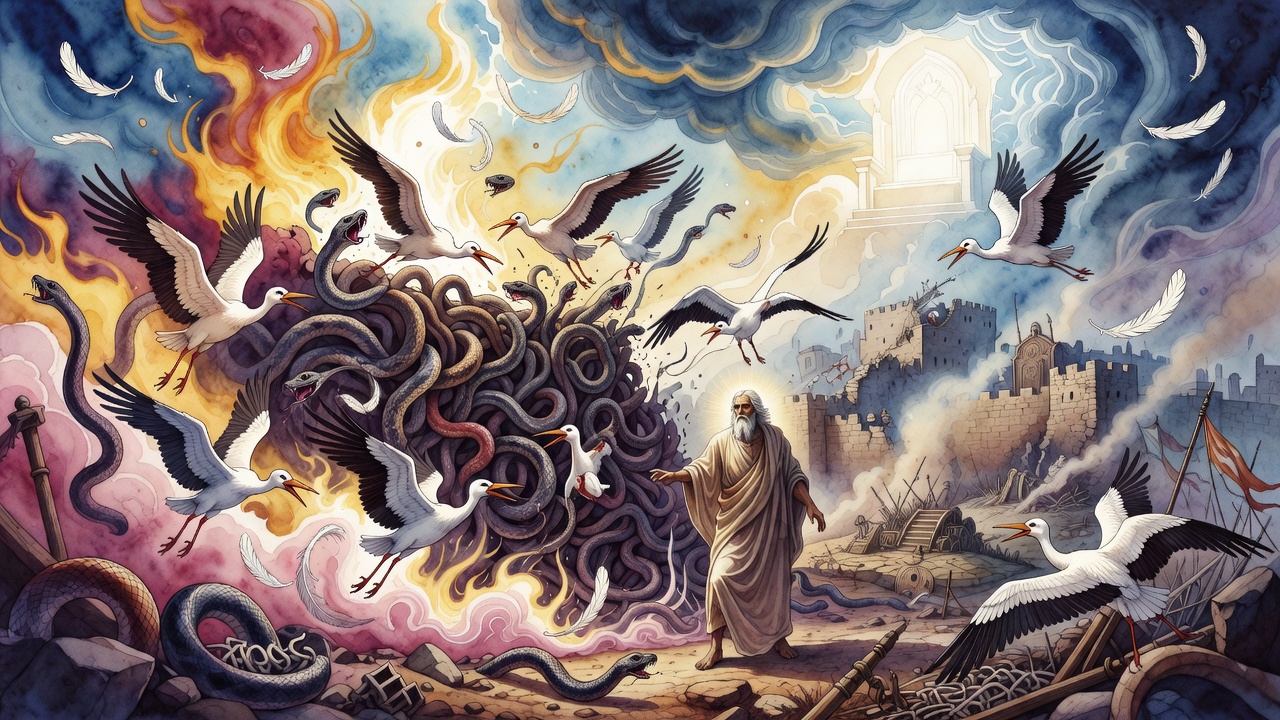
The plan came from a Hebrew fugitive. Every soldier had to raise a stork and starve it three days. The birds were loosed on the serpents guarding the city.
Table of Contents
 Click for full size
The Fugitive Who Went South
Moses killed the Egyptian, hid him in the sand, and ran. The Torah takes him straight to a well in Midian. The old chronicles take him somewhere else first: south, far south, to a war.
The army of Cush had been camped against a walled city for nine years with no end in sight. Moses joined the ranks, made himself useful in the war councils the way a man trained in Pharaoh's court could, and when the desperate soldiers finally begged their leaders for a way in, it was the Hebrew fugitive they asked. "Give us counsel," they said, "that we may see what is to be done to this city."
Storks Against Serpents
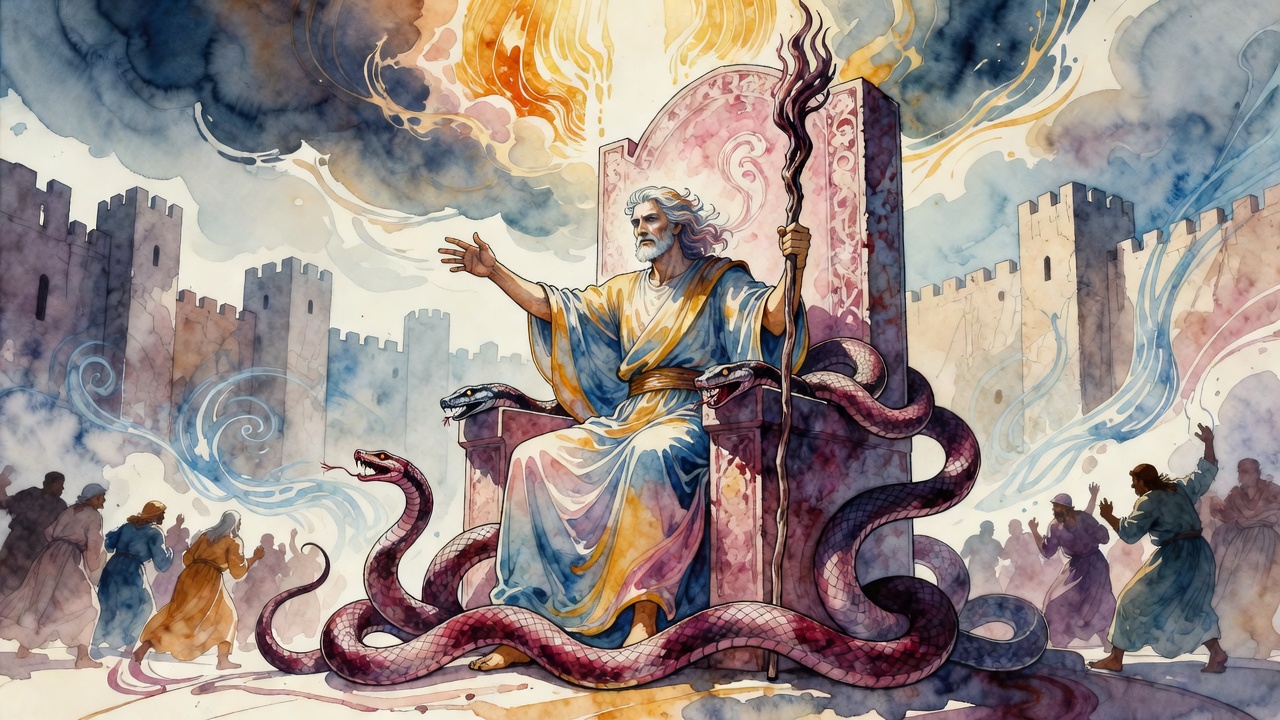
His plan sounded like madness. Every man was to go to the forest and bring back a young stork or face death. They raised the birds, trained them to hunt like hawks, and then starved them for three days. On the third day the army rode out, each man carrying a ravenous bird, to the ground where the serpents lay that guarded the approach to the city. They released the storks, and the starving birds fell on the snakes and devoured them. The army walked over the cleared ground, stormed the city, and took it without losing a single man. Balaam the magician, who had been sheltering inside, fled to Egypt with his sons.
They set Moses on the throne of the dead king Kikianus and gave him the king's widow, Adoniah, as a wife. He would not touch her. He remembered the oaths of Abraham and Isaac against marrying into the daughters of Ham, and he feared God more than he loved a crown. For forty years he ruled Cush, put down the rebellion of Aram and the children of the East, and governed a people who loved him, walking before the Lord in truth with all his heart. It was an entire life. It was not the one he had been born for.
The Argument at the Bush
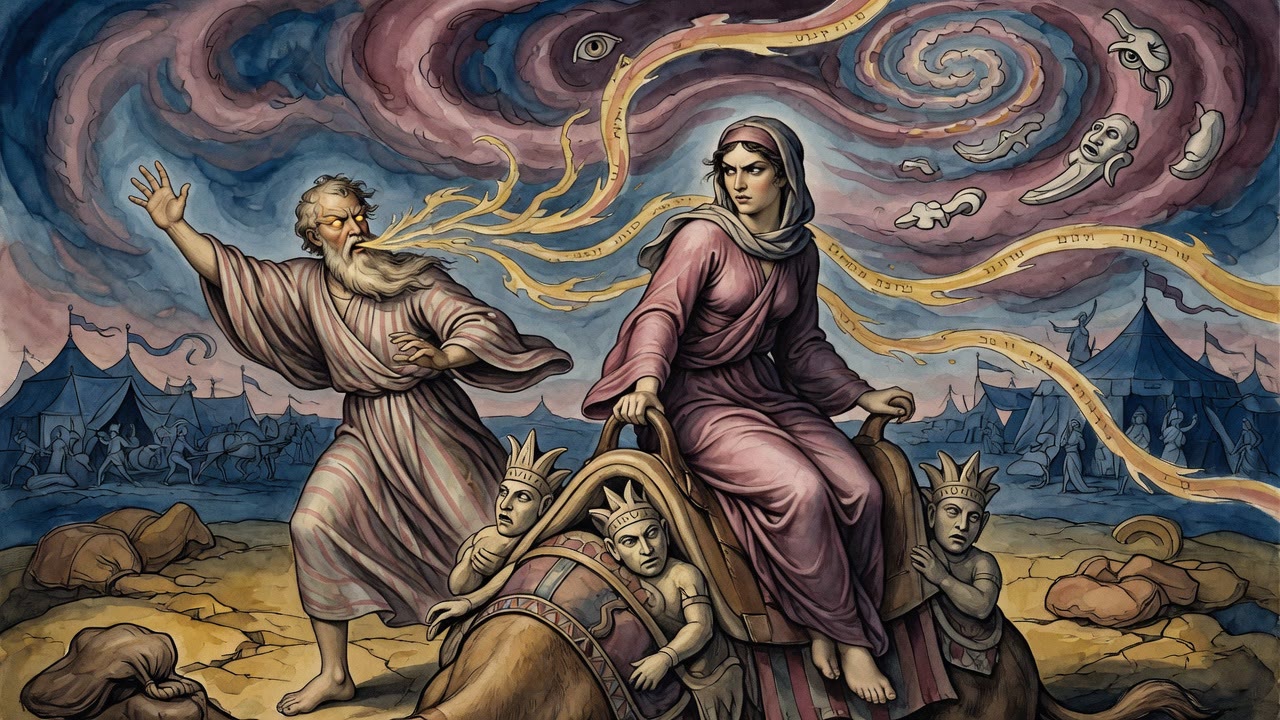
When the voice from the burning bush commissioned him to bring Israel out of Egypt, the man who answered was not a young shepherd overwhelmed by light. He was a former head of state, and he argued like one. God had told Jacob at Beersheba, "I Myself will go down with you to Egypt, and I Myself will surely bring you up" (Genesis 46:4). Moses pointed at the promise: You said You would do it Yourself. Now You send me? He counted years like an auditor: only two hundred and ten had passed since the covenant of the pieces, and four hundred had been decreed (Genesis 15:13). He worried about food for pregnant women and nursing mothers and small children on a desert road. He remembered that Egypt still wanted him dead. He asked whether Israel even had the merit to be redeemed.
These were not the protests of inexperience. They were the objections of a man who had governed, and who knew exactly what he was being handed. God answered none of them to his satisfaction and sent him anyway.
Walking the Firmament
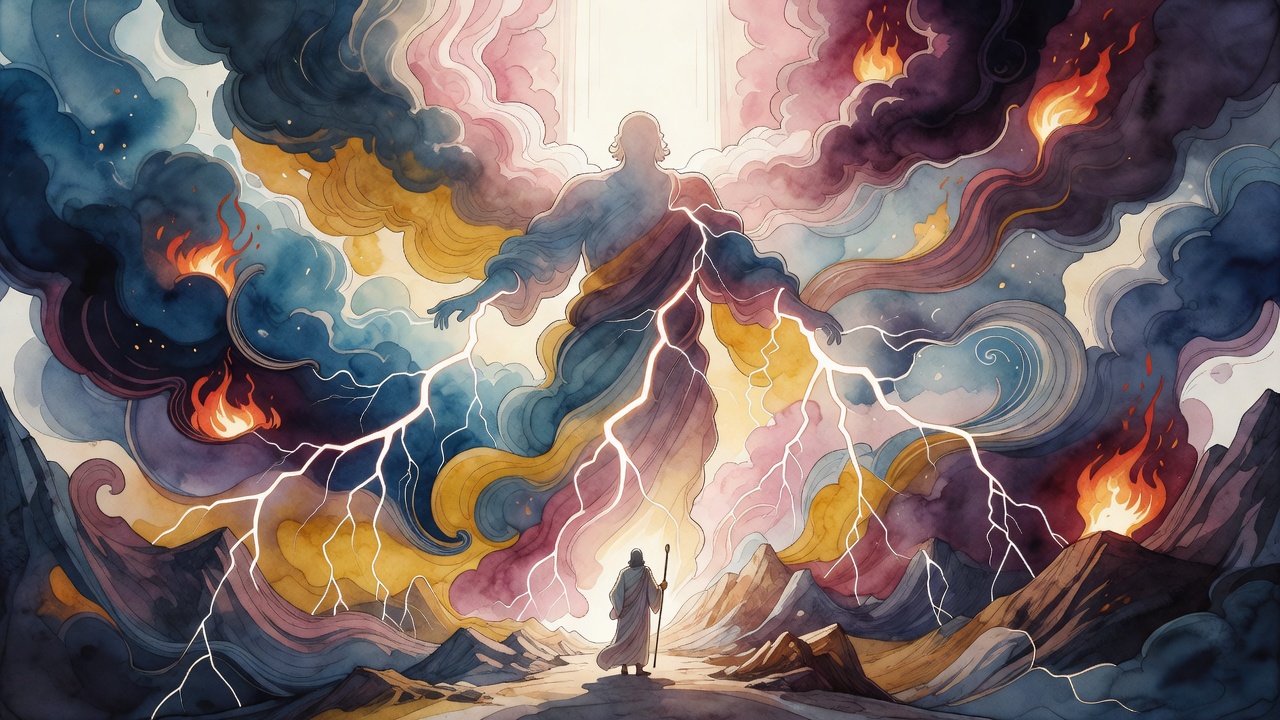
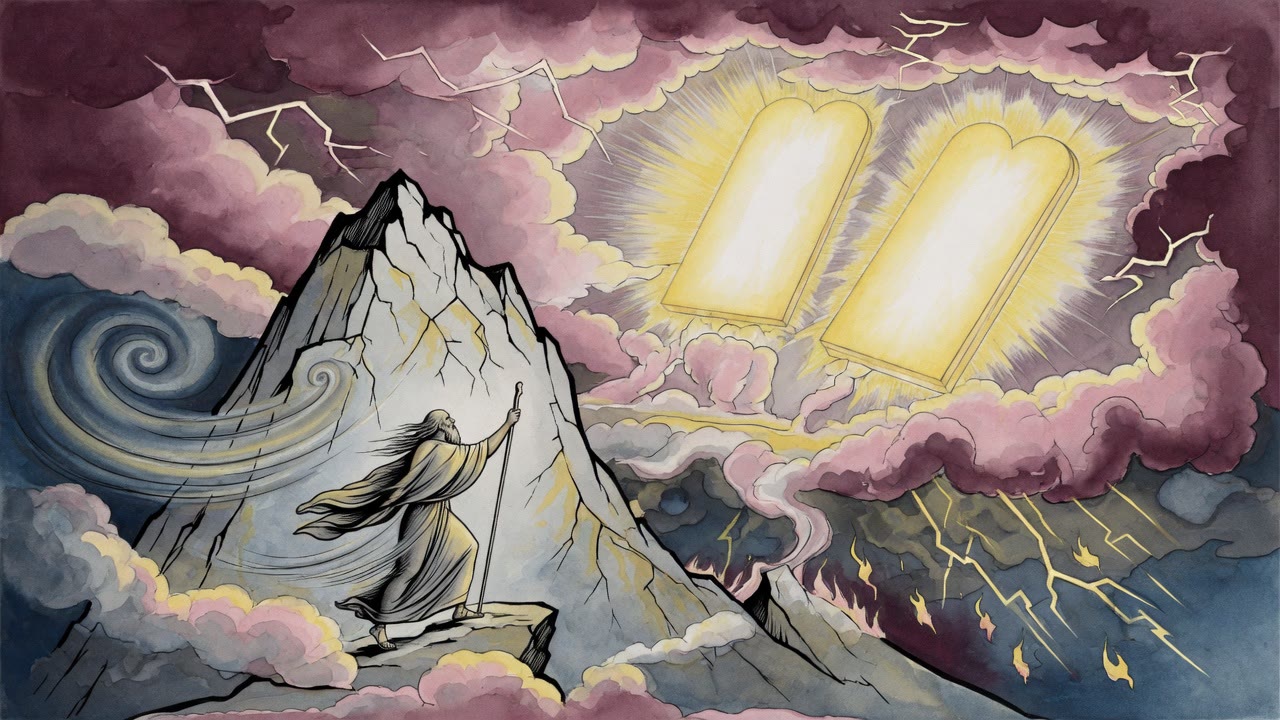
At Sinai, the king who had taken a city with storks was sent up to take something from angels. A cloud crouched before him like a living creature. He did not know whether to ride it or grab hold of it; it opened, swallowed him, and carried him upward, and then Moses walked across the firmament the way a man walks a field. Qemuel, gatekeeper of heaven with twelve thousand angels of destruction, barred the way. "What is one born of woman doing in a place of fire?" "I am the son of Amram," Moses said. "I have come to receive the Torah for Israel." Hadarniel towered sixty thousand parasangs above his fellows, and every word out of his mouth threw off twelve thousand sparks of fire. Moses wept and nearly fell from the cloud until God rebuked the angel, and then Hadarniel walked ahead of him like a student before his teacher.
He passed the fire of Sandalphon, whose height is five hundred years of walking and who weaves the prayers of Israel into crowns for the Throne. He crossed the river Rigyon, a stream of fire where angels are born and consumed daily. Before the Throne of Glory, the angels of terror tried to burn him with their breath, and God spread the glory of the Throne over him like a shield. Moses turned on them. "What use is the Torah to you? You were not brought out of Egypt. You do not worship idols. You do not swear false oaths." One by one the angels became his friends, and each handed him a secret. Even the angel of death told his own. Moses came down carrying the Torah like a captured bride, while myriads of angels set two crowns on every Israelite who had said, "We will do and we will hear."
Every Word, Out Loud
Forty years later, in the plains of Moab, the whole of it had to be handed on. Moses read the entire Torah aloud to the assembled people before the covenant was sealed. Not a summary. Every word, so that no one entered the covenant without knowing what they had agreed to, and Joshua would renew it again at Gerizim and Ebal, because agreed words blur quickly into vague obligation.
Then the scroll had to end, and the ending was the writer's own death. "And Moses died there" (Deuteronomy 34:5). Who wrote that line? Rabbi Yehudah said Moses wrote up to it and Joshua finished the scroll. Rabbi Shimon could not accept a Torah passed between two hands: Moses wrote every word, he said, God dictating while Moses transcribed his own death in tears rather than ink. Others heard a heavenly voice rolling twelve mils in every direction, crying, "Moses died, the great scribe of Israel." And some refused the sentence entirely: as he once stood and served on the mountain, he stands and serves still.
The Burial God Kept for Himself
On his last day Moses wrote thirteen Torah scrolls, one for each tribe and one for the Ark, racing the sunset in the hope that a day that never ended could not carry out a decree. God stopped the sun for him. The decree held anyway. The angel of death came three times; twice Moses drove him off with the Ineffable Name, and the third time he seized the angel and forced him to walk ahead while Moses blessed the twelve tribes one by one.
Why did God handle the burial Himself? The chronicles reach back to Egypt for the answer. On the night of the Exodus, while every other family loaded silver and gold, Moses walked the city for three days and nights hunting for the coffin of Joseph, because Israel had sworn to carry the bones. Serah bat Asher, the woman who had lived since Jacob's day, led him to the brook where Pharaoh's magicians had sunk a lead casket weighing five hundred talents. Moses stood at the water and called, "Joseph, Joseph, you made Israel swear to carry your bones. Do not hold back their redemption." The coffin rose and floated like a reed, and Moses carried it out of Egypt on his shoulder while everyone else carried treasure. God told him then: you think this was a small thing; by your life, the kindness you have shown is great.
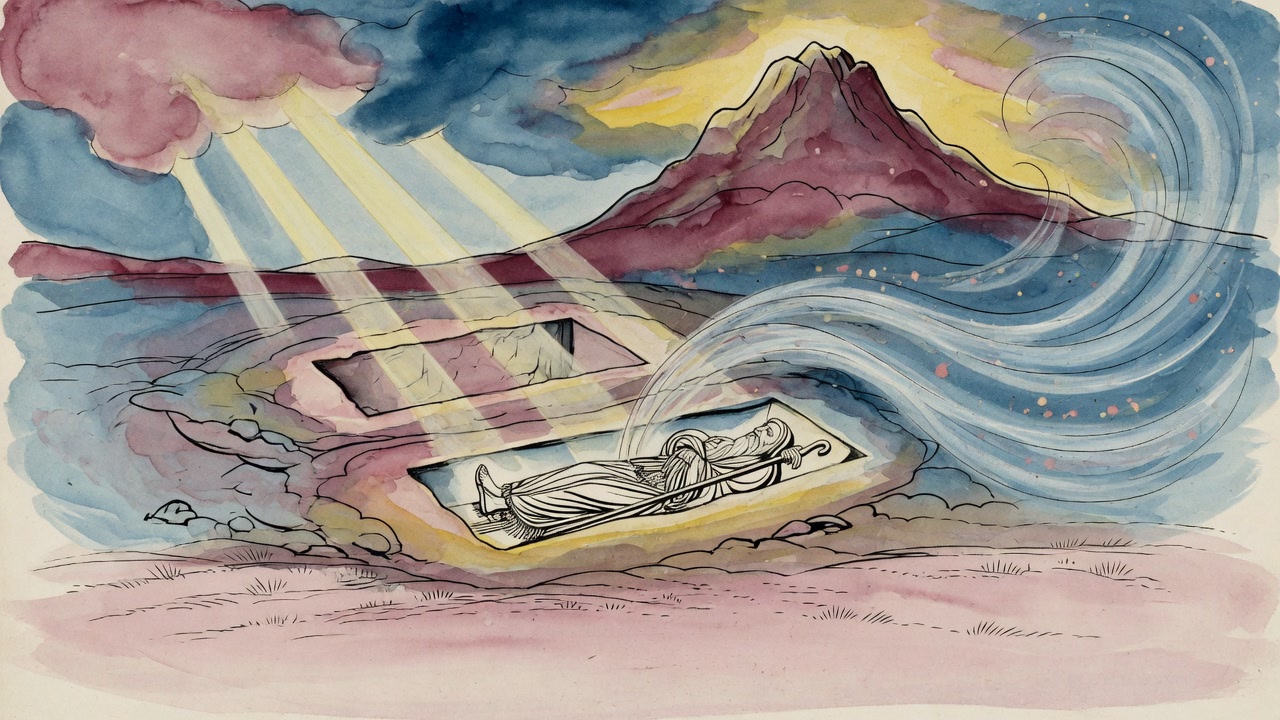
So when Moses died on the mountain across from the land he never entered, no tribe carried him and no family sealed the grave. God buried him alone, in a place no one has ever found, and carried the soul Himself to rest beneath the Throne. The man who was a king before he was a prophet ended as the only man whose gravedigger was God.
← All myths