5,036 texts · Page 1 of 105
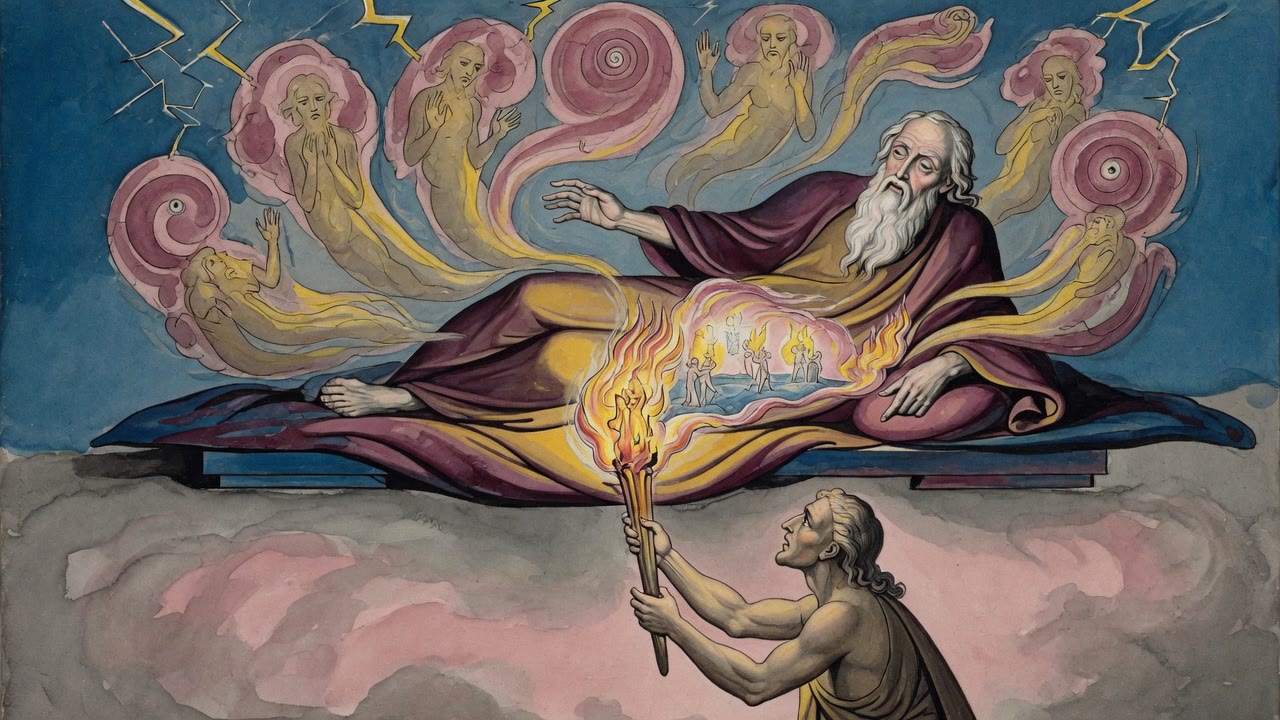
We often think of him in the Garden of Eden, or perhaps being expelled from it. But Jewish tradition holds some truly fascinating ideas about his ultimate fate. One such idea, foun...
One such story, preserved in Vita Adae et Evae (The Life of Adam and Eve), tells of a remarkable vision. It's a bit obscure, not as well-known as other heavenly journeys like Enoch...
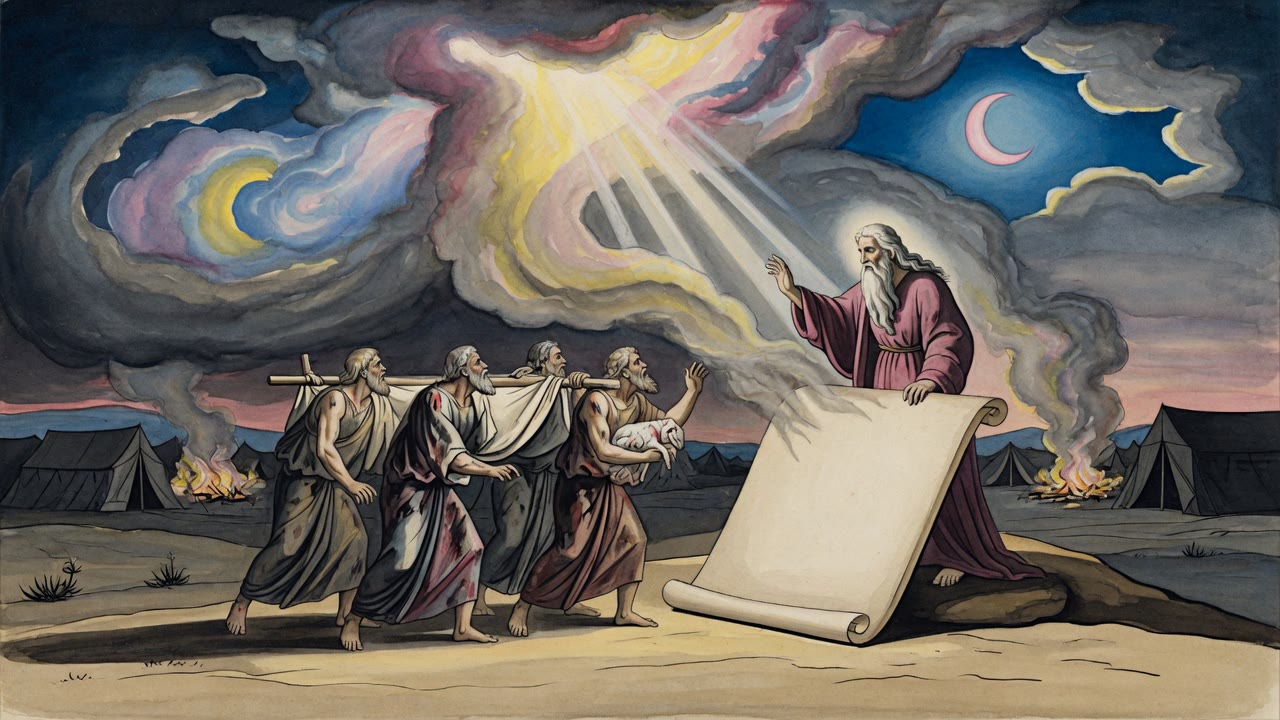
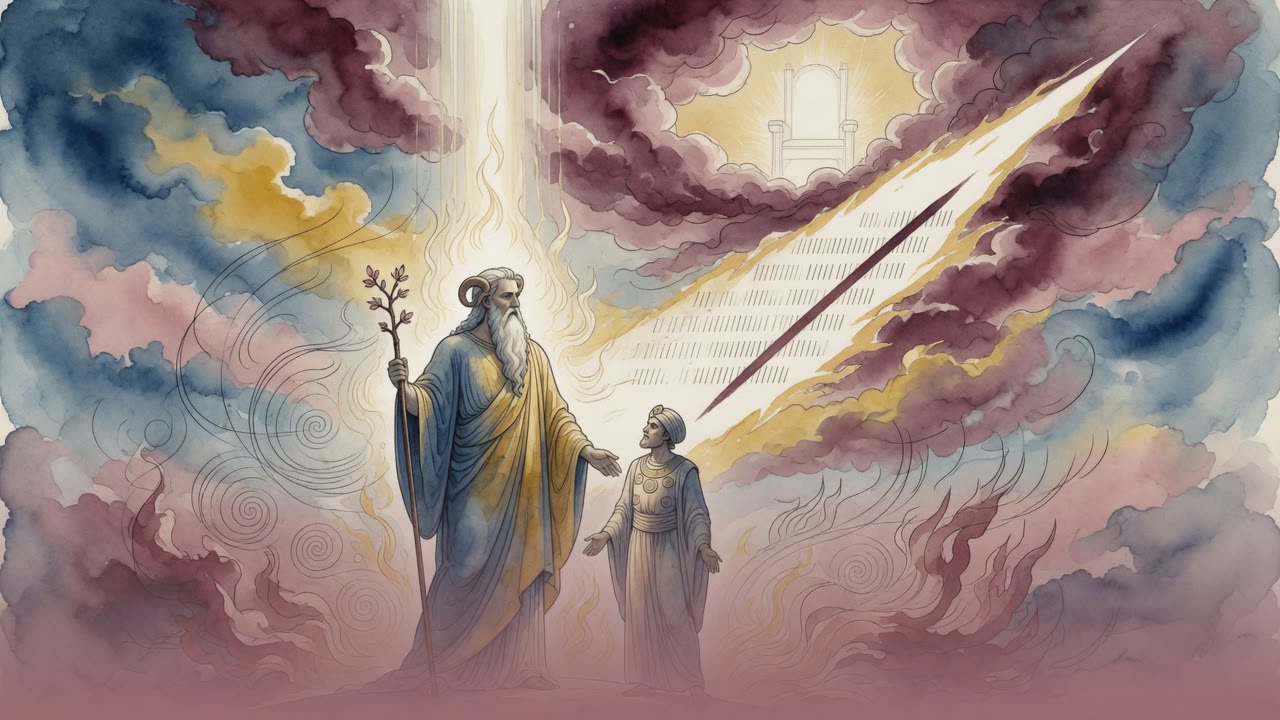
We often picture Moses on Mount Sinai, receiving the divine word directly from God. Forty days and forty nights of dictation. But what if I told you there's another story, a fascin...
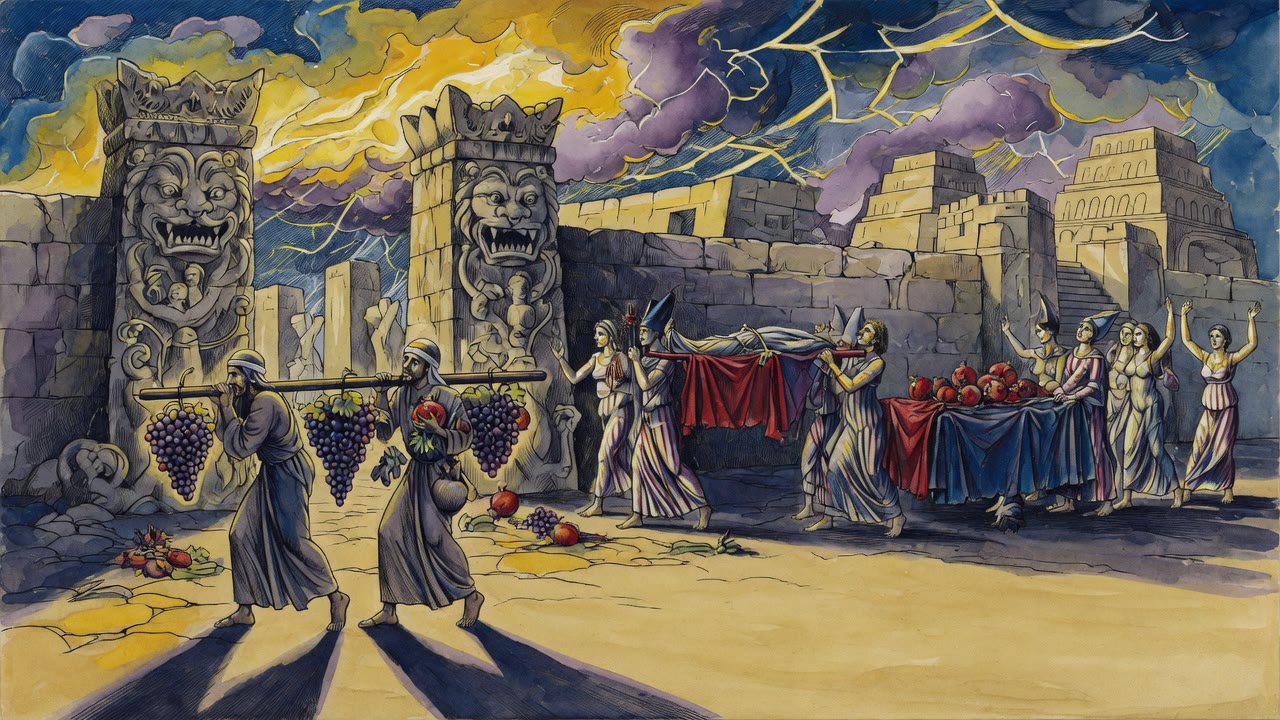
The land was barren. A terrible famine gripped the region, forcing Abraham and Sarah to seek refuge in Egypt. They first tried Hebron, but the hunger was everywhere. So, they journ...
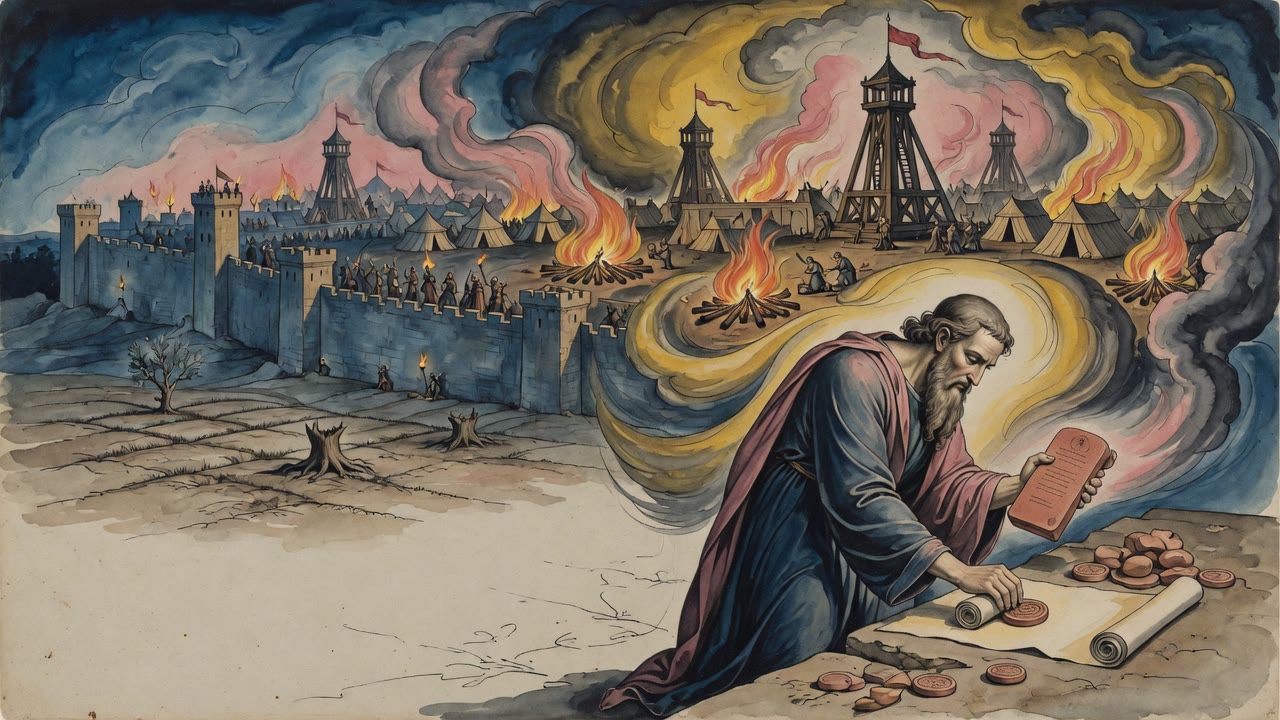
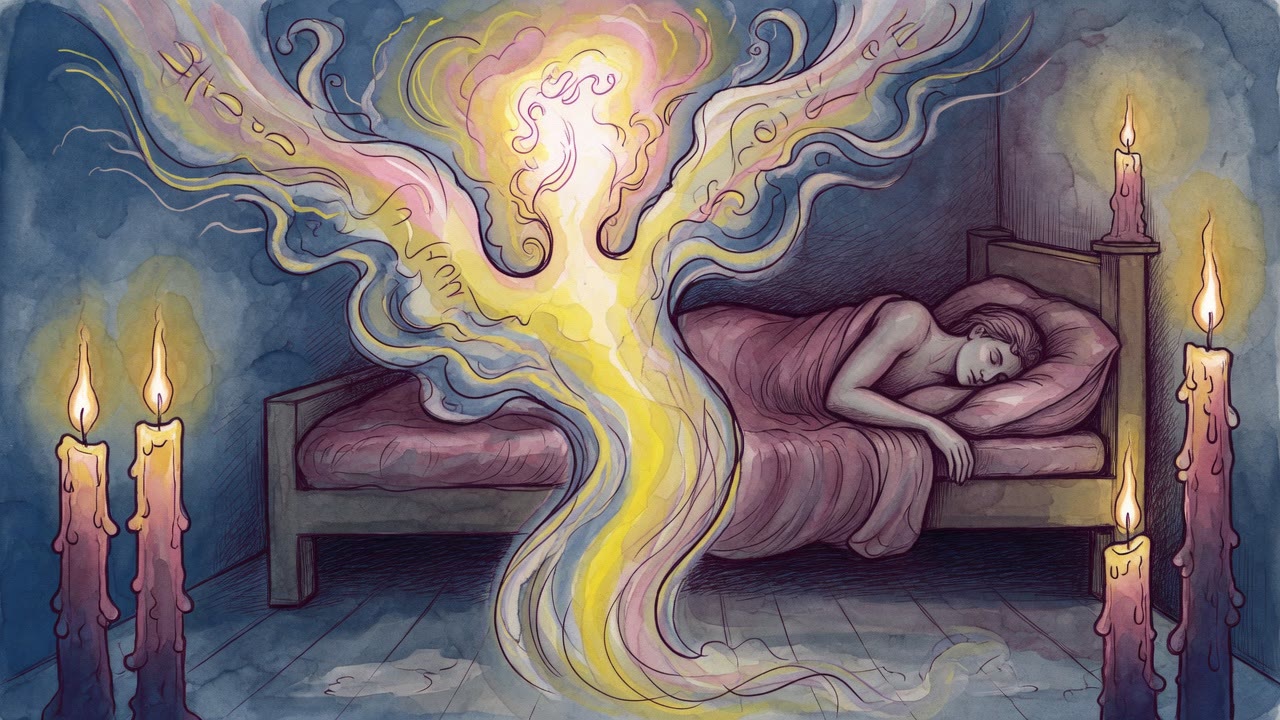
Jewish tradition is rich with stories of dreams and visions, and the power they hold. One particularly striking tale, found in Tree of Souls by Howard Schwartz, tells of a dream th...
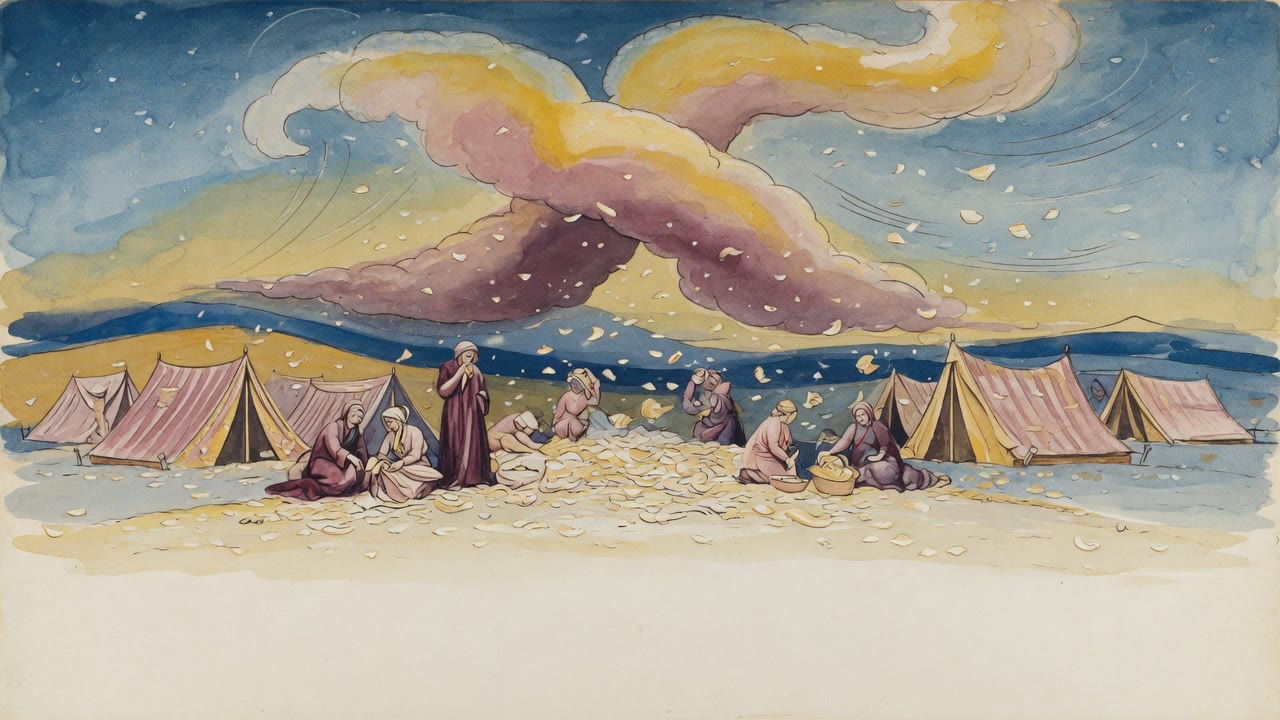
After Pharaoh's daughter discovered the infant Moses nestled among the bulrushes, she brought him back to the palace. She presented him to her father, claiming that the Nile itself...
Ben Sira, that wise sage whose words dance between scripture and folklore, grapples with this very question. And what he offers us is both comforting and challenging. "According to...
Our verse is simple, yet powerful: "And he brought from him a man, finding grace in the eyes of all life. Beloved by God and man, Moshe, remembered for good." , shall we? First, "H...
Today, let's talk about Yehoshua Ben Nun – Joshua, son of Nun – a figure who embodies that very idea. Ben Sira, in his wisdom, paints a vivid picture of Yehoshua. He calls him "a w...
Our story comes from the wisdom of Ben Sira, also known as Ecclesiasticus, a book of wisdom literature. It’s part of the Jewish writings of the Second Temple period, writings that ...
Or Eliyahu, as he's known in Hebrew. He wasn't exactly known for his gentle touch. Ben Sira, in chapter 48, paints a picture of a man of intense zeal. “And he shattered their staff...
Ben Sira, in his wisdom, gives us a glimpse. He paints a picture, vibrant and alive, of Simon the High Priest at the altar. Can you see him? Receiving the sacrificial pieces from h...
It all starts with a divine download, so to speak. The book tells us it contains the secret history of how time is divided – days, weeks, years, and especially those big jubilees, ...
We all know the story: Moses goes up the mountain, gets the Ten Commandments, and comes back down. But what if there was more to the story? What if the Bible we know is just a glim...
We're going to delve into a text that's both familiar and strangely… different. A book that whispers of secrets given directly to Moses on Mount Sinai. I'm talking about the Book o...
This ancient text, considered canonical by some but not included in the standard Hebrew Bible, offers a fascinating glimpse into a world where spiritual forces are constantly at pl...
That's the scene set for us right at the beginning of Jubilees. God commands Moses, "Write down for thyself all these words which I declare unto thee on this mountain, the first an...
This ancient Jewish text, considered scripture by some but excluded from the standard biblical canon, paints a sweeping picture of history and destiny. And within its pages, we fin...
There's a whole world of fascinating detail in texts that didn't quite make it into the biblical canon. to one of them: the Book of Jubilees. Jubilees, sometimes called Lesser Gene...
The Book of Jubilees, a text not included in the Hebrew Bible but considered sacred by some, gives us a fascinating glimpse into this. It tells us about Adam burning incense, "swee...
Ancient texts wrestled with this too, particularly with how easily we can lose track of the sacred rhythms of life. The Book of Jubilees, a text not found in the Hebrew Bible but c...
It's a fascinating read, full of details you won't find anywhere else in the Torah. The Book of Jubilees, sometimes called Lesser Genesis, presents itself as a revelation given to ...
The Book of Jubilees, a text revered by some but not included in the standard biblical canon, offers a fascinating answer, connecting the earthly and the divine in a truly profound...
It’s a question that’s echoed through generations. According to the Book of Jubilees, it was Noah himself who laid out the boundaries. Imagine Noah, fresh off the Ark, surveying a ...
It's an ancient Jewish text, considered apocryphal by some, pseudepigraphal by others. Basically, it's an "outside book," a text that exists outside the traditionally accepted bibl...
It's like a post-diluvian real estate transaction, recorded for posterity. Specifically, we’re diving into Jubilees Chapter 9, which lays out the inheritance of Shem, one of Noah's...
It’s not just a vague "they went off and settled," but a detailed allocation. We find a fascinating, if somewhat cryptic, account in the Book of Jubilees. This ancient Jewish text,...
We're not talking politics here, but something far older, something almost mythical. Let's turn to the Book of Jubilees, an ancient Jewish text also known as Lesser Genesis, that o...
Jubilees, for those unfamiliar, is an ancient Jewish text that retells the stories from Genesis and Exodus, but with some… shall we say, interesting additions. It's considered pseu...
The Book of Jubilees, a fascinating text considered apocryphal by some, offers a peek behind the curtain. It presents itself as a revelation given to Moses on Mount Sinai by angels...
Today, we're diving into the Book of Jubilees, a fascinating ancient Jewish text that expands on the narratives in Genesis. It's considered apocryphal by many, meaning it's not par...
It tells us, plainly and powerfully, that "Abram was very glorious by reason of possessions in sheep, and cattle, and asses, and horses, and camels, and menservants, and maidservan...
Sometimes, it's written in the stars... or at least, on heavenly tablets. That's the image that leaps out at us from the Book of Jubilees. In chapter 24, we find God speaking direc...
To the Book of Jubilees, a text not found in the Hebrew Bible itself, but considered sacred by some, particularly within Ethiopian Orthodox Christianity. It's a retelling of Genesi...
After Jacob's direct encounter with the Divine, something unexpected happens. The text says, "He finished speaking with him, and He went up from him, and Jacob looked till He had a...
The Book of Jubilees, a text from around the 2nd century BCE, gives us a glimpse into that mindset. It’s a retelling of Genesis and Exodus, but with some… well, let's call them exp...
In it, we find a stark warning, a line drawn in the sand regarding actions so egregious that they warrant the ultimate penalty. The passage states, “And for this law there is no co...
That's the story of Jacob and his son Joseph, as retold in the Book of Jubilees, a text considered canonical by some, like the Ethiopian Orthodox Church, but not included in the st...
In Chapter 36, we get a glimpse into the stark consequences awaiting those who intentionally harm their brothers. It’s heavy stuff. The text minces no words. It speaks of those "ap...
The Book of Jubilees, for those who aren't familiar, is an ancient Jewish text, considered part of the biblical apocrypha or pseudepigrapha – writings that hover around the edges o...
Our story picks up with Joseph, a mere seventeen years old, ripped from his family and sold into slavery in Egypt. Talk about a rough start! The Book of Jubilees, a fascinating tex...
Our story comes from the Book of Jubilees, a fascinating text considered canonical by the Ethiopian Orthodox Church but not by most of mainstream Judaism. Think of it as a kind of ...
We’re opening the Book of Jubilees, a fascinating text considered canonical by some, like the Ethiopian Orthodox Church, but apocryphal by others. It's like a behind-the-scenes loo...
Talk about pressure. The Book of Jubilees, an ancient Jewish text that retells and expands upon stories from the Hebrew Bible, gives us a glimpse into this pivotal moment. So, pict...
Pharaoh, the most powerful man in the land, is understandably worried. He needs a solution, and fast. The text says, "let Pharaoh appoint overseers in all the land of Egypt, and le...
The story of Joseph, as told in the Book of Jubilees, gives us a glimpse. We all know the broad strokes: sold into slavery by his jealous brothers, falsely accused, imprisoned... J...
Jubilees, in its 40th chapter, paints a picture of Joseph that goes beyond the familiar story of the coat of many colors and the dreams. It tells us, "for he walked in uprightness,...
The Book of Jubilees, an ancient Jewish text that retells and expands upon stories from Genesis, picks up the narrative with Joseph at a pivotal moment. It tells us that on the ver...
The rabbis traced one walking stick from Jacob to Judah to Moses to Aaron to David, and said the Messiah will one day hold it too.
Korah was among the wealthiest men in the ancient world. The rabbis traced his fortune to a hidden treasury Joseph had built and then never claimed for himself.
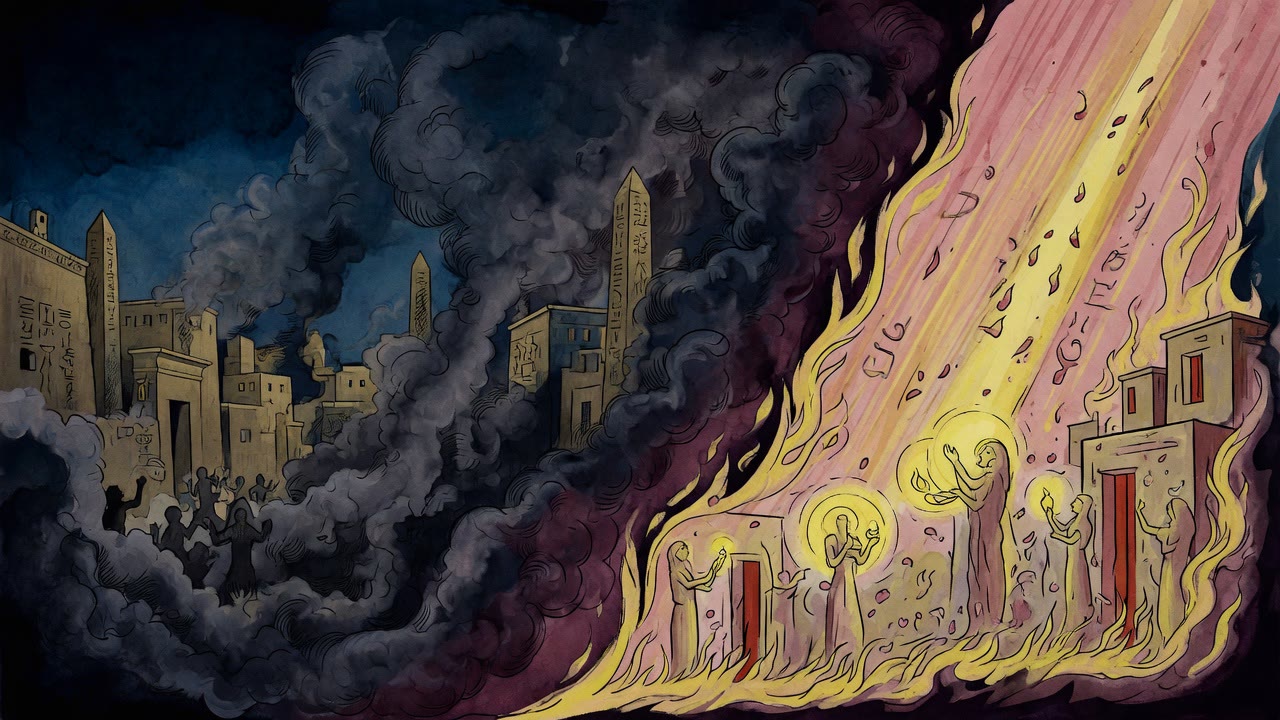
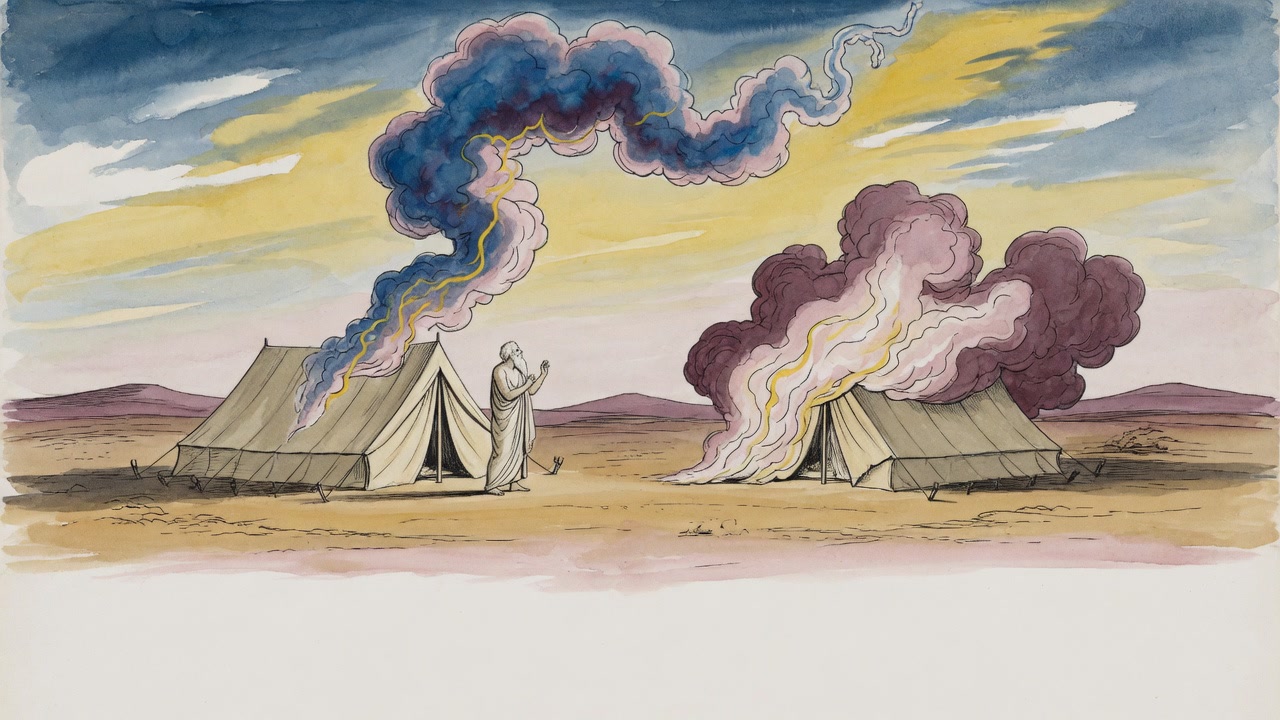
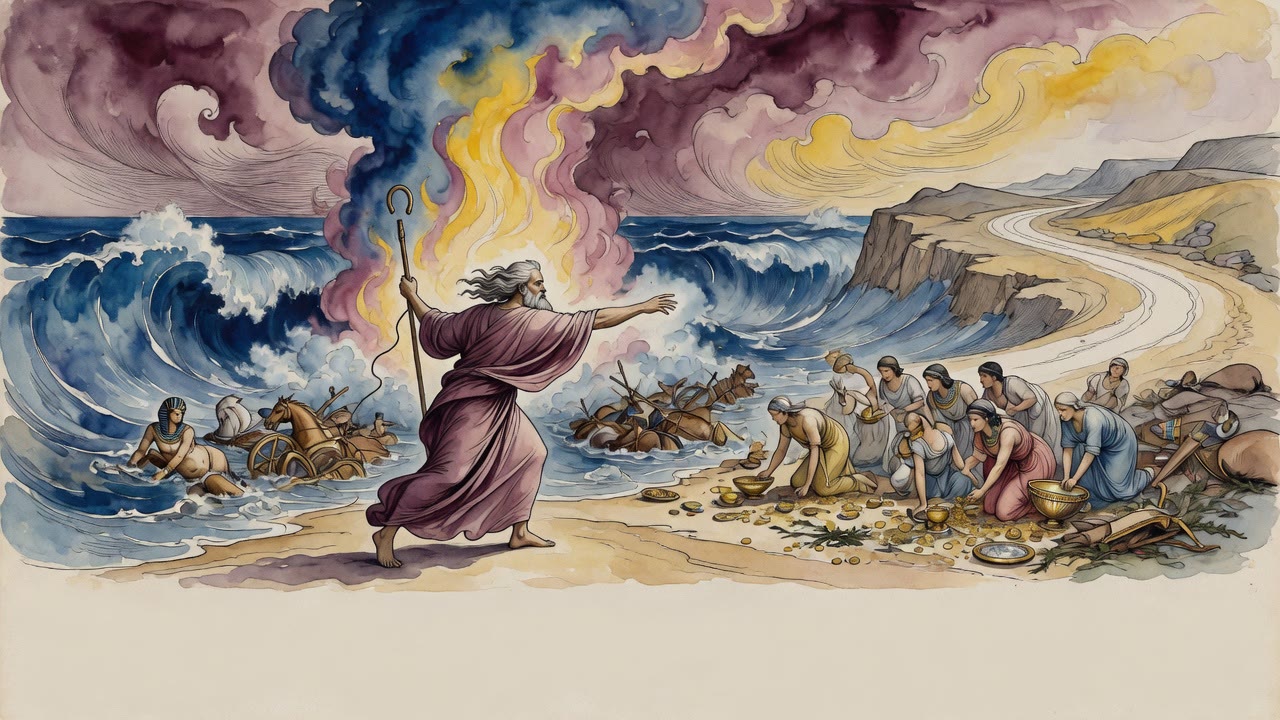
The night Israel left Egypt, every household grabbed silver and gold. Moses was standing at the Nile, calling a dead man's name over the water.
Most people think Og is a footnote. He rode on Noah's ark, schemed his way into Abraham's household, ripped up a mountain, and still lost to Moses.
Jacob gathered his sons to bless them and then spoke a name none of them knew. Four centuries later, that name would walk out of Egypt.
Moses could not find Joseph's coffin. One woman still remembered. She had been alive for three hundred years and she took him to the river.
One ancient donkey carried Isaac to his binding on Mount Moriah, Moses toward Egypt to free a nation — and will carry the Messiah at the end of days. Three missions, one miraculous animal, one unbroken thread through Jewish history.
The Red Sea did not split because of Moses alone. One rabbi traced it back to a single act of moral courage Joseph performed centuries earlier.
Joseph buried his vast wealth in three secret caches. Korah found one of them, and it destroyed him. The third cache waited for the Exodus.
The Tikkunei Zohar makes a startling claim: Jonah the prophet and the dove Noah sent from the ark are the same soul, reappearing across centuries to deliver the same message.
When Rabbi Akiva called the Song of Songs the holiest book in the Hebrew Bible, he was not talking about romance. He was talking about the moment a people heard God's voice and trembled.
When Israel fled Egypt, Moses stopped to retrieve a coffin. The reason why - and how he found it - is one of the strangest stories in the Exodus tradition.
When Israel stood terrified at the Red Sea, the rabbis asked what finally moved God to split it. The answer was a promise made centuries earlier.
Abraham was worthy of being created before Adam. Bereshit Rabbah explains why God waited: he was the center beam, placed in history to hold everything in place.
The decree to drown every Hebrew boy started with a dream about scales. A single lamb outweighed all of Egypt, and Pharaoh's advisors told him what that meant.
Three Pharaohs appear across Genesis and Exodus and they share almost nothing except the title. The Midrash reads them as a study in how power rises and falls with what it knows.
In the world to come, Adam declared himself greater than Moses. Moses had a single response that won the argument, and reveals what the tradition means by greatness.
Three patriarchs named God the same thing without knowing the others had done it. The rabbis of Midrash Tehillim noticed and built a major argument from it.
When Moses pleaded to enter Canaan by recalling the burning bush, God answered by tracing Moses's mortality back to Adam. Every leader stands in the same chain.
Noah gave Shem the eastern lands from Elam to Nineveh, drawing the lines Moses would one day walk through and mapping a destiny centuries before it began.
The Book of Jubilees insists the Sabbath and jubilee calendar were not invented at Sinai. They were encoded into creation from Adam's first day.
God chose the place of Joseph's burial with the same precision He used to arrange his fate. What was taken from Shechem had to be given back to Shechem.
Moses declared that the Temple would stand in Benjamin's land forever, in this world and the next, because God loved that tribe best.
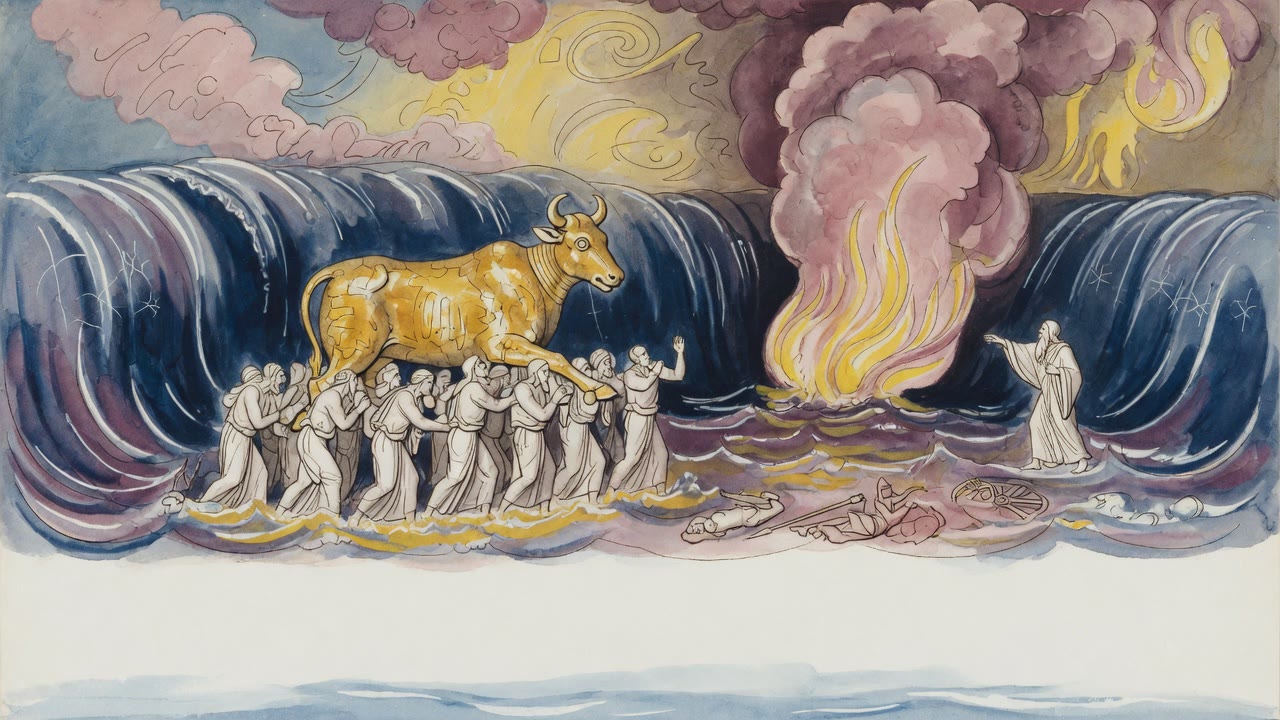
When Aaron and Chur positioned themselves on either side of Moses during the battle against Amalek, the Mekhilta says they were not randomly chosen supports. Aaron represented Levi's faithfulness at the golden calf; Chur represented Judah's willingness to enter the sea before it parted.
When God showed Moses the Promised Land from Mount Nebo, he referred to a region as 'until Dan.' But Dan had not yet settled there. The Mekhilta finds the answer in a promise God made to Abraham centuries before the conquest: the tribal territories were mapped out in the divine plan long before the tribes arrived.
When all of Israel was ready to flee Egypt, Moses spent three days searching for a coffin. A woman named Serah bat Asher, who was older than the Exodus itself, knew exactly where it was.
Midrash Tehillim on Psalm 45 contains a remarkable statement from Rabbi Elazar: in the messianic future, every single Israelite will have descendants as numerous as those who left Egypt at the Exodus, six hundred thousand. This tradition reads Joseph's dreams not as personal ambition but as a vision of exponential blessing written into the DNA of the covenant.
Two mountains stand at the center of Jewish consciousness: Moriah, where Abraham bound Isaac, and Sinai, where Moses received the Torah. The rabbis discovered they point toward the same event at the end of time.
Seder Olam Zutta is the lesser-known sibling of the great rabbinic history, and it tried to do something astonishing: trace an unbroken chain of authority from Moses all the way to the Jewish leaders of Babylonian exile. What it preserves is not just genealogy but a theory of how legitimacy survives catastrophe.
Israel stood at the border of the Promised Land and asked for scouts. Rabbi Shimon called this shameful. Not because the request was unreasonable, but because it was evidence that forty years of miracles had failed to produce the one thing God required: the willingness to trust what you cannot yet see.
When Moses begins his final speech with 'Listen, O heavens,' Sifrei Devarim reads this not as poetry but as legal procedure. Heaven and earth are summoned as witnesses to the covenant, and their testimony will last as long as they exist.
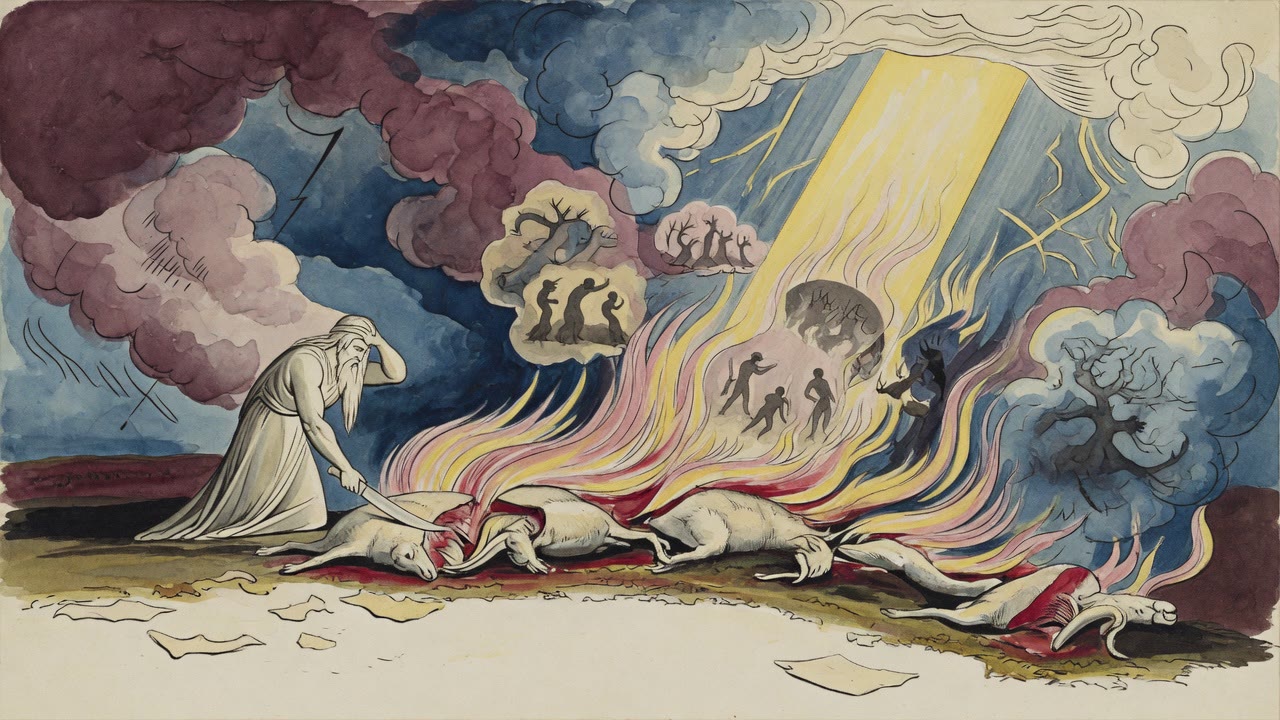
The Torah says God showed Moses the land. The Sifrei Devarim says God showed Moses everything: the peaceful settlements and the oppressors, the destroyed cities and the future exile, and finally, the last second of Moses' own life.
When Moses laid out the borders of the Promised Land, the Torah gave a handful of place names. The Targum Jonathan gave a detailed survey, including a western boundary that extended not merely to the Mediterranean but to the primordial waters underneath it, the deep that existed before creation. The land promised to Israel touched the foundations of the world.
When Genesis says Abraham and Sarah made souls in Haran, the rabbis did not read it as a metaphor. Sarah's work of spiritual transformation became the template for what Moses would do at Sinai.
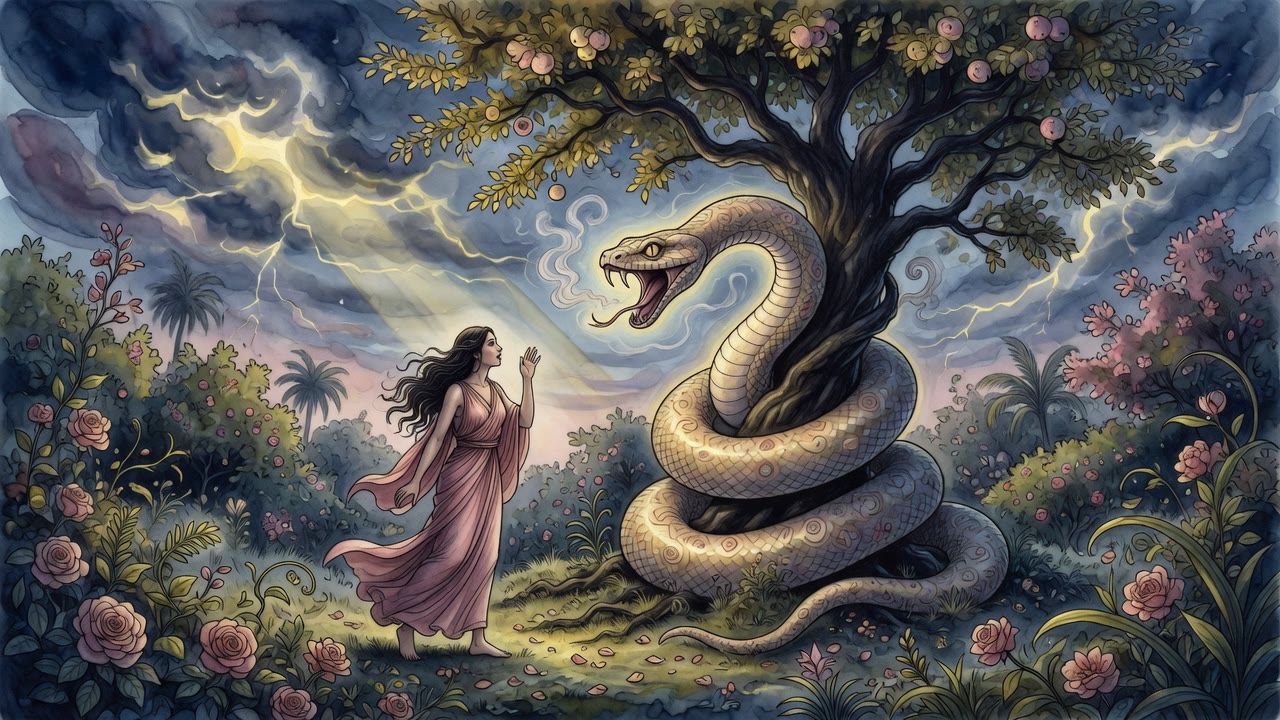
The expulsion from Eden and the giving of the Torah at Sinai seem like opposite events -- one a punishment, the other a gift. But ancient texts trace a continuous thread from Eve's transgression through the patriarchal era to Moses standing at the mountain, discovering that the thread had never broken.
A three-year-old boy grabbed the crown off Pharaoh's head. A sorcerer wanted him killed. What happened next is one of the strangest tests in midrash.
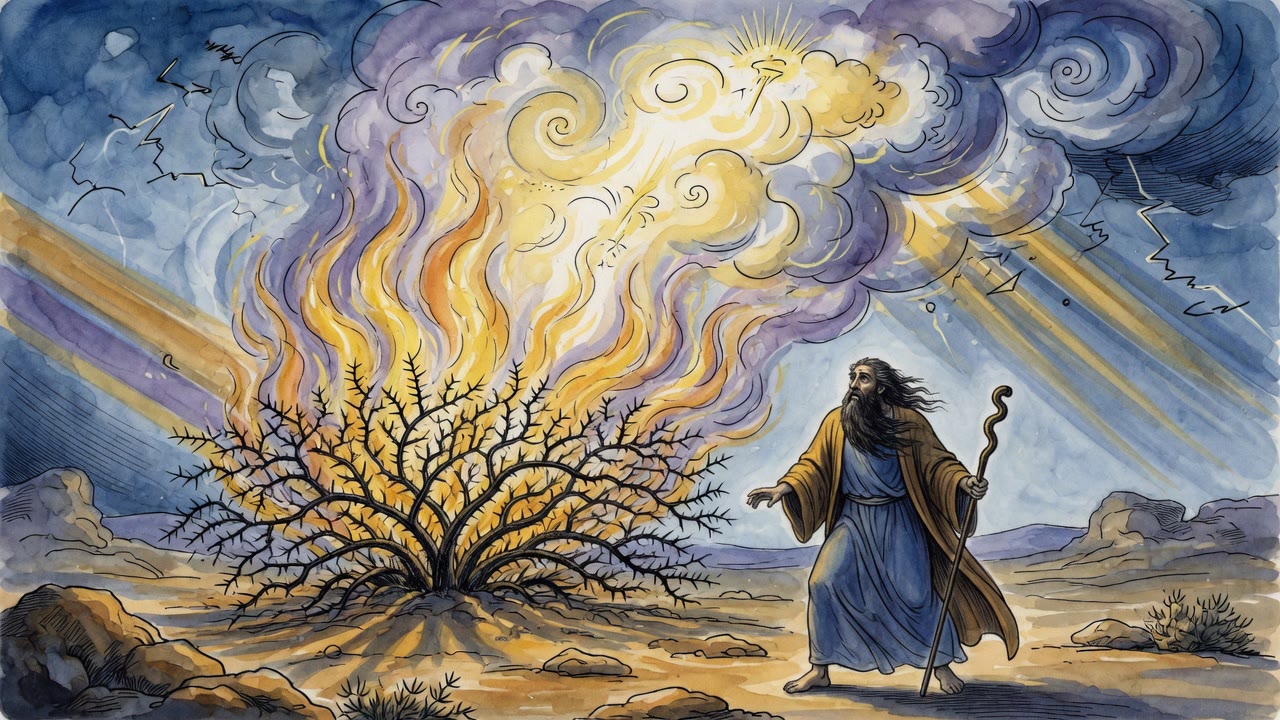
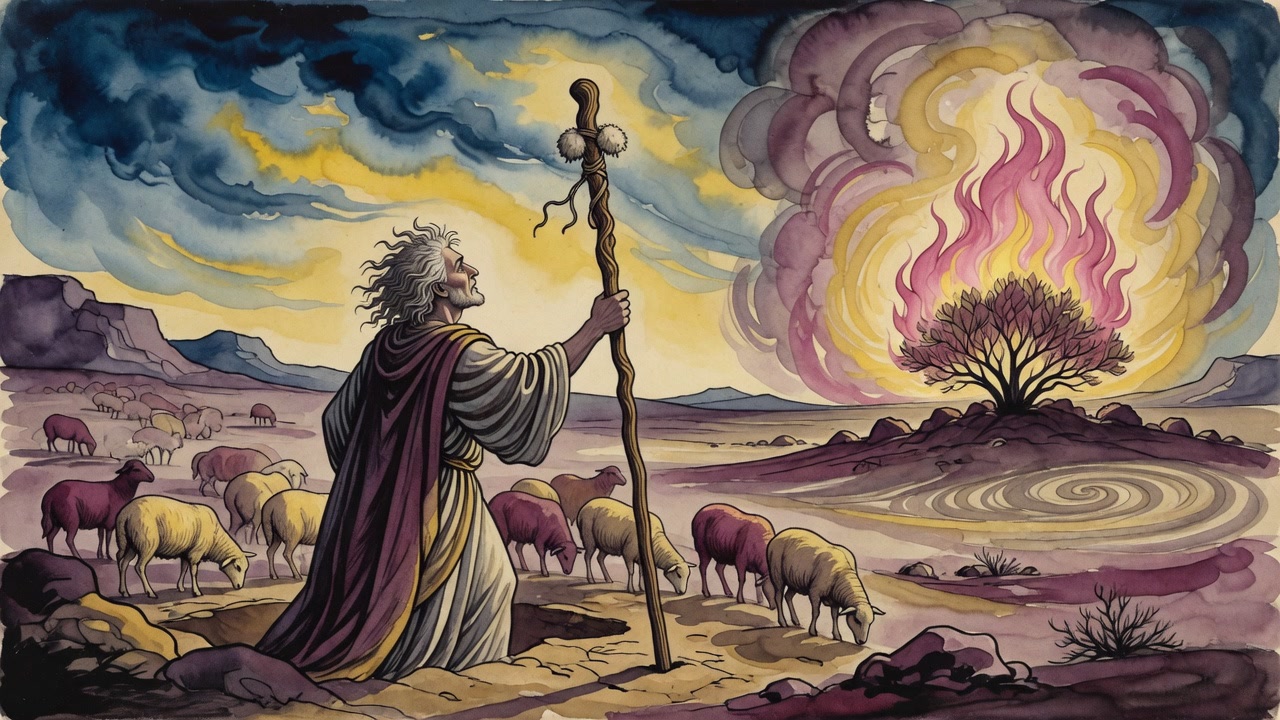
Birds refused to fly over it. The mountain itself leaned forward when Moses approached. And the bush that burned without consuming was an angel.
When Pharaoh's decree drove Amram to divorce his wife, his little daughter Miriam argued him down. Then she prophesied the child who would save Israel.
Pharaoh dreamed a single lamb outweighed all of Egypt on the scale. The three Jewish sources that tell this vision also reveal how the Exodus began not with bricks but with a nightmare.
The Targum Pseudo-Jonathan gave the nameless angel of Exodus 3 a name — Zagnugael — and in doing so reshaped how Jewish tradition reads the voice in the flame.
The first commandment God gave Israel was not a moral law. It was a calendar. Shemot Rabbah says that gave Israel authority over time itself.
The Torah shows Moses lifting his hands above the battle with Amalek. The Mekhilta says he was not asking for victory. He was naming the dead.
Joseph made Israel swear an oath about his bones. Four hundred years later, a scent in the river told Moses where to find them on the night of the Exodus.
Seven clouds surrounded Israel in the desert — one ahead, one behind, two on each flank, one above, one below, and a seventh that leveled the ground. What did the tradition say when they lifted?
The angels owned the Torah for 974 generations before the world existed. Then Moses arrived to take it. One argument silenced all of heaven.
Moses vanished into the clouds of Sinai for nearly a year. When he came back down, his father-in-law Jethro was waiting with criticism ready.
Rabbi Akiva calculated that Israel traveled 240 kilometers at Sinai, recoiling 12 kilometers after each commandment and walking back ten times.
Jethro had worshipped every god there was. That is precisely why his praise of the God of Israel carried more weight than anyone else.
Manna fell in abundance the day Jethro arrived. Moses begged him to remain. Jethro said no, and the tradition honors his refusal as an act of greater piety.
Jewish tradition sees the number three woven through Torah, Israel, and Moses himself. The pattern is too precise to be coincidence, and the rabbis noticed.
When God spoke the Ten Commandments, the Israelites died from the force of it. What God sent next would one day raise all the dead.
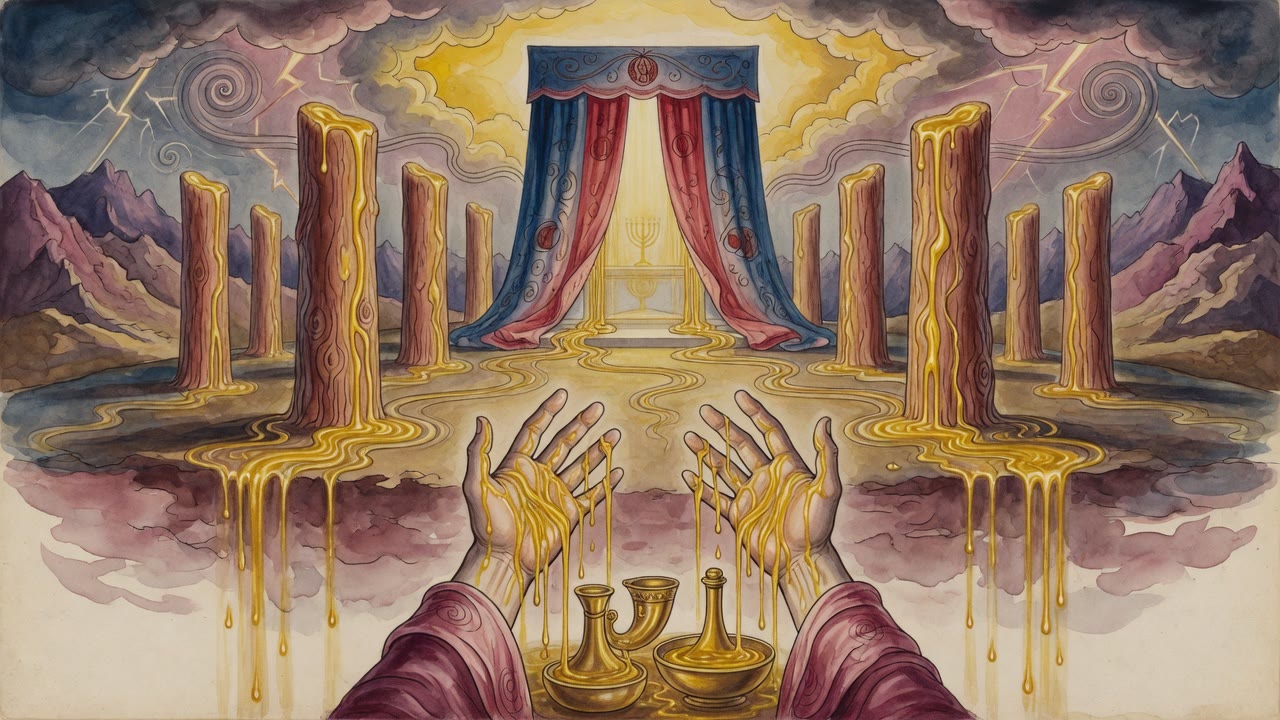
Moses poured the sacred oil over Aaron's head and felt it on his own face. A midrash reads that confusion as the secret of brotherhood.
Five angels of wrath were on their way to destroy Israel. Moses ran to Hebron and begged the dead to stand up and intercede with him.
After the Golden Calf, God offered Israel an angel instead of His presence. Moses refused. What followed was the most consequential negotiation in Torah.
Moses won forgiveness for the Golden Calf on Yom Kippur. But he asked for something more: proof that the nations could see.
Pesikta de-Rav Kahana hears Exodus 30's census as a courtroom acquittal — the half-shekel is the silver paperwork that commuted Israel's death sentence after the Calf.
God gave Moses a recipe for sacred oil in the wilderness. He made twelve logs of it. That tiny amount anointed the entire Tabernacle, every high priest, and...
When God chose Aaron as High Priest, Aaron didn't want the job. He was a man who shunned distinctions, and Moses had to persuade him to accept.
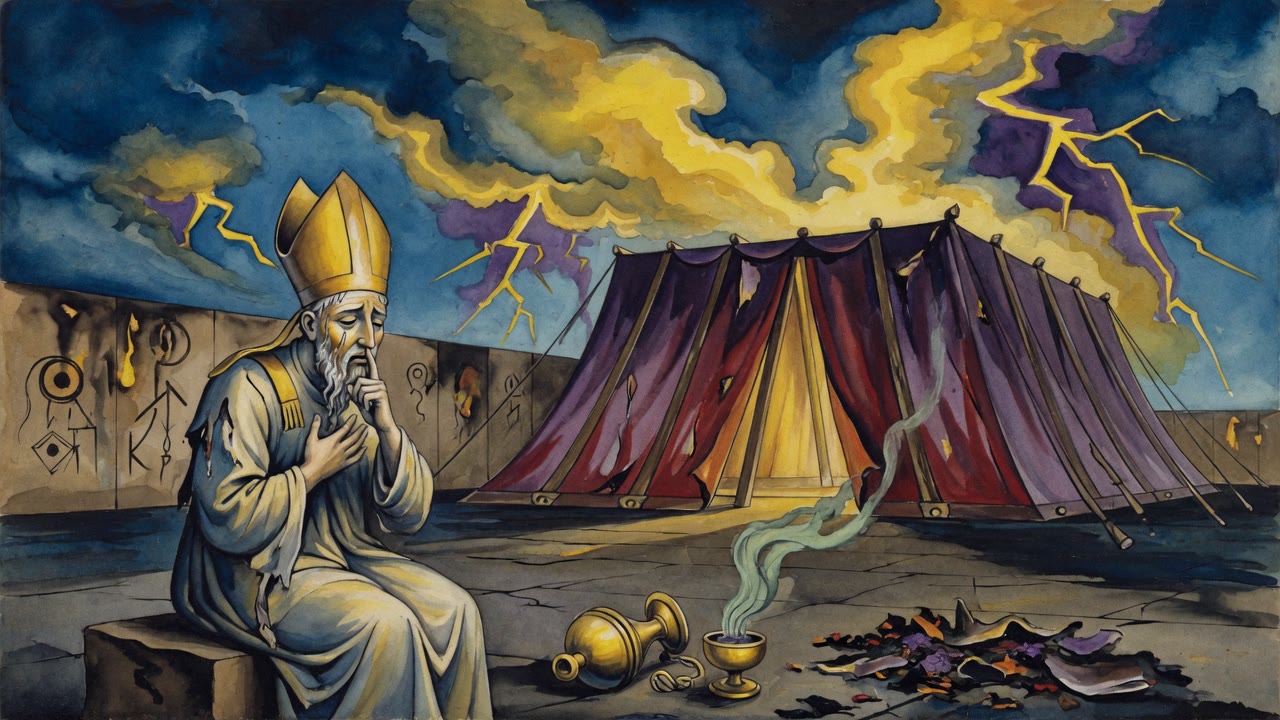
Moses was furious. The goat of the sin offering had not been eaten, and he rebuked Aaron's surviving sons directly. Then Aaron explained. And Moses conceded. The rabbis found this moment remarkable — because it is the only time in the Torah that Moses admits a legal error.
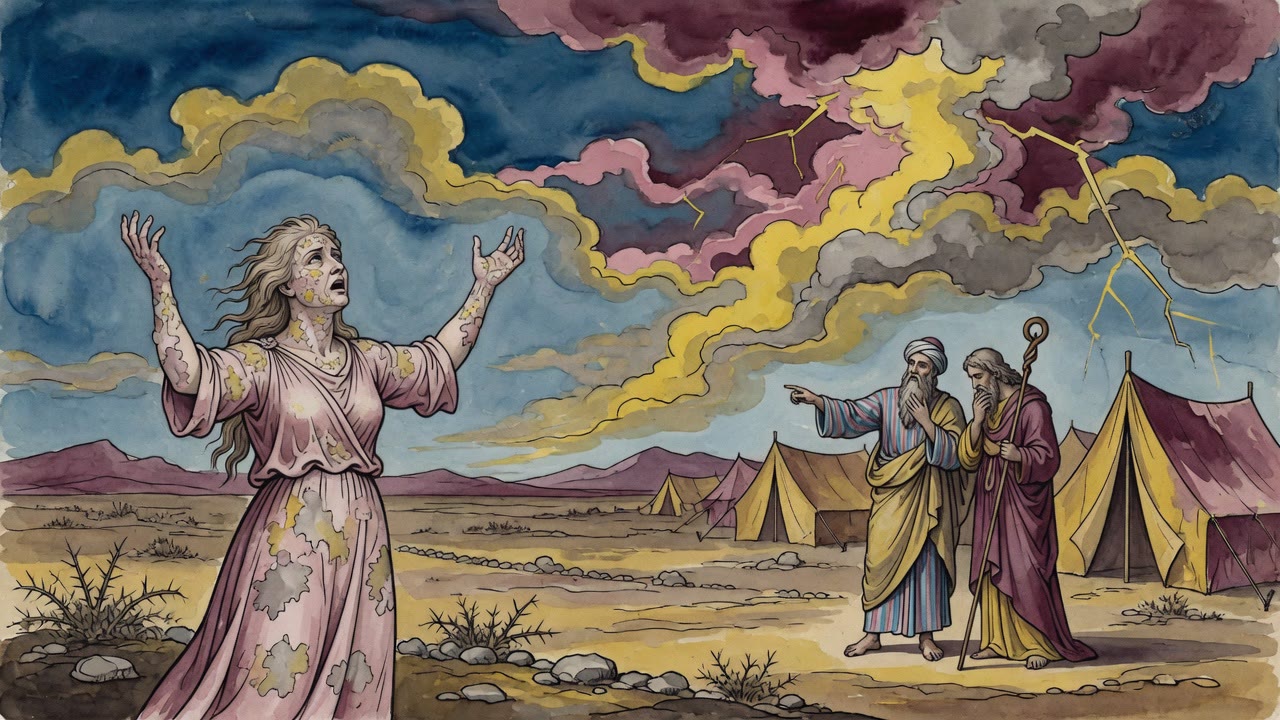
Miriam and Aaron both criticized Moses. Only Miriam was struck with tzaraat. The Torah never explains the difference. The rabbis did. What they found is both precise and devastating.
When Moses counted Israel in the wilderness, he got exactly 603,550 men. The rabbis refused to believe that number was an accident.
Over two million people — if you count women, children, and Levites — moved through the Sinai desert together for forty years. The Torah describes exactly how they arranged themselves. The rabbis filled in everything else.
After the Exodus, God claimed all of Israel's firstborn. Moses ran a lottery to redeem them fairly and keep the peace in the desert camp.
Moses received six wagons and twelve oxen to transport the Tabernacle. He distributed them all to two Levite clans. The Kohathites, who carried the holiest objects, received nothing. The reason was a matter of how holiness works.
Most people think Moses struck a rock and water came out once. The truth is it happened every day for 40 years - and it had nothing to do with Moses.
God told Moses to tell Aaron how to light the seven-branched lampstand. Aaron was the High Priest. He had been serving at the Tabernacle for months. Why did he need to be instructed on something so basic? The kabbalists had an answer.
A group of men came to Moses and said: we were impure on Passover and couldn't bring the sacrifice. Is there nothing for us? God answered with a second Passover, one month later. It is the only holiday in the Torah created because the people demanded inclusion.
Most people think the spies were cowards. The truth is stranger: God was killing Canaanites to protect them, and the spies mistook the miracle for doom.
God approved every spy Moses chose. So why did ten of them make a secret pact before they left to bring back a report designed to keep Israel in the desert?
The crowd silenced Joshua before he finished a sentence. Caleb found another way in, using a trick that required him to pretend he was about to attack Moses.
Dathan and Abiram were not just Korach's allies. The midrash says they opposed Moses from Egypt to the wilderness, informing on him and hoarding manna.
Moses asked for one night before answering Korah's challenge. The reason tells you something about how Moses understood both anger and the way God judges.
Moses set the incense test for morning. Korah spent the night canvassing every tribe, building a coalition far larger than Moses had seen before.
Those born in the wilderness had never seen the sun. The divine clouds that covered the camp were there for Aaron. When he died, so did the clouds.
When Aaron died, Amalek saw the opening they had been waiting for. But they attacked in disguise, dressed as Canaanites, hoping to misdirect Israel's prayers.
Moab and Midian were ancient enemies. Then Israel appeared on the horizon and suddenly they were allies. The Midrash explains why enemies cooperate.
Moses was king of Ethiopia for 40 years before the burning bush. The Talmud and Midrash give him a complete biography the Torah never mentions, from a burning coal in infancy to a kiss from God at death.
Moses told the people to nominate judges, then reserved the right to reject anyone. The tension between community wisdom and authority still echoes today.
Moses welcomed Israel's new judges with pride and kind words, then told them exactly how they could destroy everything. Both parts were necessary.
The manna tasted like whatever you desired. Unless you were wicked. Then you had to grind it yourself and walk far to find it.
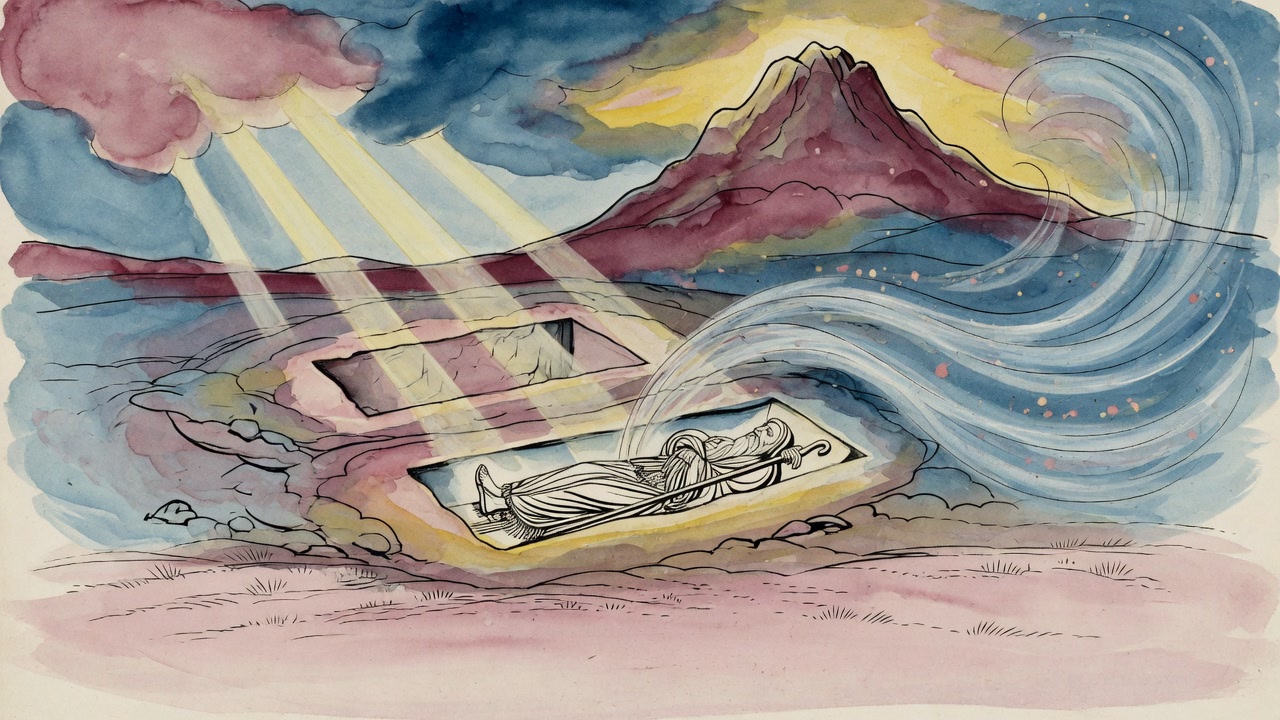
Most people assume Moses was buried by his people. The Talmud says God dug the grave himself, then hid it so well it shifts position with every observer.
Moses didn't want to lead the Exodus. He argued with God through five excuses at the burning bush. God finally lost patience, and the punishment stuck.
Most people picture the ninth plague as a power outage. The rabbis saw something far stranger — a darkness so solid it could be felt with human hands, and so thick it pinned Egyptians to the ground.
The eighth plague wasn't random infestation. According to the midrash, it arrived on a precisely calibrated east wind, ate only what hail had missed, and left on a wind that blew from exactly the opposite direction.
Between fleeing Egypt as a prince and returning as a prophet, Moses spent forty years tending sheep in the wilderness. The rabbis describe those years as the most important preparation in human history — and what God was waiting to see.
Moses had just parted the Red Sea and received the Torah at Sinai, and he couldn't manage a simple justice system. It took his non-Israelite father-in-law — a former idol-worshiper from Midian — to solve the problem that the greatest prophet in history had missed.
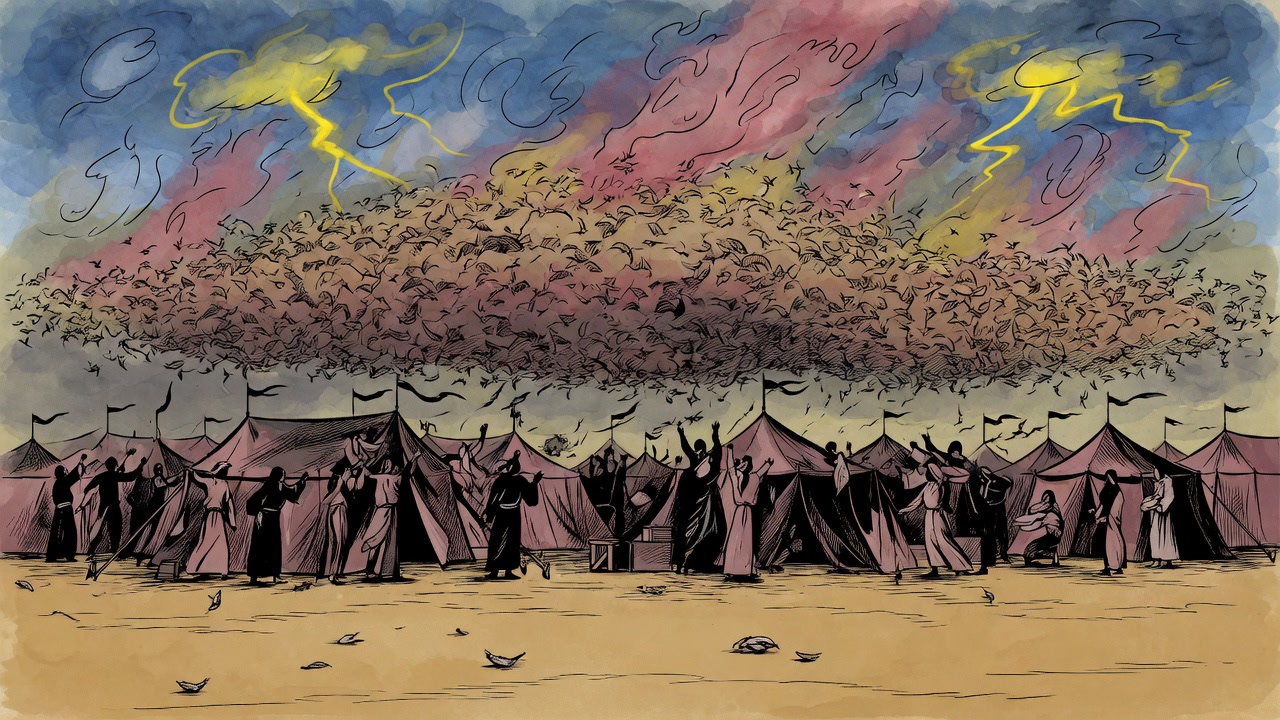
God sent Israel quail twice in the wilderness. The first time was a gift. The second time, Numbers records, was something darker — a miracle that became a plague before anyone could finish eating, and the place it happened was named for the people who died there.
Numbers 15 records a man gathering wood on the Sabbath. Moses didn't know the punishment, asked God, and God specified death by stoning. The rabbis who tried to explain this case found it increasingly difficult to justify — and some concluded God meant it as a lesson, not a precedent.
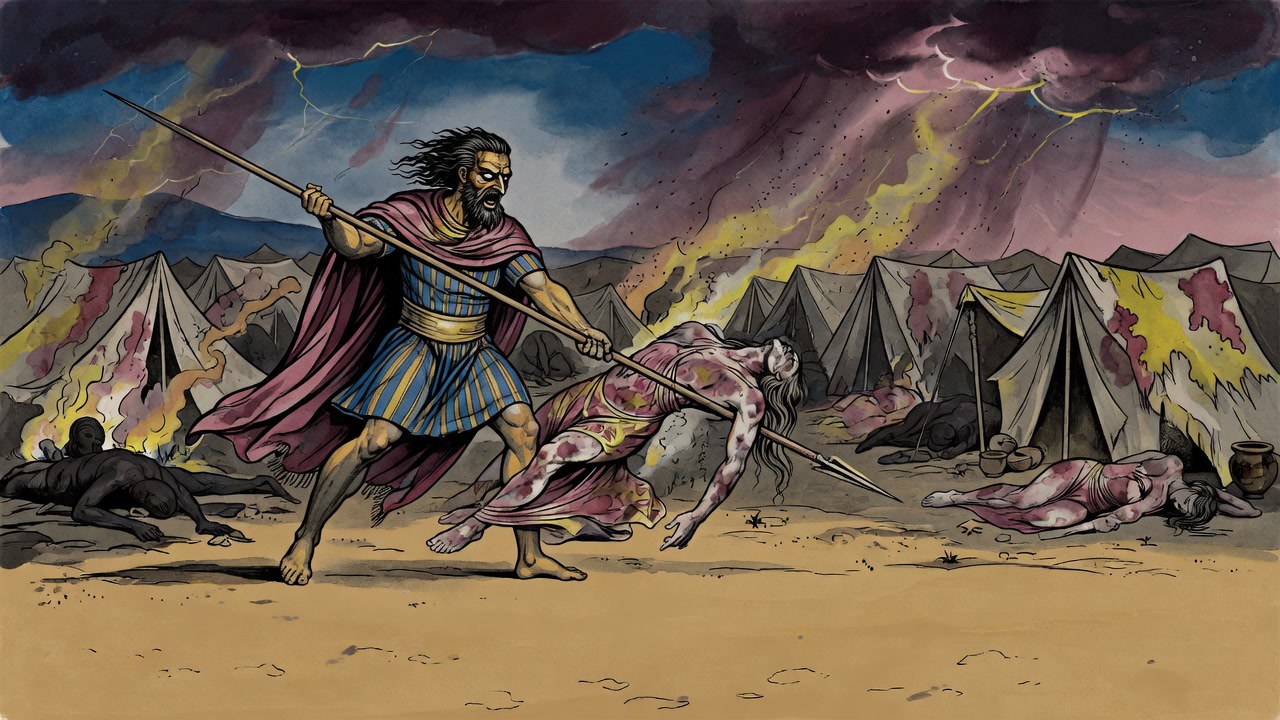
Pinchas grabbed a spear and killed two people in the middle of a plague, and God rewarded him with an eternal covenant of peace. The rabbis who had to explain this found it was one of the most theologically fraught moments in the entire Torah.
When snakes attacked the Israelite camp, God told Moses to put a bronze serpent on a pole so that anyone who looked at it would live. The rabbis found the cure more philosophically strange than the plague — and asked whether it was really the snake doing the healing.
After Korach's rebellion, twelve tribal leaders placed their staffs in the Tabernacle overnight — and in the morning, Aaron's had grown leaves, blossoms, and ripe almonds. The rabbis asked what a wooden stick blossoming in the dark actually proved.
Moses needed help. God took some of the divine spirit from Moses and distributed it among seventy elders — and all seventy prophesied simultaneously in the camp. Then they stopped, and never prophesied again. The rabbis found the one-time-only nature of this miracle the most significant part.
Accidentally killed someone in ancient Israel? Run. The roads to refuge were the widest in the country. Signs at every crossroad. The law was built to save you.
On Moses's last day alive, the pillar of cloud left his tent and moved to Joshua's. He said a hundred deaths are better than one jealousy.
Deuteronomy ends with Moses's death and burial. But Moses wrote the Torah. The rabbis spent centuries debating the most quietly devastating logical problem in the entire Hebrew Bible.
Exodus 12 is the only place in the Torah where God speaks directly to both Moses and Aaron. The ancient rabbis noticed, and asked why.
God told Moses to take his brother up Mount Hor and bury him there. Moses prayed all night trying to figure out how to say it.
The Torah usually says Moses and Aaron. Once, it says Aaron and Moses. A tannaitic midrash says the reversal was deliberate, and it changes everything.
On the night of the Exodus, Israel did not just walk out of Egypt. They went door to door asking their neighbors for jewelry, and the rabbis wanted to know why.
After the sea split, Israel did not want to leave. There was treasure in the sand. The rabbis say Moses had to force them back onto the road.
Moses told a starving nation that God would feed them in the dark. By morning the ground was covered in bread. The rabbis explain why the timing was the lesson.
The Torah uses a word for the manna jar that appears nowhere else. The rabbis cracked it open and found a linguistic argument hiding a theology of witness.
The rabbis matched three wilderness miracles to three people. When each person died, their miracle died with them. Moses carried the last of all three.
On the same page, the rabbis put Moses's song at the Red Sea next to Jeremiah's cry at the burning of Jerusalem. The Hebrew verb is identical.
Accept the Torah, or find your grave underneath. The rabbis did not soften the threat. They said it out loud and argued about it for centuries.
When Moses commanded the sea to part, it refused. Twice. The Mekhilta reveals what actually happened at the shore — and why the sea finally fled.
The Mekhilta's verse-by-verse reading of Exodus 19 reveals something extraordinary: Sinai was not a monologue. God gave each commandment, Moses carried the people's answer back, and only with their consent did God speak the next word.
When Israel stood frozen at the water's edge with Egypt at their backs, the tribes argued over who would go first. One prince made the decision for everyone.
At Rephidim, Moses faced a thirsty mob ready to stone him, then an enemy who attacked without provocation. The Mekhilta reveals what both crises taught about leadership, memory, and divine justice.
Before the Exodus, Moses introduced himself as Yithro's son-in-law. After it, Yithro introduced himself as Moses' father-in-law. The Mekhilta noticed the reversal — and what happened at the inn explains why it took so long.
Moses could not understand how a half-shekel atones for a soul. So God reached under His throne and pulled out a coin made of fire — and showed him exactly how it works.
God said 'sanctify every firstborn' — impossibly broad. The Mekhilta shows how the Torah narrows itself, and why one added word changed an obligation forever.
The Exodus did not happen in spring by chance. The Mekhilta reveals that God chose the month of Aviv deliberately — and that year, the heavens themselves needed no adjustment.
At Sinai, Moses walked into the cloud where God dwelled while everyone else stepped back. The Mekhilta says it wasn't power that got him there — it was humility.
Israel ate manna for forty years — but the Mekhilta records a coda: the food kept feeding them for forty days after Moses died, bridging his death and their first Passover in Canaan.
Balaam stood in Pharaoh's court and gave the advice that condemned thousands of Israelite infants. Decades later, the Red Sea collected what was owed.
Jethro had worshipped every idol in Midian. He came to the Israelite camp and immediately saw what nobody else had noticed: Moses was drowning.
Jethro arrived in the wilderness and received a welcome fit for royalty. Then he told Moses he was doing everything wrong.
Moses didn't quietly accept his call at the burning bush. He argued, and one of his arguments compares his mission to the rescue of Lot.
When Israel stood trapped at the sea, a second threat loomed in heaven. Samael the Accuser was charging them before God, and God's answer was Job.
After the Exodus, Moses's father-in-law and his brother sat together at the first great celebration. The songs were not just for God. They were for Moses.
When Moses was sentenced to death in Egypt, a sword struck his neck ten times and could not cut it. Then God sent an angel dressed as the executioner.
When Pharaoh's court voted on whether to execute a toddler, one of the advisors at the table was an archangel. What the angel did next marked Moses for life.
Rebbe Elimelech of Lizhensk found in the grammar of a single verse the full spiritual architecture of how God moves from judgment to mercy -- and why Moses deserved both.
Rabbi Akiva found in one word of Exodus 12 a principle that overturns everything we think we know about prophecy: Moses heard God's voice because of Israel's merit, not his own.
The Tikkunei Zohar draws a direct line between Pharaoh ordering Jewish infants drowned and the great fish swallowing Jonah. Both were attacks on the same thing.
Between the night they fled Egypt and the first morning manna fell, Israel ate the matzah baked on their backs. The Mekhilta calls this a miracle hiding in a single word.
When Ptolemy demanded a Greek translation of the Torah, seventy-two sages made thirteen identical changes without consulting each other. The Mekhilta records every word they changed and why.
Isaiah promised Israel would ride on the heights of the earth. The Mekhilta shows Moses said the same thing centuries earlier, proving the promise was never new.
God owns the Torah. Moses received it. So why does Malachi call it the Torah of Moses? The Mekhilta gives a surprising answer about devotion and naming.
One Hebrew word in the Song at the Sea reveals a hidden principle: God showed Moses mercy where He showed the patriarchs strict justice. The Mekhilta explains why.
The Red Sea split not because Israel cried out, but because God had encoded the promise in a single word spoken to Abraham at Beth-el.
The tribes all froze at the water. One man from Judah walked in past his neck, and God told Moses to stop praying and raise his staff.
From Abraham's dawn walk to the Binding of Isaac to the morning watch at the Red Sea, the Mekhilta traces a secret pattern running through all of Torah: God answers in the morning.
The Mekhilta reads the Song of the Sea as a record of divine arithmetic. Pharaoh asked who God was. The chariots sinking in the Red Sea were the answer.
Pharaoh told his army that Israel was confused in the wilderness. The Mekhilta says he was right, but not in the way he thought.
Israel was trapped at the sea with the Egyptian army behind them. What they did not know was that God had also sealed the desert with wild beasts.
Moses had the entire Israelite nation assembled and ready to build God's Tabernacle. He paused first to teach them one rule that overrode everything else.
At Sinai the people told God they could not bear His voice. God did not rebuke them. He agreed, and that request became the founding of all prophecy.
Moses did not beg God to save Israel from Amalek. He argued from God's own long-term plan, pointing out that if Amalek won, the Torah would have no one left to read it.
God told Moses to welcome converts the way He had welcomed Jethro: draw near with the right hand, push back gently with the left. The opposite of what Elisha did to Gehazi.
Moses argued with God using God's own prophecy about Israel's exile. If Amalek won now, there would be no people left to scatter, no exile, and no return. Extinction was worse than exile.
The Mekhilta reads three words from Exodus 2:4 as a three-part proof that Miriam carried genuine prophetic power the day her brother floated downstream.
The Torah names Miriam as sister of Aaron, not Moses. The Mekhilta reveals why: the title belongs to the brother who risked everything for her.
The manna was not ordinary food. The rabbis taught it merged completely with the body, leaving no waste, no residue, nothing expelled.
The Mekhilta describes a hidden rhythm between God and Moses: when one rises, the other falls. It is the mechanism by which Israel survived its worst moments.
In the wilderness, Israel looked at the barren ground and asked whether God could really feed them. The answer arrived before they finished asking.
Every word God spoke at Sinai killed the Israelites. They had to be revived each time. The Talmud records what it felt like to receive the Torah.
After Moses came down from Sinai, Ha-Satan searched the earth, the sea, and the depths for the Torah. He could not find it. Moses wouldn't admit he had it.
While the men broke under Pharaoh's slavery, the women of Israel smuggled food to the fields, gave birth alone under apple trees, and raised babies God hid underground.
When Moses was born, his house filled with light. The Talmud says his birth certificate was a verse from the Creation story. His father kissed Miriam, then struck her.
Moses, Aaron, and seventy elders climbed Sinai and saw God. That is what the Torah says. Onkelos and the rabbis spent centuries explaining why that cannot mean what it appears to mean.
The Talmud says Pharaoh's daughter did not stumble on Moses by accident. She came to the Nile to wash off her father's idolatry and walked away a different woman.
On the night of the Exodus, while all of Israel loaded Egyptian treasure, Moses was at the riverbank calling out to a dead man's bones.
They were days from leaving Egypt and still couldn't hear Moses. Shemot Rabbah and Ezekiel say why: the idols were too deep in them, and the acacia tree only gives when it is cut.
God did not tell Aaron to reason with Pharaoh or persuade him. He told Aaron to pick up the staff. The Midrash explains why.
Rabbi Akiva insisted there was only one frog at the Exodus. Rabbi Elazar told him to stop telling stories and stick to what he knew. The debate is stranger than it sounds.
The Song of Songs describes cheeks lovely with ornaments. The rabbis read those cheeks as Moses and Aaron, and the ornament as something rarer than gold.
Moses led Israel for forty years and never saw the Promised Land. The rabbis counted his prayers and found a number that explains everything - and nothing.
Moses entered the cloud at Sinai, but the midrash says he kept going - through seven heavens, past angels of fire and ice, to the throne.
Moses oversaw the most sacred building project in history and his own people accused him of stealing from it. The story ends with a menorah made of fire.
When Moses drew near to God at Sinai, he walked into thick darkness. The rabbis asked why God hid in shadow - and what Moses found when he got there.
When God told Moses his time had come, Moses drew a circle on the ground and refused to move. What happened next shook creation itself.
When Moses ascended to receive the Torah, thirty thousand angels escorted him. That sounds like an honor. It was not. It was crowd control.
An angel guided baby Moses's hand onto a burning coal. The speech impediment that followed was not an accident. It was the making of a prophet.
Moses toured the place of judgment and came back. What he saw was not random cruelty. It was a precise catalog of the sins that destroy communities.
One hundred thirty years after Israel arrived in Egypt, Pharaoh woke from a dream no wise man could explain. a small animal heavier than all Egypt.
When Moses learned he was dying, he did not beg to cross the Jordan. He begged for something smaller. that one of his own sons would lead Israel after him.
Moses spent forty years leading Israel toward Canaan. The rabbis say he wanted three things with nothing to do with geography. and God granted two.
Standing on Sinai, Moses discovered that God's mercy wasn't a late amendment — it was the first principle, built into creation before anything else existed.
Moses shattered the first tablets at the Golden Calf. The fragments were not discarded. They rode in the Ark beside the second Torah for forty years.
Before Moses left heaven with the Torah, God showed him both Paradise and Gehenna. The fires retreated when he approached. Even hell was afraid of him.
Five times Moses demanded answers from God directly. He did not always get what he wanted. But he always got an answer. The rabbis counted each one.
Moses performed the greatest miracles in Jewish history. It did not make his job easier. The rabbis were not surprised.
Moses was shown the Temple's destruction before he died. He saw everything. He could not stop any of it. This is what the tradition says he did with that knowledge.
Israel packed silver and gold on Exodus night. Moses went to the Nile to find a coffin, keeping a four-century-old promise he had never personally made.
The tribe of Ephraim left Egypt early and were slaughtered. Moses spent years in a pit in Midian before God called him. Timing was everything, and Moses waited.
Pharaoh declared he had no need of God and had created himself. The rabbis traced every plague, every catastrophe, every drowning in the sea back to that one sentence.
Every prophet in Israel introduced their words with 'Thus says the Lord.' Moses said 'This is the thing.' The difference was not style. It was the distance between them and God.
God is omniscient. Moses knew this. He still went back and reported the people's answer. The Mekhilta found in that small act the most important lesson Moses ever taught.
God taught Moses the Ineffable Name. When the angels understood what a human being now possessed, they were seized with terror and turned on him. Moses used...
Korah's rebellion is one of the Bible's most dramatic power struggles. The Midrash reveals who really started it , his wife, who convinced him that Moses...
Before the burning bush, Moses had already commanded armies, grabbed Pharaoh's crown off his head as a toddler, and survived a test that should have killed him.
Moses ascended to receive the Torah and found God still decorating it. What he witnessed in heaven changed his understanding of his own place in history.
The staff Moses used to part the Red Sea had been passed down from Adam through the patriarchs. Moses found it buried in a Midian garden.
The rabbis saw a primordial light in Moses at birth. Before the bush, before Egypt, Moses was already written into the structure of creation.
Moses commanded the sea and the sea argued. He carried a whole nation's complaints but never once complained about his own burden. The rabbis noticed.
They received the Torah at Sinai, then retreated from it. Each commandment sent them reeling backward. The rabbis measured the distance exactly.
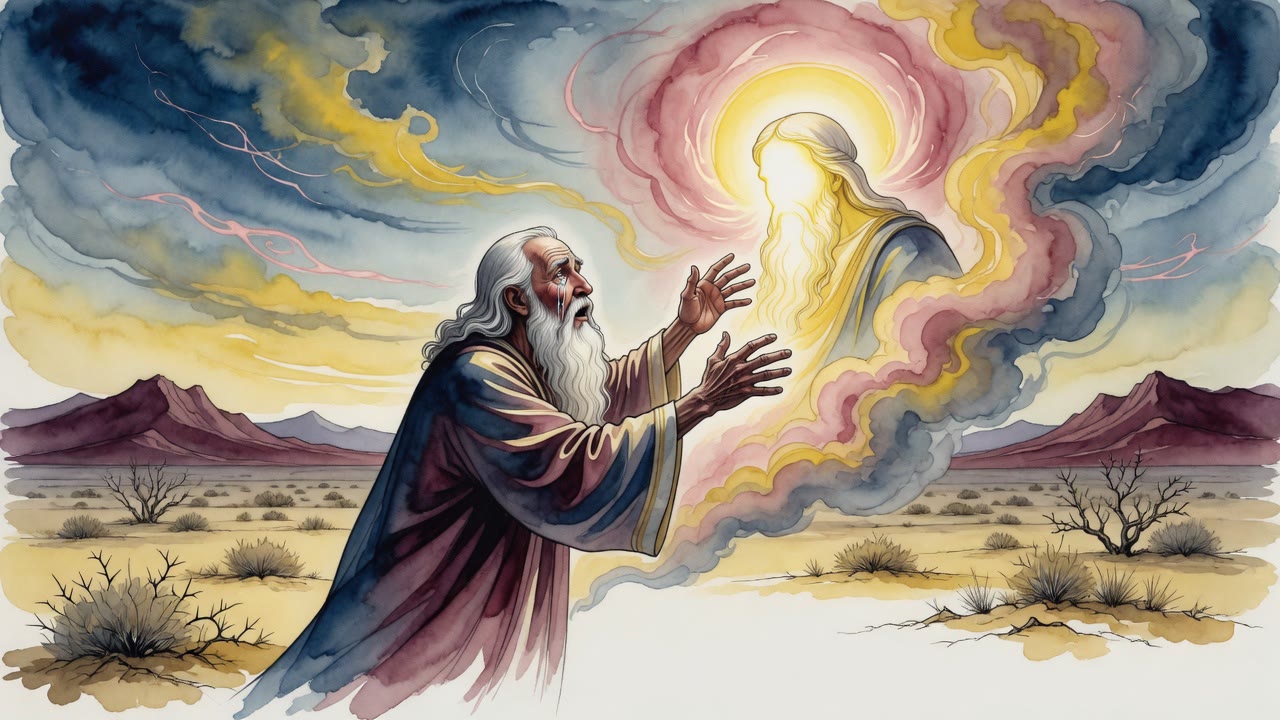
Moses asked God to show him his glory. God said no — then offered something stranger than yes would have been: a glimpse of the divine wake.
In forty days on Sinai, Moses received the entire Talmud. Then God showed him a menorah and Moses couldn't picture it. Even prophets have limits.
Between Egypt and the Exodus, Moses spent forty years as a king of Cush. The Book of Jasher fills in the decades the Torah skips entirely.
Moses told God to blot his name from the Torah if He would not forgive the golden calf. God refused the deal, but something in Moses's name disappeared anyway.
The spies came back from Canaan with a bad report, the people wept all night, and God fixed the calendar around their grief.
A man gathering wood on the Sabbath was held in custody because Moses did not know what punishment to apply. The rabbis called this gap mercy being built.
From Egypt to the Golden Calf to Moses on Mount Nebo, the angels protecting Israel kept withdrawing. The rabbis knew exactly why.
Jethro wasn't just Moses' father-in-law. The Midrash says he was the one outsider who heard about the Red Sea and ran toward it instead of away.
Three midrashim describe Moses using the same image: fire. In the desert, at the Red Sea, and in his final speech, he stands between his people and annihilation.
The Midrash preserves six different names for Mount Sinai, each carrying a separate meaning. Together they describe not a mountain but the moral weight of what happened there.
Legends of the Jews and Ben Sira reveal that Moses earned the burning bush not through heroics but through how he chased one exhausted lamb across a desert.
Ben Sira, Ginzberg's Legends, and Josephus each describe Moses as a figure the whole created order recognized -- and that the serpent of Eden feared.
Jubilees, Shemot Rabbah, and Vayikra Rabbah describe the one moment in history when Israel stood without blemish, and how the Golden Calf ended it.
Moses ruled a kingdom in Cush before he ever reached the burning bush. Then he fought angels to seize the Torah. Then God buried him personally.
Jethro lost his position in Pharaoh's court for defending the Hebrews. Years later he walked back into the camp of the man who freed them, and fixed their legal system.
Moses prayed at the Red Sea like a shepherd at a cliff's edge, with no plan left. The rabbis say the same man had already written eleven psalms, prayers shaped for exactly this moment.
At the dawn of creation God assessed every nation before choosing Israel. But the lawgiver God chose still needed to be taught by five sisters who asked a question he could not answer.
Three moments from Aaron's life reveal a priest who spent his entire career standing between catastrophe and the people he served. even when it cost him...
When Moses pleaded for a sinful Israel, the angels looked on in silence. The tradition says they had already learned that Moses's arguments had a way of...
A parable about a king's favorite robe, a camp of thirsty pilgrims who worried about their animals, and what God saw when he looked at Israel in the wilderness.
Every time God announced a verdict on Israel, Moses found a counter-argument. The rabbis tracked these arguments and noticed something: Moses always started ...
After Moses died, his mother and his successor searched the wilderness for his body. Every landmark that had known Moses turned them away. The grief in the...
Moses spent forty days in heaven without eating. The angels challenged his right to be there. God told Moses to answer them himself.
Moses received the Torah at Sinai. But it was Aaron who protected the living tradition — the thing that breaks when no one is watching.
God spoke at Sinai in thunder and fire. But the rabbis said Israel was not accountable for the Torah until it was explained in the Tent of Meeting.
The Torah says Moses will sing at the Red Sea — not sang. The Mekhilta turned that single verb into proof that the dead will rise.
Miriam led the women in song at the Red Sea and paid for one careless word with seven days of leprosy. The tradition could not quite let her go.
Moses stood over Zion before it was Zion, watched Belshazzar fall, and argued God out of destroying Israel. The rabbis traced his reach across centuries.
Joseph saved Egypt and Israel lived there in peace until a new Pharaoh rose who chose not to remember. How Egypt's gratitude curdled into genocide is a story about chosen forgetting.
The longest Dead Sea Scroll claims to be God's own blueprint for a Temple never built, dictated to Moses at Sinai, specifying everything down to the latrines.
The night of the Exodus, Pharaoh roamed his capital calling Moses by name. Hebrew children gave him wrong directions. Israel was already singing.
Pharaoh's astrologers told him the truth about Moses and he heard it completely wrong. Their correct prophecy made the very outcome they feared more certain.
The day Pharaoh's daughter opened the reed ark, heaven and earth were both in motion. Plagues, angels, and a princess converged at once.
Pharaoh received an accurate prophecy about Moses and misread one word. That misreading cost Egypt its children, its army, and eventually its empire.
Between Egypt and Sinai, Moses ruled a foreign kingdom for forty years. The rabbis linked his Ethiopian kingship to his command over the manna and Shabbat.
Gabriel pushed Moses' hand toward a burning coal and saved his life. That burn left him slow of speech and began the path to prophecy.
On the night of the final plague, Egyptian children took shelter with Israelite families. By morning, their corpses lay beside the living.
Moses fell to the ground and thanked God for a specific mercy. No three consecutive generations in Israel had ever all been wicked at once.
On the tenth of Tishri, Moses came down with the second tablets and God made a vow. Israel's tears of shame would become eternal tears of joy.
God struck Miriam with leprosy for speaking against Moses. Then six hundred thousand people and the pillar of cloud all halted until she recovered.
Korah and his followers did not die when the earth swallowed them. Every thirty days, hell returns them to the surface to cry out their confession.
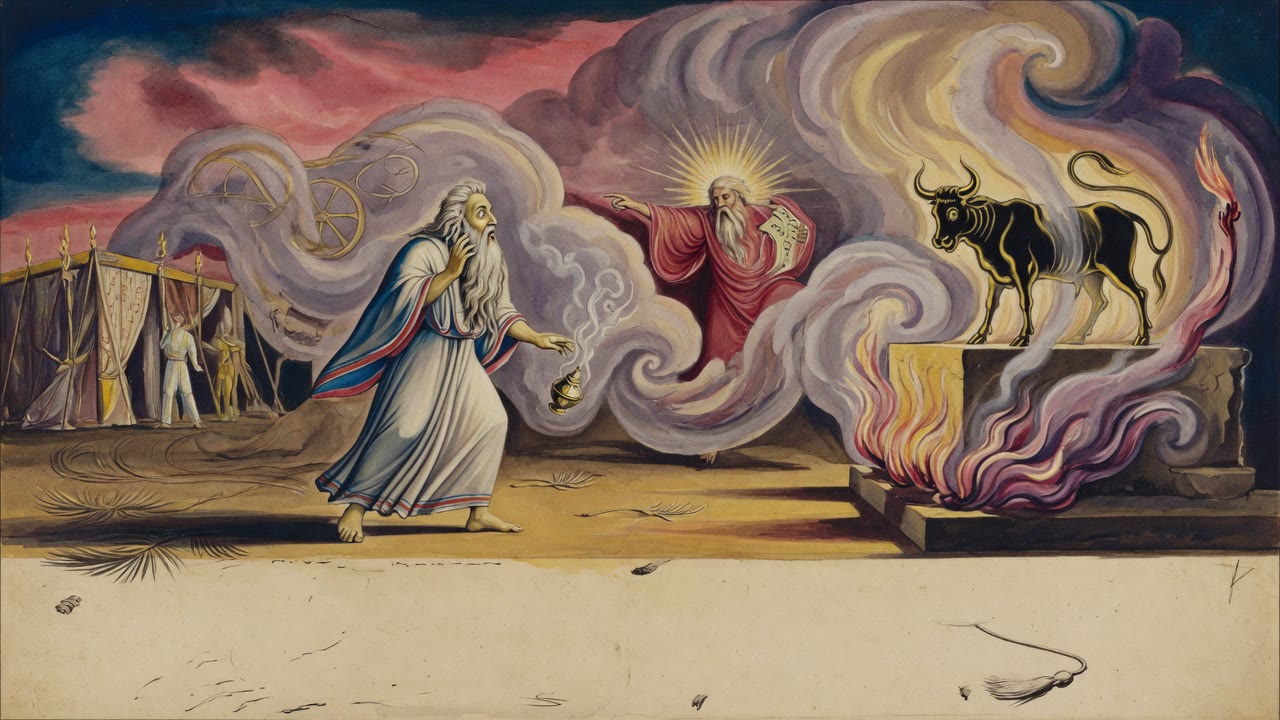
When plague struck Israel after Korah's rebellion, Moses sent Aaron running with incense. The remedy came from a secret learned in heaven.
Moses did not just receive the Torah. He revised it. Three times he challenged God's stated intentions, and three times God changed course.
When Moses announced he was dying, Joshua wept for Israel's future. His grief named every gift Moses had given that no one else could replace.
Samael searched all of creation for Moses, from the sea to Gehinnom to Sheol, and found nothing. Death's poison could not touch the man God protected.
When Moses raised his hands at Rephidim, Israel prevailed. When he lowered them, Amalek surged. The rabbis say the real battle was always about Torah.
Moses conquered two kingdoms and thought the decree was conditional. He knocked. He argued. He offered to cross the Jordan as bones. God refused everything.
Two traditions answer Sinai in opposite ways: heaven bent down to the mountain, or the mountain tore free and rose into the sky to meet God.
When God's voice sounded at Sinai, all of Israel fell dead. The Torah interceded. God sent the dew of rebirth. Moses received 49 of the 50 gates of wisdom.
At Sinai, God dressed as a prayer leader and showed Moses the thirteen attributes. Then Moses paused over 'let us make man' and asked God why.
A midrash counts God's wars of confusion from Sinai to Gog and Magog, while Hosea calls Israel back to the God whose voice they once heard on the mountain.
Israel did not believe because of Moses's miracles. They believed because Aaron spoke a secret phrase their ancestors had been waiting centuries to hear.
Every mountain competed to host the Torah. Sinai was chosen for its humility -- and then became the site of Israel's worst betrayal.
Even the wicked ask for signs before they act. The rabbis traced Pharaoh's demand for a wonder to a principle God had built into creation itself.
Ezekiel called Pharaoh a great serpent coiled in the Nile. When Moses entered the palace, the serpent became a stick of dry wood every time.
Every morning Pharaoh fled to the Nile before Moses could arrive. God told Moses to wake before dawn and cut him off. The reason was darker than it sounds.
Jethro and Amalek both advised Pharaoh. One attacked Israel and was erased. The other crossed the desert to find Moses. The difference was listening.
Moses did not choose Joshua. God did. But inside the Tent of Meeting, the handoff between two eras happened in a single pillar of cloud.
The Book of Jubilees frames the Exodus plagues not as punishments alone but as fulfillment of a covenant God made with Abraham centuries before Moses was born.
Josephus saw what the stone-tablet image obscures: Moses taught righteousness through narrative, letting stories do what bare laws alone cannot.
Moses anointed Aaron as High Priest, but Aaron could not serve for a full week. The Book of Jasher explains the waiting and the cost.
Korah went into the ground alive. Three ancient sources trace his rebellion from a widow's wool to the pit where his voice still answers.
When Moses was set adrift, God sent plagues on Egypt that same morning. Pharaoh's daughter came to the Nile in pain and found what she was not meant to find.
Jethro served as an idol priest until he could not do it anymore. Midian cast him out for it. His daughters suffered for it. Then Moses appeared at the well.
Before Moses could marry Zipporah, he had to pull a rod from Jethro's garden that had defeated every other suitor. It had been waiting since Adam.
Moses grew up in purple in Pharaoh's palace, but walked to Goshen every morning to see his people. He asked Pharaoh for one thing: one day of rest.
Pharaoh did not enslave Israel with chains. He did it with wages, flattery, and a shovel pressed into the hands of a willing king.
Amram stopped having children to protect them from Pharaoh's death decree. His young daughter told him he had made a worse decree than the tyrant.
Before Moses was born, Balaam stood before Pharaoh and turned an old nightmare into a preemptive indictment of an entire people.
Pharaoh's council debated whether to execute baby Moses. One advisor, secretly an angel, proposed the test that decided everything.
When King Kikanos left for war and trusted Balaam with his city, Balaam turned the people against him and fortified the walls with magic.
The Ethiopian army had no throne to offer Moses, so they stripped their garments, piled them into a seat, and crowned the man who had freed their city.
When God came after Moses in the night because his son was uncircumcised, Zipporah understood what was happening and moved without hesitation.
When Gabriel led Moses toward Paradise, two angels met him at the gate and said something no gatekeeper had ever said to a living visitor before.
Pharaoh claimed to be a god but slipped away to the Nile each dawn to relieve himself in secret. Moses caught him there and forced a confession.
At the Red Sea, Moses began the song and Israel completed each verse instinctively. The spirit of God moved between them like breath through a single body.
God gave manna joyfully and quail grudgingly. Moses read both signals and built from them the first grace after meals and the rhythm of two daily portions.
When God's holy spirit abandoned Balaam, leaving him a mere magician, the rabbis explained it with a story about a king and a beggar.
One tribe went to sea and came home with purple dye and foreign gold. The other stayed home and filled Israel's courts with scholars.
God sent Gabriel, then Michael, then Zagzagel to collect Moses's soul. All three refused. Then Samael volunteered.
Moses named Joshua his successor. Joshua declared he had no questions. Within moments he had forgotten hundreds of laws and nearly been killed for it.
Moses had seventy-two worthy candidates and only seventy spots. So God devised a lottery that no one could argue with and no human hand could manipulate.
Ancient writers claimed the Jews were expelled from Egypt as lepers and that Moses was a criminal. Josephus dismantled each accusation one by one.
The mountain was on fire, the sky had turned black, and every single Israelite heard God speak. Moses was the messenger. Sinai was the broadcast.
On Simhat Torah 1609, Chaim Vital dreamed that the body of Moses was laid in the Safed synagogue, then became a Torah scroll read from Genesis to Deuteronomy.
In Da'at Tevunot, the Soul is certain about God but lost on providence and resurrection. Moses carried the same tension and never fully resolved it.
Moses taught Torah for forty years. One question about divine justice never had a satisfying answer. The Ramchal says that silence was the intended response.
When Pharaoh's daughter opened the basket in the Nile, the Tikkunei Zohar says she was not the only one who saw the crying infant. The Shekhinah was weeping too, and her tears were about an exile that had not yet happened.
Moses and Aaron were both prophets, yet the Kabbalists taught that only one of them crossed the final threshold of divine access. The difference between them reveals how the entire architecture of prophecy works.
The Shekhinah, the divine presence, dwells above the firmament. All the prophets saw it from below. Moses alone was brought above the firmament to stand within it. The Zohar explains what made this possible.
The Tikkunei Zohar teaches that Moses, the Faithful Shepherd, is not merely a historical figure. He is a spiritual presence who takes on the suffering of Israel in every exile, including the last one, and whose wounds carry the same power to heal that his intercession did at Sinai.
When Egypt closed in at the sea, Israel split into four camps: fight, flee, pray, or surrender. The Mekhilta records God's response to each camp separately, and none of the answers are what you would expect.
A close reading of two adjacent verses in Exodus reveals that Aaron placed the preserved manna jar before the Ark long before most assume. The Mekhilta uses this chronological puzzle to demonstrate how a single word, testimony, can anchor an entire timeline.
Everyone knows the manna fed Israel for forty years. What the Mekhilta's Rabbi Yossi reveals is that the manna kept falling for fourteen years after Moses died, through the entire conquest of Canaan and the apportionment of the land, because the promise had not yet been fully kept.
The Mekhilta preserves two interpretations of the quarrel at Merivah that are far more audacious than a simple complaint about thirst. Israel issued a philosophical challenge: prove you are the master of all creation, or we will not follow you. The rabbis argued about what kind of rebellion that was.
Rabbi Shimon ben Yochai noticed that the Torah tells Moses twice he will not cross the Jordan. If Moses is going to die in the wilderness, why does he need the additional information that he cannot cross the river? The answer is devastating: the prohibition extended beyond death.
Before Moses died, God did not just show him the geography of the Promised Land. The Mekhilta teaches he saw the entire future: Barak's victory over Sisera, Joshua's campaigns, and the apocalyptic battle of Gog and Magog in the valley of Jericho at the end of days. The dying prophet saw everything his people would become.
Before Joshua drew his sword against Amalek in the wilderness, Moses made an argument to God that had nothing to do with military tactics. He asked who would read the Torah if Israel were destroyed.
At Sinai, God did not appear in blinding light. He appeared in thick darkness. The Mekhilta DeRabbi Yishmael explains why the deepest encounter with the divine requires passing through a darkness that light cannot penetrate.
God invited both Moses and Aaron to ascend Sinai together. Then a series of specific commands revealed that the invitation had a limit. The Mekhilta traces exactly where each figure was permitted to stand.
The Talmud preserves an extraordinary account of Moses ascending to heaven to receive the Torah and finding the angels furious at the intrusion. They demanded God keep the Torah in heaven, where it belonged. Moses answered them.
When the earth opened and swallowed Korah's company, the Torah does not say where they went. The Midrash on Proverbs does. Korah descended through layer after layer of the cosmos until he passed through all seven firmaments and came to rest on the other side of creation.
Midrash Mishlei reads Proverbs 31 as a portrait of the Torah herself, a cosmic woman of valor who existed with God before the world was made, whose worth exceeds all pearls, and whose husband trusted her completely. Moses, the Midrash teaches, was the one who merited to carry her from heaven to earth.
When Israel built the golden calf at Sinai, one tribe refused. Midrash Tehillim and the Sifrei Devarim record how the tribe of Levi stood apart while the rest worshipped the idol, and how that moment of loyalty cost them land but earned them the priesthood and the privilege of carrying the Torah forever.
When Israel built the golden calf, five destructive angels materialized before Moses in the heavenly realms, each embodying a different aspect of divine fury. Midrash Tehillim names them one by one and records how Moses stopped three with the merit of the patriarchs and the remaining two by invoking Phinehas and Aaron, preventing the annihilation of the Jewish people.
When Psalm 12 calls God's speech 'pure as silver refined seven times,' the rabbis took this literally. Midrash Tehillim teaches that every divine word in the Torah was refined through seven levels of spiritual purity before it reached human ears, and that Scripture itself is proof of this refinement in its careful avoidance of improper language.
Jethro was a foreign priest who had worshipped every god and rejected them all. The rabbis asked why Moses, the greatest prophet in Israel, took governance advice from this outsider and actually listened.
The cloud over the Tabernacle in the wilderness was more than a navigation device. Midrash Tehillim on Psalm 105 preserves a debate about how many clouds there were, and the answer reveals how the rabbinic imagination understood the gap between the divine presence and human capacity to receive it.
When Miriam was struck with tzaraat for speaking against Moses, God gave the reason as a principle of honor: if a father had spit in her face, she would be ashamed for seven days. Pirkei DeRabbi Eliezer built an entire system of purification periods from that single verse.
Every retelling of the Exodus ends the same way: Pharaoh's army drowns and Egypt is broken forever. But the rabbis of the Yalkut Shimoni noticed something in the text that forced them to ask whether the king himself actually died at the sea, and their answer was more complicated than the story usually suggests.
Moses stood at the edge of the land he had spent forty years leading Israel toward and prayed to enter it. The rabbis counted his prayers: 515 in total. God heard every one, and refused every one. The question the tradition asked is not why God refused, but what the refusal meant for the greatest prophet who ever lived.
Numbers 12:3 calls Moses the most humble person on the face of the earth. Sifrei Bamidbar immediately challenges every common interpretation of what this means. Moses was not poor. He was not self-deprecating. He was not unaware of his own importance. The humility the Torah is describing was something else entirely.
When God struck Miriam with skin disease for speaking against Moses, the punishment seemed light. The rabbis of Sifrei Bamidbar asked why, and their answer transformed a legal principle into a lesson about divine restraint.
When God told Moses he would be gathered to his people as Aaron had been, the rabbis noticed something remarkable: Moses did not merely accept this. He longed for it. He envied his brother's death. And the tradition found in that longing a portrait of what a good death looks like.
When Moses asked God to appoint a successor who would go out before the people and come in before them, the rabbis of Sifrei Bamidbar recognized a specific leadership model: a commander who fights alongside his troops, not one who directs from safety. Joshua embodied that model.
When Moses placed his hands on Joshua and transferred 'some' of his glory, the ancient commentators saw in that single word 'some' the entire history of how greatness diminishes across generations. Joshua received enough to lead Israel. But the sun cannot be replicated.
Moses stood on Sinai and received the Torah. Rabbi Akiva, fourteen centuries later, died reciting it. A famous Talmudic passage imagines Moses sitting in Akiva's classroom, confused by what he hears but reassured when Akiva traces everything back to the teaching from Sinai. Two lives, one Torah.
Moses recounts God's defeat of Sihon, king of the Amorites, as though it were settled before the armies met. Sifrei Devarim uses a parable of a king who promises his soldiers rewards before they march, and the soldiers demand them before they fight, to ask what faith in God's promise is actually supposed to look like.
Moses, the man who split the sea and received the Torah on Sinai, spent his final weeks composing plea after plea to enter the Promised Land. Sifrei Devarim counts the prayers. The answer was no every time.
Every time the Torah uses the name YHVH, it invokes divine mercy. Every time it uses Elohim, it invokes strict judgment. Sifrei Devarim teaches that Moses understood this distinction better than any prophet who came after him, and it changed everything about how he prayed.
When Israel demanded meat in the wilderness, Moses did not pray for quail. He prayed to die. Sifrei Devarim and the Zohar both examine his collapse, and both ask the same question: what does it take to break the greatest leader in Jewish history?
Mount Nebo, where Moses died, is also called Avarim and Pisgah in the Torah. Three kings competed to name it, three kings died in the contest, and Sifrei Devarim asks why future generations needed to know this at all. The answer is about how places carry the memory of ambition.
When Israel entered Canaan, they found houses already full, cisterns already dug, orchards already bearing fruit. The rabbis of Sifrei Devarim asked the obvious question: who built all that? The answer revealed something surprising about how divine promises actually work.
The forty days Moses spent on Sinai receiving the Torah ended in disaster when Israel built the Golden Calf. When he climbed back up and spent forty more days, the laws he brought down the second time included a ruling about blood and water that encodes a complete theology of sacred and profane.
Rabbi Akiva asked a devastating question: Moses had never hunted, never traveled the world, never catalogued its creatures. How could he possibly have known the signs of every kosher and forbidden animal? The answer Sifrei Devarim gives changes what we understand about Moses and about revelation itself.
Deuteronomy's laws about maintaining camp sanitation seem like military hygiene. Sifrei Devarim reveals they are about something far more serious: the divine presence traveled with Israel in the wilderness, and its departure was a catastrophe worse than any military defeat.
When Moses declared 'When I call the name of God, ascribe greatness to our God,' Sifrei Devarim read this as a liturgical protocol established at Sinai. The congregation's response to the prayer leader is not courtesy. It is a cosmic event.
Moses was not alone at Sinai. Exodus records that seventy elders ascended the mountain and saw the God of Israel. Sifrei Devarim treats this vision as the foundation for the authority of Israel's elder-witnesses across every generation.
Deuteronomy 32 says God found Israel in the wilderness. The Sifrei reads Hosea's parallel image of finding grapes in the desert and builds from it a portrait of Israel as something precious discovered in a desolate place and taught to become what it was always meant to be.
Sifrei Devarim makes a claim about song that is almost too large to hold: shira, sacred song, is not bound to the moment of its composition. It obtains in the past, the present, the messianic age, and the World to Come simultaneously. Moses and Joshua together sang at the end of Moses's life, and the Sifrei asks why.
Moses did not accept his death quietly. Sifrei Devarim records a sustained argument in which Moses marshaled case after case against God's verdict, and the tradition preserves every counter-argument he made, along with the one comfort that finally moved him.
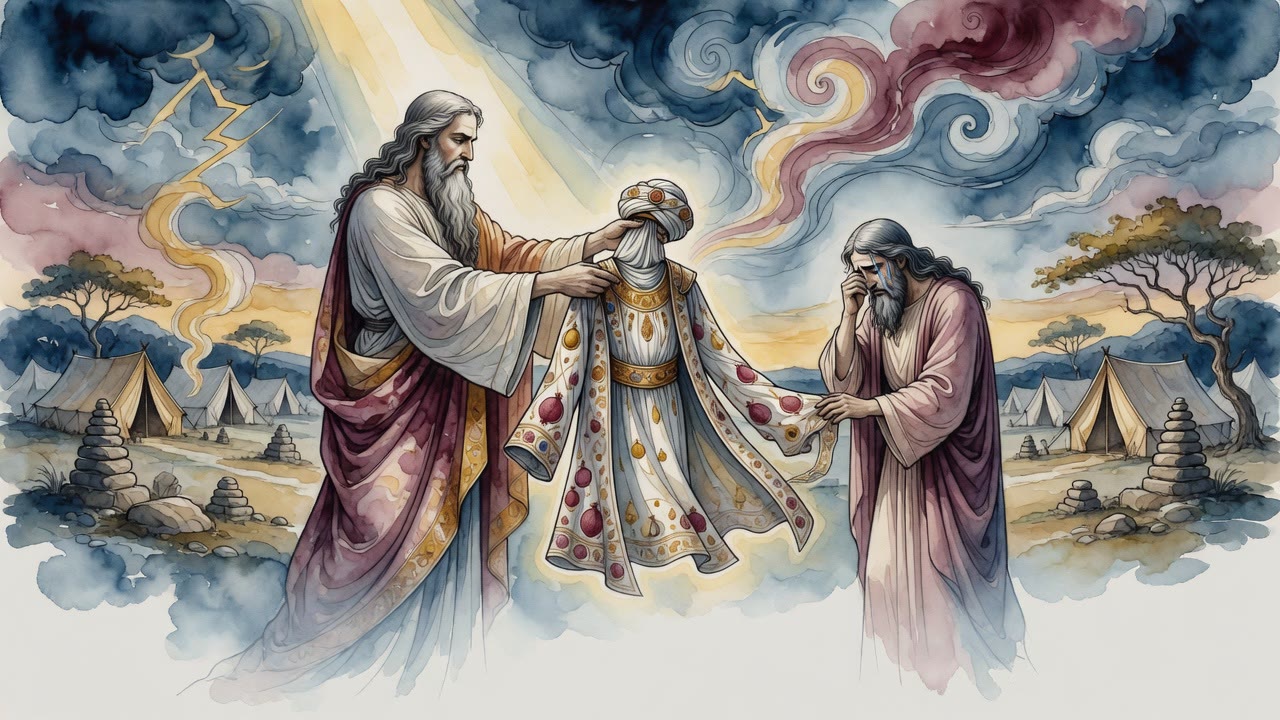
Aaron's death is one of the most intimate scenes in the Torah, and Moses was the only witness. The midrash fills in what the Torah omits: the moment Moses helped his brother remove the priestly garments, the silence that followed, and why Moses envied the way Aaron died.
The Torah says Moses was denied the Promised Land because he trespassed against God. Sifrei Devarim reads that verse with legal precision and finds something more disturbing than a personal failure: Moses was held responsible for causing others to trespass, which is a different and heavier charge.
When Moses struck the rock instead of speaking to it, the midrash does not excuse him by explaining the pressure he was under. It reaches for a parable about kings and servants to make the failure visible in proper proportion, and the comparison is more damaging than it first appears.
In Moses' final blessing of the twelve tribes, every tribe receives a blessing except Shimon. The silence is not an oversight. Sifrei Devarim explains it with a parable about two debtors and their standing before a king, and the explanation reveals something precise about how spiritual debt accumulates.
Every prophet received visions and dreams. Moses received something different, something the Torah calls face-to-face speech, and the rabbinic sages spent centuries trying to explain what that difference actually cost him.
Before Exodus begins in earnest, Targum Jonathan inserts a prophetic dream into Pharaoh's biography, names his court magicians as Jannes and Jambres, and identifies the Hebrew midwives as Jochebed and Miriam. Each addition reframes the entire story of the Egyptian enslavement as something the oppressors saw coming and tried to prevent.
When God commanded Moses to build the Tabernacle, the Hebrew says 'that I may dwell among them.' Targum Jonathan rewrites that sentence in a way that encodes an entire theology of divine presence: not God dwelling there, but the Shekinah, the indwelling presence that can be approached without diminishing the unknowable divine essence.
After the golden calf disaster, Moses asked to see God's glory. What he glimpsed instead was the back of God's head, and something knotted there that no human being had ever seen.
God renewed the covenant with Israel after the golden calf, but the Targum Jonathan added a promise that appears nowhere in the Hebrew Bible, involving a mythic river that rests on the Sabbath.
Moses built the Tabernacle from scratch and then refused to enter it. His reasoning, preserved in the Targum Jonathan, reveals something profound about the nature of sacred space and divine invitation.
The Hebrew Bible mentions a cloud over the Tabernacle. The Targum Jonathan transforms it into a sentient navigation system with absolute authority over 600,000 people and no tolerance for independent movement.
When Hobab refused to guide Israel through the wilderness, Moses made a plea that reveals how much even the greatest prophet depended on human knowledge. The Targum Jonathan expands the exchange into a portrait of humility and divine military technology working side by side.
A man was executed for gathering wood on the Sabbath, and the Bible dispenses with his death in three verses. The Targum Jonathan refuses to let him pass quietly. It names his tribe, records his confrontation with the witnesses, and turns his death into a landmark case about what a judge does when he does not know the law.
After Korah's rebellion was crushed, a plague swept through Israel and killed thousands in a single day. Aaron stopped it by running into the space between the living and the dying, holding a censer of incense. No other priest ever did this. The Targum Jonathan explains what made it possible.
When the earth swallowed Korah and his entire company, his sons were not among the dead. The Targum Jonathan explains why: they had publicly followed Moses while their father led the rebellion, and at the last moment, a platform rose from the depths to hold them safe. Their descendants became psalmists.
When Moses read the entire Torah aloud and sealed the covenant in blood, he believed faithfulness would protect him. Then God told him it would not.
When Moses demanded Israel's freedom, Pharaoh did not simply refuse out of arrogance. He consulted a divine registry of every known supernatural being and declared that Israel's God was nowhere in it.
Moses climbed into heaven to receive the Torah and the angels were furious. They wanted to incinerate him. God had to answer for bringing a mortal into the highest realm.
Moses hid at the burning bush. Joseph was thrown into a pit. Saul hid among the baggage. Jewish legend traces a pattern in the divine choice of leaders: God consistently selects the person who is not looking for the position.
When Moses climbed Sinai to seize the Torah, the angels insisted no human was worthy. The answer lay in what had already been decided before the world was made.
The mountain where Moses received the Torah was not chosen at random. According to the Book of Jubilees, Sinai was among four sacred places set apart from the very beginning of creation.
When Moses ascended to receive the Torah, the angels were furious. They demanded God explain why a mortal made of flesh and dust had been given what belonged to heaven. Moses had to argue for his own worthiness with 30,000 angelic guards watching.
Before Moses existed, his sister Miriam told their father he was coming. She was a child who had seen it in a vision, and she was so certain that she talked Amram out of a decision that would have prevented the birth of Israel's greatest prophet.
Miriam watched the basket carrying her infant brother float down the Nile to Pharaoh's daughter. Then she improvised one of the most audacious acts in the Exodus story, returning a Hebrew baby to his Hebrew mother inside Pharaoh's own palace.
Moses gave Israel the manna. Aaron gave them the cloud of glory. But it was Miriam who kept the water flowing, and the rabbis who noticed what that meant.
Before Moses's mother hid him in a basket, before the plagues, before the burning bush, Egyptian sorcerers had already seen him coming. They told Pharaoh. Pharaoh tried to stop it.
When Pharaoh decreed death for Hebrew boys, Amram divorced his wife to stop producing children. His young daughter stood up and told him he had made a worse decision than Pharaoh had.
When Moses ascended to receive the Torah, he did not simply arrive at a mountain peak and wait. He traveled through all seven heavens, and in the highest one, he saw the creatures that support the throne of God.
A pagan priest from Midian understood something about leadership that the wisest king in Israel's history would lose. The lesson Jethro gave Moses endured for generations — until it didn't.
Pharaoh secretly confessed to Moses that he was no god at all — just a man pretending. The tradition traces this lie back to Eden, where the first claim of divine autonomy was also made and also shattered.
The tradition insists that every soul who would ever prophesy in Israel stood at Mount Sinai when the Torah was given — including those not yet born. The revelation was not an event. It was an architecture that all future prophets carried inside them.
Before Moses was born, before his mother knew she was pregnant, Miriam had already seen him — and the argument she made to save his life began with her father's decision to give up.
Most accounts say God spoke the Torah to Moses directly. The Book of Jubilees tells a different story: an angel called the Prince of the Presence sat beside Moses on Sinai and dictated everything, from creation to the messianic age, in one unbroken transmission.
When Miriam led the women in song at the Red Sea, she had instruments ready. She had packed them in Egypt before anyone knew there would be anything to celebrate. The rabbis read those tambourines as one of the most extraordinary acts of faith in the Exodus story.
When Pharaoh assembled his three great counselors to decide the fate of the Israelites, only one of them spoke in Israel's defense. That advisor was Jethro -- and his courage to tell the truth cost him everything he had built in Egypt.
A single act of adultery by an Egyptian taskmaster set off a chain that stretched two generations, connecting Moses, a secret killing, and a public curse.
Moses split the blood of the covenant between the altar and the people -- but nobody agreed on how he knew to do it. Vayikra Rabbah 6:5 records five competing explanations of the most consequential division in Jewish history.
Moses took blood from the sacrifices and split it in two, half on the altar and half on the people. The rabbis debate who told him how to divide it, and whether God or an angel did it instead.
Philo of Alexandria describes Moses ascending Sinai and finding a throne touching the clouds. A figure on the throne handed Moses the scepter, gave him the crown, and withdrew.
Jethro sent Moses a letter before arriving. God personally told Moses to go out and meet him. The sages debated why, and what they concluded tells you everything about how the tradition thinks about outsiders.
The rabbis made a claim that sounds impossible. Every prophecy ever spoken by any prophet in Israel, including those who lived centuries later, was first received at Mount Sinai.
Moses hid his face at the burning bush, refused to speak, and begged God to send someone else. Midrash Tanchuma asks how that same man became the only prophet who saw God face to face.
Balaam used divination to find the place where Moses would die, believing that Israel's greatest strength was also their fatal crack.
When Moses asked how to find the Israelites who sinned at Peor, God gave an answer no one expected: a cloud would lift, and the sun would mark the guilty.
The man who triggered the Peor crisis did it publicly, defiantly, and with a pointed question about Moses's own Midianite wife.
Most people think Sinai was God giving Israel the Torah. The rabbis read it as something far more binding -- a mutual oath sworn in blood and fire.
Philo of Alexandria, writing around 20 CE, made a claim that should have been impossible: Moses did not just speak to God. He sat on God's throne.
Moses hid his face at the burning bush and refused to go for seven days. Midrash Tanchuma says that hesitation was the right beginning for Israel's greatest prophet.
Moses hid his face at the burning bush and refused to go. Midrash Tanchuma says that hesitation was the right beginning for Israel's greatest prophet.
Rabbi Akiva taught that the greatest prophet in Israel had three blind spots. The only cure for each one was for God to point and say — this one.
Moses almost counted Levi with the other tribes. God stopped him. The reason was a death sentence every other counted Israelite was already carrying.
Korah did not start his rebellion with a speech. He started it with a parable about a poor widow that made every listener hate Moses on the spot.
Targum Pseudo-Jonathan and Ginzberg trace Og across four centuries — the giant who rode the ark, mocked baby Isaac, and was sentenced at Abraham's feast long before Moses ever reached Bashan.
Balaam's rival sorcerers could not figure out how he worked. The rabbis said he had learned to read the comb of a rooster, and it told him when God was furious.
Miriam spoke against Moses and the cloud withdrew. What the rabbis found was not a gossip warning — it was a portrait of three siblings called in one breath.
Moses faced Sihon the giant king and was sorely afraid — not of the man but of the guardian angel behind him. The rabbis reveal what God did first.
When Zimri's sin threatened to unravel Israel in the wilderness, Moses froze — and his own great-nephew had to remind him of his own teaching, weapon in hand.
Moses tried every angle to cross the Jordan — as a commoner, as a bird, underground. God refused each time. The Mekhilta records the negotiation that could not succeed.
Korah's two arguments: a fictional widow crushed by priestly law, and the claim that every Israelite heard God at Sinai. Both were true. Both were weaponized.
When two tribes asked Moses to settle east of the Jordan, they listed their livestock before their own children. Moses noticed. So did God.
Jewish legend identifies Balaam the cursing prophet as Laban reborn, the same deceiver who tormented Jacob now rising again to destroy his descendants.
The Talmud says Korah is still down there. Every thirty days he returns to where the earth swallowed him alive and cries out that Moses was right.
The rabbis compared two visions of the Promised Land and concluded that Abraham was more beloved than Moses. The proof was in how hard each man had to work to look.
Moses had the hardest errand of his life: tell his brother it was time to die. Aaron solved the problem for him. He walked up the mountain willingly.
God asked Moses to escort his brother to his death on Mount Hor without saying the words aloud. A midrash on the most painful errand of his life.
The sages asked whether God stacked the deck in Israel's favor. The answer from Bamidbar Rabbah is stunning: He matched Israel's greatest figures with counterparts from the nations.
Israel complained when Moses led them and complained when he didn't. The midrash tracks every grievance. And what it cost Moses to keep going anyway.
Datan and Aviram refused to come out when Moses came to warn them. Moses came anyway. The rabbis say the walk itself is the whole moral of the story.
Korah did not rebel out of stupidity. He was Pharaoh's treasurer, the richest man in Israel, and he could see the future. He just read it backward.
When Aaron died on Mount Hor, the heavens grieved before Moses could. The tradition records that the Angel of Death approached Aaron gently, and that Moses wept not only for his brother but for himself.
Zebulun is the forgotten tribe, overshadowed by the warriors and prophets. But the rabbis say Zebulun's commercial empire did something no army could: it brought foreign nations to Jerusalem.
When Aaron died on Mount Hor, Israel mourned him more intensely than they would later mourn Moses. The rabbis asked why, and their answer changes how you understand both brothers.
Korah owned treasure so vast it took three hundred mules just to carry the keys to his storerooms. The rabbis trace that fortune to Joseph and ask what it cost a man to own so much.
When the earth swallowed Korah's rebellion, his sons were spared. They became the authors of some of the most beautiful psalms in the Hebrew Bible. The rabbis explain how a family name associated with catastrophe became a name associated with song.
The man hired to destroy Israel ended up delivering the most precise messianic prophecy in the entire Torah. Ginzberg's tradition explains how the enemy's mouth became the vessel for the redemption's announcement.
Moses counted every tribe except his own. The Levites were numbered separately, set apart, given to God before the census began. The rabbis asked why they were different.
Moses had argued to the angels in heaven that only humans need the Torah because only humans can sin and repent. Years later, standing at the rock he struck in anger, he lived out exactly the argument he had made. The tradition asks whether God's verdict was just.
A miraculous well followed Israel through forty years in the desert, and the rabbis were specific about whose merit it came from: Miriam's. When she died, the water stopped immediately. The tradition traces what that well fed, and how far its effects reached.
When the chieftains of Israel brought six covered wagons to the Tabernacle, the sages counted them against the six matriarchs and the six warning steps of Solomon's throne.
Before Moses died, he reversed the roles. For thirty-six days, the greatest prophet in Israel woke at midnight to clean Joshua's shoes.
At the end of his life, Moses stood before God and tried to negotiate his way out of death by comparing his record to Adam's. It did not go well.
The Torah says Moses saw the land. The midrash says he saw something much more specific, and it was the only thing that could let him die in peace.
Moses told Israel they had lacked nothing for forty years. Jeremiah watched the same people's children die holding out empty hands.
Moses told Israel God had carried them the way a father carries his son. Jeremiah watched the same father throw the sky down onto the earth.
When Samael came to claim Moses, he did not find a dying man. He found someone writing the Name of God — and fled in terror.
Moses's dying blessing for Judah seemed to address a danger not yet come. The rabbis traced it to one terrifying moment at the Red Sea.
The Noahide laws gave humanity a moral foundation but left out Shabbat. When Moses asked God why, the answer changed the meaning of the sacred day forever.
The last eight verses of the Torah describe Moses dying. The Talmud debated who wrote them — and the answer Rabbi Shimon gave is more beautiful than expected.
During every sabbatical year, when the land went fallow, one tribe alone kept Israel from hunger. Moses knew why before they were born.
In his final hours, Moses didn't accept the fate of two tribes. He argued, pleaded, and refused to stop until God reversed what their sins had earned them.
Every tribe got a blessing from Moses before he died. Every tribe but one. The silence in Deuteronomy 33 is louder than any curse, and the reason cuts to the heart of what repentance requires.
Moses never entered the Promised Land. But standing on Mount Nebo, he watched its entire future play out before him, battle by battle, hero by hero.
Deuteronomy opens with a string of place names. They are not geography. Each one is a veiled reference to a sin the wilderness generation committed against God.
Hours before Moses died, he sang a poem about Israel's future betrayal of God. He already knew what would happen. He sang it anyway. Onkelos translated every word with care.
Onkelos spent a lifetime correcting the Torah's anthropomorphic language. Then he reached the Shema and did not change a single word. That restraint tells us everything.
The tribe of Benjamin once spoke in a secret language. The rabbis connected this mystery to the two most joyful days in the Jewish year.
Moses blessed Dan as a lion leaping from the Bashan. The Sifrei Devarim reveals this was a prophecy: the tribe would divide and claim two separate territories.
Moses begged God to let him enter the Land of Israel. When God refused, He attended to Moses in death the way no human being ever could.
Moses told Israel to stop asking God to speak directly to them. Then he made a promise that changed everything about how prophecy works.
With one hour left to live, Moses petitioned the earth, the heavens, the stars, the seas, and his own successor. Every one of them said no.
When God told Moses his time was up, Moses did not accept it quietly. He argued, wept, bargained, and petitioned every force in creation before God finally took his soul with a kiss.
Before every patriarch died, he gathered his children and gave instructions. Moses did the same, and his final words worked better than Sinai.
The tradition of mourning Moses for thirty days before his death was not unusual. It was the measure of a leader who had already given everything. The rabbis asked what it meant that Israel began grieving before he was gone.
Before Moses died, an angel took him on a tour of the afterlife. What he saw was a map of consequences drawn in mud, fire, and unending regret.
Moses knew the war against Midian would trigger his death. He organized the army immediately. The tradition says that is what courage looks like.
From Nebo's summit, God showed Moses the land's full future -- every conquest, every collapse, and one redeemer rising from a tribe's worst sin.
When God told Moses it was time to die, Moses drew a circle on the ground and declared he would not leave it until the decree was canceled. The decree was not canceled. But Moses argued anyway.
Moses made an argument to God that no one else in the Torah dared to make: that his punishment was harsher than Adam's, despite his sin being smaller. The heavenly court had to answer.
When Samael the angel of death came to take Moses on the mountain, he arrived armed and gleeful. What happened next baffled heaven. Moses refused, argued, and by some accounts, the angel wept.
Before Moses died, God showed him something that went far beyond a view of the promised land. He showed him everyone who would ever lead Israel, all the way to the end of time.
The Accuser came for Moses at the end of his life and expected an easy victory. Moses answered every accusation with a verse of Torah. The confrontation lasted until God intervened personally.
When all the kings of Canaan allied to destroy Israel crossing the Jordan, Joshua prayed. The Mekhilta says the result was identical to the Red Sea.
When Joshua commanded the sun to stand still over Gibeon, it was the most spectacular miracle of his leadership. But the rabbis traced every power Joshua ever wielded back to a single source: the face of Moses, bright as ten thousand suns.
The rabbis counted ten moments in history worth singing about. Nine of them have already happened. The tenth is still waiting.
Every time Israel was delivered, the righteous broke into song. Midrash Tehillim finds a law in that pattern and a parable in a tavern fight.
Rabbi Simon taught something radical in Midrash Tehillim: singing after a miracle doesn't just celebrate deliverance. It forgives the singer. The tradition connecting Moses, Deborah, and the power of song runs deeper than anyone expects.
Two of the greatest leaders in Jewish history sinned publicly. One asked God to expose it forever. The other begged God to bury it.
When a witch conjured Samuel from the dead, his first act was to find Moses and beg for his testimony. Two prophets — one who received the Torah in fire, one who traveled to every town to hear the poor — bound together by a single question about justice.
The Midrash Tehillim makes a strange claim: tears can feed a person. Hannah proves it. Moses confirms it. Both are right.
The rabbis tracked divine response times from forty days to before the words leave your mouth. Moses, Jonah, David, and Elijah each got a different answer.
Moses and David both failed to finish what they built. Jewish tradition says they will finally complete it together at the end of days.
At the final banquet in Paradise, Abraham, Isaac, Jacob, Moses, and Joshua will all decline to lead the blessing. Only David will say he is worthy.
Balaam prophesied the Messianic age, named Jethro’s family as its first heralds, then lost the spirit for good. The last prophet the nations would have.
Moses saw the future king standing alone against a giant and prayed for him centuries before David drew his first breath.
David ordered a census against divine law. His general spent nine months trying to sabotage it from the inside while the kingdom waited for the reckoning.
Moses was pulled from the Nile by Pharaoh's daughter and grew up in the palace of the man who wanted him dead. The rabbis saw in this paradox the template for every subsequent act of divine rescue, including the ones that have not happened yet.
A single verse in Genesis about the tribe of Judah generated centuries of debate: who is the lawgiver, and how does the same prophecy apply simultaneously to Moses, David, and the coming king? Midrash Tehillim finds them all speaking from the same mouth.
A hidden moment in Midrash Tehillim on Psalm 106 reveals King David asking God not to forget him when a future savior rises. The Midrash reads this as a thread connecting David's merit to every subsequent Jewish deliverance, from Mordechai to the final redemption.
Before Saul attacked the Amalekites, he stopped to warn the Kenites who lived among them to leave. Pirkei DeRabbi Eliezer traces why: a debt from the wilderness, repaid four hundred years later, shows how Jewish tradition understands the obligations that bind people across generations.
From Mount Nebo, God showed Moses not just the land but two of its most defining moments: the destruction of Sodom and the future glory of the Davidic kingdom. One was history. One was prophecy. Moses held both at once.
The Torah skips over a decade of Moses's life in Midian. Targum Jonathan fills that gap with a ten-year imprisonment, a mother restored to youth at age 130, and a magical rod that had been waiting in a chamber since the sixth day of Creation.
When Moses demanded that Pharaoh release Israel, Pharaoh did not simply refuse out of arrogance. According to Targum Jonathan, he first consulted a divine registry of all angelic powers, searched it carefully, and announced that God's name was simply not in it.
The Torah never explains why Aaron, not Moses, brings several of the plagues. Targum Jonathan gives the reason: Moses owed debts of gratitude to the Nile and to the earth itself, and he refused to repay their protection with violence.
When the Israelites camped at the Red Sea with Pharaoh's army behind them, they were not simply waiting in terror. Targum Jonathan says they were gathering pearls and precious stones that had washed down from the Garden of Eden through the world's rivers to accumulate on that very beach.
Amalek's attack in Exodus is a few verses. Targum Jonathan turns it into a supernatural military campaign, with Amalek vaulting across the desert in one night to exploit a gap in Israel's protective clouds, targeting specifically the tribe of Dan.
When the witch of Endor summoned Samuel from the dead, he rose convinced the world had ended. According to the Legends of the Jews, the first person Samuel looked for was Moses, because only Moses could tell him whether he had lived up to what was required.
Every ghost the witch of Endor had ever summoned came up bent over. Samuel came up standing straight. According to the Legends of the Jews, she recognized immediately that this was not like the others, and she told Saul what she saw before she said a word.
Why does David say Bless the Lord, my soul exactly five times? The rabbis found Moses hiding inside David's Psalms -- one blessing for each of the Five Books of Torah.
Solomon added ten golden candelabras to the Temple. But the original menorah of Moses always burned first, and no one could say why.
After Korah's rebellion, the question of the priesthood still felt unsettled. God's answer was twelve rods, one night, and almonds that ripened before dawn.
When Elijah despaired and the decree against Israel seemed sealed, he ran to Moses. What happened next rewrote the meaning of intercession.
Elisha could not prophesy until a musician played. Midrash Tehillim finds in that moment a whole theology of how humans receive the divine.
Solomon built the Temple and authored three thousand proverbs. The tradition says his greatness was borrowed from Abraham, Jacob, and Moses all at once.
When Solomon carried the Ark into the Temple, the gates refused to open and nearly crushed him. What unlocked them was a psalm Moses himself had inspired.
No iron could touch the Temple stones. Solomon needed the shamir, a creature that could split rock without touching it. Only Asmodeus knew where it was.
From a cave in Roman Judea to a fiery rock in medieval Spain, Elijah was the prophet who carried Jewish mysticism across a thousand years of silence.
When Pharaoh warned Josiah not to block his army's march, Josiah quoted Moses and refused. He was struck by three hundred arrows.
For nearly every person, spiritual growth stays invisible. Moses, Enoch, and Elijah were exceptions whose souls crossed a threshold the body could not contain.
The Tikkunei Zohar describes the Shekhinah arraying herself in white, red, and green to draw God's gaze back toward creation, and Elijah as the one who understands the fullness of that display.
Psalm 26 declares hatred for 'the congregation of evildoers,' and the rabbis of Midrash Tehillim knew exactly who that was. The story of Korah's rebellion, read alongside the Psalms tradition, reveals how one man's gathering became the permanent symbol of discord that stands against everything Solomon's wisdom had built.
Midrash Tehillim on Psalm 42 preserves the voice of a figure who compares himself to Israel in Egypt and claims something extraordinary: not only has he kept all the commandments he was given, but he has kept even the ones he forgot. The rabbis identify this extraordinary claim with the spiritual lineage that connects Joseph's era to Elijah's mission.
Solomon's Temple was magnificent beyond description. He added ten golden candelabras to the original menorah Moses made. God accepted all of them. But the original menorah was always lit first.
Solomon built the grandest Temple the world had ever seen, but when he lit its altars, something unexpected happened — God let him know which fire had come first.
Isaiah invoked Moses more often than any other prophet. The ancient midrashim reveal why — and what Isaiah understood about Moses that even Moses did not say about himself.
When Isaiah summoned the heavens to listen, he was not improvising. He was repeating a summons Moses had issued first — and the witnesses had never been dismissed.
Moses said God's cloud traveled with Israel through the desert. Jeremiah said that same cloud now blocked every prayer. The rabbis asked what changed.
Ezekiel announced a day God had promised. The rabbis traced the promise back through eight centuries to a single line in the Song of Moses.
Moses sang of divine vengeance on the edge of Canaan -- and centuries later, Ezekiel announced that the day Moses described had finally arrived. Two prophets separated by six hundred years turned out to be speaking the same sentence.
Moses saw God face to face -- but the tradition insists that Ezekiel, exiled and broken in Babylon, received a vision that went further than anything Moses described. The difference between the two prophets illuminates one of the deepest questions in Jewish thought: does catastrophe clarify or obscure the divine?
Most people think the Red Sea purified Israel. The rabbis say one thing crossed the water with them that Moses had to physically pull out on the far shore.
Israel sang that Judah became God's sanctuary. Centuries later, strangers shouted Unclean at the same Judeans in the ruins of their own city.
The Midrash Tehillim imagines a World to Come so transformed that even trees and stones become guardians of the law. Moses and Daniel both glimpsed it.
Every time God saves Israel, they burst into song. Every time. And then the song fades and the same failures return. The rabbis had a name for this pattern, and a warning.
All three demanded answers from God. Only one was told to stop asking. The rabbis were fascinated by who got away with it and who did not.
Moses visited Rabbi Akiva's classroom and could not follow the lesson. Akiva was teaching Torah that Moses himself had received at Sinai but could not recognize.
The Yalkut Shimoni sets Moses at the Exodus against Jeremiah at the fall of Jerusalem and lets the contrast between the two departures do all the work.
In the wilderness, God's cloud hovered over Israel as shelter and protection. After the Temple fell, Jeremiah said a cloud screened God away so no prayer could pass through.
Moses, Jacob, David, and Mordechai all received advance notice that destiny was turning. According to the rabbis, two of them recognized the message and two did not. The difference mattered.
Haman surveyed every month for one free of divine protection, chose Adar because Moses died there, and missed that Moses was also born in Adar.
The edict Haman drafted for Ahasuerus reads like a propaganda blueprint. Every accusation he invented against the Jews has been recycled for centuries.
After his public humiliation leading Mordecai through the streets, Haman's own wife and counselors delivered the cruelest verdict of all.
After Purim, Esther petitioned the sages to add her story to the Hebrew Bible. They refused twice. Then she quoted Moses at them.
Moses began the war with Amalek at Rephidim. Saul failed to finish it. Esther completed the mission a thousand years later — not with an army, but with three days of fasting and the nerve to walk through a door no one told her to open.
Moses, Joshua, and Daniel each faced a moment when the world's most powerful empire demanded their submission. Each refused. What sustained them was not force — it was something the empires could not confiscate.
Most people think a name is a label. A Hasidic rebbe from eighteenth-century Galicia says it is the wire that pulls the soul back into the body.
Most people think Moses came down Sinai with the Torah. A late antique Jewish mystical text says he came down with a second thing and gave it to an angel.
A portable tent in the wilderness had a sanctuary bigger than the one Solomon built in Jerusalem. The rabbis argued about why for a thousand years.
God announced that Moses had one hour remaining. Moses didn't accept it. He bargained, pleaded, offered to live as a bird or a beast , anything to stay in...
The Harba de-Moshe, a 7th-century mystical text, records how God gave Moses a weapon made entirely of divine names, transmitted through a chain of angels.
Rabbi Isaac Luria taught that there are exactly 600,000 Jewish souls, each one connected to a unique interpretation of the Torah that no other soul can access.
Miriam's leprosy appeared the moment God departed. The Ramchal says this was not a punishment but what happens when divine protection simply withdraws.
The ten Sefirot are not God. They are how God becomes visible to creation. The Kabbalists built this distinction into the foundation of their entire system.
The Zohar's most daring teachings describe God's 'face' using the geometry of a beard. Thirteen channels of divine mercy flow through the mystical configuration called Zeir Anpin, and Moses was the only human who grasped them fully.
When Torah says Moses looked 'this way and that' before striking the Egyptian taskmaster, the Tikkunei Zohar reads it as a devastating social critique: Moses scanned an entire society and found no one who cared about doing right.
The Torah Moses wrote at Sinai was only half the revelation. The other half, the Tikkunei Zohar insists, was a living transmission of divine light that cannot be contained in letters.