Moses Gripped the Throne and Argued for the Torah
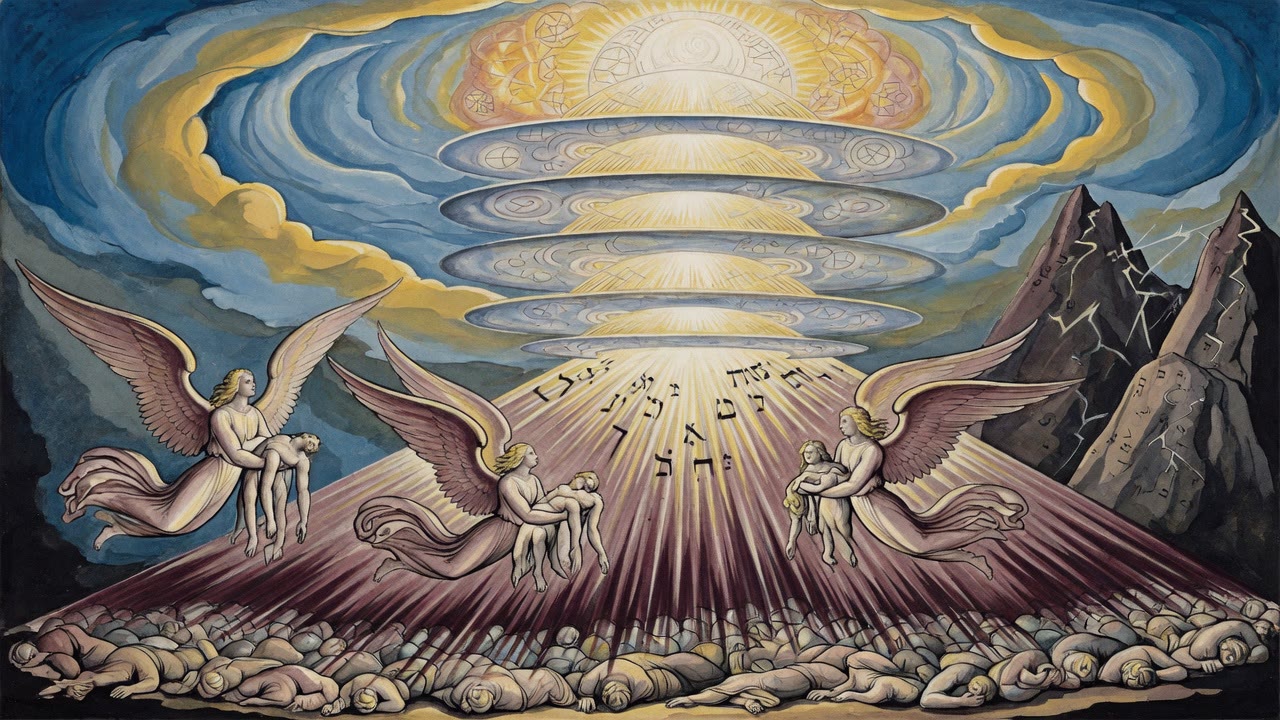
The angels crowded the cloud and asked what flesh was doing in heaven. Moses had forty days with no bread and a case to argue.
Table of Contents
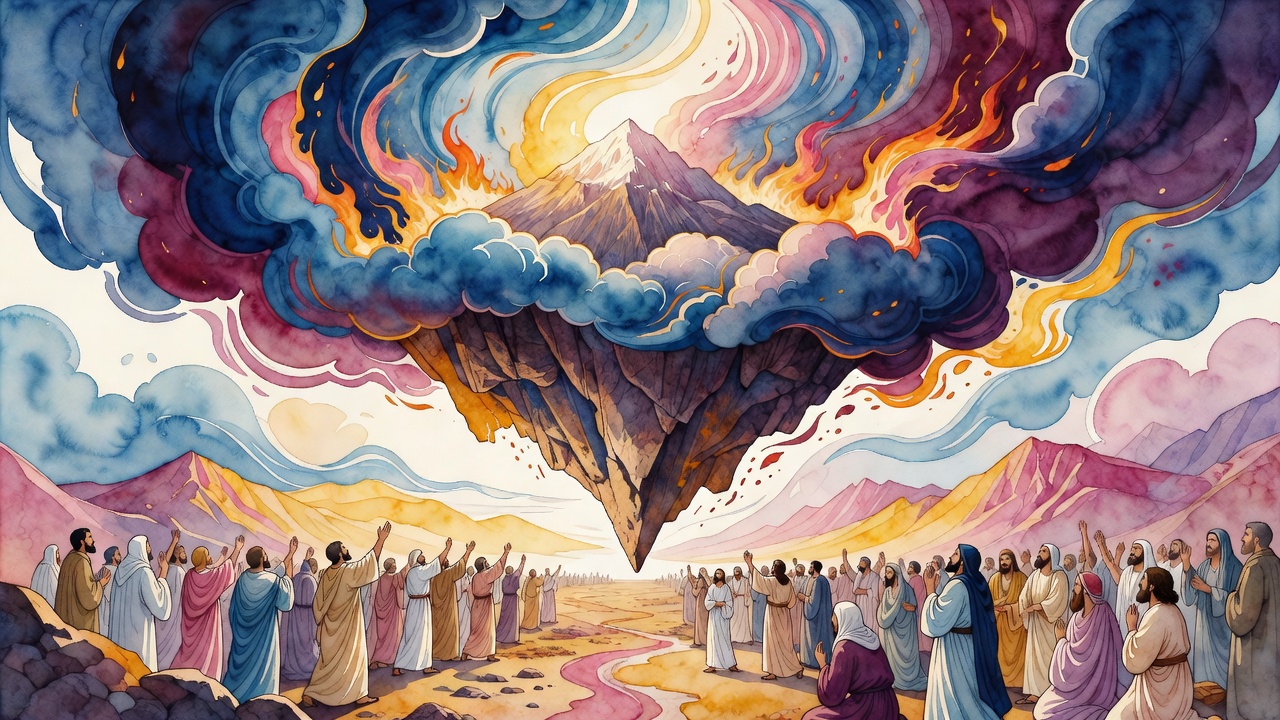
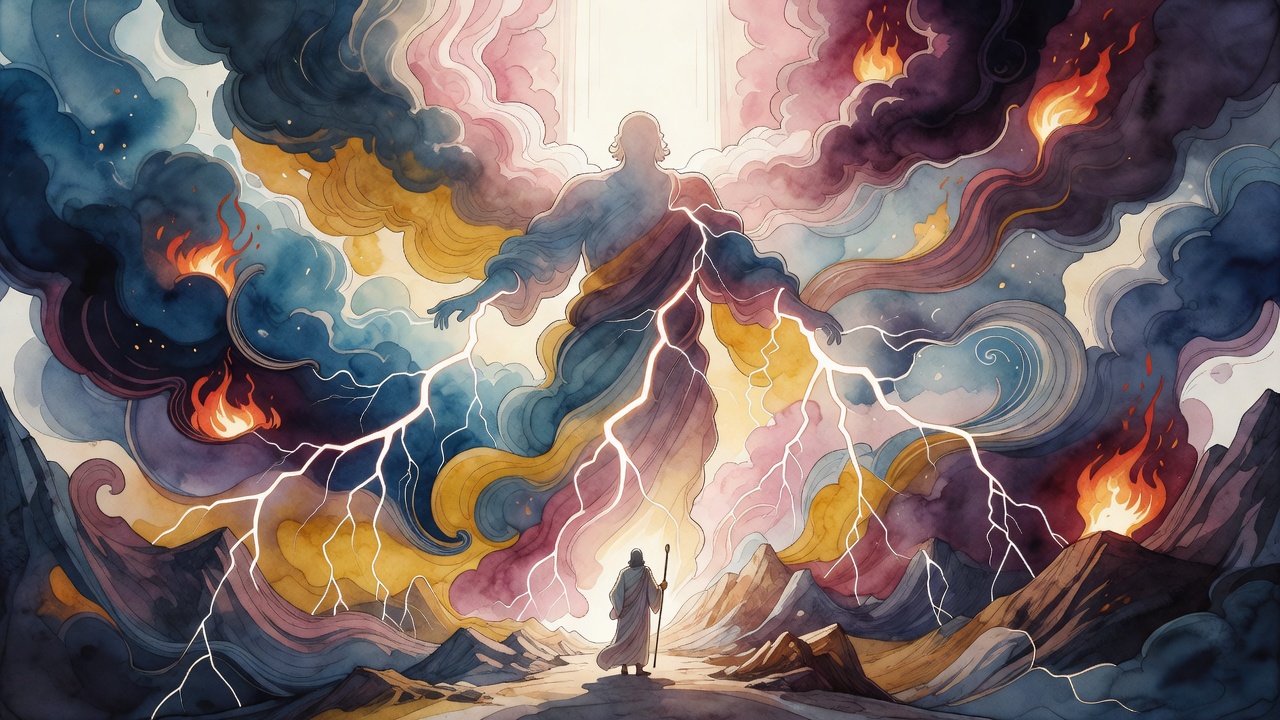
The cloud swallowed Moses on the fortieth step of the ascent, and the mountain dropped out from under his heels. No ground. No sky. The angels had been waiting in a light that would not hold one shape, and they had not invited him.
 Click for full size
The Angels Challenged Him
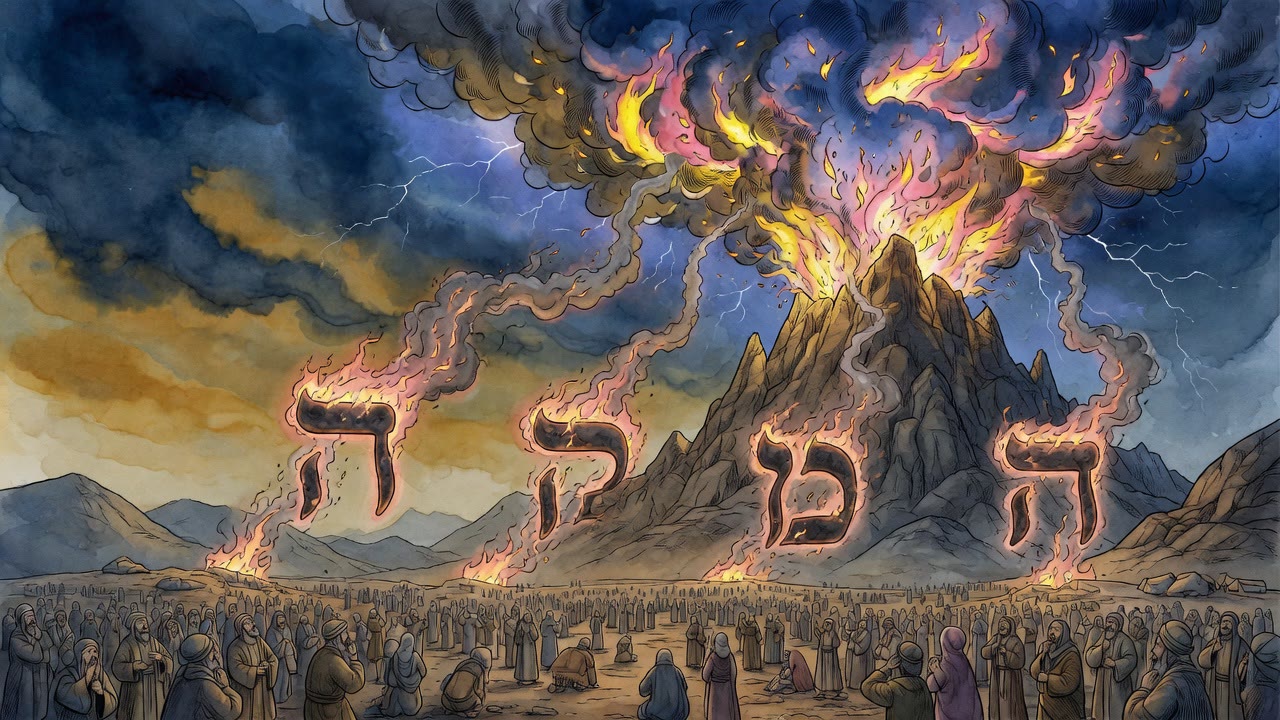
They closed in until the heat sat on his chest. "What is flesh doing here?" The Torah had rested in those rooms since before the world was cut. It was written in black fire on white fire (Exodus 31:18). It was not a bundle for a species that ate, slept, envied its neighbors, and died.
God heard them. God did not answer them. He turned toward Moses.
Moses had killed an Egyptian overseer. He had spent forty years with goats in Midian. Twice he had asked God to send someone else (Exodus 4:13). He was not a man who argued well in rooms he did not know. This was the room he knew least, and the defense had been put in his mouth.
Kemuel, who kept the first gate, blocked him there. Moses did not step back. The challenge sat in the air between them like a blade that had not yet fallen.
He Held the Throne
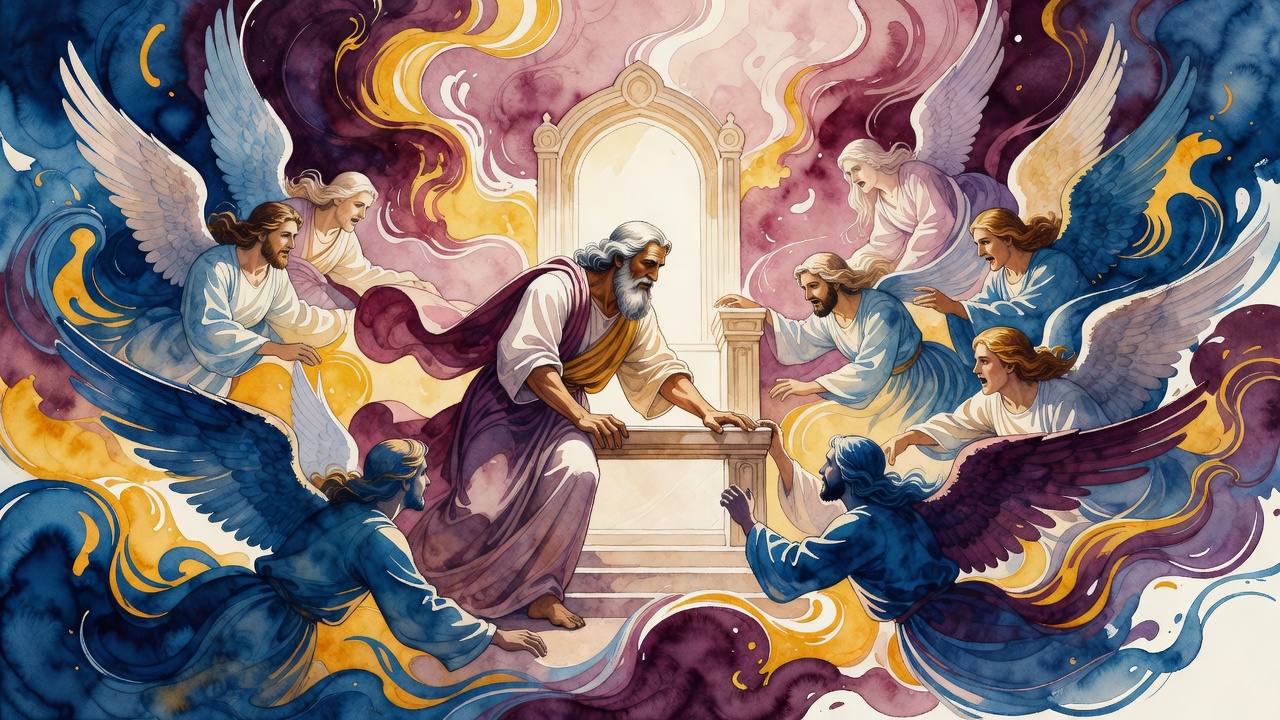
He reached down and closed both hands on the foot of the Throne of Glory. He held on. Not as a man falling. As a man who meant to speak and not be shoved off the floor.
Kemuel waited. The other angels waited. Moses did not let go.
Hadarniel stood farther in, a voice that rolled through worlds the way thunder rolls down a valley. He had not come to guide anyone. He had come to keep a mortal from walking where fire walked.
Egypt Was Not Their Country
"Did you go down to Egypt?" Moses asked. "Did you haul bricks until the sun cooked your backs? Were you slaves?"
No one answered.
"Do you have fathers and mothers who shame you, or whom you shame? Does hunger twist in you before a harvest comes in? Does rage move at night?"
More silence.
The Torah says: honor your father and mother (Exodus 20:12). "Do you have parents?" The Torah says: do not murder (Exodus 20:13). "Did that urge ever move through you?" The Torah says: do not steal, do not bear false witness, do not desire what belongs to someone else. "Are any of these written for you?"
The angels had no answer. The commandments were for creatures who hungered and feared and fell, and still had to be told not to let those things ruin them.
One by one they conceded. Kemuel stepped aside. Hadarniel bent toward Moses and, after that, led him through the chambers, pointing out what lived where, what each region held. The same mouths that had wanted him burned now named the rooms for him.
He spent forty days in the upper realm without bread or water (Deuteronomy 9:9). Heaven had no tables. A traveler eats what the country serves, and this country served nothing. His body kept the custom of the place, the way a man in a foreign city stops asking for the food of home.
The Word God Agreed to Write
While he was there, Moses watched God write the Torah. Letters took shape under a hand that did not hurry. Then he saw a word set beside his own name: chet (חטא), sin.
He objected. He had led a people out of Egypt, stood at the sea, received the law at Sinai. Was this the record that would last?
God did not take the word back as a lie. God offered a substitution. Instead of sin, the Torah would carry anav (ענו), humble, close to the ground. The verse that survived is this (Numbers 12:3): the man Moses was very humble, more than any person on the face of the earth. It was not a natural description of the man who had faced Pharaoh. It was a word chosen while Moses stood close enough to watch it being written.
The Tablets Came Down Burning
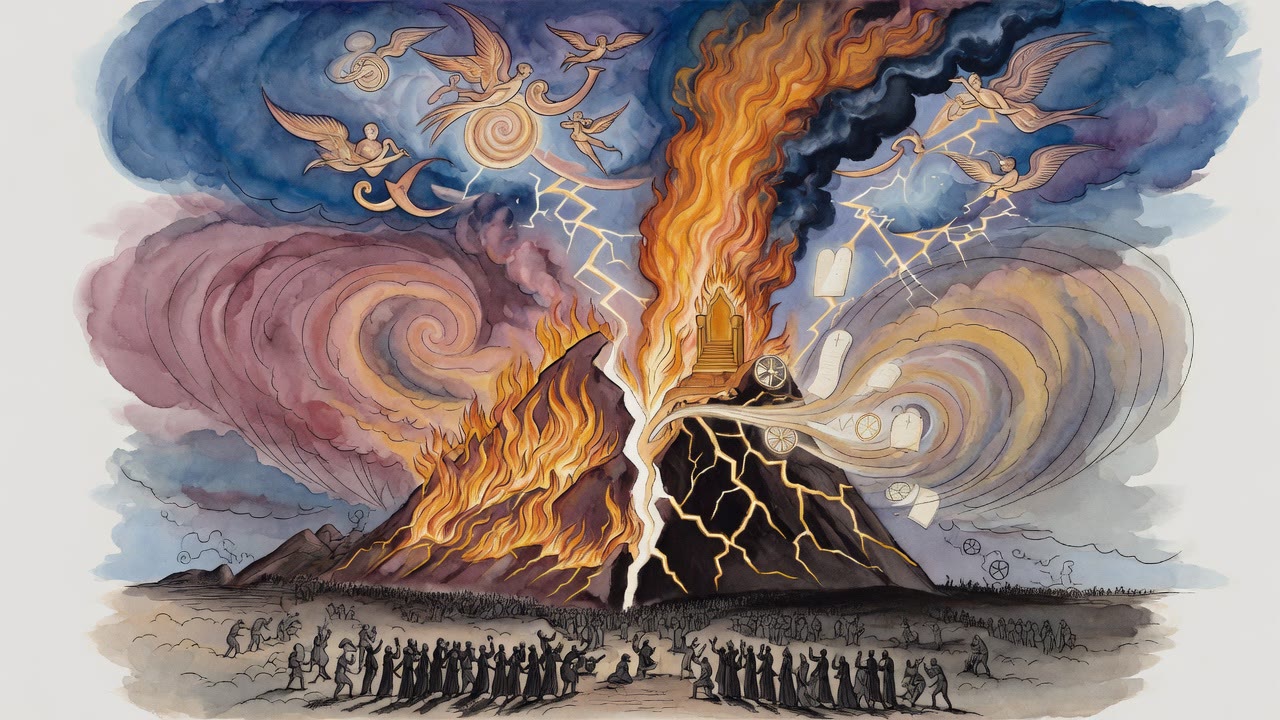
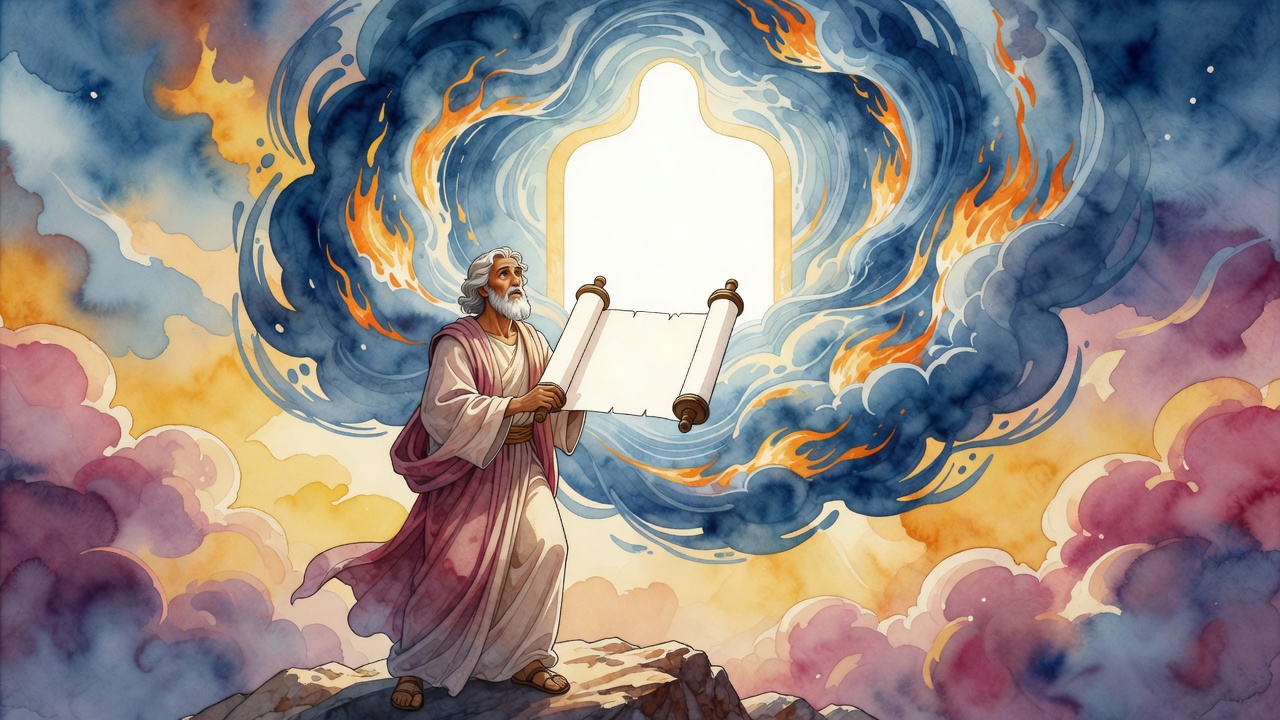
He descended with the stone tablets under his arms. His face burned so bright the people could not look at it (Exodus 34:29). The angels at the gate who had threatened to burn him let him pass. The Shechinah (שכינה), God's dwelling presence, had gone with him past the firmament and came back down the mountain in that light.
The camp heard him before they saw him. Then they saw him and turned their faces away. He kept walking. The tablets were heavy and the cloud was already closing.
Moses set his feet on the slope he had left forty days before. The Torah was in his arms, not in heaven. The cloud sealed the ascent behind him.
← All myths