167 myths · Page 1 of 6
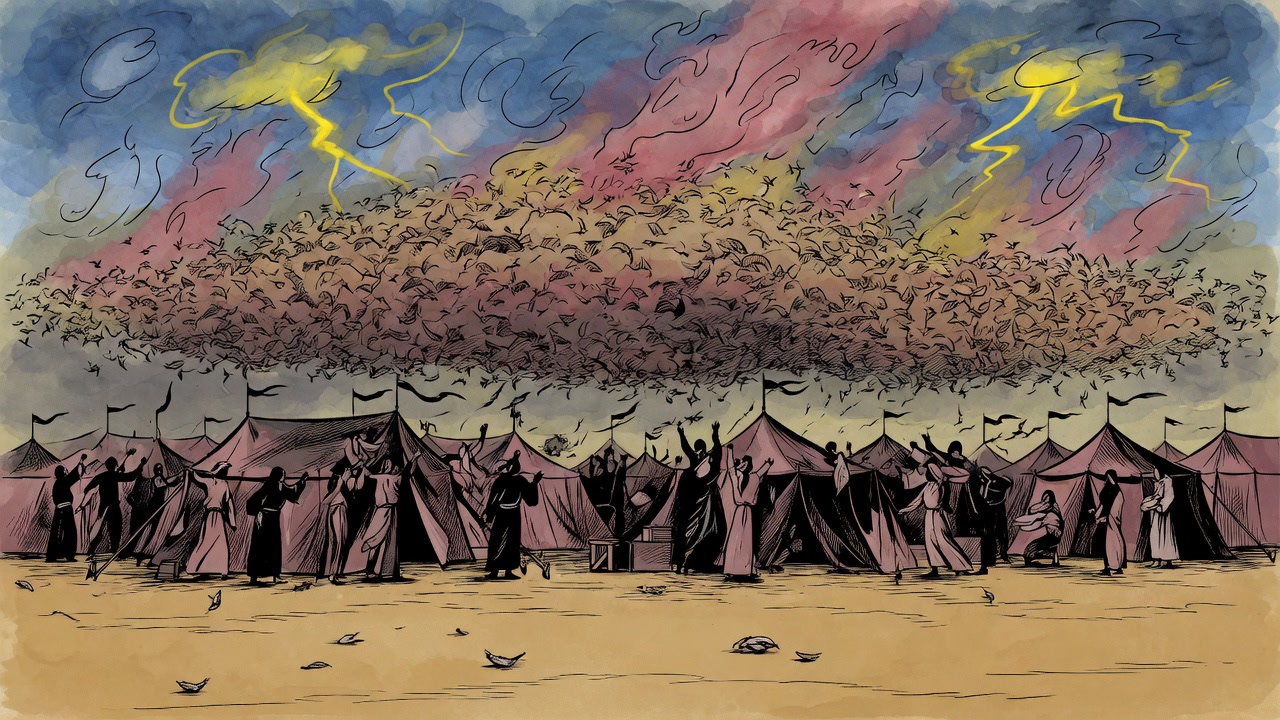
The camp was not starving. Manna still covered the ground. They wanted meat anyway, and the birds came in so low a tired man could grab them.
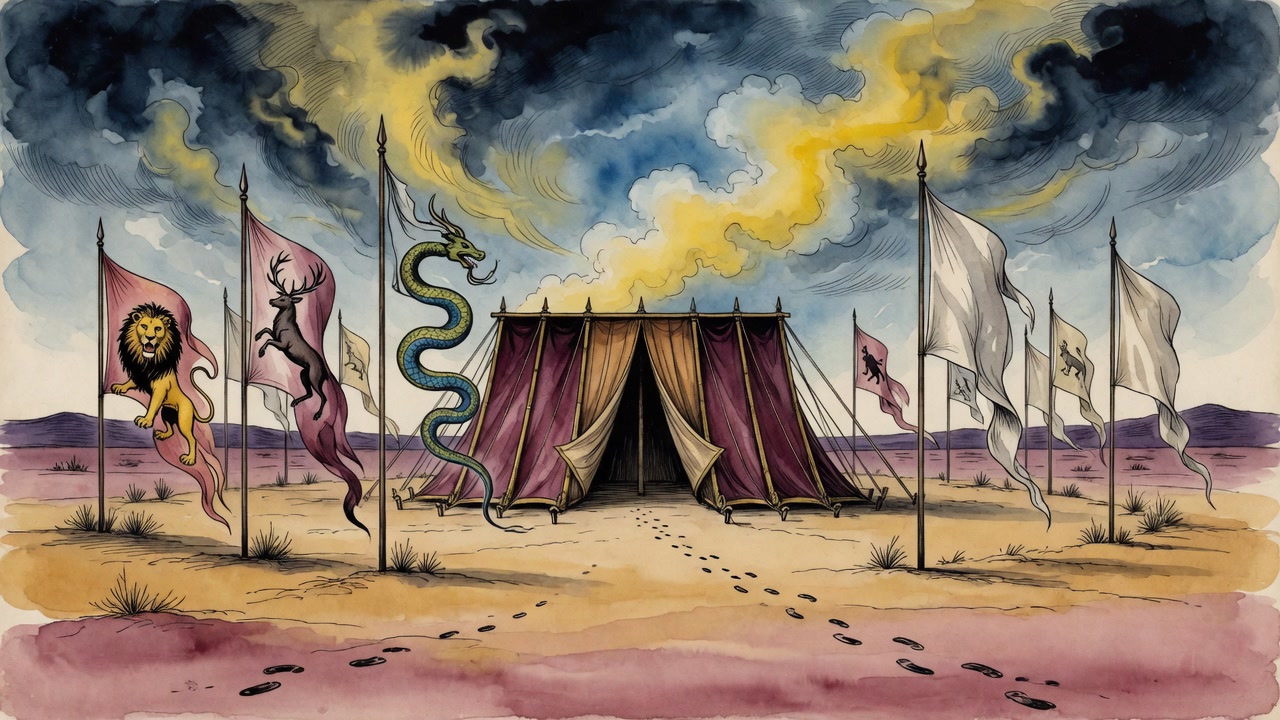
A lion on blue silk, a stag where an ox should stand, and a serpent to the north. Israel raised twelve banners and turned the wilderness into a map of heaven.
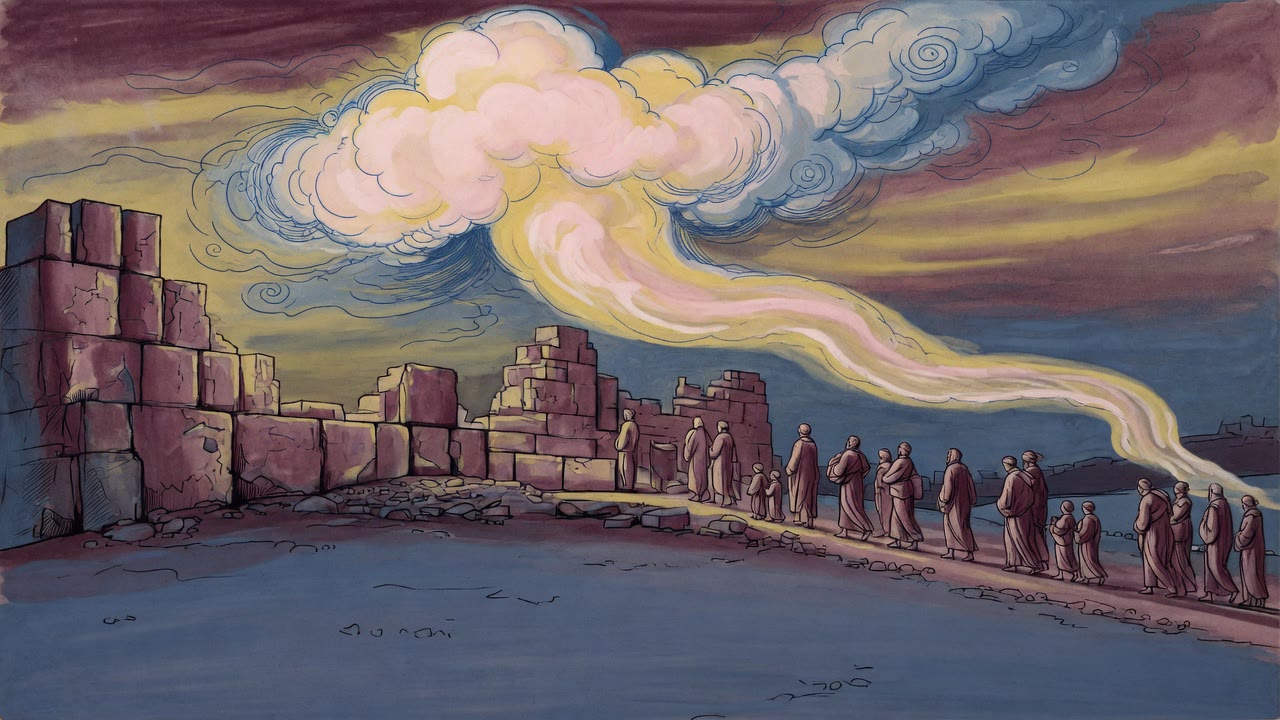
When the Temple burned the Presence wept at the last wall and walked out with Israel, as she had walked into Egypt, Babylon, Eilam, and Edom.
Israel had already done the sums. Fifty shekels for a seducer, thirty for a goring ox, a hundred for slander. Not one of those, God said, is the price here.
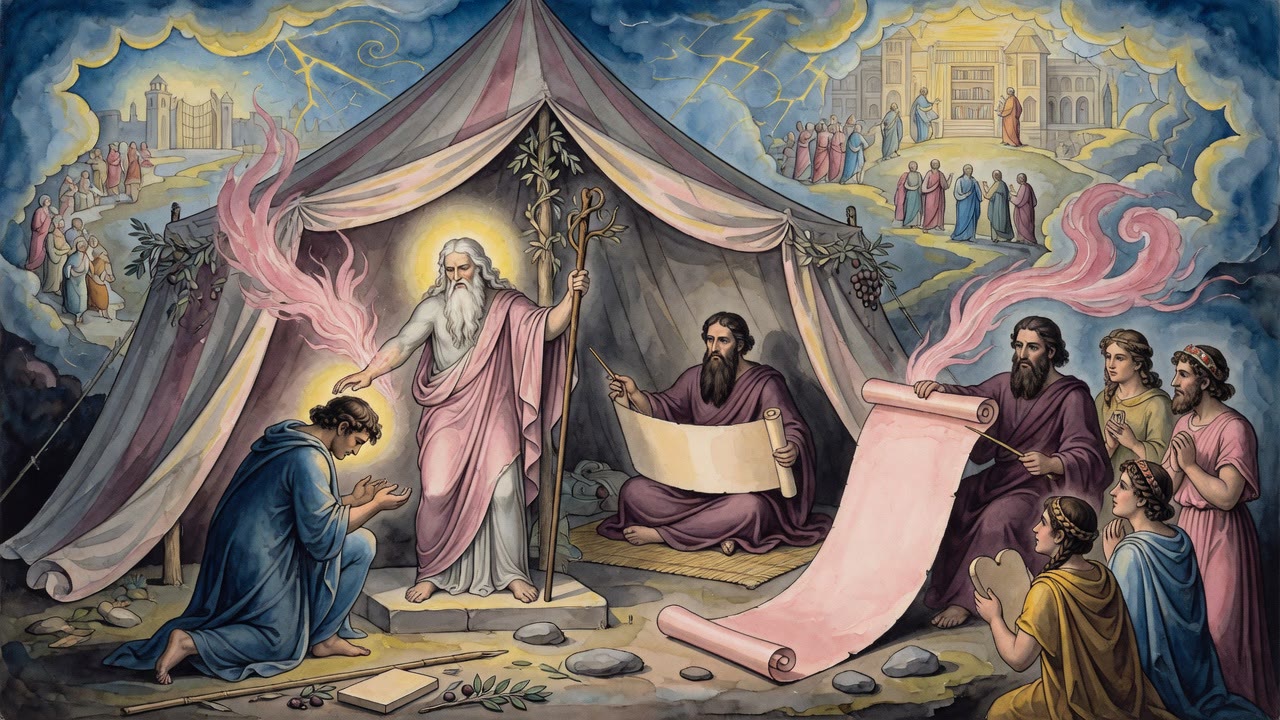
When Noah divided the world between his three sons, Japheth's blessing surprised everyone, his beauty would lead him into the academies of Shem.
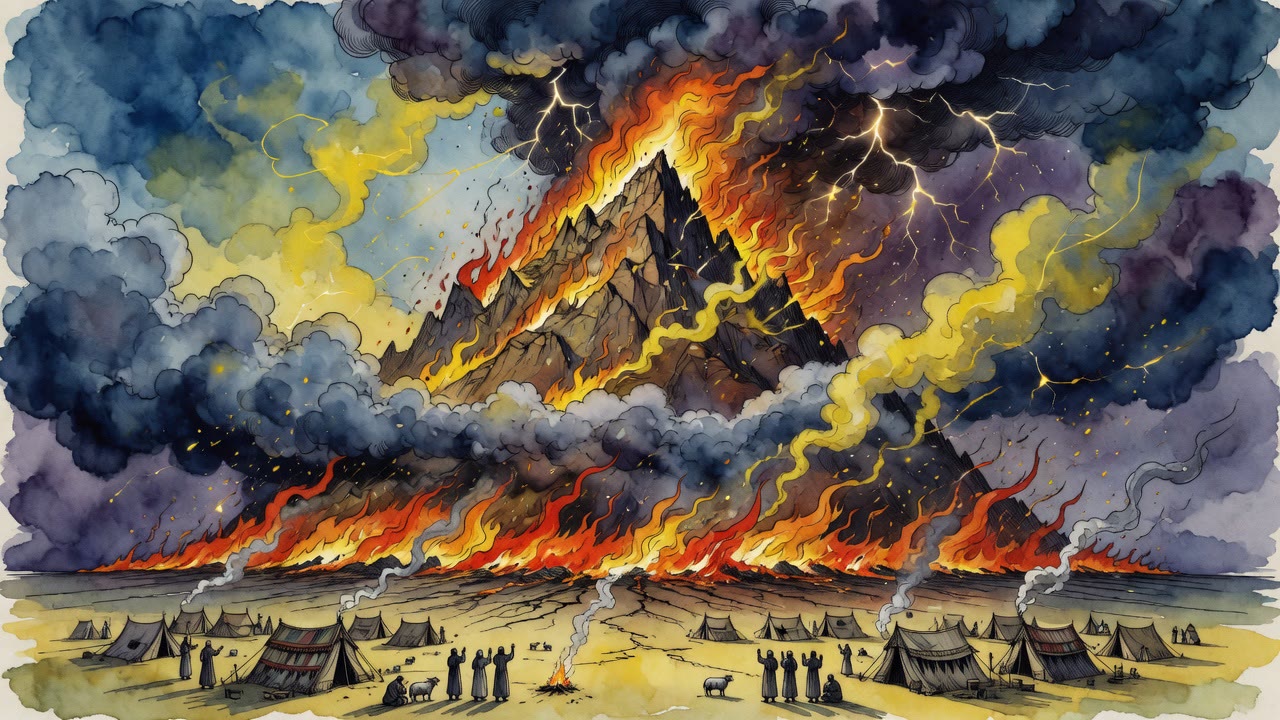
Israel had three days to wash their clothes and keep off the mountain. On the third morning the peak went up like a furnace and the horn would not stop.
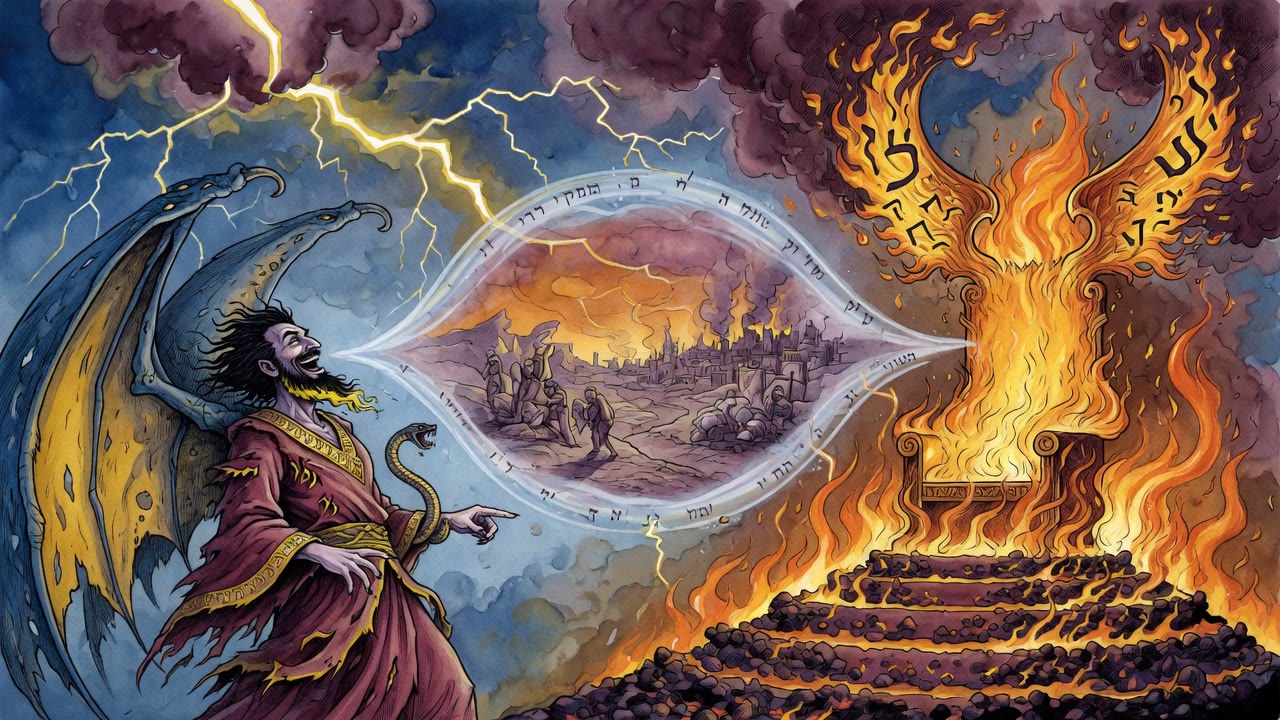
Before the exile, God revealed to Samael exactly what would happen and offered a reward for treating Israel with dignity. Samael chose mockery instead.
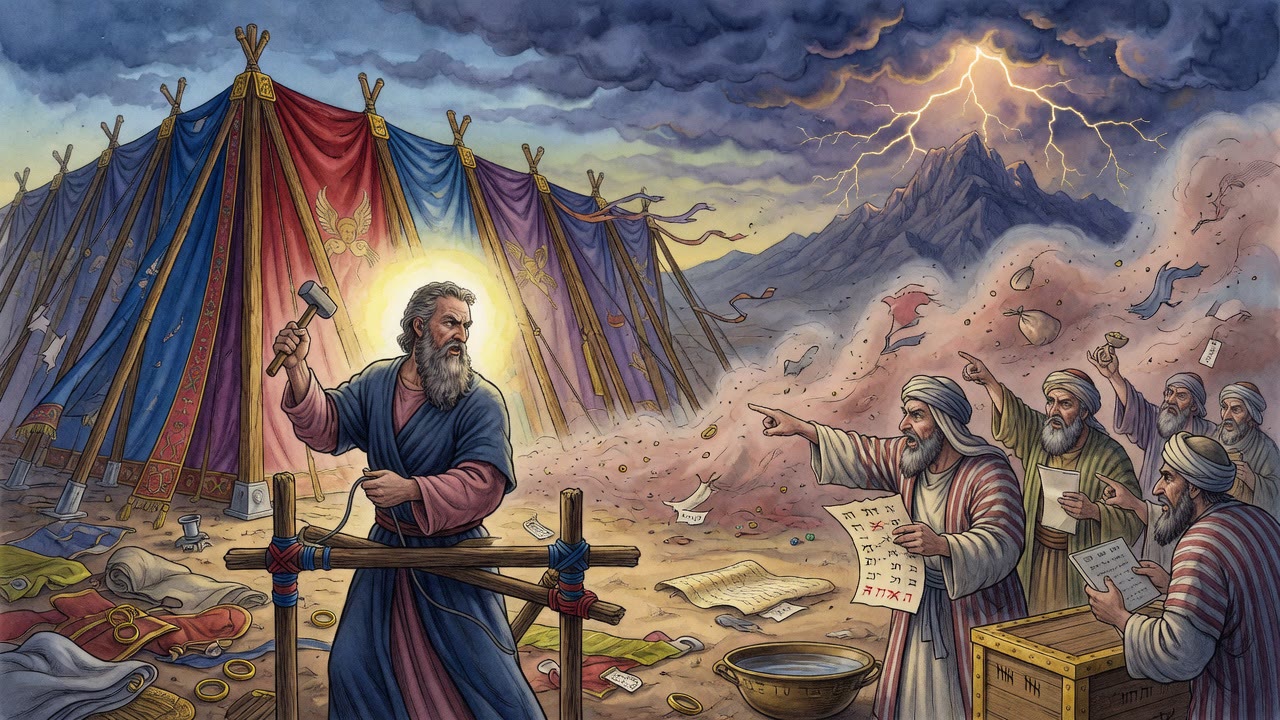
They said Moses looked well fed on gold given to God. He opened the ledger in front of the camp. One row of curtain hooks was still blank.
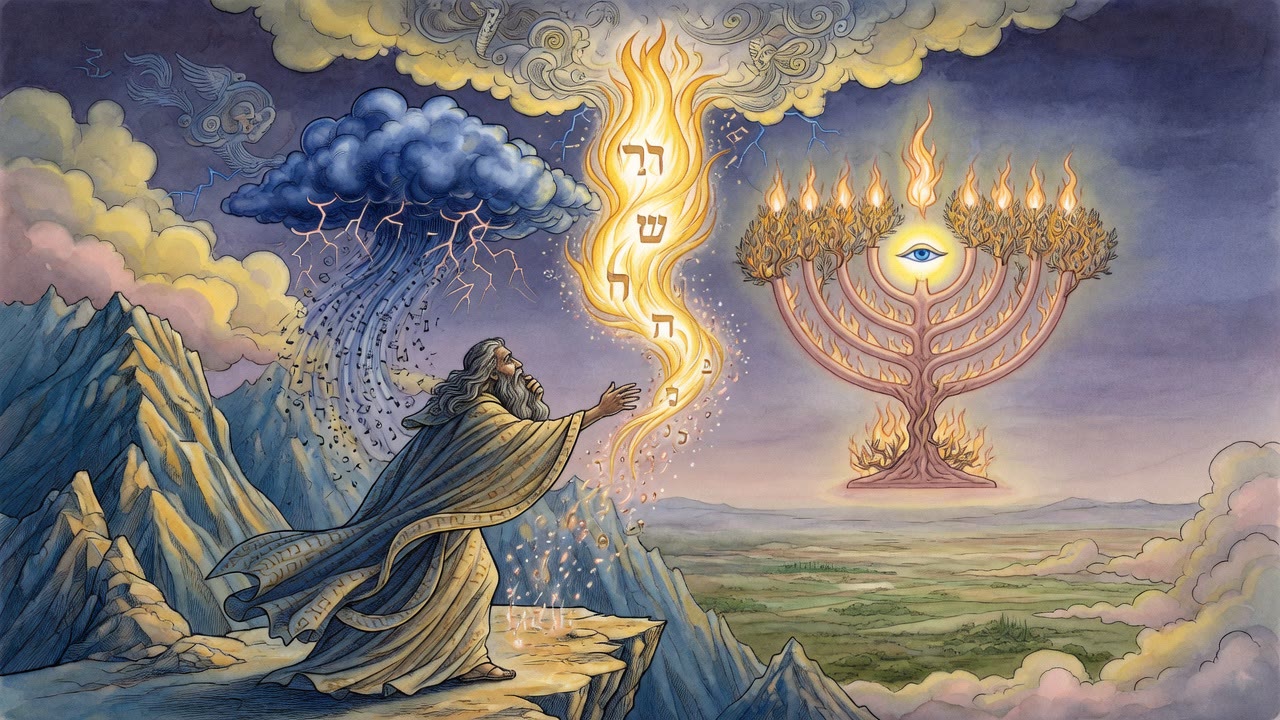
Moses prayed to cross the Jordan 515 times and was refused. But the rabbis preserved three deeper desires he had long before he asked about the land.
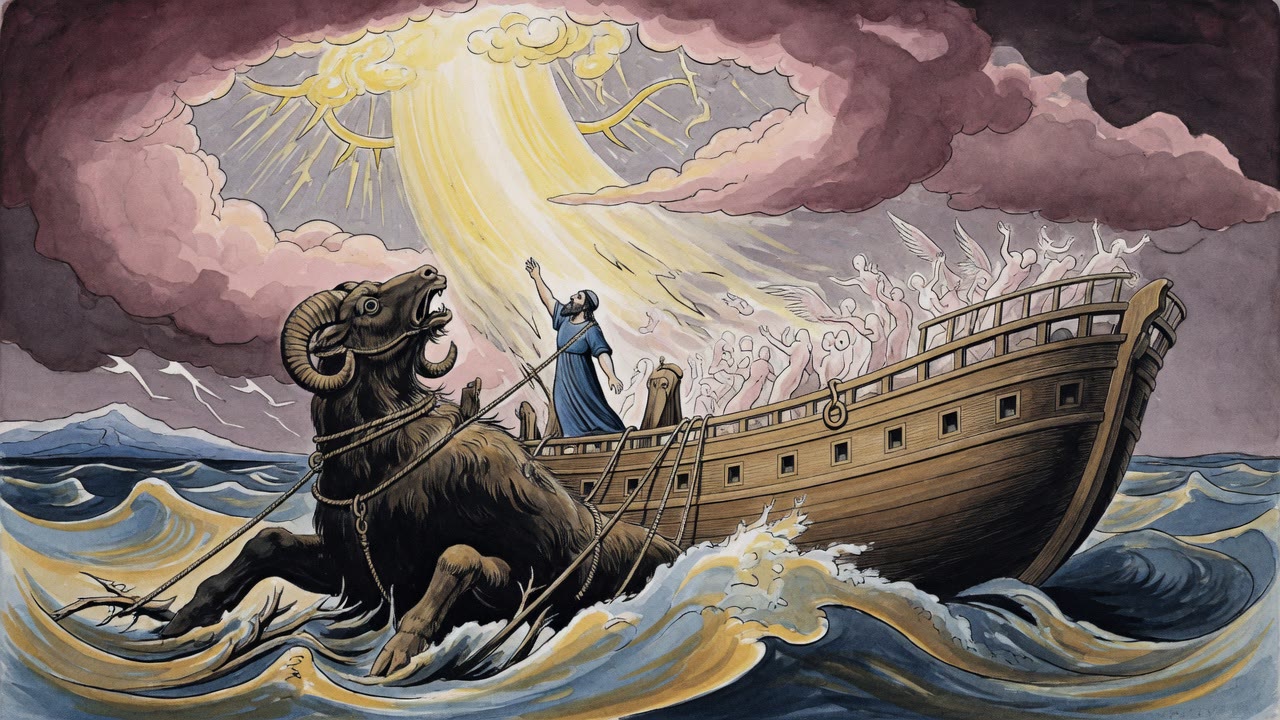
Mud stuck to Noah's heels. His sons already slept in separate tents. He named the old sins before anyone built a house.
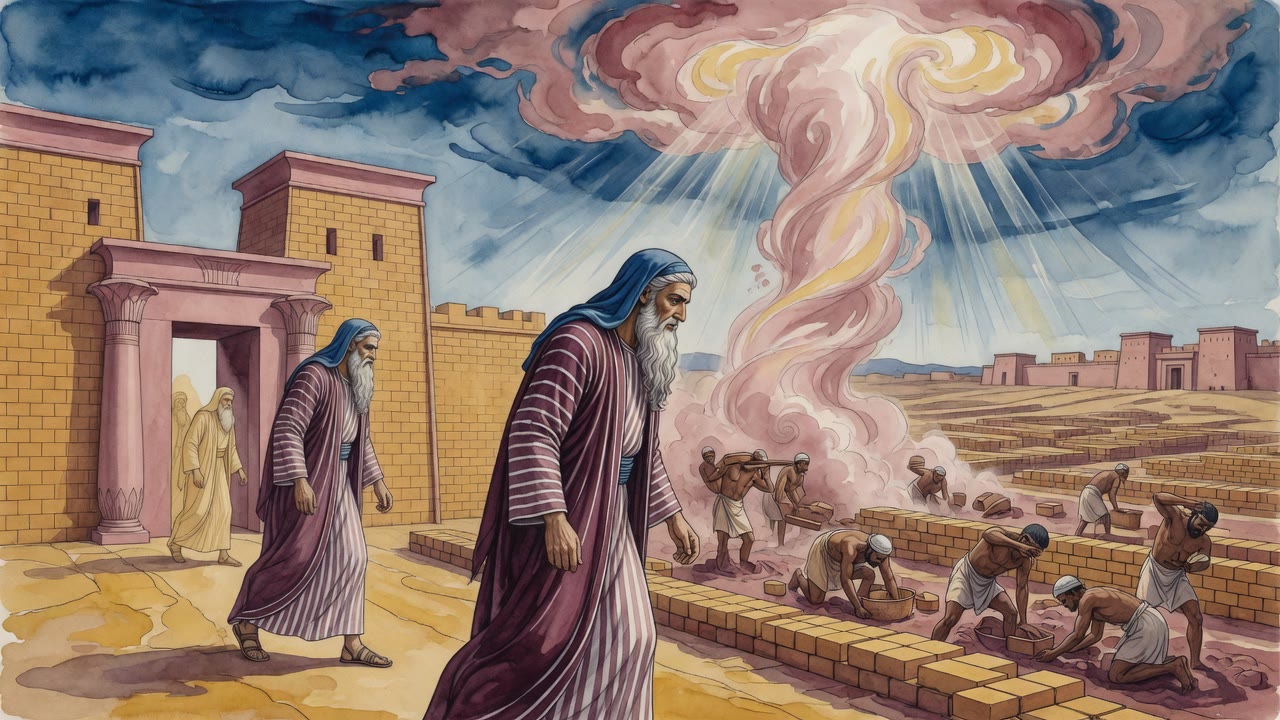
A voice from heaven said Moses had one hour remaining. He asked to live as a bird, as a beast, anything that could cross the Jordan. God refused.
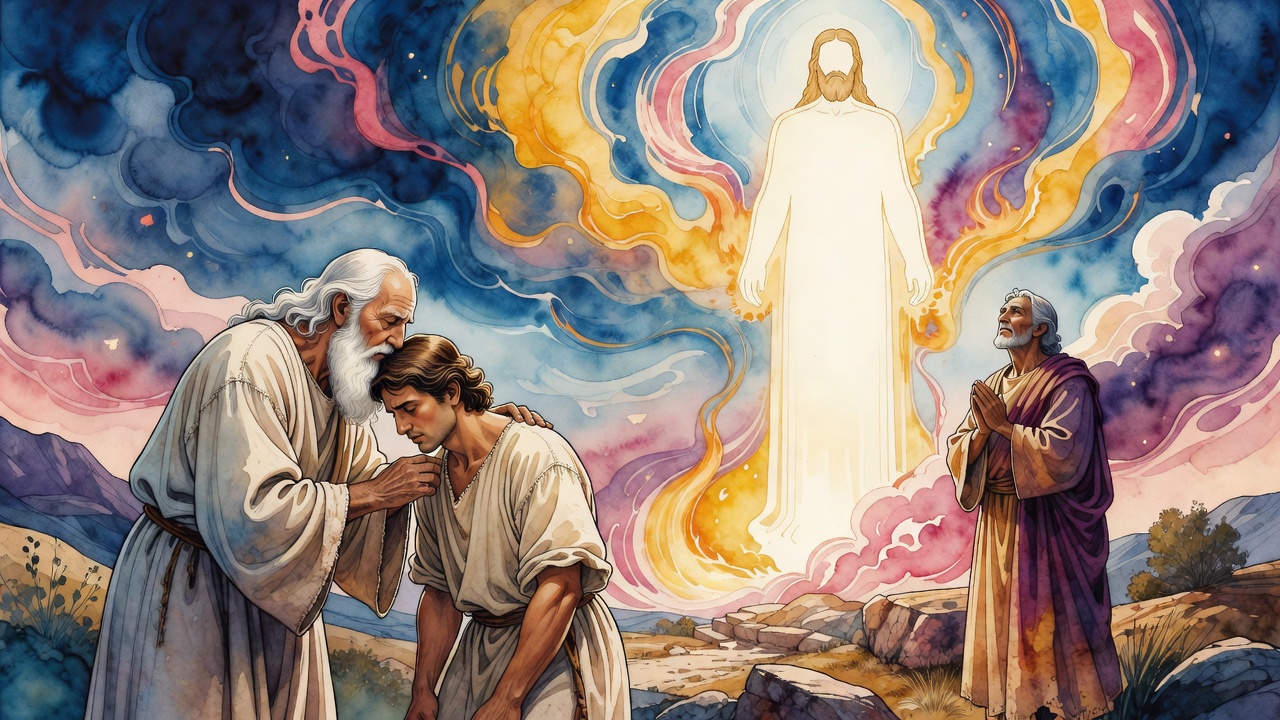
Abraham blessed Jacob and died that night. Later Jacob found the Shekhinah, the Divine Presence, waiting at Bethel, and night prayer became law.
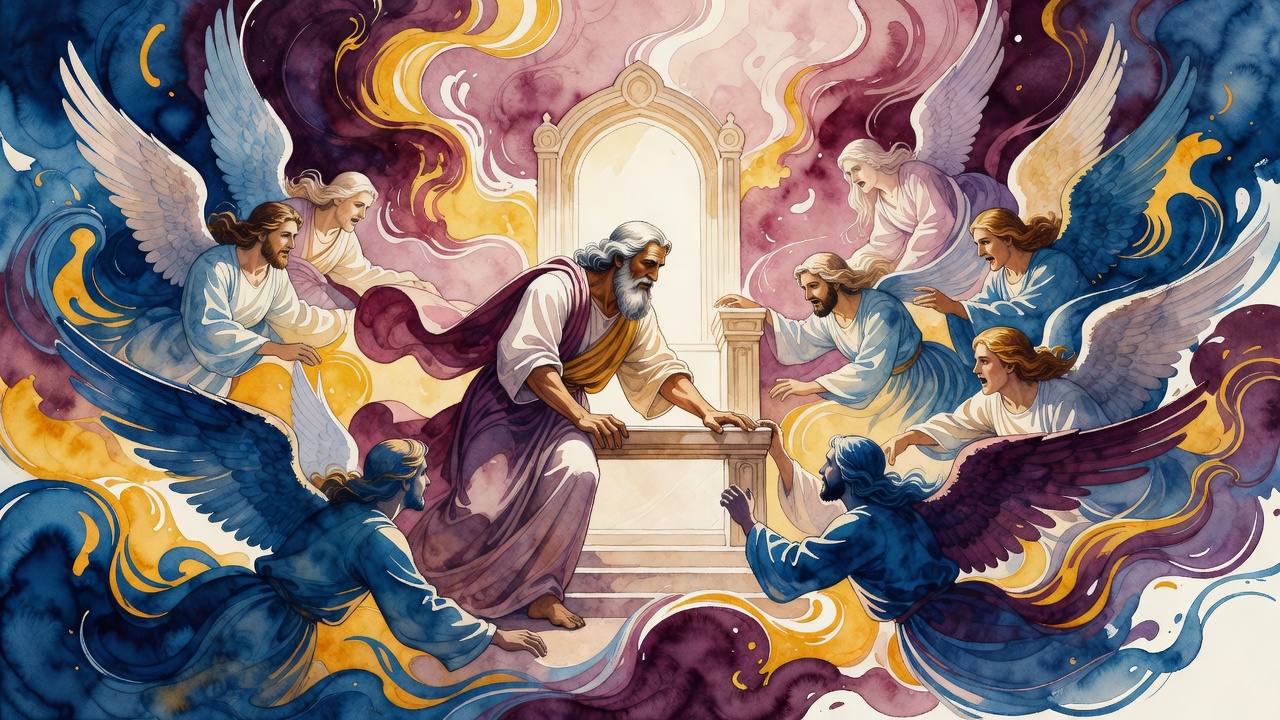
The angels crowded the cloud and asked what flesh was doing in heaven. Moses had forty days with no bread and a case to argue.
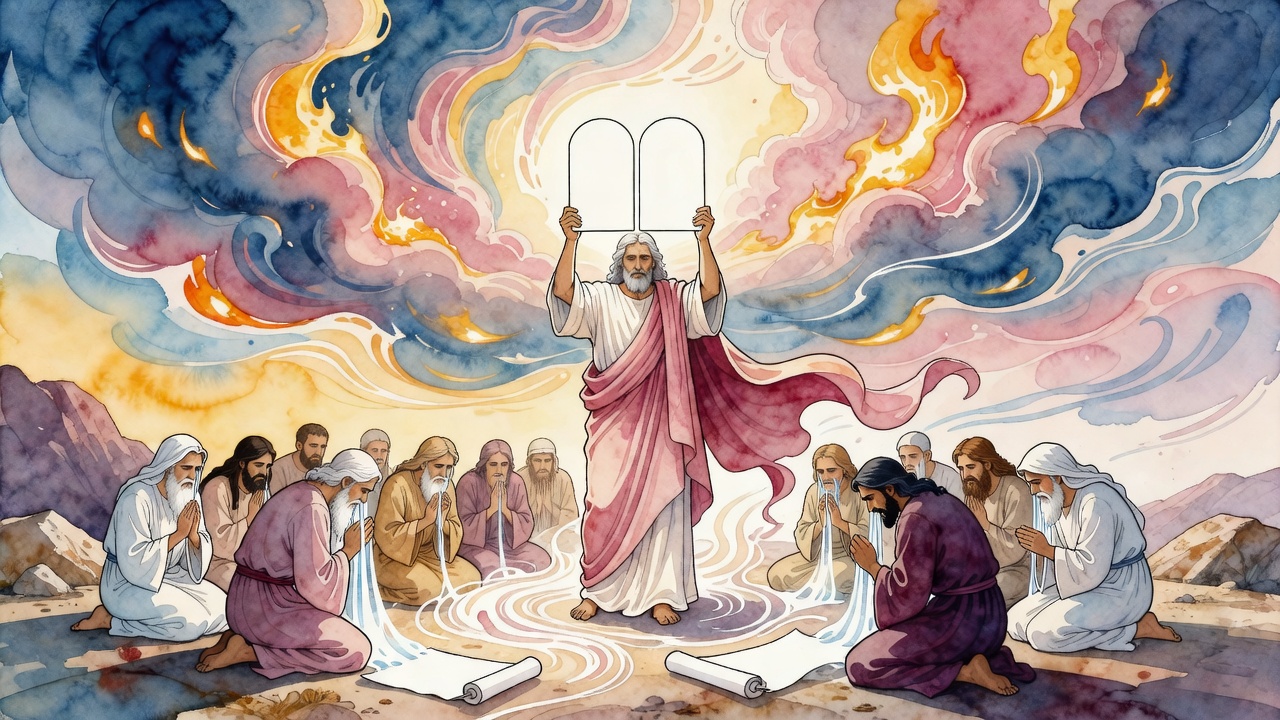
The gold was powder and nobody in the camp would eat. God answered the fasting by calling them His children, then swore their tears would turn to rejoicing.
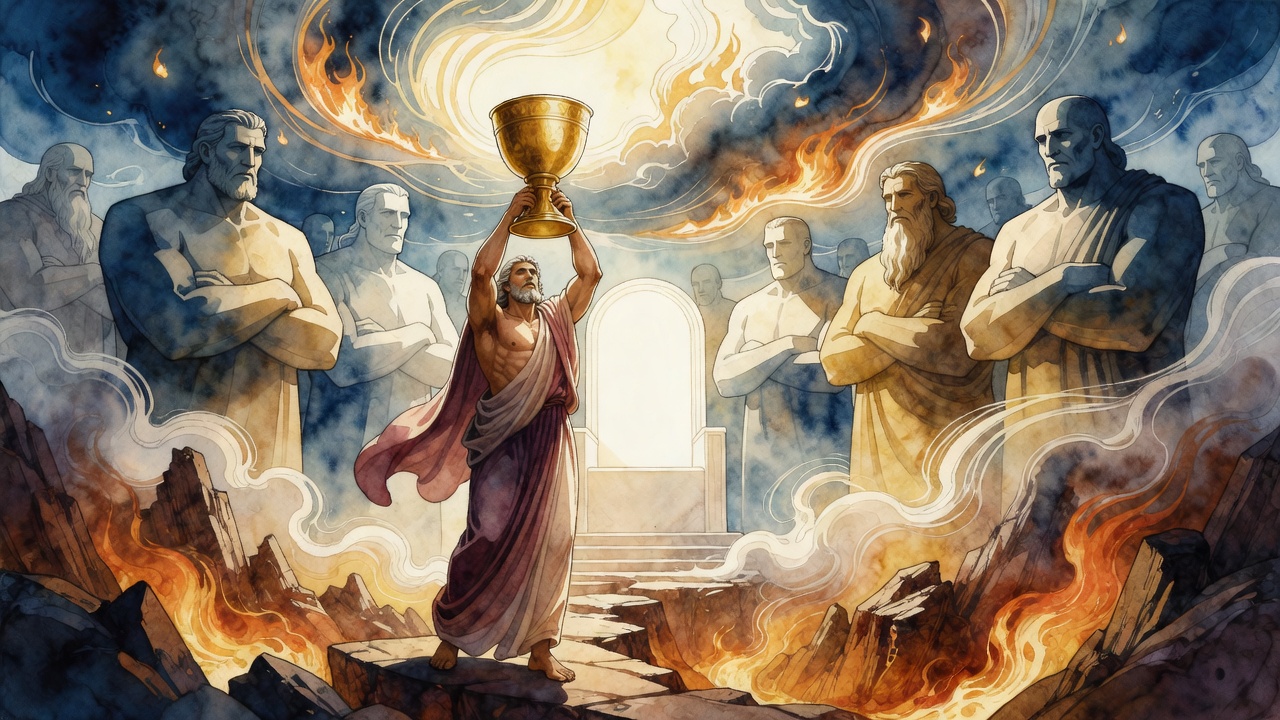
The meal in Paradise was over. A cup of blessing waited for a mouth that could praise after judgment. Abraham set it down.
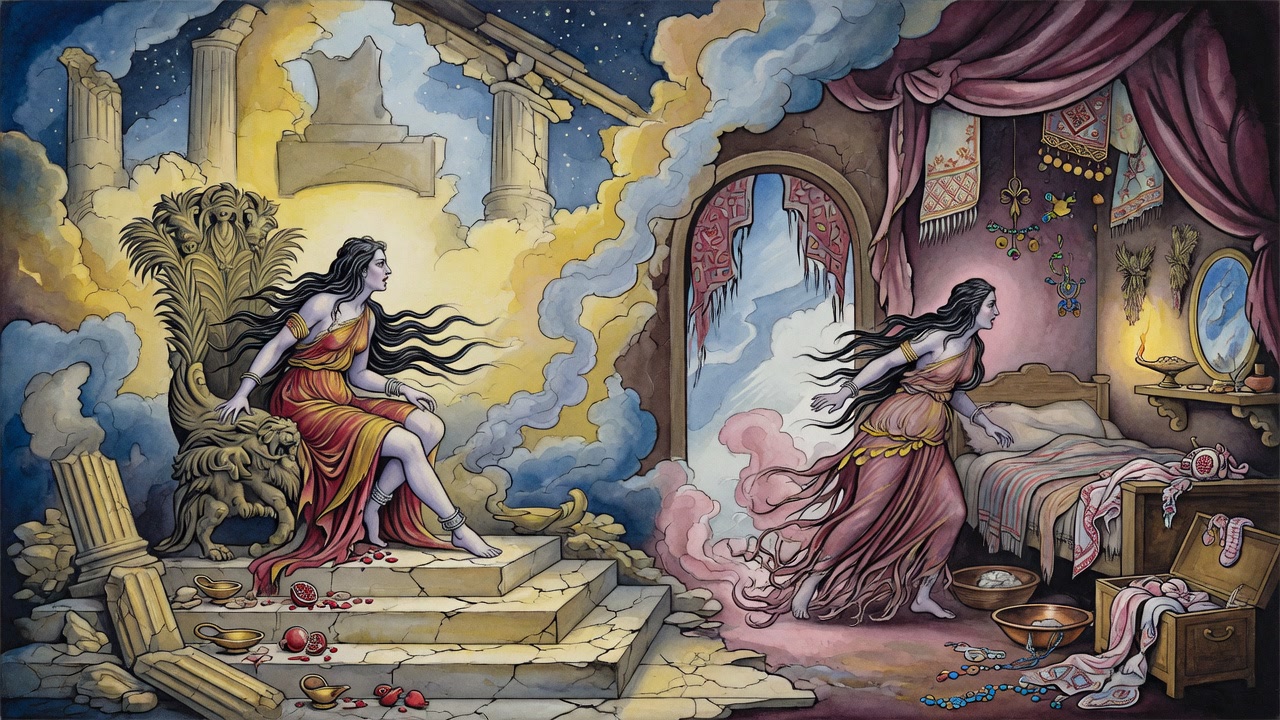
The Temple had burned. Lilith sat down in the empty chair. In a birth room a midwife poured a hair out of the milk and sealed the jug.
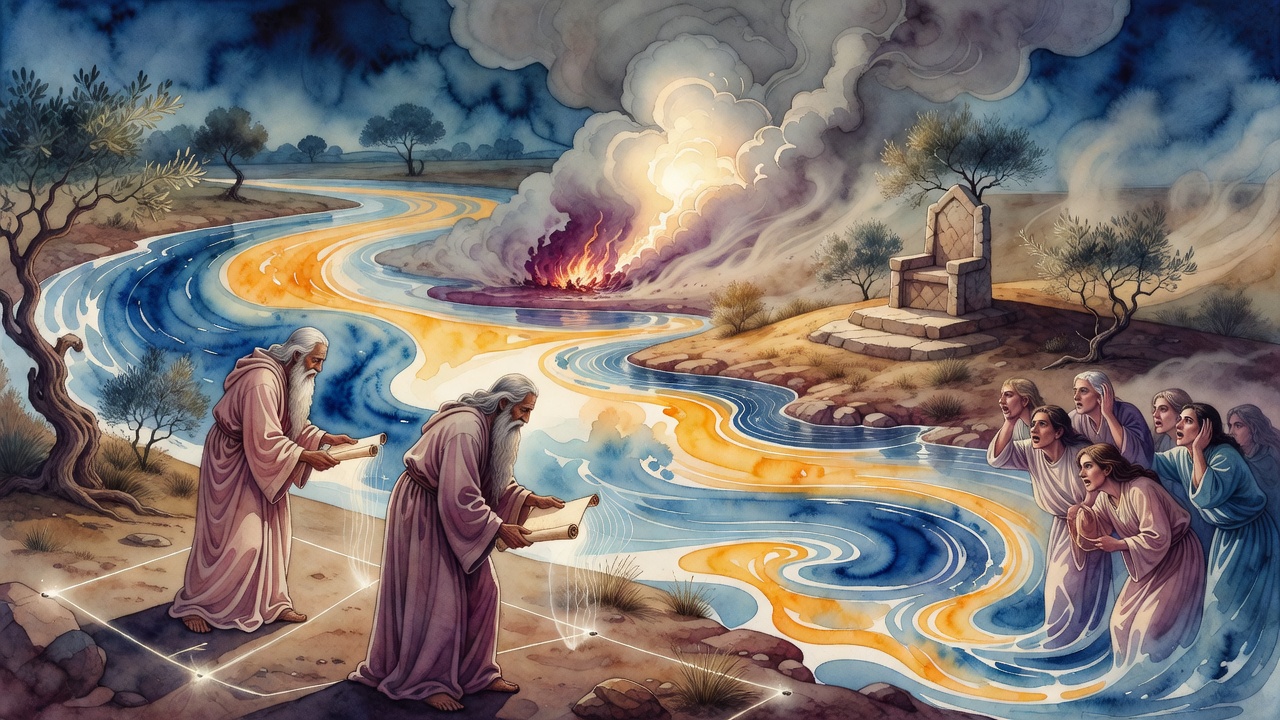
Two sages measured Eden with verses and field units, while the mystics heard a hidden river carrying wisdom into the garden.
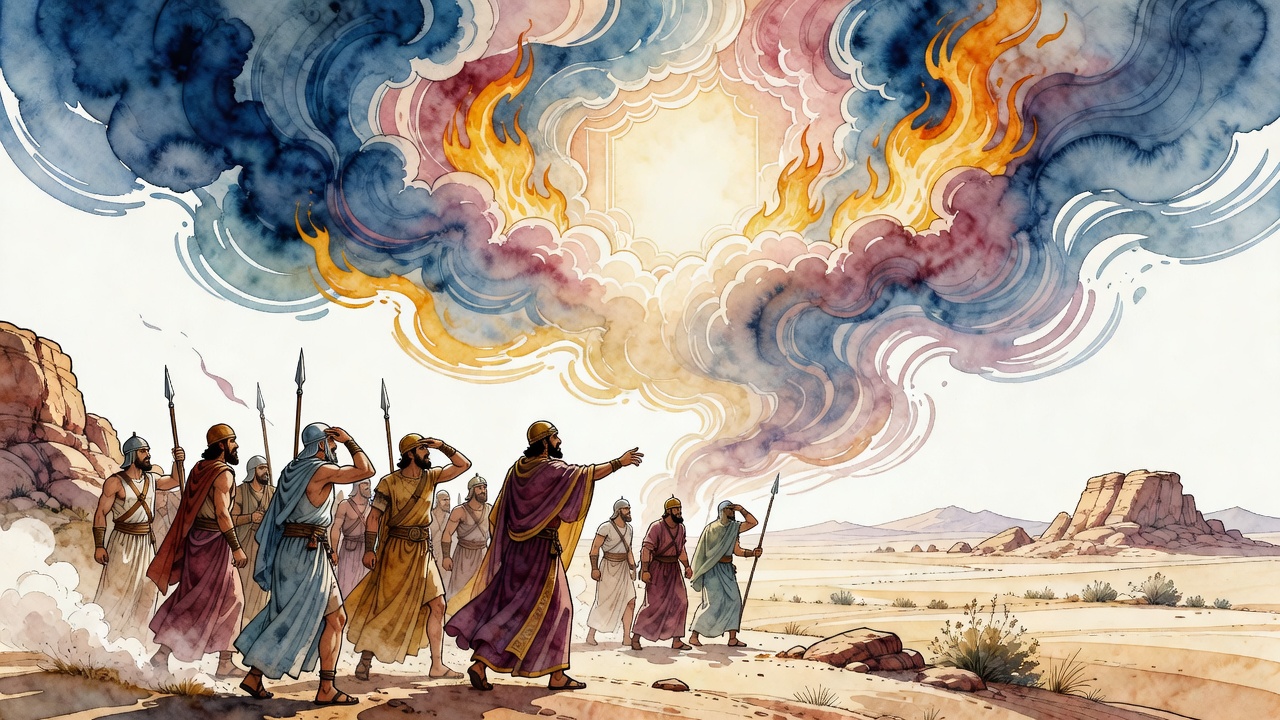
Old enemies joined forces when they learned Israel's strength lived in prayer, so Balak searched for a mouth that could curse.
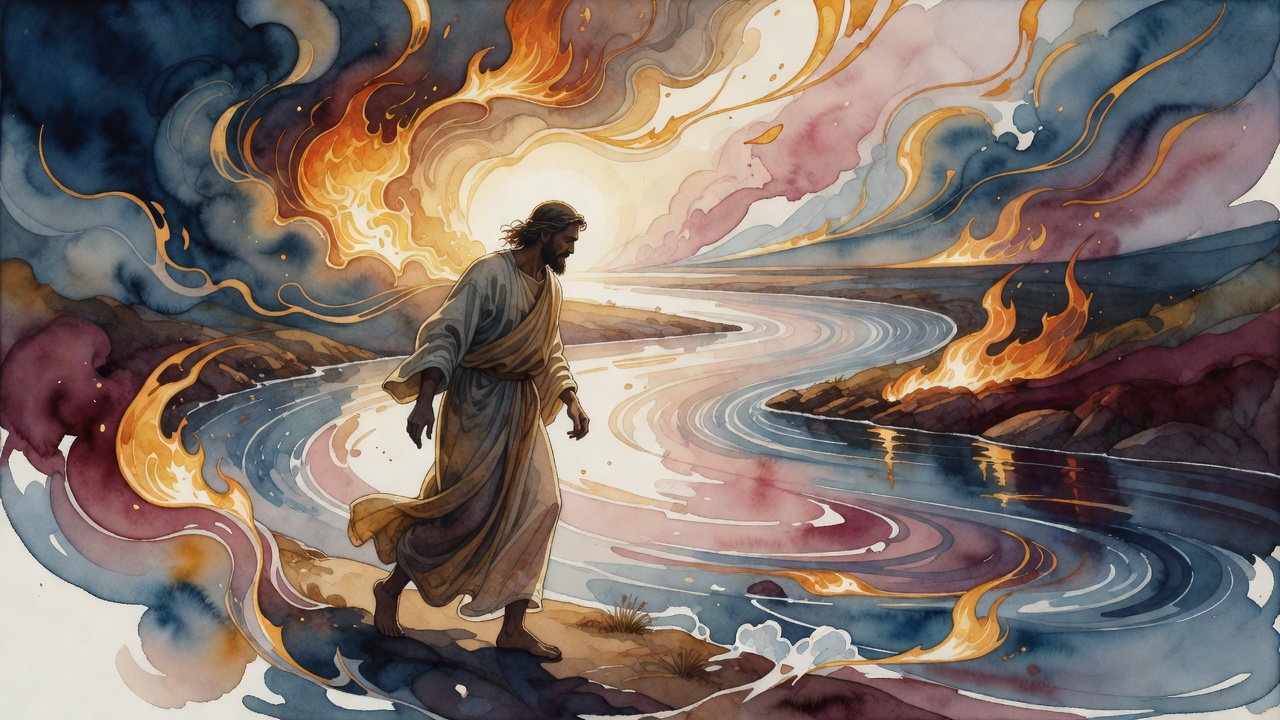
Jacob limped away from the ford of Jabbok, still called unblemished. The Zohar reads him against the red heifer: a wholeness that suffering cannot remove.
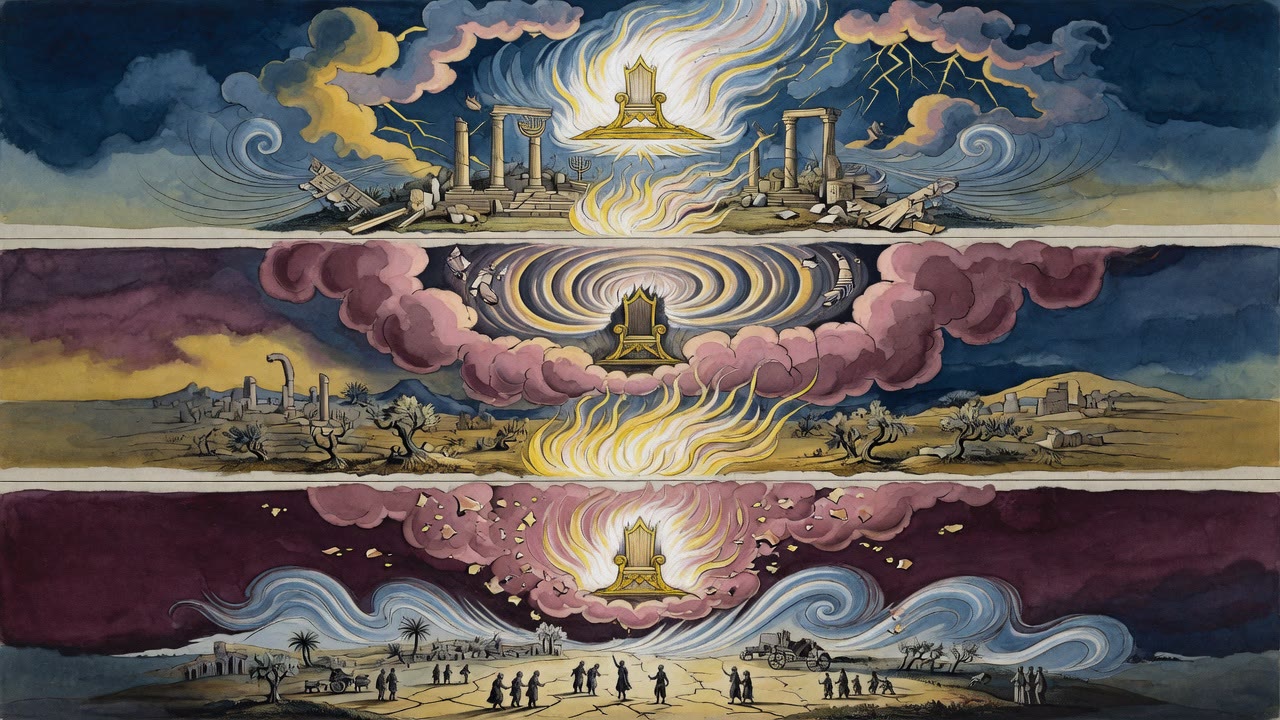
Every night has three watches in the Talmud, and at each one God roars like a lion over the Temple, the exile, and Israel's scattered children.
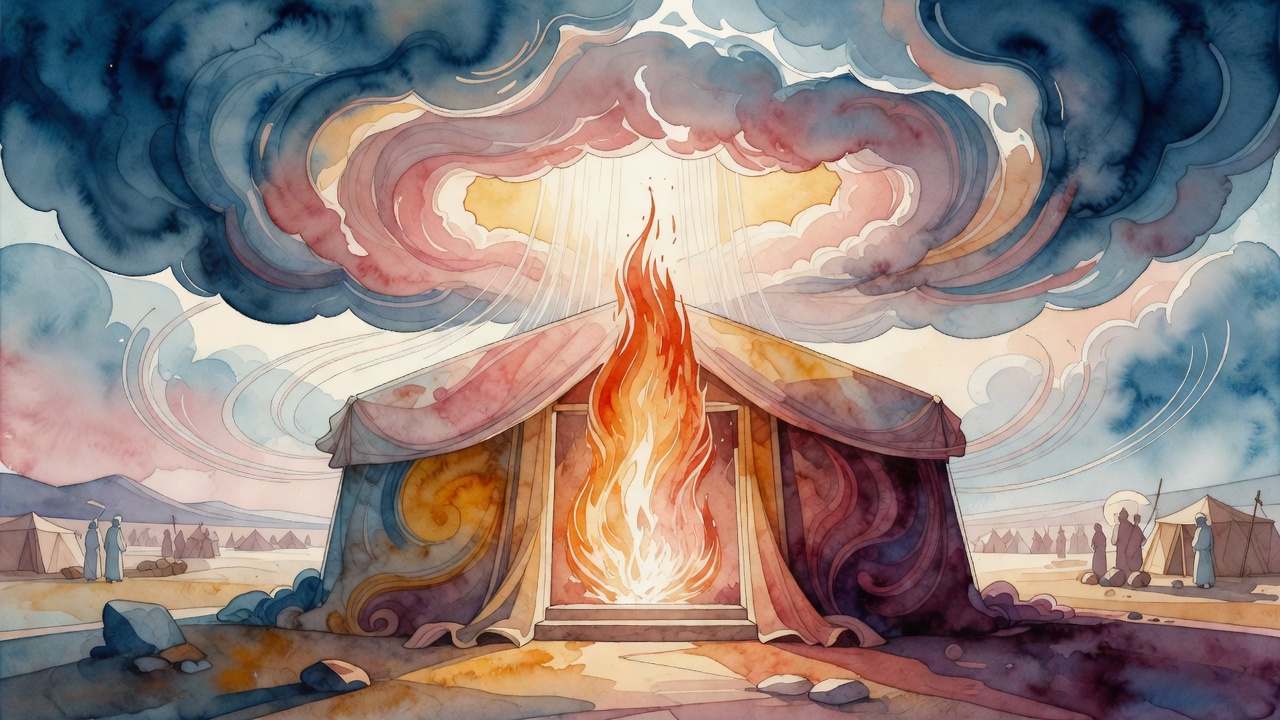
On the tenth of Tishrei the pardon was still a private sentence. The nations had watched the calf. Moses wanted something they could point at.
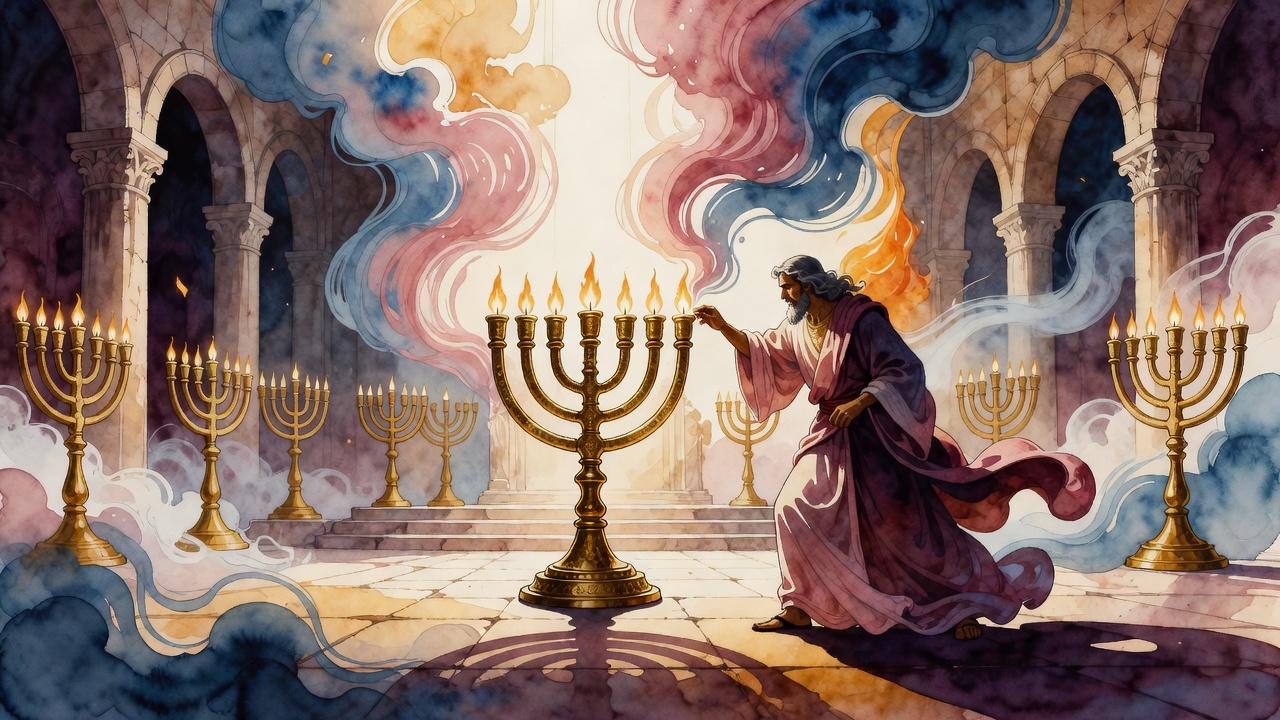
Seventy flames waited in the new sanctuary, five candelabras on the south wall and five on the north. Solomon lit the lamp that had crossed the wilderness.
When the Tabernacle was raised and fire came down, God's joy matched the joy of the first day. The world had been waiting for this moment.
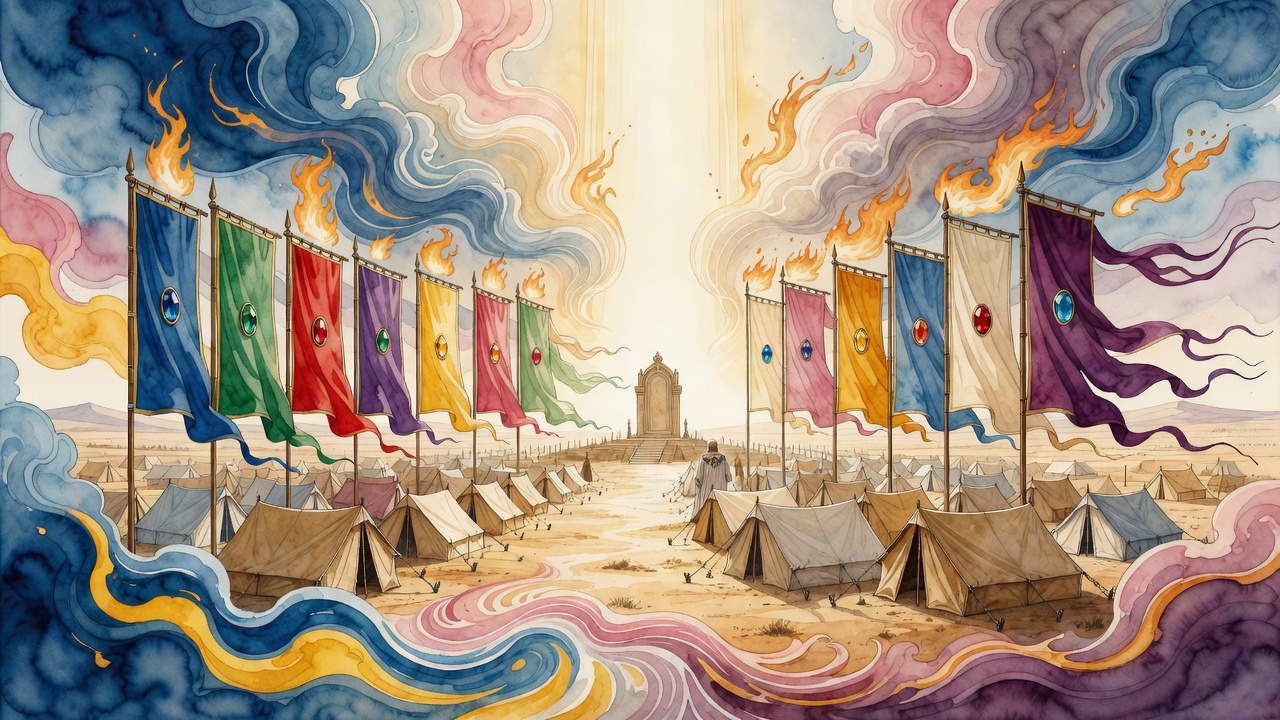
Each of the twelve standards flew colors matching the High Priest's breastplate. The camp was arranged as a portable extension of the Tabernacle itself.
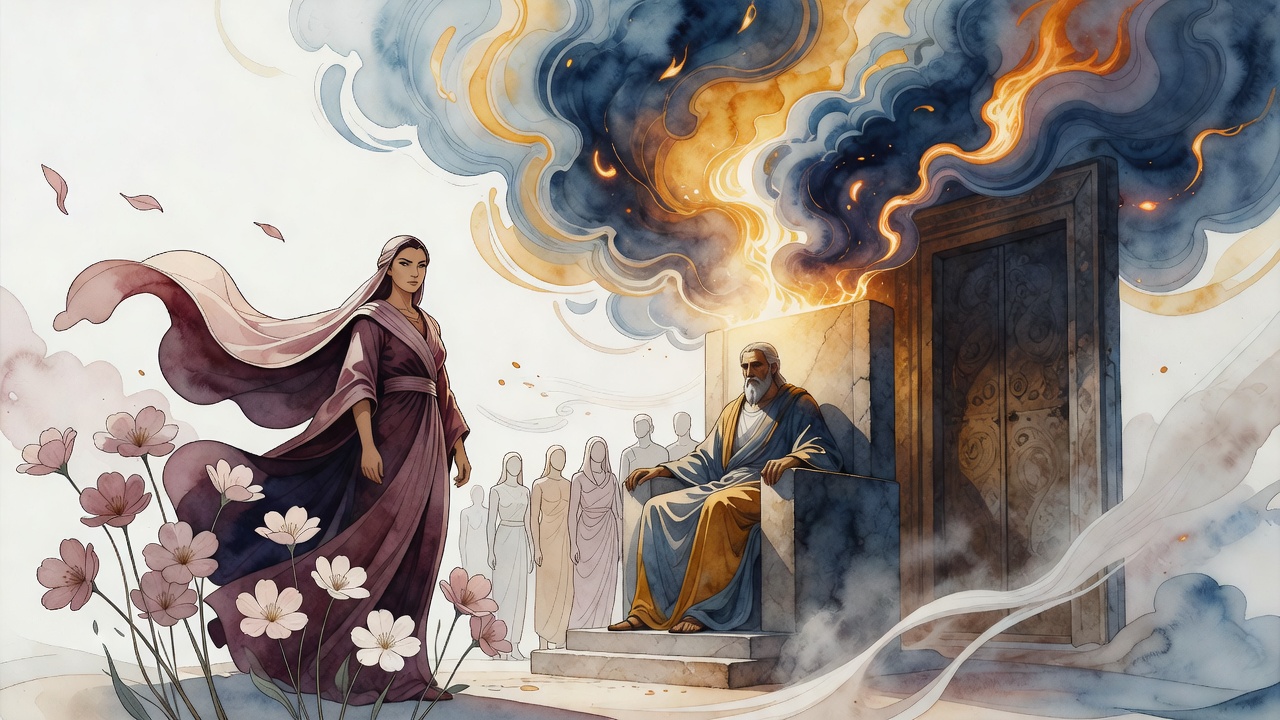
The Queen of Sheba came to find where Solomon's wisdom failed. She brought a gender test, a flower test, and finally a door that would not open.
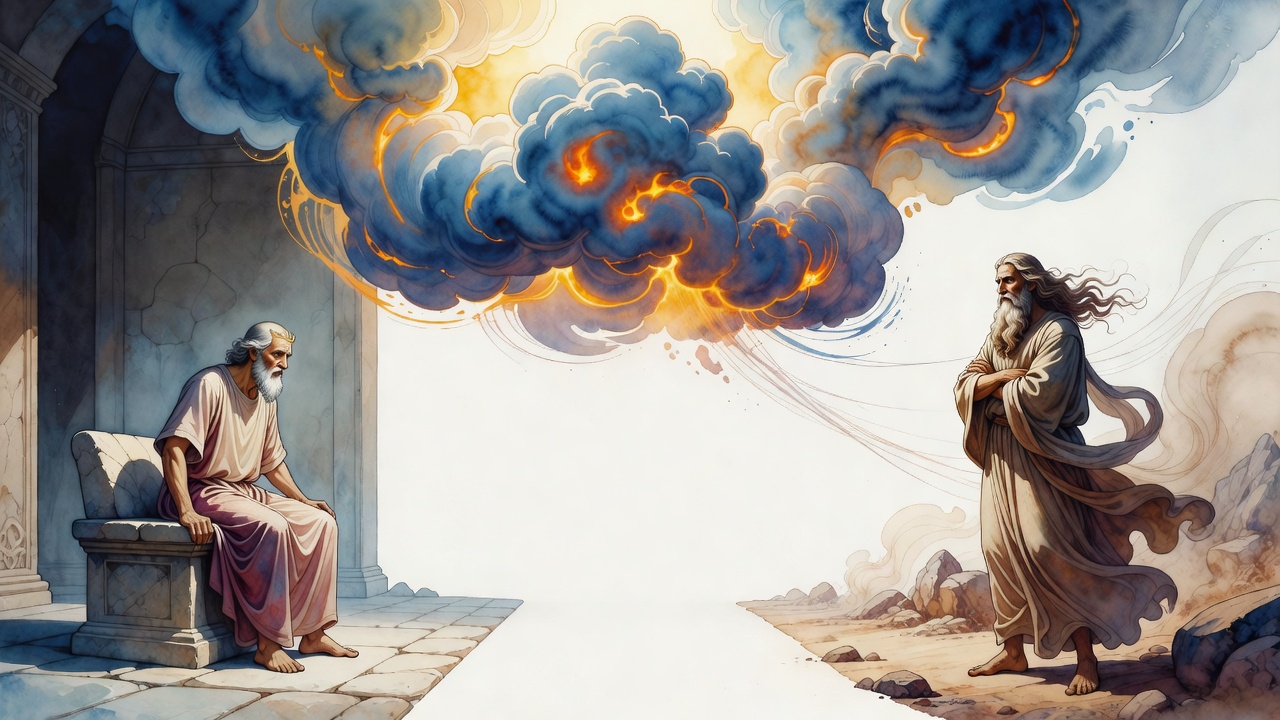
Hezekiah had stripped gold from the Temple for Assyria. Now his own skin peeled, and still Isaiah would not walk to the bed.
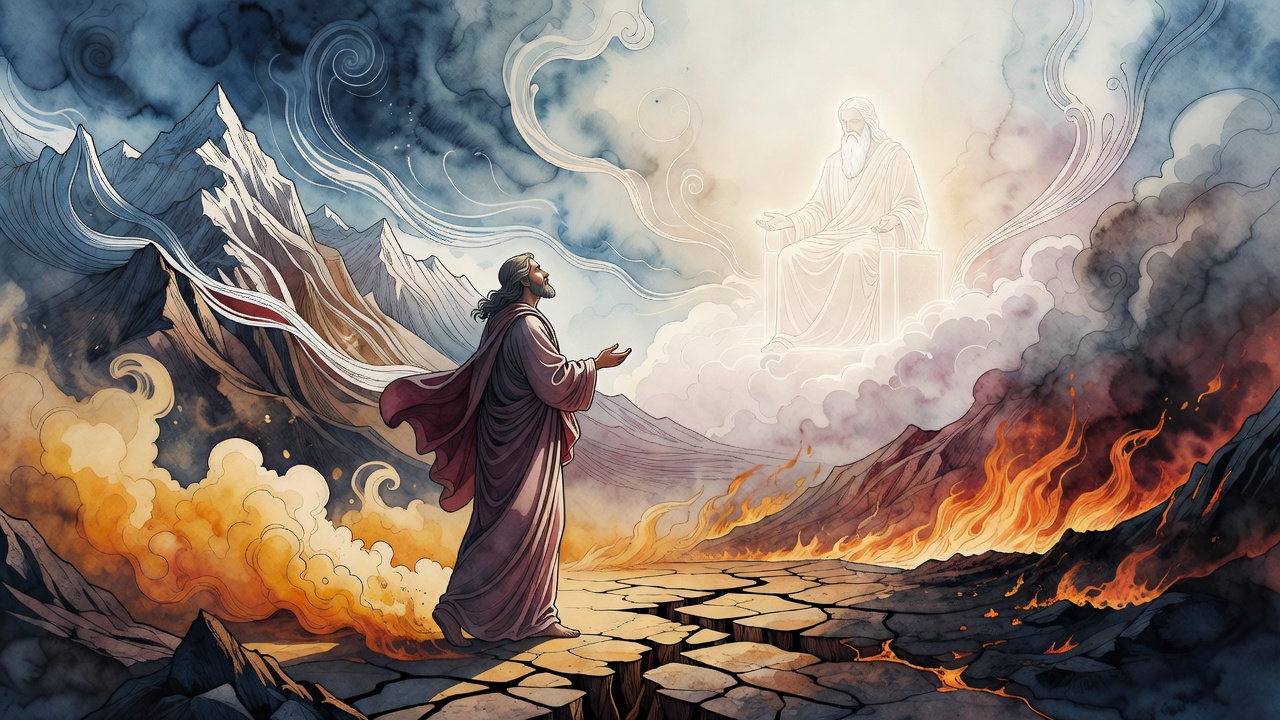
Wind split the mountains. Earthquake shook the ground. Fire swept through. In none of these was God present. Then came fine silence.
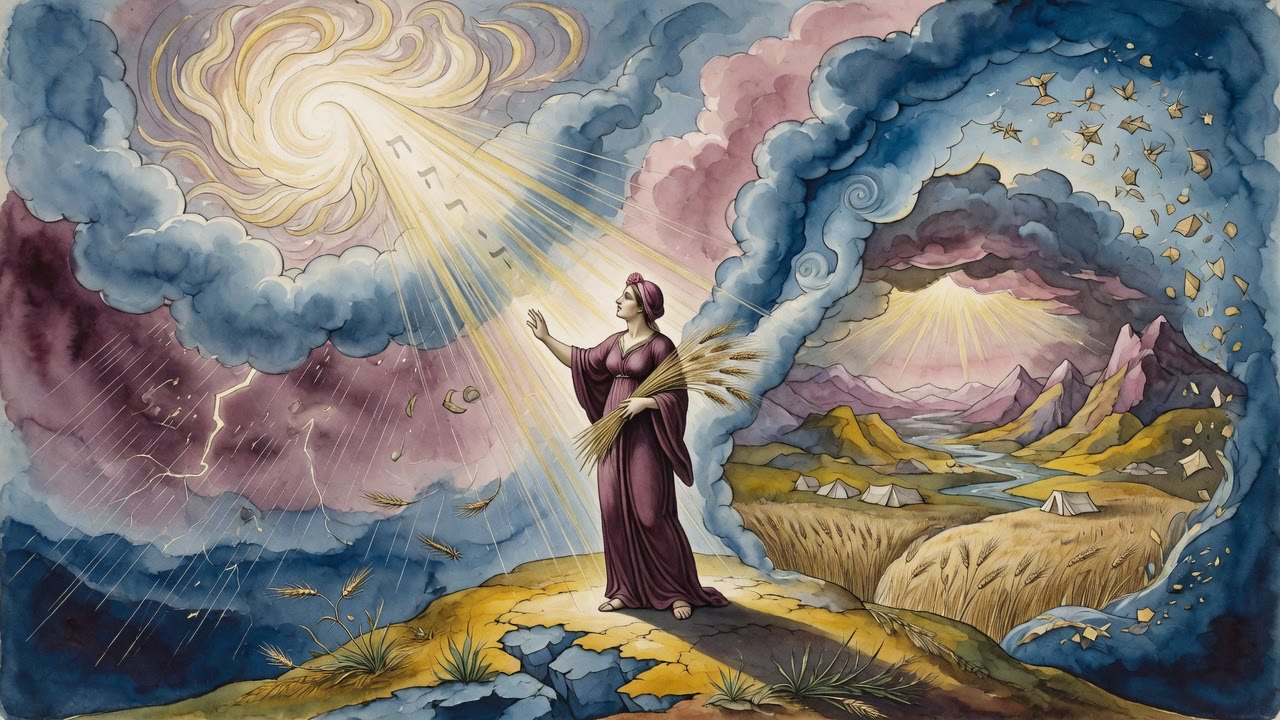
Ruth bowed in Boaz's field and asked why he had shown her kindness. The Tikkunei Zohar saw the Shekhinah, the Divine Presence, in her posture.
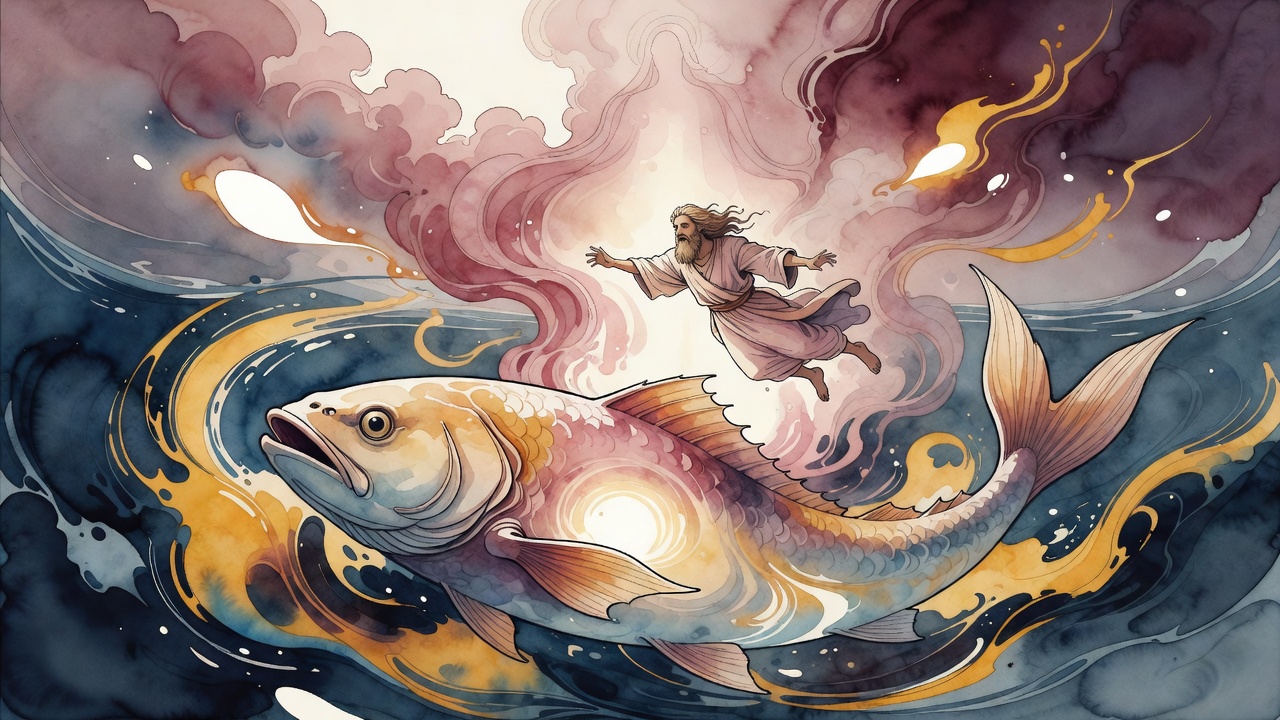
Jonah flees his mission and is swallowed by a fish the Tikkunei Zohar names as the Shekhinah, the Divine Presence, already waiting below.
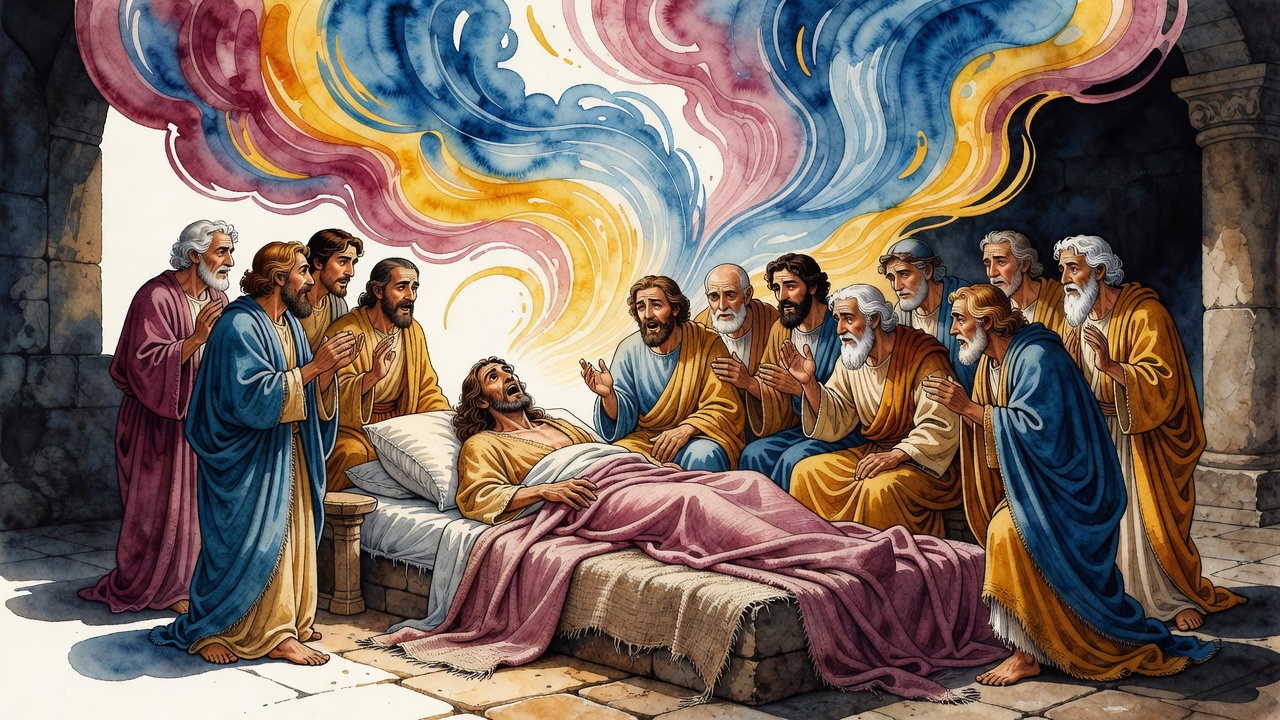
Twelve wet-haired sons waited for a date. Jacob opened his mouth, and the Presence took the year away before a number could land.
