Korah's Sons Were Chosen Into the Courts Korah Tried to Seize
The earth opened under Korah while the censer was still in his hand. His three sons could not speak. A pillar rose under them in the fire.
Table of Contents
Korah came toward the altar with two hundred and fifty censers smoking in other men's hands. Dathan and Abiram stood with him. The assembly watched to see whether the challenge would hold.
 Click for full size
"The whole congregation is holy," Korah told Moses. "God dwells among all of them. You have invented your own authority."
He wanted the courts now. He wanted to dwell first and be chosen later, if at all. He started at the door and meant to force it from the wrong side.
The Ground Opened
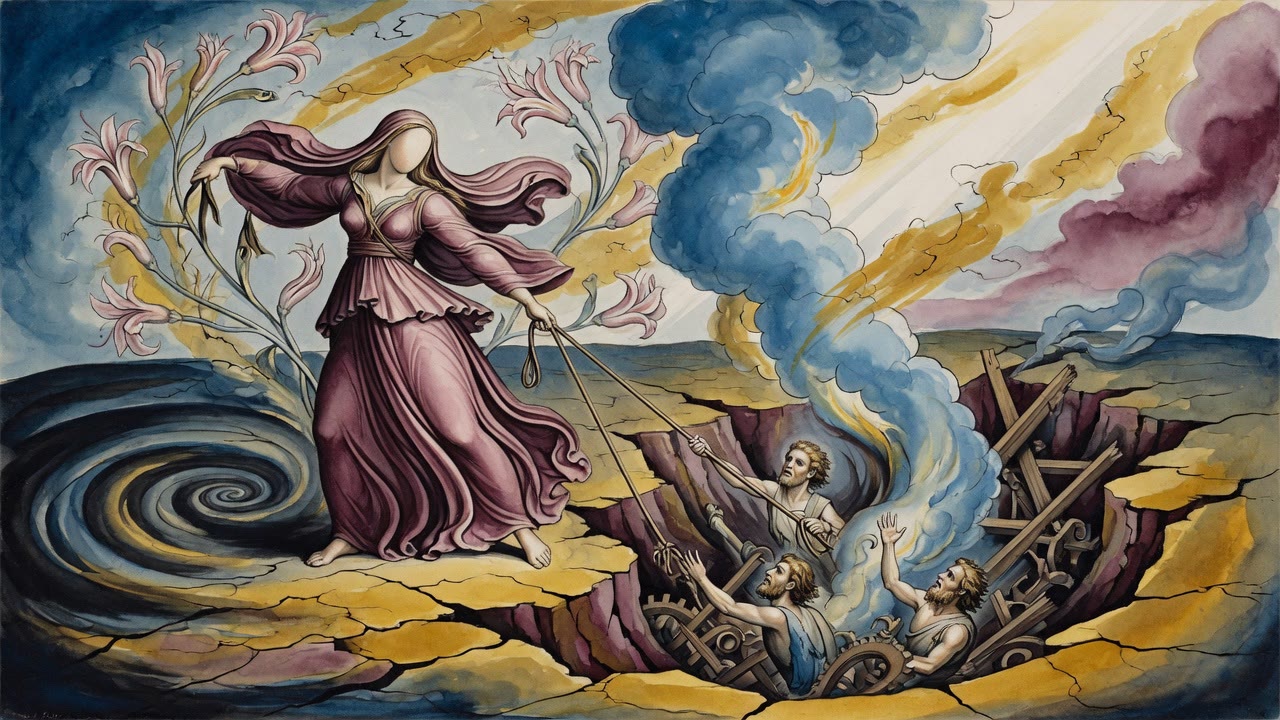
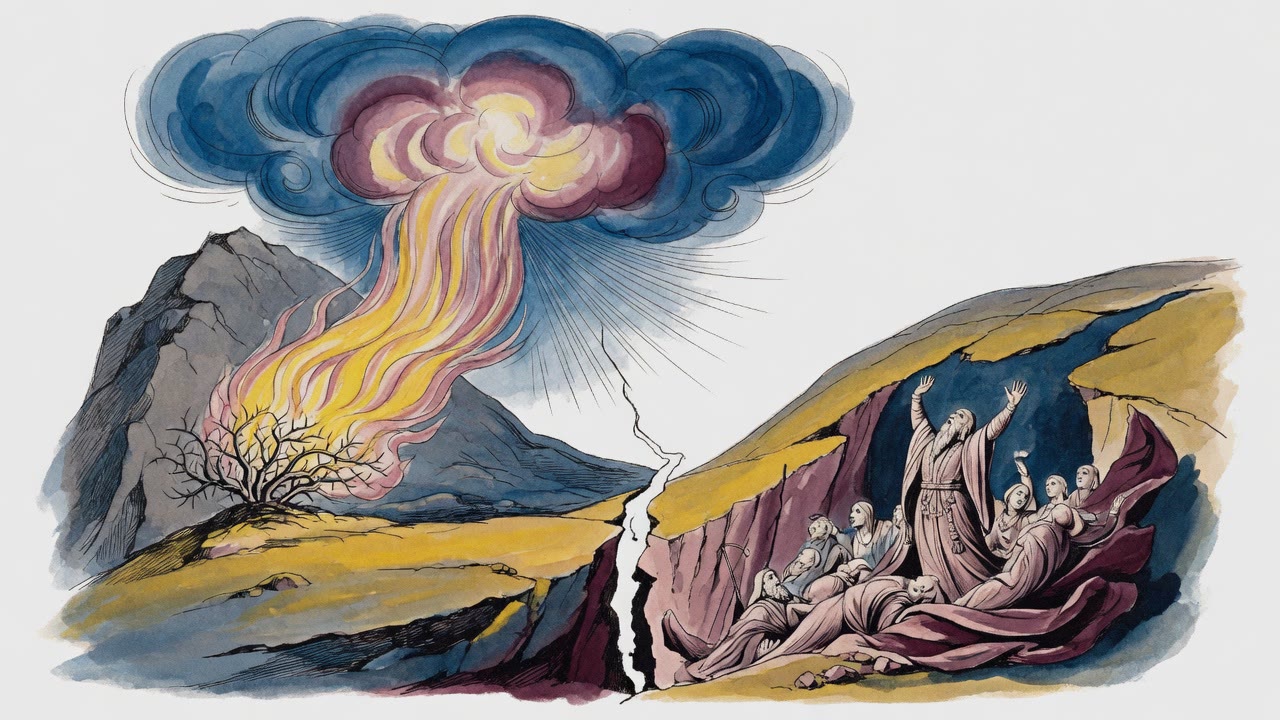
The earth yawned. Korah's company went down with their tents and their argument. Fire burned in a ring. Below them Gehinnom (גיהנם), the fiery place of punishment after death, opened its mouth.
Korah's three sons stood on the lip of that mouth and cried, "Help us, Moses!"
The Shekhinah (שכינה), God's presence in the world, answered that if these men repented they could be saved. Repentance was what was wanted. Nothing else.
They determined, all three at once, to turn. They could not open their mouths. Round about them the fire burned, and below them the pit gaped. The turning had to happen in the heart, because the lips were already closed by heat.
The Pillar in the Fire
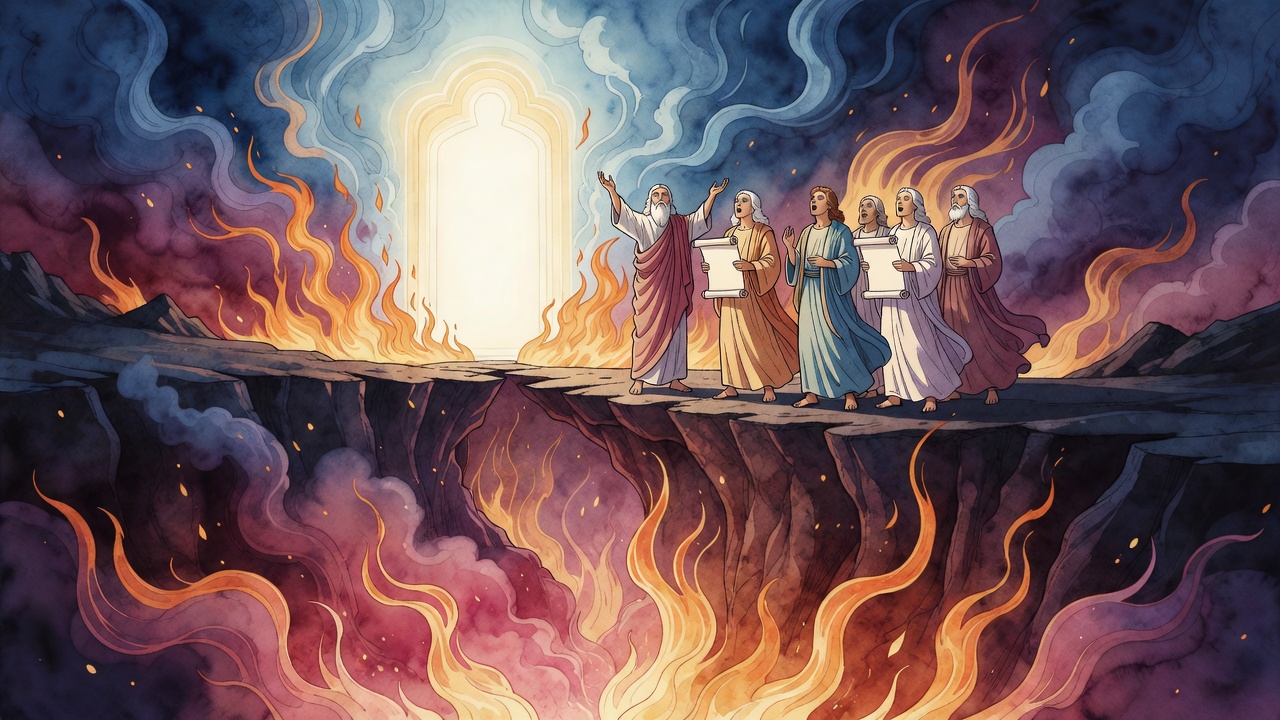
God was satisfied with the thought they could not speak. In the sight of all Israel a pillar rose in Gehinnom, and they seated themselves on it.
There they sat and sang. The songs were sweeter than mortal ear had heard, so that Moses and all Israel hearkened. They sang of courts they had not stormed. "How lovely is Your dwelling place." "My soul longs and faints for the courts of the Lord." "A day in Your courts is better than a thousand elsewhere."
They still carried their father's name. They did not erase it. They sang from a ledge their father had opened, and the singing was the opposite of his argument. He had claimed the courts. They asked to be brought near.
God gave them prophecy in that singing. They announced a day when the wicked would be shaken out of the earth, and the pious would cling to the Throne of Glory and find protection under the wings of the Shekhinah. Fear not, they sang, from a pillar in the fire.
They Spoke With Their Hearts
They had not had time to speak with their lips. The fire had stolen the breath that argument requires. So they spoke with their hearts, the way a man handed a blank parchment on his way to a platform might hand it back and say he had no time to write, and still be understood.
Korah had an argument. The sons had a turning. The argument went underground with Korah. The turning was heard.
They did not break in. They were brought in, after a suspension the heat did not minimize. The ledge was real. The sounds below were audible. They sat with their father's catastrophe visible under their feet and waited to be chosen, having no other move, and no brief to make on their own behalf except the turn that had already happened before they could finish a sentence.
Blessed is the one You choose and bring near, that he may dwell in Your courts (Psalm 65:5). Chosen first. Then brought near. Then permitted to dwell. Korah had reversed that order and paid for the reversal. His sons were walked through it in the right direction, still named sons of Korah in the psalm headings, still carrying the man who sank.
Brought Near the Courts
The courts Korah had tried to seize were the courts his sons were later allowed to enter. Not as a prize for better politics. As a gift from the other side of the door. One day in those courts, they had sung, is better than a thousand outside them. They knew the price of the outside. They had sat in it, singing, while the earth closed over everything else.
Nearness did not require a clean genealogy. It required that the choosing come from the right direction: not seized, not forced, not performed for an audience. Three hearts moved before three mouths could. That was enough.
They became, in the old telling, like lilies that opened after a dark planting. Prophets. Singers. Men who could say, when they were free, "My deeds are for the king," because in the fire they had not had time to say it aloud.
Smoke from Two Cracks
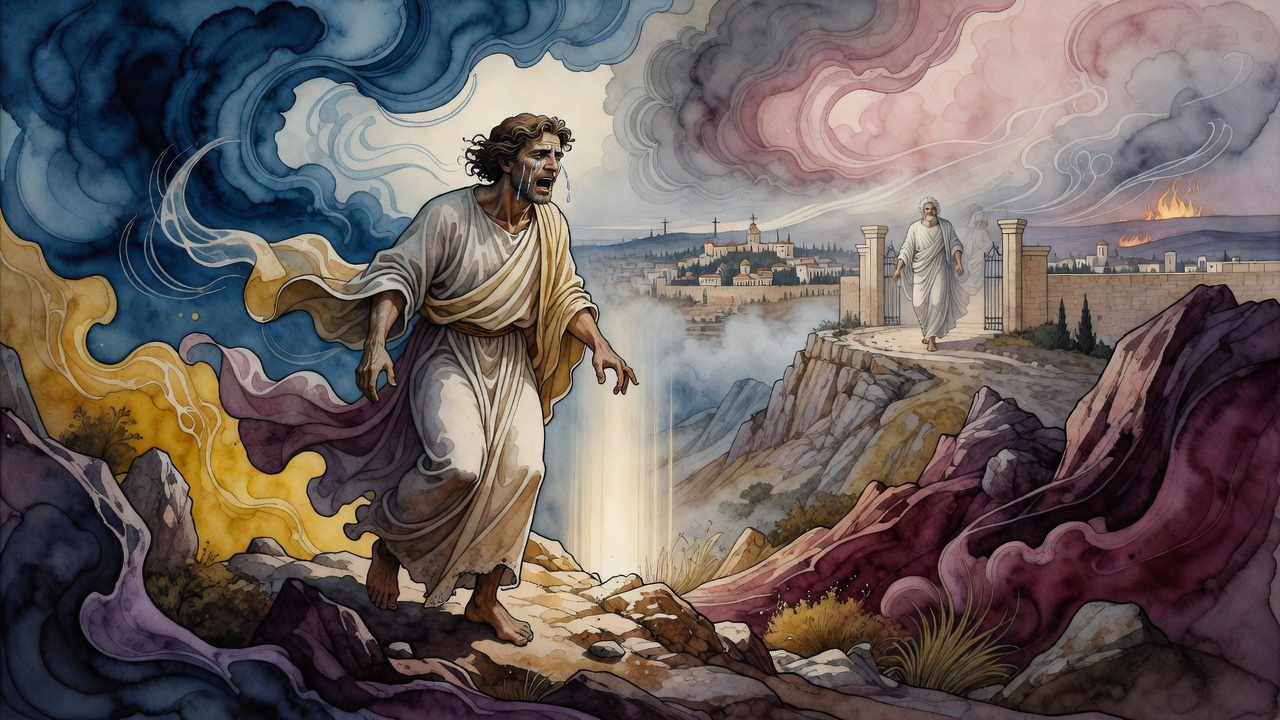
Long after, a desert merchant led Rabbah bar bar Chana to the place where the children of Korah were swallowed. Two crevices in the ground. Smoke issued from them.
Rabbah wet a piece of wool, set it on the tip of his spear, and lowered it into the crack. When he pulled it out, the wool was singed.
"Listen," the merchant said. "What do you hear?"
From below, the swallowed ones were crying, "Moses and his Torah are true, and we are liars."
The merchant told him the rest. Each thirtieth day of the month, Gehinnom turns them over here as flesh is turned over in a pot, and they say the same sentence again. The earth closed. The argument did not disappear. Once a month the underworld itself becomes a courtroom, and the rebels repeat the verdict they denied in life.
Rabbah stood in the desert with singed wool on a spear and a true sentence rising with the smoke. Korah's sons had sung toward the courts from a pillar. The ones still turned in the pot had only the confession left. Same family. Two ends of the same opening in the ground.
← All myths