Translation of the source text.OYW · CC0
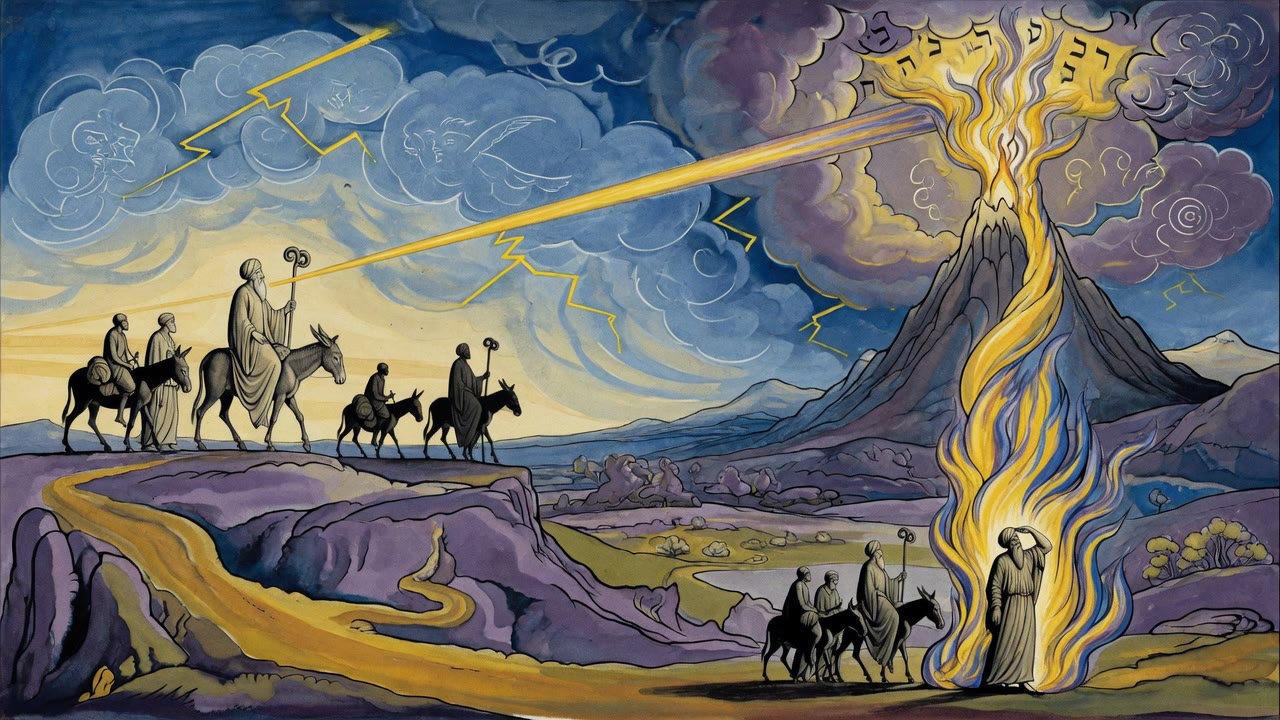
"Sitting in the highest secrecy" - This refers to God, as it says in Kings 1:8 "Behold, will God dwell on earth? The heavens and the heavens of heavens cannot contain You." Rabbi Huna said in the name of Rabbi Idi, commenting on Psalm 92:11 "And You have exalted my horn like that of a wild ox": When David was a shepherd, he found the wild ox asleep, and he composed this psalm. This psalm is understood to refer to the Temple that Solomon built, and it was Moses who spoke of the Holy of Holies being twenty cubits by twenty cubits, while the one he built was ten cubits by ten cubits. When did they say this? When Moses saw all the work that had been done, as it says in Exodus 39:43 "And Moses saw all the work, and behold, they had done it as the Lord had commanded, so had they done it; and Moses blessed them." What did he bless them with? He said, "May the Divine Presence rest on the work of your hands." And they said (Psalm 90:17) "And may the graciousness of the Lord our God be upon us, and the work of our hands may He establish upon us; yea, the work of our hands, may He establish it." Even though it is not explicitly written in the Torah, it is in the Writings, as it says in Psalms 90:16 "Let Your work appear to Your servants, and Your majesty upon their children." Moses began by saying, "Sitting in the highest secrecy, in the shadow of the Almighty, he shall lodge." Rabbi Judah, son of Rabbi Simon, said that Moses learned three things from the mouth of God and was stunned. When God said to him (Exodus 30:12) "When you take the census of the children of Israel," Moses was shocked and said (Proverbs 13:8) "A man's ransom is his life." Who can deny his own soul? Rabbi Meir said that God showed Moses a fiery coin-like object and told him in Exodus 30:13 that this is what he should give as an offering. Similarly, when God commanded Moses in Numbers 28:2 to instruct the Israelites to offer bread, Moses questioned how they could provide enough sheep and offerings. God replied, "I do not seek as much as you think. Just offer one lamb each morning." When God commanded Moses in Exodus 25:8 to build a sanctuary, Moses asked who could construct a sanctuary that would house the Divine Presence. God responded in 1 Kings 8:27 that even the heavens and the highest heavens could not contain Him. God told Moses that when He asks for the whole world, it does not honor Him, but when He asks for a little, it honors Him greatly. God did not ask for much from Moses; just 10 cubits to the north, south, and west. God is the Supreme Being who sees without being seen. In the shade that Bezalel made, the Divine complained. Moses would say the song of distress, "Sitting in the highest secret place."
I say to the Lord, "You are my refuge and fortress. In you I trust." My refuge is in your wings, and my fortress is in the castle of my Lord. I trust in Him, for He did not say to me, "Build a sanctuary for me, and I will dwell there." If He had, I would have trusted in it. In His name, I pursue and cast down the wicked to Gehenna. The Holy Spirit responds and tells me that He will save me from the trap. The hunter's fortress is in the wilderness, where he brings life to the world. With His wings, He covers you. Rabbi Shimon ben Lakish said that he rewards anyone who deals with the truth of the Torah. The truth is the armor and the shield. Rabbi Shimon Bar Yochai said that the instrument of truth in the Torah is the vessel. The vessel that God gave to Israel at Sinai has it written on it, "Do not fear the terror by night." Rabbi Berachiah said that some people are like a bird that flies and shoots like an arrow. Who will save you from the trap? The messenger of the nest will save you from the snare, as it is written, "Will a trap be set for a bird on the ground, when it is in a snare?" And it is written, "If you come across a bird's nest in any tree or on the ground, with young ones or eggs, and the mother bird is sitting on the young or on the eggs, do not take the mother bird with the young."
"He who walks in the dark will be punished. The Rabbis say it is a demon. Rabbi Yehuda bar Rabbi Yossi says it is a term for a robber. Rabbi Huna, in the name of Rabbi Yossi, says that bitter gall is made like layers of hair, with eyes in each layer, and with one eye he sees, and his eye is in his heart, and he does not rule over neither the shade nor the sun, but between the sun and the shade, and he rolls like a ball and rules from four hours until nine, and rules from the seventeenth of Tamuz until the ninth of Av, and anyone who sees him falls on his face. Hezekiah saw him and fell on his face. Rabbi Pinchas bar Chama tells of an incident where someone saw him and fell on his face and was afflicted. Rabbi Shila bar Rabbi Yitzchak entrusted the books of law to the Teliya from the fourth hour to the ninth. Rabbi Yochanan entrusted the books of law so that they would not be lent out from the seventeenth of Tamuz until the ninth of Av. Beware of the demon Ishud Tzohorayim during midday."
"Let a thousand fall from your side." Rabbi Yitzhak said, "The hand that controls one mitzvah, namely the tefillin of the arm, has been given a thousand angels. But the right hand, which controls many mitzvot, has been given myriad angels. Rabbi Chanina bar Abba said that it does not say 'given,' but 'fallen,' because if a thousand destructive forces come before the left hand, they fall before it, and if a myriad come before the right, they fall before it, because it controls many mitzvot. In the custom of the world, if a person is given a thousand people to feed, they are entrusted to him for his benefit and protection. But God entrusted this person with a thousand angels on his left and myriad on his right to protect him, and yet he is not supported, and nevertheless, he will not approach you. Only in Your eyes will he look, for You, God, are his refuge. Rabbi Chanina said, "My soul is from the blue [sky] and my eyes from the green [grass]. You gave the Torah to the lower world and the upper world rejoices in Your dwelling place. No harm will come near you. Rabbi Yochanan said, "Before the Mishkan was established, the destructive forces would harm people. When the Mishkan was established, no harm came near your tent. This is the Mishkan. Another explanation is that Reish Lakish said, "From whom do we learn from the book of Psalms? We learn from its location (in Bamidbar 6:24), 'May God bless you and keep you.' He will keep you from all evil. When? On the day that the Mishkan was established." (Reish Lakish said that it is in the book of Psalms, 'May God bless you from the destructive forces.' When? On the day that Moses finished building the Mishkan.)"...
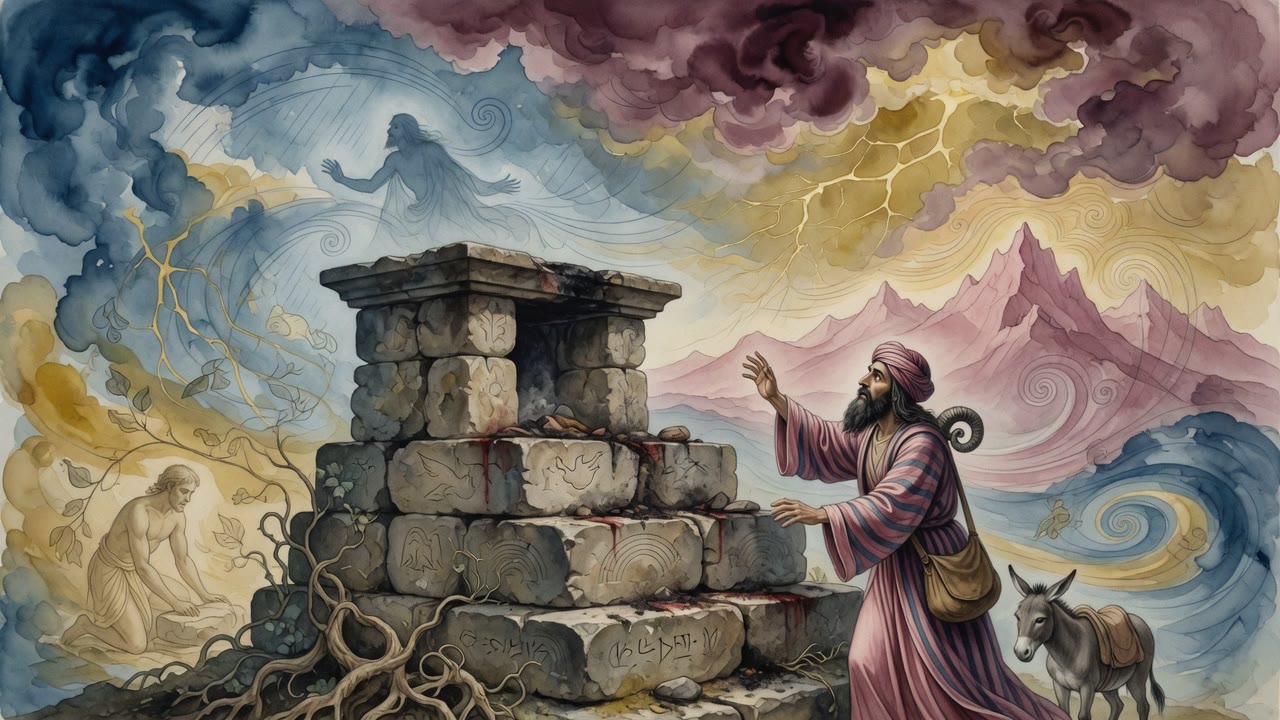
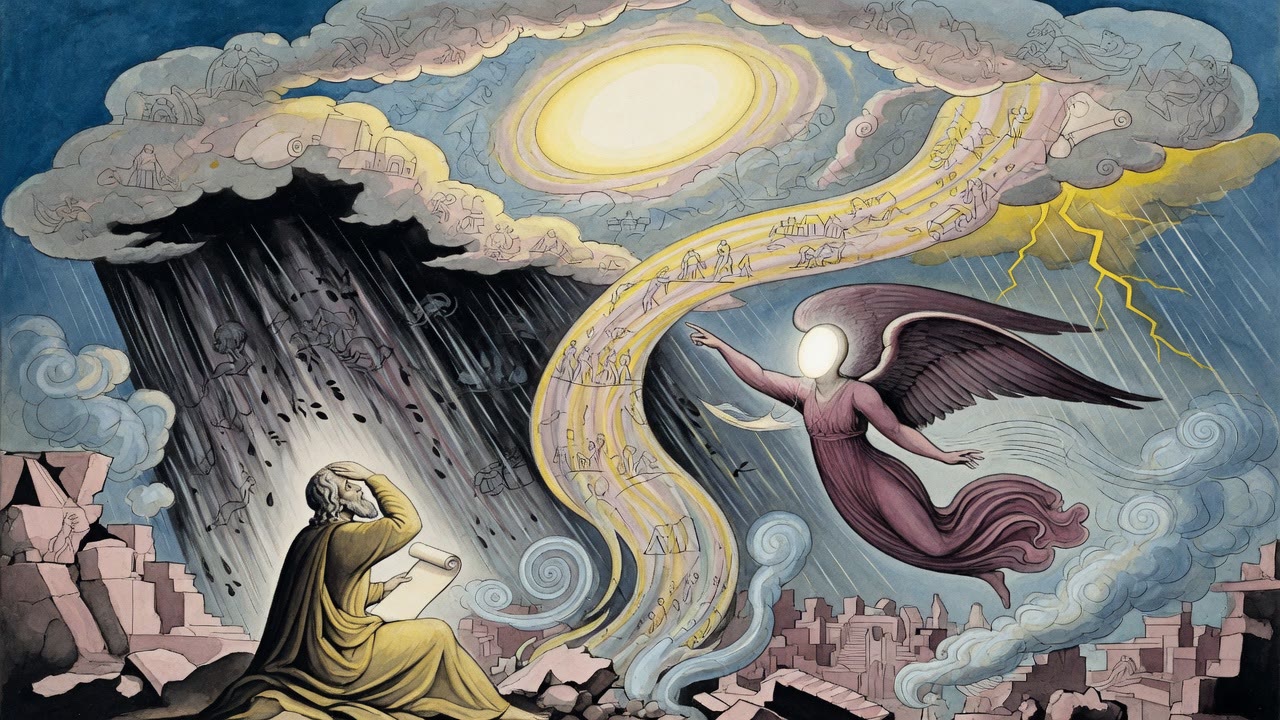
For his angels will command you. Rabbi Judah says, "Who is greater, the one who dismisses or the one who is dismissed?" You should say that the one who dismisses is greater than the one who is dismissed. Therefore, Jacob our father was greater than the angel. What did the angel say to him (Genesis 32:27)? "Let me go, for the dawn is breaking." Jacob therefore dismissed the angel. Rabbi Yose says, "Who is greater, the carrier or the one who is carried?" You should say that the carrier is greater. As it is written (Isaiah 46:4), "Even to your old age and gray hairs I am he, I am he who will sustain you. I have made you and I will carry you; I will sustain you and I will rescue you." Rabbi Judah says, "When Jacob was considering and saying, 'I will establish twelve tribes,' what did he do? He took twelve stones and placed them under his head and said, 'If they all become one, I know that I will establish twelve tribes.' And his intention was to glorify his Creator, as it is said (Genesis 28:18), 'He took the stone.' This teaches that they all became one. Rabbi Nehemiah says, 'There were three stones.' And he said, 'If the Holy One, blessed be He, makes His name one upon me, as He made His name one upon my forefathers, they will all become one.' He stood and found them all to be one, as it is said (Genesis 29:2), 'And he took the stone.' This teaches that they all became one. The Rabbis say, 'There were two stones.' Jacob woke up and found them to be one, and he was filled with great fear, and he said, 'Surely the Lord is in this place, and I did not know it!' (Genesis 28:16). From here they said, 'Whoever prays in Jerusalem is as one who prays before the throne of glory, for the gate of heaven is open there,' as it is said (Genesis 28:17), 'This is the gate of heaven.' Jacob went back to gather the stones and found them to be one. He took the stone and placed it as a pillar and poured oil on it, as it is said (Genesis 28:18), 'And he took the stone and placed it as a pillar and poured oil on it.' What did the Holy One, blessed be He, do? He took his right leg and plunged it into the depths of the abyss, and made it a foundation for the earth, like a man who puts a stake in the ground. Therefore it is called the foundation stone, for there the world was founded from the beginning. And he made a vow and fulfilled it, and then lifted his feet and rested them by the well, which was moving before him. And when he raised his eyes, he came to Haran, as it is said (Genesis 28:10): "And Jacob left Beer-sheba and went towards Haran." And concerning him, the verse says (Proverbs 4:12): "When you walk, your step shall not be constrained, and if you run, you shall not stumble." Rabbi Chanina said in the name of Rabbi Abahu in the name of Rabbi Yochanan: The angels supported him, as it is said (Psalm 91:12): "On their hands they shall bear you up." And the steps of Jacob were not hindered, and his strength did not falter, and he alone rolled the stone from the mouth of the well. And the well rose up and overflowed with water, and the shepherds saw and marveled because they were all unable to roll the stone, but he alone rolled it, as it is said (Genesis 29:10): "And Jacob approached (alone) and rolled the stone from the well's mouth."
"Upon the snail and the clam you shall tread", as Noah who was in the Ark for twelve months would walk upon snakes and they would not harm him, as it is said, 'Upon the snail and the clam you shall tread, for in Me there is desire.' Rabbi Yehoshua ben Levi said in the name of Rabbi Pinchas ben Yair, "Why do the people of Israel pray in this world and not receive an answer? Because they do not know the explicit Name. But in the future, the Holy One, blessed be He, will inform them, as it is said, 'Therefore, My people shall know My Name.' At that hour they will pray and be answered, as it is said, 'He will call upon Me and I will answer him.'" Rabbi Yitzhak said in the name of Rabbi Acha, "If they seek Me at the time of trouble, I will answer them, as it is said, 'He will call upon Me and I will answer him.'" Asaph said to Israel, "Whoever saves you, honor him in prayer, for he saves you from distress and gives you honor ('he will bring you out and bring you honor'). Rescue him and honor him." "This is one of the difficult verses regarding the salvation of Israel, for their salvation is the salvation of the Holy One, blessed be He."

 Click for full size