4,108 texts · Page 1 of 86
We read the first chapter of Genesis and it feels so…orderly. But there are other stories, wilder tales, that offer a glimpse into creation’s messy, mysterious birth. Let's journey...
Jewish tradition has some pretty incredible ideas about that. Let's peek inside God's house, shall we? According to some accounts, God didn't just create the universe, He built a p...
It offers a rather…unique take on the second day of Creation. We all know the story: God creates the rakia, the firmament, on the second day. He separates the waters above from the...
One figure looms large in this discussion: Satanael. In the ancient text of 2 Enoch, this was the name of the highest angel, and the story surrounding him is… complicated, especial...
Jewish tradition offers some pretty fascinating, and sometimes unsettling, answers. Take the story of Satan's fall from grace. It's not just a simple tale of rebellion; it's a comp...
Let’s talk about Anafiel. Now, Anafiel isn't exactly a household name, even in circles that discuss angels. But, according to some ancient texts, this angel is a big deal. Tree of ...
We often think of Adam as simply the first man, made of dust. But some ancient traditions paint a far more…celestial picture. A picture of Adam as an angel. Now, before you picture...
We often think of him in the Garden of Eden, or perhaps being expelled from it. But Jewish tradition holds some truly fascinating ideas about his ultimate fate. One such idea, foun...
We often picture God directly shaping him from dust, but some fascinating traditions tell a slightly different story, involving heavenly helpers. The story goes that when the time ...
Jewish tradition certainly sees more. There's a place, called the "Place of the Stars." And it’s far more wondrous than any observatory. Imagine a realm where the stars aren't just...
What we see here is just a reflection of something far grander: the rainbow of the Shekhinah (the Divine Presence). The Shekhinah, often translated as "Divine Presence," is the asp...
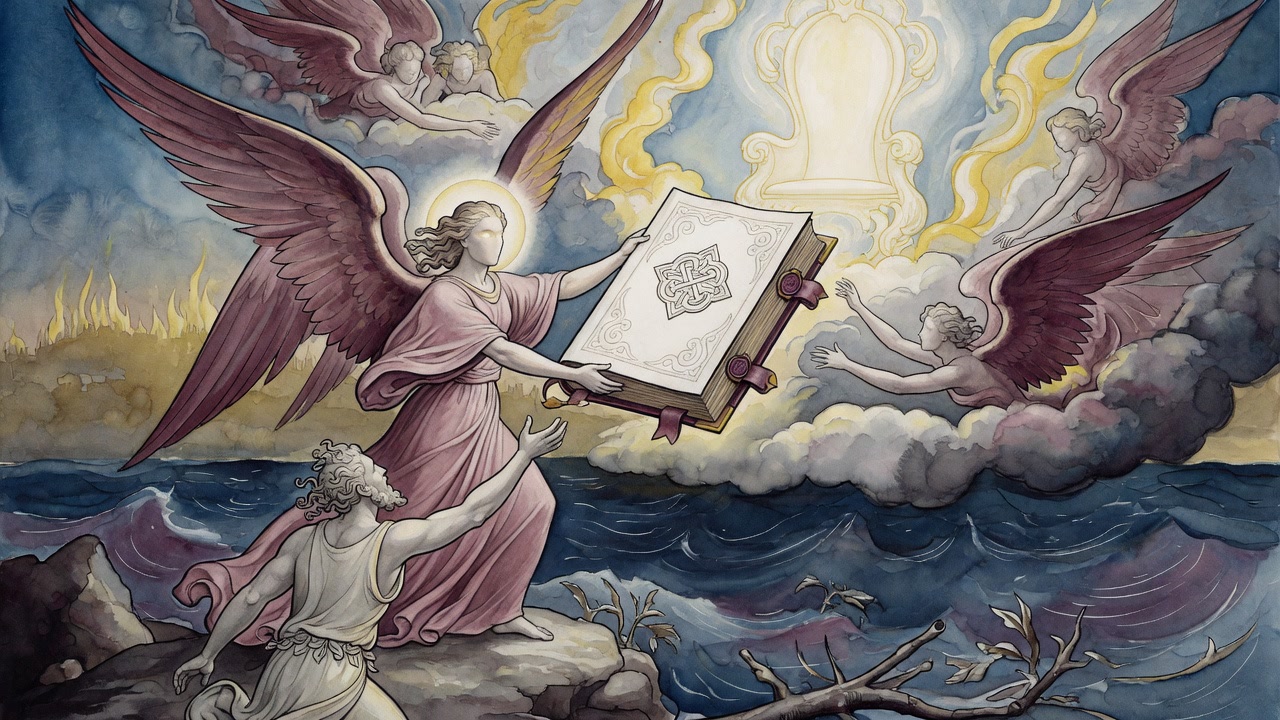
He’s not exactly a household name, even in well-versed Jewish circles, but this heavenly prince has a pretty important job. He's the Keeper of the Book of Records. Think of it as t...
We read, "the earth being unformed and void, with darkness over the surface of the deep" (Gen. 1:2). Pretty straightforward. But hold on. The Torah doesn't say God created the dark...
We know King Solomon, wise and powerful, but he was also, according to tradition, a master of summoning and controlling demons. The Testament of Solomon is practically a who's who ...
We often think of Mashiach – the Messiah – as a future figure, the one who will usher in an era of peace and redemption. But what about now? Where is he? What’s he doing? Jewish tr...
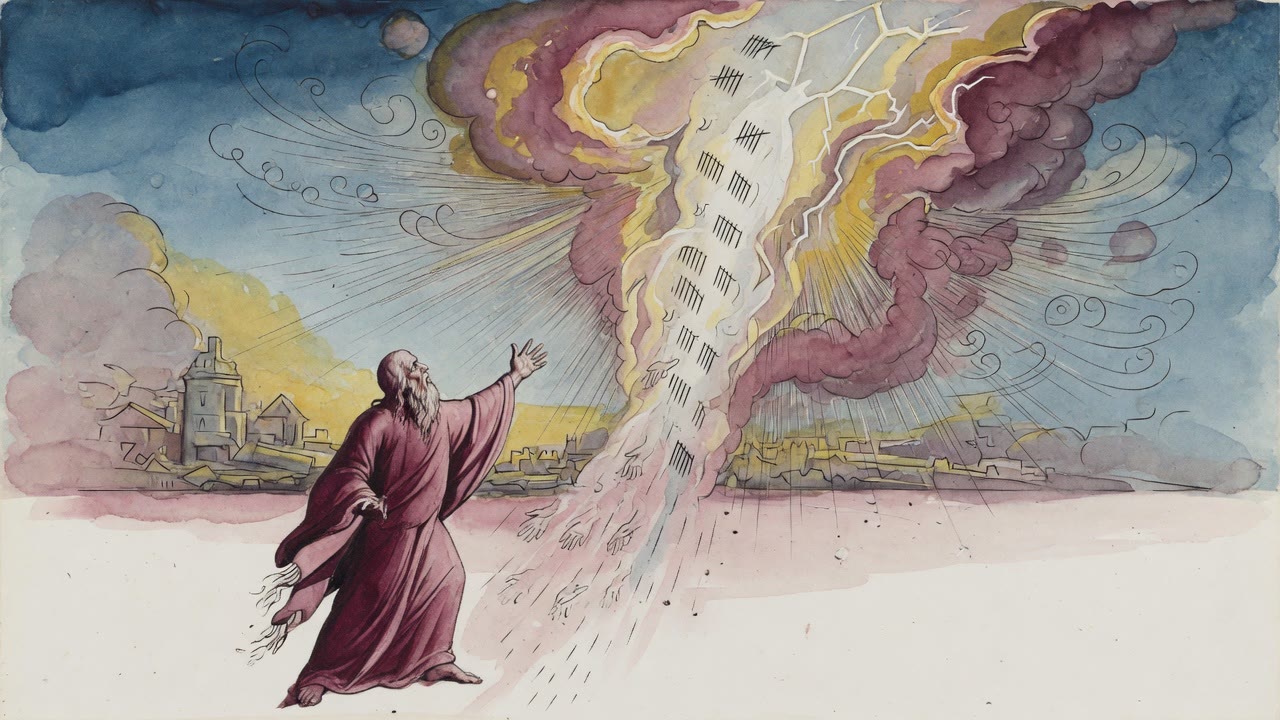
We often picture Moses on Mount Sinai, receiving the divine word directly from God. Forty days and forty nights of dictation. But what if I told you there's another story, a fascin...
In fact, the Sabbath isn't just a terrestrial observance; it's a celestial one, too. Imagine this: right after creating the Sabbath, God gathers all the angels – the angels of the ...
The land was barren. A terrible famine gripped the region, forcing Abraham and Sarah to seek refuge in Egypt. They first tried Hebron, but the hunger was everywhere. So, they journ...
I'm talking about the Akedah, the binding of Isaac. We all know the story: Abraham, tested to the absolute limit, raises his knife to sacrifice his son Isaac. It's a scene that chi...
Jewish tradition is rich with stories of dreams and visions, and the power they hold. One particularly striking tale, found in Tree of Souls by Howard Schwartz, tells of a dream th...
Was Jacob, the patriarch, just an ordinary man? Tradition whispers secrets, suggesting his story is far grander than we might imagine. Some even say his true name was Israel, and t...
The bite taken. The realization dawning. But what happened next? We often skip ahead to the consequences, the exile, the shame. But let's linger for a moment on God's arrival. Acco...
We don't often get to hear Adam's side of the story directly. But Jewish tradition, in its beautiful, layered way, offers us glimpses. One fascinating account, preserved in Howard ...
Can you imagine the fear, the uncertainty? There were no books, no doctors, no one to ask for advice. It was just her and Adam, facing the unknown. The text Penitence of Adam (20:3...
It involves fallen angels, forbidden knowledge, and a whole lot of trouble. This isn't just a story of two rogue angels, Shemhazai and Azazel. According to some accounts, like the ...
(Genesis 6:4) mentions the Nefilim. That word, Nefilim, generally understood to mean “giants.” But who were they, really? And where did they come from? The Torah just kind of drops...
"The Nefilim were in the earth in those days—and also afterward—when the sons of God went to the daughters of humans and had children by them. They were the heroes of old, men of r...
Jewish tradition has some pretty fascinating, and sometimes terrifying, answers. to the story of Azazel, a fallen angel whose lair is the source of some seriously dark magic. The s...
Jewish tradition has some pretty ideas about it. One vision, described in Tree of Souls, paints a picture so vivid, so intense, it’s hard to ignore. Imagine this: in the very gener...
Jewish tradition grapples with this very question, imagining a reality beyond our comprehension, a concept called the Olam Ha-Ba (עולם הבא), "The World to Come." It's not just abou...
It starts with something seemingly simple: "Unto all flesh he gave her according to his desire, and he will give her to his lovers." Now, who is this "her"? Interpretations vary, b...
It offers a perspective that might just change how you see everything. The very first verse sets the stage: "The fear of the Lord is the beginning of wisdom, and it increases peace...
Kingdoms rise and fall, fortunes change in the blink of an eye... It's enough to make you wonder what, if anything, lasts. Ben Sira, that wise sage whose words dance between poetry...
Ben Sira, also known as Ecclesiasticus, is a book of wisdom literature, a collection of ethical teachings and practical advice. It's not part of the Hebrew Bible as defined by rabb...
Ben Sira, that wise sage whose words dance between scripture and folklore, grapples with this very question. And what he offers us is both comforting and challenging. "According to...
Ben Sira, that ancient sage whose wisdom dances between the canonical and the apocryphal, wrestles with this very feeling in his writings. He captures that whisper of doubt that cr...
The Book of Ben Sira, also known as Sirach or the Wisdom of Ben Sira, wrestles with this very human impulse. It poses the question: If I sin in secret, who's to know? This ancient ...
This is one of the Jewish wisdom texts that, while not part of the Hebrew Bible canon, is still deeply influential. Ready? Here it is: “From a woman sin had its beginning, and beca...
That feeling isn't new. It's been with us for millennia. And it shines through in the ancient wisdom of Ben Sira. This passage from Ben Sira 51 isn't just about acquiring knowledge...
We all know the story: Moses goes up the mountain, gets the Ten Commandments, and comes back down. But what if there was more to the story? What if the Bible we know is just a glim...
That's the scene set for us right at the beginning of Jubilees. God commands Moses, "Write down for thyself all these words which I declare unto thee on this mountain, the first an...
Our story begins not just at the beginning of time, but with the very blueprint for it. We’re talking about the Book of Jubilees, a text that, while not part of the canonical Hebre...
The Book of Jubilees, a text that dances on the edge of the biblical canon, gives us a breathtakingly detailed account. It’s a story of creation, but also so much more. It’s a stor...
We tend to think of "nature" as this impersonal force, but Jewish tradition often sees things differently. It paints a picture of a vast, intricate cosmic bureaucracy, teeming with...
That’s where texts like the Book of Jubilees come in. It's a fascinating ancient Jewish work, considered scripture by some, that expands on the Genesis account. to its version of c...
We often gloss over those opening chapters of Genesis, but the details… they’re breathtaking. And what if I told you there's another ancient text that expands on that cosmic bluepr...
The Book of Jubilees, a fascinating text considered scripture in some traditions but not included in the Tanakh, gives us a glimpse into that cosmic schedule. It tells us that God ...
There's a whole world of fascinating detail in texts that didn't quite make it into the biblical canon. to one of them: the Book of Jubilees. Jubilees, sometimes called Lesser Gene...
Most people think the Jewish creation story is seven days long. The rabbis thought it was infinite - from 974 destroyed worlds before Adam to the Kabbalistic shattering of divine vessels.
Adam's first wife did not storm out of Paradise. She pronounced the Secret Name of God, lifted off the ground, and bargained with angels at the edge of the sea.
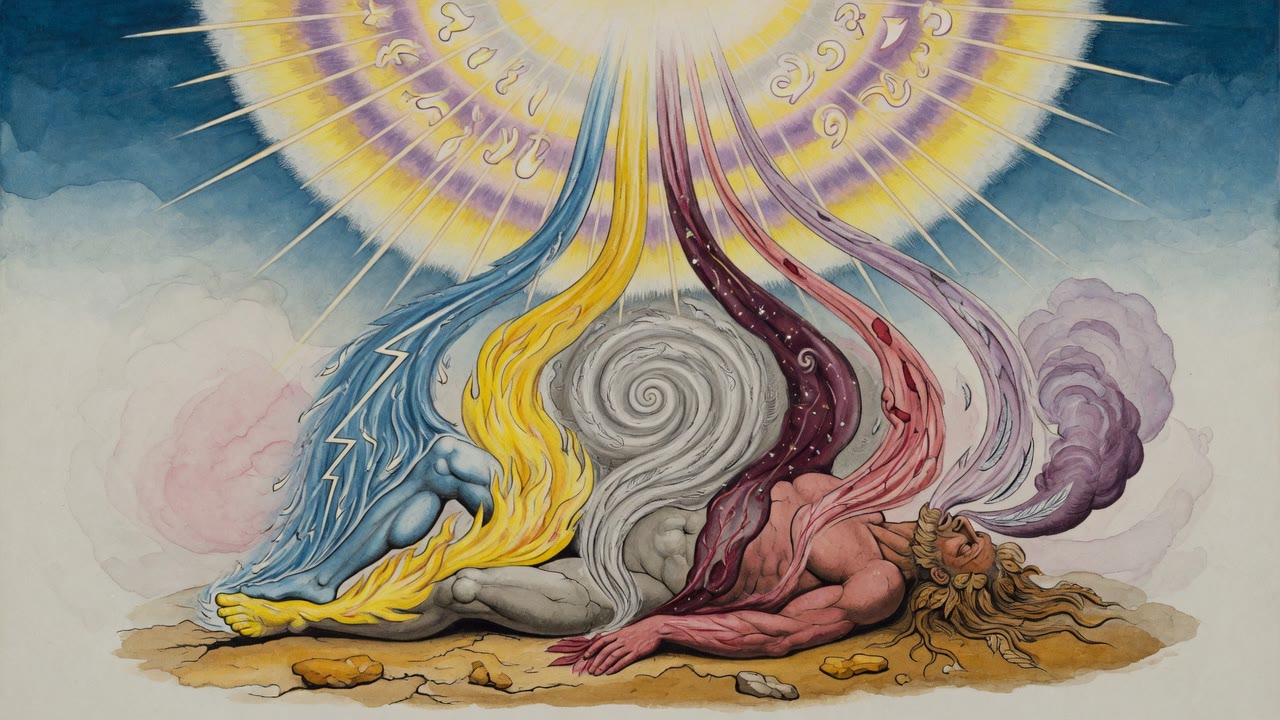
An ancient Jewish apocalypse says God did not form Adam from a single handful of clay. Each part of his body came from a different piece of creation.
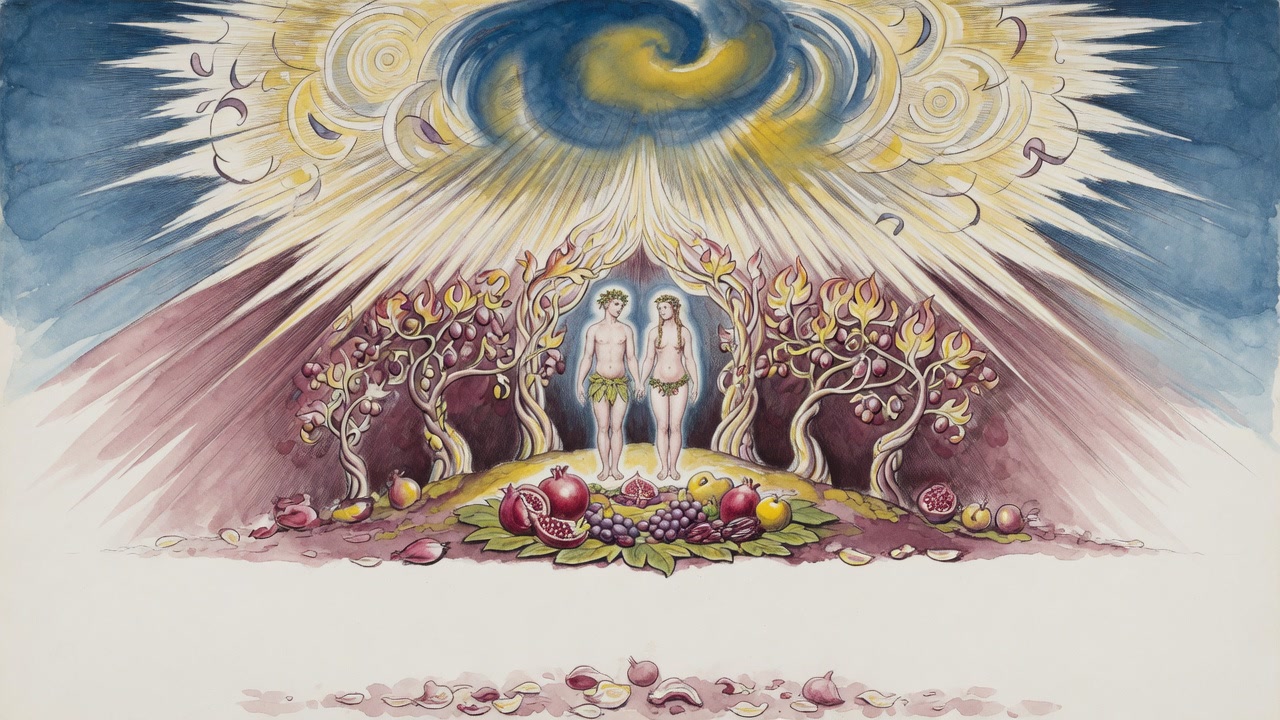
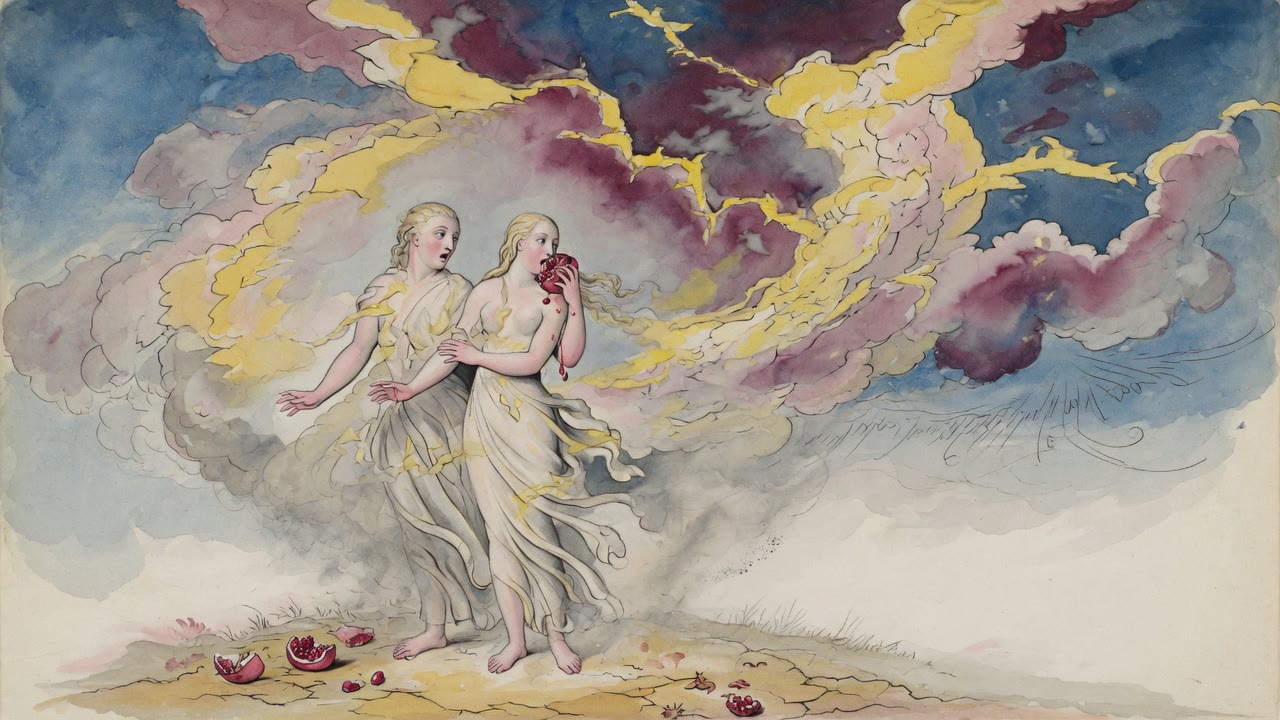
Before the first transgression, Adam and Eve were wrapped in luminous skin and a cloud of glory. Both vanished the instant they ate.
On the first Friday, the angels wanted Adam dead before sundown. The day of Shabbat walked into the throne room and argued for his life.
Jewish tradition says the ram caught in the thicket at the Akeidah was created at twilight on the sixth day of Creation — thousands of years before Abraham would need it.
Before God created humanity, the angels argued about whether it was a good idea. Mercy said yes. Truth said no. Peace said no.
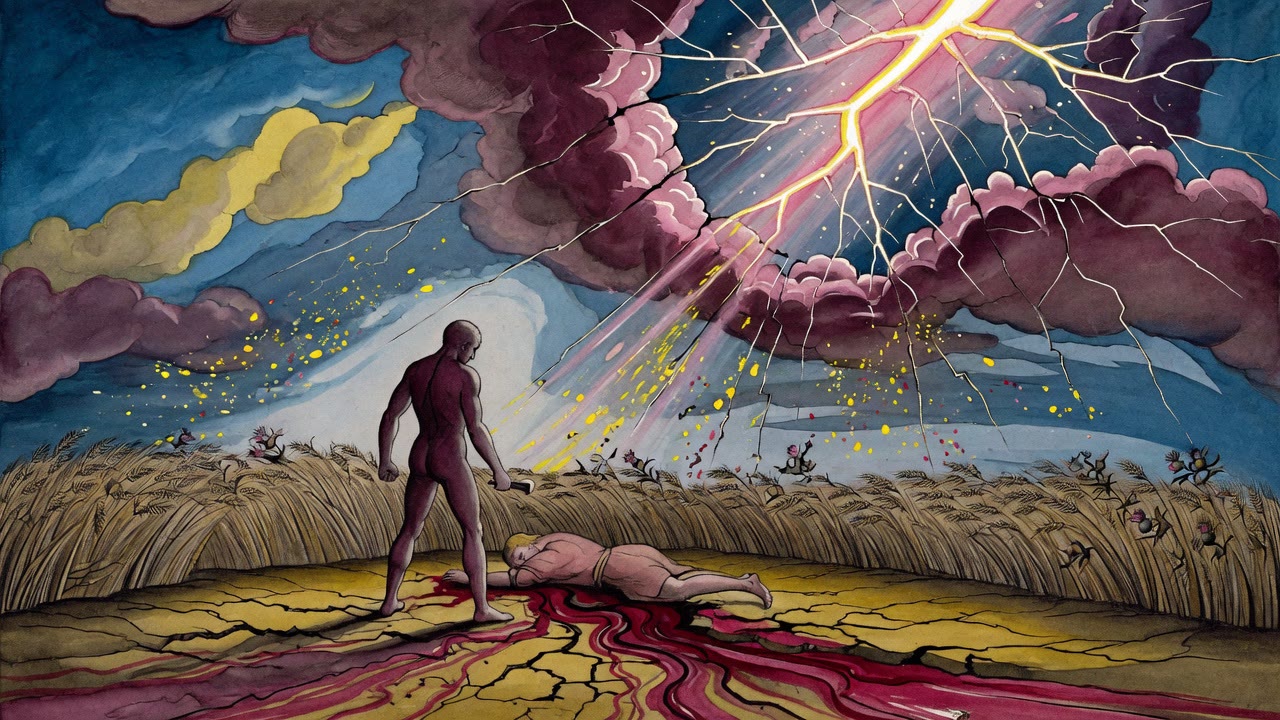
God marked Cain after the first murder, and most people assume it was a punishment or a stigma. The rabbis disagreed. They argued it was God's protection — placed on the world's first killer to prevent a cycle of violence that would have consumed humanity.
When Adam named every creature, he wasn't coming up with labels at random. According to the rabbis, he perceived the essential nature of each animal and declared a name that was its spiritual truth — a feat of mystical vision no human has matched since.
Most people think the first Shabbat was a quiet day of rest. The rabbis describe something else entirely. It was a wedding night in the Garden of Eden.
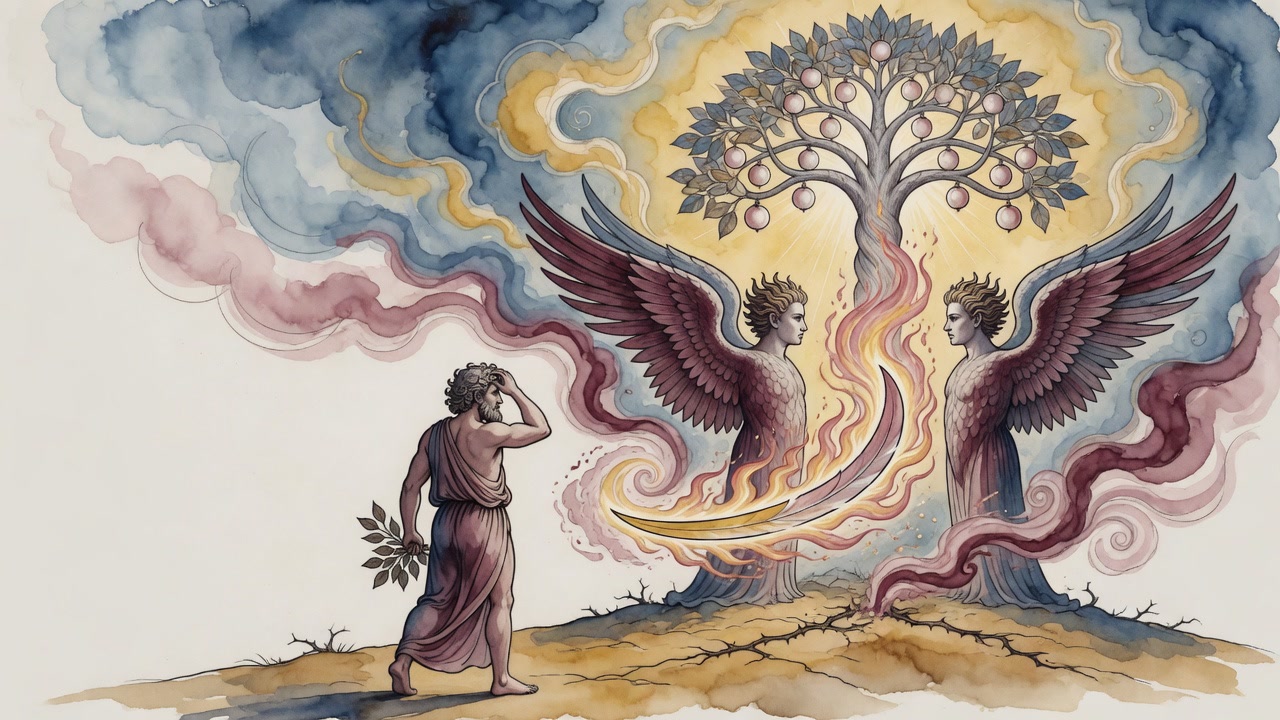
Most people read Genesis 3:24 as a locked gate. The rabbis saw something stranger. The cherubim were holding the way to the tree of life open.
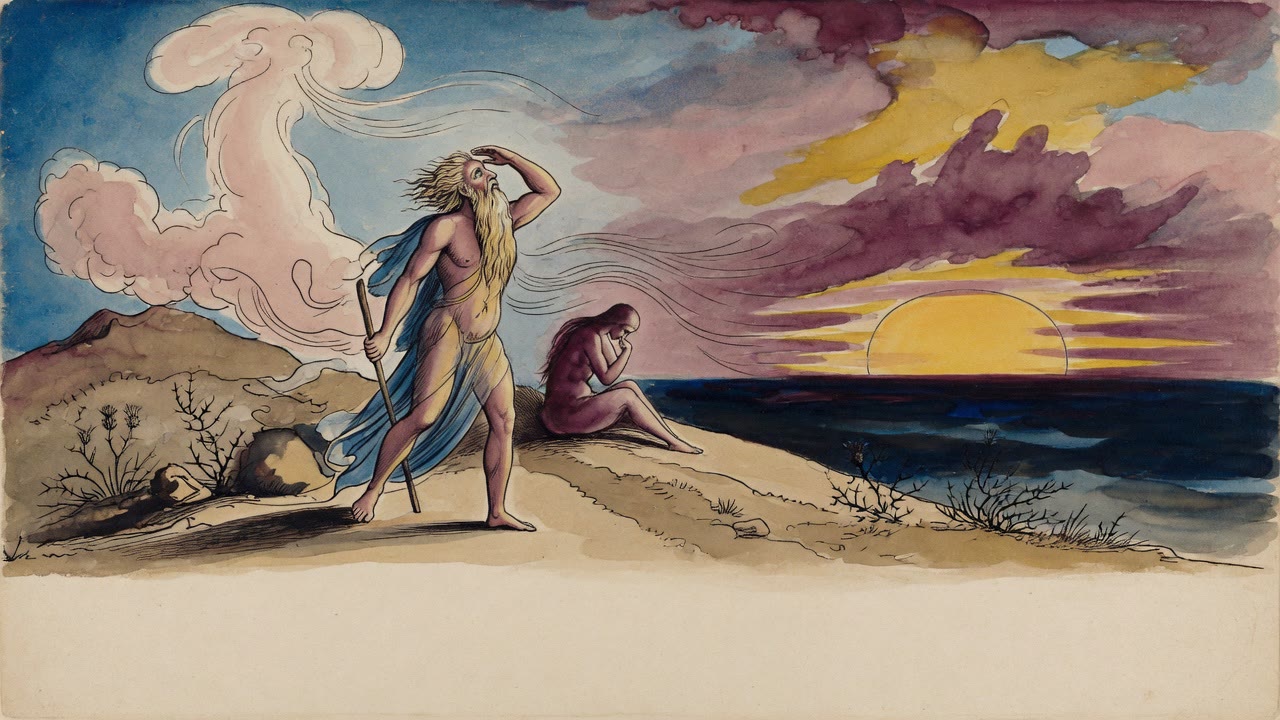
Genesis moves on from Eden immediately. But the rabbis traced what Adam and Eve experienced in the first hours and days after the expulsion — the shock, the cold, the first sunset they'd ever seen — and found in those details a story of survival that the Torah condensed to nothing.
God could have built the Ark instantly. Instead, according to the rabbis, Noah was commanded to build it slowly, publicly, and conspicuously — so that everyone watching would have time to ask why.
The standard reading says God was threatened by human ambition. But the rabbis found something more disturbing in the story — a political project that was erasing individual human life in favor of collective uniformity, and a God who intervened to protect diversity.
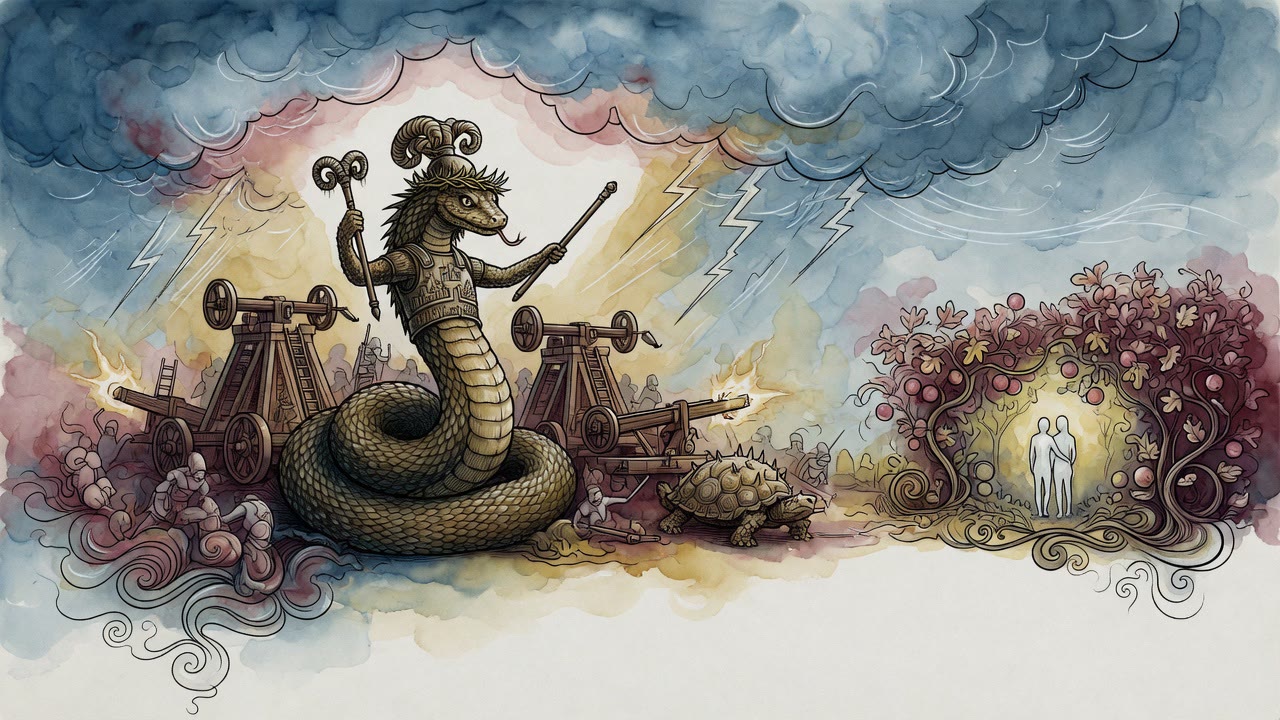
A tenth-century midrash read Ecclesiastes as an allegory for Eden. The great king with the siege engines is the serpent. The poor wise man is Adam.
The rabbis of Bereshit Rabbah asked why the Torah describes Noah as walking with God while Abraham was told to walk before Him -- and their answer transforms two similar phrases into a map of two entirely different relationships with the divine.
Lot chose Sodom not despite its wickedness but because of it — and the Midrash tracks every moment of his unraveling, from the gaze that started it all to the hesitation that almost cost him his life.
From the Chronicles of Jerahmeel to Philo's Midrash to Bamidbar Rabbah, ancient sources draw a continuous thread between Adam's first cultivation of the earth and Noah's second — two men given the same task in two broken worlds.
On the same stone where Adam first offered sacrifice, Abraham bound his son — and when Abraham later walked into a cave at Hebron, he discovered where the story had begun.
After Cain murdered Abel, Adam and Eve spent 130 years in grief before Seth was born. The rabbis say that was no accident — Seth was always the plan.
Before God spoke to Abraham, Abraham spoke first — reasoning his way through fire, water, earth, and stars until only one possibility remained.
The Book of Jubilees rewrites Eve's creation with a detail the Torah left out — and in that detail, a theology of human partnership that changes everything.
God consulted the angels before creating Adam — and two groups burned for their arrogance. Then the Earth itself refused to give up its dust.
When Noah was born into a cursed world, his father Lamech gave him a name that encoded a desperate hope. Two ancient sources reveal what that name really carried.
The Book of Jasher records the argument before the first murder. The Tikkunei Zohar says when Abel died, letters were removed from the divine name itself.
God chose the seventh: Levi was the seventh righteous man from Adam. The rabbis traced this pattern through creation, time, and every sacred institution.
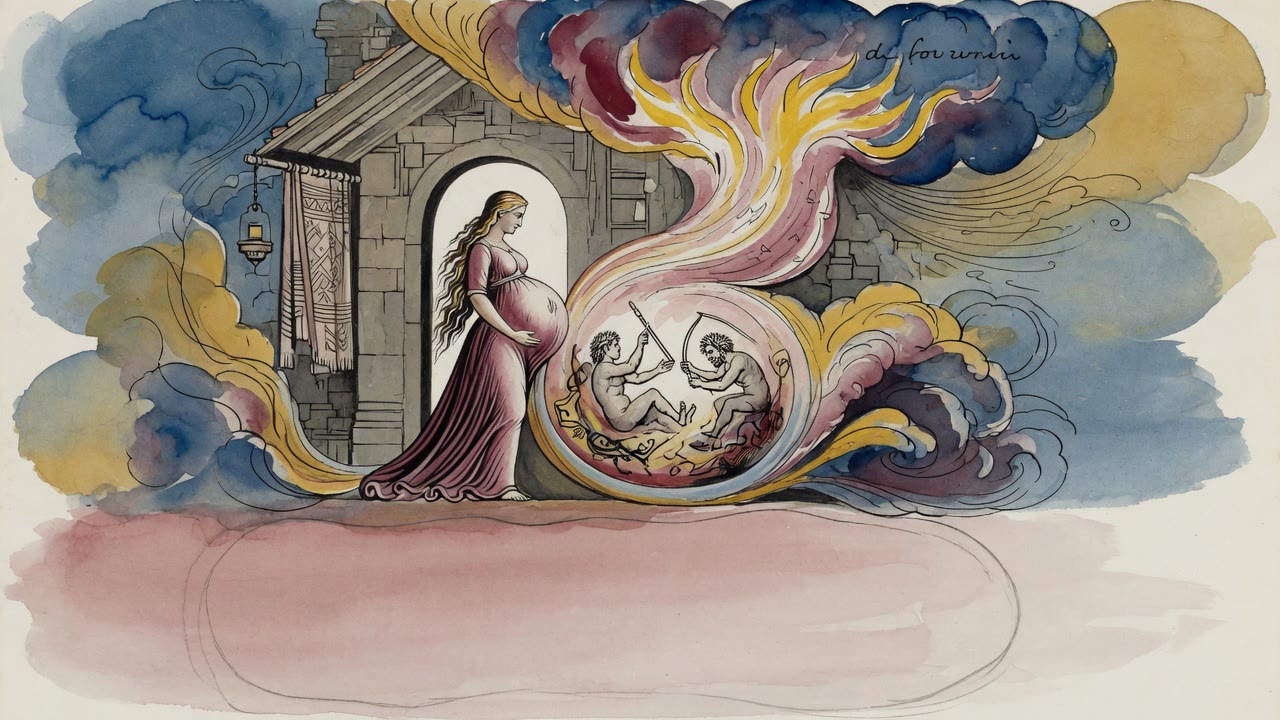
After Lilith fled Adam, she did not disappear. She found him again — and from their encounters came the demon multitudes that plagued humanity for generations.
The Zohar says Lilith approached Adam seeking to seduce him. Then she saw Eve, still fused to his back as divine light, and ran from what she recognized.
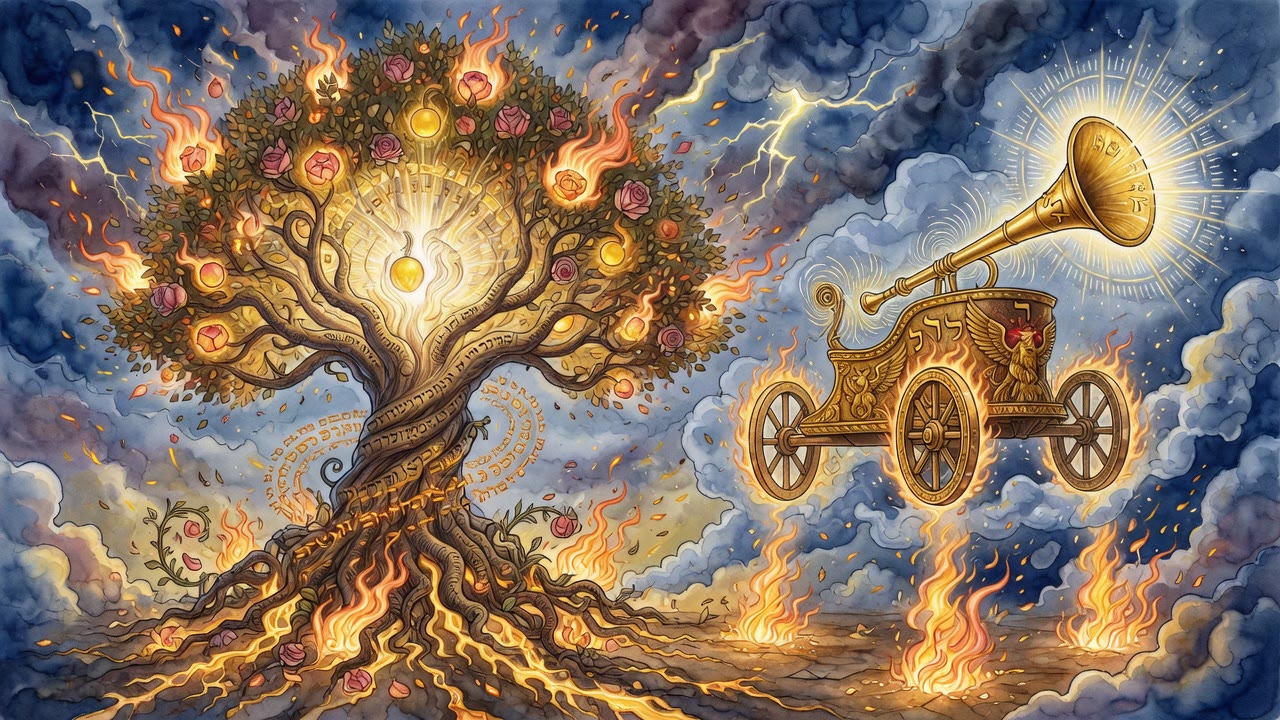
God arrives in Eden on a chariot drawn by cherubim, trumpet blazing. Adam and Eve are hiding in the trees. The question He asks is for all of us.
Ha-Satan did not rebel against God. He was expelled because of Adam. Eve's deathbed confession reveals the full story of a grudge older than creation itself.
Most people think Adam lost something when he left the Garden. One ancient tradition says he arrived on earth carrying something stolen from the sky.
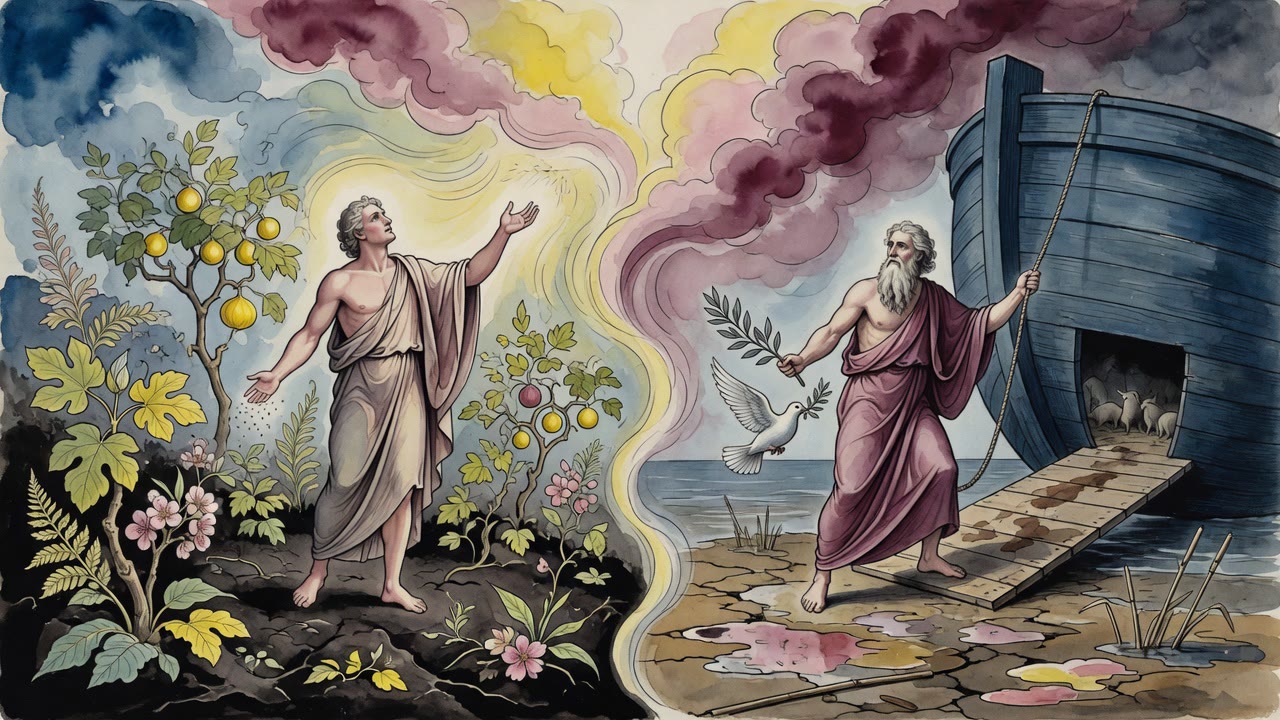
The Bible says Noah planted a vineyard after the flood. An ancient Aramaic translation adds one word that changes everything: he found the vine.
The Torah says Adam begot Seth in his own likeness. The rabbis noticed who was missing from that sentence, and why it mattered.
The Torah says God descended to see the Tower of Babel. Onkelos refused to let that stand. What he changed reveals an entire theology hidden in plain sight.
After Eden, God handed down forty curses, ten each on Adam, Eve, the serpent, and the earth. A forgotten midrash explains why exactly forty.
A fifth-century rabbi noticed that Genesis uses a plural word for God with singular verbs throughout. He said this grammatical oddity was not an accident. It was the most important sentence in the Torah.
Before the continents formed, the waters gathered themselves and rushed toward the sea. Rabbi Levi said they were not silent while they did it. He said they were speaking.
Abraham had no father to guide him, no master to study under. So God installed wisdom directly into his body, teaching him through his own kidneys.
The rabbis teach that Dinah was created male. It was Rachel's prayer, asking God for one more son, that transformed the unborn child into a daughter.
Before the first man had a soul, his body stretched from one end of the world to the other. God used that giant, lifeless form to show Adam every person who would ever be born.
Cain murdered without precedent. Lamech had Cain's example and sinned anyway. Philo of Alexandria built an entire theory of divine justice around the difference between those two facts.
Adam's garments passed from the first man to Nimrod to Esau, making each one terrifying and unstoppable. The midrash traces what those clothes cost every man who wore them.
Adam entered the Garden on the eighth hour of the first day and was expelled by the twelfth. Four hours of paradise, and a debt the world is still paying.
One ancient text says Jacob did not merely wrestle an angel at the Jabbok. He wrestled one because he was one, and had forgotten it.
Why did a mysterious stranger guide Joseph to his brothers? Because the tradition says Joseph's path to Egypt was not an accident. It was architecture.
Eden was not created after Adam. The rabbis taught it was one of seven things made before the world began. waiting for someone worthy to be placed inside it.
God said do not eat. Eve told the serpent do not touch. The rabbis traced the entire fall of Eden to that one small addition, and they were not unsympathetic.
Noah had ten generations of descendants worthy of notice. God skipped all of them. The rabbis asked why, and the answer is stranger than you expect.
When Joseph was thrown into the pit, the midrash says it had no water. What it had instead was serpents and scorpions. The angels watching wept.
The angels nearly worshipped Adam by mistake. God sang the wedding blessings at his marriage. When he died, a sacred book vanished with him into a hidden cave.
The Kabbalists say God organized the spiritual architecture of the first human long before a single handful of dust was shaped. The body came last, not first.
Lurianic Kabbalah places a figure made of pure light before Genesis begins. Not the Adam of the garden, but the blueprint from which all of creation was drawn.
Cain killed his brother and argued with God about whether the sentence was too heavy. The rabbis took both sides of that argument seriously.
The midrash says water rose for Rebecca at the well before she arrived. Bereshit Rabbah says her righteousness was recognized before she spoke a word.
Noah had a secret name his grandfather hid from sorcerers. What that hidden name reveals about the man who saved every living thing.
Abraham was worthy of being created before Adam. Bereshit Rabbah explains why God waited: he was the center beam, placed in history to hold everything in place.
Abraham was placed twentieth in human history for structural reasons. Kohelet Rabbah says he needed to arrive after the damage, not before it.
When Eve went into labor with the first child ever born, she had never seen a birth before. The apocrypha records what happened when Adam prayed.
Most people know how the flood ended. Almost no one knows what Noah did next: he drew lots to divide the entire world among his sons.
The Torah gives Enoch five verses and says God took him. The Book of Jasher and the Legends of the Jews say he ruled the earth and rose to heaven as a witness.
Abraham prayed for a pagan king, and the angels demanded God remember Sarah in return — Isaac was born on the Day of Remembrance itself.
Pirkei DeRabbi Eliezer and Midrash Aggadah agree: Gehinnom was not built as punishment. It was there from the beginning, waiting for Adam to confess.
The rabbis saw the dove carry more than an olive leaf back to Noah — it carried the announcement that light had returned to a drowned world.
The decree to drown every Hebrew boy started with a dream about scales. A single lamb outweighed all of Egypt, and Pharaoh's advisors told him what that meant.
Eden was not a garden planted when Adam arrived. The rabbis say it existed before the world — a city of nine palaces waiting for the righteous.
The archangel Michael carried Levi to heaven while he was still a young man. What God said there determined the fate of every Levite priest who came after.
Before Adam sinned, he was something more than human. The Zohar and the Tikkunei Zohar reveal what Shabbat preserved from that first light, and what it still carries.
The serpent opened the gate of Paradise and then refused to move. What happened next determined not just Eve's fate but the fate of every miraculous staff that came after.
Before Abraham discovered God, Adam had already been promised that his glory would return through a descendant. The Midrash Aggadah and Legends of the Jews say that descendant was Abraham.
The ram that replaced Isaac at the Akeidah was created before the world. Nothing of it was wasted across all of Jewish history.
Kabbalah says Adam was not just the first human — he was the master pattern of all creation, and when he fell, he took every world down with him.
When God took Abraham outside to count the stars, something stranger happened — Abraham discovered the hidden language that built the universe.
Cain killed his brother and then, the rabbis say, invented repentance. Adam heard about it secondhand and struck his own face in amazement.
The Tower of Babel builders were not desperate. They were full. The rabbis say comfort is the most dangerous form of rebellion against heaven.
Adam and Eve lived in the Garden for seven full years before the serpent arrived. He chose his moment carefully, sized up both targets, and approached the...
Noah asked God how he was supposed to gather every species onto the ark. The answer, according to Pirkei DeRabbi Eliezer, was that he was not supposed to....
A noblewoman corners Rabbi Yosei with a question about Eve's creation. His answer reveals why the rabbis believed everything flows from the woman.
Nimrod built his empire wearing a coat stolen from Adam. When the garments made him invincible, he built a tower to heaven and a throne for worship.
The flood ended. Noah refused to leave until God swore an oath. When he finally stepped out, God answered his accusation with a rebuke that cut deep.
On the fifth day, God combined fire and water to make sea creatures. Leviathan was born male and female. Then God looked at what He had made and intervened.
When Adam left the Garden, the animals followed him out. What happened next was a quarrel the rabbis preserved for two thousand years.
The garments God made for Adam were stolen from the ark by Ham and given to Nimrod. When he wore them, every animal fell at his feet.
Two sages argued about the size of Eden for generations. The Zohar reveals they were both right — and both wrong about what Eden actually is.
Why did God build Eve rather than form her? And what are the ten things made at twilight before the first Shabbat? Both reveal the same hidden logic.
Jacob was stopped at the gate of heaven by the world itself. Then Moabite women used wine to draw Israel into the worst idolatry since the Golden Calf.
Rabbinic sages asked two wild questions about Adam: did he have a tail at creation, and was the expulsion from Eden a formal divine divorce?
One-third of the Tower of Babel burned, one-third sank, one-third still stands. The rabbis reveal what the builders truly wanted -- and why the war never ended.
God hid His own name inside the names of Adam and Eve. If they kept His ways, the name would protect them. If they failed, it would burn them alive.
After Eden, nine curses fell on Adam and death followed. The earth was also cursed -- and the rabbis asked why the silent ground shared Adam's punishment.
Adam's first Sabbath Eve began with his expulsion from Eden. Hours earlier, the serpent had used one true statement wrapped inside a lie to make Eve stumble.
Hillel taught that bathing was a religious duty -- if kings scrub their palace statues, every person must honor the image of God they carry.
Adam was shaped from the sacred earth of the Temple Mount, where atonement would one day be sought. Philo adds that he was created with the eyes of the soul.
Jacob was stricter about idolatry than the law required. The same rabbis who noted this also taught that Jacob's merit was the reason the world was created.
The Book of Jubilees did not retell Genesis. It revealed that the laws governing creation were written on heavenly tablets before the first human breathed.
Adam carried forty curses after Eden and the weight of having been the standard against which all human life is measured.
After God's wind destroyed the tower, Noah named the ruined site Overthrow and divided the earth. Then Canaan broke the oath and occupied Shem's land anyway.
At the dawn of creation, something waited to become Benjamin. The Book of Jubilees traces a sacred number backward to the day Rachel named her son in dying.
When Adam was expelled from the Garden, he did not leave empty-handed. The Alphabet of Ben Sira records the thirty trees he brought out and what they were for.
Cain built the first walled city and named it for his son. The Chronicles of Jerahmeel traces what grew inside those walls before the flood.
At Babel, a fallen brick was mourned for a year while a fallen worker was ignored. The builders shot arrows at heaven and saw blood on the tips.
Seth was born perfect, the ancestor of the Messiah. His descendants mapped the stars and inscribed their findings on two pillars, one stone, one brick.
The title Pharaoh did not come from royal blood. A clever pauper named Rakyon charged the dead a burial tax and talked his way to the throne.
God killed the female Leviathan and salted her for the final banquet. The male still swims. At the end of days, Leviathan and Behemoth will destroy each other.
Before the fall, the serpent stood upright and matched a camel in height. The rabbis tracked everything stripped from it when Eden's gate closed.
God stripped Adam of ten things after the expulsion: celestial clothing, dignity, ease, and the body free from worms. The rabbis catalogued every loss.
After the expulsion, Adam stood neck-deep in the Jordan for forty days of penance and asked the fish to grieve alongside him. The river stopped flowing.
The first time Adam watched the sun set, he wept all night certain the world was ending. At dawn he understood it was only nature, and sacrificed a unicorn.
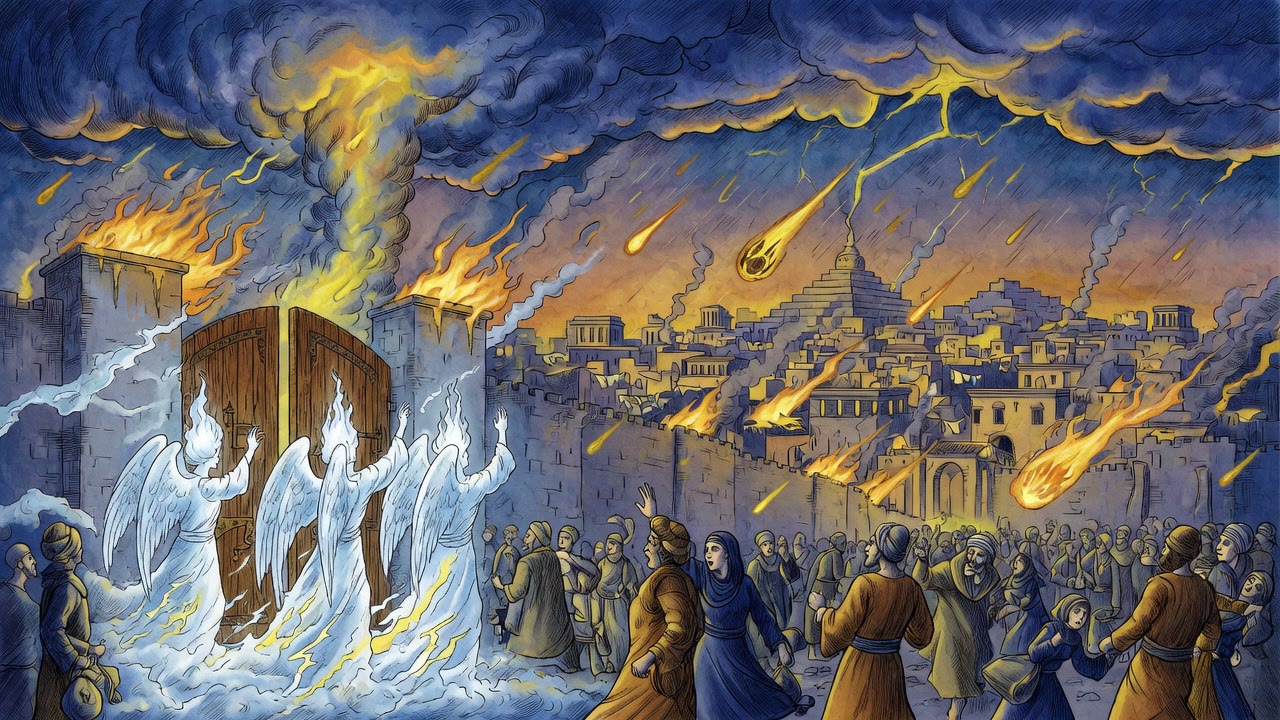
The fire that destroyed Sodom fell when both the sun and moon were visible. God arranged it so no worshipper of either could claim their god had been absent.
The oldest Jewish mystical text, attributed to Abraham himself, teaches that seven Hebrew letters hold the structure of existence together -- and that every blessing in the world has an opposite built into the same letter.
After the expulsion from Eden, Adam separated from Eve for one hundred and thirty years. The Talmud records two explanations for what happened during that time: either profound repentance in the River Gihon, or seduction by female demons who bore him a race of spirit-children. Both explanations come from the same three words in Genesis 5:3.
Before Jerusalem had a name, Mount Moriah was not a mountain at all. It was a valley. Midrash teaches that God summoned the surrounding hills and commanded them to yield, and the ground rose to receive the Shekhinah.
Jewish tradition insists that the altar at Mount Moriah was not built by Abraham. Adam built it first, then Noah rebuilt it, then Abraham found it waiting. One altar holding three covenants across the span of human history.
After Israel sinned, God summoned all twenty-two letters of the Hebrew alphabet as witnesses. Each letter prepared to testify against the people. Then Abraham stepped forward and silenced the first letter before it could speak.
Adam knew the entire Torah before Sinai. He taught it to Seth, his true heir. Seth passed it down through the generations that preceded the flood, and from Seth's line, Noah carried the tradition into the world that came after.
A disturbing tradition in the Talmud and Kabbalistic literature holds that Adam was not Cain's father. Samael, the angel of death, seduced Eve in the Garden, and the murder of Abel was the first consequence of a demonic inheritance.
A remarkable Jewish folktale preserved in the Israel Folktale Archives explains how Samael, the angel of death, concealed himself inside Adam from the moment of creation, making the evil inclination not an external temptation but an interior resident.
Midrash Tehillim teaches that God commanded Adam six times in a single verse before the Torah was given, establishing a moral baseline for all humanity. Rabbi Levi's reading of Genesis 2:16 finds six separate commandments folded into four Hebrew words, a discovery that reframes the entire biblical narrative of law.
A single verse of Psalm 80 mentions three tribal names side by side. The rabbis asked why, and found behind those names a map of five forces older than creation itself.
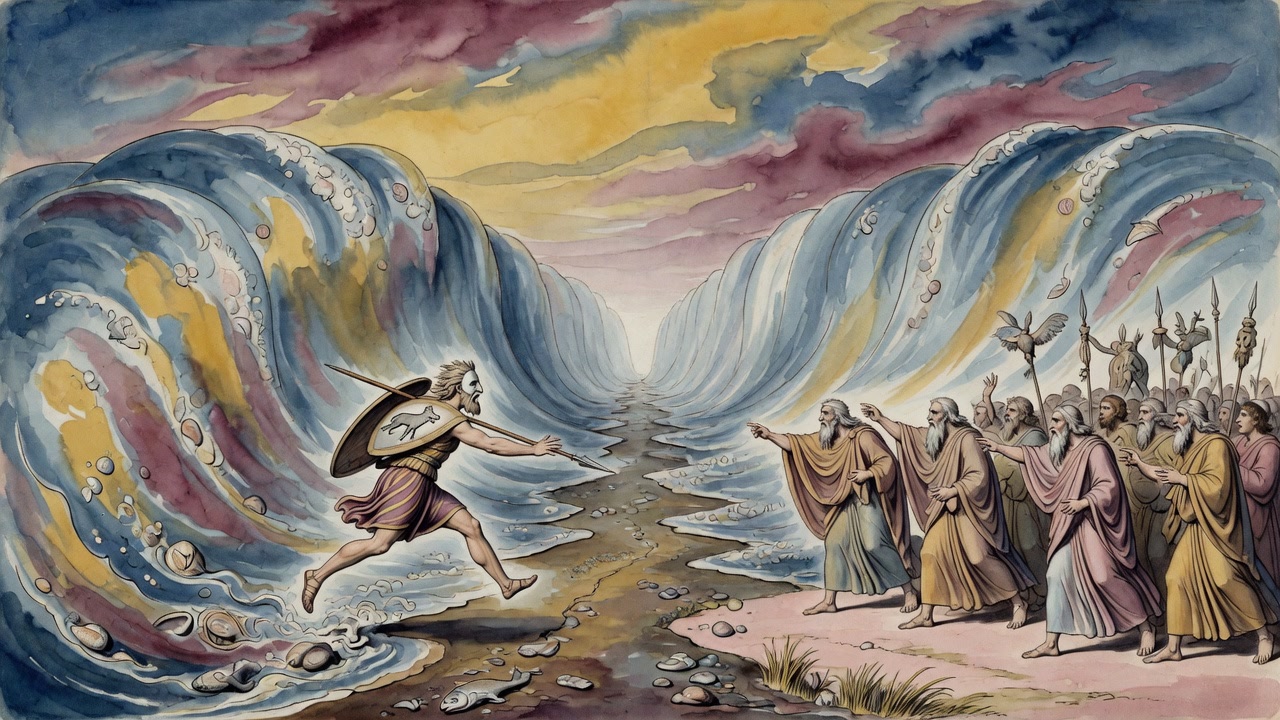
Every tribe wanted credit for the miracle at the sea, but only one tribe acted before the miracle happened. Midrash Tehillim on Psalm 114 records the argument between the tribes and the remarkable tradition that Benjamin's reckless leap into the water was the act that caused the sea to split.
In the first moments after creation, all the animals of the earth prostrated themselves before Adam as if he were their god. What Adam did next reveals the essential structure of Jewish theology: he immediately redirected their worship upward, and then led the first prayer the world had ever heard.
Pirkei DeRabbi Eliezer explains the Garden of Eden's single prohibition through a parable about a king, a queen, and a house full of scorpions. The parable is more honest about the nature of the prohibition than a straightforward theological explanation would be, because it admits that the restriction was real and the temptation was reasonable.
After Abel's murder, the human family split into two streams. Pirkei DeRabbi Eliezer and related midrashic texts trace the entire history of righteousness and wickedness back to this division, with Seth and Cain becoming the founding fathers of two fundamentally different kinds of people.
After the flood, Noah sent two birds to test the waters. One did not return. Pirkei DeRabbi Eliezer and Ginzberg's Legends explain why the raven defected and what the dove's olive branch actually meant, revealing that the simplest detail in the ark story carries centuries of interpretive freight.
The Tower of Babel story ends with scattered languages. But Pirkei DeRabbi Eliezer preserves a more violent account of what actually happened when the builders could no longer understand each other: they drew their swords, and half the assembled world died in the confusion.
Pirkei DeRabbi Eliezer found a hidden parable of Jewish history inside the trees of Ezekiel's vision. The high tree brought low was Nimrod. The dry tree that flourished was Sarah. And the reversal between them is one of the most audacious claims in all of midrash.
When God drove Adam from the Garden of Eden, a strand of rabbinic tradition read the Hebrew word for expulsion as the same word used for divorce. The Garden was not merely a paradise lost; it was a marriage ended. Tanna DeBei Eliyahu Rabbah turns the expulsion into one of the most intimate theological statements in ancient Jewish literature.
Genesis begins with a word, Bereshit, that the rabbis could not leave unexamined. Why does the Torah start with creation rather than the first commandment? Yalkut Shimoni preserves R. Yehuda bar Shalom's answer: the world was created in the merit of Israel, and the opening word of the Torah is the hidden proof.
Paradise in the Jewish tradition is not a single undifferentiated reward. Sifrei Devarim reads a verse in Deuteronomy about Israel's multitude as a cosmic map of the Garden of Eden's seven levels, where each righteous person receives exactly the radiance their deeds earned, neither more nor less.
The expulsion from Eden is usually read as punishment. The rabbis read it as a cascade of losses that restructured human life entirely, from food to labor to the relationship between the body and death. Sifrei Devarim and Ginzberg's Legends of the Jews reconstruct what Eden required and what leaving it cost.
When the Torah speaks of blessings from the ancient mountains, the rabbis read it as a portrait of Abraham, Isaac, and Jacob standing at the foundation of all time.
Genesis says God formed Adam from dust. The ancient Aramaic translators knew which dust, where it came from, and why God gathered it from every corner of the world before shaping a single human being.
When Moses laid out the borders of the Promised Land, the Torah gave a handful of place names. The Targum Jonathan gave a detailed survey, including a western boundary that extended not merely to the Mediterranean but to the primordial waters underneath it, the deep that existed before creation. The land promised to Israel touched the foundations of the world.
The Sefer Yetzirah, the Book of Formation, is attributed to Abraham himself. According to Kabbalistic tradition, Abraham did not receive this wisdom from a teacher. He derived it alone, through decades of investigation, until creation revealed itself to him.
Before Adam existed, the angels debated whether humans were worth making. Kindness and Truth could not agree. God broke the deadlock by burying Truth in the ground.
Eden was not created on day three alongside the plants. The rabbis said it was made before the world began, and sixty myriads of angels have been tending it ever since.
When Genesis says Abraham and Sarah made souls in Haran, the rabbis did not read it as a metaphor. Sarah's work of spiritual transformation became the template for what Moses would do at Sinai.
The prophet Elijah, who never died, was sent back to the Garden of Eden to explain to Adam why mortality had been decreed. What he revealed overturned everything Adam had believed about the punishment.
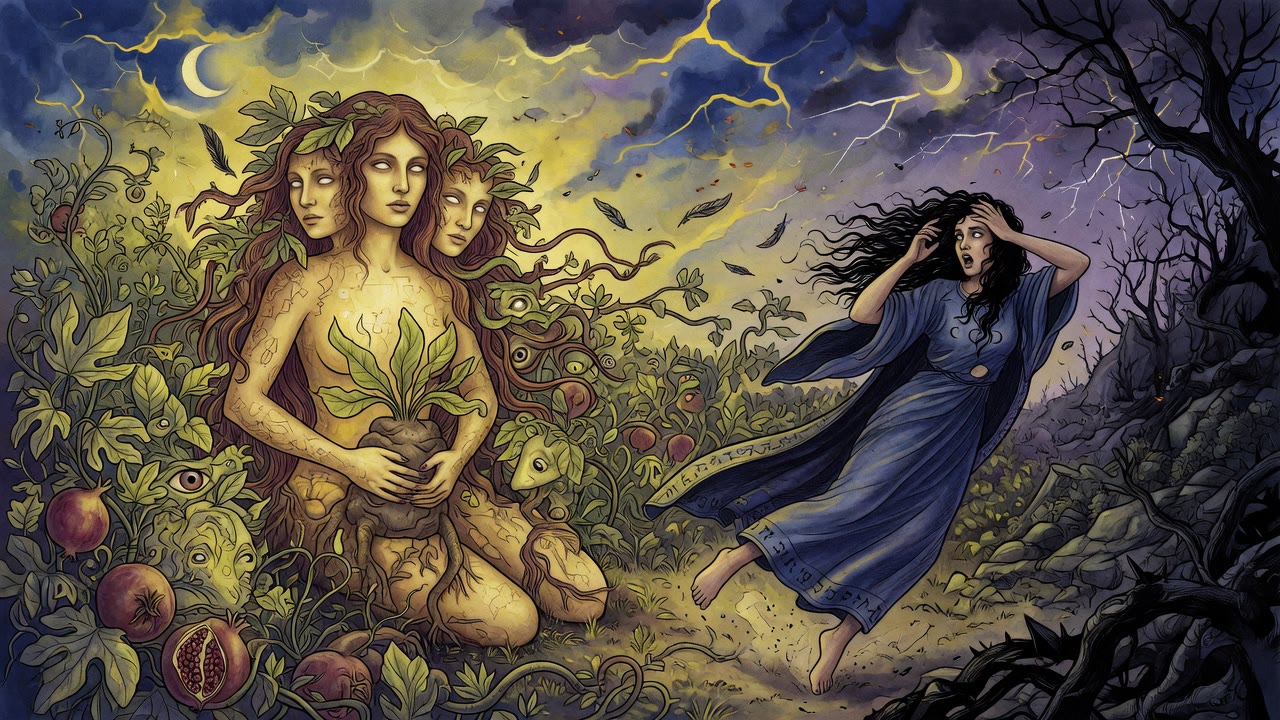
The bargain over the mandrakes between Leah and Rachel repeated the pattern of Eden in miniature. The rabbis saw in Issachar's birth a corrective to what had gone wrong between the first man and woman.
Three different rabbis in Vayikra Rabbah make the same astonishing claim: that Jacob is not just a patriarch but the structural foundation of the created world itself.
On the sixth day of creation, God fashioned a land creature so massive it devours a thousand hills of grass daily, and only God can sustain it. The rabbis saw Behemoth not as a monster but as a divine riddle about the limits of human power.
When Adam first saw the Book of Generations, he noticed that David's soul was allotted only a single minute of life. In an act the rabbis called the defining gesture of the first man's character, Adam gave David seventy years from his own lifespan.
The Levites did not earn their role as Temple servants through a single act of loyalty. The rabbis traced the selection of Levi back to creation itself, when the foundations of priesthood were already embedded in the cosmic structure of the world.
The debate between Beit Shammai and Beit Hillel extended from marriage law all the way to cosmology. When they argued about whether heaven or earth was created first, they were arguing about which principle of creation governs everything that follows.
Beit Shammai and Beit Hillel disagreed about nearly everything, including the order in which God created the universe. Their debate reveals something stranger than either school expected.
When Noah's flood covered the earth, most assume it erased the Garden of Eden. The Book of Jubilees records something stranger: Eden survived, was preserved as holy ground, and was formally given to Shem as his inheritance.
Adam looked into the Book of Generations and saw that David was allotted only one hour of life. He gave David seventy of his own years. But the tradition traces those stolen years back even further, to the blood of Abel.
The flood was not a punishment for one generation's wickedness. The rabbis traced the corruption directly to Cain, the world's first murderer, whose descendants built a civilization so thoroughly wrong that only a flood could end it.
God made Adam and Eve garments of skin when he expelled them from Eden. The tradition traces those garments through Noah, Nimrod, Esau, and finally to Rome, connecting the primal expulsion to the empire that destroyed the Temple.
God engraved Jacob's face on the divine throne and bows to it when the angels cry Holy. Adam saw David in a vision before creation and gave him seventy years from his own allotted life.
The priestly tribe descended from a single pattern: God prefers the seventh. From Adam through Noah through Abraham through Jacob, Levi was the seventh righteous man in the line, and that number sealed his calling.
The Zohar and Pirkei DeRabbi Eliezer agree on a troubling fact: demons exist because God stopped creating at the exact wrong moment. They are the unfinished creatures of the sixth day's final minutes.
The rabbis saw Noah's drunkenness as a re-enactment of the Garden of Eden — with Ham playing the serpent, Noah playing Adam, and the vine itself coming from the tree of knowledge.
After the floodwaters receded, God turned to Shem and commissioned him as the first prophet to humanity — a prophet who would teach the nations for 400 years, beginning a chain of prophecy that ran from the ark to the end of days.
Before Abraham received his divine promise, the descendants of Ham's cursed son Canaan had already occupied the land — and Jewish tradition says they knew they had no right to it.
The builders of Babel did not invent their common language — they inherited it from Adam. The rabbis saw the Tower's destruction as the loss of something that had existed since Eden, and its restoration as a messianic promise.
Before God created the world, the Torah existed as a cosmic blueprint. The Tower of Babel was not merely political arrogance — it was an attempt to rebuild the world on a different set of plans, without the architect's permission.
Lot and Joseph seem to share nothing but bad luck. But the rabbis saw in their parallel descents a single hidden design threaded through creation itself.
Abraham walked into Nimrod's fire before Daniel walked into the lion's den. Jewish tradition reads both as the same test of faithfulness, given to men who were prepared for it at creation.
Noah survived the flood but his covenant did not reach Isaac. Ishmael received circumcision but not the promise sealed with it. Both exclusions were built into creation before the men themselves were born.
The fire that destroyed Sodom did not fall only from the sky. Ancient Jewish texts describe a fire that rose from beneath, from Gehinnom itself, the same fire that was created before the world to punish the wicked.
The Torah says the plain of Sodom looked like the garden of God. The rabbis ask why God placed the most beautiful valley in the ancient world next to the most corrupt city, and their answer goes back to Adam and Eve.
When the angels came for Lot, they were not merely rescuing him from a burning city. According to the Zohar and the Midrash, they pulled him back from the gate of Gehinnom itself, a gate that had been placed inside Sodom since before the world was made.
The rabbis of Bereshit Rabbah and the Book of Jubilees argue that Sodom's destruction was not a reaction to the city's crimes but the execution of a sentence inscribed in creation long before the first Sodomite built the first wall.
The two angels sent to destroy Sodom were not angels of wrath. Jewish tradition insists they were angels of mercy, which is exactly why the city's final crime against them sealed its fate beyond any appeal.
Lot chose Sodom when Abraham chose Canaan. He seemed to step out of the patriarchal story entirely. But the rabbis of Bereshit Rabbah show how Lot's descent was built into the covenant from the beginning, carrying something the patriarchs themselves could not carry alone.
The rabbis of Bereshit Rabbah and the Zohar make a stunning claim: Sarah's greatness was not derived from Abraham's. She was named and prepared at creation independently, a prophetess whose vision exceeded her husband's and whose role in the covenant was primary, not secondary.
When Abraham left Ur for Canaan, he did not enter a cleaned-up world — he entered the same one that had been filled with demons since the first moments of creation, and the traditions tell us how he navigated it.
When Rebecca's pregnancy became a battlefield, she went to seek understanding — and the ancient tradition connects what she heard inside her to the deepest structures of creation and the animals that inhabit it.
The rabbis saw Rebecca's decision to deceive Isaac as the correction of a failure that began in Eden — where Eve made a choice for her husband without understanding, and Rebecca made a choice for her son with full prophetic knowledge.
When Jacob fled toward Canaan with Laban's daughters and flocks, God spoke directly to Laban in a dream — and the tradition asks what it means that a man can receive divine speech and still choose badly.
The Book of Jubilees makes a stark distinction between Ishmael and Isaac — and behind that distinction lies an ancient theology of creation that assigned the sons of Abraham to fundamentally different cosmic roles.
The rabbis saw in Esau's red, hairy birth something that connected him directly to the first transgression in Eden — as though Adam's failure had finally produced its most extreme inheritor.
Jacob wrestled with a man at the Jabbok ford — but Jewish tradition knows exactly who that man was. He was Samael, Esau's guardian demon, and the confrontation between them is the clearest window into how demons work within creation's design.
Isaac and David never met, yet tradition insists they were linked from the moment of creation — two lives folded into a single covenant stretching from the Akedah to the throne of Jerusalem.
Leah was destined for Esau — until her tears carved a different path. Rabbinic tradition says those tears did not just soften one marriage contract. They rewrote the structure of the heavens.
Leah knew Jacob did not choose her. What she did with that knowledge — naming her sons in prayers Jacob never heard — became the theological architecture of the twelve tribes.
On his deathbed, Jacob's tenth son delivered the most systematic ethical teaching of any of the twelve patriarchs — a philosophy of moral duality rooted, the ancient sources suggest, in the structure of creation itself.
The Prayer of Joseph preserves a startling claim: Jacob was not a man who became a patriarch. He was an archangel who descended to earth, forgot his divine identity, and had to be reminded of it by a rival who attacked him in the dark.
Dinah's story is told in a single chapter of Genesis — but the Book of Jubilees and its heavenly tablets tradition show that what happened at Shechem was not just a family tragedy. It was a test of whether the covenant could survive contact with the world outside it.
When Judah condemned Tamar to burn, she refused to humiliate him publicly. Instead she prayed. What happened next — Judah's confession, the fire's retreat — became the model for how honest prayer changes the course of judgment.
On his deathbed, Simeon confessed something more disturbing than the sale of Joseph. He traced the source of his hatred to a force that had been working in the human heart since the first murder.
When Adam looked into the Book of Generations and saw that the greatest king in Israel's history had been allotted only one minute of life, he made a decision that changed the course of history.
On his deathbed, Dan told his children something more troubling than his plan to kill Joseph. He told them where the spirit that nearly made him a murderer had come from, and how long it had been waiting.
On the Mount of Olives, Naphtali watched his brothers race to claim the sun and moon. What he saw in that vision laid out the entire future of Israel in the language of celestial bodies.
Benjamin was the only patriarch born in the land of Canaan, the only one whose mother died giving him life. The Testament of Benjamin reveals what that origin cost him and what it gave him.
Of all twelve sons of Jacob, only Judah received a blessing that sounded like a war cry and a royal decree combined. The Book of Jubilees explains why the line of kings and the hope of redemption both run through the son who once sold his brother.
On his deathbed, Naphtali told his sons about two visions he had seen as a young man, visions of ships and stars and a scattering that would not be permanent. He said he had been given these to prepare them for what was coming.
When Jacob dreamed of a ladder at Bethel, the rabbis insisted he was seeing the future of Israel across all of history. Four empires would rise and fall on that ladder. The question the tradition never stops asking is what waits at the top.
Before David arrived in the world, the years of his life had already been borrowed from another man. The rabbis found the ledger, and Abraham signed it.
When Jacob laid his head on a stone at Bethel, he did not dream of angels climbing a ladder. He saw the future site of something that would take a thousand years to build.
Noah boarded the ark with a sapphire book that contained every secret of creation. Solomon, three thousand years later, was still asking the same questions that book had already answered.
The great mystic Rabbi Ishmael did not merely teach about the heavenly palaces. He visited them. What he saw there, he was commanded to bring back to a world on the edge of catastrophe.
The Book of Jubilees reveals that Rebekah's destiny was not chosen by Isaac but written in the heavenly tablets before creation — and what was written there was merciless.
The Book of Jubilees doesn't condemn Esau for selling his birthright for soup — it reveals that Abraham saw the problem decades before the bowl was even on the fire.
When Abraham blessed Jacob in the Book of Jubilees, he wasn't composing something new — he was passing down the original blessings of creation itself, the same words first spoken over Adam in the Garden.
Reuben lay dying and confessed what he had kept hidden for decades — and what he described about the forces that had driven him became one of the earliest Jewish maps of the human soul.
When Joseph revealed himself to his brothers in Egypt, Benjamin already knew. The Testament of Benjamin records a private meeting between the two brothers that happened before the great revelation, a moment no one else saw and that Benjamin was sworn to keep.
When Judah threatened Joseph in Egypt and demanded Benjamin's release, the rabbis said his voice was so powerful it shook the foundations of creation. The Midrash Tehillim traces that voice back to his confrontation with Esau, where Judah first discovered what he was capable of.
Naphtali had a physical gift that made him uniquely valuable to his father: he could run like a deer. The Legends of the Jews record that Jacob sent Naphtali on the most important errands, and that his speed was connected to something deeper than athletic ability.
After wrestling with the angel at Peniel, Jacob had a second vision: an angel descended with seven tablets containing the complete future of his descendants. The Book of Jubilees records that Jacob read them, wept, and then the angel took them back.
The expulsion from Eden and the giving of the Torah at Sinai seem like opposite events -- one a punishment, the other a gift. But ancient texts trace a continuous thread from Eve's transgression through the patriarchal era to Moses standing at the mountain, discovering that the thread had never broken.
The wickedness of Sodom was not mere immorality -- it was a theology. Ancient sources from Jubilees to the Book of Jasher reveal a city that had systematically inverted the order of creation, treating the world's goods as theirs by right rather than by gift.
After the flood, Noah offered sacrifices to God. But the name of God he used in the offering was unexpected, and Philo of Alexandria thought he knew why.
Ham dishonored his father. But the curse in Genesis lands on Ham's son Canaan instead. Jewish tradition has argued about this transfer of punishment for centuries.
Why is Shem listed before Ham and Japheth if Ham was the eldest? Philo of Alexandria said the order was never about birth. It was about the architecture of good and evil.
The Bible says Sodom sinned. The Midrash asks a harder question: how did they get there? The answer involves a land so fertile that even buzzards lost sight of the ground.
Philo of Alexandria asked how a single fountain could water the entire earth. His answer reframes what nourishment, abundance, and divine generosity actually mean.
Philo noticed the Torah uses different words for the leaves and the fruit of Eden's trees. The distinction he drew turns the garden into a philosophy of virtue.
God called Adam's solitude 'not good' before Eve existed. Philo of Alexandria reveals why this was never about loneliness.
Every other creature came from the earth. Eve alone came from Adam. Philo of Alexandria spent his life trying to understand what that difference reveals.
Philo of Alexandria asked a question that has no obvious answer in Torah: what is a home, really? His answer starts with Adam and Eve.
After Cain killed Abel, the Torah says his blood cried from the ground. Philo argues the earth itself was changed by that first act of violence.
Philo of Alexandria read Seth's birth as something more than a consolation. In his allegorical system, Seth was Abel's soul given a second chance to exist in the world.
The Midrash of Philo asks why someone devoted to repentance lives exactly 365 years, the length of a solar year. The answer reframes what it means to live a complete life.
Noah waited seven more days before releasing the dove again. The Midrash of Philo says he wasn't being cautious. He was observing something older than the flood.
Philo noticed the Torah uses different words for the leaves and the fruit of Eden's trees. The distinction he drew turns the garden into a philosophy of virtue.
Philo of Alexandria asked how a single fountain could water the entire earth. His answer reframes what nourishment, abundance, and divine generosity actually mean.
Philo noticed the Torah uses different words for the leaves and the fruit of Eden's trees. The distinction he drew turns the garden into a philosophy of virtue.
Why did Noah wait seven days before sending the dove again? The Midrash of Philo says the number was not about water levels.
God rejoiced at the Tabernacle's dedication as deeply as at the creation of the world. The rabbis understood exactly why that was.
Two thousand years before the Torah was given at Sinai, the rabbis taught it already existed — written in black fire on white fire, the blueprint God used to build the universe.
The Tabernacle was not merely a portable shrine. Its dimensions, materials, colors, and furniture were a precise model of the cosmos — with the Holy of Holies representing the innermost point of creation, and the outer courts representing the physical world.
When Ptolemy demanded a Greek translation of the Torah, seventy-two sages made thirteen identical changes without consulting each other. The Mekhilta records every word they changed and why.
Adam tracked time by the sun. God gave Israel the moon. The Mekhilta asks why, and the answer turns out to be about loyalty, not astronomy.
Rabbi Shimon ben Yochai read Jeremiah and found something stunning: the sun rising each morning is testimony that the God who split the sea still rules.
The Mekhilta finds four things called acquisitions in Scripture: Israel, heaven and earth, the Temple, and the Torah. The rabbis say they belong together by design.
When Moses drew near to God at Sinai, he walked into thick darkness. The rabbis asked why God hid in shadow - and what Moses found when he got there.
Standing on Sinai, Moses discovered that God's mercy wasn't a late amendment — it was the first principle, built into creation before anything else existed.
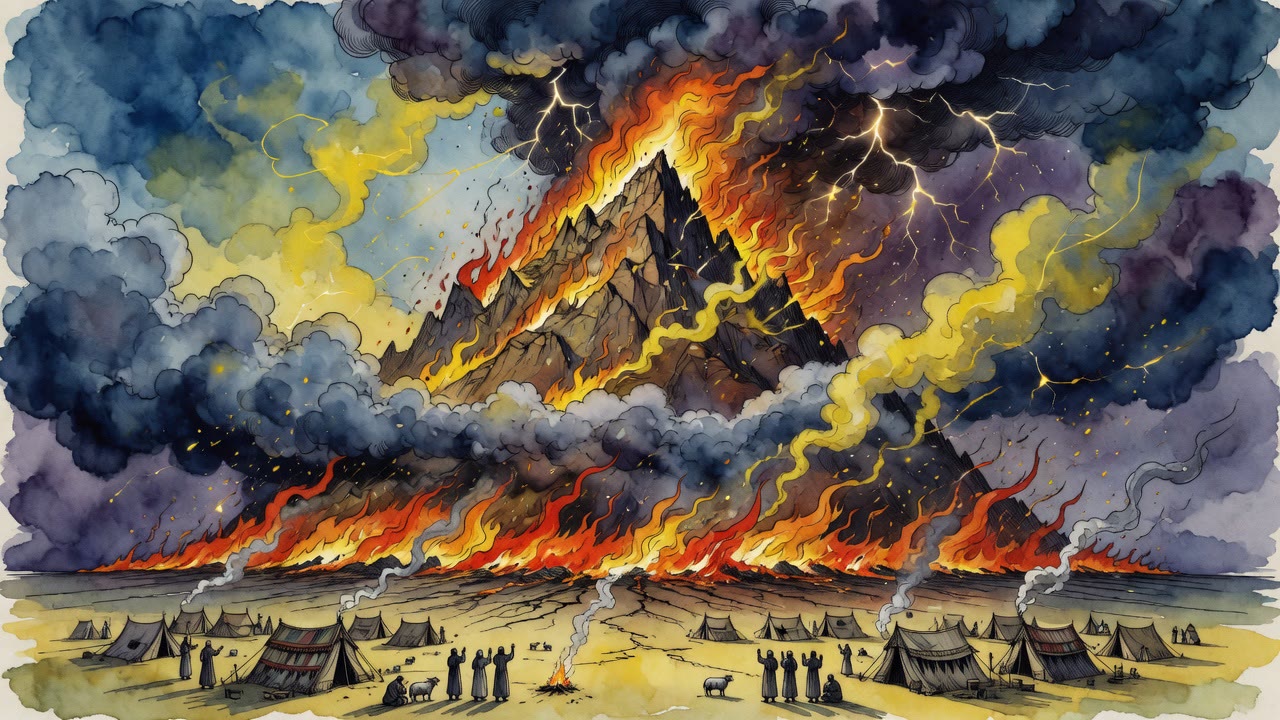
The rabbis asked why God gave the Torah in a wilderness. The answer led them back before Creation itself, to a mountain that was waiting long before the...
The rabbis saw a primordial light in Moses at birth. Before the bush, before Egypt, Moses was already written into the structure of creation.
Before the plagues, God held a trial in heaven with Pharaoh's angel as the accused. Meanwhile, Balaam advised Pharaoh to stop Moses by drowning every Hebrew newborn.
At the bitter spring of Marah and in the great prayer of Pirkei DeRabbi Eliezer, Israel discovers that confession and cosmic priority are the same argument.
At Sinai, God dressed as a prayer leader and showed Moses the thirteen attributes. Then Moses paused over 'let us make man' and asked God why.
The Sages argued that Aaron's priesthood was decreed before creation and could not be undone -- not even by the Golden Calf.
Midrash Mishlei reads Proverbs 31 as a portrait of the Torah herself, a cosmic woman of valor who existed with God before the world was made, whose worth exceeds all pearls, and whose husband trusted her completely. Moses, the Midrash teaches, was the one who merited to carry her from heaven to earth.
When Psalm 12 calls God's speech 'pure as silver refined seven times,' the rabbis took this literally. Midrash Tehillim teaches that every divine word in the Torah was refined through seven levels of spiritual purity before it reached human ears, and that Scripture itself is proof of this refinement in its careful avoidance of improper language.
When Miriam took up her timbrel and led the women in song at the Red Sea, she was doing something the rabbis recognized as cosmically significant. Every new act of divine creation, the Midrash Tehillim teaches, calls for a new song.
Moses recounts God's defeat of Sihon, king of the Amorites, as though it were settled before the armies met. Sifrei Devarim uses a parable of a king who promises his soldiers rewards before they march, and the soldiers demand them before they fight, to ask what faith in God's promise is actually supposed to look like.
When Moses declared 'When I call the name of God, ascribe greatness to our God,' Sifrei Devarim read this as a liturgical protocol established at Sinai. The congregation's response to the prayer leader is not courtesy. It is a cosmic event.
When Moses climbed Sinai to seize the Torah, the angels insisted no human was worthy. The answer lay in what had already been decided before the world was made.
When Moses told Pharaoh that God had made the world, Pharaoh replied that he had made himself. The ten plagues were God's systematic response to that single claim.
The Torah existed two thousand years before the world began. The tribe that would carry it through history was already being shaped to receive it before the mountain was chosen.
The mountain where Moses received the Torah was not chosen at random. According to the Book of Jubilees, Sinai was among four sacred places set apart from the very beginning of creation.
When Moses ascended to receive the Torah, he did not simply arrive at a mountain peak and wait. He traveled through all seven heavens, and in the highest one, he saw the creatures that support the throne of God.
Pharaoh secretly confessed to Moses that he was no god at all — just a man pretending. The tradition traces this lie back to Eden, where the first claim of divine autonomy was also made and also shattered.
On the second day of creation, God made the firmament, fire, and the angels — and built into the fabric of the cosmos the mountain where the Torah would one day be given. The rabbis read the architecture of heaven backward from Sinai.
The tradition insists that every soul who would ever prophesy in Israel stood at Mount Sinai when the Torah was given — including those not yet born. The revelation was not an event. It was an architecture that all future prophets carried inside them.
Most accounts say God spoke the Torah to Moses directly. The Book of Jubilees tells a different story: an angel called the Prince of the Presence sat beside Moses on Sinai and dictated everything, from creation to the messianic age, in one unbroken transmission.
The Torah was created before the world. God waited nearly a thousand generations to give it to anyone. The rabbis counted exactly why, and the answer is stranger than you expect.
God heals and wounds at the same moment. Creates death and life in the same breath. The Ten Commandments, the rabbis say, were spoken all at once, because only God can hold opposites together without flinching.
God brought the Torah to every nation on earth before Israel. Each one asked what was in it and walked away. Only Israel said yes without asking. And the world almost ended because of it.
Before Levi died, he told his children what Enoch taught. The rabbis who studied Genesis 9 heard the same teaching in God's first law against murder.
When Hillel the Elder told his disciples he was going to the bathhouse to perform a mitzvah, they laughed. His answer silenced them for centuries.
Sefer Yetzirah — the Book of Formation — is fewer than 2,000 words long, possibly the most cryptic text in the entire Jewish canon, and the foundation of every Kabbalistic system that came after it.
The fox escaped Leviathan by claiming it had left its heart on shore. The sea monster's true fate, a banquet at the end of days, is stranger still.
The Midrash Tanchuma opens the Balak parsha with a frightening pattern: every generation that looked at what was forbidden and acted on what they saw ended in catastrophe. Balak was not the first.
According to Ginzberg, Balaam had prophetic vision that reached back to the moment God consulted the angels before making the world. He saw everything. He chose destruction anyway.
Balaam asked Balak to construct seven altars before each attempted curse. The sages reveal why: he was trying to reproduce the merit of Abraham, Isaac, and Jacob and turn it against their descendants.
Seven things existed before the world was made. Gehinnom was one of them. The sages who read Parashat Balak backward to creation were asking: if divine justice was built into reality before the first human sinned, what does that tell us about why we are here?
At the end of his life, Moses stood before God and tried to negotiate his way out of death by comparing his record to Adam's. It did not go well.
Two rabbis in the Sifrei Devarim saw something fall from the sky at Sinai. One saw a loaf and a rod. The other saw a scroll and a sword. Both were right.
When Joshua stopped the sun to save Shabbat, he was drawing on a power written into the heavens at creation. The rabbis traced the miracle back to the...
The angel who appeared to Joshua had first been rejected by Moses. Bereshit Rabbah preserved the exchange. Joshua's humility proved the deciding difference.
Long before Joshua ever crossed the Jordan River, his name was encoded into the first day of creation. The rabbis who discovered this pattern were not reading poetry; they were reading history.
When Joshua commanded the sun to stand still over Gibeon, it was the most spectacular miracle of his leadership. But the rabbis traced every power Joshua ever wielded back to a single source: the face of Moses, bright as ten thousand suns.
When Joshua allocated the land of Canaan among the twelve tribes, he was completing a transaction that began with Abraham. The rabbis traced every border, every valley, every disputed tribal territory back to promises made by God to the patriarchs centuries before Joshua was born.
The rabbis found King David hidden inside the first chapters of Genesis, centuries before he existed. What they found there changes everything about why he mattered.
In the seventh heaven David received God's own crown and sang psalms no one had heard. Back on earth, he put the Ark on a wagon and someone died for it.
David was destined for three hours of life. Adam saw this and gave him seventy years from his own lifespan. Metatron witnessed the deed.
While digging the Temple foundations, David lifted a stone that held back the primordial deep. The world nearly ended at a construction site.
In Midrash Tehillim, the collective soul of Israel speaks directly to God in an audacious reversal: if we, your people, are suffering, what does that say about your kingship? The Midrash uses this bold argument as the starting point for a meditation on how long exile can last before it contradicts God's own interest in the covenant.
Midrash Tehillim on Psalm 58 describes a divine court that has fallen silent at the moment when Israel needed it most. Drawing on Solomon's Proverbs about the heart God weighs and King Saul's broken promise, it opens a meditation on what happens when those appointed to speak justice choose silence instead.
Jeremiah told Israel to stop boasting about wisdom, strength, and wealth. David had already sung the same warning three centuries earlier. The rabbis found that these two voices, one prophetic and one poetic, were singing the same song.
Midrash Tehillim on Psalm 104 opens with a cosmic puzzle about the new moon and ends with a confrontation between David's hope and the nations who deny it. The Messiah's arrival is timed to creation itself, and his enemies misread the very clock that announces him.
The rabbis of Midrash Tehillim saw in Psalm 119 a map of David's entire spiritual life, from his plea for divine attention to his struggle to keep his feet on the right path. They found there a teaching about how God and the human soul turn toward each other in a rhythm older than time.
The rabbis taught that Saul's soul was marked for kingship from before the flood. What Noah preserved through faithfulness, Saul squandered in a single act of misplaced mercy.
When the witch of Endor summoned Samuel from the dead, he rose convinced the world had ended. According to the Legends of the Jews, the first person Samuel looked for was Moses, because only Moses could tell him whether he had lived up to what was required.
When Absalom died in rebellion against his own father, the tradition says his soul sank to the fifth gate of Gehinnom. What followed turns one of the Torah's most devastating stories into something the rabbis dared to call an act of love.
Every ghost the witch of Endor had ever summoned came up bent over. Samuel came up standing straight. According to the Legends of the Jews, she recognized immediately that this was not like the others, and she told Saul what she saw before she said a word.
The Midrash uses a verse from Song of Songs to reveal that creation rests on six pillars of Torah, then tells a story about King Saul and an angel with a sword.
Solomon's wisdom surpassed Adam's, but Adam had achieved something no angel could: he named every creature, and then named God himself. Kohelet Rabbah unpacks what that means.
The rabbis placed Elijah not only in the story of Israel but at both ends of history itself, present before creation and appointed to announce the end. They were trying to explain someone who clearly did not fit inside ordinary time.
Solomon finished the Temple, then celebrated his marriage to Pharaoh's daughter the same night. Vayikra Rabbah says God nearly destroyed Jerusalem over it.
Ecclesiastes says Solomon emptied himself and found folly alongside wisdom. The Torah rose to accuse him -- yet God declared creation beautiful anyway.
Solomon thought he could reinterpret one Torah letter and escape its cost. The Torah rose to accuse him, and God ruled the letter would outlast a hundred kings.
God asked Elijah to face Ahab before repentance came. The reason stretched back to the first day of creation, when one corner of ground went unwatered.
King Hezekiah survived Moloch's fires because of salamander blood. The same hour of Creation also produced the shamir, a worm that could split stone.
No iron could touch the Temple stones. Solomon needed the shamir, a creature that could split rock without touching it. Only Asmodeus knew where it was.
Elijah revealed two strange secrets: why women are essential to men, and why God refuses to destroy even the most useless creatures on earth.
Solomon's Temple was magnificent beyond description. He added ten golden candelabras to the original menorah Moses made. God accepted all of them. But the original menorah was always lit first.
At his legendary wine banquets, Solomon used a magic ring to call every bird, beast, and demon before him — until the day one creature failed to appear, setting off a chain of events that changed the world.
Ben Sira's portrait of the prophet Elisha connects his hidden powers to the very foundations of creation — and to a chain of divine wisdom that runs from Adam to the patriarchs and beyond.
The Legends of the Jews preserves a startling claim: Elijah was not born into history. He was made in the twilight between the sixth day and the Sabbath — one of ten miraculous things woven into creation before human time began.
Solomon's golden throne dazzled every nation that saw it. But the rabbis taught that its true origin was not in the cedar of Lebanon or the gold of Ophir. It was prepared at the foundation of the world.
God intended Hezekiah to be the Messiah. The sun moved backward for him. The dead were almost raised. What went wrong has haunted the tradition ever since.
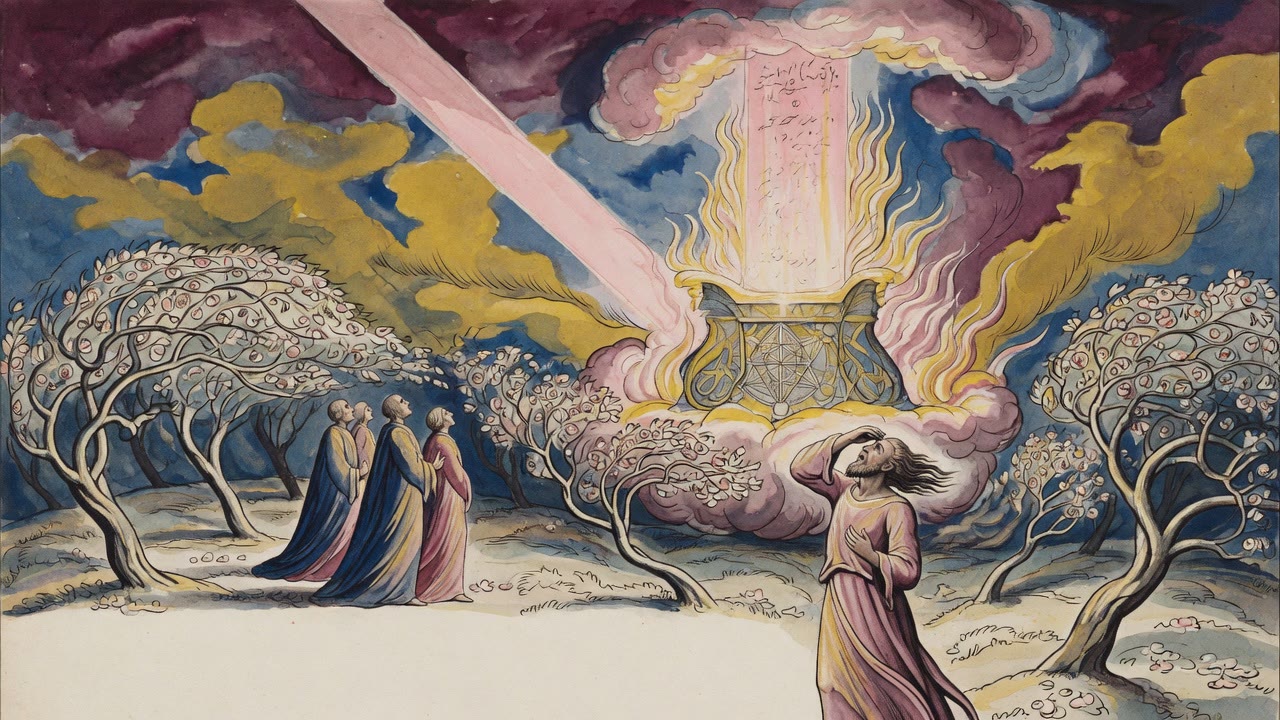
Four sages entered the Pardes, the divine orchard of mystical knowledge. Only one came out and kept talking. He came out changed in the wrong direction entirely.
Isaiah saw the heavens stretched like a curtain and mountains breaking into song. The rabbis read him as proof that creation never stopped responding.
The prophet Isaiah described a future Jerusalem so transformed that even the name of God would be pronounced differently. Rabbinic texts read this vision as a promise embedded in creation itself, a blueprint hidden inside the earth's natural cycles.
A verse in Deuteronomy promises the righteous will endure 'as the days of the heavens upon the earth.' The rabbis of Sifrei Devarim asked how long that actually is, and found their answer in Isaiah's vision of a renewed cosmos: the righteous are not merely immortal but bound to the same eternal fabric as the heavens God will make.
Sifrei Devarim finds a painful parallel between Moses's accusation that Israel is 'a people ignorant and not wise' and Isaiah's lament that Israel did not know and did not understand. Together they identify the same failure across centuries.
The rabbis taught that paradise and the place of punishment were not opposites but mirror images, created together at the dawn of the world. Isaiah walked through both and came back with a map.
Isaiah prophesied a new heaven and a new earth. The Zohar took him literally and explained exactly how new worlds get made: through new interpretations of Torah, rising each time someone understands something no one has understood before.
God hid the primordial light of the first day after Adam's sin. Isaiah prophesied its return. The Kabbalah mapped exactly where it went, how it was hidden, and what its restoration will mean for the world.
When Isaiah stood before God's throne and fell silent while the angels sang, he was watching something the patriarchs had only glimpsed in dreams.
Jeremiah spent three years mastering the secrets of creation with his son. The being they made immediately erased its own name and turned to ashes.
After the destruction of the First Temple, Jeremiah was sent to wake Abraham, Isaac, Jacob, and Moses from their rest and bring them the news. He went — but he could not bring himself to say the words.
The rabbis nearly suppressed Ezekiel for contradicting the Torah. One man saved it with 300 jugs of oil. What he preserved inside changed everything.
In the garden were two trees and two Adams. Ezekiel saw a man beneath the wings of the creatures. The Zohar says these are the same mystery.
Abraham, Isaac, and Jacob each encountered the divine -- but none of them saw what Ezekiel saw by the Chebar Canal. Ancient traditions trace a line from creation itself through the patriarchs to the terrifying fullness of Ezekiel's chariot vision.
When Jonah tried to flee by sea, a miraculous storm hit only his vessel. Every other ship on the Mediterranean sailed through calm water undisturbed.
When the great fish swallowed Jonah, he did not merely sit in darkness waiting to be rescued. Yalkut Shimoni and the Zohar describe what he saw inside: a vision of the underworld, its geography and its population, that transformed a reluctant prophet into one willing to preach repentance to the city he had tried to flee.
The Talmud describes a bird so vast that sailors thought it was standing in shallow water. One of its eggs once flooded sixty cities. It is kosher.
Midrash Tehillim reads Psalm 27 as a rope woven from three strands: the merit of the ancestors, the grace of God, and the sustaining power of Torah.
Adam broke one rule and lost paradise. The angels broke none — and still faced judgment. Midrash Tehillim asks who, if anyone, is truly exempt.
When Abraham defeated the four kings to rescue Lot, he was doing something the rabbis found astonishing: he was gathering people back under the wings of the divine presence. Midrash Tehillim on Psalm 110 reads the battle not as a military triumph but as a cosmic act of spiritual recruitment.
A rabbi famous for his aggadic wisdom is asked what it means for God's righteousness to reach the heavens. His answer turns the entire idea of charity upside down.
God created Behemoth on the sixth day, made it sterile, and preserved it for one specific purpose at the end of time. The Talmud describes what that purpose is.
On the sixth day God made a creature so vast it grazes a thousand hills each day and drinks the Jordan river whole. Its fate is already decided.
Psalm 46 declares 'therefore we will not fear though the earth be exchanged,' and Midrash Tehillim identifies the Sons of Korah as the singers who could make that declaration from personal experience. Their family had been swallowed by the earth itself. They knew what it felt like when the ground gave way, and they chose faith anyway.
Nimrod raised the Tower of Babel as an act of permanent defiance against heaven. Job, living in Nimrod's shadow, became the test case for what God does when the most righteous person in a corrupt empire refuses to break.
The Kabbalists of medieval Castile read Ruth's story as a cosmic event — her arrival in Bethlehem was not migration but the Shekhinah itself returning from exile, and her loyalty was pre-woven into the fabric of creation.
Haman did not just pick a date to destroy the Jews. He tested every day of the week, every month of the year, and every tree in creation. Every single one turned against him.
Mordecai answered a simple question about bowing with a speech on creation so vast that Haman's eventual humiliation was already embedded in the answer.
Before Haman drove a single nail, God called a cosmic council and asked the trees of creation which one would volunteer as the instrument of his destruction.
Unable to observe Shabbat openly, Esther gave her seven attendants secret names drawn from the Genesis creation account to track the days of the week.
Midrash Mishlei teaches that Wisdom built the world on seven pillars that are the seven firmaments, then identifies Queen Esther as the fulfillment of Wisdom's feast, the woman who prepared a table in this world and the next by getting Haman drunk and saving her people.
Hidden within the Purim story is an ancient teaching about the creatures God built into creation for purposes no one could foresee — until the exact moment they were needed.
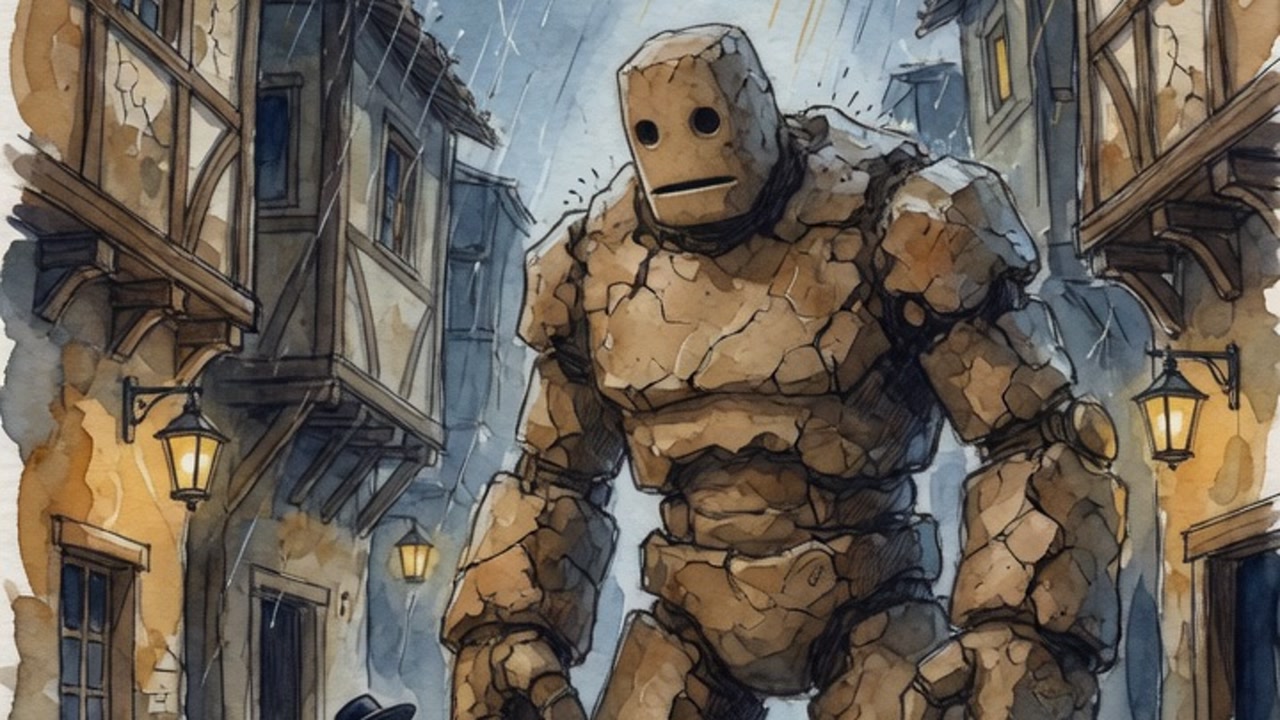
A rabbi sculpts a man from clay, writes the word for truth on its forehead, and brings it to life. The golem tradition spans from the Talmud to 16th-century Prague, and the remains may still be in a synagogue attic.
Before God spoke a word, He wrapped Himself in light like a garment. That primordial radiance, not the sun, was the first light of creation, and God hid it before the wicked could use it.
God created two Leviathans on the fifth day, killed the female before they could reproduce, and salted her meat. It has been aging ever since, reserved for the banquet at the end of days.
In the Talmud, there is a passage where God regrets creating the evil inclination. The rabbis do not treat this as a philosophical problem. They treat it as one of the most important things God ever said.
Most people read the rainbow as God's promise never to flood the world again. The rabbis read it as a weapon God hung up — still loaded, still pointed at humanity — as a constant reminder of what we almost caused.
Rabbi Elijah of Chelm created a clay man with the Sefer Yetzirah. It kept growing. Stopping it meant getting within reach of something that could crush him.
Three times the Roman court tried to stump Rabbi Joshua on God, creation, and death. Three times he walked away.
Rabbi Loew built the Golem to defend Prague's Jews. When the emperor ended the blood libel, its work was done. Unmaking it was as ceremonial as creating it.
A single bird, the chasidah, becomes the key to understanding why the Levites were chosen for sacred service. Midrash Tehillim on Psalm 104 traces an argument between two sages about the stork's character, and finds in that argument the founding logic of the entire priestly tribe.
Midrash Tehillim on Psalm 104 makes a startling claim: the great ocean is in direct communication with Sheol, the realm of the dead. The ships on the surface and the creatures in the deep are all, in the Midrash's reading, participating in a cosmic conversation about mortality and judgment.
A gathering of the greatest sages of the Mishnaic era debated the birth of the new moon and arrived at a far larger discovery: heaven was created by a single divine word. Pirkei DeRabbi Eliezer records what happened when the leading scholars of their generation turned their attention to the moment before time began.
Pirkei DeRabbi Eliezer uses the fate of rivers as a mirror for the fate of Israel: sweet and life-giving in their course, but bitter when cut off from their source. The rabbis saw in hydrology a complete theology of exile and covenant faithfulness.
The new moon festival was never supposed to be lumped in with the daily offerings. Sifrei Bamidbar explains why God gave Rosh Chodesh its own verse, its own laws, and its own theology of time. The moon's monthly renewal is the calendar's argument for redemption.
Before the world existed, God poured divine light into ten vessels. Seven of them shattered. We are living in the wreckage, and every good act gathers one more spark back toward its source.
Before creation, each of the 22 Hebrew letters appeared before God and begged to be the first letter of the Torah.
The rabbis taught that the Torah given at Sinai was a copy — the original was written in black fire on white fire and existed before God created anything else.
Long before modern psychology mapped the human mind, Kabbalists mapped the Divine — and what they drew looks nothing like you'd expect.
Kabbalists discovered that the God of the Bible had a face turned toward the world — and a deeper face turned away from it entirely.
In the 16th century, one rabbi answered the oldest question in theology — how can anything exist besides God — with an idea that changed Jewish mysticism forever.
The phrase now on every Jewish charity brochure was originally about something far stranger — repairing a catastrophe that happened before the universe began.
When Adam was cast out of the Garden, he didn't leave empty-handed. According to Jewish legend, the angel Raziel brought him a book containing every secret of the universe.
In 13th-century Kabbalistic tradition, Samael and Lilith were created together like a dark mirror of Adam and Eve, then torn apart by demonic rivalry.
Before the first human breathed, a primordial Adam existed as the divine blueprint for all creation. Kabbalists say the entire cosmos is organized around four letters of one Name.
The Kabbalists found a song buried in the letters of Bereishit. They say it cannot be heard until Samael is gone from the world. Moses already sang a version of it once.
The rabbis of ancient Palestine found Israel's name encoded in the Torah's opening word, drawing a line from creation itself to Jacob's people.
Before the Adam of Genesis, Kabbalah describes a primordial form that preceded matter itself, a cosmic blueprint so vast our world exists inside its shadow.
Adam Kadmon is not the Adam of Genesis. He is the primordial cosmic blueprint - ten divine attributes arranged in the shape of a human.
When God announced He would make a human, the angels said no. He destroyed two entire angelic companies before the third group agreed to comply.
The Kabbalists say the universe was built around a human shape. Adam Kadmon existed before Eden, and humans carry his unfinished work.
Samael was not just a tempter. The Kabbalists found him woven into creation itself, embedded in the very music of the Torah.
Before the Adam of dust, Kabbalah says there was an Adam of light so vast that the entire universe was contained within his form.
Before the first man, the Kabbalah says there was another Adam: a primordial body of divine light. What happened to that light is why repair is still necessary.
Everyone knows Metatron was once Enoch, the man who walked with God. But the Zohar preserves an older, stranger claim — Metatron existed before the world.
In the fourth heaven stands the Temple never destroyed. Michael is its high priest. The Sefer HaBahir says God built the whole structure alone, without angels.
The Tikkunei Zohar says the firmament is a wall between waters. Above it is an ocean. Leviathan swims in it as the Tzaddik, aligned with God, not fighting Him.
Adam Kadmon is not the Adam of Genesis. It is the primordial human form that preceded creation, the blueprint on which the entire universe is built.
Solomon ibn Gabirol, the 11th-century philosopher-poet, used Kabbalistic secrets to construct a female servant from wood. When accused, he dismantled her.
How can the four letters of God's name represent Sefirot that are supposed to be utterly beyond form and boundary? Baal HaSulam's answer reshapes everything.
The Kabbalists mapped divine light through creation with precision. The key to the whole system is a force that resists, and it was built in from the beginning.
Before the world could exist, three adjustments had to be made to the channels of divine energy. Without them, the light would shatter everything it touched.
Lurianic Kabbalah teaches that creation would collapse without a mediating force. That force has a name, a face, and a role no one else can fill.
At the beginning, the Zohar says, the sun and moon were equal. Then one was reduced. Kabbalistic tradition preserves the full story of why -- and what it cost.
In the Ramchal's Kabbalah, Benjamin is not just a patriarch's youngest son. He is the cosmic spirit that makes creation fertile and whole.
In Kabbalistic teaching, Leah is not just a matriarch who wept for a husband who loved another. She is the concealed face of God turned toward the world.
Rabbi Moshe Cordovero taught that holiness and evil share the same source, but they draw their existence in entirely different ways. The difference explains everything.
When God withdrew to make room for creation, something remained. Isaac Luria called it the primordial residue, and his entire system of Kabbalah flows from what that residue became.
The Kabbalists described a primordial human who existed before the Garden of Eden, before the first sin, before time. Adam Kadmon was the divine blueprint that all of creation was built inside.
God's infinite light did not pour into creation in one undifferentiated flood. The Kabbalists taught that it entered through precisely chosen pathways, and the choice of pathway is the difference between a world that can exist and one that cannot.
God tried to create a world before this one. The vessels shattered. The shards fell. And according to Isaac Luria, everything wrong with the world we inhabit comes from those fragments, scattered and waiting to be gathered.
Creation did not start clean. The Kabbalists taught that the four worlds were originally mixed with good and evil together, and that the separation is a cosmic process still underway.
Before Adam, the Kabbalists taught, there were kings. They were early configurations of divine light that could not sustain themselves. Their failure explains why the fall of Adam went the way it did.
The Kabbalists taught that the Garden of Eden is not primarily a geographical location. It is a level of divine reality, the sefirah of Malchut made manifest, and its lights were the first things to emerge from Adam Kadmon's eyes.
After God contracted to make room for the universe, what remained in the empty space became the raw material of creation -- and the Kabbalists traced a direct line from that primordial residue to the longing at the heart of the Shekhinah.
The Vilna Gaon's reading of the Sefer Yetzirah reveals ten divine dimensions that are simultaneously infinite and bounded -- and the patriarch who first understood them spent his life demonstrating what that paradox looks like in practice.
The Tikkunei Zohar opens with a vision from Daniel: 'the wise shall radiate like the radiance of the firmament.' The Kabbalists identified these wise ones as Rabbi Shimon bar Yochai and his inner circle of mystics.
Most people picture Leviathan as pure chaos and destruction. The Tikkunei Zohar sees something stranger: the great sea beast is the tzaddik, the righteous one, the axis on which the divine world turns.
The Tikkunei Zohar finds Lilith encoded in the letters of Bereishit, the Torah's opening word, revealing that the shadow was built into creation before the first day had ended.
God created a male and female Leviathan, then killed the female to prevent the world's destruction. Her salted flesh has been waiting since creation for the banquet at the end of days, when the tribes of Israel will finally eat.
From Jeremiah's golem that could not speak to Rabbi Loew's golem of Prague, every golem in Jewish tradition reaches a point where its creator must destroy it. The reason is always the same.
Jewish tradition maps the cosmos into seven layered heavens, each with its own purpose and its own angelic staff. Michael, prince of the highest heaven, does something no one expects of an archangel: he collects human prayers and brings them before God like an offering.
Four rabbis dared to enter the Pardes, the mystical orchard of divine secrets. Three of them were destroyed by what they encountered. Only Rabbi Akiva entered in peace and left in peace. The tradition spent centuries asking how.
On Yom Kippur, the High Priest Rabbi Ishmael ben Elisha entered the innermost sanctuary of the Temple. He expected to offer incense before God. Instead, God asked him for a blessing. What he said has been recited every morning since.
Enoch stood before God and was given a reed. For thirty days, Pravuil dictated all of creation -- every star, every soul -- and Enoch wrote it down.
Before Enoch was taken for the final time, he told his sons what he learned about time and creation -- and what the 366 books he was leaving them were for.