Shabbat Argued for Adam's Life and the Earth Shared His Curse
Before Adam was cursed and expelled, Shabbat stepped forward and argued against the first death. Then nine curses fell, and the silent earth received one too.
Table of Contents
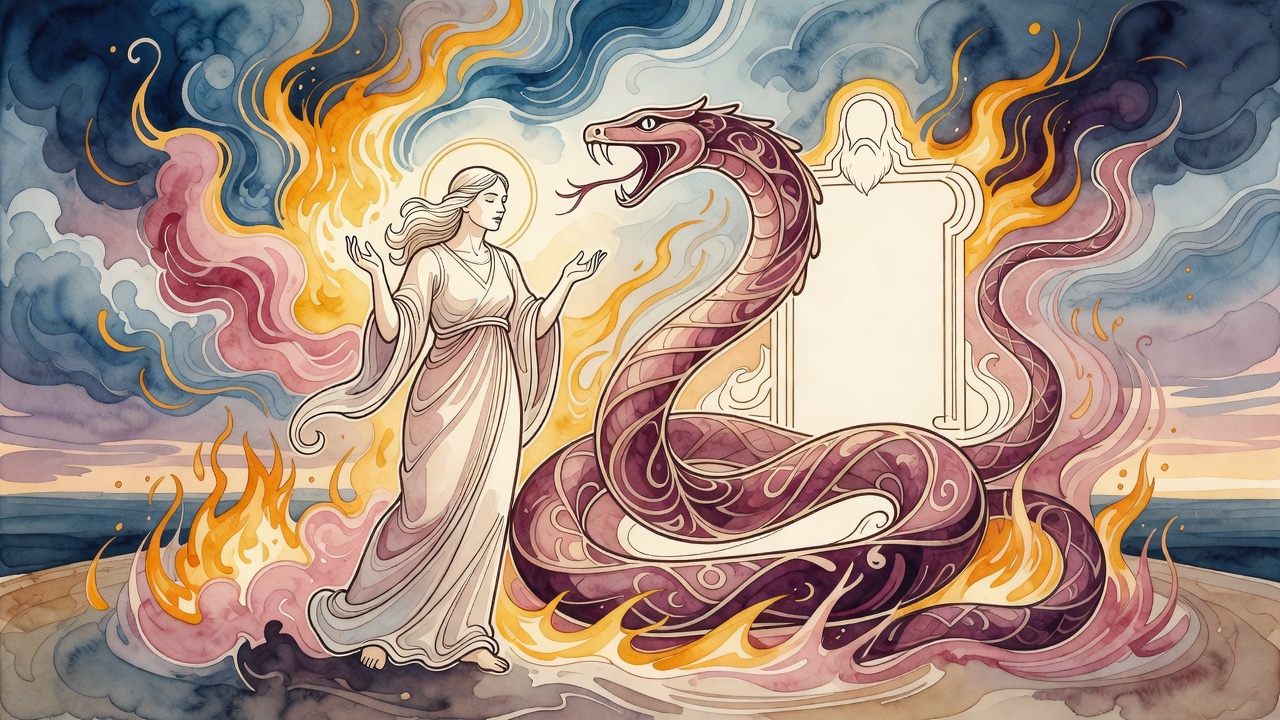
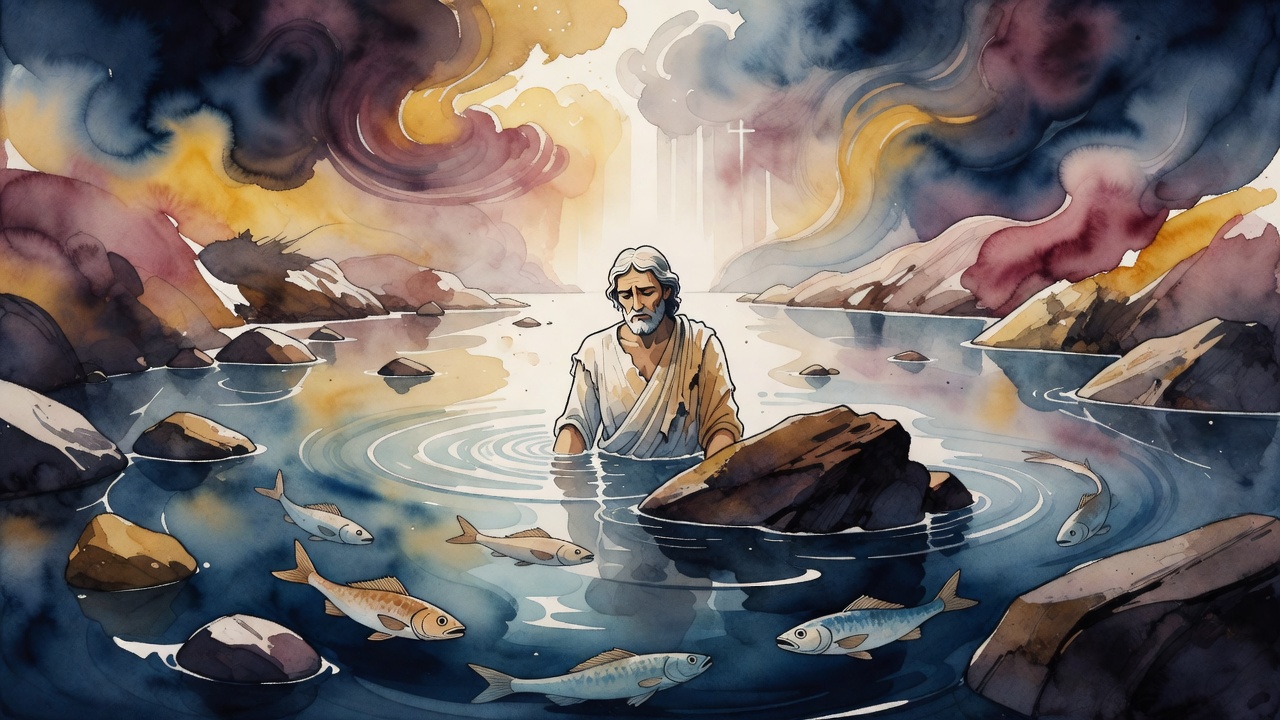
Shabbat spoke in Adam's defense before he was driven out. This is the detail that changes the shape of everything that follows. The ministering angels had escorted Adam into the garden with music and celebration, as though for a royal procession. Now they wept as he was driven out, calling after him the verse from Psalms: man in glory does not tarry overnight, he is like the beasts that pass away. And in that moment, before the sentence was final, the Sabbath itself stood up and argued.
 Click for full size
The Sabbath Argues for Adam's Life
"No one has died yet," the Sabbath said. "In all six days of creation, with all the making and naming and organizing that happened, not a single death. The world had been made alive and nothing had been killed in it. And now on the very day I was blessed and sanctified, You will begin with a murder? Is this what my sanctity means? Is this my blessing, that the first death in the world happens on the first Shabbat?"
God heard the argument. By the merit of the Sabbath, Adam was spared from Gehinnom, the place of judgment, the burning valley that would have been his end. Saved from the immediate sentence, he composed the first human poem ever spoken. A psalm, a song for the Sabbath day: that verse in the Psalter, Rabbi Simeon taught, was composed by Adam in gratitude for the day that advocated for his life.
Nine Curses Fall and the Earth Receives One
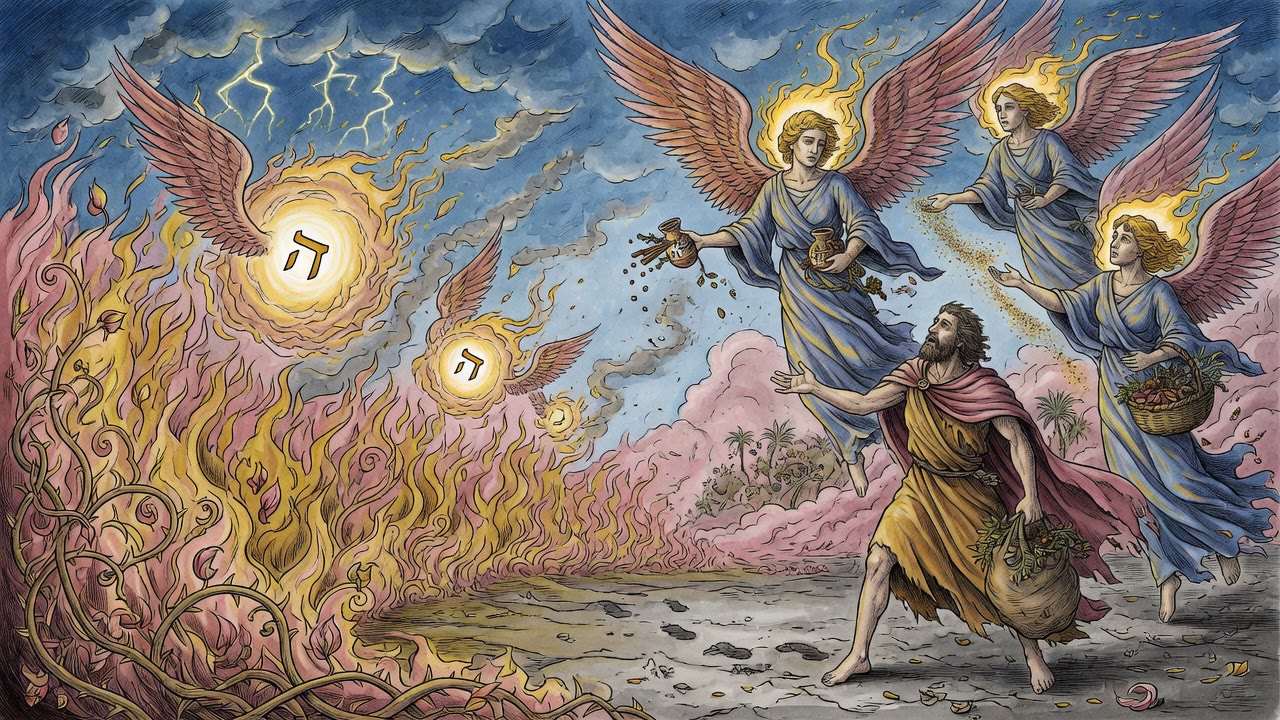
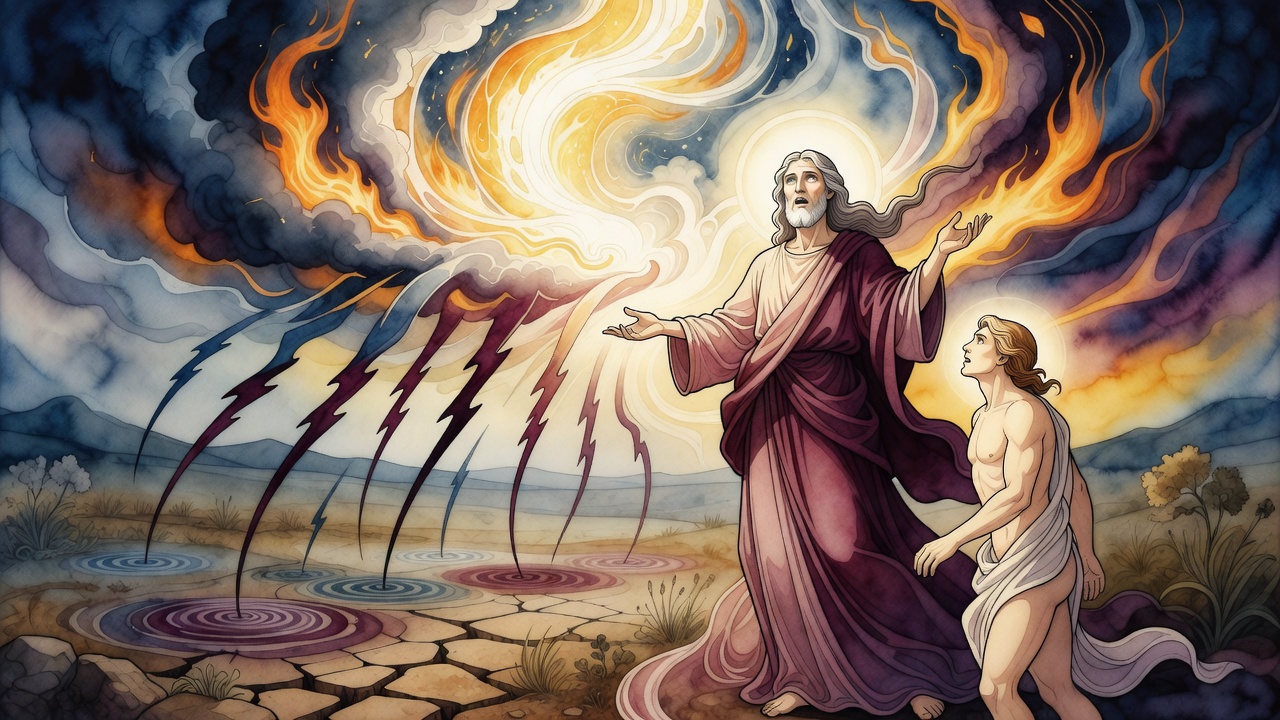
But spared from Gehinnom (the realm of judgment after death) is not spared from consequence. The three of them, Adam, Eve, and the serpent, had already set things in motion. Nine curses descended. Adam received his share: the sweat, the thorns, the bread earned from ground that resisted him. Eve received hers. The serpent received its fate crawling on its belly.
The earth received a curse too, though the earth had not eaten the fruit, had not reached for it, had not desired it. It was innocent in the way that ground is innocent: passive, patient, present at whatever happens on its surface. The rabbis asked why the silent earth was punished alongside the ones who chose. The answer they gave is the answer that runs through the deepest logic in the Adam story: the ground had already fed Adam, had already offered its fruit to him, had already participated in the abundance of the garden before he used it to disobey. In receiving his curse, the earth received a share of what his disobedience cost the world.
Adam's Hours in the Garden
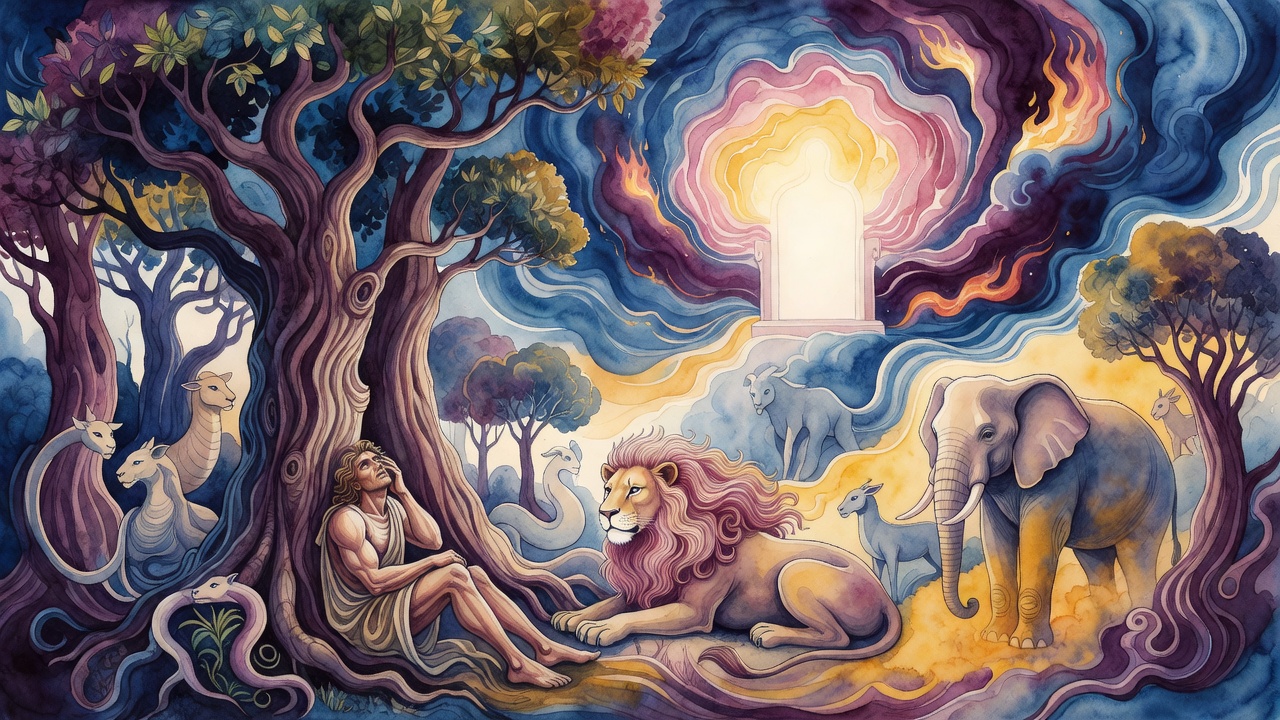
Pirkei DeRabbi Eliezer preserves the timeline with unusual precision. Adam entered the garden at the seventh hour of the sixth day. By the ninth hour he had sinned. By the tenth hour judgment was pronounced. By the eleventh hour he was driven out. By the twelfth hour he was standing outside as the Sabbath descended. He had been inside for five hours. He spent the rest of his life outside.
What the Sabbath did by stepping forward in that moment was not rescue Adam from all consequences. It bought him time. It bought him a long life in which to do what the nine curses now required: labor, pain, the slow work of returning what the disobedience had broken. The first psalm was composed at the edge of the garden, by the light of the very first Shabbat, by the first human being who understood that he was alive by mercy rather than by right.
What Saved From Gehinnom Actually Means
The merit of the Sabbath spared Adam from Gehinnom. The tradition is careful about what that means. Gehinnom is a place of purification, of burning away what cannot be redeemed, of consequence that has no exit. To be spared from it entirely is a significant mercy. But the sparing did not undo the curses. The curses were already in motion. What Adam gained was not exemption from consequence but exemption from a consequence that would have been final. He would labor. He would sweat. He would return to dust. But he would have time first, and in the time he would compose the first poem and learn the weight of mercy.
← All myths