Joshua Spoke the Name and the Sun Stopped at Gibeon
The sun refused Joshua's command at Gibeon, insisting it was older than any man. Joshua answered it, and the sun stood still.
Table of Contents
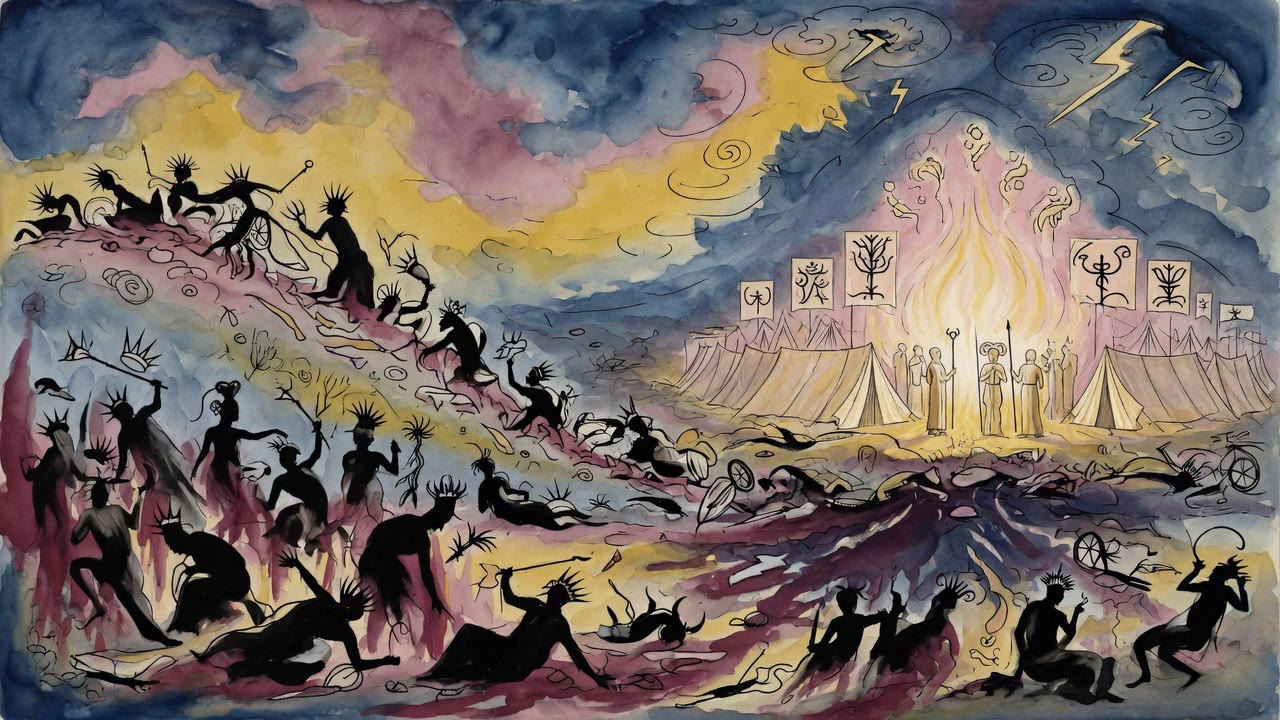
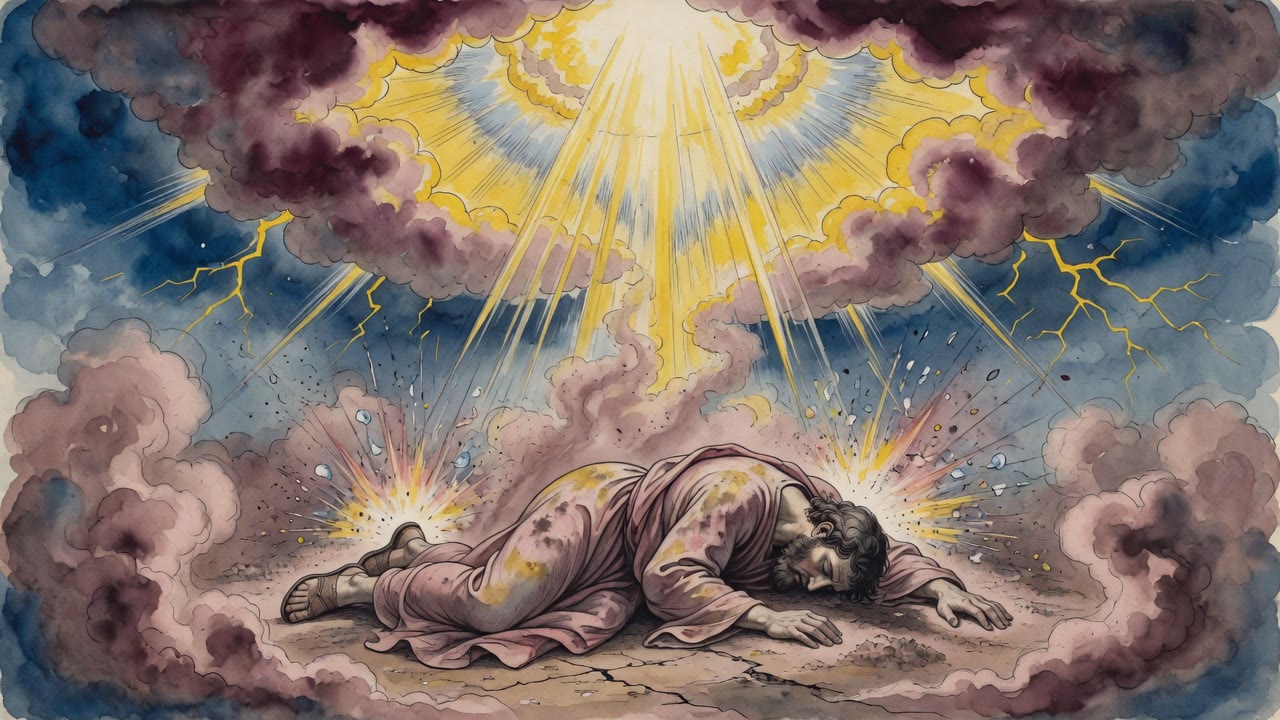
Friday afternoon, and the sun was wrong. It kept moving. Joshua stood in the valley below Gibeon, watching his army cut through the Amorite coalition, watching the shadows lengthen, watching the enemy commanders look up and smile. They knew what the sun setting meant. Combat would have to stop. And the army they could not finish off would live to regroup and attack again.
 Click for full size
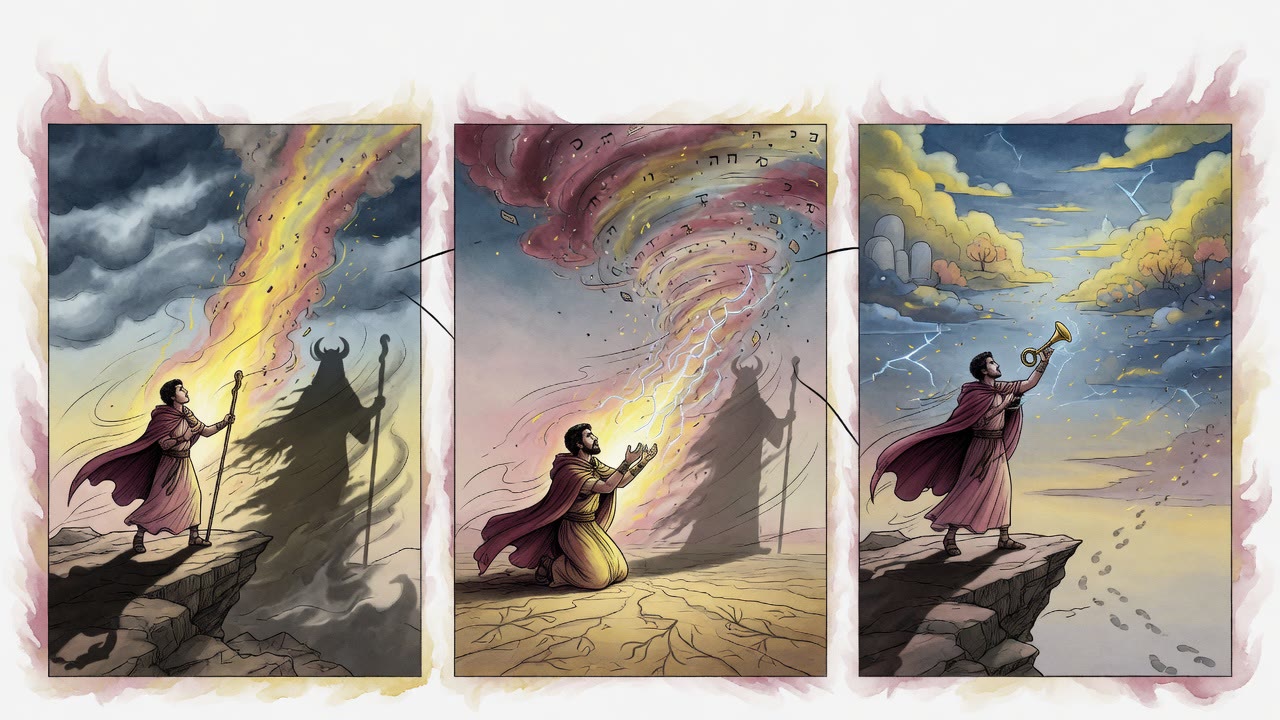
But the shadows were not just a clock. The Amorite sorcerers had turned their eyes to the sky from the start of the battle, working something against the Israelites through the movements of the sun and moon. The heavens had been pulled into this war on the wrong side. Joshua understood that stopping the sun was not a convenience. It was a necessity.
The Name That Held the Sky
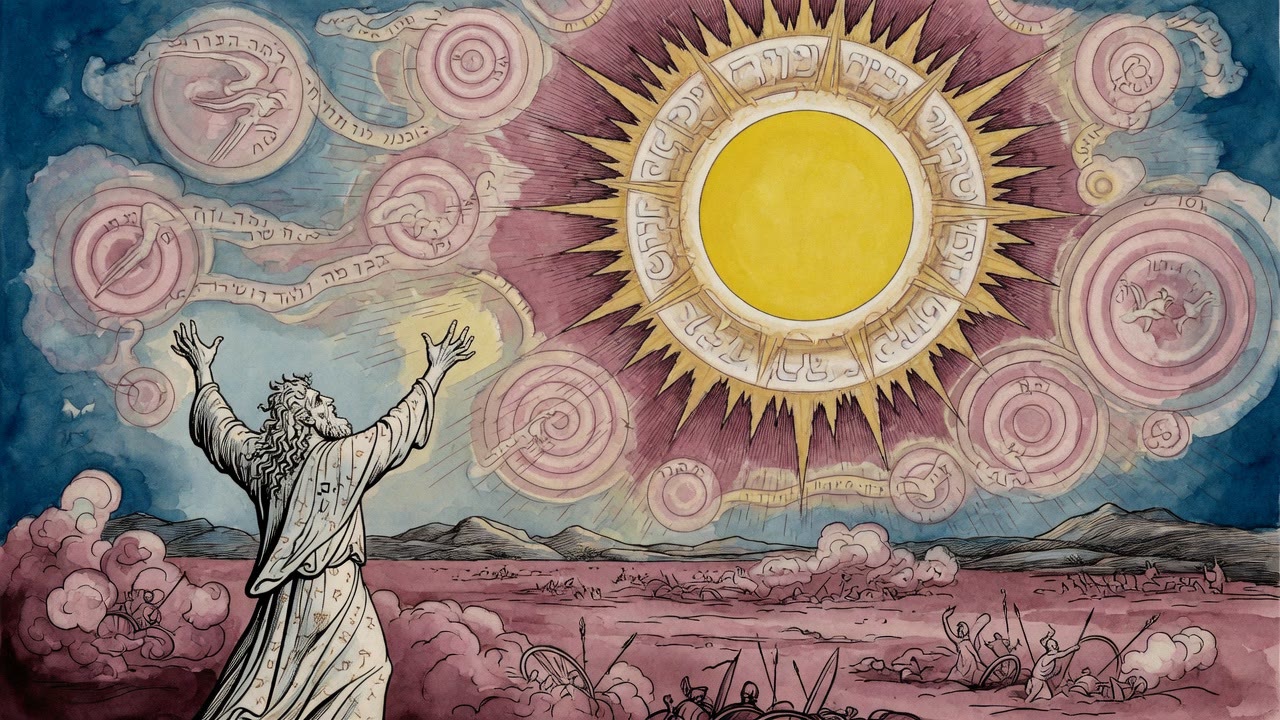
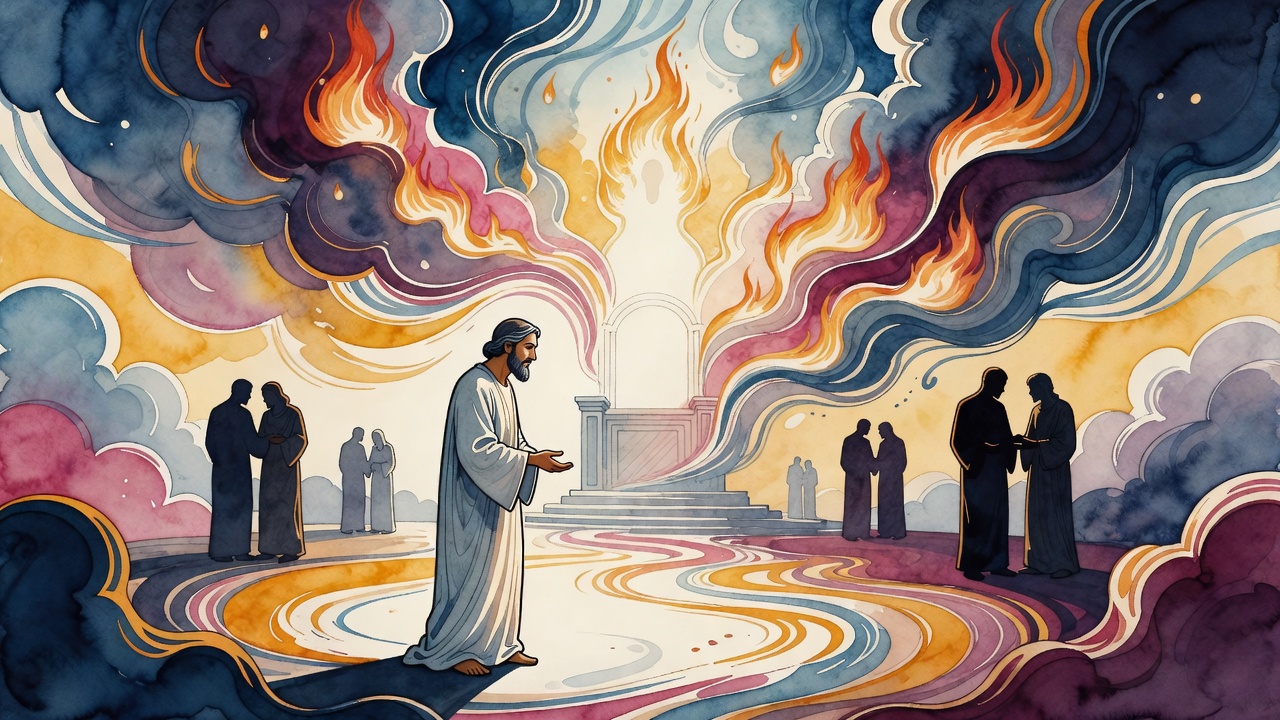
He spoke the Shem HaMeforash (שם המפורש), the explicit Name of God, the one Moses had transmitted only to those found righteous enough to carry it. And he commanded: "sun, stand still over Gibeon. Moon, hold over the valley of Aijalon" (Joshua 10:12).
The moon held.
The sun refused.
Two days older than any human being alive, the sun had been in the sky before Joshua's grandfather's grandfather drew a first breath. It had crossed the heavens for patriarchs, for Egypt's pharaohs, for the wilderness years. Now a general in the dust below it was telling it to stop, and it balked. Who was he to command an older thing?
Joshua answered without flinching. "A free-born youth," he said, "does not hesitate to give orders to an old slave that his father purchased." And had not God given heaven and earth to Abraham (Genesis 14:19)? More than that: had the sun not bowed before Joseph, as Joseph's own dream had foretold (Genesis 37:9)? The sun knew what submission looked like. It had already performed it once.
The Sun's One Objection
The sun tried once more. "If I go silent, who will sing God's praises?"
Joshua: "be silent, and I will sing instead."
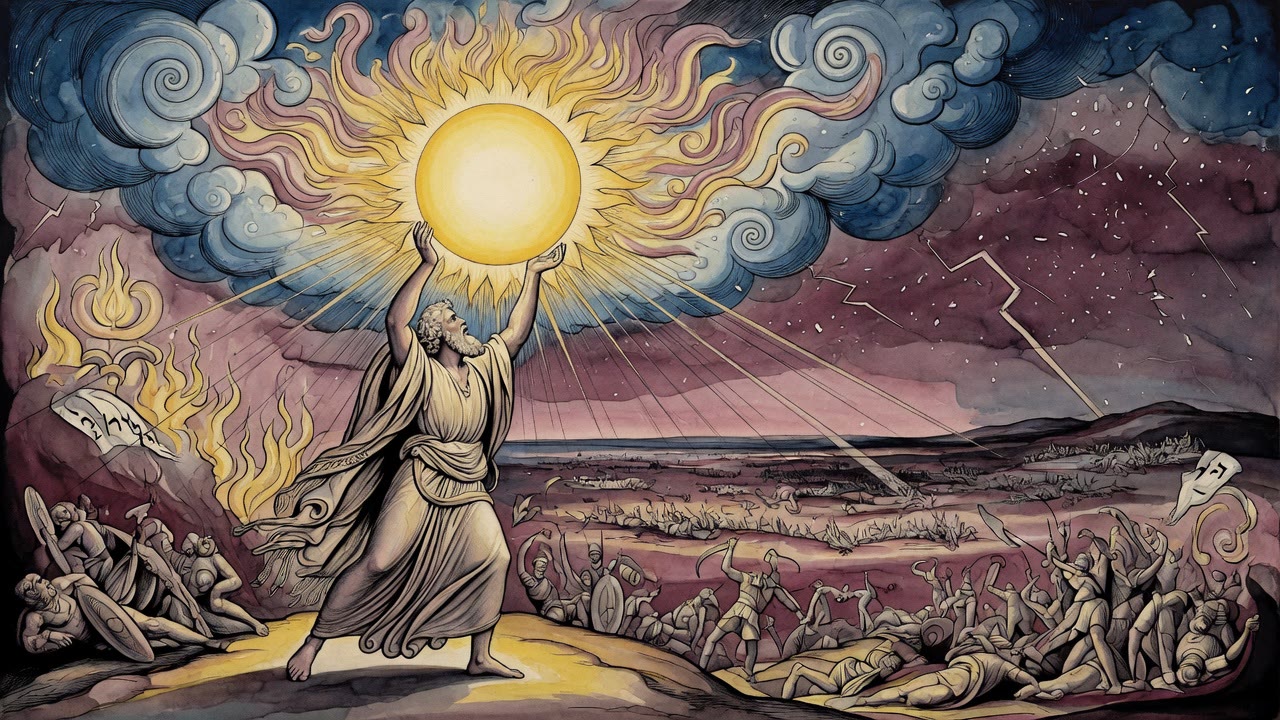
He sang. The sun stopped. The moon held the valley in place. The Amorite sorcerers lost the sky they had borrowed. The battle finished before Shabbat arrived, which was the only outcome Joshua had been willing to accept from the beginning.
What the Heavens Were Made From
The debate that explains all of this happened not in Canaan but in a study house, centuries later, over a verse in Job. Two sages were arguing about what the heavens are made of and what that implies about who owns them.
Rabbi Eliezer said: "everything in the heavens was created from the heavens, everything on earth from the earth." He built his case from the Psalms (Psalms 148:1-3), where the celestial lights are called to praise God from above, and the sea creatures from the earth below. Each domain produces its own.
Rabbi Yehoshua took the opposite position. He said: "everything in the heavens and on earth was created from the heavens alone." Snow falls to earth, but it forms above. The sun rides through the sky, but its origin is celestial. Rav Nachman cited Job (Job 9:7): God commands the sun and it does not shine. The word the verse uses for sun is heres, the same word used for earthenware pottery. The sun is a vessel. Vessels are shaped by their maker, and they answer their maker.
The sages disagreed on the mechanics, but the implications pointed the same direction regardless. If the sun comes from heaven, it belongs to a domain where divine will overrides natural law. If it was made from earth, it remains a vessel under the hand that formed it. Either way, it obeys.
A King the People Did Not Want
Before the battle, before the sun ever became a problem, the people had not wanted Joshua at all.
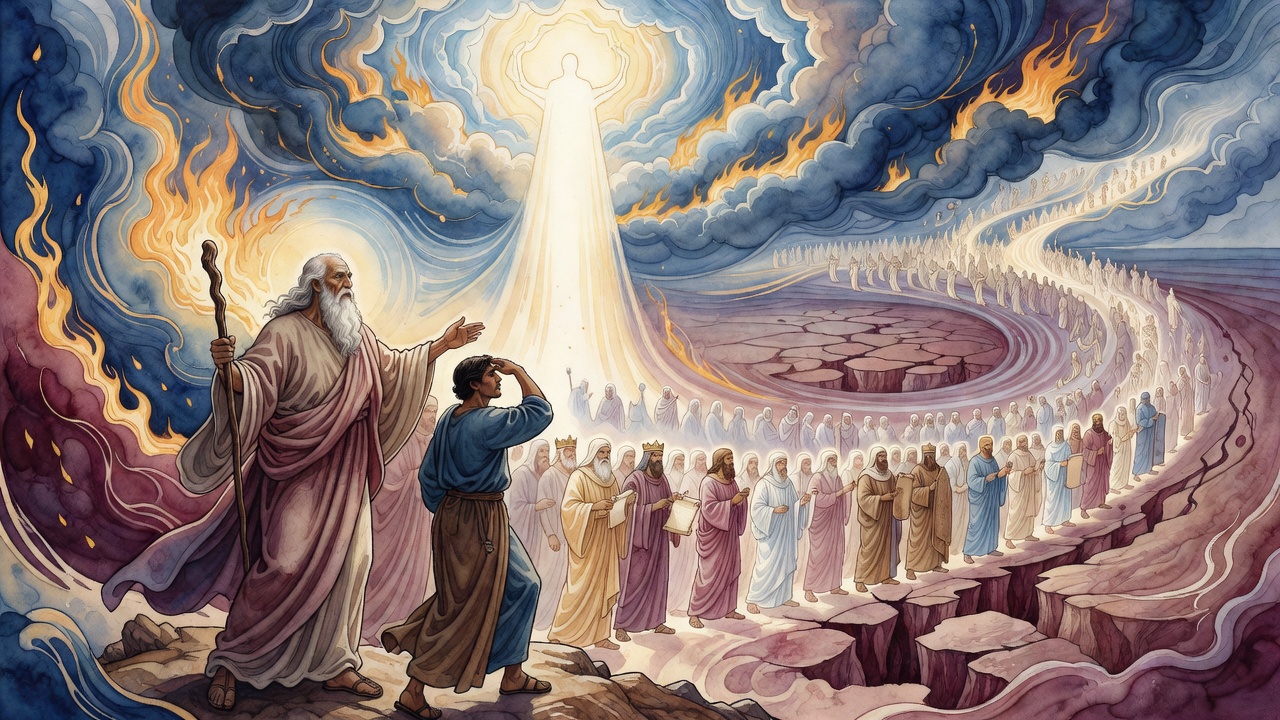
When a herald summoned Israel to Joshua after Moses died, not a single person came willingly. They shook. Some found sudden headaches. Each one wept: "woe to you, O land, whose king is a child" (Ecclesiastes 10:16). Moses had argued God back from destruction twice. Moses had split the sea and held his arms over the battle at Rephidim until Israel prevailed. Moses had carried the Torah down the mountain in his own hands. Joshua was the attendant who had waited outside the tent.
Then a voice from heaven cut through the mourning camp: "when Israel was a child, I loved him" (Hosea 11:1). Not a comparison. A continuation. The love that had held through Egypt and the wilderness and Sinai did not depend on Moses as its vessel. It was still present. Joshua was the next vessel, and the heavens would demonstrate as much when the time came.
Shabbat Waiting at the Edge of the Valley
The army did not know, as Joshua's voice rose and the Name moved through the air over Gibeon, that the sun had ever been created to do this. They only knew the shadows stopped moving. The Amorite commanders had their sky-leverage stripped away. The battle could finish.
Joshua had refused, from the first moment he understood what Friday afternoon meant, to bring his people into Shabbat carrying an unfinished war. That refusal was not stubbornness. It was a recognition that Shabbat and military victory were both holy obligations, and that the God of Israel was capable of honoring both on the same afternoon. The sun had been created, as the sages would later argue over Job and the Psalms, from the kind of stuff that answers to heaven. It was already, in its nature, the kind of thing that could be commanded.
On a Friday in the valley of Aijalon, it was.
← All myths