470 myths · Page 2 of 16
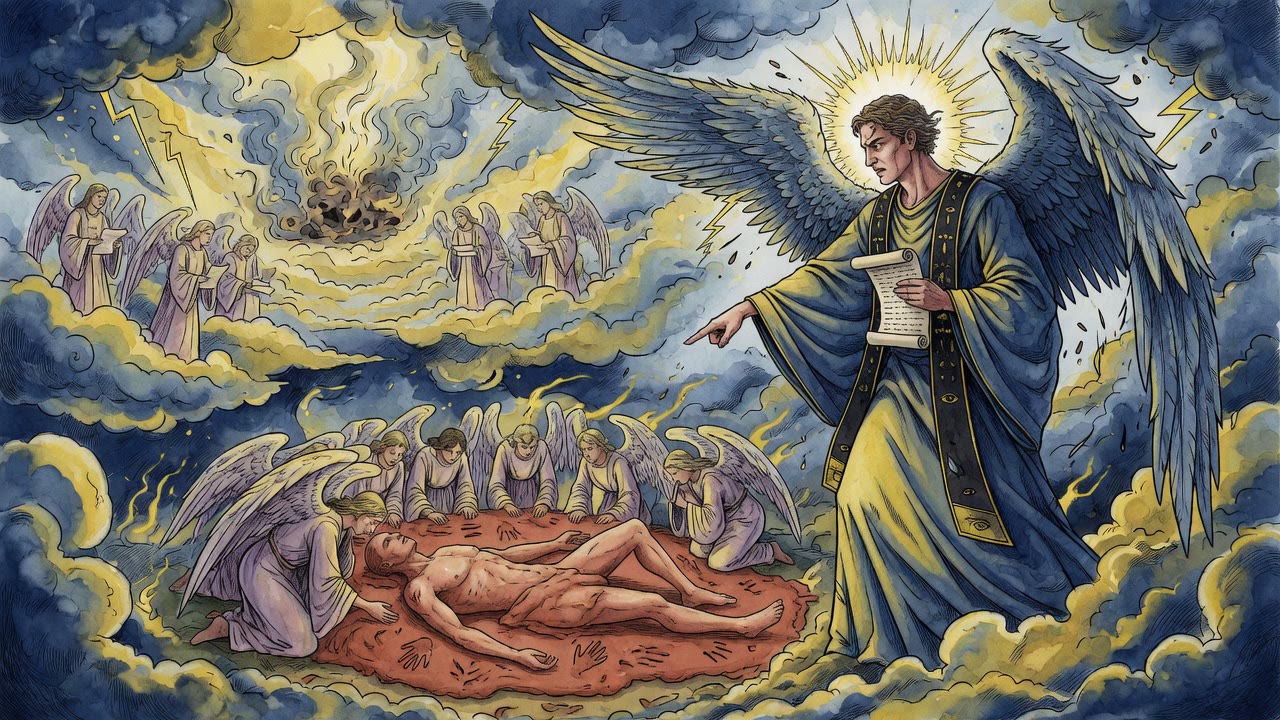
When God formed Adam and commanded the angels to honor him, Ha-Satan, the Accuser, refused. Formed from fire, he would not bow before dust.
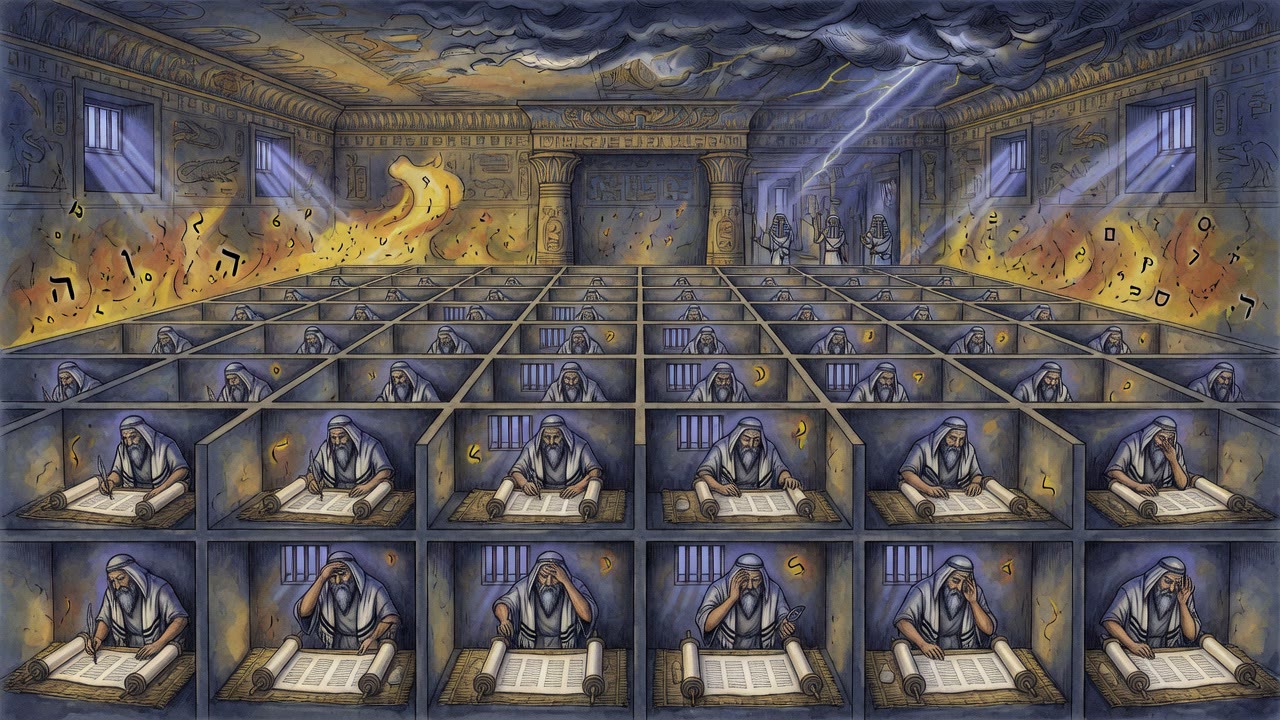
Ptolemy put seventy-two Jewish scholars in separate rooms and demanded a Greek Torah. Each made the same thirteen changes without consulting the others.
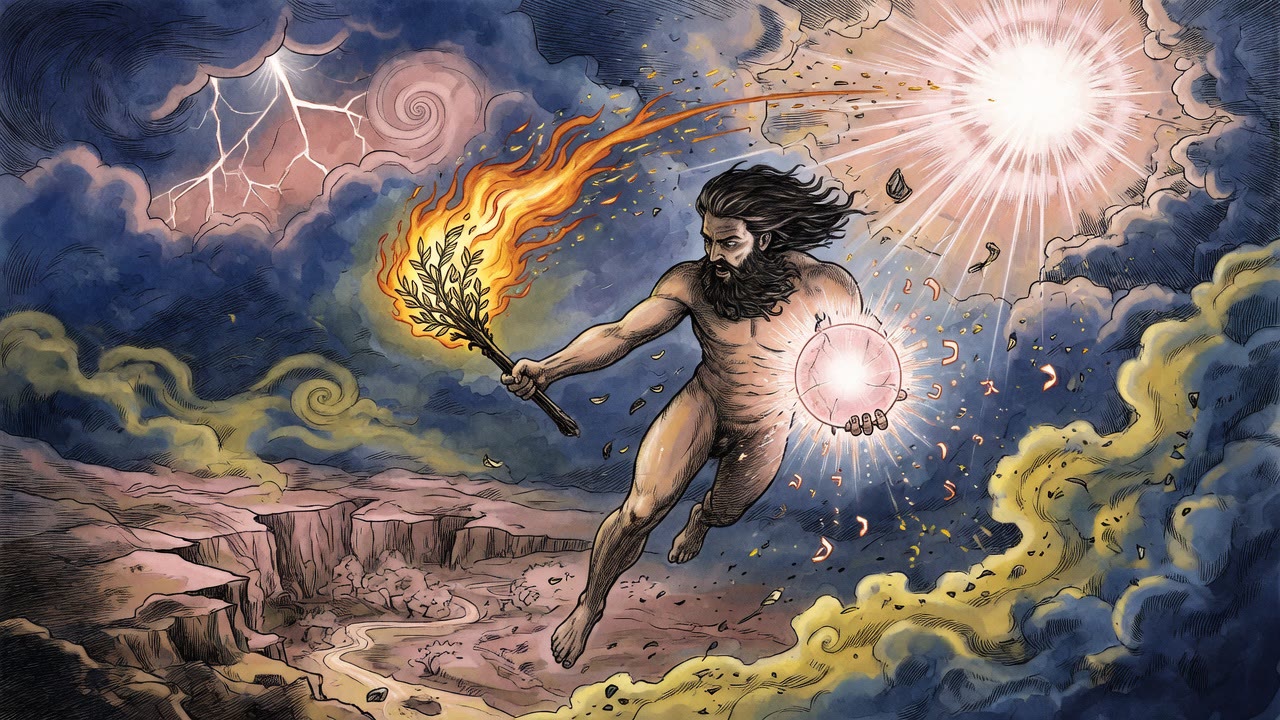
Before Adam walked the earth, an older tradition says he dwelt in heaven. When he came down, the sky blazed. He brought fire and light with him.
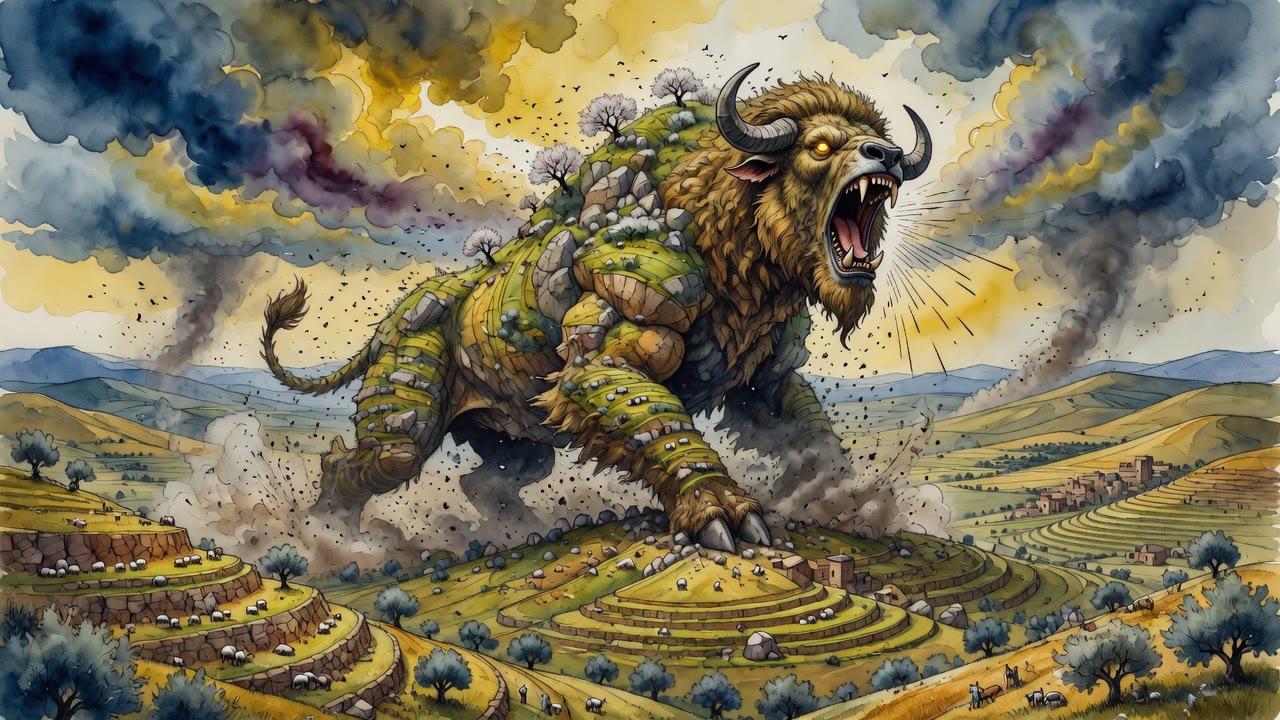
A beast sprawls across a thousand hills, drinks a river that circles the earth, and roars once a year in Tammuz to silence every animal alive.
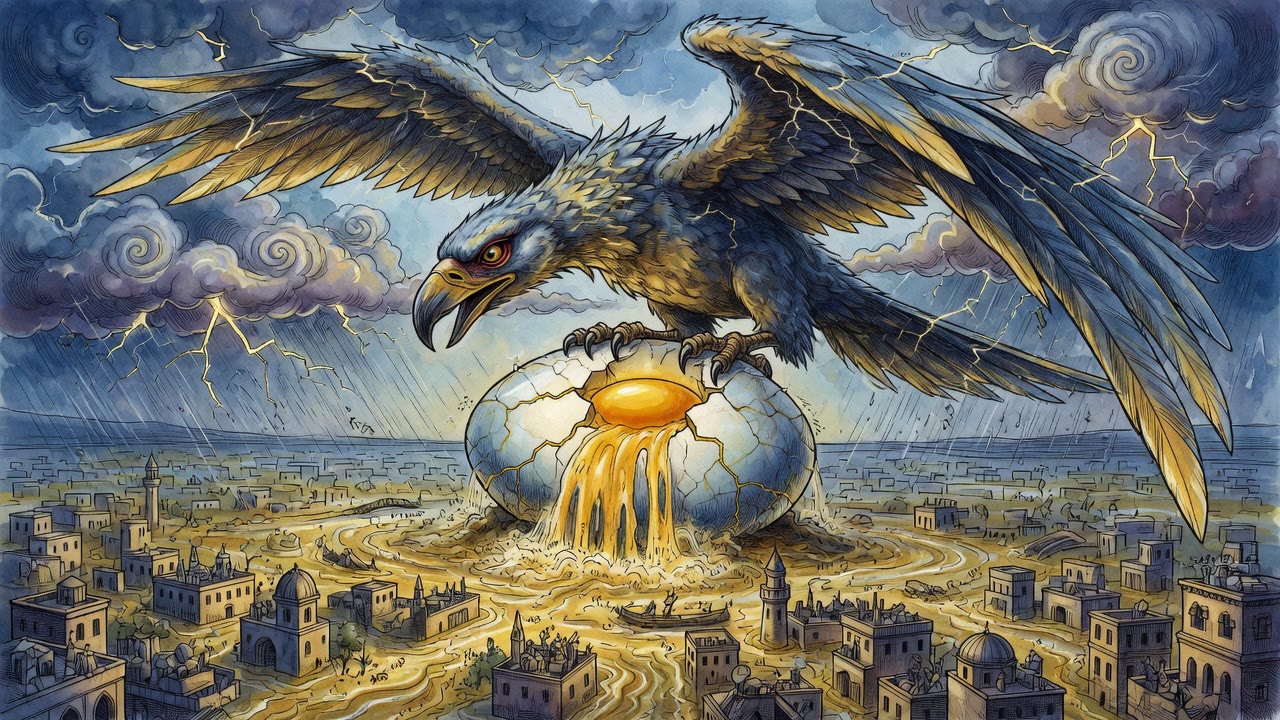
Sailors saw a bird standing in the sea with water only to its ankles and thought they could swim. A voice from heaven knew better about the Ziz.
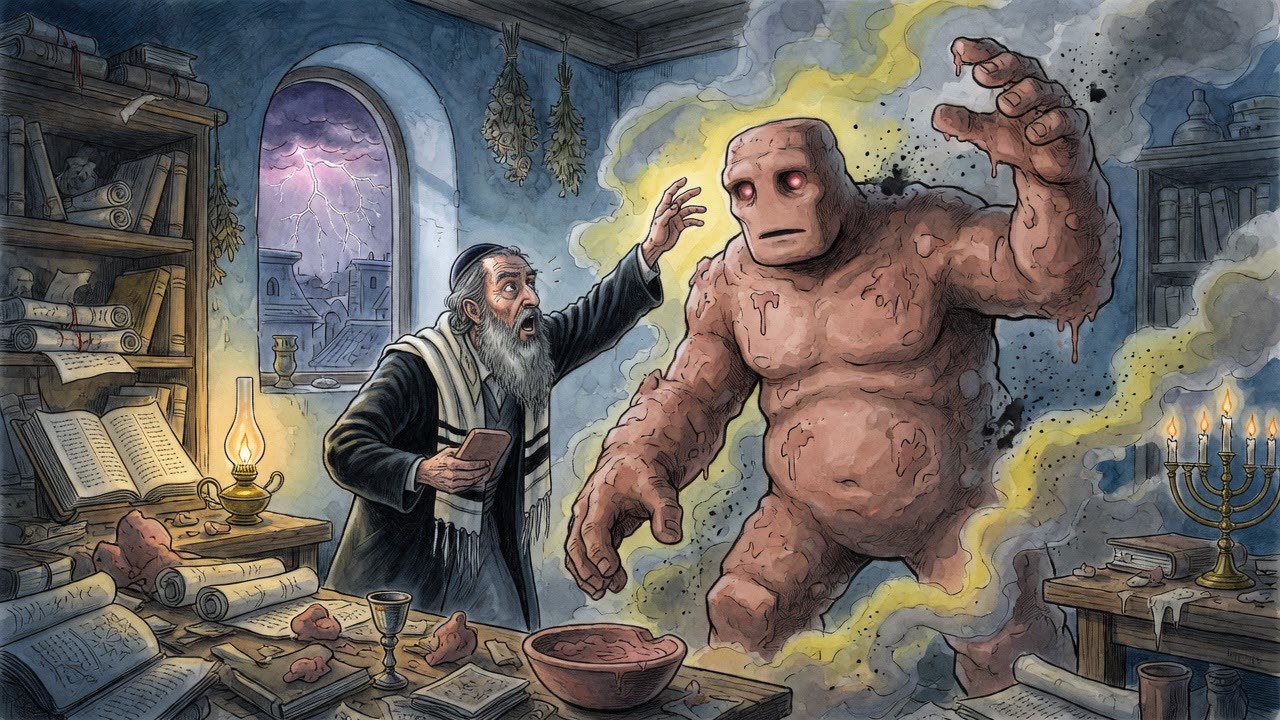
Rabbi Elijah of Chelm shaped a man from clay and wrote truth on his forehead. The golem kept growing until Rabbi Elijah had to get close enough to stop it.
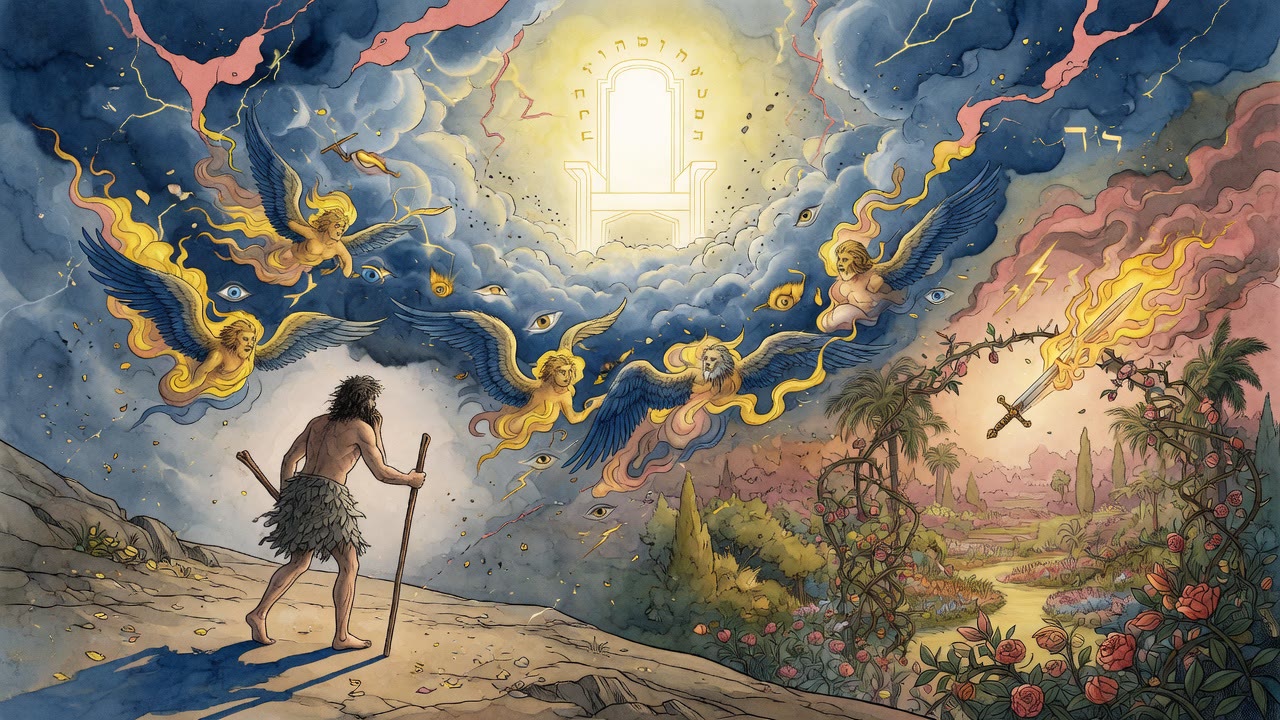
Adam broke one commandment and lost the Garden. The host of heaven, who never tasted hunger, still answers to the same Judge.
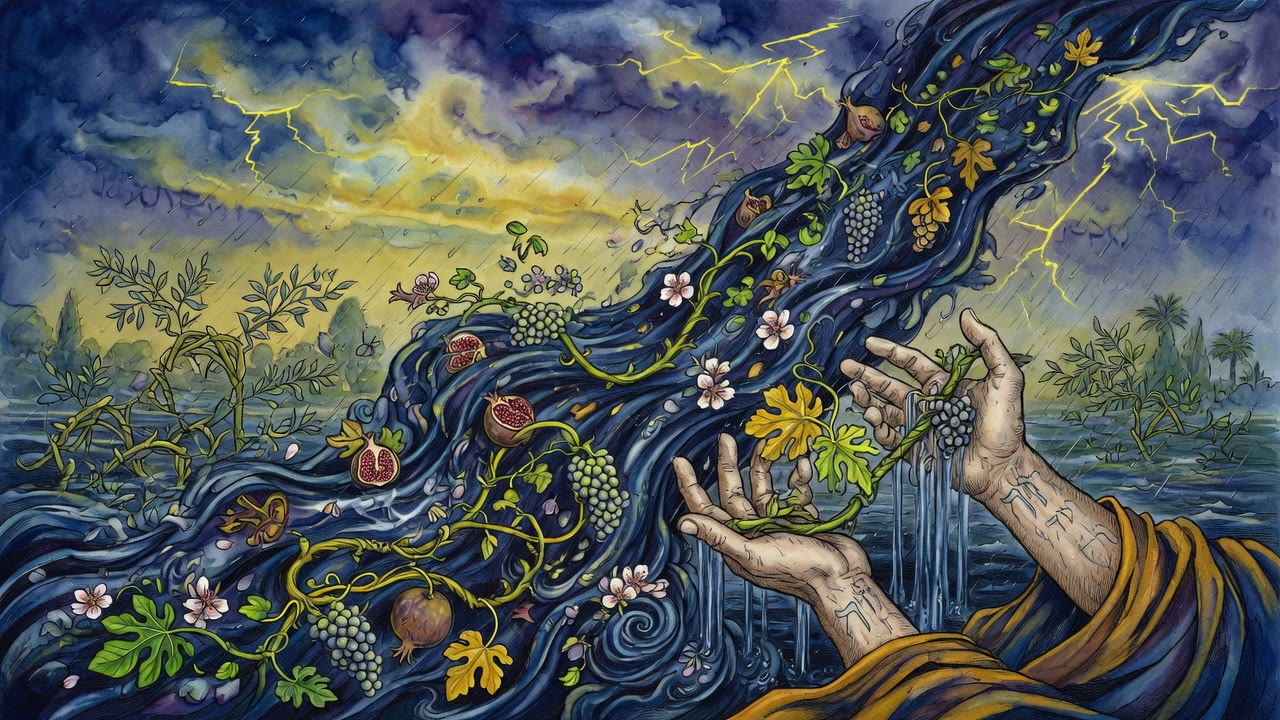
The flood that drowned the world tore a vine loose from the garden of Eden and carried it downstream, straight into Noah's waiting hands.
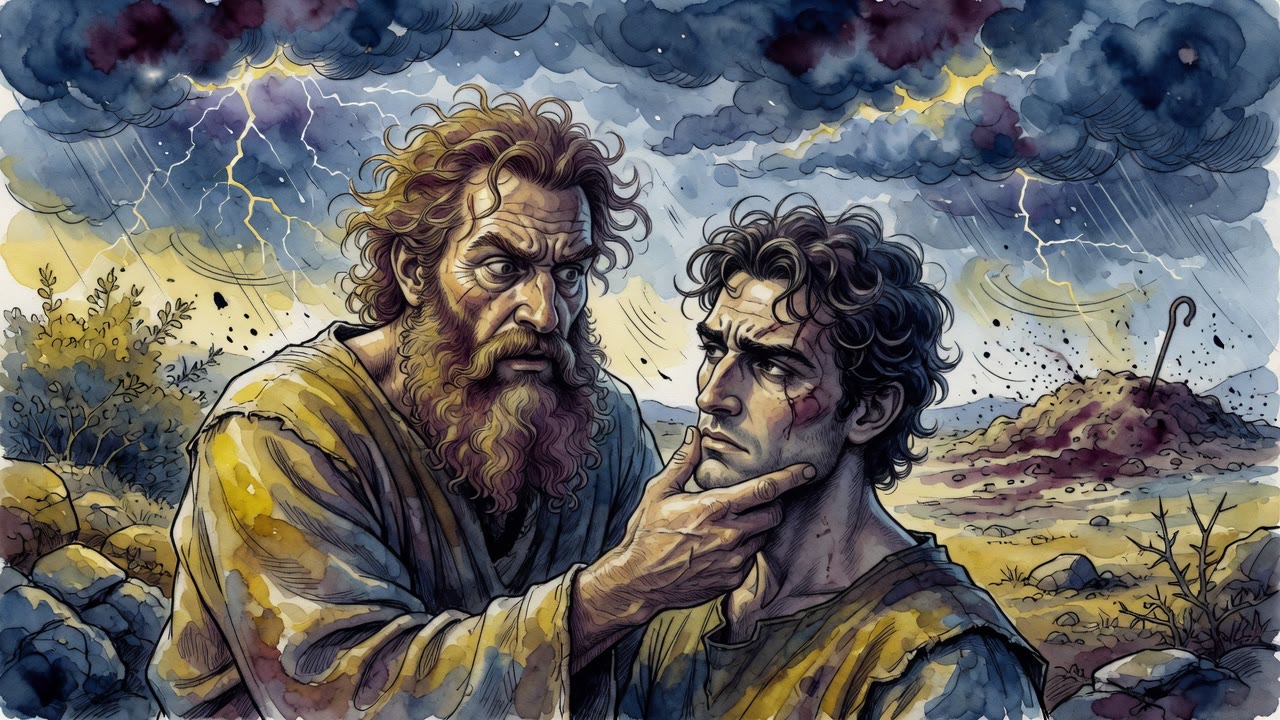
Adam searched Cain's face for his own likeness and found nothing. A hundred and thirty years passed before a son carried his image.
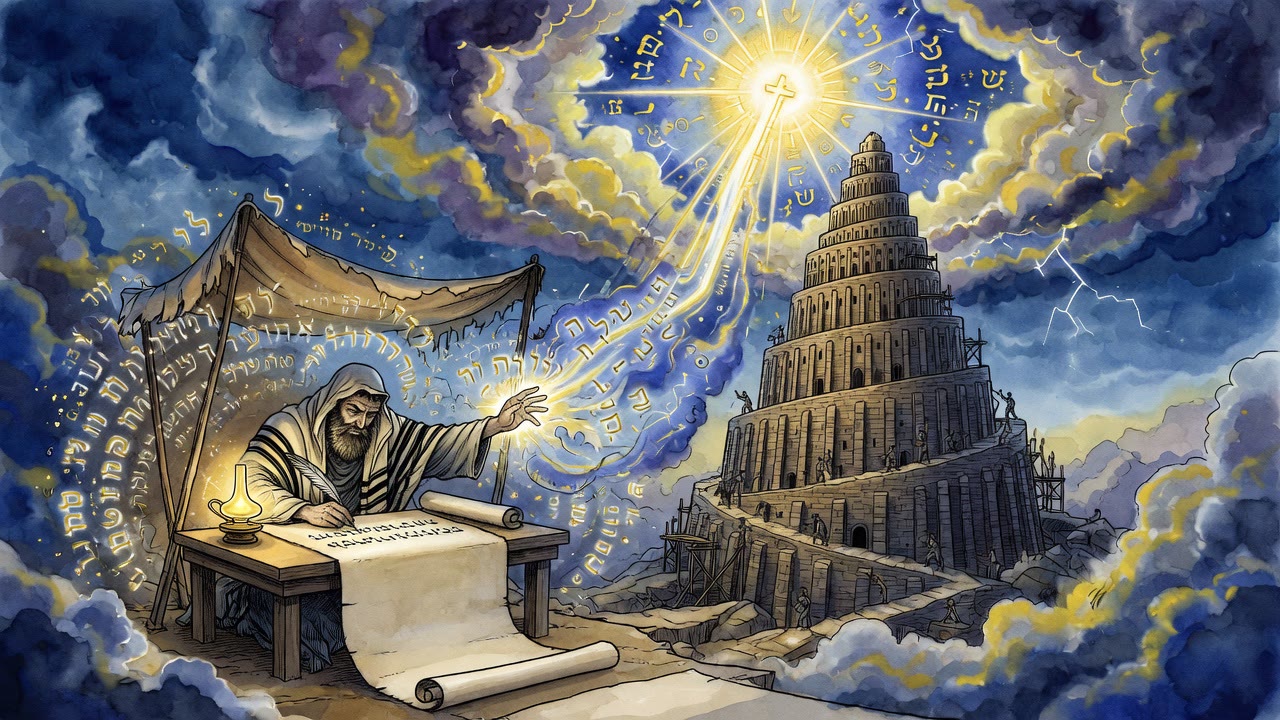
The builders of Babel raised a tower for their own name. Onkelos changed one verb and turned descent into revealed judgment.
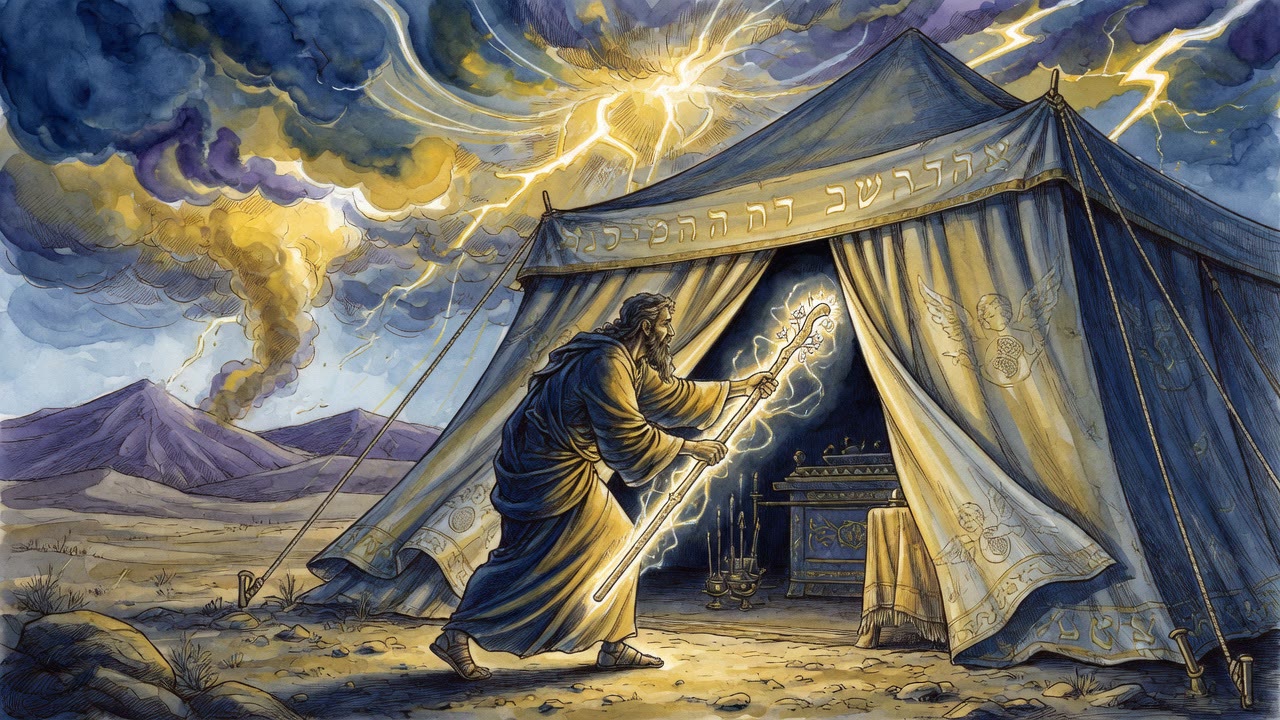
Two rabbis in the Sifrei Devarim saw something fall from the sky at Sinai. One saw a loaf and a rod. The other saw a scroll and a sword. Both were right.
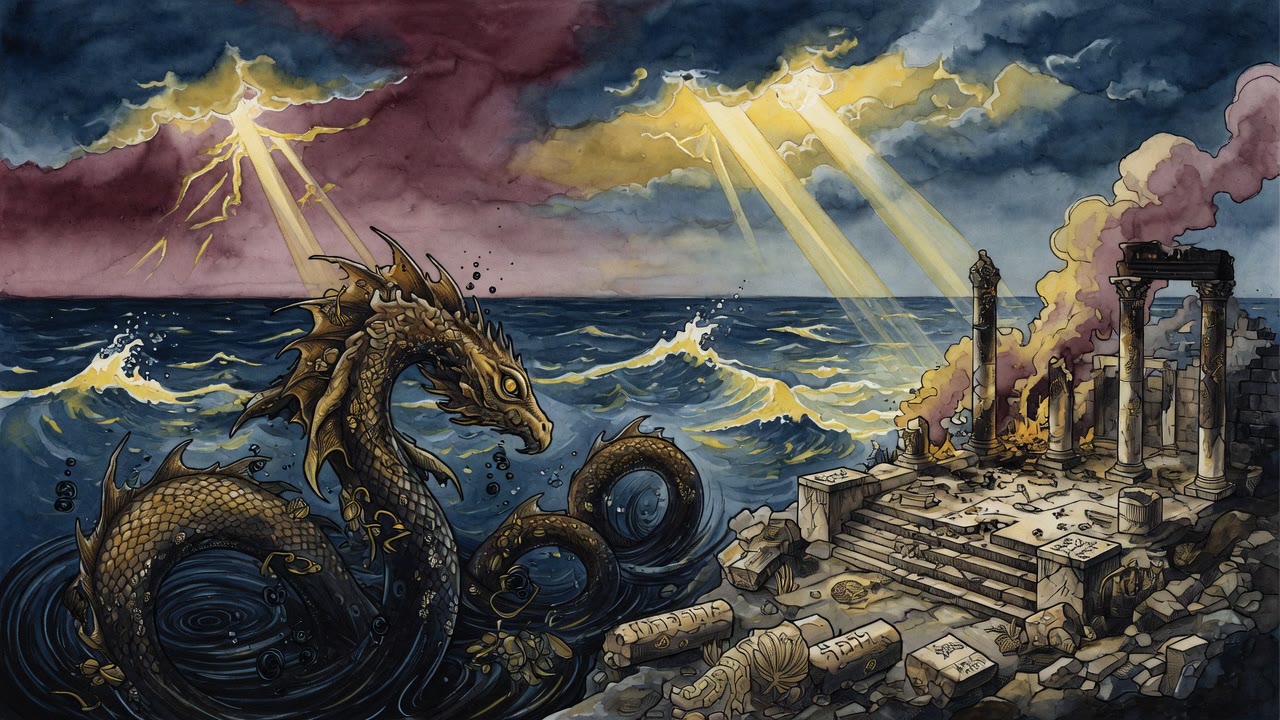
The sages gave God a daily schedule, but after the Temple burned, the last hours no longer belonged to play with Leviathan.
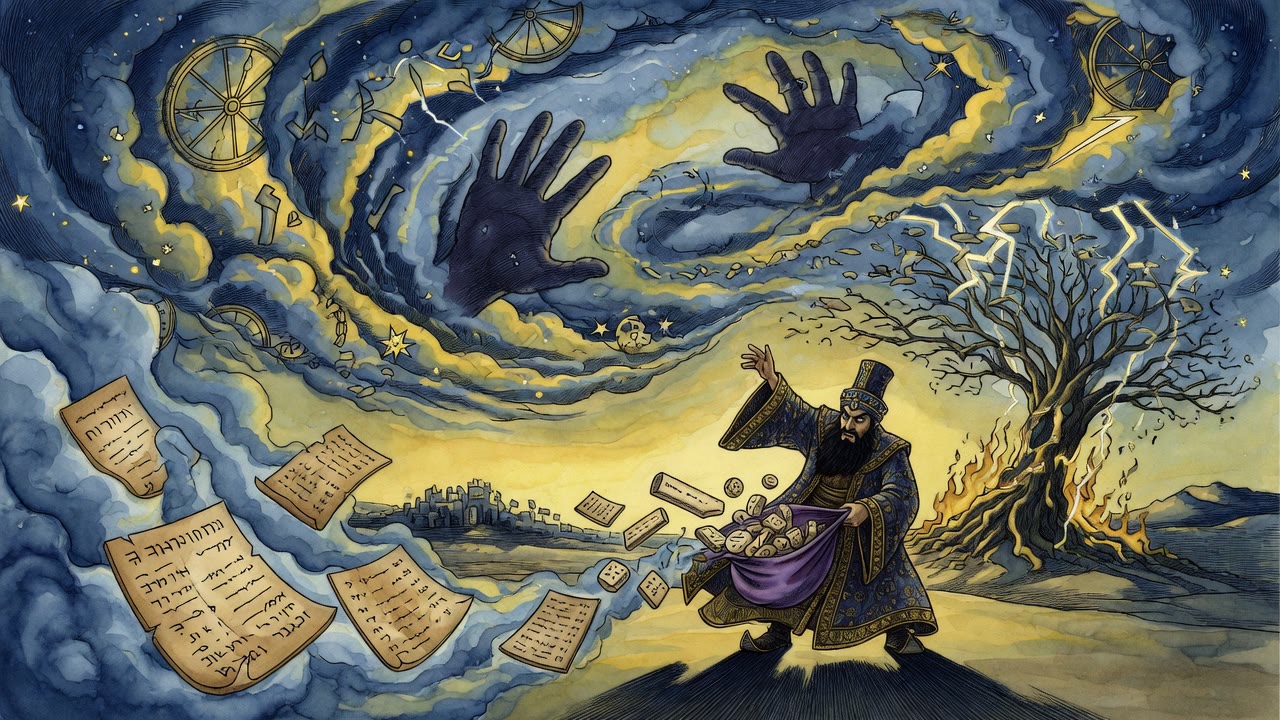
Haman threw lots at days and months until Adar smiled at him. Moses had died there. He did not know Moses had been born there too.
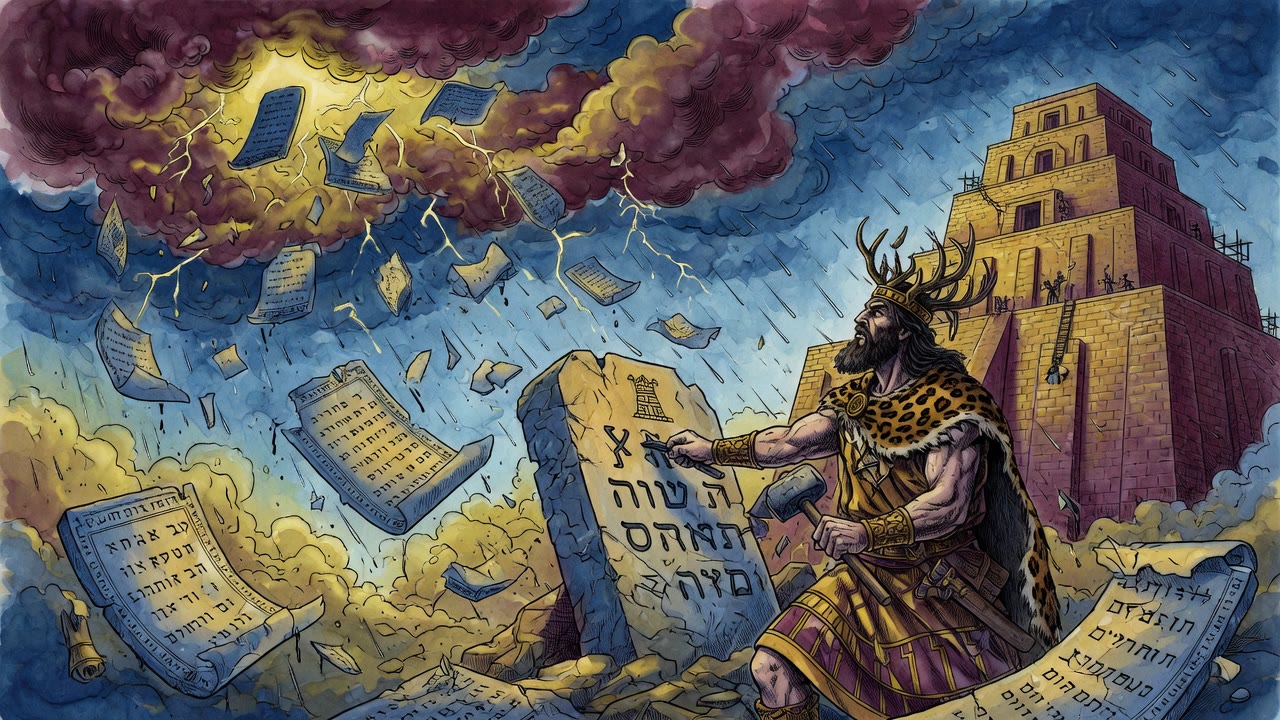
After Eden, forty decrees fell on Adam, Eve, the serpent, and the earth, and later Nimrod tried to rule birth by decree.
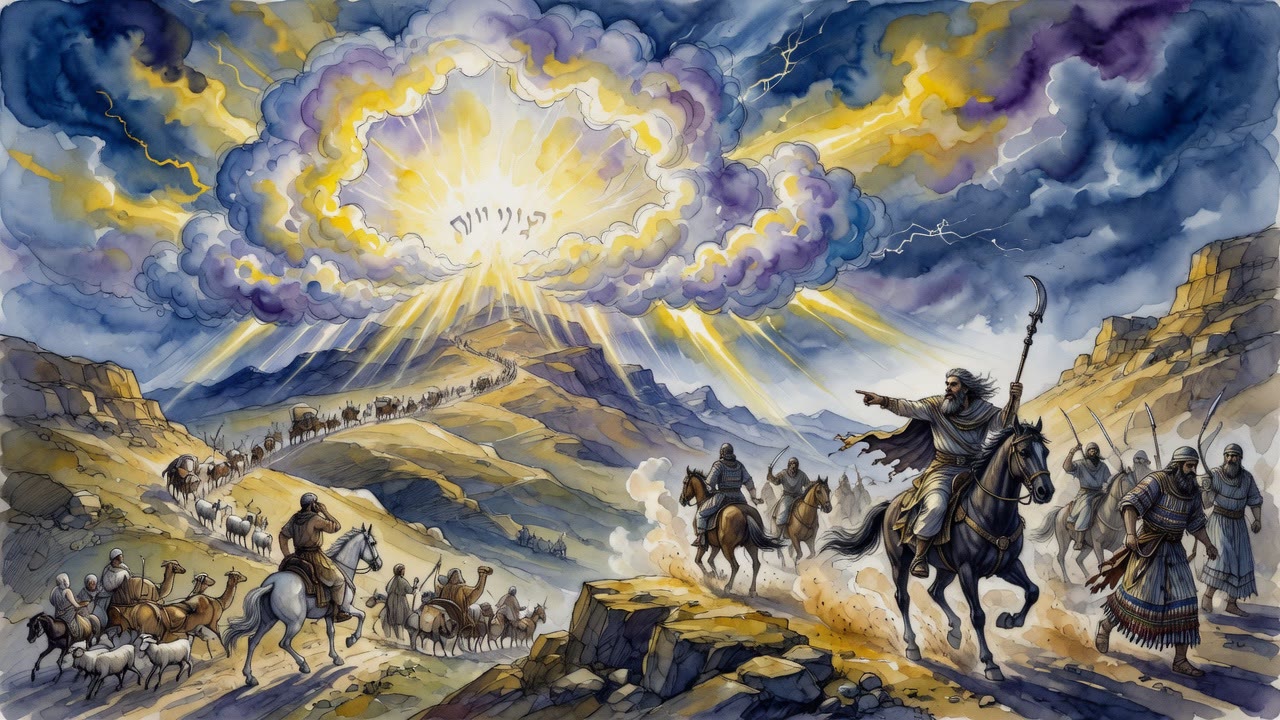
Jacob swore that whoever had taken Laban's gods would not live. He did not know his wife was sitting on them in a camel basket ten feet away.
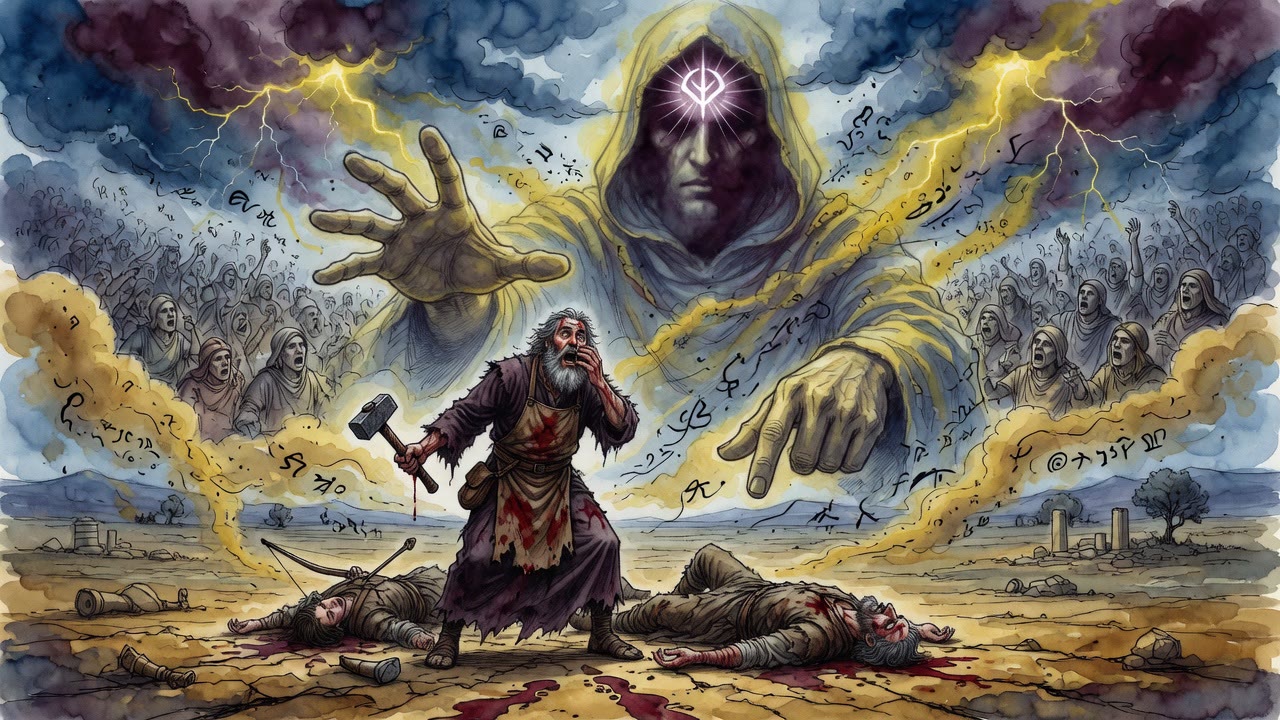
Cain murdered before anyone knew what murder was. Lamech killed after Cain had become the warning, and that made the blood heavier.
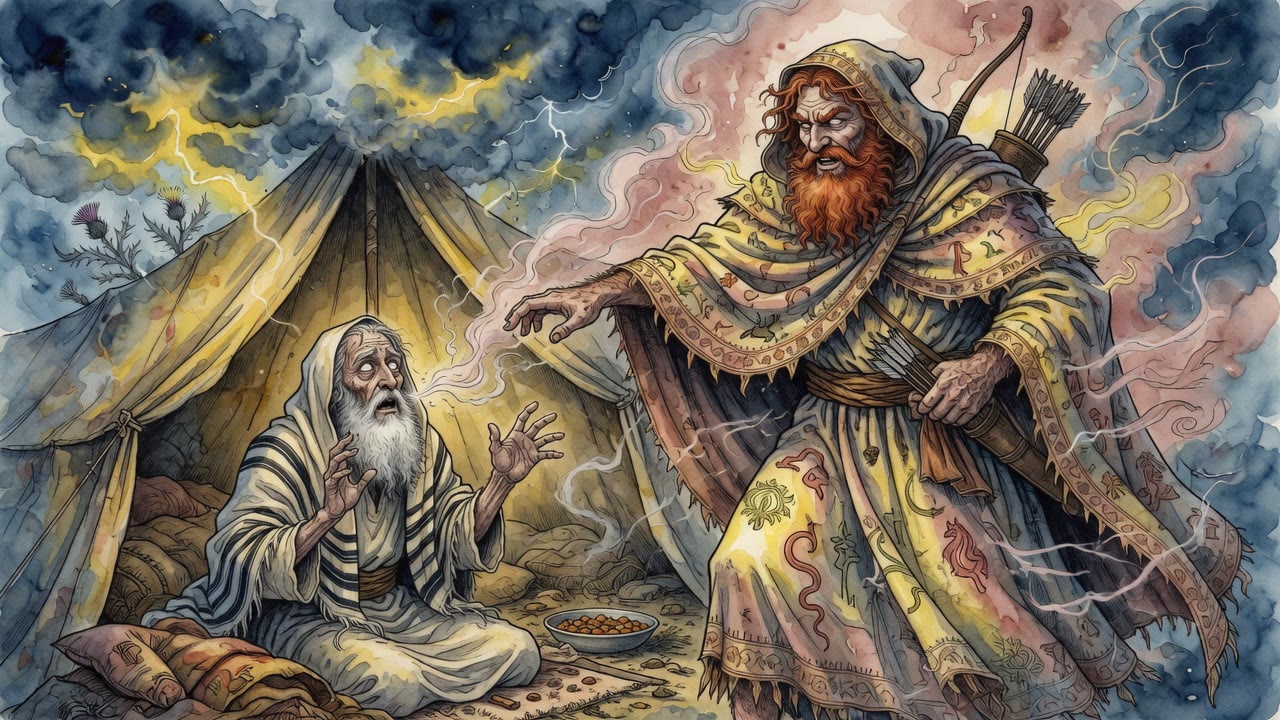
The clothes Rebecca put on Jacob were not costumes. They carried Adam, Nimrod, Esau, and the terror of power passing hand to hand.
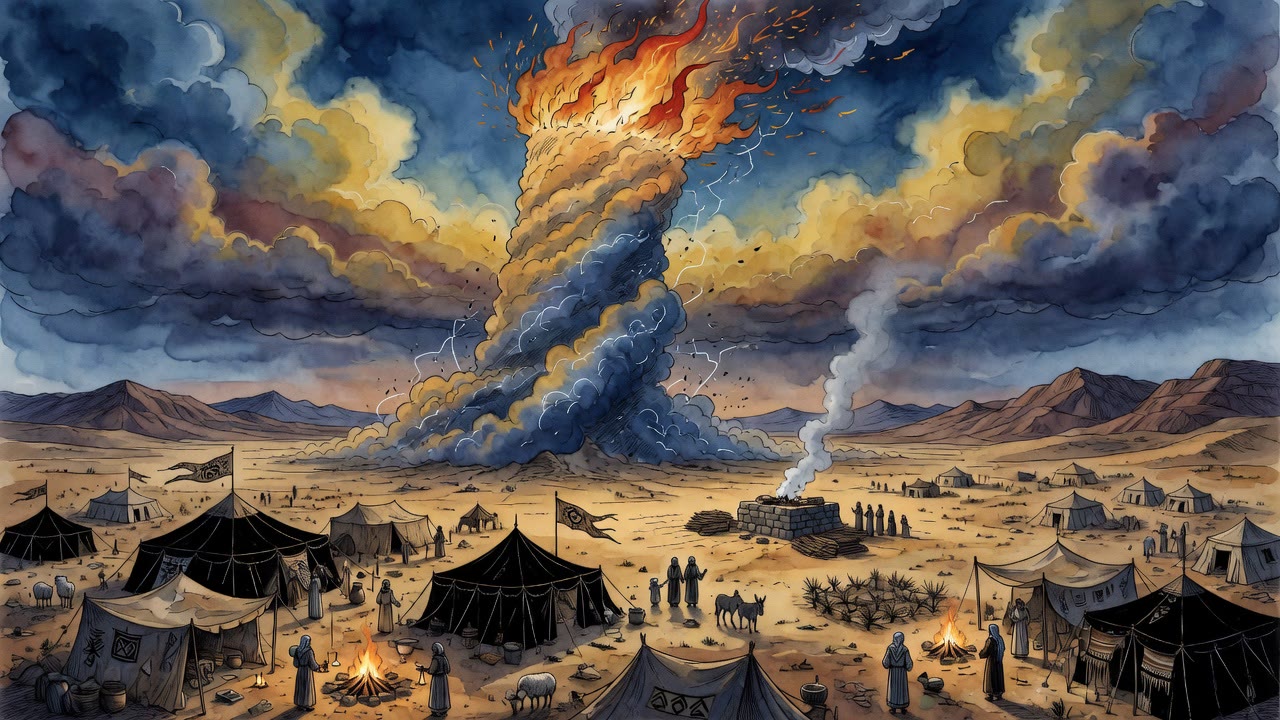
At Sinai every other Israelite fled from the thunder and lightning. Moses walked toward the thick darkness. The rabbis asked why God chose shadow.
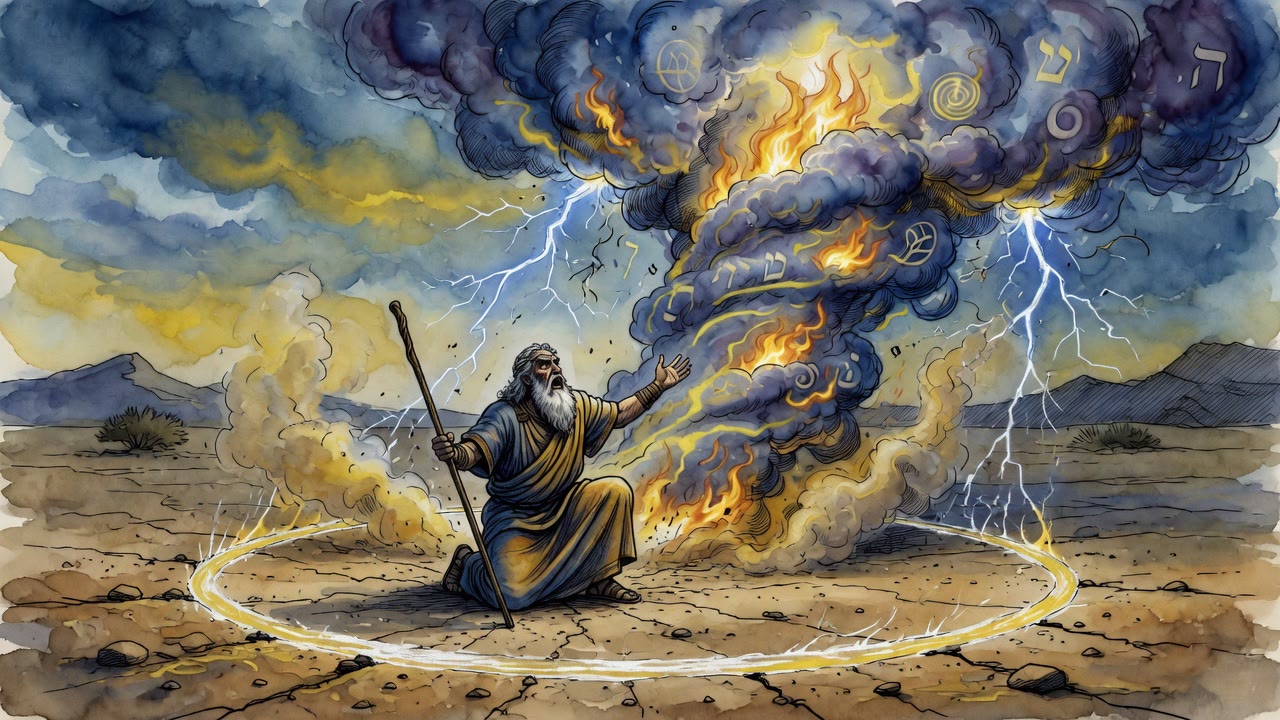
God ordered every gate in heaven shut, because the old man's prayer was cutting up through them like a sword and nothing could slow it down.
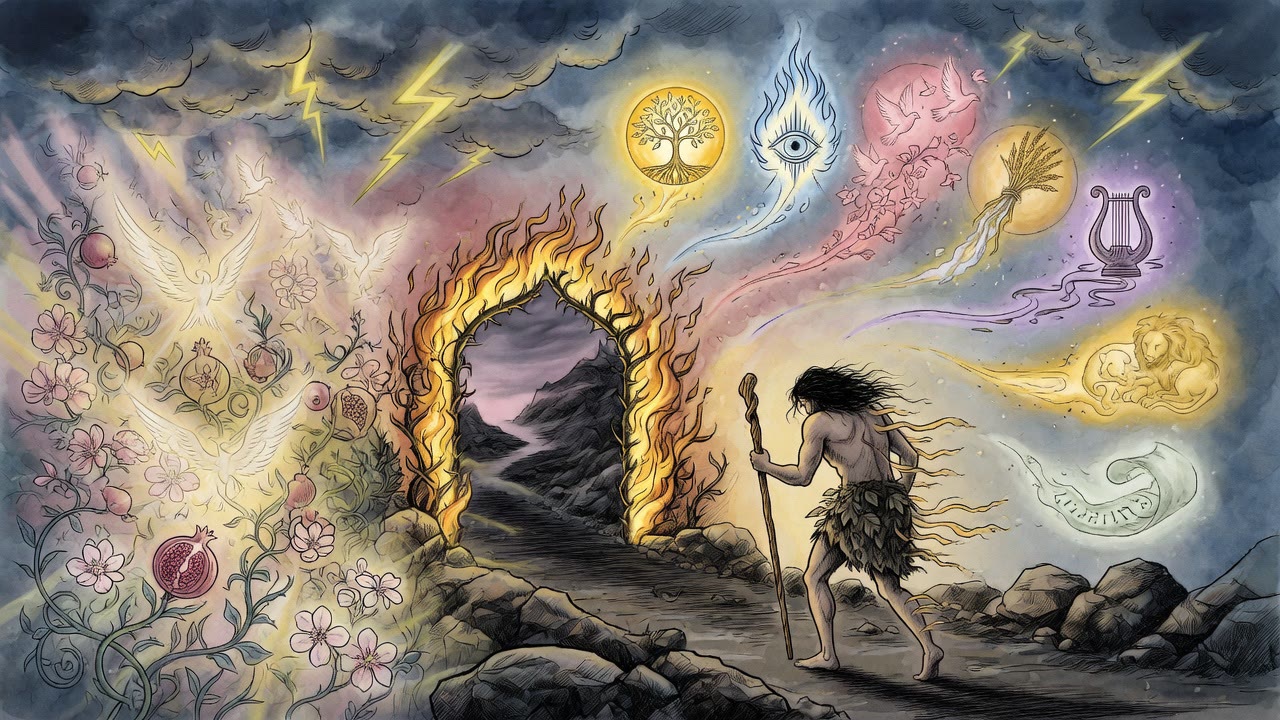
The angels nearly bowed to Adam, mistaking him for God. He was formed in the first hour and driven out by the twelfth. Then his skin stopped glowing.
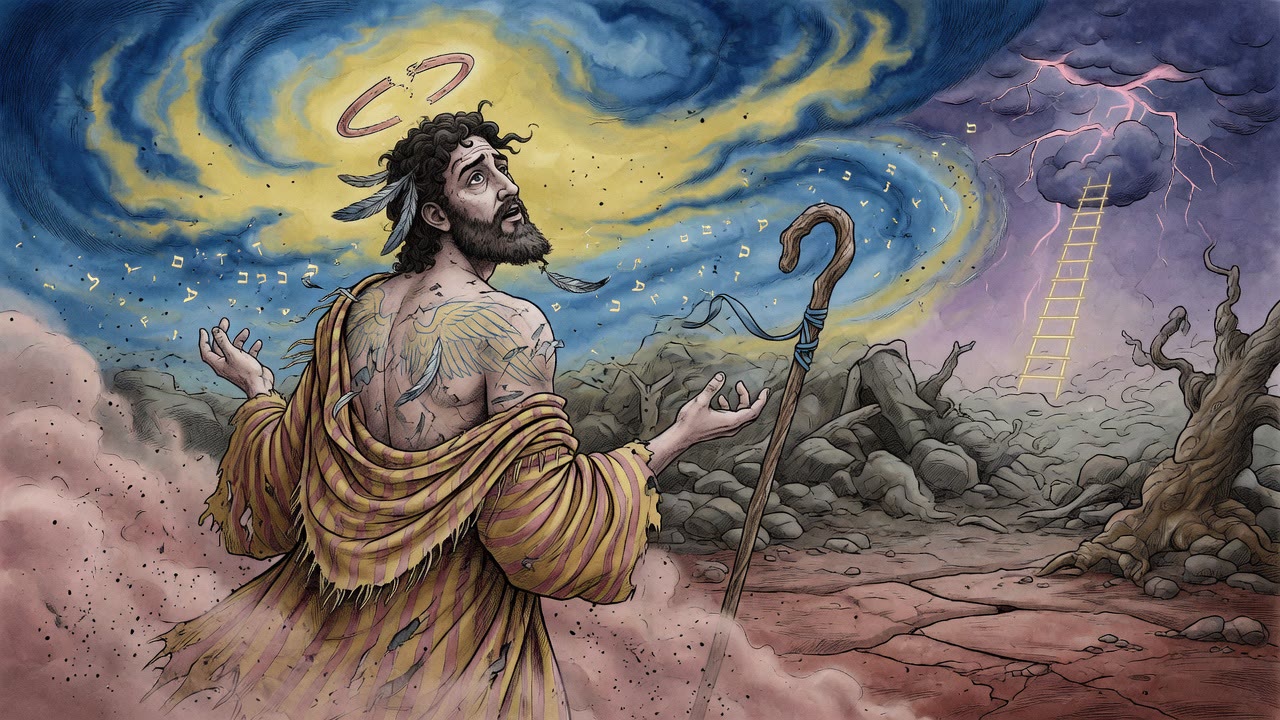
Isaac put a hand on Jacob's head and named Mastema. That night escort angels climbed to match his sleeping face against the Throne.
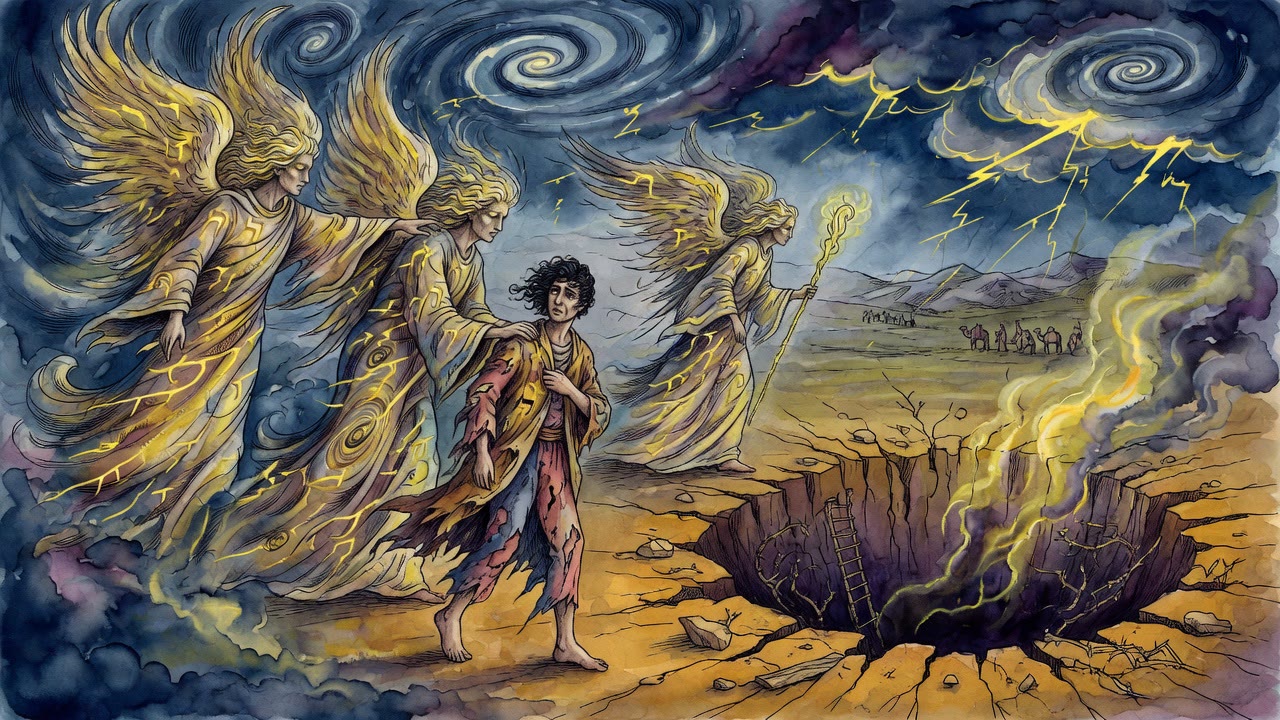
Joseph asked a stranger in an empty field where his brothers had gone. The man pointed him toward Dotan. The pit there was already waiting.
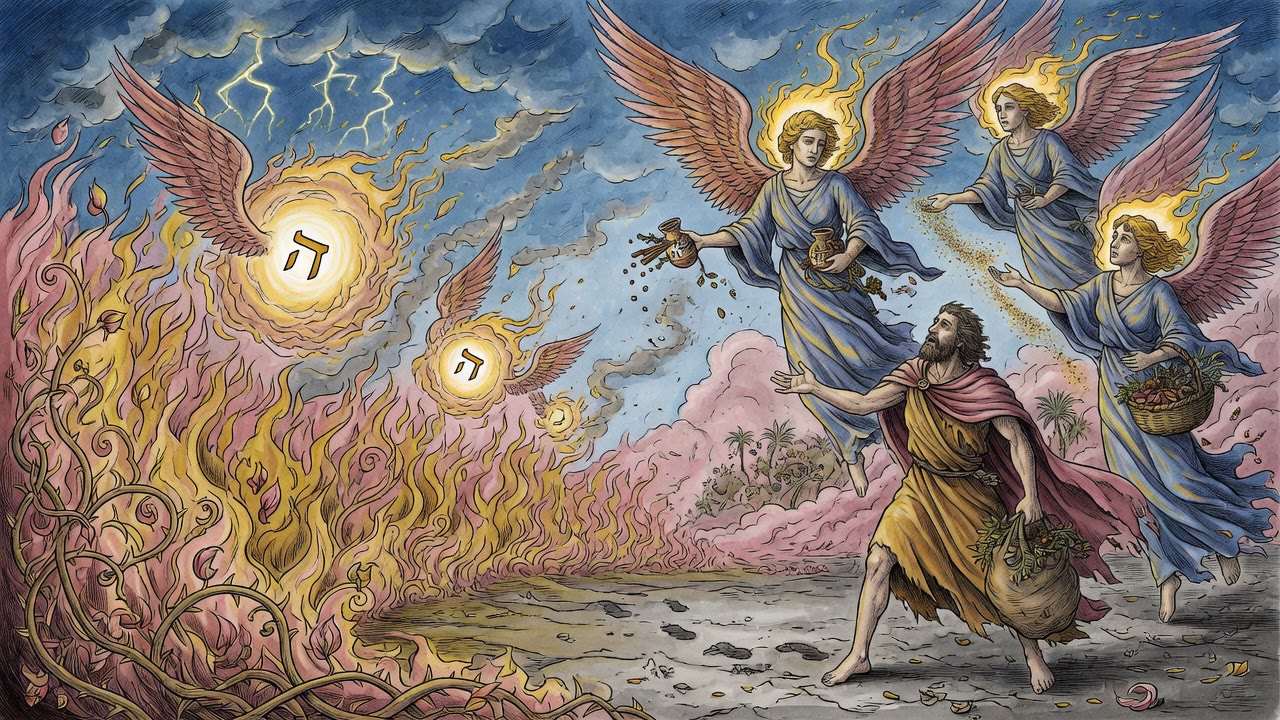
Driven from the Garden in the twelfth hour, Adam wept and begged the angels for one thing before the gates closed: spices, so he could still pray.
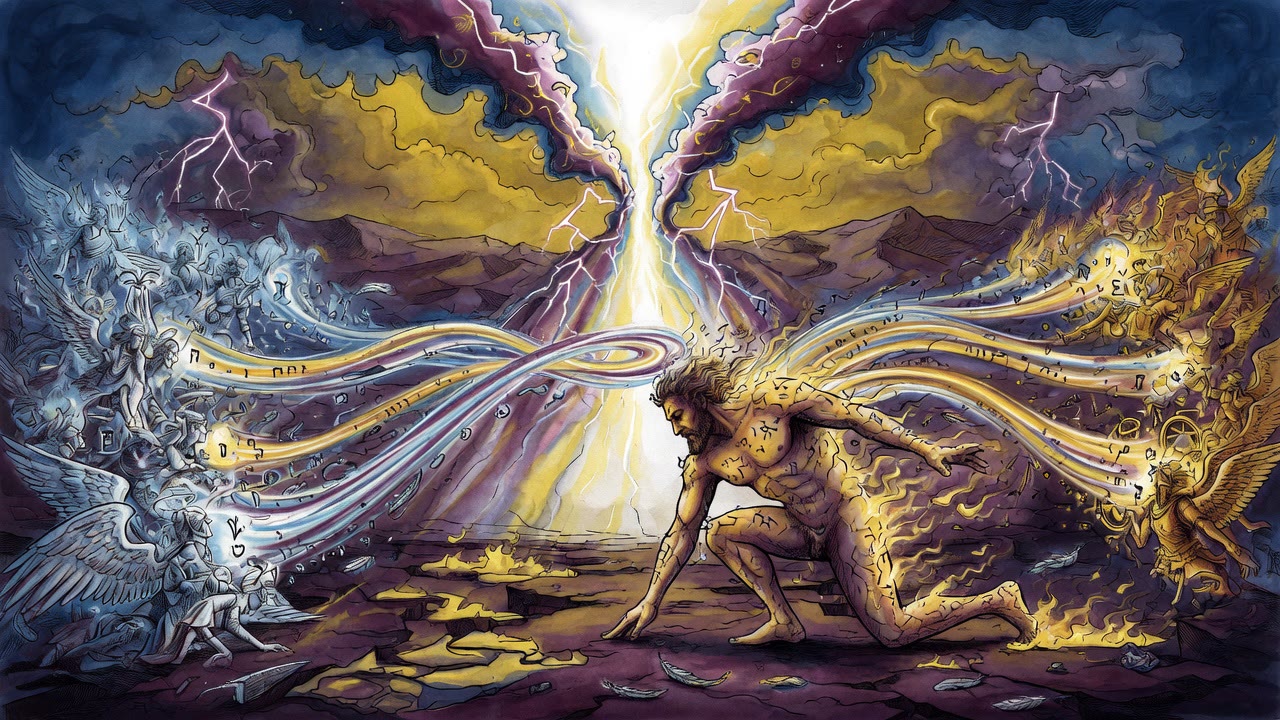
Two whole companies were gone before Boel's turn came. He pulled his own host aside and told them exactly what to say when the question reached them.
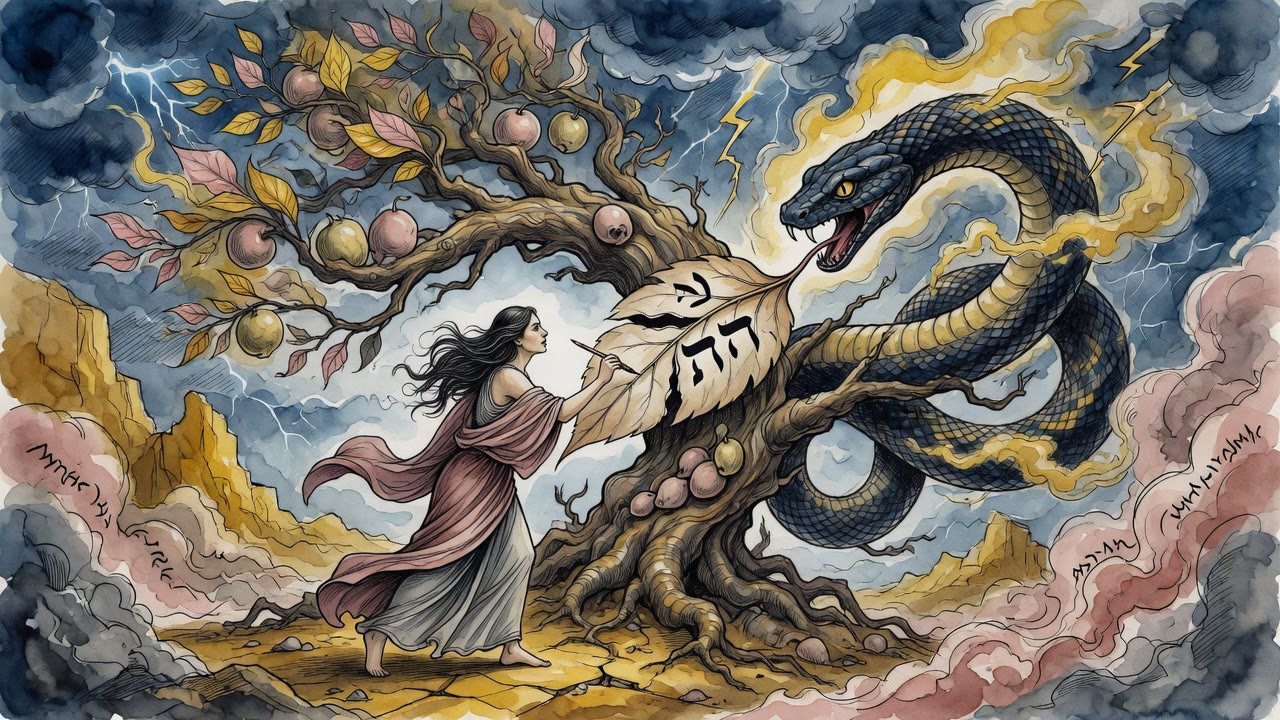
God said do not eat. Eve told the serpent do not touch. The rabbis traced Eden's fall to that single addition and were not unsympathetic about it.
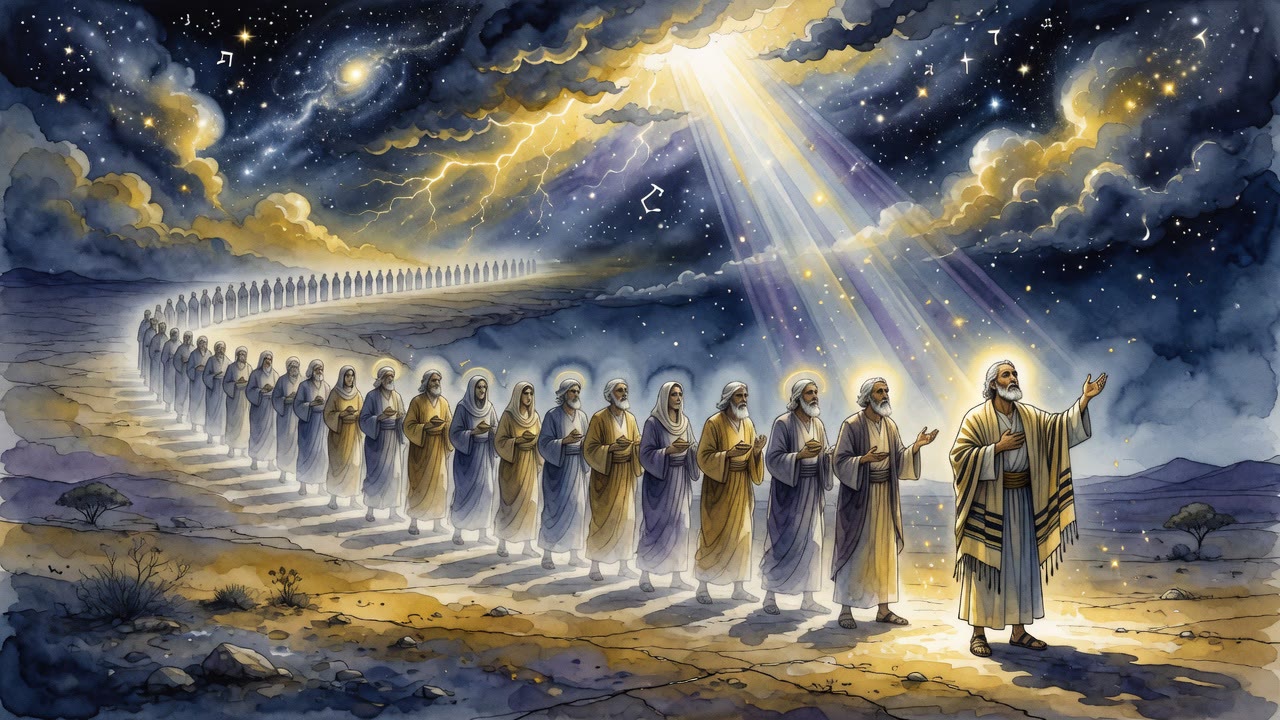
Abraham had no teacher. He worked the law out at night with nothing to consult but his own body, and then he argued with God about Sodom.
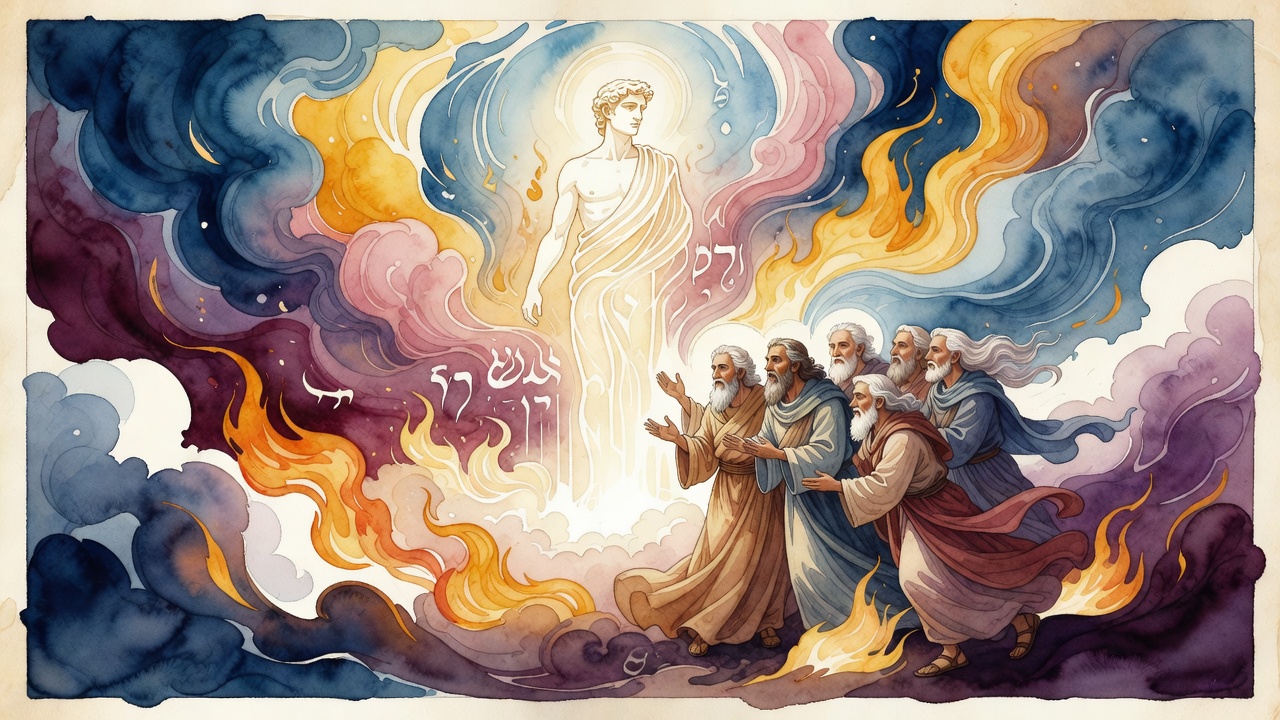
Lot's daughters bore Moab in a cave above Zoar. Generations later one of their descendants lay hiding in a cave of his own while Saul hunted him.
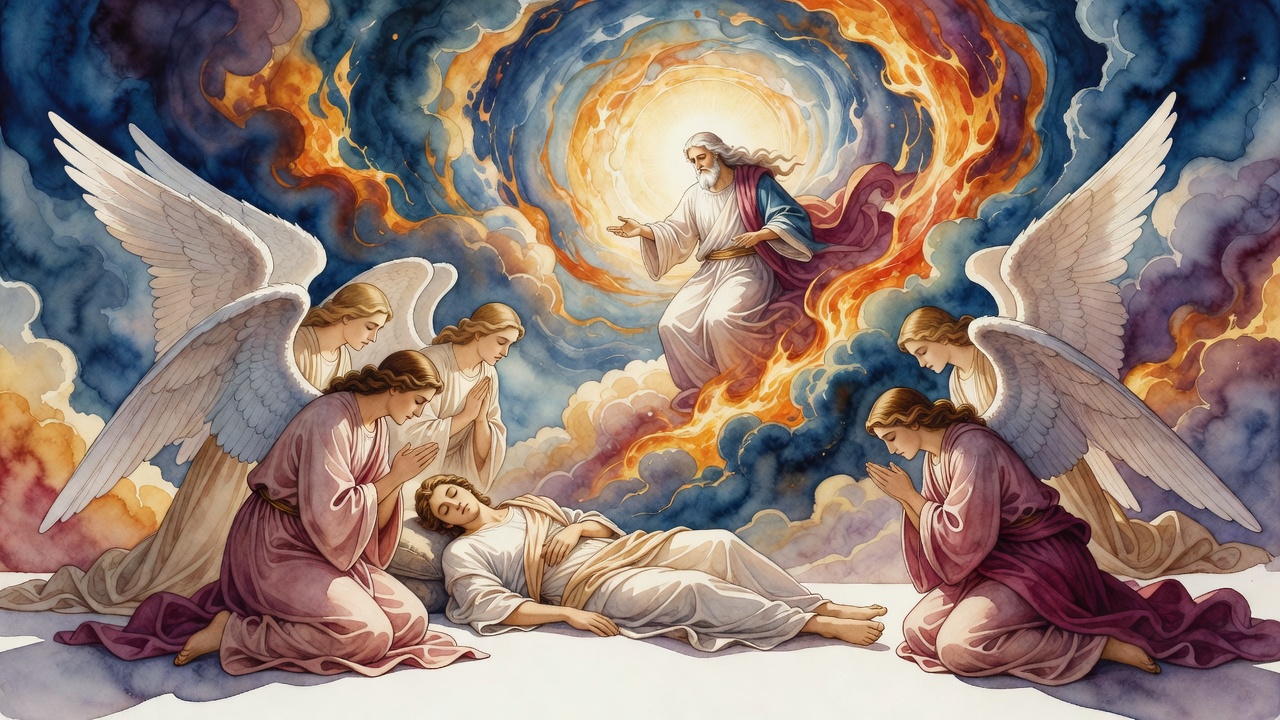
The ministering angels were one breath from crying Holy over the new man, using the word kept for God alone. God put Adam to sleep in front of them.
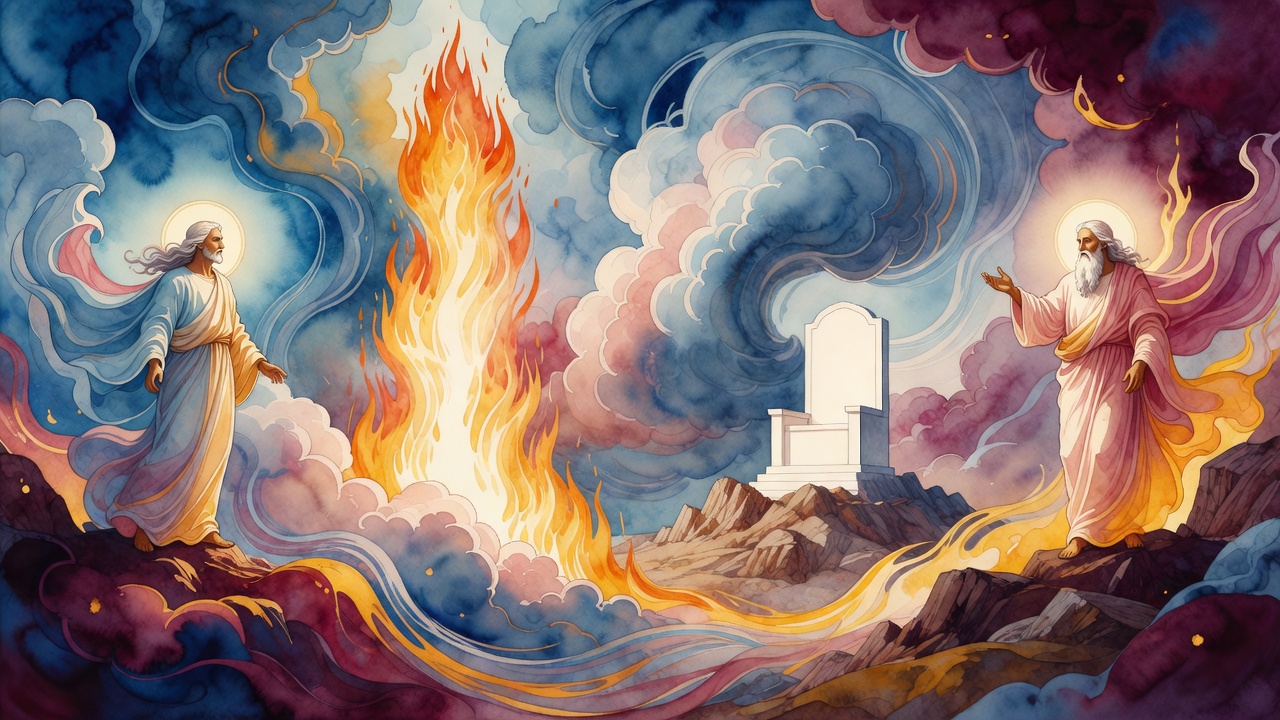
The rabbis placed Elijah at both ends of history, present before creation and appointed to announce the end. On Mount Horeb, God showed him all of time at once.
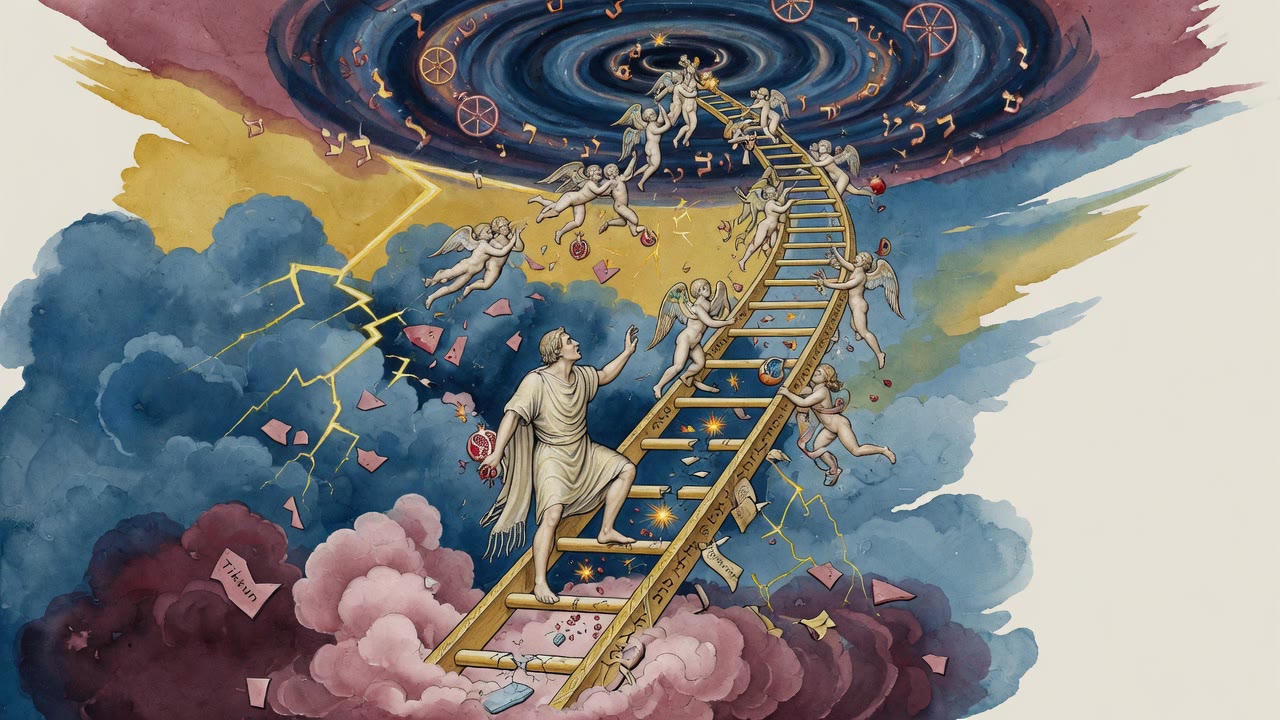
Adam's soul was older than the dust of his body. It descended through worlds before breath entered the form at earth's center.
