Parshat Bereshit4 min read

God Wrapped in Light and Made Earth From Snow

A rabbi asks how creation began and receives the answer in a whisper: God put on light like a garment and shook snow beneath the throne.

Curated by Arthur · Told by Maggid ·
Table of Contents
  1. The Teaching Given in a Whisper
  2. Light Was Worn Before It Was Made
  3. The Earth Came Out of Snow
  4. The Month That Carried the Blueprint

The Teaching Given in a Whisper

Rabbi Nathan ben Eleazar asked Rabbi Samuel: how did the Holy One create the world?

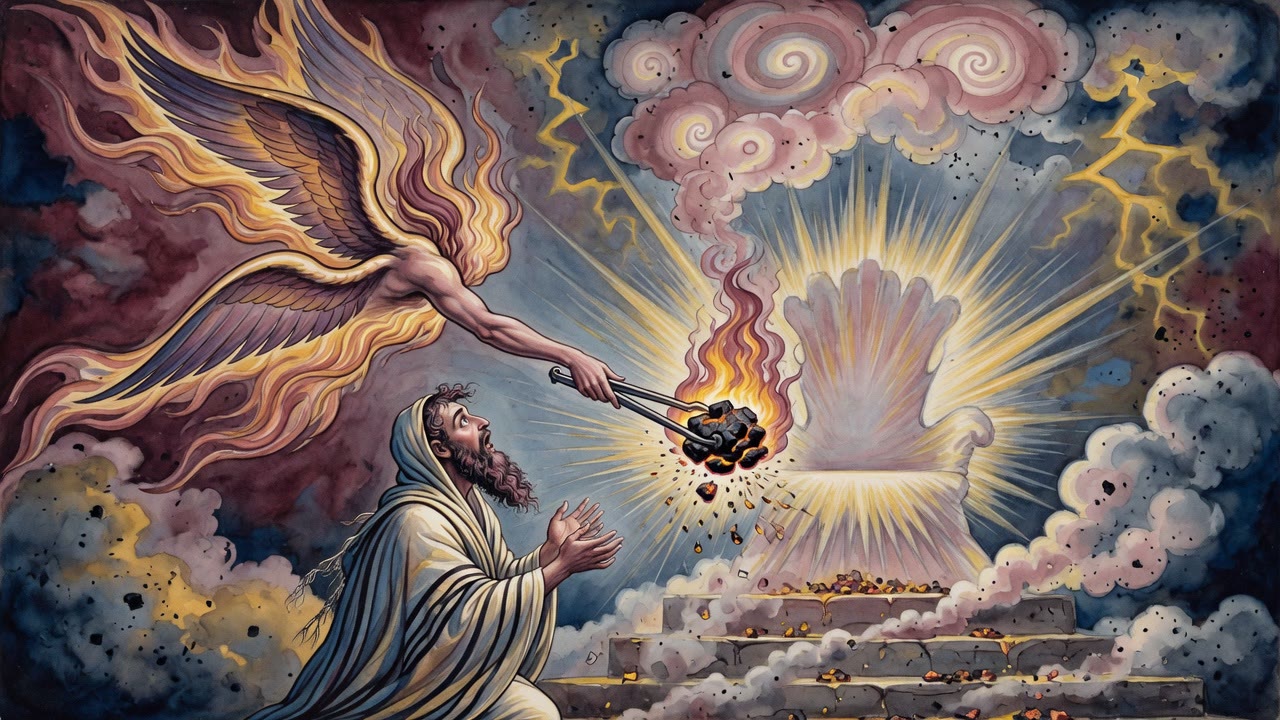
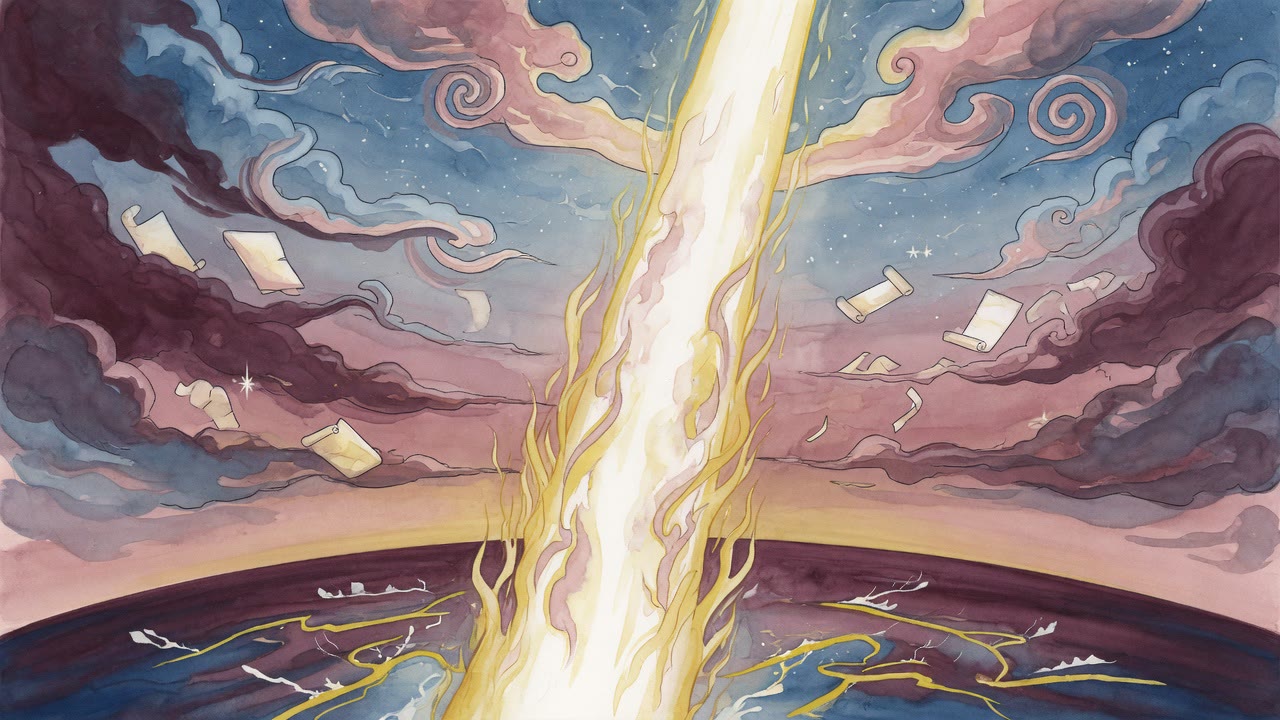
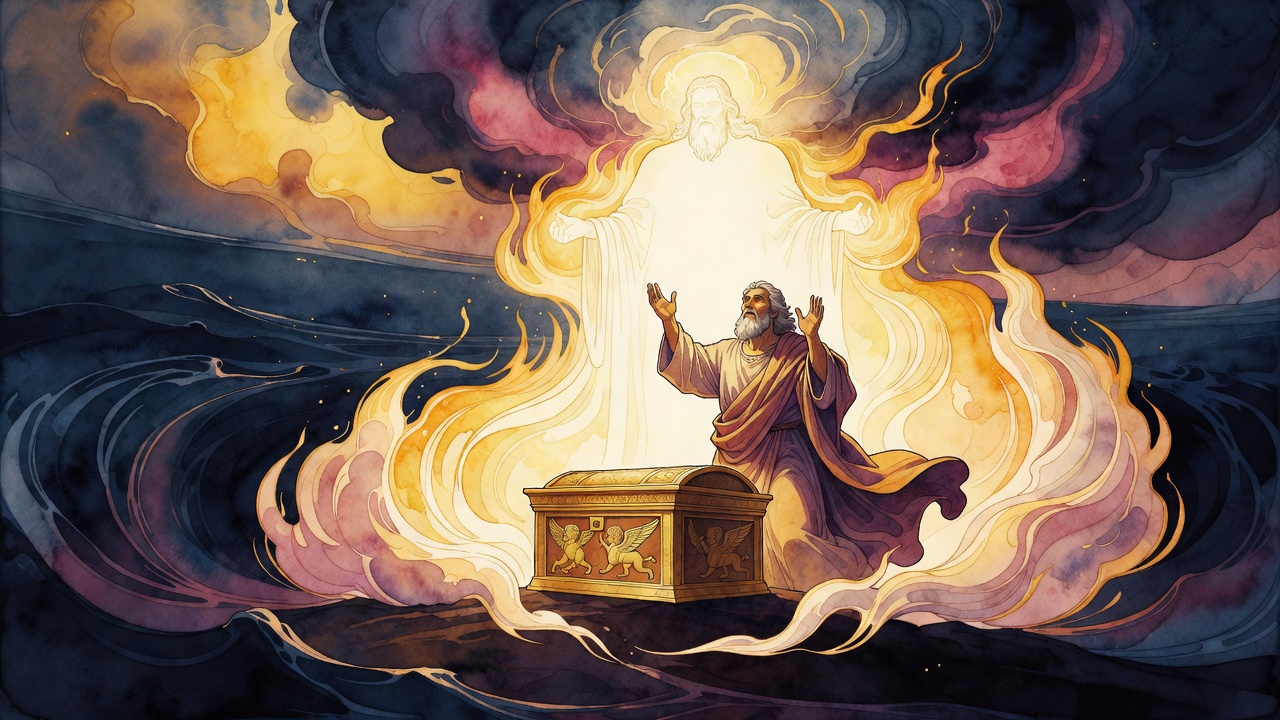
Rabbi Samuel leaned close and answered softly. "God wrapped Himself in light like a garment. The radiance of that garment spread from one end of creation to the other. The verse says so: He puts on light like a garment, He stretches out the heavens like a curtain."

Rabbi Nathan noticed the lowered voice and asked why Samuel whispered.

"Because I am transmitting it the way I received it," Samuel said.

The whisper is not modesty. It is form. Creation secrets do not travel at full volume. The question is enormous, the answer brief, and the only appropriate vessel for such an answer is a voice that understands it is holding something fragile. Some things arrive quietly because loudness would shatter their meaning before the listener could receive it.

Light Was Worn Before It Was Made

The garment image is doing several things at once. Light is not only the first object of creation. Light is what God wore into the act of creating. Before the world had anything to reflect light back, light was already intimate with God, draped over divine presence the way cloth drapes over a shoulder.

A garment conceals and reveals at the same time. It shows the shape of what is beneath it without exposing what it covers. Creation wrapped in divine light means the world carries the shape of God's presence without being identical to it. Every morning when light returns, that original garment is being remembered.

The Earth Came Out of Snow

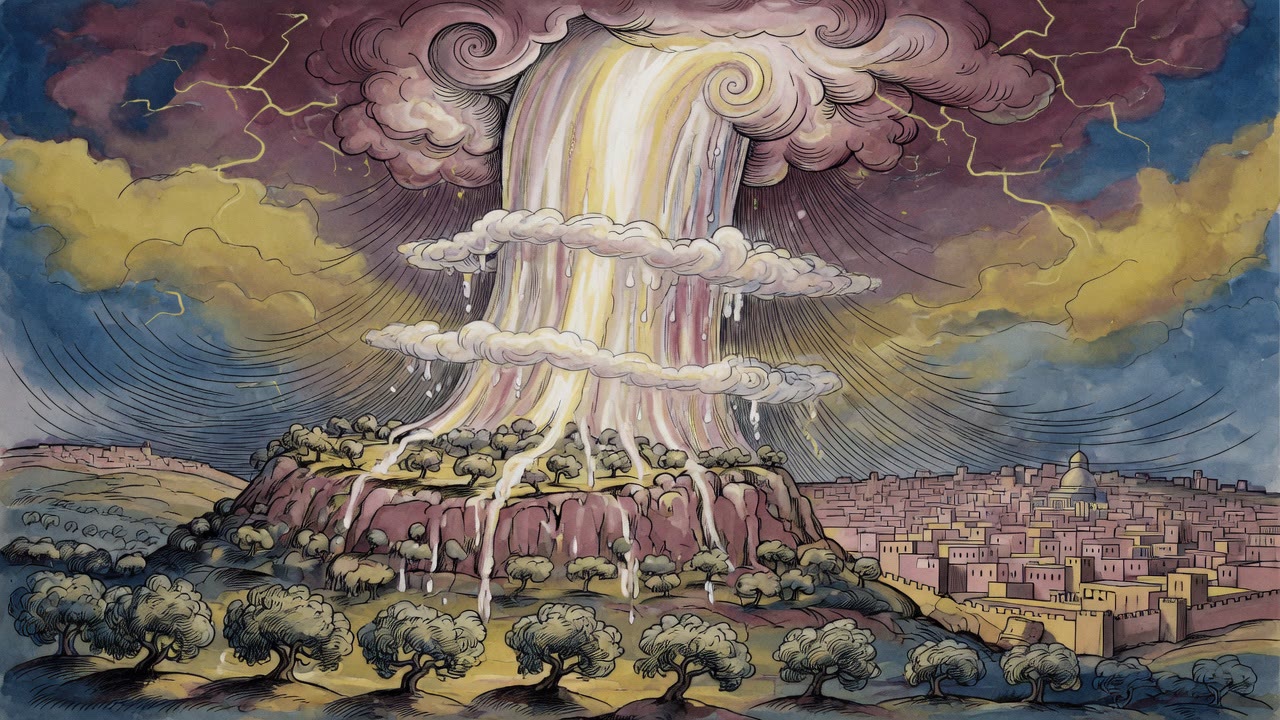
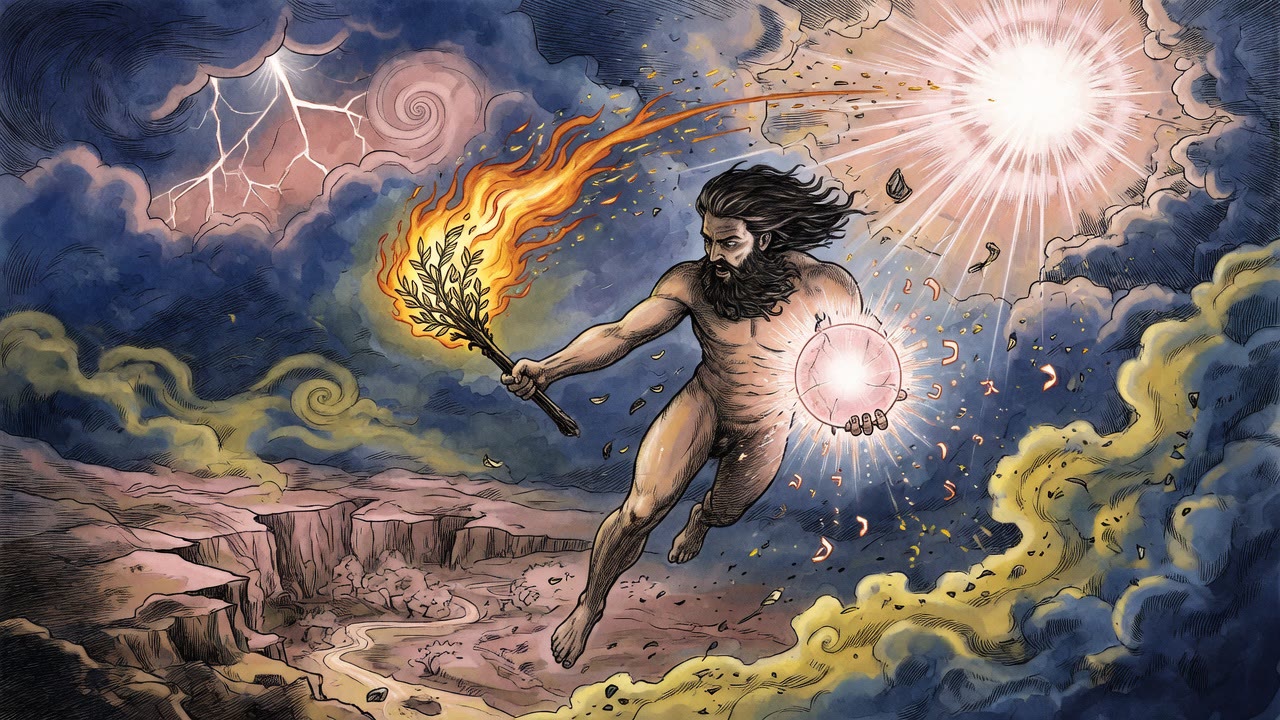
Before the land existed, before the first grain of earth was placed, God reached beneath the divine throne and took up a lump of snow. He flung it upon the waters. The snow became earth.

This image comes from a different angle than the light-garment. It is physical, almost violent in its specificity. Snow under a throne. Snow thrown outward. Earth rising from cold and witness. The world begins not as abstraction but as something the hands of creation could hold and release.

Snow is water arrested at a threshold, not fully frozen, not flowing. Earth made from snow is earth made from interrupted motion. The world is solid matter that was, for one moment, something else entirely, before it became the ground on which everything lives.

The Month That Carried the Blueprint

Nissan, the month of spring and Exodus, holds a memory of the first creation. The rabbis say God looked at the time of Nissan when designing the world, the month when trees blossom and grains swell, when the natural world renews itself most visibly. That time was the blueprint for all time.

This connects two kinds of new beginning. The first beginning, when light was worn and snow became earth, shares its design with the beginning that recurs each year in Nissan. The world is not only created once. It remembers its own creation seasonally, the way a student returns to the same text and finds it saying something new.


← All myths
From the tradition

Sources

4 sources

The texts this telling draws on, in full. Open a card to read inline, or expand it for a wider, quieter read.

Midrash Tanchuma Buber, Bereshit 10:1Midrash Tanchuma Buber, Bereshit

There are teachings the rabbis whispered. Midrash Tanchuma Buber, Bereshit 10:1 preserves one of them, a conversation so startling that its transmission was, for centuries, deliberately muffled.

The question and the whisper

R. Nathan ben Eleazar asked R. Samuel a simple but enormous question: "How did the Holy One create the world?"

R. Samuel answered, but he answered in a whisper. "When the Holy One desired to create the world, He wrapped Himself in light, as it is stated in (Psalm 104:2): 'Who puts on light like a garment.'"

R. Nathan noticed immediately that his teacher had lowered his voice. "You have told me in a whisper. Why in a whisper?"

R. Samuel's answer is the real teaching. "Just as I received this tradition in a whisper, so I have transmitted it to you in a whisper."

The logic of esoteric transmission

Some Jewish teachings were considered too combustible for public speech. They touched on the mechanics of creation, what the later Kabbalistic tradition would call Ma'aseh Bereshit, the "Work of Creation." The Mishnah in Hagigah 2:1 forbids teaching these topics to more than one student at a time, and even then only if the student is already wise and capable of understanding on his own.

Why the secrecy? Because cosmological teachings carry dangers. If badly taught, they can mislead. If half-understood, they can produce heresy. The whisper was a filter. It let the tradition pass only to those paying close enough attention to hear it.

The image itself

The teaching is breathtaking. Before creating the universe, the Holy One clothed Himself in light. The Hebrew verb otef (wraps) in (Psalm 104:2) uses the same root as the noun for a garment or cloak. God did not emit light. God wore light.

And then, R. Samuel implies, God let that light out into empty space. "Let there be light" (Genesis 1:3) was not a new creation. It was the unwrapping of a light that had always been part of God's own being. The first day of creation was the Holy One taking off a piece of Himself and spreading it across the void.

The coda

The anonymous editor of the Tanchuma adds a postscript. R. Tanhuma bar Abba, the sage after whom the midrashic collection is named, objected to the whisper. "Have we not already heard R. Isaac expounding it publicly?"

This is the classic tension within the Jewish mystical tradition. Some teachers insist on secrecy; others insist that hoarded truth becomes wasted truth. By the time the Tanchuma was being edited in the land of Israel in the early medieval period, R. Isaac's public teaching had apparently settled the question. The whisper had grown into a voice.

The takeaway: the Torah remembers that creation began with God wrapping Himself in light. It also remembers that the teaching was once too precious to say out loud. Both memories matter.

Full source
Midrash Tanchuma Buber, Bereshit 11:4Midrash Tanchuma Buber, Bereshit

(Job 37:6) contains a line that sounds meteorological but that the rabbis read as cosmogonic: "For to the snow He says: Become earth." Midrash Tanchuma Buber, Bereshit 11:4 takes the verse at its word.

The heavens had their source

The midrash begins by noting that (Genesis 1:1) declares, "In the beginning God created the heavens." Fine. That tells us what the heavens came from, the divine creative act. But what did the earth come from? The Torah does not say.

The rabbis hunted for an answer, and Job supplied it. "From what was the earth created? From a lump of snow, as stated: 'For to the snow He says: Become earth.'"

A snowball of a planet

The image is deceptively simple. At the moment of creation, God took a mass of snow, frozen water. And commanded it to become solid ground. Dirt, rock, mountain, seabed. All of it, originally, a single compacted snowball.

This is not poetry dressed up as science. It is a theological claim. Water, in the Jewish imagination, is primordial. (Genesis 1:2) says the divine spirit hovered over the waters before anything else was formed. The earth as we know it emerged from those waters, specifically, from their frozen form.

The midrash thereby solves a scriptural puzzle. The heavens have a verb of creation. The earth has a verb of transformation. The raw material was already there, and God changed its state.

Blessed and multiplying

The teaching continues with a startling move. "So the Holy One blessed them, and they became fruitful and multiplied." The "them" refers to heavens and earth. The blessing of fruitfulness that (Genesis 1:22) gives to fish and birds, "be fruitful and multiply", is here extended backward to the cosmos itself. Heaven and earth, too, reproduce. They yield. They increase.

The citation of David

The midrash closes with (Psalm 134:3): "May the Lord who made heaven and earth bless you from Zion." David's liturgical blessing traces the same arc. The God who made heaven and earth, the One who spoke the heavens into being and turned a lump of snow into the ground under our feet, is the same God who blesses worshippers from Zion.

There is a theology of continuity here. The primordial blessing that made the cosmos fruitful still flows. It reaches from creation's first moment to the Temple in Jerusalem to the prayers of anyone who invokes Psalm 134.

The takeaway: the earth under your feet is a miracle of state-change. God said "become earth" to a mass of snow, and the planet followed instructions. You are walking on an obedient snowball. Treat it accordingly.

Full source
Hagigah 12aTalmud Bavli, Hagigah

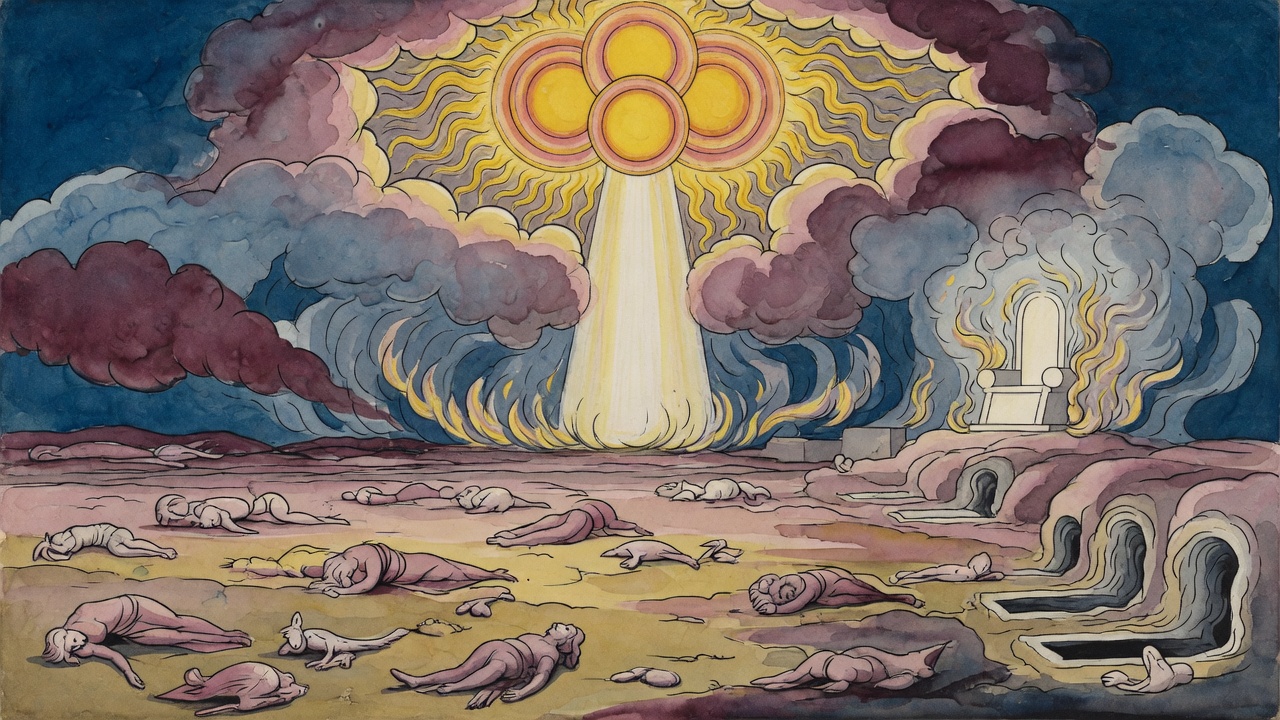
And Rav Yehudah said in the name of Rav: Ten things were created on the first day, and these are they: the heavens and the earth, formlessness and void, light and darkness, wind and water, the measure of day and the measure of night.

The heavens and the earth, as it is written: "In the beginning God created the heavens and the earth" (Genesis 1:1). Formlessness and void, as it is written: "And the earth was formless and void" (Genesis 1:2). Light and darkness; darkness, as it is written: "And darkness was upon the face of the deep" (Genesis 1:2); light, as it is written: "And God said, Let there be light" (Genesis 1:3). Wind and water, as it is written: "And the spirit of God hovered over the face of the waters" (Genesis 1:2). The measure of day and the measure of night, as it is written: "And there was evening and there was morning, one day" (Genesis 1:5).

And was the light created on the first day? But it is written: "And God set them in the firmament of the heavens" (Genesis 1:17), and it is written: "And there was evening and there was morning, the fourth day" (Genesis 1:19)! This is in accordance with Rabbi Elazar. For Rabbi Elazar said: The light that the Holy One, blessed be He, created on the first day, a person could see by it from one end of the world to the other. When the Holy One, blessed be He, looked upon the generation of the Flood and the generation of the Dispersion and saw that their deeds were corrupt, He arose and hid it from them, as it is said: "And from the wicked their light is withheld" (Job 38:15).

And for whom did He hide it? For the righteous in the time to come, as it is said: "And God saw the light, that it was good" (Genesis 1:4), and "good" means nothing other than the righteous, as it is said: "Say of the righteous that it shall be good with him" (Isaiah 3:10). When He saw the light that He had hidden for the righteous, He rejoiced, as it is said: "The light of the righteous rejoices" (Proverbs 13:9).

Full source
Shemot Rabbah 15:22Shemot Rabbah

"This month shall be for you" – that’s how the Torah introduces the month of Nissan, the month of Passover, the month of freedom. But what does it really mean? The text connects this to a verse in Psalms, "He made the moon for festivals; the sun knows its setting" (Psalms 104:19). According to this interpretation in Shemot Rabbah, the verse hints at a deeper understanding of God's actions as they are recorded in the Torah. the text suggests that some of Moses's descriptions are, shall we say, a bit cryptic, leaving room for later interpretation. And who steps up to the plate? None other than King David, the sweet singer of Israel, who clarifies these mysteries!

Take the very beginning, the act of Creation itself. Genesis tells us, "In the beginning God created [the heavens and the earth]" (Genesis 1:1), and then, "God said: Let there be light" (Genesis 1:3). But David, in Psalm 104, offers a different sequence: "He covers Himself with light like a garment" (Psalms 104:2), and then, "He stretches the heavens like a curtain" (Psalms 104:2). According to this understanding, light came first, then the heavens. It's like God wrapped Himself in light and then unfurled the universe!

Wait, there's more! The Midrash continues, "Three creations preceded the world: Water, air [ruaḥ], and fire." Ruaḥ, that amazing Hebrew word that can mean air, wind, or even spirit! Each of these elements then gave birth to something else: water to darkness, fire to light, and ruaḥ to wisdom. With these six creations – spirit, wisdom, fire, light, darkness, and water – the world is sustained. It’s a beautiful, interconnected web of existence.

This leads to a profound sense of awe. "May my soul bless the Lord. Lord my God, You are very great" (Psalms 104:1), David proclaims. The text then poses a thought-provoking analogy: "A person sees a beautiful pillar and says: Blessed is the quarry from which this was quarried." The world is beautiful, so blessed is the Omnipresent who brought it forth!: We marvel at human creations, but how much more should we marvel at the ultimate Creator?

The Midrash contrasts human creation with Divine creation. A human artist etches an image on a tablet, but the tablet is always larger than the image. God, however, is different. God’s image, so to speak, is greater than the world itself! As it says in Isaiah, "For the Lord is God, an everlasting Rock [tzur olamim]" (Isaiah 26:4). Tzur olamim – the Rock of the Ages. Relative to Him, the two worlds – olamim, this world and the World to Come – are as nothing. That's why David exclaims, "Lord my God, You are very great."

The text goes on to describe how God fashioned the world, building upon the atmosphere, installing His chariots of clouds, and placing His dais on the storm. And who reveals all this to us? Again, it's David, who explains the deeds of God to inform all humanity of His might.

The Midrash then draws another contrast between human and Divine construction. A person builds a house and then adds an upper story. But God? He built the roof, then the upper story, and then positioned it all on the atmosphere of the world, on nothing! It’s mind-boggling! And these upper stories aren't made of stone, but of layers of water.

Consider chariots, too. We build strong chariots of iron or bronze to bear burdens. But God makes clouds His chariots, light and ephemeral as they are. And while we walk on solid ground, God walks on the invisible wind.

The text even explores the creation of angels and Gehenna, often translated as hell. On the second day of creation, the day that lacked the phrase "that it was good," God created Gehenna. Why? So that if people sin, they will have a place to descend. It's a sobering thought, but it emphasizes the importance of our choices.

The narrative then shifts to the third day, the creation of dry land. God gathered the waters, exposing the earth and covering the depths. But the waters protested! Where would they go? So, God kicked Ocean, personified here as a monstrous being, and crushed Rahav (Job 26:12). Some say Ocean cries to this day. But God is destined to heal even the Dead Sea, as it is written in Ezekiel: "To the sea it will flow, and the water will be healed" (Ezekiel 47:8).

The waters, scattered and confused, were eventually directed to their proper place, the place of leviathan, the mythical sea monster. God set a boundary, a line in the sand, that the sea may not cross. It's a powerful image of divine order and control.

Finally, the Midrash returns to the moon and the festivals. "He made the moon for festivals," David declares. The sun and moon travel through windows in the firmament, but the moon doesn't enter all of them. The sun is considered greater, because the solar year is longer than the lunar year. But the moon, with its waxing and waning, serves as a reminder of Israel's own cycles of growth and decline, always ultimately returning.

So, what does all this mean for us? It's a reminder that the world around us is not just a random collection of objects, but a carefully crafted masterpiece, infused with Divine wisdom and purpose. It invites us to look beyond the surface, to see the hand of God in every aspect of creation, and to appreciate the profound interconnectedness of all things. As we celebrate the festivals, let us remember the moon, the sun, and the light that shines within us all.

Full source