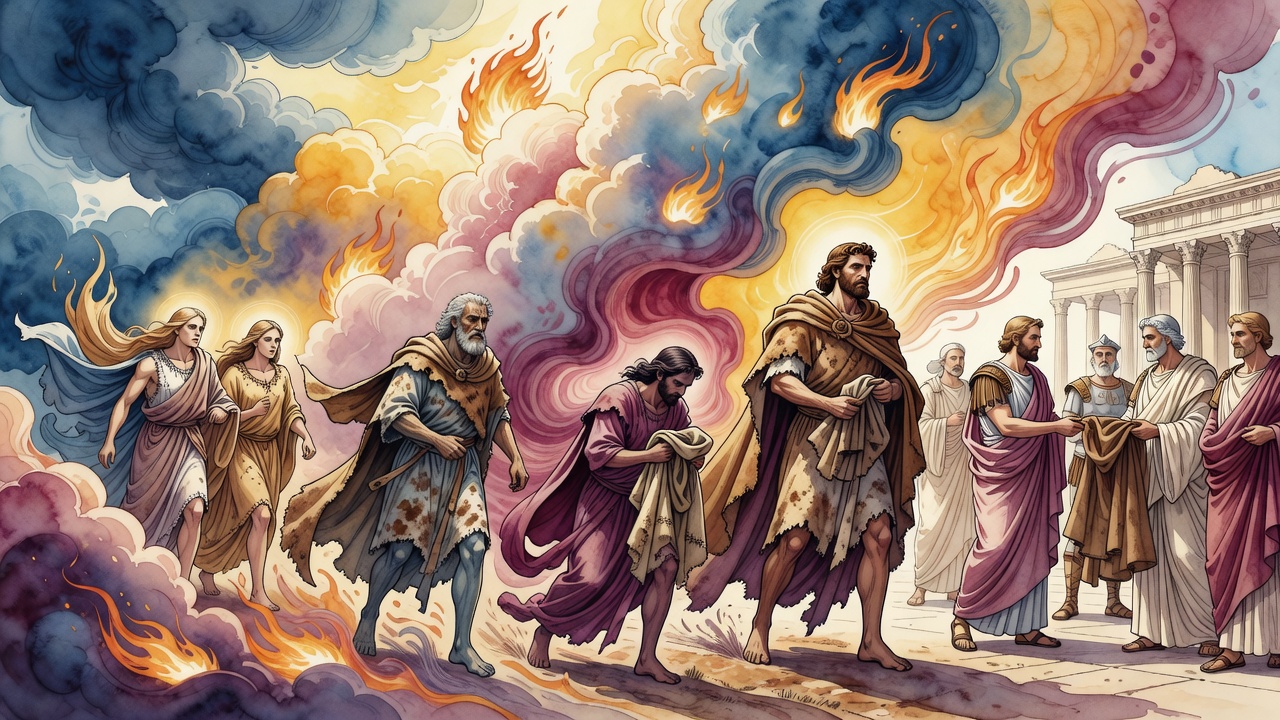
Creation Needed Measuring Rods Before Eve Built Her Fence
God walked Adam over the earth and showed him where to plant. At the tree, the serpent shoved Eve and waited for her not to die.
Table of Contents
God lifted Adam and carried him over the whole earth, pointing the way a man shows a son the family land. This is a good place to plant. This is a good place to sow. Adam learned measure by walking it.
 Click for full size
He was still out there when the serpent got Eve alone.
The Reed the Rich Man Still Needed
Rabbi Yehoshua ben Levi counted six things a builder cannot skip, quoting Rabbi Levi. Water. Dirt. Wood. Stones. Reeds. Iron.
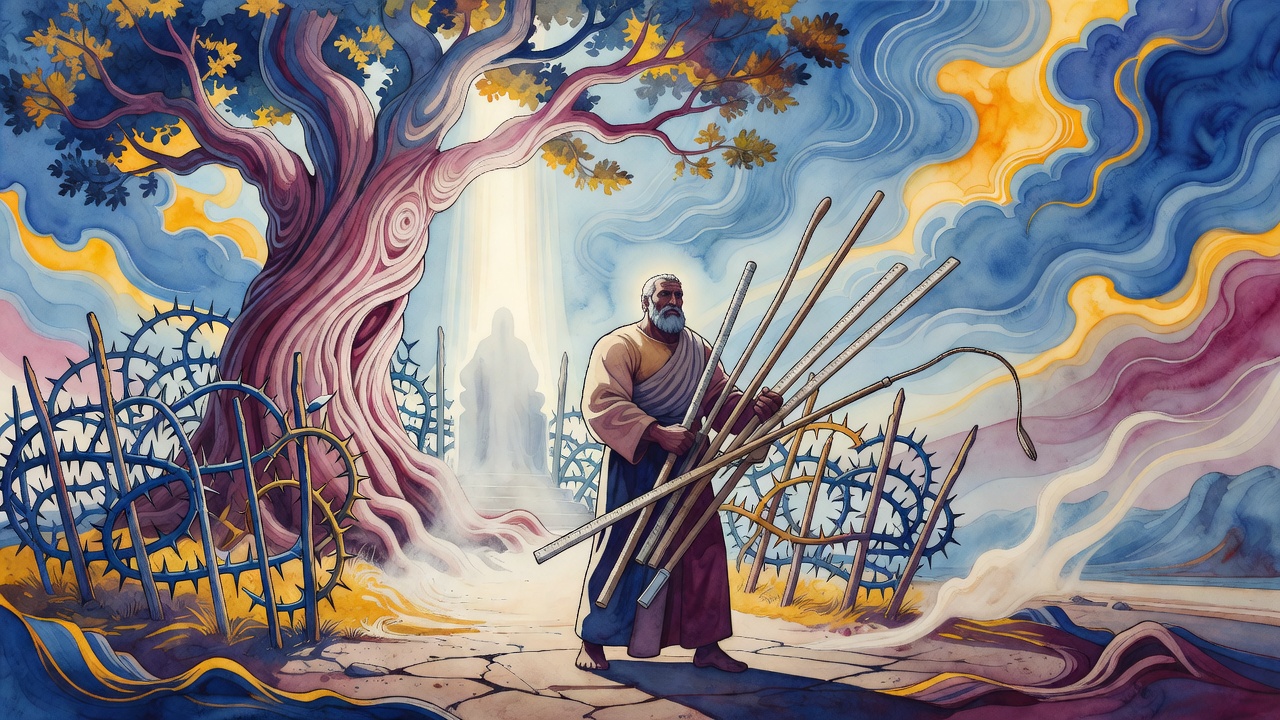
A rich man argues about the reeds. He has better timber in the yard. But a reed is straight, and a straight thing laid against a crooked thing tells the truth about it. When Ezekiel saw a man in a gate with a linen cord in one hand and a measuring rod in the other, that was the whole trade held up in two objects.
Six tools for a house. Six words in Proverbs for the wisdom that stood before there was a world to measure: of old, from earliest time, from ancient times, from the beginning, and from before, a plural that counts as two. Creation needed measuring rods first. Human restraint is the same tool used on a life.
Adam Was Not at the Tree
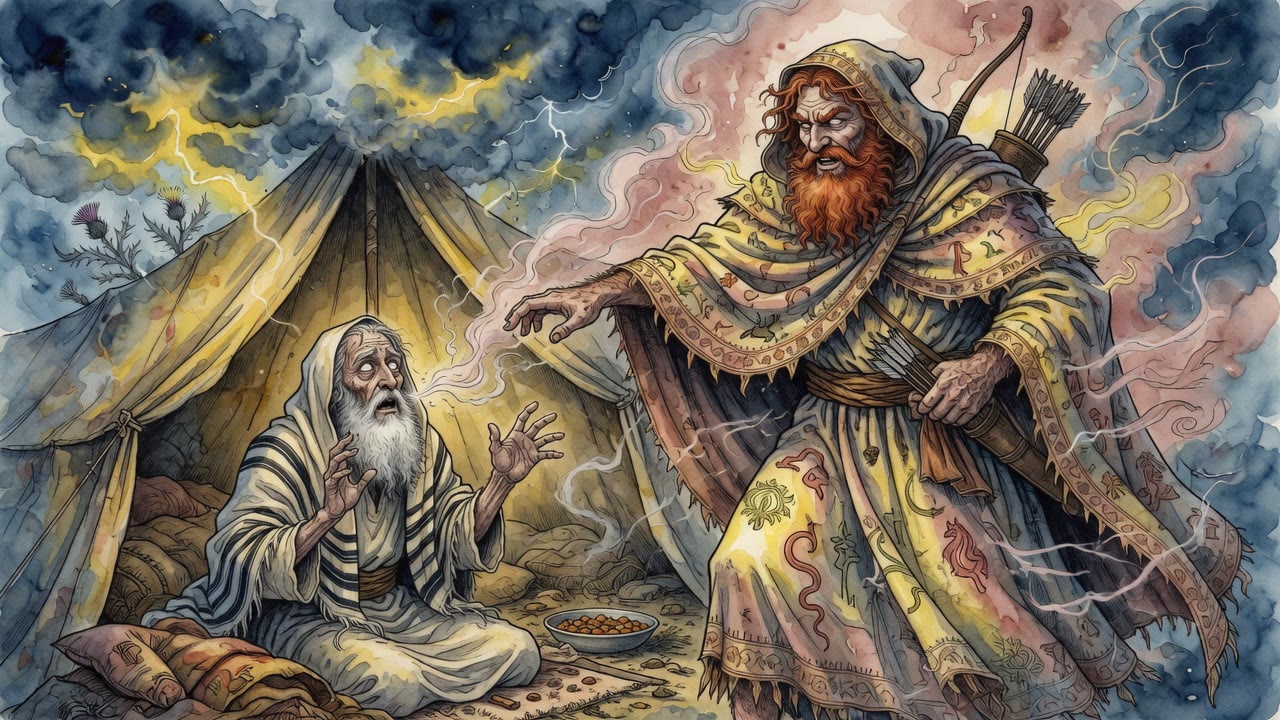
Abba bar Korya gave a plainer account of the absence. Adam had lain with his wife, and he was asleep.
Either way he was not there. God was showing him ground Jeremiah would later call a land no man had crossed, where no person had settled. Adam had stood on it and had not stayed. He was learning where things belong. The tree in the middle of the garden was learning him gone.
Eve Built the Fence Too Tall
The command had been short. Do not eat from the tree in the middle of the garden. That was the line. A person could see the edge of it.
Eve repeated it to the serpent with a board nailed on. "God said, you shall not eat of it, nor shall you touch it, or you will die." Touching was not in the command. She had run a fence out in front of the drop, extra room nobody had asked her for.
Rabbi Hiyya taught the orchard rule she broke. Never build the fence higher than what it guards. A tall fence falls. When it comes down it snaps the saplings underneath. Proverbs put it colder. Do not add to His words, or He will rebuke you and you will be found a liar (Proverbs 30:6).
The Serpent Put Her Against the Bark
It waited until she walked close. Then it took hold of her and shoved.
She went into the trunk hard enough to feel bark through her hair. Nothing happened. No fire. No voice. No falling down dead in the grass. The serpent let her stand in that silence.
"Look at you," it said. "You touched it and you did not die. You will not die from eating it either. He knows what happens on the day you eat. Your eyes open and you become like God, knowing good from evil."
Every word it said about touching was true. That was what carried the rest. The fence came down and took the tree with it. Adam was somewhere on the good ground, being shown where each thing ought to grow.
The Eye They Came to Blind
Generations later four kings came west and halted at a spring called Ein Mishpat, the spring of judgment. Rabbi Aha said they had come for the eye of the world, and the eye was Abraham. They meant to put out the sight that had held judgment back from everyone else.
The valley was pitted with clay. The kings of Sodom and Gomorrah ran, and the ground swallowed them. The king of Sodom climbed back out. Men who had refused to believe Abraham walked out of a furnace unburned watched a man drag himself from a pit and believed the older story on the spot.
Then they took the plunder, and they took Lot. He had measured his own ground badly. He had chosen Sodom. Walk with the wise and you grow wise. Keep company with fools and you are broken.
Later still, Esau's line sat down on thrones while Jacob's children had none. Hadad died. Samla of Masreka reigned in his stead. Samla died. Shaul of Rehovot of the river sat down. They seized the estate early. Rabbi Yitzhak said an estate seized hastily at the start will not be blessed at its end. The measuring rod was still the same. Eve had added length she did not have. Lot had chosen a city that would not hold. Edom took a crown before the hour. The reed against the wall still told the truth.
← All myths