5 min read

Adam's Garments Made Esau Terrifying to Isaac

The clothes Rebecca put on Jacob were not costumes. They carried Adam, Nimrod, Esau, and the terror of power passing hand to hand.

Curated by Arthur · Told by Maggid ·
Table of Contents
  1. The First Man Filled the World
  2. Nimrod Wore the Trophy
  3. Rebecca Put Terror on Jacob
  4. The Blessing Passed Through a Costume

Rebecca did not dress Jacob in ordinary clothes.
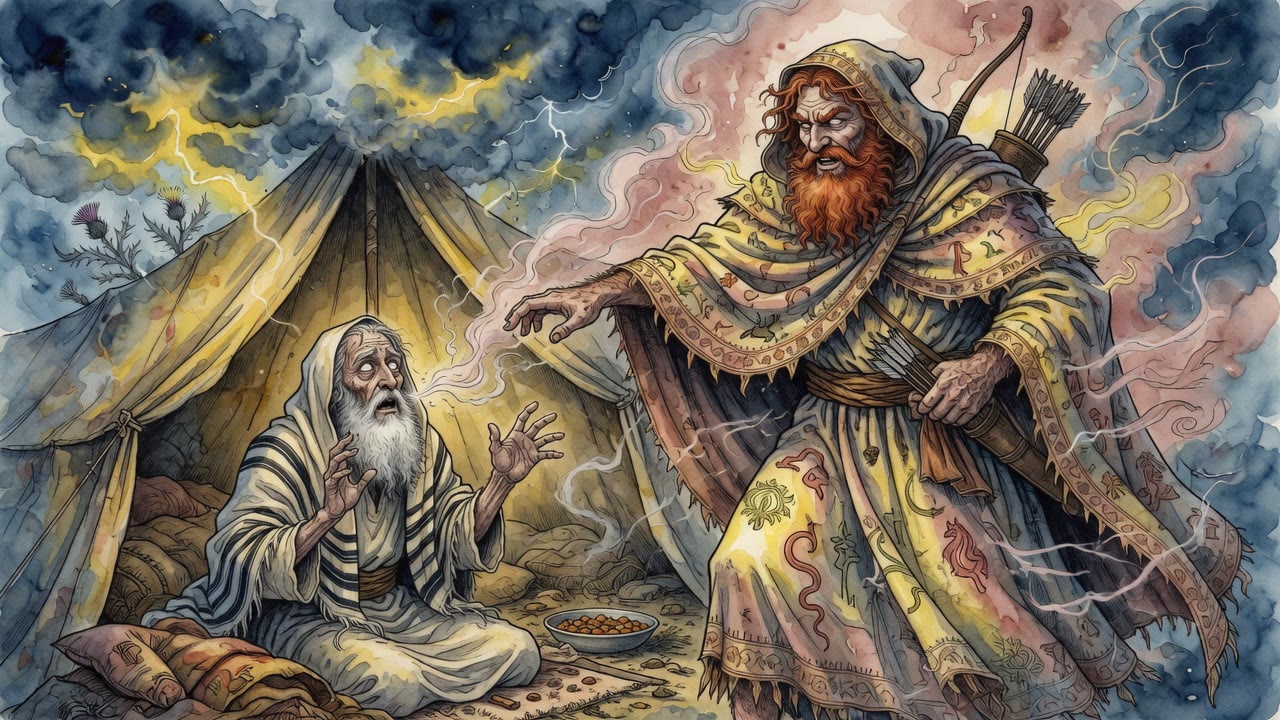
She took Esau's precious garments from the house and put them on the younger son. The Torah says the clothes belonged to Esau, the elder. The rabbis heard something heavier in that word. Elder. Great. Terrifying. These garments had history in their seams.

When Jacob entered Isaac's room, he was not only disguised as his brother. He was wearing a chain of power that began near the first human body.

The First Man Filled the World

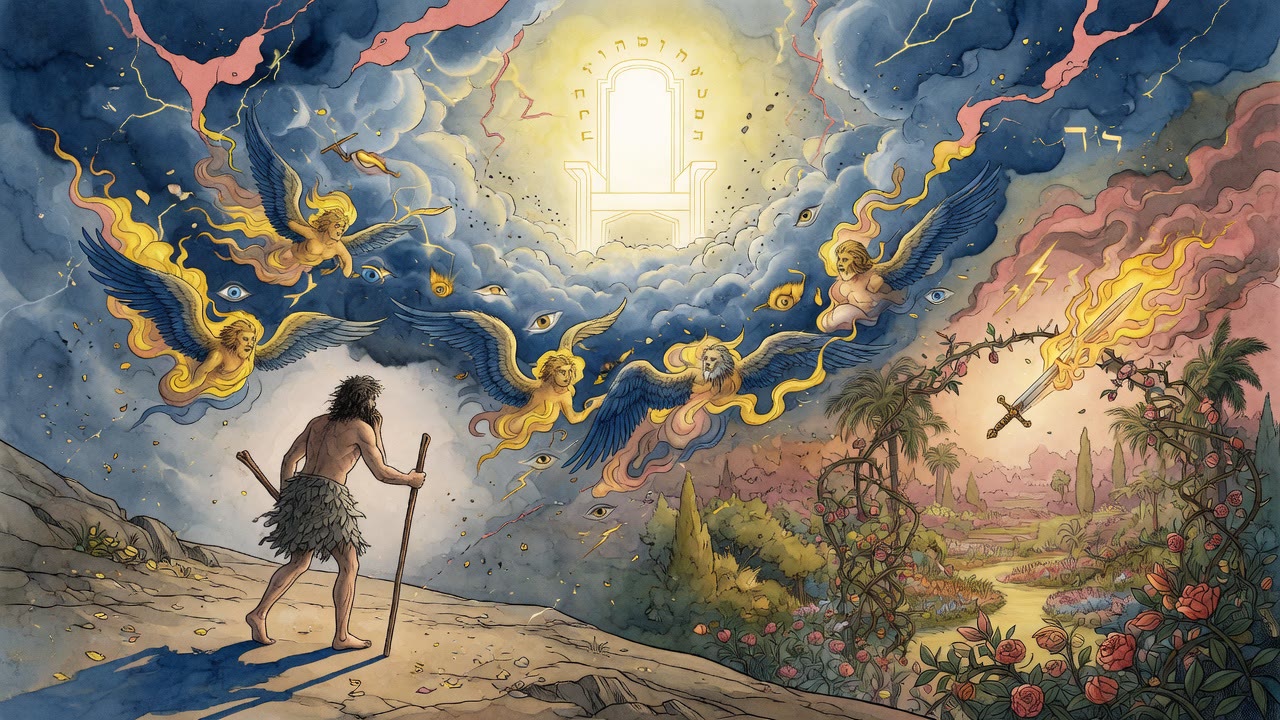
Adam was not imagined as small at the beginning. He stretched across creation. East to west, north to south, from earth toward heaven, the first body carried the scale of a world still wet with God's forming hand. He was terrifying and awesome because the human creature had not yet been reduced by sin.

Then the fall came, and greatness became burden. Adam blamed the woman beside him. The immense body that had filled creation shrank under fear, shame, and accusation. From that first terror came a pattern the sages kept tracing: what makes a person formidable also exposes the place where judgment will emerge.

The great are not safe because they are great. Often their own greatness becomes the road by which they fall.

So the first garment tradition begins under a shadow. Clothing covers the body after shame enters the garden, but it also preserves a memory of what the body had been before it shrank. To wear such garments is to wrap oneself in loss as much as in force.

Nimrod Wore the Trophy

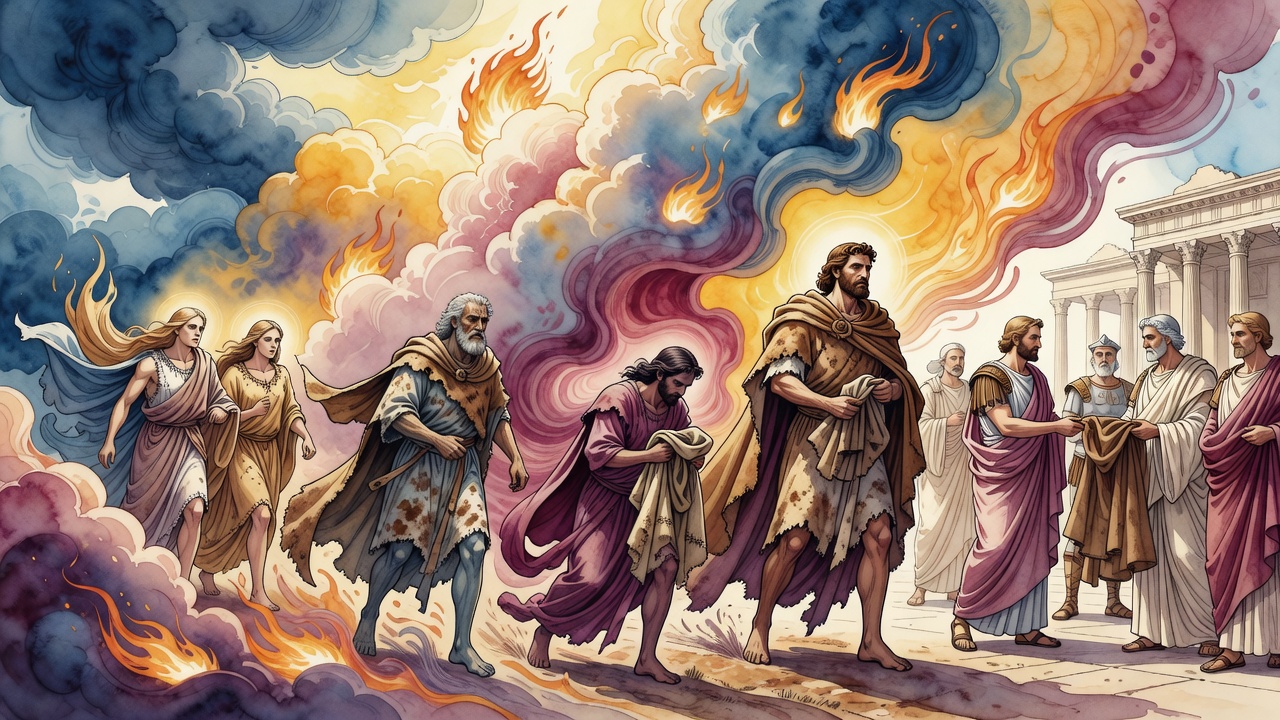
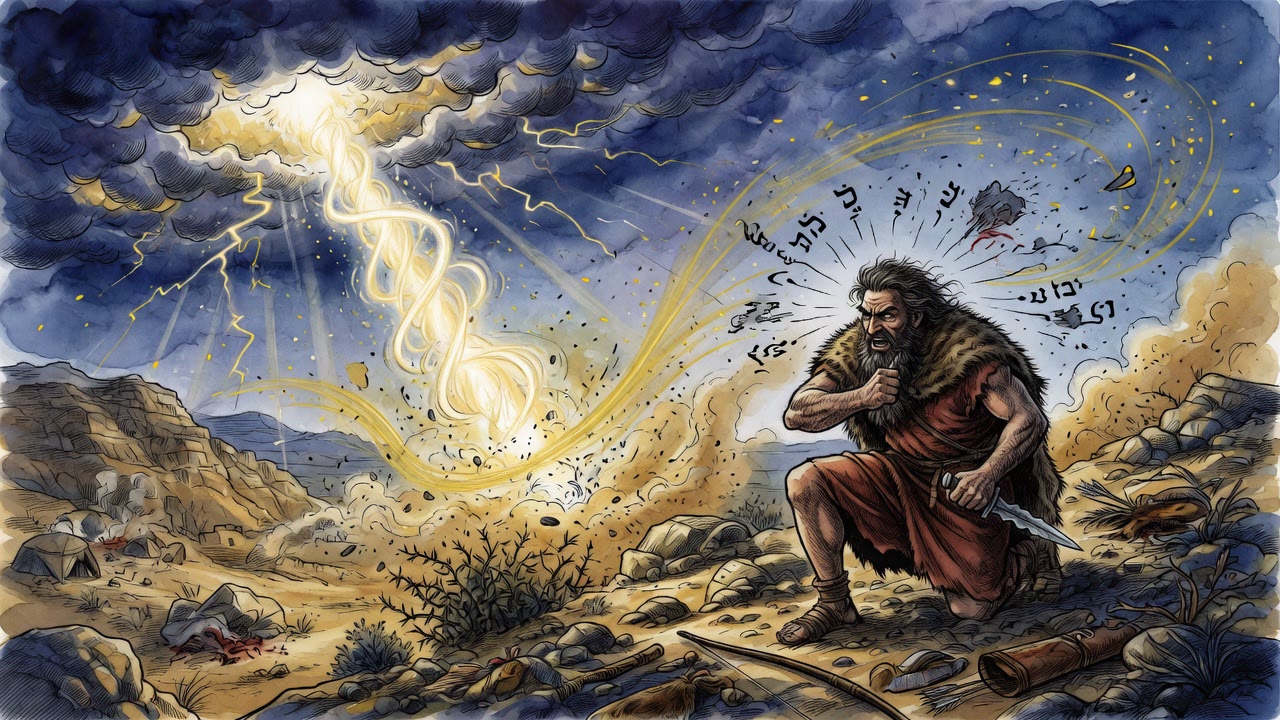
The garments moved through violent hands. In the tradition, Nimrod possessed them, and their power made him a hunter before God. Animals trembled. Men trembled. Clothing became more than covering. It became a sign that dominion could be worn on the skin.

Esau saw what Nimrod carried and coveted it. He was a hunter too, a man of the field, all appetite, speed, and red force. He wanted the garments not because they were beautiful, but because they announced mastery. The wicked covets the prey of the wicked, and Esau reached for what had already been stained by power.

By the time the clothes came into Rebecca's house, they had passed through enough hands to carry a scent older than Esau himself. They belonged to conquest, appetite, and fear.

They also made every wearer responsible for what he did with inherited strength. Adam failed by accusation. Nimrod made power predatory. Esau mixed violence with service to his father, and the mixture made the garments harder to read.

Rebecca Put Terror on Jacob

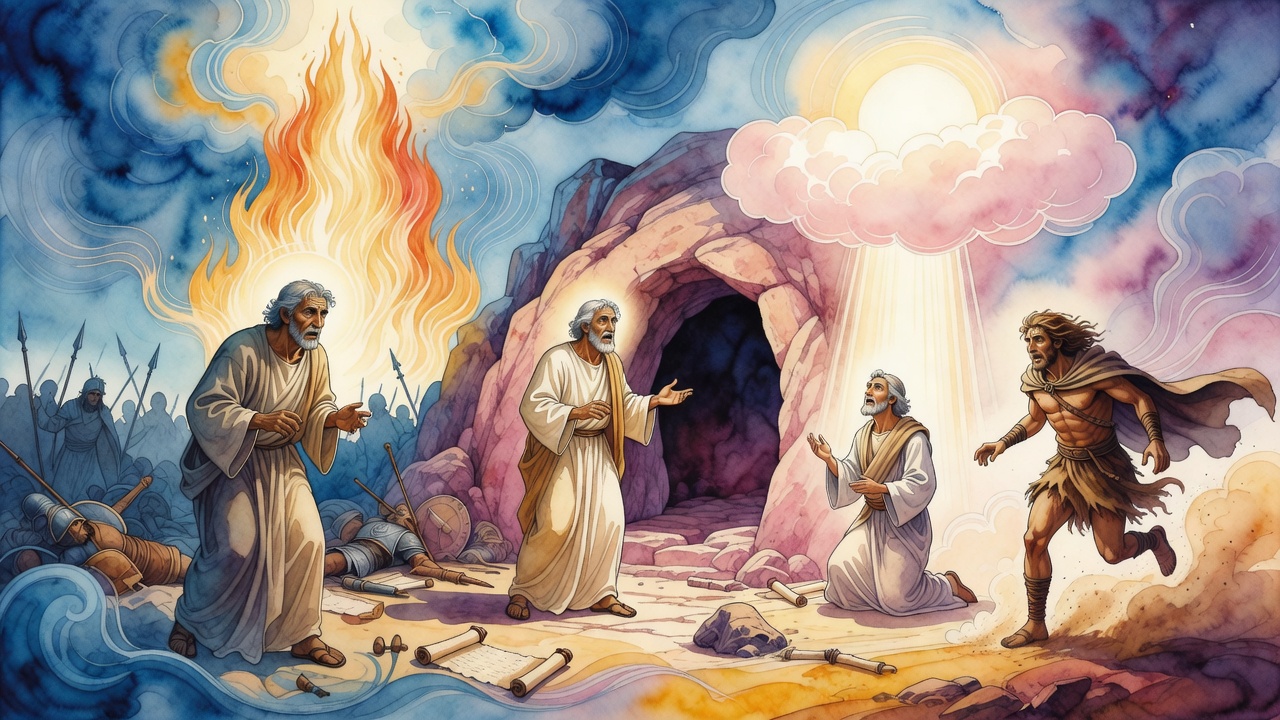
Isaac's eyes were dim. The room was a place of touch, smell, voice, and suspicion. Jacob entered with goatskins on his hands and Esau's garments on his body. His voice betrayed him. His skin lied for him. The clothes did the rest.

Isaac smelled the garments and blessed him.

That smell was not simple. It carried the field, or the memory of the field. It carried Esau's service to his father, because those garments were kept in the house for attending Isaac. Even Esau, for all his violence, had honored his father in ways that the sages did not dismiss. The clothes were therefore double: trophies of dangerous power and garments of filial service.

Rebecca understood the room better than anyone in it. She knew Isaac would listen to the voice and doubt. She knew he would touch the hands and hesitate. But the garments would surround Jacob with a history strong enough to pull blessing toward him.

The Blessing Passed Through a Costume

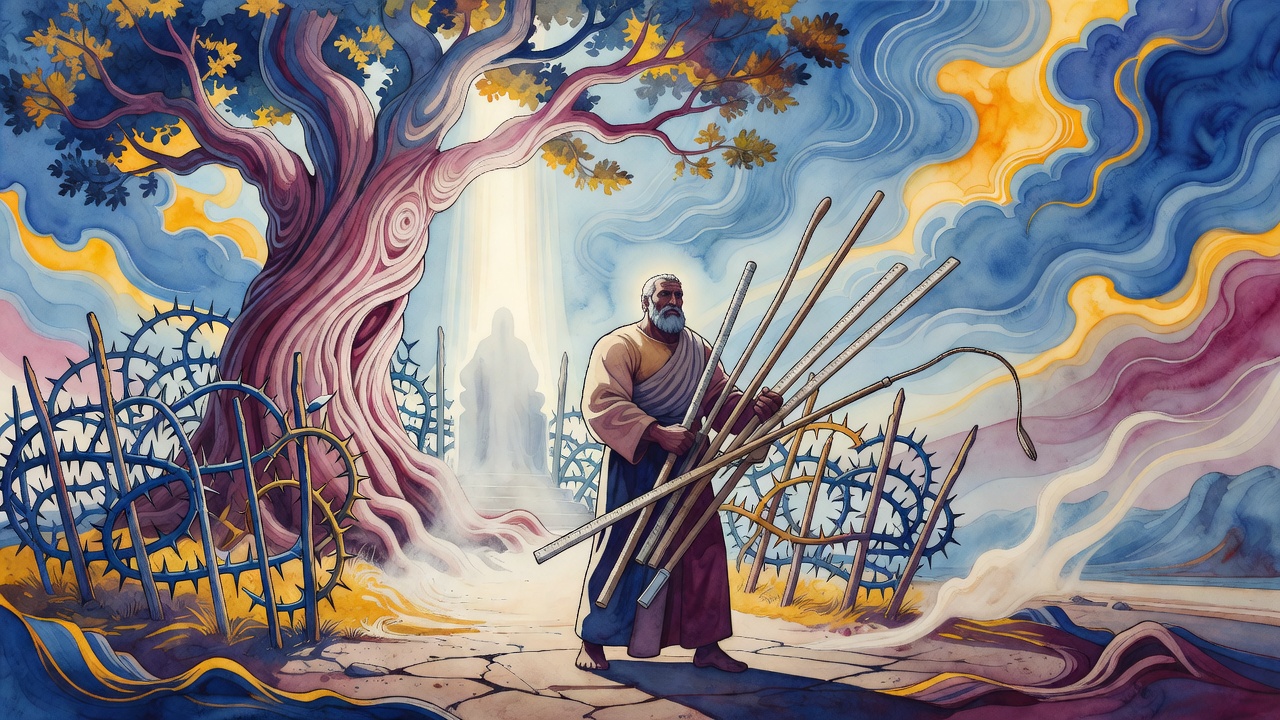
Jacob did not become Esau. The clothes could not change his soul. They could only carry him through a doorway that should have been closed.

That is why the scene is so tense. The blessing of Abraham, the future of covenant, the line that would become Israel, passed through a disguise stitched from the world's oldest terrors. Adam's greatness, Nimrod's hunt, Esau's appetite, Isaac's blindness, Rebecca's calculation, Jacob's trembling voice, all of it entered the room together.

The garments made the lie believable. They also exposed the strange way sacred history moves. It does not always pass through clean hands or calm rooms. Sometimes blessing travels through fear, misrecognition, and a mother willing to handle dangerous objects because she sees the future more sharply than the men around her.

When Esau returned, the room shook. Isaac trembled with a great trembling. The garments had done their work. Power had passed again, and no one could call it back.


← All myths
From the tradition

Sources

3 sources

The texts this telling draws on, in full. Open a card to read inline, or expand it for a wider, quieter read.

Vayikra Rabbah 18:2Vayikra Rabbah

One such example, a passage from Vayikra Rabbah 18, which tackles a seemingly simple verse from Leviticus: "Any man, when he has a discharge from his flesh.." (Leviticus 15:2).

Hold on, because this isn't just about ritual purity! The Rabbis, in their ingenious way, connect this verse to another, seemingly unrelated one from (Habakkuk 1:7): "It is terrifying and awesome, from it will emerge its justice and its burden." Now, The first reading, Habakkuk is talking about the Chaldean nation. But here's the fascinating twist: the Midrash (rabbinic interpretive commentary) sees this verse as a key that unlocks a series of profound insights into human nature and the consequences of our actions.

Rabbi Yehuda bar Simon, in the name of Rabbi Yehoshua ben Levi, starts us off with a bang. "Terrifying and awesome," he says, refers to Adam, the first human. According to Ginzberg's retelling in Legends of the Jews, when God created Adam, he was so immense that he filled the entire world – from east to west, as it says, "Back and front You shaped me" (Psalm 139:5). Even the space between heaven and earth! "You placed Your palm upon me" (Psalm 139:5). But what about "from it will emerge its justice and its burden?" Ah, that's Eve, who, as The familiar version gives us, plays a central role in the story of the Garden of Eden. As (Genesis 3:12) tells us, Adam blames Eve for giving him the fruit, and that sin brought upon him the “justice and burden” – the punishment of death.

The Midrash doesn't stop there. "Terrifying and awesome" is also Esau. Remember Rebecca dressing Jacob in Esau's clothes? The Rabbis say those weren't just any clothes! They were Adam's garments, passed down to Nimrod, and then acquired by Esau after he killed Nimrod. And since Nimrod was described as mighty (Genesis 10:9), Esau, wearing his clothes, must have been “terrifying and awesome” (Etz Yosef). And "from it will emerge its justice and its burden?" This time, it's Obadiah, the prophet who, according to Rabbi Yitzchak, was an Edomite convert who prophesied against Esau's descendants, declaring, "There will be no survivor for the house of Esau" (Obadiah 1:18).

The interpretations keep coming, each one a fascinating glimpse into biblical figures: Sennacherib, the Assyrian king, whose arrogance led to his downfall at the hands of his own sons. Hiram, King of Tyre, whose pride was his undoing. And then there's Nebuchadnezzar, the Babylonian king who famously lost his mind for seven years. The Midrash even throws in a juicy aggadic detail: Rabbi Simon says Hiram was married to Nebuchadnezzar’s mother, and Nebuchadnezzar killed him! Talk about family drama. The Midrash tells us that during those seven years that Nebuchadnezzar was off communing with the animals (Daniel 4:22), Evil Merodakh was crowned in his stead. But when Nebuchadnezzar returned, he imprisoned Evil Merodakh. According to the Midrash, Evil Merodakh didn't believe Nebuchadnezzar was really dead until they dragged the corpse before him! Rabbi Avina even adds that every enemy Nebuchadnezzar had came and stabbed his corpse!

But here's where it gets really interesting. The Midrash circles back to Israel. "Terrifying and awesome" can also refer to the Jewish people, as (Psalm 82:6) declares, "I had said: You are divine." But with great power comes great responsibility. "From it will emerge its justice and its burden," meaning that when Israel sins, they are afflicted with… well, discharges and leprosy, the very things Leviticus is talking about!

So, what's the takeaway here? It seems the Rabbis are using this verse to illustrate a profound truth: that every individual, every nation, every leader, is subject to the same universal laws of cause and effect. Our actions, whether good or bad, have consequences. Power, pride, and arrogance can lead to downfall, while humility, righteousness, and adherence to God's commandments can bring blessings. And ultimately, perhaps the most important lesson is that we are all connected, all part of a larger story, and that our choices ripple outwards, affecting not only ourselves but the entire world.

Full source
Bereshit Rabbah 19:7Bereshit Rabbah

"And they heard the voice of the LORD God walking about in the garden toward the cool of the day" (Genesis 3:8). Rabbi Chalafon said: We have learned that there is walking for a voice, as it is said: "And they heard the voice of the LORD God walking about in the garden," and walking for fire, as it is said: "And fire ran along upon the ground" (Exodus 9:23). Rabbi Abba bar Kahana said: It is not written here "walking" but rather "walking about" -- leaping up and ascending.

The essence of the Divine Presence was in the lower realms. When Adam, the first man, sinned, the Divine Presence withdrew to the first firmament. Cain sinned, and it withdrew to the second firmament. The generation of Enosh, to the third. The generation of the Flood, to the fourth. The generation of the Dispersion, to the fifth. The Sodomites, to the sixth. And the Egyptians in the days of Abraham, to the seventh.

And corresponding to them seven righteous men arose, and these are they: Abraham, Isaac, and Jacob, Levi, Kehat, Amram, Moses. Abraham arose and brought it down to the sixth. Isaac arose and brought it down from the sixth to the fifth. Jacob arose and brought it down from the fifth to the fourth. Levi arose and brought it down from the fourth to the third. Kehat arose and brought it down from the third to the second. Amram arose and brought it down from the second to the first. Moses arose and brought it down from above to below.

Rabbi Yitzchak said: It is written, "The righteous shall inherit the land" and so forth (Psalms 37:29). And the wicked, what shall they do -- fly about in the air? Rather, the wicked did not cause the Divine Presence to dwell on the earth.

Full source
Bereshit Rabbah 65:16Bereshit Rabbah

It turns out, even the clothes in the Torah have a tale to spin. to a fascinating Midrash (rabbinic interpretive commentary) about Esau's special garments, found in Bereshit Rabbah 65.

In (Genesis 27:15), we read, “Rebecca took the fine garments of Esau, her elder son, that were with her in the house, and she dressed Jacob her younger son.” But these weren't just any clothes. Bereshit Rabbah tells us these "fine garments" – the haḥamudot garments – were actually coveted trophies.

In Midrash, Esau had coveted – sheḥamad – these garments from Nimrod himself! He then, shall we say, acquired them. As it says in (Proverbs 12:12), "The wicked covets the prey of the evil."

These weren't just for show, though. The text specifies that these garments "were with her in the house" because Esau used them to attend to his father, Isaac. Rabban Shimon ben Gamliel even chimes in with a personal anecdote. He says, "I attended my father all my days, and I did not attend him one one-hundredth of what Esau attended his father." He explains that while he'd wear casual clothes around his father, Esau would only wear royal garments, believing it was the only way to properly honor his father.

But here's where it gets even more interesting. If Esau had multiple wives, why were these prized possessions kept at his mother's house? The Midrash offers a compelling explanation: Esau didn't trust his wives! He knew their true nature and kept the garments safe with Rebecca.

Rabbi Abba bar Kahana illustrates this point with a story about some rowdy individuals in Kefar Ḥatya. These guys would party hard in the synagogue every Shabbat (the Sabbath) eve, and then toss the bones at the poor scribe. When one of them was on his deathbed and asked who should care for his son, he chose the scribe, even though he had many "friends." Why? Because he knew the scribe was the most trustworthy. Similarly, Esau, knowing his wives' tendencies, entrusted his precious garments to his mother.

So, what does this all mean? It’s a reminder that appearances can be deceiving. Esau may have presented himself as honorable through his clothing, but his actions and the company he kept revealed a different story. The Midrash invites us to look beyond the surface and consider the deeper motivations and character of individuals. Sometimes, the clothes truly do make the man… or unmake him.

Full source