When Abraham Feared After the Blessing Was Won
Sarah died at Hebron and Abraham owned no ground to bury her in. Ephron called the field a gift, then named a price: four hundred shekels of silver.
Table of Contents
 Click for full size
Abraham Trembled After the Victory
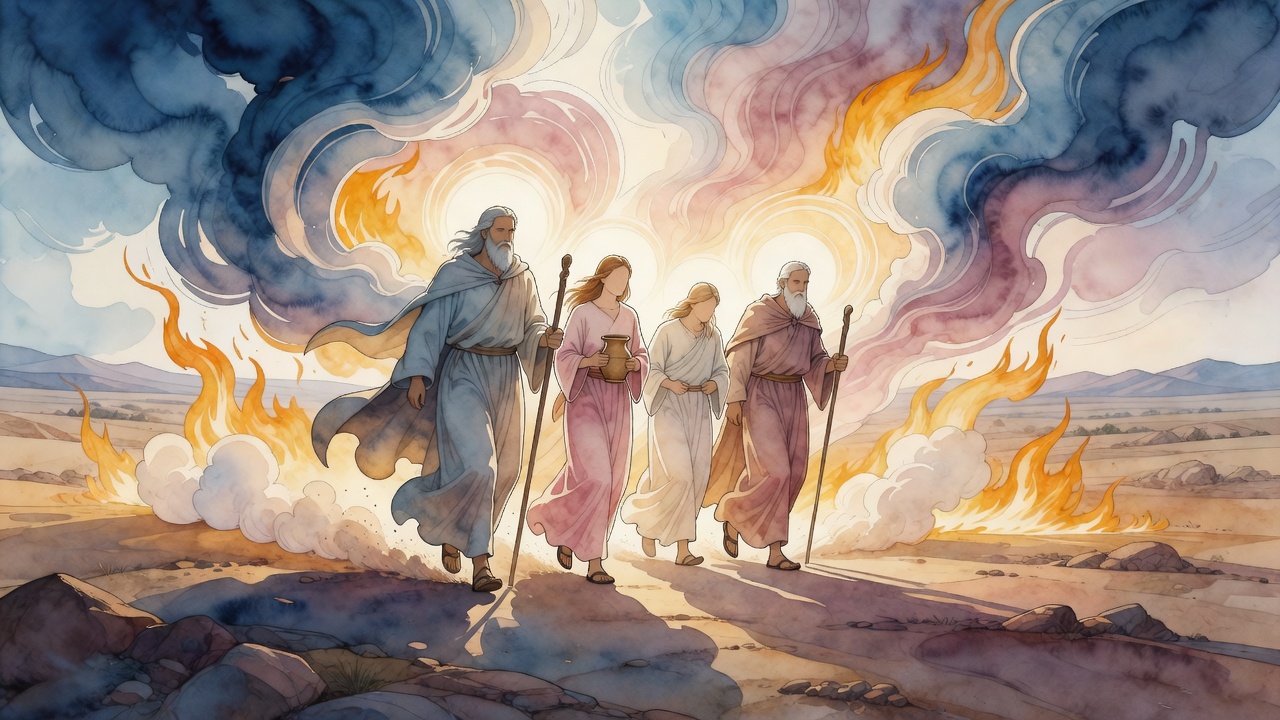
Abraham came back from defeating four kings, rescuing Lot, refusing the king of Sodom's reward, and receiving Melchizedek's blessing. He should have felt triumphant. Bereshit Rabbah says he was afraid.
The fear was specific and theological. He had drawn so heavily on the merit stored for him, used so much of what providence had prepared, that he worried whether the account was now depleted. What had seemed like limitless blessing now felt like a finite supply that might have been spent. He had survived the great battle. Had he drawn down the reserves he would need for harder things still to come?
God answered immediately with the word the rabbis called the most comprehensive comfort available: do not fear. But the divine answer went further than reassurance. Your reward is very great. The word translated as reward also means your labor, your engagement, what you have put into this. God was not promising Abraham compensation for risk. God was saying: what you are doing is not a debit on your account. It is the thing itself. The righteousness is the reward, not the cost of the reward.
Abraham's fear, the rabbis noted, is the fear that belongs specifically to the righteous. The wicked run when no one is chasing them. The righteous tremble at their own victories, because they are calibrated finely enough to feel how close judgment stands to blessing.
News From Milcah's Children
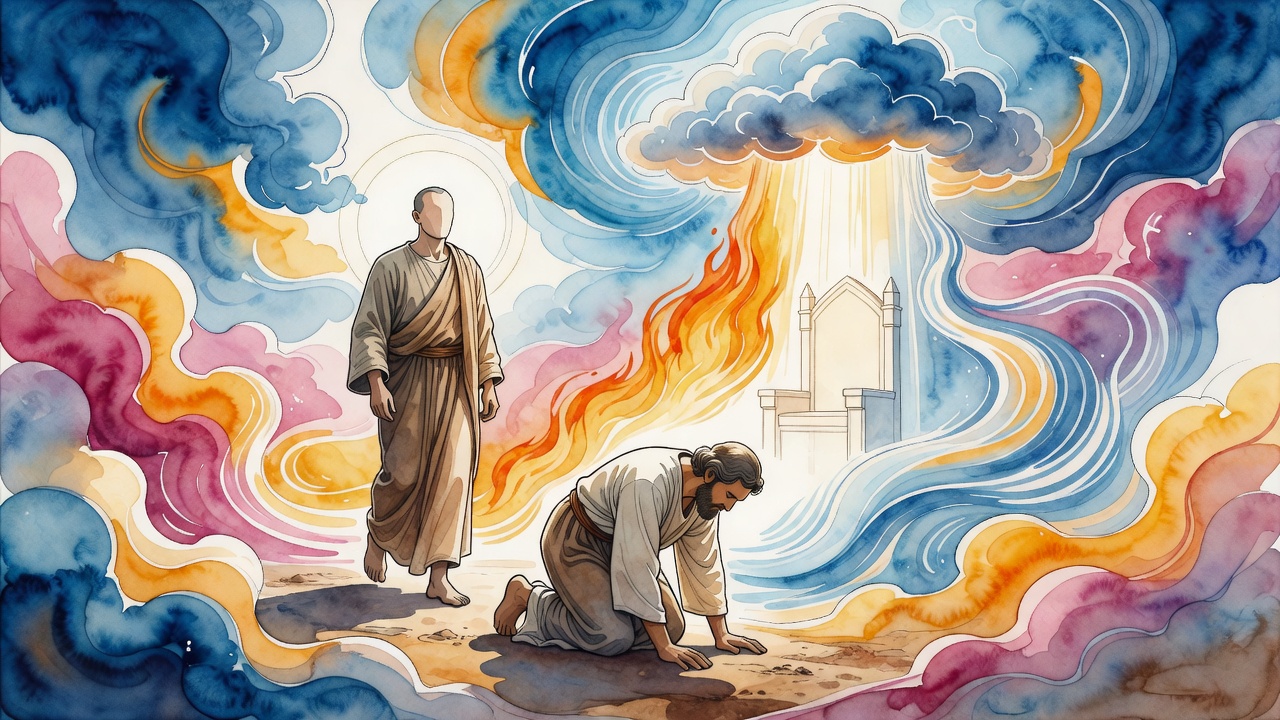
Immediately after the Akedah, after God stopped Abraham's hand above Isaac and provided the ram, news arrived. Milcah, the wife of Abraham's brother Nahor, had borne eight sons. One of them was Bethuel. Bethuel was the father of Rebecca.
Bereshit Rabbah read this announcement as a direct answer to the Akedah. Abraham had been willing to give his son. Before the echo of that willingness had faded, God arranged the birth of the woman who would marry that son and continue the line. The news of Milcah's children was not incidental family news arriving by coincidence. It was providence disclosing its next move the moment the previous move was complete.
Rebecca was not born yet when this announcement came. She was three generations in the future of the news. But her existence was being prepared from the moment Abraham laid Isaac on the altar, and the preparation was announced in the same breath as the reprieve. The story moves that fast. The near-sacrifice and the grandmother of the next generation's wife in consecutive sentences, because that is how tightly the covenant is managed.
Abraham Bargained for a Burial Cave
Sarah died at Hebron. Abraham was a sojourner in Canaan, which meant he held no legal title to land. He needed a burial place that was his, not borrowed or lent or occupied by grace. He went to the Hittites of Hebron and negotiated.
The negotiation scene in Genesis is famous for its elaborate courtesy. Abraham bowed down. Ephron the Hittite said the field and the cave were a gift, a gift, take it. Abraham bowed again and said: I will pay the full price. Ephron said a piece of land worth four hundred shekels is nothing between two men like us. Abraham weighed out four hundred shekels of silver at the going merchant rate.
Bereshit Rabbah read Ephron's behavior with no patience for the courtesy it was wrapped in. A man who says a thing is a gift and then names a price is not a generous man. He is a man who has found the most expensive way to pretend to be generous. Abraham paid the full amount without argument, not because he was naive but because the burial cave was worth more than the amount of silver being requested, and haggling over a grave would have been its own kind of wrong. He paid and the field was legally his, the first piece of the land that the covenant had promised him that he could actually stand on without anyone's permission.
Rebecca's Compassion and Esau's Garments
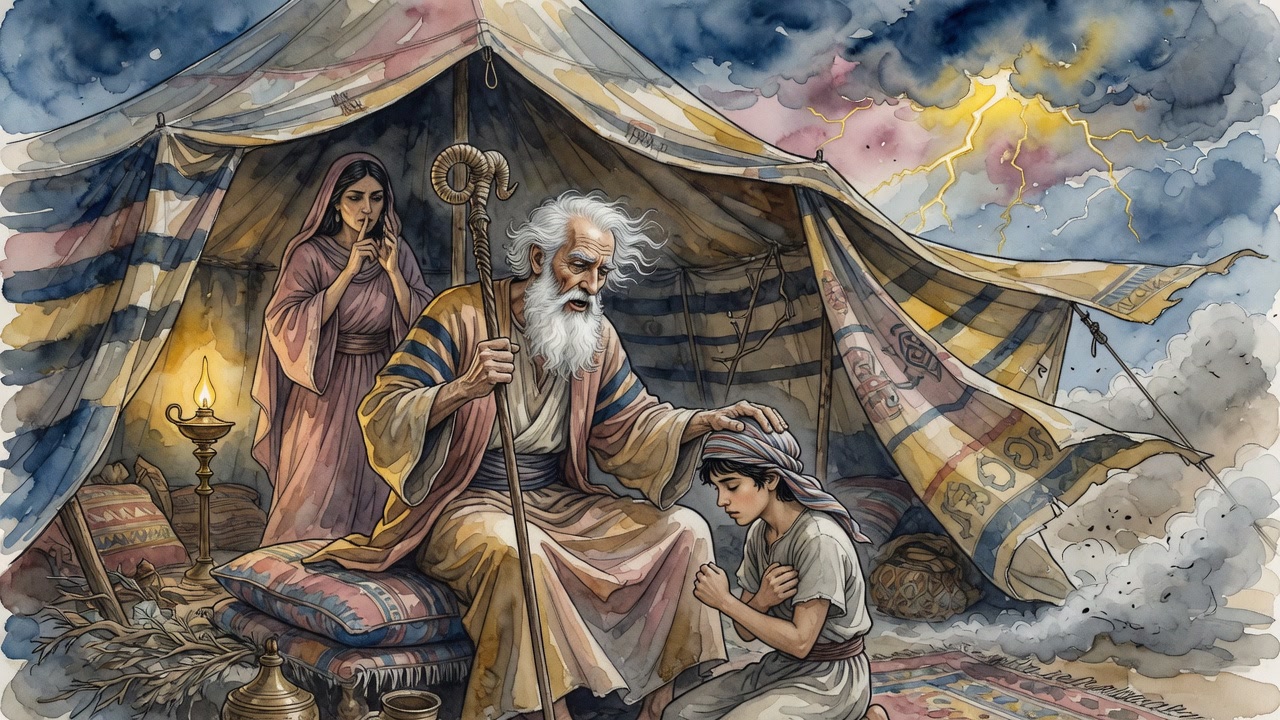
Isaac was old and his eyes were dim. He called Esau, his firstborn, to receive the blessing. Esau went to hunt game for the meal his father required. Rebecca heard the exchange and moved quickly. She had received the word at the birth: the elder shall serve the younger. She knew which son the blessing was intended for, even if Isaac did not know it yet.
What Esau brought to the moment of blessing was the smell of the field and the garments of Nimrod, or so the rabbis understood those garments, clothing that had passed from Adam to Nimrod the hunter, the garments of the first human being made from the skin of animals, preserved somehow through the generations as the great hunter's inheritance. Esau wore his identity as a hunter of the field even at the moment he was about to be displaced from the blessing the hunter expected to receive.
Jacob wore Esau's garments and Rebecca's cooking. He stood before his blind father and received the blessing that Esau would spend decades trying to recover. When Esau came back from the field and discovered what had happened, he cried with a great and bitter cry and asked his father: bless me also, bless me also. Isaac had nothing left. The blessing had gone out and could not be recalled.
Esau Left the Land
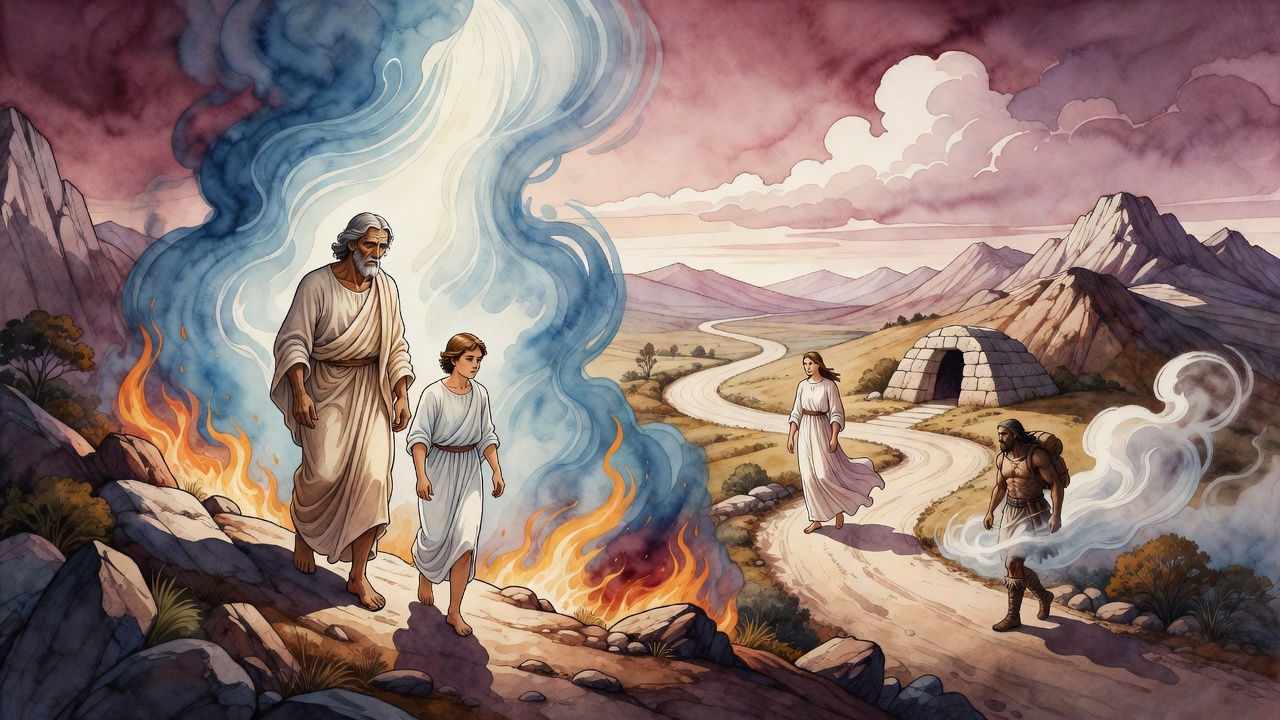
Esau looked at what he had and what Jacob had and made a calculation. The land of Canaan could not sustain two wealthy households with all their flocks and herds and people. Jacob was there, established, with Isaac's blessing secured. Esau took his wives and children and flocks and all his possessions and moved to a different territory, to Seir, to the country of Edom.
Bereshit Rabbah read this departure through Proverbs: a wise son makes a glad father. Jacob stayed in the land of his fathers. Esau left. It simply and the rabbis let the simplicity stand. The one who left the covenant land was the one who had already sold his birthright for a bowl of lentil stew, who had married outside the covenant, who wore the garments of his hunter's identity right into the moment when identity was being sorted out permanently. His departure completed what his choices had been moving toward for decades.
← All myths