Abraham Rose From Sarah's Body and the Angel of Death Was Still There
The ram was still burning when he started counting daughters for Isaac. He came home to a quiet tent, and Death was still standing there.
Table of Contents
 Click for full size
He Counted Daughters on the Way Down
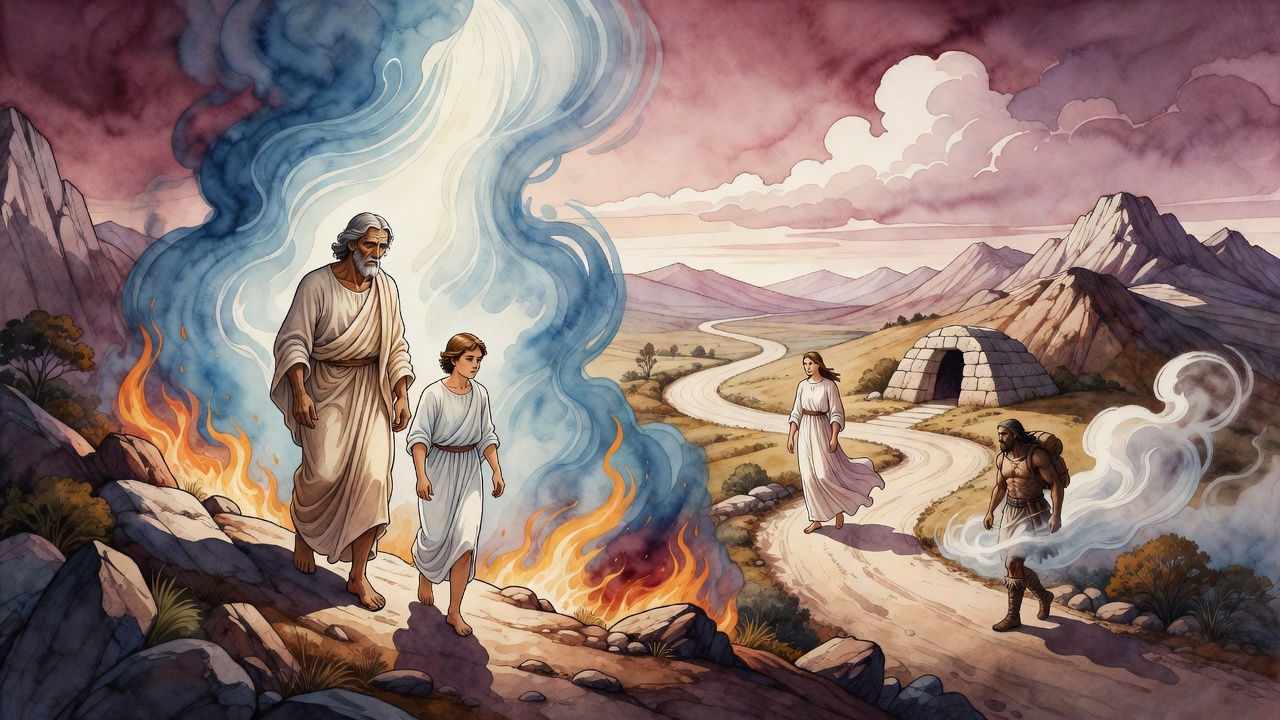
The ram was still burning behind them and Abraham was doing sums.
If the knife had gone down, the boy would have died with no children. That was the thought that would not leave him on the descent. Not the angel. Not the voice. Not the thicket. The empty generations on the other side of a hand that had almost finished the stroke.
So he made a plan on the road. Aner, Eshkol, and Mamre had daughters. They were decent men and their daughters were decent women, and none of them came from anything. Fine. Let the boy marry one of them and let it be done this year. What do I care about lineage.
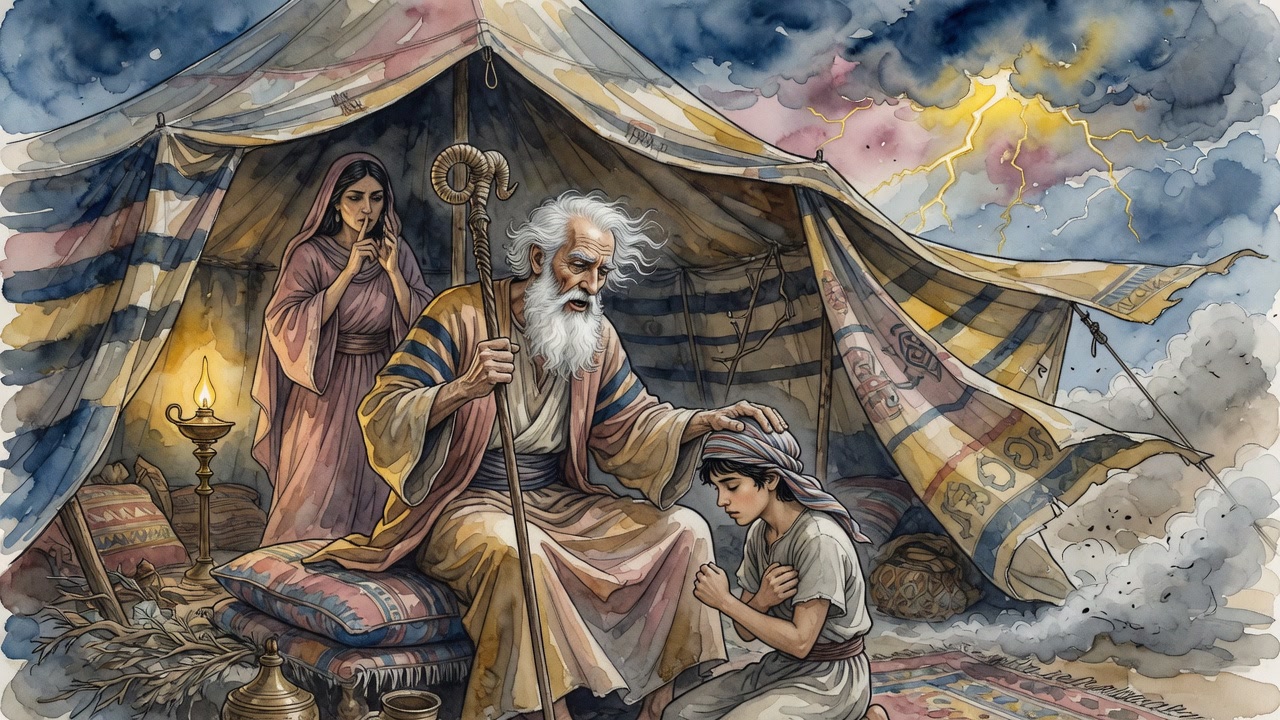
God stopped him before he got home. "There is no need. The girl your son is going to marry has already been born."
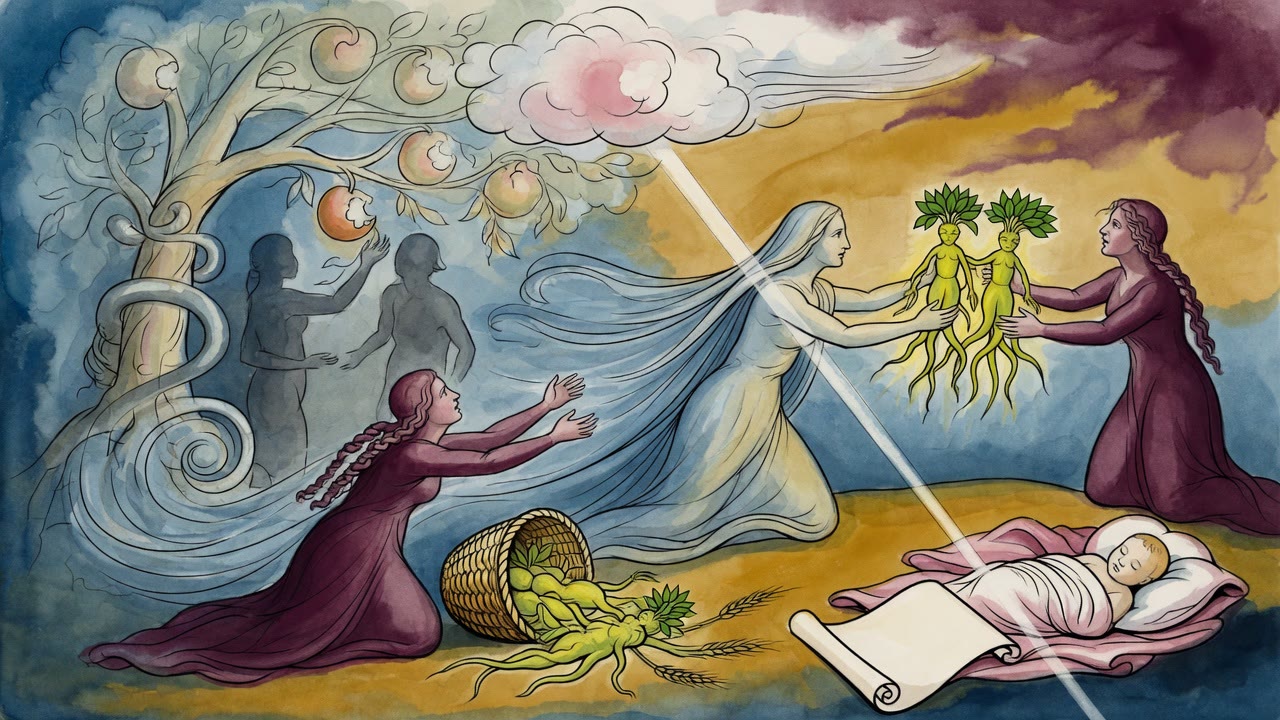
Word had come from Aram while he was on the mountain. Milkah has had children too. Eight sons from the wife, four from the concubine, the same count that would run in his own house one day, and one of those sons had a daughter.
The House Was Quiet
Nobody could later agree where he was walking in from. Rabbi Levi said he came from burying his father Terah. Rabbi Yosei counted the years out loud and told him no. Terah had been two years in the ground already.
He came from Moriah. That is why the binding sits in the scroll directly against the line about the years of Sarah's life, with nothing between them.
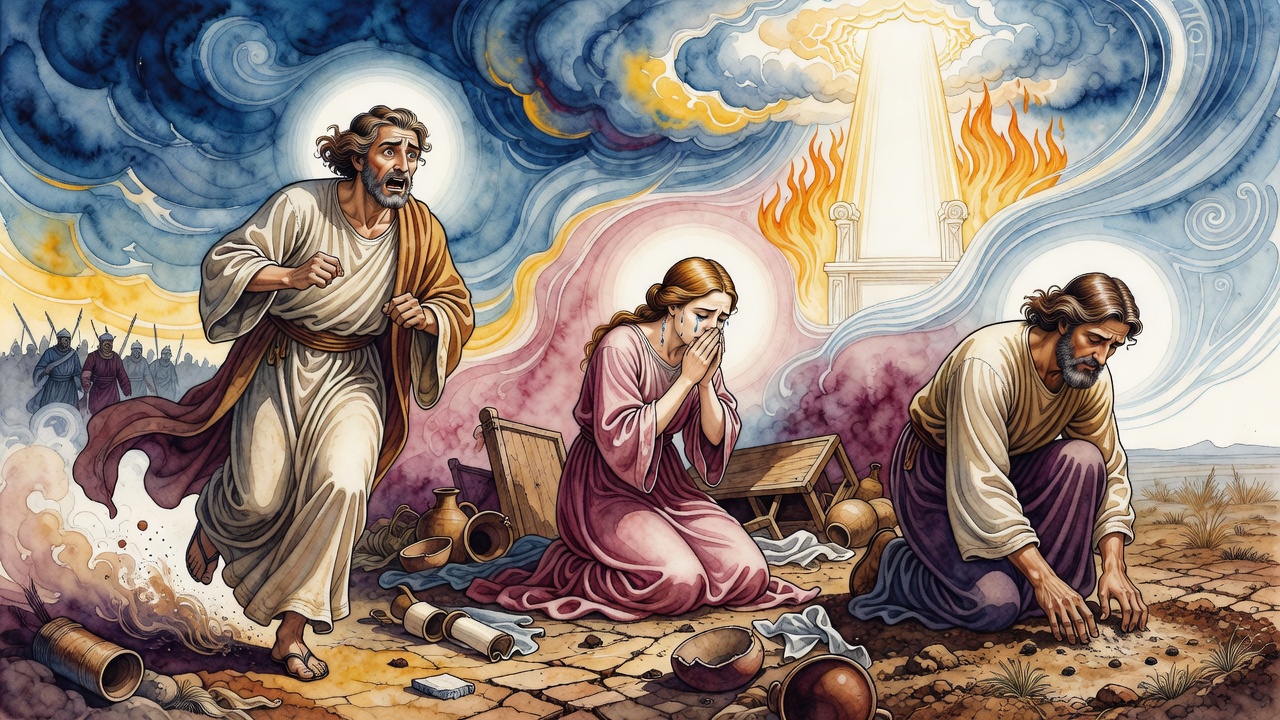
The account of what had happened up there reached her before her husband did. An old man had taken her only son up a mountain, tied him hand and foot on a pile of wood, and lifted a knife over his throat.
She died of it.
Isaac walked home alive. His mother had already stopped breathing over a rescue nobody had run ahead to tell her about.
The Angel of Death Waited
He came in and lay down over her and wept, and then he got up off the floor.
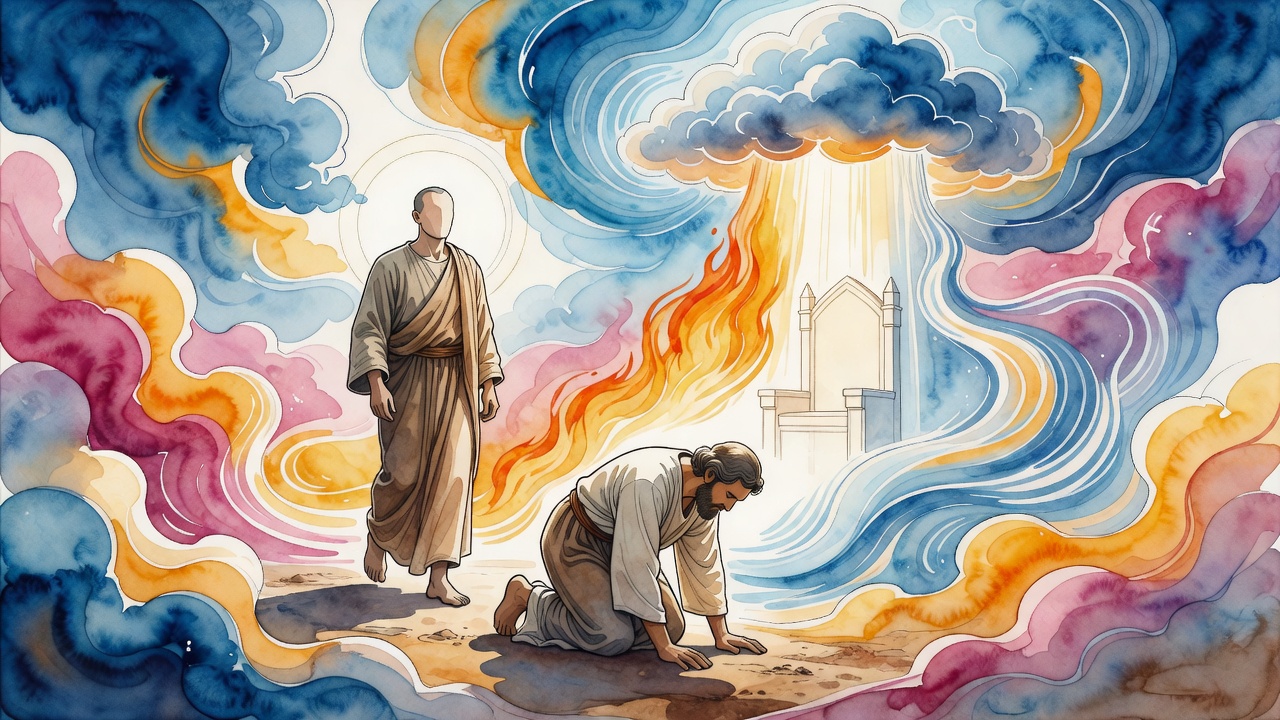
The Angel of Death was standing in front of him, squared off, not moving. It had not come for her and gone. It had stayed to be looked at.
Abraham stood in his own tent with the thing that had emptied it, and neither of them said anything, and then he turned and went out to speak to the Hittites about ground.
Out of that morning came the one exemption the tradition grants to grief. A man with his dead still lying in front of him owes heaven nothing at all. Not the Shema, not the prayers, not the straps on his arm, nothing. He rose, and he spoke. Until he rises, nobody may ask him for anything.
He Weighed Four Hundred Shekels
They offered him any tomb he wanted, for nothing, because he was a prince among them. He bowed to them and refused. He wanted Ephron's cave and the field it stood in and the trees on the field, and he weighed the silver out at the city gate with the whole town counting, four hundred shekels, merchant's weight, no haggling.
The first thing his family ever owned in the land they had been promised was a hole in the rock for a dead woman.
Thirty-eight years later they carried him out to the same field. Isaac and Ishmael came together. The son of the maidservant stepped back at the mouth of the cave and let the son of the mistress go in first.
Shem and Ever walked ahead of the bier. They went into the cave first, and there beside Sarah was an empty place, exactly the size of the man behind them, cut and waiting the whole time. Everyone who had come out to do kindness for Sarah lived to do the same kindness for her husband.
The Girl Already Born
The girl born in Aram was Rebekah, and Rebekah had a brother. When Rebekah's son Jacob came over that same road with nothing, Laban ran out to meet him at a dead run. He had done this before. Eliezer had come with ten camels, and Eliezer was only a servant. This one was the family favorite, so where was it.
He threw his arms around him. Coins in the belt, he thought, patting. Nothing.
He kissed him. Gems in his mouth, maybe. Nothing.
"What did you think," Jacob said. "That I came carrying money? I came carrying words."
In that house there were two daughters, and the neighbors had the whole thing worked out in the street. The older girl for the older boy, the younger girl for the younger. Leah heard for years that she was going to Esau. She wept until her eyes were weak, and what she said while she wept was one sentence, over and over. Let it not be my lot to fall to that wicked man.
Prayer is strong, Rav Huna said. It broke the decree, and it put her ahead of her sister in the bargain. She married Jacob first. Her eyes never came all the way back. Abraham had come down Moriah willing to take any decent girl. God had already chosen a house that would collect its bill in full.
← All myths