Parshat Vayera5 min read

Abraham Wrote Hagar a Bill of Divorce Before Sending Her Away

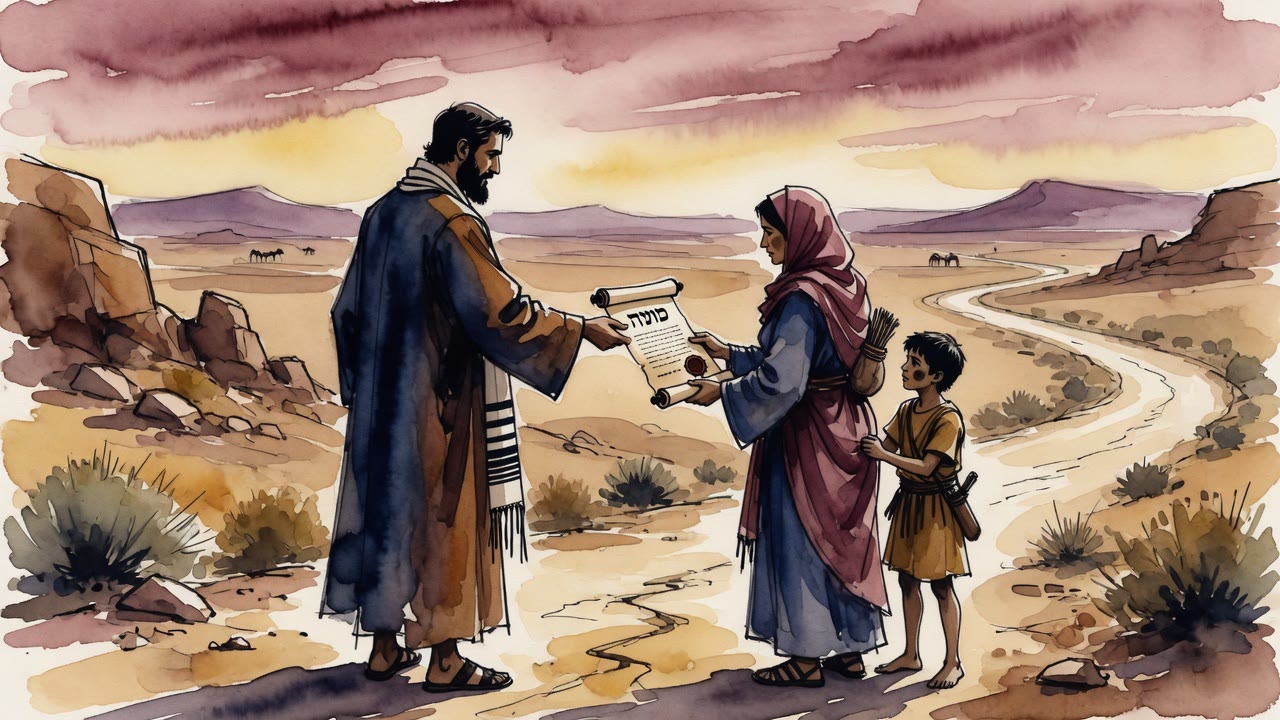
The Torah says Abraham gave Hagar bread and water. The rabbis say he also handed her a legal document that severed her from this world and the next.

Curated by Arthur · Told by Maggid ·
Table of Contents
  1. Before Dawn, Before the Bread
  2. The Veil That Trailed in the Dust
  3. The Hardest Trial
  4. What Sarah Had Been Before Hagar Was

Before Dawn, Before the Bread

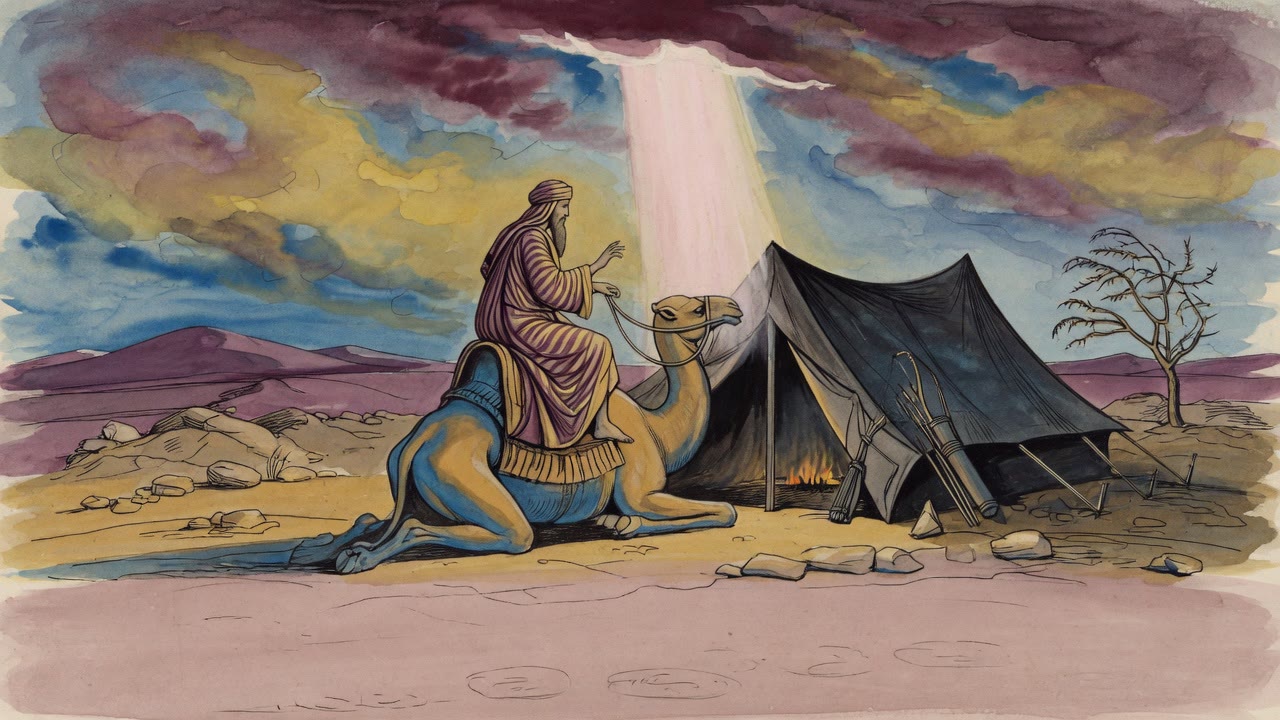
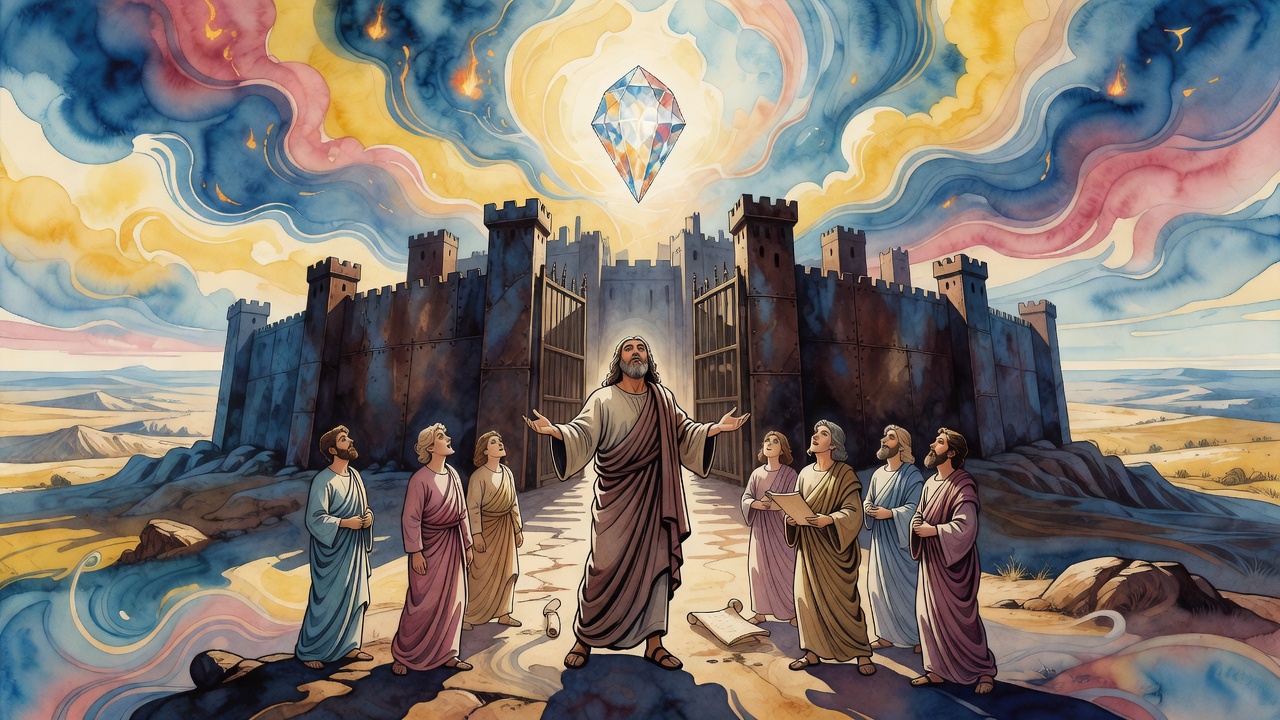
Abraham rose early. That detail is in the text, and the rabbis who read it noticed the hour. He rose before anyone else in the household was awake. He took bread. He took a skin of water. He put them on Hagar's shoulder. Then he sent her into the desert with their son Ishmael.

Genesis 21:14 is eleven words in the Hebrew. The rabbis stared at those eleven words for centuries and found a third item hidden inside them, one the Torah does not name but the tradition insists was there.

A get. A bill of divorce.

The Veil That Trailed in the Dust

Pirkei DeRabbi Eliezer, a narrative midrash composed in eighth-century Palestine, reads the verse with the attention of a lawyer examining a contested will. The text says Abraham took bread and a bottle of water. What else did he take? What else did he give her?

A writ of separation, the midrash says. And the separation was not just from Abraham personally. It was a severance from this world and the world to come. Those are the words the midrash uses. Words a Jewish husband would spend his life hoping never to say, spoken at dawn on the way out of a tent.

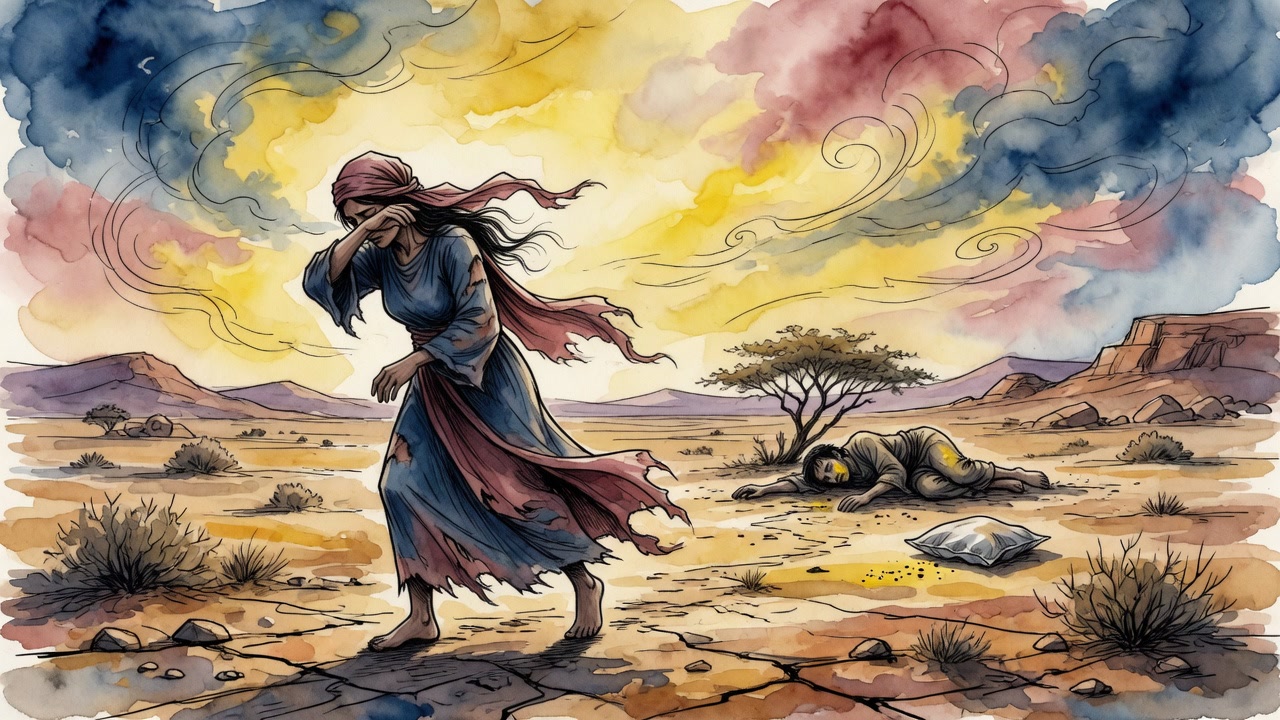
Then comes the stranger detail. Abraham took a veil, or a length of cloth, and tied it around Hagar's waist so that it trailed behind her as she walked into the desert. The midrash offers two reasons for this, and neither cancels the other out. The first is legal: anyone who saw her walking alone would know from the trailing cloth that she was a freed bondwoman, not a runaway, not a fugitive. The cloth was her documentation in a world where a woman walking alone in the desert without documentation was in danger of a kind that had nothing to do with thirst.

The second reason was social and crueler: so that she could not pass herself off as a freewoman in whatever settlement she reached. She was marked. The mark was meant to be seen.

The Hardest Trial

The Book of Jubilees, a second-century BCE Hebrew retelling of Genesis found among the Dead Sea Scrolls, lists the trials of Abraham's faith in sequence. The furnace in Ur. The famine in Canaan. The wealth of kings. The taking of Sarah. The binding of Isaac. And among them, the sending away of Hagar.

The rabbinic tradition preserved by Ginzberg is more specific about the ranking. The day he sent Hagar away was the worst day of Abraham's life. Not the furnace. Not the binding, which ended with an angel and a ram. The sending away of Hagar ended with nothing. No voice stopped him. No substitute appeared. He watched his firstborn son walk into the wilderness holding a skin of water, and there was no intervention, and there was no explanation, only Sarah's command and God's confirmation that Sarah was right.

He wrote the get before he put the bread on her shoulder. He did it formally because that was who he was. He could not undo what he was doing, but he could do it with the legal precision of a man who understood that even the worst acts of necessity had to be performed with their eyes open.

What Sarah Had Been Before Hagar Was

The tradition does not let Sarah off easily either. Ginzberg's synthesis of the midrashic material preserves a long account of Sarah's own jealousy and her years of barrenness, during which she gave Hagar to Abraham in the first place. Hagar had been Pharaoh's daughter, given as a gift during the episode in Egypt. She had chosen to serve Abraham as a handmaid rather than be the mistress of another household, because she had seen what the presence of God looked like when it rested near a person, and she wanted to be close to that.

The moment Hagar conceived, the dynamics of the household shifted in ways Sarah had not anticipated. A woman who had been deferential became something else. The rabbis read Hagar's changed behavior as the natural consequence of a natural development: she was carrying what Sarah could not carry, and she knew it.

When Isaac was finally born and Ishmael's behavior toward the younger child became a question, Sarah's demand was not entirely without foundation. She saw where the lines of inheritance were being drawn. She drew them herself, sharply, the way a woman draws lines when she has spent thirty years waiting for the thing that was promised to her.

Abraham gave Hagar a bill of divorce and a skin of water and watched her walk away in a veil that trailed in the desert dust, and the morning after was the morning he started carrying the worst of the ten trials.


← All myths

From the tradition

Sources

5 sources

The texts this telling draws on, in full. Open a card to read inline, or expand it for a wider, quieter read.

Pirkei DeRabbi Eliezer 30:4Pirkei DeRabbi Eliezer

Sometimes, those hidden depths hold the most fascinating secrets. Take the story of Abraham, Hagar, and Ishmael. The familiar version gives us the basics, but what about the details?

The Torah tells us that Abraham sent Hagar and Ishmael away. Simple. But Pirkei DeRabbi Eliezer, a fascinating collection of stories and interpretations from the Talmudic period, paints a much more nuanced picture.

Abraham rises early, his heart heavy. He prepares a get (גט), a bill of divorce. It's a formal severing, not just from himself, but, according to Pirkei DeRabbi Eliezer, from "this world and the world to come." Strong words, aren’t they? This wasn’t just about sending Hagar and Ishmael away physically. It was a spiritual separation as well. A complete severing of ties.

The verse in Genesis (21:14) says, "And Abraham rose up early in the morning, and took bread and a bottle of water." Seems straightforward. But Pirkei DeRabbi Eliezer sees something more. It suggests that along with the bread and water, Abraham gave Hagar the bill of divorcement.

But here's where it gets even more interesting. The text adds that Abraham took a veil and bound it around Hagar's waist, so it would drag behind her. Why? Pirkei DeRabbi Eliezer offers two reasons. First, to publicly mark her as a bondwoman. A visible sign of her changed status. But, there’s a second, more subtle, layer.

The text also suggests that Abraham did this because he secretly desired to see Ishmael again, to know their path. Even in the act of separation, there's a lingering connection, a paternal longing. He wants to keep tabs, to know where his son is, how he's faring. Was this cruel or caring? Perhaps a little of both.

What does this all mean? It reminds us that even in the lives of our Biblical ancestors, relationships were complicated. There were legal necessities, social pressures, but also human emotions – love, regret, and a persistent desire to connect, even when distance was enforced.

So, the next time you read about Abraham, Hagar, and Ishmael, remember the veil, the get, and the hidden desires. It's a reminder that these aren't just stories on a page. They are echoes of human experience, resonating with us even today. What do you think Abraham was really feeling in that moment? It's a question worth pondering.

Full source
Book of Jubilees 17:25Book of Jubilees

Jubilees, considered scripture by some and an important historical text by others, paints a picture of Abraham's unwavering faith in the face of, let’s just say, a lot of challenges.

The verse reads, "And the Lord knew that Abraham was faithful in all his afflictions; for He had tried him through his country and with famine.." for a second. Leaving your homeland, facing starvation. not exactly a walk in the park. It would be difficult to remain faithful, wouldn't it?

That was just the beginning. The Book of Jubilees continues, "..and had tried him with the wealth of kings, and had tried him again through his wife, when she was torn (from him).." So, Abraham experienced both poverty and riches. And then there's the incredibly difficult episode where his wife, Sarah, was taken from him. It's almost too much for one person to bear.

The trials didn't stop there. "..and with circumcision, and had tried him through Ishmael and Hagar, his maid-servant, when he sent them away." Circumcision, or brit milah in Hebrew, is a powerful covenant. But imagine undergoing that as an adult! And then, the painful decision to send away Hagar and Ishmael. a decision that surely weighed heavily on Abraham's heart.

The writer of Jubilees emphasizes that Abraham was tested in everything. "And in everything wherein He had tried him, he was found faithful.." It's not just about one big test, but a constant series of smaller ones that collectively defined his character.

What's truly striking is the description of Abraham's inner state: "..and his soul was not impatient, and he was not slow to act; for he was faithful and a lover of the Lord." He wasn't perfect, surely. But he wasn't driven to despair or inaction. He was faithful and, crucially, he loved God. That love, it seems, was the engine that kept him going.

So, what can we take away from this glimpse into Abraham's life? Maybe it's this: faithfulness isn't about avoiding hardship. It's about how we respond to it. It's about maintaining our love and devotion even when life throws everything it has at us. And maybe, just maybe, it's in those trials that we truly discover who we are.

Full source
Legends of the Jews 5:129Legends of the Jews

You’re not wrong. to a classic tale of jealousy, longing, and a bit of divine intervention, straight from the heart of the Sarah and Abraham story.

Sarah, Abraham's wife, has endured years of barrenness. In a society where a woman's worth was often tied to her ability to bear children, this was a source of deep pain and shame. So, what does she do? Following the customs of the time, she offers her handmaiden, Hagar, to Abraham, hoping to build a family through her. (Genesis 16:1-3)

Seems like a solution. Nope. Fast forward, and Hagar conceives. Suddenly, the power dynamic shifts. Hagar, now carrying Abraham's child, begins to look upon Sarah with disdain. The very solution Sarah orchestrated has backfired spectacularly.

Here's where our story really heats up. According to Legends of the Jews, Sarah, deeply wounded, doesn't directly confront Hagar. Instead, she turns to Abraham, laying bare her anguish. "It is thou who art doing me wrong," she accuses. Can you feel the weight of those words?

She reminds him of her unwavering loyalty: leaving her homeland, pretending to be his sister in Egypt to protect him. She reminds him of her sacrifice, offering Hagar in the first place. Now, she laments, Hagar treats her with contempt, right in front of Abraham himself.

The pain is palpable. Sarah feels betrayed, not just by Hagar, but by Abraham as well. She had hoped he would defend her, stand up for her honor. As Ginzberg retells it, she cries out, wishing that God would judge the injustice done to her. She yearns for peace in her home, and above all, for offspring of her own, so that they wouldn’t need children from "Hagar, the Egyptian bondwoman of the generation of the heathen that cast thee in the fiery furnace!" Talk about a loaded statement! She is referencing the story of Abraham being thrown into a furnace for his beliefs, as told in various Midrashic (rabbinic interpretive commentary) sources.

This isn't just a personal squabble, is it? It's a clash of cultures, a battle for status, and a desperate plea for divine intervention. Sarah's words echo with centuries of female pain and resilience.

What strikes me most is the raw honesty of Sarah’s prayer. She’s not just asking for a child; she’s asking for justice, for recognition, for her rightful place in her own home. It’s a reminder that even in the most sacred stories, human emotions – jealousy, resentment, and a longing for belonging – are always present, making these ancient narratives eternally relevant. And, perhaps, a little too relatable sometimes.

Full source
Book of Jubilees 17:10Book of Jubilees

Book of Jubilees turns to Abraham Torn Between Sarah and Hagar.

It all centers around Sarah, Abraham’s beloved wife, and Hagar, her handmaid. Sarah, in her older years, had been unable to conceive, so she offered Hagar to Abraham, according to the customs of the time, so he might have an heir. And, Hagar bore him a son, Ishmael.

Years later, a miracle had occurred: Sarah herself had conceived and given birth to Isaac. This changed everything.

The text from the Book of Jubilees 17 captures the ensuing tension. Sarah, understandably concerned about the inheritance and the future lineage, demands of Abraham: "Cast out this bondwoman and her son; for the son of this bondwoman will not be heir with my son, Isaac."

Can you imagine the pain in Abraham’s heart? As Jubilees tells us, "And the thing was grievous in Abraham's sight, because of his maidservant and because of his son, that he should drive them from him." He loved Ishmael. He had watched him grow, taught him, and cherished him as a son.

What does he do? He turns to God.

And God, in turn, responds with a divine decree, a mixture of reassurance and instruction: "Let it not be grievous in thy sight, because of the child and because of the bondwoman; in all that Sarah hath said unto thee, hearken to her words and do (them); for in Isaac shall thy name and seed be called."

A heavy burden,. The future, the covenant, the very destiny of Abraham's lineage rested on Isaac.

But God, in His infinite compassion, doesn't leave Ishmael without hope. The text continues, "But as for the son of this bondwoman I will make him a great nation, because he is of thy seed." God acknowledges Ishmael’s lineage, promising him greatness despite the shift in the patriarchal line. It's a evidence of God's expansive grace and His ability to see value and potential in all of His creations.

This passage from Jubilees, though brief, offers profound insights into the complexities of family, faith, and divine will. It reminds us that even in the midst of difficult choices, compassion and promise can coexist. And perhaps, most importantly, it illustrates that even when one path is chosen, others are not necessarily forsaken.

Full source
Targum Pseudo-Jonathan on Genesis 21:14Targum Pseudo-Jonathan on Genesis

Dawn in the house of Abraham. Bread on a shoulder. A cruse of water tied to a woman's waist. In Targum Pseudo-Jonathan on (Genesis 21:14), the Aramaic paraphrase adds a detail the Hebrew does not speak: Abraham dismisses Hagar with a gitta, a formal letter of divorce.

This is a remarkable move. The Targum of Pseudo-Jonathan, composed in the tradition of the Land of Israel, applies later halakhic categories to the patriarchal story. Hagar was not cast out as a slave discarded. She was released as a wife, with the legal protections of the get.

The binding of the water jar to her loins is read as a sign that she was a servant in the household, even if her union with Abraham had elevated her. The Targum will not let the reader forget her complicated status: half wife, half bondwoman, now a free woman walking into the wilderness.

She wanders from the way, the Aramaic says te'at me'orcha, into the desert of Beersheba.

The Maggidim read this verse as a lesson in how the righteous release those they must release. Abraham sends Hagar away with bread, water, and a document. The takeaway: when you must part, part with dignity. Provide. Protect. Put it in writing.

Full source