Hagar Had Seen Every Miracle and Still Chose Contempt
Hagar had watched Pharaoh's plague and the furnace miracle before she ever conceived. Her contempt came from drawing the wrong lesson from what she knew.
Table of Contents
 Click for full size
What She Carried Into Abraham's House
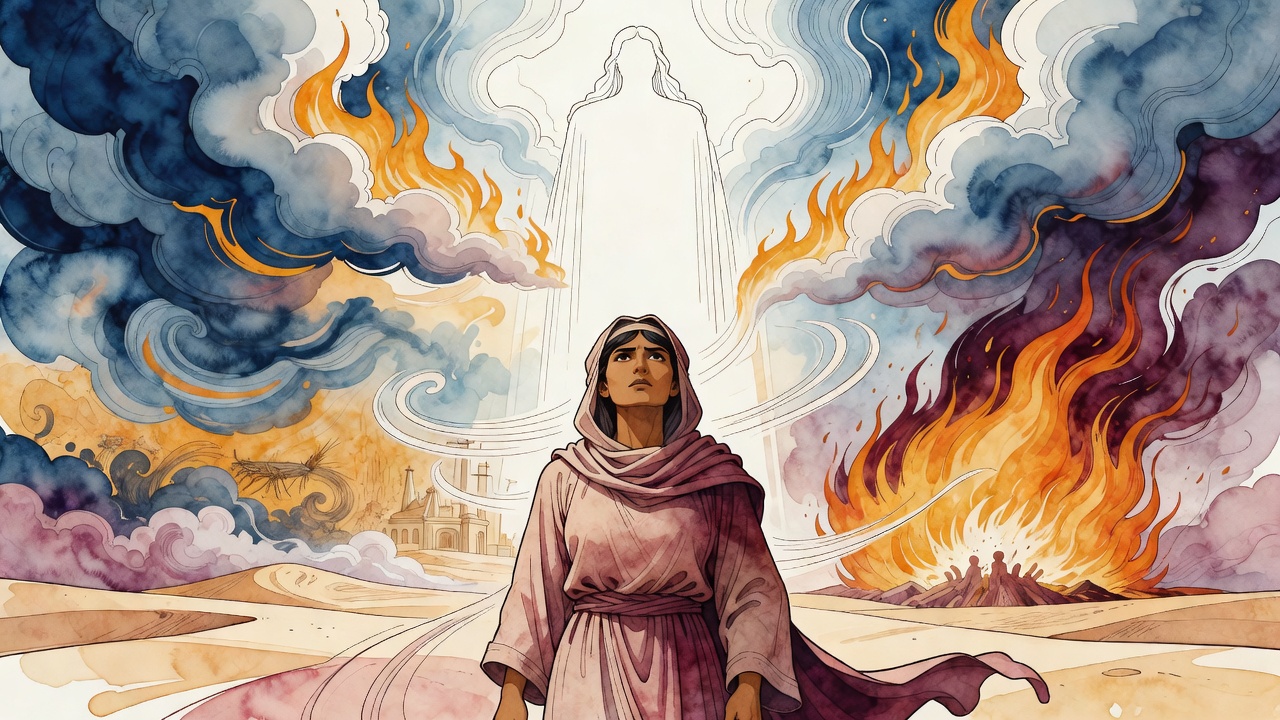
By the time Hagar became pregnant, she had already seen more than most people see in a lifetime. She had watched plagues descend on her father's palace because of Sarah. She had left Egypt as the daughter of the king who feared this household enough to place his own child inside it. She had lived alongside Abraham and Sarah for years in Canaan, watching a family maintain its faith through famine, exile, and the decade-long silence of a promised child that had not come. She was not a naive girl who stumbled into a miracle-working household by accident.
This is what makes the Ginzberg tradition's account of what she did after conceiving so cutting. She had more information than almost anyone. She had seen what this household was. She used her pregnancy to settle a score anyway.
The Verdict She Whispered to Visitors
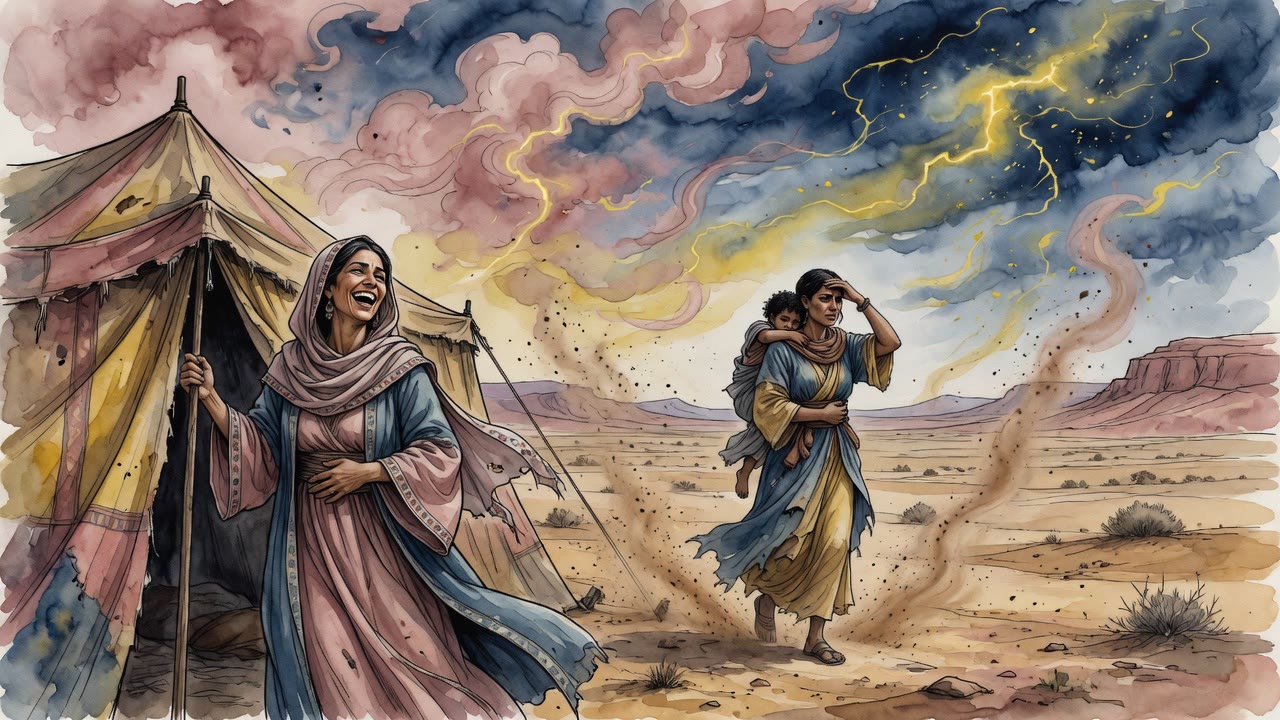
The moment she felt the child quicken, she began treating Sarah with contempt. Not openly at first. The sources describe the mechanics with precision. When noble women came to visit Sarah, Sarah would encourage them to stop by and see Hagar too. The women would go. And Hagar would talk about her mistress to those visitors.
My lady Sarah, she would say, is not inwardly what she appears. She makes the impression of a pious woman, but she is not truly righteous. If she were righteous, how could she have remained childless for so many years while I, who came to this household recently, conceived at once?
The tradition reads this carefully. Hagar is not making a theological argument. She is using the appearance of evidence to damage a woman who had acted toward her without jealousy. Sarah had offered Hagar to Abraham as a precise, legal, unsentimental act of trust in the household's future. Hagar's response was to reframe the years of Sarah's childlessness as proof of Sarah's inferior standing before God.
Sarah's Complaint and Abraham's Answer
Sarah brought the grievance to Abraham directly. The Book of Jubilees, written in the second century BCE, captures the scene in a single sentence: Sarah pressed Abraham to adjudicate between them. Abraham told her that Hagar was in her hand to do with as she saw fit. He placed the matter back where it belonged.
Sarah's response was firm. She afflicted Hagar. The Torah says this plainly (Genesis 16:6). The midrashic tradition adds texture: Sarah imposed harder domestic duties, insisted on the forms of service, and refused to pretend the hierarchy had changed because of a pregnancy. Hagar fled into the wilderness.
The Angel at the Spring
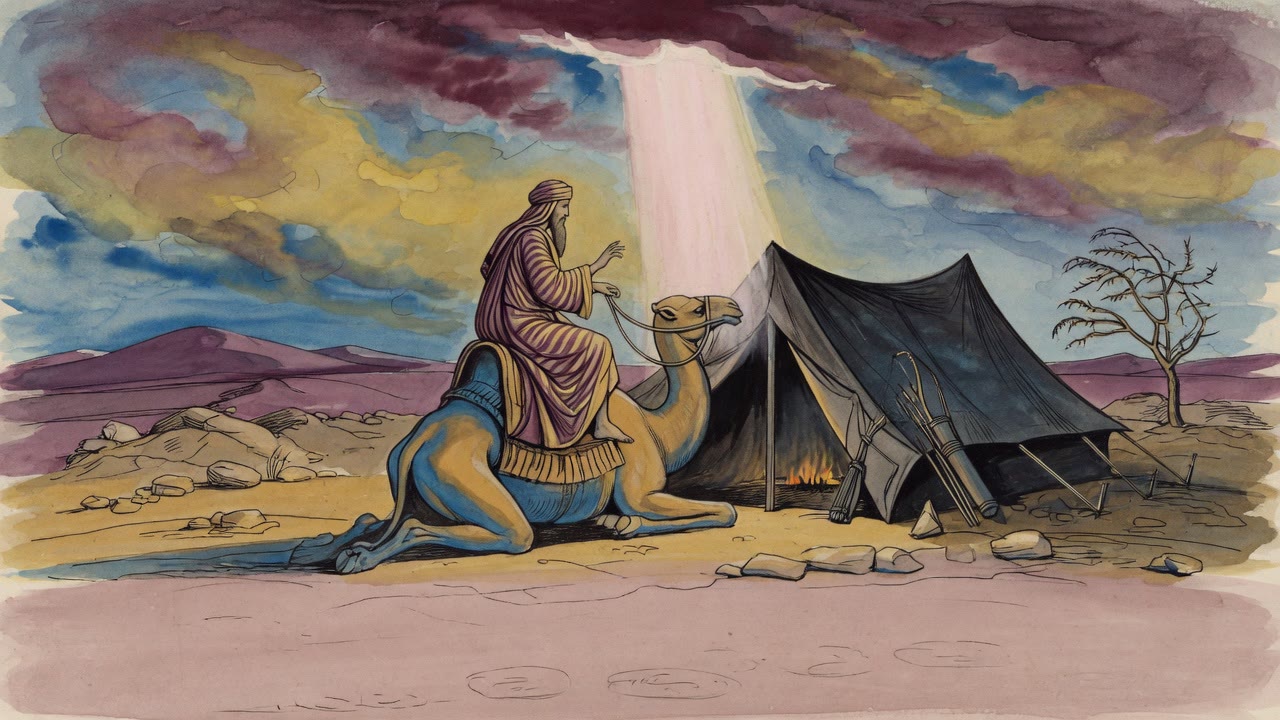
An angel found her at a spring on the road to Shur. He called her by name. He asked where she was going. She said she was fleeing from Sarah. He told her to return and submit to her mistress, and he told her what the child she was carrying would become: a wild man, his hand against everyone, everyone's hand against him, but alive, and the father of a great nation.
She returned. The tradition does not say she was happy about it. But she returned, and the child was born in Abraham's house, and Abraham named him Ishmael, meaning God has heard, because in the wilderness, at the spring, God had heard the cry of a woman in flight from the consequences of her own contempt.
← All myths