Parshat Vayera5 min read

Sarah Laughed Then Sent Hagar Into the Desert

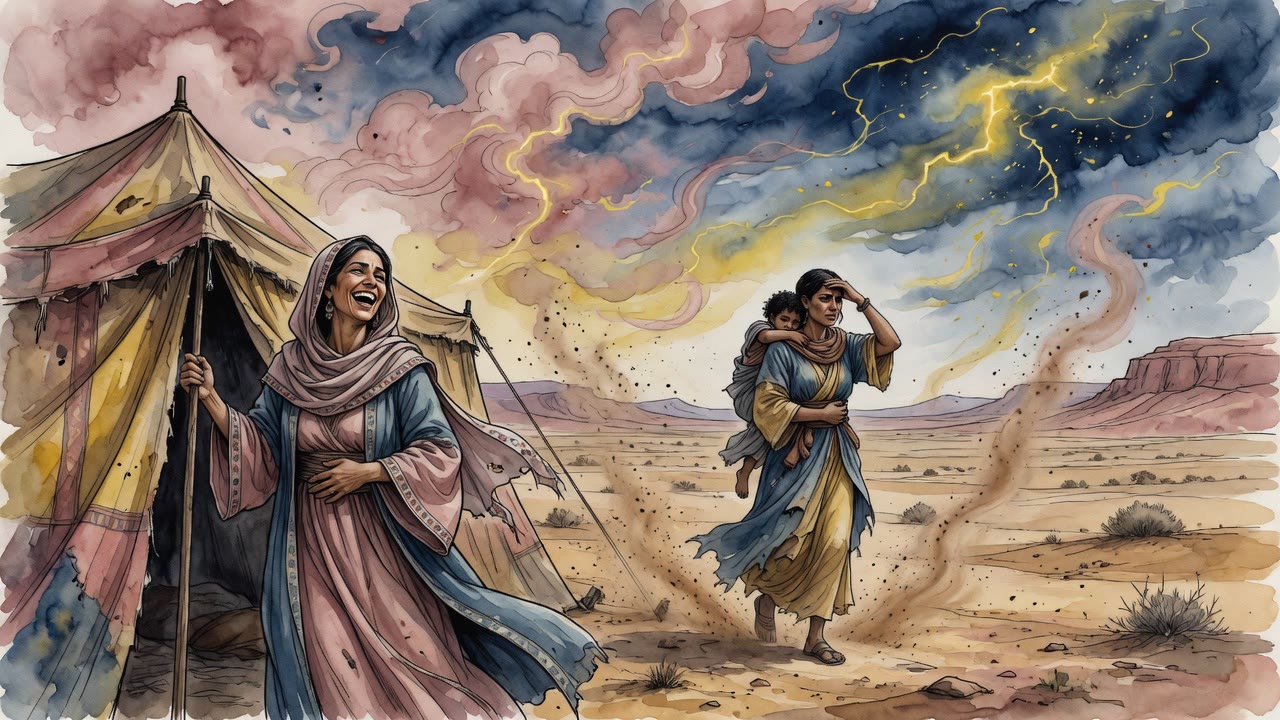
Sarah laughs when angels promise her a son at ninety, names the boy for that laughter, then drives Hagar into the wilderness when the two boys clash.

Curated by Arthur · Told by Maggid ·
Table of Contents
  1. The Laugh That Named a Child
  2. What the Angels Told Abraham First
  3. What Hagar Saw in the Desert
  4. The Expulsion

The Laugh That Named a Child

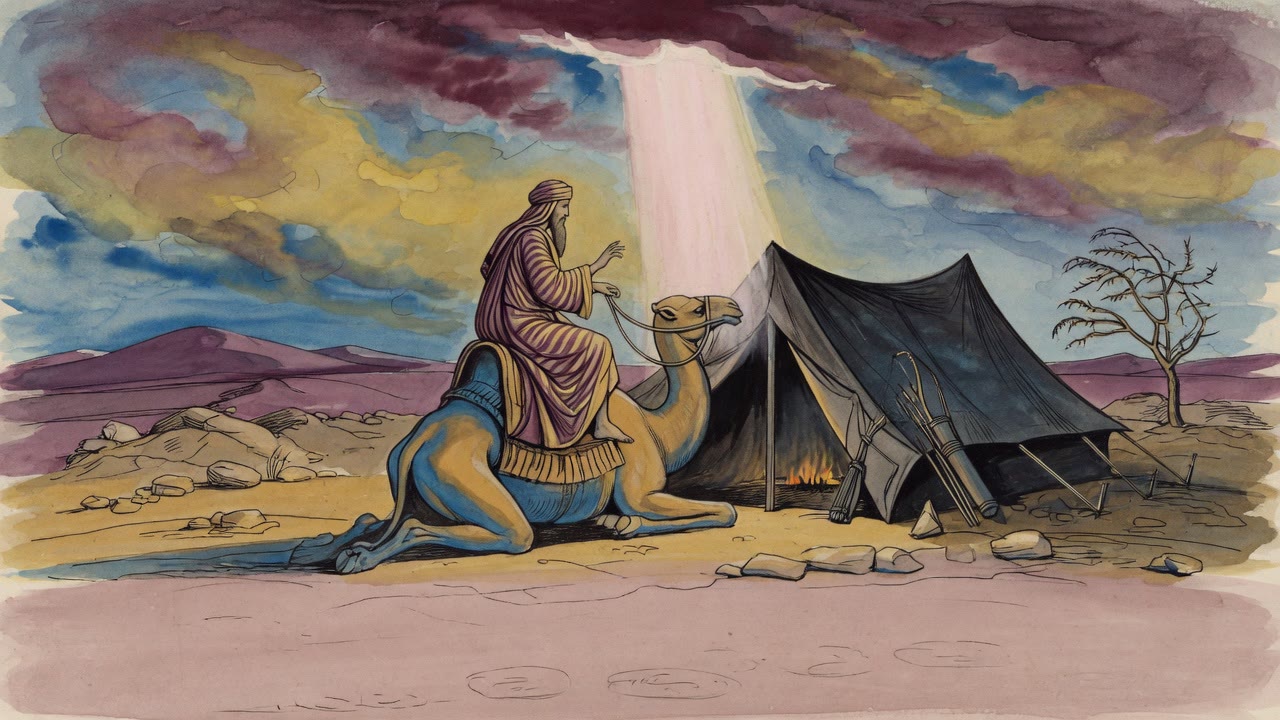
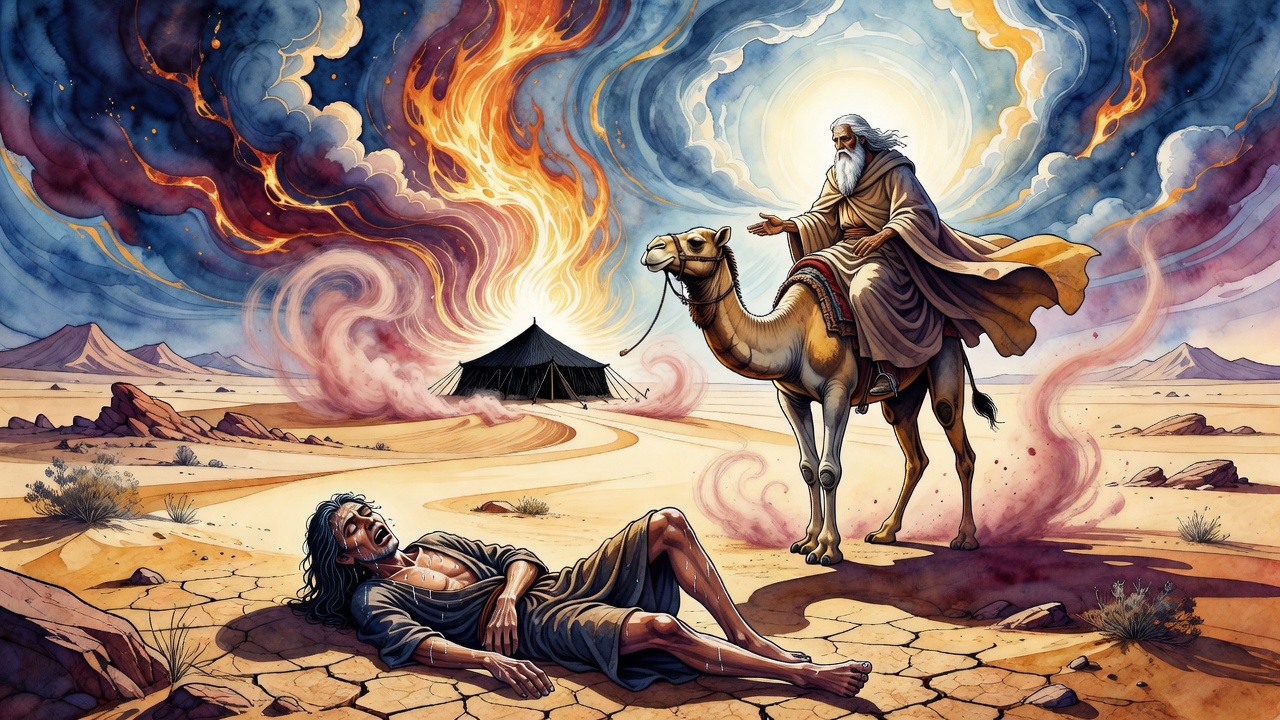
Three strangers appeared at Abraham's tent in the heat of the day. He ran to greet them, brought them water, had a calf slaughtered, set out bread and curds. They ate, or performed the appearance of eating, and then one of them said something that escaped through the tent curtain to where Sarah was listening.

By this time next year, you will have a son.

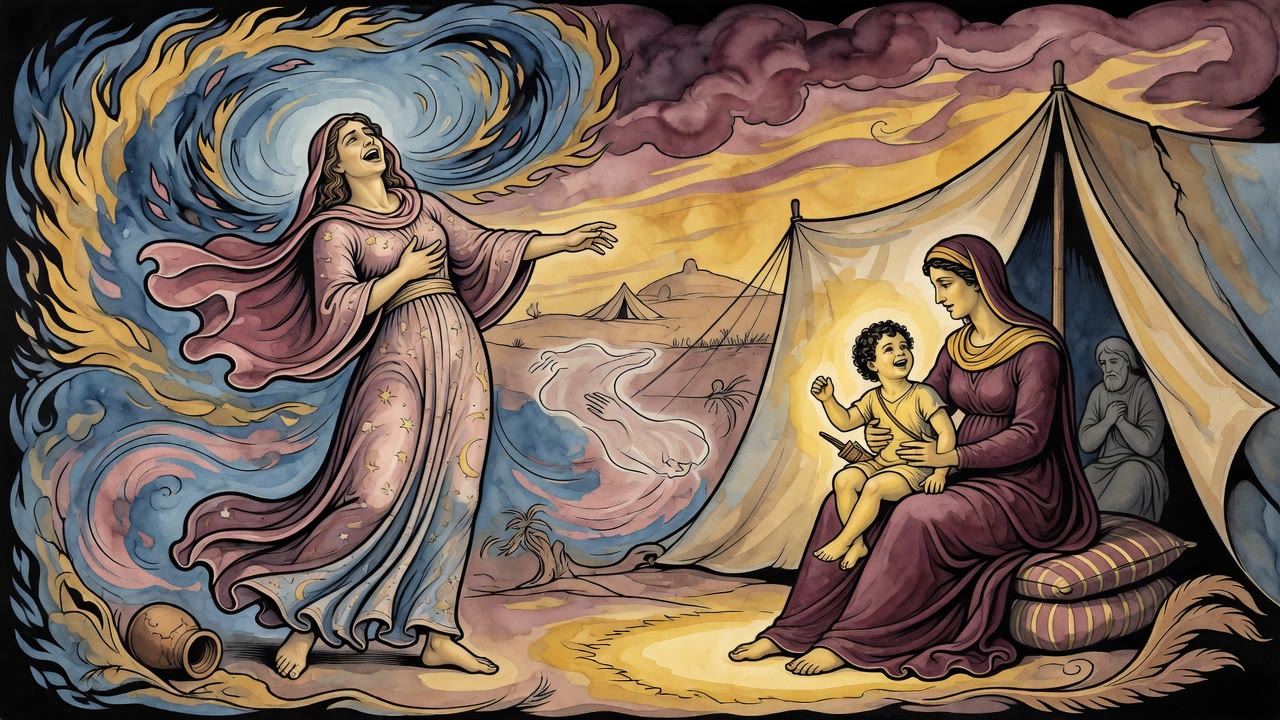
Sarah was ninety. Abraham was a hundred. The thing being promised was impossible, and her body knew it better than her mind did. The laugh came out before she could catch it. She even tried to deny it afterward when she was called on it. God said: no, you laughed.

When the child came, a year later, exactly as the strangers had promised, Abraham named him Yitzchak. He laughed, or he will laugh, or simply: laughter. The name carried the absurdity inside it permanently. Every time someone said the boy's name, the moment rang out again, the impossible thing made real and mocking and joyful all at once.

What the Angels Told Abraham First

Before the annunciation, before the laugh, those same three figures had another message to deliver. Two of them went on to Sodom to report on the city's condition. One stayed to speak with Abraham directly.

Josephus, writing in the first century CE, gives the fullest account of how the visit unfolded. Abraham met the three on the road near the oak of Mamre and invited them in. They accepted. They ate. Then they dropped the disguise: not travelers but angels, bearing two pieces of news. Sarah would bear a son within the year, and Sodom's fate had been decided. The two messages were not unrelated. The destruction of Sodom and the birth of Isaac were both moments when God's attention fell sharply on the world, and both arrived at the same meal.

What Hagar Saw in the Desert

Long before Isaac was born, Hagar had her own encounter with a divine presence in the wilderness. She was Sarai's Egyptian servant, given to Abram when Sarai grew impatient with the delay of the promised child. When Hagar conceived and Sarai's treatment of her became unbearable, Hagar ran. She ran toward Egypt, toward what she had been before.

An angel found her at a spring by the road and told her to go back. She went back. She bore Ishmael. She raised him in Abram's household alongside the wife who had given her as a concubine and still resented what had happened. This was not a comfortable life.

The rabbis of Bereshit Rabbah, reading the verse where Hagar names God after their desert encounter, found something remarkable there. She said: You are the God who sees me. The word she used was striking to the interpreters. They asked whether any other human being had ever seen God and survived, whether Hagar's vision had been genuine or reflected or mediated, and how to understand the boldness of a servant woman in the wilderness making a claim that patriarchs and prophets had not made so directly.

The Expulsion

The crisis between the two women's sons arrived the day of Isaac's weaning feast. Ishmael was playing with the young child, or teasing him, or doing something that Sarah saw and could not forgive. The text does not specify. Sarah went to Abraham and made her demand: cast out the slave woman and her son. The inheritance could not be shared. Her son and this woman's son could not grow up under the same roof.

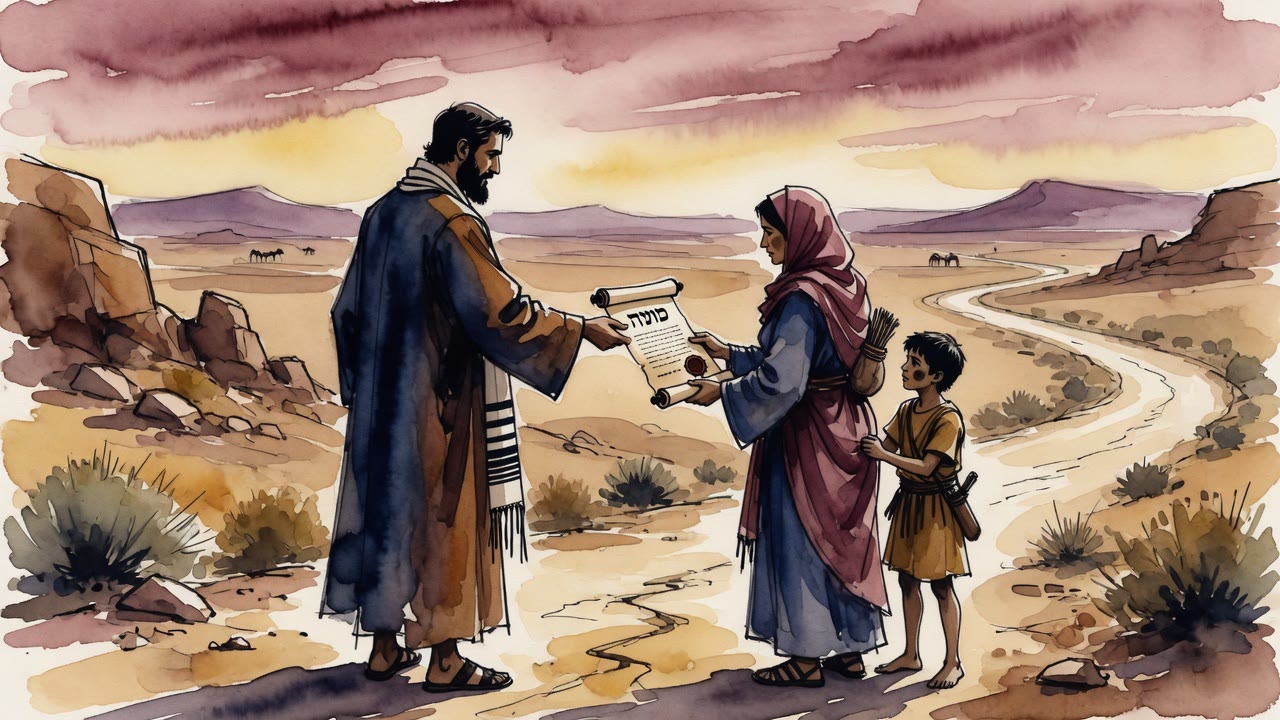
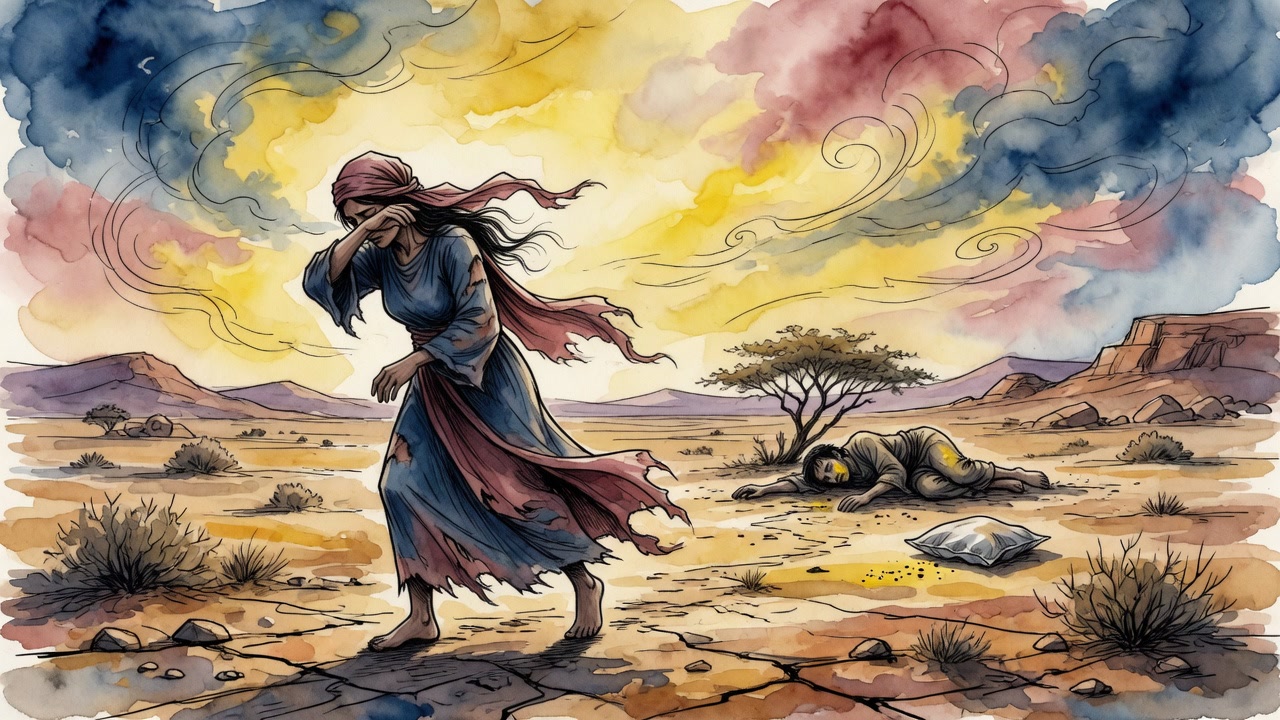
Abraham was troubled by this. Ishmael was his son too. God told him to listen to Sarah. The next morning, Abraham gave Hagar bread and a skin of water and sent her and the boy into the desert of Beersheba. The water ran out. Hagar put Ishmael under a bush and sat at a distance so she would not have to watch him die.

She wept. An angel called from heaven and told her to lift the boy up. God had heard the sound of the child. Then she saw a well of water that had not been there before, or that she had not been able to see through her grief. She filled the skin and gave it to Ishmael, and they lived.


← All myths

From the tradition

Sources

3 sources

The texts this telling draws on, in full. Open a card to read inline, or expand it for a wider, quieter read.

Antiquities I.11-12Antiquities of the Jews (Josephus)

Sarah laughed when the angels told her she would bear a son. She was ninety years old. Abraham was a hundred. The idea was absurd. And yet Isaac was born, and his very name, Yitzchak (יצחק), means "laughter" (Genesis 21:3).

Before the laughter came fire. According to Josephus, three angels appeared to Abraham at the oak of Mamre disguised as travelers. He offered them food, and they pretended to eat. Then they dropped the disguise and delivered two messages: Sarah would have a son, and Sodom would be destroyed.

Abraham bargained with God for the city. Would God spare it for fifty righteous people? For forty? For ten? God agreed to ten. But there weren't ten. So the angels went to Sodom, where Lot took them in. When the men of the city demanded the visitors, Lot offered his own daughters instead. They refused. God struck the mob blind and told Lot to run.

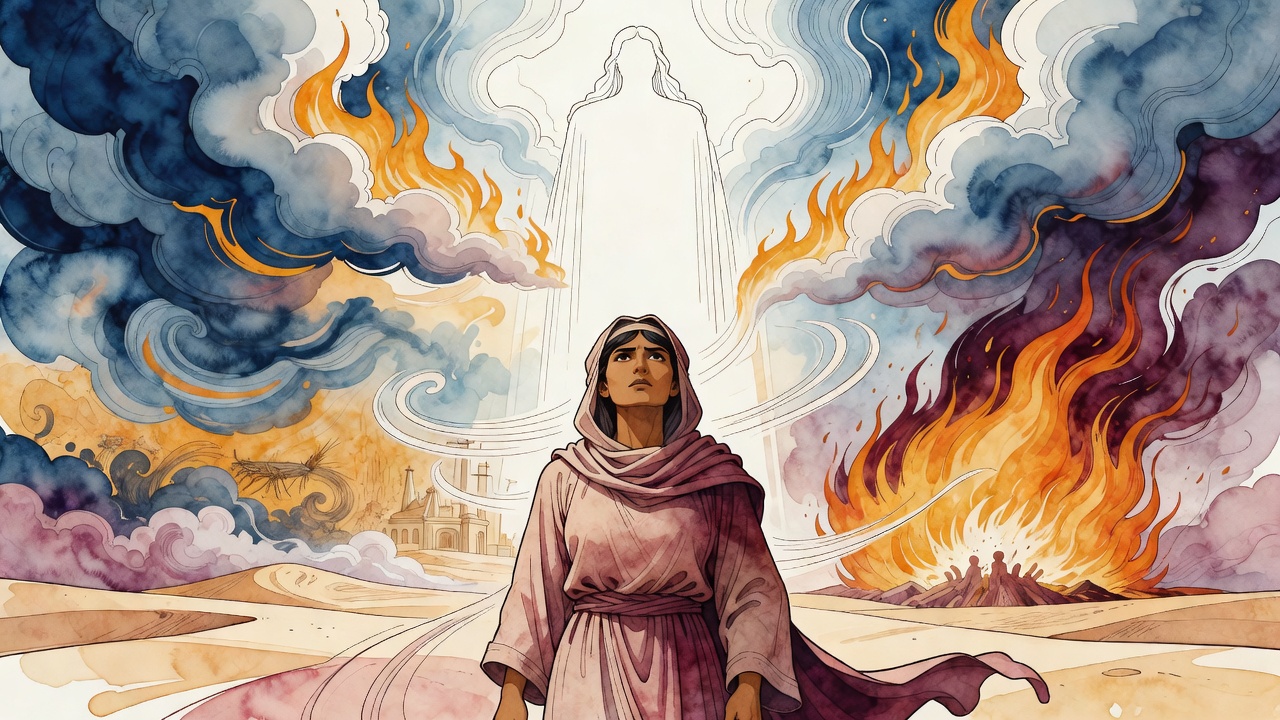
The destruction was total. God rained fire on Sodom and its surrounding country until nothing could grow there again. Lot's wife looked back and was turned into a pillar of salt, which Josephus claims he personally saw, still standing in his own day. Lot and his daughters fled to a tiny settlement called Zoar, believing themselves the last people alive.

Meanwhile, Abraham moved south to Gerar, where King Abimelech fell for Sarah, just as Pharaoh had. And was struck with disease until he returned her. It was the same story playing out a second time: the beauty of Sarah, the greed of a king, the intervention of God.

When Isaac finally arrived, Sarah's joy curdled into jealousy. She demanded that Ishmael. Abraham's firstborn by Hagar, be sent away. Abraham resisted at first, horrified at the cruelty of it. But God told him to listen to Sarah. So Hagar and Ishmael were sent into the wilderness with a single bottle of water and a loaf of bread. When the water ran out, Hagar laid her dying child under a fig tree and walked away so she wouldn't have to watch. A divine angel appeared, showed her a fountain, and promised that Ishmael would become the father of a great nation (Genesis 21:18). He did. His twelve sons became the ancestors of the Nabateans, the Arabian people who traced their lineage back to Abraham.

Full source
Bereshit Rabbah 45:10Bereshit Rabbah

Bereshit Rabbah 45, a fascinating passage from the Midrash (rabbinic interpretive commentary) that grapples with just that.

The verse in question is from (Genesis 16:13), when Hagar, after fleeing from Sarai, says, "She called the name of the Lord Who spoke to her: You are the God who sees me, for she said:, I have seen here too, after my vision.” It seems straightforward enough. God spoke to Hagar. But the rabbis of the Midrash, never ones to shy away from a good theological wrestling match, aren't so sure it's that simple.

Rabbi Yehuda bar Simon and Rabbi Yoḥanan, quoting Rabbi Elazar bar Shimon, make a rather bold claim: that God never directly spoke to a woman, except for Sarah, and even then, it was only out of necessity. Wait, what? Why this apparent reluctance? Well, the Midrash gives us an example. Remember when God told Abraham that Sarah would have a child, and she laughed? (Genesis 18:13). When confronted, Sarah denied laughing (Genesis 18:15). God then had to correct her: “No, but you did laugh” (Genesis 18:15).

Rabbi Abba, citing Rabbi Beiri, points out how even in this instance, God spoke "in a roundabout manner." Instead of a direct "Yes, you laughed," God phrases it indirectly. But what about Hagar? And what about Rebecca, when God tells her that two nations are in her womb? (Genesis 25:23).

Here’s where things get interesting. Rabbi Yehoshua bar Neḥemya suggests that in Hagar’s case, it was an angel, not God directly, who spoke to her. Rabbi Levi, quoting Rabbi Ḥanina bar Ḥama, makes the same argument about Rebecca. And Rabbi Elazar, in the name of Rabbi Yosei ben Zimra, proposes that Rebecca actually consulted with Shem, son of Noah, who was considered a spiritual leader at the time. These interpretations attempt to maintain the idea that God doesn't generally speak directly to women.

But what does Hagar mean when she says, "You are the God who sees me?" Rabbi Aivu offers a beautiful interpretation: it is God who sees the wretchedness of the wretched. God sees Hagar in her suffering, her vulnerability. And the phrase "Indeed, I have seen here too, after my vision" is interpreted as Hagar realizing that not only has she encountered divine speech, but she has also been granted a glimpse of her son's future kingship. She connects her experience to that of King David, who similarly felt unworthy of the blessings he received, saying "That You have brought me to this point [halom]" (II (Samuel 7:1)8).

Another interpretation suggests Hagar is marveling that she, along with her mistress, saw an angel, and yet another that she saw an angel by herself. Rabbi Shmuel bar Naḥman illustrates this with a parable: Imagine a noblewoman whom the king asks to pass before him. She walks by, supported by her maidservant. The noblewoman, perhaps out of modesty or awe, turns her face away and doesn't see the king, but the maidservant does.

So, what are we to make of all this? The Midrash isn't giving us a simple answer. It's presenting different perspectives, different ways of understanding the relationship between God and women. It raises profound questions about divine communication, about status, and about who is deemed worthy of direct access to the divine. The rabbis confront the text, revealing the complexity and nuance within the Torah. It leaves us to ponder: What does it mean to be seen by God? And how do we each, in our own way, encounter the Divine?

Full source
Bereshit Rabbah 53:13Bereshit Rabbah

Bereshit Rabbah turns to Abraham Sends Hagar and Ishmael into the Desert.

The verse tells us, "Abraham rose early in the morning, and took bread and a skin of water, and gave them to Hagar, he placed them her shoulder, and the child, and sent her away. She went and wandered in the wilderness of Beersheba" (Genesis 21:14). Simple enough. But the rabbis of the Midrash (rabbinic interpretive commentary), in Bereshit Rabbah, saw so much more simmering beneath the surface.

"Abraham rose early in the morning, and took bread and a skin of water, and gave them to Hagar" – the Midrash emphasizes the generosity of Abraham's household, noting his early rising as a sign of care. But then comes the phrase, "he placed them on her shoulder." The Midrash immediately asks, why specify that he placed the water skin on her shoulder?

One interpretation, as offered in Bereshit Rabbah, suggests that Abraham was deliberately trying to demonstrate Hagar's status. He wanted to show everyone that she was only a maidservant, not a wife with full rights, and that Yishmael wasn’t his primary heir. By having her carry the water like a common slave, he was making a public statement. It's a harsh reading, isn't it? A calculated act to diminish her standing.

But then the Midrash throws another curveball. "On her shoulder and the child" – but wait! The text implies Yishmael was also placed on her shoulder? How could a grown boy, twenty-seven years old according to the rabbis (based on calculations involving Isaac's supposed Bar Mitzvah feast), be carried on his mother's shoulder?

The answer, according to the Midrash, is heartbreaking: "It teaches that Sarah introduced an evil eye into him and he was afflicted with fever and pain [and could not walk on his own]." The ayin hara, the evil eye, is a potent force in Jewish tradition. It suggests that Sarah's jealousy or resentment towards Yishmael resulted in his physical weakness. This idea gets further support from the next verse: "The water in the skin was finished" (Genesis 21:15). The Midrash connects this to illness, noting that "a sick person typically drinks a lot and frequently." Yishmael's illness, brought on by the evil eye, caused him to consume more water, hastening their dehydration.

We can almost feel Hagar's desperation. "She cast the child beneath one of the bushes" (Genesis 21:15). Rabbi Meir identifies the bush as a broom tree, common in the wilderness. Rabbi Ami offers a different take, suggesting that "beneath one of the bushes [hasiḥim]" is significant because that's where angels "conversed [hesiḥu]" with her. A place of divine communication in her darkest hour.

Then comes the devastating line: "She went and sat herself opposite him, at a distance of about a bowshot, for she said: I will not see the death of the child. She sat opposite him, raised her voice, and wept" (Genesis 21:16).

The Midrash meticulously analyzes the phrase "at a distance." It connects it to other verses in the Torah that use similar language to determine precise measurements. Just as the distance around the Tent of Meeting was a specific measurement, so too was the "bowshot" distance Hagar kept from her son. Rabbi Yitzḥak even quantifies it: "About a bowshot [kintaḥavei keshet]" – two bowshots, which is one mil (a unit of distance).

Finally, Rabbi Berekhya imagines Hagar's anguished protest: "She protested her fate like one who speaks impertinently [kemataḥat] toward the One on High. She said to Him: ‘Yesterday you said to me: “I will multiply your descendants…” (Genesis 16:10); now he is dying of thirst.’" A raw, unfiltered moment of questioning God's promise in the face of unimaginable suffering. "You promised me descendants, and now my son is dying!" It's a powerful indictment of divine justice, born from a mother's love and despair.

This Midrash on Bereshit Rabbah 53 isn't just a dry exegesis of a biblical verse. It’s a window into the hearts and minds of the characters involved. It exposes the complex motivations, the cultural assumptions, and the profound theological questions that lie hidden within the text. It reminds us that even in the most familiar stories, there are always deeper layers waiting to be uncovered, layers that speak to the enduring human struggle with faith, family, and the challenges of life. And it all stems from paying attention to the details, to the small words and phrases that unlock a world of meaning.

Full source