5 min read

Ishmael in the Desert and Abraham's Secret Blessing

Ishmael burned with fever in the desert, but God judged him by the moment. Years later, Abraham blessed his tent from camelback.

Curated by Arthur · Told by Maggid ·
Table of Contents
  1. The Glance That Became Fever
  2. The Willows at the Old Place
  3. The Cry Below the Throne
  4. The Father Who Stayed on the Camel
  5. The House Filled with Good Things

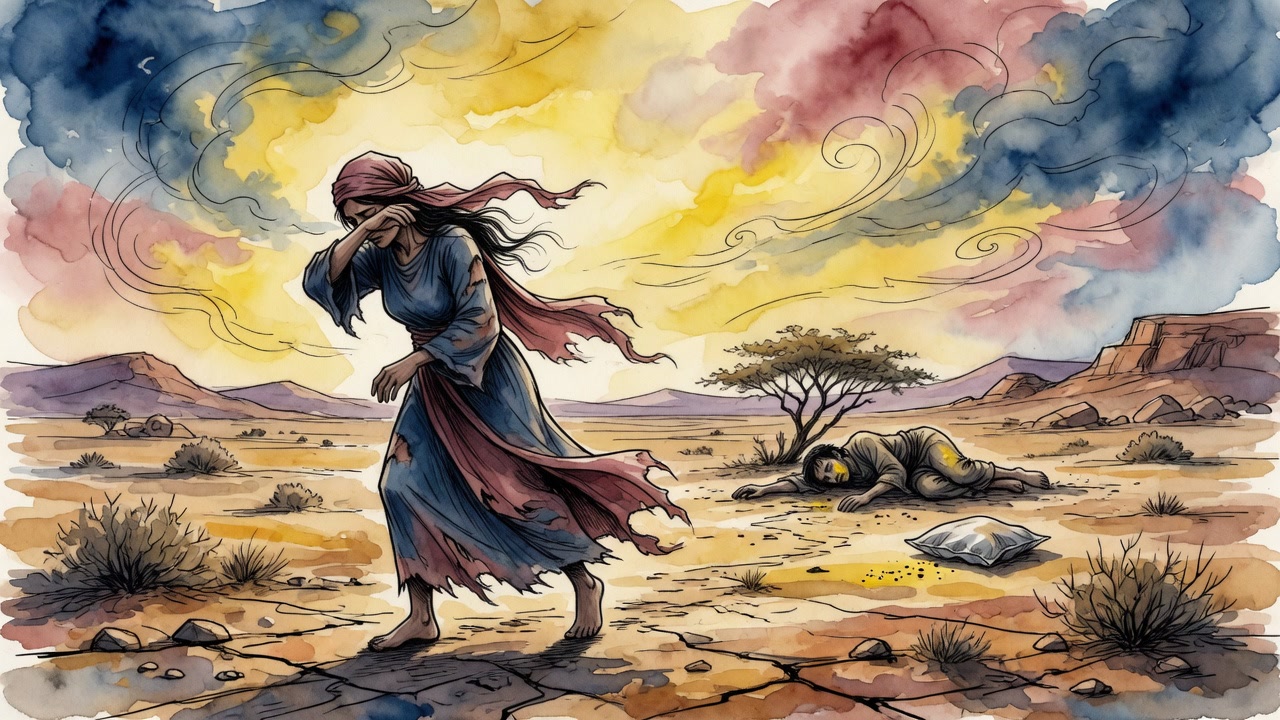
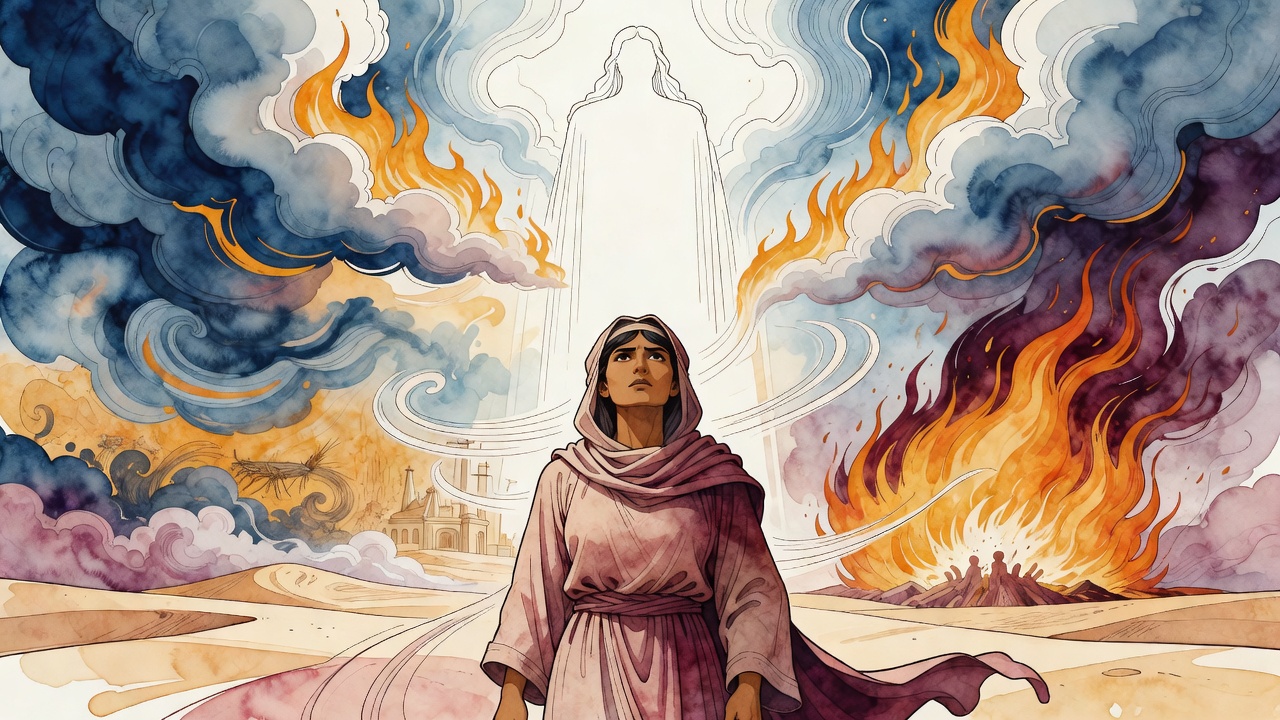
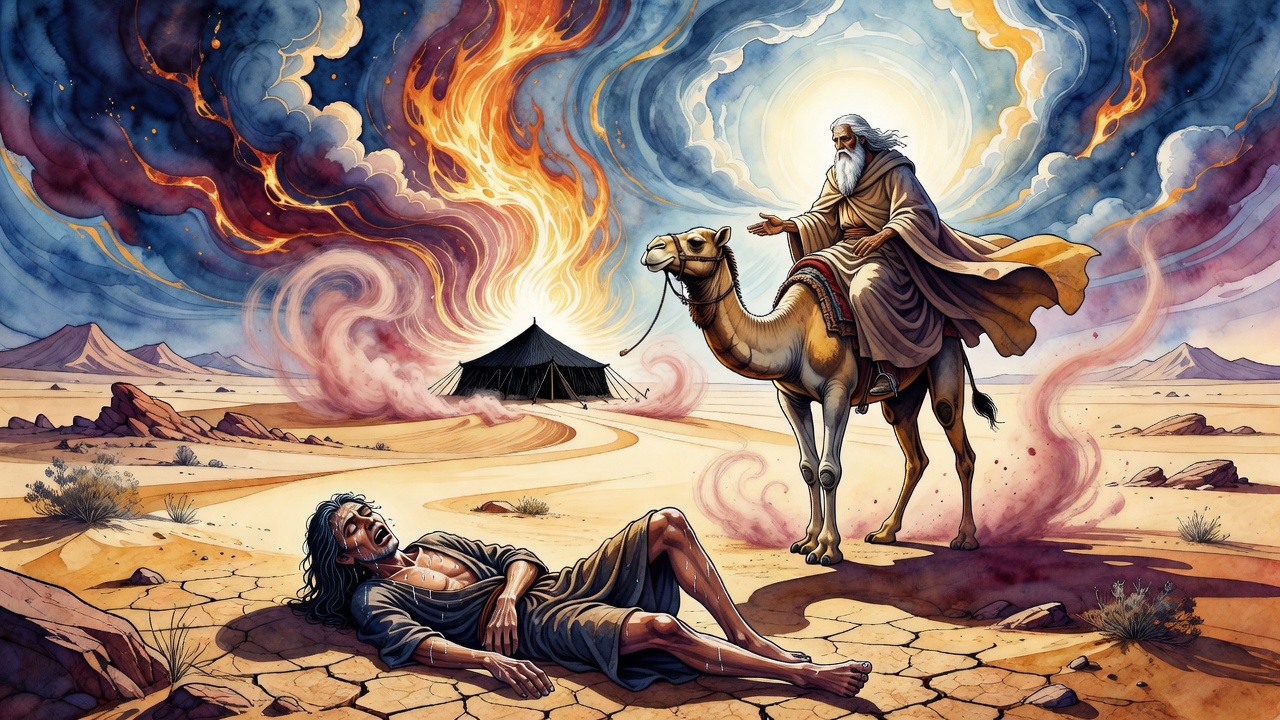
Hagar had to carry a grown man through the wilderness. Her son was no infant wrapped against her shoulder. Ishmael was old enough to have weight, heat, and thirst of his own, and Sarah's evil glance had struck him into fever until his legs could no longer carry him.
The Glance That Became Fever

The water bottle from Abraham's house knocked against Hagar as she walked. It had been given for survival, a last provision for a mother and son sent away from the tents, but fever drinks like fire. Ishmael drank again and again. Each swallow bought him another few breaths and stole from the next hour.

Soon the bottle was light. Then it was empty.

The Willows at the Old Place

Hagar knew the ground where she laid him down. Willow shrubs grew there, thin shelter for a burning body. Angels had once found her in that place and announced that she would bear a son. The sand had already heard a promise. Now the same sand received the promised child, limp with thirst.

She moved away because a mother can reach a point where love has no more work to do except refuse the sight of death. From a distance she spoke toward heaven. Yesterday, she said, God had promised seed beyond counting. Today her son was dying for lack of water.

The Cry Below the Throne

Ishmael cried too. The cry under the willows rose with Hagar's grief and with Abraham's merit still attached to the boy, though Abraham was nowhere in the desert to lift him. Help came close, but the angels pressed their case first.

They stood before God with the future in their mouths. Would God open a well for a child whose descendants would one day let the children of Israel perish with thirst?

God did not answer the future. He asked for the present.

What was Ishmael at that moment, righteous or wicked? The angels had to say righteous. The burning boy under the shrubs was judged by the breath in him now, not by the cruelty later generations would commit. At that moment, judgment bent toward water. The well rose because the son before God was alive, thirsty, and righteous where he lay.

The desert did not become kind. One spring of water did not erase exile, but it changed the sentence over the boy. Hagar had come to the old place to set him down; she would leave it with him breathing beside her.

The Father Who Stayed on the Camel

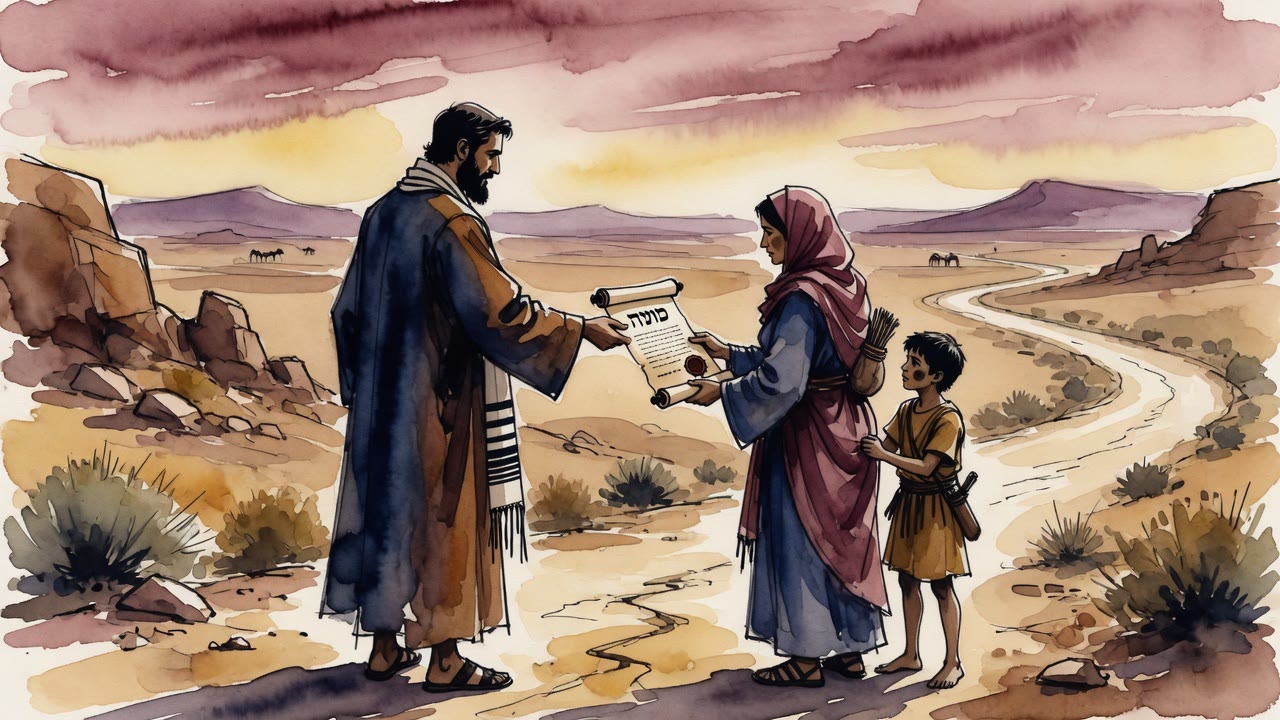
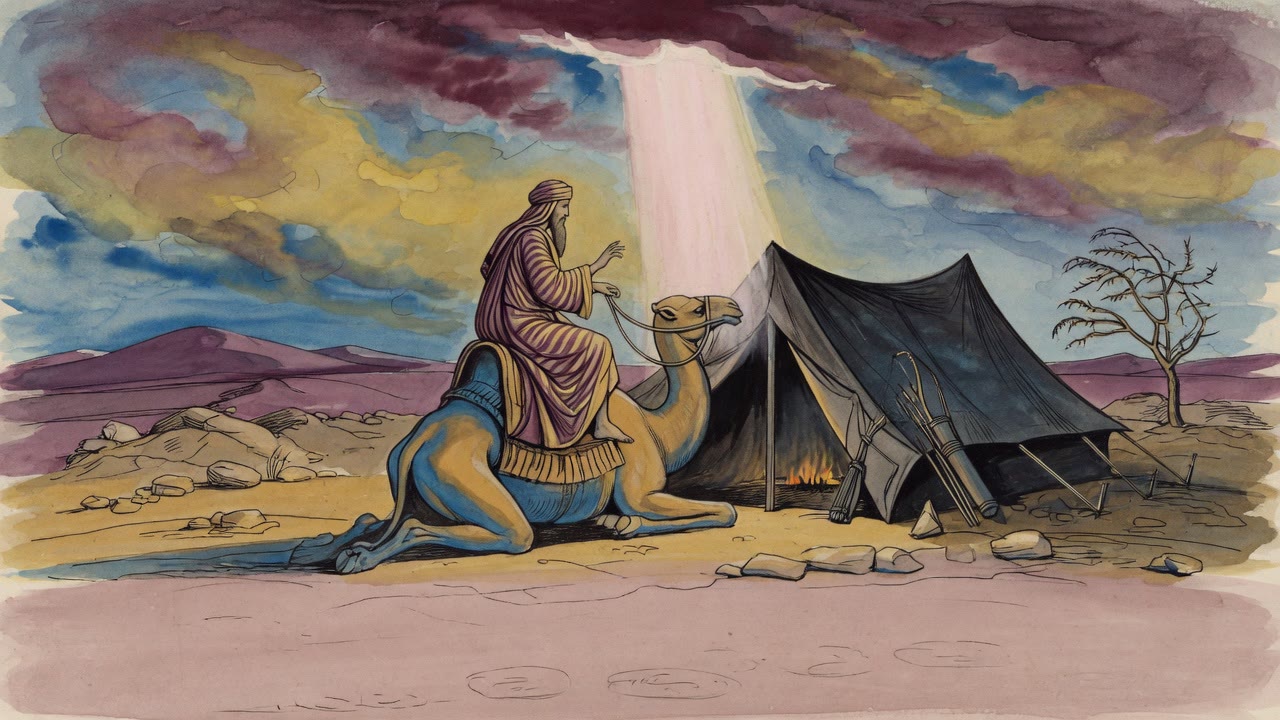
Years passed. Abraham came again to Ishmael's dwelling, but he arrived bound by an oath to Sarah. He would not descend from the camel in the place where Ishmael lived. Even love had to keep its distance.

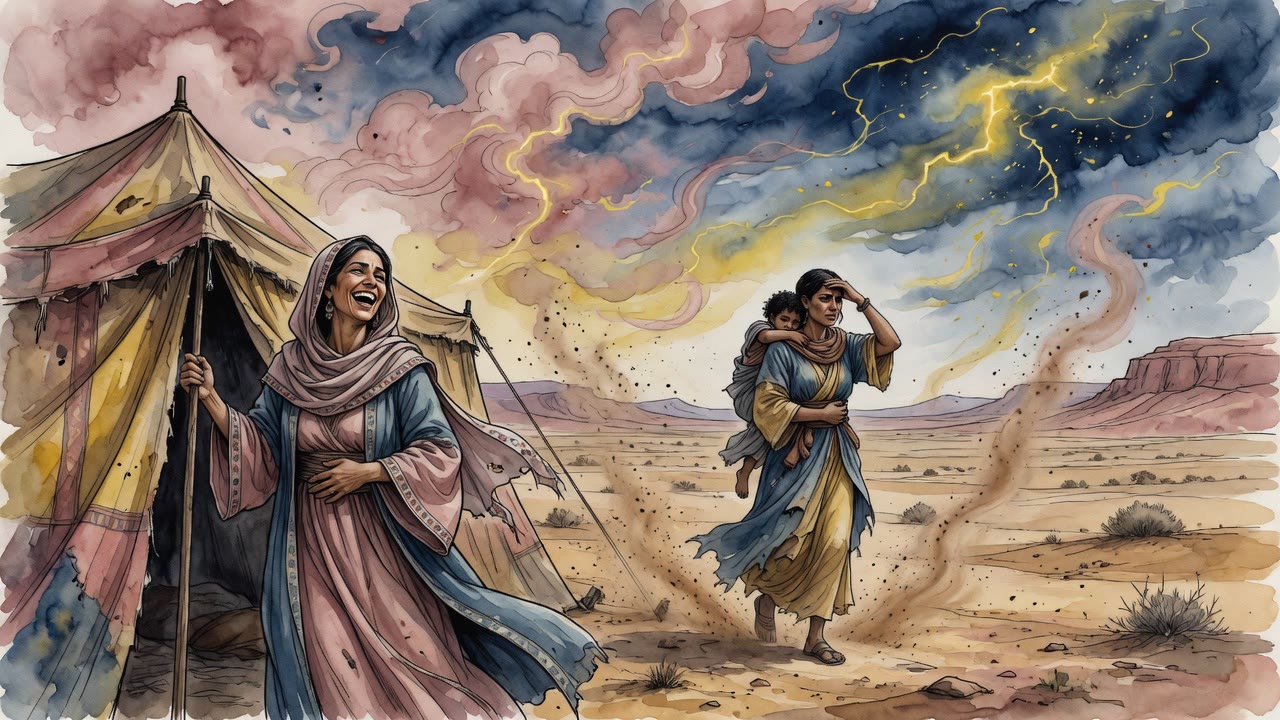
It was midday when he reached the tent. Ishmael was not there. His wife stood before the stranger and told him that her husband had gone with his mother into the desert to feed the camels. Abraham asked for a little bread and water, because his soul was faint from the road.

She gave it.

The old desert wound answered itself in that small act. Bread and water crossed from Ishmael's house to Abraham's hand, not from father to outcast child, but from the son's tent back to the father who had once sent him away.

The House Filled with Good Things

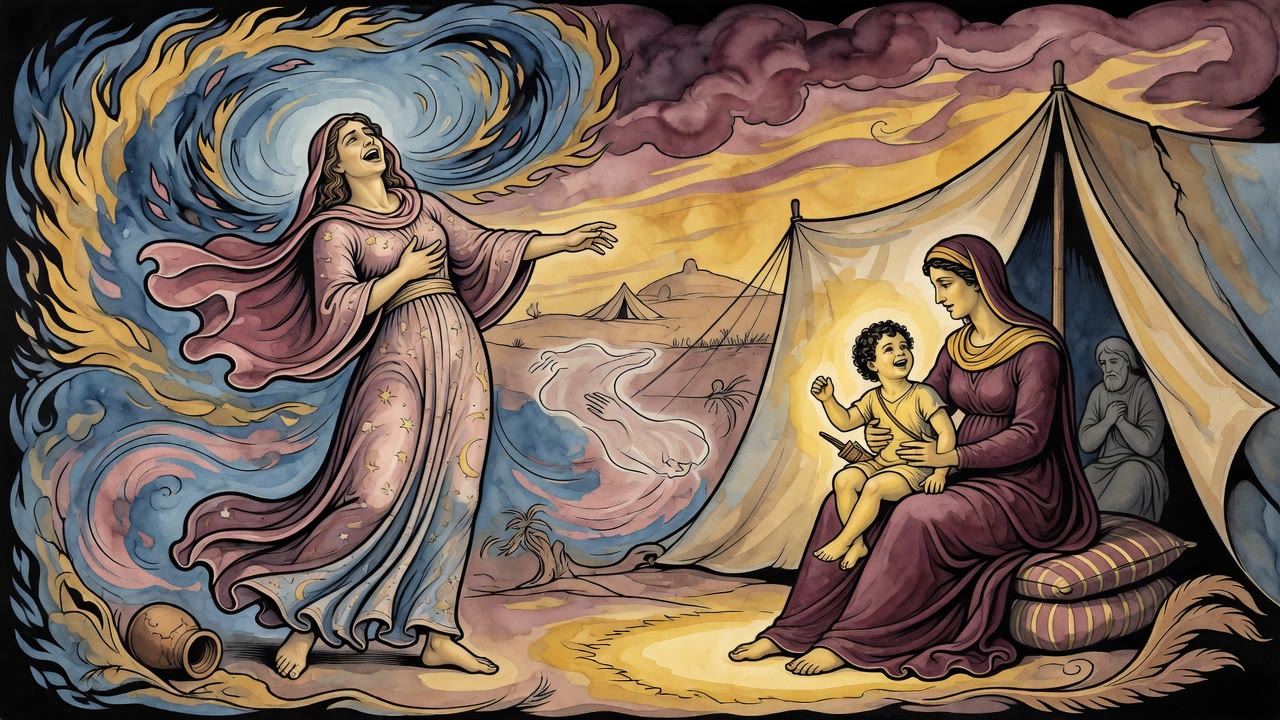
Abraham did not step down. He prayed from where the oath left him, asking the Holy One, blessed be He, for his son. The blessing entered the house without needing Abraham's feet on the ground. It filled Ishmael's dwelling with good things, with the kind of abundance that can make a wife stop in the doorway and stare.

When Ishmael returned, his wife told him about the traveler, the bread, the water, the prayer, the sudden blessing. Ishmael knew. A son can recognize his father's hand even when the father leaves no name behind.

After Sarah died, the wound opened one last time and changed shape. Abraham again took Hagar, the woman he had sent away, and she was called Keturah, fragrant with every scent. The desert had not erased her. The house of Abraham had not forgotten the mother who once stood by the willows and waited for water.


← All myths
From the tradition

Sources

2 sources

The texts this telling draws on, in full. Open a card to read inline, or expand it for a wider, quieter read.

Legends of the Jews 5:198Legends of the Jews

The story of Hagar and her son Ishmael, wandering in the desert, touches on that very human struggle.

In Legends of the Jews, Sarah, in a moment of jealousy, cast an "evil glance" upon her stepson Ishmael. This wasn't just a dirty look; it made him physically sick, burning with fever. Imagine the desperation of Hagar, forced to carry her grown son, his body wracked with illness, through the unforgiving wilderness.

They were running out of water. Remember, Abraham had provided a bottle when he sent them away. But as Ishmael's fever raged, he drank and drank, emptying the precious supply. Hagar, unable to bear witnessing her son's final moments, cast him under a meager shelter of willow shrubs. Can you feel her despair? The willows, the very spot where angels had once prophesied Ishmael's birth, now seemed a cruel mockery.

In her anguish, Hagar cried out to God. "Yesterday," she lamented, "You promised to multiply my seed beyond measure, and today my son dies of thirst!" It's a raw, powerful moment of questioning. Where is the promise in the face of such suffering?

But here's where the story takes a turn. It wasn't just Hagar's prayer that reached the heavens. Ishmael himself cried out to God. And, according to Legends of the Jews, their combined prayers, coupled with the merit (zechut) of Abraham, stirred divine intervention.

Yet, even then, the angels argued against helping Ishmael. They foresaw his descendants’ future actions, protesting, "Will You cause a well of water to spring up for him whose descendants will let Your children of Israel perish with thirst?" It's a chilling question, highlighting the complexities of divine judgment and the weight of generational consequences.

God's response is profound. "What is Ishmael at this moment – righteous or wicked?" When the angels conceded that he was righteous at that moment, God declared, "I treat man according to his deserts at each moment." This isn't a blanket approval of future actions, but a focus on present merit. It's a reminder that even within a larger narrative of destiny, individual choices and present righteousness still matter. God sees us in our immediate need, in our current state, and responds accordingly.

The story leaves us pondering. How often do we judge others (or ourselves) based on perceived future actions or past mistakes, rather than recognizing the potential for good in the present moment? The wellspring of divine grace, it seems, is often tied to the here and now.

Full source
Pirkei DeRabbi Eliezer 30:7Pirkei DeRabbi Eliezer

Sometimes, those threads are stronger than we imagine, woven with love and a touch of the divine.

Our story today comes from Pirkei DeRabbi Eliezer, a fascinating work of Jewish literature that fills in the gaps and adds layers to the biblical narrative. It tells of a poignant reunion, a hidden blessing, and a second chance.

Years had passed. Abraham, after the drama surrounding Hagar and Ishmael, felt the pull to reconnect with his son. But he had promised Sarah, his wife, that he wouldn't even dismount his camel within Ishmael's dwelling. A difficult promise, born of complex family dynamics.

Three years after his first visit, Abraham journeyed back to the desert. Arriving at midday, he found only Ishmael's wife at home. "Where is Ishmael?" Abraham asked. She replied that he was out in the desert with his mother, tending the camels.

Parched and weary from his journey, Abraham requested some bread and water. She provided it. It’s a simple act of hospitality, but one that sets the stage for what follows.

Now, here’s where the story takes a beautiful turn. Abraham, filled with love for his son, offered a prayer to HaKadosh Baruch Hu, the Holy One, blessed be He, for Ishmael. And immediately, Ishmael's house was filled with blessings, overflowing with abundance. What a powerful image! A father's love, expressed through prayer, bringing forth material blessings.

When Ishmael returned home, his wife told him about the mysterious visitor and the sudden prosperity. Ishmael, wise and perceptive, understood immediately: This was the work of his father. Abraham's love still extended to him, a comforting realization. As the verse says, "Like as a father pitieth his sons" (Psalm 103:13). It's a reminder that even after separation and conflict, the bonds of family endure.

But the story doesn't end there. There's a curious epilogue. After Sarah’s death "And Abraham again took a wife, and her name was Keturah" (Genesis 25:1). Now, why "again?" Pirkei DeRabbi Eliezer suggests that Keturah was none other than Hagar, Abraham's former wife! She was called Keturah, the text explains, because she was "perfumed with all kinds of scents" – a fragrant new beginning.

It's a surprising twist, isn't it? A reconciliation, a second chance at love and family. It speaks to the themes of forgiveness, redemption, and the enduring power of connection. Perhaps, after the pain and separation, Abraham realized the importance of mending broken bonds and embracing the fullness of his family.

What does this story tell us? Perhaps it's about the enduring strength of familial love, even across distances and disagreements. Perhaps it's about the power of prayer to unlock blessings. Or maybe it's about the possibility of reconciliation and second chances, even after years of separation. Whatever resonates with you, it's a story that reminds us that the threads that bind us together are often stronger than we realize. And sometimes, a little bit of divine intervention can help us weave them back together.

Full source