Parshat Vayera6 min read

Hagar Walked Away So She Would Not Watch Her Son Die

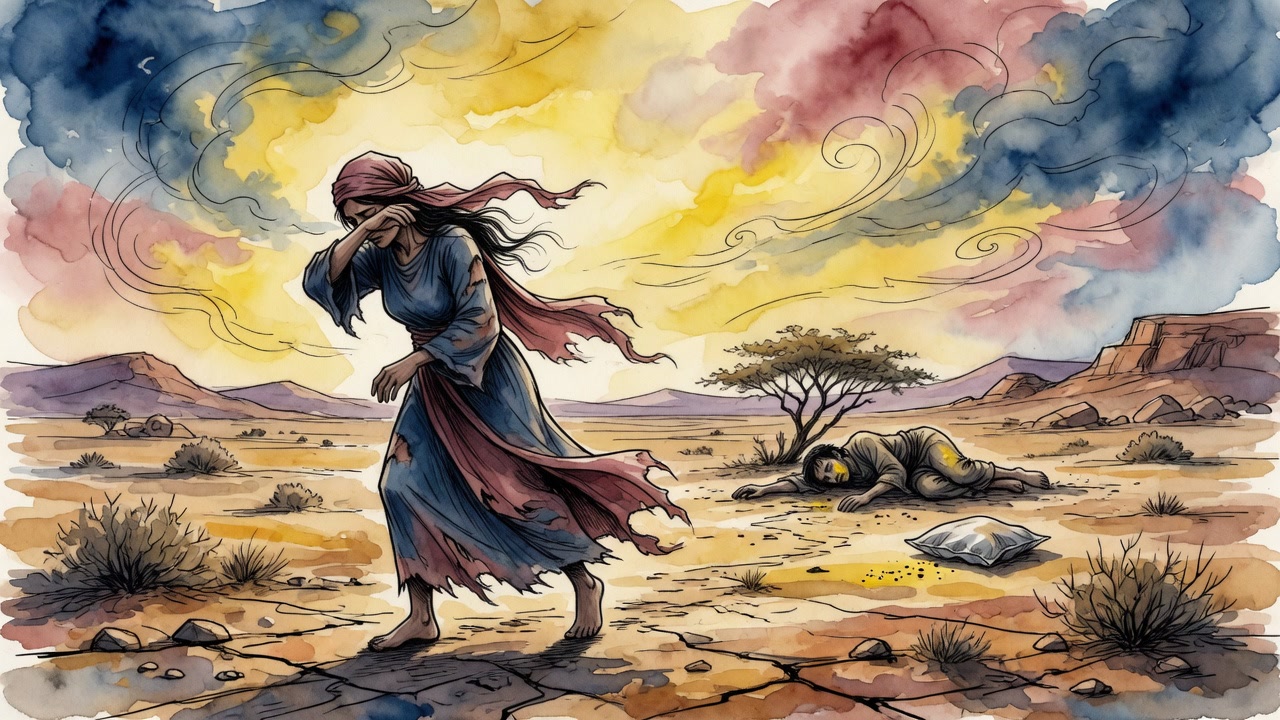
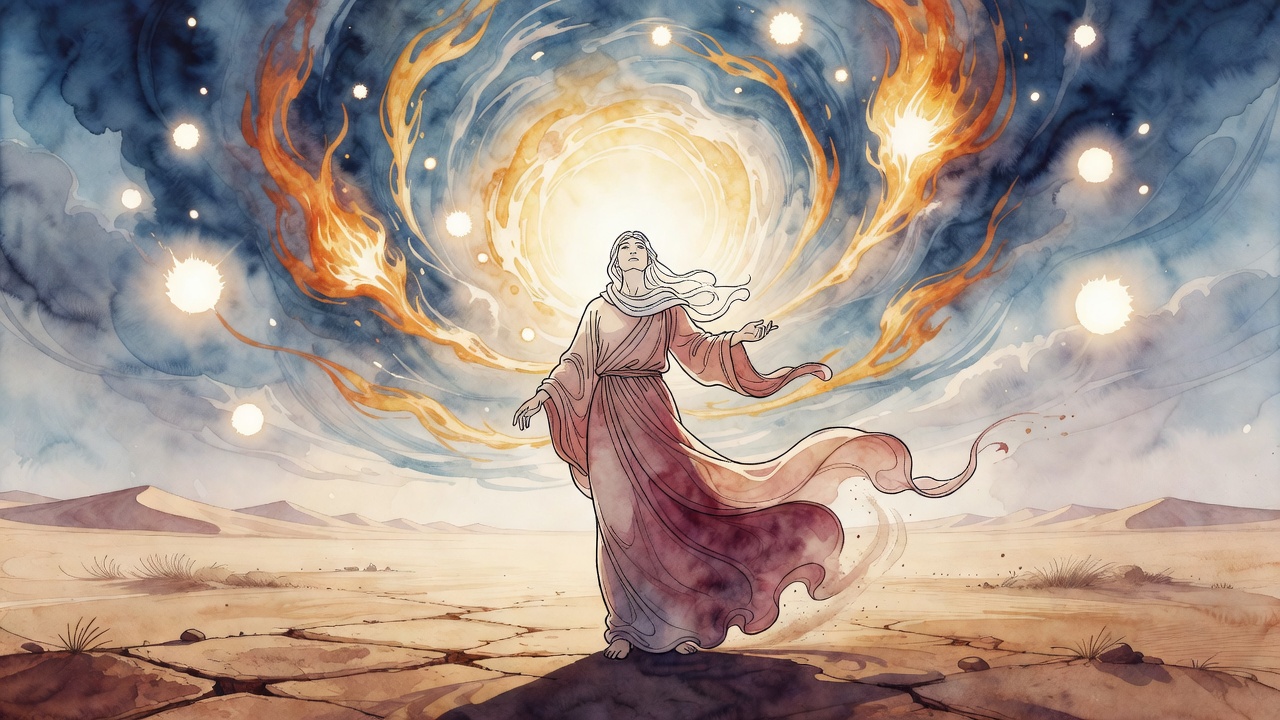
When the water ran out in the wilderness, Hagar put Ishmael under an olive tree and walked a bow-shot away. She could not watch him die.

Curated by Arthur · Told by Maggid ·
Table of Contents
  1. Before the Desert
  2. The Morning He Sent Them Away
  3. What a Mother Does When Her Child Is Dying
  4. The Olive Tree and the Well

Before the Desert

Abraham was at peace with the world that morning, the Book of Jubilees records. His son Ishmael was with him. He had not died childless. God had multiplied his descendants as he had promised, and the promise had been fulfilled in Ishmael first, before Isaac, and Abraham held that in mind when he looked at his older son. He had not forgotten what God had said about Ishmael either: that a great nation would come from him, that he would be the father of twelve princes, that God would be with him. The promises about Ishmael were specific and on record and Abraham believed them.

Sarah's demand was not about the promises. Sarah's demand was about what she had seen Ishmael do at the feast for Isaac's weaning, an action the Torah names with a word that interpreters have argued over for centuries but that Sarah understood as a threat. She went to Abraham and told him: "Send away this woman and her son, because the son of this slave woman will not share in the inheritance with my son."

The thing was distressing to Abraham. The Torah says this directly. He did not want to do it. But God told him to do what Sarah said.

The Morning He Sent Them Away

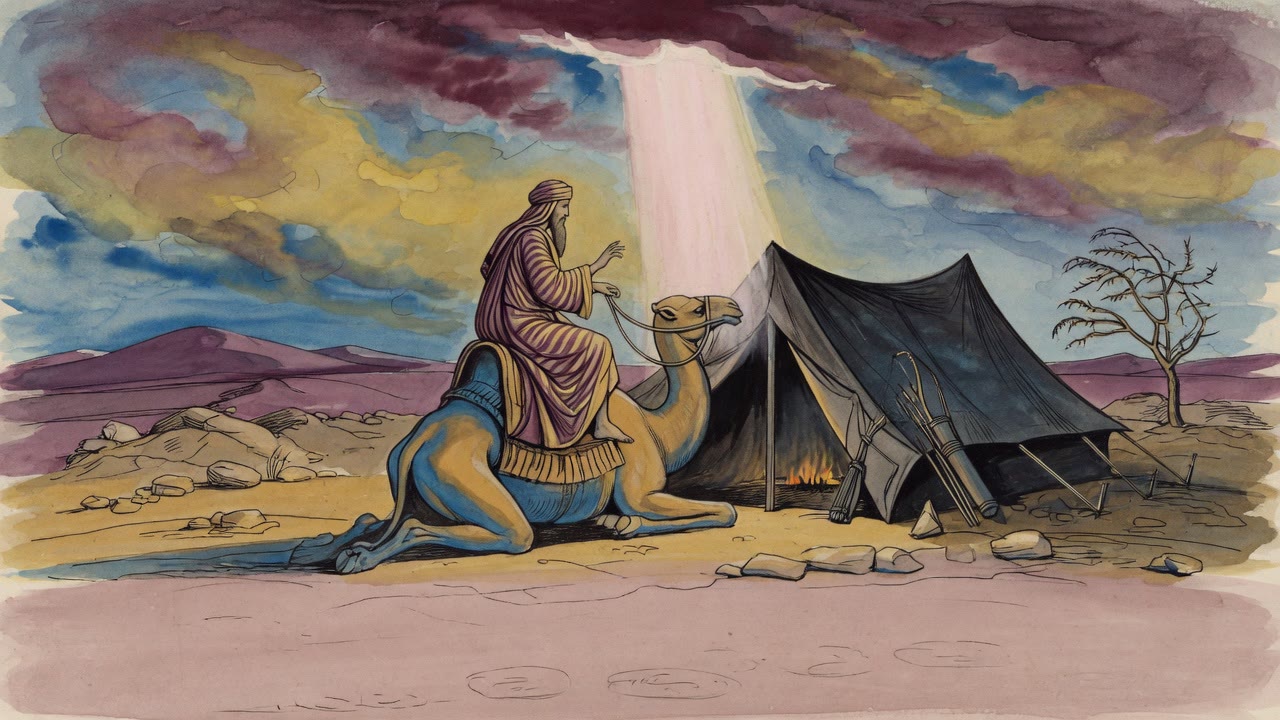
Early in the morning, the Book of Jubilees says. Before the day got hot, before anyone else was awake to watch what was happening, Abraham rose and took bread and a bottle of water and placed them on Hagar's shoulders. Not in a bag that she could set down. On her shoulders. Then he sent her away with her son, and they left and went into the wilderness of Beersheba.

The water ran out. The text in Jubilees, following Genesis 21 closely, does not say how many days they had been walking or how far they had gone. It says the water in the bottle was finished. And Ishmael, the boy who was born to be the father of twelve princes, could not go on. He collapsed under an olive tree. He was dying of thirst in a desert that did not care about the promises made about him.

What a Mother Does When Her Child Is Dying

Hagar was an Egyptian woman who had been Sarah's servant and then Abraham's concubine and was now neither of those things. She was a woman in a desert with a dying child and no water. She could not fix what was happening. She could not find water by wishing for it. She could not give him what she did not have. She could do one thing: she could not watch.

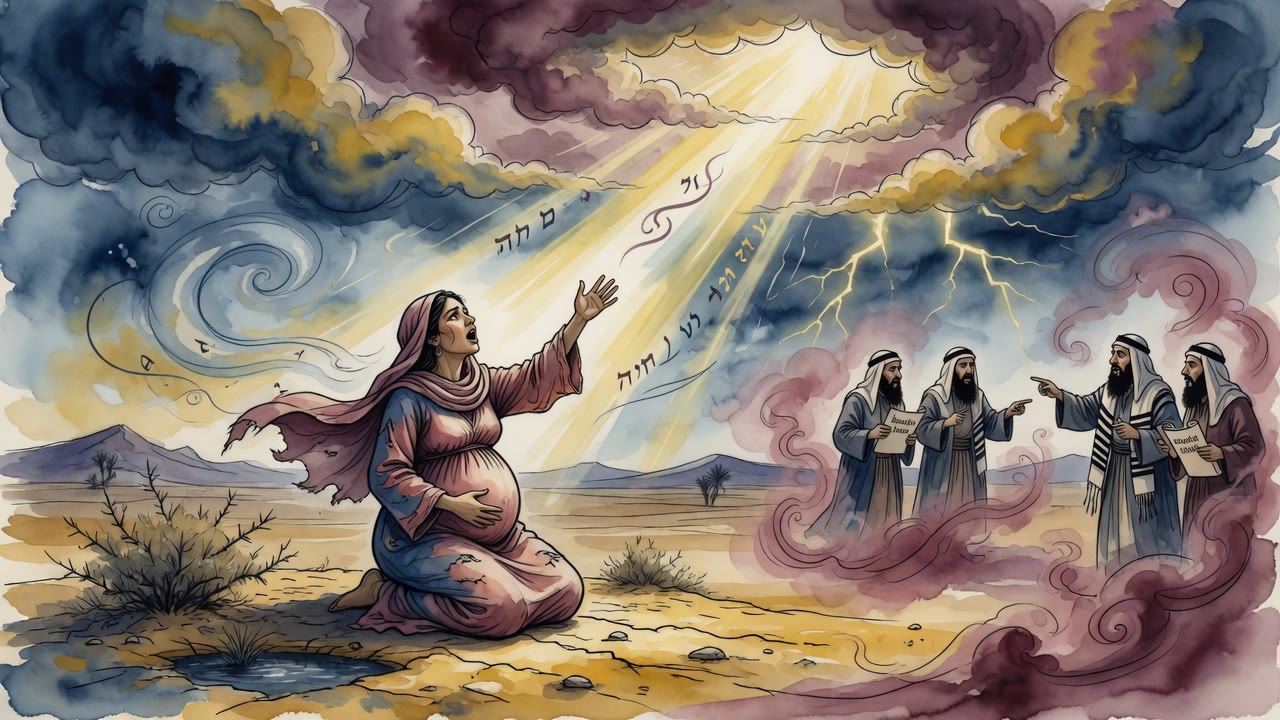
She put him under the olive tree and walked away. The text specifies the distance: a bow-shot. Far enough that she could not see his face clearly, not so far that she had abandoned the space entirely. She sat down and she lifted her voice and she wept. The sound of a mother who has done everything she could do and has run out of doing.

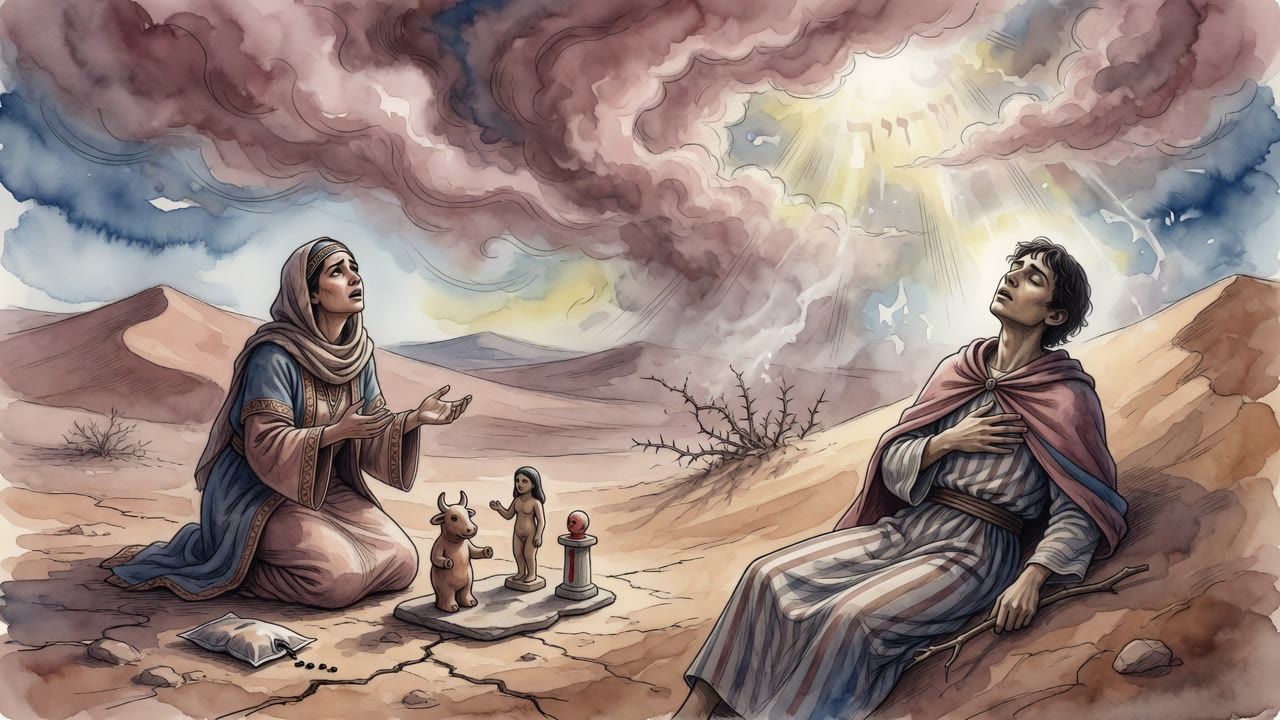
Then the angel of God called to her from heaven. Not from the ground, not from a presence standing next to her, but from heaven, from somewhere above the desert that was killing her son. "Hagar, what is the matter with you? Do not be afraid. God has heard the voice of the child where he lies. Get up. Lift the child. Hold him with your hand. I will make a great nation of him."

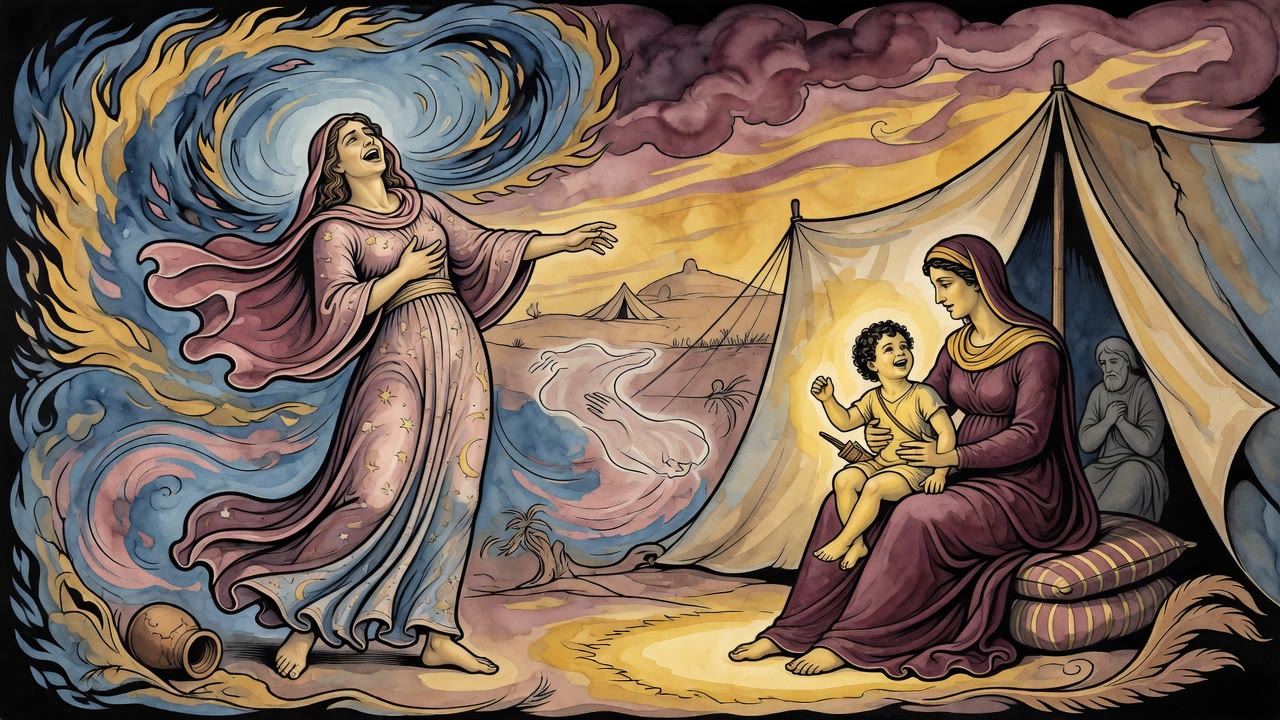
Then God opened her eyes and she saw a well. It had been there all along. The desert had not withheld the water. The water had been waiting for her eyes to open to it.

The Olive Tree and the Well

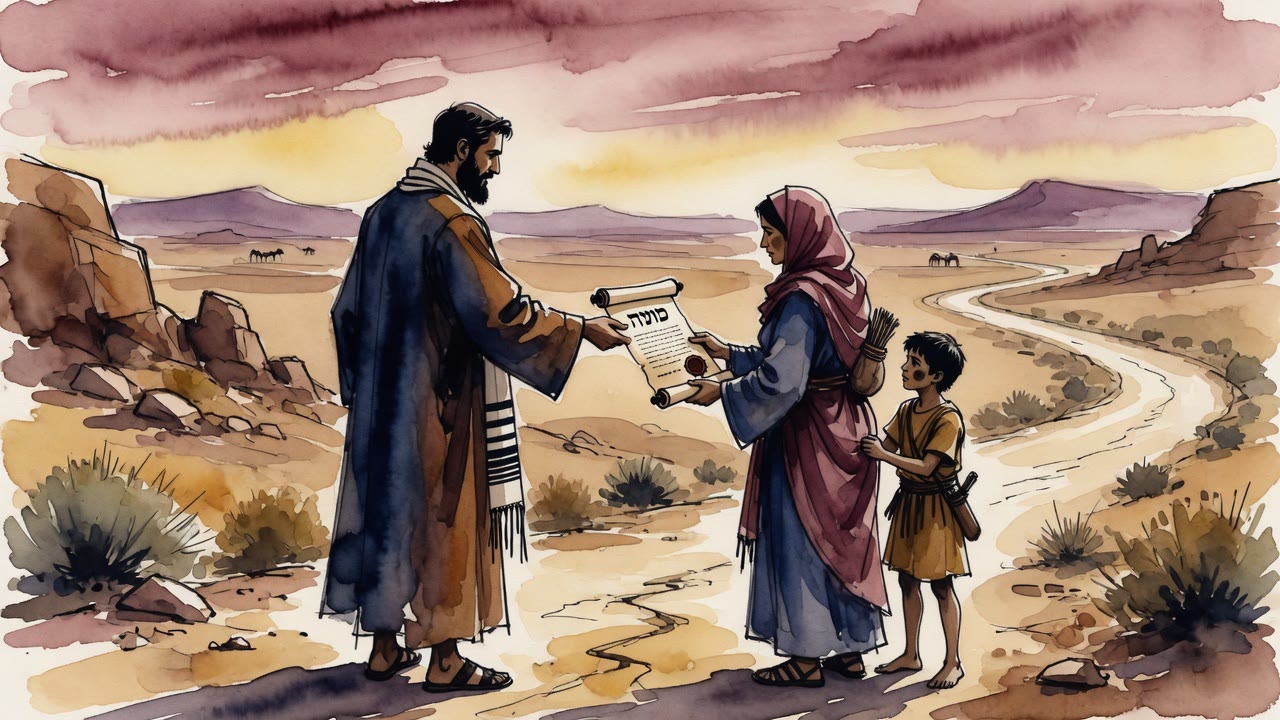
The Book of Jubilees adds one detail that Genesis does not preserve: the tree was an olive tree. The specificity matters in the way that specific trees always matter in the tradition's accounting of sacred places and moments. Under an olive tree, in the wilderness of Beersheba, a boy lay dying of thirst and his mother sat a bow-shot away and cried until heaven answered her. The well was there when she opened her eyes. The boy drank and lived and grew up in the wilderness and became an archer and his mother found him a wife from Egypt and the twelve princes of the great nation were born in due time.

Abraham had sent them into the desert with bread and water because God told him to, because Sarah told him to, because the inheritance needed to be undivided. What he sent them into was not death. He did not know that. Neither did Hagar when she walked a bow-shot away and stopped watching. They had both done what they could and then they ran out of doing, and the well was already there.


← All myths
From the tradition

Sources

3 sources

The texts this telling draws on, in full. Open a card to read inline, or expand it for a wider, quieter read.

Book of Jubilees 17:6Book of Jubilees

It's a feeling that pops up in some pretty surprising places, even in our sacred stories. to one of those moments, found in the Book of Jubilees.

It's considered apocryphal by some (meaning it's not included in the standard Jewish or Protestant biblical canon), but it's revered by others, like the Ethiopian Orthodox Church. It gives us a fascinating glimpse into the religious thought of the Second Temple period.

In Chapter 17, we find Abraham in a state of pure bliss. His son, Ishmael, the son of Hagar, is there with him. Abraham is overjoyed. He’s seen his children, he hasn’t died childless! Can you imagine the relief, the gratitude?

He remembered what God had promised him, way back when Lot, his nephew, split off and went his own way. God had said he'd give Abraham descendants, seed upon the earth to inherit the earth. Abraham is just overflowing with thanks, blessing the Creator with everything he has.

It's a beautiful, heartwarming scene. A father’s joy, a promise fulfilled.

But then… Sarah enters the picture.

She sees Ishmael "playing and dancing" with Abraham, and Abraham is "rejoicing with great joy." And what happens? She becomes jealous.

Jealous!

Now, isn’t that interesting? After all this time, after all the waiting and hoping, after the miraculous birth of Isaac is on the horizon (as the Book of Jubilees goes on to describe), Sarah is still experiencing that pang of jealousy toward Ishmael.

What's going on here? Was it simply that Ishmael, now a young man, was enjoying a closeness with Abraham that she felt was rightfully her son's? Was it a fear that Ishmael might still somehow threaten Isaac's inheritance?

Whatever the reason, it's a powerful reminder that even in moments of great joy and blessing, those pesky human emotions can still bubble up. Even in the lives of our patriarchs and matriarchs. Even in the stories we hold sacred.

And maybe, just maybe, that's what makes these stories so enduring. Because they show us that even the most righteous among us are still, at their core, human. They struggle. They feel. They get jealous. And that, in a strange way, makes them all the more relatable.

Full source
Book of Jubilees 17:14Book of Jubilees

Abraham is often remembered as this towering figure of faith, but the Book of Jubilees, an ancient Jewish text from the Second Temple period, gives us a stark look at the consequences of his actions on those around him.

Abraham, early one morning, sends Hagar, his concubine, and his son Ishmael, into the wilderness. He gives them bread and a bottle of water, placing it all on Hagar's shoulders. Then…he sends them away. Just like that. The Book of Jubilees 17 tells us she "departed and wandered in the wilderness of Beersheba."

The water runs out. The child, Ishmael, is dying of thirst. He can't go on. He collapses.

Can you feel the desperation?

Hagar, a mother watching her child suffer, does the only thing she can think of. She lays him under an olive tree. Then, she walks away. Not far, mind you. Just a bow-shot's distance. Why? Because she can't bear to watch him die. “Let me not see the death of my child,” she cries, as she sits and weeps.

It’s a scene of utter desolation. A bow-shot. That’s how close she is to her son’s suffering, yet feels utterly powerless to stop it. This small distance becomes a vast chasm of despair.

The Book of Jubilees doesn’t offer a lot of commentary here. It simply lays bare the stark reality of their situation. It's a raw, unflinching look at the human cost of decisions made, even by those considered righteous.

What are we to make of this? Is this a story of abandonment? Of faith tested to its breaking point? Or is it a reminder that even in our darkest moments, hope, however faint, can still flicker? Perhaps it's all of these things, woven together in a tradition of human experience that continues to resonate with us today. A reminder that even in the wilderness, we are not always alone. And even a bow-shot distance can be bridged.

Full source
Yalkut Shimoni on Torah 94:4Yalkut Shimoni on Torah

"Whatever Sarah says to you, listen to her voice" (Genesis 21:12). There is one who listens and is rewarded (as is written in remez 33). "For through Isaac shall offspring be called to you" (Genesis 21:12): through Isaac, but not all of Isaac. The word "through Isaac" [be-Yitzchak, whose letter bet has the numerical value two] hints at two: through the one who acknowledges the two worlds [this world and the world to come].

"And he took bread and a skin of water" (Genesis 21:14), for such is the way of servants, who draw water in their jugs. "He placed it on her shoulder, and the child": but Ishmael was seventeen years old, and you say He placed him on her shoulder? Rather, this teaches that Sarah cast an evil eye upon him, and because of this he fell ill, and a fever and pains entered him. You may know this is so, for it is written, "And the water in the skin was used up" (Genesis 21:15), since it is the way of a sick person to drink at every hour.

"And she cast the child under one of the bushes" (Genesis 21:15): it was a broom shrub, for such bushes [retamim] grow in the wilderness. They are called "bushes" [sichim] because there the ministering angels conversed [hesichu] with her. "And she went and sat herself down at a distance" (Genesis 21:16). Here it says "at a distance," meaning far off, while elsewhere it says, "Yet there shall be a distance between you and it, about two thousand cubits by measure" (Joshua 3:4). From this we learn that "opposite" [neged] in "at a distance" [mi-neged] means far off, derived from the word "far" [rachok].

Full source