What Ishmael Prayed When the Water Ran Out
The angels crowded the throne to stop the well. His descendants will kill your children with thirst, they said. God asked what the boy was that hour.
Table of Contents
 Click for full size
The Bottle Ran Dry
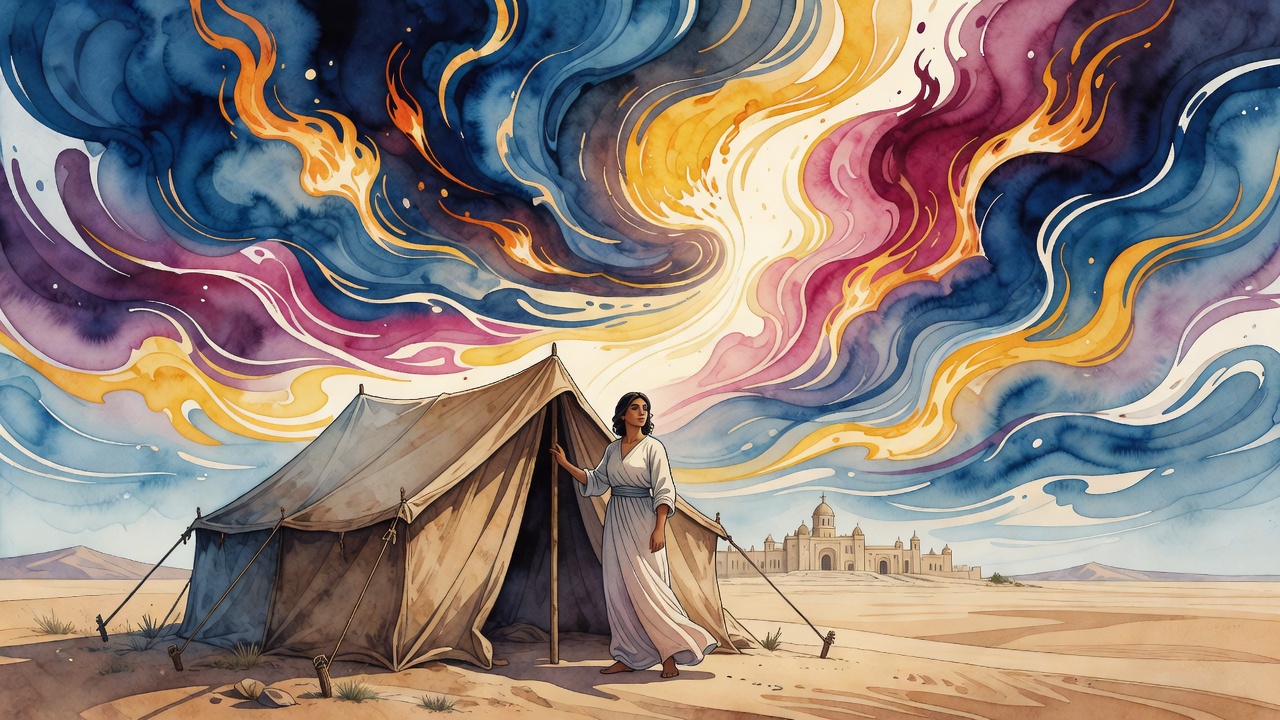
Abraham got up early, took bread and a bottle of water, set them on Hagar's shoulder along with the boy, and sent the two of them off. That was the provisioning. Bread and one skin of water for a woman and a child going out into open country.
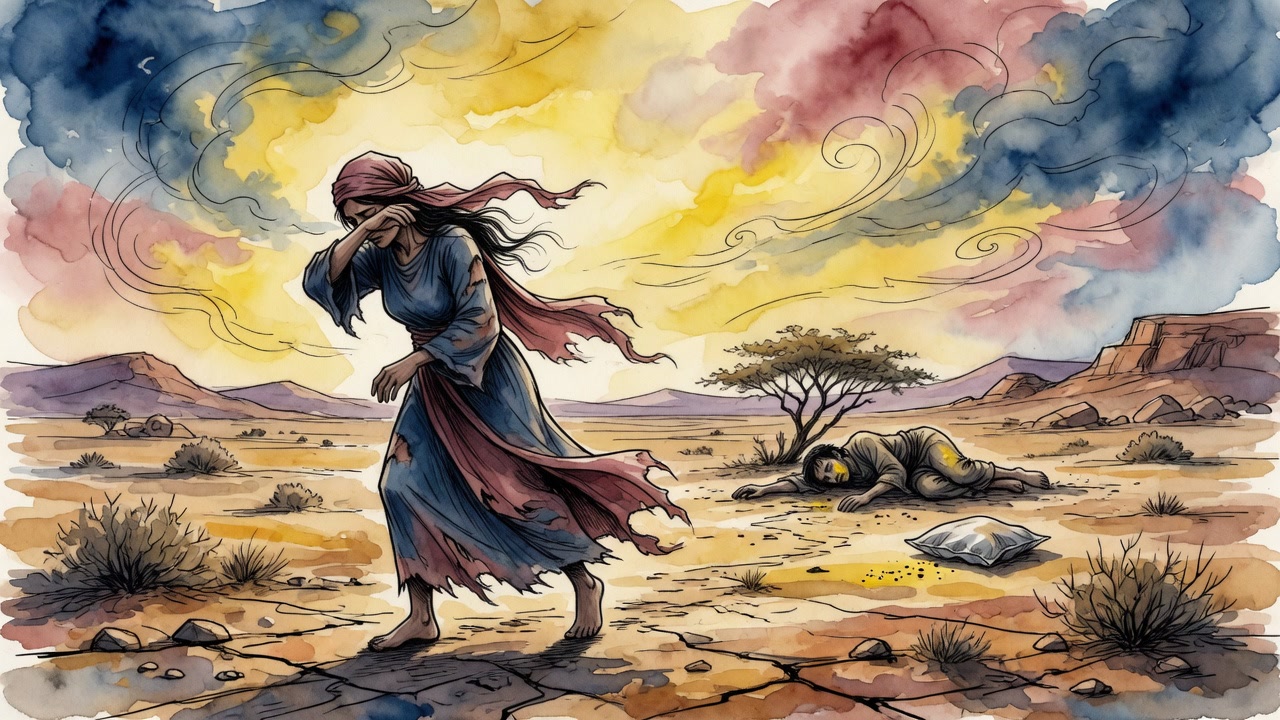
She wandered in the wilderness of Beersheba. The water lasted as long as water in a skin lasts in a desert, and then the boy was thirsty and could not walk any further and went down in the sand.
She Threw the Idol Away Before She Wept
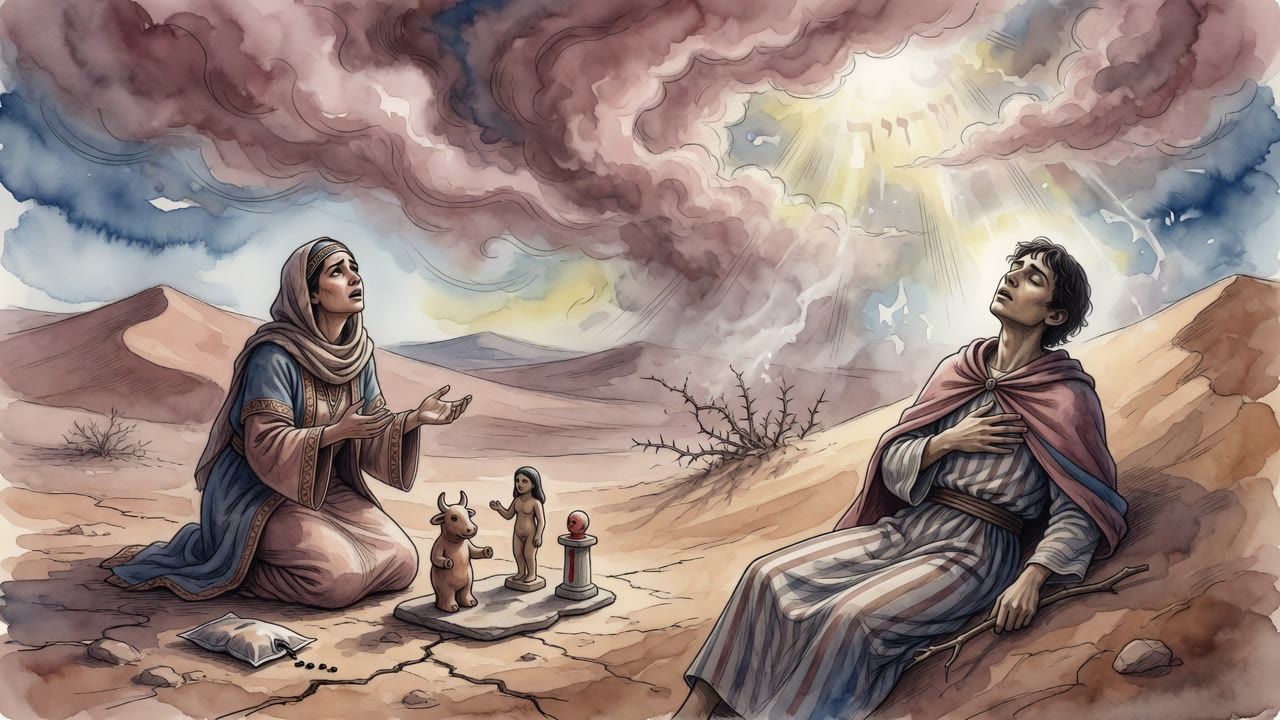
Hagar half carried, half dragged Ishmael to an olive tree and laid him in the shade of it. Then she walked off the distance an arrow travels and turned her back on him, because she said she could not watch the child die.
Before she sat down she took out the idol she had carried with her from Egypt and threw it away into the scrub. She had brought her father's gods into Abraham's house and out of it again, and she was still holding one when her son started dying. Both hands were empty when she finally cried.
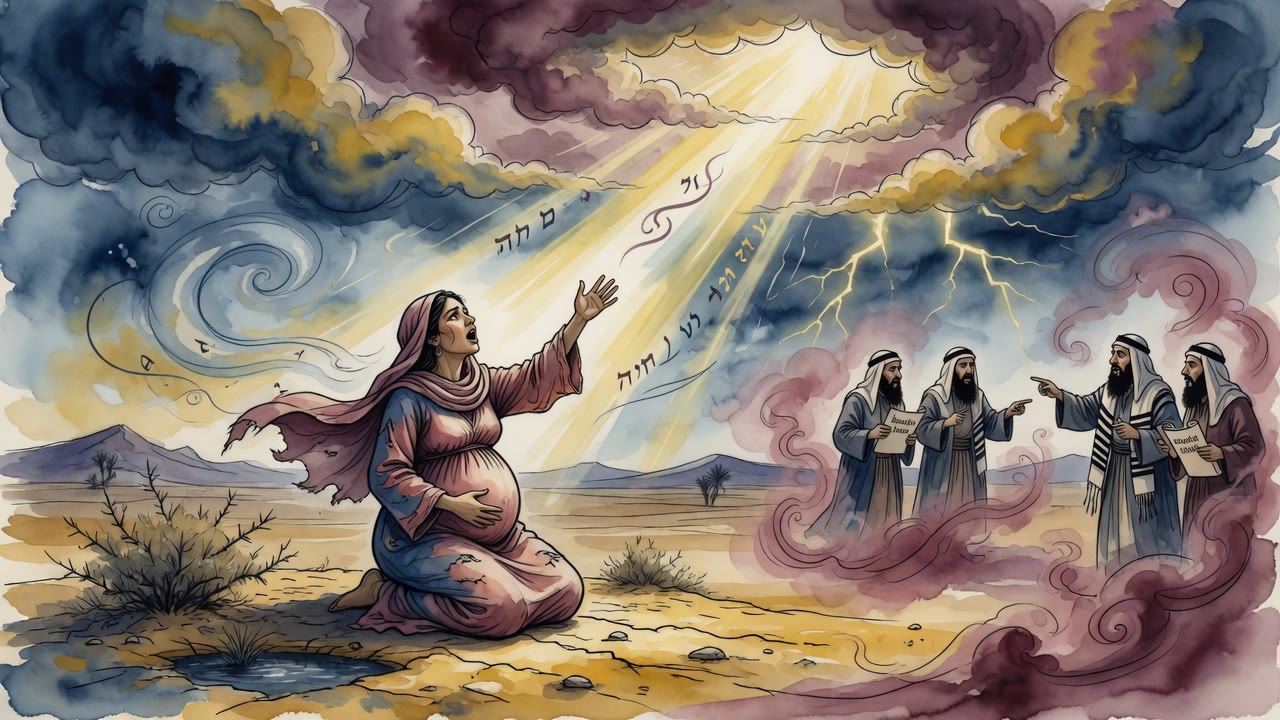
What came out of her was not a petition. She threw the words up at heaven like a woman throwing stones. Yesterday You stood there and told me You would multiply my seed beyond counting. He is under that tree now with his tongue swelling. Which of those is true.
Every tear she shed that afternoon was counted and kept, the way a man keeps water in a flask.
What the Boy Asked For
Under the olive tree, Ishmael was praying too, and he asked for something smaller.
"Lord of the world," he said, "if it is Your will that I perish, then let me die some other way, and not by thirst. The tortures of thirst are greater than all the others."
He did not ask to live. He asked for a different death, because this one was taking too long and hurt too much, and a boy who has stopped expecting rescue will still bargain over the manner of it. The prayer a sick man makes for himself carries further than any prayer said over him by somebody else. Heaven heard the mother weeping a bowshot away. It answered the boy.
The Angels Leapt Up to Accuse Him
Before the water came, the ministering angels got in front of it.
They crowded the throne and made their case. "Master of the universe. This is a boy whose descendants will one day drive Your children through the desert and kill them with thirst. They will refuse them water on the road out of Jerusalem. And You are going to bring up a well for him?"
God asked them one question. "What is he right now. Righteous or wicked?"
They had to answer honestly. "Righteous."
"Then that is what I judge," God said. "I judge a man only by the hour he is standing in."
She Filled the Skin in Case It Stopped
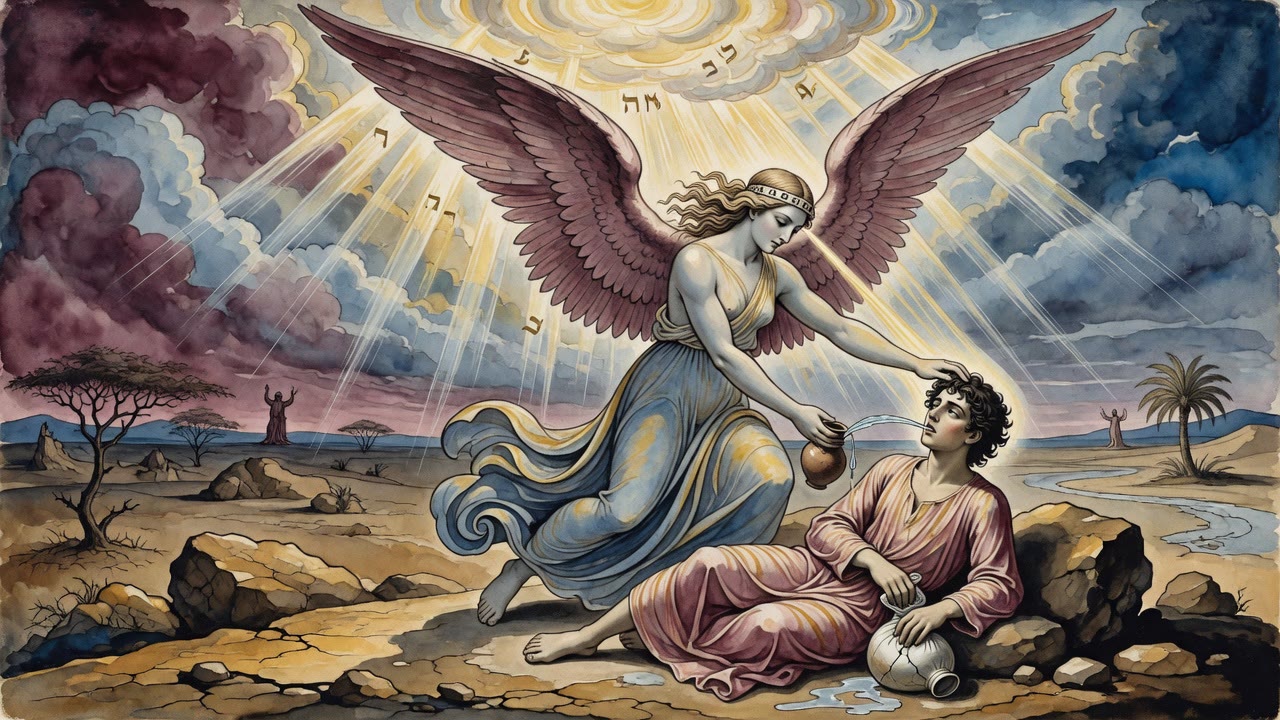
An angel called down to Hagar from heaven and told her to get up, take hold of the boy's hand, and lift him, because God had heard the voice of the lad where he was.
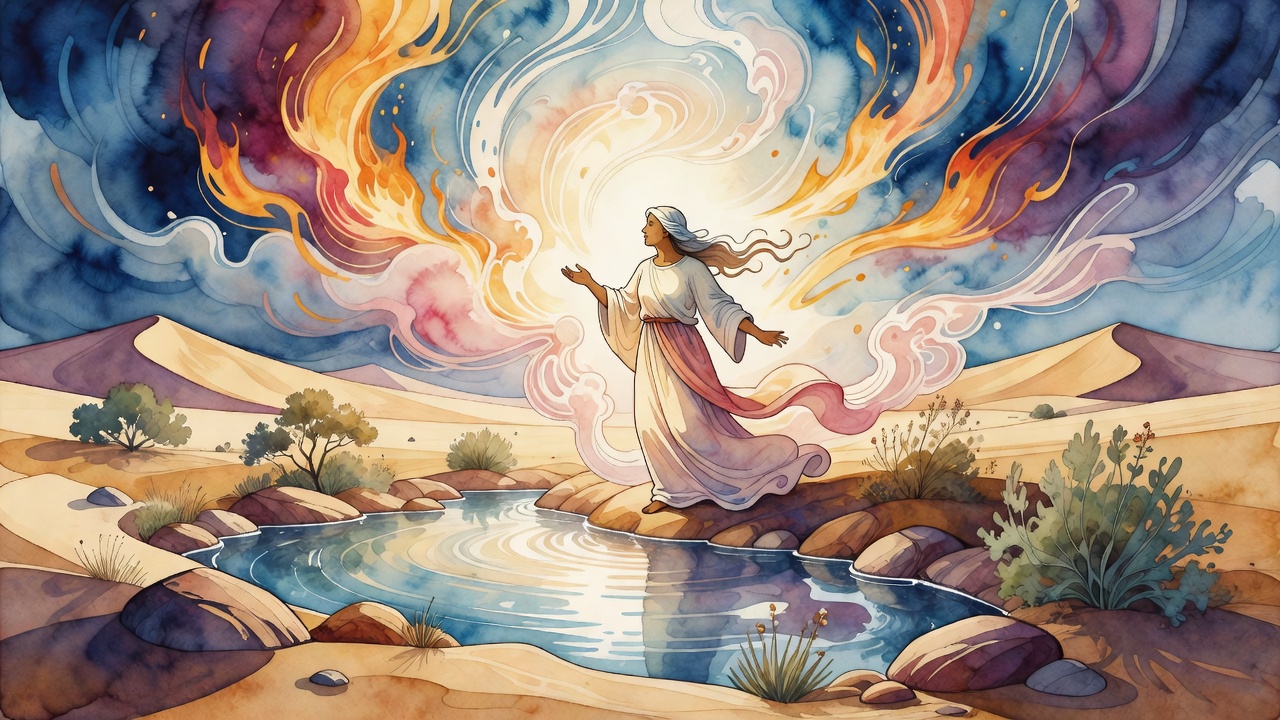
Then God opened her eyes. The well had been there the whole time, and so had she, and every person walks blind until heaven decides otherwise. It was Miriam's well, made at twilight on the sixth day of creation in the last of the light before the first Sabbath, one of the things put aside at the beginning for the moments they would be needed.
Hagar ran to it and gave the boy water. Then she filled the skin to the neck. She had just watched a well open out of nothing for her son, and she still packed a full bottle, because she thought the water might not be there tomorrow.
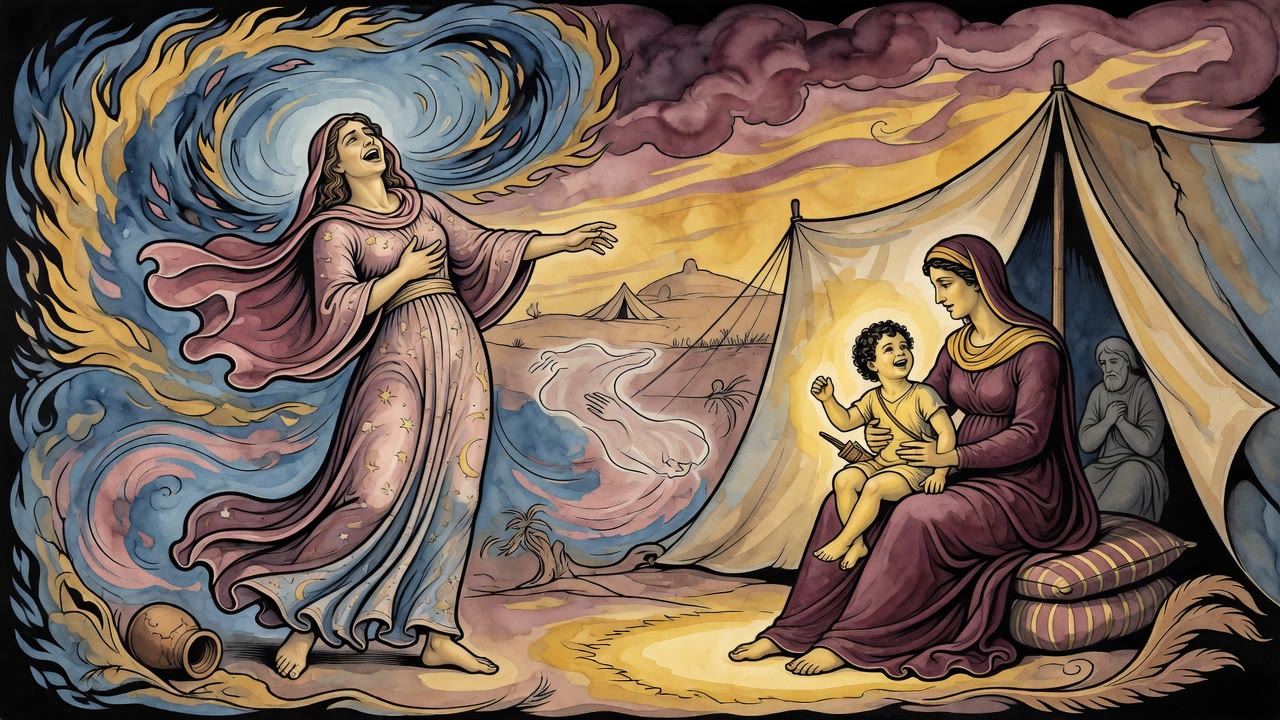
They went on to the wilderness of Paran, and the boy who had asked only for a gentler death grew up in that country with a bow in his hands. His mother went back to Egypt to find him a wife, because throw a stick in the air however you like and it lands on its point. When the first grandson was born they gave him a name that meant the Lord was near when I called on him.
← All myths