2,569 texts · Page 1 of 54
It offers a perspective that might just change how you see everything. The very first verse sets the stage: "The fear of the Lord is the beginning of wisdom, and it increases peace...
That moment of doubt, when faith feels… fragile. But what does our tradition teach us about those times? Ben Sira, a book of wisdom literature from around the 2nd century BCE, offe...
It's more than just good manners; it's woven into the very fabric of our spiritual well-being. Ben Sira, that wise sage whose words didn't quite make it into the Tanakh (Hebrew Bib...
Sometimes, the ancient wisdom whispers the loudest when we finally quiet down enough to listen. Let's tune into one of those whispers today, from the book of Ben Sira. Ben Sira, al...
We've all been there. But what if I told you that even those seemingly mundane moments hold profound spiritual significance? That's what we find when we delve into the wisdom of Be...
Ben Sira, in his wisdom, reminds us of something fundamental: "If they were not, you would not have come to the world." Your parents, your ancestors... they paved the way. And what...
The Book of Ben Sira, a treasure trove of wisdom literature, grapples with these very questions. "An wild king will destroy the city, and a city is settled by the intelligence of i...
We all do it. But what if that cover is completely misleading? What if the real treasure lies hidden, masked by appearances? Ben Sira, that wise sage whose words dance between scri...
Ben Sira, in his wisdom, dives into this very conundrum. "There exists one who becomes rich from his suffering, and this obligates this reward." It's a powerful image, isn't it? So...
The wisdom of Ben Sira, a sage writing over two thousand years ago, has some sharp, insightful words for us about these very human tendencies. He cuts right to the chase: “Do not s...
The ancient wisdom of Ben Sira, a text also known as Sirach or the Wisdom of Ben Sira, tackles this very human struggle. It's a book brimming with practical advice and profound ins...
Ben Sira, that wise sage whose words we find in the apocryphal book of the same name, grapples with just that. He paints a portrait, not of perfection, but of something far more co...
It’s a challenge as old as time, and the Book of Ben Sira, a treasure trove of wisdom literature, offers some incredibly relevant insights. So, what does it really mean to find tha...
Ben Sira, also known as Sirach or the Wisdom of Ben Sira (written around 200-175 BCE), isn't part of the Hebrew Bible canon for everyone, but it's considered part of the Apocrypha ...
Ben Sira, that wise sage from way back when, really hits on that feeling in his writings. He challenges us to be more mindful, more discerning, especially when it comes to the thin...
It’s a question that goes way back, and one fascinating glimpse into it comes from the Book of Ben Sira. Now, Ben Sira isn’t part of the core Jewish biblical canon as we know it (t...
Ben Sira, in his wisdom, gives us a glimpse into their lives. He reminds us that piety and significance aren't confined to kings and prophets. "He is busied with oxen, and leadeth ...
Ben Sira, also known as Ecclesiasticus, is a book of wisdom literature, a treasure trove of insights into Jewish thought and practice, though it's not included in the Hebrew Bible'...
Ben Sira captures a glimpse of just such a moment, a powerful scene of collective worship in the Temple. Imagine it: "All flesh together hasted, and fell down upon their faces to t...
Ben Sira, that wise sage from centuries ago, knew the feeling. He even wrote about it. He mentions "the inhabitants of Seir and Philistia; And the foolish nation that dwelleth in S...
It’s a deeply human experience, one that resonates across cultures and centuries. And it’s one the ancient text of Ben Sira, or Sirach, addresses with raw honesty. Ben Sira, a book...
It's in those moments that we often turn to something greater, something beyond ourselves. And that's precisely what we find in the words attributed to Ben Sira. This passage, foun...
That feeling isn't new. It's been with us for millennia. And it shines through in the ancient wisdom of Ben Sira. This passage from Ben Sira 51 isn't just about acquiring knowledge...
That’s how I feel every time I delve into the Book of Ben Sira. This passage from Ben Sira 51 – it's like a whispered confession, a peek into the author's journey. "See with your e...
Jewish tradition understands that feeling deeply, and sometimes, the simplest phrases carry the weight of generations trying to break free. Take this seemingly straightforward stat...
The Book of Jubilees, a text that gives us a unique retelling of the Torah, certainly seems to think so. It’s a book overflowing with warnings and rebukes, a call to remember the c...
This particular passage is about a time of profound transformation. It paints a picture of people turning towards the Divine—"with all their heart and with all their soul and with ...
This ancient Jewish text, considered scripture by some but excluded from the standard biblical canon, paints a sweeping picture of history and destiny. And within its pages, we fin...
The Book of Jubilees, an ancient Jewish text that expands on the stories we find in Genesis and Exodus, really emphasizes this point. It paints a picture of creation itself as a mo...
The Book of Jubilees, an ancient Jewish text not included in the Hebrew Bible but considered scripture by some, gives us a glimpse into a fascinating perspective. It emphasizes the...
When Noah finally stepped onto dry land, one of the first things he did was offer a sacrifice. But what was so special about it? The Book of Jubilees, a text that expands on the st...
It’s a question that’s echoed through generations. According to the Book of Jubilees, it was Noah himself who laid out the boundaries. Imagine Noah, fresh off the Ark, surveying a ...
We hear about the ark, the dove, the rainbow... but then what? Turns out, things weren’t exactly smooth sailing. Imagine this: The world is starting over. Noah and his family are t...
We get a glimpse, a chilling snapshot, in the Book of Jubilees. This ancient Jewish text, considered canonical by some but not included in the standard Hebrew Bible, offers a uniqu...
That’s kind of the vibe we get when we look at the early life of Abraham, or Avram as he was known then. to the Book of Jubilees, a fascinating ancient Jewish text that expands on ...
The Book of Jubilees, an ancient Jewish text, grapples with this very human tendency in its own powerful way. Chapter 12 dives right into a crucial moment of religious awakening, a...
That tension, that agonizing silence in the face of wrong, that’s the heart of our story today, drawn from the Book of Jubilees. The Book of Jubilees, sometimes called Lesser Genes...
That feeling is powerfully captured in the Book of Jubilees, specifically in a poignant moment of Abraham's life. Imagine Abraham, not yet the towering figure we know, but a man wr...
The Book of Jubilees, a fascinating text considered apocryphal by some, offers a peek behind the curtain. It presents itself as a revelation given to Moses on Mount Sinai by angels...
The Book of Jubilees gives us a glimpse into one of those moments – a moment of profound blessing and recognition. We're talking about Abraham. Imagine him, standing at a crossroad...
The story of Abraham and the binding of Isaac, the Akeidah, is one of the most powerful and unsettling narratives in the Hebrew Bible. But the story doesn't end there. The Book of ...
The Book of Jubilees, a fascinating text from around the 2nd century BCE, offers a glimpse behind the curtain. Let's take a peek. Imagine Abraham, nearing the end of his days. He's...
In the Book of Jubilees, we get a peek into just such a moment. Think of it as a sort of ancient family drama, playing out with eternal consequences. We're eavesdropping on a conve...
The Book of Jubilees, a fascinating text from around the 2nd century BCE, wrestles with these very questions. It's a retelling of Genesis and Exodus, but with some major expansions...
It's more than just good luck or a fleeting moment of happiness. The Book of Jubilees, a fascinating text considered canonical by some but apocryphal by others, offers a glimpse in...
It's a fascinating, often overlooked text that expands on the stories we find in Genesis, and it's full of wisdom about living a righteous life. Today, I want to share a small but ...
"All my days have been unto me peace," he declares. This is Abraham, the man who faced trials, tribulations, and even the agonizing test of the Akeidah (the Binding of Isaac). And ...
We find ourselves at the end of Abraham's life. He’s preparing to pass on his legacy, his hopes, and his deepest blessings to his son, Jacob. Imagine the scene. The air is thick wi...
The Torah ends the negotiation at ten righteous men. The midrash says Abraham never stopped arguing — and God brought the dead back to life.
The rabbis said Abraham was tested thirteen times before the Binding. They said David was tested for thirteen years before the rescue. Same math, same fire.
The twelve gems on the High Priest's breastplate each carried a tribal secret. Two stones told stories of faith and shame.
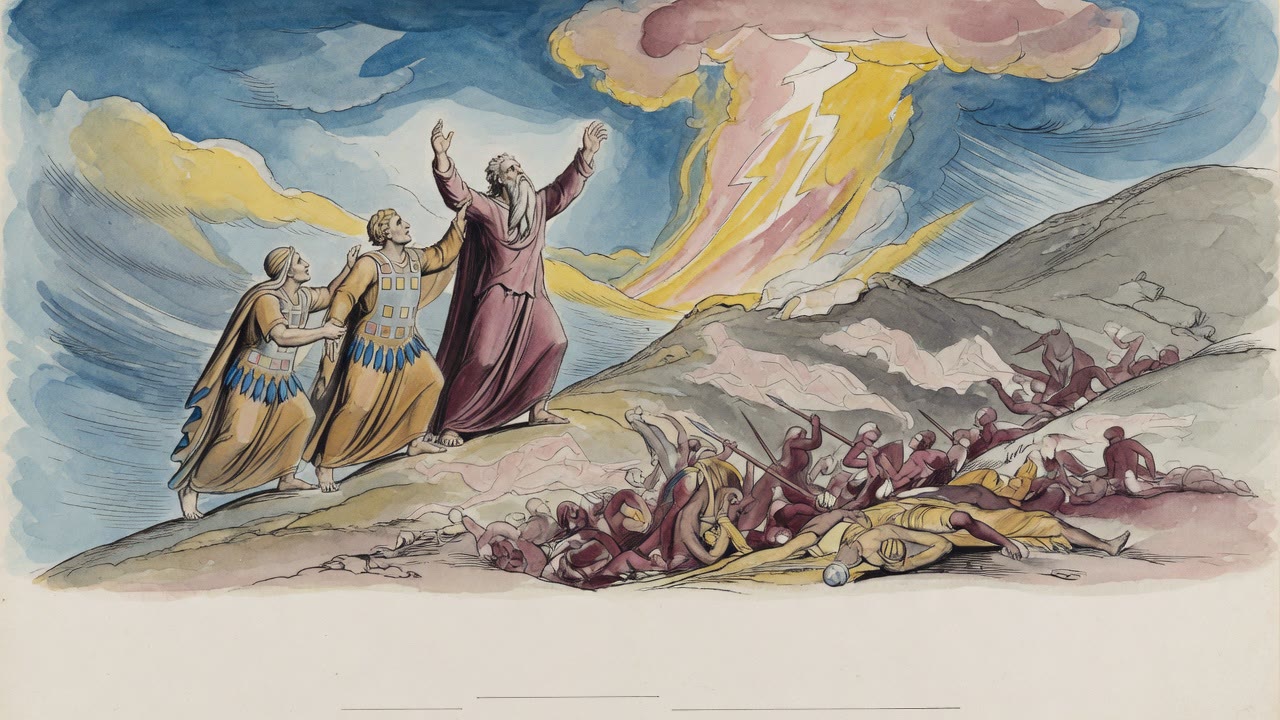
Israel lost battle after battle against Benjamin, even with the Ark present. Phinehas stood before God and demanded to know why.
Jacob told God his way was hidden. The rabbis froze on the line. A tenth-century midrash answers the complaint the Torah left hanging.
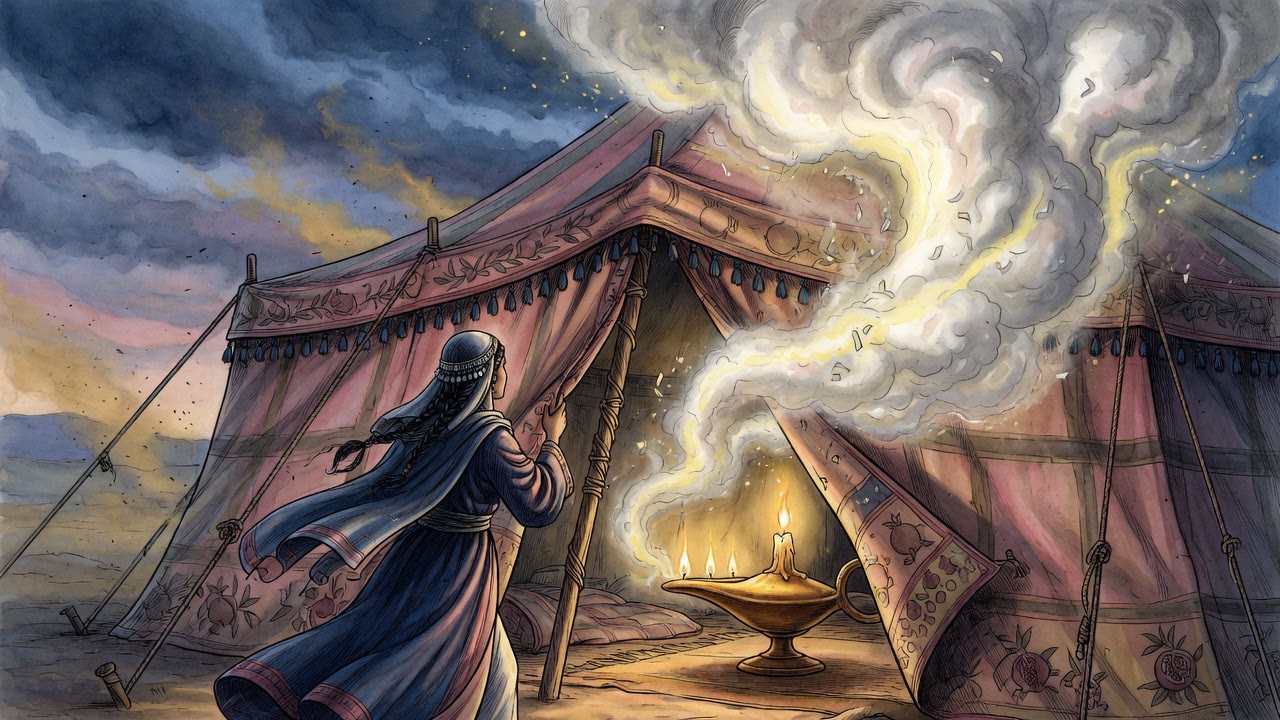
When Isaac brought Rebecca into his mother's tent, the cloud that had lifted at Sarah's death returned. The miracle of one woman passed to another.
Sarah's barrenness was not an accident and Hagar's flight was not a betrayal — the Midrash reads both women's choices as mirrors of the soul's encounter with something it cannot yet bear to face.
The Kabbalists read Jacob's wrestling match at the Jabbok as a lesson in prayer — the angel was not an opponent. He was an answer.
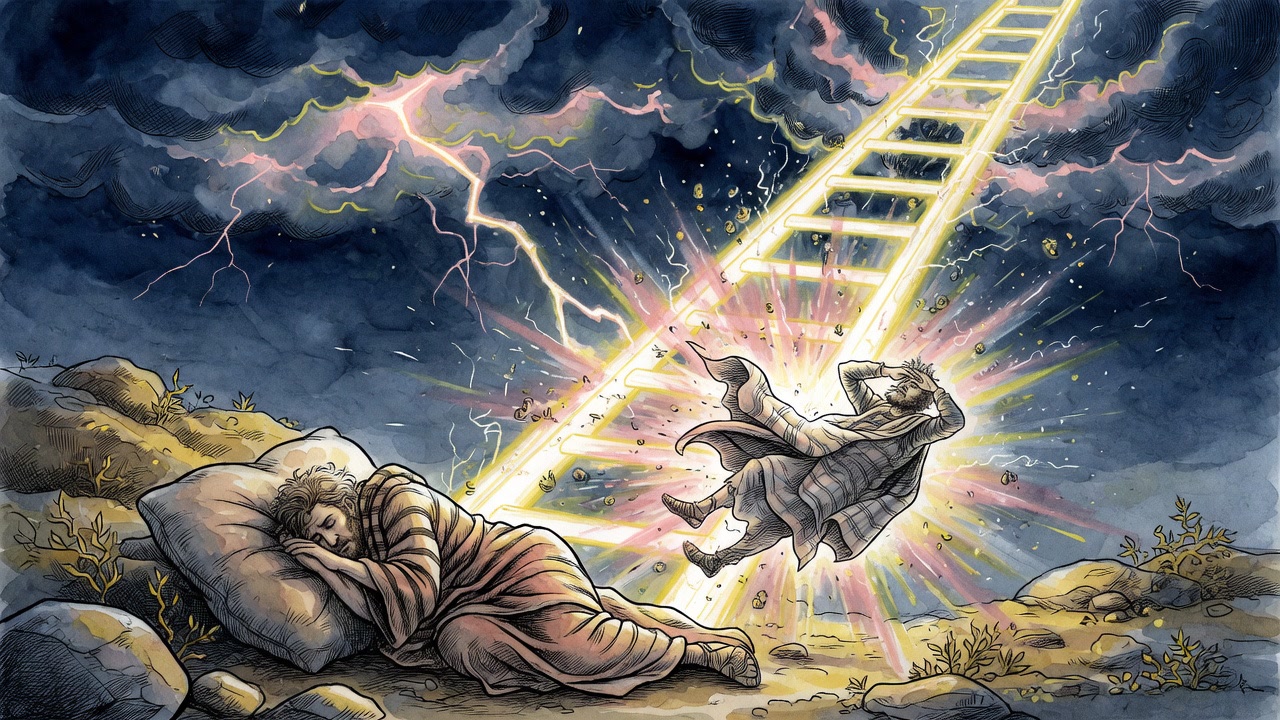
At Bethel, Jacob collided with God in prayer. But God had already promised to protect him. So why was Jacob still afraid?
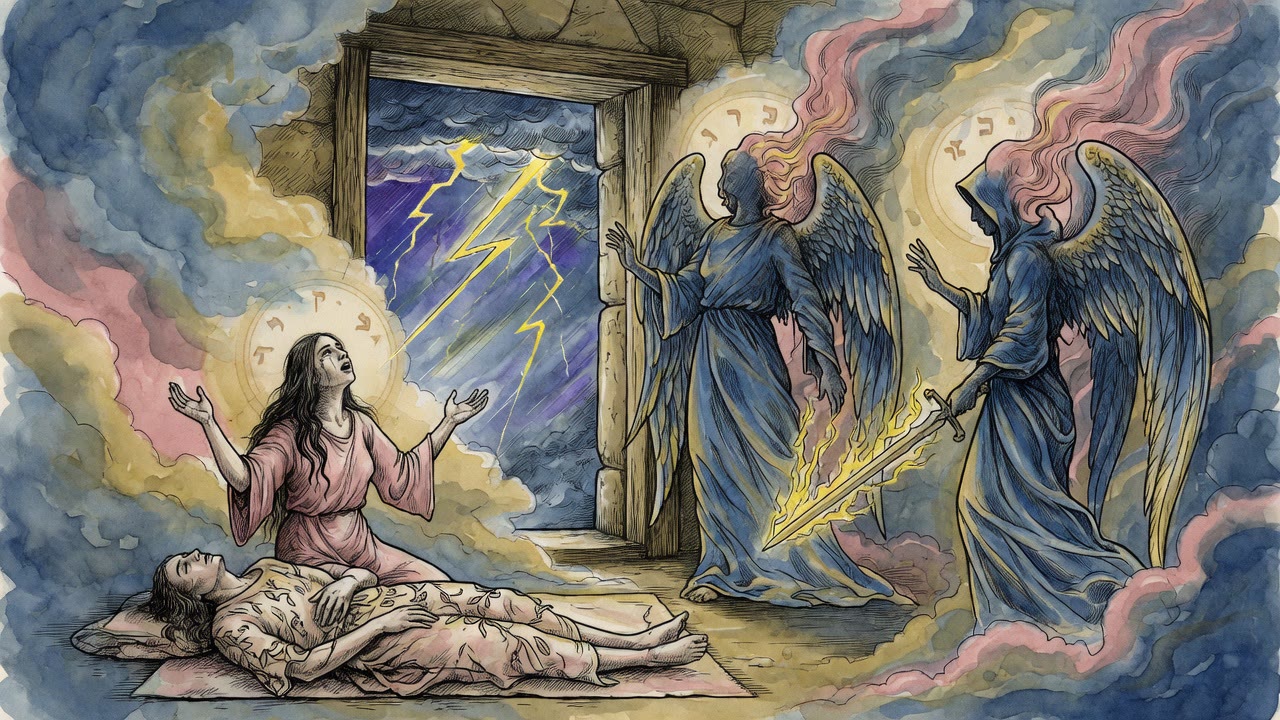
On the night Adam lay dying, Eve prayed the most desperate prayer in history. Every Friday night since, two angels stand at the door to see who is ready.
Rabbi Nachman of Breslov traced the root of every exile to a single crisis of faith, and found in the Land of Israel the only true cure.
The Torah says Isaac went out 'lasuach' in the field. One word. The Mekhilta spends three Psalms proving that word means prayer — the quiet, solitary kind no one else can see.
Jacob told Joseph he'd conquered land with 'my sword and my bow.' But Jacob was no warrior. The Mekhilta decodes these weapons — both of them point to prayer.
After twenty-two years of barrenness, Isaac brought Rebecca to Mount Moriah to pray. He returned to the place of his binding because he knew it was where God listened.
God closed Sarah's womb for decades, then opened it. Aggadat Bereshit asks the question most people avoid: why close it in the first place?
Rachel watched six sons born to her sister without complaint. Then something shifted. The rabbis say she was not jealous of children. She was jealous of righteousness.
Jacob fled Laban with everything he had built in twenty years. Laban chased him down in the mountains with murder in his heart. What happened next the Torah almost forgot to say.
The rabbis teach that Dinah was created male. It was Rachel's prayer, asking God for one more son, that transformed the unborn child into a daughter.
Sarah, Rachel, and Hannah were all barren, all desperate, all answered on the same day of the year. Bereshit Rabbah says God remembered them on Rosh Hashanah.
His name meant he will laugh. future tense. The rabbis said it was a prophecy with four installments, spread across a lifetime and beyond.
God told Abraham about Sodom because the land was his. That made him a party to the verdict. Abraham used the standing he was given to argue for the condemned.
Abraham promised guests a morsel and served a feast. He prayed for an enemy king. His unborn grandson's future merit saved him from Nimrod's furnace.
Abraham's father handed him idols to sell. Abraham turned every sale into a lesson that left buyers questioning whether gods were real.
Abraham kissed Jacob farewell and blessed him into the future. Decades later, Jacob found the Shekhinah waiting at every prayer.
The midrash says water rose for Rebecca at the well before she arrived. Bereshit Rabbah says her righteousness was recognized before she spoke a word.
After the Binding of Isaac, Abraham turned on God and demanded answers. The tradition says God remembered that argument in every future generation.
When a storm struck the Ishmaelite caravan, Joseph prayed for the men selling him. Then he trusted a butler instead of God and paid with two extra years.
The Torah never records Rebecca's death. The Book of Jubilees does, preserving a dying woman still working to protect the son she knew Esau intended to kill.
Sarah of Ecbatana had watched seven husbands die on their wedding nights. She prayed for death. God answered differently on the same day He heard Tobit's prayer.
When God swore by Himself at the altar, Abraham planted his feet and refused to leave until he had listed every unfulfilled promise between them.
Cain murdered his brother, argued God out of half his punishment, then built the first city. The rabbis made him a model of what prayer can accomplish.
Rachel was hungry for children while Leah was full of sons. The rabbis read Hannah's ancient song as the key to understanding why.
Before sending Benjamin to Egypt, Jacob prayed using a divine name the rabbis heard as a plea: enough. The prayer was also a trial -- and Benjamin passed it.
Nimrod devoured Abraham's harvest and called it conquest. But the Midrash names every tyrant who made the same mistake -- and tracks how each one lost.
Israel called God 'Father' and God challenged it. A parable about an orphan girl answered the challenge once and for all time.
Abraham complained to God that fathers and sons looked the same. By morning, his beard had gone white. He had mixed feelings about it.
Before Abraham was a patriarch, he was a fourteen-year-old who had already decided, alone and in silence, that the gods his father sold were frauds.
Abraham was trained as a Chaldean astrologer. One night he sat alone watching the sky to predict the rain, and talked himself out of the entire profession.
When God finally called Abraham, He restored Hebrew, the language of creation silent since Babel. Abraham had been praying in it before he knew the words.
Judith addressed her beheading prayer to the God of Simeon. That detail unlocks a much older story about rage, envy, and the defense of a violated woman.
Tobit prayed for death in Nineveh. Sarah prayed for death in Media. Both prayers reached the throne of glory at once, and one angel answered them both.
Noah built the ark, survived the flood, and wept at the ruins. Then God gave him the harshest rebuke in the story. He had never once prayed for anyone else.
When Hagar and Ishmael ran out of water in the desert, Hagar turned to the idols of her youth. Ishmael turned to God. The tradition records what he said.
The Jews of Hebron were one man short for a public prayer service. So Abraham left the Cave of Machpelah and showed up to fill the tenth spot.
The Tikkunei Zohar reveals that reciting the Shema morning and evening is not simply a declaration of divine unity. It is an act of testimony, a twice-daily vow of loyalty by Israel on behalf of the Shekhinah, swearing that she has not exchanged her husband for another.
Midrash Tehillim reads a cryptic Psalm verse about stripped straps as the story of Noah's tefillin being removed after the flood, because he prayed for himself but not for the generation he was meant to save. The image of the torn phylactery becomes a judgment about the limits of a righteousness that does not intercede.
In the first moments after creation, all the animals of the earth prostrated themselves before Adam as if he were their god. What Adam did next reveals the essential structure of Jewish theology: he immediately redirected their worship upward, and then led the first prayer the world had ever heard.
Isaac knew what Esau was. He had watched his son sell the birthright, marry foreign women, and abandon every obligation of the covenant. And still, on what the rabbis understood as the last day of his life, Isaac clasped Esau's head in his hands and begged God for his soul. The answer was no.
During a learning session, Rabbi Elazar ben Azaryah reclined for the Shema and Rabbi Ishmael stood up. Each was acting against his usual habit. Sifrei Devarim preserves the exchange that followed, which turns out to be about something much deeper than posture.
The Torah says to bind a sign on your hand, and the rabbis spent centuries arguing about which part of the arm that meant. Sifrei Devarim preserves the debate, and the answer involves a relationship between the arm and the heart that turns a legal dispute into a meditation on how the body prays.
Genesis 38 already contains one of the Torah's most stunning reversals. Targum Jonathan makes it more stunning still, identifying Tamar as a descendant of Noah's righteous son Shem, explaining why Judah's sons died, and describing how God intervened to save the lost evidence that proved her innocence.
Jacob's deathbed scene was not about blessing or inheritance. It was about one terrifying question a father could not take to his grave unanswered.
Joseph's story is told as a sequence of betrayals and rescues. But the Testament of Joseph and Ginzberg's Legends reveal the hidden engine beneath it all: a man who prayed without stopping, and a God who never stopped listening.
Leah was destined for Esau — until her tears carved a different path. Rabbinic tradition says those tears did not just soften one marriage contract. They rewrote the structure of the heavens.
When Judah condemned Tamar to burn, she refused to humiliate him publicly. Instead she prayed. What happened next — Judah's confession, the fire's retreat — became the model for how honest prayer changes the course of judgment.
God rebuked Noah for not praying before the flood. Rabbi Akiva laughed at foxes in the ruins of the Temple. Both men were learning the same lesson about when to speak.
Jacob received more direct divine assurances than almost anyone in the Torah -- and then spent twenty years in exile praying for their fulfillment. Ancient sources reveal how Jacob's prayer life transformed the patriarch into the model of every Jew who has ever cried out for a promise that seemed to have expired.
When Abraham asked God to let Ishmael live, Philo reads the plea as more than parental love. It is a theology of what it means to have a son who stands before you but was not the promise.
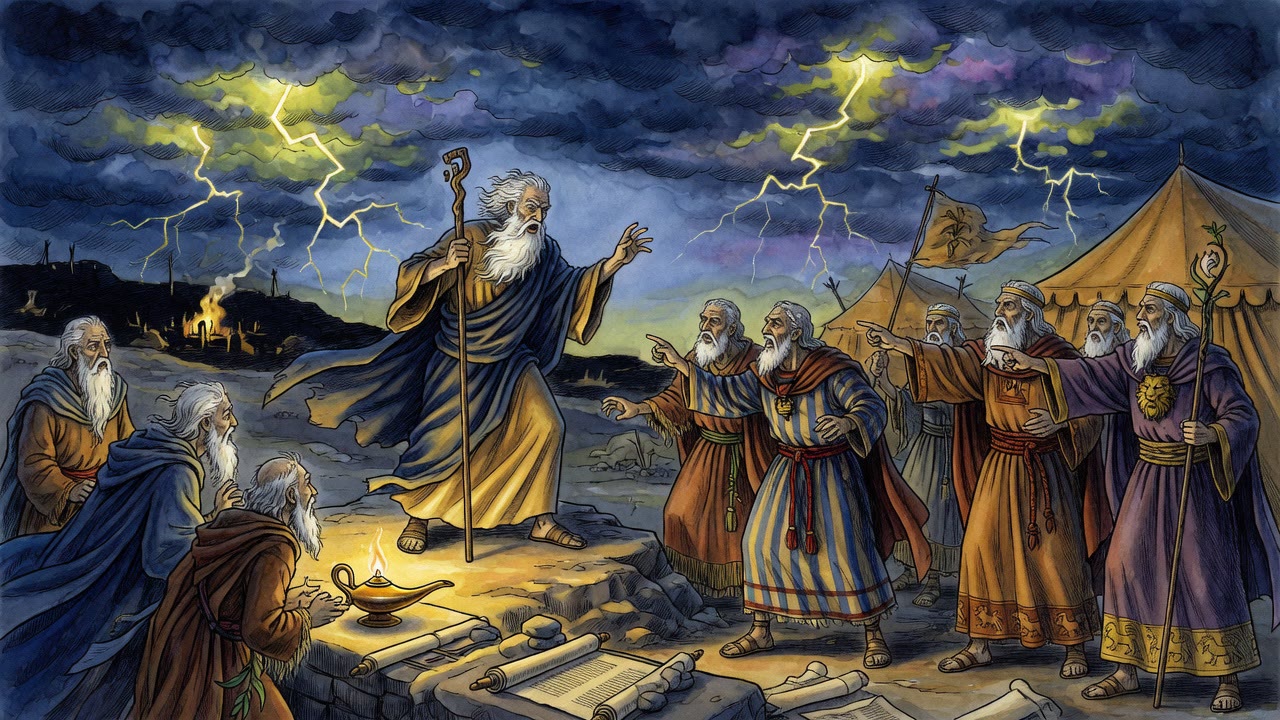
Moses set the incense test for morning. Korah spent the night canvassing every tribe, building a coalition far larger than Moses had seen before.
When Aaron died, Amalek saw the opening they had been waiting for. But they attacked in disguise, dressed as Canaanites, hoping to misdirect Israel's prayers.
Judaism has a name for when God seems silent and history seems abandoned — Hester Panim, the hiding of the Face. It's one of the most honest ideas in religious thought.
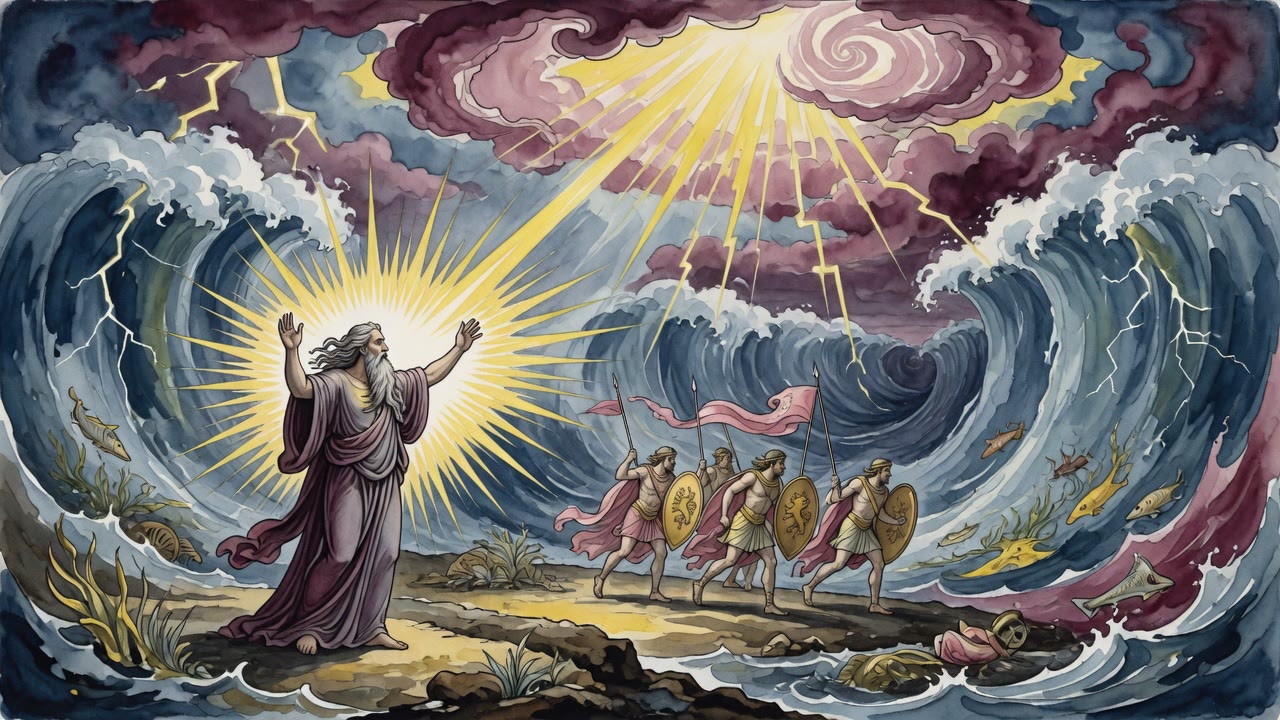
When the Egyptian army chased Israel to the sea, one side hurled curses. The other lifted songs of praise. The Mekhilta says this is what 'a high hand' actually means.
Jeremiah 17 draws the sharpest line in all of Scripture. Trust in man, you are cursed. Trust in God, you are blessed. The Mekhilta brings this verse to the edge of the Red Sea.
The Mekhilta describes Israel at the sea using an image from nature: a dove fleeing a hawk who finds shelter in a cliff where a serpent waits. Sea in front. Pharaoh behind. God watching.
From Abraham's dawn walk to the Binding of Isaac to the morning watch at the Red Sea, the Mekhilta traces a secret pattern running through all of Torah: God answers in the morning.
Moses did not beg God to save Israel from Amalek. He argued from God's own long-term plan, pointing out that if Amalek won, the Torah would have no one left to read it.
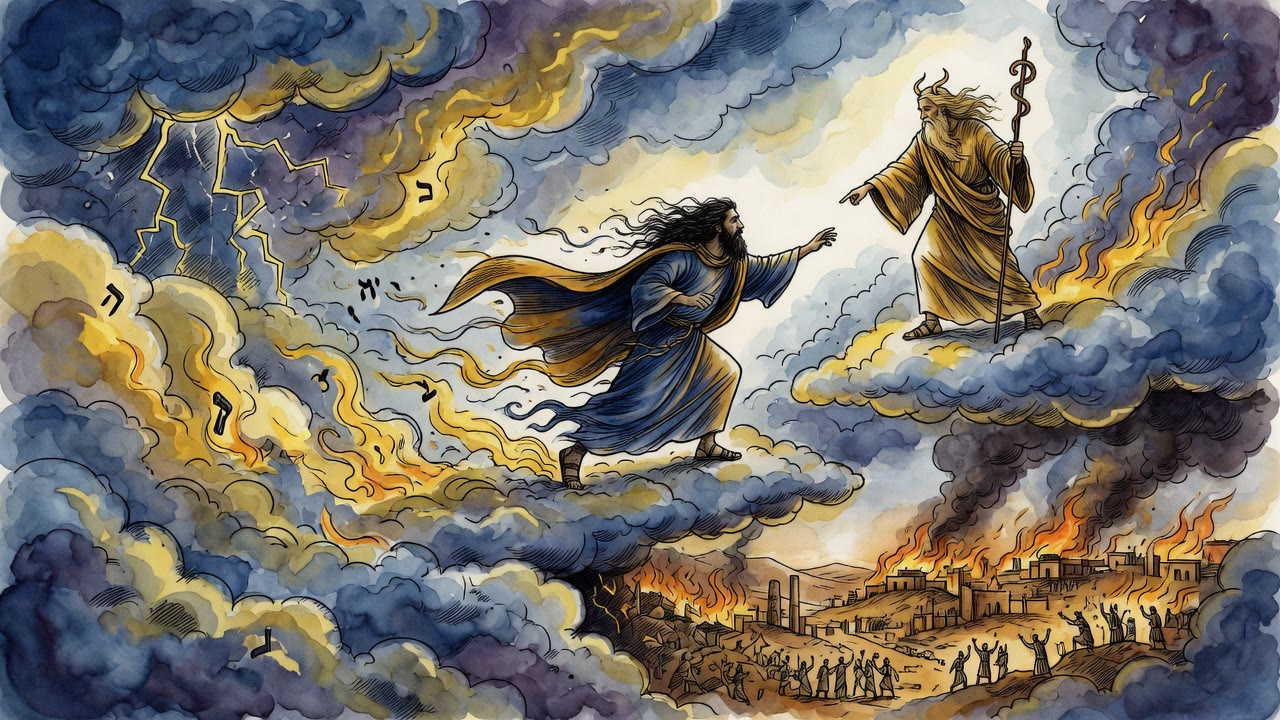
The Mekhilta describes a hidden rhythm between God and Moses: when one rises, the other falls. It is the mechanism by which Israel survived its worst moments.
In the wilderness, Israel looked at the barren ground and asked whether God could really feed them. The answer arrived before they finished asking.
Moses led Israel for forty years and never saw the Promised Land. The rabbis counted his prayers and found a number that explains everything - and nothing.
When God told Moses his time had come, Moses drew a circle on the ground and refused to move. What happened next shook creation itself.
Moses spent forty years leading Israel toward Canaan. The rabbis say he wanted three things with nothing to do with geography. and God granted two.
Five times Moses demanded answers from God directly. He did not always get what he wanted. But he always got an answer. The rabbis counted each one.
Moses told God to blot his name from the Torah if He would not forgive the golden calf. God refused the deal, but something in Moses's name disappeared anyway.
Pharaoh did not drown with his army. The rabbis preserved a stranger ending — and a prayer that Israel cried out at the sea that reframes the whole confrontation.
Moses prayed at the Red Sea like a shepherd at a cliff's edge, with no plan left. The rabbis say the same man had already written eleven psalms, prayers shaped for exactly this moment.
When Moses pleaded for a sinful Israel, the angels looked on in silence. The tradition says they had already learned that Moses's arguments had a way of...
Every time God announced a verdict on Israel, Moses found a counter-argument. The rabbis tracked these arguments and noticed something: Moses always started ...
When Israel stood at Sinai they were so holy they could have been immortal. Then they sinned, and the Shekhinah has been walking with them in exile ever since.
At the bitter spring of Marah and in the great prayer of Pirkei DeRabbi Eliezer, Israel discovers that confession and cosmic priority are the same argument.
When Moses raised his hands at Rephidim, Israel prevailed. When he lowered them, Amalek surged. The rabbis say the real battle was always about Torah.
Moses conquered two kingdoms and thought the decree was conditional. He knocked. He argued. He offered to cross the Jordan as bones. God refused everything.
At Sinai, God dressed as a prayer leader and showed Moses the thirteen attributes. Then Moses paused over 'let us make man' and asked God why.
Moses had been denied entry to the Promised Land. When he revealed the full depth of his longing, it was not for a reversal of the decree. Just a glimpse.
At Sinai, Moses was told to approach from a distance. Rabbi Levi Yitzchak of Berditchev read that instruction as a complete philosophy of how finite minds relate to infinite reality, and why both distance and nearness are necessary.
Rabbi Tarfon read a single Hebrew word in the manna passage and concluded that God personally extended His hand from heaven and delivered the bread. But the deeper claim was stranger still: the vehicle for that delivery was the ancient prayers of the buried patriarchs.
The Mekhilta preserves two interpretations of the quarrel at Merivah that are far more audacious than a simple complaint about thirst. Israel issued a philosophical challenge: prove you are the master of all creation, or we will not follow you. The rabbis argued about what kind of rebellion that was.
Moses stood at the edge of the land he had spent forty years leading Israel toward and prayed to enter it. The rabbis counted his prayers: 515 in total. God heard every one, and refused every one. The question the tradition asked is not why God refused, but what the refusal meant for the greatest prophet who ever lived.
Moses, the man who split the sea and received the Torah on Sinai, spent his final weeks composing plea after plea to enter the Promised Land. Sifrei Devarim counts the prayers. The answer was no every time.
Every time the Torah uses the name YHVH, it invokes divine mercy. Every time it uses Elohim, it invokes strict judgment. Sifrei Devarim teaches that Moses understood this distinction better than any prophet who came after him, and it changed everything about how he prayed.
When Moses declared 'When I call the name of God, ascribe greatness to our God,' Sifrei Devarim read this as a liturgical protocol established at Sinai. The congregation's response to the prayer leader is not courtesy. It is a cosmic event.
When Hobab refused to guide Israel through the wilderness, Moses made a plea that reveals how much even the greatest prophet depended on human knowledge. The Targum Jonathan expands the exchange into a portrait of humility and divine military technology working side by side.
On Yom Kippur, the high priest entered the Holy of Holies — a chamber so sacred that entering it incorrectly meant instant death. The rabbis say a rope was tied to his leg so his body could be retrieved if he didn't come out.
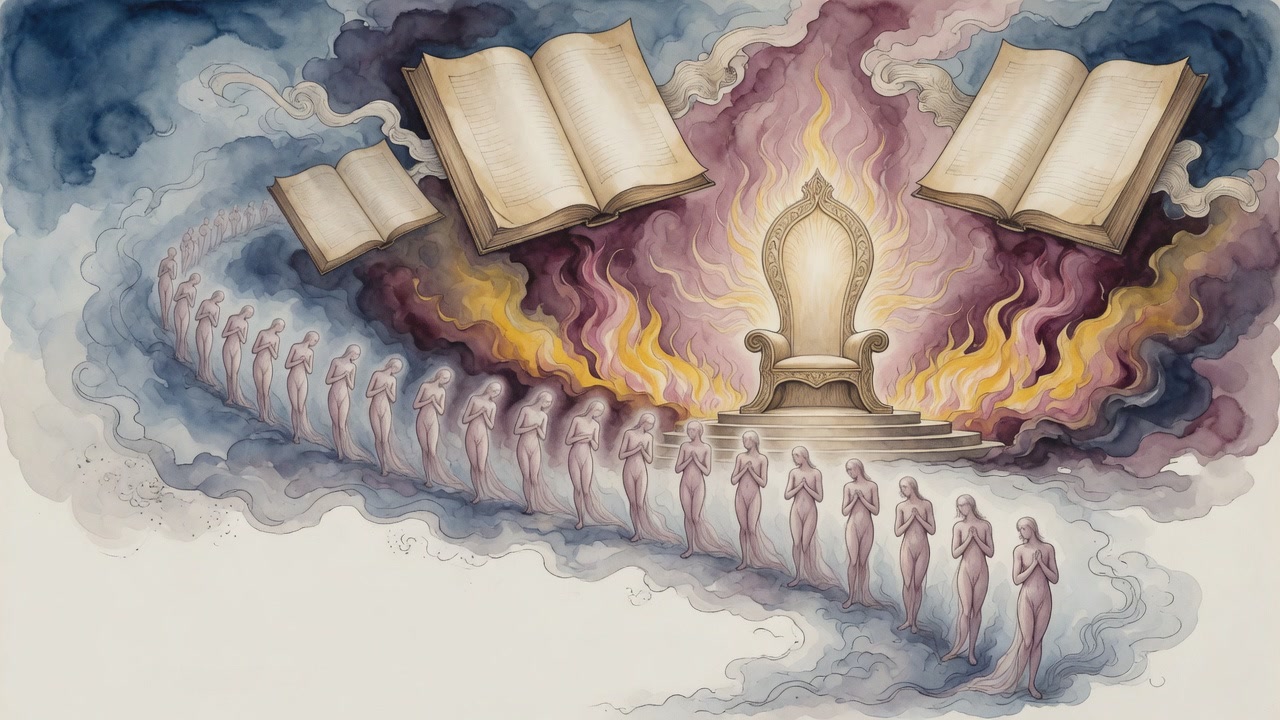
Jews wish each other 'may you be inscribed in the Book of Life' every Rosh Hashana — but what the rabbis actually believed about that book is stranger and more nuanced than a divine ledger.
Between Rosh Hashana and Yom Kippur, Jewish tradition holds that the heavenly books are open but not yet sealed — and those ten days are the most spiritually charged window of the year.
If a husband suspected his wife of adultery but had no witnesses, the Torah prescribed a ritual in the Temple involving holy water, dust from the floor, and a scroll dissolved in the water. God would decide the verdict.
Most people think the Priestly Blessing is a warm wish. The midrash says it is too dangerous to look at. Silver scrolls from 600 BCE carry the proof.
While ten spies built their conspiracy, Caleb slipped away to pray at the graves of the patriarchs. He needed help that only the dead could provide.
Deep in the Tabernacle stood a small golden altar used only for burning incense. It was never used for animal sacrifice. And according to the rabbis, no priest who entered the inner sanctuary without full authorization ever left alive.
Moses tried every angle to cross the Jordan — as a commoner, as a bird, underground. God refused each time. The Mekhilta records the negotiation that could not succeed.
God asked Moses to escort his brother to his death on Mount Hor without saying the words aloud. A midrash on the most painful errand of his life.
Rabbi Tarfon leaned close during the Temple service and caught something the High Priest was hiding. What he heard changed how he understood prayer forever.
Israel complained when Moses led them and complained when he didn't. The midrash tracks every grievance. And what it cost Moses to keep going anyway.
Two ancient enemies set aside their hatred when they realized Israel's strength was not military. It came from prayer, and they needed a mouth to fight it.
Phinehas divided his army into warriors, baggage-guarders, and pray-ers. Then he took up the gold plate that would bring Balaam crashing out of the sky.
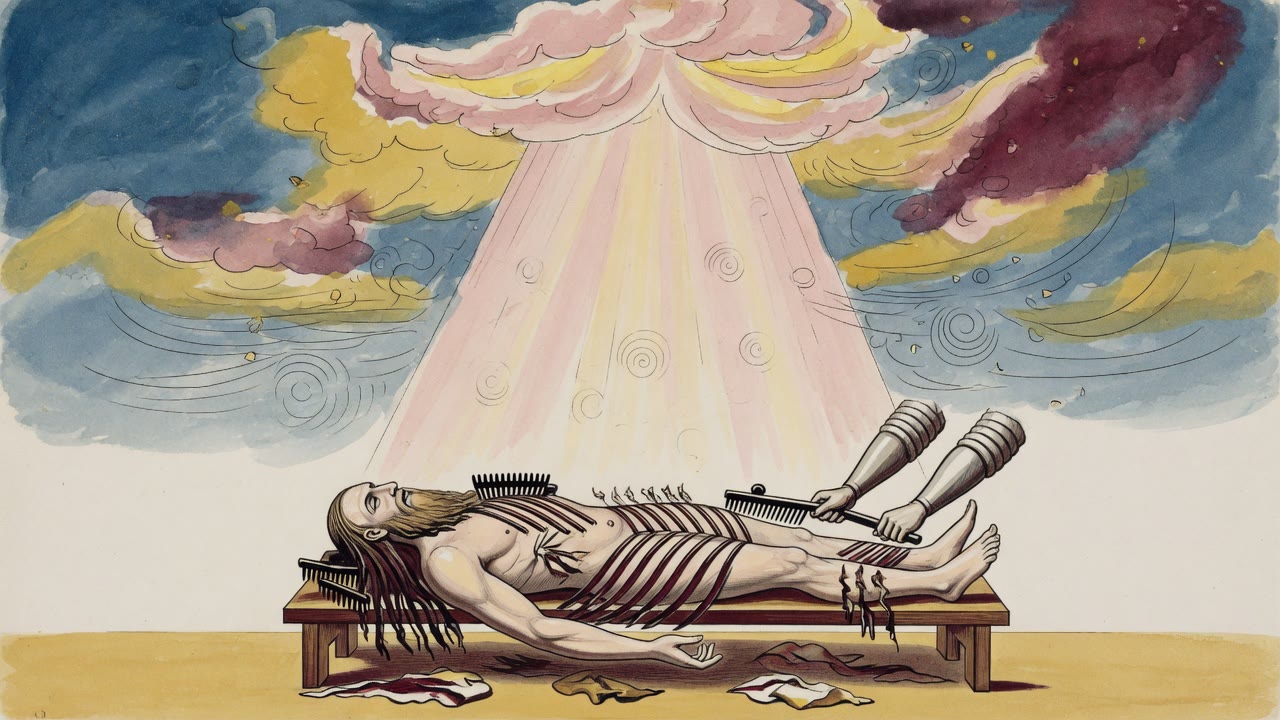
The Romans tore Rabbi Akiva's flesh with iron combs for the crime of teaching Torah. He smiled through it, recited the Shema, and died on the word 'One'.
On Simchat Torah, the final words of Deuteronomy are read aloud, and before the scroll can rest, Genesis 1:1 begins. The Torah never ends. The dancing never stops. The rabbis designed it that way deliberately.
Moses's dying blessing for Judah seemed to address a danger not yet come. The rabbis traced it to one terrifying moment at the Red Sea.
In his final hours, Moses didn't accept the fate of two tribes. He argued, pleaded, and refused to stop until God reversed what their sins had earned them.
Onkelos spent a lifetime correcting the Torah's anthropomorphic language. Then he reached the Shema and did not change a single word. That restraint tells us everything.
With one hour left to live, Moses petitioned the earth, the heavens, the stars, the seas, and his own successor. Every one of them said no.
God told Israel that a sigh is enough to reach the Throne. But the blessing it brings can only be received in one place on earth.
God told Israel that Torah study was the one thing no empire could defeat. The Zohar shows exactly how the Shekhinah falls when Israel stops holding her up.
The Shema is Judaism's central declaration of faith, recited twice a day for three thousand years. But Hillel and Shammai could not agree on the correct posture for saying it, and their dispute reveals a deeper argument about whether the body or the intention is the seat of religious obligation.
When God told Moses it was time to die, Moses drew a circle on the ground and declared he would not leave it until the decree was canceled. The decree was not canceled. But Moses argued anyway.
When enemy kings threatened Israel on the eve of Shavuot, Joshua waited, then answered with words that shook the ancient world.
When all the kings of Canaan allied to destroy Israel crossing the Jordan, Joshua prayed. The Mekhilta says the result was identical to the Red Sea.
After Joshua conquered Canaan, the son of one slain king united forty-five rulers against him and sent a letter: prepare for war in thirty days.
Before Jael drove the tent peg through Sisera's temple, she prayed three times. Each prayer was answered before she could finish asking.
After defeating Sisera, Deborah led Israel for forty years. Her last words were not comfort but a hard teaching about where power really lives.
Every time Israel was delivered, the righteous broke into song. Midrash Tehillim finds a law in that pattern and a parable in a tavern fight.
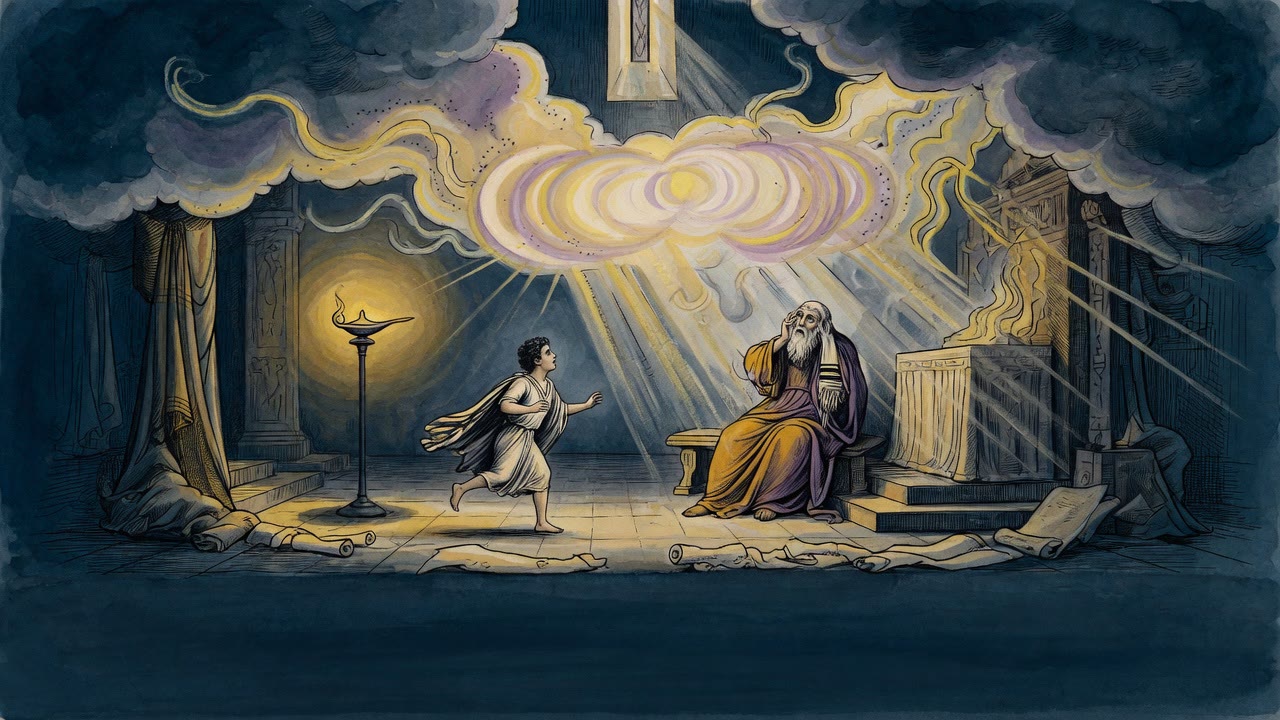
The boy Samuel heard his name called in the night and ran to the priest Eli three times before Eli understood what was happening. The midrash says even Eli's slowness to recognize God's voice was part of the plan.
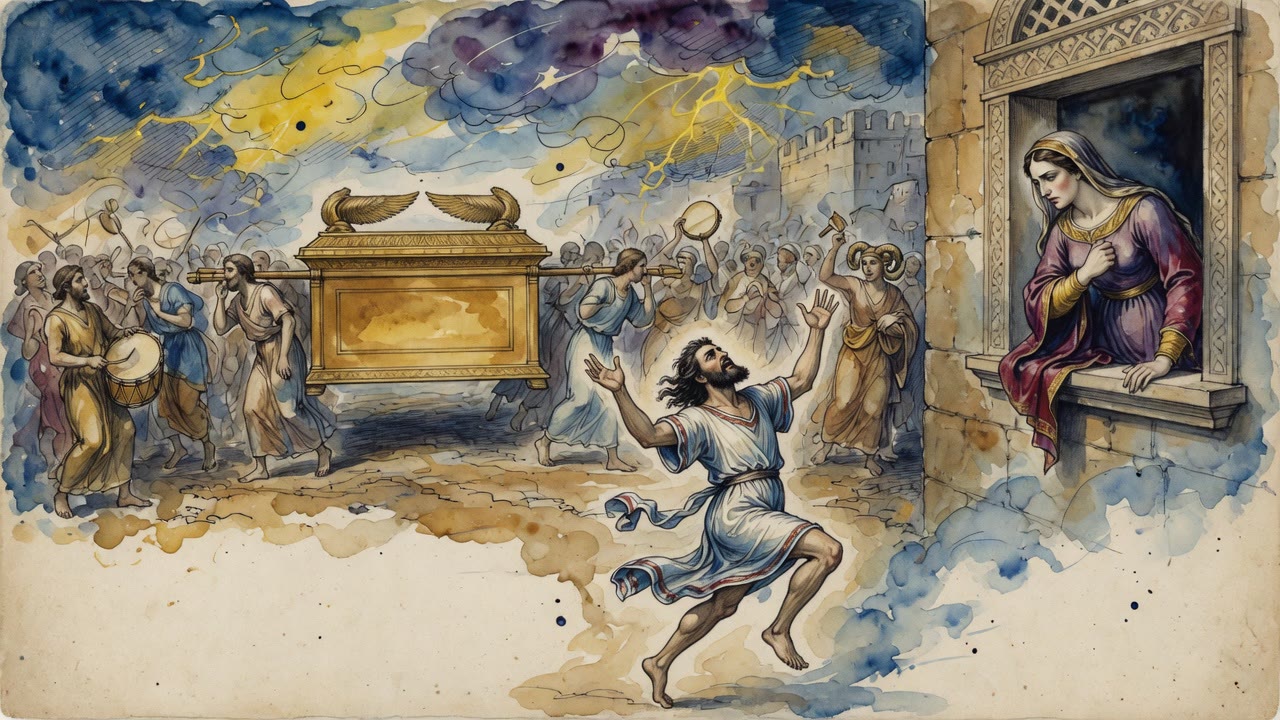
When the Ark of the Covenant was brought into Jerusalem, David danced with such abandon before God that his wife Michal, Saul's daughter, watched from a window and felt contempt. The midrash says the distance between their windows explains everything.
Psalm 22 begins with the most anguished cry in the Hebrew Bible — 'My God, my God, why have You forsaken me?' — and ends in ecstatic praise. The Midrash says David wrote it about his own life and about every Jewish exile that would ever follow.
Goliath walked out with three weapons. David walked out with one sentence. The rabbis said that sentence was heavier than anything Goliath carried.
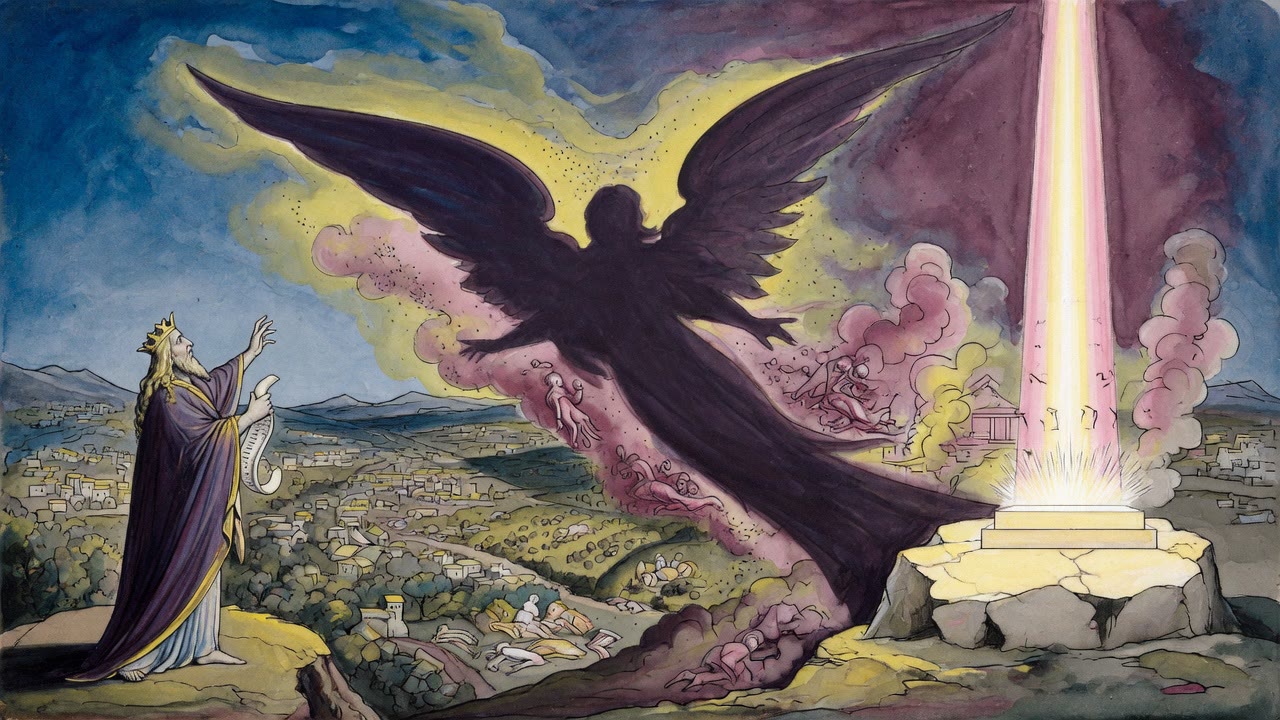
David counted his people without the Torah's required ransom offering. Seventy thousand died — and where the plague stopped became the Temple Mount.
A young man named Saul was hunting lost donkeys when he stumbled into a feast where no one could eat until the prophet arrived to bless the food.
The Midrash Tehillim makes a strange claim: tears can feed a person. Hannah proves it. Moses confirms it. Both are right.
King David admitted he could understand nothing on his own. What Midrash Tehillim reveals about the soul that leaks and the strength that fills it.
Psalm 145 is an alphabetical acrostic with twenty-one letters. The letter Nun is missing. The reason the rabbis gave would reframe a verse in Amos as a prophecy of hope.
Hannah didn't just pray for a son. She bargained, named the child she was asking for, and threw God's own promises back at Him. Aggadat Bereshit says she argued and prevailed.
The rabbis tracked divine response times from forty days to before the words leave your mouth. Moses, Jonah, David, and Elijah each got a different answer.
Three words in a psalm — 'until when' — launched centuries of rabbinic debate about whether God hears prayers from the lowest places.
Every time David sang a psalm, something happened in heaven. The Shekhinah ascended through his music, and God praised David in return.
Jonathan the Maccabee prays in the dirt while his army flees. David steps onto a battlefield no one sent him to. Two warriors with the same unlikely weapon.
The Shema promises rain in Marcheshvan for obedience and drought for idolatry. The Talmud says God multiplied commandments to refine Israel, not to burden them.
Israel pleads for salvation through God's righteousness alone. The midrash traces that prayer from David's psalms to the desert generation God carried.
The Talmud records that at each of the three night watches, God roars like a lion in grief over the destroyed Temple -- and also judges every living soul.
A blind exile, a goat given as wages, and a marital argument cutting to the bone. The Book of Tobit holds one of the rawest domestic scenes in ancient texts.
After years of exile and blindness, Tobit asked God to take his life. The prayer was answered, but not with death. God already had something else in motion.
When Tobiyyah left for Media, Hannah wept and could not stop. Tobit said an angel walked with the boy. She wept yet more. Both responses belong in the story.
Moses saw the future king standing alone against a giant and prayed for him centuries before David drew his first breath.
Samuel gathered all Israel at Mizpah and made them drink special water. Those who had worshipped idols found they could not speak. Then he called down fire.
Saul died a failure by political measure. In death, a heavenly voice called him God's elect. Even David was rebuked for speaking ill of the first king.
A king reduced to scratching walls and drooling. David once asked God what madness was for, and God told him he would one day beg for it.
After composing 150 psalms, David asked if any creature praised God more. A frog hopped forward with a pointed answer and three thousand parables.
The Temple was complete, the Ark was ready, and the gates refused to move. Solomon learned that some doors only open when you invoke the right name.
King Hezekiah preserved Isaiah and Proverbs for all time, then buried a book of medical cures. The rabbis praised both decisions equally.
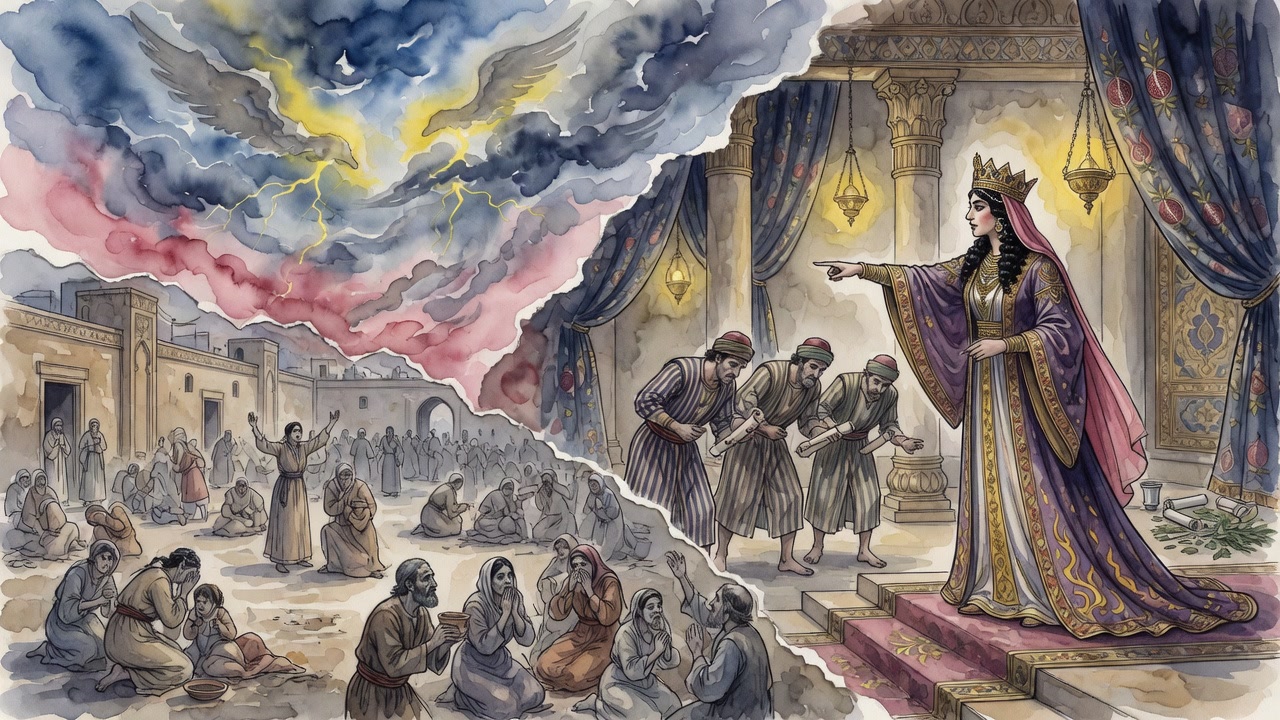
Esther froze with fear in the fourth chamber of the Persian palace. Haman's sons were already dividing her jewels. Then three angels arrived.
King David's declaration of his own worthlessness shocked the rabbis. But the Midrash Tehillim used it to build one of the most precise teachings in the Jewish tradition about humility, prayer, and what happens when you try to present yourself as more than you are.
When David prayed, he wasn't begging. He was arguing. The Midrash Tehillim preserves a remarkable teaching where David invokes his royal status to demand that God judge him personally, as one king addresses another.
Psalm 27 records David's famous request to dwell in God's house all his days, but Midrash Tehillim catches a contradiction: David immediately adds a second request. The rabbis use this small verbal slip to open a meditation on what it really means to long for the divine presence, and why God's answer surprised David more than his question surprised God.
Psalm 65 opens with a paradox: silence is praise to God in Zion. Midrash Tehillim connects this to Isaiah's description of God restraining himself like a woman in labor, holding back a cry. Two of Israel's greatest voices, David and Isaiah, converge on the same insight: sometimes God's power is most present in what is not said.
The rabbis of Midrash Tehillim saw in Psalm 119 a map of David's entire spiritual life, from his plea for divine attention to his struggle to keep his feet on the right path. They found there a teaching about how God and the human soul turn toward each other in a rhythm older than time.
Psalm 142 was written in a cave, with Saul's army searching outside. The rabbis of Midrash Tehillim found in that moment of total isolation something deeper than despair: the discovery that divine presence becomes most tangible precisely when every human protection has failed.
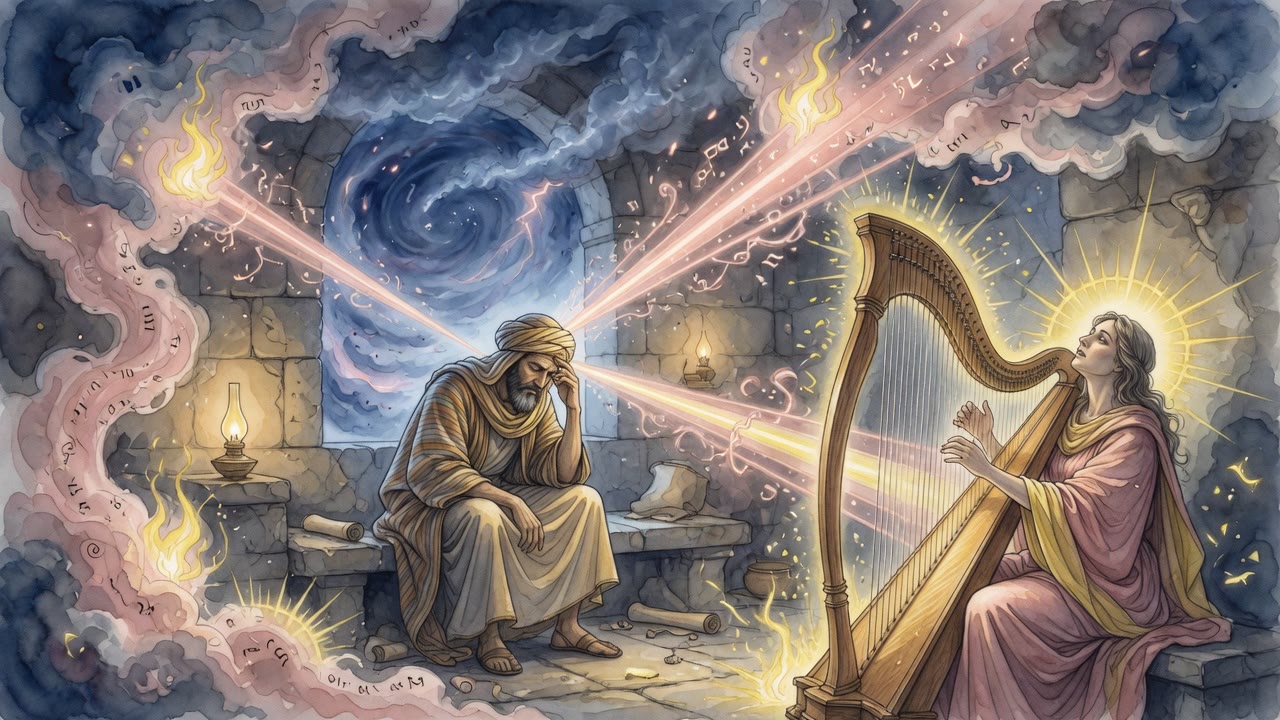
A harp hung above David's bed. When the north wind blew through it at midnight, the strings played by themselves, and David rose to write psalms until dawn. The rabbis found in this image a whole theology of how divine inspiration works.
Every night, David the king rose at midnight to give thanks to God. The rabbis of Pesikta DeRav Kahana asked why, and their answer revealed a compact between king and creator that began before David was born and continues to structure all of Jewish prayer.
God spoke to Samuel with an unusual message: you have positioned yourself between two paths of goodness. Pirkei DeRabbi Eliezer uses this moment to establish the theological geometry of righteousness, showing how the prophet who stood between prayer and charity became the model for a reward that belonged to anyone willing to stand in the same place.
Before Samuel executed Agag the Amalekite, he spent the entire night in prayer. Pirkei DeRabbi Eliezer preserves this detail as evidence that Samuel understood his act not as revenge but as the completion of a divine command, and why the prayer was itself the most important part of the execution.
David was not merely a poet who wrote about God. According to the ancient rabbis, his prayers had structural power: they could physically alter the heavenly realm, summon angelic intervention, and turn the tide of battle.
Hannah did not beg politely. She argued with God, made demands, and invented a form of prayer that Jewish tradition still uses today.
When Absalom died in rebellion against his own father, the tradition says his soul sank to the fifth gate of Gehinnom. What followed turns one of the Torah's most devastating stories into something the rabbis dared to call an act of love.
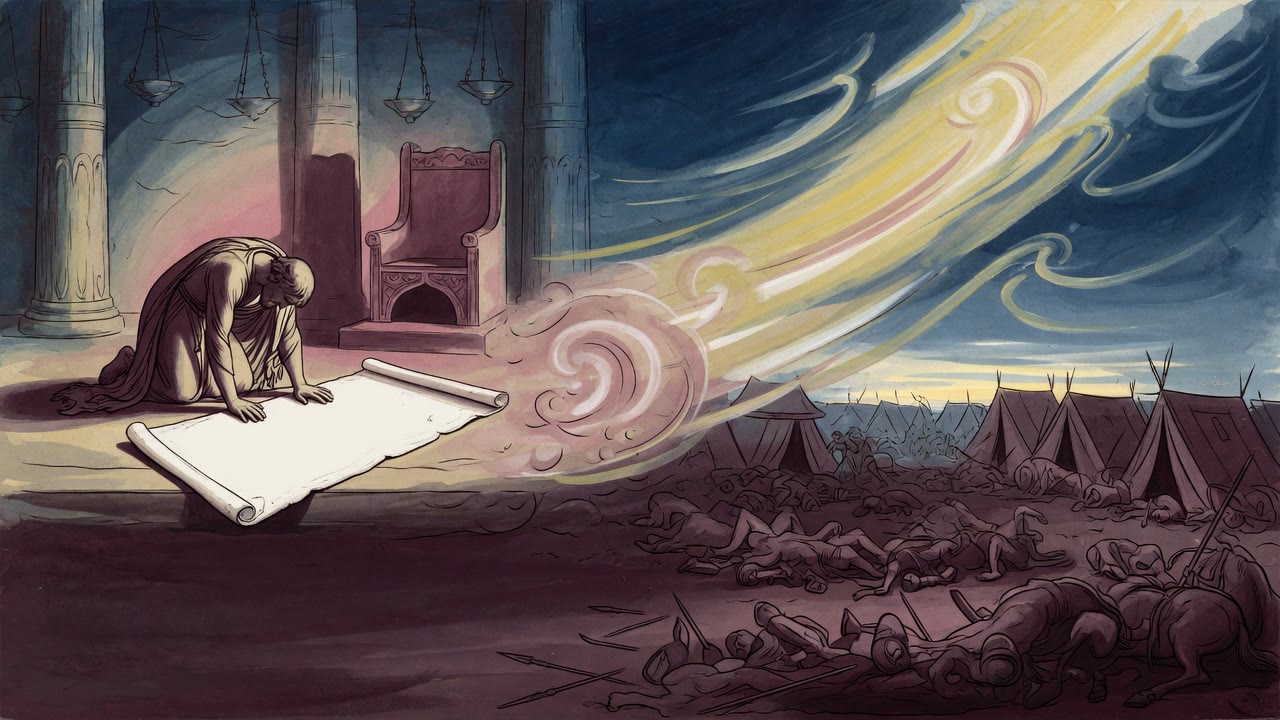
The Assyrian army was the largest military force the ancient Near East had ever seen, and it was camped outside Jerusalem's walls. Hezekiah went to the Temple, spread a threatening letter before God, and prayed. The next morning, 185,000 Assyrian soldiers were dead.
On his deathbed, David passed three secrets to Solomon: how to resist temptation, how to confess, and how to begin every prayer with praise.
When Elijah despaired and the decree against Israel seemed sealed, he ran to Moses. What happened next rewrote the meaning of intercession.
Rabbi Judah ha-Nasi discovered that the combined prayers of three righteous men could force the Messiah to arrive early. Elijah stopped him in the strangest way possible.
Elisha could not prophesy until a musician played. Midrash Tehillim finds in that moment a whole theology of how humans receive the divine.
Elijah could have prayed at any moment on Mount Carmel. He waited for the afternoon offering. The rabbis say this was no accident, and the hour explains everything.
Hezekiah defeated the mightiest army on earth and watched an angel destroy 185,000 soldiers overnight. Then he stayed silent. That silence cost him everything.
When God offered Solomon anything he wanted, Solomon asked for the ability to judge. The tradition noticed he could have asked for anything else. and spent...
The rabbis taught that Hezekiah was chosen to be the Messiah. He was turned away not for any sin, but for a single failure to sing.
Isaiah told Hezekiah he was dying. Before the prophet left the courtyard, God had already reversed the decree. The prayer that did it was unlike any other.
Solomon tested his flesh with wine and his heart with wisdom. The Zohar reveals he was mapping the path souls take to reach the King.
Elijah appeared daily at Rabbi Judah's academy. One day he arrived late, and the reason he gave shook the world to its foundation.
Elijah declared the drought. Then a widow's son died in his house, and God made clear the only way to save the child was to end the famine.
A medieval kabbalist conjured Elijah and asked how to defeat the Prince of Evil. He came within one act of succeeding. One mistake destroyed everything.
As a baby, Hezekiah was meant for sacrifice to Moloch. His mother saved him with salamander blood. He spent his reign proving the miracle was worth it.
A dying Hezekiah and the prophet Isaiah both refused to go first. Their standoff over protocol nearly cost Hezekiah his life, and then his afterlife.
King Josiah's inspectors toured every home in Judah and found no idols. They were being fooled. The trick was in the hinges.
Elijah looked for God in wind, fire, and earthquake. He found nothing. Then came a still small voice. The Zohar explains why only silence could carry the divine presence, and what that means for prayer.
Midrash Tehillim reads the opening of Psalm 42, 'as the deer longs for streams of water,' through the lens of Esther's hidden identity in the Persian court. The deer is not what you expect, the grammar is strange on purpose, and Solomon's Proverbs connects the thirst for God to the very survival of a people in exile.
A curious detail in Midrash Tehillim on Psalm 103 records that Rabbi Yannai resumed wearing tefillin in the afternoon after recovering from illness, following a tradition connected to Elisha. This small ritual act turns out to open a window onto how angels interact with human devotion.
God intended Hezekiah to be the Messiah. The sun moved backward for him. The dead were almost raised. What went wrong has haunted the tradition ever since.
The distance from earth to heaven is five hundred years on foot. Isaiah's great discovery was that God could be reached in a single breath.
Sennacherib marched on Jerusalem with the largest army the world had ever seen. What stopped them was not swords.
The Tikkunei Zohar says that when Israel prayed in the Temple era, every heavenly gate opened immediately. In exile, every gate is locked. The prophet Isaiah appears in this text not as a figure of the past but as the diagnostic voice explaining exactly what went wrong.
Every year on the ninth of Av, synagogues dim the lights, remove the Torah curtains, and have congregants sit on low chairs or the floor. Then, in near darkness, they chant Lamentations. The tradition has continued for nearly 2,000 years.
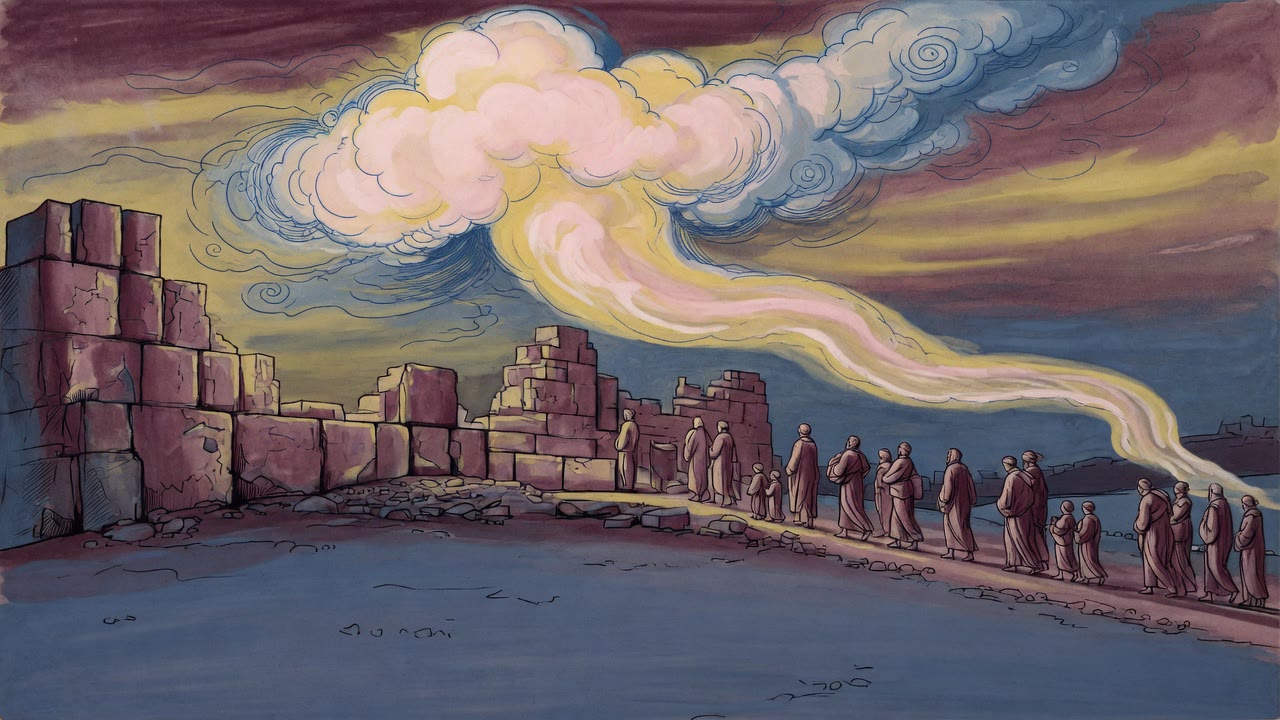
Moses said God's cloud traveled with Israel through the desert. Jeremiah said that same cloud now blocked every prayer. The rabbis asked what changed.
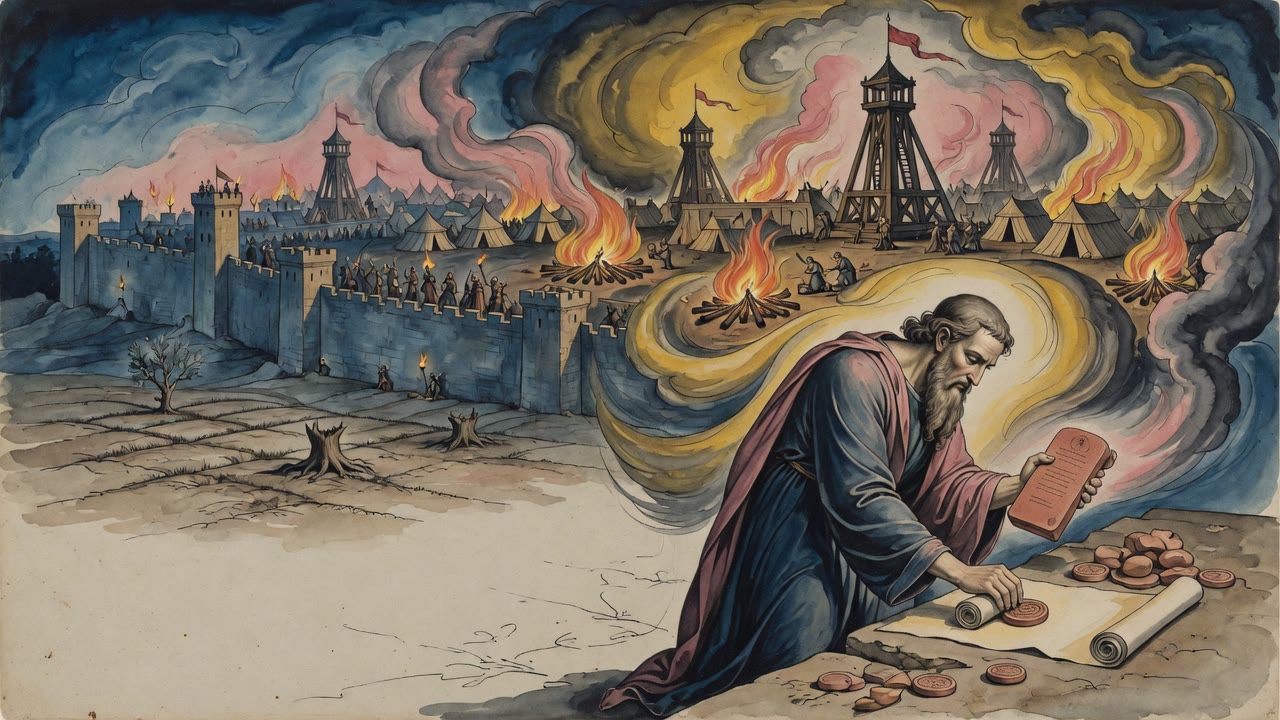
Standing in the ruins of Jerusalem, Jeremiah put four accusations to God. God answered two of them. The other two, Zion herself had to pursue on her own.
When Israel recites the Shema, the angels go quiet. Bereshit Rabbah and the Tikkunei Zohar reveal why Jacob's voice carries the weight of the entire cosmos.
When Ezekiel described the feet of the divine creatures as calf-like, the Kabbalists saw a teaching about standing in prayer. The feet that touch the ground carry the whole weight of heaven.
The Tikkunei Zohar reveals that while the earthly Temple stood and fell, Michael continued his service in the heavenly sanctuary, accepting Israel's prayers as offerings on an altar that fire never consumed.
Sandalphon stands behind God's throne, so tall his head brushes the highest heaven, gathering every prayer spoken on earth and weaving them into crowns. The Talmud says the angels cannot sing in heaven until Israel sings first. Sandalphon is the hinge between the two worlds.
Hosea's call to return reaches the Throne of Glory. The Shekhinah walks before Israel into battle. Both are the same Presence moving in opposite directions.
A ship, a staff, a moving grave. The rabbis hid serious theology inside riddles that look like wordplay. The answers reach much further than the questions.
Jonah spent three full days inside the great fish without praying once. God had to send a pregnant fish and Leviathan himself to motivate him.
Habakkuk was preparing stew for his field workers. An angel arrived, seized him by the hair, and transported him to Daniel's lion's den.
When Mordecai called the three-day fast, he did not cite a Jewish precedent. He held up Nineveh as the model for what complete repentance looked like.
The sailors on Jonah's ship tried everything before they resorted to casting lots. Pirkei DeRabbi Eliezer shows a careful moral accounting: every nation on the ship prayed to its own god, every prayer failed, and only then did the storm force the question of who had brought this trouble aboard.
Two of Israel's wisest men — Solomon and Daniel — each found themselves pleading for divine mercy on behalf of a people under judgment. The arguments they made reveal everything about how the rabbis understood prayer.
A 2nd-century rabbi taught that God follows the people wherever they pray. Even one person alone in a room draws the Shechinah near.
Every nation seemed to prosper while Israel suffered. The Midrash Tehillim puts that raw complaint into God's ears and dares him to answer.
The rabbis saw a hidden pattern in the lions' den. God did not simply protect Daniel. He matched power for power, lion against lion.
When Roman soldiers raked iron combs across Rabbi Akiva's flesh, his students expected screams. Instead, Akiva began reciting the Shema. He had been waiting his whole life for this moment.
David scaled walls by God's strength and cried out twice before he asked once. Midrash Tehillim shows a king who learned to pray from failure.
David praised the heavens before he asked for anything. When God asked what he needed, he asked for forgiveness for sins he did not even know he had committed.
Why does Scripture say God watches only over Israel when He watches every living thing? The rabbis found a paradox that resolved itself into a promise.
After the Jews of Susa were saved, Mordecai rode through the city and every voice -- including Haman's -- joined together in Psalm 30.
Psalm 88 is the darkest psalm in the Hebrew Bible. It ends without resolution, without hope, without even a request for relief. The rabbis saw in its darkness not despair but the very floor of Jewish survival.
All three demanded answers from God. Only one was told to stop asking. The rabbis were fascinated by who got away with it and who did not.
Midrash Tanchuma identifies five exact correspondences between the human soul and God. David discovered them and made them the basis of his most famous psalm.
Midrash Tanchuma finds five correspondences between the soul and God. David discovered them and built his most famous psalm around them.
The rabbis of the Talmud could not agree on when God judges a person. Their debate reveals four different theologies of divine accounting.
Two men faced the same question about divine fairness. One demanded an answer. One collapsed. The rabbis recorded which approach God rewarded.
Balaam could not curse Israel, but he found something more effective. Pirkei DeRabbi Eliezer reveals the strategy he devised at Moab, a calculated seduction into idolatry that succeeded where every direct attack had failed, and why the rabbis considered it one of the most dangerous plots in the entire wilderness period.
Song of Songs was almost excluded from the Hebrew Bible. Rabbi Akiva saved it by declaring it the holiest book in all of scripture. The entire debate turned on whether its love poetry was literally about lovers — or metaphorically about God and Israel.
The Letter of Aristeas records a table conversation about truth and mercy that sounds, in every way, like Ruth's answer to Naomi on the road from Moab.
In the wilderness, God's cloud hovered over Israel as shelter and protection. After the Temple fell, Jeremiah said a cloud screened God away so no prayer could pass through.
Esther Rabbah reveals the humiliation scene of Purim in granular detail — Haman as bath attendant, Haman as barber, Haman on all fours so Mordechai could mount his horse.
When Haman's decree threatened every Jew in Persia, Esther made a decision that shocked even Mordechai — fast through Passover itself.
Facing genocide, Esther did not simply ask God for help. She reminded God of the covenant with Abraham and demanded He honor it.
The Tikkunei Zohar hides a map of the entire structure of prayer in a single verse from the Book of Esther. Three movements. One unbroken conversation.
Mordecai hid Esther's identity for layered reasons, and the heavenly trial of his loyalty showed his modesty was exactly what God had been watching for.
Mordecai answered a simple question about bowing with a speech on creation so vast that Haman's eventual humiliation was already embedded in the answer.
Mordecai dreamed of a snake destroyed by a hurricane. He sent Esther to the king, and she invoked the patriarchs before the holy spirit withdrew.
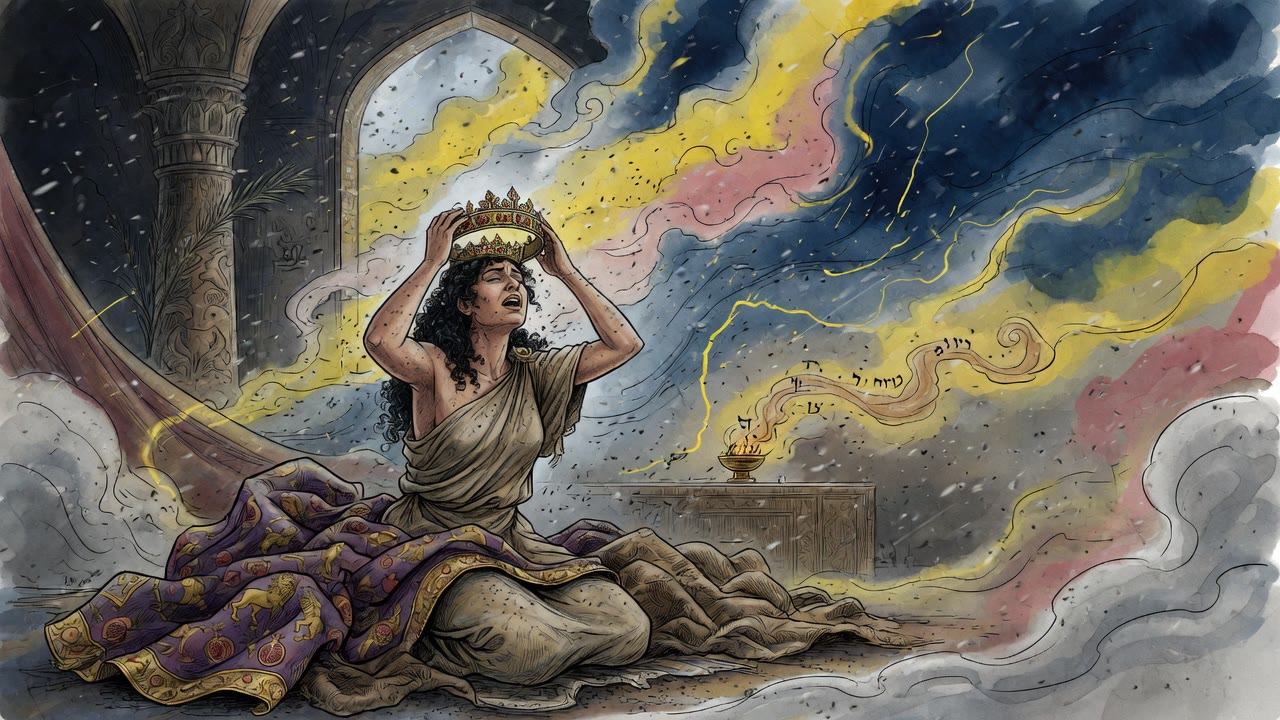
Esther removes her royal garments, covers herself in sackcloth, and prays with the desperation of someone who has nothing left to lose -- because she doesn't.
Before Esther could save her people, God had to remove the queen who came before her. He sent seven angels to make Ahasuerus act like a fool.
Mordecai's speech before the fast named every protection that was gone. No king, no prophet, no escape. Then he asked the people to pray anyway.
When the decree went out, Mordecai did not only fast. He challenged God directly, invoking the covenant and demanding to know why Israel had been abandoned.
When Haman killed their go-between, God sent Michael and Gabriel to carry messages between Mordecai and Esther in the Persian palace.
Before Esther walked into Ahasuerus's throne room, she prayed not as a queen but as a woman who knew exactly what she was risking.
Esther could have revealed Haman's plot immediately. Instead she invited him to a banquet. The rabbis spent centuries debating why.
In the middle of Mordecai's triumph through the streets of Shushan, Haman's daughter made one catastrophic mistake of identity.
After Purim, Esther petitioned the sages to add her story to the Hebrew Bible. They refused twice. Then she quoted Moses at them.
The rabbis of Pirkei DeRabbi Eliezer did not take Mordecai's name at face value. They unpacked it syllable by syllable and found inside it a portrait of the man who would save his people, from the scent of his prayers to the ancestors who complicated his reputation.
When word of Holofernes spread across Judea, every city fell silent. The priests fasted and the people wept, terrified the Temple would burn next.
Nebuchadnezzar built a golden idol that could speak the divine Name. Daniel dismantled the whole illusion with a single request.
God charged Daniel with persuading the Persian king to let Israel return home. The plan worked. Then someone threw Daniel to the lions anyway.
The rabbis found a puzzle in the verse commanding Israel to serve God with all their heart. What does service in the heart mean? Their answer, preserved in Sifrei Devarim, identified prayer as the interior form of the Temple service, and Daniel as the model of someone who proved it under the most extreme conditions.
The month before Rosh Hashana isn't just preparation — it's a 29-day spiritual alarm system designed to jar people out of spiritual sleep before the gates of judgment open.
On Hoshana Rabbah, the willow branch — the one plant in the four species with no taste and no fragrance — is beaten against the floor alone, without the others. The rabbis say it represents sinners. And God loves it most.
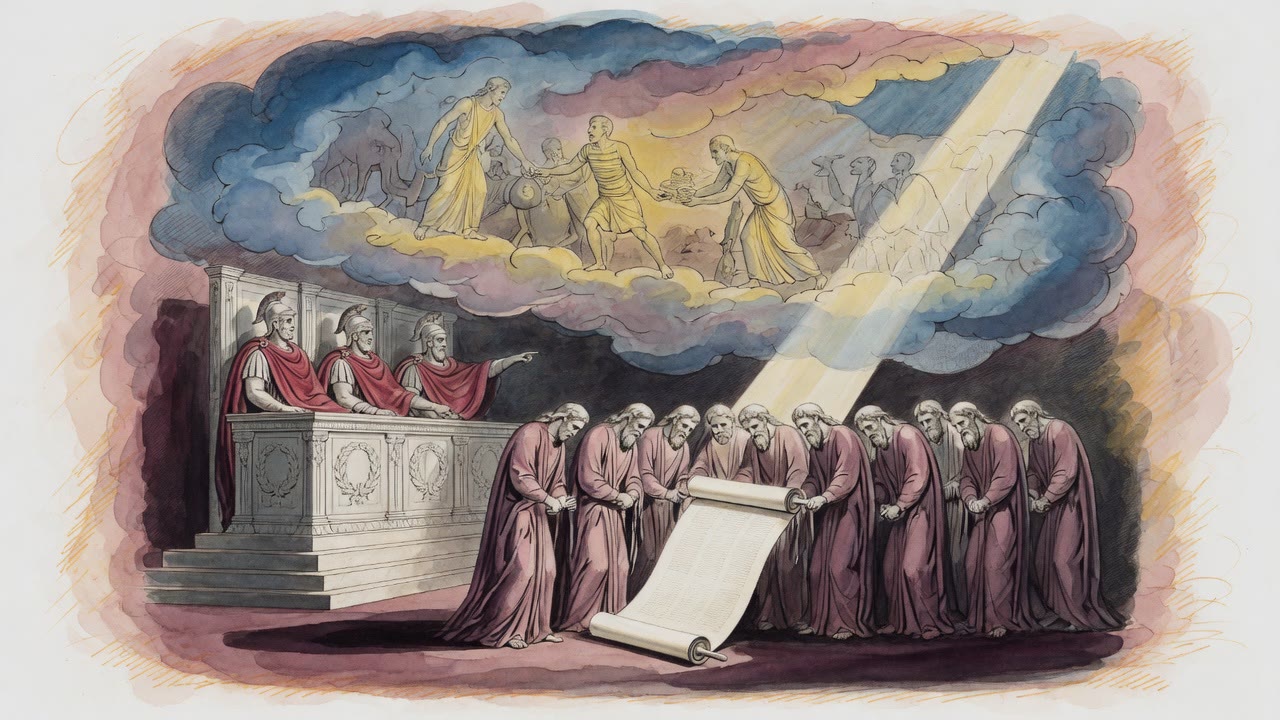
The ten sages executed by Rome were not killed for rebellion or insurrection. According to the tradition, they died for a crime committed by Jacob's ten sons 1,500 years earlier — and the Roman emperor used the Torah's own law to justify it.
The 13 Principles of Faith are printed in nearly every Jewish prayer book — but when Maimonides first proposed them in the 12th century, some of the greatest Jewish scholars rejected them outright.
The eight-day Sukkot festival ends with a holiday that has almost no laws of its own. Shemini Atzeret exists for one reason only — because God could not bear to say goodbye.
Pirkei Avot — Ethics of the Fathers — is six chapters of aphorisms from ancient rabbis. It is the only tractate in the Talmud with no legal content at all. And it is the one Jews read every Shabbat between Passover and Rosh Hashana.
In the Talmud, there is a passage where God regrets creating the evil inclination. The rabbis do not treat this as a philosophical problem. They treat it as one of the most important things God ever said.
An ancient rabbinic teaching lists four actions that can cancel a sentence already written in heaven. A fifth was added later, and is stranger still.
Rabbi Shimon bar Yochai needed Rome to rescind its decrees against Israel. His ally was Ashmedai, king of the demons. What happened next went far beyond politics.
Rabbi Akiva died smiling. Before that he asked Rabbi Shimon bar Yohai to pray for his death. The Mitpachat Sefarim explains what the request meant.
When the Temple fell, the rabbis faced an impossible question: how does Israel speak to God without a place to stand? Rabbi Akiva found the answer hidden inside a single psalm.
Most people assume Shammai was simply stricter than Hillel. But the debate over the Shema posture reveals something more precise: Shammai was making a claim about the body as a sacred instrument, not just a container for spiritual intention, and the patriarchs were his evidence.
When you appeared before God at the Temple, you could not come empty-handed. But how much was enough? The schools of Shammai and Hillel debated the minimum offering required, and underneath the numbers was a disagreement about what the appearance itself was for.
The greatest sage of his generation could not heal his own son. The reason he gave explains everything the rabbis believed about prayer, authority, and the difference between knowledge and intimacy with God.
The Zohar is the holiest text of Jewish mysticism. Even devoted readers noticed certain passages were different -- and the Mitpachat Sefarim said so out loud.
When Torah says Moses looked 'this way and that' before striking the Egyptian taskmaster, the Tikkunei Zohar reads it as a devastating social critique: Moses scanned an entire society and found no one who cared about doing right.
Most people have never heard of Sandalphon, the angel standing taller than a five-hundred-year journey, whose sole task is to weave human prayers into a crown for God. The Tikkunei Zohar reveals what happens to your words after you speak them.
The Tikkunei Zohar finds the architecture of the Jewish prayer service hidden in a single Hebrew letter, Vav, and traces its pattern back to Abraham. The discovery changes how the daily Amidah prayer looks when you understand what it is actually doing.
Jewish tradition maps the cosmos into seven layered heavens, each with its own purpose and its own angelic staff. Michael, prince of the highest heaven, does something no one expects of an archangel: he collects human prayers and brings them before God like an offering.
On Yom Kippur, the High Priest Rabbi Ishmael ben Elisha entered the innermost sanctuary of the Temple. He expected to offer incense before God. Instead, God asked him for a blessing. What he said has been recited every morning since.
A medieval Kabbalist writes to a colleague who suggested that divine agents deserve worship. His response uses the sun, the moon, the earth, and Sinai to shut the argument down.
The rabbis silenced anyone who said the prayer word Modim twice. Their reason reveals how a single repeated word could crack the foundation of Jewish theology.
Rabbi Israel Baal Shem Tov upended 18th-century Jewish life with a radical claim — that joy in God's service was not just permitted but required, and that depression could close the gates of heaven.
The Hasidic master whose followers still make pilgrimage to his grave in Ukraine taught a paradox — that joy and a broken heart are not opposites but the same thing seen from two different angles.
After the Baal Shem Tov died, one disciple had the task of turning a charismatic teacher's legacy into a living tradition — and the Maggid of Mezeritch succeeded beyond anyone's imagination.
The Amidah — the prayer Jews stand to recite three times a day — was not composed spontaneously. It was a deliberate engineering project designed to replace what fire had destroyed.
At the end of Yom Kippur, when the last light is fading and the fast has gone on for 25 hours, Jews stand for one final prayer — because the gates are closing and there is still time.
The most famous melody in Jewish liturgy is recited three times as the sun sets on Yom Kippur — but most people don't know it's a legal declaration, not a prayer, and has nothing to do with God.
Kol Nidre is not a prayer. It is a contract annulment — a legal formula recited in court language before a rabbinic tribunal. The melody that makes grown men weep was attached to a cancellation of vows.
The white robe Jewish men wear on Yom Kippur is called the kittel — and it is identical to Jewish burial shrouds. Standing in synagogue on the Day of Atonement means standing in the clothing of the dead.
The Hallel — Psalms 113 through 118 — has been sung at every Jewish deliverance since the parting of the Red Sea. The Talmud says the Israelites sang it while the sea was still splitting. The rabbis debated why it is not said on every holiday.
The Musaf prayer on Yom Kippur contains a word-for-word description of the high priest's service in the Temple — the goats, the lottery, the blood, the incense, and the prayer in the Holy of Holies. Jews have been reciting this description for two millennia without the ability to perform it.
The Jewish New Year is not a celebration of another year — it is the day all of humanity passes before God's throne one by one, like sheep counted before a shepherd.
Tobit the exile stood before God with nothing but a record of righteous deeds and a prayer spoken in darkness, and the decree against him bent.