David Prayed He Would Not Fall and Would Not Kill
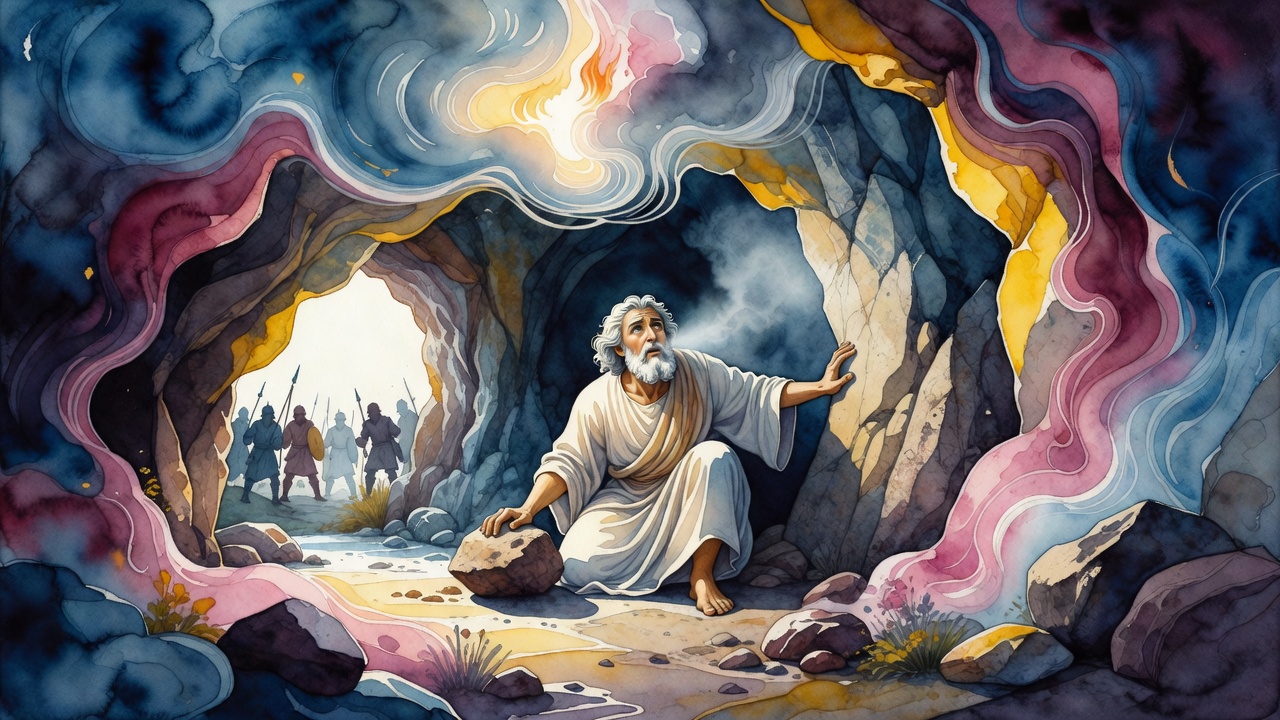
In the cave he said the same words twice. First, that he not fall into the enemy's hand. Then, that the enemy not fall into his.
Table of Contents
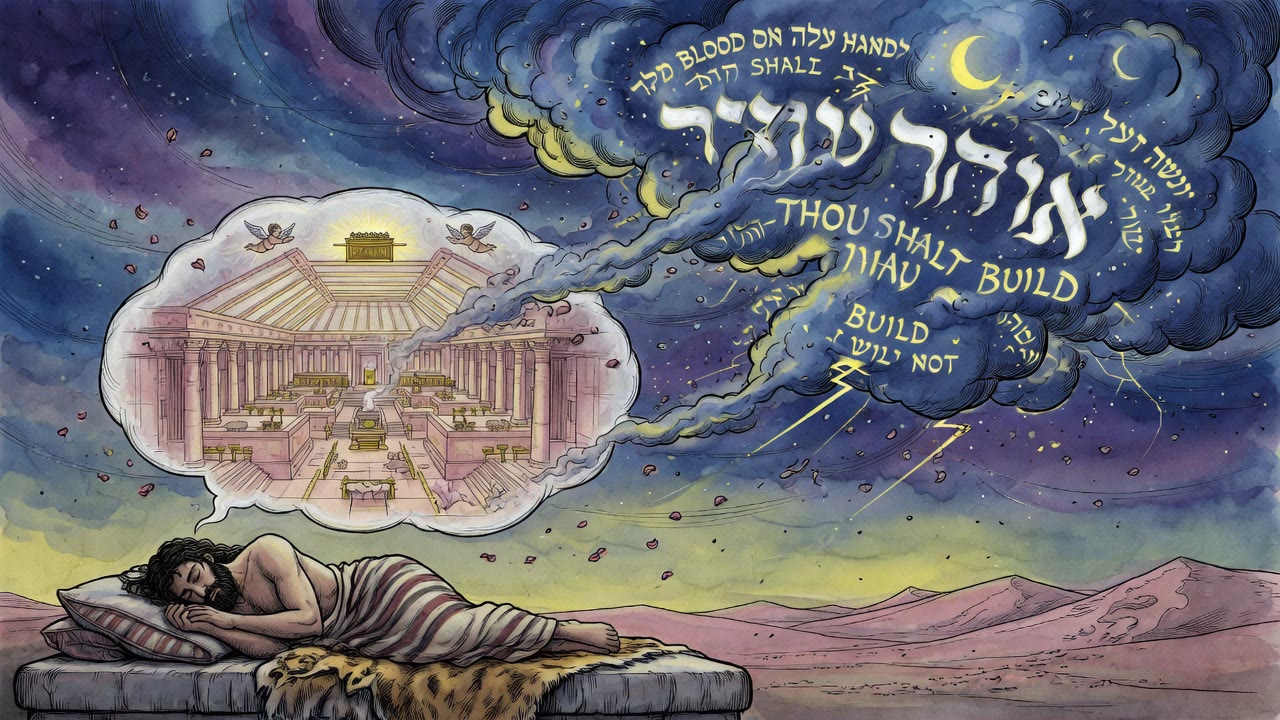
The Jebusite wall had never fallen. Every army that came at it went back empty. David stood under it and made a wager. Whoever climbed first and reached the tower would be chief (1 Chronicles 11:6). The city had been built around a water shaft, a hidden spine up through the stone. Find that, and the wall had a weakness. Yoav found something else.
 Click for full size
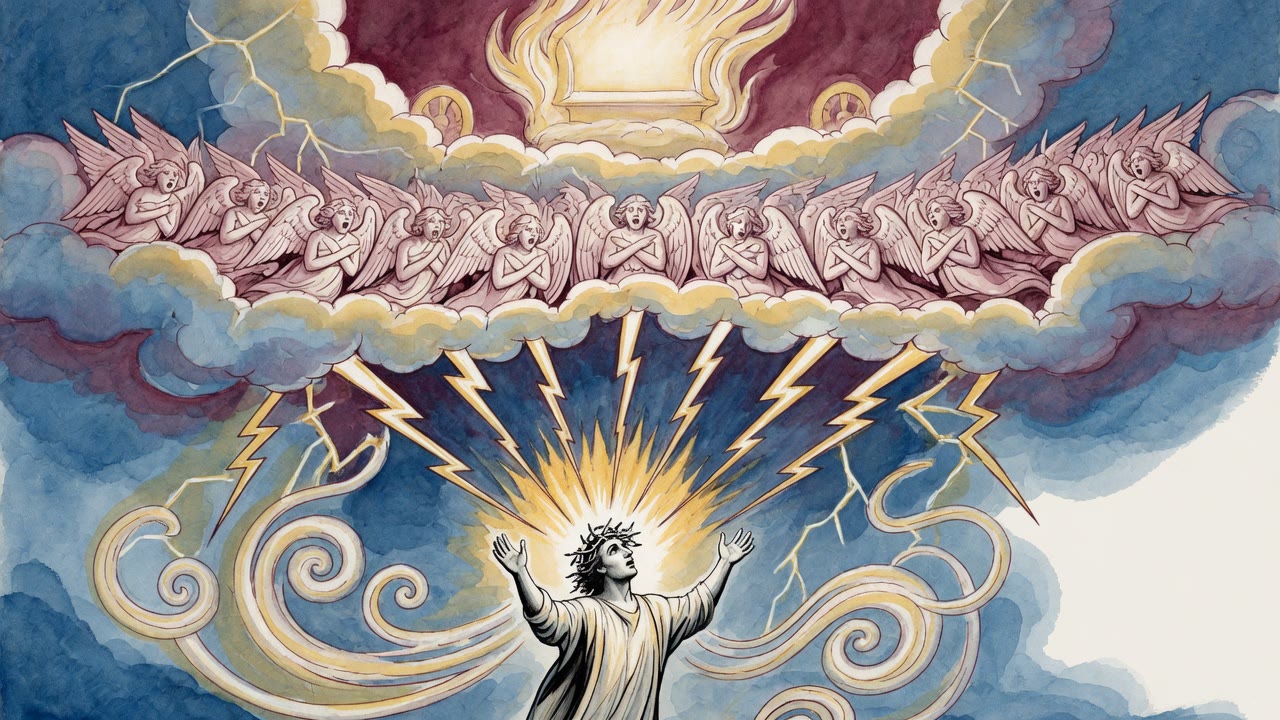
He brought a fresh cypress and fixed it next to the wall. He bent the flexible head of the tree back, climbed onto David's head, grabbed the top, and swung onto the rampart. David felt the weight leave his scalp and looked up at his own general standing on a wall no one had ever stood on.
The Wall Came Down Behind Him
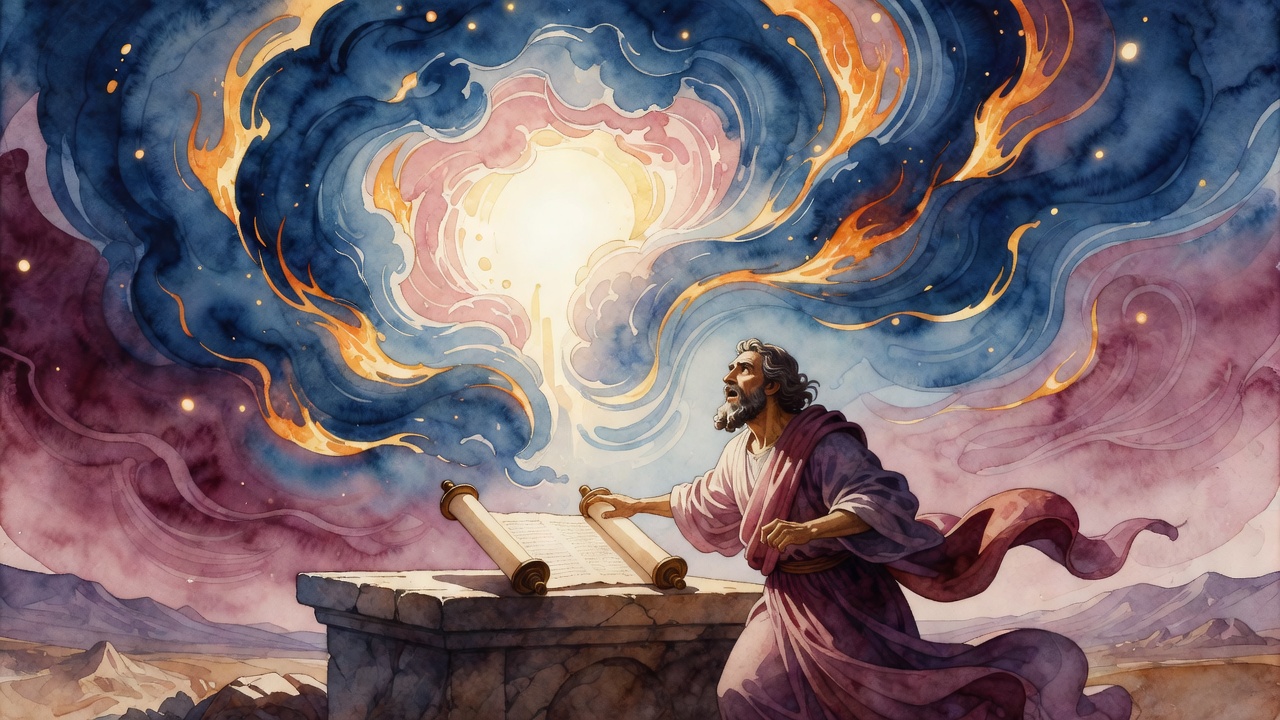
The Holy One lowered the wall. David went up after Yoav, onto stone that had just been out of reach. "By my God I scale a wall," he wrote (Psalm 18:30). Not by Yoav's nerve. Not by the cypress. Not by the wager. The general did the climbing. The force that opened the way was not his.
David wrote that down. He had watched a tree bend, a man use his king's head as a step, and a wall drop because God chose to drop it. After that he did not trust a shaft, or a wager, or his own arms, the way he had on the morning he arrived.
Barefoot on the Mount of Olives
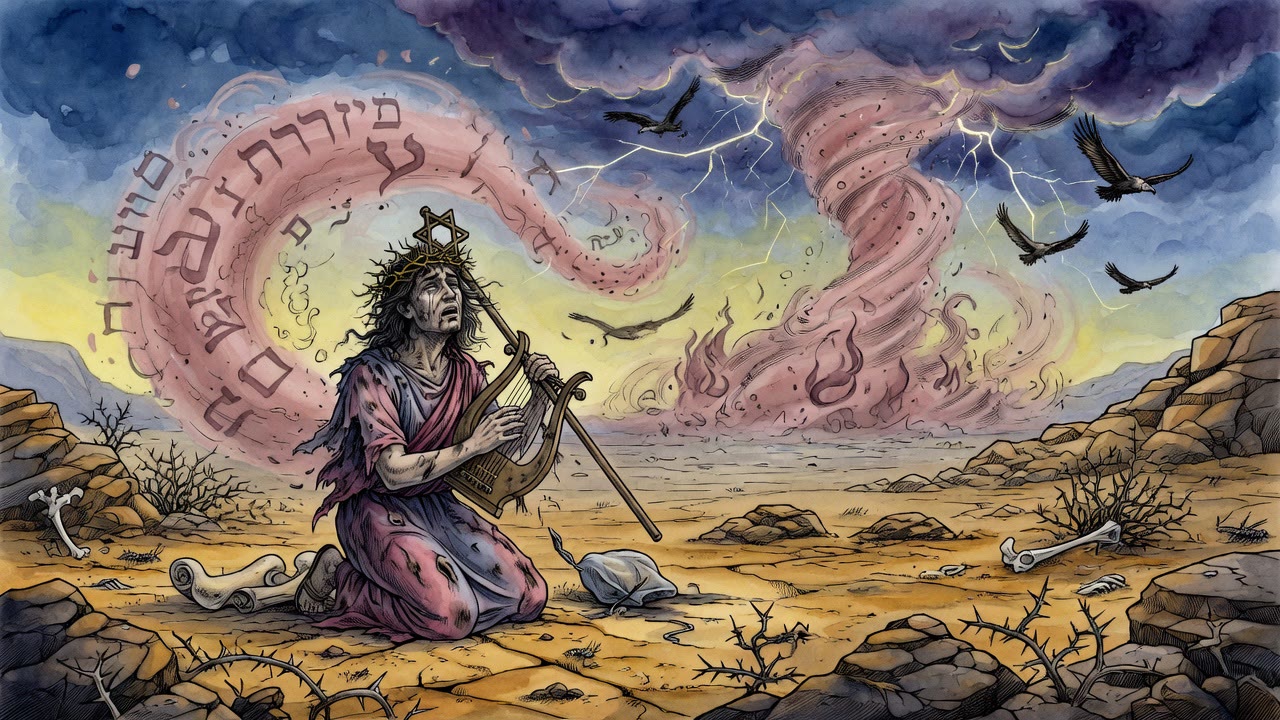
Years later he climbed another height with nothing in his hands. His son Absalom had taken Jerusalem. The court was gone. The throne was gone. David went up the Mount of Olives on foot, weeping, his head covered and his feet bare (2 Samuel 15:30). People passed him. Some mocked him. He had memorized the Torah, and his enemies found that contemptible, a king who spent his hours in study instead of keeping his house in order.
He did not cry out against the judgment. He wrote what the road felt like from the inside. "I have known, O Lord, that Your judgments are righteous, and that You afflicted me with faithfulness" (Psalm 119:75). A man who has lost his throne, his son, his city, and his shoes, saying that the One who arranged all of this was faithful. The scorn did not move him off the verse. He kept walking. He kept writing.
This was not collapse. He had stood under a wall that came down without a ram. He knew what divine action looked like close up. When affliction came, he applied the same recognition. The shaft had not broken Jebus. The cypress had not broken it. God had lowered the stone. So if God was lowering him now, he would not pretend it was an accident.
Two Cries in the Cave
Later, in a cave, he wrote a different psalm. Whether the cave was Saul's country or the wilderness during Absalom's revolt, the condition was the same. Hidden. Surrounded. Unable to see how the danger resolved. He wrote, "I cry out to the Lord with my voice; with my voice I plead to the Lord for mercy" (Psalm 142:1). My voice. My voice.
He named what the two cries were for. Have mercy on me, that I may not fall into his hand. Have mercy on me, that he may not fall into mine.
The first is survival. The second is the harder one. He had watched God drop a wall for him. He had walked barefoot out of his own city. In the cave he asked not to become the man who finished the hunt. He did not want the enemy in his grip any more than he wanted himself in the enemy's.
He Called All Day
The same doubling sits in another psalm. "Have mercy on me, O Lord, for I call to You all day long" (Psalm 86:3). A king who had seen a wall come down still would not assume the channel was open. He called all day because a single call might not carry. Not from doubt in God. From knowledge of himself, from the long reckoning kept since the cypress, since the Mount of Olives, since every cave in between.
He had seen his own failures plainly enough to know he could not stand on certainty. So he prayed twice. He called all day. He composed one hundred seventy-six verses and assigned each one to a letter of the alphabet (Psalm 119), as if no corner of language should go unturned in the work of staying close. The longest psalm in the Hebrew Bible, written by a barefoot king fleeing his son, one letter at a time.
Walls, mountains, caves. Each one took something. At the Jebusite wall it was the idea that nerve breaks a city. On the Mount of Olives it was the idea that affliction is only punishment. In the cave it was the idea that needing God badly enough is, by itself, a reason to be handed someone else's life. What remained was a voice that knew how to split itself at the entrance. Barefoot, uncovered, arriving twice, asking not to fall, and asking not to kill.
← All myths