124 myths · Page 1 of 5
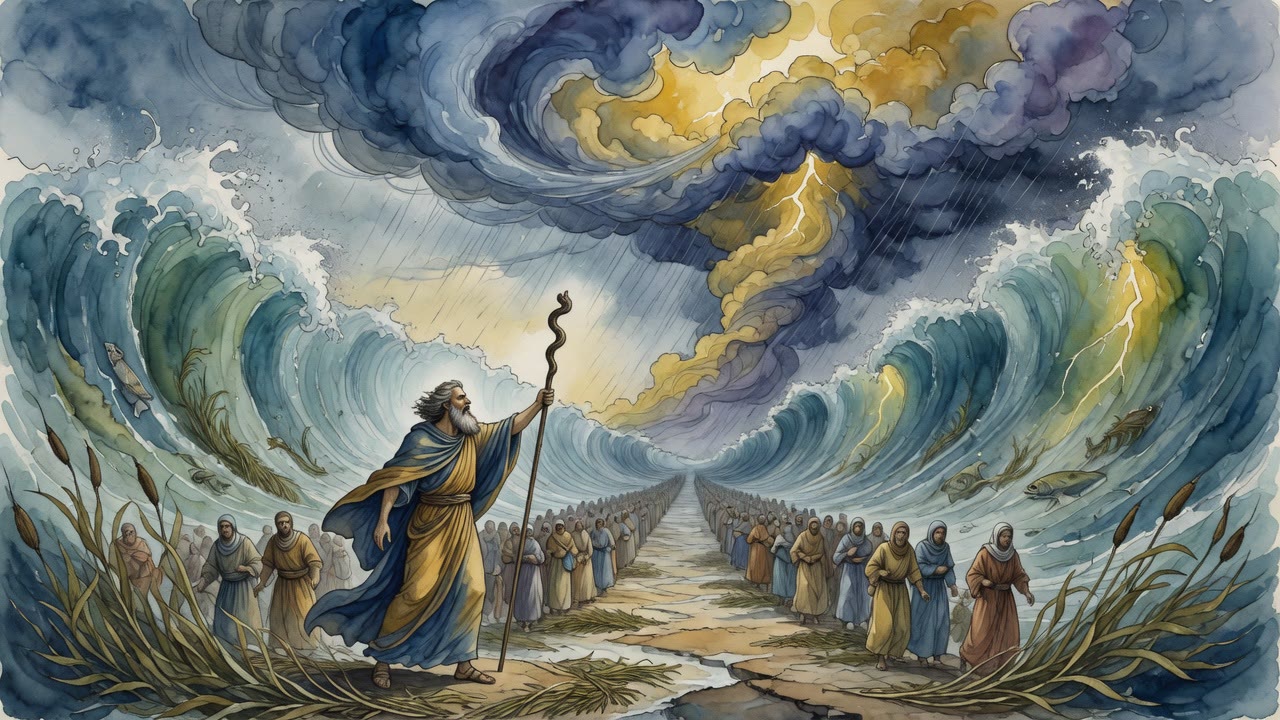
Moses raised the staff and the water held its shape. Nachshon walked in until the sea sat at his nostrils. Only then did the walls stand.
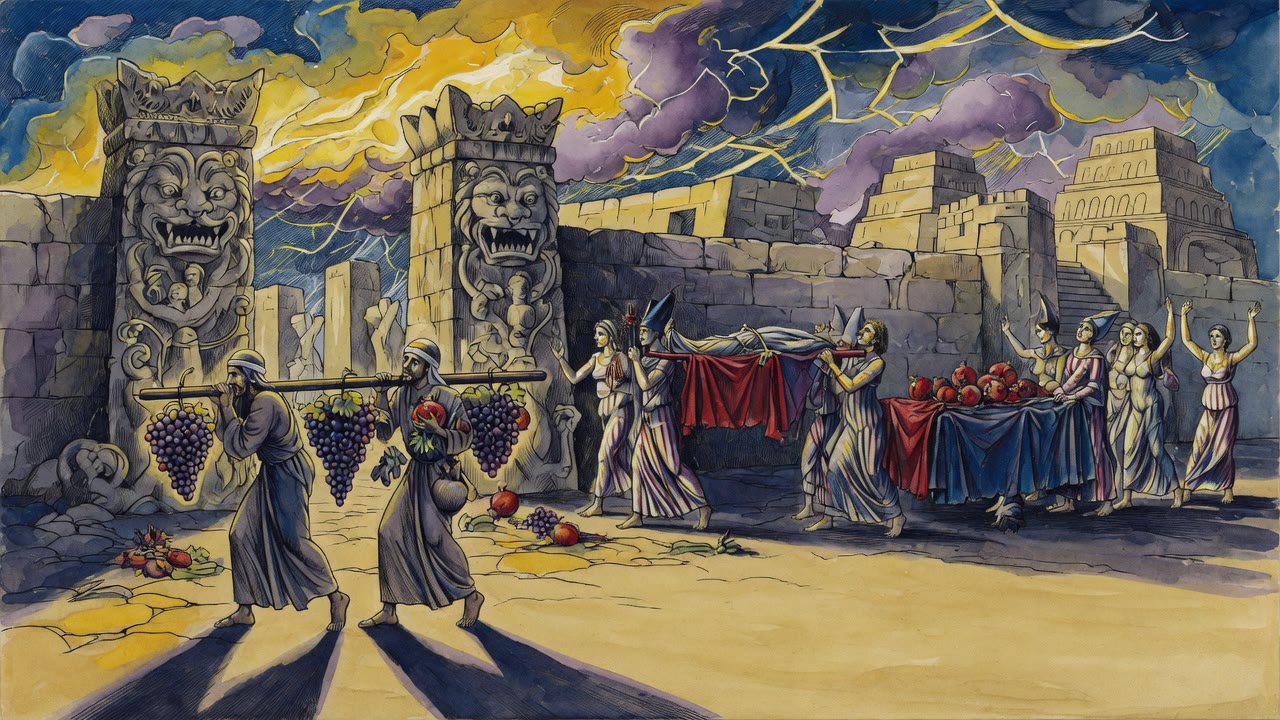
Twelve spies slipped through Canaan's open gates while the cities buried their dead, then came home swearing the land devoured its own people.
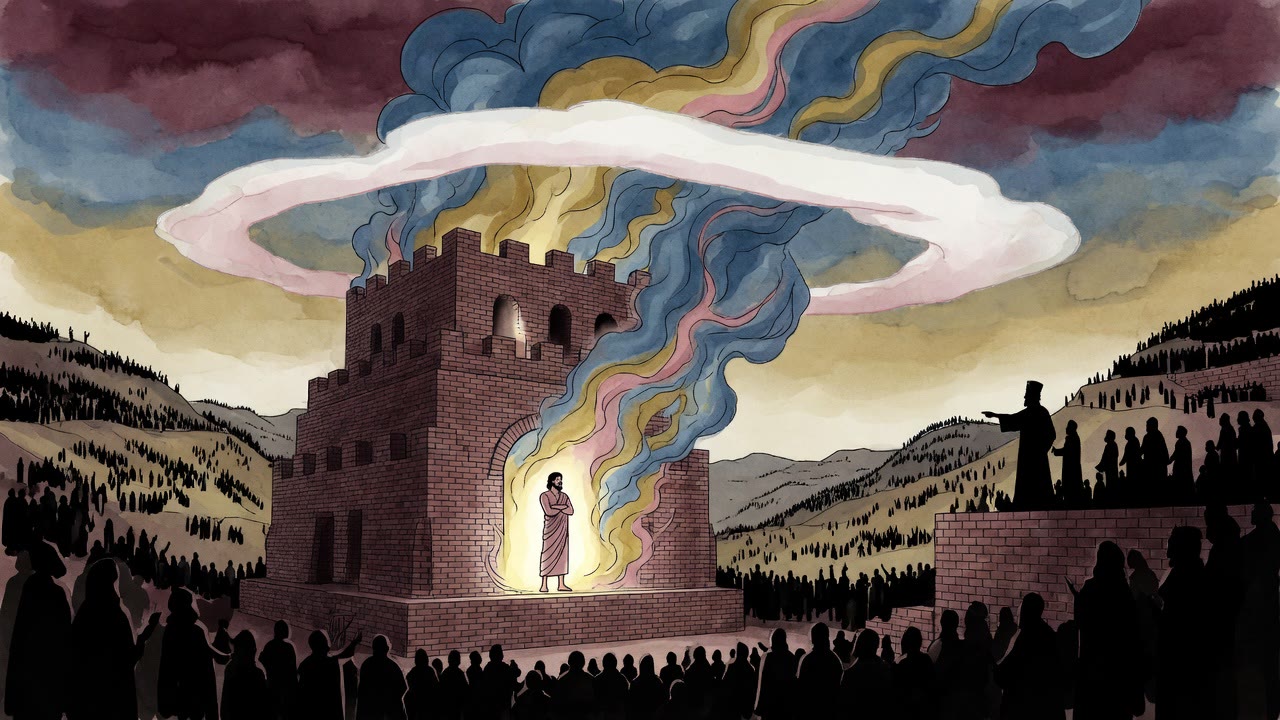
Terah told the king it was Haran who had advised the swap. It was a lie to save himself, and it put his own son in front of the fire.
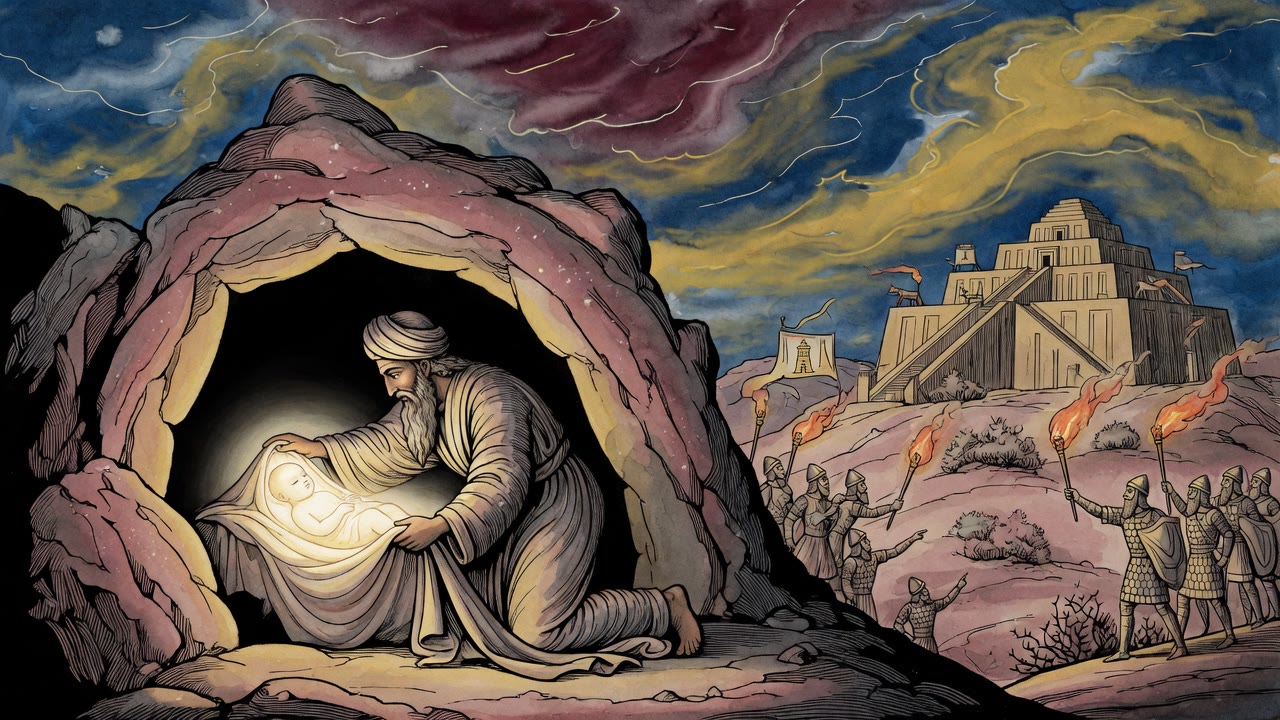
The Torah introduces Abraham as a grown man. The older traditions say his father had already saved his life once by swapping him for a slave child.
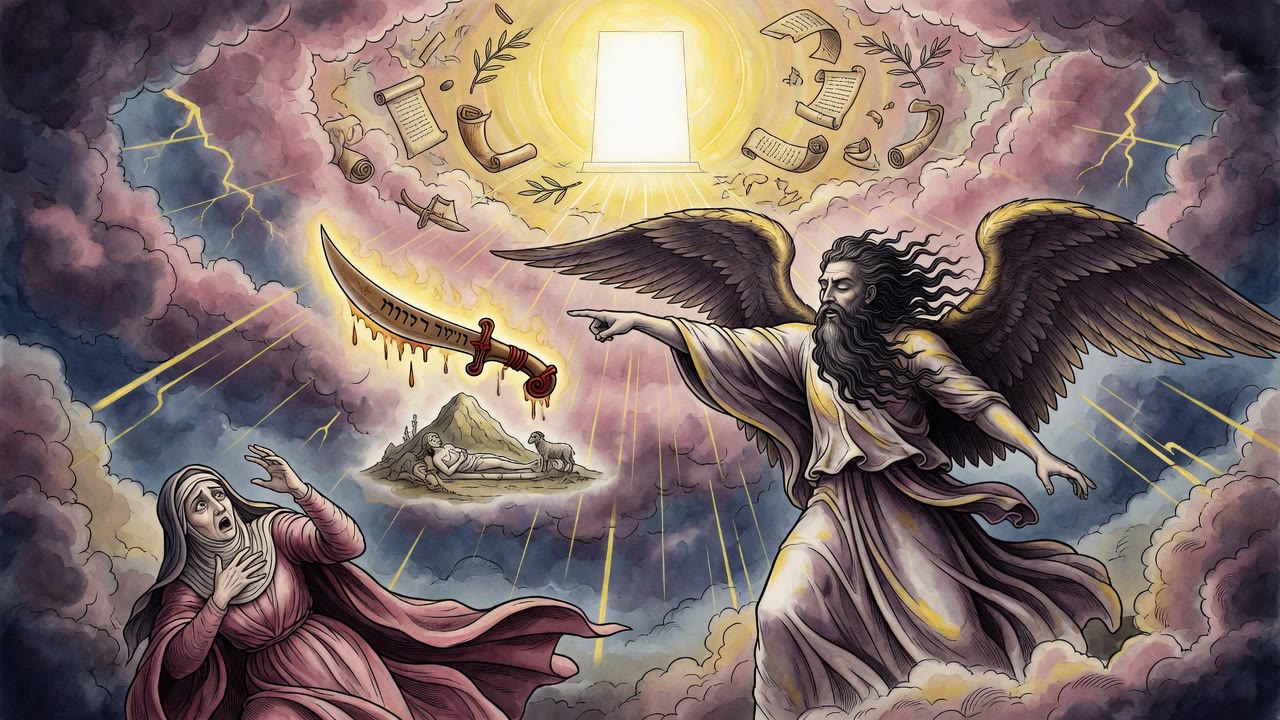
Abraham took Isaac up the mountain, and a stranger came to Sarah's tent with a vision of the raised knife. She screamed once, and her soul left.
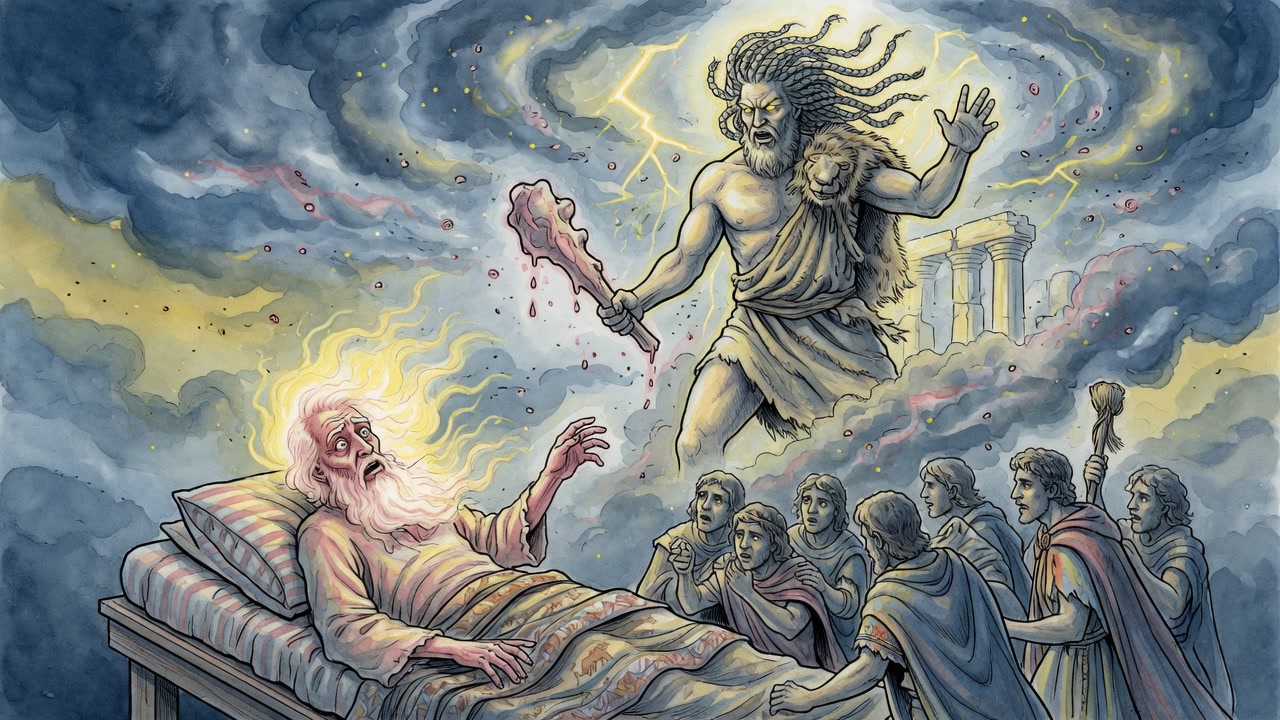
On his deathbed Jacob blessed Dan and saw Samson fighting alone, and for one breath he believed the Messiah had finally come to Israel.
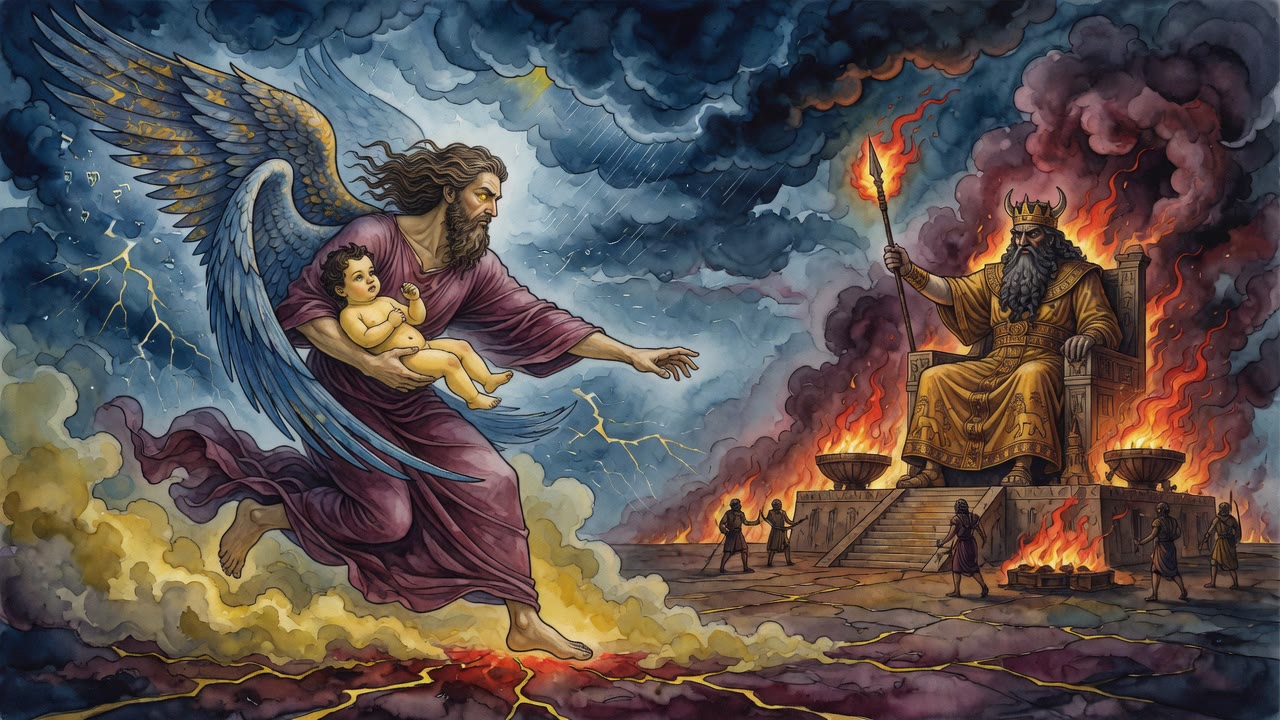
Gabriel made milk flow from his finger for the abandoned infant Abraham. Decades later he carried the same man on his shoulder into Nimrod's capital.
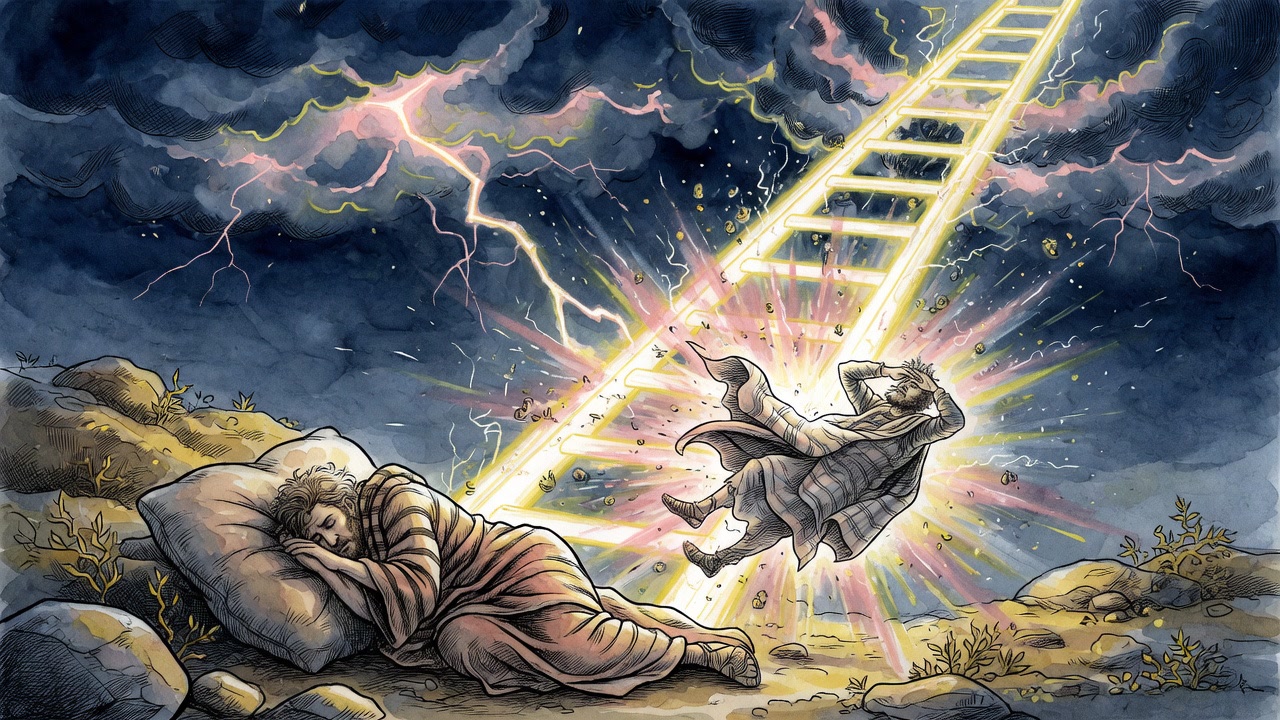
Jacob ran until the sun was gone. He struck the ground at Bethel. Stones went under his head because the place had stopped him.
Every nation has its angelic prince standing watch. Israel has no such guardian, and the keeper who keeps it will not slumber or sleep.
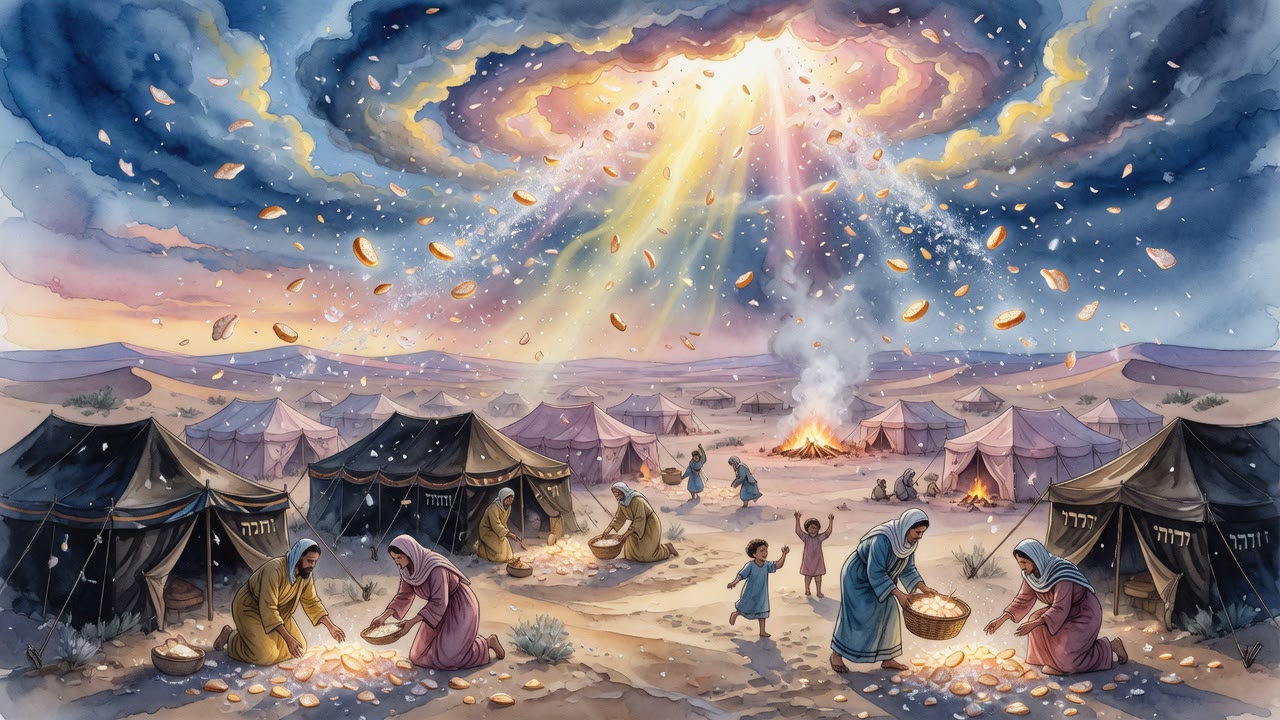
Moses said leave none until morning. One household hid a jar anyway. Dawn found worms first, then rot, which is the wrong order for ordinary bread.
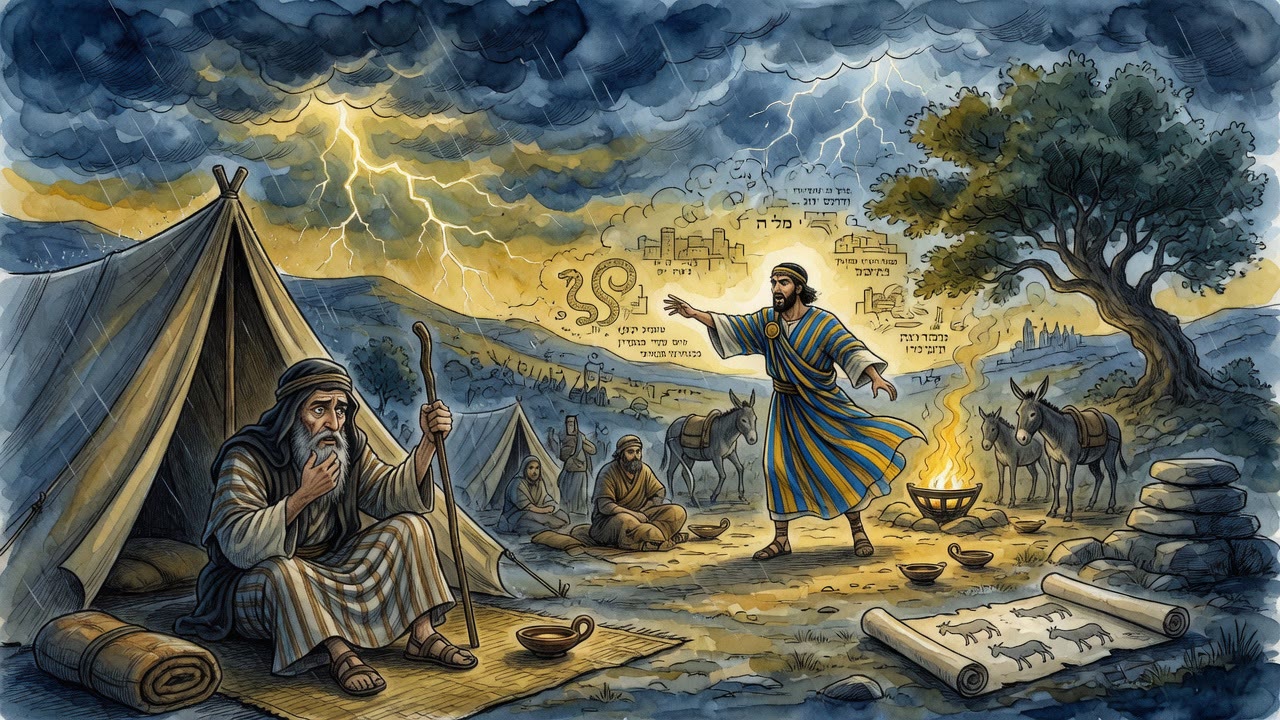
Seven Amorite kings march on Jacob's tents after Shechem burns, and only Judah's words about Noah stand between the family and the swords.
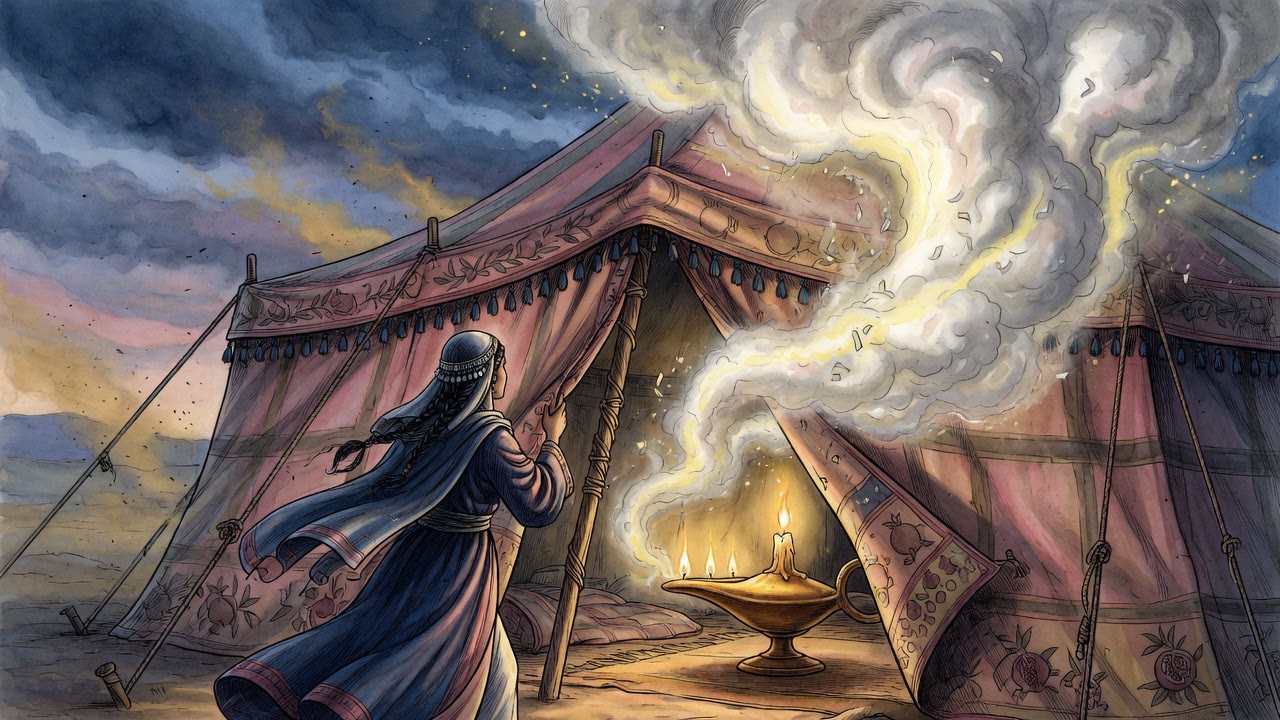
Sarah's tent had gone dark and empty. Then Isaac led Rebekah inside, and the cloud returned, the candle relit, the bread rose.
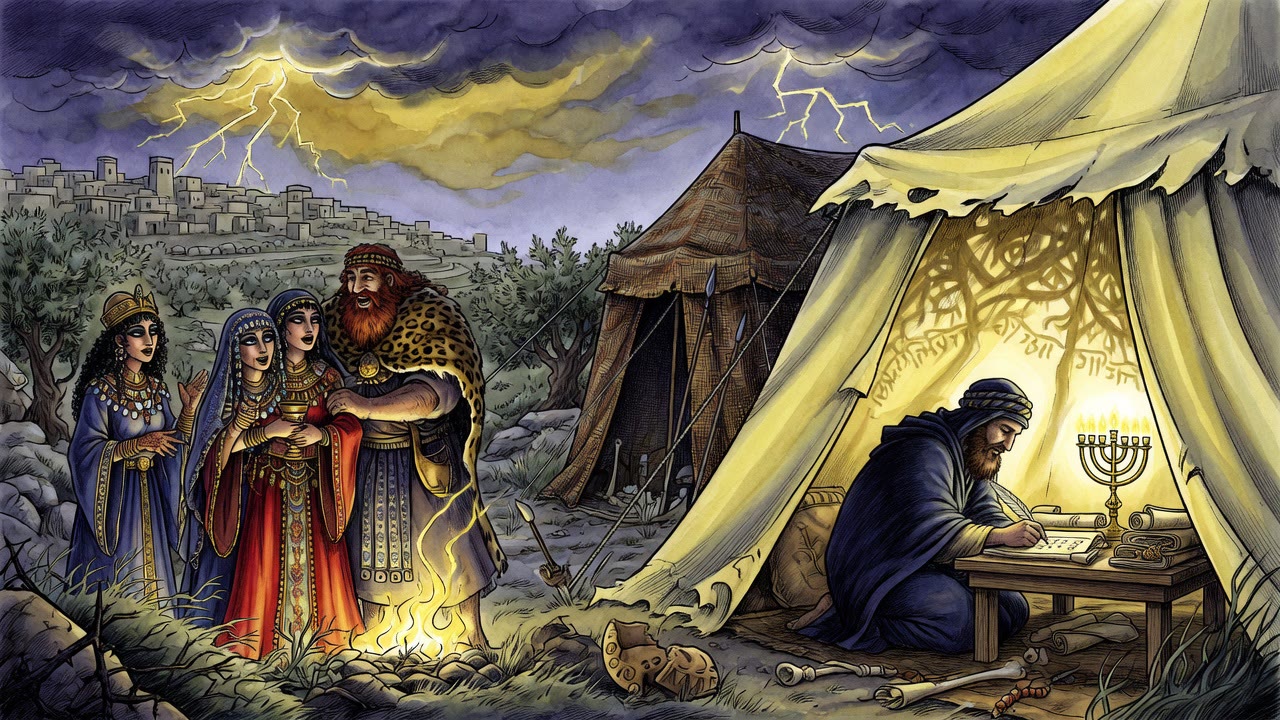
Esau hauls Judith back from the mountains of Seir to Hebron the same day, while Jacob waits unmarried at the house of study.
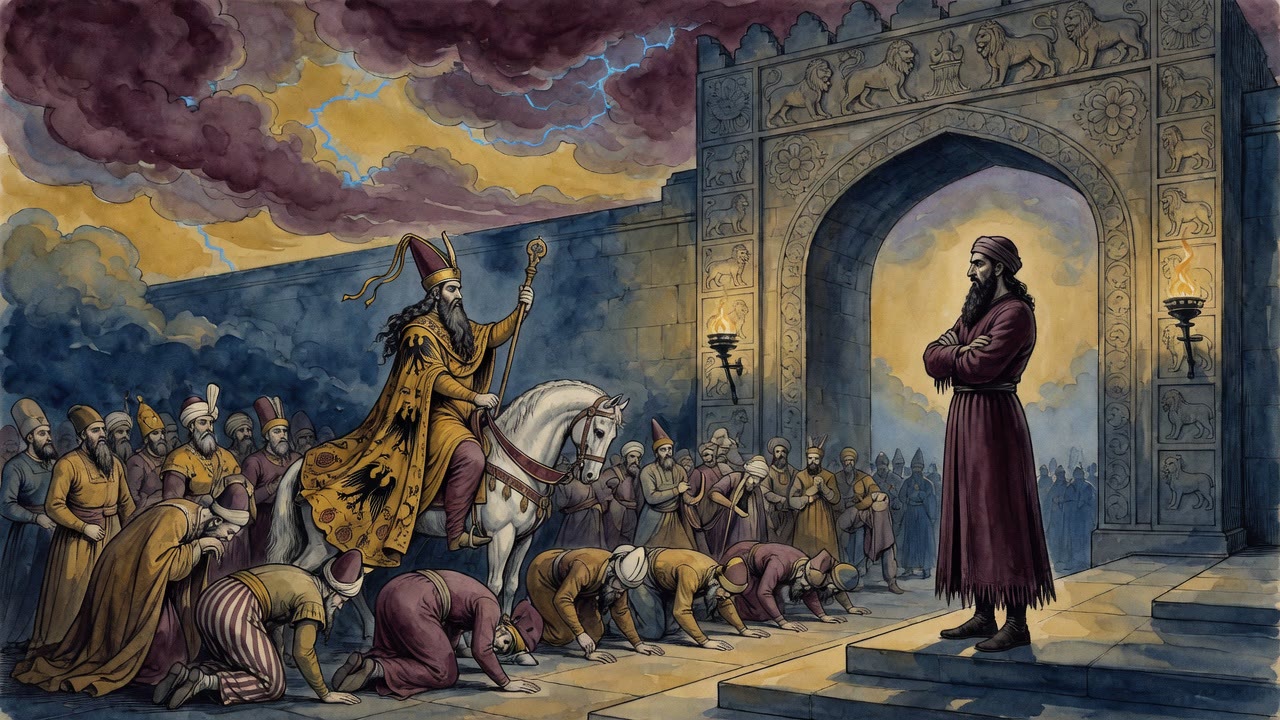
Haman passes through the gate of Shushan and every back bends but one. Mordecai stays upright, and the court has a taunt ready for him.
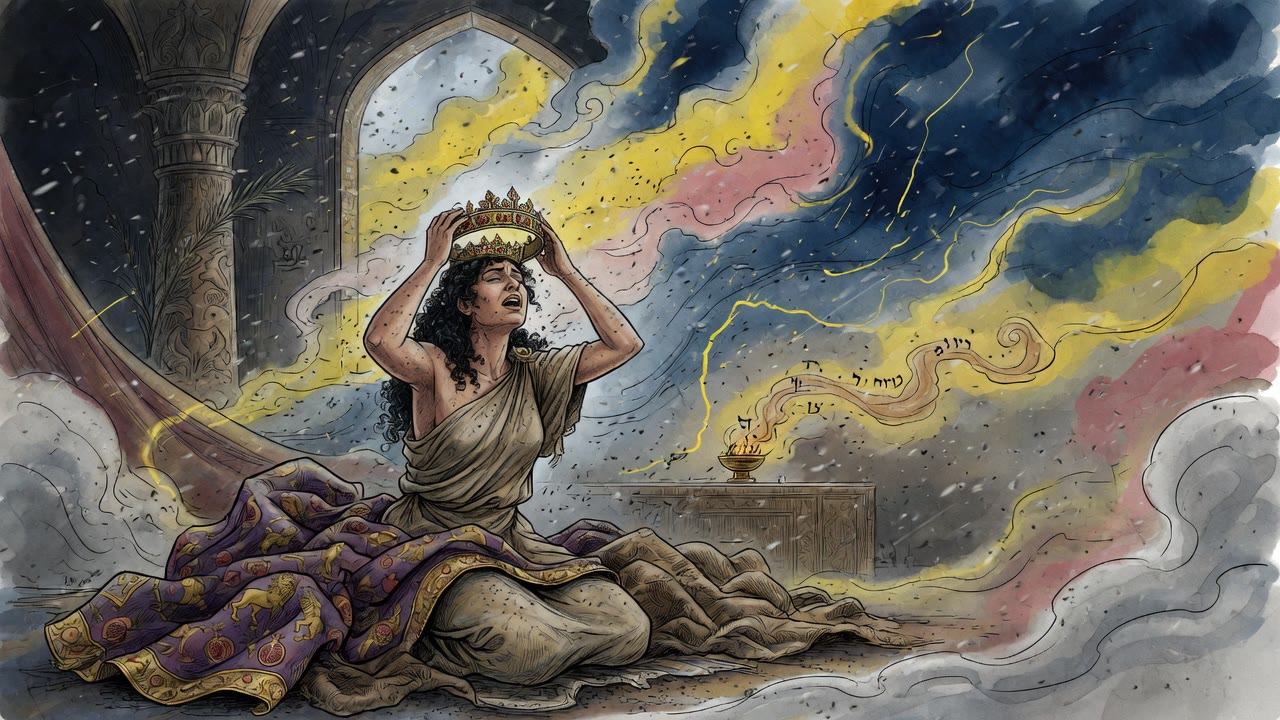
Three days without food. The decree was already on the road. On the palace floor Esther named herself an orphan and began with Abraham.
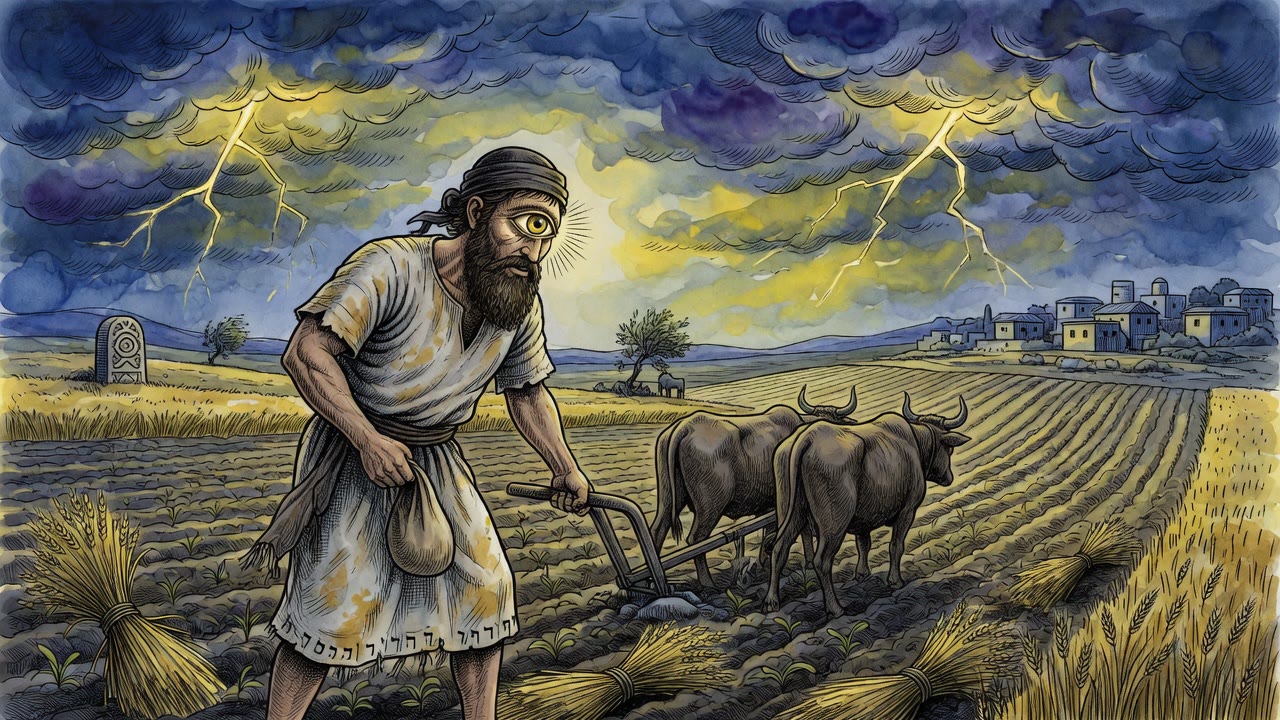
Two sisters argued in a field in Haran over a handful of apples. The price they settled on was one night with their husband, and the child was Issachar.
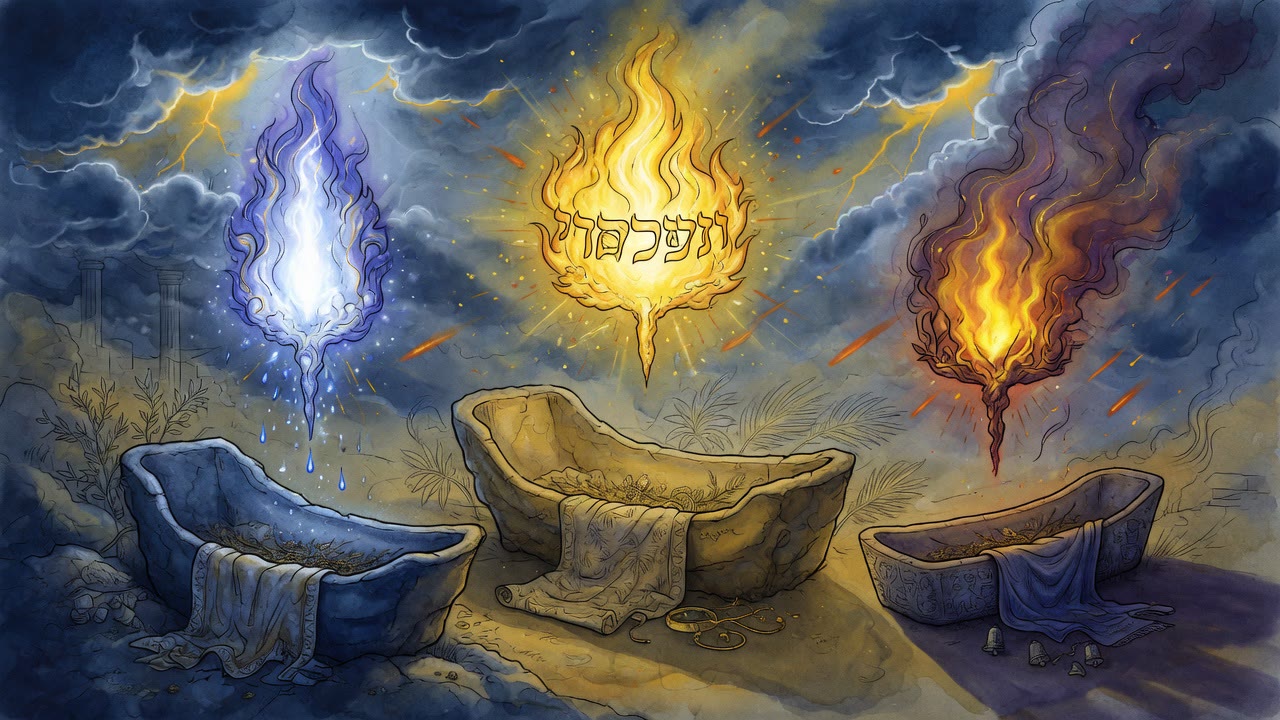
God spoke the names of Isaac, Solomon, and Josiah into the air before any of the three had been conceived, and each name held.
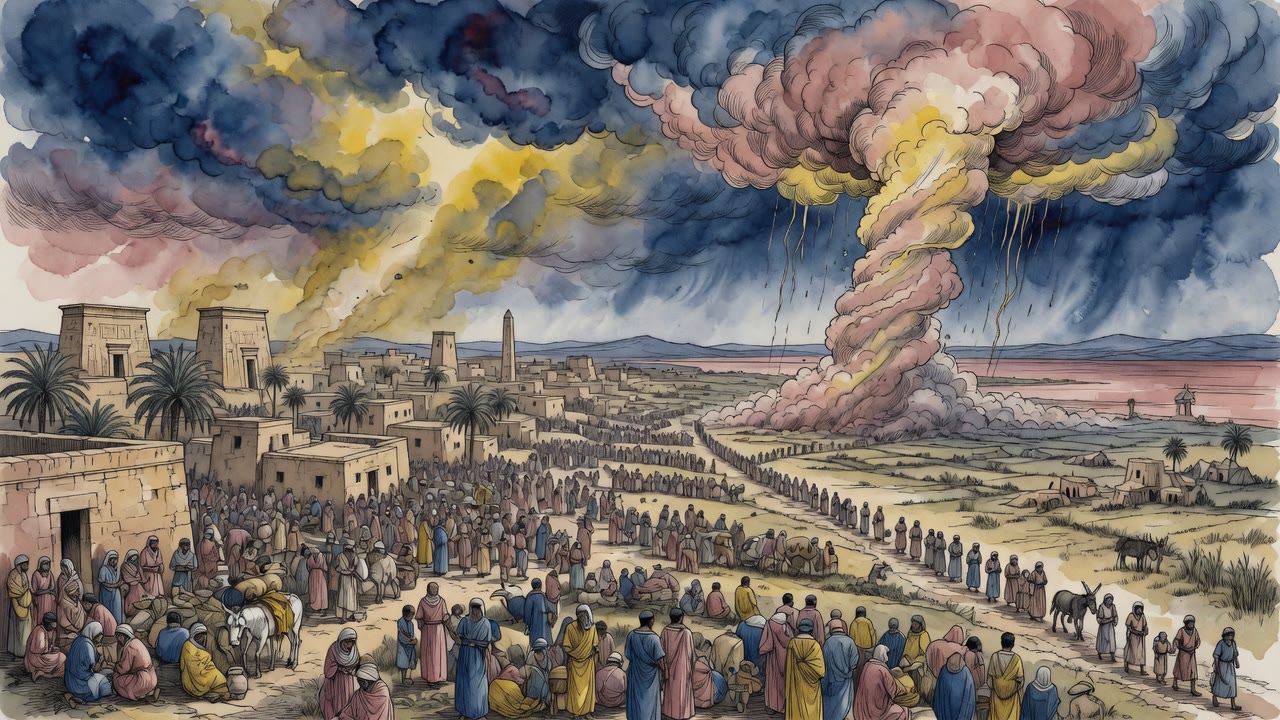
Israel marched out of Egypt armed and in ranks, but one small word counted the missing. Four of every five stayed behind.
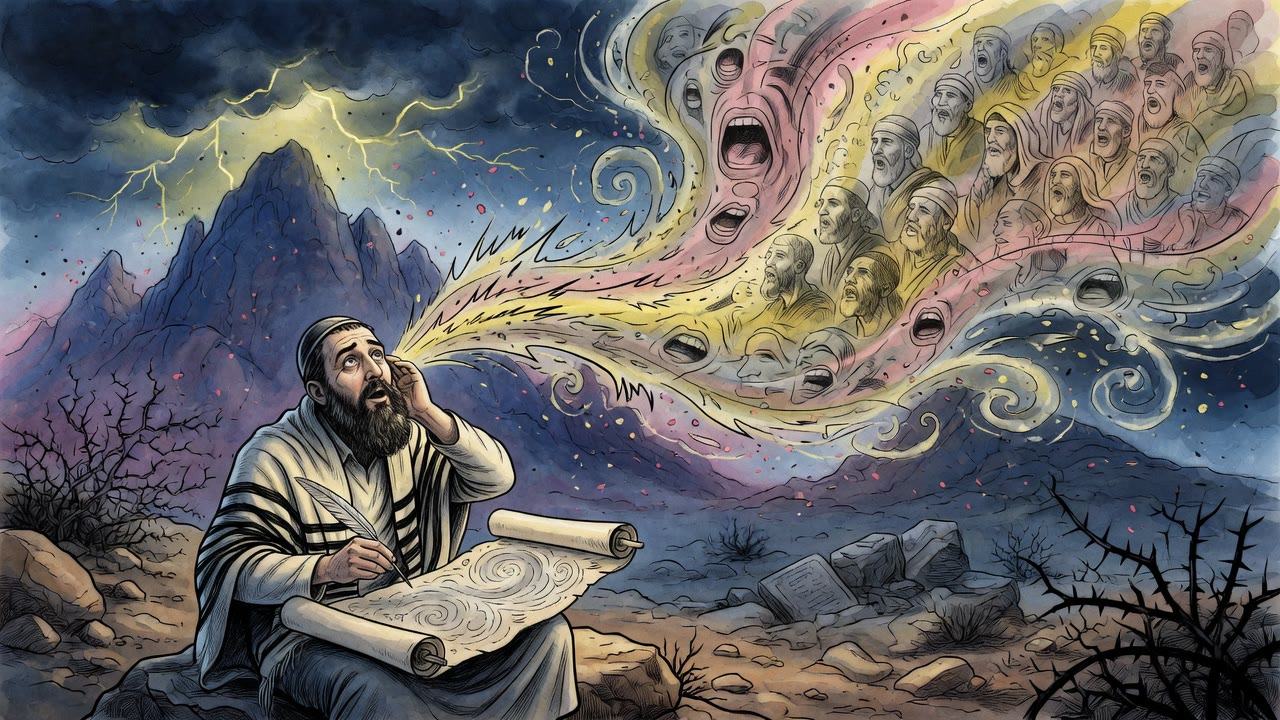
Moses waited at the door of the tent for thirty-eight years and no voice came. He had done nothing wrong. The generation under judgment was dying off.
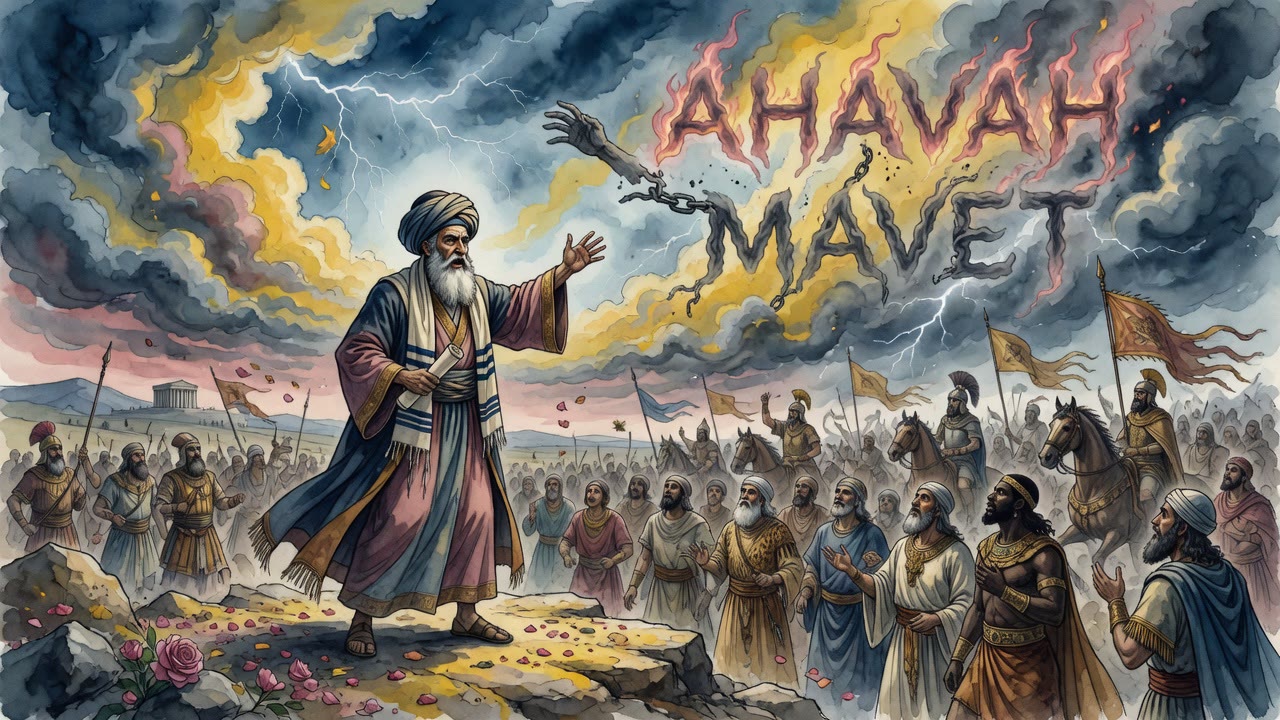
The nations asked Rabbi Akiva why a beautiful, strong people would die for an invisible Beloved. He answered from a love poem, reading one word as above death.
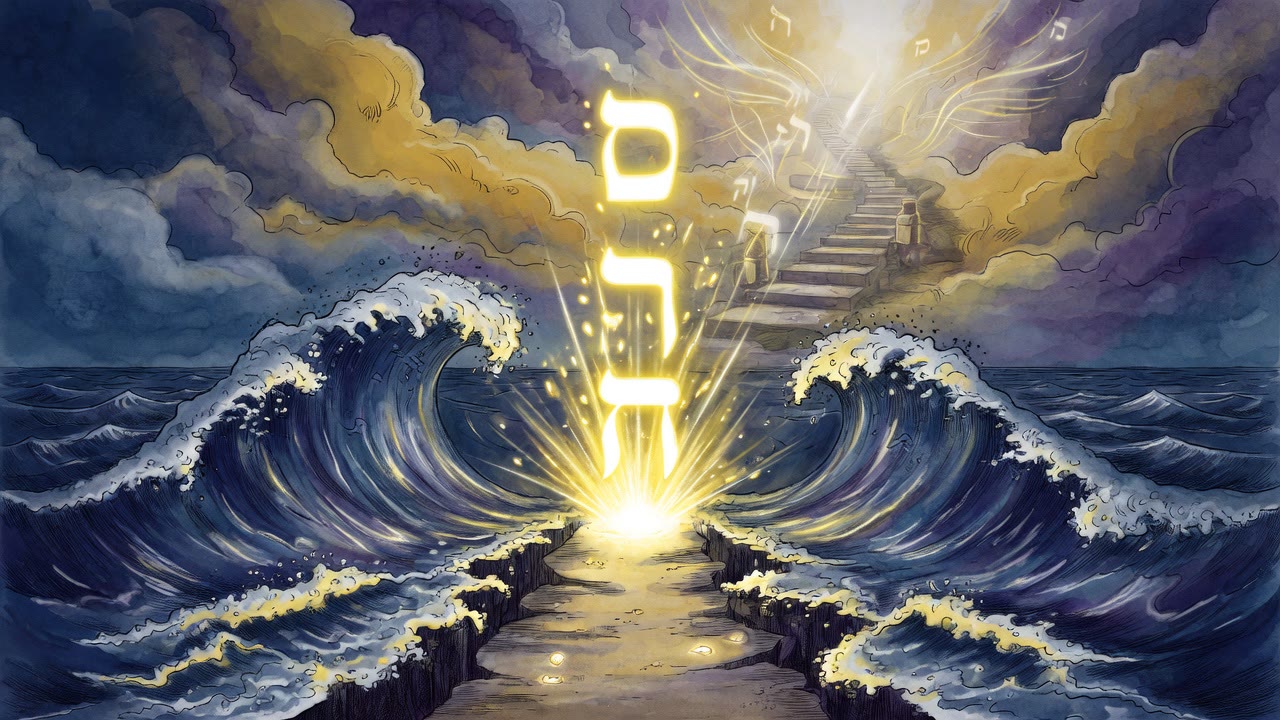
The sea did not split for the crying people at the water's edge. It split because of one word God spoke at Beth-el, long before.
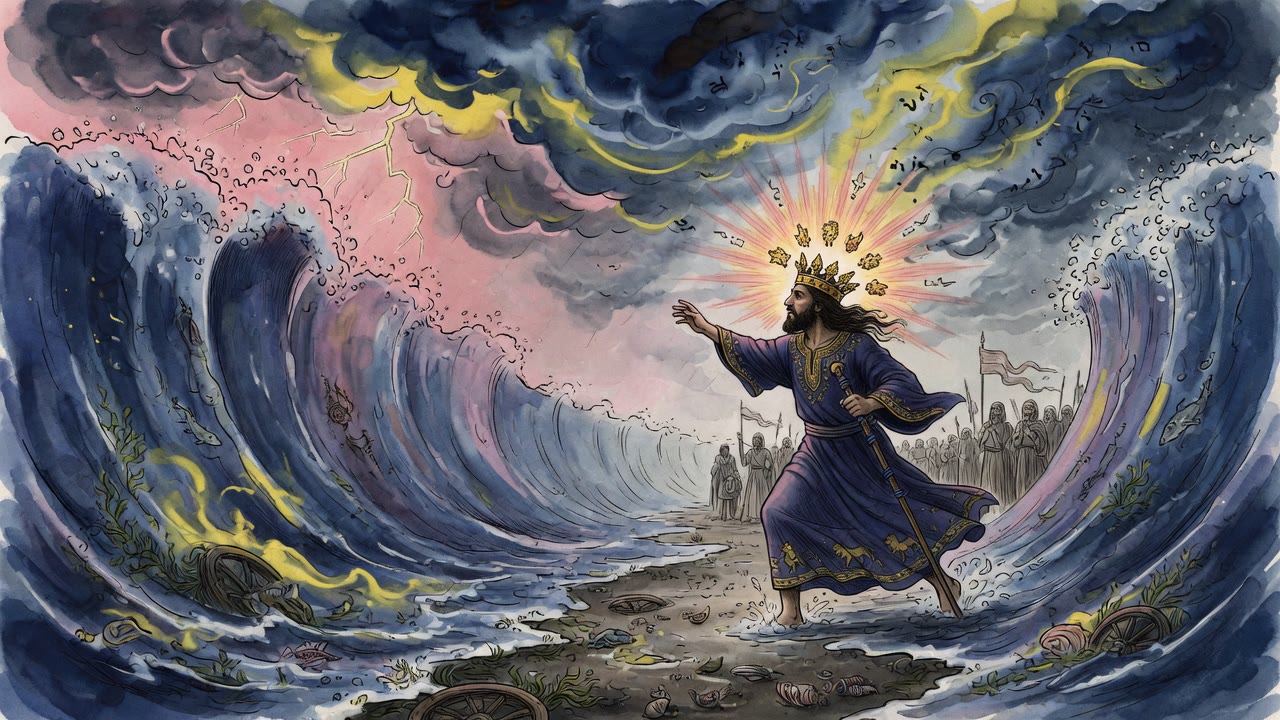
Before a single wave moved, one man waded into the crashing sea up to his throat, and that step decided who would rule Israel.
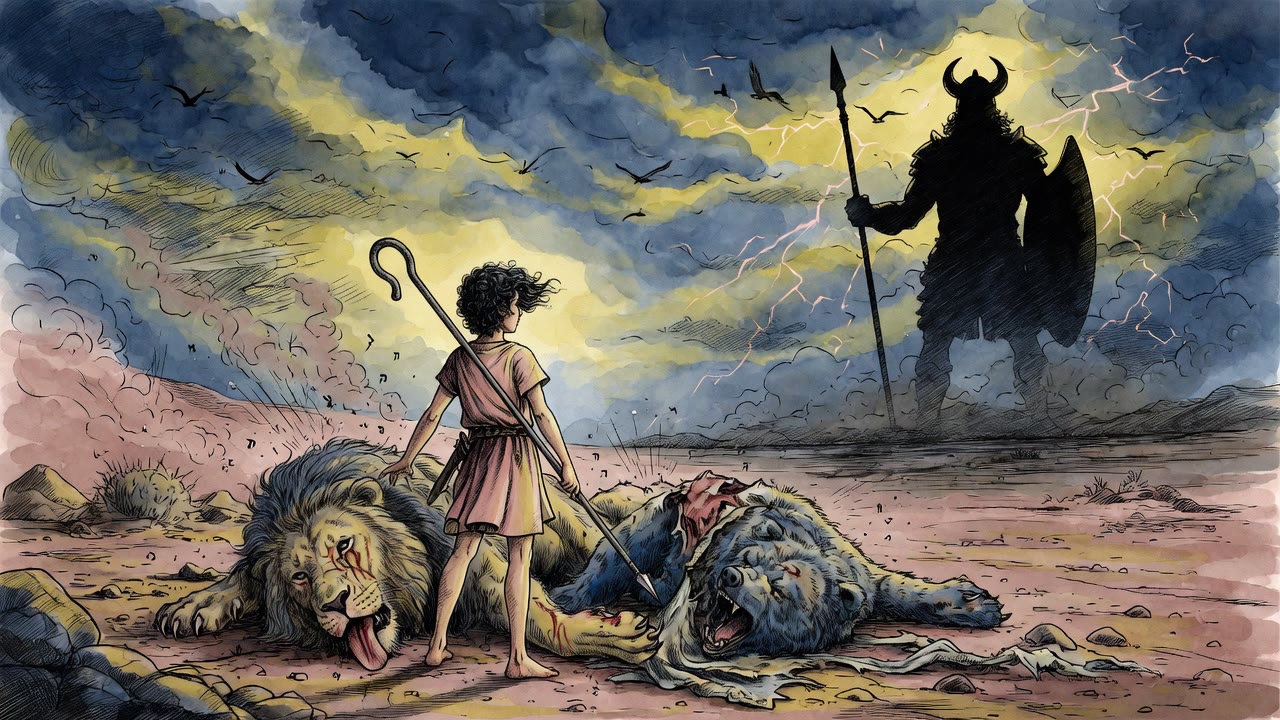
A lion took a lamb at the edge of the flock. David killed it with his hands. After the bear, he treated both carcasses as orders.
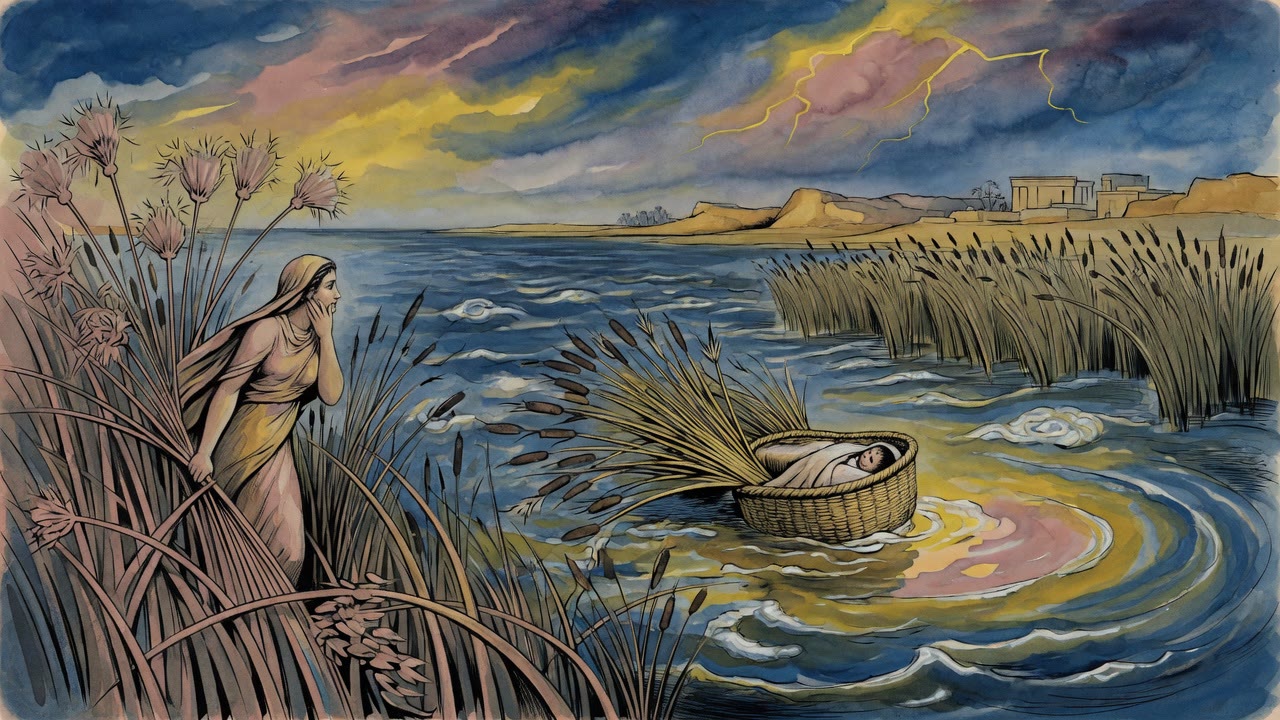
A girl plants her feet on the riverbank and watches her brother's basket drift, while her father's question still rings: where is your prophecy now?
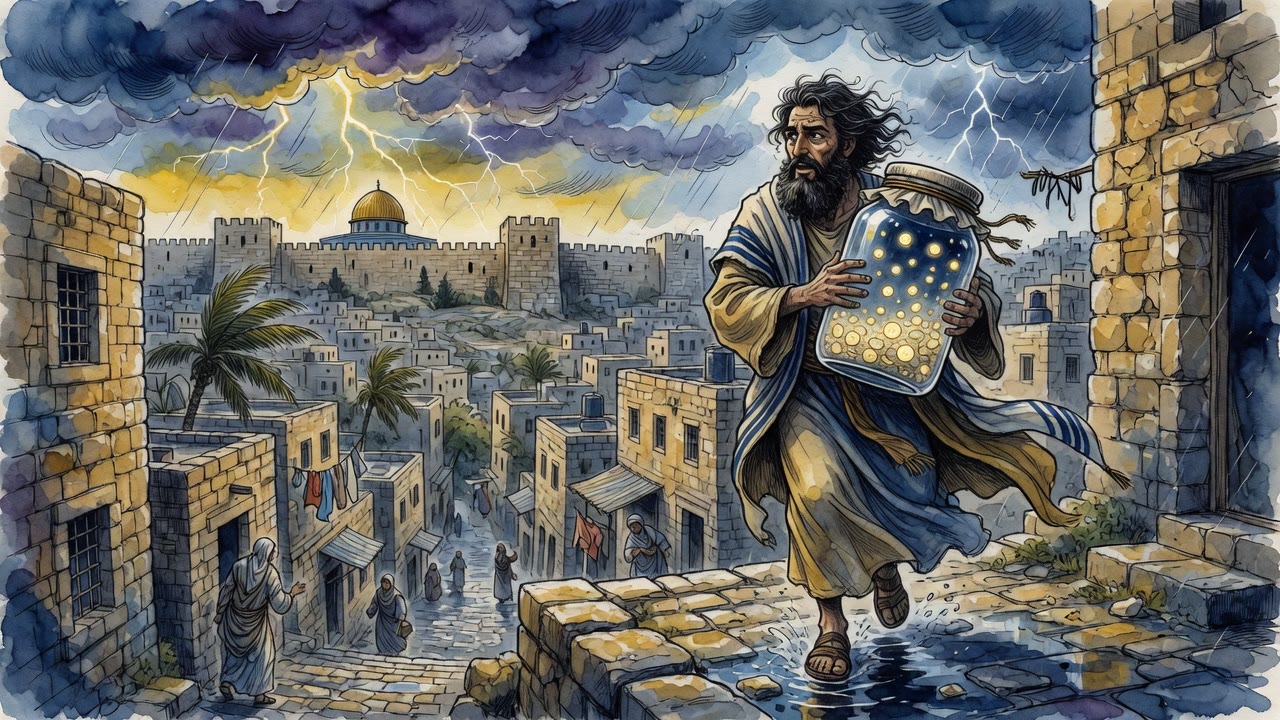
The crowd told Jeremiah they had fields to plow and hungry children, so Torah would have to wait. He came back holding a jar of old manna.
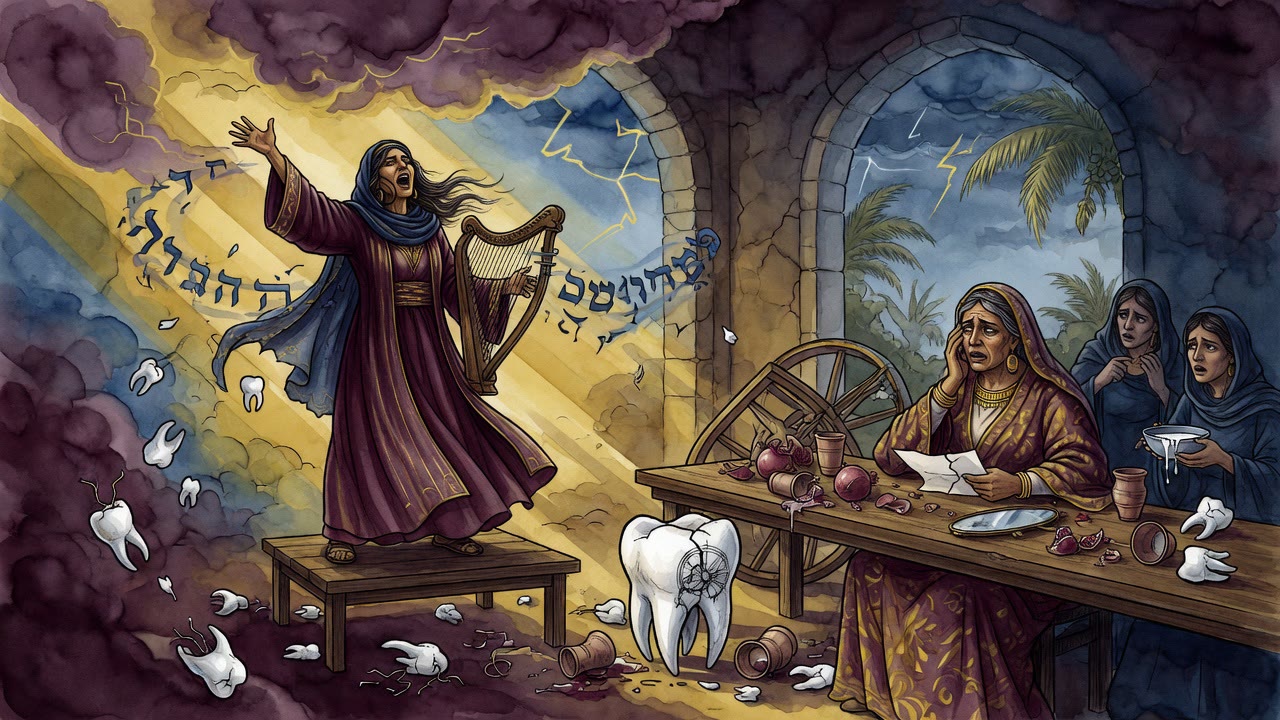
After the Kishon swallowed Sisera's iron, two travelers sat down at the same inn. One ordered the whole table. His teeth did not survive the bill.
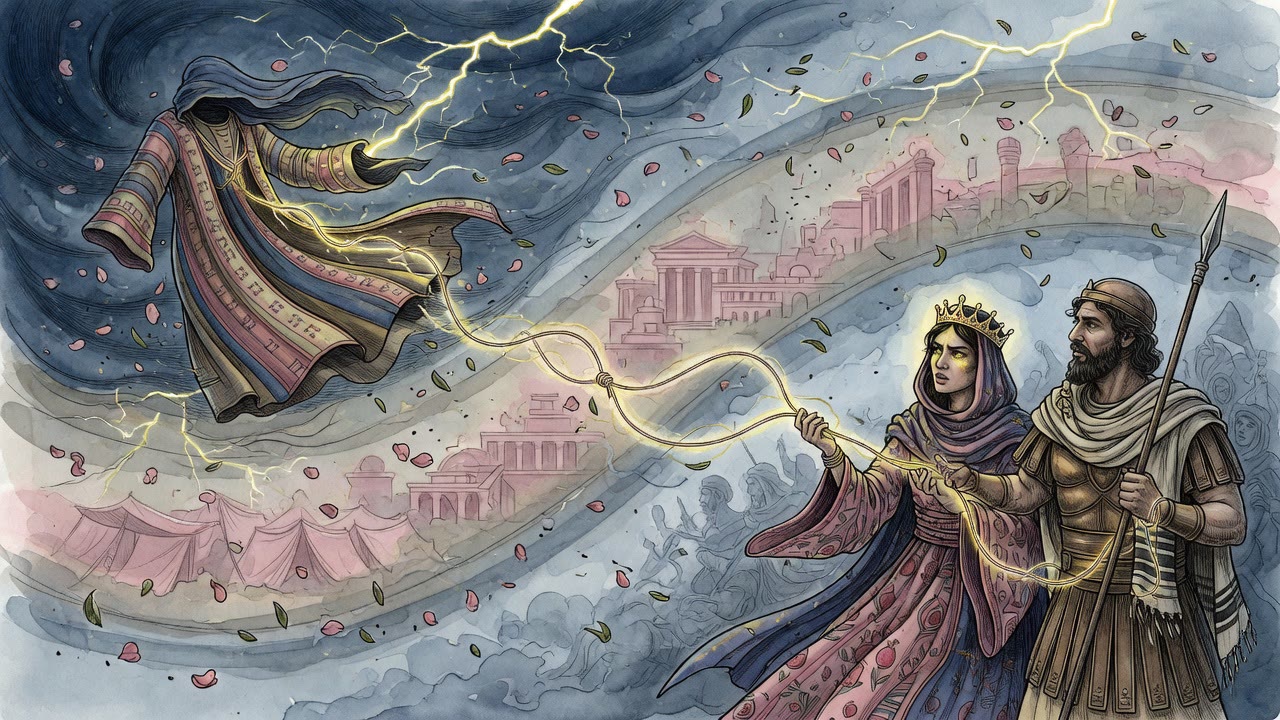
Twenty pieces of silver split ten ways is two pieces a man. The brothers spent theirs on shoes and sat down to eat while Joseph was still in earshot.
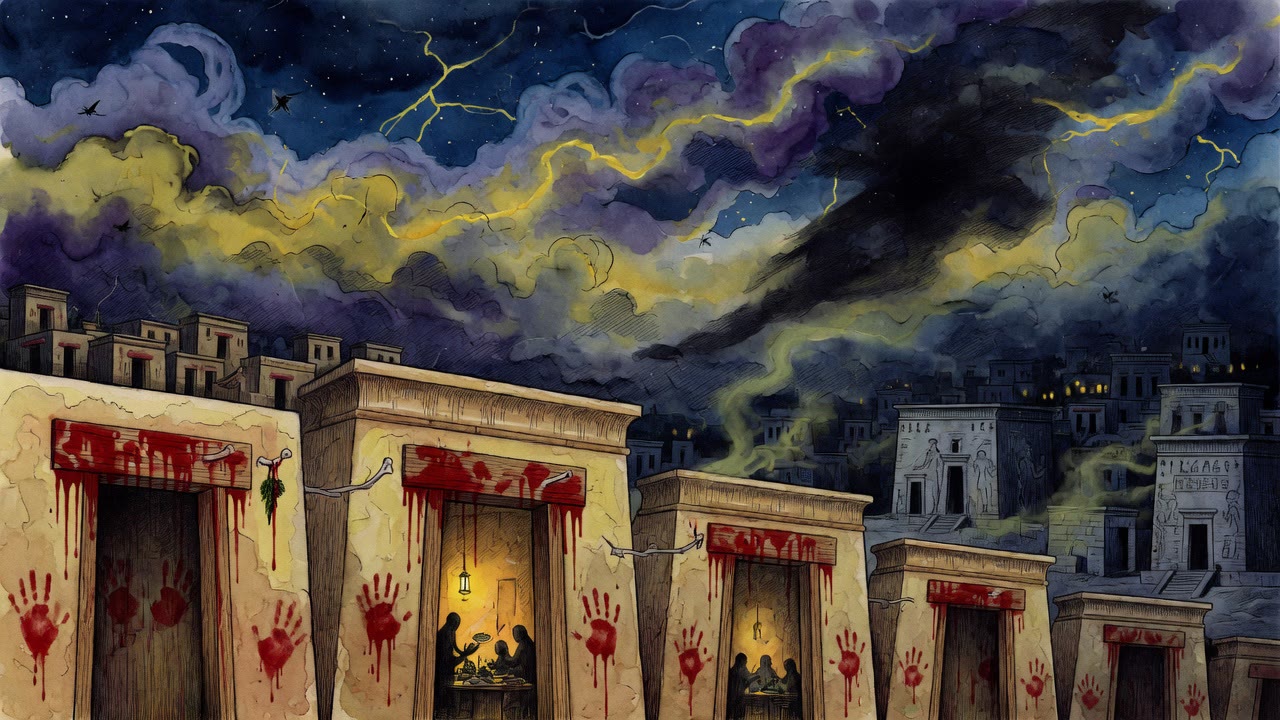
Israel watched another nation's lamps burn and told God it was jealous. God answered with one memory: a knife, shaking hands, blood on the doorposts.
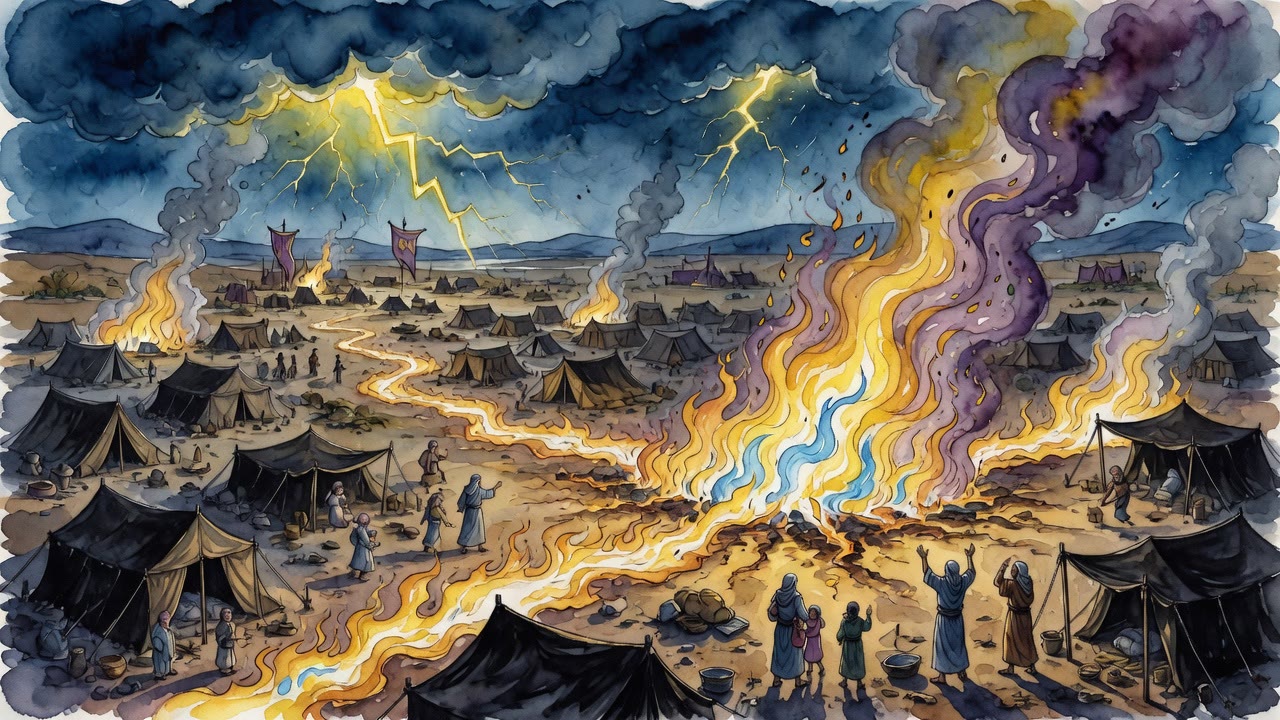
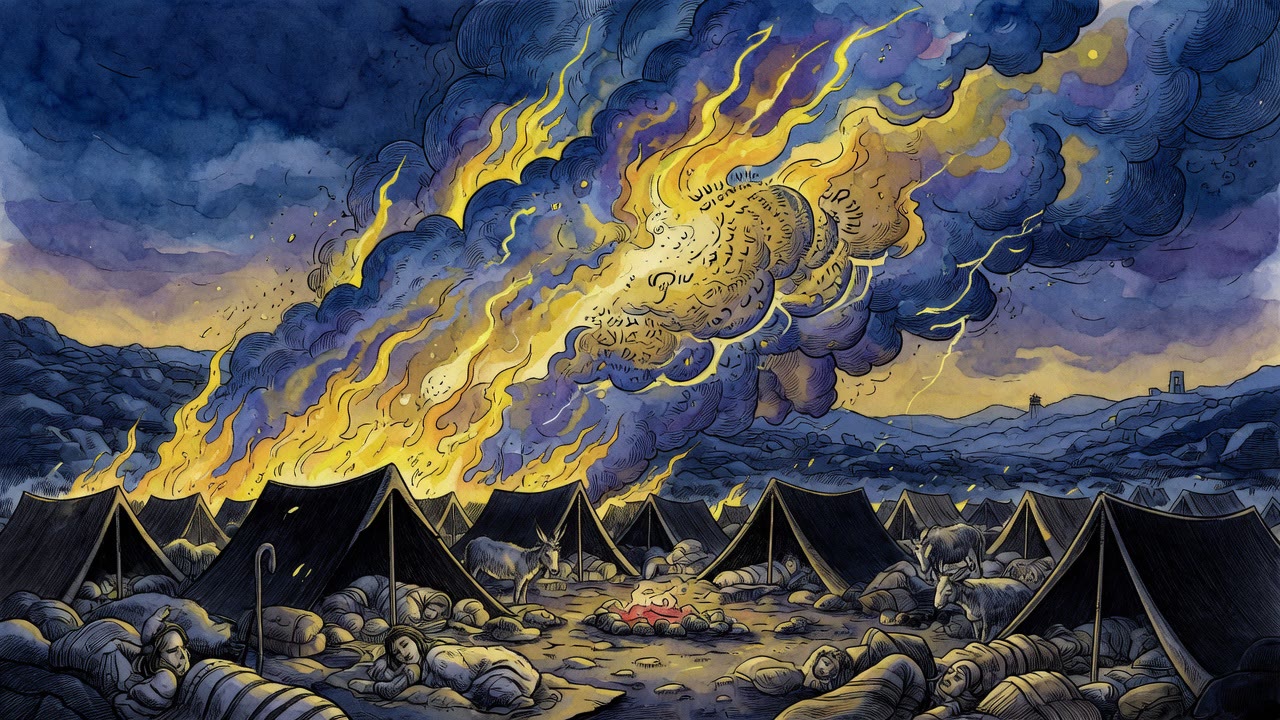
The camp still had water from the rock. Someone whispered whether God could set a table in this waste. Fire ran the edge of the tents before Moses stood.
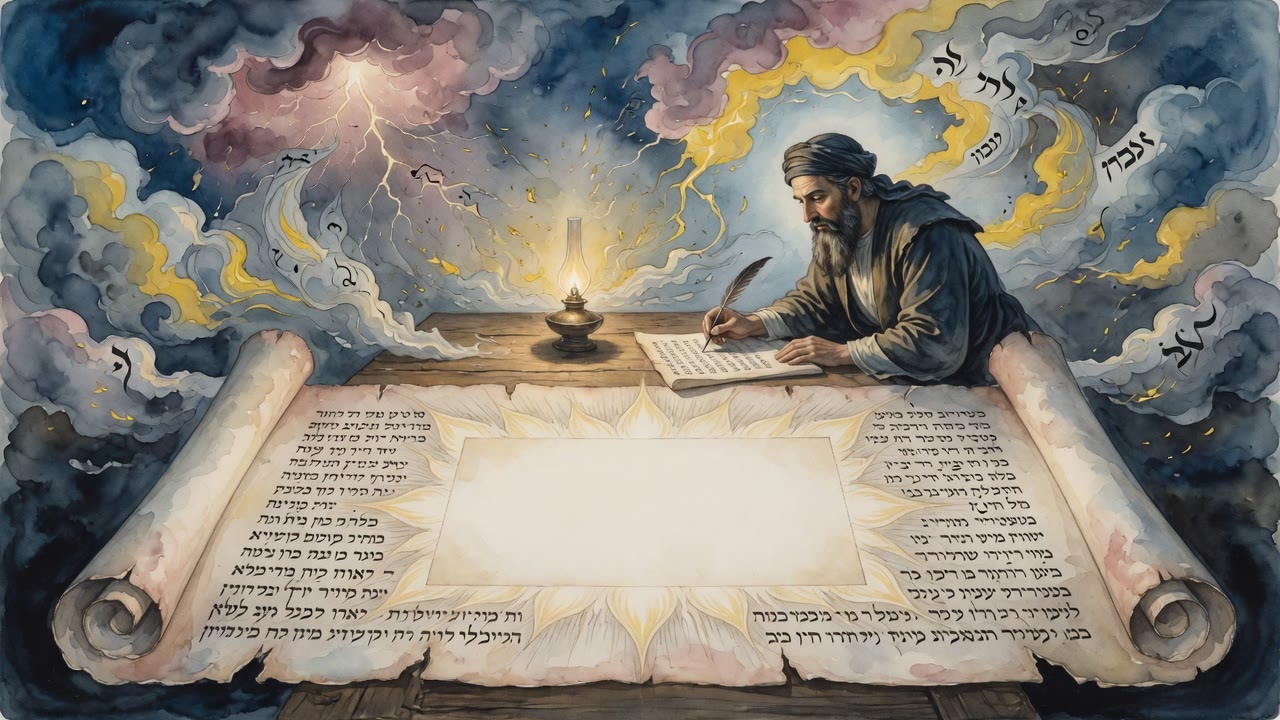
He had been cutting hands and descents out of the Aramaic Torah. At Hear O Israel he set the knife down and copied six words as they stood.
