6 min read

Three Names God Spoke Before Isaac, Solomon, and Josiah Were Born

God spoke the names of Isaac, Solomon, and Josiah into the air before any of the three had been conceived, and each name held.

Curated by Arthur · Told by Maggid ·
Table of Contents
  1. A Name That Never Needed Changing
  2. The Builder Named for Peace
  3. A Word Hurled Across Three Hundred Years
  4. The Name Keeps Its Appointment

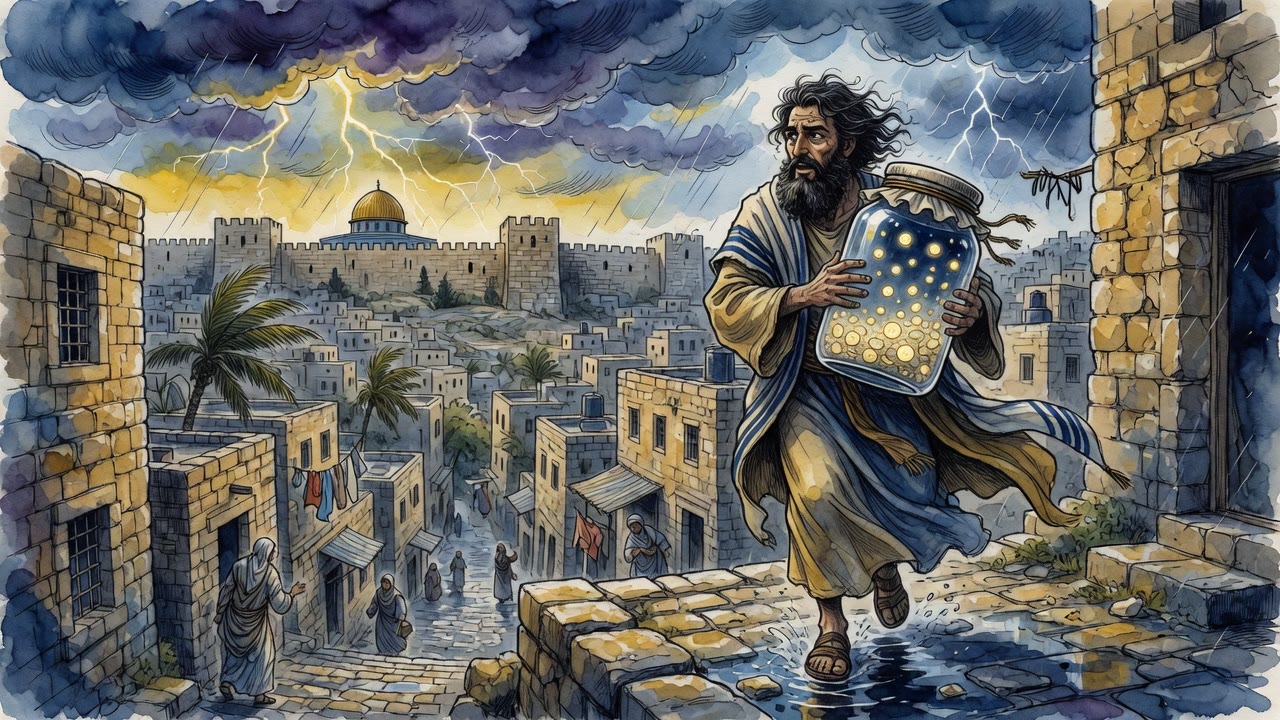
The old man was ninety-nine years old, and a voice he could not see was telling him his wife would have a baby. Abraham had heard promises before. Stars without number. Land as far as he could walk. Each one a horizon, never a hand he could hold. So he laughed, face in the dust, because Sarah was past the age and so was he, and the joke of it was kinder than the hope.
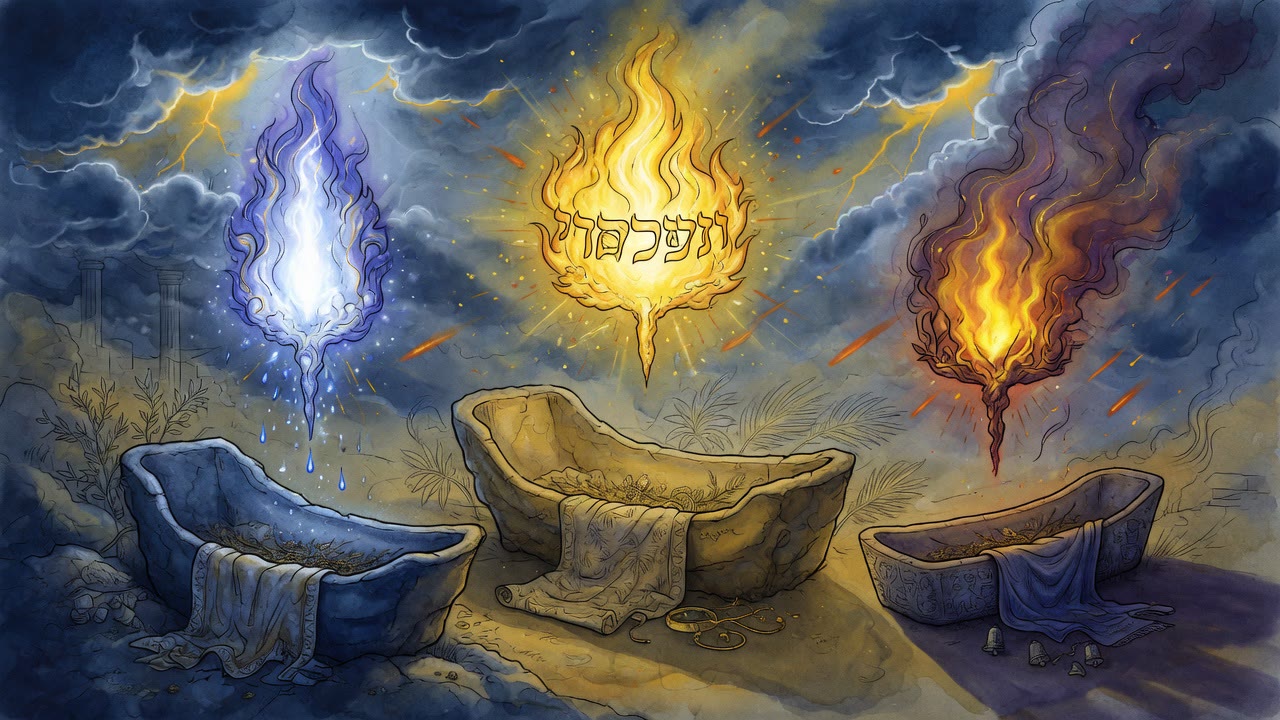
Then the voice did something it had never done. It did not say a son will come. It said the boy's name. "Sarah your wife will bear a son for you, and you shall call his name Yitzchak" (Genesis 17:19). Yitzchak, the one who laughs. The name went out into the desert air before there was any child to wear it, before Sarah's body had stirred, before anything had happened at all. A name spoken over an empty cradle.

A Name That Never Needed Changing

Names in that family moved like rivers. The man had not always been Abraham. He had been Avram, and the voice had stretched the word, pushed a letter into the middle of it, made him into the father of a multitude. His wife had been Sarai before she became Sarah. Years later his grandson would limp away from a wrestling match in the dark by the ford of the Jabbok with a new name burned into him, Israel, the one who struggled with God and held on.

Every one of them earned a second name. A deepening, a turn, a wound that left a mark and a word to match it. The names arrived in the middle of a life, once the life had done something worth renaming.

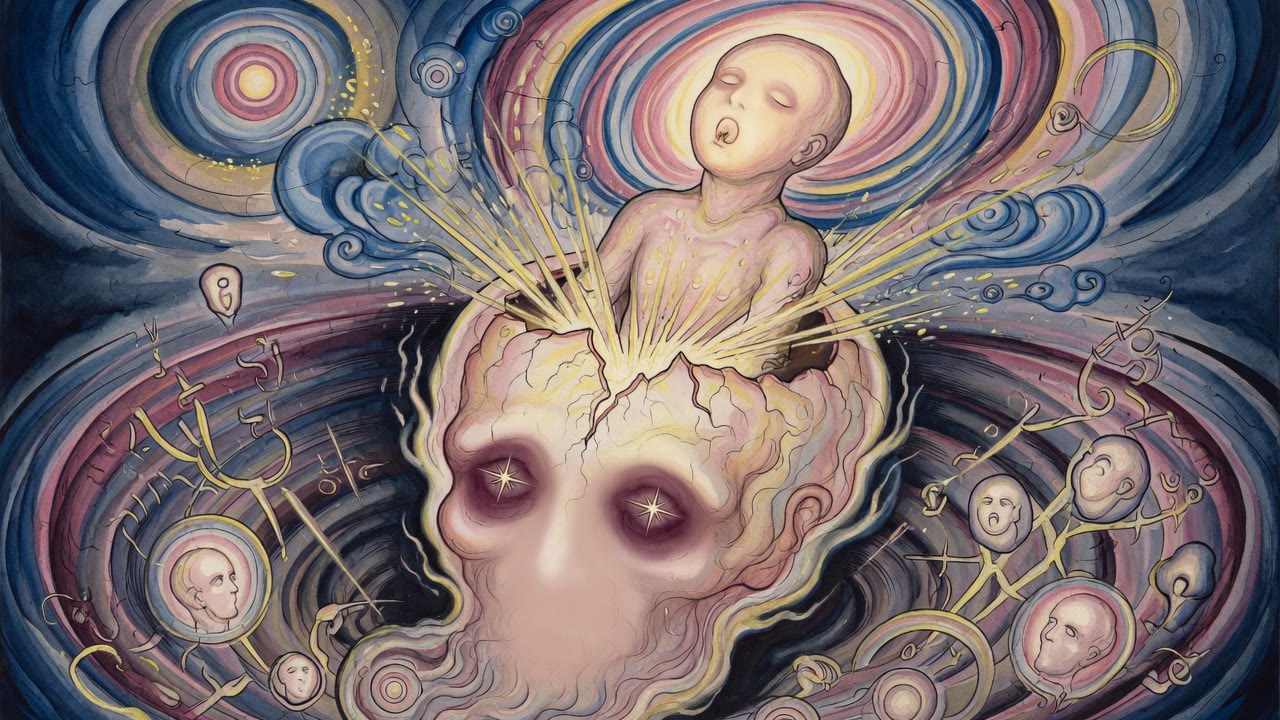
Isaac alone kept the name he was given before he existed. He was Yitzchak in the womb and Yitzchak on the altar his father built and Yitzchak when his eyes went dim and his sons fought over his blessing. Nothing was added. Nothing was corrected. The name handed down before his birth was already finished, with no room left in it to grow, because the one who spoke it does not guess.

The Builder Named for Peace

Centuries downstream there was a king who wanted to build a house for God, and could not. David had blood to the elbows from a lifetime of war, and the voice told him plainly that a man with that much killing in his hands would not raise the walls of a holy place. The house would wait for a son. And the voice did the strange thing again. It named the son before the son was born.

"A son will be born to you who will be a man of rest," the word came to David, "and his name will be Shlomoh" (I Chronicles 22:9). Shlomoh, from shalom, peace, the quiet that David himself would never be allowed to keep. The name was a prophecy folded into a syllable. This boy, not yet conceived, would have rest on every side, and in that rest he would build the thing his father only dreamed of. The fighting king heard the peaceful name of the child who would finish his work, and the name was the promise.

A Word Hurled Across Three Hundred Years

The boldest of the three names was not spoken to a parent at all. It was shouted at an altar.

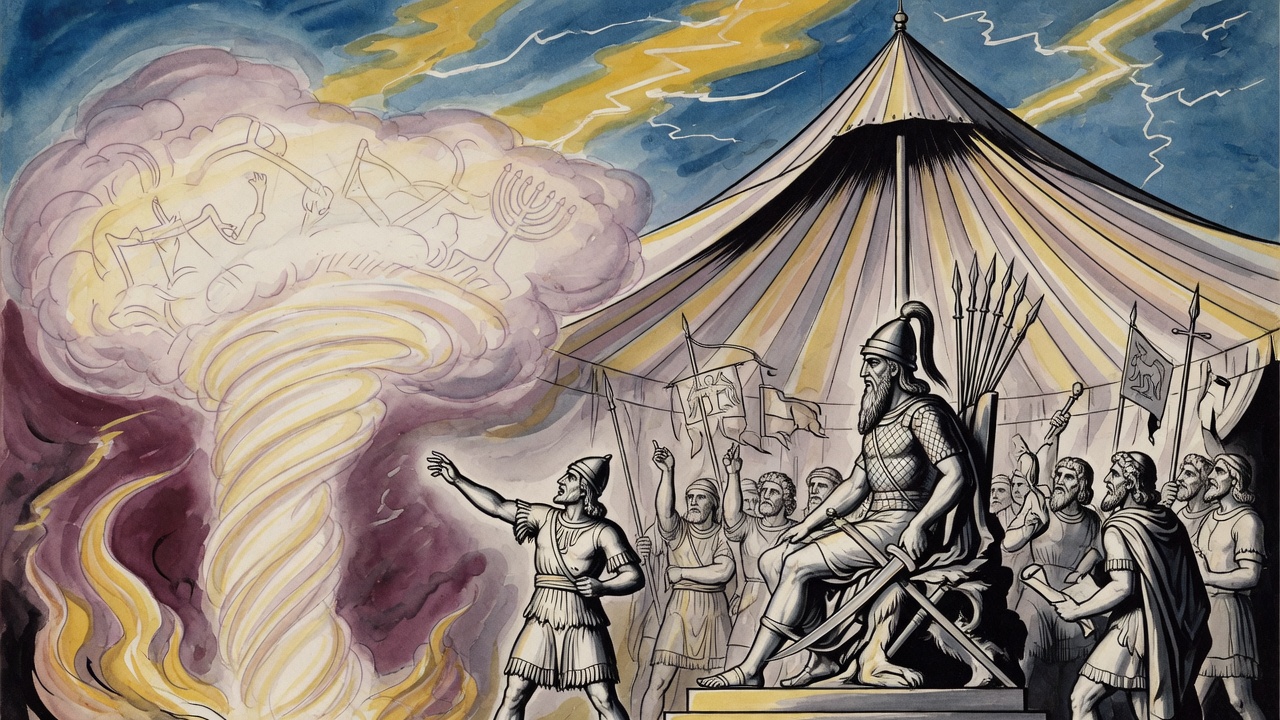
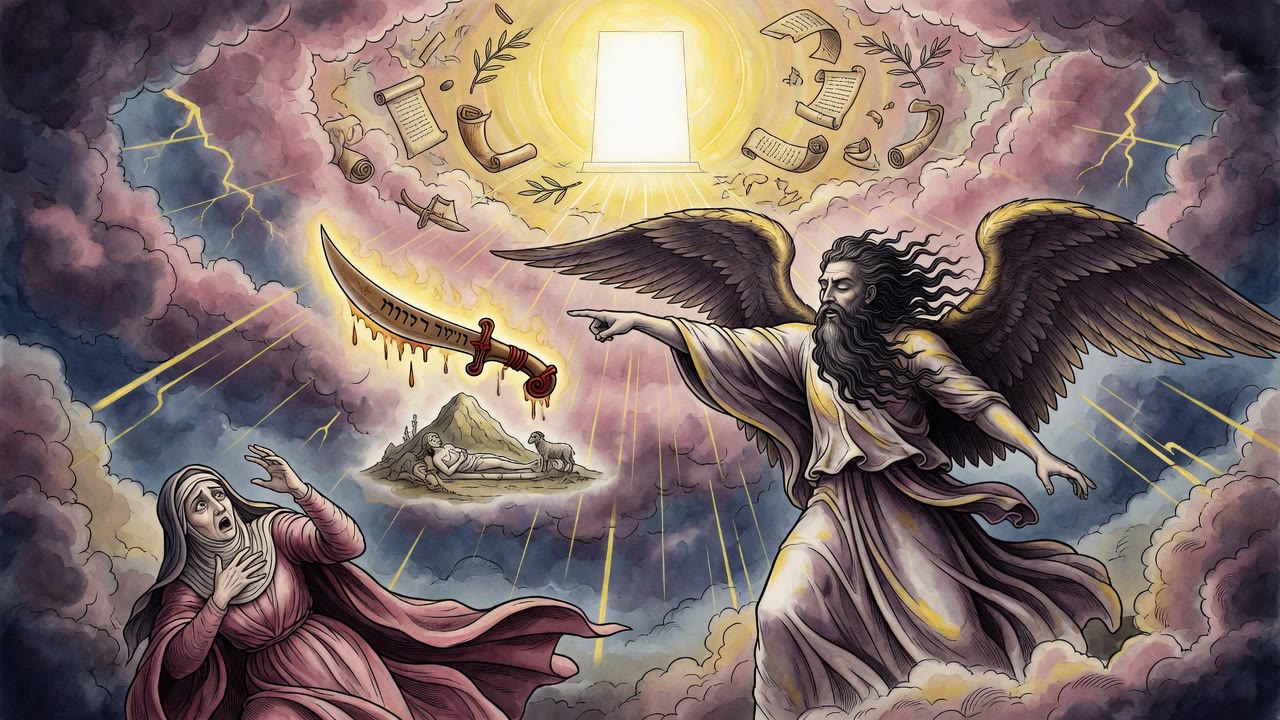
A king of Israel stood at Bethel beside a stone altar he had built for his own gods, his hand stretched out over the fire, and a man of God came up from Judah and cried out, not at the king, but at the altar itself. "Altar, altar," the man called, as if the stones could hear him. A son will be born to the house of David, Yoshiyahu by name, and on you he will burn the bones of these priests (I Kings 13:2).

The king reached out to seize the man, and the king's arm withered where it pointed and would not come back to him. The altar split. Ash poured out of the broken stone onto the ground. And the name hung in the smoke, the name of a child who would not be born for the better part of three hundred years, attached already to a deed he would do at this exact pile of rock.

The Name Keeps Its Appointment

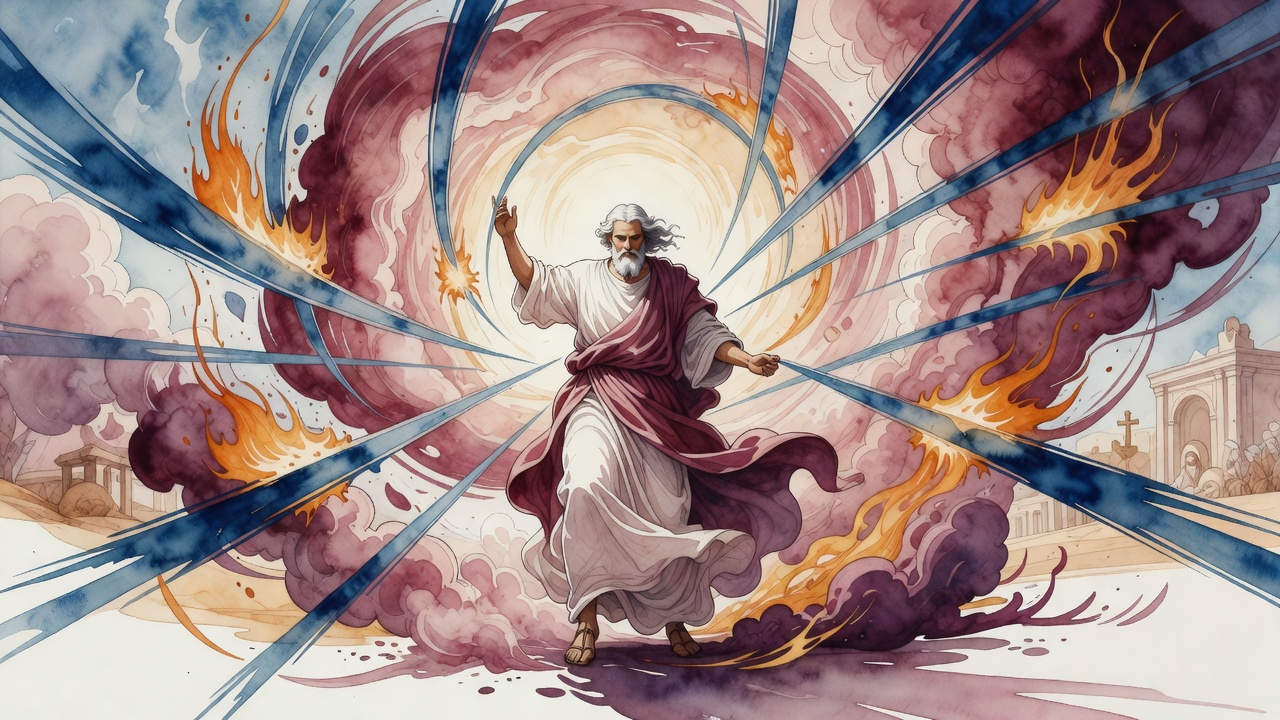
The boy came at last, far down the line of kings, most of them rotten, the country sliding toward ruin. Josiah took the throne as a child and grew into a man who could not stand the idols his fathers had fed. He tore down the high places. He smashed the pillars. He came at last to Bethel, to the old broken altar, and he did the thing a stranger had screamed over an empty future before his great-grandfathers were born. He pulled the bones of the dead priests from their graves and burned them on the stones, exactly there, exactly as the voice had said, the name finally catching up to the deed it had been promised to.

Three names, then, across the whole long scroll of Israel's people. Isaac, before there was a child to laugh. Solomon, before there was a builder to rest. Josiah, before there was a hand to clean the altar. Three words spoken into empty air that the air kept, and the years kept, and the children kept, until each one walked out of his mother and into the name that had been waiting for him all along.


← All myths
From the tradition

Sources

4 sources

The texts this telling draws on, in full. Open a card to read inline, or expand it for a wider, quieter read.

Mekhilta Tractate Pischa 16:16Mekhilta DeRabbi Yishmael

The passage from the Mekhilta on Tractate Pischa observes that while many biblical figures received new names, the name of Yitzchak was never changed, for he was called thus from the very start by the Holy One Blessed be He. Abram became Abraham and Sarai became Sarah, but Isaac carried throughout his life the name given before his birth. From this the rabbis draw a small list of those whose names were fixed in advance by G-d Himself, naming three within Israel: Yitzchak, Shlomoh, and Yoshiyahu.

Each name is anchored in a verse. For Yitzchak the proof is (Genesis 17:19) "But Sarah your wife will bear a son for you and you shall call his name Yitzchak," spoken to Abraham while the child was still unborn. For Shlomoh the proof is (I Chronicles 22:9), where G-d tells David that the son who will build the Temple "will be his name," a peaceful name for a peaceful reign. For Yoshiyahu the proof is the remarkable prophecy in (I Kings 13:2) "A son will be born to the house of David. Yoshiyahu will be his name," announced generations before the king was born, foretelling the one who would tear down the altar at Beth El.

The passage closes with a dissenting voice. Others say that Yishmael too was named in advance by G-d, but they place him among the gentiles rather than within the count of Israel, since his name as well was given before birth in the words spoken to Hagar.

Full source
Mekhilta Tractate Pischa 16:11Mekhilta DeRabbi Yishmael

Rabbi Shimon ben Yochai offered his own parable to explain the same prophecy from Jeremiah, that a future redemption would overshadow the memory of the Exodus. His version is sharper, more visceral, and rooted in the experience of danger rather than the experience of love.

A man was traveling on the road when a wolf attacked him. He fought the animal off and survived. From that day forward, he told everyone about his encounter with the wolf. It became his signature story, the time he faced death and walked away. The wolf defined him.

Then, later, a lion attacked him. He survived again. And from that moment, he stopped telling the wolf story entirely. Now he only spoke about the lion. The greater danger erased the memory of the lesser one.

Rabbi Shimon ben Yochai's parable reframes the relationship between the Exodus and the future redemption in terms of magnitude. Egypt was the wolf, terrifying, life-threatening, unforgettable. But the sufferings of later exiles, and the eventual final redemption from them, would be the lion. Not because the Exodus was insignificant, but because the scale of what came after would be so much greater that the earlier deliverance would pale by comparison.

There is something bracing about this teaching. Rabbi Shimon ben Yochai does not sugarcoat the implication: Israel's future suffering would be worse than Egypt. But the redemption from it would be proportionally more glorious. The worse the lion, the more astonishing the survival. And the more completely the old wolf story fades from memory.

Full source
Pirkei DeRabbi Eliezer 32:6Pirkei DeRabbi Eliezer

The ancient texts certainly thought so. the tradition turns to Pirkei DeRabbi Eliezer, a fascinating work of Jewish literature that dives deep into biblical narratives, expanding on them with vibrant stories and interpretations.

It asks a simple question: How do we know about Solomon and Josiah? But the answer is far from simple. It's a journey into the very essence of their being, encoded in their names.

Take Solomon, for example. "Behold, a son shall be born to thee, who shall be a man of rest,… for his name shall be Solomon" (1 Chronicles 22:9). But why Solomon? It's because his name was called Solomon in the Aramaic language. And what does Solomon evoke? Shalom. "I will give peace (Shalom) and quietness unto Israel in his days" (ibid.).

Shalom, that powerful Hebrew word meaning peace, wholeness, completeness. It's more than just the absence of war; it's a state of harmony, of everything being in its right place. Solomon, the king whose reign was marked by unprecedented peace and prosperity, embodied that very essence. His name wasn’t just a label; it was a prophecy fulfilled, a promise whispered into existence.

And then there’s Josiah. "Behold, a child shall be born unto the house of David, Josiah by name" (1 Kings 13:2). Here, the reasoning takes a slightly different turn. His name, Josiah, was chosen because he was "as acceptable as an offering upon the altar." An offering. A sacrifice.

The text quotes a voice, perhaps that of a prophetess, declaring: "A worthy offering let him be before Thee." And so, his name was called Josiah. The verse continues, "And he cried against the altar," etc. (1 Kings 13:2). This refers to Josiah's bold act of religious reform, his tearing down of pagan altars and restoring the worship of God. He was, in a sense, a living sacrifice, dedicating his life to a higher purpose, cleansing the land of idolatry.

What's striking about these interpretations is how names are not seen as arbitrary. They’re considered powerful conduits, connecting individuals to their destinies, to the very purpose for which they were brought into this world. They are echoes of a divine plan, resonating through time.

It makes you wonder, doesn’t it? What’s in a name? Perhaps more than we realize. Perhaps our names, too, hold subtle clues, whispering hints about our potential, our purpose, and the unique contribution we're meant to make to the world. Maybe all we need to do is listen.

Full source
Pesikta DeRav Kahana 2:6Pesikta de-Rav Kahana

Rabbi Yudan opened: "The tongue of the just is as choice silver: the heart of the wicked is worth little" (Proverbs 10:20). "The tongue of the just is as choice silver": this is what the prophet foretold. "The heart of the wicked is worth little": this is Jeroboam. This is what is written, "And, behold, there came a man of God out of Judah by the word of the LORD... and he cried against the altar by the word of the LORD, and said, O altar, altar" (1 Kings 13:1-2). And why "altar, altar" two times? Rabbi Abba bar Kahana said: The altar that was in Bethel and the altar that was in Dan.

What did he cry out against it? "Behold, a child shall be born unto the house of David, Josiah by name; and upon thee shall he sacrifice the priests of the high places that burn incense upon thee" (1 Kings 13:2). It is not written there "and the bones of Jeroboam shall be burned upon thee," but rather "and men's bones shall be burned upon thee" (1 Kings 13:2). This teaches that he showed honor to the monarchy, for it is written, "And it came to pass, when king Jeroboam heard the saying of the man of God, which he cried against the altar in Bethel, that Jeroboam put forth his hand from the altar, saying, Lay hold on him" (1 Kings 13:4).

Rabbi Huna said in the name of Rabbi Idi: The Omnipresent had more concern for the honor of the righteous man than for His own honor. He stood and offered to idolatry, yet his hand did not wither; but as soon as he stretched out his hand against the righteous man, his hand withered. This is what is written, "and his hand, which he put forth against him, dried up" (1 Kings 13:4).

"And the king answered and said unto the man of God, Entreat now the face of the LORD thy God, and pray for me" (1 Kings 13:6). Two Amoraim differed. One said: "thy God" and not my God. And the other said: With what face does he call Him "thy God"? He stands and offers to idolatry, yet he calls Him "thy God"! Even so, "And the man of God besought the face of the LORD, and the king's hand was restored to him, and became as it was before" (1 Kings 13:6). What is the meaning of "as it was before"? Rabbi Berekhiah and Rabbi Yudah son of Rabbi Simon in the name of Rabbi Joshua ben Levi: If you pound a fool in a mortar of sorcerers, you gain nothing from him. Just as at first he stood and offered to idolatry, so also a second time he stood and offered to idolatry.

Another interpretation: "The tongue of the just is as choice silver" (Proverbs 10:20): this is the Holy One, blessed be He, who made choice of His speech to Moses and said, "When thou takest the sum of the children of Israel" (Exodus 30:12).

Full source