3,491 texts · Page 1 of 73
We read the first chapter of Genesis and it feels so…orderly. But there are other stories, wilder tales, that offer a glimpse into creation’s messy, mysterious birth. Let's journey...
Jewish tradition offers some pretty fascinating, and sometimes unsettling, answers. Take the story of Satan's fall from grace. It's not just a simple tale of rebellion; it's a comp...
The ancient texts offer tantalizing, awe-inspiring visions, and one of the most vivid comes from the story of Enoch. Enoch, as we learn from 1 Enoch, wasn't just any man. He was ri...
One such story, preserved in Vita Adae et Evae (The Life of Adam and Eve), tells of a remarkable vision. It's a bit obscure, not as well-known as other heavenly journeys like Enoch...
Jewish tradition is filled with stories of those who dared to try. One of the most famous of these accounts involves four prominent sages who, according to the Talmud (Hagigah 14b)...
What we see here is just a reflection of something far grander: the rainbow of the Shekhinah (the Divine Presence). The Shekhinah, often translated as "Divine Presence," is the asp...
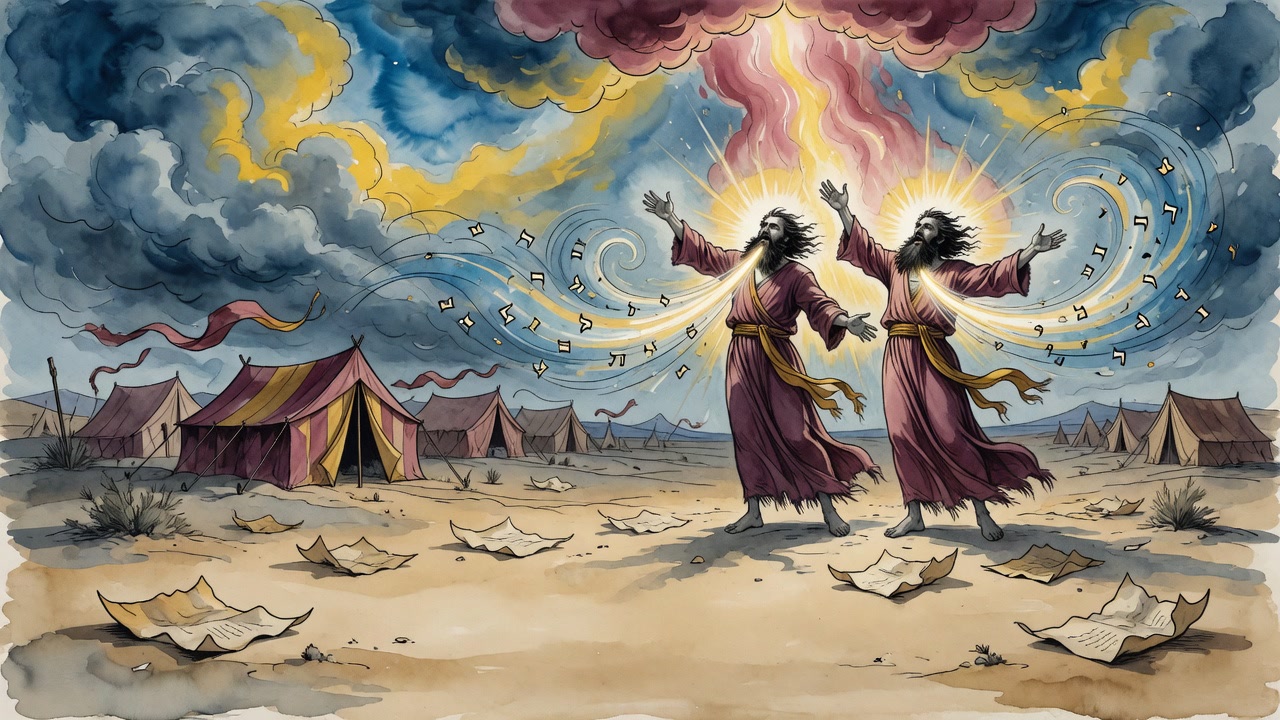
We often picture Moses on Mount Sinai, receiving the divine word directly from God. Forty days and forty nights of dictation. But what if I told you there's another story, a fascin...
The land was barren. A terrible famine gripped the region, forcing Abraham and Sarah to seek refuge in Egypt. They first tried Hebron, but the hunger was everywhere. So, they journ...
I'm talking about the Akedah, the binding of Isaac. We all know the story: Abraham, tested to the absolute limit, raises his knife to sacrifice his son Isaac. It's a scene that chi...
Jewish tradition is rich with stories of dreams and visions, and the power they hold. One particularly striking tale, found in Tree of Souls by Howard Schwartz, tells of a dream th...
Was Jacob, the patriarch, just an ordinary man? Tradition whispers secrets, suggesting his story is far grander than we might imagine. Some even say his true name was Israel, and t...
The story goes that one night, long after leaving Eden when Cain and Abel were young men, Eve was shaken awake by a horrific vision. As The Penitence of Adam (22:2:1-23:3:2) tells ...
"For the pool of passion is sin, and its spring will pour out filth." Ouch. It's not subtle, is it? Ben Sira uses the metaphor of a pool fed by a polluted spring to illustrate how ...
It’s a question that’s haunted humanity for ages, and it’s one the Book of Ben Sira, a work of wisdom literature not included in the Hebrew Bible but valued in Jewish tradition, gr...
Ben Sira, that ancient sage, had some thoughts on that. And let me tell you, they’re as relevant today as they were back then. He starts with a warning: "Hath he need of thee? Then...
The Book of Ben Sira, a treasure trove of wisdom literature (also known as Sirach or Ecclesiasticus), certainly thinks so. It tells us plainly: "The eyes of God see his works; And ...
It’s a cry, a yearning for divine intervention. "Shake thy hand over the strange people; And let them see thy mighty acts." It's a powerful image, isn't it? A call for God to revea...
It pulls no punches in its call for humility and divine justice. Ben Sira, a sage writing in Hebrew around 200 BCE, gives us these powerful words: "Make an end of the head of the p...
It’s a question that goes way back, and one fascinating glimpse into it comes from the Book of Ben Sira. Now, Ben Sira isn’t part of the core Jewish biblical canon as we know it (t...
Today, let's talk about Yehoshua Ben Nun – Joshua, son of Nun – a figure who embodies that very idea. Ben Sira, in his wisdom, paints a vivid picture of Yehoshua. He calls him "a w...
Ben Sira, in chapter 46 of his wisdom text, paints a vivid portrait of Samuel, a leader renowned for his unwavering faith and powerful connection to God. It's a portrait that reson...
That’s the feeling I get when I read this small passage from the Book of Ben Sira. It's a book of wisdom literature, a mussar sefer if you will, offering ethical teachings from a s...
Ben Sira doesn't mince words, does he? He calls him "wide in stupidity and lacking in wisdom." Ouch! Reḥov'am, was the son of King Solomon, a hard act to follow to begin with. But ...
Or Eliyahu, as he's known in Hebrew. He wasn't exactly known for his gentle touch. Ben Sira, in chapter 48, paints a picture of a man of intense zeal. “And he shattered their staff...
This tale, found in the book of Ben Sira (Sirach), one of the Deuterocanonical books, really brings home the power of faith and righteous action in the face of overwhelming odds. I...
Jewish tradition understands that feeling deeply, and sometimes, the simplest phrases carry the weight of generations trying to break free. Take this seemingly straightforward stat...
There are other ancient Jewish texts that fill in the gaps, offering fascinating, sometimes startling, glimpses into what might have been. One of those is the Book of Jubilees. Jub...
The Book of Jubilees, a text not included in the Hebrew Bible but cherished by some, especially in Ethiopian Orthodox tradition, offers a fascinating glimpse. It expands on the fam...
The Book of Jubilees, a text considered canonical by some ancient Jewish groups but not included in the standard Hebrew Bible, offers a unique perspective on this. In Jubilees 4, w...
The Book of Jubilees, an ancient Jewish text, offers us a glimpse into his extraordinary life. This book, considered scripture by some, expands on the biblical narrative, filling i...
Something went terribly wrong in the early days of the world. According to the Book of Jubilees, a group of ancient texts dated to approximately 160-150 BCE, the children of men mu...
To a fascinating, if troubling, passage from the Book of Jubilees. Now, the Book of Jubilees isn't part of the standard Jewish biblical canon, the Tanakh. But it's a hugely importa...
It's considered part of the apocrypha or deuterocanonical texts by some, and is especially important in Ethiopian Orthodox tradition. It's an ancient Jewish writing that retells th...
Jubilees, for those unfamiliar, is a Jewish work of the Second Temple period. It retells the stories of Genesis and Exodus but with a unique theological slant and additional detail...
We're not talking politics here, but something far older, something almost mythical. Let's turn to the Book of Jubilees, an ancient Jewish text also known as Lesser Genesis, that o...
Here, we get a glimpse into a celestial negotiation, a cosmic bargain struck about the fate of humanity. It's a negotiation that hinges on a character you might not know so well: M...
Sometimes, the answer is simpler – and more personal – than you might think. Take the story of Madai. We find him in the Book of Jubilees, hanging out in the land of Media, close t...
This ancient text, considered apocryphal by some but deeply revered in others, offers a unique perspective on biblical narratives. Picture this: it’s the new moon of the seventh mo...
Jubilees, considered deuterocanonical (meaning it's included in some versions of the Bible but not others), gives us some incredible detail about Abraham's life, filling in gaps an...
The Book of Jubilees, a fascinating text considered canonical by some but relegated to the Apocrypha by others, offers a glimpse into such a reality. Specifically, Chapter 23 paint...
The Book of Jubilees, a fascinating text considered canonical by some but not included in the standard Hebrew Bible, takes us back to a time of literal hunger, a time when such fun...
That feeling, that burning resentment, is at the heart of our story today, straight from the Book of Jubilees, a text that expands on the stories we find in the Torah itself. We’re...
Laban, his father-in-law, is off shearing sheep – a detail that might seem trivial, but remember, in those days, that was a big deal, a whole event. And Jacob? He senses a shift. H...
That’s exactly where Jacob found himself in the Book of Jubilees. He'd been living with his uncle Laban for years, working hard, and things were...complicated. The Book of Jubilees...
The Book of Jubilees gives us a peek into the morning after. Imagine Jacob, still buzzing with the memory of his encounter with the Divine, rushing to tell his father, Isaac. He re...
After Jacob's direct encounter with the Divine, something unexpected happens. The text says, "He finished speaking with him, and He went up from him, and Jacob looked till He had a...
Rebecca, the matriarch of our people, certainly did. The Book of Jubilees, an ancient Jewish text that expands on the stories in Genesis, gives us a glimpse into her final days. It...
Forget the sanitized Sunday school version for a moment. to a raw, unfiltered account from the Book of Jubilees. The Book of Jubilees, sometimes called Lesser Genesis, offers a det...
Korah was among the wealthiest men in the ancient world. The rabbis traced his fortune to a hidden treasury Joseph had built and then never claimed for himself.
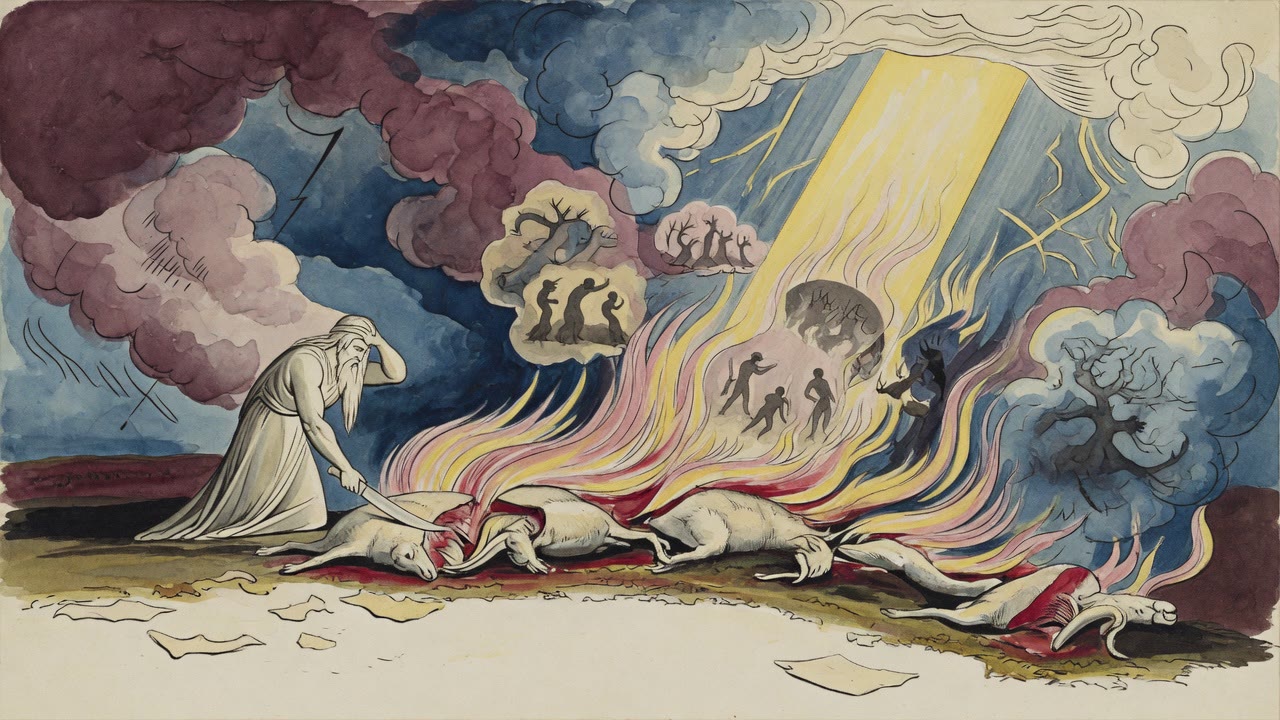
When God made the first covenant with Abraham, it involved a smoking furnace passing through dismembered animal carcasses at night. The rabbis describe what Abraham saw in that darkness — and it wasn't reassuring.
Hagar was an Egyptian slave woman cast into the wilderness twice with nothing. Both times she met God. She is the only person in the entire Torah who gave God a name.
When Rebecca felt her twin sons struggling in her womb, she went to inquire of God — and received an oracle about two nations at war for the rest of history. The rabbis describe what she felt and what God actually told her.
Rachel died in childbirth on the road to Bethlehem, and Jacob buried her right there instead of in the family tomb. The rabbis said this was not negligence — it was prophecy.
On his deathbed in Egypt, Jacob called his twelve sons and told each one his destiny. Some heard blessings. Some heard rebukes that echoed for centuries.
Jacob called Judah a lion's cub and promised that the scepter would not leave his tribe until the final redemption. Two thousand years of Jewish history have not cancelled that promise.
Most people remember Jacob stealing the blessing. The Book of Jubilees remembers what happened after, when Esau lifted his voice and wept.
Jacob gathered his sons to bless them and then spoke a name none of them knew. Four centuries later, that name would walk out of Egypt.
In the Apocalypse of Abraham, the Covenant Between the Pieces becomes a cosmic ascent. Abraham ends up in the seventh heaven looking down at the end of history.
Three ancient sources tell the story of Abraham's journey to Egypt — and together they reveal a patriarch who was as much philosopher and astronomer as wandering herdsman.
When Noah cursed Canaan after the flood, it looked like a bitter old man's rage. Centuries later, the prophet Joel revealed it was something else entirely.
In Abraham's vision of the Temple, he saw not only its divine beauty but the idol of jealousy already standing within it — placed there by his own descendants.
On his deathbed, Jacob blessed the tribe of Dan and glimpsed Samson's life in prophetic vision. For one moment, he believed the deliverer had finally come.
When Leah gave her handmaid Zilpah to Jacob, no one expected the child born in secret to carry a name pointing centuries forward to Elijah the prophet.
Leah named her son Reuben — 'behold, a normal son' — but the rabbis heard something deeper: a prophecy threaded through every son of Israel.
When Rachel named her son Joseph, she didn't just express a hope. She made a prophecy that fractured the twelve tribes — and never knew it.
Rebekah's burial was hidden because only Esau was free to mourn her. Two texts reveal the sorrow she carried from womb to grave.
When Jacob blessed his son Dan, his eyes went forward through centuries to a strongman he mistook for the Messiah. Here is what he saw.
God told Enoch the flood was coming, gave him thirty days to warn his children, and promised His books would survive the catastrophe.
When Levi and Judah walked toward Isaac, the darkness over his eyes lifted. What he saw made him prophesy over them both, splitting the future of Israel in two.
Isaac, Solomon, and Josiah were named by God before their mothers conceived them. The rabbis counted carefully and found only three in all of Jewish history.
When Abraham chased the four kings to the place called Dan, God showed him what would happen there centuries later. What he saw broke him mid-pursuit.
Esau never spoke his plan to kill Jacob and Ishmael aloud. Midrash Tehillim says God quoted it back to him anyway, word for word.
Every tribe had a grievance against Esau. But only one of Jacobs sons could make him fall silent, and the reason goes back to a pit in Dothan.
The Torah says God descended to see the Tower of Babel. Onkelos refused to let that stand. What he changed reveals an entire theology hidden in plain sight.
Jacob fled to Aram because Esau wanted to kill him. But the rabbis reveal Esau had an even darker scheme, a conspiracy with Ishmael that nearly erased Israel's future.
Why did God tell Abraham what He was about to do to Sodom? Not out of courtesy. Because Abraham had earned the seat of a trusted counselor beside the divine throne.
Jacob trembled before Edom's armies. God answered with a question about fire. The prophet Obadiah, raised among the wicked, becomes the avenger no one saw coming.
Every great prophet had a moment when God deliberately hid the answer from them. Aggadat Bereshit says this was not punishment. It was the point.
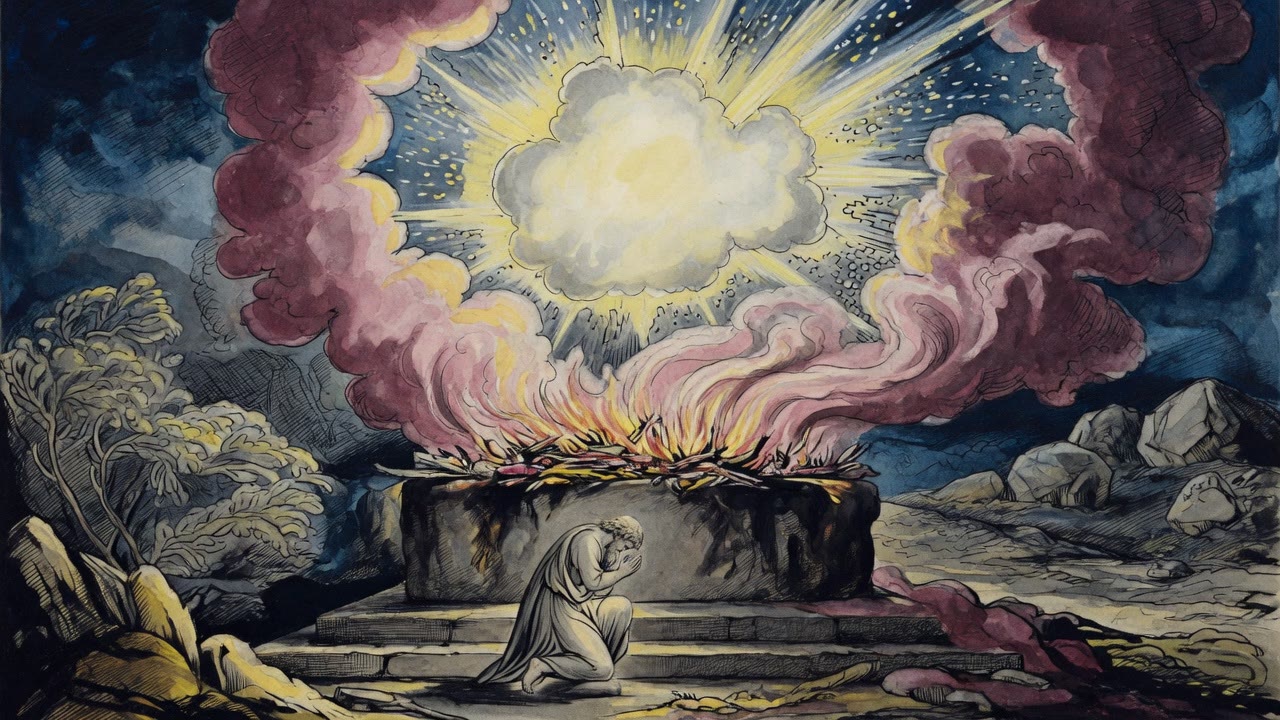
When Elijah built his altar on Mount Carmel from twelve stones, he was invoking a name God had given Jacob centuries before — and a warning God had buried inside it.
The Torah says God spoke to Rebecca directly. The rabbis of Bereshit Rabbah quietly disagreed, and what they said instead is stranger and more beautiful.
When Nimrod threw Abraham into the fire, God did not save him for his own sake. The rabbis say it was Jacob, not yet conceived, who earned Abraham's rescue.
Before the first man had a soul, his body stretched from one end of the world to the other. God used that giant, lifeless form to show Adam every person who would ever be born.
Noah had a secret name his grandfather hid from sorcerers. What that hidden name reveals about the man who saved every living thing.
Eight kings ruled Edom and vanished before a single Israelite sat on a throne. The rabbis read their list as a prophecy, not just a genealogy.
Joseph wept three times at dinner before his brothers. Each time he stepped out, composed himself, came back. The rabbis knew what he was seeing.
On the night Jacob slept at Bethel, God compressed all of Jewish history into a single vision, and Jacob woke up changed forever.
Bereshit Rabbah claims God almost never spoke directly to women. Sarah was the exception, and the rabbis had to explain why.
Three times in Genesis an angel meets Hagar in the wilderness. Bereshit Rabbah and the Midrash of Philo disagree about who she really spoke to.
After Abraham and Lot parted, God told Abraham to look north, south, east, and west. The land was the promise. The four empires were also the promise.
Rebekah sent Jacob away and said she would not lose both sons in one day. It was a prophecy. It was fulfilled the day Jacob was buried and Esau was killed.
Pharaoh tested Joseph by leaving gaps in his dream. Joseph filled every gap, because God had sent him the same vision that same night in his prison cell.
The rabbis debate what Sarah saw Ishmael doing. A prophecy explains why he dwelled among his brothers while Abraham lived and fell the moment Abraham died.
Esau lived by the sword and lent money at interest. The rabbis taught that everything he accumulated was destined to flow back to Israel.
Adam carried forty curses after Eden and the weight of having been the standard against which all human life is measured.
Enoch did not just walk with God. He mapped the movements of stars and seasons into a book that would outlast the flood itself.
When Enoch took a wife and fathered Methuselah, he also wrote down everything the angels had shown him and left it buried for those who would come after.
Abraham spent an afternoon chasing birds from his sacrifice at Mamre. At sunset in horror, God told him his seed would be slaves for four centuries.
Between the cut animals, a deep sleep fell on Abram. What he saw was not a promise first. It was a nightmare about exile and four crushing kingdoms.
Jubilees gives Jacob a prophecy that reads like an eyewitness account. War, grey-haired children, prayers unanswered. He had to live with what he had seen.
When Isaac's sight returned long enough to see Jacob's sons, he wept and prophesied. He put Levi on his right and saw the priesthood in his face.
Jacob's dying prophecy gave Judah a crown no one expected. The tribe that stumbled through scandal became the one Israel would follow.
Jubilees records how Jacob's sons held the tower against four thousand men. Judah led from the south, and what he did there is why the crown landed on his line.
The ancient sages taught that the Land of Israel was not merely a place Israel would inhabit but a landscape that had been matched to them from before creation.
Naphtali described two visions from childhood: his brothers rode the sun and stars while Joseph stayed on earth, and a ship that wrecked because of jealousy.
Judah's sons died when they married Tamar. When he withheld his third son, she went to the crossroads in disguise. She knew the pledges would seal a royal line.
Lamech's son was born glowing with strange light. Methuselah walked to the ends of the earth to find Enoch and came back with one name and one prophecy.
Ham got the south. Japheth got the north. Shem got the middle. The world's three temperatures were not accidental. They were the shape of a moral inheritance.
When Rebekah first saw Isaac, an angel walked beside him. The holy spirit struck her with a vision of the son she would bear. And she fell.
No other woman had suffered what Rebekah suffered. She went to the oldest living man she could find, Shem son of Noah, and demanded an answer.
Esau was born with a beard, fully formed, blood-red, bearing the mark of a serpent. Every sign at his birth pointed toward what he would become.
Joseph told his brothers their sheaves bowed to his. The rabbis heard a prophecy inside it: about idols, the Messiah of Joseph, and centuries of consequence.
Joseph lost his way searching for his brothers near Shechem. The angel Gabriel appeared and told him the Egyptian bondage was beginning that very day.
Before Joseph reached Dothan, his brothers had already made plans to kill him. God heard every one and answered: we shall see whose word stands, yours or Mine.
When Leah named her fourth son Judah, she gave thanks for something that went beyond motherhood. The rabbis say the land itself was waiting for his birth.
Judah walked right past Tamar without stopping. It took divine intervention -- a specific angel appointed over passion -- to turn him back. The rabbis ask why.
Joseph's last prophecy was about the oppression ahead, the deliverance promised after, and the bones his brothers must carry when they leave Egypt.
The twelve tribes' names are not twelve separate words. The rabbis heard them as one continuous sentence about redemption, spoken across twelve generations.
Naphtali was 132 when he told his children he was dying. His warning was simple: fear God. His visions of ships and stars explained everything else.
Levi was pasturing his father's flocks when the spirit of understanding came upon him. What he saw in that vision shaped everything he did afterward.
Levi dreamed of a brass shield, then found one on the road to Shechem. What he did next cost his father's blessing and earned him the heavenly record.
Centuries before the Temple was built, a patriarch warned his children: act like Sodom and your sanctuary will fall. He had read it in the tablets of heaven.
When Balak complained that Israel violated a treaty from Noah's time, he was already prophesying his own disgrace without knowing it.
Before he died, Jacob made two Egyptian-born boys into full tribes of Israel, ensuring the son his brothers tried to erase would have double the share.
After Jerusalem fell, some argued the sin was too great for return. The Kabbalists answered them directly, and the answer was not simple comfort.
Joseph interpreted Pharaoh's dream with a precision that looked like prophecy, but Rabbi Levi Yitzchak of Berditchev found something more remarkable hidden in the wording: Joseph deliberately left a theological escape hatch so that a righteous person could override the decree.
On his deathbed, Jacob gathered his twelve sons to tell them exactly when the Messiah would come. The Shekhinah departed from him at that moment, and he died without speaking the secret.
Psalm 14 describes a place where fear exists and does not exist simultaneously. The rabbis of Midrash Tehillim read that contradiction as the hidden psychology of exile, and tied it to the longest messianic wait in Jewish history.
Midrash Tehillim on Psalm 45 contains a remarkable statement from Rabbi Elazar: in the messianic future, every single Israelite will have descendants as numerous as those who left Egypt at the Exodus, six hundred thousand. This tradition reads Joseph's dreams not as personal ambition but as a vision of exponential blessing written into the DNA of the covenant.
The night God renamed Abram as Abraham was not a simple ceremony. It was a transformation that the stars themselves witnessed, and it carried a secret about prophecy that the rabbis preserved for centuries.
When God promised Abraham that his descendants would be enslaved in a foreign land, He also set a limit on how long that foreign land's power could last. Pirkei DeRabbi Eliezer preserves a tradition that God places fixed limits on the duration of empires, but only under two specific conditions, and the Egyptian bondage was one of them.
A weary traveler finds a tree that gives everything, fruit and shade and water, and realizes he has nothing to offer it in return. Yalkut Shimoni uses this image to describe Abraham's relationship to Torah, arguing that the patriarch who discovered the entire tradition before it was given at Sinai was like a tree whose saplings are the only fitting blessing.
Sifrei Devarim teaches that the Temple rests on Benjamin's shoulders whether it stands or lies in ruins, and that even during the centuries of destruction the sanctity of the site never diminished. This is not consolation theology; it is a precise claim about where holiness lives.
Every other patriarch was buried in the Cave of Machpelah. Rachel alone was left at the roadside near Bethlehem. The rabbis wanted to know why.
The Torah says God showed Moses the land. The Sifrei Devarim says God showed Moses everything: the peaceful settlements and the oppressors, the destroyed cities and the future exile, and finally, the last second of Moses' own life.
The Torah calls Hagar a maidservant. The ancient Aramaic tradition calls her a daughter of Pharaoh, Egyptian royalty who gave up a palace to serve in Abraham's household, and whose descendants would number more than the stars.
The Torah says Sarah saw Ishmael playing and demanded he be sent away. The ancient Aramaic tradition says she saw him worshipping an idol, and that her prophetic vision was what drove one of the most painful decisions in Abraham's life.
When the royal butler dreamed of three branches of grapes in Pharaoh's dungeon, Joseph saw far more than a prediction about wine. Targum Jonathan shows how he decoded the dream as a compressed history of Israel's slavery, redemption, and the role of all three patriarchs in Egypt's future.
When Joseph's brothers returned to Egypt with Benjamin, Targum Jonathan reveals that Joseph's household slaughtered and prepared the meat with the sinew removed according to Jewish law, that Jacob spoke a prophecy through the Holy Spirit before they left, and that the seating chart at dinner encoded every brother's birth history.
When Jacob gathered his twelve sons on his deathbed to bless them, he intended to reveal the messianic end-time. The Shekhinah appeared, the tribes gathered close, and then the vision was withheld. Targum Jonathan describes what Jacob saw, what he could not see, and what the tribal blessings became in the absence of that final revelation.
The ladder in Jacob's dream was not a ladder. It was a catalog of everything that would ever happen to Israel, from Sinai to the Temple's destruction, shown to one man asleep on a stone.
When Jacob lay down at Bethel, he didn't just see a ladder. He saw the Temple rising and falling in prophetic fire, centuries before a single stone was laid. The Midrash says the spot chose him, and what he saw there haunted him all his days.
Before the flood came, Noah spent 120 years pleading with humanity to turn back. Jewish tradition calls him a prophet — the first prophet to warn a doomed generation.
When Noah emerged from the ark and planted a vineyard, the rabbis saw something stranger than a man celebrating survival — they saw a prophet encoding a vision of the end of days.
After the floodwaters receded, God turned to Shem and commissioned him as the first prophet to humanity — a prophet who would teach the nations for 400 years, beginning a chain of prophecy that ran from the ark to the end of days.
The rabbis of Bereshit Rabbah and the Book of Jubilees argue that Sodom's destruction was not a reaction to the city's crimes but the execution of a sentence inscribed in creation long before the first Sodomite built the first wall.
The rabbis of Bereshit Rabbah and the Zohar make a stunning claim: Sarah's greatness was not derived from Abraham's. She was named and prepared at creation independently, a prophetess whose vision exceeded her husband's and whose role in the covenant was primary, not secondary.
When Rebecca's pregnancy became a battlefield, she went to seek understanding — and the ancient tradition connects what she heard inside her to the deepest structures of creation and the animals that inhabit it.
Of all twelve sons of Jacob, only Judah received a blessing that sounded like a war cry and a royal decree combined. The Book of Jubilees explains why the line of kings and the hope of redemption both run through the son who once sold his brother.
On his deathbed, Naphtali told his sons about two visions he had seen as a young man, visions of ships and stars and a scattering that would not be permanent. He said he had been given these to prepare them for what was coming.
When Jacob dreamed of a ladder at Bethel, the rabbis insisted he was seeing the future of Israel across all of history. Four empires would rise and fall on that ladder. The question the tradition never stops asking is what waits at the top.
Before David arrived in the world, the years of his life had already been borrowed from another man. The rabbis found the ledger, and Abraham signed it.
When Jacob laid his head on a stone at Bethel, he did not dream of angels climbing a ladder. He saw the future site of something that would take a thousand years to build.
When Judah threatened Joseph in Egypt and demanded Benjamin's release, the rabbis said his voice was so powerful it shook the foundations of creation. The Midrash Tehillim traces that voice back to his confrontation with Esau, where Judah first discovered what he was capable of.
After wrestling with the angel at Peniel, Jacob had a second vision: an angel descended with seven tablets containing the complete future of his descendants. The Book of Jubilees records that Jacob read them, wept, and then the angel took them back.
Abraham received the promise and Isaac confirmed it -- but Jacob was the hinge on which all of it turned. Texts from Jubilees, Legends of the Jews, and the Prayer of Joseph reveal how Jacob's destiny was encoded before the patriarchs themselves were born.
Jacob received more direct divine assurances than almost anyone in the Torah -- and then spent twenty years in exile praying for their fulfillment. Ancient sources reveal how Jacob's prayer life transformed the patriarch into the model of every Jew who has ever cried out for a promise that seemed to have expired.
When Pharaoh's decree drove Amram to divorce his wife, his little daughter Miriam argued him down. Then she prophesied the child who would save Israel.
Pharaoh dreamed a single lamb outweighed all of Egypt on the scale. The three Jewish sources that tell this vision also reveal how the Exodus began not with bricks but with a nightmare.
Gold, silver, bronze, and red skins in the Tabernacle each pointed to an empire that would one day rise and rule over Israel.
God raised up Solomon and Nebuchadnezzar, David and Haman, Moses and Balaam. The Midrash says this was justice, not accident.
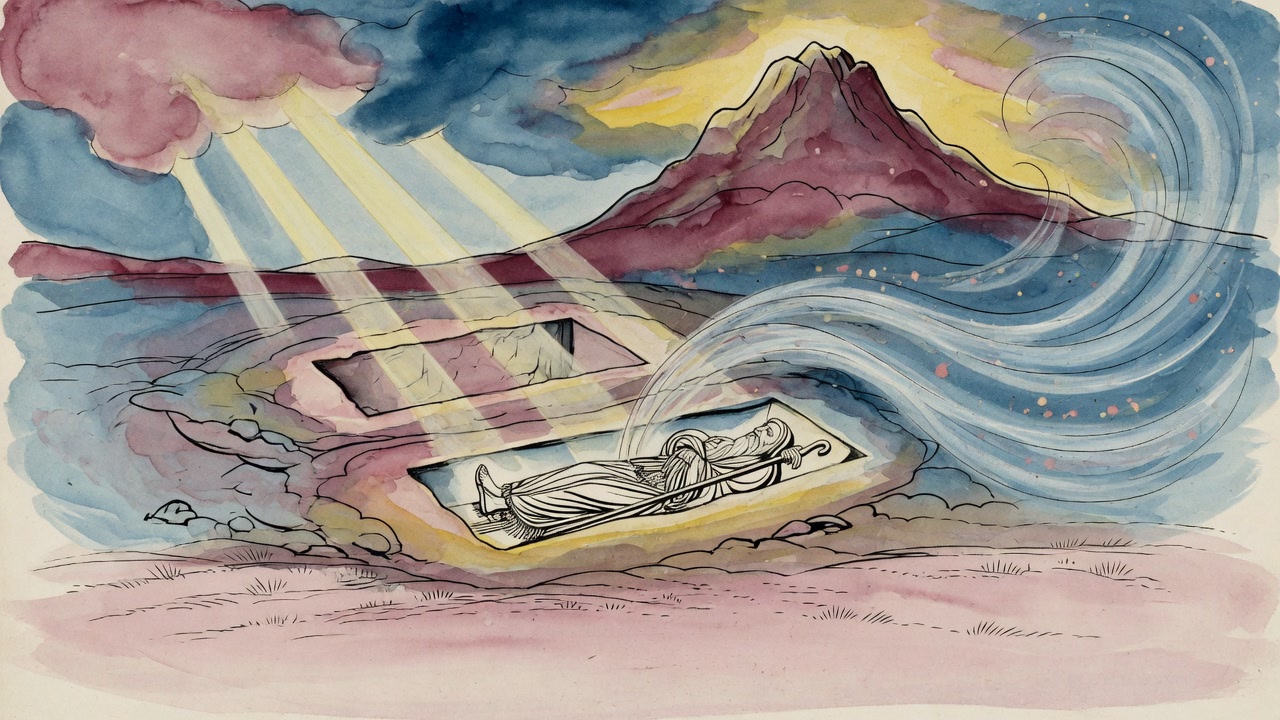
Most people assume Moses was buried by his people. The Talmud says God dug the grave himself, then hid it so well it shifts position with every observer.
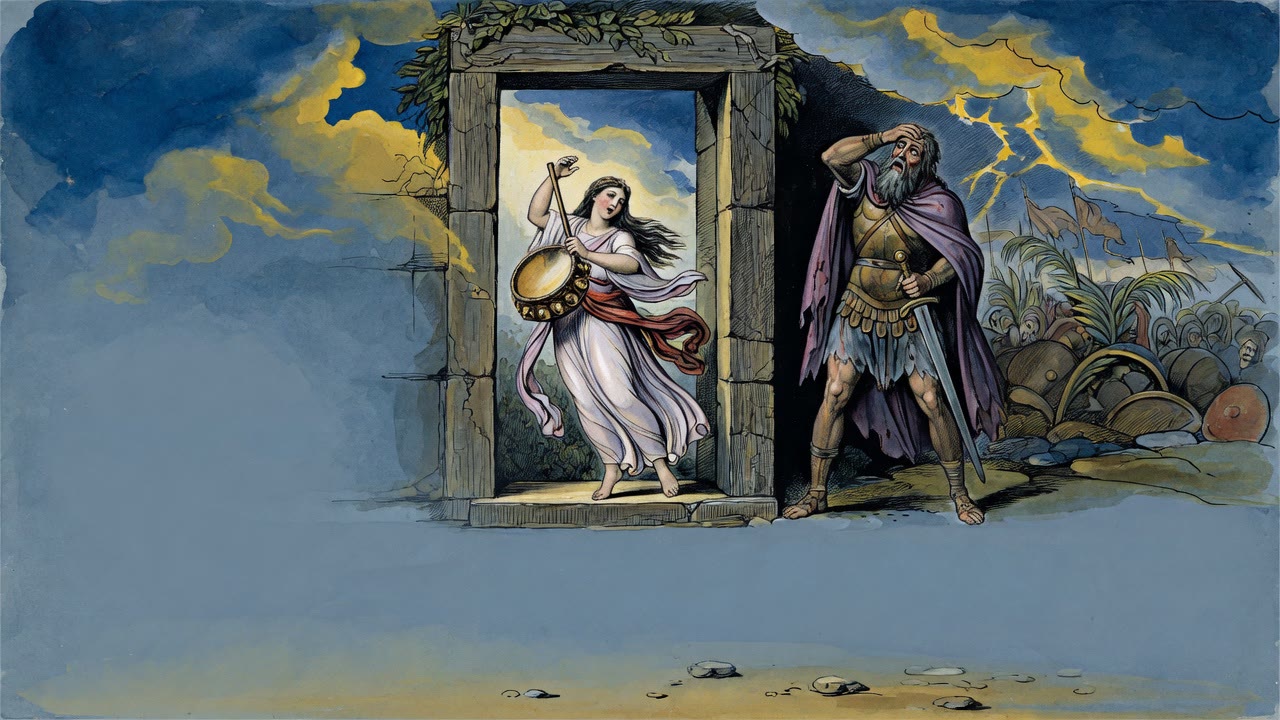
While the men of Israel packed food and silver, Miriam and the women packed tambourines. Nobody told them the sea would split. They knew anyway.
Moses needed help. God took some of the divine spirit from Moses and distributed it among seventy elders — and all seventy prophesied simultaneously in the camp. Then they stopped, and never prophesied again. The rabbis found the one-time-only nature of this miracle the most significant part.
Zelophehad left no sons — only five daughters. When they stood before Moses and the entire Israelite assembly to argue their case, God sided with them immediately. The midrash says Moses was speechless.
On Moses's last day alive, the pillar of cloud left his tent and moved to Joshua's. He said a hundred deaths are better than one jealousy.
Deuteronomy ends with Moses's death and burial. But Moses wrote the Torah. The rabbis spent centuries debating the most quietly devastating logical problem in the entire Hebrew Bible.
The Torah usually says Moses and Aaron. Once, it says Aaron and Moses. A tannaitic midrash says the reversal was deliberate, and it changes everything.
Before the Exodus, Moses introduced himself as Yithro's son-in-law. After it, Yithro introduced himself as Moses' father-in-law. The Mekhilta noticed the reversal — and what happened at the inn explains why it took so long.
At Sinai, Moses walked into the cloud where God dwelled while everyone else stepped back. The Mekhilta says it wasn't power that got him there — it was humility.
Rabbi Akiva found in one word of Exodus 12 a principle that overturns everything we think we know about prophecy: Moses heard God's voice because of Israel's merit, not his own.
Jeremiah 17 draws the sharpest line in all of Scripture. Trust in man, you are cursed. Trust in God, you are blessed. The Mekhilta brings this verse to the edge of the Red Sea.
After centuries of exile, who could still trace their Cohen or Levite lineage? According to the Mekhilta, only God knows.
When the Israelites asked Egypt for silver and gold before the Exodus, they knew exactly where every item was hidden. The Mekhilta says this was prophecy, not luck.
Two rabbis disagreed about Israel's first stop after Egypt. One said Succoth was a place on the map. Rabbi Akiva said it was the sky itself, folded down around the people.
Isaiah promised Israel would ride on the heights of the earth. The Mekhilta shows Moses said the same thing centuries earlier, proving the promise was never new.
Rabbi Shimon ben Yochai read Jeremiah and found something stunning: the sun rising each morning is testimony that the God who split the sea still rules.
From Abraham's dawn walk to the Binding of Isaac to the morning watch at the Red Sea, the Mekhilta traces a secret pattern running through all of Torah: God answers in the morning.
The prophet Jeremiah saw God grant Babylon the power to destroy Jerusalem, then watched God dismantle Babylon in turn, and called both acts a single testimony to divine justice.
The Mekhilta compares Jonah's descent into the sea with the fate of Pharaoh's army and finds the Egyptians had it far worse. The same waters serve both mercy and annihilation.
Pharaoh told his army that Israel was confused in the wilderness. The Mekhilta says he was right, but not in the way he thought.
The Mekhilta reads the reversal of Pharaoh's heart as the collapse of an empire. Egypt never recovered from the morning Israel left.
At Sinai the people told God they could not bear His voice. God did not rebuke them. He agreed, and that request became the founding of all prophecy.
Moses argued with God using God's own prophecy about Israel's exile. If Amalek won now, there would be no people left to scatter, no exile, and no return. Extinction was worse than exile.
The rabbis read the Song of Moses as a prophecy about the end of days. When Ezekiel described Gog falling into the sea, he was quoting the Exodus.
At the Red Sea, the nations confessed God for a moment. The rabbis said Jeremiah and Isaiah describe the day that confession becomes permanent.
The Mekhilta reads three words from Exodus 2:4 as a three-part proof that Miriam carried genuine prophetic power the day her brother floated downstream.
They were days from leaving Egypt and still couldn't hear Moses. Shemot Rabbah and Ezekiel say why: the idols were too deep in them, and the acacia tree only gives when it is cut.
An angel guided baby Moses's hand onto a burning coal. The speech impediment that followed was not an accident. It was the making of a prophet.
Moses was shown the Temple's destruction before he died. He saw everything. He could not stop any of it. This is what the tradition says he did with that knowledge.
Every prophet in Israel introduced their words with 'Thus says the Lord.' Moses said 'This is the thing.' The difference was not style. It was the distance between them and God.
Balak hired the most feared curser in the ancient world to destroy Israel. The curses came out as blessings. Josephus and the Midrash agree on why.
Miriam led the women in song at the Red Sea and paid for one careless word with seven days of leprosy. The tradition could not quite let her go.
Pharaoh's astrologers told him the truth about Moses and he heard it completely wrong. Their correct prophecy made the very outcome they feared more certain.
Pharaoh received an accurate prophecy about Moses and misread one word. That misreading cost Egypt its children, its army, and eventually its empire.
Gabriel pushed Moses' hand toward a burning coal and saved his life. That burn left him slow of speech and began the path to prophecy.
A midrash counts God's wars of confusion from Sinai to Gog and Magog, while Hosea calls Israel back to the God whose voice they once heard on the mountain.
Even the wicked ask for signs before they act. The rabbis traced Pharaoh's demand for a wonder to a principle God had built into creation itself.
Moses did not choose Joshua. God did. But inside the Tent of Meeting, the handoff between two eras happened in a single pillar of cloud.
When Israel fell into idol worship in Egypt, one voice broke through the silence. Aaron's call to repentance reached the tribe of Gad when no one else could.
Amram stopped having children to protect them from Pharaoh's death decree. His young daughter told him he had made a worse decree than the tyrant.
Before Moses was born, Balaam stood before Pharaoh and turned an old nightmare into a preemptive indictment of an entire people.
At the Red Sea, Moses began the song and Israel completed each verse instinctively. The spirit of God moved between them like breath through a single body.
Miriam led the women in song at the sea with timbrels they had carried all the way from Egypt. They packed instruments before they knew there would be a song.
When God's holy spirit abandoned Balaam, leaving him a mere magician, the rabbis explained it with a story about a king and a beggar.
After his famous act at Shittim, Phinehas did not retire. He was sent to a mountain to wait, fed by eagles, until the clouds needed him.
On Simhat Torah 1609, Chaim Vital dreamed that the body of Moses was laid in the Safed synagogue, then became a Torah scroll read from Genesis to Deuteronomy.
Moses and Aaron were both prophets, yet the Kabbalists taught that only one of them crossed the final threshold of divine access. The difference between them reveals how the entire architecture of prophecy works.
The Shekhinah, the divine presence, dwells above the firmament. All the prophets saw it from below. Moses alone was brought above the firmament to stand within it. The Zohar explains what made this possible.
Before Moses died, God did not just show him the geography of the Promised Land. The Mekhilta teaches he saw the entire future: Barak's victory over Sisera, Joshua's campaigns, and the apocalyptic battle of Gog and Magog in the valley of Jericho at the end of days. The dying prophet saw everything his people would become.
Numbers 12:3 calls Moses the most humble person on the face of the earth. Sifrei Bamidbar immediately challenges every common interpretation of what this means. Moses was not poor. He was not self-deprecating. He was not unaware of his own importance. The humility the Torah is describing was something else entirely.
Mount Nebo, where Moses died, is also called Avarim and Pisgah in the Torah. Three kings competed to name it, three kings died in the contest, and Sifrei Devarim asks why future generations needed to know this at all. The answer is about how places carry the memory of ambition.
Every prophet received visions and dreams. Moses received something different, something the Torah calls face-to-face speech, and the rabbinic sages spent centuries trying to explain what that difference actually cost him.
Before Exodus begins in earnest, Targum Jonathan inserts a prophetic dream into Pharaoh's biography, names his court magicians as Jannes and Jambres, and identifies the Hebrew midwives as Jochebed and Miriam. Each addition reframes the entire story of the Egyptian enslavement as something the oppressors saw coming and tried to prevent.
Before Moses existed, his sister Miriam told their father he was coming. She was a child who had seen it in a vision, and she was so certain that she talked Amram out of a decision that would have prevented the birth of Israel's greatest prophet.
Miriam watched the basket carrying her infant brother float down the Nile to Pharaoh's daughter. Then she improvised one of the most audacious acts in the Exodus story, returning a Hebrew baby to his Hebrew mother inside Pharaoh's own palace.
Moses gave Israel the manna. Aaron gave them the cloud of glory. But it was Miriam who kept the water flowing, and the rabbis who noticed what that meant.
Before Moses's mother hid him in a basket, before the plagues, before the burning bush, Egyptian sorcerers had already seen him coming. They told Pharaoh. Pharaoh tried to stop it.
When Pharaoh decreed death for Hebrew boys, Amram divorced his wife to stop producing children. His young daughter stood up and told him he had made a worse decision than Pharaoh had.
The tradition insists that every soul who would ever prophesy in Israel stood at Mount Sinai when the Torah was given — including those not yet born. The revelation was not an event. It was an architecture that all future prophets carried inside them.
Rabbi Tarfon taught that the holiness of the Land of Israel was not geography but theology — God's speech itself narrowed to a single patch of earth, and the prayers of the patriarchs were still in the ground waiting.
Before Moses was born, before his mother knew she was pregnant, Miriam had already seen him — and the argument she made to save his life began with her father's decision to give up.
When Miriam led the women in song at the Red Sea, she had instruments ready. She had packed them in Egypt before anyone knew there would be anything to celebrate. The rabbis read those tambourines as one of the most extraordinary acts of faith in the Exodus story.
A single act of adultery by an Egyptian taskmaster set off a chain that stretched two generations, connecting Moses, a secret killing, and a public curse.
Philo of Alexandria describes Moses ascending Sinai and finding a throne touching the clouds. A figure on the throne handed Moses the scepter, gave him the crown, and withdrew.
The rabbis made a claim that sounds impossible. Every prophecy ever spoken by any prophet in Israel, including those who lived centuries later, was first received at Mount Sinai.
Moses hid his face at the burning bush, refused to speak, and begged God to send someone else. Midrash Tanchuma asks how that same man became the only prophet who saw God face to face.
Balaam used divination to find the place where Moses would die, believing that Israel's greatest strength was also their fatal crack.
Moses hid his face at the burning bush and refused to go for seven days. Midrash Tanchuma says that hesitation was the right beginning for Israel's greatest prophet.
Moses hid his face at the burning bush and refused to go. Midrash Tanchuma says that hesitation was the right beginning for Israel's greatest prophet.
Dan, Naphtali, Gad, and Asher each had a stone on the High Priest's breastplate. Each one told a different uncomfortable truth.
Rabbi Akiva taught that the greatest prophet in Israel had three blind spots. The only cure for each one was for God to point and say — this one.
Leviticus 26 contains the harshest threats in the Torah. Buried inside them is a single verse that the rabbis read as God's unconditional promise never to abandon Israel.
When Balaam boasted about his seven altars before the heavenly host, God silenced him by sending an angel to seal his mouth from the inside.
Balaam built seven altars and thought the sacrifice would satisfy God. The Midrash says God compared him to a merchant lying about weights.
Balaam's rival sorcerers could not figure out how he worked. The rabbis said he had learned to read the comb of a rooster, and it told him when God was furious.
God always came to the prophets of the nations at night. Not to Israel's prophets. The Midrash turns a scheduling detail into a theological statement.
The donkey saw the angel, spoke in the holy tongue, and outwitted the most powerful prophet the nations ever produced. Then she died.
God always came to the prophets of the nations in the dark. Not to Israel's prophets. The Midrash turns a scheduling detail into a verdict on prophecy.
Most people know Balaam as the prophet with the talking donkey. The midrash says before that, he was a king who used sorcery to escape a siege.
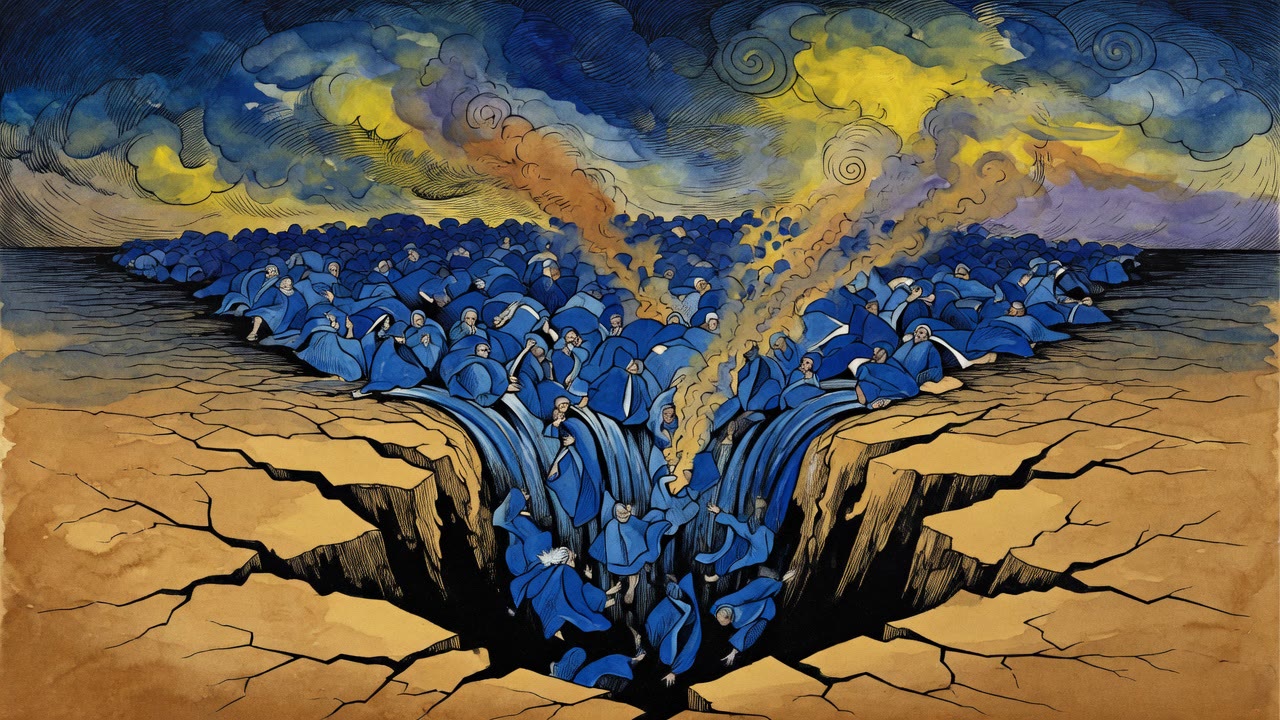
Korah did not act alone — he recruited 250 of Israel's most respected men. The midrash asks why the ground didn't just open immediately, and the answer reveals something unsettling about divine patience.
The Torah commanded that the land of Israel lie fallow every seventh year. Israel observed the Sabbatical year for 490 years, then stopped. According to Chronicles, the seventy years of Babylonian exile were the land's revenge — it took its rest by force.
Miriam spoke against Moses and the cloud withdrew. What the rabbis found was not a gossip warning — it was a portrait of three siblings called in one breath.
Balaam rode out at dawn eager to curse Israel — and in the end admitted they could never be uprooted from the earth. The rabbis say the donkey saw what he refused to see.
A pagan prophet hired to curse Israel couldn't find the words. A walnut tree explains why. The rabbis connected them and found the same answer in both.
Korah had a genuine prophetic vision of greatness in his bloodline. He saw exactly right. He understood exactly wrong. And the difference cost him everything.
Jewish legend identifies Balaam the cursing prophet as Laban reborn, the same deceiver who tormented Jacob now rising again to destroy his descendants.
The rabbis compared two visions of the Promised Land and concluded that Abraham was more beloved than Moses. The proof was in how hard each man had to work to look.
Balak hired Balaam to curse Israel. Instead, Balaam delivered the most precise messianic prophecy in the Torah — and every attempt to silence him made it stronger.
Most people think Phinehas and Elijah are separate figures. The Targum Jonathan, buried in a genealogy, says they are the same man, still waiting to return.
God asked Moses to escort his brother to his death on Mount Hor without saying the words aloud. A midrash on the most painful errand of his life.
The sages asked whether God stacked the deck in Israel's favor. The answer from Bamidbar Rabbah is stunning: He matched Israel's greatest figures with counterparts from the nations.
Cain denied killing his brother. Hezekiah bragged about his treasury. Bilam pretended not to know who his visitors were. The rabbis said all three made the same catastrophic mistake.
The pagan prophet hired to curse Israel kept opening his mouth and blessing them instead. The Midrash Tanchuma explains why he never had a chance.
God gave Balaam prophetic gifts equal to Moses. Then Balaam spent those gifts on kings, sorcery, and curses — and the tradition never forgave him for it.
Hired to curse Israel, Balaam climbed to the high places and found the Patriarchs there. Every attempt to curse became a blessing. The tradition explains...
The genealogies of Chronicles hide Miriam under two different names. Sifrei Bamidbar cracked the code and found the royal line of David ran through her.
Through sorcery, Balak foresaw that 24,000 Israelites would die because of him. His visions gave him no method. That is why he needed Balaam.
When God asked Balaam a simple question, Balaam turned it into a boast. God's response came in two parts: a rebuke, and a new disability.
God told Balaam not to go. Instead of saying so, Balaam claimed it was beneath his dignity to travel with such men, hoping to embarrass Balak into giving up.
When God asked what men are these with you, Balaam concluded God must sometimes be unaware of events on earth. He planned to curse Israel through those gaps.
The angel confronting Balaam on the road did not forbid him from continuing. It told him it had come to protect him, not Israel. Then it said: go, if you must.
Balaam wished for the death of the righteous and understood exactly what that meant. Then he died by the sword and forfeited everything he had prophesied.
After Balaam blessed Israel a third time, Balak dismissed his princes and asked what the Lord had spoken. His tone was not a question. It was a verdict.
Balaam told Balak that sorcery could not touch Israel: they used the Urim and Tummim. And one day, angels would come to Israel to learn Torah.
A single verse in Numbers about the Israelites blowing trumpets before battle became, in the hands of the rabbis of Sifrei Bamidbar, a blueprint for the apocalyptic war of Gog and Magog. Rabbi Akiva's reading of this verse is one of the earliest systematic treatments of Jewish eschatology, and it turned a logistical instruction into a vision of the end of days.
According to Ginzberg, Balaam had prophetic vision that reached back to the moment God consulted the angels before making the world. He saw everything. He chose destruction anyway.
The man hired to destroy Israel ended up delivering the most precise messianic prophecy in the entire Torah. Ginzberg's tradition explains how the enemy's mouth became the vessel for the redemption's announcement.
In his third prophecy, Balaam admitted the one thing Balak never wanted to hear: God looks only at Israel's merit, not their transgressions.
Most people think the Torah's curses are ancient warnings. Ki Tavo's 98 curses are so feared that readers whisper them - and Moses trembled delivering them.
The Torah says Moses saw the land. The midrash says he saw something much more specific, and it was the only thing that could let him die in peace.
The last eight verses of the Torah describe Moses dying. The Talmud debated who wrote them — and the answer Rabbi Shimon gave is more beautiful than expected.
Moses never entered the Promised Land. But standing on Mount Nebo, he watched its entire future play out before him, battle by battle, hero by hero.
Hours before Moses died, he sang a poem about Israel's future betrayal of God. He already knew what would happen. He sang it anyway. Onkelos translated every word with care.
Moses told Israel to stop asking God to speak directly to them. Then he made a promise that changed everything about how prophecy works.
When God told Moses his time was up, Moses did not accept it quietly. He argued, wept, bargained, and petitioned every force in creation before God finally took his soul with a kiss.
God's arrows of punishment will run out before Israel does, and Israel's sacred bread cannot truly be consumed by those who seize it wrongly.
God showed Moses the land like a set table -- every corner, every fruit. Then Moses asked who would shepherd Israel after him, and God said: you will know.
From Nebo's summit, God showed Moses the land's full future -- every conquest, every collapse, and one redeemer rising from a tribe's worst sin.
Before Moses died, God showed him something that went far beyond a view of the promised land. He showed him everyone who would ever lead Israel, all the way to the end of time.
During a battle, Joshua needed more daylight to finish defeating Israel's enemies. He spoke to the sun and moon and commanded them to stand still. The midrash asks what it means for a human being to command the heavens.
Joshua fought Amalek, silenced prophets he feared, and cast lots to name a thief. Three moments of stumbling that the rabbis read as the education of a leader.
Before Joshua was born, a heavenly prophecy told his father that this child would one day cut off his head. The midrash records how the family tried to evade the decree, how it came true anyway, and what it means for a holy man to raise a child he fears.
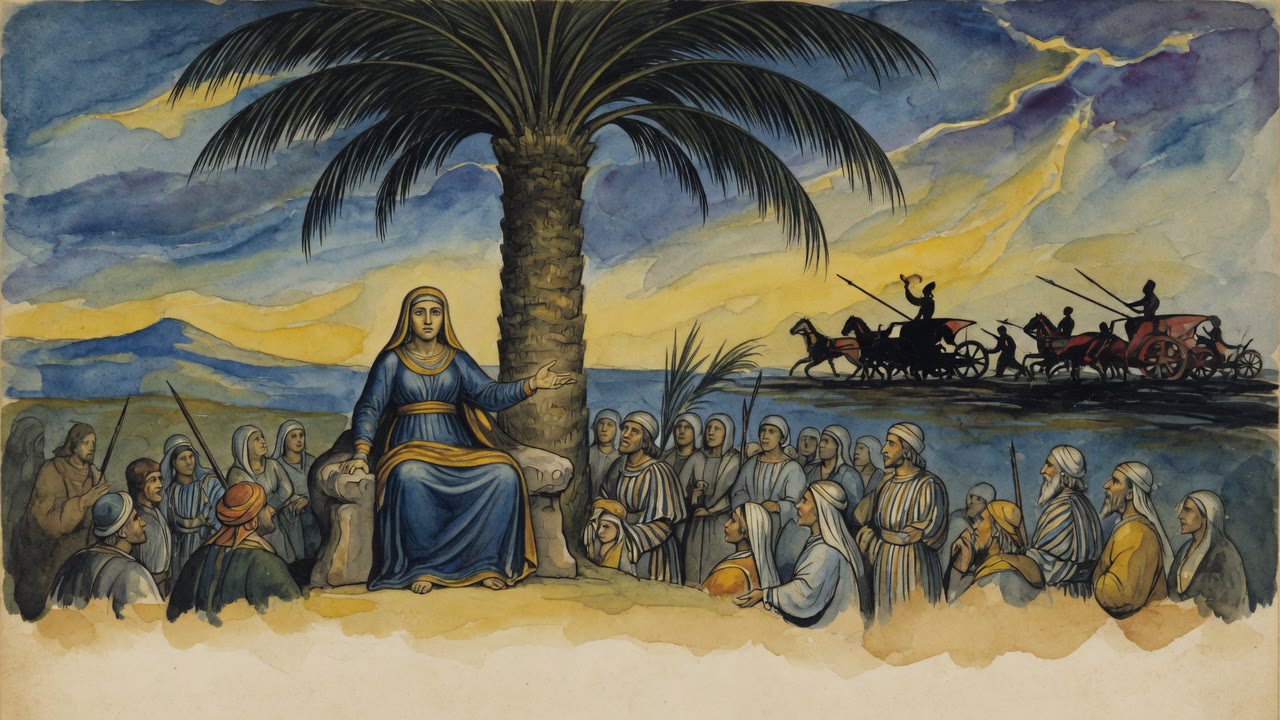
Deborah was judge, prophetess, and military leader, but even she lost the divine spirit briefly when pride crept into her victory song.
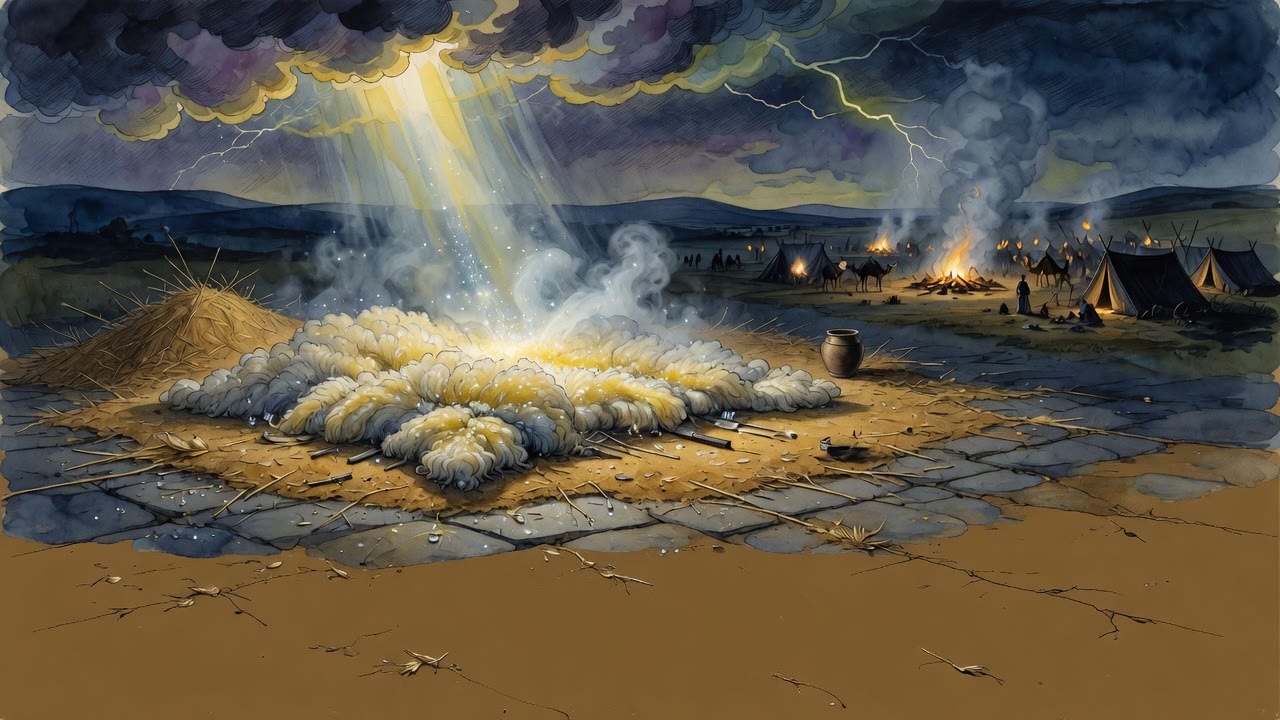
When God commanded Gideon to lead Israel against Midian, Gideon put out a wool fleece and asked for a sign. When God gave it, he asked for the exact opposite sign. The midrash has strong opinions about whether this was faith or doubt.
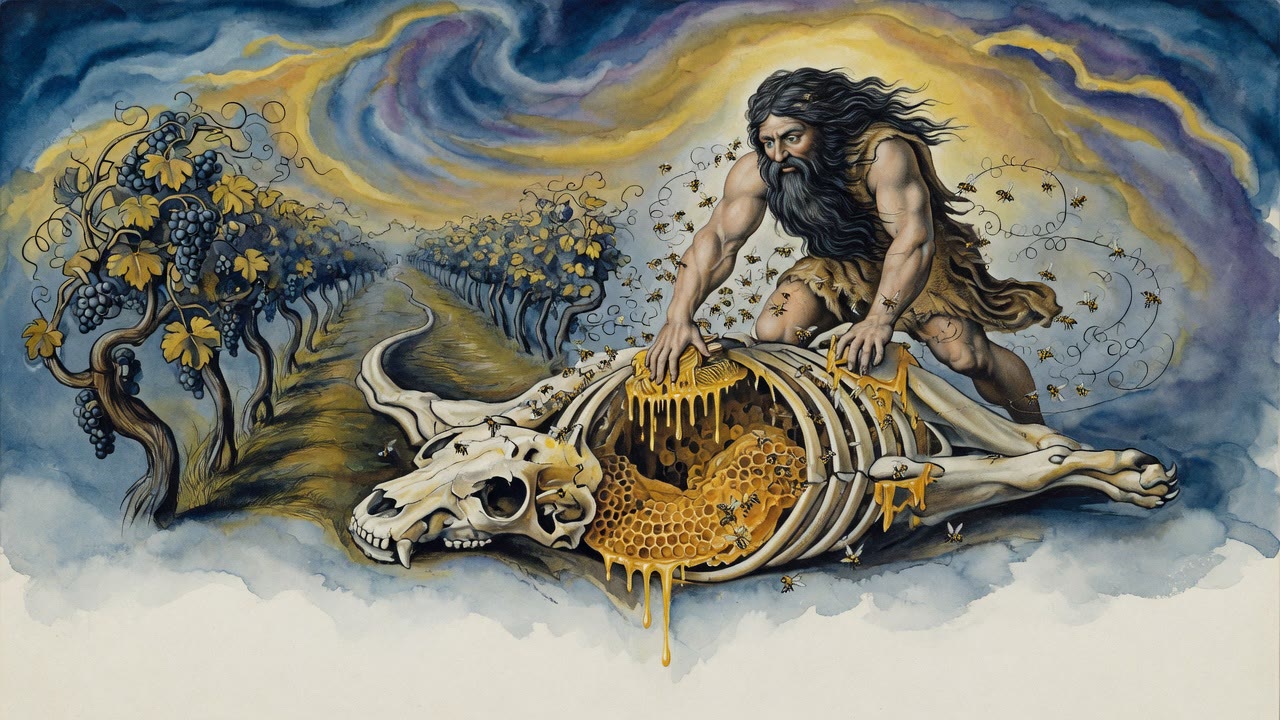
Samson killed a lion with his bare hands, walked away, and later found a beehive living in the carcass. He ate the honey without telling anyone — then turned the whole incident into a riddle at his own wedding.
Jephthah promised God that whatever came out of his house first would be a burnt offering. His only child, his daughter, came out dancing. The midrash says she was the one who convinced her father that the vow could not be undone.
Deborah was a prophet, a judge, and a military commander all at once — and when Barak refused to go to battle without her, she went and predicted that the glory would go to a woman. She was right, but it was not herself she meant.
A Levite's concubine was brutally killed in the city of Gibeah. Her husband sent pieces of her body to all twelve tribes. What followed was a civil war that nearly destroyed Benjamin entirely — and the midrash asks why Israel did not act sooner.
Delilah asked Samson three times where his strength came from and he lied three times. The fourth time, he told her everything. The midrash asks not why she was persuasive but why he finally stopped protecting himself.
Samson's power was not in his hair. His hair was a vow — and his vow was the only thing connecting him to God. When Delilah cut it, she did not weaken his muscles. She severed his covenant.
The rabbis counted ten moments in history worth singing about. Nine of them have already happened. The tenth is still waiting.
She made wicks for the Tabernacle, judged Israel under an open sky, and led an army to victory -- the rabbis traced Deborah's prophetic authority to a single act of devotion, and connected her mourning to a grief that had shaken Jacob himself centuries before.
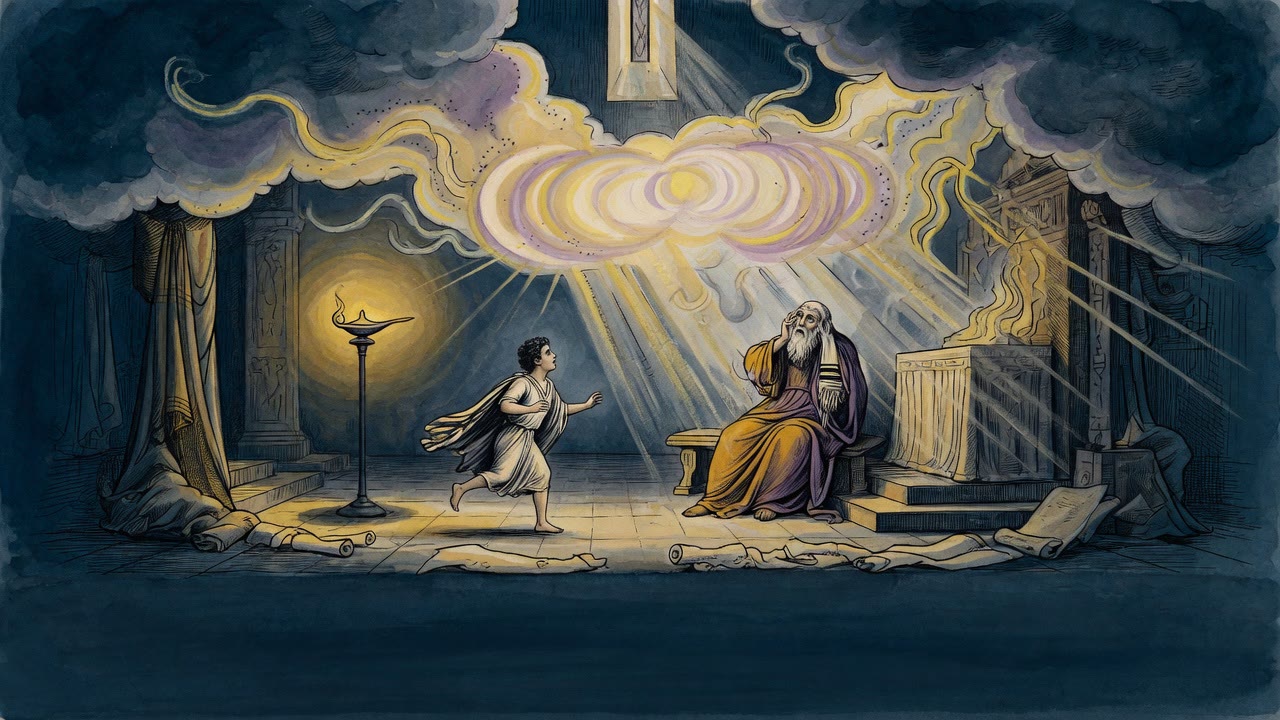
The boy Samuel heard his name called in the night and ran to the priest Eli three times before Eli understood what was happening. The midrash says even Eli's slowness to recognize God's voice was part of the plan.
Samuel told Saul to wait seven days before the battle. On the seventh day, Samuel had not arrived. Saul offered the sacrifice himself. Samuel arrived moments later. That one act of impatience cost Saul his dynasty.
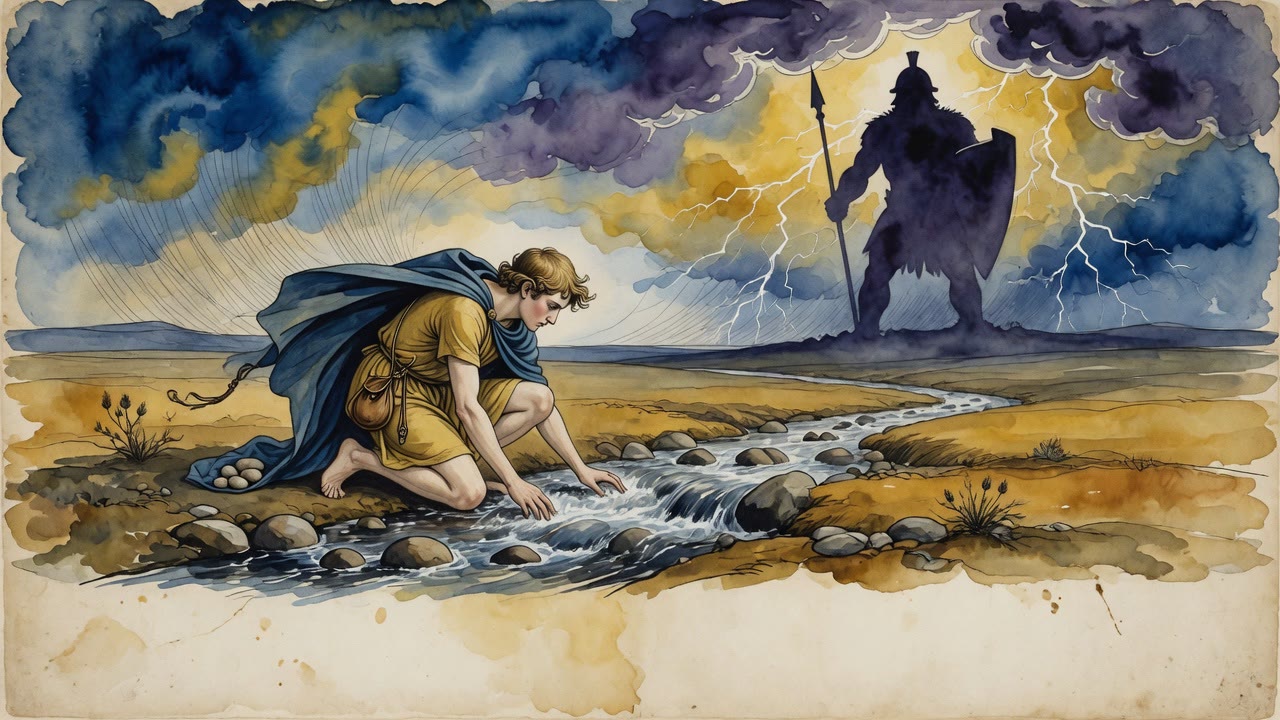
David took five smooth stones from the brook before facing Goliath. The midrash asks why five — and gives an answer that reveals exactly how David understood what kind of battle he was walking into.
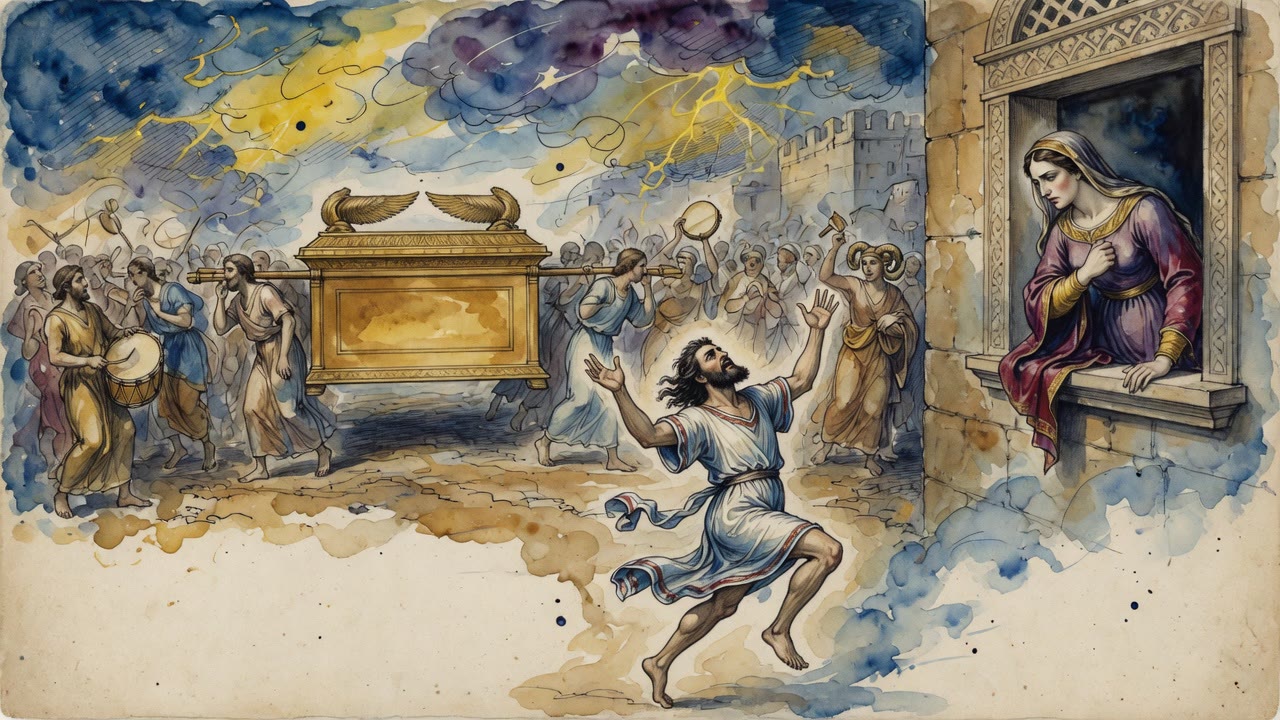
When the Ark of the Covenant was brought into Jerusalem, David danced with such abandon before God that his wife Michal, Saul's daughter, watched from a window and felt contempt. The midrash says the distance between their windows explains everything.
After David's affair with Bathsheba and the killing of her husband Uriah, the prophet Nathan did not accuse David directly. He told him a story. The moment David understood the story, he had already judged himself.
The midrash does not minimize what David did with Bathsheba. But it adds a layer the biblical text does not: Bathsheba was predestined for David from the six days of creation, and David's sin was taking her too soon and in the wrong way.
Psalm 22 begins with the most anguished cry in the Hebrew Bible — 'My God, my God, why have You forsaken me?' — and ends in ecstatic praise. The Midrash says David wrote it about his own life and about every Jewish exile that would ever follow.
David counted his people without the Torah's required ransom offering. Seventy thousand died — and where the plague stopped became the Temple Mount.
Ancient sources from Psalm 151, Midrash Tehillim, and the Legends of the Jews reveal how David was marked for the throne not by a prophet's decision but by oil that poured itself, pearls that fell from heaven, and a horn that refused to empty.
When a witch conjured Samuel from the dead, his first act was to find Moses and beg for his testimony. Two prophets — one who received the Torah in fire, one who traveled to every town to hear the poor — bound together by a single question about justice.
The Philistines captured the Ark of God and moved it from city to city. Each city it touched was annihilated by plague, mice, and tumors.
David did not enter the valley of Elah on courage alone. The Mekhilta says he had read signs God sent him years before and understood exactly what they meant.
Psalm 145 is an alphabetical acrostic with twenty-one letters. The letter Nun is missing. The reason the rabbis gave would reframe a verse in Amos as a prophecy of hope.
Moses and David both failed to finish what they built. Jewish tradition says they will finally complete it together at the end of days.
The rabbis found King David hidden inside the first chapters of Genesis, centuries before he existed. What they found there changes everything about why he mattered.
A famine struck Israel thirty years after Saul's death, and God once rebuked David for cursing Saul in words he never meant to speak.
Ben Sira placed Isaiah in the long line of Israel's great figures. The Ginzberg account shows what it cost him to stand his ground before kings.
Samuel stood before all Israel at the end of his long life and asked them to name one thing he had wrongly taken. No one could speak.
David had sinned, and God sent a prophet to tell him so. Nathan did not accuse. He narrated. The king condemned himself.
Tamar waited years for Judah to fulfill his promise. When he would not, she acted -- not out of desire but out of prophecy. The Messiah's line ran through her.
Balaam prophesied the Messianic age, named Jethro’s family as its first heralds, then lost the spirit for good. The last prophet the nations would have.
Moses saw the future king standing alone against a giant and prayed for him centuries before David drew his first breath.
Samuel's father was called a second Abraham. Not for miracles but for changing his pilgrimage route each year to pull more people toward Shiloh.
Samuel was barely weaned when he walked into Shiloh and told the priests they were doing the sacrifice wrong. The high priest tried to have him executed.
Samuel was the most incorruptible judge Israel ever had. His sons took bribes. The story does not end in despair: one of them became the prophet Joel.
Saul was handsome, humble, and nearly sinless. The deeper reason he was chosen king traces to a grandfather who lit the streets for Torah students.
Saul disguised himself to visit the witch of En-dor. When Samuel's spirit appeared standing upright, the witch knew immediately that a king was present.
When Samuel arrived to anoint the next king of Israel, God let him be wrong on purpose. The lesson was as startling as the choice.
King Hezekiah preserved Isaiah and Proverbs for all time, then buried a book of medical cures. The rabbis praised both decisions equally.
After every war, the surrounding kings analyzed what they had witnessed. Their conclusion about Israel's survival was not strategic. It was theological.
God had stopped answering Saul through every channel. In desperation, he summoned the ghost of Samuel and received a prophecy that left him no hope at all.
A single verse in Genesis about the tribe of Judah generated centuries of debate: who is the lawgiver, and how does the same prophecy apply simultaneously to Moses, David, and the coming king? Midrash Tehillim finds them all speaking from the same mouth.
Midrash Tehillim on Psalm 104 opens with a cosmic puzzle about the new moon and ends with a confrontation between David's hope and the nations who deny it. The Messiah's arrival is timed to creation itself, and his enemies misread the very clock that announces him.
Three hundred years before Josiah was born, a prophet called him by name. Pirkei DeRabbi Eliezer and the Books of Kings together tell the story of a king whose entire life was prophesied before his parents had even met.
Rabbi Eliezer asked: if a seed goes into the ground naked and rises clothed, why would a person buried fully dressed rise any differently? The answer built an entire theology of resurrection.
Most prophets finished their work when they died. Samuel did not. The midrash argues that his prophetic power persisted beyond death, and the proof was an encounter that terrified a king on the eve of his last battle.
Hillel used King Saul's spiritual collapse to teach his students something counterintuitive about the soul. If you do not tend to it, he said, it tends against you.
The request for a king in 1 Samuel has always seemed like a simple political demand. Rabbi Nehorai read it as a confession of something far darker, a yearning to abandon God entirely disguised as a call for national order.
Saul waited seven days for Samuel at Gilgal, watched his army dissolve, and finally lit the altar fire himself. That single act of impatience cost him everything. The rabbis saw in it a law about what happens when a minor command becomes fatal.
From Mount Nebo, God showed Moses not just the land but two of its most defining moments: the destruction of Sodom and the future glory of the Davidic kingdom. One was history. One was prophecy. Moses held both at once.
Ezekiel's famous valley of dry bones has an origin story that the prophet himself never tells. Targum Jonathan on Exodus 13 identifies those bones as 200,000 warriors from the tribe of Ephraim who tried to escape slavery ahead of schedule and died for it.
Leviticus 26 contains Torah's blessings and curses for obedience and rebellion. The Targum Jonathan added a prophecy the Hebrew Bible never imagined, naming four world empires and the shape of the final redemption.
Samuel was the prophet who made Saul king of Israel. When Saul failed, Samuel wept for him for the rest of his life. The relationship between the last judge and the first king is one of the most complex in all of Jewish legend.
When the witch of Endor summoned Samuel from the dead, he rose convinced the world had ended. According to the Legends of the Jews, the first person Samuel looked for was Moses, because only Moses could tell him whether he had lived up to what was required.
Every ghost the witch of Endor had ever summoned came up bent over. Samuel came up standing straight. According to the Legends of the Jews, she recognized immediately that this was not like the others, and she told Saul what she saw before she said a word.
At the high place of Gibeon, God appeared to Solomon in a dream and said: ask for whatever you want. Solomon asked for wisdom. The midrash says this was the most impressive prayer anyone ever made — and explains exactly why.
The Queen of Sheba traveled with 1,000 soldiers and camels loaded with spices, gold, and riddles. The midrash records the riddles she gave Solomon — and the answers that left her with nothing left to ask.
When Elijah was about to be taken to heaven, Elisha refused to leave his side. At the end, he asked for a double portion of Elijah's prophetic spirit. Elijah said: if you see me taken, it will be yours.
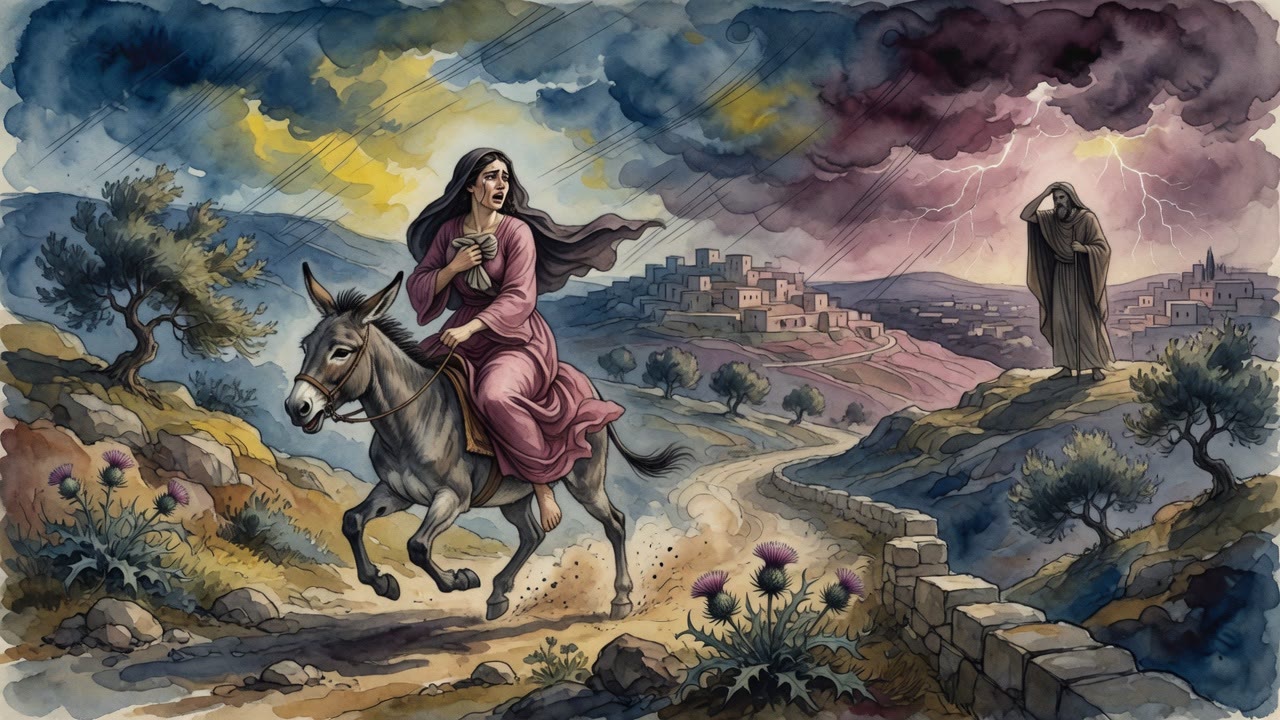
The Shunamite woman's son died suddenly on her lap. She laid him on the prophet's bed, saddled her donkey, and rode to find Elisha. When he asked if everything was well, she said: shalom. The midrash says those words were an act of faith.
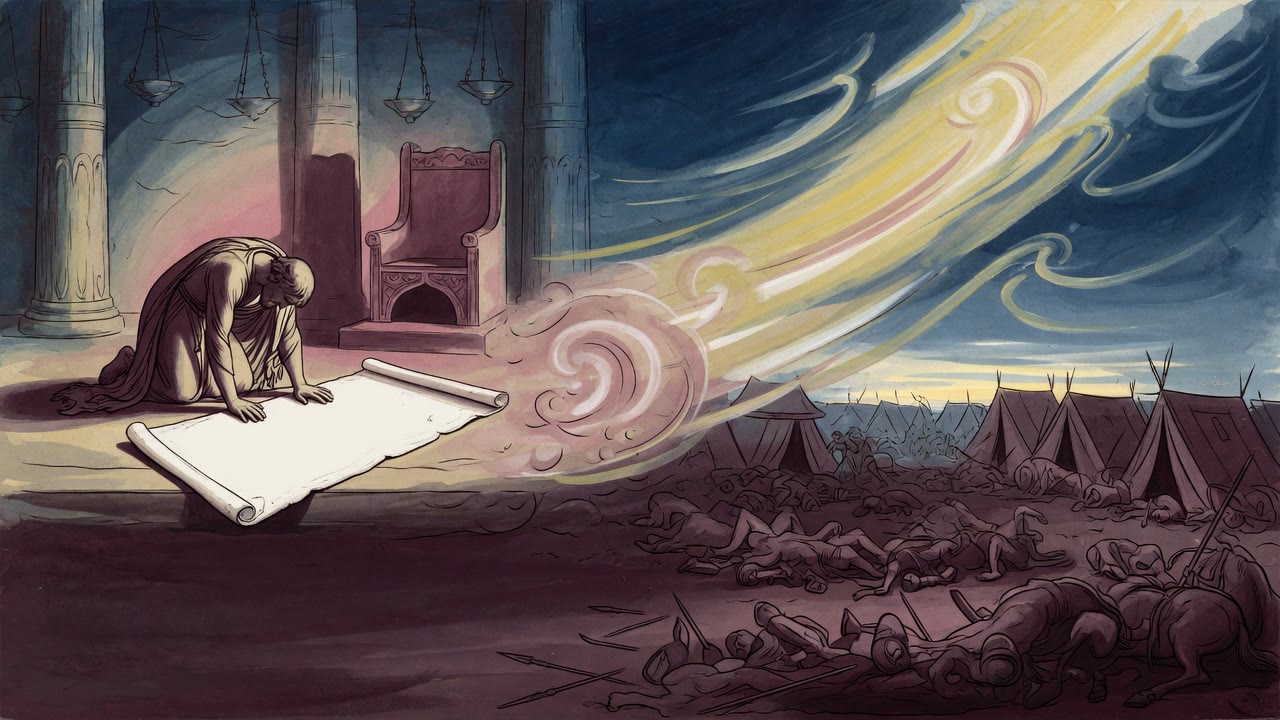
The Assyrian army was the largest military force the ancient Near East had ever seen, and it was camped outside Jerusalem's walls. Hezekiah went to the Temple, spread a threatening letter before God, and prayed. The next morning, 185,000 Assyrian soldiers were dead.
When Elijah despaired and the decree against Israel seemed sealed, he ran to Moses. What happened next rewrote the meaning of intercession.
When the time came for Elijah to ascend to heaven, an angel was sent to retrieve him. But Elijah and Elisha were so deep in study that the angel had to turn back empty-handed.
King Hezekiah was one of the most righteous kings in the Hebrew Bible. Then Babylonian envoys arrived, he opened the Ark of the Covenant, and everything changed.
Josiah reunited a shattered kingdom, earned a mourning that echoed for generations, and watched Pharaoh get humbled by a dead king's lions.
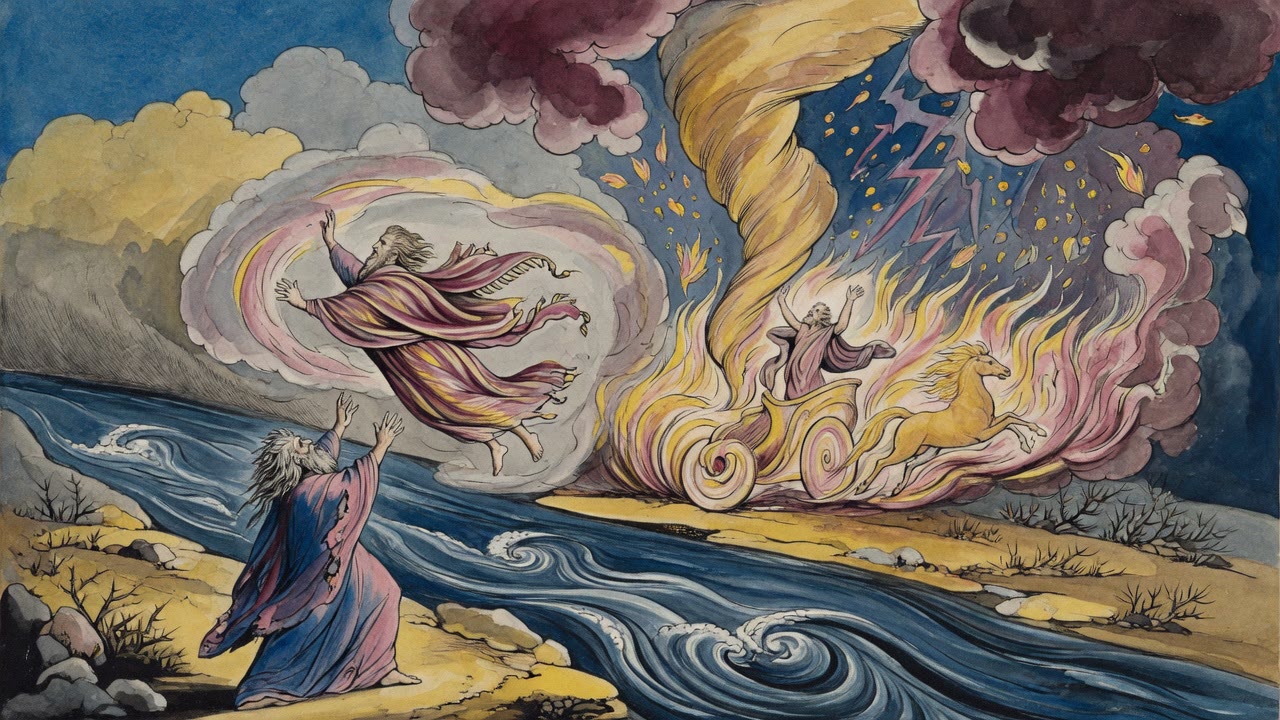
The Bible says Elijah was taken to heaven in a fiery chariot. Jewish tradition says that was not the end of the story. It was a transformation.
Elisha could not prophesy until a musician played. Midrash Tehillim finds in that moment a whole theology of how humans receive the divine.
Two rabbis argued for two Shabbatot over which tribe Jonah came from. The third week, a compromise earned one of them twenty-two years at the pulpit.
The rabbis placed Elijah not only in the story of Israel but at both ends of history itself, present before creation and appointed to announce the end. They were trying to explain someone who clearly did not fit inside ordinary time.
Most prophets die. Elijah didn't, and Jewish tradition keeps finding him everywhere: in heaven's court, at a scholar's door, on a crowded street identifying jesters as the holiest people present.
One man against four hundred prophets on Mount Carmel. Josephus wrote it down for a Roman audience and made sure they understood what was at stake.
Most people know Elijah as a fiery prophet. The ancient sources say he was something far stranger: an angel who volunteered to be born.
Elisha asked for double Elijah's spirit. The ancient sources say that spirit came with a weight no one understood, and a face no woman could survive seeing.
After his fiery ascent, Elijah took on two tasks at once: recording every human deed until the end of days, and guiding souls through the gates of paradise....
Jezebel ordered murders and worshiped idols. But she also followed every funeral procession in Jezreel. The dogs remembered one thing and left it intact.
Elisha performed twice as many miracles as Elijah, then watched his servant Gehazi throw the blessing away for a handful of silver from a Syrian general.
The siege of Jerusalem almost ended in surrender, not because of Assyrian might but because a letter tied to an arrow was fired by a traitor inside the walls.
The rabbis taught that Hezekiah was chosen to be the Messiah. He was turned away not for any sin, but for a single failure to sing.
Elijah destroyed two companies of soldiers with fire, then vanished from the earth entirely. Josephus records that nobody knows of his death to this day.
God asked Elijah to face Ahab before repentance came. The reason stretched back to the first day of creation, when one corner of ground went unwatered.
Elijah ran from Jezebel to the mountain where Moses had met God. What he found there was not comfort but a question he could not answer twice.
Elijah vanished into the treasuries of heaven. Elisha stayed. And everything Elijah had done once, his student did twice.
Elijah declared the drought. Then a widow's son died in his house, and God made clear the only way to save the child was to end the famine.
Elijah offered a destitute man seven years of prosperity. His wife said spend it on charity. When Elijah came back to collect, she had a different answer.
Elisha's most gifted disciple used forbidden knowledge to make golden calves utter the words of Sinai. The catastrophe that followed was irreversible.
Most prophets dreaded being wrong. Jonah's terror was the opposite: he knew God would forgive Nineveh, making him look like a liar twice over.
Jonah anointed Jehu as king of Israel using a pitcher, not a horn. The rabbis called that a warning. Jehu never understood what it meant until it was too late.
A dying Hezekiah and the prophet Isaiah both refused to go first. Their standoff over protocol nearly cost Hezekiah his life, and then his afterlife.
Hezekiah married Isaiah's daughter despite knowing their sons would be wicked. Then he overheard exactly how wicked, mid-walk to the house of study.
When the prophetess Huldah confirmed Jerusalem would fall, Josiah did not despair. He hid the Holy Ark so Babylon would never find it.
When Pharaoh warned Josiah not to block his army's march, Josiah quoted Moses and refused. He was struck by three hundred arrows.
Elisha's miracles were stranger than his master's -- oil that would not stop, an army blinded in daylight, a siege broken by four lepers at an empty camp.
Josiah inherited the throne at eight years old after two generations of catastrophic kings. Then a scroll turned up in the Temple walls that changed everything.
Elijah never died. He was taken to heaven in a whirlwind, and the Tikkunei Zohar says he has been moving between worlds ever since, appearing at every Passover seder, every circumcision, every moment when the boundary between the human and the divine grows thin.
When Elijah was taken to heaven in a fiery chariot, his disciple Elisha refused to look away, and that refusal earned him a double inheritance of the prophetic spirit. The mantle Elijah dropped became the instrument of Elisha's first miracle, and the model for every heavenly journey that came after.
The prophet Elijah never died. He ascended in a chariot of fire and has been present at every circumcision and Passover seder ever since. But a tradition preserved in Seder Olam Rabbah reveals something stranger: Elijah has also been in hiding, waiting for a moment only he can initiate.
When a child died, Elisha sent his servant ahead with his staff. The boy did not revive. The rabbis asked why, and their answer changed everything we think about how miracles work.
Sifrei Devarim makes a claim that should be unsettling: no generation is free of people who resemble the generation of the flood. Noah survived. He did not eliminate the pattern. It persists, and the rabbis wanted to know why.
Ben Sira's portrait of the prophet Elisha connects his hidden powers to the very foundations of creation — and to a chain of divine wisdom that runs from Adam to the patriarchs and beyond.
The Legends of the Jews preserves a startling claim: Elijah was not born into history. He was made in the twilight between the sixth day and the Sabbath — one of ten miraculous things woven into creation before human time began.
Solomon was born with the name Jedidiah, Beloved of God, and the rabbis believed the messianic hope rested in him. He built the Temple, ruled the world, commanded demons. Then he threw it all away. The texts ask a harder question than why he failed.
Elijah performed eight miracles. Elisha performed sixteen. The rabbis counted carefully and asked what a double portion of the spirit actually costs.
The rabbis believed Solomon carried a messianic name and a messianic chance. Isaiah saw what that chance required. Neither man fully grasped what they held.
Beyond the prescribed furnishings, Solomon added something extraordinary to the Temple: golden trees that bore golden fruit. According to the Legends of the Jews, they continued bearing fruit throughout the Temple's existence and withered the moment Nebuchadnezzar crossed the gate.
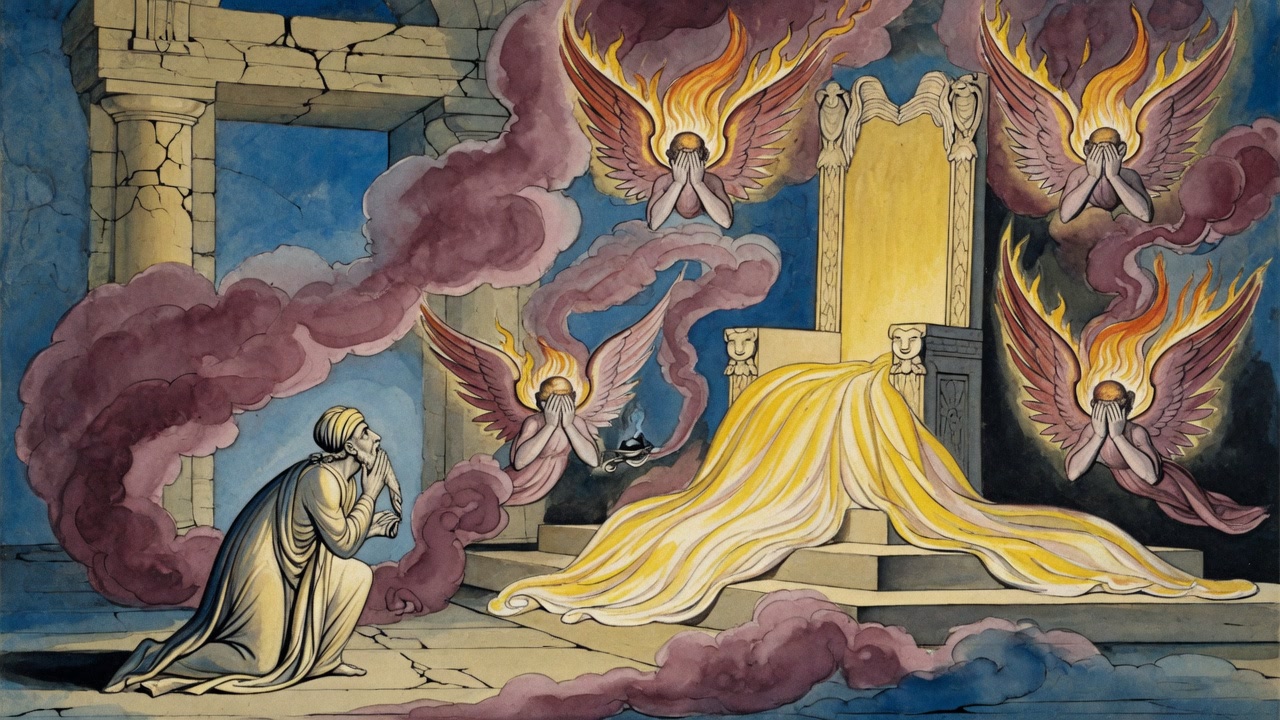
Isaiah's vision in the Temple wasn't peaceful. Six-winged seraphim were screaming in call-and-response at a volume that shook the walls and filled the chamber with smoke.
Isaiah's four 'servant songs' describe a figure who suffers in silence, is rejected, bears the pain of others, and is vindicated. Jewish tradition identifies this figure not as an individual but as the entire people of Israel — and has 2,700 years of argument to back that up.
Isaiah's call narrative is one of the most personal in the Hebrew Bible — a man who walked into what he believed was the earthly Temple and found himself in the divine court, unqualified to be there, told to deliver a message people would not receive.
The prophet Isaiah's vision in the Temple is six verses long and has generated more mystical commentary than almost any other passage in the Hebrew Bible — because what he saw broke the categories of language itself.
Isaiah invoked Moses more often than any other prophet. The ancient midrashim reveal why — and what Isaiah understood about Moses that even Moses did not say about himself.
When Isaiah summoned the heavens to listen, he was not improvising. He was repeating a summons Moses had issued first — and the witnesses had never been dismissed.
After the Temple burned, God sent prophet after prophet to console Jerusalem. Every one of them was turned away. What happened next changed everything.
God told Isaiah to write that He was disowning His children. But the rabbis said God was not serious, and the proof was buried in the grammar.
Three sentences were sealed in heaven on the same day -- the fall of the Ten Tribes, the fall of Sennacherib, and a king struck with leprosy.
The distance from earth to heaven is five hundred years on foot. Isaiah's great discovery was that God could be reached in a single breath.
Isaiah knew that knowledge without fear of God is an empty warehouse. He also knew that when the last exile ends, humanity will finally sing in a new key.
Zion refused comfort from every prophet who came to her. Even Abraham. Then God came personally and Isaiah understood what real comfort meant.
Isaiah asked God to show him Gehinnom. God showed him five chambers, each punishment fitted to the sin. Pharaoh sat at the gate of the last chamber.
King Ahaz burned his children as offerings and sealed the Temple. His one saving grace was that he kept hiding from Isaiah rather than ever confronting him.
The prophet Isaiah said that God's anger always turns back into consolation. The Kabbalists unpacked exactly what he meant, and the answer reframes everything.
Isaiah 45:7 says God creates evil alongside peace. Jewish mystics refused to soften this verse. They wrestled with what it means about creation.
Isaiah promised a world where death is swallowed forever and the wolf lies with the lamb. The Kabbalists asked what cosmic repair could actually produce that.
Before the destruction of the First Temple, the Shekhinah did not depart suddenly. According to Rabbi Yochanan in Midrash Tehillim, the Divine Presence stood on the Mount of Olives for three and a half years, crying out to Israel to return, before finally leaving. The silence that followed was the worst part.
Ten tribes were taken by Assyria in 722 BCE and never came back. The rabbis of Midrash Tehillim refused to accept that this was final. Reading Psalm 147 alongside Isaiah, they constructed a theology of return so absolute it left no exile permanent.
The prophet Isaiah described a future Jerusalem so transformed that even the name of God would be pronounced differently. Rabbinic texts read this vision as a promise embedded in creation itself, a blueprint hidden inside the earth's natural cycles.
Sifrei Devarim finds a painful parallel between Moses's accusation that Israel is 'a people ignorant and not wise' and Isaiah's lament that Israel did not know and did not understand. Together they identify the same failure across centuries.
Sifrei Devarim finds three kings and prophets in a single verse about being brought to your people and helped against your foes. The way the sages read Isaiah's survival under Menasseh, and Jehoshaphat's rescue from the Arameans, turns a legal commentary into a portrait of how prophecy vindicates itself.
Isaiah prophesied a new heaven and a new earth. The Zohar took him literally and explained exactly how new worlds get made: through new interpretations of Torah, rising each time someone understands something no one has understood before.
When Isaiah stood before God's throne and fell silent while the angels sang, he was watching something the patriarchs had only glimpsed in dreams.
When Isaiah stood before the divine throne and the seraphim burst into song, he fell silent -- and that silence nearly cost him everything. Two ancient traditions reveal how music and prophecy became inseparable in Israel's greatest prophet.
Before Isaiah could prophesy, God had to warn him: my people will beat you. Isaiah said yes anyway. The rabbis wanted to know why.
Jerusalem was under siege, Jeremiah was in prison, and God told him to buy a field in Anatoth. He did it — and then asked God what on earth He meant.
King Jehoiakim sat by a fire and cut Jeremiah's scroll into pieces as it was read to him, throwing each column into the flames. God told Jeremiah to write it all again — and this time, add more.
The Book of Lamentations does not argue, explain, or theologize. It sits on the ground with Jerusalem and weeps. The midrash says it was written by Jeremiah while the ashes were still warm.
Centuries after the Exodus, Jeremiah pulled out the preserved jar of wilderness manna to answer the people who said they were too poor to study Torah.
The rabbis asked who would finally bring down Israel's oldest enemy. The answer came from Jeremiah, and it turned on a question of moral standing.
Jeremiah was a child when God called him, and his first objection was not theology but memory: he had watched what Israel did to every prophet they ever got.
King Jehoiakim burned Jeremiah's scroll and erased every divine name from it. Jeremiah responded by adding four more chapters to Lamentations.
Pharaoh's fleet was already at sea, sailing to rescue Jerusalem. Then God filled the water with corpses, and the Egyptians recognized their ancestors.
The prophet was sinking in mud and lime when a voice called his name. He refused to answer. He had been mocked too many times to trust a friendly voice.
Jerusalem did not fall because Babylon was stronger. It fell the moment Jeremiah left the city. An angel appeared on the wall and invited the enemy to enter.
After the Temple fell, God sent Jeremiah to wake the Patriarchs from their graves. Jeremiah lied to them. He feared they would blame him.
The Talmudic rule is clear: all prophets open with rebuke and close with consolation. But Jeremiah watched the Temple's destruction firsthand and ended his book in ashes. Midrash Tehillim records the debate over whether Jeremiah is the tragic exception to the rule or whether even he, somehow, offers a hidden consolation.
The most dangerous passage in the Hebrew Bible was a chariot. Not a weapon, not a battle — a description of what God rides, so dangerous the rabbis debated whether anyone under 30 should read it.
The rabbis refused to read the valley of dry bones as a metaphor. They said it was 600,000 Ephraimites who left Egypt thirty years too early.
Ezekiel announced a day God had promised. The rabbis traced the promise back through eight centuries to a single line in the Song of Moses.
The rabbis nearly suppressed Ezekiel for contradicting the Torah. One man saved it with 300 jugs of oil. What he preserved inside changed everything.
At the Red Sea, unborn children in the womb sang praises. A slave woman at the crossing saw more of God's glory than Ezekiel in his greatest vision.
Ezekiel hesitated on whether God would save them. The three men declared they were ready to die. That was the moment the rescue became certain.
Entering God's throne room required the right songs and knowing which angels would try to destroy you. Rabbi Ishmael asked how it was done safely.
Ezekiel saw a river pouring from beneath the Temple threshold, growing deeper with every step, healing everything it touched. Pirkei DeRabbi Eliezer read that vision as a medical text, a promise of bodily restoration that the rabbis took quite literally.
The prophet Ezekiel was carried by vision into the inner courtyard of the Jerusalem Temple, where he found twenty-five priests facing east, worshipping the sun with their backs to the sanctuary. Sifrei Devarim uses this scene to define what it means to 'abase the Rock of salvation.'
Abraham, Isaac, and Jacob each encountered the divine -- but none of them saw what Ezekiel saw by the Chebar Canal. Ancient traditions trace a line from creation itself through the patriarchs to the terrifying fullness of Ezekiel's chariot vision.
Moses sang of divine vengeance on the edge of Canaan -- and centuries later, Ezekiel announced that the day Moses described had finally arrived. Two prophets separated by six hundred years turned out to be speaking the same sentence.
Moses saw God face to face -- but the tradition insists that Ezekiel, exiled and broken in Babylon, received a vision that went further than anything Moses described. The difference between the two prophets illuminates one of the deepest questions in Jewish thought: does catastrophe clarify or obscure the divine?
God did not call Ezekiel by his name. He called him ben adam -- son of man. Vayikra Rabbah explains why that title carried more weight than any name.
The rabbis discovered that the word Adam contains an entire theology. Three meanings -- affection, brotherhood, friendship -- woven into two syllables and one prophetic title.
Every prophet God addresses is called by name. Ezekiel alone is called 'son of man.' The rabbis say this was not a diminishment. It was the highest honor God could give.
The book of Jonah says he was in the belly of the fish for three days and three nights. The midrash says those three days were not spent in darkness — the fish showed him the depths of the sea, the pillars of the earth, and the entrance to Gehinnom.
The shortest book in the Hebrew Bible is one chapter long. The rabbis said its author was chosen because he had lived the exact inverse of Esau's life.
Inside the fish's belly, Jonah didn't just pray — he faced Leviathan, toured the foundations of the earth, and made a promise only fulfilled at the end of days.
The Mekhilta de-Rabbi Ishmael reveals that Jonah's flight to Tarshish was not cowardice. It was an act of self-sacrifice, cut from the same cloth as Moses and David.
The rabbis were not speculating about where redemption would come from. They had a text, a mountain, and a prophecy. The location was fixed from the beginning.
Obadiah was a convert who had lived in the house of wicked rulers. The rabbis said God gave him the shortest book in the prophets for one reason. The logic was precise.
When Jonah tried to flee by sea, a miraculous storm hit only his vessel. Every other ship on the Mediterranean sailed through calm water undisturbed.
When the lot fell on Jonah, the sailors tried everything to avoid throwing him into the sea. They lowered him in three times by degrees before the sea made the decision for them.
Jonah spent three full days inside the great fish without praying once. God had to send a pregnant fish and Leviathan himself to motivate him.
The people of Nineveh did not just say they were sorry. They separated children from mothers and animals from young to force God's hand.
Habakkuk was preparing stew for his field workers. An angel arrived, seized him by the hair, and transported him to Daniel's lion's den.
Jonah tried to outrun God's command to Nineveh. A fish swallowed him whole. What happened next overturned everything he believed about who deserves mercy.
Most people assume Jonah fled from God out of cowardice or stubbornness. Pirkei DeRabbi Eliezer reveals a more unsettling reason: Jonah already knew what prophecy cost, because he had already been right once before and it had nearly destroyed him.
The rabbis noticed that the numerical value of a phrase from Amos, a verse about accepting what is good, equals the numerical value of a phrase about accepting the soul. Yalkut Shimoni connects this to the Book of Esther and the future of the Temple, finding in a minor miracle of Hebrew arithmetic a major prophecy about exile and return.
When the great fish swallowed Jonah, he did not merely sit in darkness waiting to be rescued. Yalkut Shimoni and the Zohar describe what he saw inside: a vision of the underworld, its geography and its population, that transformed a reluctant prophet into one willing to preach repentance to the city he had tried to flee.
A 10th-century Midrash on Proverbs lists the seven names of the Messiah. The list includes David, Elijah, and a name given before the sun was made.
Midrash Tehillim on Psalm 2 traces a single pattern through all of history: every empire that rose to destroy Israel collapsed before it. Nimrod. Pharaoh. Haman. Gog and Magog.
Midrash Tehillim on Psalm 2 maps four generations of enemies: Esau, Pharaoh, Haman, and Gog and Magog. Each thought they had the perfect plan. Each was wrong.
Midrash Tehillim reads Psalm 27 as a rope woven from three strands: the merit of the ancestors, the grace of God, and the sustaining power of Torah.
When God told Jacob his children would be like the dust of the earth, it sounded like an insult. The rabbis of Midrash Tehillim knew it was the opposite.
The Midrash Tehillim imagines a World to Come so transformed that even trees and stones become guardians of the law. Moses and Daniel both glimpsed it.
When four rabbis saw foxes running through the ruins of the Holy of Holies, three wept. Rabbi Akiva laughed. His laughter was not callousness but the deepest possible act of faith in divine justice.
Three rabbis wept when they saw foxes walking through the ruins of the Temple. Rabbi Akiva laughed -- and his reason changes everything about what prophecy means.
After 37 chapters of Job and his friends arguing about why innocent people suffer, God answered from a whirlwind — and didn't answer the question at all. The rabbis spent centuries explaining why this was the right response.
Eliphaz, raised in Isaac's household, became a prophet. He confronted Job with the faith of the patriarchs -- and God rebuked him for it.
Ruth gleaned only two stalks at a time even when starving. What Boaz saw in that restraint changed both their destinies.
Ruth falls on her face when Boaz speaks to her with unexpected kindness. Philo of Alexandria found in that gesture three separate theological layers, each one deeper than the last.
Three rabbis wept when they saw foxes running through the ruins of the Holy of Holies. Rabbi Akiva laughed. His reason silenced them.
The Yalkut Shimoni sets Moses at the Exodus against Jeremiah at the fall of Jerusalem and lets the contrast between the two departures do all the work.
The Book of Lamentations is an alphabetical curse from Aleph to Tav. Rabbi Nehemya taught that Isaiah had already written a remedy for each one before the disaster struck.
The laws of a plagued house in Leviticus turn out to be about the Temple. And the priest summoned to inspect the damage turns out to be Jeremiah.
Esther Rabbah imagines God auditing the record of every empire. The wool in Daniel's vision is the debt God owes no one, and the rabbis knew the number.
Esther did not hide her identity out of fear — the Midrash says she inherited a craft of silence from Rachel herself, and that silence became the most powerful weapon in the Persian court.
Esau, Pharaoh, and Haman each believed he had found the perfect method to destroy Israel. A midrash from Esther Rabbah tracks the fatal flaw in every scheme.
Amos described a man who fled a lion, was attacked by a bear, and was bitten by a snake at home. The rabbis saw the entire history of Israel in that one verse.
Two great Talmudic sages disagreed about which empire the seven princes of Persia served. The answer turned on a single act of restraint performed generations earlier.
Moses, Jacob, David, and Mordechai all received advance notice that destiny was turning. According to the rabbis, two of them recognized the message and two did not. The difference mattered.
Mordecai learned of the assassination plot through prophecy, not eavesdropping, then found his footing in three schoolchildren reciting scripture.
Why did Joseph give Benjamin five changes of raiment? The rabbis say he was seeing three centuries ahead, to the day Mordecai would dress as a king.
When the king demanded her lineage, Esther declared herself a descendant of Saul. Then she told him his predecessors relied on prophets, not ordinary advisors.
Before the decree, Haman approached Mordecai with shalom. Mordecai quoted the prophets at him. Something darker than a feud was driving the exchange.
Before Haman cast his lot, he interrogated each sign of the zodiac. Every constellation told him the same thing: do not touch Israel.
As Haman approached, Mordecai asked three schoolchildren what they had studied. Each verse they quoted pointed toward the same rescue.
Mordecai's speech before the fast named every protection that was gone. No king, no prophet, no escape. Then he asked the people to pray anyway.
Haman was asked what honors the king should give a man. He assumed the king meant him and described his own fantasy in perfect detail.
The Bible says Daniel spent a night in a lion's den and emerged unharmed. The midrash asks: were the lions well-fed? The answer is that they had been deliberately starved beforehand — and they still refused to touch him.
King Belshazzar held a feast using the sacred vessels stolen from the Jerusalem Temple. Midway through, a hand appeared — no body, no arm, just a hand — and wrote four words on the plaster. Every wise man in Babylon failed to read them.
When Judah Maccabee sent envoys to Rome, he was allying with a power that Jewish prophecy had already identified as the final empire before the end of history.
Before Nebuchadnezzar destroyed Jerusalem, he ran three steps to correct a letter that disrespected God. Gabriel stopped him. Those steps were the reason.
Nebuchadnezzar wanted to worship Daniel. Daniel refused. The king was so moved that he removed Daniel before the furnace decree forced a confrontation.
Nebuchadnezzar woke from a dream so terrible he could not remember it, only the dread. He ordered every wise man killed. Then a Jewish captive walked in.
The men who trapped Daniel used the one thing they knew they couldn't take from him, his prayer. Darius signed the law. The lions were ready. Then morning came.
After the Temple fell, the prophets went silent. The rabbis who came after searched the Book of Daniel for signs that God had not simply stopped speaking, and found something stranger than prophecy.
Solomon built an earthly throne to echo the heavenly court. Daniel saw the heavenly court directly, in a dream. The two visions describe the same architecture.
Thirty years after Babylon burned Jerusalem, Ezra could not sleep. He put God on trial and demanded an answer. The angel who responded refused to give him one.
The Mekhilta's reading of II Chronicles reveals a radical principle: until David was chosen, any Israelite could have been king -- and prophets outside the Land still spoke in the merit of the ancestors.
The Babylonians burned the First Temple in 586 BCE — but the midrash says they had help. God's own angels had been waiting for the command, and when it came, they were the ones who lit the match.
The rabbis read Ecclesiastes as an economic prophecy: Edom swallows everything, but in the end the inheritance belongs to the humble scholars who thought they were nobody.
When Ninus carved an image of his dead father Bel, he discovered anyone who prayed to it was pardoned. That is how idol worship spread across the ancient world.
When Rabbi Akiva and his colleagues saw a fox emerge from the ruins of the Holy of Holies, the other sages wept. Akiva laughed. His reason was not callousness but the most precise form of faith: if the prophecy of destruction had come true exactly, then the prophecy of restoration would come true exactly too.
Before Rabbi Isaac Luria revolutionized Kabbalah, Elijah appeared at his birth and held the infant during his brit milah. Only the father knew what was happening.
Rabbi Ishmael laid out the end of history in fifteen steps. Three wars. A city in ruins. A figure emerging from the direction of Rome in crimson garments.
Before the first man, the Kabbalah says there was another Adam: a primordial body of divine light. What happened to that light is why repair is still necessary.
Greater scholars than us lived in every century between the Zohar's composition and today. So why did its deepest meaning only become available now?
Rabbi Isaac Luria revolutionized Jewish mysticism in the 1560s, yet his deepest teachings were kept from the world for centuries. Baal HaSulam explains why.
The Kabbalists asked how God can appear through forms and visions when God has no form at all. Baal HaSulam builds a precise answer from the Sefirot and Isaiah.
When Ezekiel saw a storm from the north, he was not watching weather. He was seeing four klipot, shells blocking divine light, called there by human failure.
Isaiah said God would swallow death forever. The Kabbalists asked what cosmic mechanism could actually produce that. Their answer involves the final absorption of the Other Side back into its source.
The Idra Zuta, the Zohar's account of Rabbi Shimon's final day, reveals how divine wisdom and understanding pass from one level of the cosmic structure to the next -- and why the prophet Daniel's vision of a tree that feeds all the world is a Kabbalistic diagram.
Ancient Kabbalah taught that prophecy is not a download from the sky but a transmission through a living divine body called Adam Kadmon. Every prophet who ever lived accessed a different limb of that body.
The blessing Balaam spoke against his will contained a claim so radical the Tikkunei Zohar could not move past it. He said God looks at Israel and sees no sin. The Kabbalists spent centuries explaining what that could possibly mean.
After seven years of famine, rain returned on one day in Nisan and grain grew in eleven. The miracle was not the speed. It was the promise attached to it.