Balak Asked What God Had Spoken Without Really Asking
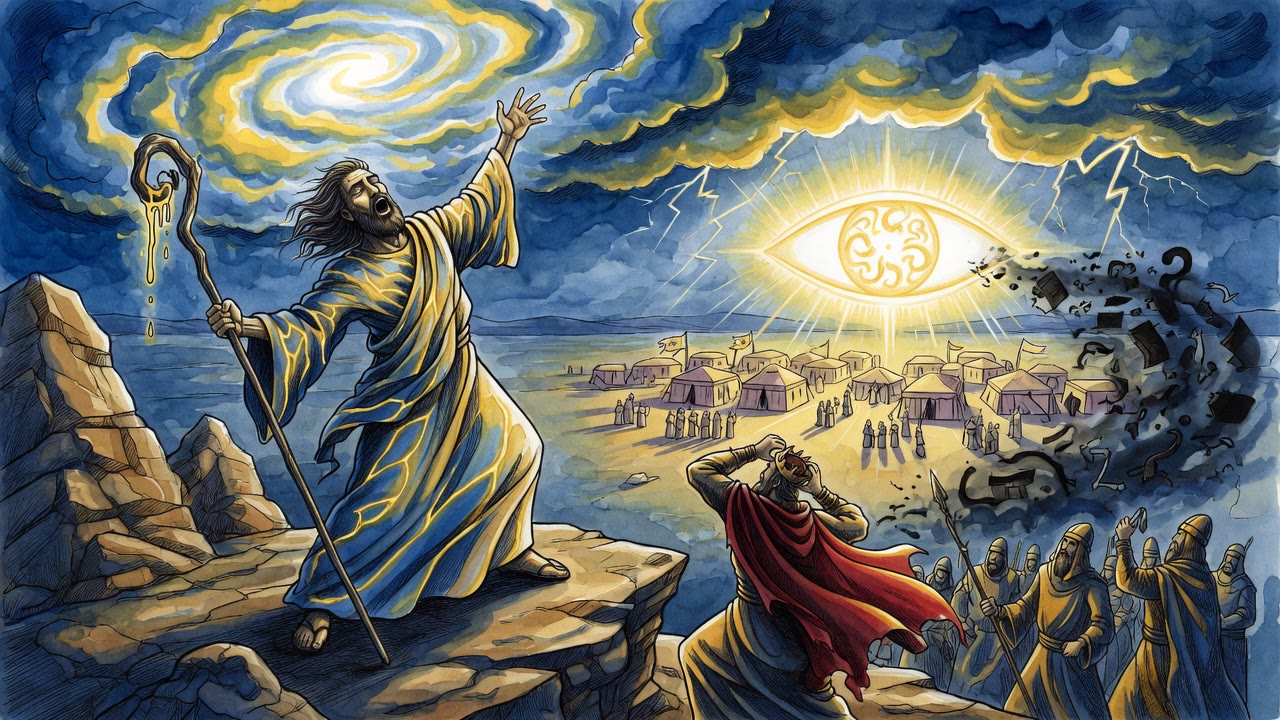
After Balaam blessed Israel a third time, Balak dismissed his princes and asked what God had spoken. His tone was not a question. It was a verdict.
Table of Contents
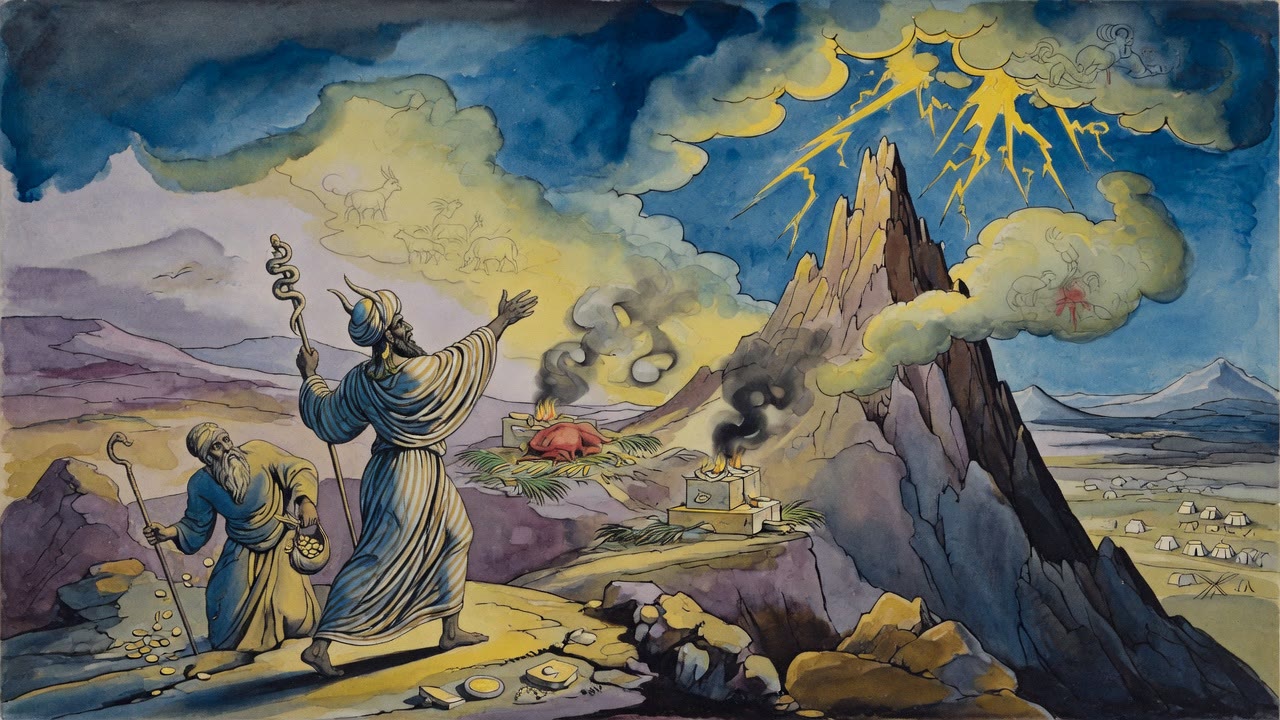
 Click for full size
The Court That Had Thinned
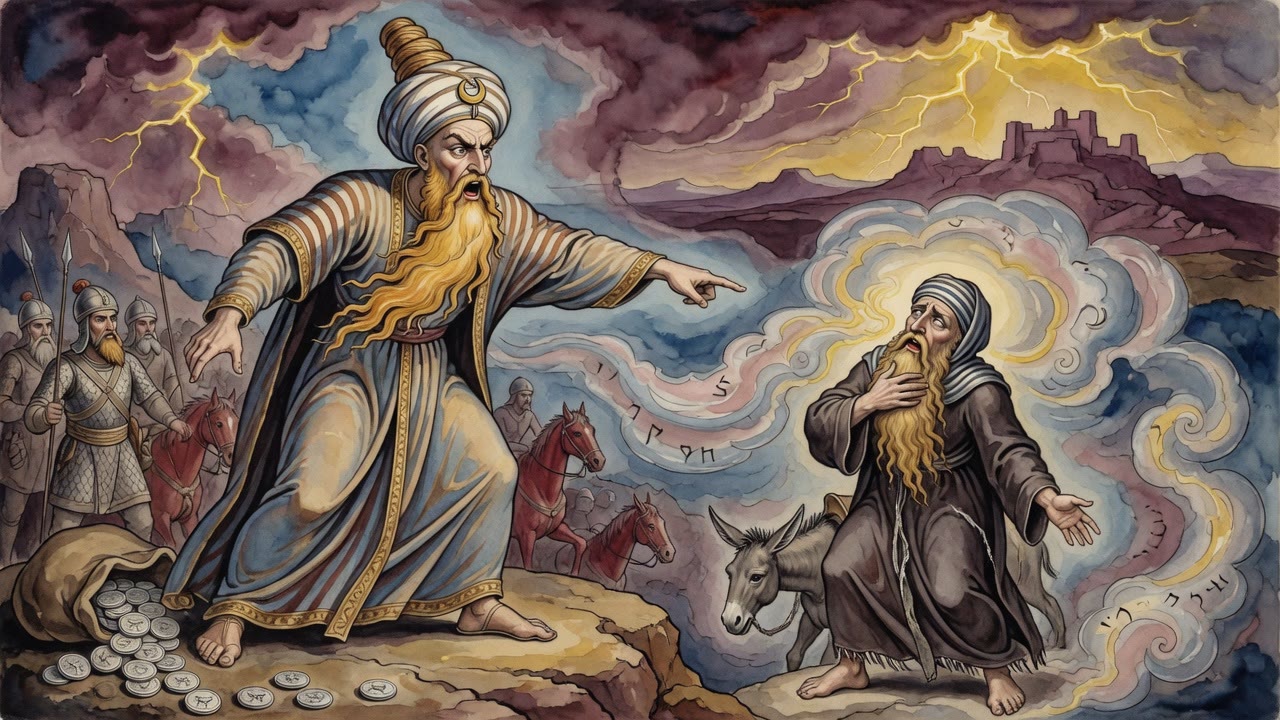
By the time Balaam came down from the third high place, the court around Balak had thinned. The princes who had traveled with the prophet to each of the elevated sites, who had stood at attention while he performed his ritual and waited in increasingly strained silence while blessings came out of his mouth instead of curses, had withdrawn. The formal apparatus of the commission was gone. What remained was a king in a half-empty hall and a prophet he had paid enormously and received nothing from, and one question.
What hath the Lord spoken?
The Legends of the Jews, Louis Ginzberg's synthesis published between 1909 and 1938, drawing from multiple midrashic traditions and from Midrash Tanchuma, a collection of homiletical interpretations on the Torah portions assembled from material of the tannaitic and amoraic periods, reads the grammar of Balak's question with a precision the plain text does not require but the tradition insists on. What Balak meant was not inquiry. It was accusation. You are nothing but a vessel for someone else's words. I hired a vessel and I want to know what it carried this time. The question was a verdict: you failed, and I am now formally acknowledging that the failure is complete.
Twenty-One Altars and Three Blessings
Balaam had dreaded this meeting. He had left Pethor at Balak's urgent and lavish summons. He had traveled days to reach Moab. He had climbed three high places: first Bamoth-Baal with its view of the rear of Israel's camp, then the field of Zophim on the summit of Pisgah with its view of the full encampment, then Peor with its view of the desert. He had built seven altars on each high place, twenty-one total. He had offered a bull and a ram on every altar. He had stood with his mouth ready and watched the spirit of God move through him three times and heard three blessings come out when he had contracted to produce curses.
Each time, Balak had displayed his displeasure in escalating terms. After the first blessing, he had suggested that perhaps a different vantage point would produce a different result. After the second, he had told Balaam neither to curse at all nor to bless at all, the blessings were evidently more damaging to his project than silence would have been. After the third, he had struck his hands together, the gesture of disgust and dismissal, and sent away the waiting princes. There was no fourth high place.
No One Has Seen Perversity in Jacob
The Midrash Tanchuma tradition records what Balaam had spoken on the third high place, in the blessing that broke Balak's patience entirely. Balaam said: He does not pay attention to the transgressions in their hands, He only pays attention to their merit. The Lord their God is with them. You said to me, come, curse Jacob for me. But if an orchard has no keeper, a thief can harm it. If the keeper falls asleep, the thief will enter. These people are kept by One who neither slumbers nor sleeps. How can I harm them?
Balak tried a different argument. Since you cannot touch them because of Moses, look at Joshua, his successor. Perhaps Joshua's deeds are more vulnerable. Balaam told him: he will be strong as well. The defense was not about Moses personally. It was about the covenant that stood behind Moses and would stand behind Joshua and would stand behind every leader who followed. The keeper who never sleeps did not retire when Moses died.
The Question That Was a Condemnation
When Balak asked what the Lord had spoken, the Ginzberg compilation reads his tone as the tone of a man who has given up on the outcome and is now simply administering the record of failure. He had invested in this enterprise at enormous cost, the silver and gold promised to Balaam, the retinue of princes, the twenty-one altars, the oxen and rams, the three separate expeditions to elevated sites across his kingdom. He had gotten three blessings spoken over his enemy by a prophet he was paying to curse them, in the presence of his own court, in his own land, from the high places of his own gods.
The question was his acknowledgment that the puppeteer's words, not the puppet's, had come out. That acknowledgment carried its own dignity, of a bitter kind. Balak had always known he was not the most powerful force in the exchange. He had known from the beginning that whether God permitted Balaam to curse was the decisive variable, and that Balak himself had no control over that variable. He had bet everything on Balaam being able to manage the divine, and Balaam had not managed it. What hath the Lord spoken was the question of a man surrendering to an outcome he had seen coming from further away than he had admitted.
← All myths