32 myths · Page 1 of 2
Each story names the sources it was written from.
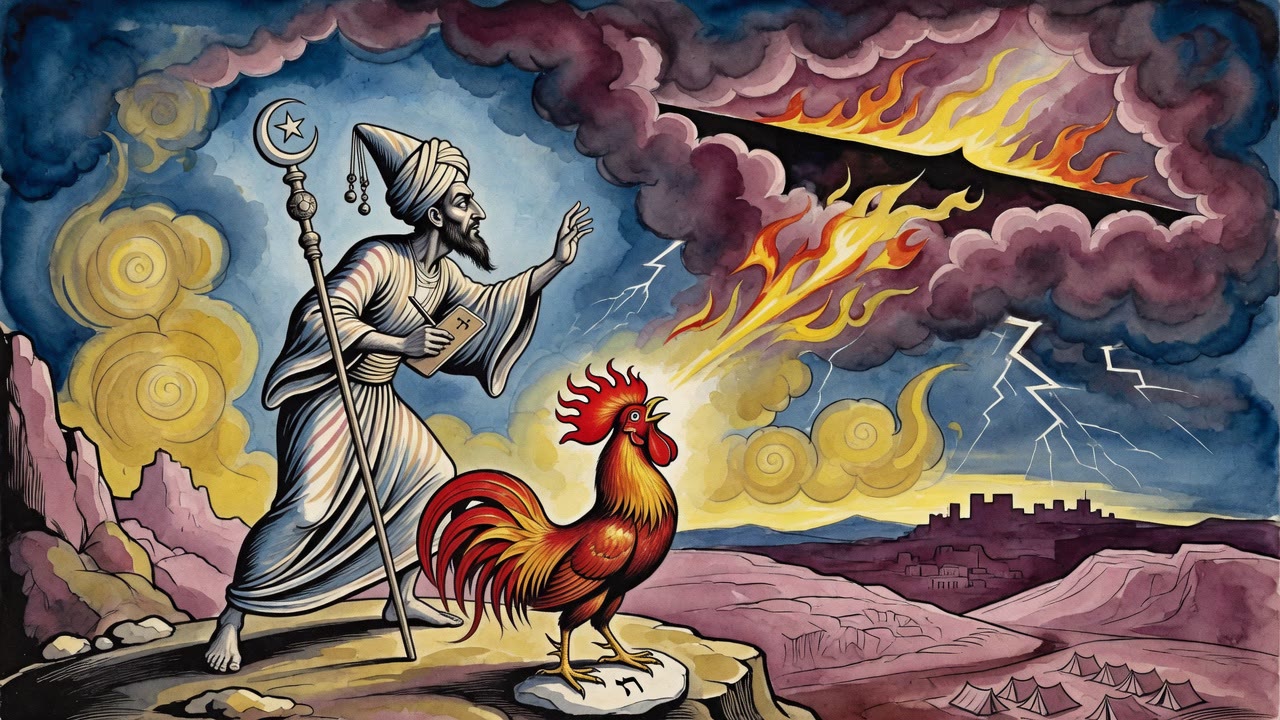
Balaam's rivals could not figure out how he worked. The rabbis said he had learned to read a rooster's comb, and it told him when God was furious.
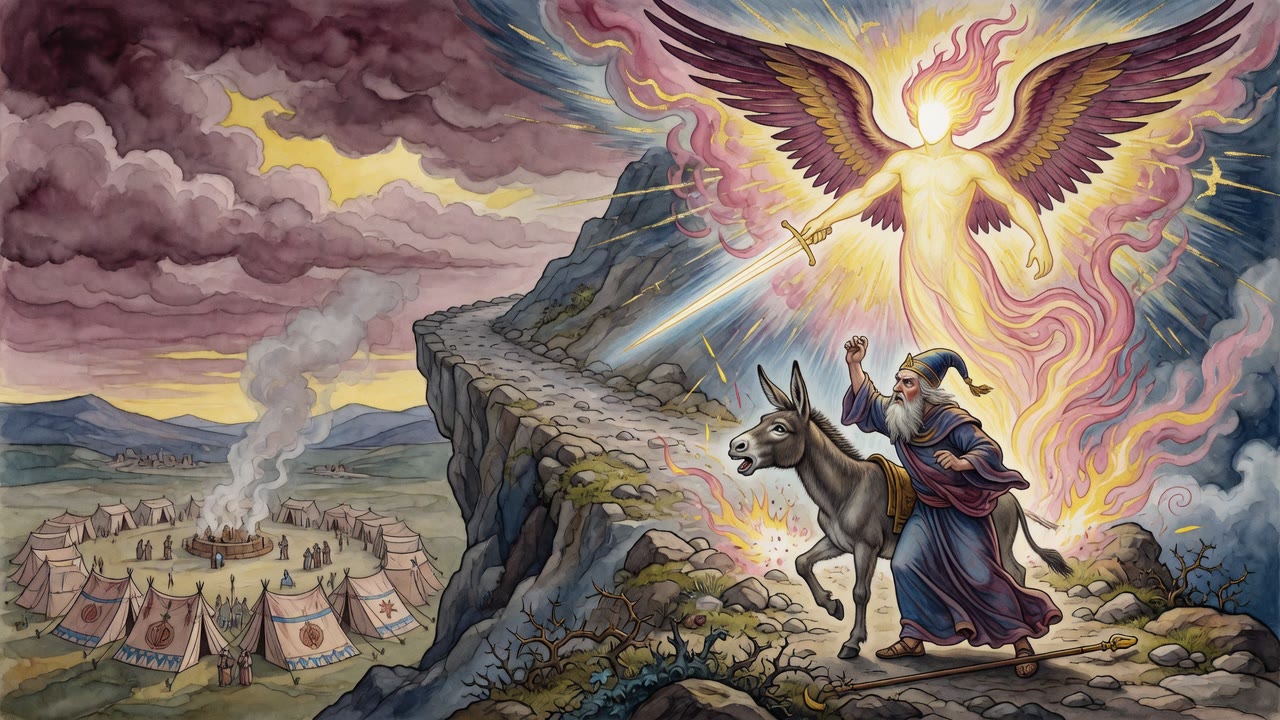
Balaam saddled his donkey before dawn, eager to curse Israel for Balak's money. The donkey saw the angel blocking the road. Balaam saw nothing.
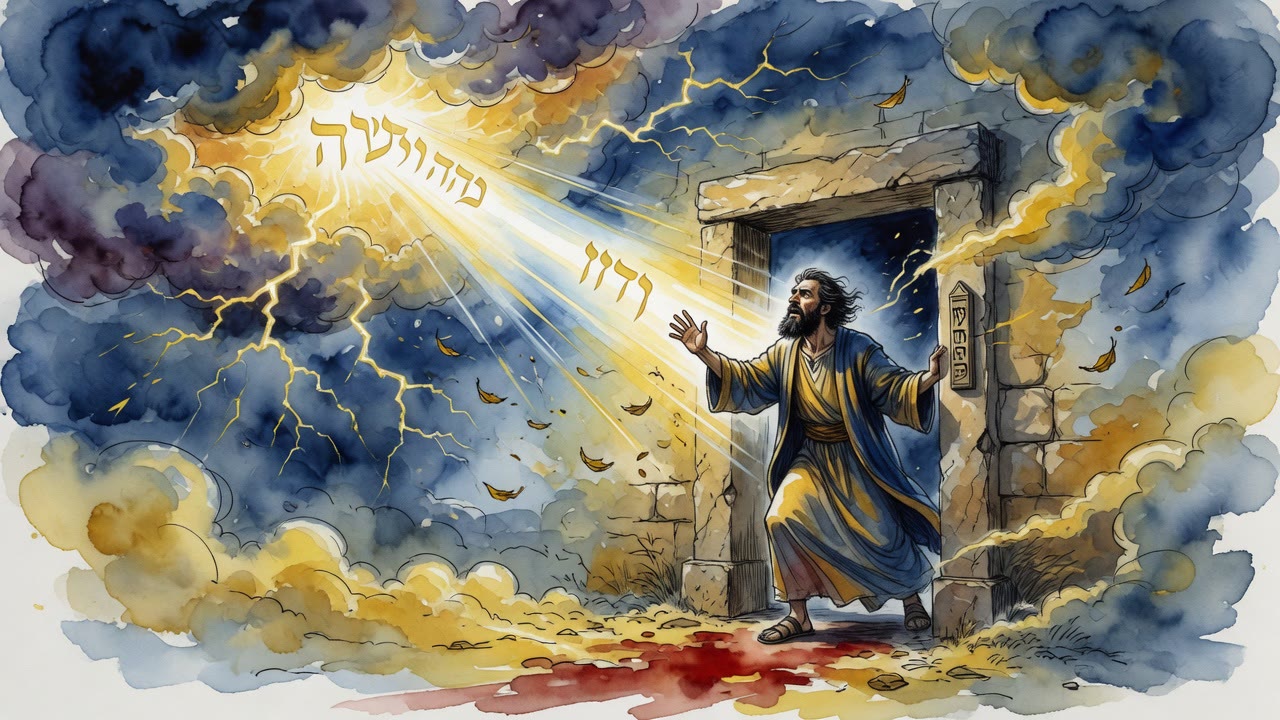
God asked Bilam a question He already knew. Bamidbar Rabbah hears Cain and Hezekiah standing behind that dangerous answer.
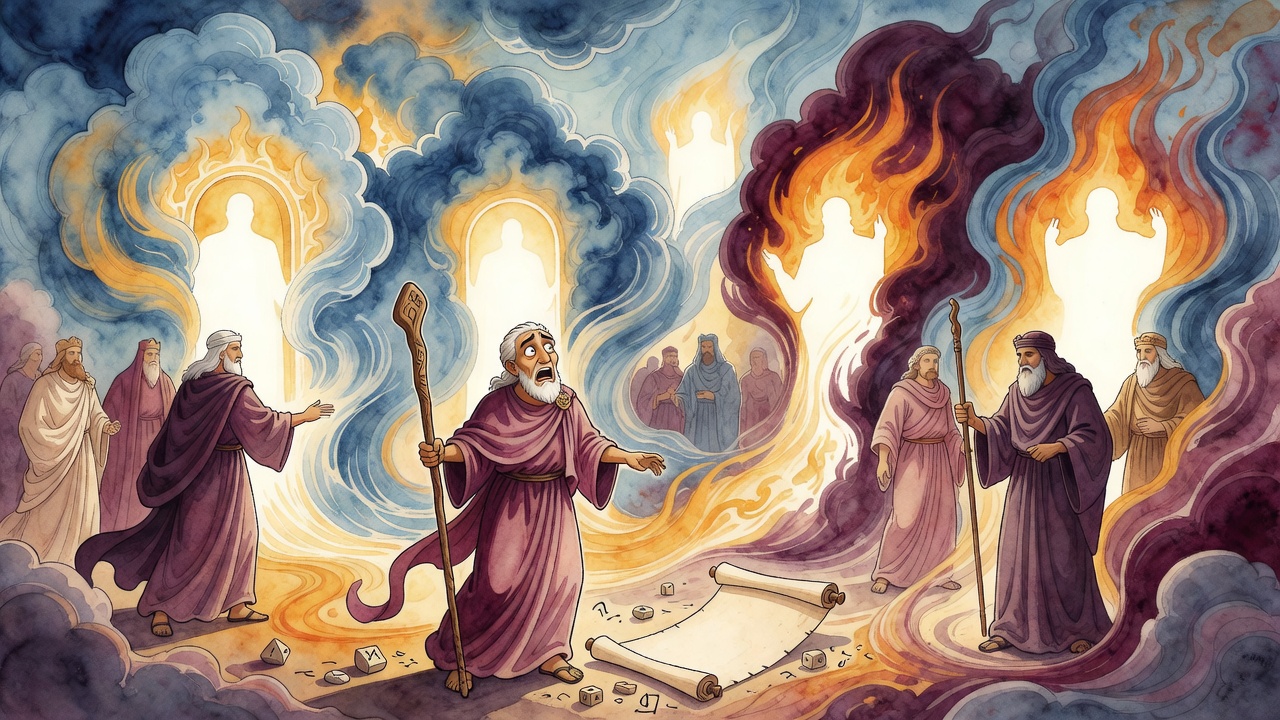
Balaam had divining tools, royal messengers, greed, timing, and a curse ready. God blocked every door before he could speak.
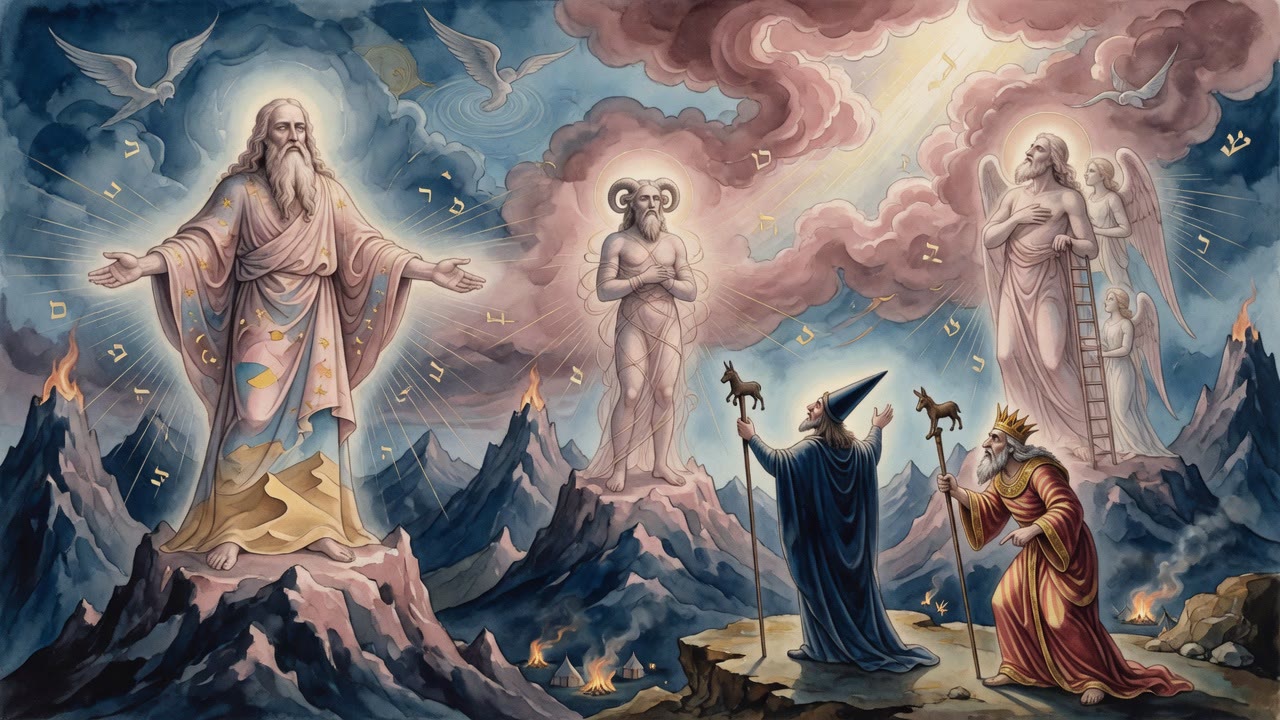
Balak paid for a curse and waited below the hill. Balaam came down and told him to stand. The fathers of Israel were already up there.
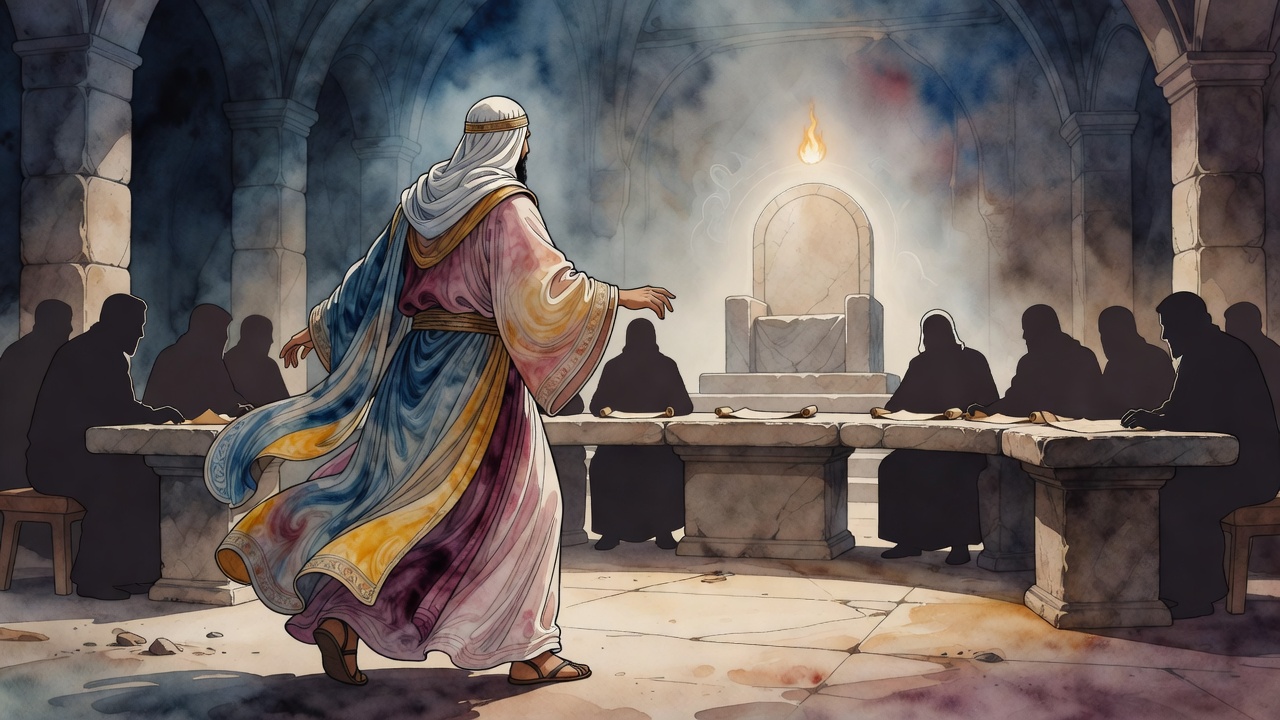
Balak wanted a plan against Israel. Reuel named four generations of rescue. The king still asked for a curse, so Reuel left the room.
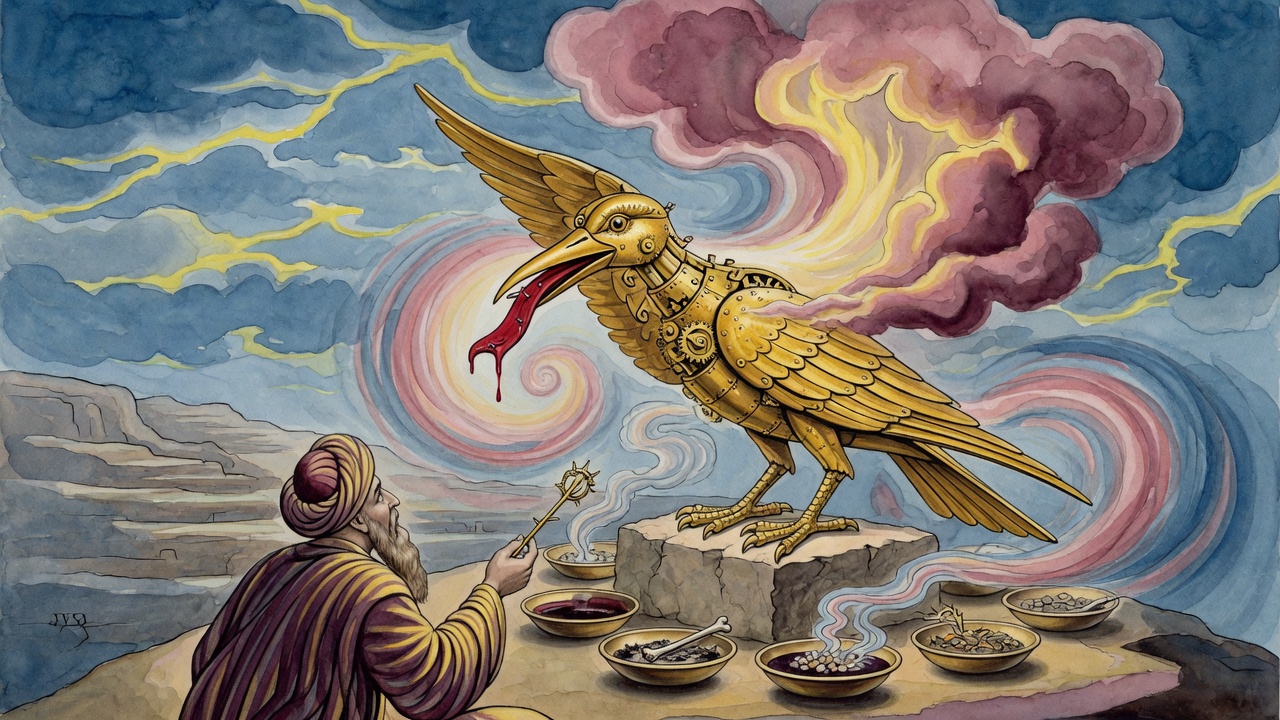
Before Balak hired Balaam he had his own oracle. A golden bird fitted with a rare tongue. Seven days of offerings, one prick, and it spoke.
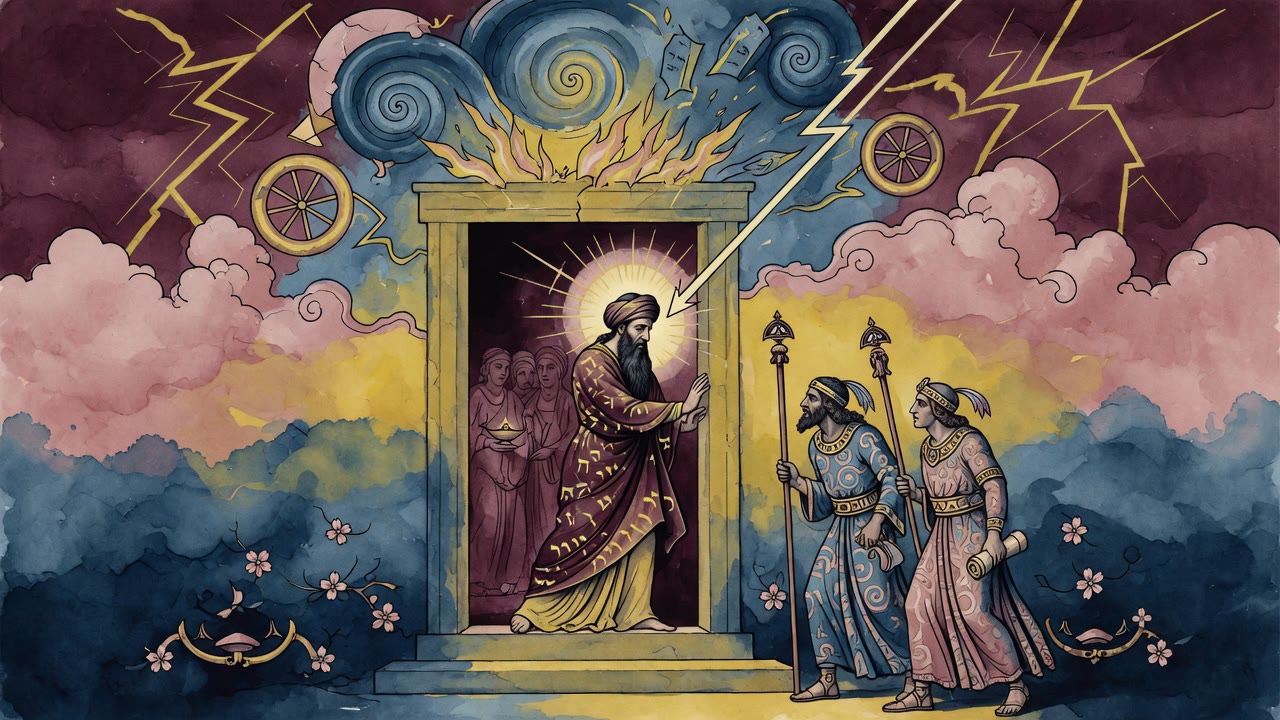
God told Balaam not to go. Balaam could not say that to the men in his house, so he told them it would be beneath his dignity to travel with men of their rank.
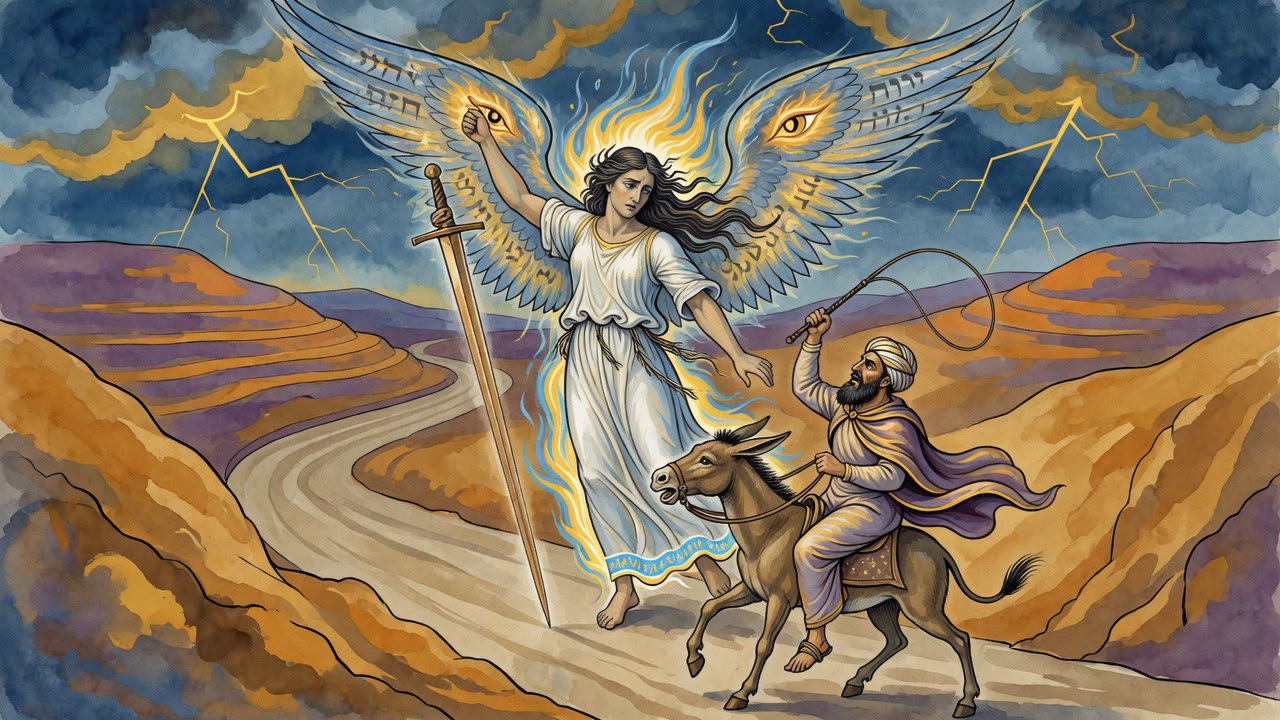
The angel blocking Balaam's road had not come to destroy him. It had come to protect him from himself. Then it said: go, if you must.
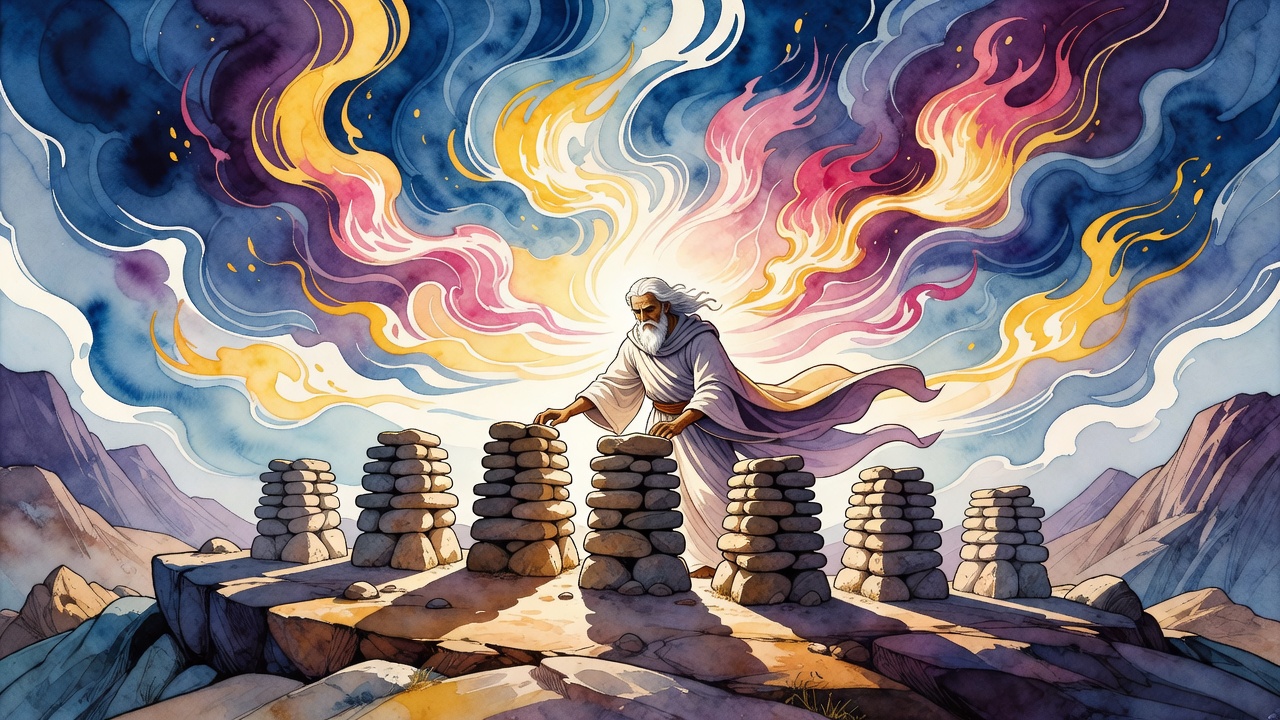
Balaam counted every altar the patriarchs had ever built, then built the same number to match their merit. God answered with a single verse about dry bread.
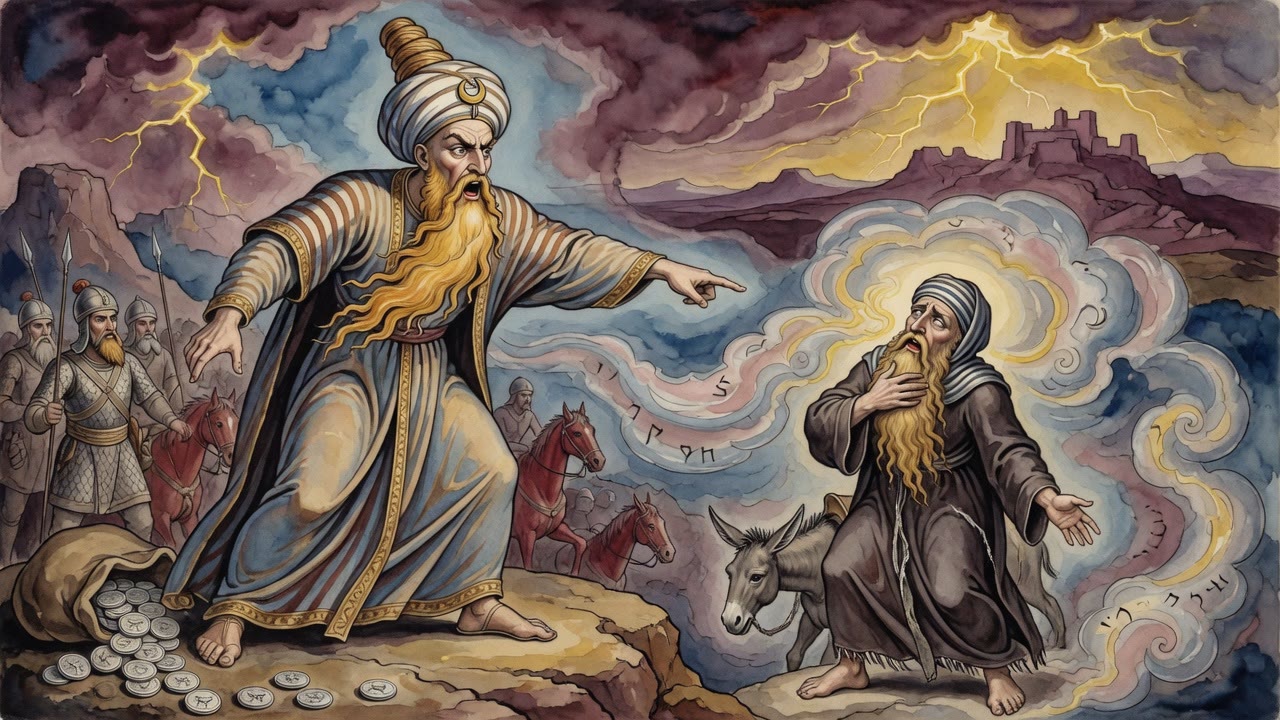
After Balaam blessed Israel a third time, Balak dismissed his princes and asked what God had spoken. His tone was not a question. It was a verdict.
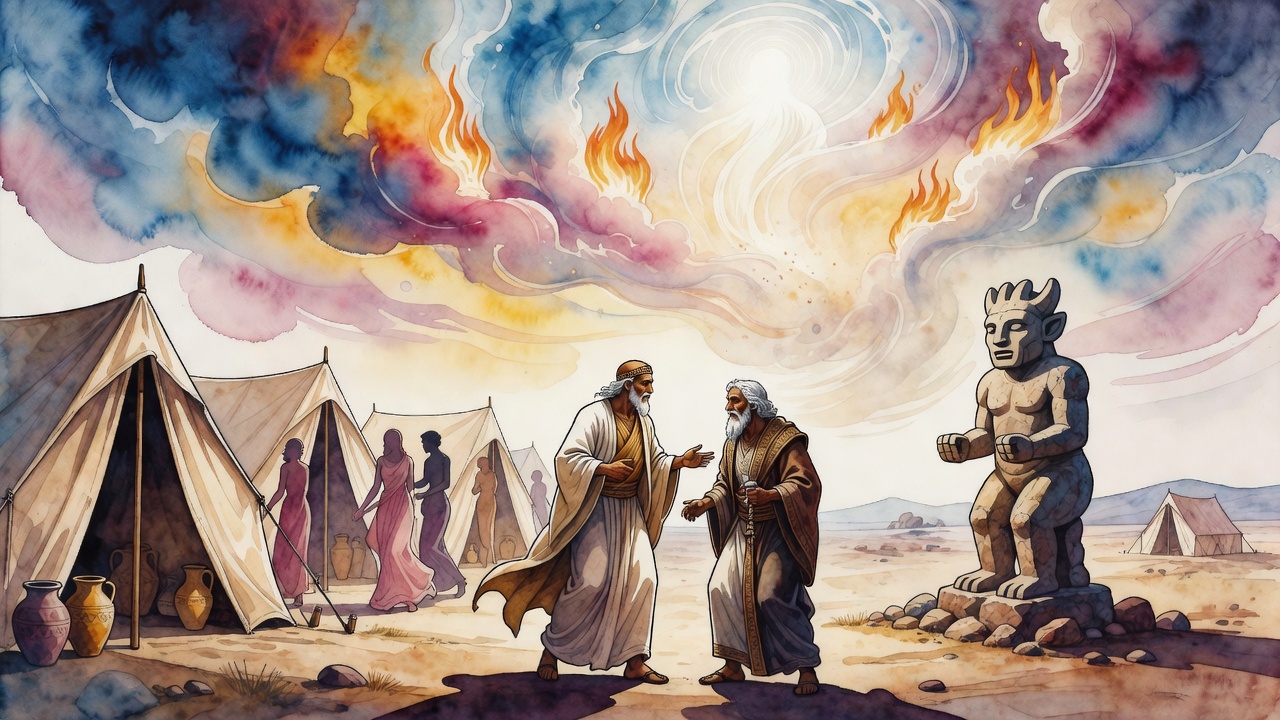
Curses had failed, so Moabite women sold cheap linen at their tent doors. Inside there was wine, and under the linen an idol was waiting.
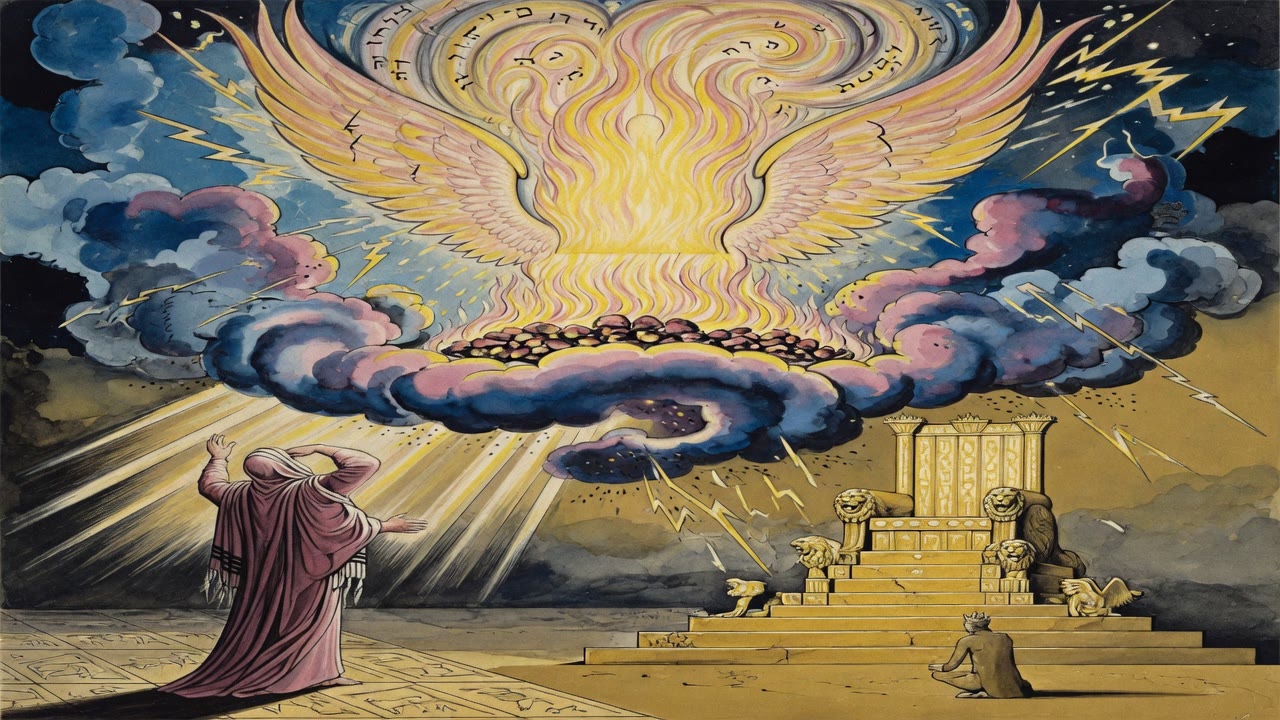
Sihon and Og took Moab's money for years to stand between Balak and the desert. Israel killed them both in one season. Now nothing stood there.
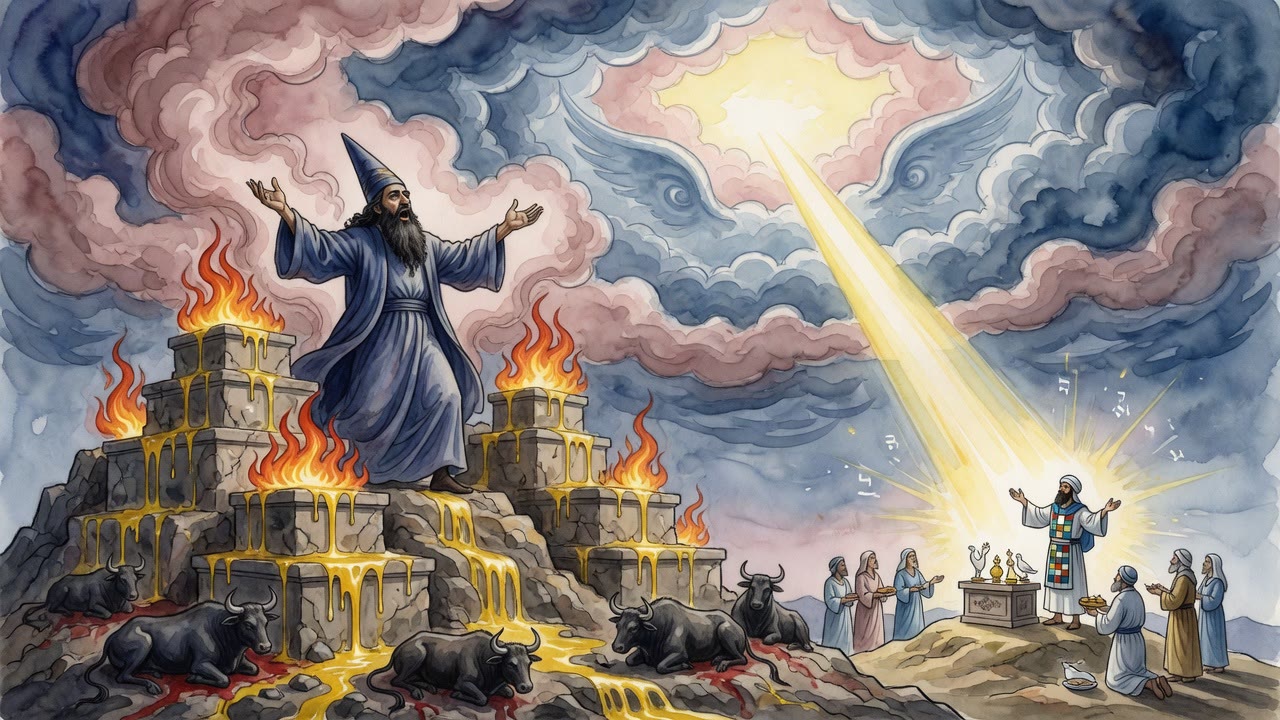
Balak paid for a curse. From the mountain Balaam's mouth opened and he saw David, the star from Jacob, and the King Messiah rising at the end of days.
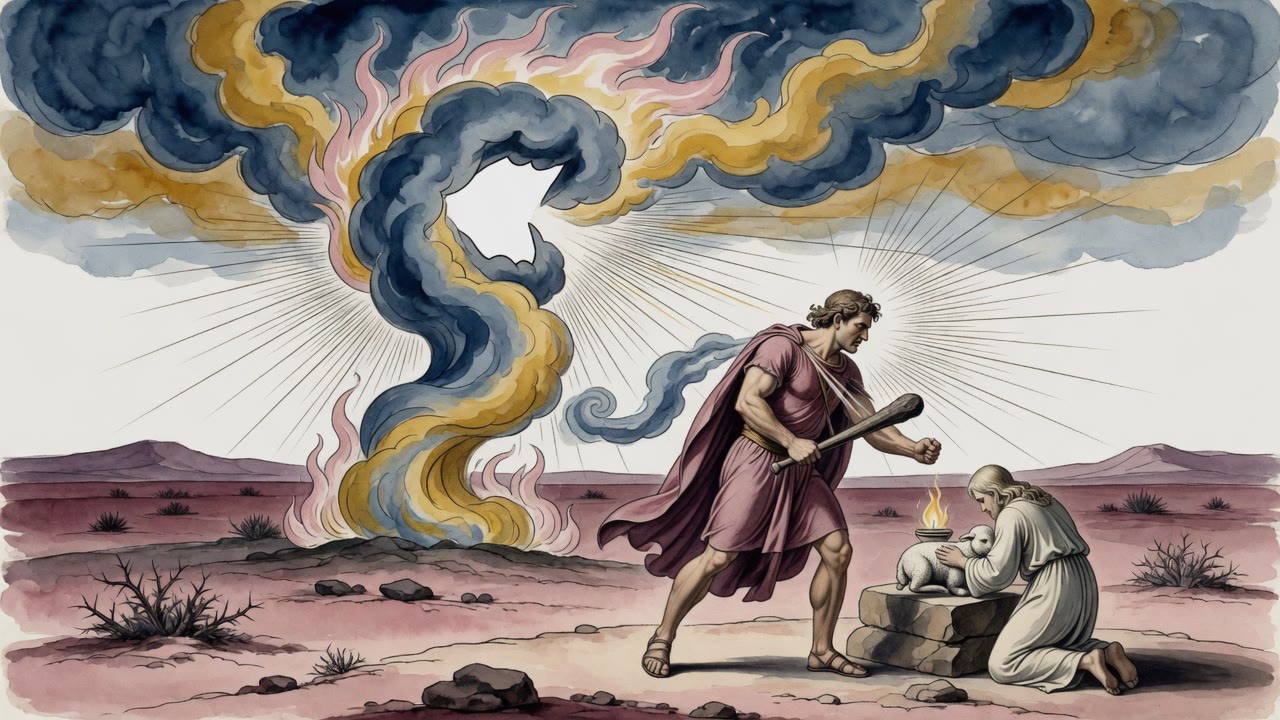
The princes of Moab were still asleep under his roof. Balaam was out in the cold before dawn, tightening the girth with his own hands.
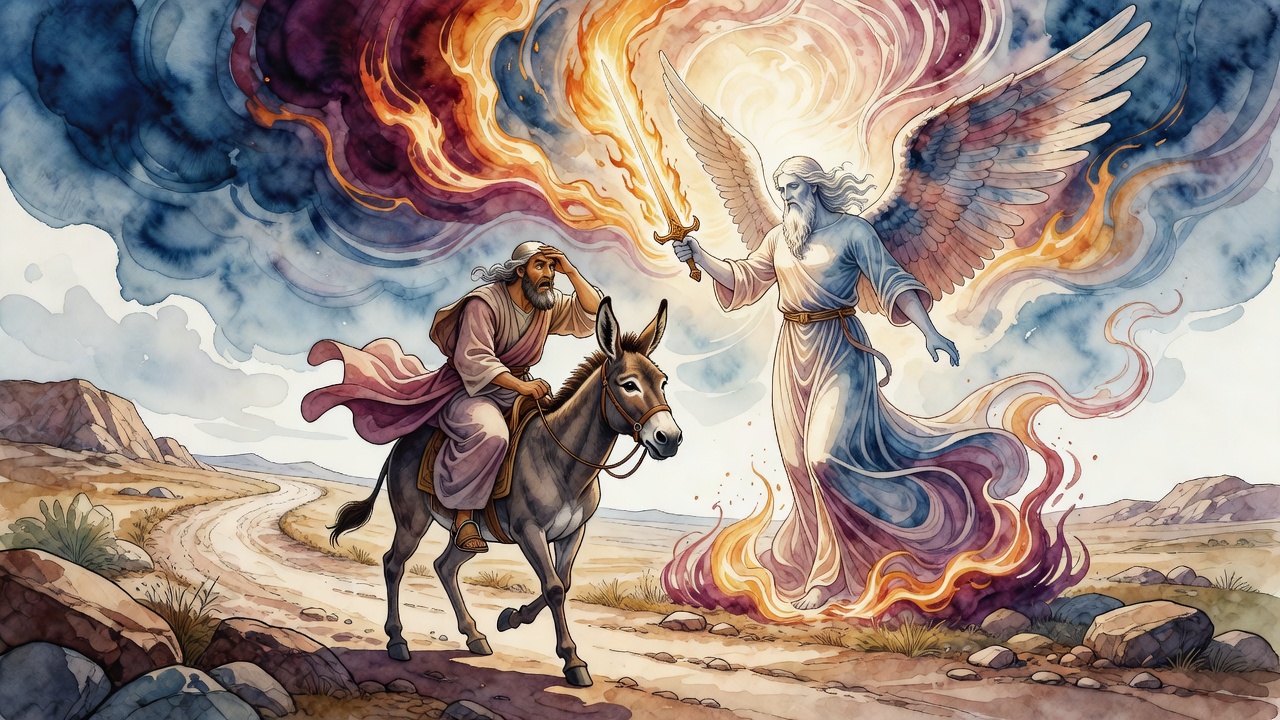
Three times the donkey saw what the prophet could not, and the angel said if a beast deserved defense, how much more the nation Bilam rode to curse.
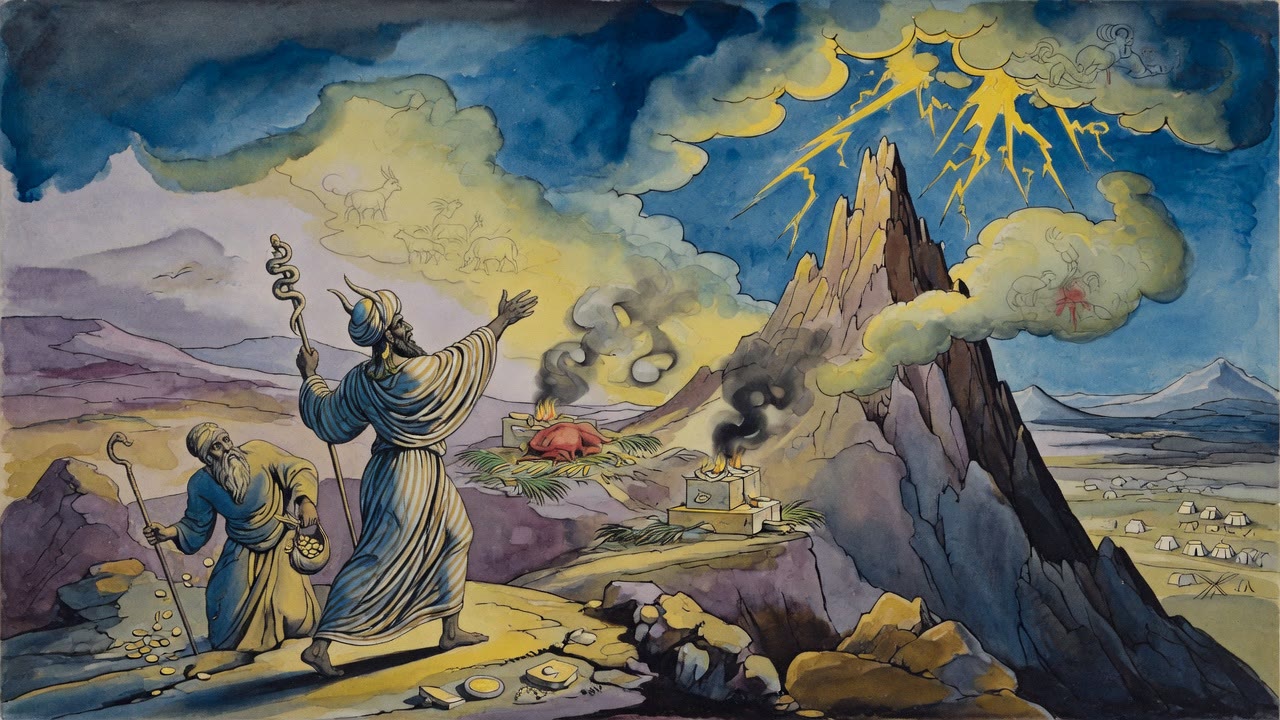
Bilam swore no house of silver and gold could move him. Then he stayed another night anyway, hoping God would change the answer.
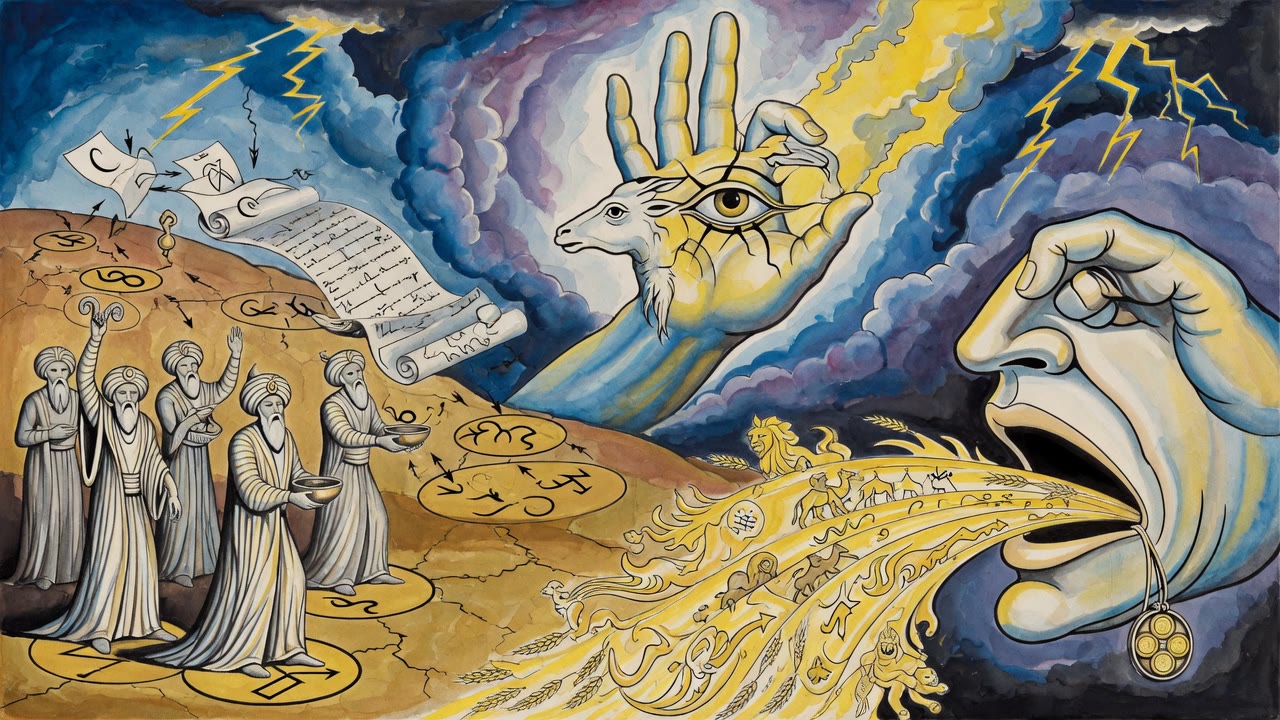
Balak promised Balaam great honor, then served one ox and one sheep. Across the river, Israel's waters shone with the purple of the cloud.
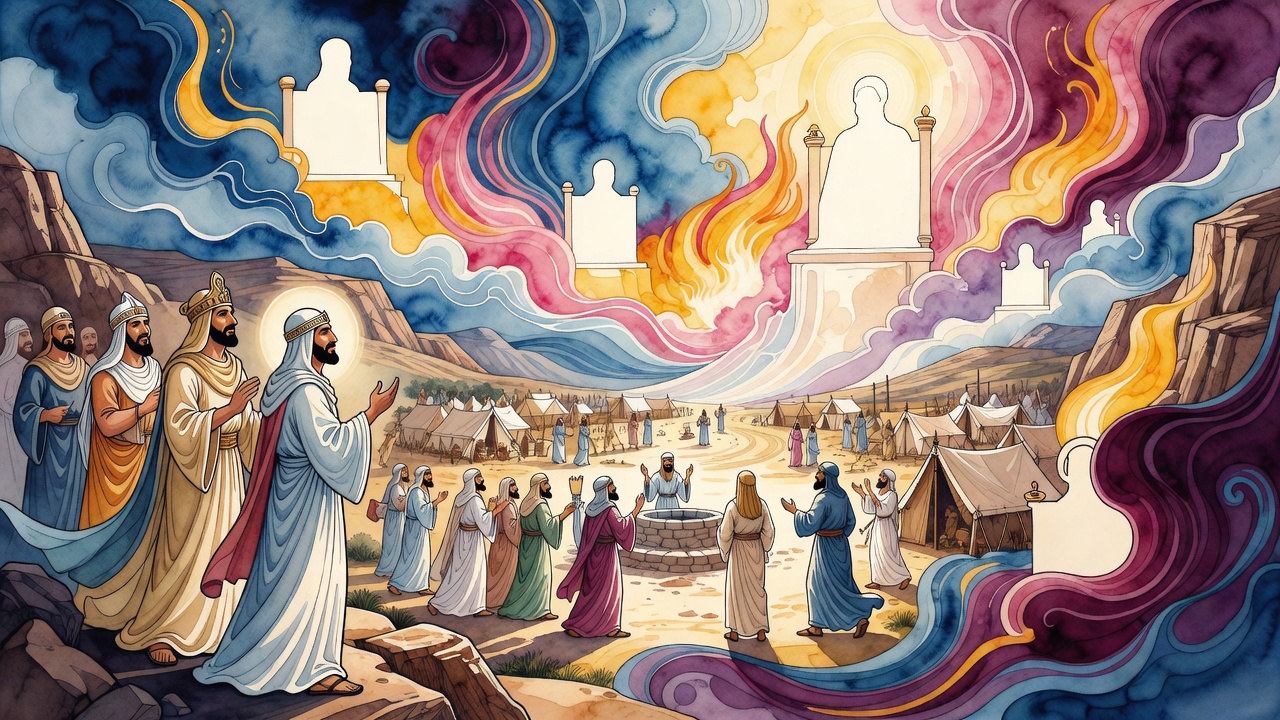
The black stone sat in the temple like a woman. It had not stopped Sihon. Moab's kings watched Israel camp and counted the fields.
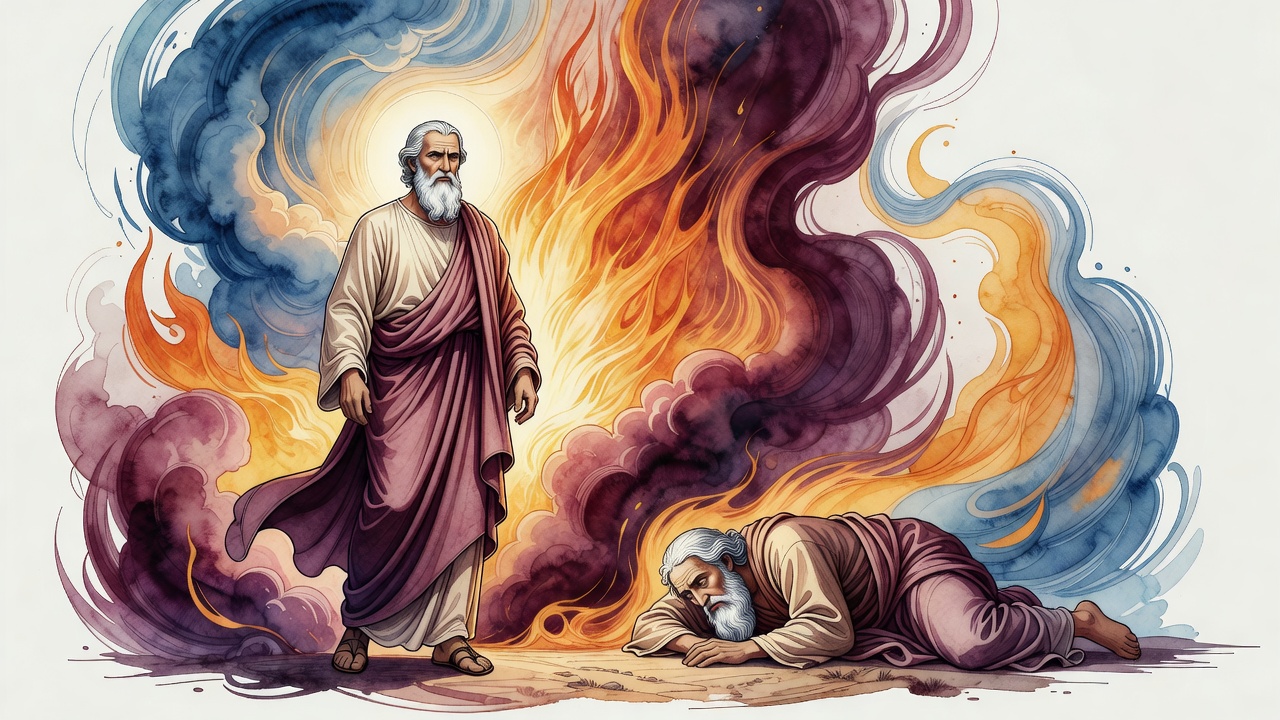
Balak had paid for three curses. Each one came back a blessing. Bilam wiped the dust from his mouth and pointed at the road into camp.
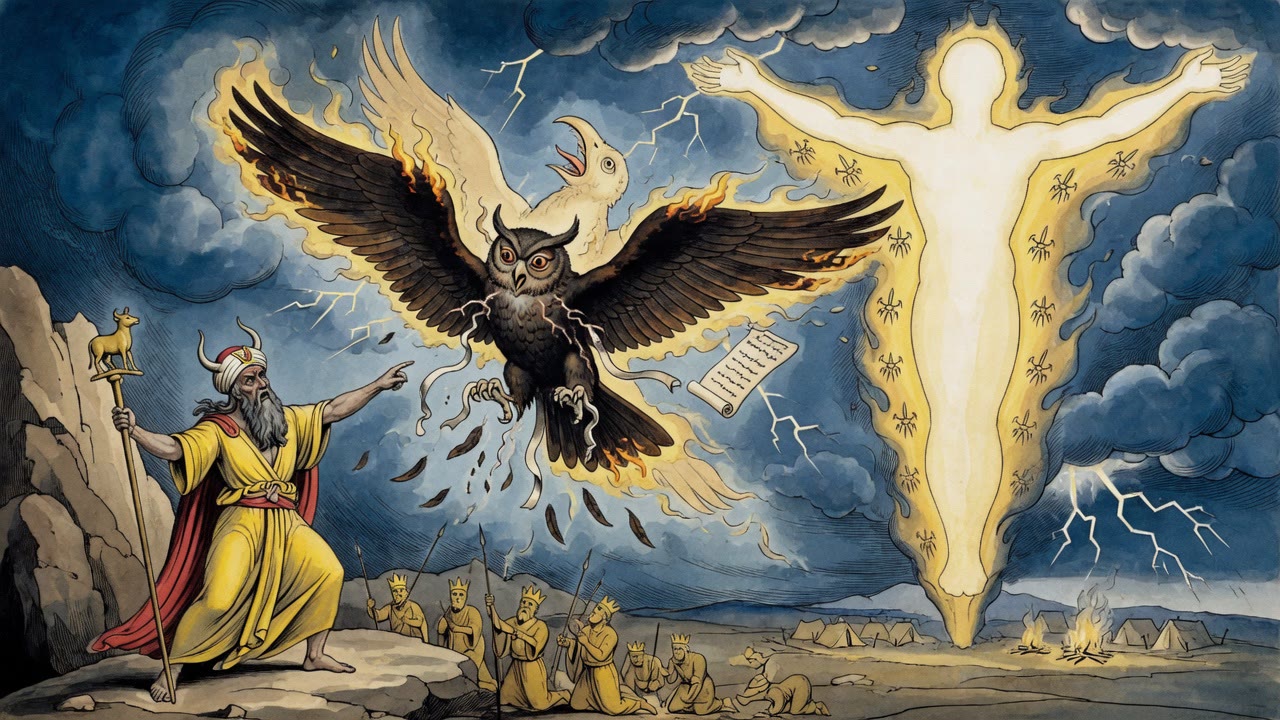
Balak's oracle-bird scorched as Israel rose. He hired Balaam because prayer, not numbers, was conquering kings he could not match.
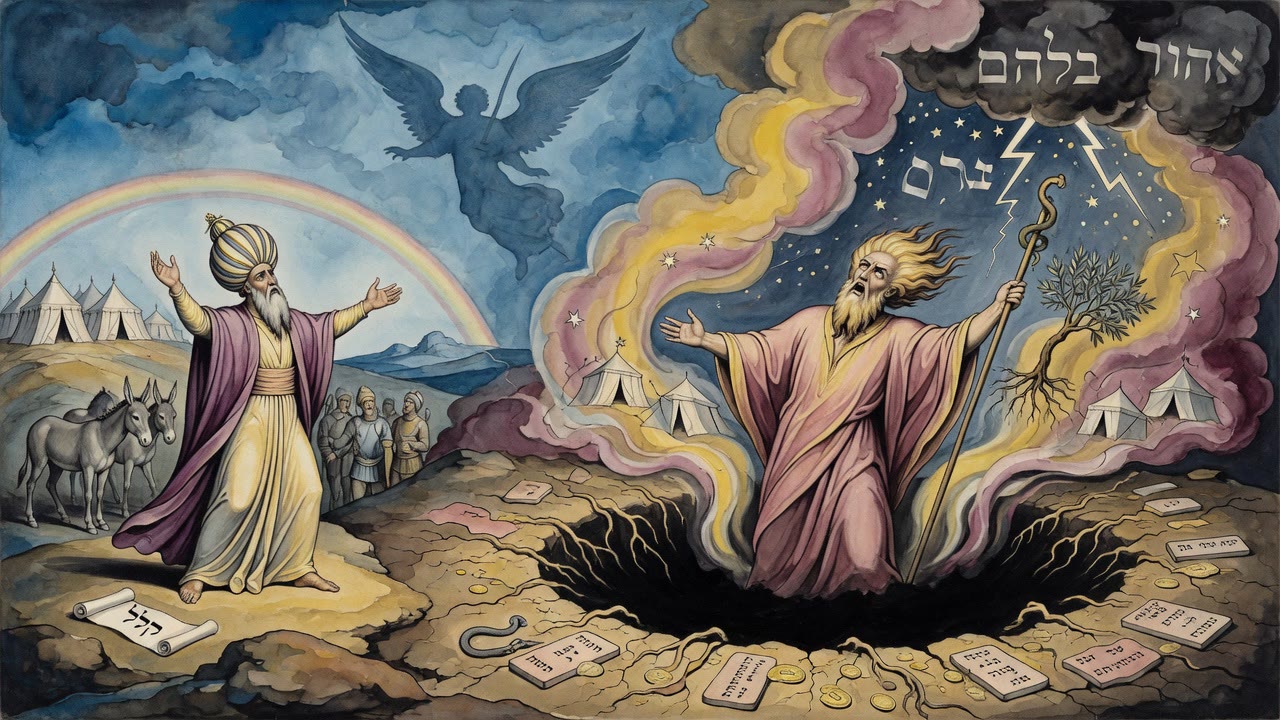
Balak sent a bird toward the springs of impurity to fetch older powers. It came back with its wings charred, and the altars kept smoking anyway.
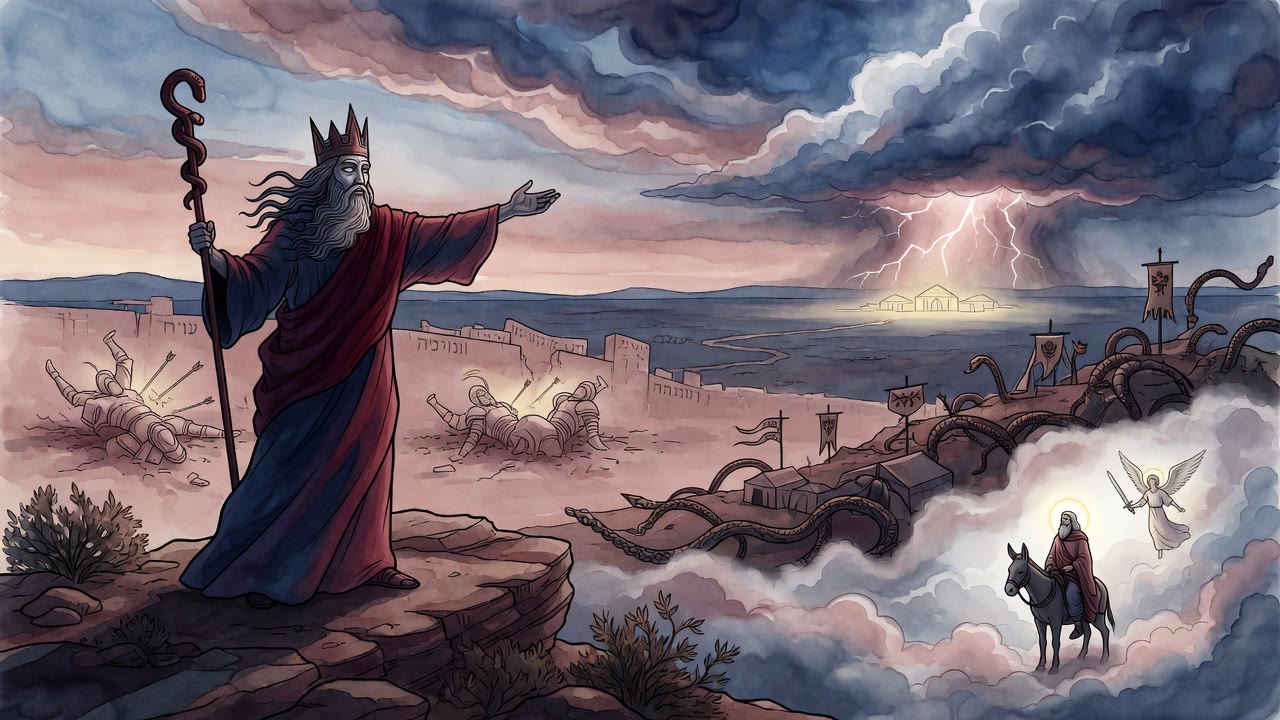
Below the ridge, children chased goats between tents and elders argued about grazing rights. None of them knew silver was already riding toward Bilam's house.
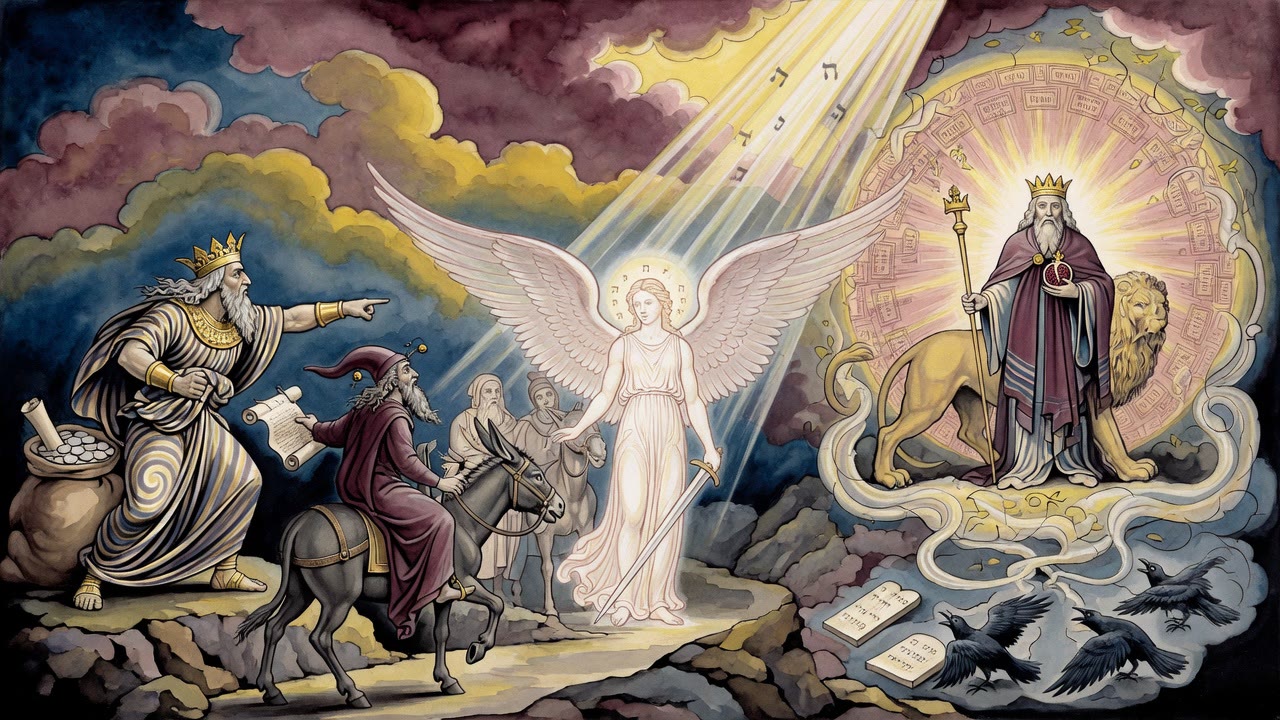
Abraham offered one ram, Balaam told Heaven, and I will offer thousands. The rabbis called him a butcher whose shop is already crammed with meat.
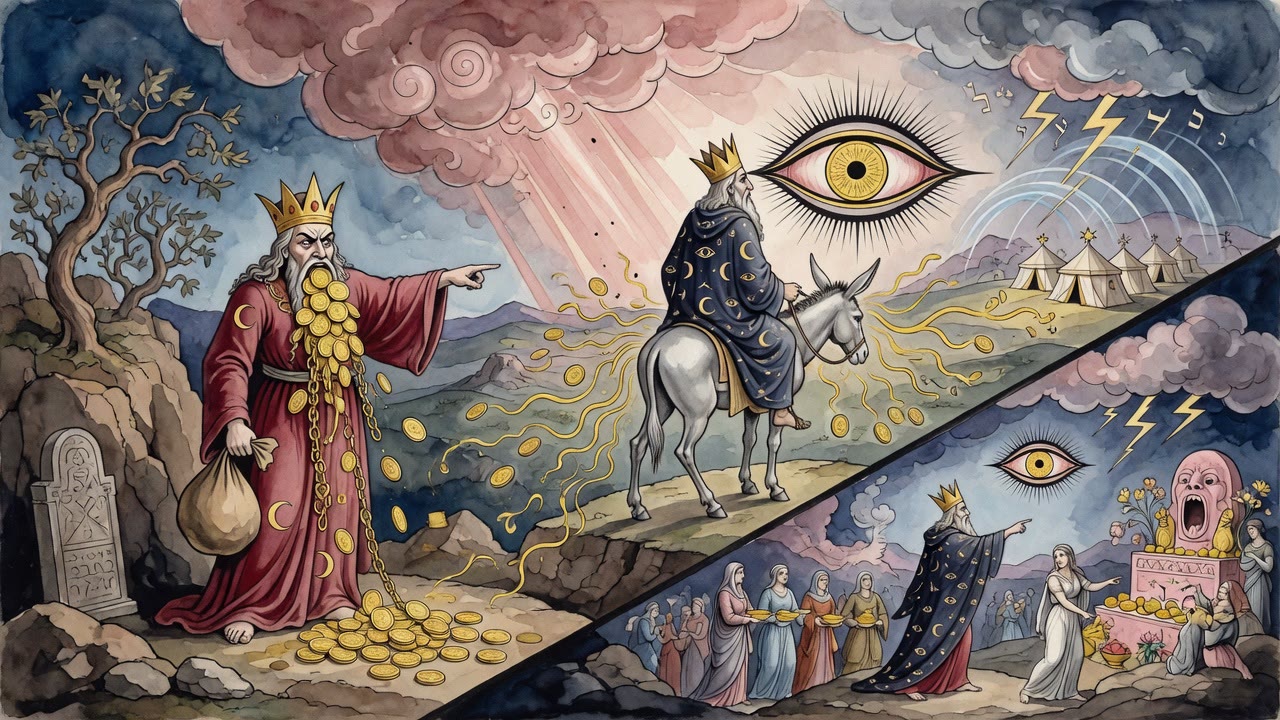
Twice Balaam walked out alone to look for an omen, and twice he came back blessing. His employer had one idea left, and it was a mountain.
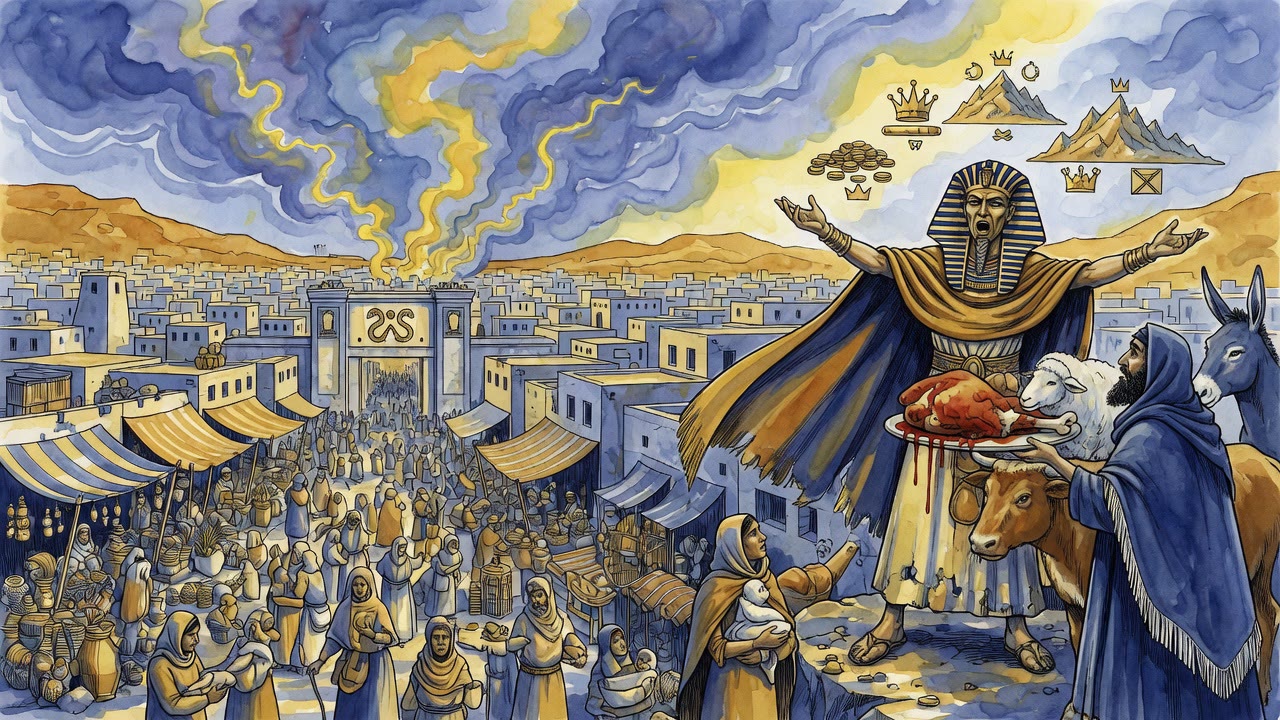
He promised mountains of honor. On the table sat one ox and one sheep. Balaam ground his teeth and named seven altars.
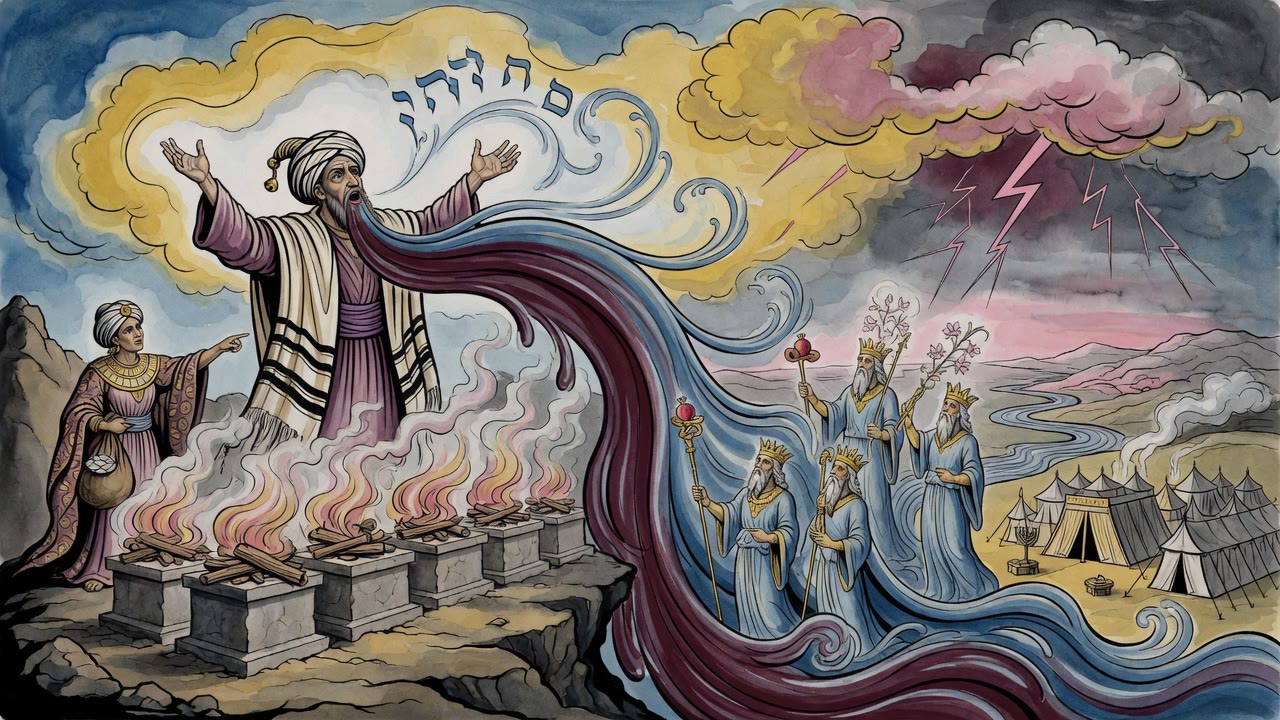
Balak hires a mouth to ruin Israel. Heaven bars the journey, the curse, and even the blessing. Balaam learns Jacob is the Kings own sealed portion.
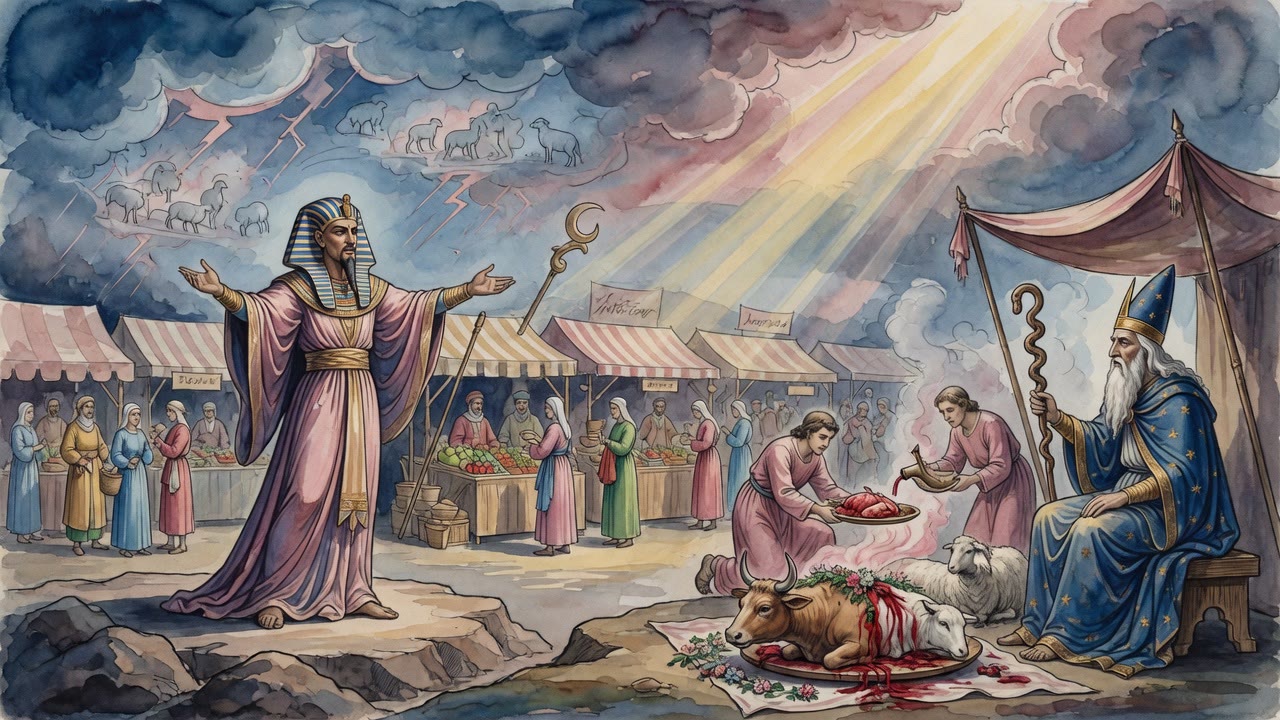
Moab's elders cast lots and swear Balaam will come. God flips every reading, seals the seer's eye, and forces blessing from a mouth hired to curse Jacob.
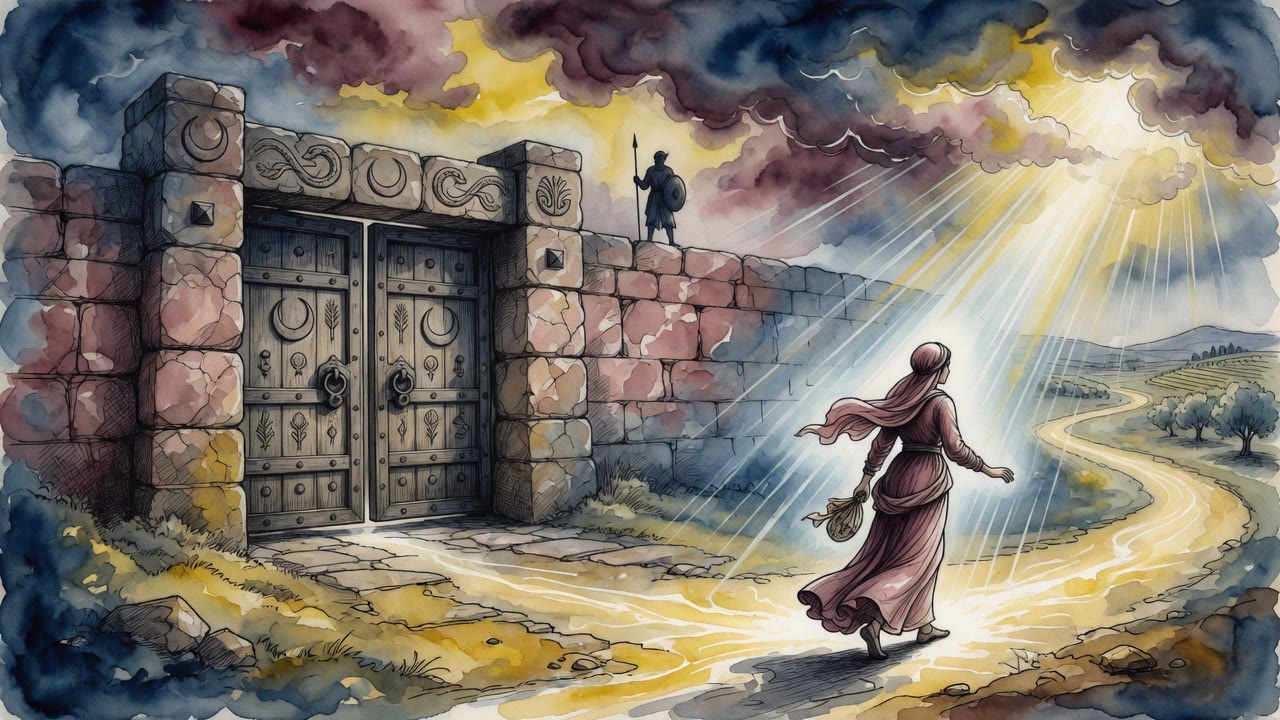
Israel walked past Ammon with open hands and past Moab with the weapons showing. Moab did not send an army. It pulled everything indoors.
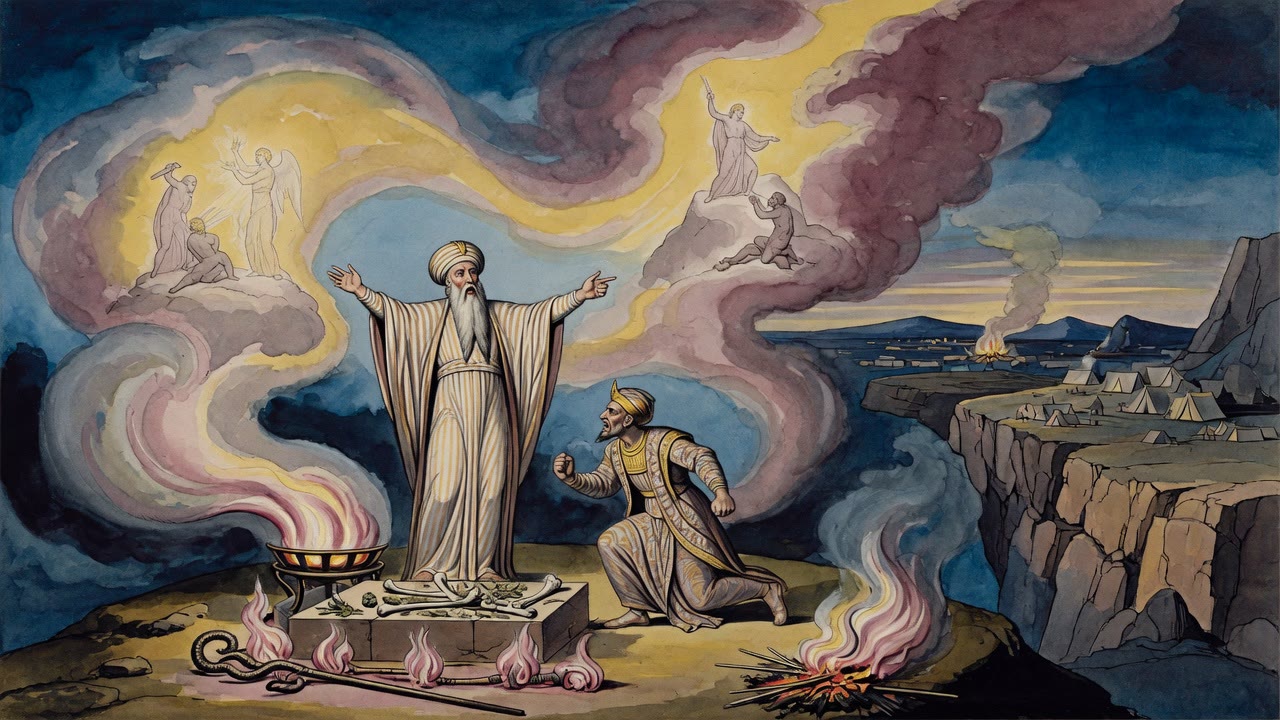
Balak paid for a curse that would drive Israel off his border. Balaam wanted them gone from this world and the next. The pit he dug waited.
