Parshat Balak5 min read

Balaam Brought His Tools and Still Could Not Curse

Balaam had divining tools, royal messengers, greed, timing, and a curse ready. God blocked every door before he could speak.

Curated by Arthur · Told by Maggid ·
Table of Contents
  1. The Messengers Knew the Delay Was Fatal
  2. God Asked a Question to Open the Trap
  3. The Blessing Needed None of His Honey
  4. The Donkey Saw What the Seer Missed
  5. The Final Trap Came Through Appetite

Balaam was hired because Moab had run out of ordinary weapons.
Balak had watched kingdoms fall before Israel. Sihon was gone. Og was gone. The people in the wilderness had mouths stronger than armies, prayers that broke calculations, blessings that clung to them like armor. So Balak reached for a man whose weapon was also a mouth.

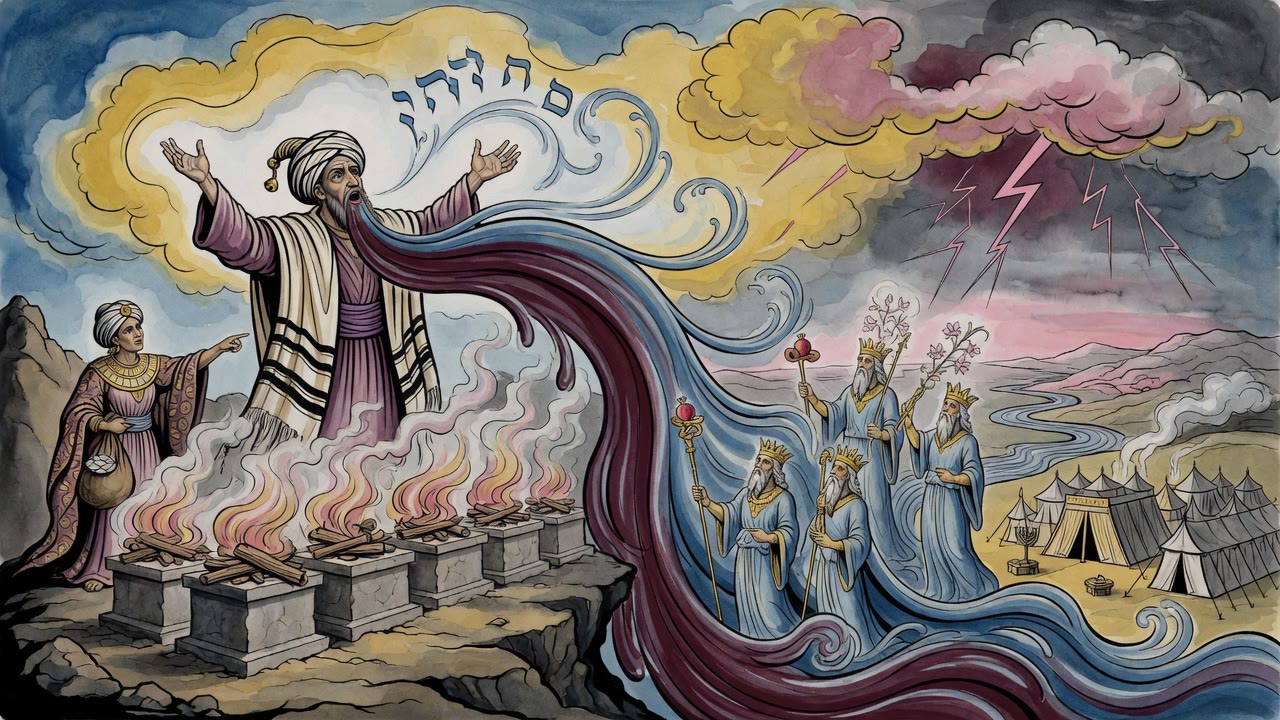
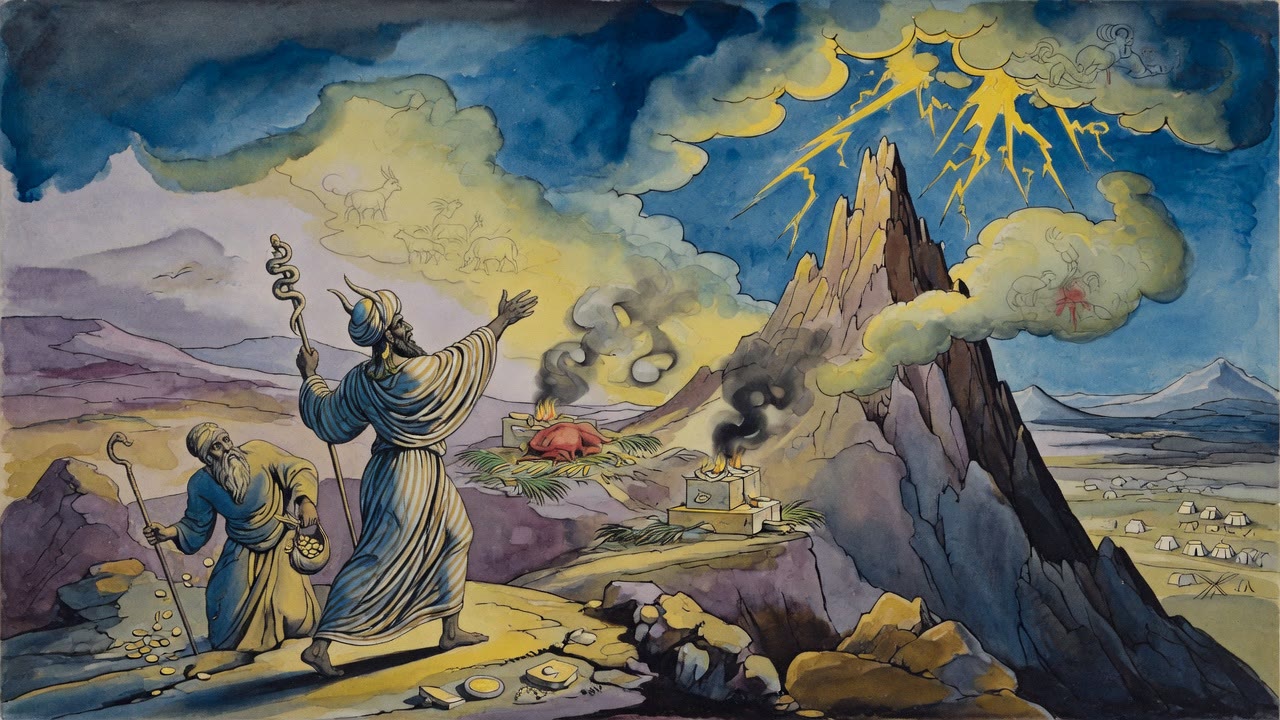
The elders came carrying instruments of divination. They did not want Balaam to excuse himself. Whatever cup, charm, omen, or device he needed, they had brought it in their hands.

The Messengers Knew the Delay Was Fatal

Balaam told them to lodge there for the night.

That single sentence divided the embassy. The elders of Midian understood at once. A diviner who had to wait for permission was already useless to them. If his power depended on the moment, an hour's delay could ruin everything. They left before morning, reading his hesitation more accurately than Balaam read his own danger.

The Moabites stayed. Their fear was stronger than their discernment. They still believed a curse could be purchased if the fee was high enough.

God Asked a Question to Open the Trap

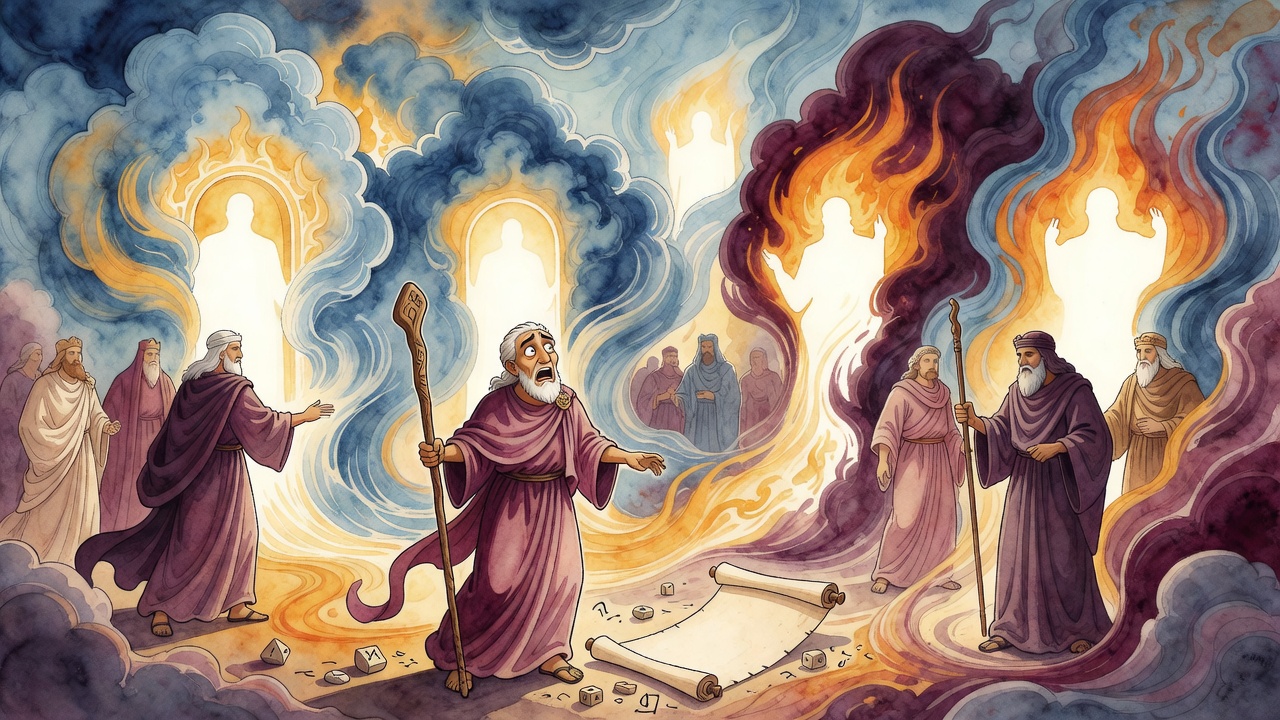
At night, God came to Balaam and asked who the men with him were.

Balaam heard the question and mistook it for ignorance. That was the first crack. A man who made his living seeing hidden things could not see that God had asked in order to expose him. If heaven could be caught unaware, then perhaps Israel could be caught undefended. Balaam's mind moved quickly toward permission.

He answered with Balak's message and improved it in his own mouth. Balak had asked for a curse. Balaam sharpened the word, making his own hatred louder than the king's request.

The Blessing Needed None of His Honey

God gave him three refusals.

Do not go with them. Do not curse the people. They are blessed. Balaam tried every opening. If he could not go, perhaps he could curse from where he stood. If he could not curse, perhaps he could bless. God closed that door too. Israel did not need Balaam's blessing any more than they needed his curse.

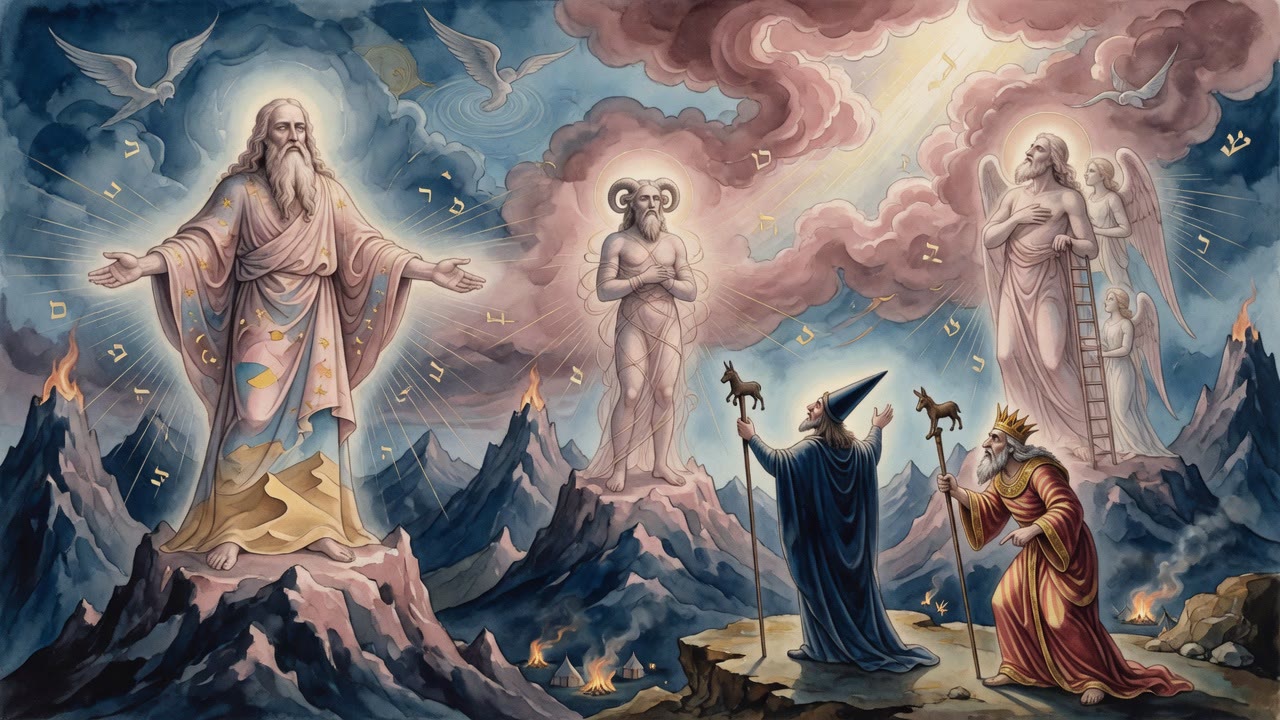
The rabbis compare him to a hornet. No one wants the honey. No one wants the sting. The whole creature is unwelcome.

The Donkey Saw What the Seer Missed

When Balaam finally rode out, the humiliation became visible.

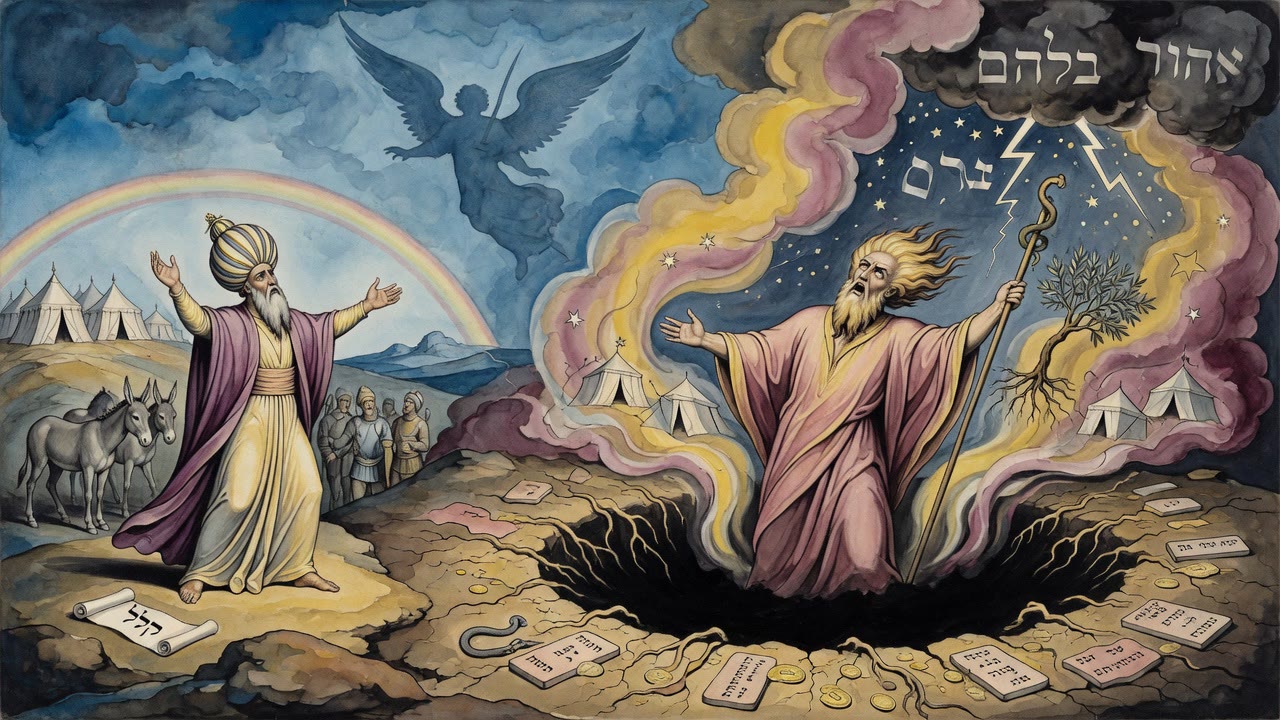
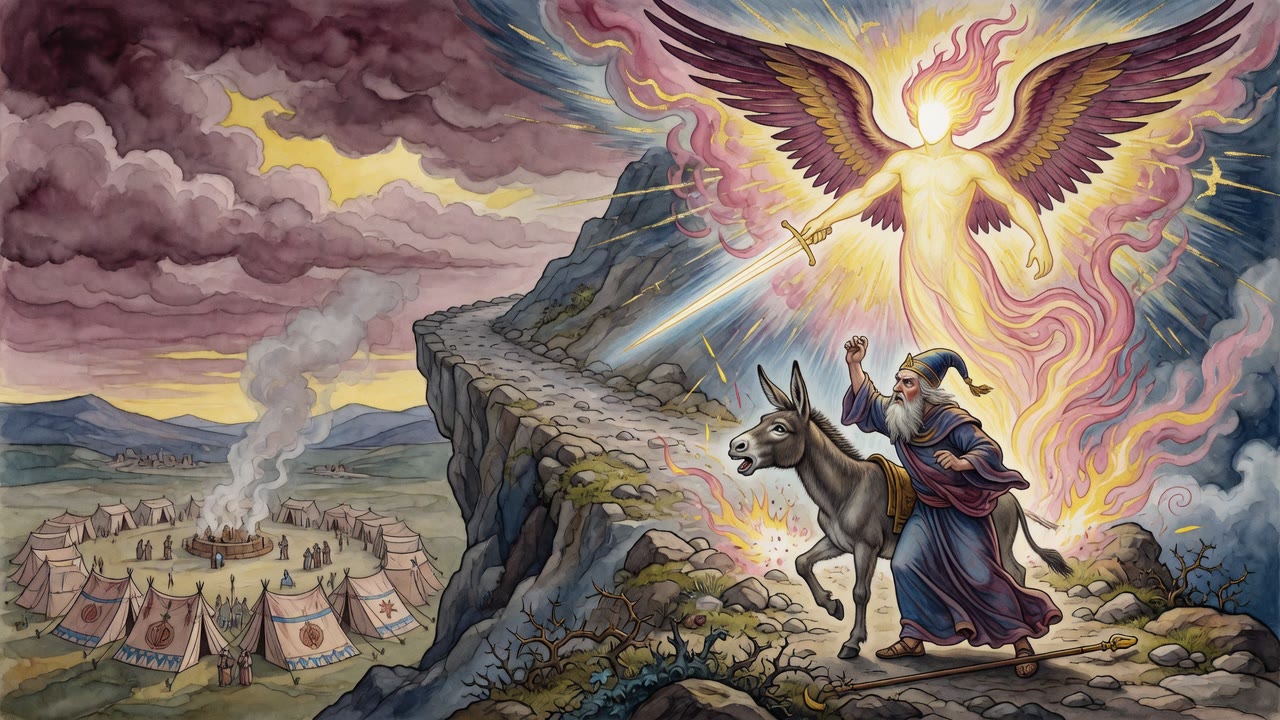
An angel stood in the road with a sword drawn. Balaam, the hired prophet, saw nothing. The donkey saw. She turned aside, crushed his foot against a wall, and finally lay down under him because there was nowhere left to go. Balaam struck the animal that was saving his life.

Then the donkey spoke. The beast had more awareness than the man paid to read heaven. Balaam's profession collapsed beneath him before he ever reached the mountain.

The Final Trap Came Through Appetite

Blocked at the mouth, Balaam tried the body.

If he could not curse Israel from above, he could lure them from below. He taught Moab how to open curtained stalls, set out merchandise, wine, desire, and idolatry together, and draw Israelite men across the line one bargain at a time. His counsel did what his curse could not.

But the pit he dug still closed over him. The man who tried to bend speech against Israel fell by the counsel he sold. God had blocked the curse, exposed the prophet, opened the donkey's mouth, and turned Balaam's own strategy into the record of his defeat.

Balaam's boasting made the trap tighter. He told the messengers that God had refused to let him go with them because they were beneath his honor. He turned denial into flattery, as if heaven cared for his prestige. Balak heard the message and sent greater officials with greater promises. Balaam's greed had taught the king which bait to use next.

Even his pious sentence exposed him. A house full of silver and gold, he said, could not make him transgress God's command. The rabbis heard desire inside the refusal. A man who is not thinking about the money does not measure the bribe so beautifully. Balaam's mouth spoke obedience while his imagination walked through Balak's treasury.

Nothing in his kit could purchase Israel's undoing.


← All myths
From the tradition

Sources

5 sources

The texts this telling draws on, in full. Open a card to read inline, or expand it for a wider, quieter read.

Midrash Tanchuma, Balak 5Midrash Tanchuma

(Numb. 22:7:) “So the elders of Moab and the elders of Midian went with [the tools for] divination in their hand,” for they brought in their hands all kinds of divining instruments through which one divines, so as not to give him an excuse [for not coming]. So the divining instruments were in the hands of the elders of Midian, for they said, “If he comes with us, he will succeed; but if he delays [even] for an hour, he will be of no use.” As soon as they saw that he said (in vs. 8), “Lodge here tonight,” the elders of Midian went away, because they knew through their divinations that he would be of no use. (Numb. 22:9:) “Then God came unto Balaam and said, ‘Who are these people with you?’” This text is related (to Prov. 28:10), “One who leads the upright astray on an evil course will fall into his own pit.” Thus at first mortals [behaved] with propriety, but because of his (Balaam's) words, they became [unbridled] in sexual matters. Thus, of former [generations] it is stated (in Gen. 29:9), “Rachel came with the sheep.” And so (in Exod. 2:16), “Now the priest of Midian had seven daughters.” Women would go out with the sheep. [But] Balaam the wicked arose and led mortals astray into unchastity. But as he led [others] astray, he [himself] was led astray. By the [very] counsel he gave, he [himself] fell. This is what is written (in Prov. 28:10), “[One who leads the upright astray on an evil course] will fall into his own pit.” So the Holy One, blessed be He, led him astray with it, as stated (in (Job 12:2)3), “He exalts the nations and destroys them.” When [the Holy One, blessed be He,] asked him (in Numb. 22:9), “Who are these people with you,” that wicked one said, “I know nothing about them.” [He said to himself,] “It appears to me [that] there are times when [God] does not know. And so I can do all that I want to His children.” That is why [God] said to him, “Who are these people with you?” In order to lead him astray. (Numb. 22:10:), “And Balaam said to God, ‘Balak ben Zippor, [the king of Moab] sent [this message] unto me.” He began to boast and say, “Even though You do not honor me, and You do not put out a good name for me in the world, kings seek me. (Numb. 22:11:) “Behold the people has come out of Egypt […], come now, curse (qavah) them for me.” [This is] to make known that he (Balaam) hated Israel more than Balak, because (in Numb. 22:6) Balak did not say qavah (as Balaam claimed he had said in Numb. 22:11) but arah. This one (Balaam), however, said (in vs. 11), “curse explicitly (qavah),” [meaning] to take [God’s] name explicitly. While the former (Balak) said (in Numb. 22:6) “And drive them away from the land,” the latter (Balaam) said [simply] (in vs. 11), “and drive them out” [i.e.] from this world and from the world to come.

Full source
Midrash Tanchuma, Balak 6Midrash Tanchuma

(Numb. 22:12:) “Then God said unto Balaam, ‘You shall not go with them.’” He said to Him, “If so, I will curse them from where I am.” He said to him, (ibid. cont.) “You shall not curse the people.” He said to Him, “Let me bless them.” He said to him, “They do not need your blessing, (ibid. cont.) ‘for they are blessed.’” Similarly one says to a hornet, “None of your honey and none of your sting.” (Numb. 22:13:) “So Balaam arose in the morning and said to the ministers of Balak, ‘Go unto your own land….’” Balaam did not tell them, “The Holy One, blessed be He, did not give me permission either to go or to curse.” [He] simply [said] (ibid. cont.), “’The Lord refused to let me go with you.’ He said to me, ‘It is not in accord with your honor to go with these people. Rather [you must go] with people greater then they,’ since He takes pleasure in my being honored.” (Numb. 22:14:) “So the ministers of Moab arose [and came unto Balak and said, ‘Balaam has refused to go with us.’]” Therefore (in vs. 15), “Once again Balak sent ministers, [more numerous and more honorable than the first ones].” (Numb. 22:16-17:) “Then they came unto Balaam and said to him, ‘Thus has Balak ben Zippor said, “[Please do not refrain from coming unto me.] For I will surely honor you greatly.”’” [Even] more than what you [wanted] formerly I will give you. Everything that you desire and whatever you ordain I will do. (Numb. 22:18:) “But Balaam answered and said unto the servants of Balak, ‘[Even] if Balak should give me his house full of silver and gold, [I could not transgress the command of the Lord my God to do less or more].’” From here you learn that he had three things. And they are an evil eye, a haughty spirit and a greedy soul: An evil eye, as it is written (in Numb. 24:2), “Then Balaam raised his eyes and saw Israel.” A haughty spirit, as it is written (according to Numb. 22:13), “for the Lord refused to let me go with you.” A greedy soul, as it is written (according to Numb. 22:18), “[Even] if Balak should give me [his house full of silver and gold].” [He said to Balak,] “If you sought to hire soldiers to fight against them, it is a question whether they would vanquish them or fail, [yet you would pay it]; is it not [then proper] that you would give it to vanquish [them with certainty]?” See you have learned that he sought this. (Ibid. cont.) “I could not transgress [the command of the Lord my God].” [He was] prophesying that he could not annul the blessings with which the ancestors had been blessed by the mouth of the Divine Presence. (Numb. 22:19:) “Now you also please stay here tonight.” What is the meaning of “you also.” That in the end you will go in disappointment like the former [messengers]. (Ibid. cont.) “So that I may know what else (rt. ysp) the Lord may say to me.” Thus he prophesied that the Holy One, blessed be He, was going to multiply (rt. ysp) blessings for them through him.

Full source
Midrash Tanchuma, Balak 4Midrash Tanchuma

(Numb. 22:4, cont.) “Now Balak ben Zippor was king of Moab….” But was he not formerly a prince, as stated (in Josh. 13:21), “Evi, Rekem, Zur, Hur, and Reba, princes of Sihon?” It is simply that when Sihon was killed they made him king in his place. (Numb. 22:4, cont.) “At that time.” As it was the time that caused it for him. (Numb. 22:5:) “And he sent messengers to Balaam ben Beor at Pethor.” [Pethor (Petor) was] the name of his city. But others say that [the name implies] he was a money-changer, since the kings of the nations of the world took counsel with him, as the money-changer to whom they all would show [their coins]. Still others say that in the beginning he was an interpreter (poter) of dreams. He turned to being a diviner. Then he turned to the holy spirit. (Numb. 22:5, cont.) “To the land of his kinsfolk,” for Balak came from there, and [Balaam] had told him, “Your destiny is to become king.”(Numb. 22:5, cont.) “To summon him.” Thus he wrote him, “Do not suppose that it is for myself alone that you are doing this and that I alone am honoring you. If you uproot them, you shall receive honor from all the nations, so that the Canaanites and the Egyptians shall all bow down to you.” (Numb. 22:5, cont.) “Here is a people that has come out of Egypt.” He said to him, “As for you, how does it concern you?” He said to him (in Numb. 22:5, cont.), “’Look, they have covered the face (literally: eye) of the earth.’ [There are] two eyes upon which the land depends, Sihon and Og. They have destroyed them and covered their eyes. And [now] what do I do?” (Numb. 22:5, cont.) “Now they are dwelling opposite me (mmwly).” [What is actually] written [in the Biblical text] is mmly (from the root, mwl, which means, "cut off"), just as it says (in Ps. 118:10), “in the name of the Lord I will cut them off (rt. mwl).” (Numb. 22:6:) “So come now please, curse (arah) [this people] for me.” What is the meaning of “curse ('rh) […] for me?” Perhaps I shall be able to control them little by little, like someone who picks (rt. 'rh) figs. (Numb. 22:6, cont.) “For they are mightier than I.” [It is] not that they are more valiant than I, nor [is it] that their forces are more numerous than mine. It is simply that they conquer through their mouth, [and this is] something that I cannot do. (Numb. 22:6, cont.) “Perhaps I shall be able to smite them.” What reason was there for this one to engage them (i.e., Israel) in war? Did not the Holy One, blessed be He, tell them this, that [Israel] was not to take any of their land? [It was] simply that [Balak] was more of a master of sorceries and divinations than Balaam, for it is so written of him (in Numb. 22:2), “Now Balak [ben Zippor] saw (in a vision),” except that he did not really comprehend the things [he saw]. And so it says (in Is. 47:13-14), “You are wearied with your many deliberations; let those who study the heavens please stand up and save you; let those who gaze at the stars make known month by month whatever will come upon you. See they have become like straw; fire consumes them […].” When he saw that Israel would fall into his hand, he therefore gave his daughter over (to prostitution to lure Israel to sin); and through her twenty-four thousand fell. To this end he would have engaged them in war, but he did not know how. (Numb. 22:6:) “Perhaps I shall be able to smite (nkh) them.” As one discounts (rt. nkh) one twenty-fourth of a [se’ah]; so also did twenty-four thousand fall from Israel there, [which is] one less. (Numb. 22:6, cont.) “And drive them away from the land,” for he only desired to drive them away, so that they would not enter the land. (Numb. 22:6, cont.) “For I know that whomever you bless is blessed and that whomever you curse is cursed.” From where did he know? When Sihon desired to fight with Moab [and] was afraid because they were warriors, he hired Balaam and his father to curse Moab, for it says (in Numb. 21:27–29), “Therefore those who speak in parables say, ‘Come to Heshbon, let it be built; let the city of Sihon be established. For a fire has come forth from Heshbon, [a flame from the city of Sihon. It has devoured Ar of Moab…]. Woe be to you, O Moab!’” Ergo it says (in Numb. 22:6), “for I know [that whomever you bless is blessed and that whomever you curse is cursed].”

Full source
Midrash Tanchuma, Balak 18Midrash Tanchuma

(Numb. 25:2:) “And they invited the people to the sacrifices for their gods.” Thus they (i.e., daughters of Moab) were going by the counsel of Balaam, as stated (in Numb. 31:16), “Here these women at the bidding of Balaam made the Children of Israel.” They made themselves curtained stalls and installed harlots in them with every object of delight in their hands. Now a girl would have an old woman as an agent, for an old woman would be in front of the shop. During the time that Israel was passing by on the way to the marketplace, the woman would say to him, “Young man, surely you want objects of linen which have come from Beth-Shean!” Then she would show them to him; and when the old woman would tell him a high price, the girl would [give him] a lower one. From then on the girl would tell him, “You are like one of the family. Sit down and choose for yourself.” Now a jug of Ammonite wine was placed by her, since the wine of gentiles had not yet been forbidden. Then out comes the girl, perfumed and adorned, and seduces him and says to him, “Why do you hate us, when we love you? Take for yourself this article gratIs. We all are children of a single man, children of Terah, the father of Abraham. So do you not want to eat from our sacrifices and from our cooking? Here are calves and cocks for you; slaughter them according to your own precepts, and eat.” Immediately she has him drink the wine, and then the Satan burned within him, so that he became a fool for her. There are also those who say [that] Balaam commanded them not to have them drink the wine, so that they would not be judged as those who are drunk, but as willful sinners. When he sought her out, she would say, “Slaughter this cock and we will cook it and eat with you, and I will be at your disposal.” When he came to slaughter it, she said to him, “I am not listening to you until you slaughter it [as a sacrifice] to Peor.” Since he had become a fool for her, he would slaughter it to Peor and eat with her. So they would be joined to each other. It is therefore written (in Numb. 25:2-3), “And they invited the people [to the sacrifices for their gods, so that the people ate and bowed down to their gods]. Thus Israel was joined (rt. tsmd) to Baal Peor,” like bracelets (rt. tsmd). R. Levi said, “This was more serious than the [sin of the golden] calf, [for while in reference to the calf it is written (in Exod. 32:3), ‘So all the people took off [the gold rings that were in their ears],’ here [it is written] (in Numb. 25:3), ‘Thus Israel was joined (rt. tsmd) [to Baal Peor,]’ like bracelets (rt. tsmd)]. Because of the calf about three thousand fell, but here (according to Numb. 25:9) [the number fallen is] twenty-four thousand.”

Full source
Midrash Tanchuma Buber, Balak 7:1Midrash Tanchuma Buber, Balak

(Numbers 22:7:) "So the elders of Moab and the elders of Midian went, with the tools of divination in their hand." For they carried in their hands all kinds of divining instruments through which they divine, so as not to give him a pretext . And the divining instruments were in the hand of the elders of Midian, for they said: If he comes with us, he will succeed; but if he delays for an hour, there is no use in him. As soon as they saw that he said (in verse 8), "Lodge here tonight," the elders of Midian went away, for they knew through their divinations that there was no use in them.

Full source