How Balaam Engineered Israel's Moral Collapse at Moab
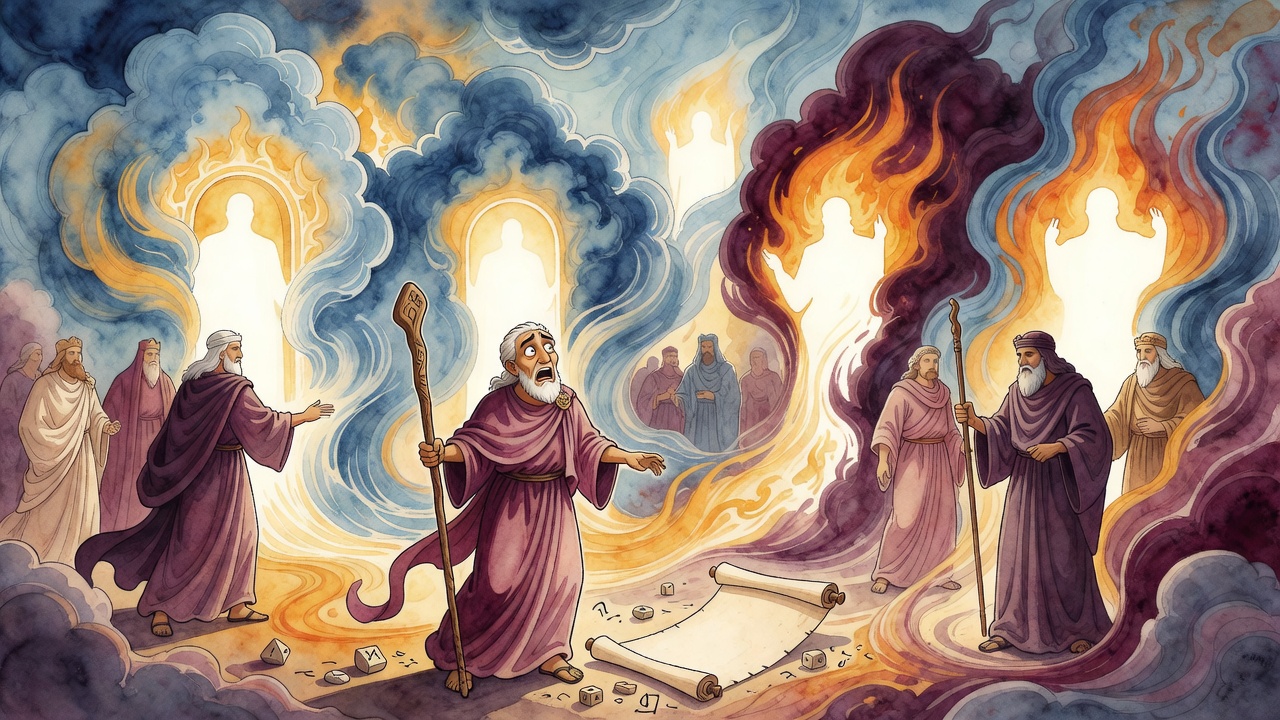
Old women priced the linen high. A girl behind the curtain poured wine and set Peor's idol beside the cup. Bow first, she said, then you may stay.
Table of Contents
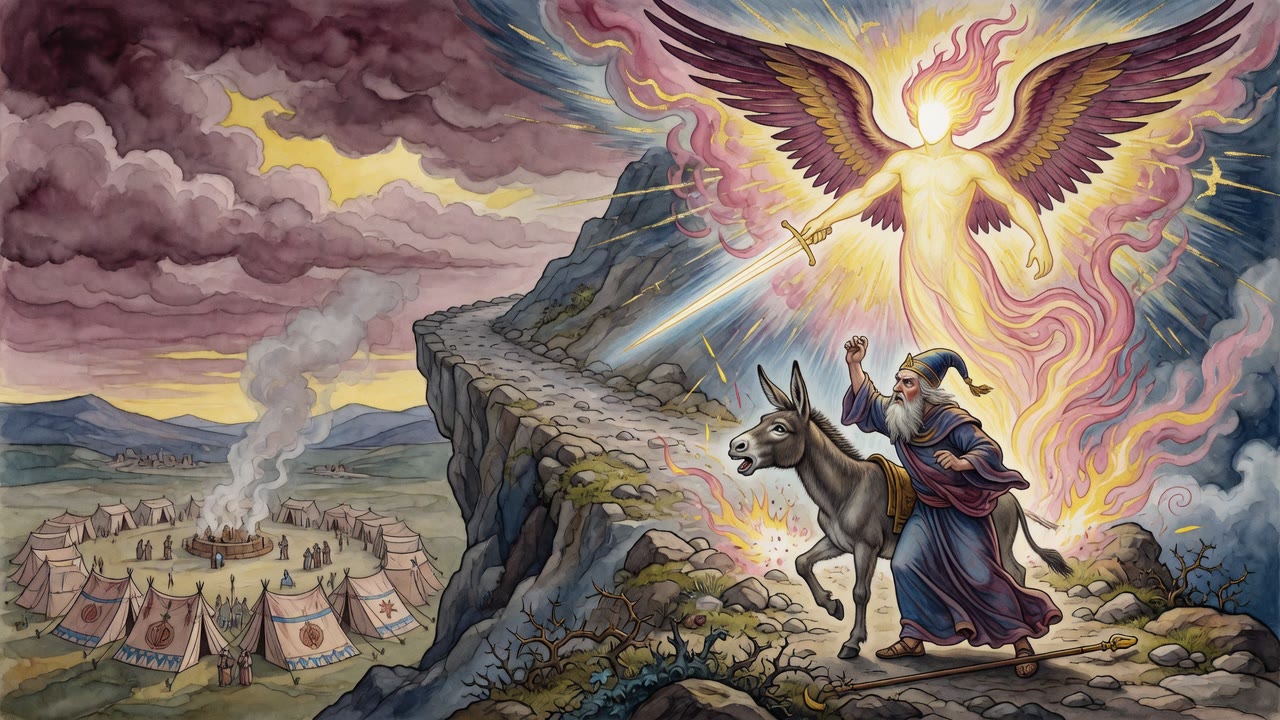
Balaam came down the third hill with a blessing still in his mouth. He had tried to make it a curse. It would not turn.
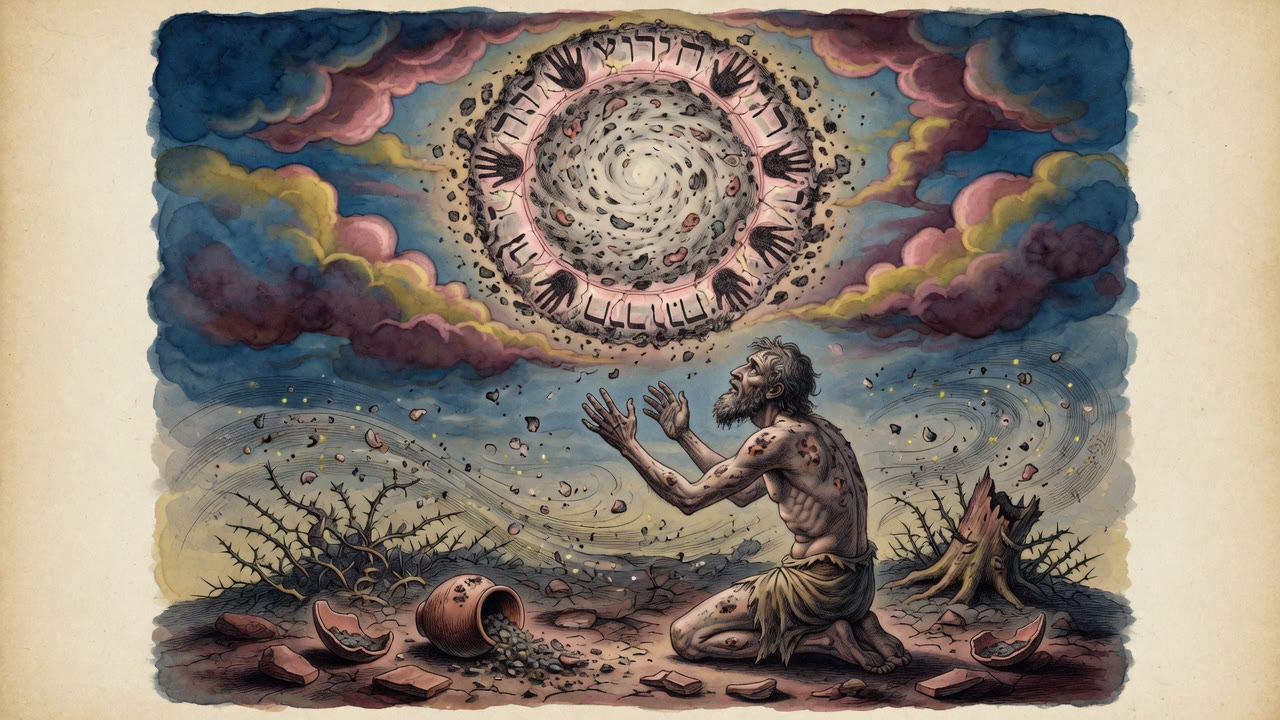 Click for full size
Three times Balak had moved him to a new height over Israel's camp in the wilderness. Three times he opened his mouth, and peace on the tents came out instead of ruin. The people below walked in order. The covenant sat on them like a wall no hired word could climb.
"I cannot curse what God has not cursed," he told the king. "I cannot denounce what God has not denounced."
Then he leaned in, because he still wanted to be paid, and he still wanted Israel broken.
The Counsel on the Road Home
"I go to my people," Balaam said. "Know this. My lot is bound to yours. Whatever ruin falls on you will fall on me." He had one road left, and it did not run through heaven.
"You cannot beat them with curses. Their God will not be moved against them from outside. But there is another road. Set up markets. Seat women in the stalls. Israel is drawn to harlotry. When the women withhold themselves, they will yield on one condition, that the men bow to idolatry first. The Holy One hates idolatry, and He hates lewdness. Snare them in both, and He Himself will rise and strike them."
Balak listened, because he had watched Sihon fall and Og fall, and he had watched three blessings leave a prophet he had hired to wreck a nation. So he took the counsel. Balaam went home. The markets went up at the edge of the camp at Shittim, across from Moab.
Linen, Wine, and a Clay God
Old women stood in front. Young women waited behind curtains with every object of delight in their hands.
An Israelite walking to the marketplace heard the old woman first. "Young man, surely you want linen from Beth-Shean." She named a high price. Then a girl came out and named a lower one. "You are like one of the family," the girl said. "Sit down and choose."
A jug of Ammonite wine sat by her. Wine of the nations had not yet been forbidden, so he drank. She was perfumed. She asked why he hated them when they loved him. "Take this free. We are all children of Terah, father of Abraham. Will you not eat from our cooking? Here are calves and cocks. Slaughter them by your own precepts."
When he reached for her, she set a cock in his hands and a clay figure of Peor beside the cup. "I will not listen until you slaughter it to Peor."
He had already come too far to see the line. He slaughtered the bird. He ate. He bowed. They were joined to Peor the way a bracelet is joined to a wrist, tight, and hard to work off. Israel stayed at Shittim, and the people went after the daughters of Moab (Numbers 25:1).
He walked back toward the camp with the taste of the wine still in his mouth. No angel stopped him on the path. The wall that had held on the hills had a hole in it now, and he had cut it himself.
Zimri Brought Cozbi Into the Camp
The corruption ran through the army. Men ate forbidden food. They bowed at foreign altars. A plague started in the camp, because God had been asked to do the work Balaam could not do from the hills.
Zimri, a prince of Simeon, did not hide. Balak had sent his daughter Cozbi toward Moses himself, hoping a king's daughter might snare the man whose mouth had torn down Sihon. She did not reach Moses. Zimri took her, and he brought her into the camp in front of the whole assembly.
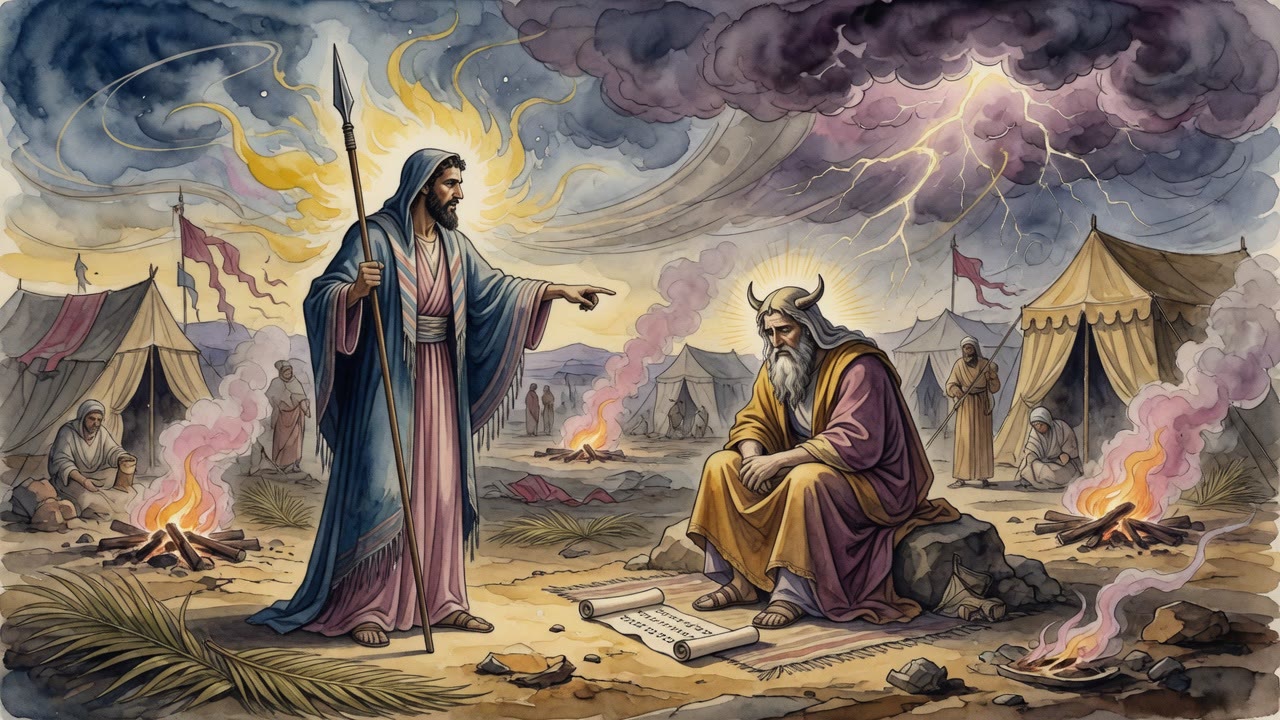
Moses spoke and urged them to turn back. Zimri stood up and mocked him. He called Moses a tyrant. He said a prince of Simeon had as much right as a Levite to choose a wife and a god. The people froze. Moses did not raise a spear.
The plague kept moving. Tents that had been quiet at dawn were loud with fever by noon. A man who had bought linen in the morning could not stand by evening.
The Spear That Stopped the Plague
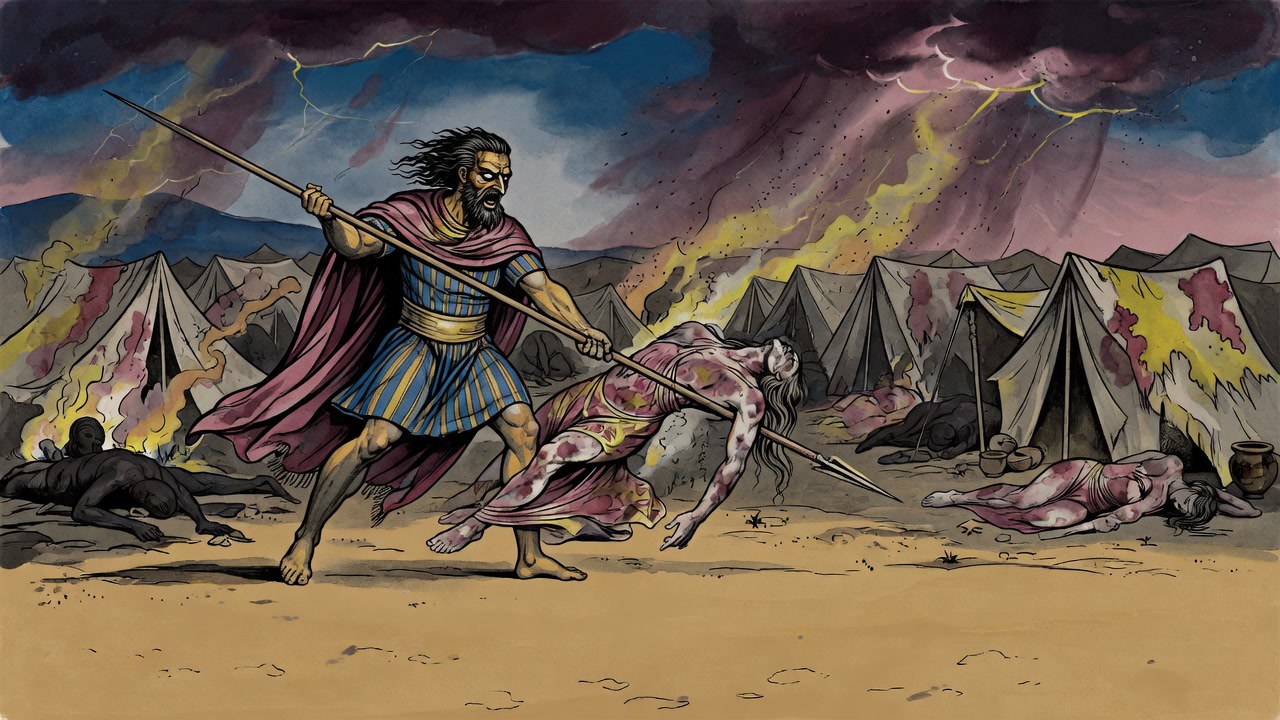
Phinehas, son of Eleazar, son of Aaron, looked at the tent and at Moses's still hands. He did not wait for a second speech. He took a javelin and walked in. He drove it through the Israelite man and the Midianite woman in one thrust (Numbers 25:7-8).
The plague stopped. Twenty-four thousand of Israel were already dead.
Balaam did not live to count them. In the war that followed, Israel struck Midian, and Balaam the diviner fell among the Midianite kings (Numbers 31:8). Joshua later named him what he was (Joshua 13:22). He had failed to curse Israel from above, so he taught Moab to sell linen until Israel cursed itself. The weapon he could not lift from three hilltops was picked up in the camp by the people he had been hired to destroy.
← All myths