5 min read

Balaam Climbed to the Heights and Could Only Bless

Balak hired Balaam to stand on the heights and curse Israel. The Patriarchs were already there. No one could curse what kept them alive.

Curated by Arthur · Told by Maggid ·
Table of Contents
  1. The Patriarchs Were Already on the Heights
  2. A Debt That Ran the Wrong Direction
  3. A Catalog of Sins
  4. The Tents Faced Away
  5. Morning Prayer from a Mercenary's Mouth

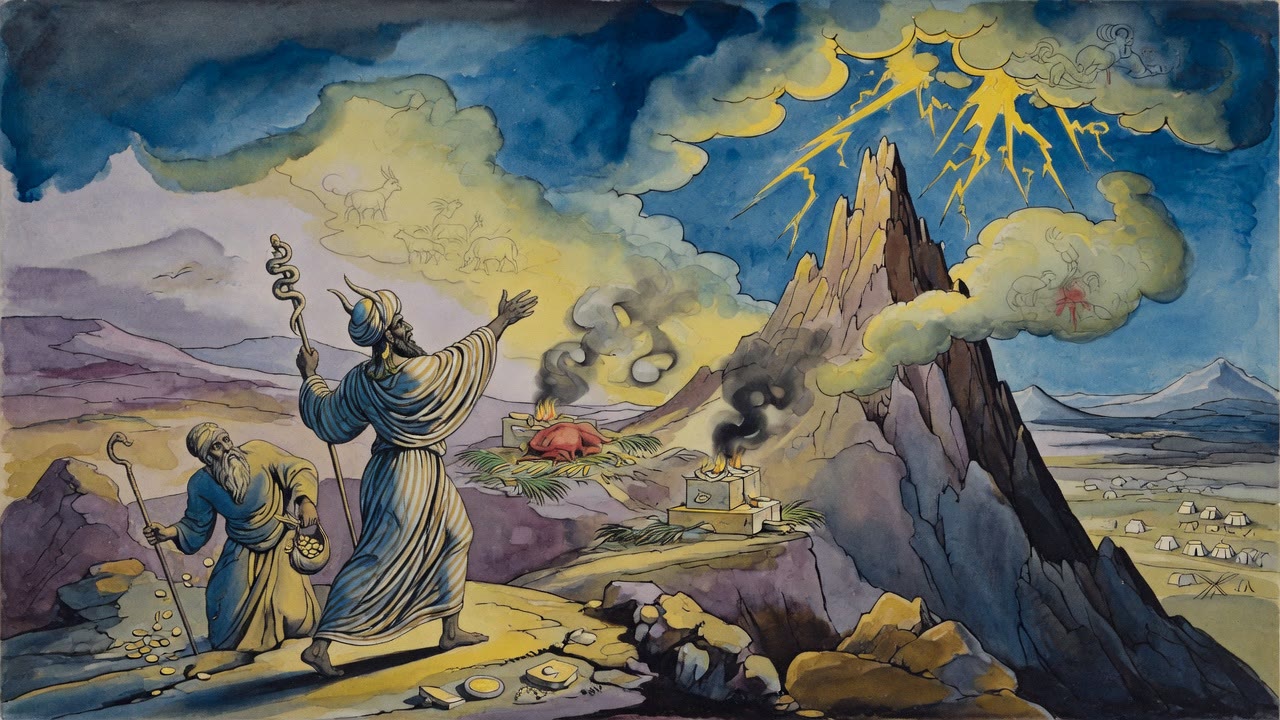
Balak, king of Moab, stood in the open air and waited for the sound of a curse. He had paid for the best. Balaam, the seer from Aram, was the man you hired when you needed God's own mechanisms turned against a nation. Fourteen animals already burned on seven altars. Everything was prepared. Balak waited below the hilltops overlooking the Israelite camp.

Balaam came back down and told him to stand up. "Thou mayest not be seated when God's words are spoken," he said. It was not a request. Then he described what he had found up there, and it was not what either of them had expected.

The Patriarchs Were Already on the Heights

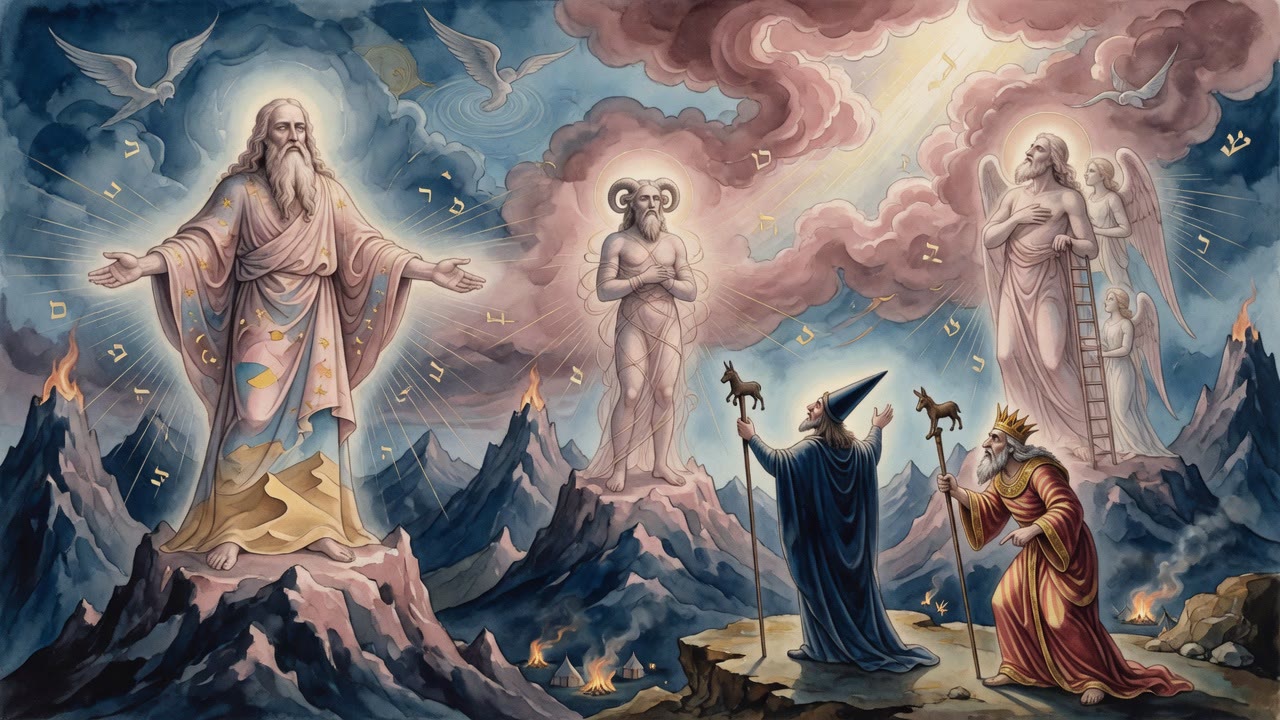
The high places Balaam climbed were not merely elevated ground. They were where Abraham, Isaac, and Jacob stood. The ancestors of the nation camped below were still there, as though the covenant had made them permanent residents of those hills. Balaam had gone up expecting an unobstructed approach to divine power. He found the founders of the people he had been hired to destroy.

He came back down and told Balak what he had seen. "How shall I curse whom God hath not cursed?" (Numbers 23:8). Balak moved him to a different hilltop, thinking the angle mattered. He built more altars. He slaughtered more animals. Balaam climbed again.

A Debt That Ran the Wrong Direction

On the second attempt, Balaam came back with a genealogy.

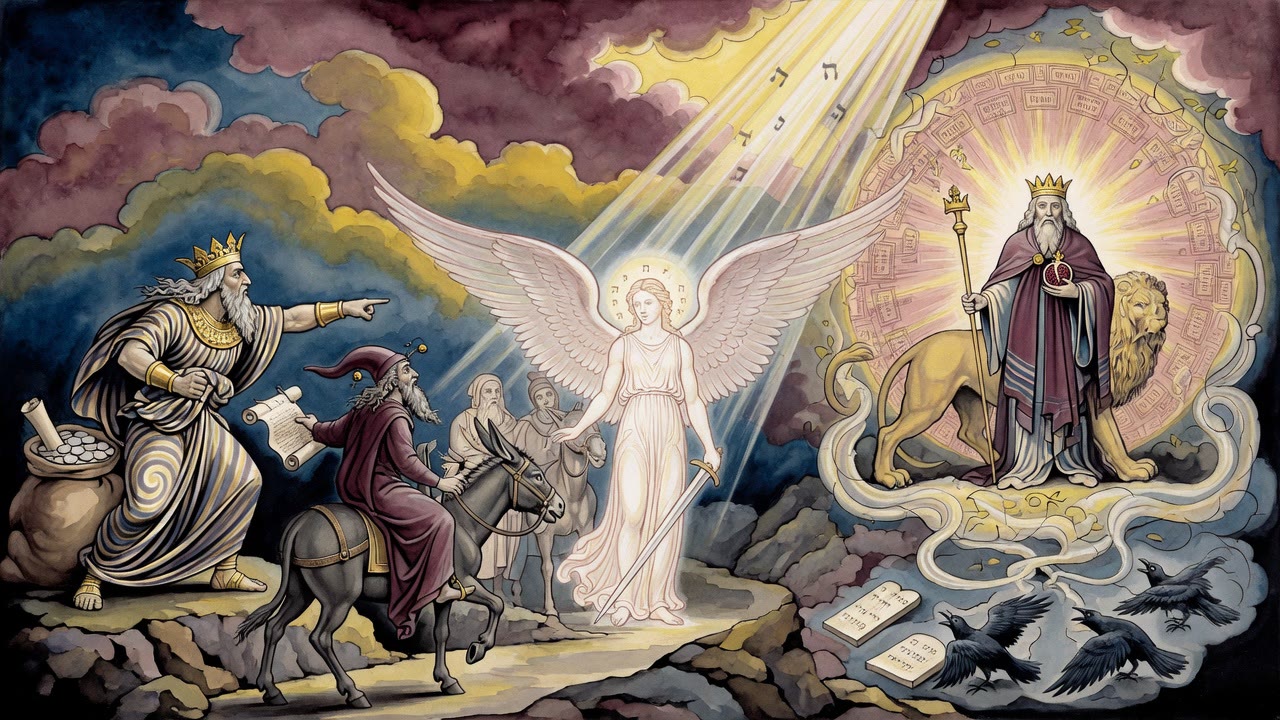
Balak was a Moabite king. Moab descended from Lot. Lot had been sitting in Sodom when Abraham rode out to rescue him from four kings and their armies (Genesis 14:14). Without that rescue, there was no Lot, no Moab, no Balak. The man paying for the curse owed his existence to the grandfather of the people he was trying to destroy.

Balaam himself was no different. He was a descendant of Laban. Jacob had arrived at Laban's household with nothing and spent twenty years there, building the flocks, filling the house (Genesis 31:38). Without Jacob's labor, Laban's line collapsed. Without that line, there was no Balaam.

Both of them owed their lives to the Patriarchs standing on the heights above. A curse was not merely forbidden. It was a logical contradiction. Balaam said this plainly to the king below him, then corrected his theology: God, unlike a man of flesh and blood, does not make friends and discard them when better ones appear. The vow to the Patriarchs held. The covenant with Abraham was not revocable because a Moabite king found it inconvenient.

A Catalog of Sins

Three times they moved to a new vantage point. Three times Balaam climbed. Three times he came back with blessings.

On the third attempt, he tried a different approach. Instead of asking for a curse outright, he began reciting Israel's failures in the desert: the Golden Calf, the complaints, the rebellion, the episode at Baal Peor. The desert record was not clean. There was material to work with.

The desert was also where Israel had accepted the Torah (Exodus 19). That acceptance called up something stronger than the list of failures. Every sin Balaam named had already been weighed against the covenant and found insufficient. The curse would not start.

The Tents Faced Away

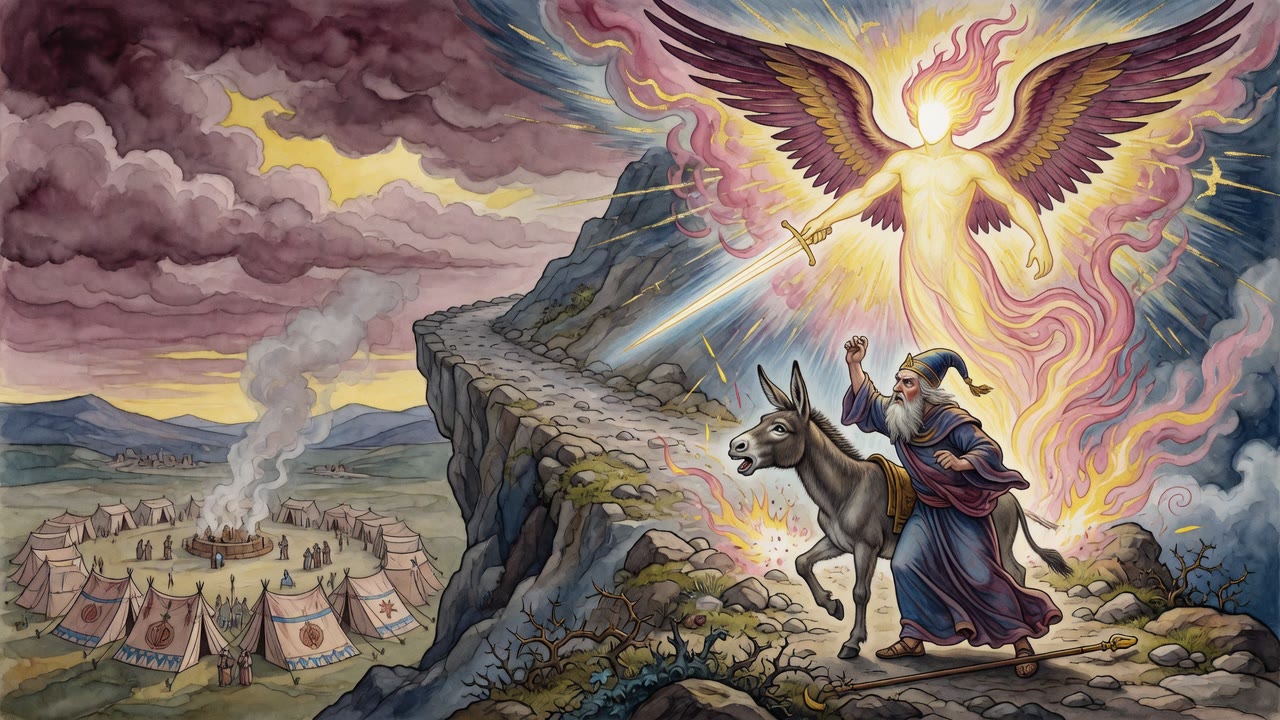
Balaam looked down at the camp. He was hunting for something to condemn, some visible proof that this nation had forfeited what Balak was paying him to destroy. What he saw stopped him.

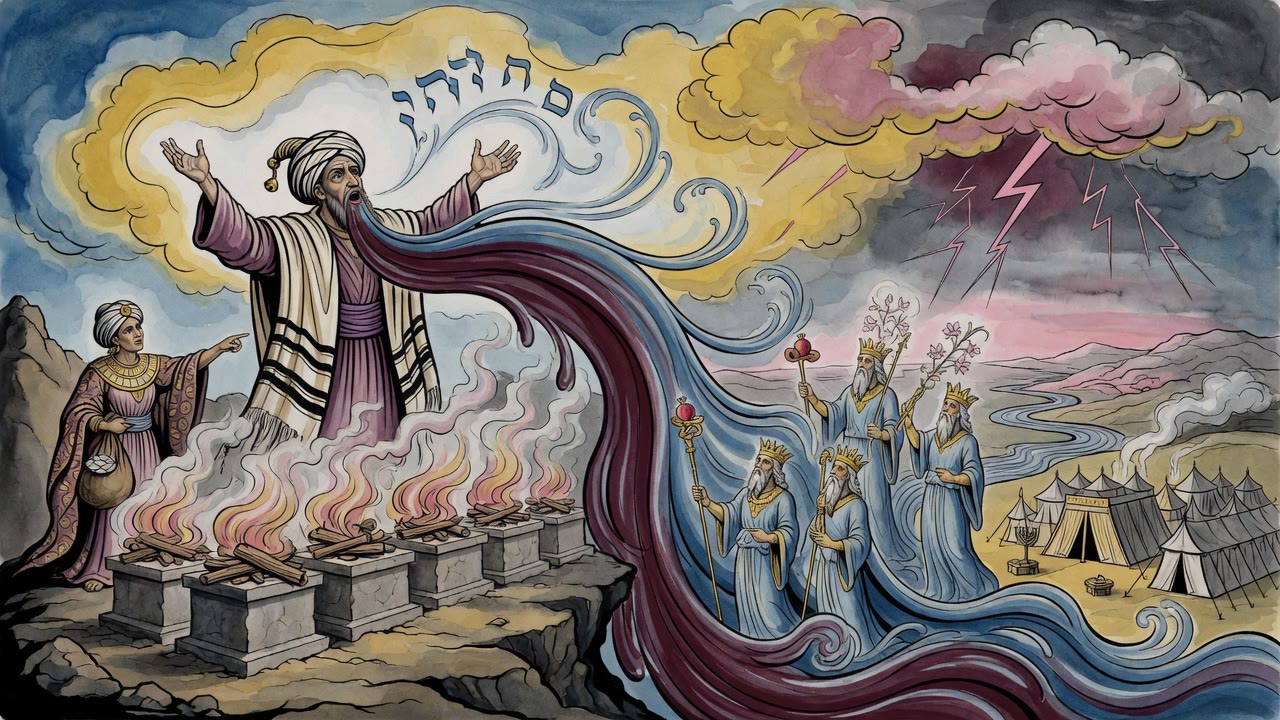
The tents were arranged so that no entrance faced another entrance directly. Every household had positioned its door away from its neighbor's door. Privacy. The architecture of the camp was built around the dignity of the person inside the next tent. Small, civil, daily courtesy, built into the shape of how they lived.

He had come to the high place with a catalog of sins and found a camp that arranged its tents to protect each other's faces. The catalog turned to ash. He opened his mouth.

Morning Prayer from a Mercenary's Mouth

Mah tovu ohalecha Yaakov, mishkenotecha Yisrael, how good are your tents, O Jacob, your dwelling places, O Israel (Numbers 24:5). The hired enemy stood on the height, looking down at the careful arrangement below, and the blessing came out instead of the curse.

Every morning since, Jews have opened prayer with those words. The liturgy that greets the day begins with the forced blessing of a seer who climbed to curse and found the Patriarchs waiting. Balaam lost the prophetic gift that day, because Balak had reduced him to a paid instrument, stripping away the dignity the high place required. You cannot reach the place where the Patriarchs stand if someone else owns your voice.

The blessing survived him. The man who sold his prophecy could not unsay what the heights had given him.


← All myths

From the tradition

Sources

3 sources

The texts this telling draws on, in full. Open a card to read inline, or expand it for a wider, quieter read.

Legends of the Jews 6:39Legends of the Jews

So, Balaam, the non-Jewish prophet hired by Balak, king of Moab, to curse the Israelites, is ready to get down to business. Balak and his princes are all waiting, anticipation thick in the air. But instead of the curses Balak expects, something extraordinary happens. Balaam's mouth, instead of spewing venom, begins to pour forth blessings upon Israel. How does that even happen?

Balaam explains that he was transported to "high places," finding himself in the company of the Patriarchs. He laments that Balak has cast him down, causing him to lose his gift of prophecy. He points out a crucial connection: both he and Balak owe their existence to the very people they seek to harm.

"Both of us are ungrateful men if we wish to undertake evil against Israel," Balaam declares, according to Legends of the Jews, a compilation of rabbinic tradition. He reminds Balak that were it not for Abraham, who saved Lot from the destruction of the cities, Balak, a descendant of Lot, wouldn't even exist! And Balaam himself, a descendant of Laban, acknowledges that he wouldn't be alive if Jacob hadn't entered Laban's house.

He continues, pointing out the irony: Balak brought him from Aram to curse Israel, but Abraham left that very land laden with blessings, and Jacob entered it likewise blessed. How can a curse possibly emerge from such a place? Balaam asks, rhetorically, how can he curse those whom God has not cursed? “How shall I curse whom God hath not cursed?” he asks.

According to Midrash Rabbah, Balaam argues that cursing Jacob's descendants would be like telling a king his crown is worthless – an act of utter disrespect. He reminds Balak that "The Lord's portion is His people; Jacob is the lot of His inheritance." God Himself said that He will be glorified in Israel. So, how could anyone possibly curse them?

Even when the Israelites have deserved punishment, they haven't been cursed, Balaam argues. Remember when Jacob tricked his father, Isaac, to receive the blessings, saying, "I am Esau, thy firstborn?" (Genesis 27:19). Shouldn't a curse have followed that deception? But instead, he was blessed!

Balaam goes on, reminding Balak about the sin of the Golden Calf. Ordinarily, a rebellious group would face severe consequences, but even after the Israelites worshipped the idol, God didn't withdraw His love. He continued to provide them with the clouds of glory, manna, and the well – all miracles that sustained them in the desert.

Balaam emphasizes that even when God threatened the Israelites with a curse, He never explicitly stated that He would bring it upon them. In contrast, when promising blessings, God always affirmed that He Himself would send them upon Israel. "How shall I curse when God doth not curse!" Balaam exclaims.

So, what are we to make of this? Balaam's forced blessings highlight the power of divine will. It's a reminder that even those who intend to harm can be instruments of blessing. And perhaps, it’s a lesson that blessings, once spoken, carry a weight and power all their own. Even against the speaker's will.

Full source
Legends of the Jews 6:46Legends of the Jews

Things don't exactly go as planned, and that’s where the real story begins.

The scene: Balak, the king of Moab, terrified by the approaching Israelite nation, has summoned Balaam, hoping a well-placed curse will turn the tide. Balak, full of anxiety and probably not the best manners, is challenged immediately by Balaam. "Rise up, Balak," Balaam says, as recorded in Ginzberg's Legends of the Jews. "Thou mayest not be seated when God's words are spoken." It’s a power move, right from the start, setting the stage for what's to come.

Balaam is no fool. He understands the nature of the God of Israel far better than Balak does. He explains, “God is not like a man of flesh and blood, that makes friends and disowns them, as soon as he finds such as are better than they.” It's a powerful statement about the enduring nature of God's covenant. God, according to Balaam, doesn't break promises lightly.

Here’s the kicker: Balaam reminds Balak that God "doth not cancel the vow He had made to the Patriarchs, for He promised to bestow Canaan upon their descendants, and He fulfilleth His promise." The promise to Abraham, Isaac, and Jacob – it still holds. It’s a foundation of the entire narrative. It's a reminder that God’s word is bond.

But there’s more nuance here than just divine steadfastness. Balaam continues, explaining that God "always fulfils what He hath promised to Israel, but allows the evil with which he threatens them to be unfulfilled as soon as they repent them of their sins." It’s a fascinating glimpse into the nature of divine justice – a blend of unwavering commitment and merciful flexibility. A key concept in understanding the relationship between God and the Jewish people is teshuvah (repentance), or repentance, which allows for change and forgiveness.

Balaam even dares to suggest that God "sees not their sins, but He seeth their good deeds." Now, that’s a radical idea, isn’t it? A God who focuses on the positive, on the potential for good.

Balak, however, is still stuck on the curse. He’s thinking practically: how can I defeat this approaching army? Balaam’s response is sharp. "Thou, Balak, sayest to me, 'Come, curse Jacob for me,' but a thief can enter a vineyard that hath a keeper only if the keeper sleeps, but 'He that keepeth Israel neither sleepeth nor slumbereth,' and how then can I enter their vineyard?" The image is vivid: God as the ever-vigilant guardian, protecting his people.

And just in case Balak thinks it's only Moses, the current leader, who stands in the way, Balaam adds a final, chilling prediction: "If, however, thou dost think that I cannot harm Israel on account of Moses, who is their keeper, know then that his successor will be as invincible as he, for through the sound of trumpets he will overthrow the walls of Jericho." He's talking about Joshua! The future is already written.

So, what do we take away from this encounter? It’s not just a story about a failed curse. It’s a story about the power of divine promise, the enduring nature of God's protection, and the limits of human manipulation. It’s a reminder that some forces are simply bigger than us, and perhaps, just perhaps, that’s a good thing.

Full source
Legends of the Jews 6:51Legends of the Jews

The story, as always, is far more complex than it seems.

Balaam, unlike some of the other characters we encounter in the Hebrew Bible, doesn't give up easily. After initially being told by God not to curse Israel, he tries again, hoping to change God's mind. When that fails, he tries a different tactic. According to Legends of the Jews, Balaam thought he could bring misfortune upon Israel by reciting their past sins in the desert, hoping to conjure up God's wrath.

The desert wasn't just a place of wandering and, let's be honest, some serious complaining from the Israelites. It was also the place where they accepted the Torah, the first five books of the Hebrew Bible. This act of acceptance, this profound commitment, invoked God's love and protection, not his wrath.

Get this: when Balaam looked upon the Israelite camp, something shifted within him. He saw how the tents were arranged to protect each other's privacy – a sign of respect and community. This vision, according to Ginzberg's retelling in Legends of the Jews, filled him with such awe that he was compelled to praise Israel. The curses he intended to utter transformed into blessings! He spoke of the greatness and importance of the Israelite kingdom.

But here's the twist, the little detail that changes everything. Moses, when he blessed his people, did so in a quiet, gentle voice. Balaam, on the other hand, shouted his blessings, according to the Talmud (Tractate Sotah 38b), so that all the nations would hear and, out of envy, make war upon Israel.

Can you imagine? The intention behind the words, the motivation in the heart, can alter the very nature of a blessing.

And so, God said, "I have promised Abraham, 'And I will bless them that bless thee, and him that curseth thee will I curse,'" (Genesis 12:3) "hence will I account Balaam's blessings as curses."

The Midrash Rabbah emphasizes this point. Balaam's blessings, tainted by his intention to incite envy and ultimately harm Israel, were considered curses in disguise. Everything that Balaam blessed later turned to curses… except for one thing: his blessing that houses of teaching and of prayer should never be missing among Israel. That one blessing endured.

What does this teach us? Perhaps it's a reminder that words have power, but intention holds even greater weight. A blessing given with a pure heart can create lasting good, while even the most beautiful words, spoken with malice, can turn sour. And maybe, just maybe, it's a reminder that even in the darkest of intentions, a spark of genuine blessing can still find its way into the world. It's a powerful thought, isn't it?

Full source