The Angel Told Balaam He Was Free to Ruin Himself
The angel blocking Balaam's road had not come to destroy him. It had come to protect him from himself. Then it said: go, if you must.
Table of Contents
 Click for full size
The Adversary Who Came to Defend
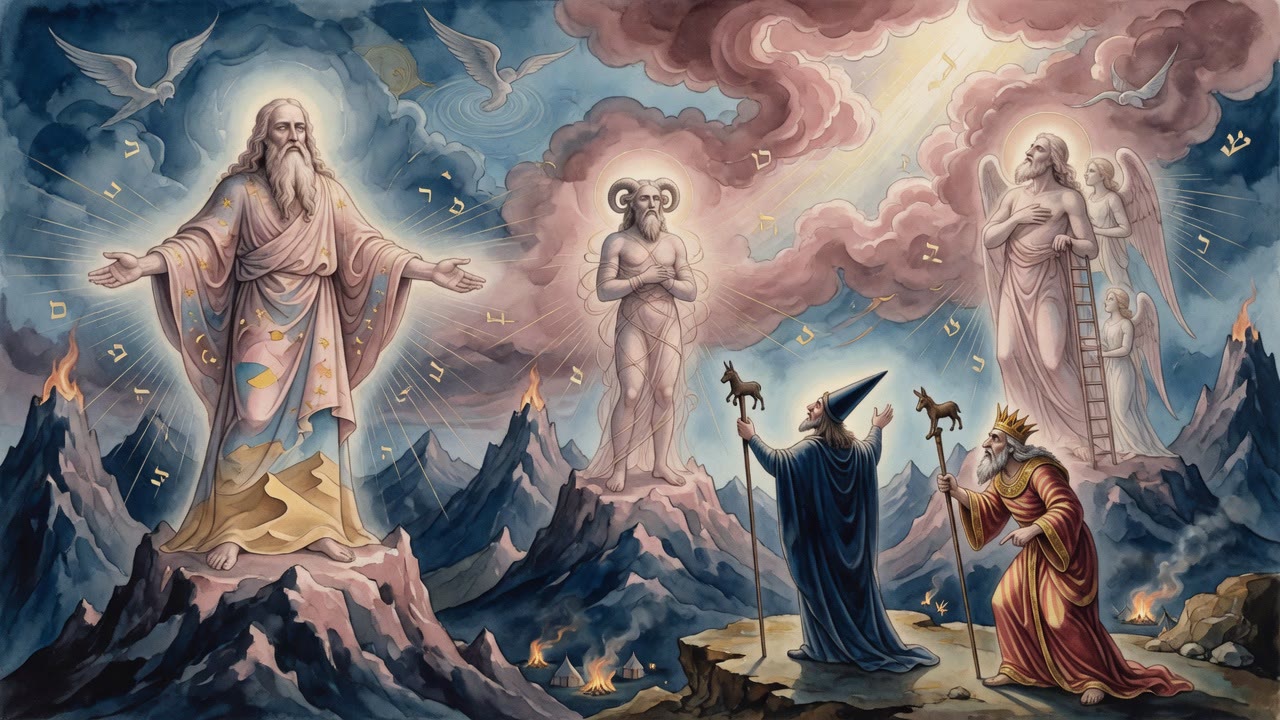
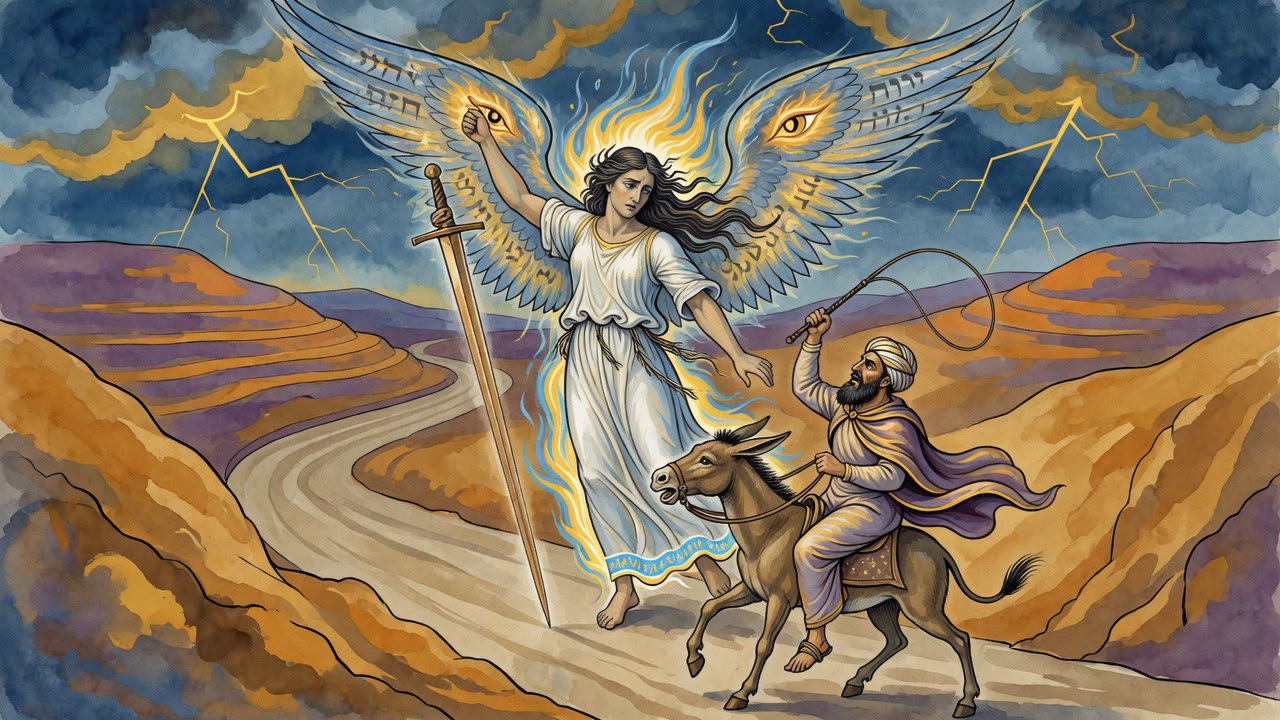
The angel had a sword drawn and a posture of threat, and Balaam lay face down in the road, and the first thing the angel said was not a condemnation. It was an explanation. I have come as your adversary because your way is perverse before me. The ha-satan function, the blocking and opposing, the stationing in the road, it was not punishment. It was protection. The angel had placed itself between Balaam and the cliff he was running toward while he believed he was still on level ground.
Then the angel made the argument from proportion. If I have come to stand up for an animal that has no store of righteous deeds, imagine how I must stand for a people with generations of righteous ancestors. Abraham. Isaac. Jacob. Moses. Centuries of accumulated covenant faithfulness, righteousness piling on righteousness across twelve tribes in a desert camp. The defense of such a people was not casual. The argument was not about Israel's current merit, they had sinned and would sin again. It was about accumulated spiritual weight, the gravity of a history the angel was sworn to protect.
What Balaam Said When He Tried to Leave
Balaam had a response prepared. He said he had not known the angel was standing in the road. If he had known, he would have turned back. If God was displeased, he would go home. He made it sound like reasonable accommodation.
The angel did not accept the offer as genuine. The tradition, preserved in the Legends of the Jews. Louis Ginzberg's synthesis published between 1909 and 1938, drawing from Numbers Rabbah (5th-century Palestine) and the Talmud Bavli (6th-century Babylon), records that the angel saw through the performance. Balaam's offer to turn back was not sincerity. It was the calculation of a man testing whether the obstacle in his road was negotiable. The angel said: go. Go to Balak. But speak only the word I tell you to speak.
Go, if you must. It was permission granted with full knowledge of what it would cost him.
The High Places and What Poured Out
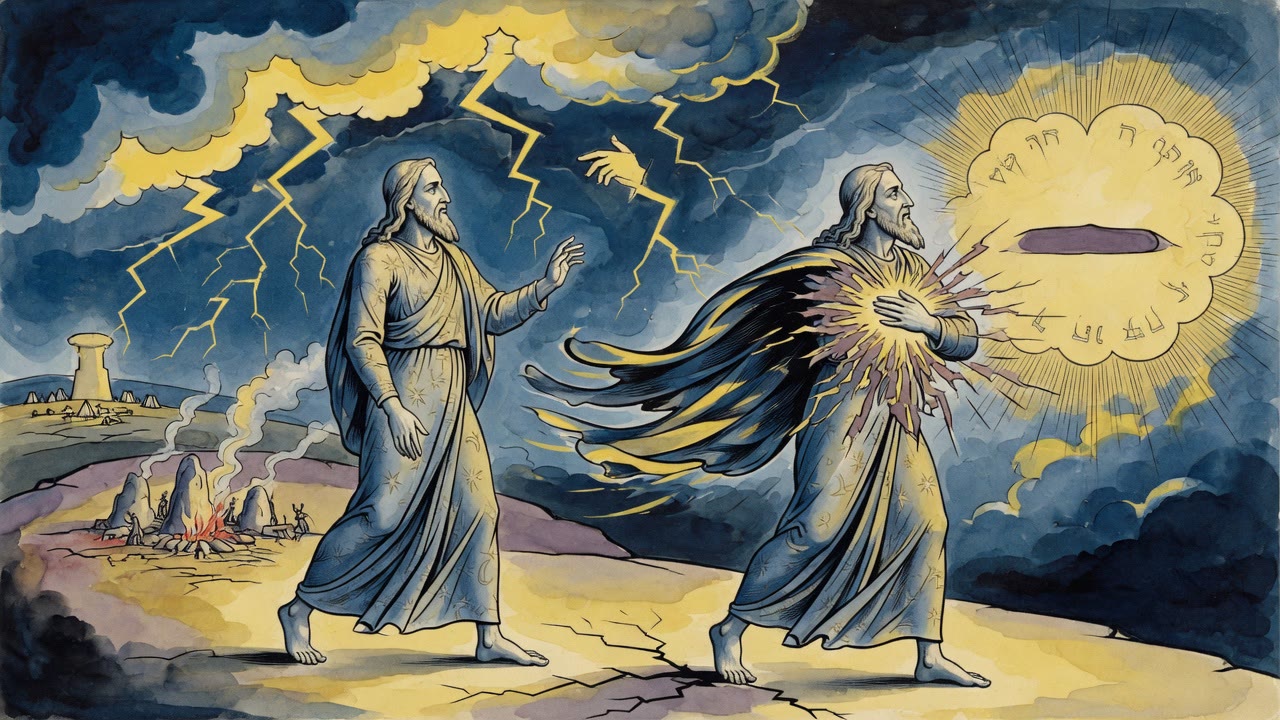
Balaam went. He climbed to Bamoth-Baal with Balak and surveyed the camp of Israel from above. He built seven altars. He offered a bull and a ram on each one. He stood with his mouth ready for the curse. The spirit of God moved through him and blessings came out instead.
He tried to explain to Balak what had happened. In the account the tradition preserves, Balaam described being transported to the high places in a vision, finding himself among the Patriarchs in the elevated space of prophecy. He lamented that Balak had brought him to this position, had hired him under false pretenses, false, the tradition says, not because Balak had lied about what he wanted, but because Balaam had taken the commission knowing full well that both he and Balak owed their nations' existence to the very people they were trying to harm. Both Israel and Moab descended from the covenant family. The sorcerer who declared them ungrateful men for seeking evil against Israel was, in that moment, pronouncing judgment on himself.
After the Third Blessing
Three high places. Three rounds of altars. Three times Balaam opened his mouth and could not close it until the blessing was finished. By the third time, Balak had stopped even pretending to receive it graciously. He struck his hands together, the gesture of disgust and dismissal, and told Balaam to go home. He had promised honor and given instead the spectacle of his own prophet blessing his enemies three times in a row from three different vantage points across his kingdom.
What Balaam understood, by the end, about the nature of what had happened to him was this: the angel had told him the outcome before he started. The angel had said the word I give you is the only word you will speak. And Balaam had gone anyway, carrying the hope that somewhere on those high places the constraint would loosen. It never did. The blessings were not accidents or failures. They were what he had been sent to say all along.
The Flight and the Catching
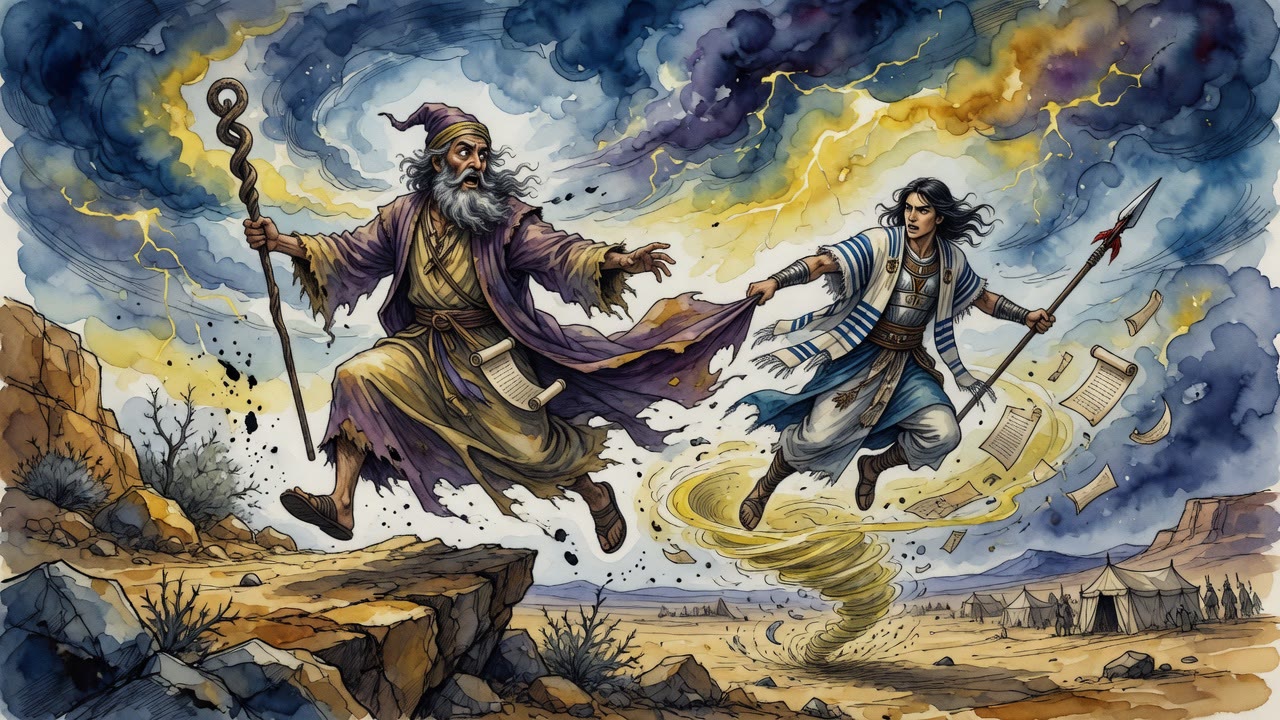
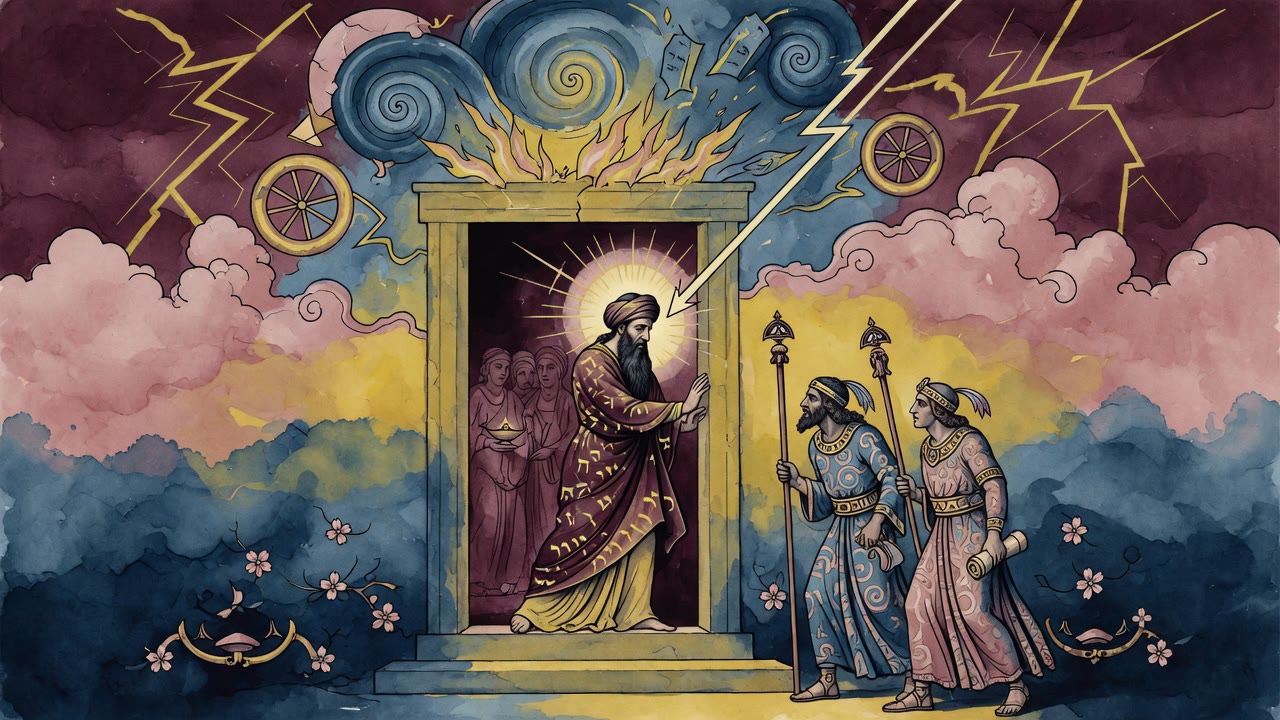
The story does not end at Moab. The tradition records that when Phinehas and the Israelite army came against Midian, Balaam was there, advising the Midianite kings. When the battle turned, he tried to escape the only way he knew how: sorcery. He and his sons Jannes and Jambres, names carried in magical lore across centuries of tradition, used their combined power to lift themselves into the air and fly above the reach of Phinehas's army.
Phinehas used the gold plate of the high priestly crown, the words engraved on it, the name of God, to bring Balaam crashing out of the sky. The man who had been given genuine prophetic gifts and had spent them on a career of attempted cursing died in Midian by the sword. The tradition holds this as the fulfillment of what the angel had been trying to prevent from the beginning: the destruction Balaam had been racing toward since he saddled his donkey and set out for Moab.
← All myths