Parshat Balak4 min read

Bilam Answered God Like Cain at the Door

God asked Bilam a question He already knew. Bamidbar Rabbah hears Cain and Hezekiah standing behind that dangerous answer.

Curated by Arthur · Told by Maggid ·
Table of Contents
  1. Balak Sent Fear in Disguise
  2. Cain Had Answered First
  3. Hezekiah Opened His Storehouses
  4. Bilam Missed the Door

Balak sent fear dressed as diplomacy.

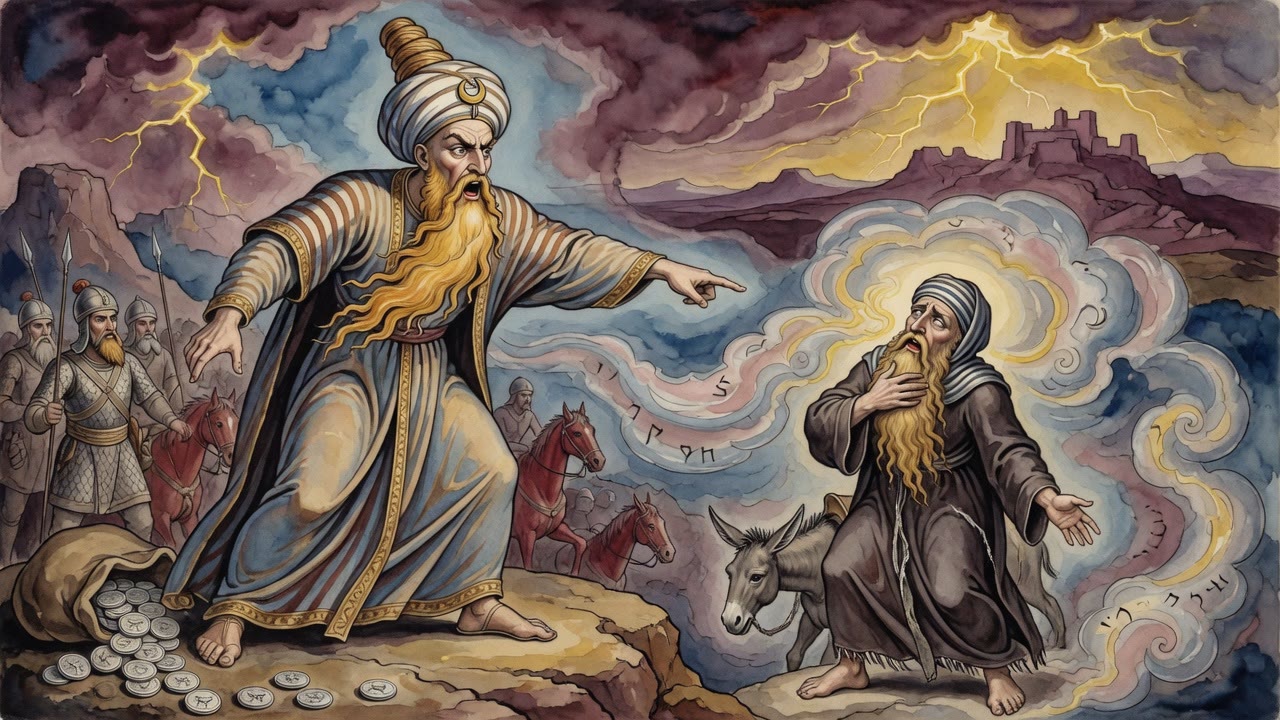
The messengers came from Moab with payment in their hands and panic in their mouths. Israel had crossed the wilderness and covered the face of the earth. Balak did not meet them with armies first. He looked for a curse. He sent for Bilam son of Beor, the man whose words were supposed to bend reality.

Balak Sent Fear in Disguise

Bamidbar Rabbah begins with Balak's terror but quickly turns the scene toward Israel's memory. God had redeemed them again and again. Seven redemptions, the midrash says, should have produced seven praises. Instead the people kept slipping back into defiance, forgetting the hand that had carried them.

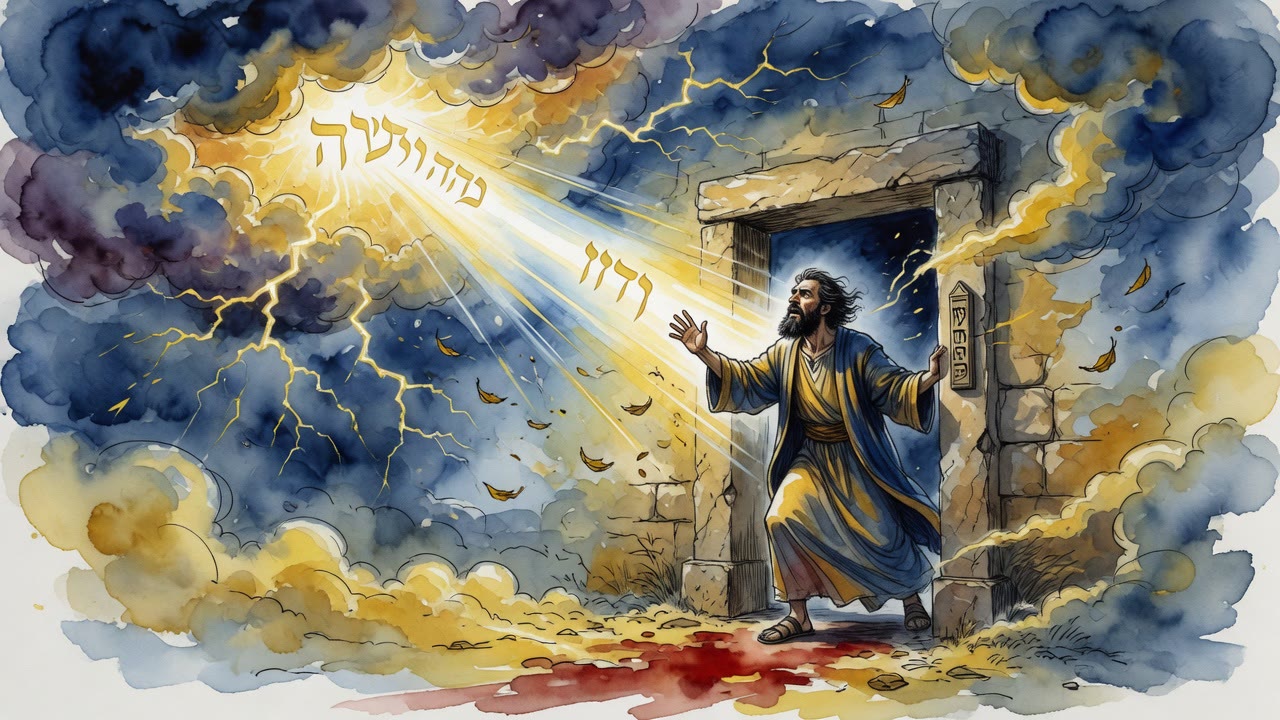
Balak's messengers arrived in that atmosphere of danger and forgetfulness. Bilam lodged them for the night. Then God came with a question that needed no information: "Who are these men with you?" (Numbers 22:9).

The question entered the room before the curse could leave it. Payment slept nearby. Ambition waited under Bilam's tongue. God did not ask because heaven had lost track of the visitors. The question was a door placed in front of a man who wanted permission.

Cain Had Answered First

Rabbi Abba bar Kahana hears an echo at once. God had asked Cain, "Where is Abel your brother?" after the blood had already cried from the ground. Cain answered as if heaven needed a report. "I do not know. Am I my brother's keeper?" (Genesis 4:9).

The failure was not only murder, and not only lying. Cain missed the door that the question opened. He could have confessed. He could have said that nothing hidden was hidden from God. Instead he answered like a man negotiating with ignorance. That posture, the midrash says, made him contemptible.

Blood was already in the soil. God was not searching for Abel's location. He was offering Cain one last chance to stand inside truth before judgment spoke. Cain stepped around it and tried to make the question small.

Hezekiah Opened His Storehouses

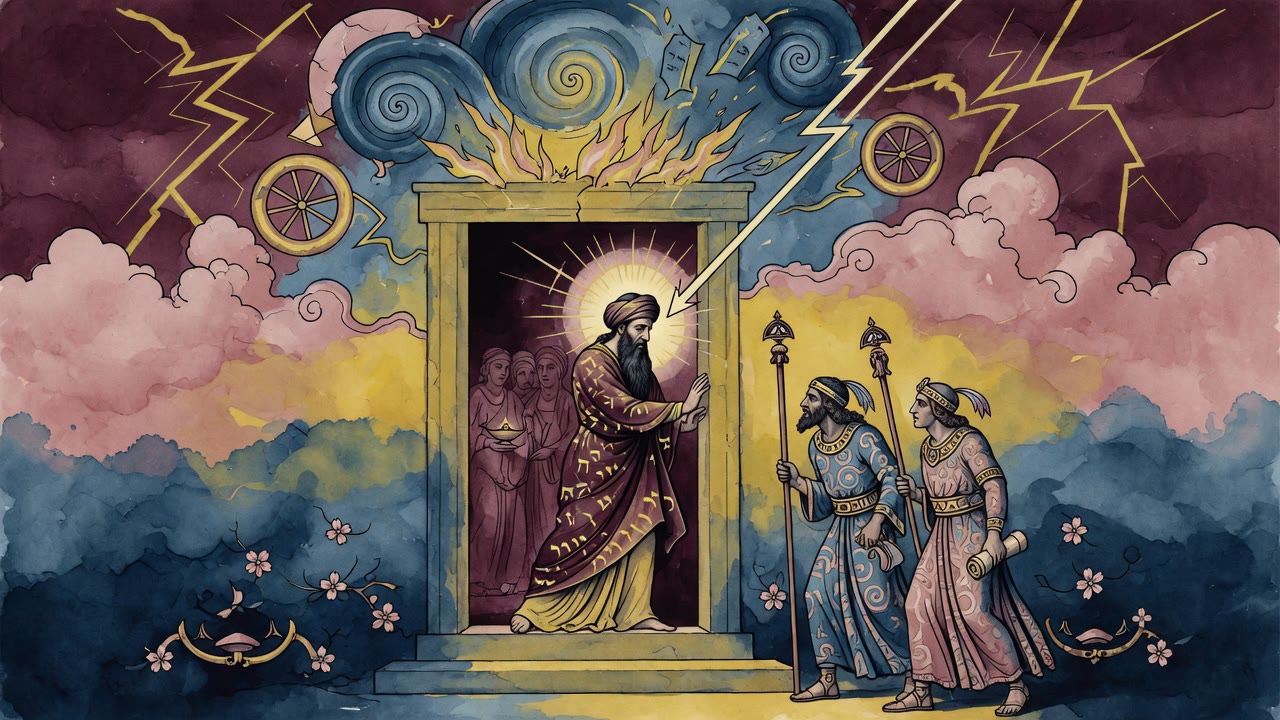
Hezekiah stood in the same line. When the Babylonian envoys came, he showed them everything: silver, gold, spices, oil, armor, treasures. Then Isaiah asked what those men had seen. Hezekiah answered with inventory. Everything in my house. There is nothing I did not show them.

Again the question was not a request for data. It was a summons to recognize danger. Pride had opened the storehouses wider than wisdom allowed. Hezekiah treated the prophet's question as bookkeeping, and the future exile stepped into the room behind the visitors.

The king had survived illness and received a sign from heaven, but gratitude curdled into display. He showed Babylon the glitter and failed to see the appetite looking back at him. The answer counted treasures while the real danger counted descendants.

Bilam Missed the Door

Then Bilam answered God. Balak son of Zippor, king of Moab, sent to me. A people has come out of Egypt. Come curse them for me. The words were accurate. That made them worse. A true report can still be a false answer when God is asking for the heart.

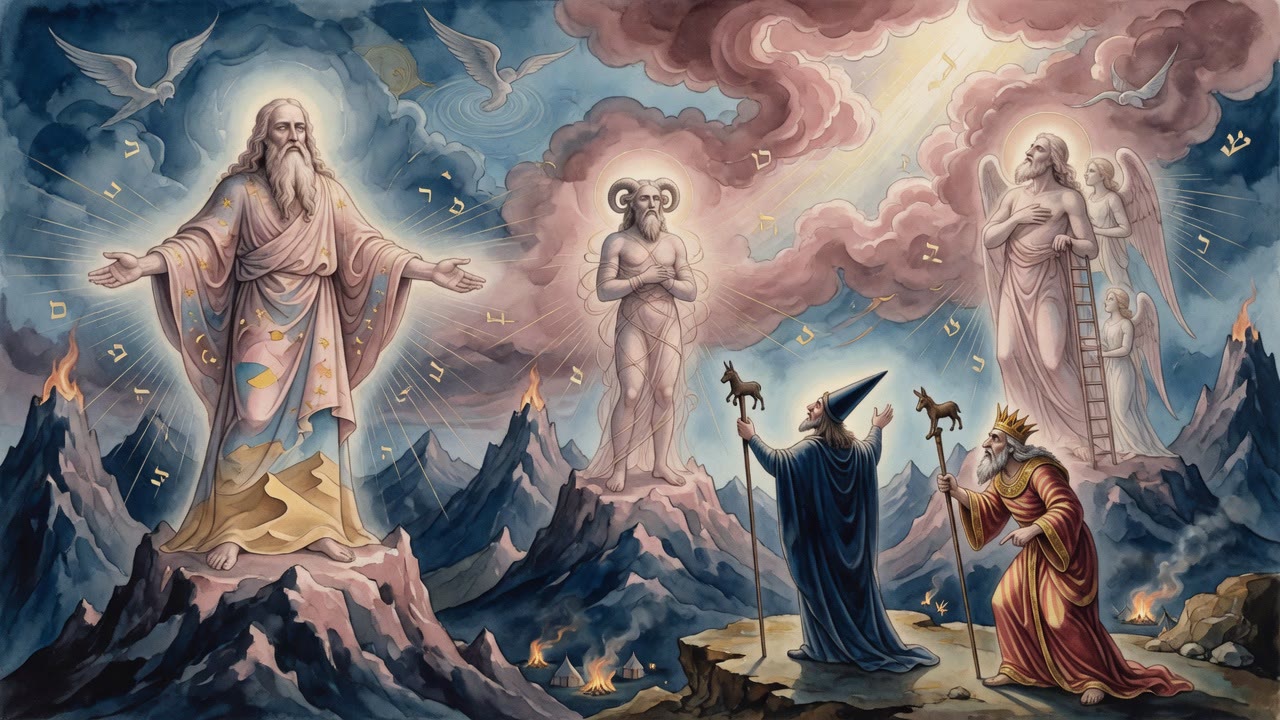
Bilam should have dropped the pretense. He should have known that the One speaking in the night already knew the men, the money, the fear, the plan, and the hunger inside him. Cain stood behind him at the door. Hezekiah stood beside him with the storehouses open. Bilam joined them by answering omniscience as if it had arrived late.

The night could have ended there, with refusal. Instead Bilam kept listening for a path that would let desire wear obedience as a cloak. The curse had not yet been spoken, but the first failure had already happened. He had been asked who stood with him, and he did not answer as a man standing before God.

From there the road would grow stranger: permission that was not approval, an animal that saw what the prophet missed, a drawn sword in the path, curses bent into blessings. But the first crack came before all of that, in the quiet night when a paid seer answered God's question without fear.

A man who cannot read the first question will misread the whole road.

Balak wanted a professional curse. God began with a question. The whole contest turns on which voice Bilam wants to satisfy.

He heard God, but he kept listening for Balak's silver.

The silver remained outside the door, but its sound was already inside him.


← All myths
From the tradition

Sources

3 sources

The texts this telling draws on, in full. Open a card to read inline, or expand it for a wider, quieter read.

Bamidbar Rabbah 20:6Bamidbar Rabbah

Like we can somehow pull the divine wool over God's eyes. a fascinating passage from Bamidbar Rabbah 20 that explores this very idea, highlighting three figures who, tried to do just that – and didn't exactly succeed.

The passage begins with the story of Balak and Bilam. Remember, Balak, the king of Moab, was terrified of the Israelites and hired the sorcerer Bilam to curse them. When Balak’s emissaries arrive, God asks Bilam, "Who are these men with you?" (Numbers 22:9).

In Rabbi Abba bar Kahana, this seemingly simple question reveals something profound. He says that Bilam, along with two other figures, were examined by God and found to be like a "jug of urine" – a vessel that is only worthy of contemptible use. Ouch.

Who are the other two? Cain and Hezekiah.

Let's start with Cain. When God asks him, "Where is your brother Abel?" (Genesis 4:9), Cain responds with the infamous, "I do not know; am I my brother’s keeper?" Instead, the text suggests, he should have acknowledged God's omniscience, saying something like, "Master of the universe, the concealed and the revealed are revealed before You, and You are asking me regarding my brother?" As we find in (Genesis 4:10)–11, God isn’t fooled and holds Cain accountable.

Next, we have Hezekiah, king of Judah. After recovering from an illness, he receives a gift from Merodakh Baladan, the king of Babylon (Isaiah 39:1). Isaiah asks him about the envoys: "What did those men say, and from where did they come to you?" (Isaiah 39:3). Again, the text argues that Hezekiah should have recognized Isaiah's prophetic abilities and responded accordingly. Instead, Hezekiah boasts about the Babylonians' visit (Isaiah 39:3), leading to Isaiah's prophecy of future Babylonian exile (Isaiah 39:6-7).

And finally, back to Bilam. When God asks him about his visitors, Bilam simply states, "Balak son of Tzipor, king of Moab, sent to me" (Numbers 22:10). The text suggests he should have said, "Master of the universe, everything is revealed before You and nothing is obscured from You, and You are asking me?"

So, what’s the deal here? Why is this considered such a failing on their part?

The text is highlighting a lack of humility and an attempt to obscure the truth from someone who inherently knows everything. It's about recognizing God's all-knowing nature and responding with honesty and humility.

In Bilam's case, God's response is particularly pointed. Because Bilam didn't acknowledge God's omniscience, God tells him, "do not curse the people" (Numbers 22:12). the verse says, God is essentially saying, ‘Since that is how you speak…’. The passage continues, saying, ‘Wicked one of the world, it is written in Israel’s regard: “For one who touches you, touches the pupil of his eye” (Zechariah 2:12), and you go to accost them and curse them? Let his eye be removed, as it is stated: “One with an open eye” (Numbers 24:3), to realize: “For one who touches you, touches the pupil of his eye.”’ The phrase "pupil of His eye" is expounded to mean the apple of the eye of the Holy One blessed be He, something very dear to Him.

So, what can we learn from these three examples? Perhaps it's a reminder to approach the divine with humility and honesty. To acknowledge that we are not fooling anyone and that true wisdom lies in recognizing the limits of our own knowledge. Maybe it's about recognizing that trying to be clever with God is ultimately a futile and self-defeating endeavor. Perhaps, it's an invitation to be more authentic in our relationship with the Divine, and with ourselves. What do you think?

Full source
Bamidbar Rabbah 20:5Bamidbar Rabbah

The story begins with Balak, king of Moab, terrified of the Israelite nation that's camped right next door. As (Numbers 22:5) tells us, he sends messengers to Bilam (also spelled Balaam), son of Beor, a well-known sorcerer, to curse them. "Behold, a people emerged from Egypt; behold, it has covered the face of the earth, and it sits across from me.”

Bamidbar Rabbah doesn't just retell the story; it uses it as a jumping-off point for some serious soul-searching. The text notes, "'He sent messengers' – the Holy One blessed be He performed miracles on their behalf." And then comes the kicker: God essentially says, "I redeem you and perform miracles for you, but you defy Me!"

It's a powerful accusation. The text then asks, how can they forget all that God has done for them? "Come and see seven redemptions that I redeemed you, and you were obligated to praise Me seven praises corresponding to the seven redemptions." Seven!

The text then quotes (Judges 10:11-12): “The Lord said to the children of Israel: Was it not by the Egyptians, by the Emorites, by the children of Amon, by the Philistines, the Sidonians, Amalek, and Maon [that you were oppressed], and you called to Me, and I saved you from their hand?” These are the seven redemptions the text is referring to.

But the Israelites didn't offer praises. Instead, as we find in (Judges 10:6), they "continued to perform evil in the eyes of the Lord, and they worshipped the Be'alim, and the Ashtarot… [and various other foreign gods]." Be'alim and Ashtarot are plural forms, referring to multiple local deities that the Israelites turned to instead of remaining faithful to God.

God's response? A heartbreaking rebuke, echoing the prophet Micah (6:3): “My people, what did I do to you, and how did I exhaust you?” In what way did I cause you exertion? It's a parent's lament, a cry of frustration and disappointment.

The passage continues, driving the point home with vivid imagery. Did God ask for impossible sacrifices? Did He demand offerings of animals that weren't even in their possession? "Did I, perhaps, say to you: Bring Me burnt offerings from the animals in the mountains?" The text contrasts the three animals readily available – "An ox, a sheep, and a goat" (Deuteronomy 14:4) – with the seven wild animals that are not (Deuteronomy 14:5), like "a deer, a gazelle, a fallow deer…" God only asked for what they already had, as it is stated: “An ox, or a sheep, or a goat, when it is born…[shall be accepted as a fire offering to the Lord]” (Leviticus 22:27).

Even in times of war, God was there. "When Siḥon and Og went out to wage war against you, did I not topple them before you? Did I cause you exertion? Did I, perhaps, say to you to bring an offering in their regard?" God protected them, often without them even lifting a finger. And then, there's the story of Balak and Bilam. “Did Balak ben Tzipor not see that I performed all the miracles on your behalf and hired Bilam against you but I transformed the curses into blessings?” Even when their enemies tried to harm them through supernatural means, God intervened.

This passage from Bamidbar Rabbah is more than just a historical retelling. It's a timeless reminder to appreciate the blessings in our lives, to remember the times when we were helped, and to offer gratitude for the good we receive. It challenges us to examine our own actions and ask ourselves: are we truly grateful for what we have, or are we too easily distracted by fleeting desires and empty promises? Are we perhaps, like the Israelites, forgetting all that has been done for us?

Full source
Bamidbar Rabbah 20:9Bamidbar Rabbah

The story kicks off with God approaching Bilam and asking, "Who are these men with you?" (Numbers 22:9). Seems like a simple question. But according to Bamidbar Rabbah, it’s anything but.

The rabbis see a deep irony here. "He who misleads the upright on an evil path will fall into his own pit" (Proverbs 28:10). This, they say, is Bilam in a nutshell. The Midrash (rabbinic interpretive commentary) suggests that in earlier times, people were more virtuous. We hear in (Genesis 29:9) how "Rachel came with the flock" and in (Exodus 2:16) that "the priest of Midian had seven daughters". The implication is that fathers could trust their daughters to be around male shepherds without fearing inappropriate behavior. But Bilam, with his manipulative words, corrupted that uprightness.

Here's the kicker: just as Bilam misled others, he himself was misled. God's question, "Who are these men with you?" wasn't just an inquiry. It was a divine setup! Bamidbar Rabbah, citing (Job 12:23) ("He exalts the nations and He eliminates them"), suggests that God was intentionally testing Bilam.

Bilam, in his arrogance, thought he could outsmart the Almighty. He figured there might be a moment when God’s attention wavered. A moment when he could sneak in some mischief. So, when asked about the men, he plays coy, pretending he doesn't know who they are.

Then, Bilam responds, "Balak son of Tzipor, king of Moav, sent to me" (Numbers 22:10). According to the Rabbis, Bilam isn't just answering the question. He's boasting! Even though God doesn’t seem to be giving him the respect he thinks he deserves, kings are seeking him out. "Look at me," he seems to say, "I'm in demand!"

He goes on, "Behold, the people that has come out of Egypt, it has covered the face of the earth; now, come curse [kava] them for me; perhaps I will be able to wage war against them, and drive them away" (Numbers 22:11). Notice anything different? Bilam uses the word kava (קבה), a strong term for "curse," whereas Balak in (Numbers 22:6) uses ara (ארה), a milder form. Bamidbar Rabbah points out that Bilam's hatred actually exceeded Balak's! Balak only wanted to drive the Israelites from the land, but Bilam wanted to banish them from this world and the World to Come!

God, of course, sees right through Bilam's schemes. "You shall not go with them; you shall not curse the people, as it is blessed" (Numbers 22:12). But Bilam, ever persistent, tries to weasel his way around the command. "Okay, I won't go," he implies, "but what if I just curse them from here?" God shuts that down too. "You shall not curse the people." Then Bilam tries another angle: "Fine, can I at least bless them?" God's response is the ultimate dismissal: "They do not need your blessing, as it is blessed." It's like saying, "We're good, thanks. Keep your honey and your sting to yourself."

Finally, Bilam tells Balak's princes, "Go to your land, as the Lord refused to allow me to go with you" (Numbers 22:13). But even here, he's twisting the truth! He doesn't admit that God forbade him to curse Israel. Instead, he implies that he’s too important to travel with such low-ranking officials. "He wants to honor me," Bilam suggests, "so I need to travel with someone more prestigious." And wouldn't you know it, Balak falls for it, sending even more important dignitaries the next time (Numbers 22:15).

What does this all tell us? It's a reminder that intentions matter. That even the most silver-tongued among us can't hide their true motives from God. And perhaps, more importantly, it's a cautionary tale about the dangers of arrogance and the futility of trying to manipulate the Divine. Bilam's story, as told in Bamidbar Rabbah, is a masterclass in how not to be a mensch.

Full source